

B/R NFL 1000: Top 90 Running Backs
Editor's note: This is the eighth installment in Bleacher Report's NFL 1000 for the 2013 season. This signature series runs through April 24, with NFL Draft Lead Writer Matt Miller ranking the best players at every position. You can read more about the series in this introductory article. See the NFL 1000 page for more rankings.
Want to start a fight in a bar? Go to Minneapolis and tell fans that Adrian Peterson isn’t the best running back in the NFL.
But wait. Is he? And what constitutes being the best? Is it production? Or talent? Or maybe a combination of both? Who was the best running back in the NFL during the 2013 season?
That’s what the NFL 1000 aims to identify. Throw out the narratives and the fantasy football stats, and dig into the film. Then we’ll see who comes out on top.
The B/R 1000 metric is based on scouting each player and grading the key criteria for each position. The criteria are weighted according to importance, on a 100-point scale.
Potential is not taken into consideration. Nor are career accomplishments.
Running backs are judged on power (25 points), speed (25), vision (40) and receiving ability (10), along with all of the technique, athletic ability and football intelligence needed to do each.
In the case of ties, our team asked, "Which player would I rather have on my team?", and set the rankings accordingly.
Subjective? Yes. But ties are no fun.
Each player was scouted by me and a team of experienced evaluators, with these key criteria in mind. The following scouting reports and grades are the work of months of film study from our team.
All statistics courtesy of Pro Football Focus (subscription required). Players' heights, weights and seasons courtesy of NFL.com.
90. Matt Asiata, Minnesota Vikings
1 of 90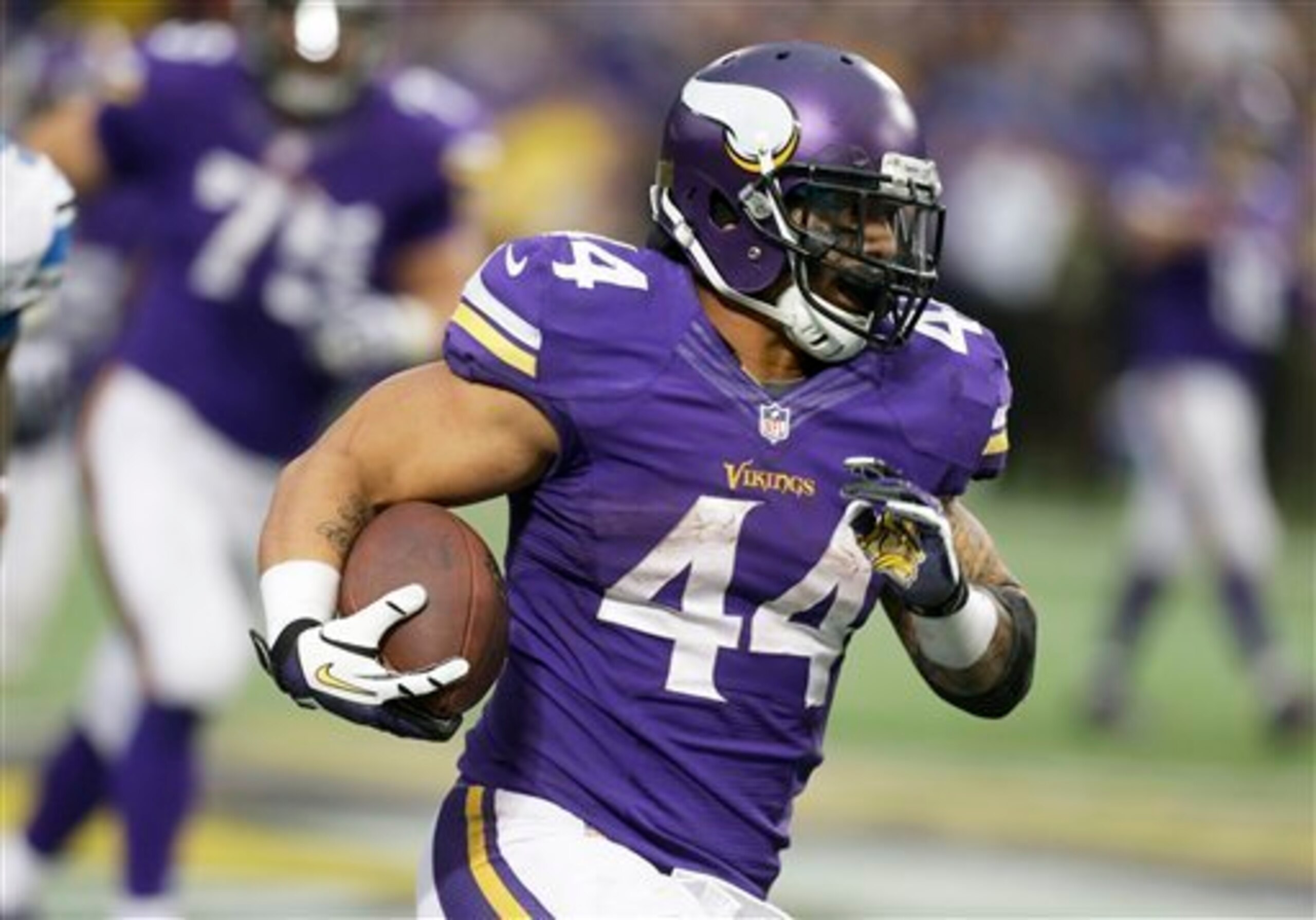
Power
Matt Asiata (6'0", 234 lbs, two seasons) is a big back with obvious strength, but he submits to contact rather than fighting through it. He needs a more aggressive running style to get the most out of his sheer size.
Speed
He showed some agility during his short time on the field, but there was a notable lack of explosiveness, and his cuts labored at times.
Vision
Too often Asiata initiated contact with a defender when he had space to run into. There were times when he showed the ability to set up his blocking and find holes, but those were overshadowed by his negative plays.
Receiving
The sample size is minuscule, but Asiata showed an ability to catch the ball with his hands away from his body after lining up out wide. Most importantly, he showed that he understood how to catch the ball in order to best set up his YAC. One drop came on a play when he attempted to do that.
Overall
Asiata doesn't look like an NFL starter, but he did show some positives in 2013. With the right development, he could become a valuable contributor for a team in a limited role.
89. Chris Ogbonnaya, Cleveland Browns
2 of 90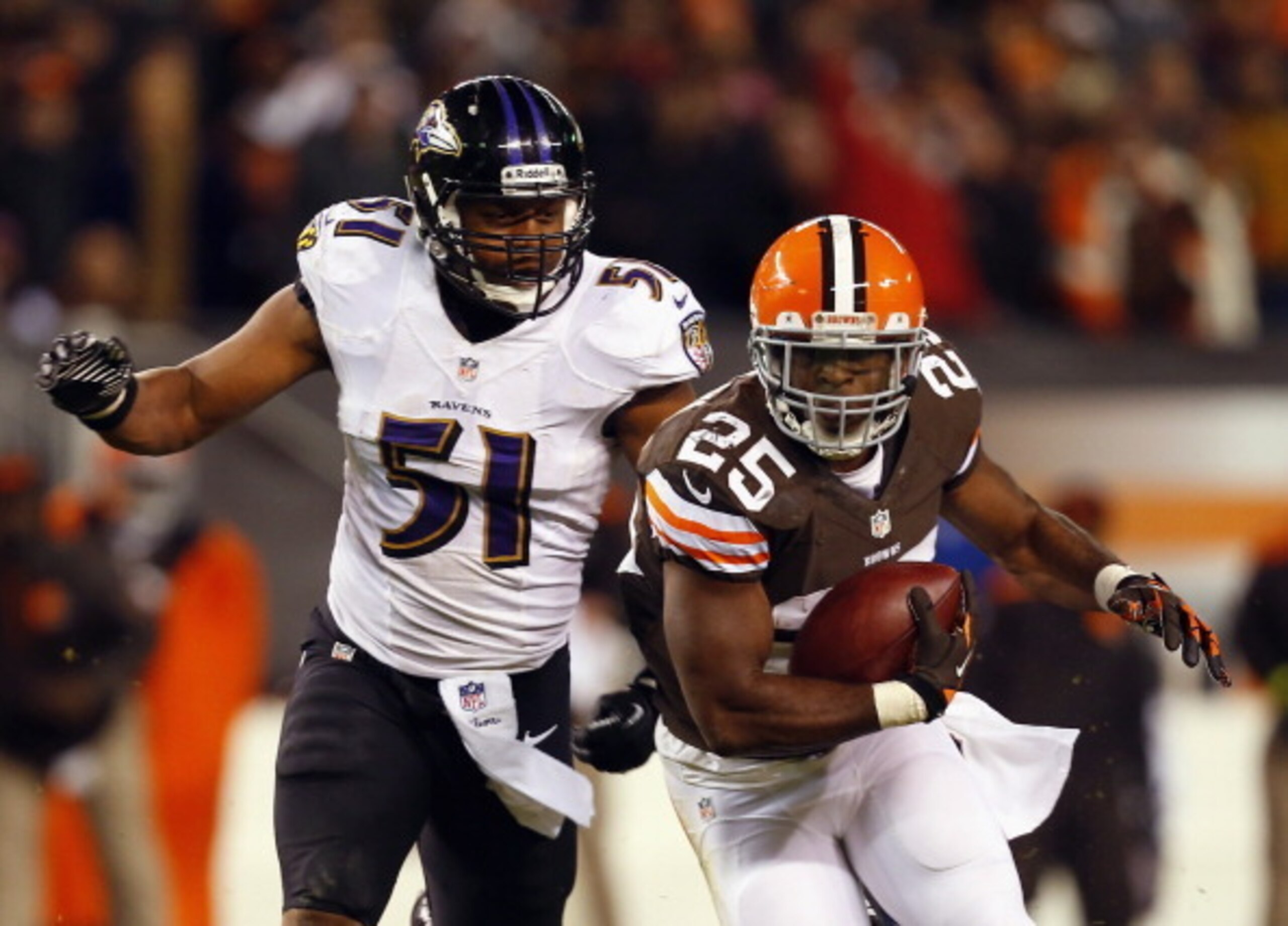
Power
Chris Ogbonnaya (6'0", 225 lbs, four seasons) isn't a strong runner and doesn't make any real impact when he meets defenders.
Speed
He is shifty enough to find space between the tackles and has some breakaway speed, but Ogbonnaya is not a special athlete by any measure.
Vision
When a player is in a bit-part role, it is tougher to analyze his vision. Ogbonnaya showed no hesitation, but he also wasn't setting up blocks or making decisions repeatedly throughout any game.
Receiving
He is a third-down back who lacks diversity in his usage, isn't a special athlete and drops passes. He is not a valuable third-down back.
Overall
Ogbonnaya didn't have a huge amount of exposure. He is a forgettable player who didn't take advantage of the opportunities that came his way.
88. Fozzy Whittaker, Cleveland Browns
3 of 90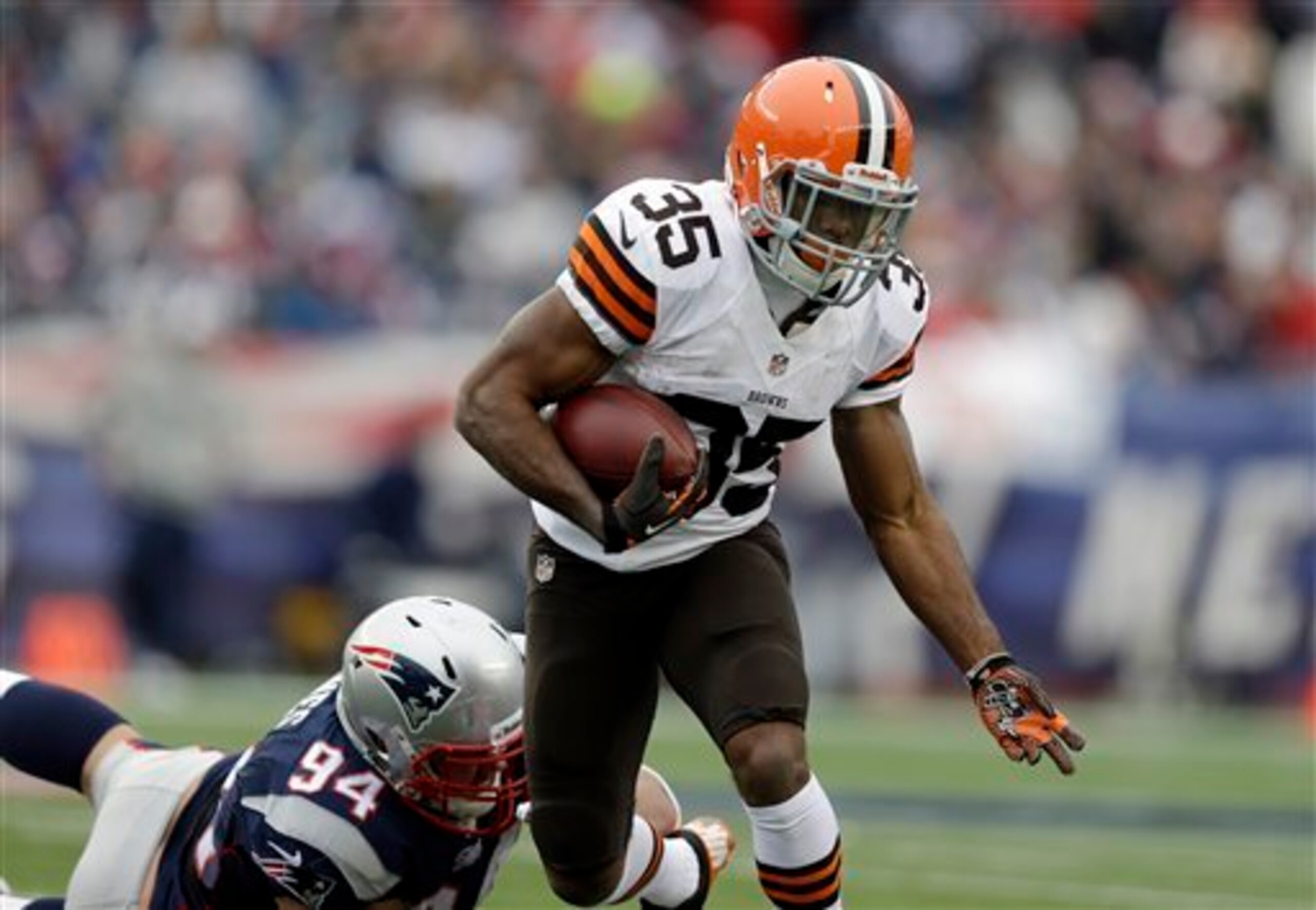
Power
Fozzy Whittaker (5'10", 202 lbs, one season) is willing to initiate contact and be aggressive with defenders, but he simply doesn’t have the requisite size to break tackles at this level of football.
Speed
Whittaker isn’t a special athlete by any measure, but he did show some quickness and an impressive short burst during his limited time on the field.
Vision
Whittaker’s inconsistency killed his rating here. He didn’t have enough time on the field to make up for the mistakes he did make. At times, he missed obvious reads on the second level, while on other occasions he set up his blocking perfectly behind the line of scrimmage. He needs to eradicate the bad mistakes and prove his consistency over a prolonged period.
Receiving
His numbers don't support it, but Whittaker did at least make a number of quality plays as a receiver in 2013. On occasion, he looked like a wide receiver with a number of very impressive hands-catches, often on slightly inaccurate passes. There is some potential here.
Overall
His grade for the 2013 season may not be high, but Whittaker showed the talent that should land him an opportunity to be a third-down back for someone in the future.
.jpg?w=2560 "Commanders Cowboys Football")
87. Michael Bush, Chicago Bears
4 of 90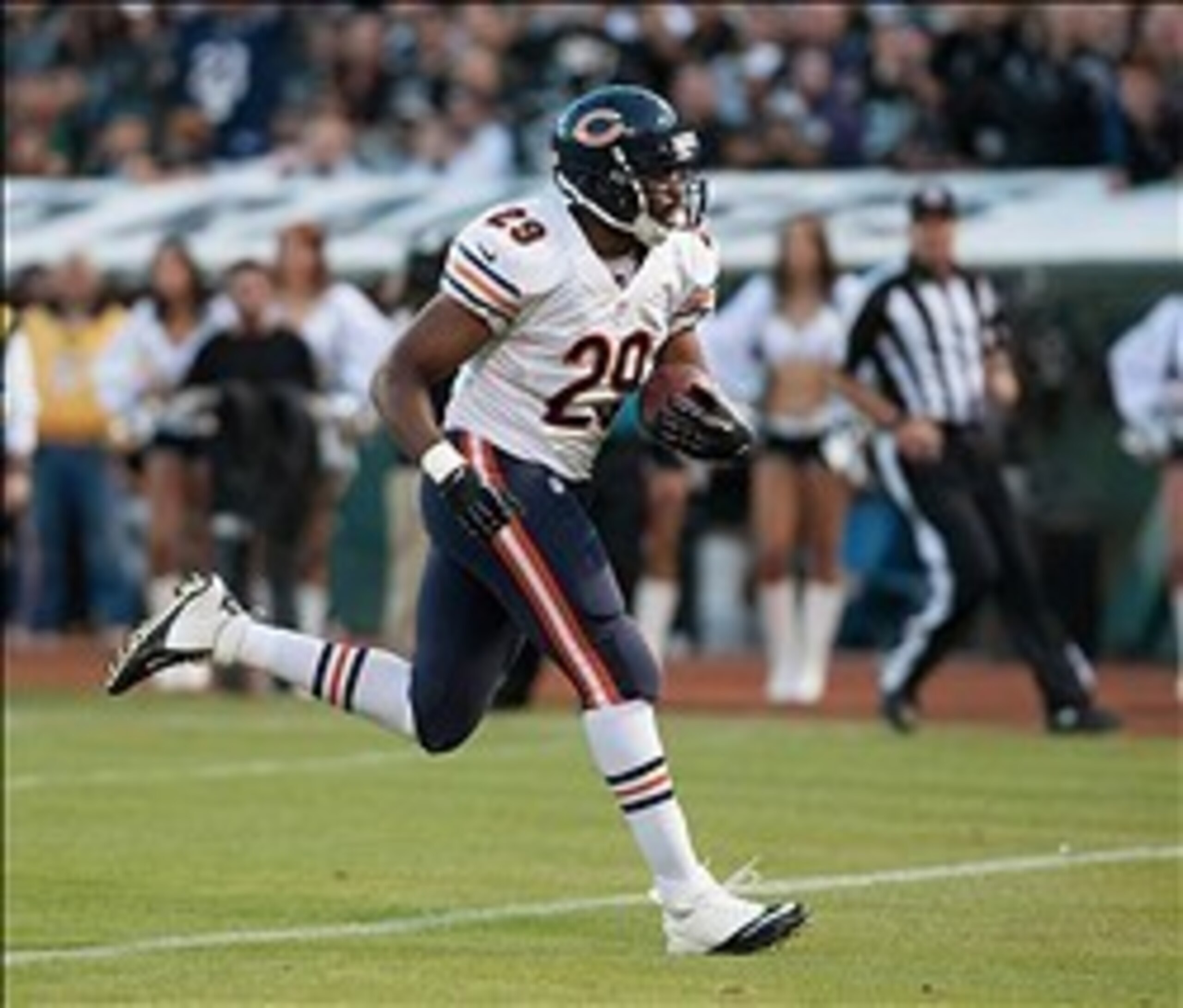
Power
Michael Bush (6'1", 245 lbs, six seasons) is a goal-line back, but he runs too tall and is too top-heavy in his build. His own weight works against him, and he doesn't keep his legs moving through contact.
Speed
Most of Bush's runs come between the tackles. He is primarily a straight-line runner who doesn't cut back with speed or show elusiveness when given any kind of space. He showed some breakaway speed late in the season against the Cowboys and Browns, but those plays came against poor defenses and were not reflective of his season as a whole.
Vision
Too often Bush just ran into blockers and defenders instead of looking to attack gaps. Even as a goal-line back, he was too hasty in his movements.
Receiving
He had multiple drops on very few targets and was not a threat in space. When the Bears threw to Bush, it was typically a victory for the defense.
Overall
Outside of when Matt Forte needed to catch his breath, there was no reason for the Bears to put Bush on the field.
86. Jackie Battle, Tennessee Titans
5 of 90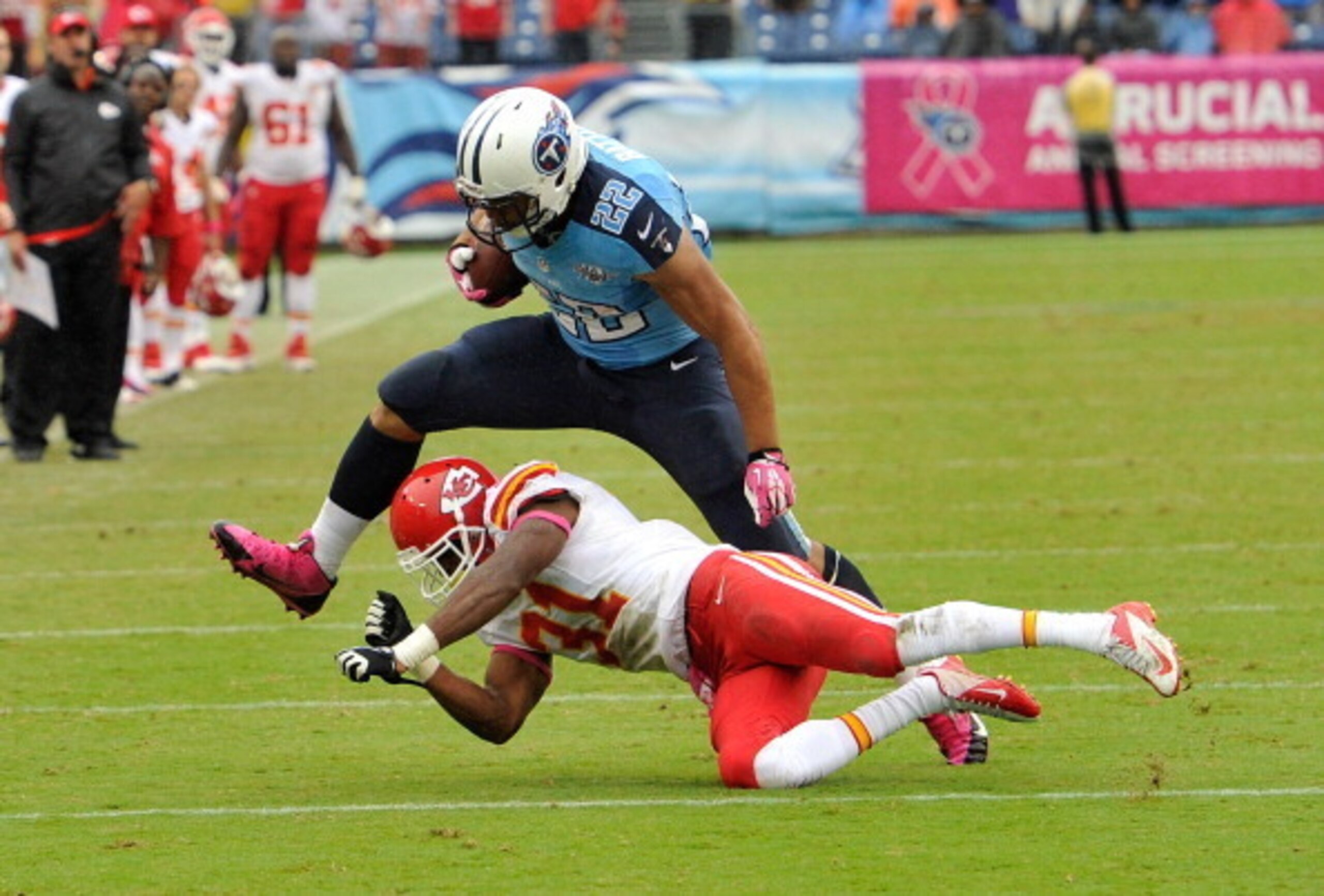
Power
In previous seasons, Jackie Battle (6'2", 240 lbs, seven seasons) was a big back instead of a powerful back. He was too tentative and submitted to contact instead of fighting through it. In a short-yardage role for the Titans in 2013, he took a more aggressive approach. He didn't consistently move the pile, but he did convert many third downs and ran right over a safety more than once.
Speed
Battle is too tall and top-heavy to have any real speed or agility.
Vision
There weren’t many opportunities for Battle to show off his vision within his role. When he did get opportunities, he too often ran into piles instead of space.
Receiving
He caught the passes that came his way and made one big play, but there were very few passes thrown in his direction.
Overall
It's clear that Battle fit the role he was asked to fill for the Titans. However, it's also clear that he shouldn't be asked to take on a more expansive role.
85. Cyrus Gray, Kansas City Chiefs
6 of 90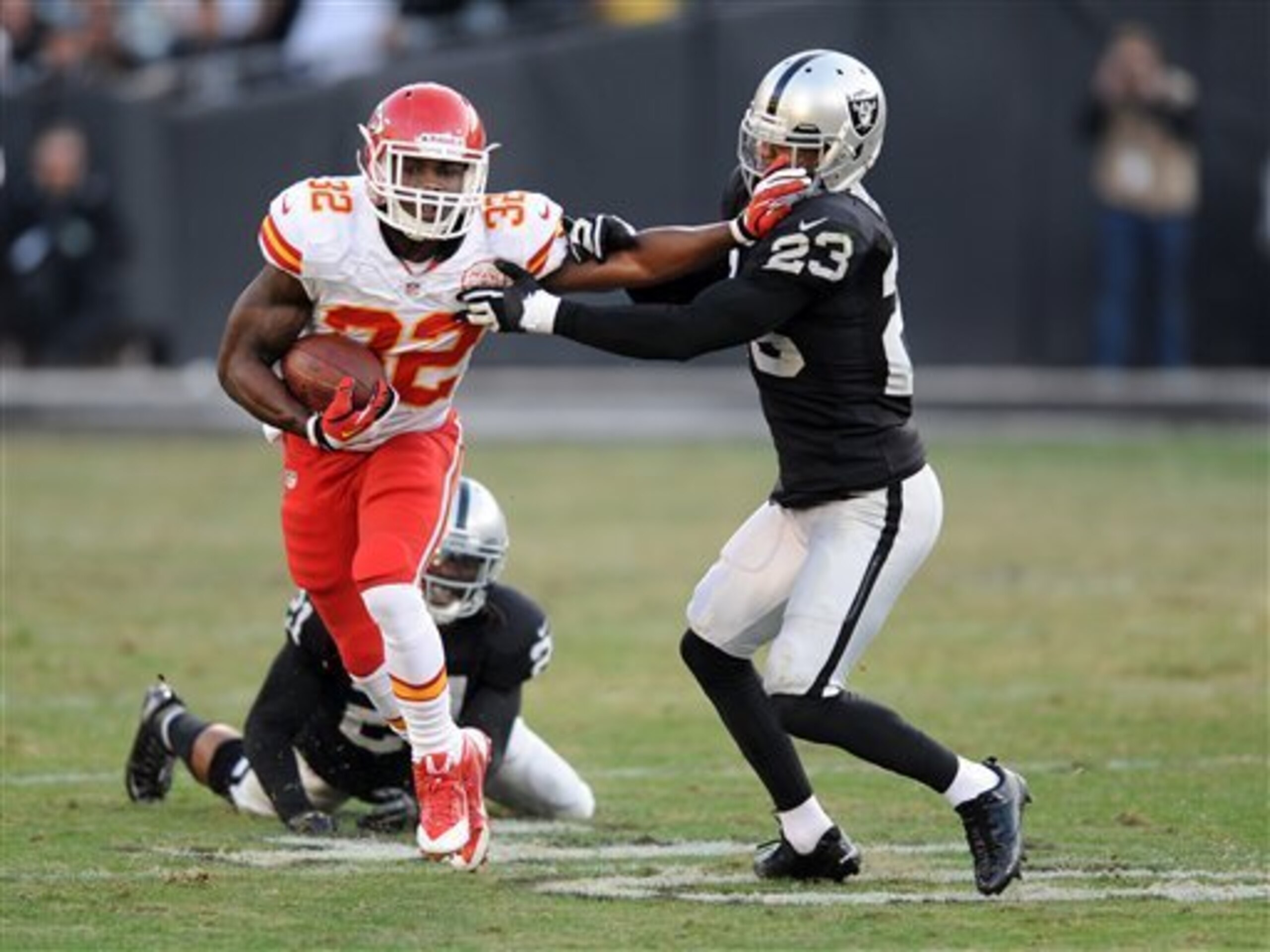
Power
Cyrus Gray (5'10", 206 lbs, two seasons) is a strong player who plays a little bit too tall. He could break more tackles with a lower, more aggressive running style.
Speed
While he obviously doesn't have the breakaway speed of teammate Jamaal Charles, Gray can be an explosive player. His quickness behind the line of scrimmage is impressive, but he would likely fit best as a one-cut runner.
Vision
Gray needs to be quicker in order to recognize and react to running lanes. He sees cutback opportunities, but he doesn't anticipate them.
Receiving
He is able to work as a receiver out of the backfield, but Gray isn't very elusive in space and has limited ball skills.
Overall
Gray has played sparingly during his two-year career. He doesn't appear set to break out and will likely be competing for his roster spot next season.
84. Brandon Bolden, New England Patriots
7 of 90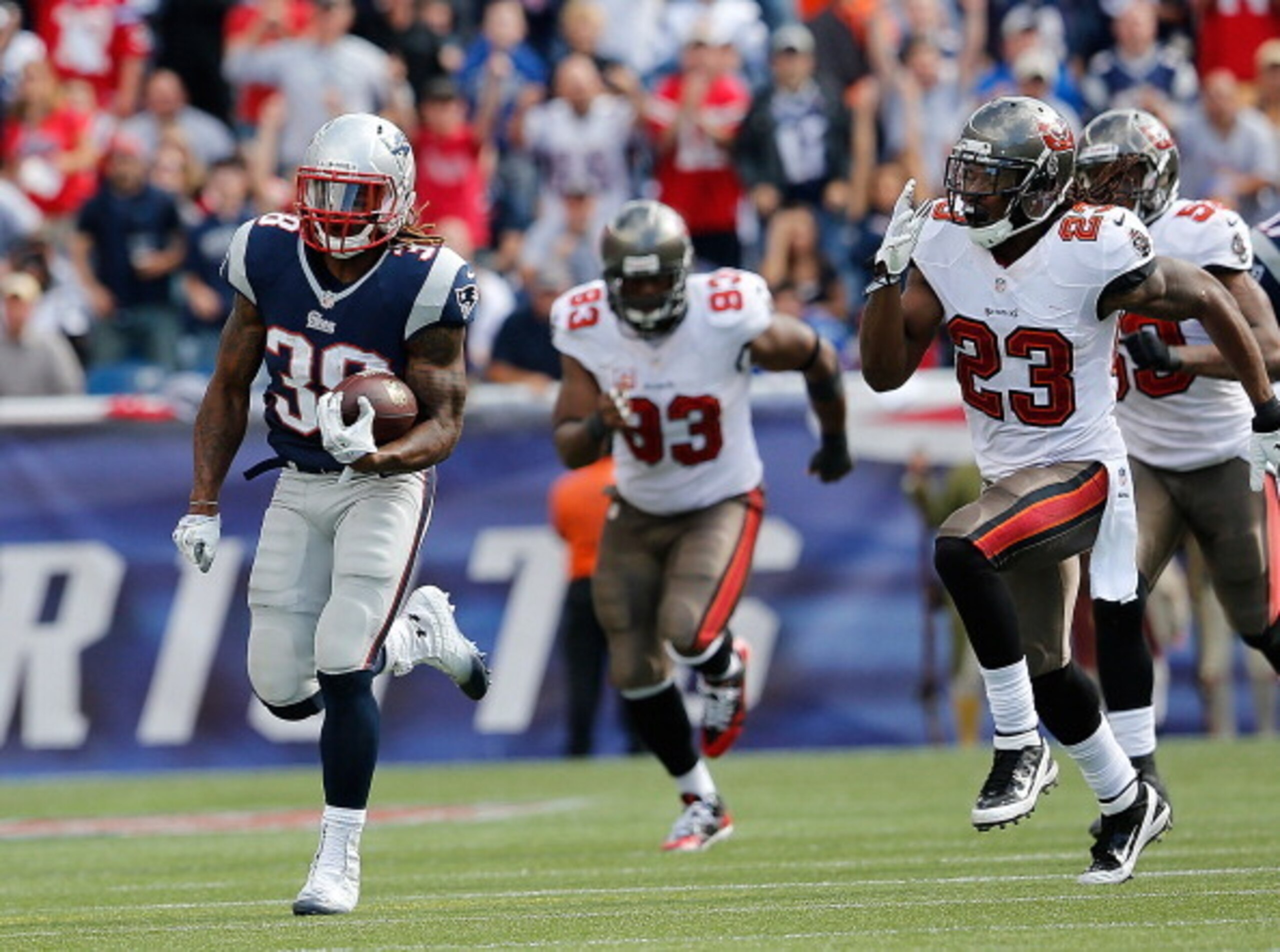
Power
Brandon Bolden (5'11", 220 lbs, two seasons) plays with a low pad level and is aggressive when initiating contact. He uses his low center of gravity to keep his momentum moving forward, but he won't consistently break tackles because of his power.
Speed
Although he is not an exceptionally fast player, Bolden has above-average quickness, good acceleration and enough long speed to break off big runs. Sometimes, though, he overestimates his own speed and tries to break off bigger gains when he should have been more aggressive inside.
Vision
Inconsistency was the main issue here. Bolden showed an understanding of how to set up holes with patience and awareness, but he made too many bad decisions.
Receiving
Bolden has the ability to play in space and can be effective after the catch, but he dropped too many passes in 2013.
Overall
His physical talent is obvious, and he hasn't been in the league for that long, but Bolden will likely be competing for a roster spot again next season.
83. Benny Cunningham, St. Louis Rams
8 of 90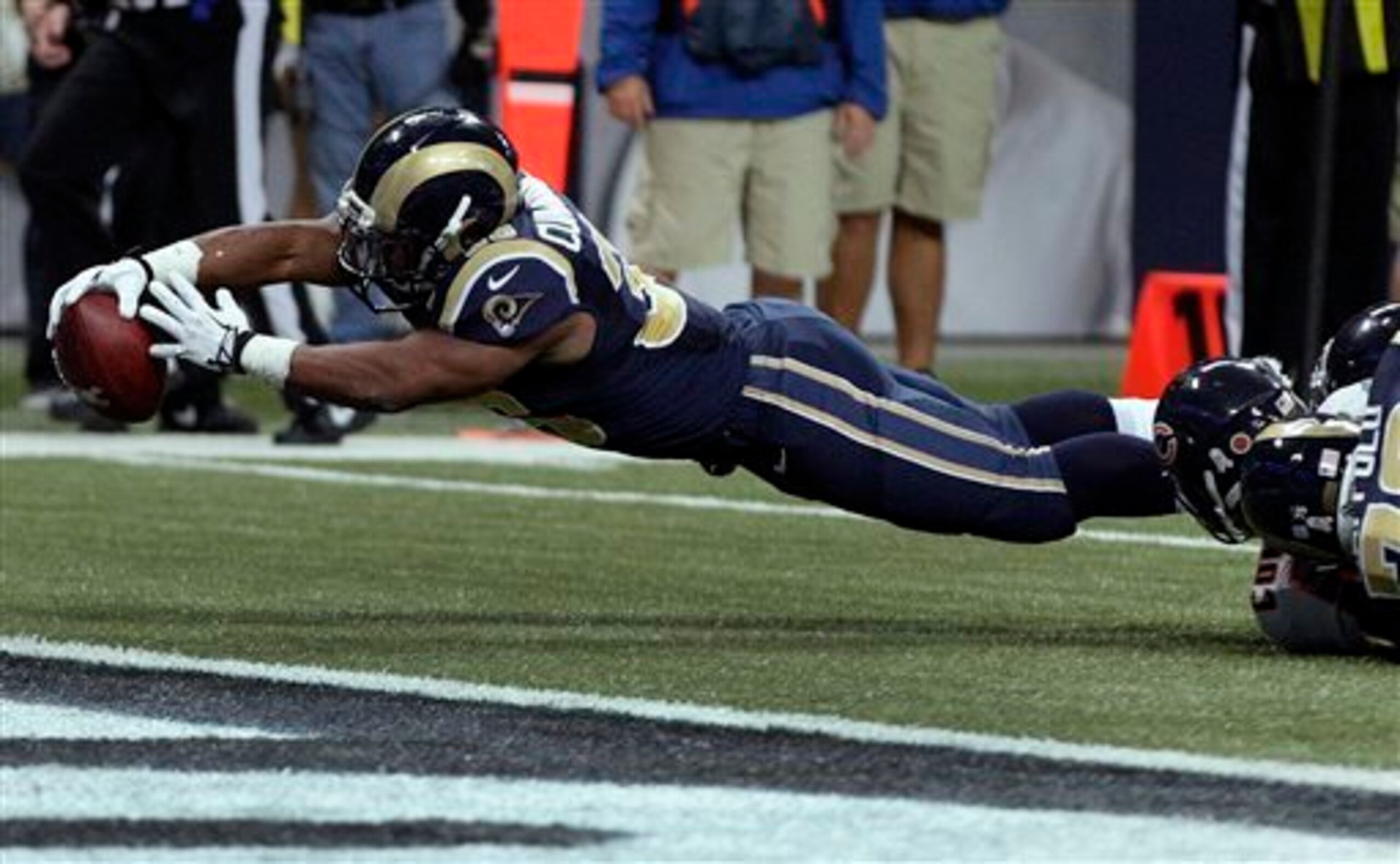
Power
Benny Cunningham (5'10", 217 lbs, one season) isn't a big, imposing runner. He relies more on his speed to gain yardage. However, he also isn't a back who will allow himself to be punished. He doesn't shy away from contact and can deliver hits to defensive backs.
Speed
Cunningham has a good burst of acceleration and breakaway straight-line speed. However, he is not overly agile and doesn't adjust quickly behind the line of scrimmage. Cunningham has his most success if he is already in space when he gets the ball.
Vision
Zac Stacy took over as the Rams' feature back last season because he could create yards out of nothing. Cunningham doesn't do that. He is a point-and-go runner who doesn't manipulate the defense or show great vision.
Receiving
Cunningham has the skill set that suggests he can be a valuable receiving option. His natural ball skills and speed will continue to allow him to be effective in space like he was in 2013.
Overall
It was an unspectacular first season for Cunningham, but it was not necessarily a bad one. He has tools to build upon, and he could develop into a good role player for the Rams.
82. Daniel Thomas, Miami Dolphins
9 of 90
Power
Daniel Thomas (6'1", 235 lbs, three seasons) is strong enough to kick his way through arm-tackles, but he doesn't carry enough bulk to break through bodies at the line of scrimmage. He does look to get the most out of his size by lowering his pads into tackles and being aggressive through contact.
Speed
Thomas should ideally play in a zone-blocking-based run game. He is best suited to be a one-cut runner, because he has an impressive burst but underwhelming agility. He is not very fluid in his hips, so he doesn't make subtle moves behind the line of scrimmage.
Vision
Thomas was limited in how he set up his runs and manipulated the defense last season, but what he did do, he did well. He routinely made the right decision behind the line of scrimmage and was aggressive once he had picked the right lane to attack. He was often swallowed up by defenders because of an overwhelmed Dolphins offensive line that gave him nowhere to go.
Receiving
He was a rarely used option out of the backfield, but he was reliable when called upon.
Overall
The situation for running backs in Miami wasn't great in 2013, but Thomas was able to have his stretches of production. He isn't an overwhelming athlete, so he may have limited potential, but the talent to be a valuable contributor at this level is there.
81. James Starks, Green Bay Packers
10 of 90
Power
James Starks (6'2", 218 lbs, four seasons) is taller than he is big. However, he is a strong back who will break arm-tackles at times. He needs to be more consistent with how he finishes runs and play with more aggression through contact.
Speed
He's faster than quick, but he's still not that fast. Starks’ main issue is a lack of fluidity when changing direction. He is unable to subtly turn from running lane to running lane behind the line of scrimmage or slide past defenders in space. He also makes too many unnecessary movements.
Vision
Although he finds the right hole more often than not, Starks doesn’t anticipate the movement of defenders. This prevents him from consistently setting up blocks or manipulating defenders on the second level.
Receiving
Starks was rarely used as a receiver. Although he was reliable when targeted, he didn't show any real dynamic ability or versatility.
Overall
Starks is unlikely to be a factor for the Packers moving forward because of Eddie Lacy and Johnathan Franklin. However, he should be able to find a role as a contributor elsewhere. He has no obvious weaknesses, but he also has no notable strengths. He is an average all-around player.
80. Daryl Richardson, St. Louis Rams
11 of 90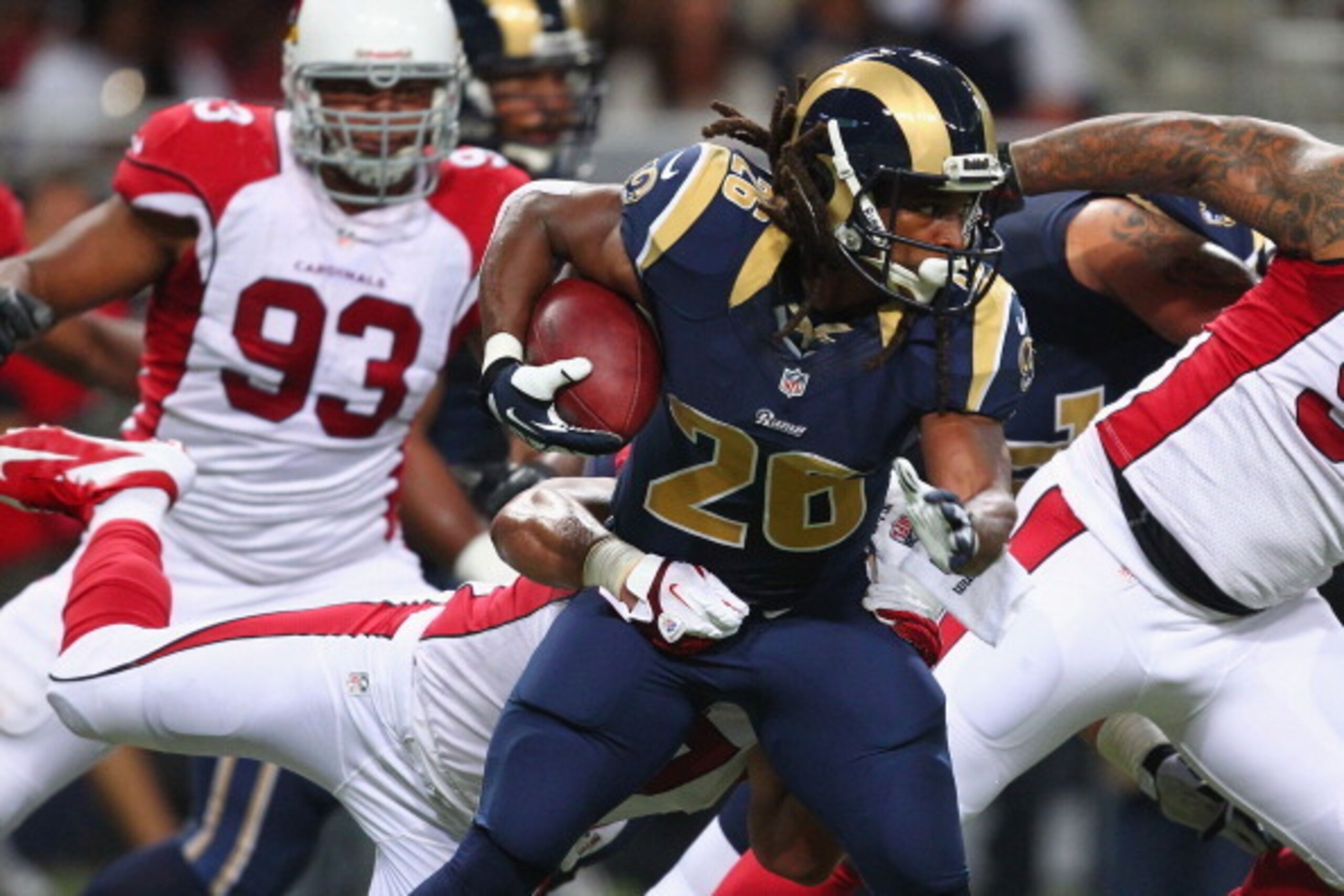
Power
Daryl Richardson (5'10", 206 lbs, two seasons) is a back who seeks out and aggressively initiates contact, but he’s too small and slender to make any real impact.
Speed
Richardson is quick, but not exceptionally quick. He has the speed to get down the field when opportunities arise, but he won't often make defenders miss, and he won't extend runs to the end zone.
Vision
His vision is impressive. He understands how to set up running lanes and make good decisions quickly. Unfortunately, his vision is made to look worse than it really is, because he lacks any physical traits to exploit the defense.
Receiving
A few drops affect what otherwise would be a good showing for Richardson as a receiver. He doesn't intimidate the defense, but he can move around the field and make receptions in different ways.
Overall
Richardson’s opportunity to become a starter came this season. While he didn't play poorly against the Arizona Cardinals in Week 1, he still looked like a backup running back, and it was no real surprise that Zac Stacy eventually took his starting spot.
79. Jason Snelling, Atlanta Falcons
12 of 90
Power
Jason Snelling (5'11", 234 lbs, seven seasons) has a well-crafted frame and an aggressive running style that allows him to punish defenders through contact. Snelling showed a skill set that suggests he should be an excellent goal-line back.
Speed
Snelling's biggest weakness is his lack of speed. He is fast enough when running in a straight line, and he can sustain that speed through one cut. However, his agility leaves a lot to be desired, and his acceleration is only adequate.
Vision
The veteran runner generally makes good decisions and, at times, he showed off the ability to manipulate defenders who were engaged with his offensive linemen. He needs to be more consistent with setting up his blocking, though, in order to get the most out of it on a snap-to-snap basis.
Receiving
He looks like an atypical receiving back because of his size, but Snelling isn’t a one-dimensional player. He is a natural hands-catcher, and he is generally a mismatch against defenders when put in space because of his power.
Overall
Snelling is a role player who didn't play that much for the Falcons in 2013. However, he did show his talent when he got opportunities.
78. Peyton Hillis, New York Giants
13 of 90
Power
Peyton Hillis (6'2", 250 lbs, six seasons) is a big back, but he’s not as powerful as his size suggests. Hillis is a timid runner who doesn’t keep his feet moving through contact. He plays much smaller, trying to beat defenders with his quickness rather than his bulk.
Speed
While he doesn't have home-run speed or exceptional acceleration, Hillis is more agile than he initially appears. This showed up most when he ran routes out of the backfield.
Vision
With the Giants, Hillis appeared to predetermine where he was going before the snap. He is a point-and-run player who doesn’t adapt to his blocking. Hillis showed no patience to set up his blocking or creativity to find space.
Receiving
Although he only had a small sample size in 2013, Hillis proved to be a good receiving option. He didn't consistently line up out wide and run a variety of routes, but he was a natural hands-catcher out of the backfield.
Overall
Hillis has the ability to be a third-down back. He should be able to find a spot on a roster that allows him to contribute, but it's unlikely he'll ever be one of the better players in that role in the NFL.
77. Da'Rel Scott, New York Giants
14 of 90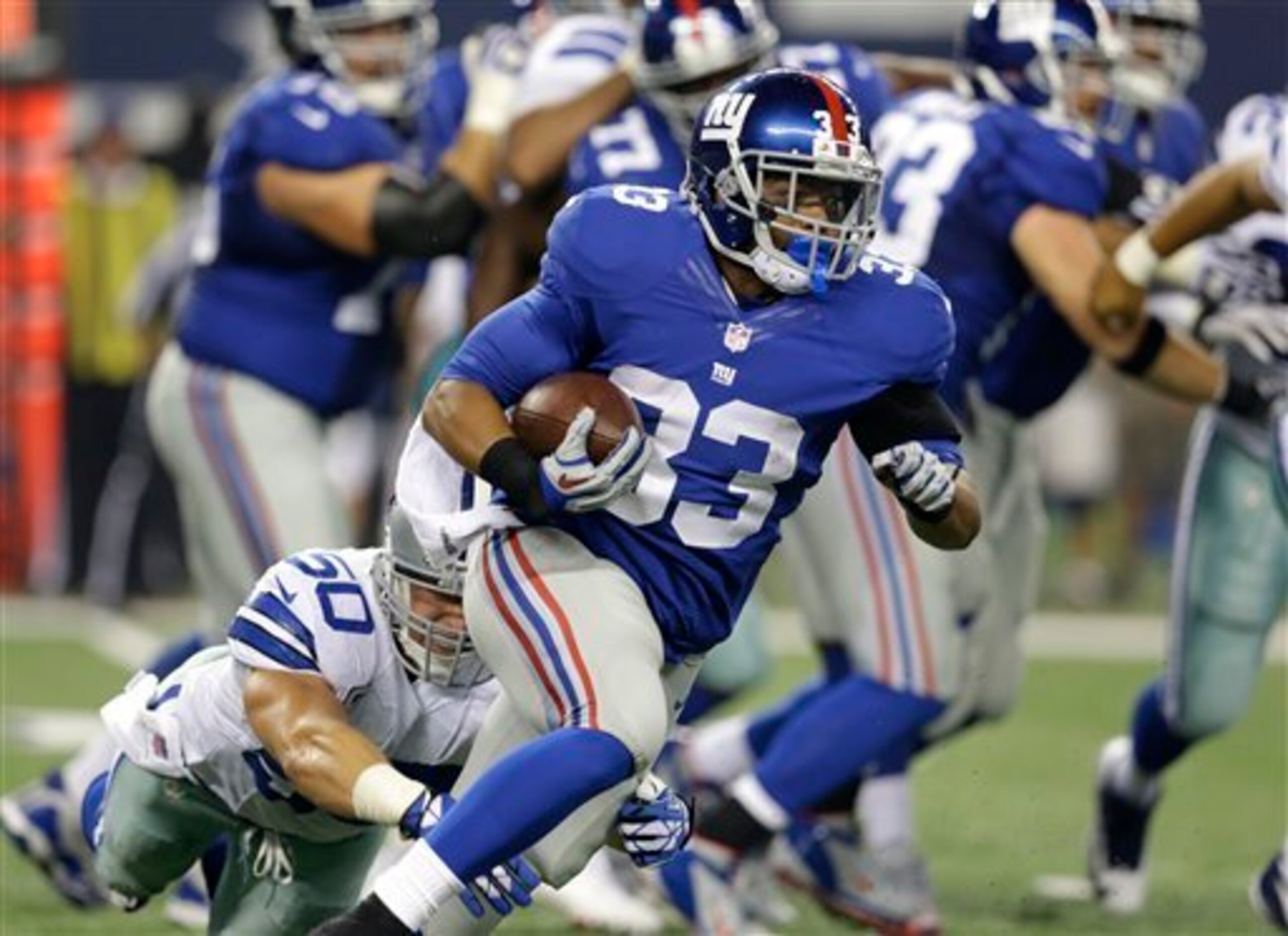
Power
Da'Rel Scott (5’11", 210 lbs, three seasons) isn't a very strong, impactful runner. He has a slender but stout frame that allows him to be aggressive against contact without breaking many tackles.
Speed
Scott is quick and has the breakaway speed to make plays in space.
Vision
It wasn't easy to run behind the Giants offensive line in 2013. Scott didn't help himself, either, because he was too quick to attack any potential running lanes. He often ran into his own blockers due to the fact that he didn't show enough patience.
Receiving
Including that infamous interception on a pass intended for him from Week 1 against the Dallas Cowboys, Scott and Eli Manning never appeared to be on the same page in the passing game in 2013.
Overall
He is still a relatively young player, but Scott has yet to establish himself as he enters his fourth season. He will likely have to fight for any type of role in 2014.
76. Bilal Powell, New York Jets
15 of 90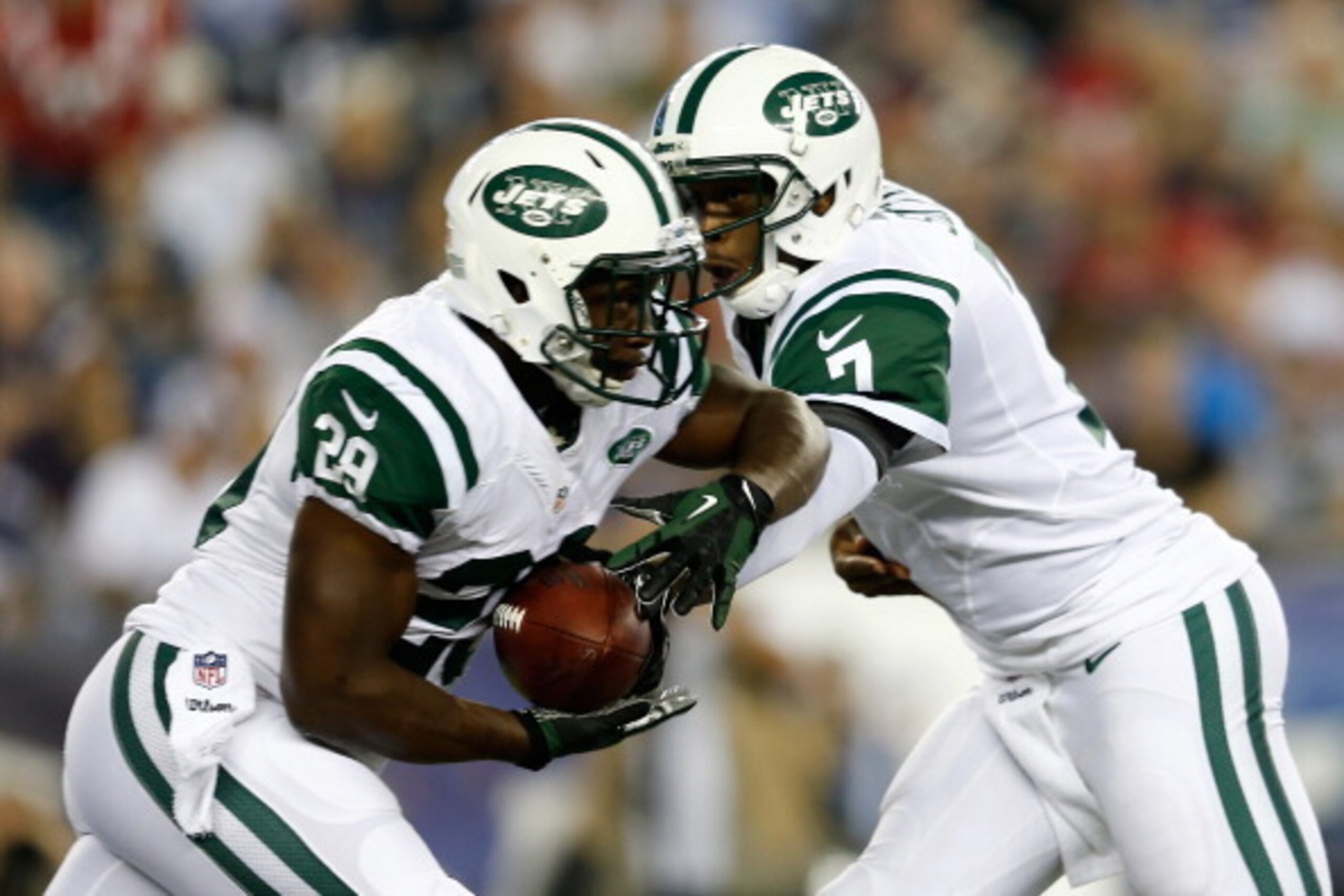
Power
Bilal Powell (5'10", 204 lbs, three seasons) isn't a physical runner and doesn't carry enough bulk to consistently break tackles through contact.
Speed
Powell is quick, but he doesn't have the speed to take advantage of vast areas of space or outrun defenders who are in good position. His quickness alone allows him to be productive, though. He can fluidly skip around defenders and find his way through gaps in the offensive line with ease.
Vision
Rarely does Powell miss open running lanes, and he is seemingly always aware of any defenders who get quick penetration through the line of scrimmage. He doesn't create much yardage on his own, but he does not let the work of his offensive go to waste.
Receiving
Powell had a number of drops in 2013, and he's not an explosive or a dynamic option out of the backfield.
Overall
It's unlikely that Powell will ever be a full-time starter in the NFL, but he is smart enough and elusive enough to be part of a committee approach at the position.
75. Jonathan Dwyer, Pittsburgh Steelers
16 of 90
Power
Jonathan Dwyer (5'11", 229 lbs, four seasons) is a powerful back, demonstrating that skill in short-yardage situations during the 2013 season. His problem is that he is not consistently aggressive enough as a runner to get the most out of that power.
Speed
Dwyer is not a fast runner, but his biggest issue is his lack of agility. He has some straight-line speed, but he takes too long to turn or cut to get through holes consistently. He doesn’t make defenders miss in space.
Vision
The former college fullback is a decisive runner who will attack the hole when he sees it, but too often he makes the wrong decision. He doesn't set up blocks well and doesn't anticipate how the defense will react to his movement.
Receiving
Dwyer is not a threat in space or a versatile receiver. He can't run routes to lose defenders from the slot or from out wide.
Overall
At best, Dwyer figures to be a backup throughout his career. He was actually cut before the beginning of last season, but got another chance with Pittsburgh after Isaac Redman struggled.
74. Edwin Baker, Cleveland Browns
17 of 90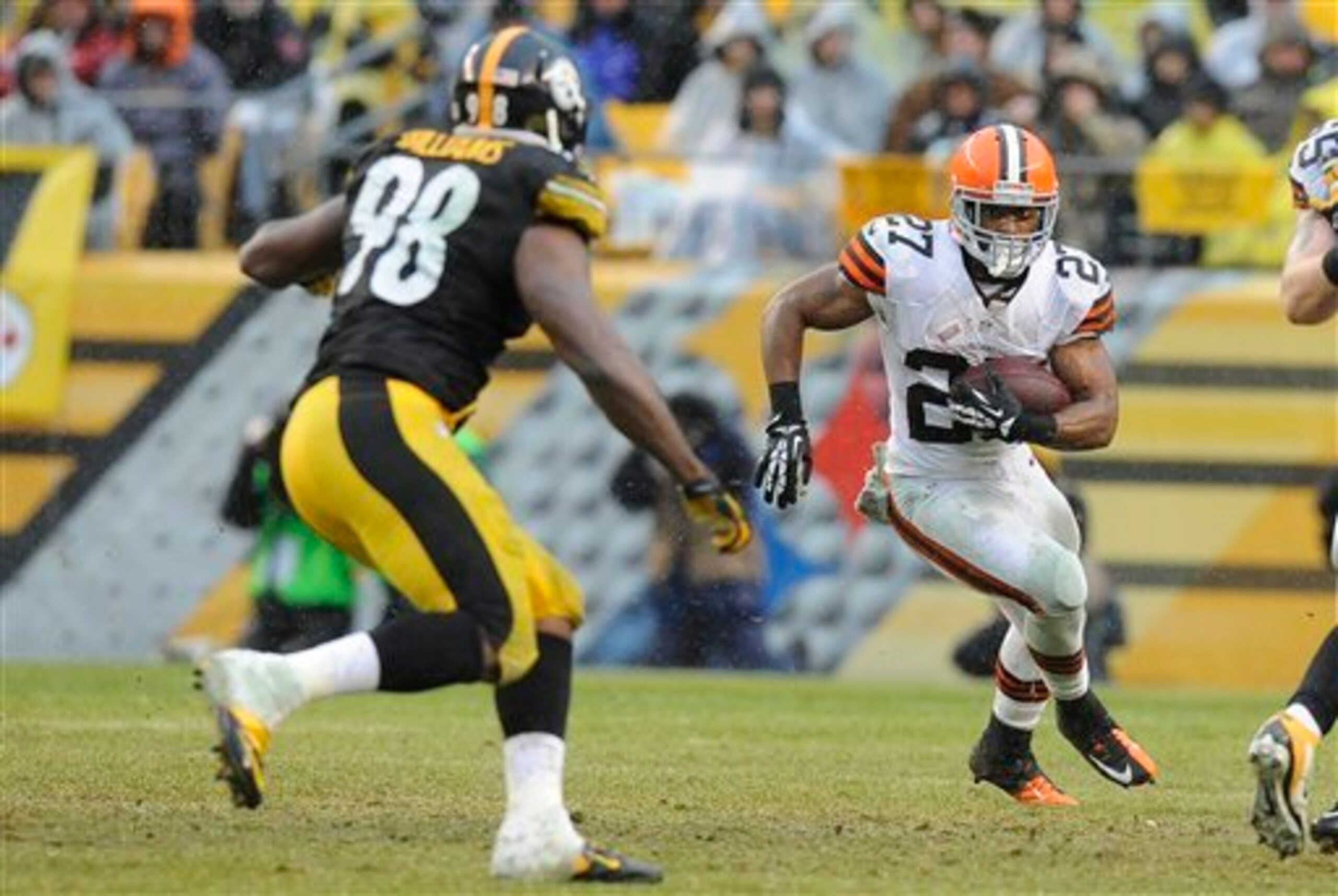
Power
Edwin Baker (5'8", 215 lbs, one season) is a small player, but he isn't scared of contact. Much like Ray Rice, Baker is willing to attack bigger defenders and fight for forward momentum from play to play.
Speed
He doesn't have great breakaway speed, but Baker is quick and has good acceleration. He changes direction with ease and doesn't slow down when attacking the line of scrimmage.
Vision
Baker wasn't getting easy yardage on every snap he played. He often was forced to fight and adjust behind the line of scrimmage. He showed quick reactions and good vision at times, but he needs to show it consistently for a prolonged stretch.
Receiving
Baker is a willing hands-catcher who showed the potential to make plays in space. He needs a greater sample size moving forward, but the talent is there.
Overall
It was tough for Baker to make an impact in the two games when he carried the load in 2013, as he was often having to adjust to good defensive play. He made some bad decisions, but he proved he has potential to play in this league.
73. Stepfan Taylor, Arizona Cardinals
18 of 90
Power
Stepfan Taylor (5'9", 216 lbs, one season) isn't a big back or someone who powers through tackles. He is willing to initiate contact, but he didn't keep working his feet through the tackle in 2013.
Speed
Taylor is a quick, fluid athlete. He has enough acceleration to quickly get through the line of scrimmage. He didn't have many opportunities to break away on the second level, but he also didn't appear to have much straight-line speed.
Vision
The sample size is much too small, but Taylor showed a lot of promise in this area in 2013. He combined patience and decisiveness to consistently get the most out of his blocking.
Receiving
Taylor was reliable when targeted, but it should be noted that he wasn't featured much in the passing game.
Overall
There is clearly NFL talent there, but he has a long way to go before he establishes himself as a worthy starter in the NFL.
72. Trent Richardson, Indianapolis Colts
19 of 90
Power
Still one of the most powerful players in the NFL, Trent Richardson (5'9", 225 lbs, two seasons) breaks tackles with ease. It's this trait that will make him a valuable goal-line back for a long time, despite his failings as a feature back.
Speed
Once he gets up a head of steam, he's fast in the open field, but his lack of quickness through the line of scrimmage is the biggest reason why he is failing as a runner.
Vision
He doesn't get many holes behind the Colts' awful offensive line, but he missed too many of the opportunities he did get. He's not patient or decisive enough when he needs to be. This may change the longer he is in the league, but right now, he's simply not a smart runner.
Receiving
Although he doesn't look like your typical receiving back, Richardson is actually a dangerous receiver out of the backfield. He had a few drops and isn't versatile enough to move around the formation, but he's definitely a threat in the receiving game.
Overall
Richardson obviously has plenty of talent, and he's not as bad as his statistics indicate. His status as a No.3 overall draft pick will hang over his head throughout his career, but at worst, he will be a valuable goal-line back and maybe a third-down option if the Colts move to a more expansive offense. It's still much too early to completely write off the former Alabama running back.
71. Tashard Choice, Indianapolis Colts
20 of 90
Power
Tashard Choice (5'10", 210 lbs, six seasons) isn't a dominant runner, but he does have good power for his size. His combination of quickness and power keeps defenders off balance in space and allows him to knock them backward.
Speed
Although he has impressive quickness, Choice lacks breakaway speed and doesn't accelerate quickly through holes.
Vision
Choice needs to show more awareness on the field. He was too quick to put his head down and initiate contact when running between the tackles.
Receiving
He gets a high grade here because of his flexibility and natural hands-catching ability, but it should be noted that he had more than one drop in 2013.
Overall
Choice is a player who figures to have a relatively long career as a backup without ever making a sustained impact on the field.
70. Brandon Jacobs, New York Giants
21 of 90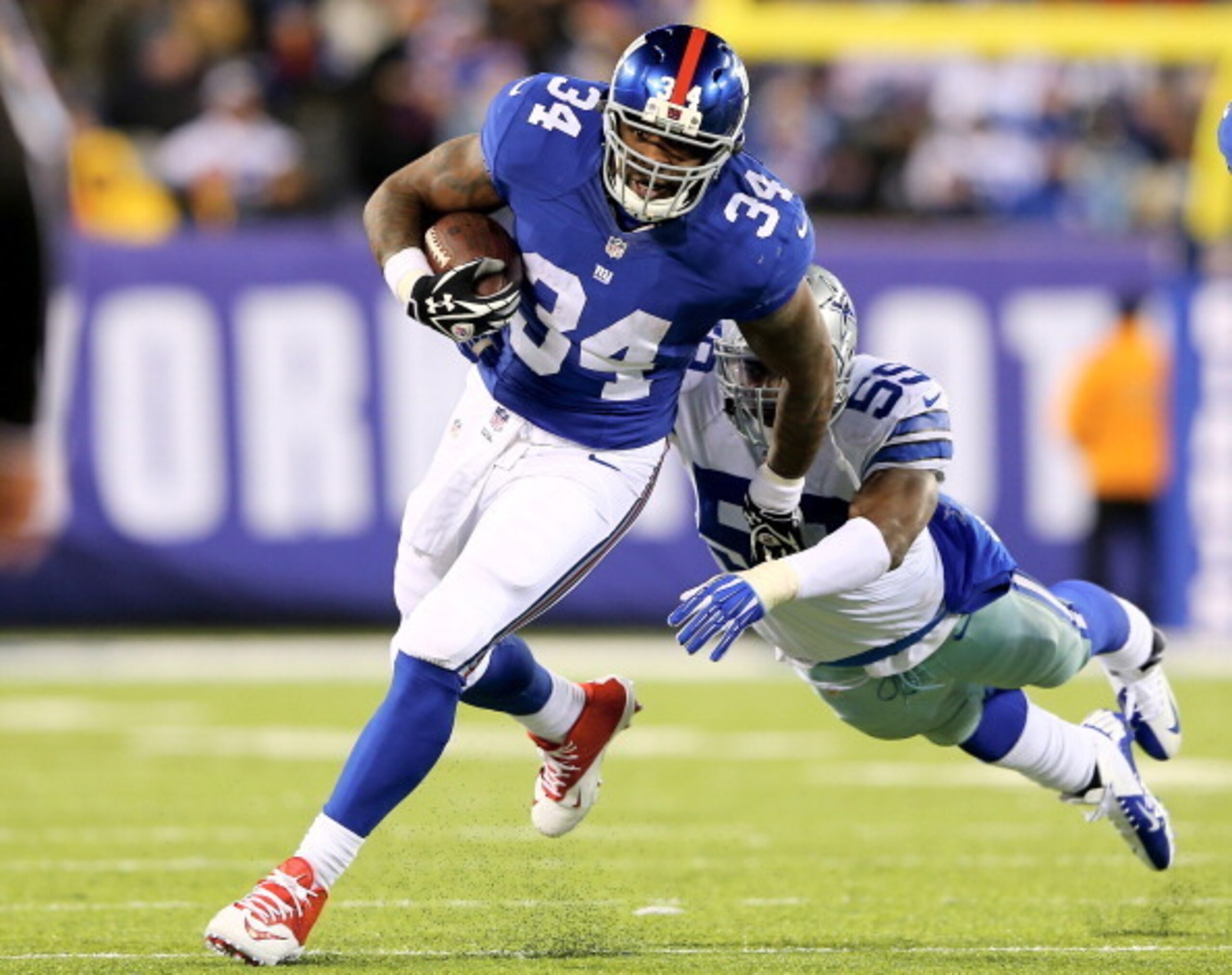
Power
A lack of leg power is all that limits Brandon Jacobs (6'4", 264 lbs, nine seasons). He is a top-heavy runner who uses his bulk to finish plays moving forward, but he doesn’t power through contract or break arm-tackles consistently because of his lack of leg power.
Speed
He is no home-run threat when he finds space, and he lacks ideal agility, but Jacobs has a burst that allows him to be effective between the tackles or outside. He'll get to the second level in a hurry, but he generally doesn't go much farther.
Vision
The biggest knock on Jacobs throughout his career has been his tentativeness as a runner. Too often he ran like a small back and was caught because of it. In 2013, he had a different attitude. He was decisive and aggressive while still being aware of potential cutback opportunities.
Receiving
He's never been a reliable or dangerous receiver, and 2013 was no exception.
Overall
Jacobs gave the Giants offense what it needed in 2013: an effective running back. Even though he was effective, he was also limited in his final season.
69. Felix Jones, Pittsburgh Steelers
22 of 90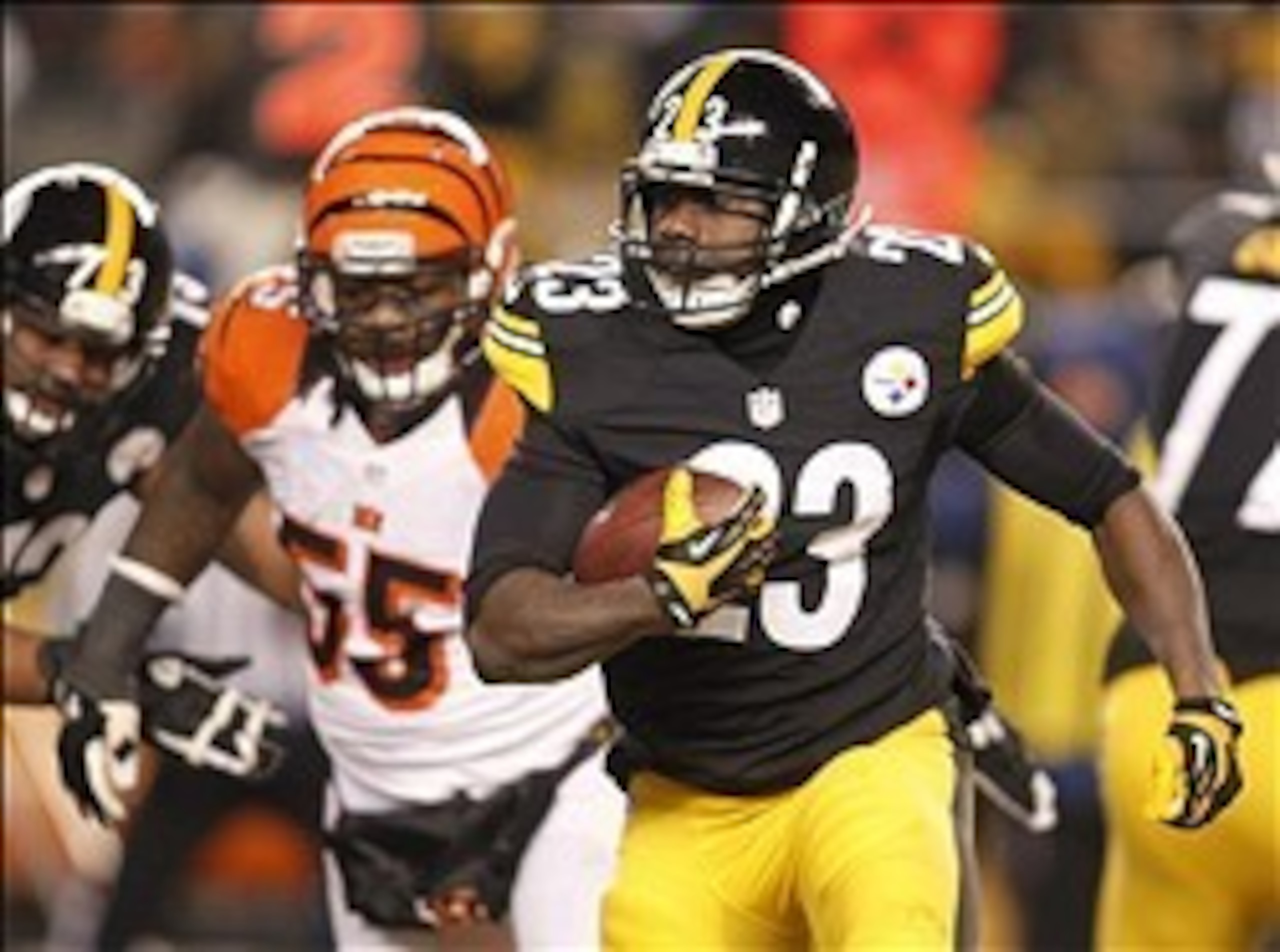
Power
Felix Jones (5'10", 215 lbs, six seasons) isn't an exceptionally powerful back, but he doesn't take much punishment, either. He can push defenders backward when he has favorable positioning.
Speed
A quicker-than-fast back who showed precise feet when working between the tackles, Jones' ability to quickly cut behind the line of scrimmage allowed him to be consistent as a complementary back.
Vision
In his sixth season, at 26 years of age, Jones appeared to be a refined runner. He found holes well and was decisive when opportunities arose. But most impressive was his ability to set up his blocking with his movement behind the line of scrimmage.
Receiving
Jones has the ability to be a good receiving back, but he had too few opportunities to show that in 2013.
Overall
A lack of exposure on the field keeps Jones' grade down. That's not to say he deserves an opportunity to start, but he should stay on an NFL roster if he continues to perform like he did in 2013.
68. Ronnie Hillman, Denver Broncos
23 of 90
Power
Ronnie Hillman (5'10", 195 lbs, two seasons) is a slight runner who relies on his speed more than his strength. Hillman is easy to bring down with arm-tackles and doesn't consistently gain forward momentum through contact.
Speed
If Hillman is to establish himself as a valuable player, he will likely need to rely upon his quick feet and short-area burst. He doesn't have great breakaway speed, but he won't need it if he can consistently use his quickness to elude defenders at the line of scrimmage.
Vision
The most impressive thing about Hillman's vision is his decisiveness. When he plants his foot and goes, he is very effective. However, he does hesitate a bit too often and doesn't yet appear to understand how to set up running lanes.
Receiving
Any back in Peyton Manning's offense will be asked to catch the ball. Hillman is a comfortable receiver who proved to be reliable in 2013.
Overall
There is obviously talent there, but Hillman needs to put his consistency together on tape if he is to have a greater role in the Broncos offense in 2014. That's even after considering that Knowshon Moreno may leave via free agency.
67. Justin Forsett, Jacksonville Jaguars
24 of 90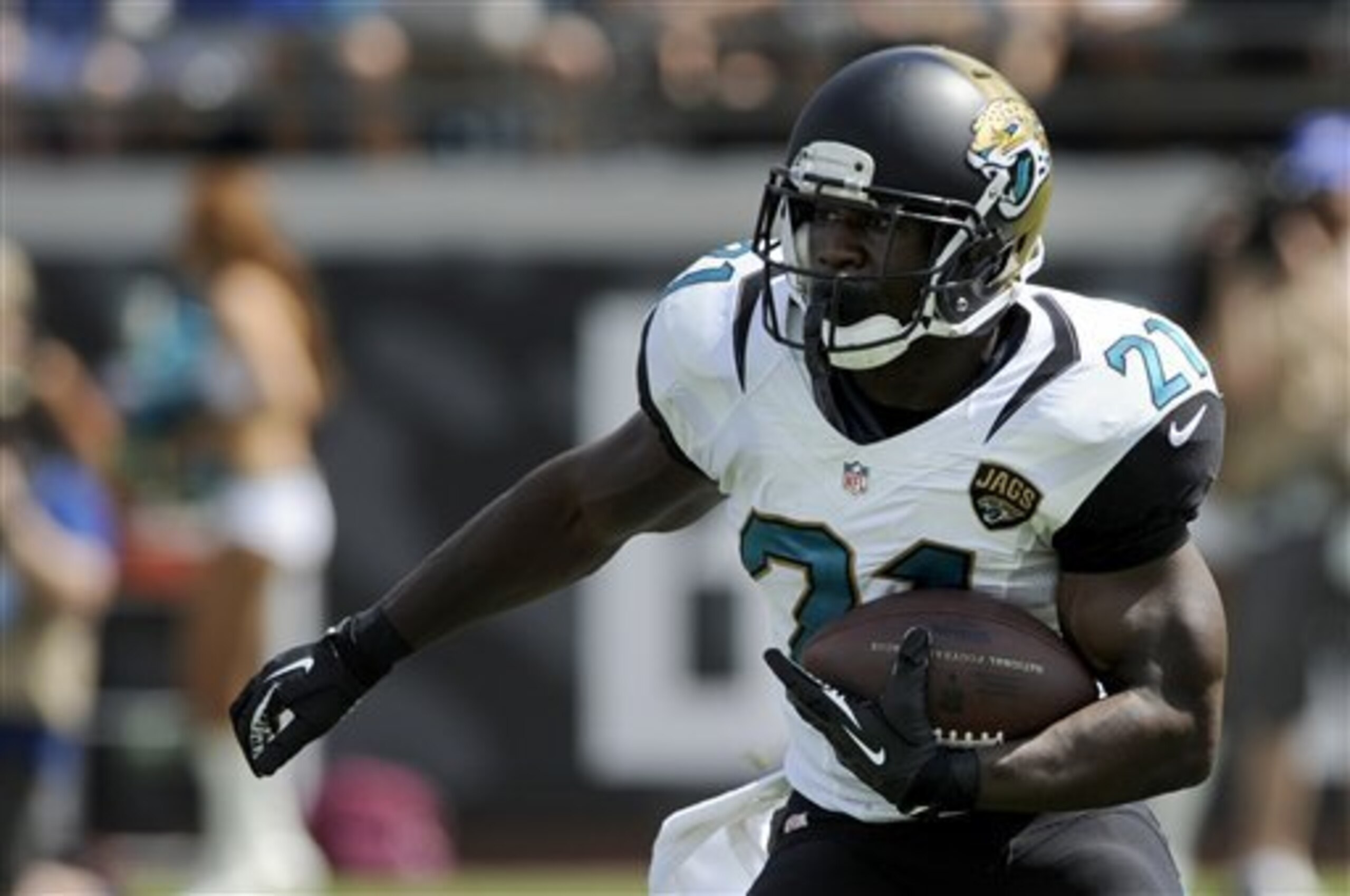
Power
Justin Forsett (5'8", 194 lbs, six seasons) is a below-average athlete who doesn't play with an exceptionally aggressive approach. That limits his impact in contact situations.
Speed
Forsett is shifty enough to make adjustments behind the line of scrimmage and get through holes in the line. But he lacks breakaway speed and doesn't have notably impressive acceleration.
Vision
At this stage of his career, Forsett's vision is unlikely to improve. He is inconsistent in his decision-making and doesn't excel at manipulating defenders with his movement.
Receiving
If he had more breakaway speed, Forsett would be a highly sought-after commodity for his receiving ability. He is versatile and reliable working out of the backfield and can move outside to run routes.
Overall
Forsett is a decent role player who lacks the athleticism to be a real game-changer.
66. Alfonso Smith, Arizona Cardinals
25 of 90
Power
Alfonso Smith (6'1", 209 lbs, four seasons) is not a big back and doesn't have much bulk. He does aggressively initiate contact, run low and keep his legs moving throughout the play. Smith is able to break arm-tackles, but he won't consistently finish plays moving forward.
Speed
Smith is very quick. His size works in his favor when working behind the line of scrimmage because he can change directions much quicker than defensive linemen. That allows him to slip through different running lanes. Smith's acceleration is impressive, and he has enough speed to run for big gains.
Vision
The value of quickness on the professional level isn't what it is on the college level. A player like Smith is a great example of that. He has all the quickness needed to make plays in space, but he struggles to find space because his vision is unimpressive.
Receiving
He’s not an exceptional talent as a receiver, but he is a versatile and reliable player who can line up in different areas of the field.
Overall
If this had been Smith's rookie season, he'd be perceived as a player to watch moving forward. However, he is 27 years of age and has been in the league for a few years. Smith would have developed by now if he were to ever become a starter.
65. Kendall Hunter, San Francisco 49ers
26 of 90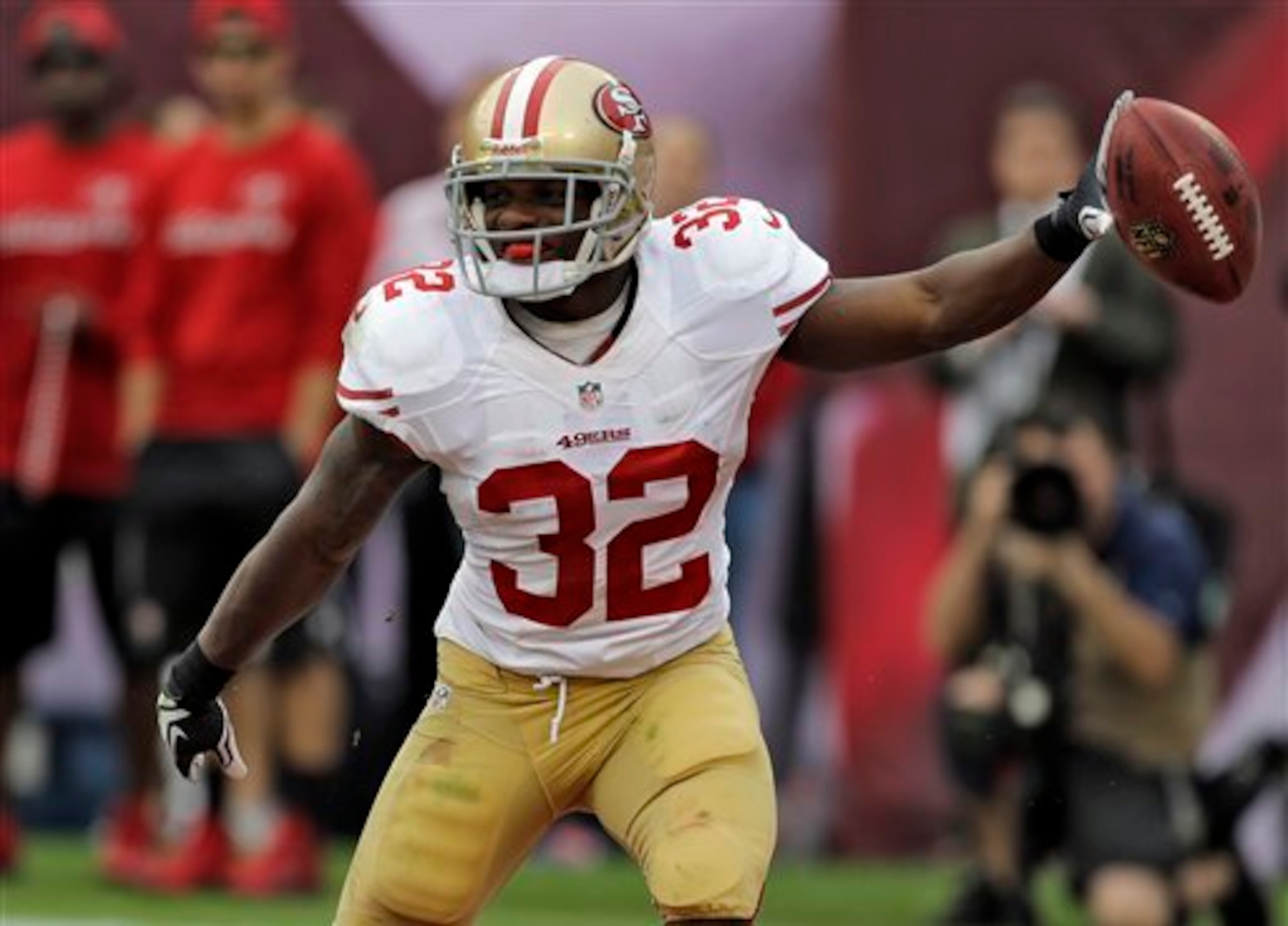
Power
Kendall Hunter (5'7", 199 lbs, three seasons) is a strong, well-built back, but he wasn't a very aggressive runner in 2013. He tended to submit to contact rather than attack it. Although he often ran low, he never used his low center of gravity to his benefit by keeping his legs moving through contact.
Speed
Hunter is a home run hitter with enough agility and acceleration to get to the second level. He is at his best when put in space.
Vision
Hunter was often hesitant and made too many bad decisions, despite a small number of touches. He didn't show an ability or understanding of how to set up his blocking, and he wasn't disciplined following his blocking when it was there at the snap.
Receiving
He wasn’t a receiving option for the 49ers and doesn’t have a skill set that suggests he could line up outside of the backfield.
Overall
Although he has a lot of physical talent, Hunter's technical ability as a running back let him down in 2013.
64. Brian Leonard, Tampa Bay Buccaneers
27 of 90
Power
Although he carries some bulk, Brian Leonard (6’1”, 225 lbs, seven seasons) doesn't break tackles consistently. That is largely because he doesn't run with aggression and he doesn't keep his feet moving through contact.
Speed
Leonard is agile and has a good enough burst to get to the second level. But he lacks any sustainable speed to break off big runs.
Vision
He is a patient runner who understands when to accelerate to the second level based on his blocking.
Receiving
He is a reliable receiver who can run different routes and comfortably make catches with his hands away from his body.
Overall
Leonard's sample size on the field impacted his ranking, but he proved to be a valuable role player for the Buccaneers in 2013.
63. Rashard Mendenhall, Arizona Cardinals
28 of 90
Power
Rashard Mendenhall's (5'10", 225 lbs, six seasons) compact frame and low center of gravity make him a powerful runner. He has proven throughout his career that he is an impressive goal-line and short-yardage back, something that was also evident in 2013.
Speed
Injuries slowed him during the preseason and early in the regular season. But as the season wound down, Mendenhall's burst appeared to be back. Before he tore his ACL at the end of the 2011 season, Mendenhall was an explosive back. That explosion was limited in 2013, but still evident on occasion.
Vision
The Cardinals offensive line often gave him nowhere to go, but Mendenhall made too many bad decisions in 2013. Peculiarly, he has a tendency to turn sideways into contact or even backward at times, and that prevents him from getting the most out of his blocking on every snap.
Receiving
Mendenhall is a reliable receiving option who can move around the formation and make plays in space. He wasn't used that often in 2013.
Overall
Had he been 100 percent all season, this likely would have been a higher ranking, but Mendenhall was a low-end starter in 2013, regardless of how poorly the Arizona Cardinals offensive line performed.
62. Roy Helu, Washington Redskins
29 of 90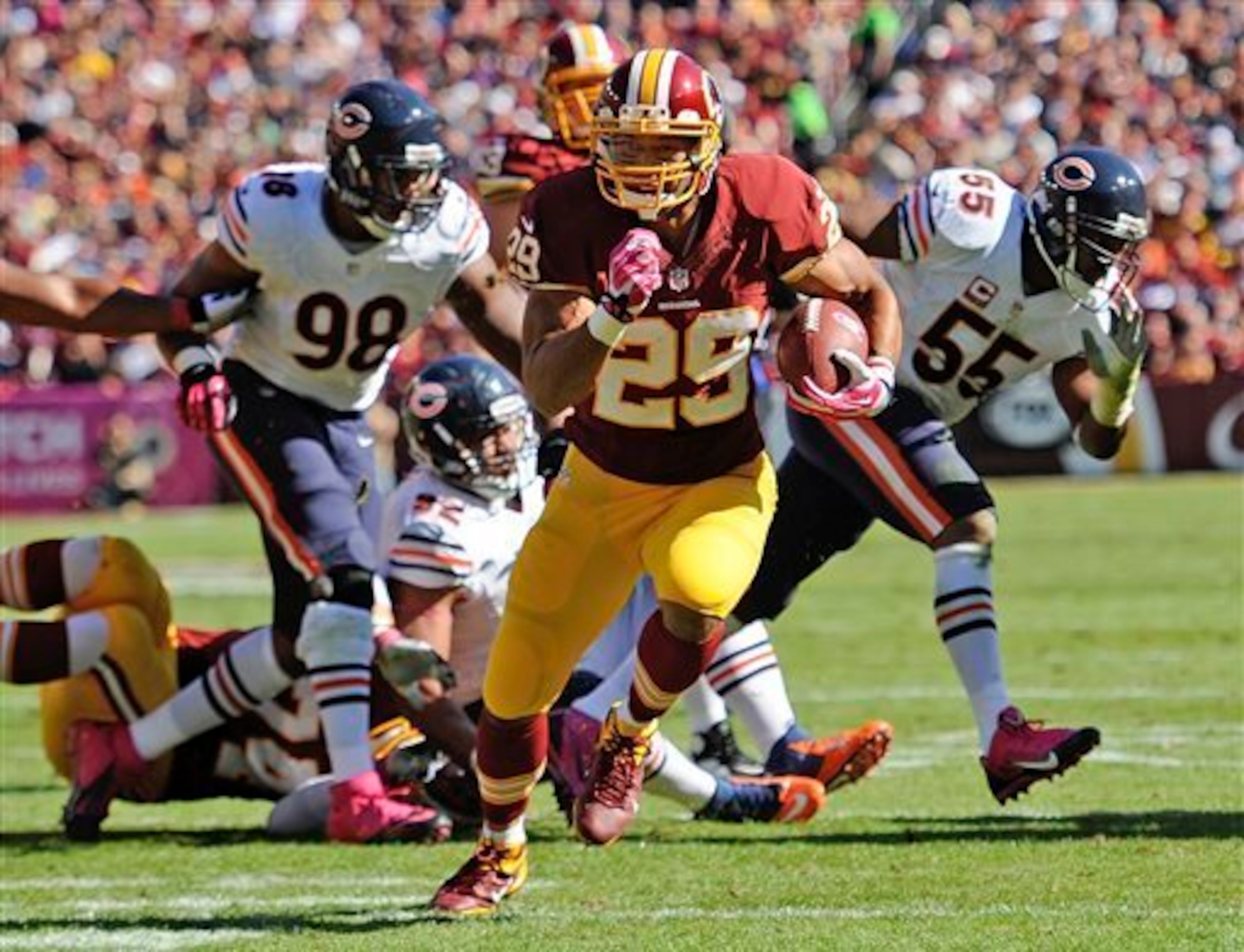
Power
Roy Helu (5'11", 215 lbs, three seasons) isn't a big back or an overly aggressive runner, but he does have the power to overrun defensive backs on occasion.
Speed
Fluidity is what stands out with Helu physically. He's not overwhelmingly athletic, but his ability to change directions so easily allows him to find gaps between the line of scrimmage and excel as a cutback runner.
Vision
A lack of touches is all that hampered Helu in this category. In 2013, he was clearly behind Alfred Morris, but he consistently showed off a clear understanding of how to get the most out of his blocking when he did touch the ball.
Receiving
A few drops hurt his rating, but Helu’s biggest issue as a receiver was that he didn’t see more targets.
Overall
After Alfred Morris established himself in Washington last year, it was unclear if Helu had any real shot at making an impact in 2012 or 2013. Although his touches were limited by Morris, his play in 2013 indicates that he still has the potential to be a high-quality starter.
61. Dennis Johnson, Houston Texans
30 of 90
Power
Dennis Johnson (5'7", 193 lbs, one season) carries a similar frame to that of Danny Woodhead in San Diego. Unlike Woodhead, however, he doesn't have the same aggressiveness and intelligence when he initiates contact with defenders.
Speed
Very quick, but not exceptionally fast, Johnson fit well in Gary Kubiak's offense because he could change direction quickly before accelerating through running lanes.
Vision
Johnson sees cutback lanes quickly and understands how to manipulate defenders who are engaged at the line of scrimmage.
Receiving
While he is quick, Johnson isn't a natural receiver and is a small target for his quarterback. He could be effective on screen plays and catching passes in the flat. But beyond that, his size becomes a problem.
Overall
Johnson's biggest issue coming out of college was ball security. That wasn't a concern for the Texans. Instead, he simply wasn't effective enough with the opportunities he received.
60. Isaiah Pead, St. Louis Rams
31 of 90
Power
Isaiah Pead (5'10", 197 lbs, two seasons) has a slender frame and doesn't have a low center of gravity. That limits how powerful he can be, but he is stronger than he looks. He can break tackles and won't take too much punishment from defenders.
Speed
A quick, fluid runner who has the speed to run away from defenders, Pead has above-average straight-line speed, quickness and acceleration.
Vision
Pead needs more exposure to show off his vision. He didn't touch the ball enough in 2013 to prove that he could consistently make good decisions and manipulate the defense.
Receiving
Pead can line up around the field and do a variety of things as a receiver. He is a natural hands catcher.
Overall
There is clearly talent there, but to this point in his career, Pead has proven to be an underwhelming player. He needs to turn things around next year or it may be too late.
59. Willis McGahee, Cleveland Browns
32 of 90
Power
Willis McGahee (6'0", 235 lbs, 11 seasons) was once a physical runner who defenses dreaded seeing on the field at the goal line. Now he is a shadow of his former self who braces for contact rather than exploding through it. He can still drag defensive backs with him, but he was too regularly knocked backward by linebackers.
Speed
Slowing down at 32 years of age after a career of touches is nothing irregular. McGahee's recovery from injury and his age sapped his physical talent in 2013. He still showed impressive quickness between the tackles at times.
Vision
It's easy to recognize that McGahee is a veteran runner. He is very patient, but he knows when to attack the defense and how to set up his blocking.
Receiving
A lack of fluid athleticism and no real speed make him a redundant receiving option.
Overall
He’s had an impressive career, but it would be even more impressive if he were able to make an NFL roster next season.
58. Khiry Robinson, New Orleans Saints
33 of 90
Power
Khiry Robinson (6'0", 220 lbs, one season) isn't a big back, but he is an aggressive runner who attacks defenders when given the opportunity. He runs hard and keeps his feet moving to finish plays going forward.
Speed
Robinson doesn’t have consistent home run hitter speed, but he is agile and has a good short-area burst.
Vision
At just 24 years of age, Robinson is already an intelligent and aware player. He makes good decisions and shows enough patience to be consistently effective.
Receiving
Robinson looks like he has a skill set that will translate well to the receiving game, but he wasn’t used that way in 2013.
Overall
Robinson’s role should expand in 2014.
57. Mike James, Tampa Bay Buccaneers
34 of 90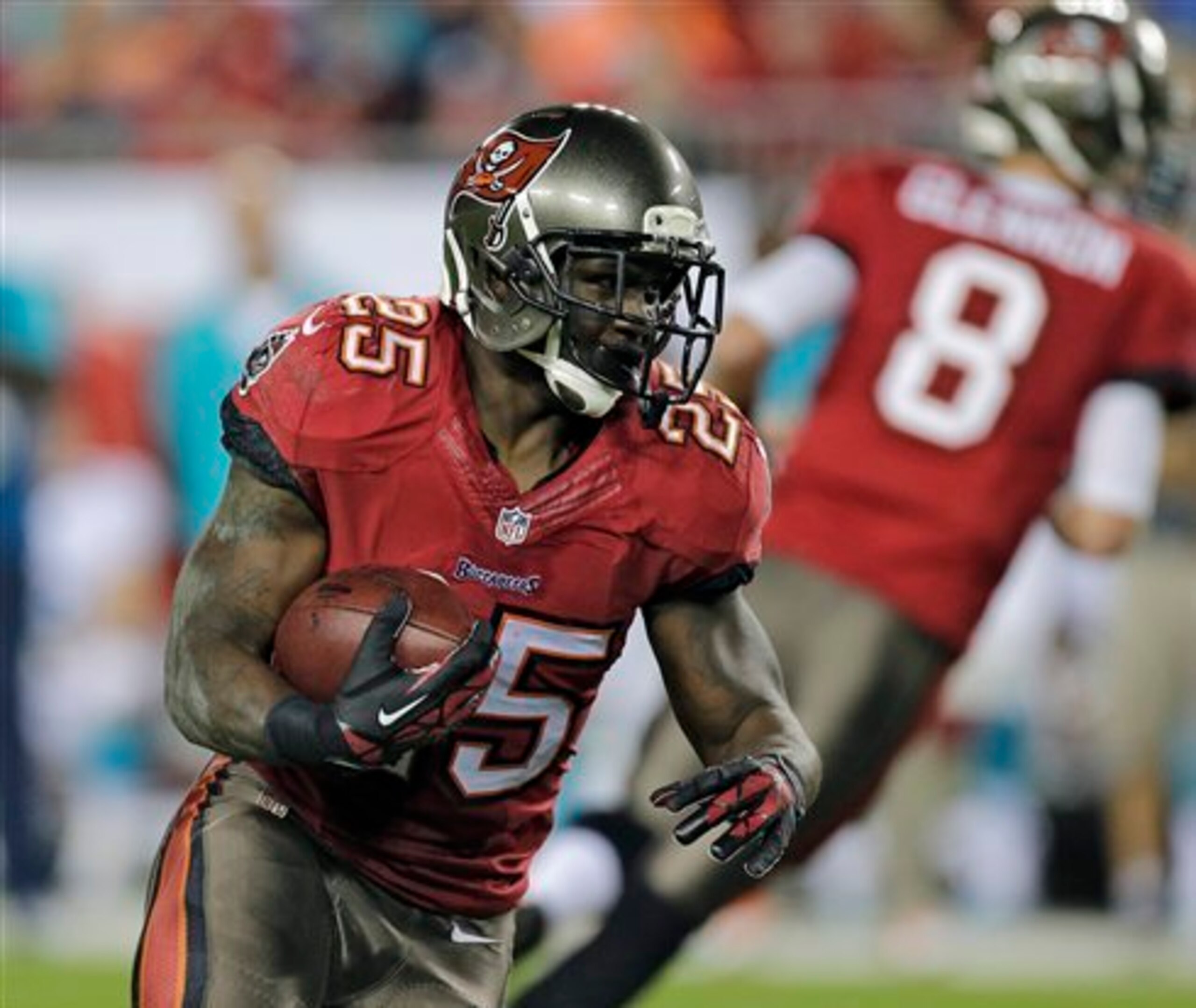
Power
Mike James (5'10", 223 lbs, one season) has a physical presence and low center of gravity that allow him to punish defenders. But he is too inconsistent in keeping his feet moving through contact.
Speed
He is not overly agile, but he has enough acceleration and straight-line speed to be an effective one-cut runner.
Vision
A hesitation and tendency to run into his own blockers cost him many opportunities to gain more yards.
Receiving
James was barely used as a receiver and had one drop on his few targets.
Overall
The sixth-round pick showed he had enough talent to play in this league, but a fractured ankle ended his season too soon.
56. Donald Brown, Indianapolis Colts
35 of 90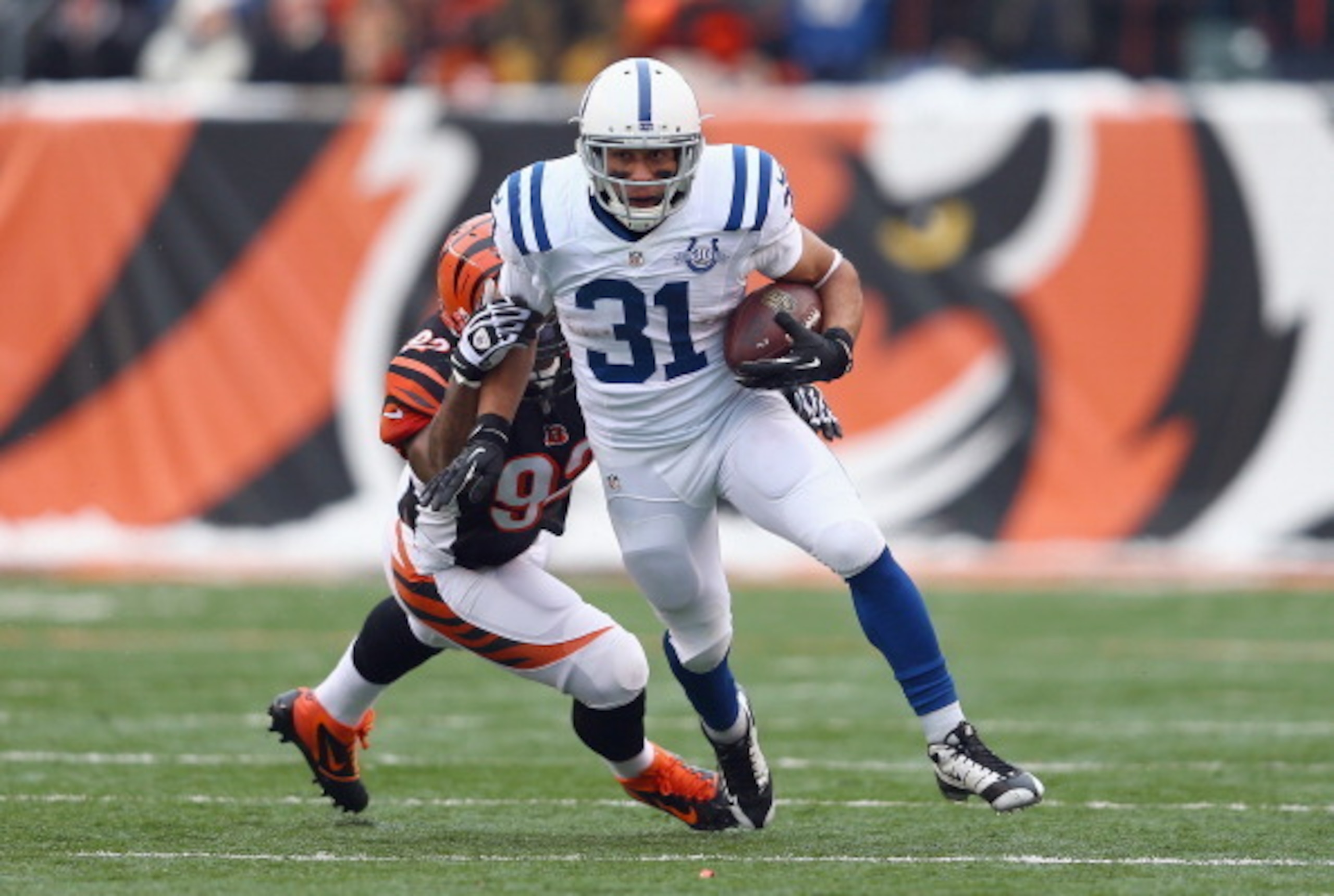
Power
Donald Brown (5'10", 207 lbs, five seasons) is a tough runner who can break arm-tackles in his stride. His ability to keep moving forward while bouncing off contact is impressive.
Speed
He shows impressive agility in tight spaces and enough speed to break away when he finds running lanes.
Vision
Understanding how to find holes and set up his blocking isn't a problem, but Brown needs to be more consistent in his decision-making.
Receiving
Brown wasn't used that much, but he was a reliable receiver who showed the ability to make plays in space with the ball.
Overall
Even though the Colts traded for Trent Richardson to be their feature back, it's clear that Brown was the better back in 2013.
55. Robert Turbin, Seattle Seahawks
36 of 90
Power
Robert Turbin (5'10", 222 lbs, two seasons) isn't a stereotypical power back and doesn't break tackles like his teammate Marshawn Lynch. He is a resilient runner who gets low and attacks the point of contact.
Speed
Turbin's top speed isn't overwhelming, but his ability to accelerate is notable. With his short-area burst and impressive quickness, he showed an ability to consistently create space between the tackles.
Vision
He needed more touches to accurately assess his consistency in 2013. On a few occasions, he wasn't patient enough to find the right hole, but he also showed solid awareness on other occasions to create yards when there was a defender in good position to stop him from the snap.
Receiving
He appears to have the ability to be a good receiving option, but he didn't showcase it enough in 2013.
Overall
Turbin was likely expecting a bigger role for the Seahawks this season, but the quality of Marshawn Lynch's play hurt those expectations. With Christine Michael in town now as well, he may be forced to go elsewhere to establish himself in the NFL.
54. Andre Ellington, Arizona Cardinals
37 of 90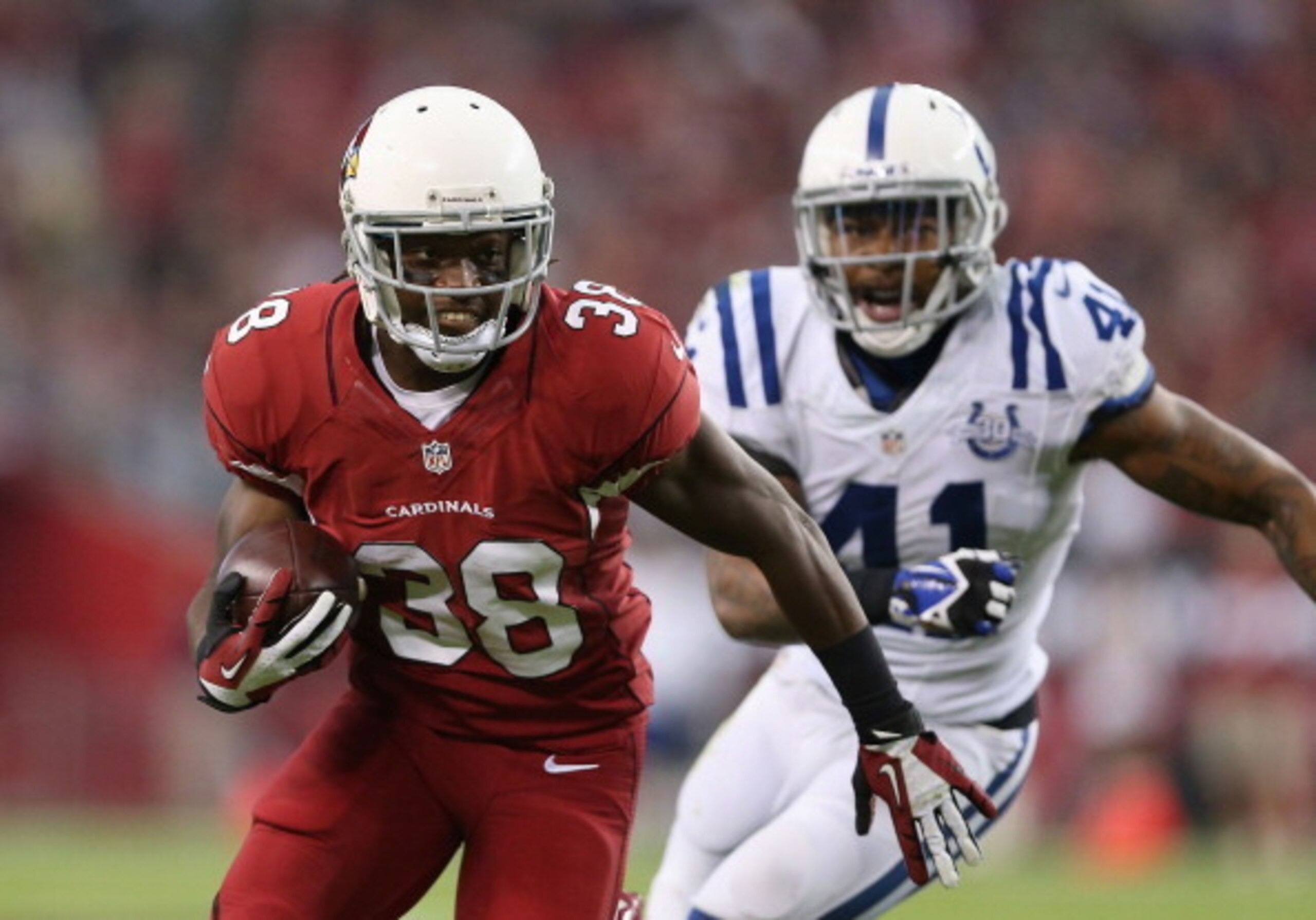
Power
Andre Ellington (5'9", 199 lbs, one season) is small and has a slender build. Defenders don't often get to punish him, but he also isn't breaking tackles at this level with his strength.
Speed
He’s incredibly explosive and only needs to show it as an every-down back.
Vision
There are times when Ellington looks like an ant being chased by a boy with a magnifying glass, but there are other occasions when he has the patience of an artist painting his masterpiece. He has the ability to do everything he needs to, but he is wildly inconsistent at this stage.
Receiving
He’s versatile and explosive, but six drops on 57 targets is way too many.
Overall
He'll likely never be able to carry the ball as many as 300 times a season, but he'll always have an important role as long as he has that speed and elusive ability.
53. BenJarvus Green-Ellis, Cincinnati Bengals
38 of 90
Power
BenJarvus Green-Ellis (5'11", 220 lbs, six seasons) breaks tackles and gets forward momentum, but not as consistently as better backs in the league.
Speed
There is some quickness there that allows Green-Ellis to slip through running lanes, but he has no breakaway speed.
Vision
He knows how to press holes to set up defenders and consistently makes smart decisions behind the line of scrimmage. Green-Ellis regularly shows good patience to get the most out of his blocking.
Receiving
Green-Ellis isn't a versatile receiver and doesn't see the ball in the passing game. He is primarily a pass-blocking back.
Overall
It's clear why the Bengals drafted Giovani Bernard in the offseason. Green-Ellis is a reliable runner, but he's not an impactful back in any facet of the game. Green-Ellis' best trait is that he doesn't fumble and he's consistent, but that's less valuable when you don't have enough physical talent to be more effective.
52. Shonn Greene, Tennessee Titans
39 of 90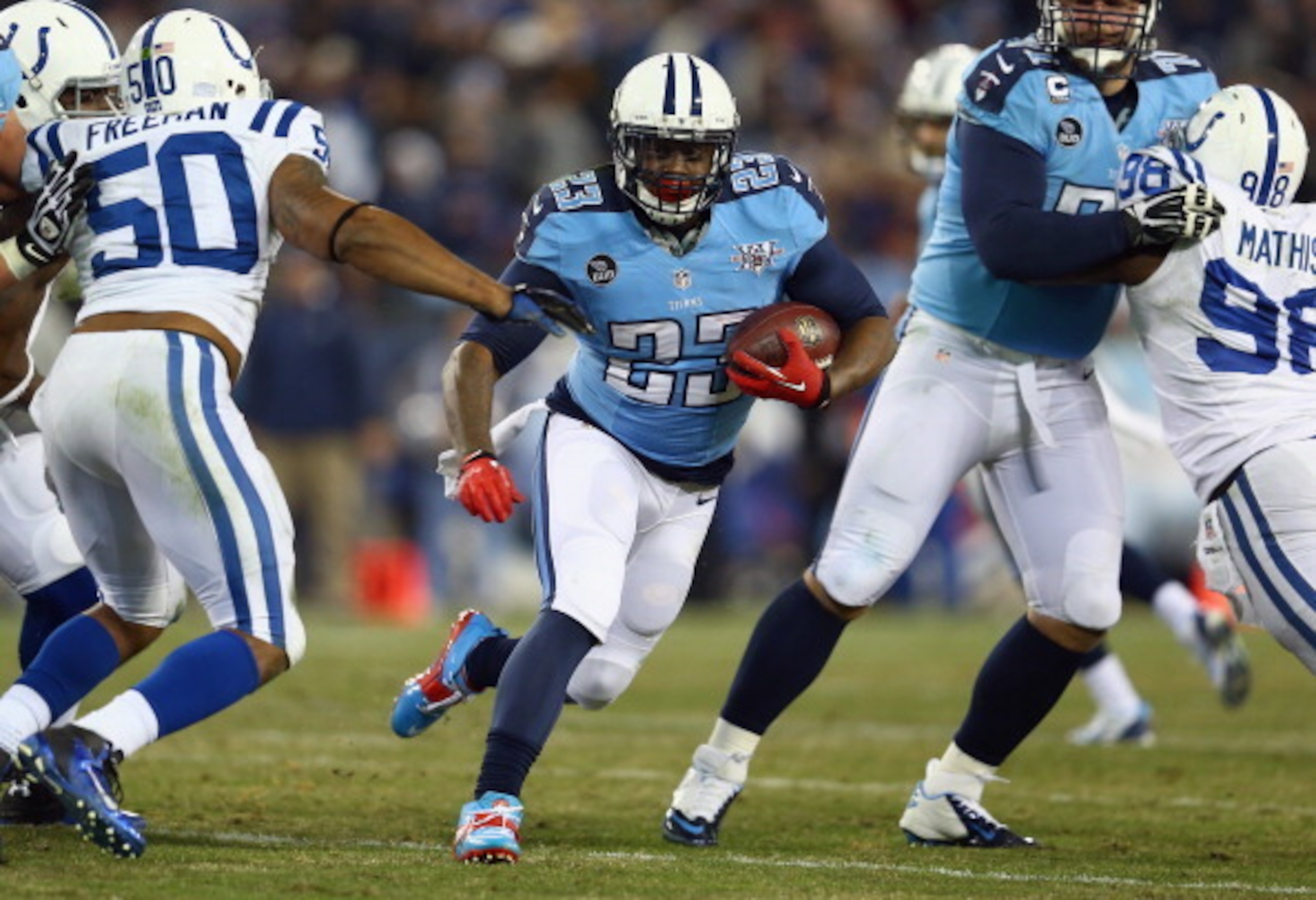
Power
As a goal-line back, Shonn Greene (5'11", 233 lbs, five seasons) consistently finished plays moving forward. He gets low and square to make the most out of his power.
Speed
Greene isn't a slow back, but he doesn't stand out for his speed. He has quick enough feet to move between the tackles and find the right running lanes at the right time.
Vision
The strongest aspect of Greene's game is his ability to pick the right hole in the defense. He doesn't panic when defenders penetrate the backfield, and he understands when to cut and when to press gaps to set up his blocking.
Receiving
He didn't see many targets and had one drop. However, he does have the potential to make big plays in the passing game, as shown by his catch-and-run against the Rams on a bubble screen.
Overall
Greene was impressive in a limited role for the Titans. This is likely his best role in the NFL moving forward.
51. Bobby Rainey, Tampa Bay Buccaneers
40 of 90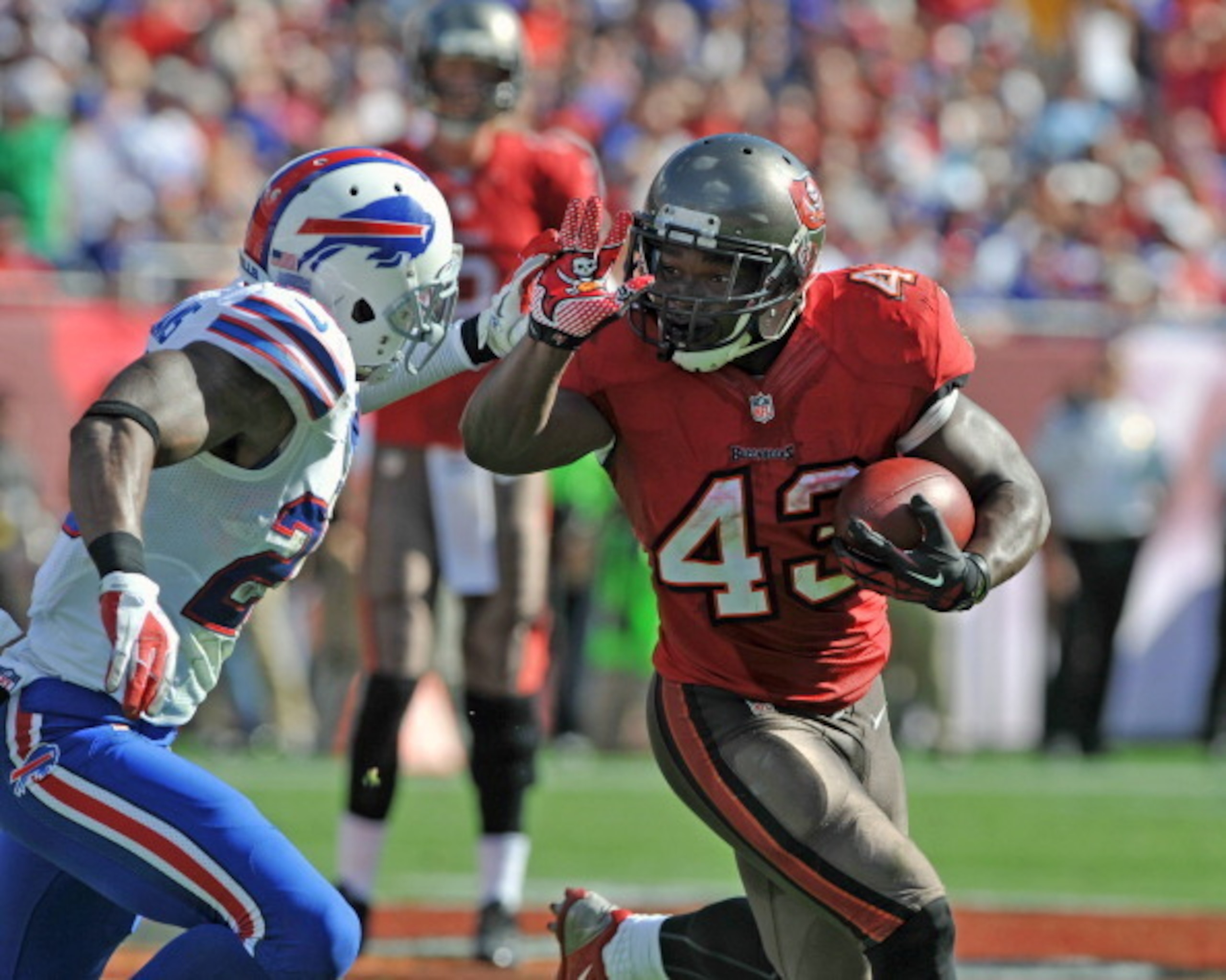
Power
Although he is a smaller back, Bobby Rainey (5'8", 212 lbs, two seasons) is powerful enough to break arm-tackles when he gets his momentum moving forward. He keeps his feet moving through contact. That is crucial to his success.
Speed
Rainey has outstanding agility and is a fluid athlete when shifting his weight in tight spaces. He also has enough speed to score from distance when he finds open space.
Vision
When Rainey ran well, he ran very well, but there was a little inconsistency in his ability to pick the right running lane. He shows good patience and can quickly recognize how the defense is reacting to his blocking.
Receiving
Rainey is a quick-twitch athlete who naturally catches the ball. He needed to be used more as a receiver.
Overall
There is little else that Rainey could have done with the touches he received in 2013. His audition for a bigger role with the Buccaneers or any other team should be considered a success by any measure.
50. David Wilson, New York Giants
41 of 90
Power
David Wilson (5'9", 205 lbs, two seasons) is a small back with a slight frame. He doesn't have the bulk to consistently gain forward momentum and primarily relies on his quickness and speed to evade defenders.
Speed
What stands out when watching Wilson is his burst. He has the agility and long speed to be effective, but it's his burst that makes him a very exciting player.
Vision
Wilson needs to develop better consistency as a runner. He showed off good vision at times and made a lot of sound decisions, but he left plenty of yardage on the field.
Receiving
Wilson was drafted by the Giants to eventually be a feature back. He hasn't established himself as that yet, but he certainly has the talent to be a big factor in the receiving game. He was underused in that aspect in 2013.
Overall
Wilson needs to get healthy and make sure he takes care of the football, but he has the talent to be a big player for the Giants.
49. Steven Jackson, Atlanta Falcons
42 of 90
Power
Even at this late point in his career, Steven Jackson (6'2", 240 lbs, 10 seasons) is still an impressive athlete. He has enough power to break tackles and attacks contact like any true power back should. His tendency to run high slowed him somewhat in 2013.
Speed
Jackson isn't very fast, but for a power back, he has impressive acceleration and agility. He still has some pace to create big plays down the field, but those are rare these days.
Vision
As a veteran who has repeatedly excelled in the NFL season after season behind less-than-stellar run-blocking, it's no surprise that Jackson still understands how to best set up his blocking and take advantage of any gaps in the defense. He may not be as quick to get through the hole as he has been in previous years, but his understanding and patience are still apparent.
Receiving
Jackson's size allowed him to break tackles repeatedly as a receiver. However, he didn't have the speed to take advantage of the space that was created, and he had too many drops.
Overall
Jackson was signed to be the final piece of the Falcons offense, but injuries to him and a number of his teammates severely limited his production. When he was on the field and fully healthy, he was still an effective back.
48. Jordan Todman, Jacksonville Jaguars
43 of 90
Power
Jordan Todman (5'10", 198 lbs, two seasons) is not a powerful back, but he is strong enough to break arm-tackles and sustain his forward momentum against contact.
Speed
He’s a shifty runner who has the speed to get down the field when he finds space.
Vision
While he didn't have that many touches, he showed excellent awareness while playing behind what was the toughest situation for any running back in the league last season.
Receiving
He took full advantage of the opportunities he received, but he needs to be involved more to get a better grade.
Overall
Todman has starter potential and is still young, even though he has bounced around a bit.
47. Joique Bell, Detroit Lions
44 of 90
Power
Joique Bell (5'11", 220 lbs, three seasons) is strong and explosive. With his compact body, he should be one of the toughest players in the league to tackle. However, Bell doesn't always run with aggression and makes it easier on defenders by not lowering his shoulder or taking the direct route toward the end zone.
Speed
Bell plays in space a lot and can consistently rip off big plays with his quickness and speed. Unfortunately, this speed doesn't show up as consistently in the run game as it does when he's catching passes. There is a certain comfort that comes for Bell when he is in space.
Vision
He doesn't appear to be a natural reader of the defense when he is running the ball. Bell made a few bad decisions and had a tendency to try to bounce the play outside too quickly. An ability to set up blocking and find running lanes was obvious at times, but there needed to be more consistency from snap to snap.
Receiving
Bell had too many drops, but he looks to be a natural receiver who prefers to run routes and catch the ball out of the backfield over taking handoffs from the quarterback.
Overall
Bell proved to the NFL that he can be an important weapon in a spread-out offense. He wasn't just on the field because the Lions needed someone to give Reggie Bush a break every now and then.
46. Jacquizz Rodgers, Atlanta Falcons
45 of 90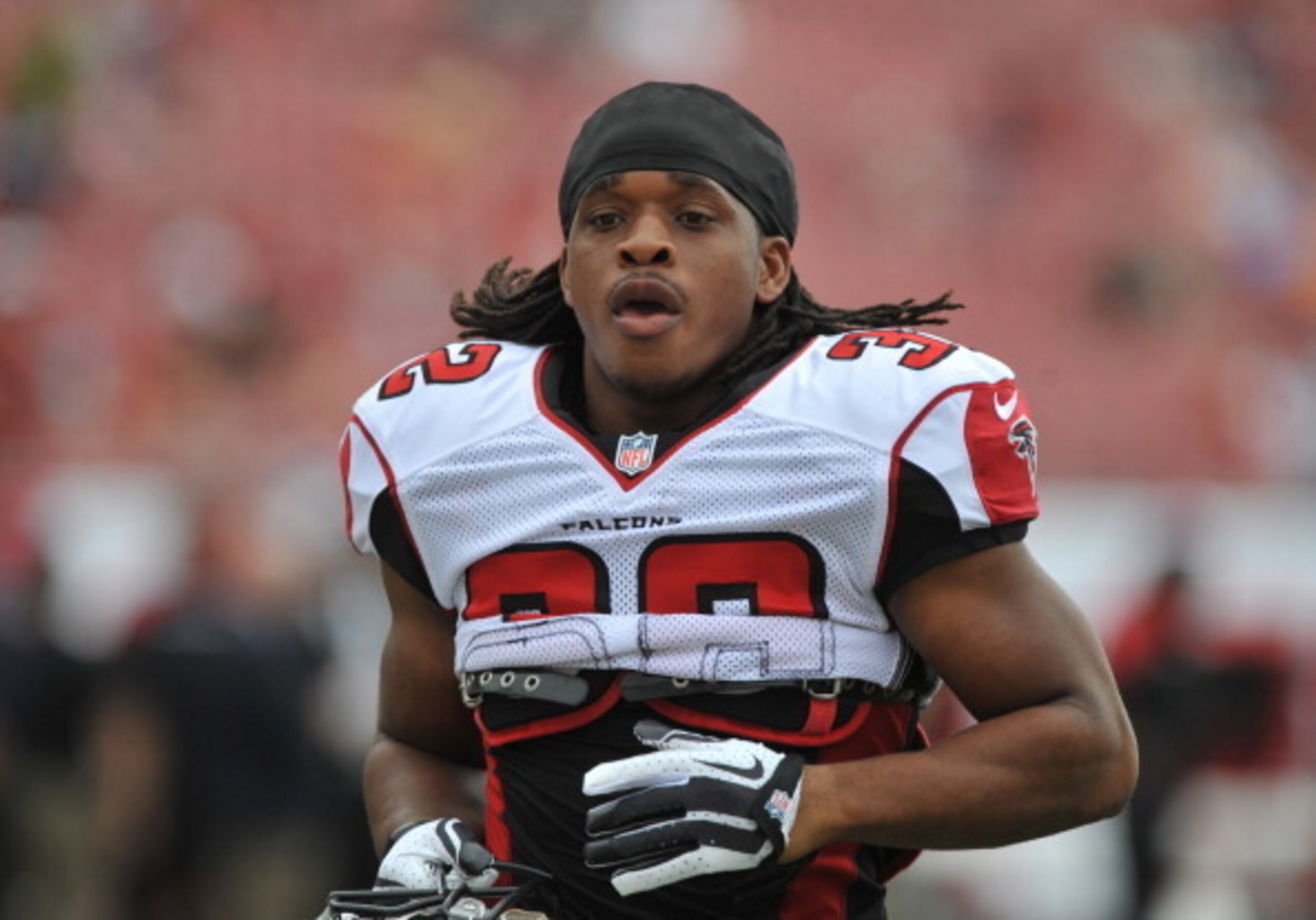
Power
Jacquizz Rodgers' (5'6", 196 lbs, three seasons) ability to bounce off tacklers and keep moving forward at the point of contact is impressive for a back of his size. He's not Maurice Jones-Drew, but for a back who excels in a receiving role, he is strong.
Speed
Rodgers was very elusive in 2013. His quickness and acceleration allowed him to excel whenever he was given room to run.
Vision
There were still a few plays when he was too hesitant or didn't set up a running lane as well as he could have. But for the most part, Rodgers' vision improved in 2013. He made a number of excellent runs because of good vision that weren't evident in previous seasons.
Receiving
He had threatened to break out with this kind of season ever since entering the league. His numbers don't completely reflect it, but Rodgers was an outstanding receiving option for Matt Ryan in 2013. He consistently made the most he possibly could have out of every situation he faced.
Overall
It was somewhat of a breakout season for Rodgers, but he was still the Falcons' second option behind Steven Jackson. Unfortunately, this may be his ceiling.
45. Knile Davis, Kansas City Chiefs
46 of 90
Power
Although he carries a relatively small frame, Knile Davis (5'10", 227 lbs, one season) keeps his feet moving through contact to get the most out of the little bulk he does have.
Speed
Davis' fluid athleticism immediately becomes obvious on tape. His ability to change direction without slowing down and his acceleration to get away from defenders allow him to take advantage of any space he finds.
Vision
The small sample size limits what we could learn about Davis' vision in 2013, but the tape he did have was impressive. He showed awareness of how to manipulate players on the second level while working behind the line of scrimmage. That ability combined with his decisiveness allowed him to make a number of big plays.
Receiving
Davis was a reliable receiving option in 2013, but he wasn’t used much in Andy Reid's offense.
Overall
Ball security remains Davis' biggest concern. Without a greater sample size, we can't accurately examine that now. However, even in this small sample size, Davis showed that he has the physical talent to be a starter at this level.
44. Shane Vereen, New England Patriots
47 of 90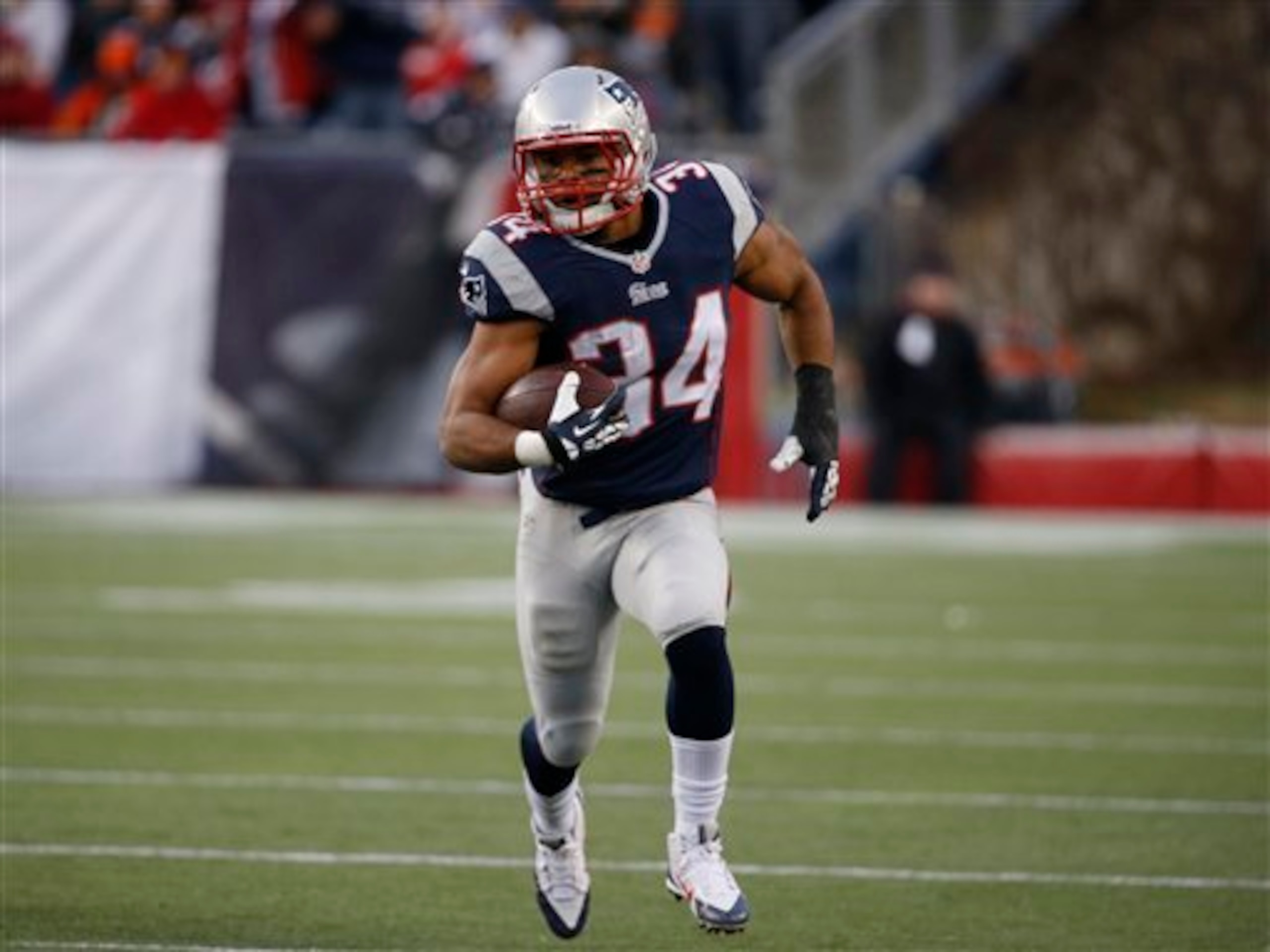
Power
Even though he doesn't have issues with ball security or running hard between the tackles, Shane Vereen (5'10", 205 lbs, three seasons) is still not an impact runner. Fortunately for him, he faces more defensive backs than linebackers or defensive linemen.
Speed
Vereen is an agile runner and has excellent acceleration when finding holes between the tackles. But in spite of that, he isn't exceptionally elusive. A lack of big plays down the field hurts his grade here.
Vision
Injury took away a large chunk of his season, which reduced his exposure on the field to judge his vision. He showed off impressive vision as a runner with the touches he did receive. He was patient to allow his blocking to develop, understood how to manipulate defenders and was aggressive when attacking holes.
Receiving
His 2013 season was hampered by a wrist injury that appeared to affect his ability to consistently catch the ball. He still showed off the natural ability to play like a receiver, but he also isn't elusive in space. With full health, Vereen could be one of the better receiving backs in the NFL, but he doesn't have that Darren Sproles-type of ability in space.
Overall
Surprisingly, even after you discount the drops, Vereen proved to be a more impressive runner than receiver in 2013. He'll need to put in a full season of production before he is considered one of the better backs in the NFL.
43. Montee Ball, Denver Broncos
48 of 90
Power
Montee Ball (5'10", 215 lbs, one season) is a strong runner who has no issue with lowering his head to push for forward momentum between the tackles. He's not exceptionally powerful, but he's not an easy tackle for linebackers, either. He can break arm-tackles in space.
Speed
Ball isn't fast, but he has impressive agility and an effective burst. He can look rigid at times, but what he lacks in fluidity, he makes up for in subtlety.
Vision
He had a handful of bad decisions, but he more often than not found the right hole. While he's not completely consistent and only has a small sample size so far, Ball showed a good understanding of how to set up his blockers and when to be aggressive.
Receiving
A few drops and a fumble hampered his production on the field, but Ball showed the flexibility to move out wide and run precise routes in 2013. He is also a hands-catcher, which means he has a lot of potential with Peyton Manning moving forward.
Overall
Ball isn't exceptionally good at anything, but he is above average at everything. In a way, that makes him the perfect successor for Knowshon Moreno if he eventually takes his place in the Broncos offense.
42. Ronnie Brown, San Diego Chargers
49 of 90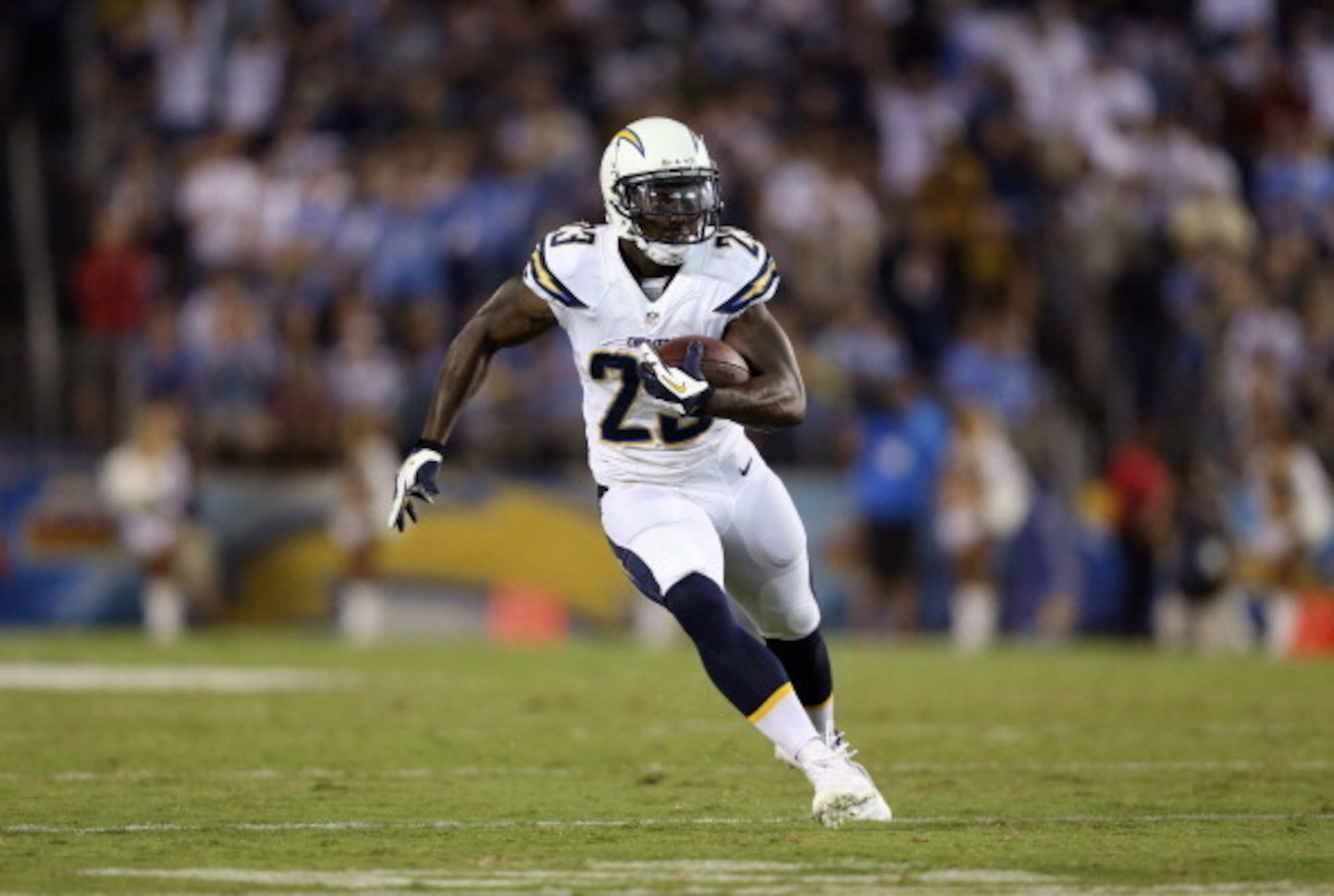
Power
Ronnie Brown (6'0", 223 lbs, nine seasons) isn't known for his size or his strength. He compensates by being an aggressive runner who powers his legs through contact.
Speed
At this stage of his career, Brown isn't a home run threat. He is a nimble runner who shows the quickness to evade defenders in space and the burst to get through running lanes.
Vision
Brown is a patient runner who sometimes waits too long for a running lane to develop. When he plays with the right balance of patience and aggression, he can be an effective runner in a variety of different situations.
Receiving
Brown is a reliable receiving option out of the backfield who can be used in different ways. All he lacks is explosion.
Overall
As a former starter and veteran, Brown has proven to be a valuable role player for the Chargers.
41. Ahmad Bradshaw, Indianapolis Colts
50 of 90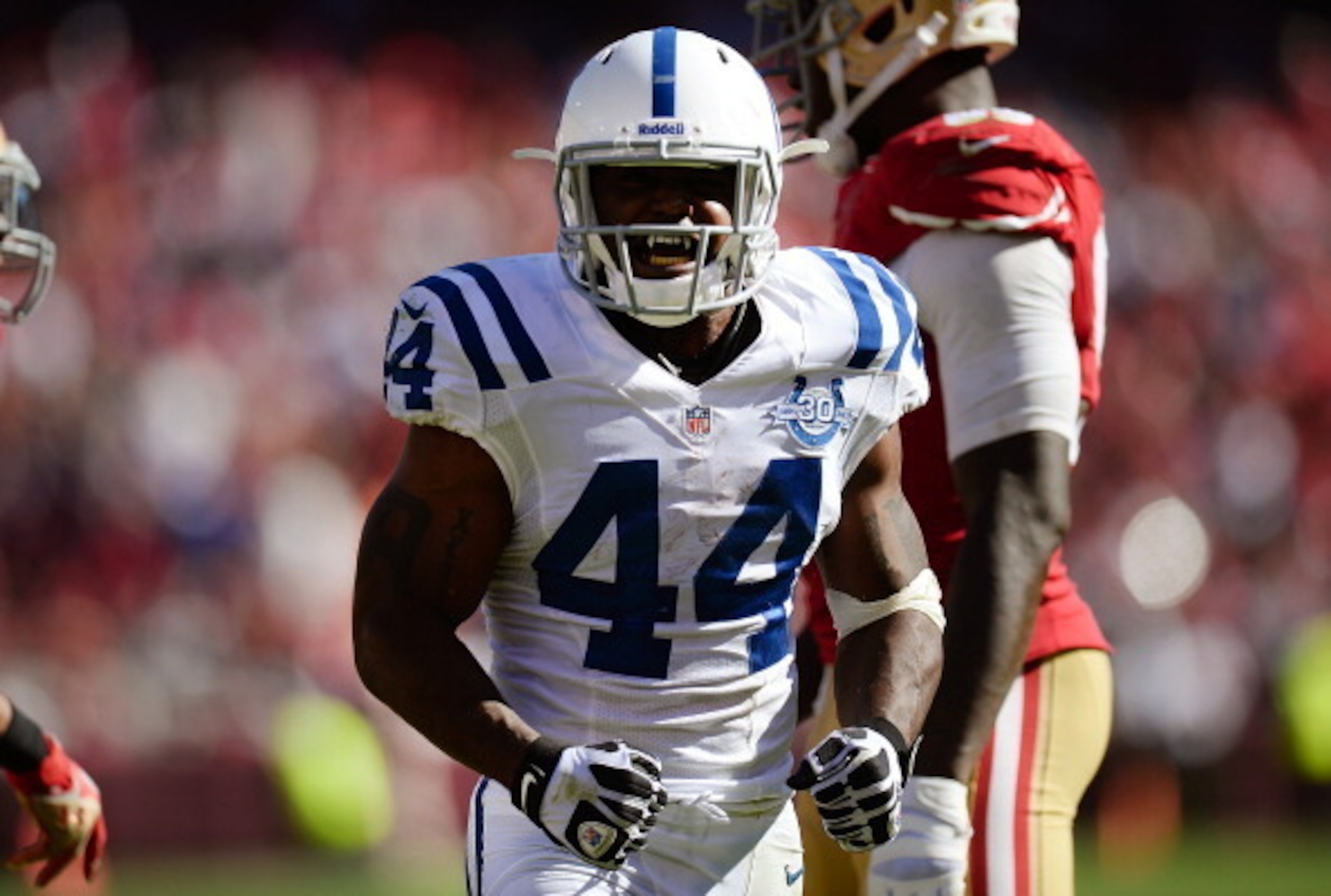
Power
Ahmad Bradshaw (5'10", 214 lbs, seven seasons) has always been a slender, smaller back. However, he has also always played with an aggressive approach and enough strength to break tackles.
Speed
Although he is slowing down somewhat at this stage of his career, Bradshaw still has enough quickness and a good enough burst to be effective.
Vision
Bradshaw is a veteran who understands how to be patient and when to be decisive. He typically gets the most out of his blocking on a snap-to-snap basis.
Receiving
A dynamic receiver who can move around the field and be used in a variety of ways, Bradshaw didn’t see enough targets during his short spell on the field this season.
Overall
Bradshaw’s health may limit what he can do in 2014, but he is still only 27 years of age.
40. Joseph Randle, Dallas Cowboys
51 of 90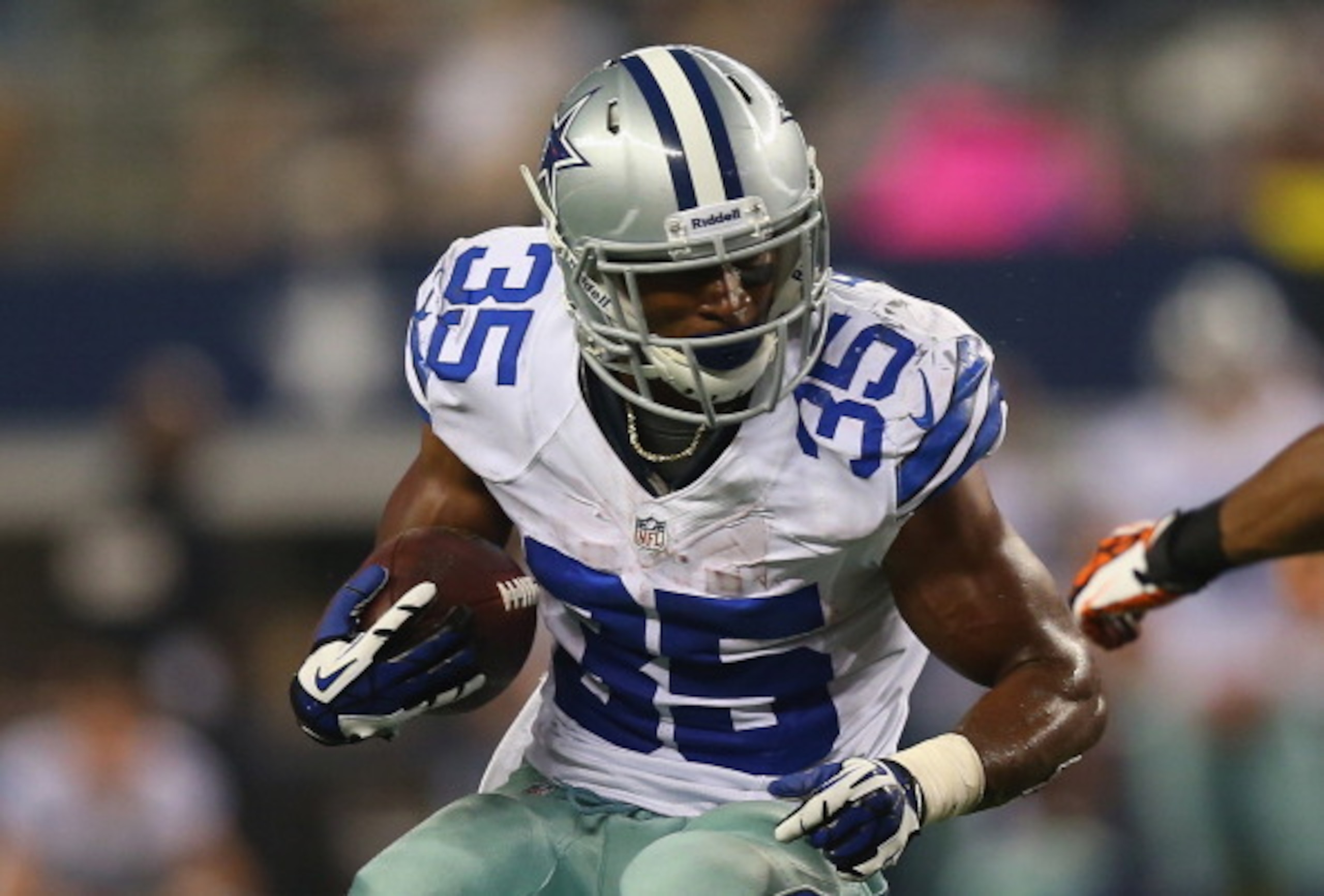
Power
Joseph Randle (6'0", 198 lbs, one season) is a slender back who relies on his vision and speed to be productive. However, he doesn't shy away from contact and is aggressive as he looks to work through tackles with his legs.
Speed
Randle's agility becomes evident quickly. He is a fluid all-around athlete, so he is able to change direction without losing speed. This makes him a very dangerous cutback runner. His acceleration attacking gaps in the defense is also impressive.
Vision
Vision is definitely a strength for Randle. He shows good patience and understanding of situations, with the right amount of aggression once he makes his decision. Most notably, Randle quickly recognizes opportunities to cut back behind the line of scrimmage. The only knock on him is his small sample size.
Receiving
A few drops and a small sample size hurt his rating for 2013, but Randle showed a level of comfort catching the ball that suggests he can be a good receiving back.
Overall
Randle is reminiscent of his teammate DeMarco Murray on the field. He has that kind of impressive talent, but he also plays with a similar style. Randle may not ever be a star in Dallas because of Murray's presence, but he definitely has the talent to star somewhere else.
39. Andre Brown, New York Giants
52 of 90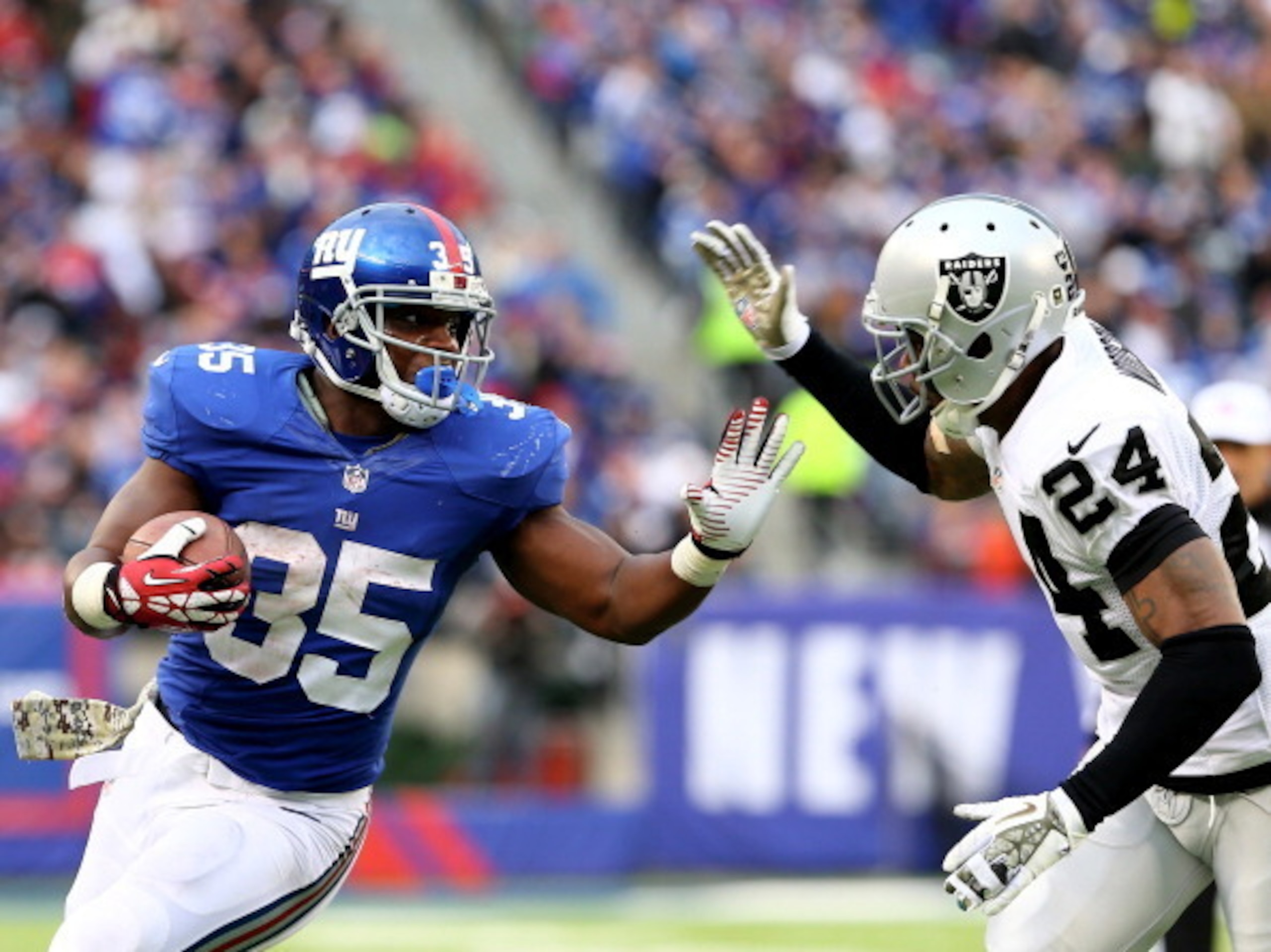
Power
Andre Brown (6'0", 227 lbs, three seasons) is a thick, strong runner with the power to break tackles even when he doesn't run at full speed.
Speed
He doesn't have exceptional speed, but he's not slow, either. His speed primarily acts as a complement to his strength, but he is fast enough to get away from linebackers in space.
Vision
Brown makes good decisions and shows an ability to set up runs at times. However, he typically has to see holes develop before he runs to them. A greater anticipation behind the line of scrimmage and a slightly more aggressive approach could make him a lot more productive.
Receiving
He's not a versatile or explosive receiver, and he had a few drops that affected his value to the offense. Brown primarily caught the ball behind the line of scrimmage in space.
Overall
Brown being lost to injury was a big loss for the Giants entering the season. Even though he's not an exceptional back, he brought a consistency to the field that had been lacking before.
38. Bryce Brown, Philadelphia Eagles
53 of 90
Power
Bryce Brown (6'0", 220 lbs, two seasons) is a big back who can deliver punishment to defenders in open space. He breaks tackles with relative ease and can push the pile between the tackles.
Speed
In spite of his size, Brown is able to sidestep and subtly evade defenders behind the line of scrimmage. Once he gets into space, he has the breakaway speed to score from long range.
Vision
In Chip Kelly's offense, running lanes often opened directly in front of Brown. However, there were also many plays where he needed to see defenders coming free and be proactive to evade them.
Receiving
Brown isn't a natural receiver. That showed in how the Eagles used him in 2013.
Overall
Brown is a talented runner who could be a valuable starter elsewhere. However, he was trapped behind LeSean McCoy on the Eagles depth chart in 2013.
37. Lamar Miller, Miami Dolphins
54 of 90
Power
Lamar Miller (5'10", 216 lbs, two seasons) isn't a small player, but he doesn't carry much weight or power in his legs. He would benefit from a more aggressive running style, but he will never be a power back.
Speed
Miller is one of the fastest players in the league playing the running back position. He has enough breakaway speed and agility to take advantage of most situations, but his most striking asset is his acceleration. Miller can turn short losses into decent gains by accelerating away from defenders in short areas.
Vision
Because of his explosiveness, Miller has a tendency to go for the big play too often. He needs to stay within the tackles more regularly and not be tempted so much by the route to the sideline.
Receiving
Miller's ability to make plays in space is valuable. He can turn short passes into big gains with his elusiveness after the catch.
Overall
The former fourth-round draft pick is still emerging in the league as a starter. He has an abundance of talent that could make him one of the best backs in the NFL if he develops properly over the next season or two.
36. Darren McFadden, Oakland Raiders
55 of 90
Power
Darren McFadden (6'1", 218 lbs, six seasons) is a strong player, but he runs too tall to consistently break tackles from linebackers. But he is able to run through arm-tackles from defensive backs.
Speed
McFadden's acceleration is incredible. It only takes him a few steps to get to top speed, and once he is at that point, he has the subtle agility to make defenders miss in space. He is a home run threat who has the potential to routinely break off big gains.
Vision
Although he wasn't the most consistent player in the league, McFadden showed off the patience and understanding that allowed him to get the most out of his blocking. When in the open field, he saw defenders quickly, so he could proactively evade them.
Receiving
McFadden is a talented receiver who consistently makes an effort to catch the ball with his hands. He is explosive out of the backfield and can line up on the outside. But he had two drops and struggled with his consistency in 2013.
Overall
If he can stay healthy, McFadden should be able to provide a spark for whatever offense he plays for in 2014.
35. Mark Ingram, New Orleans Saints
56 of 90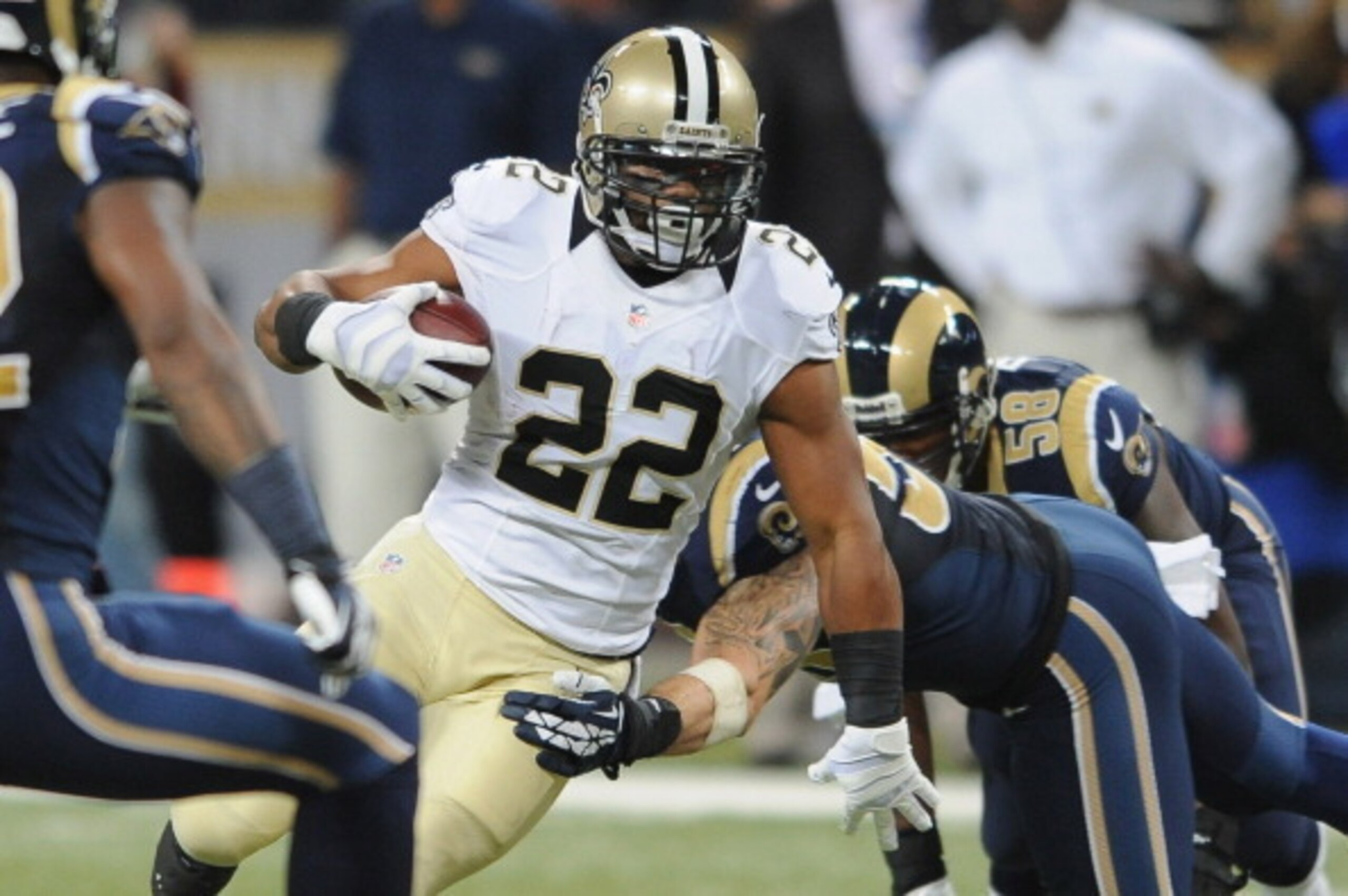
Power
Ever since his days at Alabama, it's been clear that Mark Ingram (5'9", 215 lbs, three seasons) has all of the physical talent to be a power back. That talent didn't fully translate onto the field in the NFL until this season. Ingram ran with more aggression and a greater burst through contact that allowed him to be more successful.
Speed
Ingram isn't a fluid athlete or a back who can quickly change direction behind the line of scrimmage. He is at his best when he makes one cut before accelerating down the field. He has a good initial burst and enough speed to exploit space on the second level. He won't win many races down the sideline, but his speed is a good complement to his power.
Vision
He's not simply a big back who is going to put his head down and attack the first hole he sees. Ingram has enough awareness to understand how plays develop and keeps his eyes high to find cutback lanes or opportunities to bounce outside. Sometimes he makes bad decisions, but he also created extra yardage with his eyes on many occasions.
Receiving
The renewed comfort level Ingram had on the field in 2013 made him a better receiving option, but he was still barely used in the Saints passing attack.
Overall
There was a time when it looked like Ingram's career was never going to get to this point. Now he looks like a back who just needs more exposure to establish himself as a quality starter.
34. Rashad Jennings, Oakland Raiders
57 of 90
Power
Although Rashad Jennings (6'1", 231 lbs, four seasons) ran right over D.J. Swearinger on that 80-yard touchdown run against the Houston Texans, he is not a powerful back. He was rewarded on that play because he was aggressive against a weak tackler. Jennings is willing to initiate contact and looks to fight through it. But he doesn't have the power to consistently break tackles.
Speed
Jennings has the speed and quickness to get to the second level and take advantage of space for big gains. He won't outrun every defensive back, but the defense can't afford to give him an alley to the end zone.
Vision
He’s a patient back who allows his blocking to develop before attacking the line of scrimmage. Jennings is smart enough and decisive enough to consistently get what his offensive line gives him.
Receiving
Jennings primarily caught passes out of the backfield underneath, but he made a number of impressive adjustments to poorly placed passes.
Overall
It seemed like Jennings would move into 2014 as the Oakland Raiders' starting running back, but the team re-signed Darren McFadden. That's opened the door for Jennings to head to the New York Giants after he established himself as a quality starter in 2013.
33. Chris Ivory, New York Jets
58 of 90
Power
Chris Ivory (6'0", 222 lbs, four seasons) is an explosive back who continues fighting through contact until he hits the ground. Arm-tackling Ivory is rarely a viable option.
Speed
Although he is primarily seen as a power back, Ivory has the speed to turn the corner. He can come to a complete stop behind the line of scrimmage and still accelerate away from defensive linemen and linebackers to get to the second level.
Vision
Ivory's movement behind the line of scrimmage is subtle. That allows him to manipulate the defense without losing forward momentum. He typically takes the right option, but there were many occasions when there was no right option as the Jets offensive line was overwhelmed.
Receiving
He wasn't used much as a receiver and had too many drops when he was.
Overall
In a sense, Ivory's greatest problem is the era he plays in. The value of a back who offers nothing as a receiver simply isn't that high today. As a pure runner, though, he is still one of the most talented in the NFL as long as he stays healthy.
32. Knowshon Moreno, Denver Broncos
59 of 90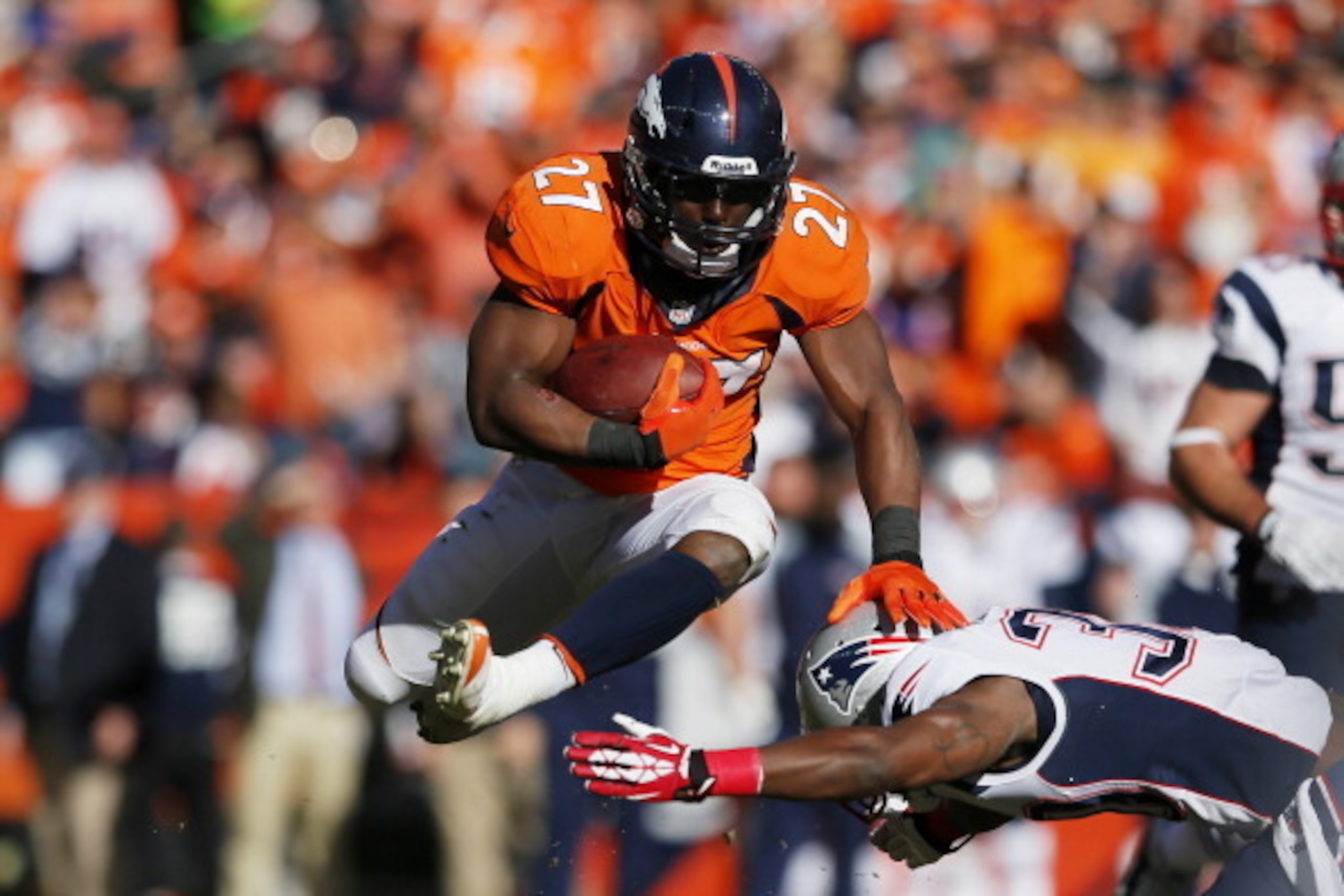
Power
Knowshon Moreno's (5'11", 220 lbs, five seasons) low center of gravity and willingness to attack the point of contact make him a resilient runner. He won't regularly break tackles or run over defenders, but he can consistently put his head down to get forward momentum.
Speed
He is much quicker than fast. But once he finds space, he can make plays down the field. Moreno combines decisive cuts and subtle quickness behind the line of scrimmage to create gains in the secondary.
Vision
Poise is typically a word that is associated with quarterbacks, but Moreno's instant diagnosis of plays and his ability to manipulate defenders against his blocking make him a very poised runner.
Receiving
Moreno had a few drops, but he showed an all-around ability as a receiver.
Overall
Although he wasn't a focal point of the offense, Moreno's consistency and intelligence as a player made him a valuable piece of the Broncos offense in 2013.
31. Bernard Pierce, Baltimore Ravens
60 of 90
Power
Bernard Pierce (6'0", 218 lbs, two seasons) is stronger than he is powerful. By that I mean he is able to brush off tackles and shake free from defenders in space. But he doesn't run over defenders between the tackles.
Speed
He’s a natural home run hitter who is tough to stop in the open field.
Vision
His lack of patience appeared to cost him a few big runs on a couple of occasions. He generally makes good decisions but is lacking a bit of consistency.
Receiving
He wasn’t featured much as a receiving option for the Ravens, but he was reliable when asked to catch the ball out of the backfield.
Overall
Pierce's lack of production was primarily a result of the inconsistent Ravens offensive line and offense as a whole. There is a legitimate chance that he could be the Ravens' lead back instead of Ray Rice next season.
30. Fred Jackson, Buffalo Bills
61 of 90
Power
Fred Jackson (6'1", 216 lbs, seven seasons) is strong and can consistently break through arm-tackles in space. He does finish plays moving forward between the tackles, but he doesn't explode through defenders like the better power runners in the NFL. He has a tendency to run too high instead of getting low and keeping his legs moving through contact.
Speed
While he doesn't have the incredible long speed of his teammate C.J. Spiller, Jackson isn't slow by any measure. His acceleration is inconsistent, as he is sometimes slow to get through holes between the tackles. But he is agile, and once he gets to top speed, he can create separation from defenders.
Vision
Jackson is a decisive runner who is constantly moving forward once he receives the handoff. That works in his favor more often than not. But it also causes him to miss better running lanes, and it doesn't always play to the strengths of his offensive line. Decisiveness is better than too much hesitation, but Jackson needs to be more patient.
Receiving
Jackson is a flexible and reliable receiver who has the ability to move around the field. But he had a few drops in 2013.
Overall
Jackson has his flaws, but he proved that he is still a valuable back for the Bills in 2013. At 33 years of age, that's about all you can hope for from any running back these days.
29. Ben Tate, Houston Texans
62 of 90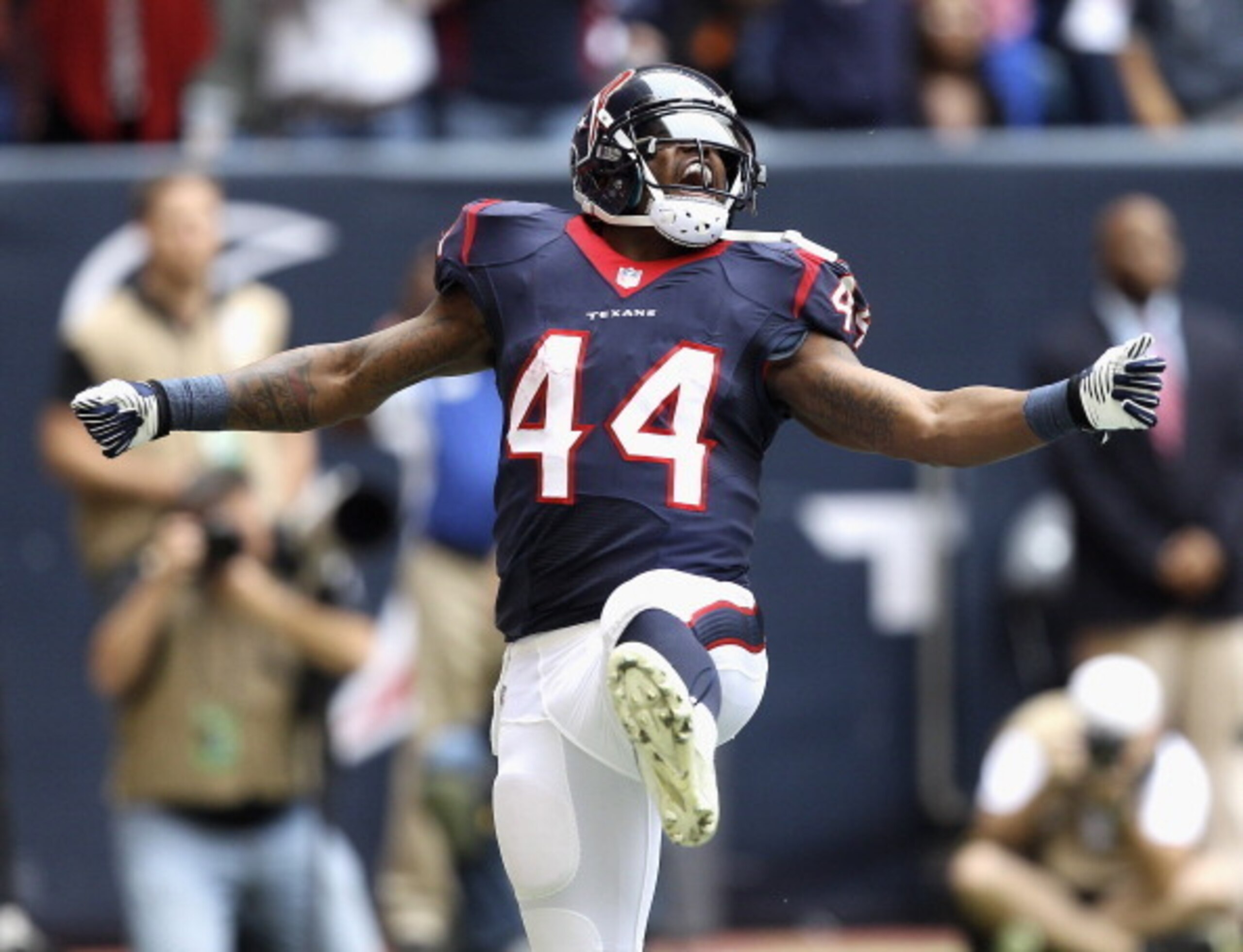
Power
Ben Tate (5'11", 217 lbs, three seasons) is an aggressive, compact runner with the power to overrun defenders and consistently gain forward momentum.
Speed
He was slowed by a rib injury for a large spell during the season. But when fully healthy, Tate showed off all of the explosion and agility required of a starting NFL running back.
Vision
This is where Arian Foster excels over his teammate. Tate doesn't have bad vision, but his inconsistency and a recurring lack of patience prevent him from being even close to Foster's level.
Receiving
Tate isn't dynamic or versatile, but he is a reliable receiver out of the backfield.
Overall
Injury hit at the worst time for Tate. If he had played through the whole season at top form, he would have had a much stronger case to make to potential suitors in free agency.
28. Toby Gerhart, Minnesota Vikings
63 of 90
Power
Toby Gerhart (6'0", 231 lbs, four seasons) is a big back who understands how to get low to maximize his power. He has the physical frame and aggressive running style to punish defenders who try to take him down.
Speed
He is a nimble athlete who has excellent acceleration to pick his way through traffic. Once in the open field, he has enough speed to outrun defenders.
Vision
Although his touches were limited, Gerhart didn't have any negative plays because of his decision-making. He sees cutback opportunities and has the patience to get the most out of his blocking. When he decides to attack a gap in the defense, he shows no hesitation.
Receiving
He made a number of nice hands catches and looked comfortable running routes from the backfield. He needs more exposure to earn a higher grade.
Overall
It's simple. Gerhart needs an opportunity to start somewhere. He was trapped behind the best running back in the NFL in Minnesota.
27. Chris Johnson, Tennessee Titans
64 of 90
Power
Quite clearly, this is Chris Johnson's (5'11", 203 lbs, six seasons) greatest flaw. Not only does he not break arm-tackles, but he also doesn't consistently gain forward momentum. Unless he can get around the defender, he won't beat him. The one positive for Johnson is that he is smart enough not to expose himself to big hits.
Speed
Still clearly one of the fastest backs in the NFL, if not the fastest, Johnson's agility between the tackles is also underrated. He seamlessly glides from spot to spot and changes direction in a moment.
Vision
Although he is known for being a home run hitter from the earlier stretch of his career, Johnson is now a disciplined runner. He could run through holes harder, but he understands how to read his blocks and react to the defense.
Receiving
Johnson is an unnatural pass-catcher who isn't dynamic enough to run routes from all over the field. Although he had a few big plays on receptions when he found space, he simply isn't consistent enough in this facet of the game.
Overall
Johnson is still a talented running back, but he needs to be stronger to get the most out of his blocking and be a feared player on the level of someone such as Jamaal Charles. Even if he just got a little bit stronger so he could finish more runs moving forward, he would have a much better average per carry.
26. Maurice Jones-Drew, Jacksonville Jaguars
65 of 90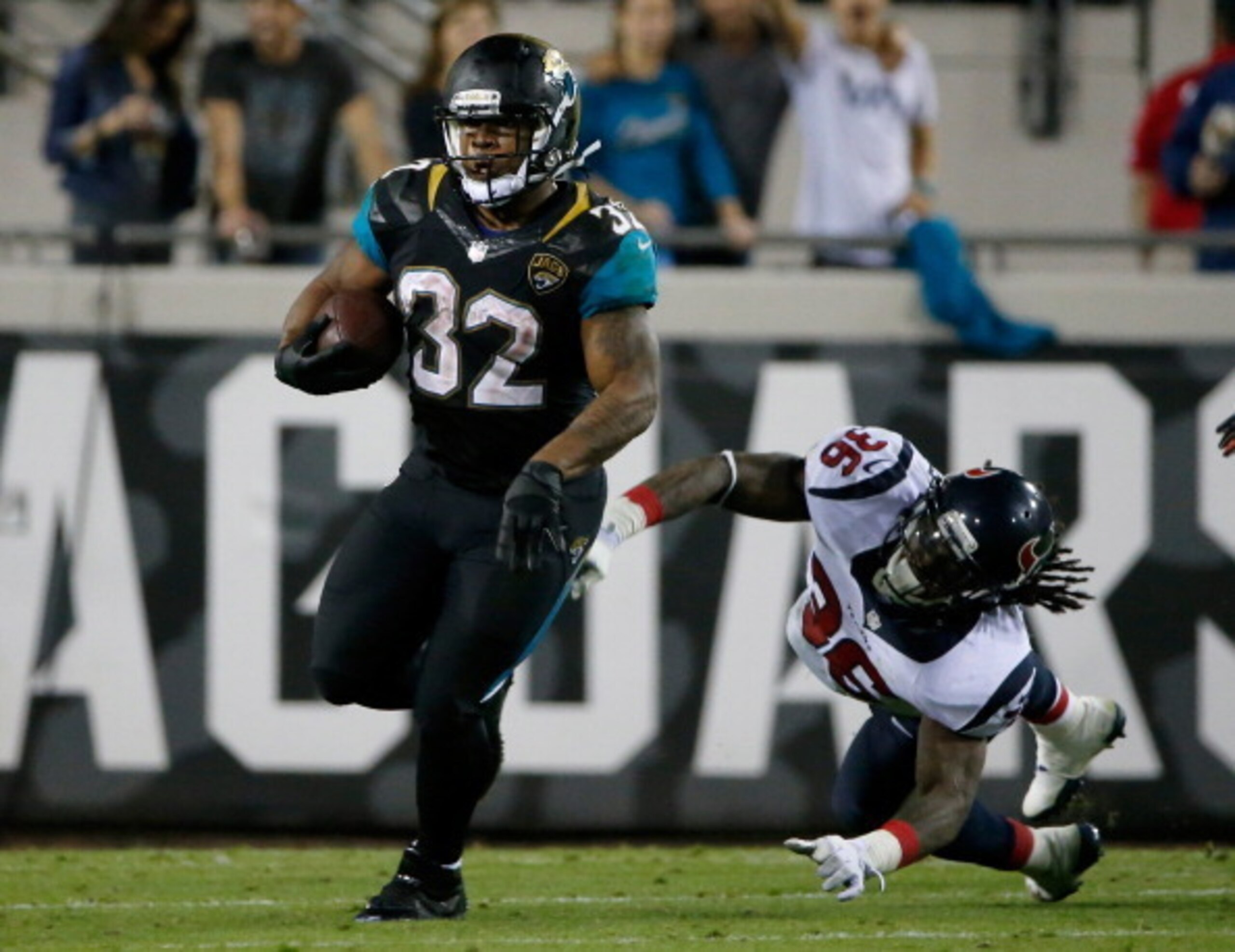
Power
Maurice Jones-Drew (5'7", 210 lbs, eight seasons) still runs like a bowling ball and can break tackles when given a chance. With the offense around him, often he was gang-tackled by two players or ran into walls of players because his line couldn't create space.
Speed
Jones-Drew is still quick and has enough acceleration to get past defenders in a hurry. He isn't a home run threat anymore, though.
Vision
As a veteran back, it's no surprise that Jones-Drew still understands how to set up his runs. However, there were many occasions when he missed potential holes, as he was too quick to put his head down. It may have been a product of him getting used to being hit before the line of scrimmage.
Receiving
Jones-Drew's real strength is as a pass-blocker, but he is still an effective receiver who can line up in different spots on the field.
Overall
He entered the season still recovering from the injury that sidelined him in 2012, but Jones-Drew improved as the 2013 season went on. After a few weeks, he appeared to be back to his old self. Had he played behind even a below-average offensive line, Jones-Drew would have had a productive season.
25. Alfred Morris, Washington Redskins
66 of 90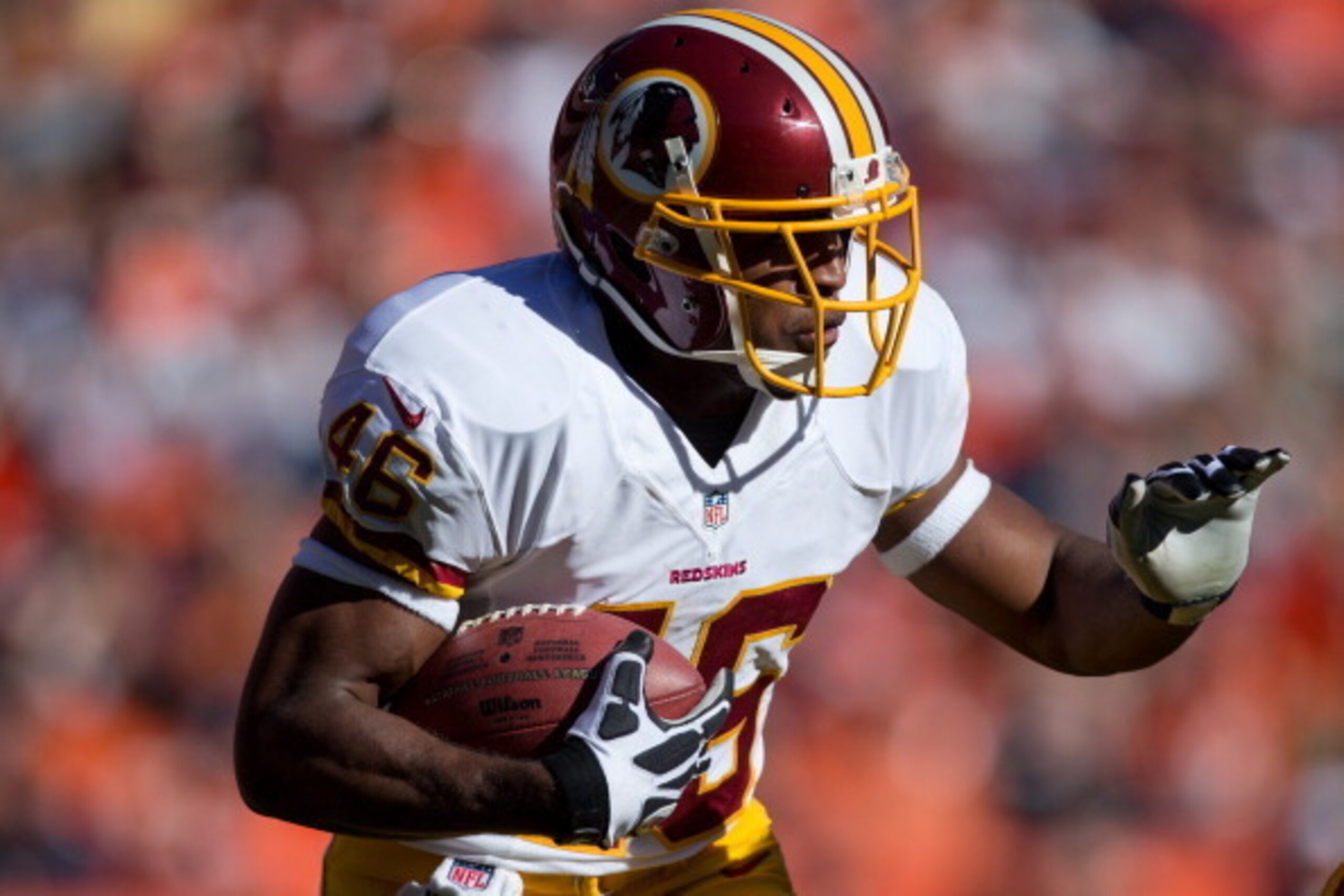
Power
Alfred Morris (5'10", 218 lbs, two seasons) is a big, powerful back who works through contact. He keeps his legs moving forward, which allows him to consistently finish plays moving in the right direction. His one negative is that he is not an overly violent runner, so he doesn't break as many tackles as he should.
Speed
Although he is a bigger back, Morris' speed is impressive. He is agile at making cuts and changing direction behind the line of scrimmage. When attacking the defense, he has excellent acceleration in spite of his underwhelming long-distance speed.
Vision
Not only does Morris see cutback lanes effectively, but he also understands how to time his run and when not to risk working against the flow of his offensive line. He doesn't waste time moving toward the sideline unless it's necessary to set up his blocking. He is a smart and consistent runner.
Receiving
Morris wasn't featured as a receiving option for Washington in 2013, but we've seen flashes of his ability to make plays with the ball as a receiver.
Overall
Morris was the perfect back for former Redskins coach Mike Shanahan's offense. Regardless of that, he should be successful in most situations because he is consistent from snap to snap. His all-around skill set is underappreciated.
24. LeGarrette Blount, New England Patriots
67 of 90
Power
LeGarrette Blount (6'0", 250 lbs, four seasons) is a big back who can fight his way through traffic and keep moving forward while dragging defenders with him. He knows when to lower his head and initiate contact and when to run tall through arm-tackles.
Speed
None of Blount's bulk is slowing him down. He has just enough explosion to take advantage of running lanes and make big plays. That combined with agility between the tackles makes him more than your average bulldozing big back. In particular, Blount's ability to subtly sidestep through holes or away from defenders behind the line of scrimmage stands out.
Vision
As a runner, few look as natural and smooth as Blount. He has excellent awareness and quickly recognizes cutback lanes. On a number of occasions, he slid through holes in the line of scrimmage that weren't immediately obvious.
Receiving
He wasn't used much as a receiver in 2013.
Overall
If Blount could be used more as a receiver, he could be one of the best backs in the NFL.
23. Zac Stacy, St. Louis Rams
68 of 90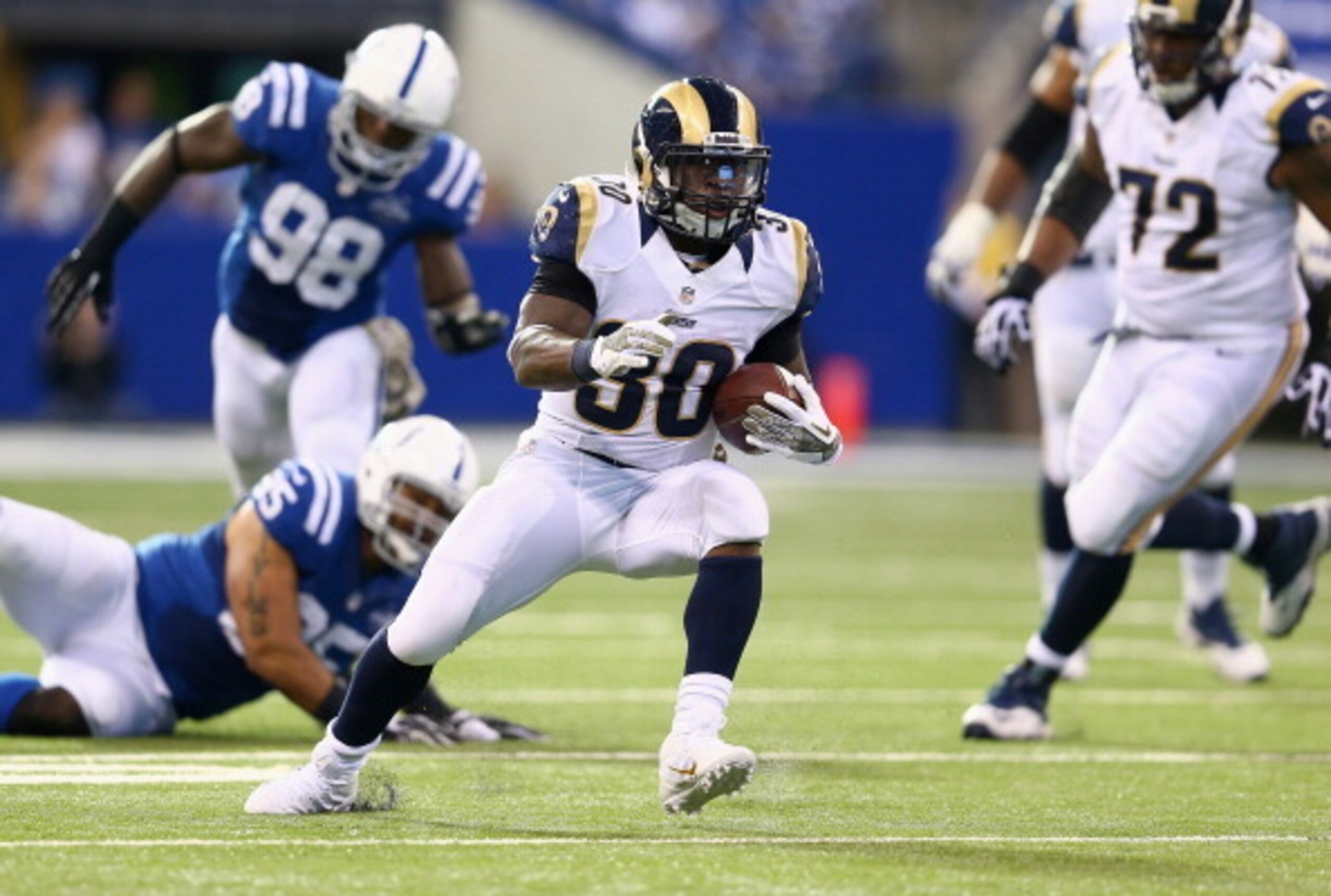
Power
Zac Stacy (5'8", 224 lbs, one season) consistently finishes plays moving forward. He doesn't carry much weight on his slender frame, but he does get low and keeps his legs moving through contact.
Speed
Although it's tougher to notice than, say, the speed of LeSean McCoy or Chris Johnson, Stacy has overwhelming speed. He isn't exceptionally fast running in straight lines, but his quickness and burst are incredible.
Vision
Everything with Stacy is subtle. His ability to pick apart a defense or evade defenders in tight spaces can be tough to see on initial viewing, but the impact is often huge.
Receiving
Stacy's value is as a runner. He is a competent catcher of the football, but not a dynamic threat in the passing game.
Overall
If the 2013 draft was held today, Stacy, a fifth-round pick, would have been one of the many backs looking to force their way into the first round. At worst, he should never have escaped the second round. He has traits that should allow him to be a productive back for a long time at this level.
22. Pierre Thomas, New Orleans Saints
69 of 90
Power
Pierre Thomas (5'11", 215 lbs, seven seasons) doesn't look like your typical power back, but he plays like a much bigger player. He is aggressive attacking the point of contact and consistently powers his legs through. Thomas plays with a low pad level to get the most out of what bulk he does have.
Speed
Thomas is an above-average athlete, but speed is not one of his strengths. He is quicker than he is fast and has enough speed to take advantage of space, but he won't outrun many defenders on the second level.
Vision
Speed is overrated in the NFL. Thomas is a great example of that. His patience and anticipation allow him to be effective. He understands how to set up his blocking and manipulate defenders with his movement before the line of scrimmage.
Receiving
He lacks the explosion to break off big gains when given space, but Thomas is a reliable and versatile receiving option.
Overall
Thomas is entering the final stretch of his career, but he should still be an effective player in 2014.
21. Darren Sproles, New Orleans Saints
70 of 90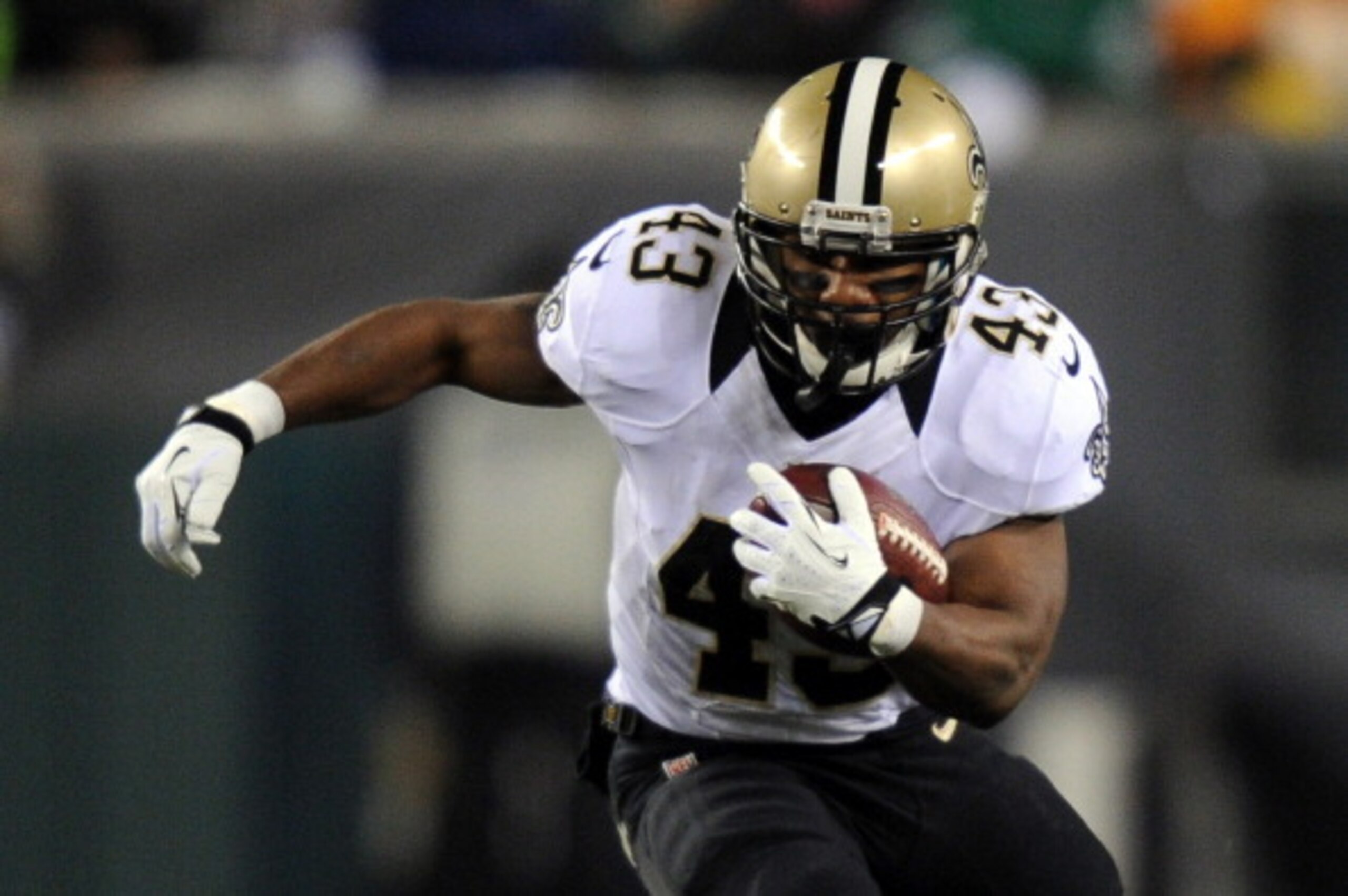
Power
Darren Sproles (5'6", 190 lbs, eight seasons) is a small receiving specialist who plays under the label of running back. However, he doesn't play that way. Sproles is aggressive approaching contact and looks to use his low center of gravity to bowl over bigger defenders. Unfortunately for him, size does matter. Sproles' impact is limited by his size, even though he gets the most out of what he has.
Speed
At this stage of his career, he may be slowing down a little bit. Even though he may not be as fast as he was, he is still very fast. In particular, Sproles can still shake defenders underneath with his quickness and accelerate from linebackers with relative ease.
Vision
Throughout his career, Sproles has never received enough credit for his intelligence and awareness. Both aspects of his game will stick with him as he grows older. Sproles understands how to set up his blocking and quickly reacts to defenders’ movements.
Receiving
Sproles didn't drop a pass on 84 targets last season. He is a mismatch player who can be effective in every single situation.
Overall
Sproles will be 31 next season, and he will be playing with a new team in the Philadelphia Eagles. It will be his third stop in the NFL.
20. Danny Woodhead, San Diego Chargers
71 of 90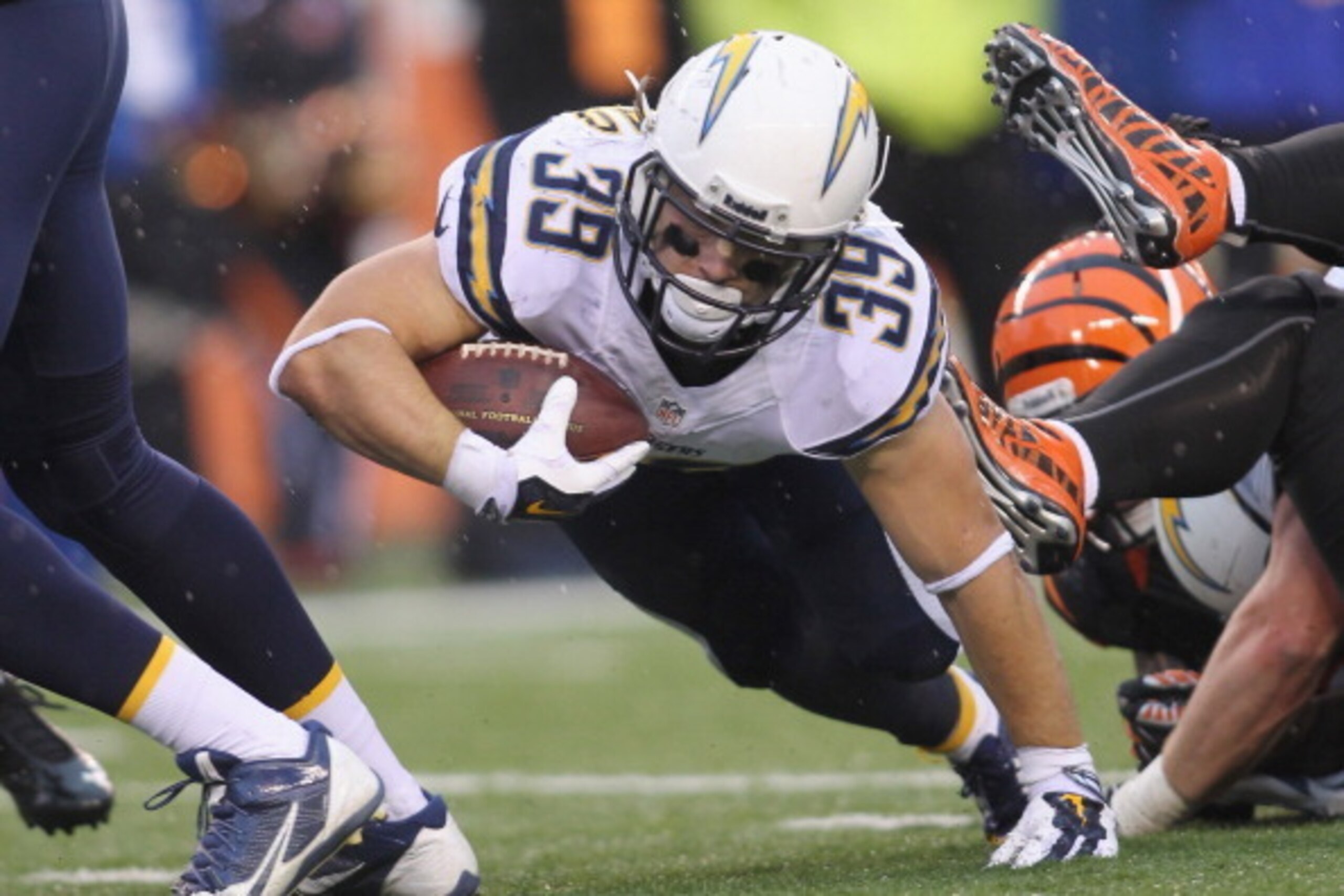
Power
Although he doesn't shy away from contact and is smart enough to use his size to get underneath tacklers at times, Danny Woodhead (5'8", 200 lbs, five seasons) isn't a powerful back. He is too small to impact those trying to tackle him. Even defensive backs have no issue getting him to the ground once they catch him.
Speed
He's quick and can turn away from defenders in tight spaces, but he lacks the explosion to get away from defenders. He didn't have many big plays that came about because of his sheer athleticism.
Vision
Woodhead is patient and allows plays to develop naturally. He doesn't touch the ball as often as many backs, but when he does, he generally makes good decisions and shows a strong understanding of the game.
Receiving
He had a few drops, but those were a small percentage of his targets. Woodhead is clearly one of the best receiving backs in the NFL. His versatility and consistency are what teams crave in today's pass-heavy NFL.
Overall
While those in New England may not want to admit it, they definitely missed Woodhead this year. He became a crucial part of Philip Rivers' revival in San Diego. Woodhead is a running back, but he could easily be a full-time receiver instead.
19. Giovani Bernard, Cincinnati Bengals
72 of 90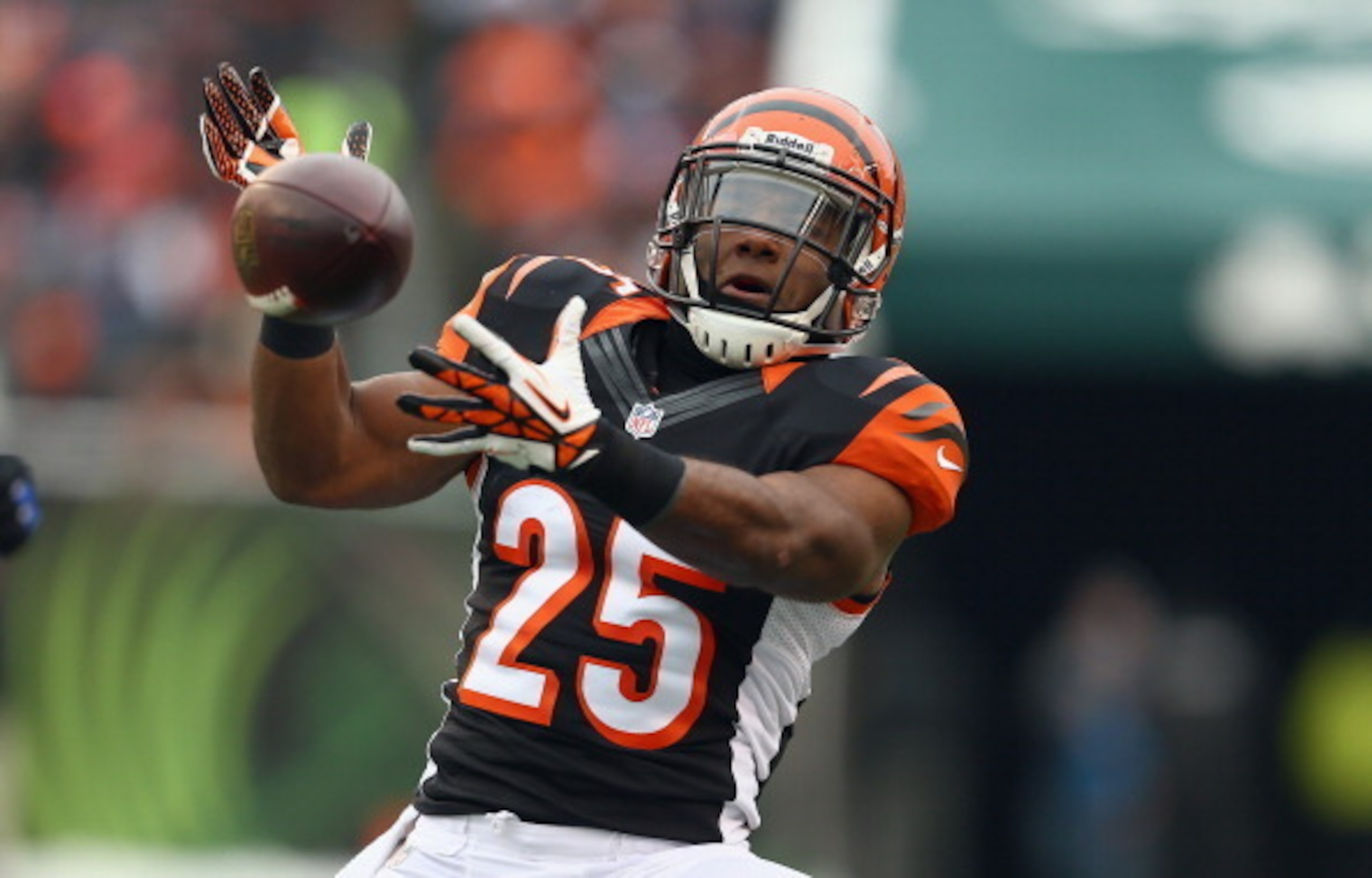
Power
Giovani Bernard (5'9", 208 lbs, one season) has a low center of gravity, but he concentrates his power further by running compact and being aggressive. He consistently runs hard between the tackles and looks like an ideal goal-line back.
Speed
He's not lacking anything, but there are faster straight-line runners in the NFL. He is quick and is able to jump, cut or spin away from defenders in tight spaces. He needs to prove that he can consistently show off this speed as a feature back, though.
Vision
He reads the defense well behind the line of scrimmage, but at times, he doesn't manipulate the defense with his timing as well as he could. More often than not, however, his physical traits compensate for any poor decisions.
Receiving
Watching Bernard, a comparison to Darren Sproles comes to mind. Bernard has all of the traits to be the best receiving back in the NFL one day. While he has that talent, the performance wasn’t there in 2013 because he had too many drops.
Overall
All we really need from Bernard is to see him as a feature back.
18. Reggie Bush, Detroit Lions
73 of 90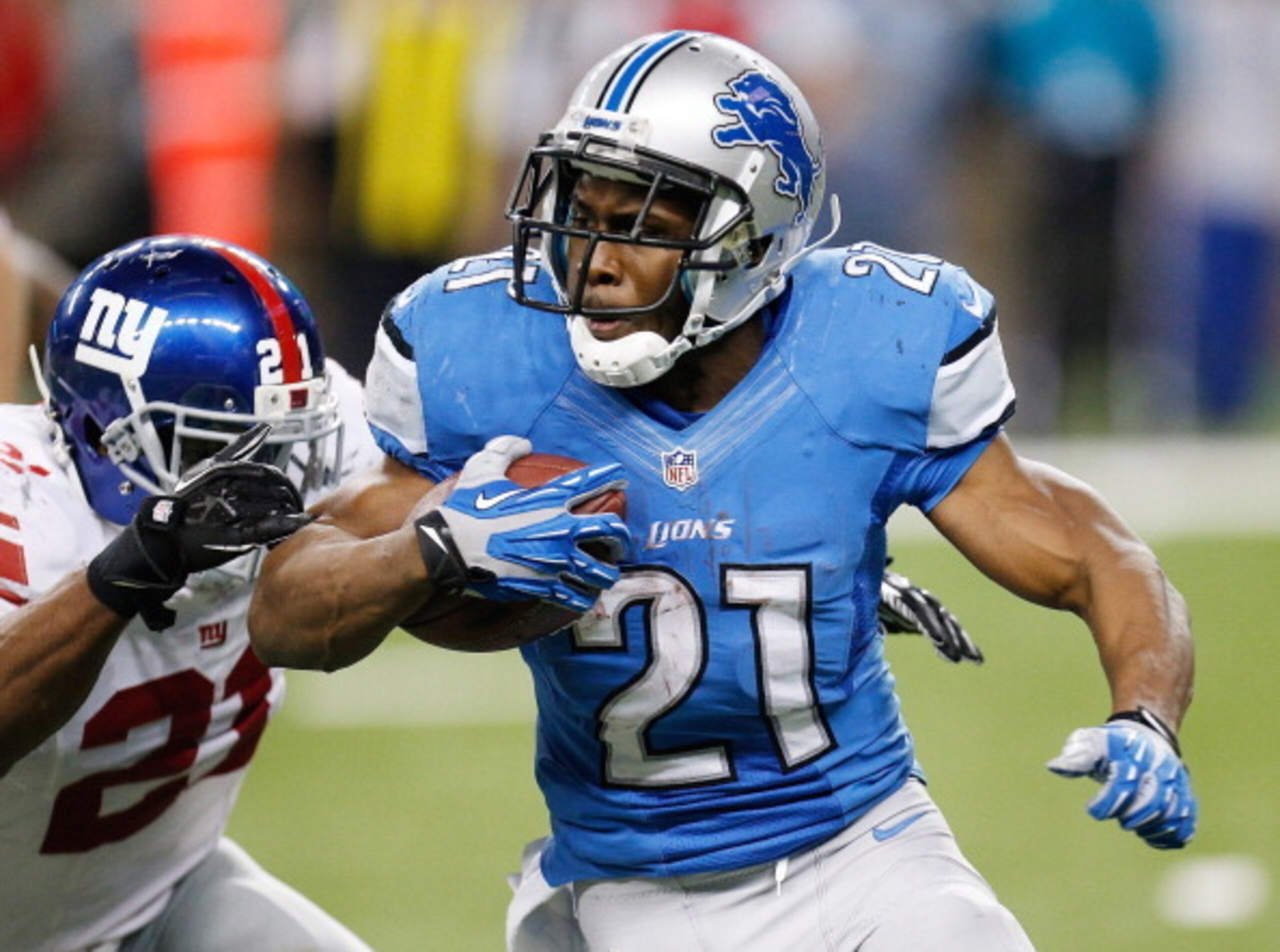
Power
Reggie Bush (6'0", 203 lbs, eight seasons) is strong enough to not wear down after more than 20 carries in a game, but he isn't anything like a power back. He will break arm-tackles because he runs aggressively and keeps his feet moving through contact, but his slender frame will always limit him in this aspect of the position.
Speed
Bush is quicker than fast, but that quickness is simply incredible at times. Even in tiny holes between the line of scrimmage, Bush could fake out defenders and give himself a clear path into the secondary because of his quickness. Once in space, defenders rarely had a chance to get him down before he created more yards by spinning, juking or baiting them with his quickness.
Vision
He has some inconsistencies behind the line of scrimmage when he hesitates and misses opportunities, but for the most part, he's adept at finding the right hole and setting up his runs. Where Bush's vision elevates his play is on the second level, where he has great peripheral vision and knows how to use any blocking he may have.
Receiving
He is the most talented receiving back in the NFL, but he had too many drops in 2013.
Overall
Bush found his natural fit in Detroit. At 29 years of age, this could easily prove to be the best season of his career.
17. DeMarco Murray, Dallas Cowboys
74 of 90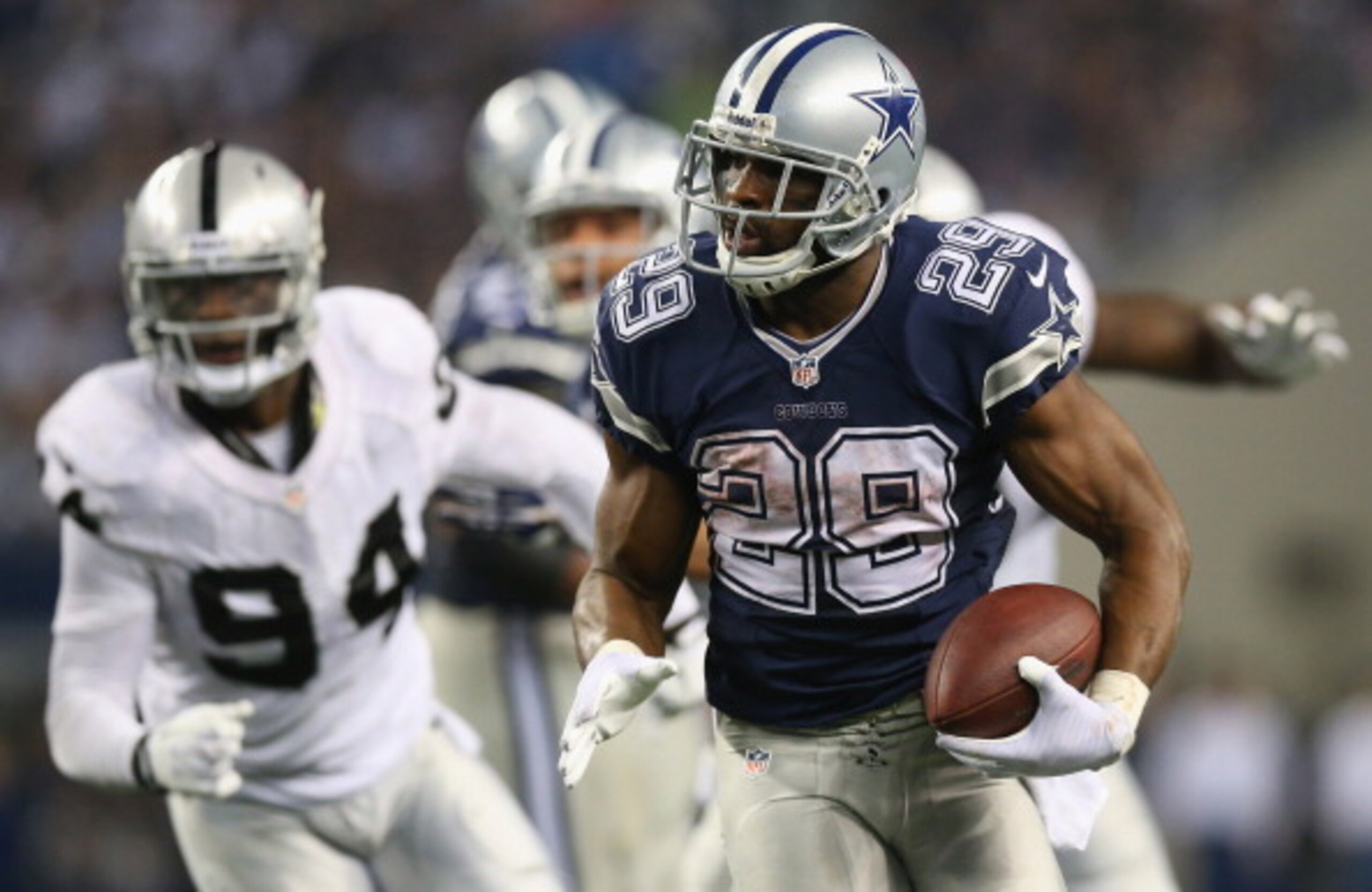
Power
DeMarco Murray (6'0", 219 lbs, three seasons) will break arm-tackles when he is running at speed, but he is a tentative back who often runs too high and shies away from contact instead of initiating it. He has the ability to break tackles, but he needs to be more consistent at the point of contact.
Speed
He's a very quick athlete who also has the speed to break off big gains when the opportunities arise.
Vision
He didn't always run with patience, and he ran toward the sideline too often. A number of bad decisions also affected his grade, but he doesn't appear to have any real problems with reading plays as they develop.
Receiving
He’s a reliable and consistent catcher of the football who could be more elusive in open space.
Overall
Although he was a productive back when used last season, Murray also benefited from playing against several inept defenses. Big games against teams such as the New York Giants, Oakland Raiders, Chicago Bears and St. Louis Rams definitely helped his ranking.
16. Arian Foster, Houston Texans
75 of 90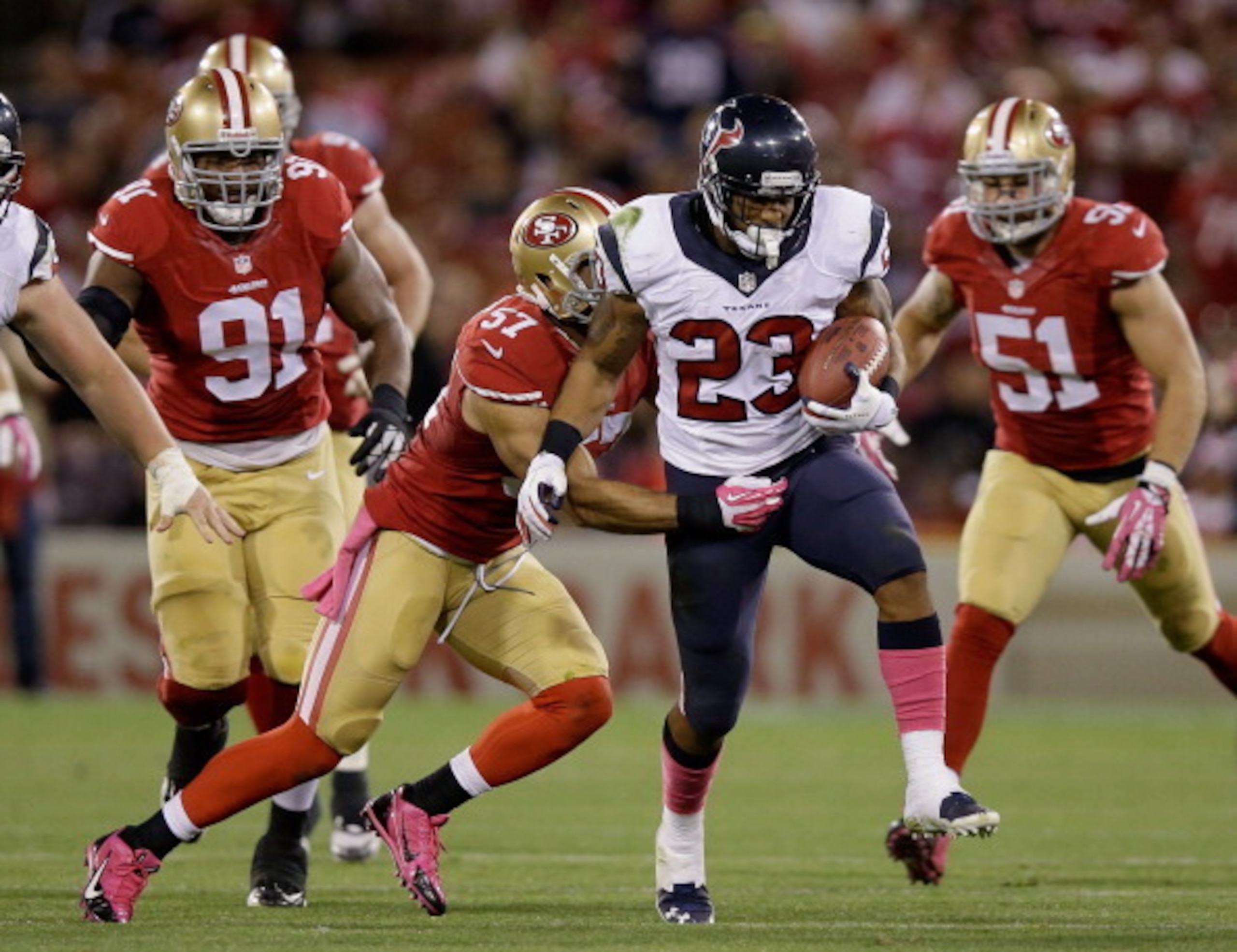
Power
Arian Foster (6'1", 227 lbs, five seasons) is still a very strong player when fully healthy. He dealt with injuries at times last season, but when fully healthy, he was able to consistently finish plays moving forward.
Speed
Although he's not a constant home run threat, Foster's quickness as a cutback runner is still among the best in the NFL. He is a fluid athlete who can make hard cuts and subtle moves to manipulate the opposition.
Vision
Outstanding patience, awareness and decision-making: Foster has all of the mental attributes a running back needs, but what's most impressive is his consistency from snap to snap.
Receiving
Too many drops ruined Foster’s rating for the 2013 season. He has the ability to be an excellent receiving option out of the backfield.
Overall
Foster is still one of the best backs in the NFL. There was a noticeable drop-off from him to Ben Tate when both were healthy.
15. Jonathan Stewart, Carolina Panthers
76 of 90
Power
Jonathan Stewart (5'10", 235 lbs, six seasons) isn't known for his power, but he showed off a lot of strength in 2013. His low center of gravity combined with his overall body strength allow him to consistently finish plays moving forward. He doesn't always keep his legs moving through contact, but he is still very effective.
Speed
The first thing that stands out when watching Stewart is his quickness. He changes direction very subtly while still moving forward. This allows him to slide from gap to gap behind the line of scrimmage and glide away from tacklers in space. His acceleration and long speed appear to have been diminished by his health.
Vision
Stewart is a patient runner who is able to quickly make decisions behind the line of scrimmage because of his ability to change directions in one movement. He is elusive in space and understands how to set up defenders. He just needed to show more consistency in his decision-making in 2013.
Receiving
Stewart showed off the ability to adjust naturally to slightly off-target passes. He made a limited impact as a receiver working out of the backfield.
Overall
Considering his health entering the season, Stewart should be commended for his play in 2013.
14. Doug Martin, Tampa Bay Buccaneers
77 of 90
Power
Doug Martin (5'9", 215 lbs, two seasons) is a bullish runner who can break tackles from a standing start or even in a less advantageous position. His speed and acceleration make him very dangerous in space, and when he lowers his head to attack defenders, he can consistently gain forward momentum as well.
Speed
Martin is exceptionally quick and has the speed to run away from defenders in space. His acceleration is outstanding between the tackles, which makes him an aggressive runner.
Vision
Because he wasn't on the field for the whole season—and when he was on the field, the Buccaneers' blocking was often overwhelmed—Martin had a lot of negative runs. However, very few of those runs were Martin's fault. Too often he was being met in the backfield or he had no running lanes as the defense crowded to him at the line of scrimmage.
Receiving
A few drops hurt his potential as a receiver in 2013, but he still showed off his comfort in space and how dangerous he can be when used in a variety of ways.
Overall
Martin didn't drop off in his second season, he was dragged down by a horrible situation. Even though other backs had success in his absence later in the season, that success came when the offense around them was more effective.
13. Stevan Ridley, New England Patriots
78 of 90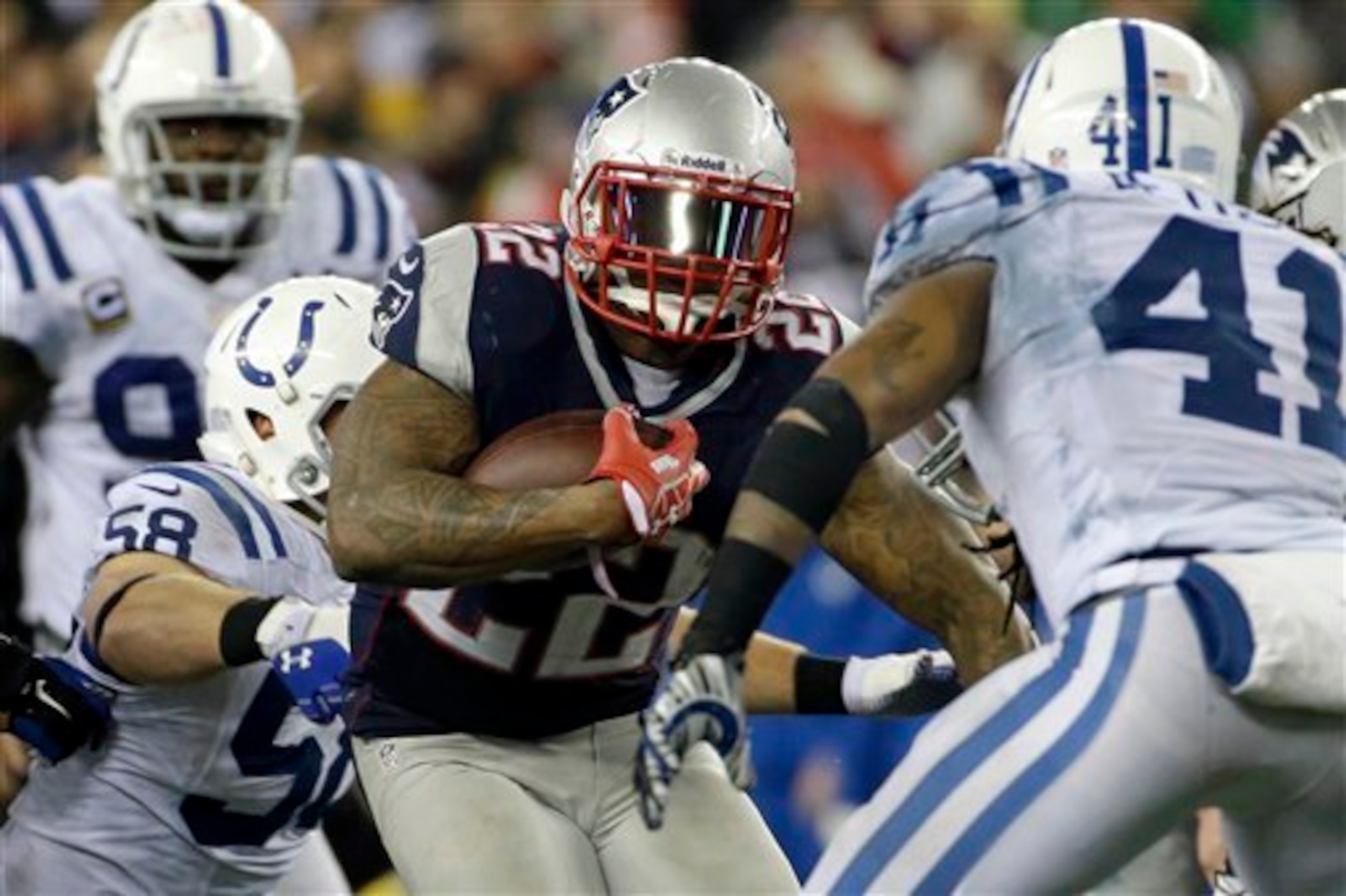
Power
Stevan Ridley (5'11", 220 lbs, three seasons) is an athletic player with the aggressive streak to run over defenders in space. Ridley plays with good leverage and takes a violent approach to the initial contact point.
Speed
Although he is clearly not just a power back, Ridley isn't an exceptionally fast player, either. He has solid acceleration, quickness and breakaway speed, but he lacks one standout trait in this area.
Vision
Ridley is a very intelligent runner who sees lanes while moving at speed. He understands how to set up his runs to consistently get the most out of his blocking.
Receiving
The Patriots didn't give Ridley many opportunities to catch the ball in 2013, but he did show off his comfort and versatility when he was targeted.
Overall
Ridley had fumble issues in 2013, but outside of ball security, he is a well-rounded player who will expect to start in New England entering next season.
12. Le'Veon Bell, Pittsburgh Steelers
79 of 90
Power
Concerns about Le’Veon Bell's (6'1", 244 lbs, one season) upright running style during the draft were supposed to lessen his ability to be a power runner in the NFL, but that wasn't the case during his rookie season. Bell is very willing to initiate contact and is generally able to finish plays moving forward with his power.
Speed
Breakaway speed is Bell's biggest issue. He's quick enough and has the acceleration to make defenders miss, but he won't outrun angles down the sideline or consistently hit home runs from 20-plus yards.
Vision
He has outstanding patience that has dramatically improved the Steelers' running game. His ability to recognize the position of second-level defenders before manipulating them with his movement is outstanding. He rarely misses opportunities to gain yardage and understands how to manipulate engaged defenders to help his blockers create running lanes.
Receiving
A versatile receiver who can catch balls out of the backfield, from the slot or after being lined up out wide, he looks like a natural receiving back but had a couple of drops on the season.
Overall
Production doesn't support Bell's case to be considered one of the best backs in the NFL, but he is consistently proving that he can be one of the better backs in the league despite being in a tough situation with the Steelers. His lack of breakaway speed will probably always keep him from being among the elite at his position, but he has pretty much everything else you could ask for from someone playing the position.
11. Ray Rice, Baltimore Ravens
80 of 90
Power
Ray Rice (5'8", 212 lbs, six seasons) is still a strong back with a low center of gravity that allows him to get the better of bigger linebackers and push the pile on occasion. However, he was taken down by first contact too often in 2013.
Speed
His agility is still excellent, but his acceleration was oddly inconsistent while his long speed wasn't always evident. Everything with Rice this year seemed just a bit more lethargic than it had been in the past.
Vision
Rice entered this season with at least 1,000 yards in each of his previous four seasons. You can't do that without being a smart runner. He was still a smart runner in 2013, but that lack of explosion prevented him from taking advantage of opportunities that he would have thrived on in the past.
Receiving
Rice is still clearly one of the best receiving backs in the NFL.
Overall
The demise of Rice has been exaggerated, but not greatly. Everything Rice did last season appeared to be slightly slower than the previous year, but not so much that he was an ineffective back. Most of his struggles could be attributed to the poor play of his offensive line.
10. Ryan Mathews, San Diego Chargers
81 of 90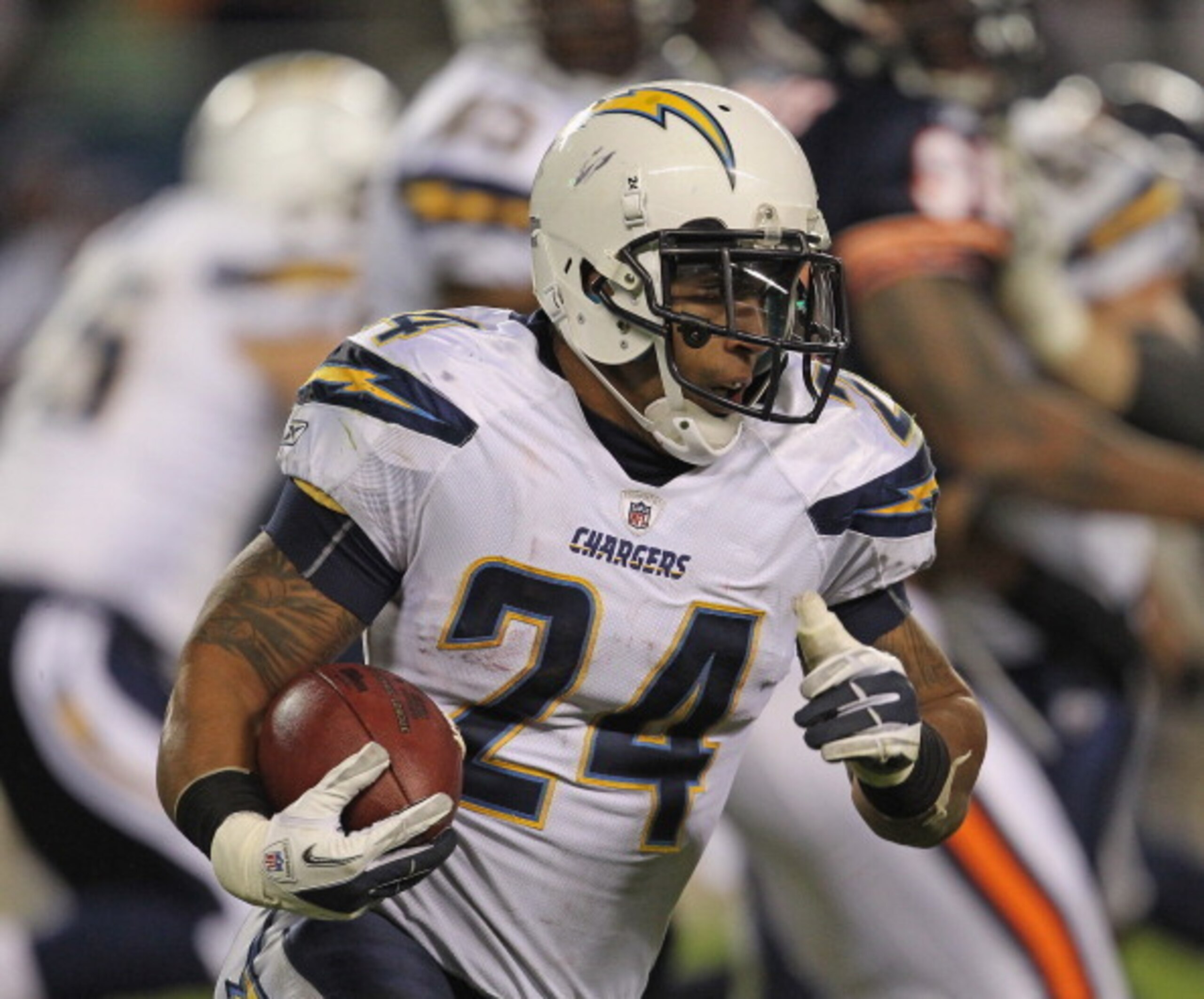
Power
Ryan Mathews (6’0”, 220 lbs, four seasons) proved his doubters wrong in 2013. While not exactly a power back, given his size, he’s able to break tackles and drive through rushing lanes pretty well. Mathews isn’t a punishing force on the defense for an entire game, but on one carry, he can lower the boom if needed.
Speed
You might think that injuries would sap some of Mathews’ speed, but he still has the juice to get away from a defense. His burst once past the first wave of defenders is top tier. He has the speed to keep a defensive coordinator up nights with his open-field moves.
Vision
Mathews finds holes. Period. He has good vision and patience when stretching down the line and shows the cutback ability needed to succeed. He’ll find those creases between the tackles, too, when tough yards are needed.
Receiving
A solid receiver, but not a consistent threat as a pass-catcher, Mathews is more of your prototypical running back. He can make plays on simple routes and passes, but nothing complex.
Overall
After so many people wrote him off, us included, Mathews was brilliant in 2013. By staying healthy, he finally showed the promise that led to him being a top-12 draft pick in the 2010 class.
9. C.J. Spiller, Buffalo Bills
82 of 90
Power
Known as a speed back, C.J. Spiller (5’11”, 200 lbs, four seasons) has enough power to push the pile when needed. Of course, he does most of his damage outside of the tackle box, but Spiller does run with the needed lower-body power and push to be a factor when met by a defender or when the Bills need a tough yard or two.
Speed
With a long run of 77 yards in 2013, Spiller showed the backbreaking speed for which he’s known. That acceleration makes him dangerous, and it’s why the Bills once flirted with playing him at wide receiver. Spiller’s 10-yard speed is amazing, but his second gear is just as jaw-dropping.
Vision
When you watch Spiller run outside of the hashes, his ability to pick out a seam or an angle is impressive. Ask him to do the same between the tackles, and he’s not as defined. Spiller’s an outside runner, and that’s good enough for him to be productive and impactful.
Receiving
Spiller’s hands are well developed, but he actually took a step back in receptions in 2013. He’s able to play flexed-out in the slot, in motion out of the backfield or split out from the snap.
Overall
An exceptional athlete capable of beating a defense in so many ways, Spiller remains in our top 10 even after a drop in production during the 2013 season.
8. DeAngelo Williams, Carolina Panthers
83 of 90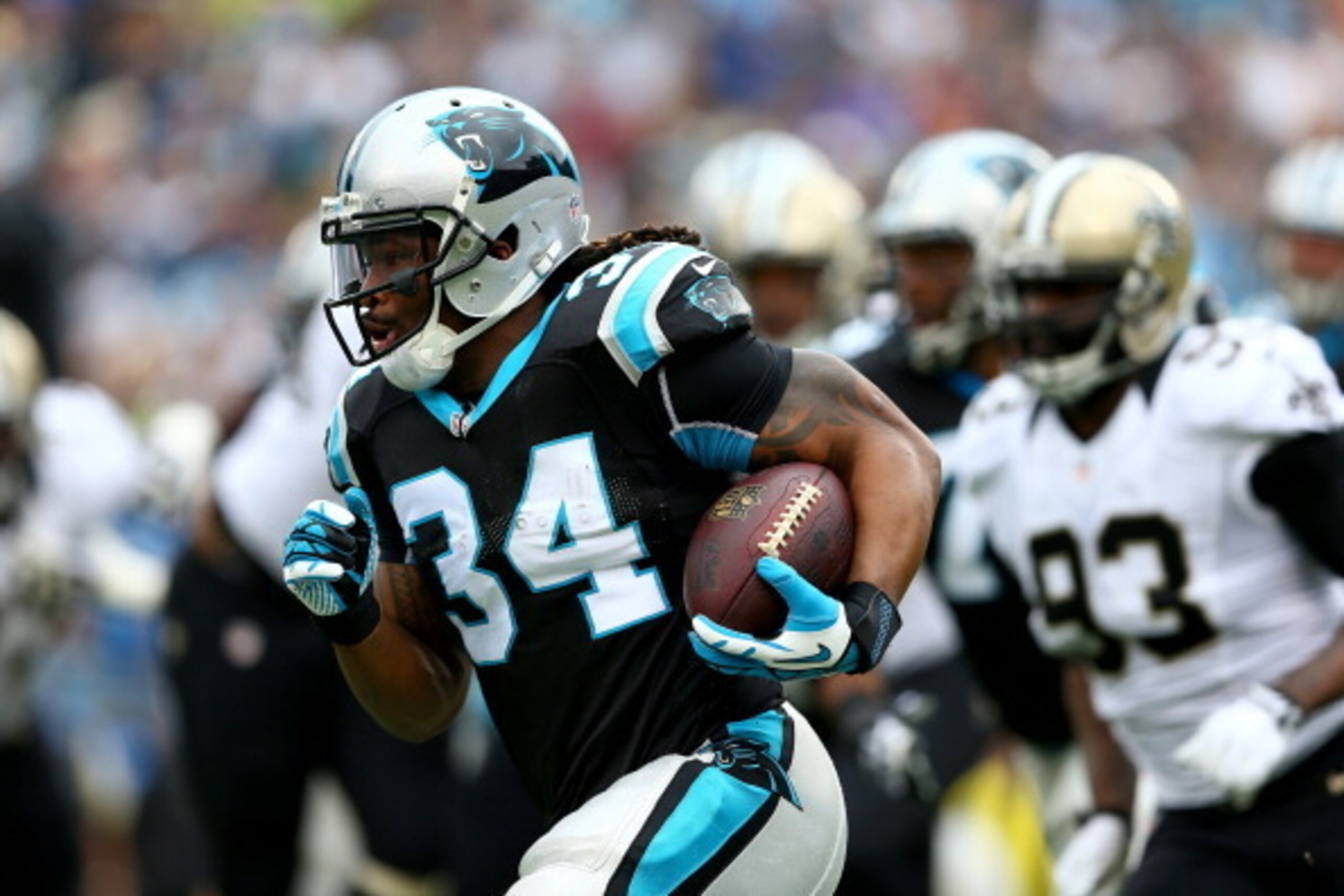
Power
DeAngelo Williams (5’9”, 215 lbs, eight seasons) is not built like a power back, but that doesn’t mean he won’t lower the boom on a defender who gets in his way. Williams is best known for his agility and speed, but he can run with good body lean and pad height to create yards after contact.
Speed
Williams isn’t the burner he might have been earlier in his career, but he still has the giddy-up to pull away from a defense with a big play. He did that against the Saints late in the season and proved he can still make a long run when there’s daylight.
Vision
Williams is a quality runner both inside and outside of the hashes, and that’s largely due to his vision on the go. He’ll make jump cuts to elude defenders and can shift and start once he finds a rushing lane. His peripheral vision is high level. Finding those lanes on the inside isn’t as developed as his outside game.
Receiving
Williams’ hands make him a threat as a safety valve or designed threat out of the backfield. He looks the ball in well and has the athleticism to turn up field and make a play post-catch.
Overall
A healthy Williams emerged as a go-to threat for the Panthers in 2013. It helped that he was finally 100 percent, but we’re also seeing what a dynamic Cam Newton does to the running game in Charlotte. Williams' numbers weren’t at an all-time high, but his impact was.
7. Eddie Lacy, Green Bay Packers
84 of 90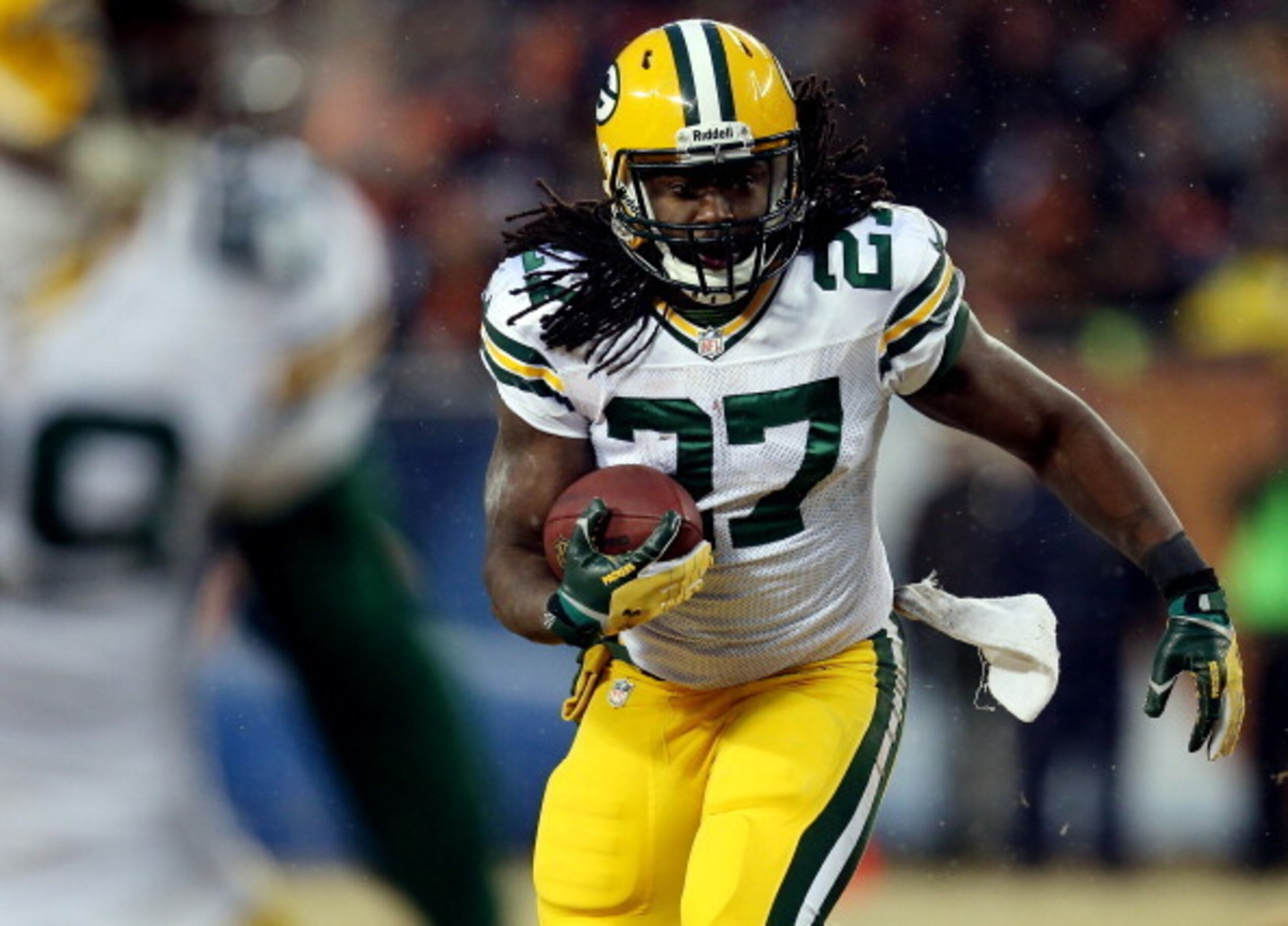
Power
Eddie Lacy (5’11”, 230 lbs, one season) hit the ground running in 2013 and became the workhorse back the Packers didn’t think they would need. But with Aaron Rodgers injured, Lacy became the team’s best offensive weapon. His big frame packs a punch when defenders try to meet him in the hole, and a solid combination of pure power and leverage makes Lacy one of the league’s toughest players to wrap up and tackle.
Speed
Lacy doesn’t have the long speed to pull away from a defense and outrun the secondary to the end zone. What he does have is good start-and-stop speed and a nice first step. His top-end speed won’t wow you, but his burst is good enough to be a high-level starting back.
Vision
Vision is always tough for a rookie running back, and Lacy saw his develop over the course of the season. By the playoffs, he was finding cutback lanes and lowering his shoulder pads to create holes from small creases.
Receiving
Lacy wasn’t known for his hands at Alabama, and in his first pro season, he wasn’t used much as a receiver. What we saw was a player best used on dumpoffs but likely replaced for speed screen packages.
Overall
The best rookie back in the game, Lacy has the potential to eventually top this list. He has room to improve and great coaching. It’s all on him.
6. Frank Gore, San Francisco 49ers
85 of 90
Power
Frank Gore (5’9”, 217 lbs, nine seasons) seems to be getting better with age. With a naturally low center of gravity and exceptional balance, Gore is able to bounce off tacklers and defenders and find his way through the trenches unscathed. He’s also able to square up to a defender in the hole and put them on their tail if they try to take him on head-up.
Speed
Breakaway speed is not part of Gore’s game, but it hasn’t been since his two knee injuries in college. He makes up for the lack of deep speed with balance, agility, short-area quickness and exceptional vision.
Vision
LeSean McCoy has the NFL’s best vision outside the tackles. Gore has the NFL’s best vision between the tackles. No player in the game is better at finding tiny creases between the hashes and then bursting through traffic and into space. Gore is able to make himself small and then slide through holes you barely see on film.
Receiving
Gore has soft hands and is a capable receiver going over the middle or releasing on screen plays. In 2013, drops weren’t exactly a factor, but his impact wasn’t as great in the passing game.
Overall
The ageless wonder, Gore continues to be great at finding small cracks in the line to run through while flashing the burst, power and agility to consistently challenge the defense.
5. Matt Forte, Chicago Bears
86 of 90
Power
Matt Forte (6’2”, 218 lbs, six seasons) is a big back, and defenders feel that when he meets them in the hole. Forte has the pure strength to drive through tacklers and pick up yards after contact. Where can he improve? Lower pad level. As is the case for most taller running backs, Forte needs to get lower than his tacklers to be even more productive.
Speed
A top-tier back, Forte attacks a defense with an all-around skill set. He’s not exceptionally fast, but he has good burst inside of 10 yards and is able to run away from defenders with a solid second gear. Even without great speed, Forte still rips off longer runs at times.
Vision
A dual threat as an inside or outside runner, Forte is able to find rushing lanes either between the tackles or outside of the tackle box. He does an excellent job finding daylight and has the agility to attack cutback lanes and pick up unseen yardage.
Receiving
Forte is a very good receiver, and that shows up with his production as a receiver out of the backfield. With 74 catches, he was a big part of the Chicago offense, but drops were also a bit of a factor for the former Tulane running back.
Overall
Too often forgotten in the conversation about the NFL’s best backs, Forte has third-down ability and is a major force to be reckoned with.
4. Marshawn Lynch, Seattle Seahawks
87 of 90
Power
The NFL’s best pure power back, Marshawn Lynch (5’11”, 215 lbs, seven seasons) is an angry runner. That’s bad news for NFL defenders and great news for the Seattle Seahawks. Lynch relishes contact and not only seeks out bone-crushing hits on defenders, but is also elite in his ability to bounce off initial contact and pick up yards. Lynch’s penchant for always falling forward is the best in the business.
Speed
Lynch doesn’t have great speed, but he does have good speed. Too often his power and yards-after-contact running lead people to forget that he’s able to run away from defenders, too. Remember his 40-yard run against the 49ers in the NFC Championship Game? Lynch has speed.
Vision
When evaluating vision, we want to see a runner recognize alternate rushing lanes on the go. That’s what Lynch does. As much as he lowers his head to carve out his own paths, he’ll also spot a cutback lane and flip his hips to get upfield.
Receiving
Did you know Lynch had 36 catches for the Seahawks this season? Many think of him as “just” a bowling-ball rusher, but he’s a solid all-around athlete with soft hands and good use in the screen and dump game.
Overall
Raw power, toughness and vision have made Lynch into the NFL’s version of a wrecking ball. And in a rarity for NFL players, he seems to just get better with age.
3. Jamaal Charles, Kansas City Chiefs
88 of 90
Power
Jamaal Charles (5’11”, 199 lbs, six seasons) may not be very big, but he can pack a punch when met by a defender. With his burst and lower-body power, he’ll hit a defender and bounce off to continue picking up yardage. He’s not a bruiser, but he uses his power well in conjunction with his speed to make himself tough to bring down in the open field.
Speed
Charles may be the NFL’s fastest running back—both on and off the field. When the ball is in his hands and there’s daylight in front of him, he can truly take the ball to the end zone in a blur. If he gets loose, defenders aren’t catching him from behind.
Vision
Excellent at finding cutback lanes, Charles is great at seeing openings on the move. Given his speed and acceleration, his ability to see openings to his left or right is amazing. Charles’ vision isn’t so much between the tackles as it is in the open field.
Receiving
A talented receiver and versatile route-runner, Charles did put the ball on the ground a few times this year. But when he’s on, he can be the team’s best pass-catcher.
Overall
As dynamic and dangerous as any running back in the NFL, Charles is tied for the No. 3 spot in this year’s running back rankings. He’s biting at the heels of our No. 1- and No. 2-ranked backs, though.
2. LeSean McCoy, Philadelphia Eagles
89 of 90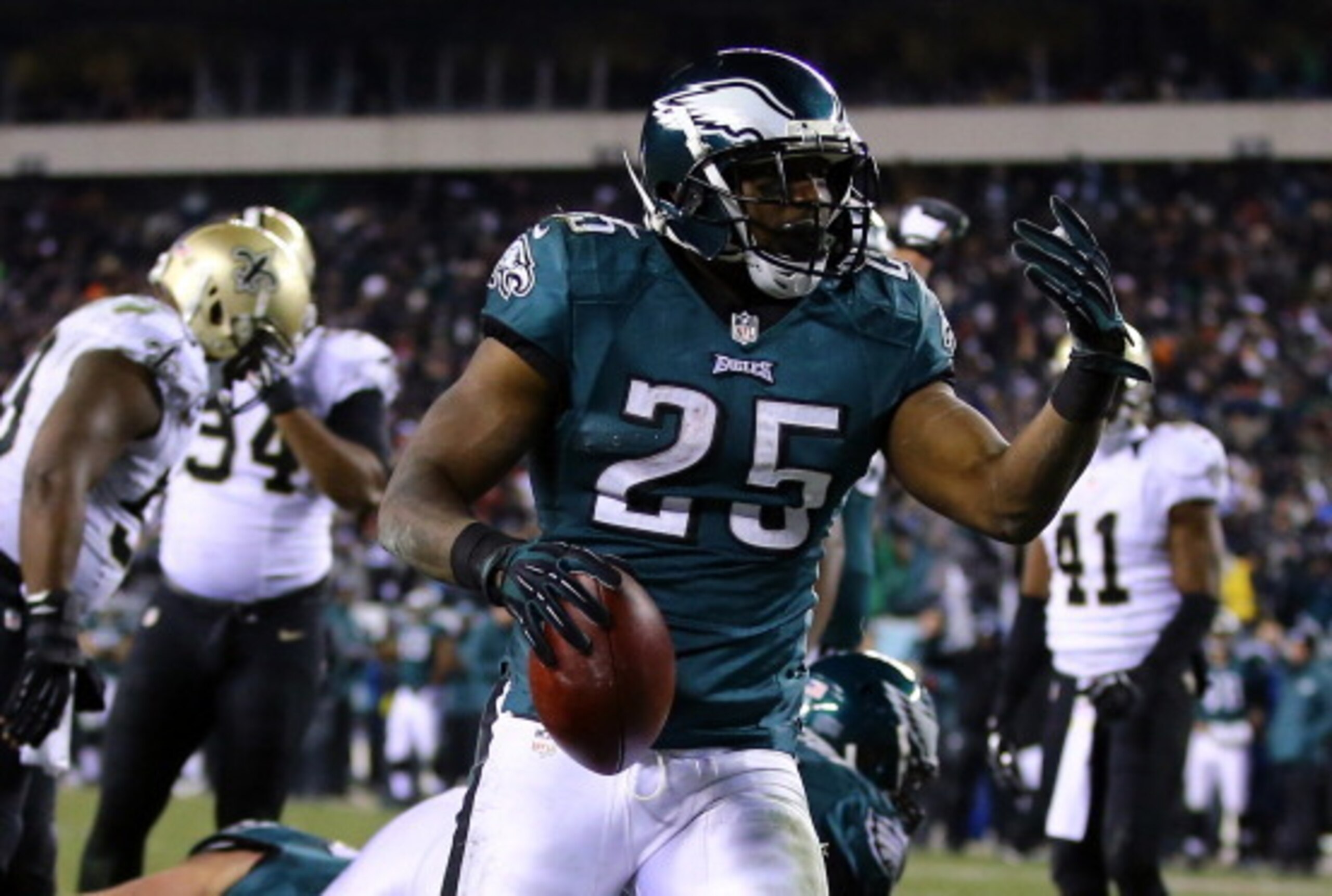
Power
LeSean McCoy (5’11”, 208 lbs, five seasons) isn’t the biggest running back in the NFL, but he plays with surprising power for his size. McCoy consistently causes defenders to miss tackles—and even breaks tackles—thanks to his lower-body power and his agility in space. When met head-to-head by a defender, McCoy is versatile enough to lower his shoulder or shake them and take off.
Speed
When McCoy takes off in space, he’s gone. He wouldn’t be the fastest back in the game in a 100-meter dash. But with the ball in his hands and pads on, he has the burst and acceleration to pull away from tacklers when he hits the edge or when he finds daylight.
Vision
McCoy is supernatural in terms of vision. He sees the entire field so well and processes the information in a nanosecond. When faced with defenders, he finds openings that don’t seem to exist. With his agility—a trait we deem to be the best in the NFL—and his vision, McCoy can be nearly impossible to tackle in space.
Receiving
A talented all-around player, McCoy is used often in the passing game. He can play coming out of the backfield and can even be put in motion to play in the slot. McCoy runs good routes and catches the ball on the go with soft hands.
Overall
McCoy took home an All-Pro vote from me this year and was truly the most productive running back in the game. When based on a scouting profile, such as this, he comes in slightly outside of the No. 1 spot.
1. Adrian Peterson, Minnesota Vikings
90 of 90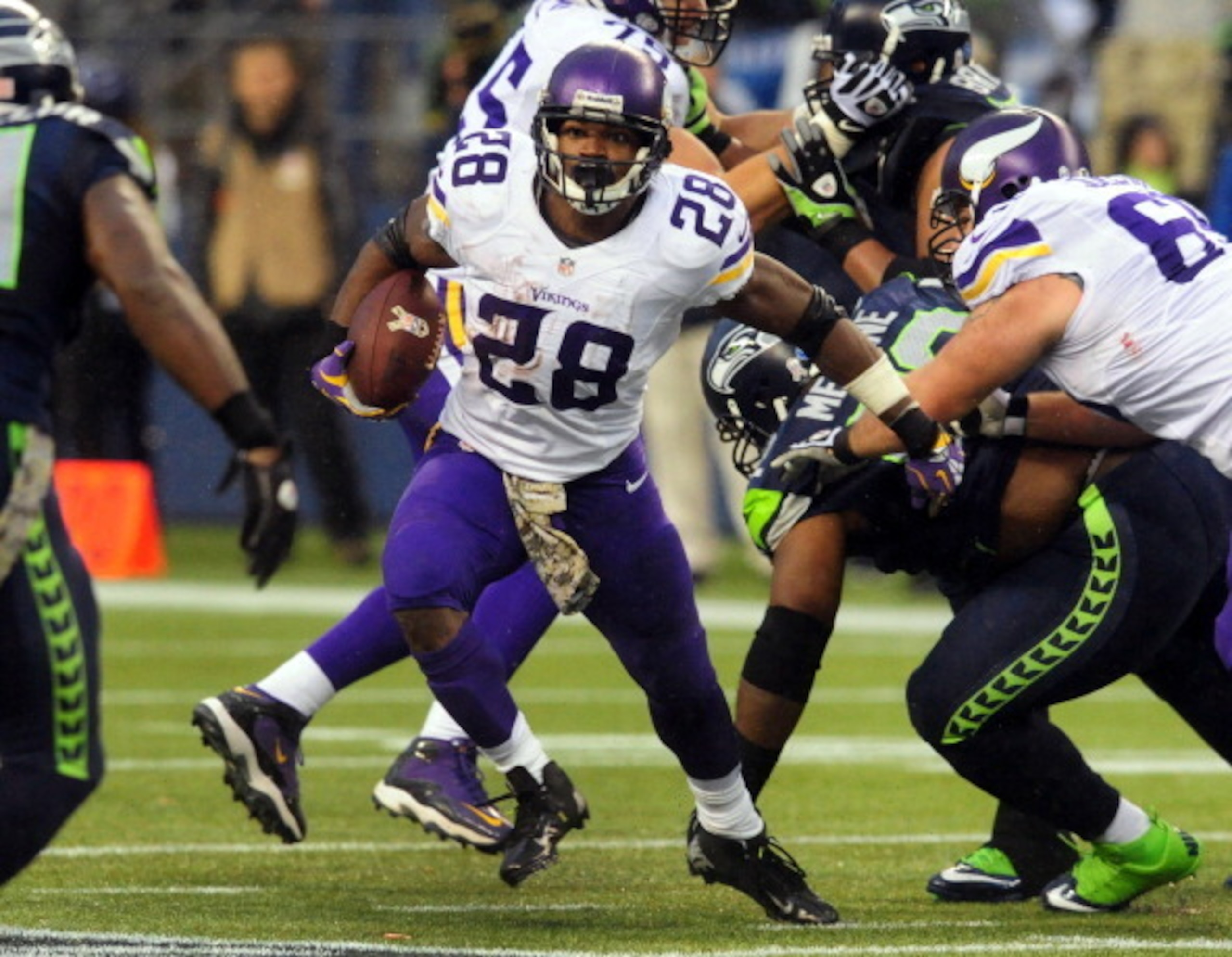
Power
One of the most powerful players in the NFL, Adrian Peterson (6’1”, 217 lbs, seven seasons) has the natural gifts to beat any defender. Despite being a naturally high runner, Peterson has the flexibility to lower his pads and attack defenders. He’s also strong enough to drive through a would-be tackler at the point of contact. Peterson’s power, pad leverage and leg drive are epic.
Speed
Many people think of Peterson as a power runner, but the other aspect that makes his game so dominant is his speed. He’s fast enough to pull away from defenders in space and has a second gear that allows him to break big runs and run past defenders.
Vision
There are players with better vision to find holes and openings, but Peterson finds them at 100 mph. He’s able to see the field on the move and doesn’t have to throttle down to cut back or attack a crease.
Receiving
A solid receiver out of the backfield, Peterson can be a threat on dumpoffs and in the screen games. He’s not the type of receiver you flex out or play in the slot, though.
Overall
Peterson remains the standard by which we judge all running backs. His 2013 season may not have been his most productive, but he also played with three quarterbacks in an offense that wasn’t able to throw the ball. Based on talent alone, he’s still the best.
.jpg?w=2560 "49ers Seahawks Football")

.jpg?w=2560 "WWE Raw Live Grades 🔠")
.jpg?w=2560 "Harbaugh's Jameis Comps 🤨")