Year-End Grades for Every Key Detroit Pistons Player
After landing in the lottery for four consecutive seasons, the Detroit Pistons find themselves in the middle of the Eastern Conference playoff race as they head into the new year.
Both returning players and newcomers have played a major role in turning around a team that won just 29 games in 2012-13. But not everything has been great, as some players have failed to meet expectations, and the Pistons have been under .500 since Dec. 7.
The year-end grades for the Pistons' top 10 players are an evaluation of how each has performed thus far, with emphasis placed on play over the past month. Players are graded on how they've performed against expectations, not on how they stack up against teammates or even the rest of the league.
What grades to the Pistons players deserve for the first two months of the 2013-14 season?
*All statistics compiled from NBA.com and updated as of Dec. 29 unless otherwise noted. All player salaries taken from ShamSports.com.
Josh Harrellson
1 of 10
After playing just one minute total in the first 10 games this season, Josh Harrellson has played himself into coach Maurice Cheeks' rotation.
Harrellson played just 58 minutes in November but has already logged 181 minutes in December, and he has now appeared in 22 consecutive games.
His statistics won't exactly blow you away—he's averaging 3.3 points and 2.3 rebounds in 9.9 minutes per game—but Harrellson has had a quietly efficient season. His 16.55 PER is above the league average, he is shooting 49.2 percent from the field and his 39.1 three-point percentage is among the best on the team.
For a guy who played just six games in the NBA last season and signed for the league minimum this offseason, Harrellson has been a pleasant surprise off the bench. He's already playing more than Charlie Villanueva and Jonas Jerebko (who make $8.6 million and $4.5 million, respectively). If he continues his steady play and knocks down open threes, Cheeks may have to give him more minutes.
Grade: A
Chauncey Billups
2 of 10
In the Pistons' season opener against the Washington Wizards, Chauncey Billups scored 16 points on 4-of-8 shooting from the floor. Since then, he has scored no more than seven points or made more than two field goals in any game.
At 37 years old and coming off of a torn Achilles, nobody expected Billups to come in and be the All-Star-caliber point guard he was when he was last with the team in 2009, but he was supposed to be a contributor, if not a starter, this season.
"We had a conversation about his role not only as a mentor, but to help us win games, shoot the ball well and make decisions on the floor," general manager Joe Dumars said of Billups over the summer to Marc J. Spears of Yahoo! Sports. "This is not just a feel-good signing."
Unfortunately, Billups has given the Pistons very little on-court value thus far. He's averaging just 4.8 points and 2.8 assists over 19 minutes per game, with a PER of just 8.08, and he's already missed 18 games because of injury.
Billups escapes a failing grade because he's on pace to play in more games than he has the past two seasons. But he's seen his playing time cut back after coming back from a hamstring injury—down to 16 minutes per game in December after averaging nearly 21 minutes in November. If his play doesn't improve, Billups may find himself falling further down the depth chart.
Grade: D
Will Bynum
3 of 10
Will Bynum has been a high-volume scorer off the bench for his entire career with the Pistons. Nothing has changed this season.
In 17.4 minutes per game, he's averaging 8.4 points and 2.6 assists as a score-first point guard, down just a bit from the 9.8 points and 3.6 assists he averaged in 2012-13. He's been slightly less efficient this season as well, with his PER down from 16.62 to 14.68.
It hasn't been all bad, though. Bynum's three-point percentage is currently a career-high 35.7 percent, while the Pistons overall are shooting 32.1 percent. He's also playing better defense, giving up a 15.9 PER to opposing point guards, per 82Games.com, an improvement from the 18.1 PER he gave up in 2012-13.
Bynum has essentially been the player he was expected to be coming into the season, although the improved defense and outside shooting have been pluses for the Pistons. He should continue to be a critical part of their bench the remainder of the season.
Grade: B


Kyle Singler
4 of 10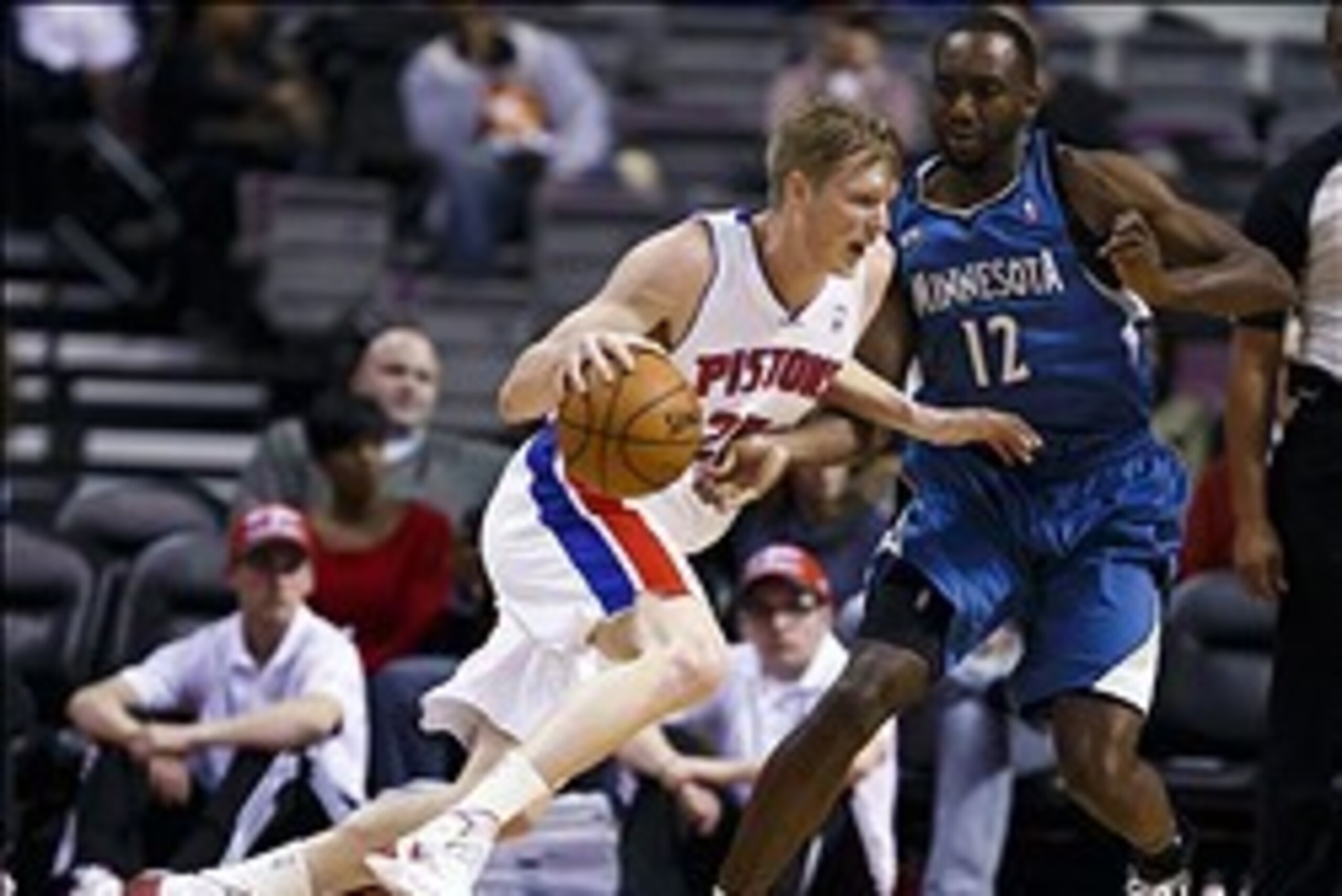
Kyle Singler was consistently overmatched in 2012-13, starting 74 games as a rookie. But in his second season, he's adapted very well to coming off the bench and playing a slightly lesser role.
Singler is playing about five minutes fewer per game this season, but he's been a more efficient player against opposing reserves. His field-goal percentage has improved from 42.8 percent to 47.2 percent, and his PER has jumped over two points to 12.88.
Beyond the statistical improvement, Singler has played scrappy, high-energy basketball that boosts the Pistons' intensity when he is on the court. He's the kind of player who is willing to do the dirty work and who teammates like to play with.
Singler's move to the bench has helped make the Pistons a deeper team, and he's been very good so far in his reduced role.
Grade: B+
Kentavious Caldwell-Pope
5 of 10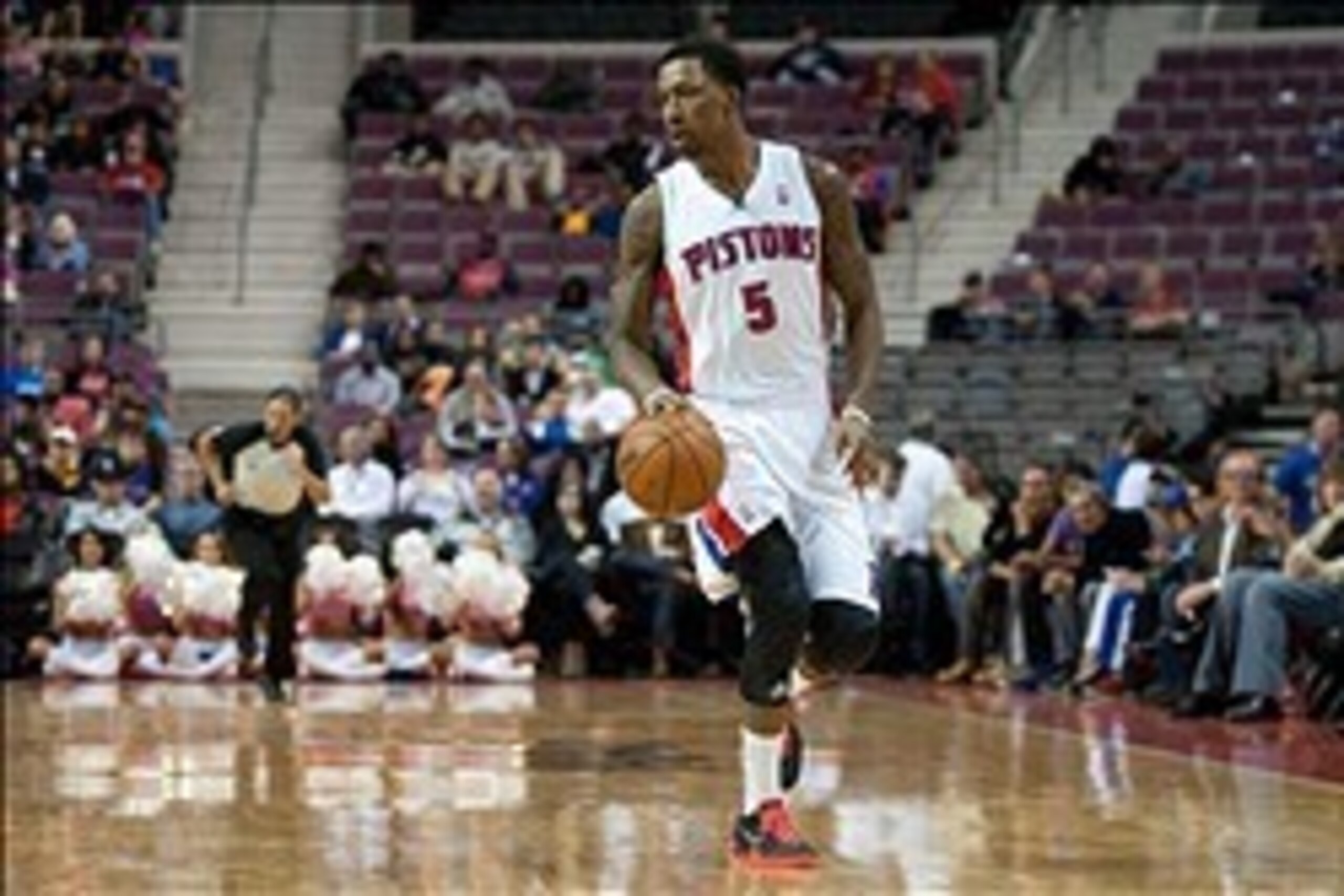
After averaging 18.5 points per game as a sophomore at Georgia, it seemed that if Kentavious Caldwell-Pope was going to help the Pistons out in his rookie season, it would be on the offensive end.
Sports Illustrated's Rob Mahoney said of KCP after the draft, "The Georgia guard has never met a shot he didn’t like," adding that he "promises to be a serviceable NBA defender at the least."
Roughly two months into his NBA career and KCP has yet to find consistent offensive success. In over 23 minutes per game, he's averaged only 6.7 points, shooting 36.3 percent from the field and 31 percent from the arc.
Surprisingly, it has been on the defensive side where he's earned his playing time. According to 82Games.com, KCP is holding opposing shooting guards to a PER of 10.8 thus far, well below league average. He's also averaging one steal per game.
The Pistons could absolutely use more production from KCP on the wing, but there is reason for optimism on that end, as he has shot 36.6 percent from the arc in December. But as long as he's shutting down opposing shooting guards, he'll keep playing significant minutes.
Grade: B
Rodney Stuckey
6 of 10
Rodney Stuckey rebounded from a disappointing 2012-13 campaign with a fantastic start to this season, but he has struggled as of late.
After missing the season opener, Stuckey scored in double digits in 13 of 15 games in November. He averaged 16.9 points in the month, shooting 49.5 percent from the field and 37.5 percent from the arc (his career high is 31.7 percent).
But after looking like a legitimate candidate for Sixth Man of the Year, his play in December has fallen off. He's averaged 11.3 points in 11 contests and has shot just 39.5 percent from the floor and 22.2 percent from three.
For the season, Stuckey has been the Pistons' best reserve, averaging 14.5 points with a PER above 16. He has also been significantly better than he was last season. But the drastic drop-off in his performance from month to month is a worry for how he will perform in 2014.
Grade: B+
Josh Smith
7 of 10
With big-time talent and a big-time contract, the 2013-14 season brought big-time expectations for Josh Smith in his first season with the Pistons. Unfortunately, his start in Detroit has been little better than disappointing.
In this, his 10th NBA season, Smith has moved to the small forward position, a move that has resulted in struggles on both ends of the court.
On offense, he's scoring two points less per game than he did a season ago and is shooting a career-low 40.6 percent from the field. He's shooting just 26.2 percent from the arc, yet he's taking more threes (4.1 per game) than he ever has in his career. He's also getting to the line less than he has in any season since his rookie year.
Defensively the results have not been much better. Smith is averaging 1.5 blocks and steals per game, but he has struggled to stay in front of quicker players, with opposing small forwards posting a PER of 22.2 against him, per 82Games.com. That mark would currently rank 18th in the NBA.
While Smith is not entirely to blame for his performance this season, there is no doubt that his play has failed to come close to expectations thus far. There is no easy solution to the problem, but Dumars and Cheeks must find a way to get Smith away from the perimeter sooner rather than later.
Grade: D
Greg Monroe
8 of 10
While Greg Monroe has been very good for the Pistons this season, his lack of improvement has been disappointing for a player thought to be a franchise cornerstone.
In the first two months of the season, Monroe has averaged 14.2 points and 8.9 rebounds—strong numbers, but they're down from his 2012-13 averages of 16 points and 9.6 boards.
Even more distressing is his decrease in assists from 3.5 to 2.0 from last season to this season.
Some of that can be attributed to Monroe playing with an improved point guard this year, but he's also not getting enough chances to showcase his passing ability in Cheeks' offense.
Defense remains a struggle for the 22-year-old, as opposing power forwards have posted a PER of 18 against him, per 82games.com. He also still offers little resistance at the rim to opponents, averaging less than one block per game.
Monroe remains one of the best young big men in the league and expects to be paid accordingly this summer. With that being said, he's shown little improvement in his game for a young player with loads of potential.
Grade: B-
Brandon Jennings
9 of 10
Although Brandon Jennings struggled a bit early in the season after missing training camp with a fractured jaw, he is in the midst of the best season of his career and looks like a bargain at $8 million per season.
Jennings is averaging 17.5 points on 39.7 percent shooting from the field—nearly identical to his 2012-13 numbers (17.5 and 39.9 percent)—but he's shown an improved ability to run an offense. For the fourth consecutive season, his assists number has improved, up to 8.1 this season.
Defensively, he has been very solid as well. Not only is he averaging more than one steal per game, but he's holding opposing point guards to a PER of 14.1, per 82Games.com.
Jennings does need to work on protecting the ball more, as he's averaging a career-high 3.3 turnovers per game, but otherwise, it's hard to complain about his first two months in a Pistons uniform.
Grade: A-
Andre Drummond
10 of 10
For Andre Drummond, the first two months of this season have been indicative of just how good he already is at age 20, but also how far he can grow as a player.
Just last season, he was coming off the bench behind Jason Maxiell and playing just over 20 minutes per game. His skill set was raw, and there were questions of conditioning and whether he could duplicate his early success as a full-time starter.
This season, Drummond is playing over 32 minutes per game, averaging 12.8 points and 12.3 rebounds and adding in more than one block and one steal. He's also shooting 61 percent from the field, among the top players in the league.
But on the flip side, he is still unable to make free throws, actually shooting worse than the 37.1 percent he made as a rookie. He also has shown very little offensive ability away from the basket, attempting just 33 of his 303 field goals from five feet or farther from the basket.
Perhaps the most telling game of the season for Drummond was the Dec. 21 matchup with the Houston Rockets. He finished with nine points, six boards, four blocks (one that he caught out of mid-air) and two steals—the kind of stats he is capable of posting on any given night.
But while his performance was important, it was the play of his counterpart, Dwight Howard, that was most revealing. The 10th-year big man, to whom Drummond is often compared, lit up the second-year player to the tune of 35 points, 19 rebounds and five assists. Some of that came against Monroe, but Howard absolutely had his way with Drummond the entire night.
Drummond has a long way to go to get to the level where Howard is now, but he has all the physical tools to get there. It's up to him and the coaching staff to ensure that he is constantly developing his game.
"I learned a lot and gained a whole new respect for his game," Drummond told Vince Ellis of the Detroit Free Press of the matchup. "I’m just going to continue to learn and try to get better.”
Drummond has been one of the best players on the team this season and is right where he should be in terms of development. For the Pistons, they must ensure he continues to improve at such a fast rate.
Grade A-
*Jakub Rudnik covers the Detroit Pistons for B/R. Follow him on Twitter.


.jpg?w=2560 "2 NFL Officials Suspended")
.jpg?w=2560 "Mahomes' Wife Trolls Kubiak 💀")
.jpg?w=2560 "Love's Body Already 'Tired'")