
Team USA Basketball: Team USA Faces Its First Real Turnover in 2016
The Olympic basketball tournament is finished, and for Team USA, the day is won. The Americans continued excellence in an event that they've categorically dominated in every instance where they gave a damn, and with so many members of this year's gold medal team just getting started in their basketball careers, it's easy to pencil in the United States for another gold in 2016.
Given the incredible, emerging talent that the Americans have in their basketball program (and the lack thereof for so many other national teams), it's hard to argue with such a prediction. But 2016 will mark the first time in the tenure of Team USA's history that it will see a rather complete turnover, giving the program its first new cycle since the 2008 Olympic Games.
TOP NEWS
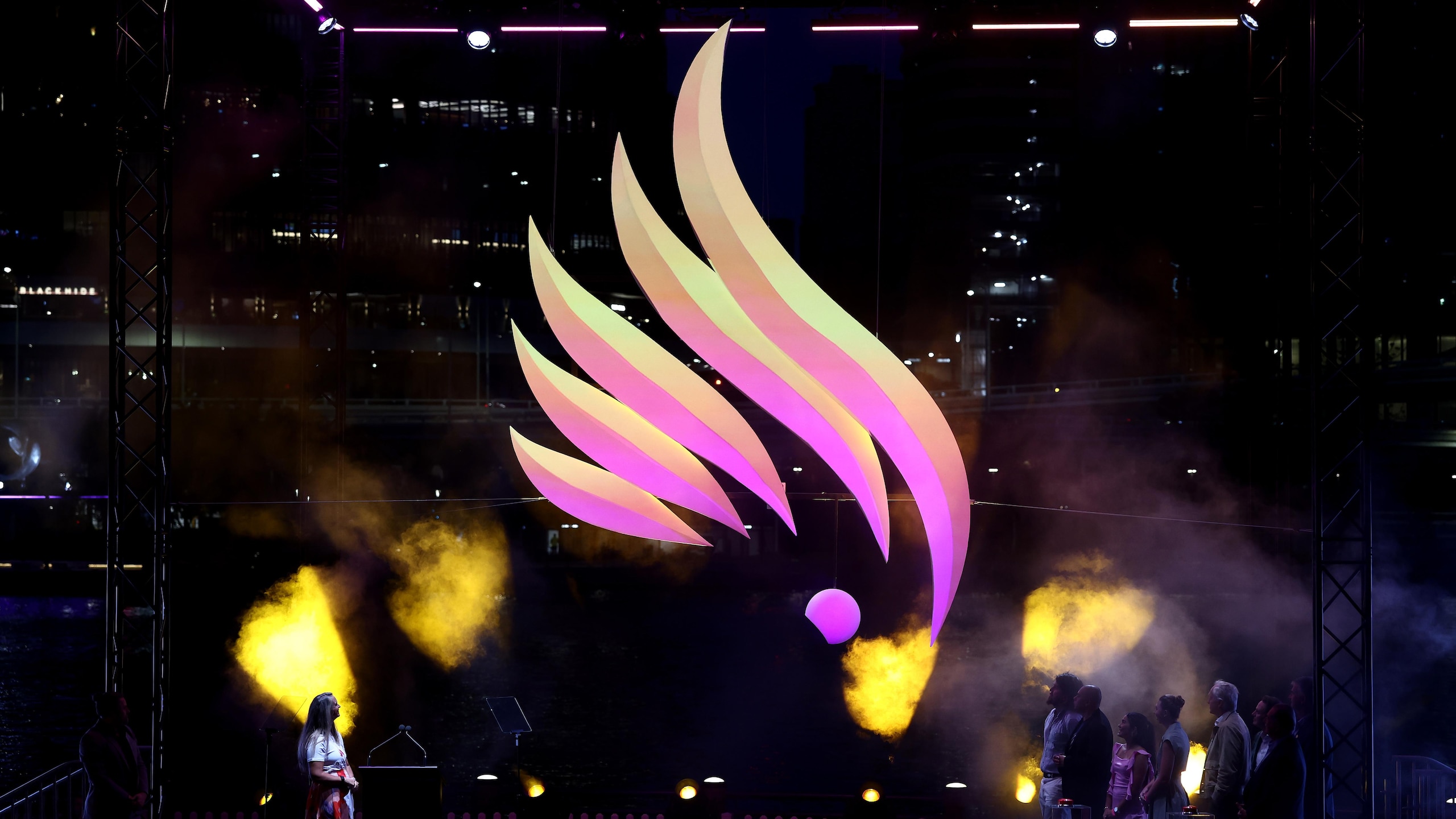
2032 Olympic logo revealed

New NFL contenders starting to emerge after Week 4
.jpg?w=2560 "Cardinals Giants Football")
NFL investigating 2 referees for separate viral exchanges
Consider this: Although the 2012 team is hardly identical to the 2016 model, the core of the team remained fundamentally unchanged. Kobe Bryant was the player who gave the rebooted USA Basketball program its recruiting charms, and he remained involved through these Games in London—which he proclaimed to be his last. LeBron James was the best player on that 2008 team, just as he was this year, and though he may well compete in Rio in 2016, it would hardly come as a surprise if he opted to then sit out on the tail of a long playoff run. Chris Paul and Deron Williams have now anchored the point guard rotation in the last two Olympic Games (dispense with the notion that ceremonial starter Jason Kidd played any kind of important role in 2008), and the torch may well be passed to Derrick Rose, Russell Westbrook, Kyrie Irving or others in the next four years.
Tyson Chandler may fade out of the program, Carmelo Anthony and Andre Iguodala will be 32 years old, and the likes of Dwyane Wade and Dwight Howard may too skip out on the 2016 team. That theoretically would leave just a handful of constants from this year's team to compete in the next Olympics, and while turnover itself is hardly a problem given the United States' aforementioned depth, it's worth considering that the dynamics, culture and style of the Team USA program could change dramatically between Olympic runs.
The 2014 FIBA World Cup will serve as an interesting midpoint, and by then we should already expect the next era of Team USA basketball—one led by Kevin Durant, Kevin Love, James Harden, Anthony Davis and Westbrook, from among this year's crop—to be in place. The roster will be talented, committed and gold medal favorites. But the personality of the team should be quite different from the one that centered around James, Anthony, Bryant and Paul in the last two Olympic tournaments, and even a departure from the Durant-anchored team that won the 2010 FIBA World Championships.
We have no real way of knowing what such a team will be like until it manifests, and there's little use in even guessing at such a team's personality four years in advance. But given the disposition of the leaders already in place and the overflowing talent pool, there's ample reason for optimism in the first real cycle of USA basketball redux.
.jpg?w=2560 "Love's Body Already 'Tired'")
.jpg?w=2560 "OBJ Calls Out Giants 😳")
.jpg?w=2560 "Ward Nearly Walks Out of Presser ▶️")
