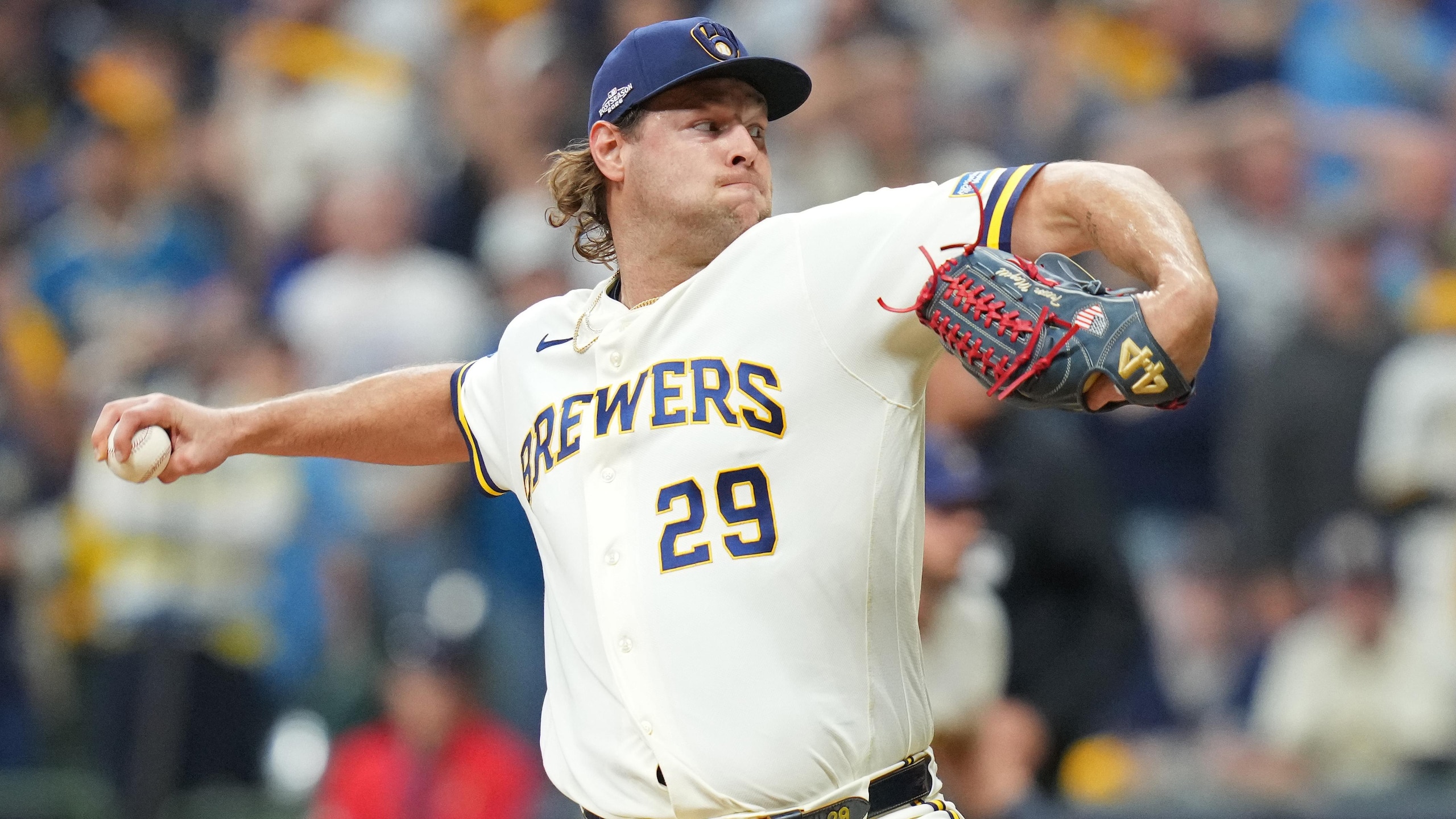
Golden State Warriors: The Most Important Number for Each Starter
At the risk of oversimplyfing, the only number that really matters for the Golden State Warriors in 2012-13 is eight—as in top-eight in the Western Conference.
After a flurry of bold yet shrewd offseason moves, the Warriors have made their playoff aspirations clear. But unlike head coach Mark Jackson's foolhardy and illogically persistent guarantees of postseason glory last year, the front office's most recent mention of the playoffs has some basis in reality.
The defense should be improved, though observant fans might ask how it could possibly be worse. The Warriors' other chief weakness, rebounding, should get a boost from rookies Draymond Green and Festus Ezeli—not to mention new man in the middle, Andrew Bogut. But those are general statements.
Let's get specific. Here are the numbers that matter most for each projected Warriors starter this year.
Andrew Bogut: 54
1 of 5Andrew Bogut has played seven seasons in the NBA. In his first, he suited up for all 82 contests on the way to winning Rookie of the Year in 2005-06. In the six subsequent years, guess how many games Bogut has averaged per season.
54.
That means that since his rookie year, Bogut has been sidelined for more than a third of his team's games. The freakish nature of many of Bogut's injuries has been well-documented, but even if he's only been the victim of some rotten luck, he's still undergone a handful of surgeries to his ankle, back, wrist and elbow.
Those surgeries add up and could mean residual soreness, decreased mobility and a greater likelihood of a recurring injury.
Bogut is absolutely critical to the Warriors' new professed identity; he's the defensive anchor and rebounding presence that could help turn the page on Golden State's recent history of soft interior play. But to do that, he's got to be on the floor.
If Bogut can meet or exceed his six-year average of 54 games played, it'll go a long way toward making the Warriors a legitimate playoff contender.
David Lee: 4
2 of 5David Lee's most important number for the upcoming season has to do with his proper position. For the Warriors to be successful, Lee must play exclusively at the 4—and never, under any circumstances, at the 5.
When used last season as a center, Lee badly hurt the Warriors. He allowed opposing centers to amass a PER of 22.6 against him. In his minutes as a power forward, Lee allowed a more respectable PER of 14.6. To be fair to Lee, he was a better offensive player against centers, thanks to his quickness advantage. But in every other way, Lee's time at the 5 was a major negative for Golden State.
The Warriors, already among the league's worst teams in the defense and rebounding departments, got even weaker last year when Lee was in the middle. He allowed centers to outrebound him and shoot better than 53 percent from the field.
Most importantly, Lee's major deficiencies as a help defender were even more accentuated when he was cast in the role of a center.
Overall, Lee's solid offensive production and only sort-of-awful defense as a 4-man make him a pretty valuable frontcourt piece. But when moved to the 5, he does more harm than good.
With Andrew Bogut and Festus Ezeli around this year, Lee will see much more time at the 4, which is a very good thing.
Richard Jefferson: 41
3 of 5There are 82 games in an NBA season (when a lockout doesn't shorten it), and 41 represents the halfway point. That's when I expect Richard Jefferson to lose his job as the Warriors starter at small forward.
In Jefferson's defense, he's a necessary, solid veteran presence on a relatively young team. He's also a tough defender who has turned himself into a decent three-point shooter in the latter half of his career. But things aren't exactly trending in a good direction for Jefferson.
In each of the last five years, Jefferson's PER has declined. From a very solid 17.53 in 2007-08, he dipped all the way to 11.15 last year. At age 32, Jefferson's athleticism is slipping away from him, which has cost him his once-excellent ability to draw fouls on drives. His rebounding has also gone from being very good to simply average.
Plus, the Warriors will probably be desperately seeking a taker for Jefferson and his $10 million salary so they can slip back under the luxury tax before season's end.
All that, when added to the Warriors' obvious desire to insert rookie Harrison Barnes into the starting lineup as soon as he proves ready, result in a pretty short leash for Jefferson. Expect him to be granted the starting job early, partly so the Warriors can showcase him to other teams, but don't expect him to hold onto it for more than half the season.


Klay Thompson: 20
4 of 5This one was pretty easy. After putting up 12.5 points per game last season, Thompson needs to pump his average up over the 20-points-per-game plateau.
That might sound like a tall order, but consider the fact that Thompson only averaged 24.4 minutes per game last year. Prorate his scoring for 40 minutes per contest, and Thompson averaged 20.5 points per 40 minutes last year.
There are two ways to analyze whether Thompson can be expected to maintain or increase his scoring rate in the upcoming season.
First, there's reason to believe he'll reach the 20-point mark because of his offseason experiences this summer. He earned praise from Team USA as a member of the USA Select team in July and looked like a different player in his two Summer League games. Add that to Thompson's increased confidence as a definite second-year starter and it looks more like he's got a shot to put up some serious scoring numbers.
On the other hand, Thompson became the Warriors' primary perimeter option last year after Golden State dealt Monta Ellis and shut down Stephen Curry. This season, Thompson will probably have to give way to Curry and the Warriors' other interior options on offense. He may not see the 15.9 field-goal attempts he saw as a starter last year.
But overall, Thompson has shown himself to be a remarkably efficient scorer in his brief career. So the question of whether he reaches 20 points per game is really one of opportunity. If he gets the minutes and shots, there's little doubt he can do it. If the Warriors' attack is more balanced and Thompson isn't featured as prominently as he was in last year's second half—which might be a good thing; the Warriors would be more dangerous as a balanced, attacking unit—he might not crack the 20-point barrier.
Stephen Curry: 0
5 of 5Let's not debate whether or not zero is a number. I'm just using it to make a point. Stephen Curry's most important number is zero because that's how many ankle sprains he can afford this year.
After a series of increasingly stomach-churning ankle injuries last year, Curry underwent surgery in April to (hopefully) remedy the problem. His offseason progress has been good, according to video evidence provided by Curry himself.
The fact is that the Warriors need a healthy Stephen Curry to meet their potential this season. He's expected to be the primary facilitator and best perimeter shooter. Plus, from a fan's perspective, it'll be very interesting to see how the absence of Monta Ellis affects Curry's play. There's a great chance the Warriors will be far more efficient and balanced with Curry making most of the decisions on offense.
But for that to happen, those ankles need to stay intact.



.jpg?w=2560 "NFL investigating 2 referees for separate viral exchanges")
.jpg?w=2560 "Report: Chiefs Contact Hill's Agent")
.jpg?w=2560 "OBJ Calls Out Giants 😳")

.jpg?w=2560 "Tyreek makes another cryptic post amid Chiefs rumors")