NBA Rumors: Dwight Howard Must Agree to Sign an Extension If He Wants a Trade
Enduring this Dwight Howard saga over the last few weeks has started to become very, very irritating.
Speculation regarding the disgruntled center's status has dominated this offseason's trade talk. Once a week, rumors start circulating that a deal is in place; once or twice, there has even been speculation that Howard would sign a long-term deal with some teams.
And then, like clockwork, every near-"deal" always collapses, usually for one reason: Trading away all of your team's budding young stars in exchange for a one-year superstar rental isn't worthwhile, even if that rental is the best center in basketball.
TOP NEWS

J-Dub, Wallace May Miss Entire Season
Melo's Quote on Confidence 😎
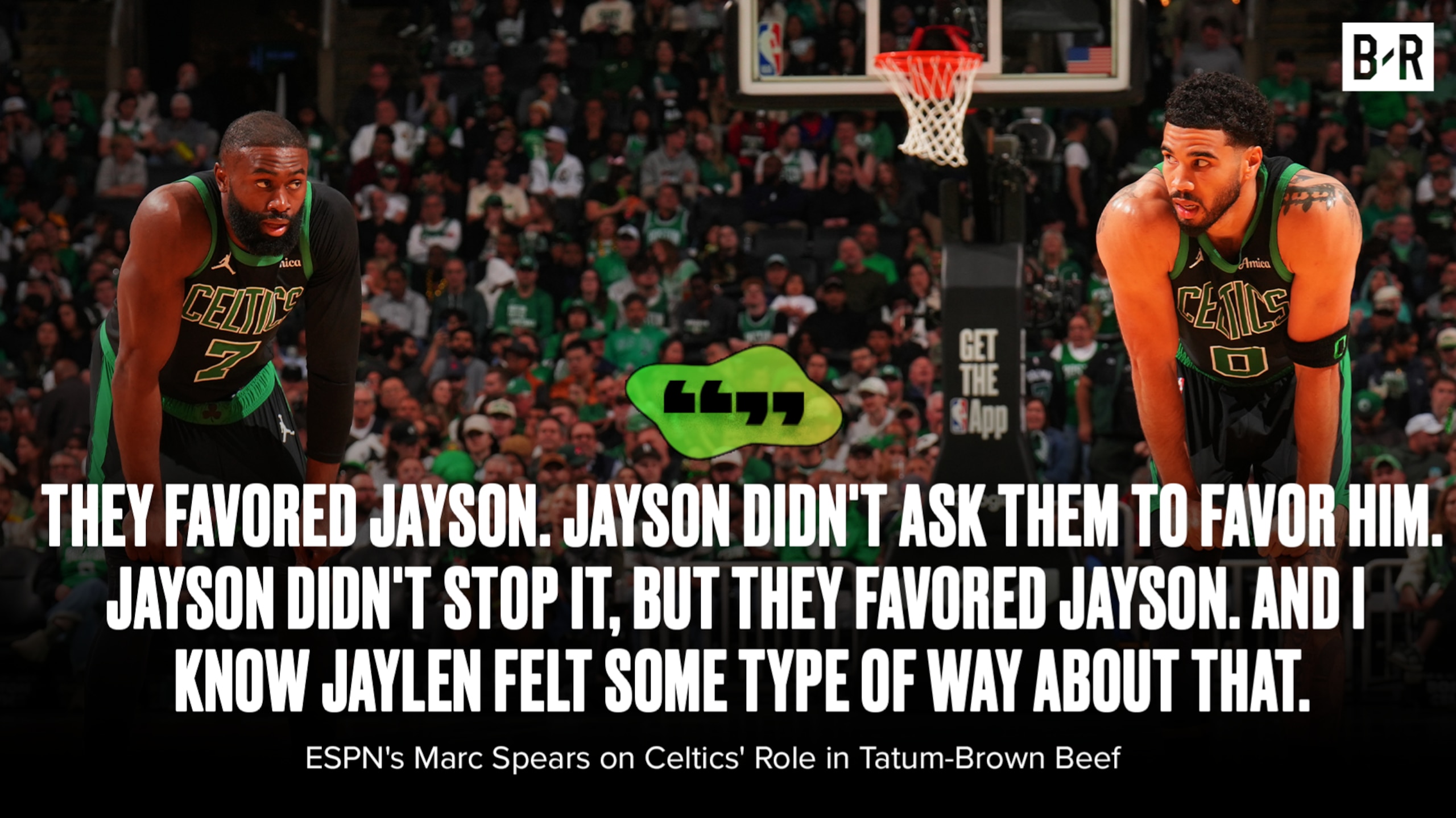
Celtics at Fault for JT-JB Beef? 🤔
Last week, it seemed that a trade to the Lakers was imminent for Howard, but it collapsed, just like all the others. It's unknown whether or not it was related to his agent's public declaration that Howard wouldn't sign an extension with L.A., or with anyone else.
And now, one week later, sources have told ESPN The Magazine's Chris Broussard that Howard is still open to the idea of being traded.
On Thursday, Broussard and Ramona Shelburne wrote:
"Dwight Howard reiterated to Orlando Magic general manager Rob Hennigan during a meeting Wednesday in Los Angeles that he still wants to be traded and will leave as a free agent after next season.
"
That's old news. As far as we know, Howard has been nagging the Magic front office about a trade for months. And though it seems impossible that Howard could fail to recognize this, it's worth noting that he doesn't seem all too cognizant with the fact that teams just don't want to give up their top prospects—and absorb some of Orlando's huge contracts in a trade package—if they're only getting Howard for a year.
If Howard wants to leave Orlando, he's going to have to make some concessions. The Magic aren't going to take a deal that's bad for them just to appease Howard, and no team—not the Lakers, the Nets nor the Rockets—is going to unload its cheap, young talent in order to acquire the bloated contracts of players for whom they have no use in the first place.
Broussard writes that the Lakers "have always been willing" to take on Howard without any guarantee he'd sign long-term. They think that once he gets to L.A. and sees what it's like to play with Kobe Bryant and Steve Nash, in front of the effusive Lakers fan base, he'll make up his mind to stay.
But what the Lakers are not willing to do, Broussard writes, is commit financial suicide by acquiring "burdensome contracts from Orlando that would subject them to the most punitive luxury-tax penalties under the new collective bargaining agreement."
Even though the Magic seem to have catered to Howard's every need and desire during his tenure in Orlando, he doesn't get to have everything he wants in this scenario. He can't demand a trade and refuse to sign long-term. He can't leave Orlando for a contender right now and still test the free-agent market next summer.
Howard is good. He's the best center in a league where good centers are impossible to find, which is the only reason why this dialogue has stretched on for so long. He's worth a blockbuster trade, but not if it means the teams executing the trade are putting their entire futures in jeopardy.
Nobody wants to give up the world for Howard right now, only to be left with nothing next June. Nobody is worth that much, and if Howard thinks he is, he needs a healthy does of reality.
Howard has to make a choice. Stay in Orlando and stop talking about a trade, or work out a compromise that isn't going to put his current team or his future team in financial purgatory.
And please, make the decision fast.
.jpg?w=2560 "Chiefs, Steelers Eye WR Trades")

.jpg?w=2560 "WWE Raw Live Grades 🔠")
.jpg?w=2560 "Multiple NFL Trades Predicted")