
Miami Heat: What We Learned About the Heat in Their Ugly Loss to 'Lob City'
That foul called on LeBron James while guarding Chauncey Billups with 27.3 seconds left in the fourth quarter, resulting in three free throws for the Clippers, was one of the worst foul calls I've seen in the past few years in the NBA.
The no-call on DeAndre Jordan's goal tend with 45 seconds left in overtime was absolutely atrocious too. The Clippers beat the Heat in overtime 95-89.
Now that all that has been said, let's get on to the important observations from the game, aside from the most obvious lesson for the Heat, which is the that they need to shoot free throws straight of the next week, after going 20-of-34 (58.8 percent) from the line.
TOP NEWS

Brown with an all-time summary of relationship with Tatum

Heat, Giannis were down by 20+ in each of their 3 losses

Power Ranking Every NBA Team's Starting Lineup 🔢
First of all, the Heat showed in the first half a somewhat improved perimeter defense on the pick-and-roll, by simply switching on a majority of screens at the top of they key.
Those switches resulted in what appeared to be a mismatch with Chris Bosh guarding Chris Paul, but the quickness and length of Bosh proved to be enough to alter Chris Paul's offensive attack.
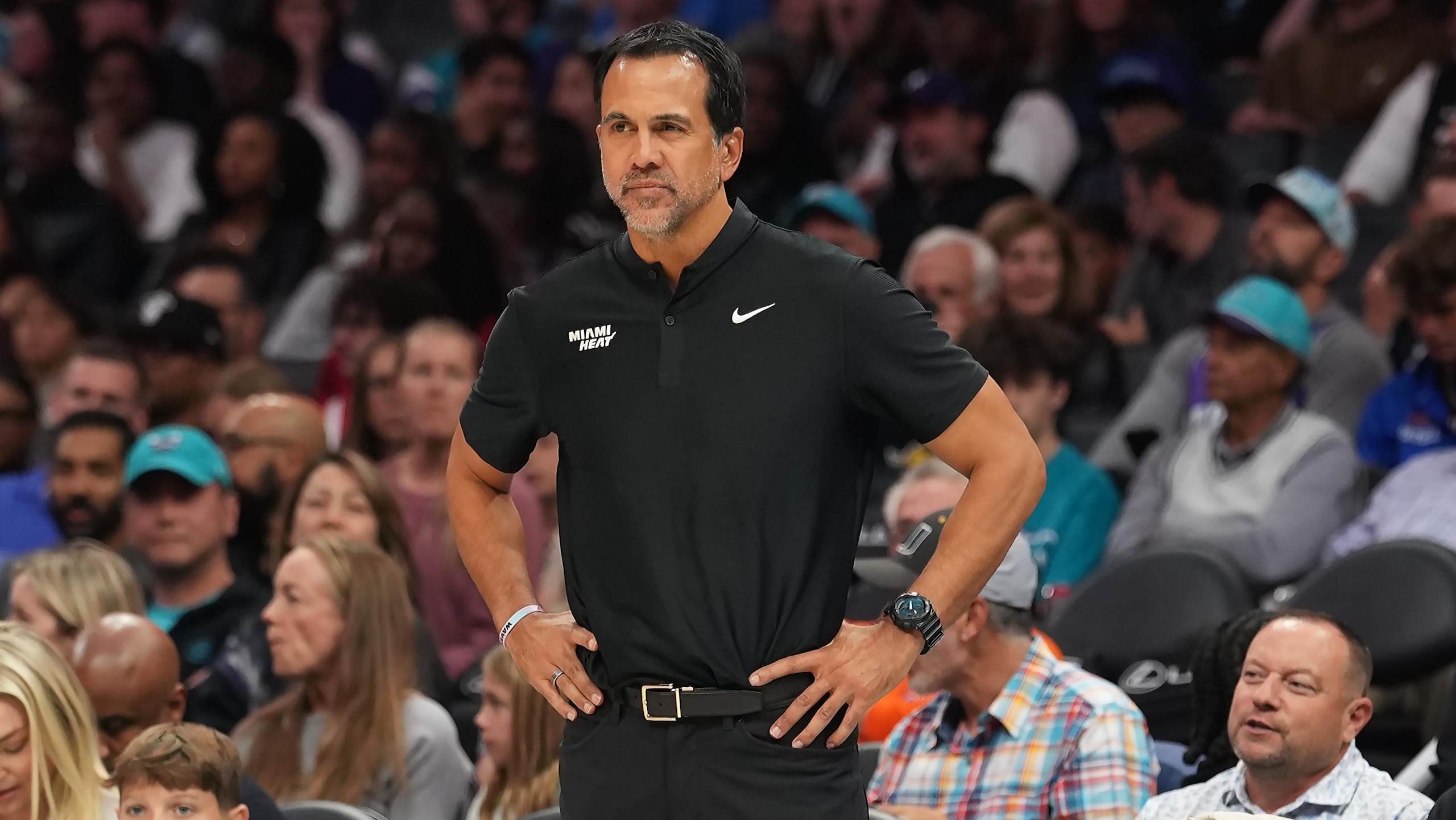
For some reason though, the Heat abandoned that game plan in the second half, which was a terrible move by Erik Spoelstra, resulting in a number of open three-point shots for the Clippers, and allowing Paul to go off.
The Heat played much better defense when Chris Bosh switched on screens instead of hedging out off the screen, relying on help defense to pick up the Clippers' rolling big men, of which the Heat defenders did a solid job. LeBron's defense at the end of regulation against CP3 was impressive as well.
The defense of the Miami Heat was one of the biggest difference makers, holding the Clippers to 13 points fewer than their season average of 99.3 points before heading into overtime.
LeBron averages 14.6 PPG in the paint so far this season, which ranks first in the NBA. Yep, that means he's scoring more on average per game in the paint than even Dwight Howard, LaMarcus Aldridge or Andrew Bynum.
So what does that mean for the Miami Heat? It means that the Heat's offense needs to run through LeBron James ability to get into the paint, whether by his improved post game or his ability to beat defenders off of the dribble.
I know it's tempting to run the offense through Dwyane Wade, but the fact is that LeBron has the size and strength advantage to consistently get into the paint, either scoring easily or creating offensive opportunities for his teammates.
Dwyane Wade is without a doubt a more complete perimeter player than LeBron James, and running the offense trough LeBron's physicality at the point would open the perimeter for Wade, giving him the opportunity to hit open jumpers off LeBron's drives to the rim.
With the offense running through Mario Chalmers or Wade, the Heat lack continuity and flow to the movement of their offense, and that is in large part due to the fact that it takes LeBron out of the rhythm his style of game absolutely needs.
With LeBron running the point, dictating the offensive flow of the game, the Heat's offensive looks much more fluid and it emphasis each player's strengths: LeBron's physicality and athleticism, Wade's ability to drive from the perimeter and Bosh's smooth jumper out of the pick-and-roll game.
Watching the Heat in the 1st quarter against the Clippers with LeBron controlling the offensive tempo, looked entirely different than when Chalmers and/or Wade was controlling the offensive pace.
I honestly think the Heat would be better off letting LeBron run the point, moving Chalmers to a shooting guard spot, since putting up jump shots seems like all he really wants to do anyway.
The one constant amongst each of the times the Clippers made legitimate comeback attempts in the first half, was the absence of LeBron James on the court, first because Spoelstra was resting him in the second quarter and the next time because LeBron got into foul trouble near the end of the first half.
Why were the Clippers able to get back into the game with LeBron on the bench? The answer to that question is mainly because without LeBron on the court, the Clippers were able to control the tempo of the game.
That's because the Heat lacked offensive focus, putting up shots early in the shot clock and turning the ball over more frequently.
Spoelstra, here's a lesson for you take away from your ugly loss to the Clippers. Don't allow your team to put up a shot on offense until LeBron James has touched the ball at least one time.
On a side note, why in the world has James Jones only seen the court for three total minutes in the last two games?
Sure the "big three" went 3-14 from the field in the 4th quarter and overtime, and they undoubtedly will have to improve on that if they want to make a run at the 2012 NBA championship, but the coaching absolutely must improve if the Heat are going to contend this year.
The Miami Heat are on their first losing streak of the 2011-12 NBA season, and how they respond in their next three or four games will tell us a lot about the kind of team the Heat actually is.
Whether Miami likes it or not, they are going to get every NBA team's absolutely best effort every single night, simply because of who they are. Miami will have to learn how to handle that kind of effort every night, and that ultimately starts with the decisions made by the coaching staff.
It's not time to start panicking in South Beach just yet, but that time could be coming soon if Spoelstra doesn't switch up his offensive game plan and start using his bench more effectively.
Up next, a trip to Denver to take on the surging Nuggets (7-4), in what could be another extremely difficult road test for the Heat.




.jpg?w=2560 "Jonathan Taylor Landing Spots 📍")


.jpg?w=2560 "Why Josh Simmons Was Told to Leave Meeting by Mahomes, Reid Revealed in New Chiefs Rumors")