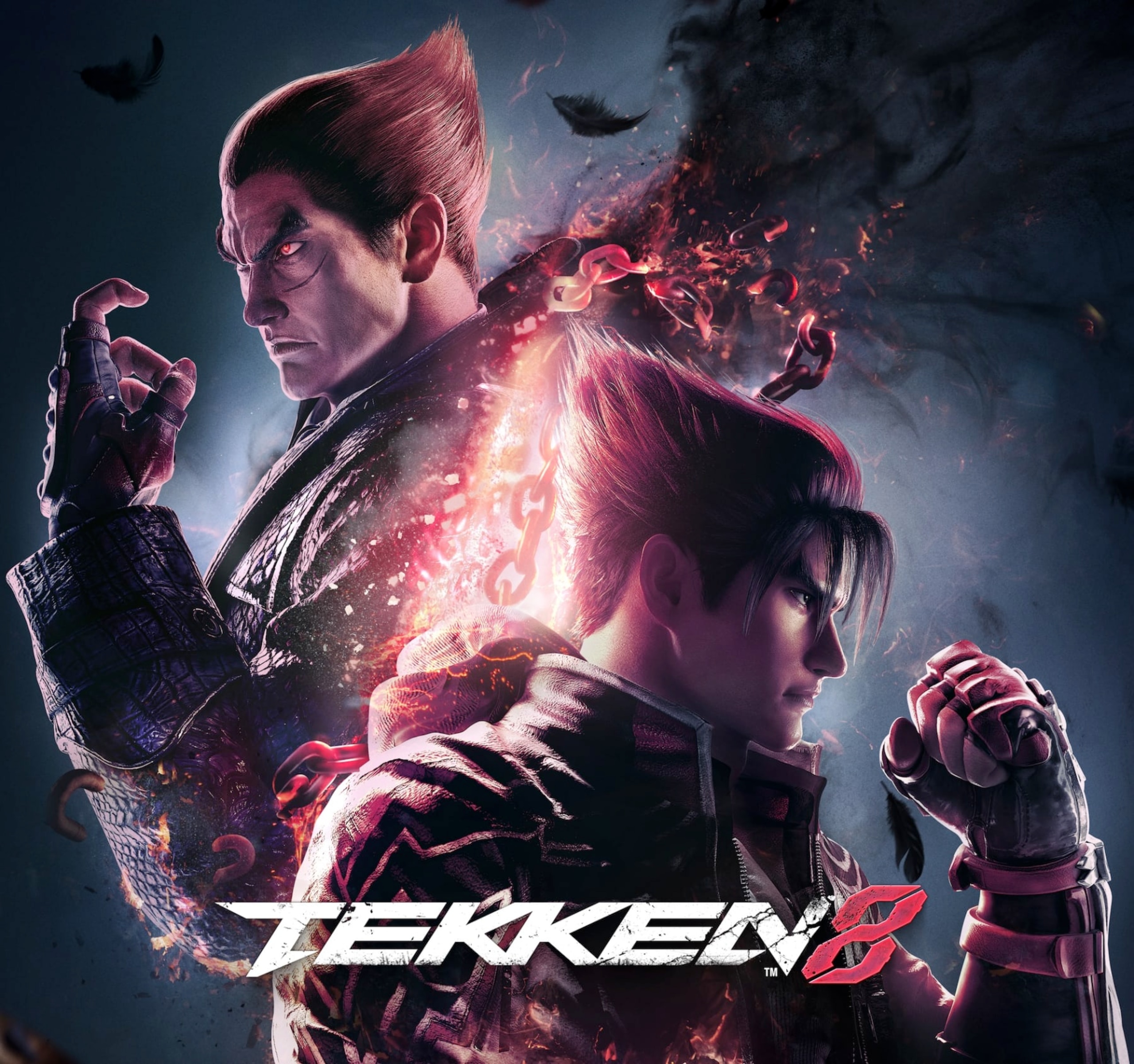

Tekken 8 Review: Gameplay Impressions, Story Mode, Videos and Esports Impact

Tekken 8 from developers Bandai Namco Studios and Arika has a chance to place the bar at an unreachable height for the rest of the fighting game genre early in 2024.
The eighth mainline installment in the historic franchise and first on next-generation consoles since Tekken 7 in 2017, Tekken 8 features a gaudy list of content and some gameplay mixups that could produce waves.
Atop the grand expectations that come with being another release in a storied franchise and the first entry on next-generation hardware, Tekken 8 has to spar with what has been a stellar calendar year for other major fighting game franchises with Mortal Kombat 1 and Street Fighter 6.
TOP NEWS

J-Dub Suffers Gruesome Injury

Contenders starting to separate themselves after Week 7
.jpg?w=2560 "Rams Raiders Football")
Raiders Could Start Mendoza
And yet on paper, Tekken 8 passes the initial eye test in some stunning ways.
Graphics and Gameplay
Tekken 8 is a visual treat, with the switch to Unreal Engine 5 readily apparent in the granular stunning detail found throughout the experience, be it in a stage's background or on simple costume details while the game is paused.
Accompanying the next-gen facelift are all new models and voice lines for the 32 fighters, each of which move fluidly with impressive physics throughout the 16 dense stages packed with little things to discover.
Overall, the presentation package presents more of a focus on cinematic flair, which is especially apparent in the story mode, where the transition from cutscene to a fight is fluid enough that it is sometimes difficult to tell when said transition actually occurs.
Those stages boast a ton of eye candy and hazards worth discovering, something the game is more than happy to show off right away as buildings get leveled during an initial fight. These are both strategic and simply fun to find, with some only available after charged-up attacks.
Sound design packs a punch beyond solid voice acting, too, with the scope of the destruction, impact of hits and reactions all creating a symphony of chaos—the player controls, of course.
This all sounds very aggressive, which is great. The game focuses toward aggressive-style players in a revamp to the tried-and-true gameplay that feels fantastic.
The new Heat mechanic, enabled with the press of a single button in many cases, is a versatile tool. It opens up new moves or changes current ones, with players even able to dash cancel into Heat State. It doubles as a sort of "super" mechanic for the pick-up-and-play crowd and an in-depth tool that will unlock some seriously high skill ceilings.
Also refreshing is the ability to trigger health recovery via attacking, which players can see illustrated with a white section on the health bar. Damaging or hitting a blocking opponent recovers it. It's an interesting counter, all things considered, as that white health generates from being hit while on the ground or juggled mid-air.
The Tornado system is a juggle-extender that players can use to keep combos going, so the opponent getting some counterplay with potential health regeneration through offense is a nice balance.
Even the Rage system gets a bit of a rework. Now it activates after losing a certain amount of health, generating more damage through attacks and opening up the ability for a powerful Rage Art, though using it ends the Rage mode.
That sounds like a lot and is—but that's the point. It's a carefully balanced experience refreshing enough to feel brand new and rewarding to learn. But at its most basic, it's just a good-looking fighter that is difficult to put down, which is good, considering what a great job it does of training up even the newest of players.
Story, Arcade Quest and More
Tekken 8 is a worthy follow-up to the chunky story mode of its predecessor.
Set six months after Tekken 7, Kazuya Mishima and Jin Kazama are at it again over the course of a long runtime for a fighting game's story mode. A special nod goes to how stage transitions and the blending of gameplay and cinematics really helps drive the narrative and relationships between characters.
The overall story and experience is representative of the series as a whole in a good way—it's dripping with anime drama yet strikes the perfect balance of seriousness and self-aware goofiness in one of the genre's best fighting universes.
As expected, the online side of things offers a robust suite of matchmaking and leaderboards, plus a fight lounge.
More notable for a likely broader bit of playerbase is the arrival of Arcade Quest. It's a fun singleplayer romp that carries its own currency and customization while players work through literal arcades, battling others and even meeting characters.
Not only is it meta-fun to work through "arcade" progression within this historic fighting franchise, the mode is actually a really good first stop for players who are new to the genre or simply looking to improve.
And that's perhaps Tekken 8's biggest feat—it has the ability to take even the newest of players and train them up into something special.
No exaggeration here, not with the Ghost Battles featuring AI learning that eventually adapts to the player, forcing them to improve. It's potentially the best AI we've seen to date in the fighting game genre, less a glamorous buzzword and more something literal, in part, thanks to the next-generation horsepower.
That's the highlight, but Tekken 8 has all sorts of onboarding modes to help new players along. The practice mode features combo challenges and punishment training. The former steadily helps players improve their offensive game, while the latter is downright brilliant in the way it teaches players to exploit the mistakes of an opponent in real-time. There's even a replay tab that lets players watch film of high-ranked players.
Also on this front is a simplified control scheme the game calls Special Style. When enabled, a list of moves appears in the corner of a screen, face buttons instantly trigger specialty moves, combos and other streamlined options.
It doesn't sound like much, but the scheme will enable players who otherwise wouldn't to enjoy the game. For players who want to focus on specific aspects of improvement, it's another way to dial in on key areas of gameplay like timing and spacing, too.
There is one notable minigame (Tekken Ball) and a host of necessary and expected options tucked into the menus too. But the combination of a deep singleplayer mode in Arcade Quest and complementary features that train players of all skill ranges steals the show rather easily.
Esports Impact
Tekken 8 is built to last, even at the highest tiers of the Esports ladder.
At launch, the Heat mechanic is a really interesting mixup to the top-tier scenes because of the way it can apply chip damage to swing health advantage. The fact a powerful Heat attack can be used with any time at all left on the gauge should create thrilling combo-enders, too.
It certainly helps that the technical side feels rock solid so far. The game features the must-have rollback netcode and input lag feels minimal at launch, which is a really good sign considering how other Unreal Engine games have struggled with this area at times.
Beyond that, we have to bring up onboarding and ghost battles again, especially through this slant. There's something to be said for how important it is that players can so easily improve, mirroring what they see on the esports scene and likely driving more overall interest to it. Never mind, of course, the training tools here could fuel the next wave of actual pros in the coming years.
There's going to be a healthy pro scene around Tekken 8, likely until the minute the next mainline entry releases and it won't have any problems threatening to be the most engaged scene of any fighting game for quite a while.
Conclusion
Tekken 8's story is fantastic and will scratch that itch for those who need it. But the fact it's so dramatically overshadowed by Arcade Quest and especially the AI learning within the Ghost Battles section of player training is a pleasant surprise.
In many ways, Tekken 8 falls into the expected column. It looks great, feels better and the tweaks to gameplay are smart. It's a robust offering with plenty of content for all levels of player, too.
But the serious care given to player onboarding and the tech behind the AI learning are big advancements for the genre, potentially marking a turning point that will shine bright in hindsight.



.jpg?w=2560 "Rodgers Iced Out on Plane 💎")
.jpg?w=2560 "🚨 Week 8 AP Top 25 Poll")
