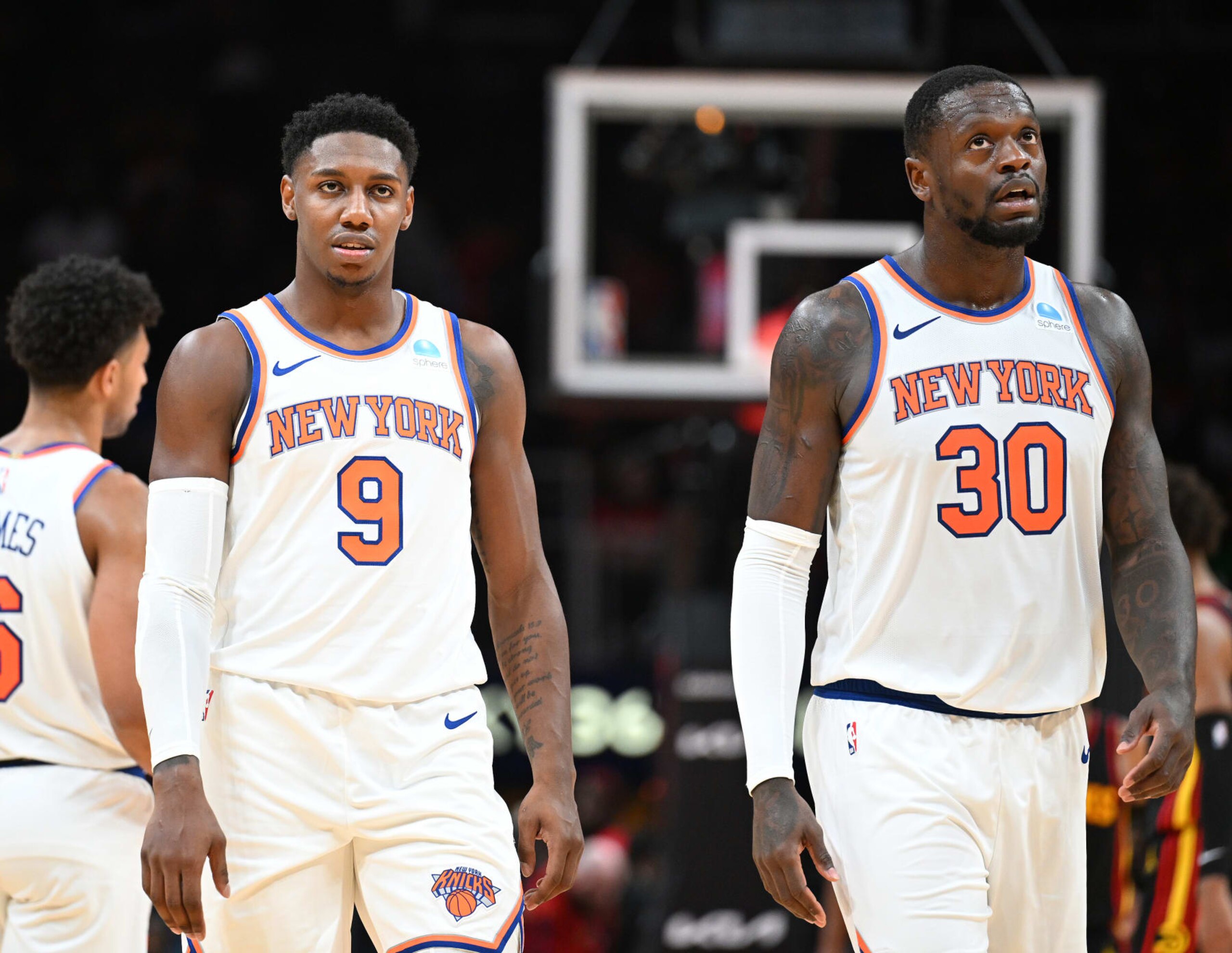

Decisions the Knicks Should Already Regret from This Past Offseason
The New York Knicks have had an uneven start to the 2023-24 NBA season.
The defense has been elite, but the offense has been a mess. Entering Wednesday, New York finds itself holding polar opposite efficiency ranks on offense (28th) and defense (second), per NBA.com.
Obviously, there's time to fix these issues over the next five months, but it could be a bit of challenge due to the following three offseason decisions that already loom as potential regrets.
Making Their Biggest External Investment in the Backcourt
1 of 3
The Knicks didn't venture outside of the organization much this offseason, but they did make one substantial addition by adding Donte DiVincenzo with the non-taxpayer midlevel exception.
In a vacuum, that's a solid rate for a solid all-around player. But if this was the notable card New York had to play, should it really have used it on another guard?
The early returns are a little dubious about that decision. The Knicks' backcourt congestion has so far limited DiVincenzo to only 19.3 minutes per night, the fewest he's averaged—by a wide margin—since his rookie season of 2018-19.
Theoretically, he could play his way into a bigger role, but if he does, it would only subtract from other rotation-caliber guards on the roster. There are only so many minutes to go around in this backcourt, and a big chunk of them are already tied up between Jalen Brunson, Immanuel Quickley, Quentin Grimes and, when the Knicks want a little more size, RJ Barrett.
Not Getting a Backup Behind Julius Randle
2 of 3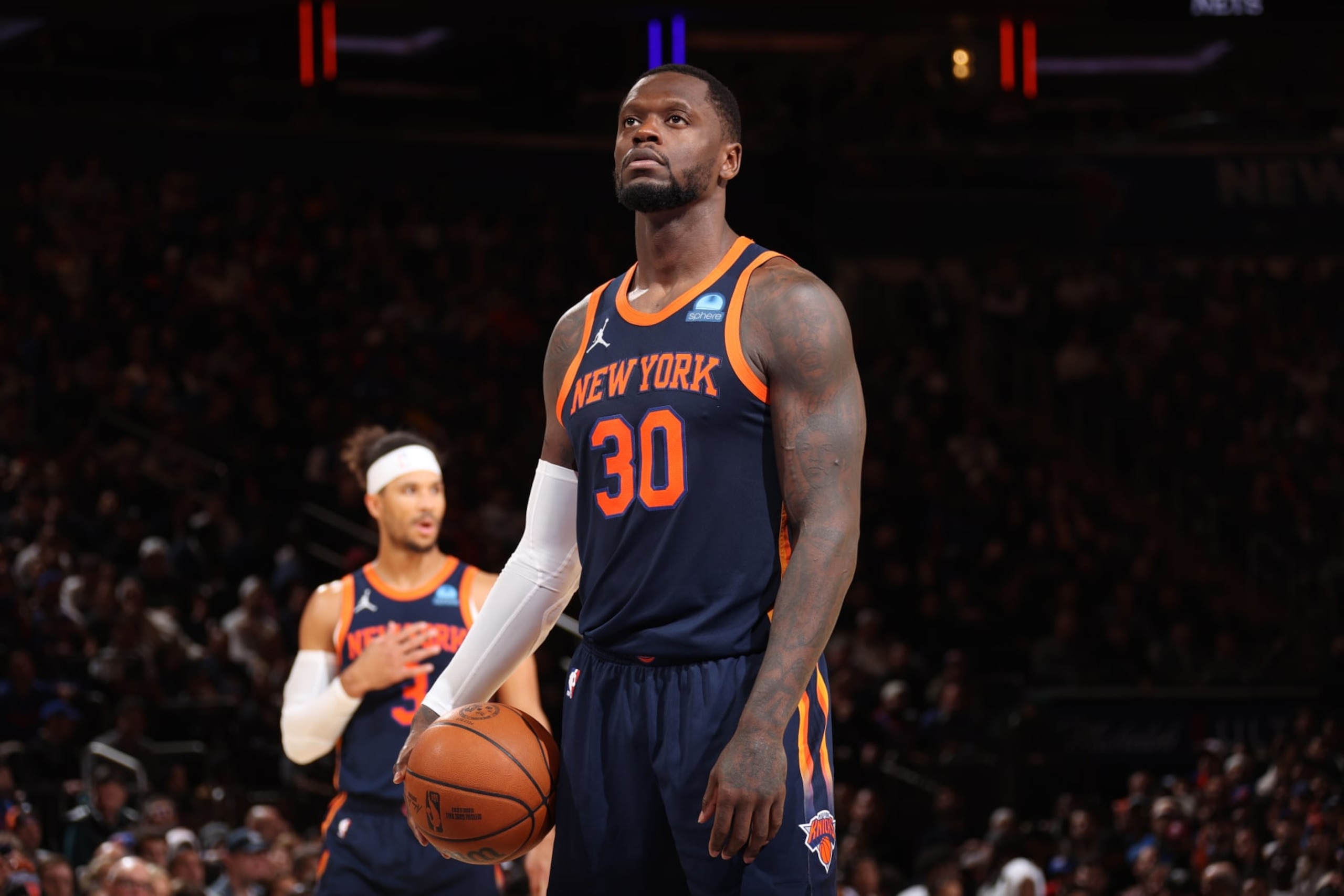
New York knows how volatile Julius Randle can be. He was an All-NBA performer two of the past three seasons, but in the one campaign sandwiched between them, he was a bricklaying mess of inefficiency (manifested as a 41.1/30.8/75.6 shooting slash).
That's what makes it curious that the Knicks didn't do more—or do anything, really—to give themselves an alternative in case Randle turned back into a pumpkin. In fact, they traded away his longtime backup, former lottery pick Obi Toppin, and never bothered to refill that role.
So, the Knicks don't really have any other options for when Randle doesn't have it going. And so far this season, he appears to have regressed into his least efficient form. Granted, early-season struggles are magnified by the size of the sample, but there are only so many ways to polish the statistical eyesore that is Randle's 29.9/25/67.5 slash line.
It should be tough to find a reasonable link between his shooting woes and his substantial floor time (34.9 minutes), but given the dearth of alternatives, the Knicks left themselves with no other choice but to hope he can snap out of this.
Not Addressing Their Shooting Shortage
3 of 3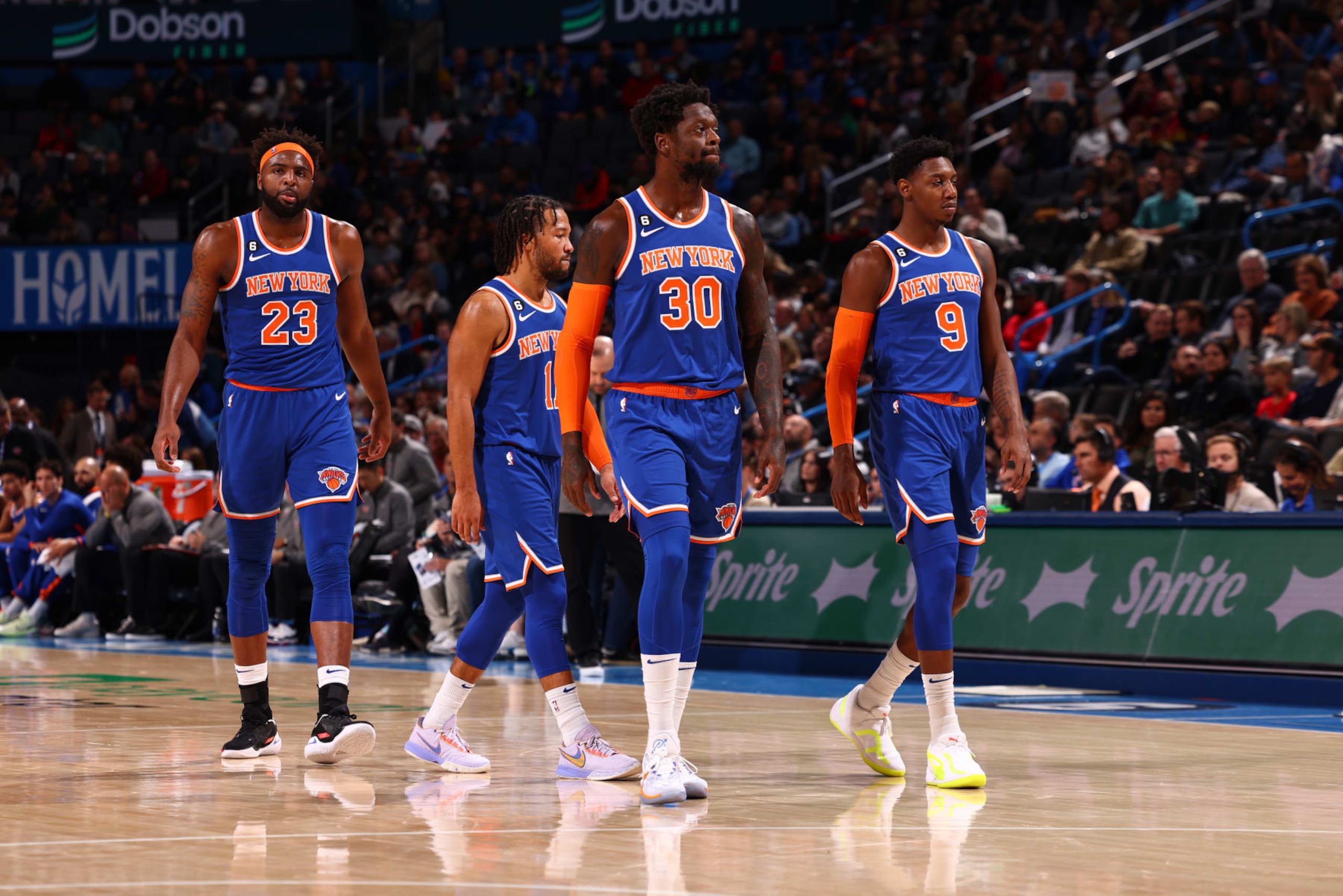
Last season's Knicks were a statistical anomaly. They somehow fielded the league's fourth-most efficient offense while sitting just 19th in three-point percentage.
They should've known that was a tenuous situation, at best, and one highly unlikely to repeat this time around. If they did recognize that, though, they didn't do much to address it.
DiVincenzo is a decent shooter from distance (career 36.2 percent), but he was never going to be some cure-all solution. So, why didn't New York do more to improve its spacing? Given that the Knicks have non-shooters at center (Mitchell Robinson and Isaiah Hartenstein) and attacking forwards who often operate inside the arc (Randle and RJ Barrett), you'd think this team would want all the shooting it can get from its other roster spots.
The Knicks, though, either believed this wasn't as big of a problem as it seemed, or that it had better shooters than their 2022-23 performance showed. Either way, this already looks like a miscalculation that is quickly sapping this squad of the surprising efficiency it enjoyed last season.





.jpg?w=2560 "Viral Rams Coach Vid 🖕")
.jpg?w=2560 "Injury-stricken Seahawks signing veteran RB")
.jpg?w=2560 "2 NFL Officials Suspended")
.jpg?w=2560 "Grading WWE Raw 🔠")
.jpg?w=2560 "Mahomes' Wife Trolls Kubiak 💀")
