How many NBA players are realistically positioned to average 30 or more points per game for the 2023-24 season? If last year is any indication, a whole bunch.
Six players hit the 30-point touchstone in 2022-23, which is tied with 1961-62 for the most in league history. Will we see even more cross the threshold this year?
Absolutely maybe.
When you start to dig into the possible candidates, it's tough not to stop at "absolutely."
Everyone who reached 30 points per game last year has a real chance of doing so again: Giannis Antetokounmpo, Luka Dončić, Joe Embiid, Shai Gilgeous-Alexander, Damian Lillard and Joel Embiid. Who else belongs on this list?
That's why these rankings exist.
Each player who appears here is an established superhuman scorer. Their offensive stardom is not up for debate. Cobbling together a 30-points-per-game pecking order has more to do with their roles, how much they might play, the context of their supporting cast and all that good stuff.
Let's rank.
10(T). Devin Booker and Nikola Jokić
1 of 10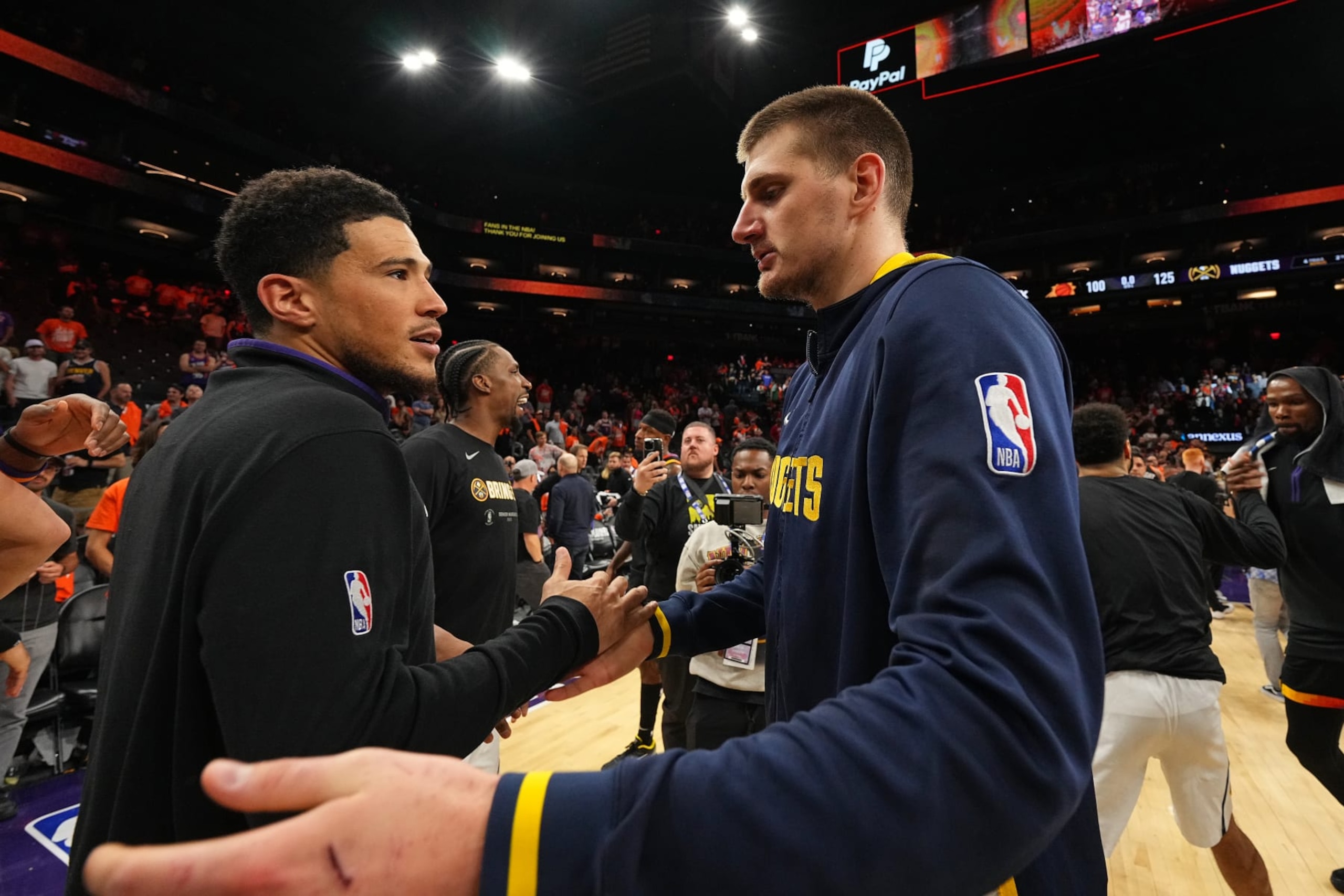
Devin Booker could be hard-pressed to surpass last year's career high of 27.8 points per game. Such is life when two of your teammates are also All-NBA material.
Then again, the lion's share of the Phoenix Suns' offensive stewardship will lie with Booker. He is, rather easily, the team's best passer. Having that much agency over the offense, so consistently, should preserve his offensive volume.
Inevitable absences from one or both of Bradley Beal and Kevin Durant will help as well. So, too, would a willingness to hike up his three-point volume—a development, for what it's worth, on which I'm prepared to bet.
Sliding Nikola Jokić alongside Booker is not an attempt to be cute. This is someone who cleared 27 points per game in 2021-22. That career high came amid a year-long absence from Jamal Murray and basically Michael Porter Jr. (nine appearances), but the Serb just hit 30 points per game next to both during the Denver Nuggets' 2023 playoff run.
Yes, I'm aware the regular season following a championship victory isn't nearly as high stakes as the 16-win journey to the promised land itself. But so many people just assume Jokić will anchor Denver's title defense with indifference and deference until the calendar strikes late April. Resist the urge to join them.
Do not let Jokić's interests outside basketball and relative nonchalance fool you. This man is an on-court killer who dresses in off-court diffidence.
Who's to say he won't focus on running roughshod over the rest of the league in search of a second title and dynasty conjecture and in response to the sentiment that no, actually, he wasn't good enough to win a third straight MVP award or be the best player on a genuine championship squad?
Failing that, for as much information as Denver might glean about its supporting cast by Jokić living in cruise control, the inexperience and question marks besieging the players outside the top six of their rotation may not allow it.
Honorable Mentions: Trae Young, Donovan Mitchell, Anthony Edwards, Jordan Poole
9. Kevin Durant, Phoenix Suns
2 of 10
Kevin Durant, a four-time scoring champion, has averaged 30 or more points twice for his career. But he hasn't achieved the feat since 2013-14.
Frequently counting multiple All-Stars as co-workers can have that effect. And this year's Phoenix Suns could deflate his average. Devin Booker and Bradley Beal rank among the most dangerous scorers in existence. But, the Suns aren't working with much else in the offensive-creation department.
Hitting home runs in the minimum-contract market has not diluted their reliance on the freshly formed star trio. Everything will run through Booker, Beal and Durant. Phoenix has no other choice (and shouldn't really be interested in one).
Table-setting duties will be heaviest on Booker and then Beal. KD should have more freedom to fire from the catch, work off entry passes and just plain score. There will be enough shots to go around, even with all three of them playing together. There will be even more looks to disperse when one or two are off the floor or unavailable—the latter of which is an inescapable reality, largely because of KD, but almost equally because of Beal.
Shot selection is a bigger concern than volume, availability or Durant just turning 35 this past September. Will he uncork enough threes to pad his scoring totals? And will he maintain a respectable enough free-throw-attempt rate amid declining to nonexistent rim pressure? Or will his ability as a mid-range sniper progress to absurd degrees, rendering him no less dangerous but creating a math problem?
8. Giannis Antetokounmpo, Milwaukee Bucks
3 of 10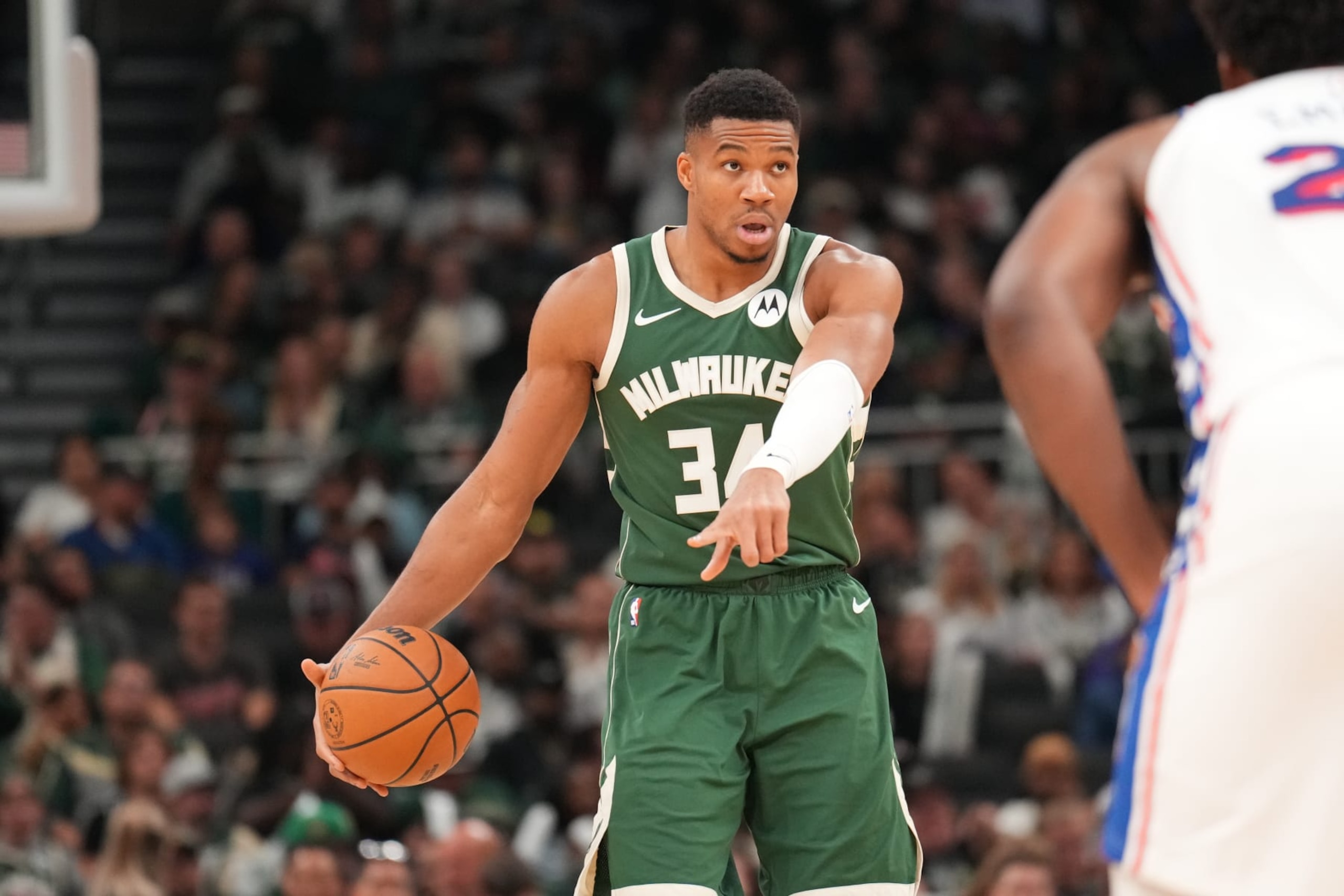
Giannis Antetokounmpo eclipsed the 30-points-per-game touchstone for the first time in his career last season, and his relentless motor shows no signs of slowing now. So, why is he inside the bottom three rather than the top three?
Answer: Damian Lillard.
Acquiring a megastar shot-maker and pick-and-roll initiator should result in something of a role recalibration for Giannis. Self-creation will remain a hallmark. The Milwaukee Bucks will stagger their stars, and there's no one more adept at (or terrifying when) grabbing rebounds and attacking across the full length of the floor. But Lillard will allow Giannis to shift into a less-taxing, better-suiting play-finisher capacity when they play in tandem.
That doesn't preclude the seven-time All-Star from turning in another 30-point average. Technically, he could score even more efficiently, capitalizing on the extra space Dame forges inside the half-court with less-congested lanes to the basket and, possibly, more jaunts to the foul line. (Whether he hits said free throws is a different story.)
Milwaukee's shaky depth similarly works in favor of a loftier scoring total. It doesn't have much bankable weaponry beyond its top-five players. Both Giannis' minutes and volume should be adequate.
At the same time, the departure of Jrue Holiday ensures that the 28-year-old's defensive responsibility will increase, even if it's a matter of covering more ground and bodies away from the ball. His motor may know no limits, but his body has them, unplumbed or not.
The Bucks' new dynamic could force Giannis to be more selective with his offensive eruptions.
.jpg?w=2560 "NBA Gambling Charges")

7. Kyrie Irving, Dallas Mavericks
4 of 10
Kyrie Irving has never averaged 30 points per game. His career high checks in at 27.4, which he has hit twice, and which is, all things considered, pretty far off the target total for this exercise.
Crossing the 30-point milestone for the first time in Year 13, while playing beside the most ball-dominant co-star of his career, defies much of what we (think we) know about over-30 aging curves. But the Dallas Mavericks' roster may stipulate his scoring travel to previously untouched peaks.
Though Luka Dončić's resolute ball-dominance seemingly runs counter to that logic, it may actually work in service of it. Joint minutes will invariably culminate in more spot-up three-point attempts for Irving—shots that should be of higher quality than he typically sees or creates for himself.
Beyond that, and most importantly, the Mavs don't have any other scoring hubs. Pretty much everyone else on the roster must subsist on the looks teed up for them by Dončić or Irving. One of them will always be on the floor, and there will seldom be half-court possessions over which they don't have total agency.
Oh, and then there's the fact that Irving averaged 33.7 points last season in games he played alongside Dončić. That's not nearly a large enough sample size to declare new normals, but it's an accurate snapshot of how dependent Dallas will be on both of its stars.
6. Stephen Curry, Golden State Warriors
5 of 10
Putting Stephen Curry this high, at age 35, is simultaneously a nod to his extraterrestrial arc and an indictment of the Golden State Warriors' roster.
Chris Paul's arrival should bring stability to the team's offense, both with and without its two-time MVP. But that same offense is still operating from an uncomfortable deficit beyond the existence of Curry.
Golden State clearly can't count on Klay Thompson or Andrew Wiggins to routinely detonate. On the contrary, there will be nights when one or both are actively damaging by virtue of volume that needs to reined in (Thompson) or isn't sufficient enough (Wiggins).
Second-option alternatives wear unnervingly thin after them. CP3 is more adaptable than credited and will inevitably bang in more of his pull-up jumpers, but he's not hardwired to prop up co-headlining shot volume. Even the best version of a healthy Draymond Green is not a scorer.
That leaves...Jonathan Kuminga? Moses Moody? Neither is proven or accustomed to self-creation. Kuminga has shown flickers, but we can't just assume glimpses become unvarying constants.
So, there is Curry, who already has two 30-plus-point seasons (and scoring titles) to his name; who averaged over 29 points last season; and who will, yet again, need to shoulder a tremendous scoring burden that belies his age and miles and, frankly, logic.
And to that end, he'd be higher up this list if we could be sure Golden State wouldn't manage his minutes in spite of its (likely) inability to survive outside them.
5. Damian Lillard, Milwaukee Bucks
6 of 10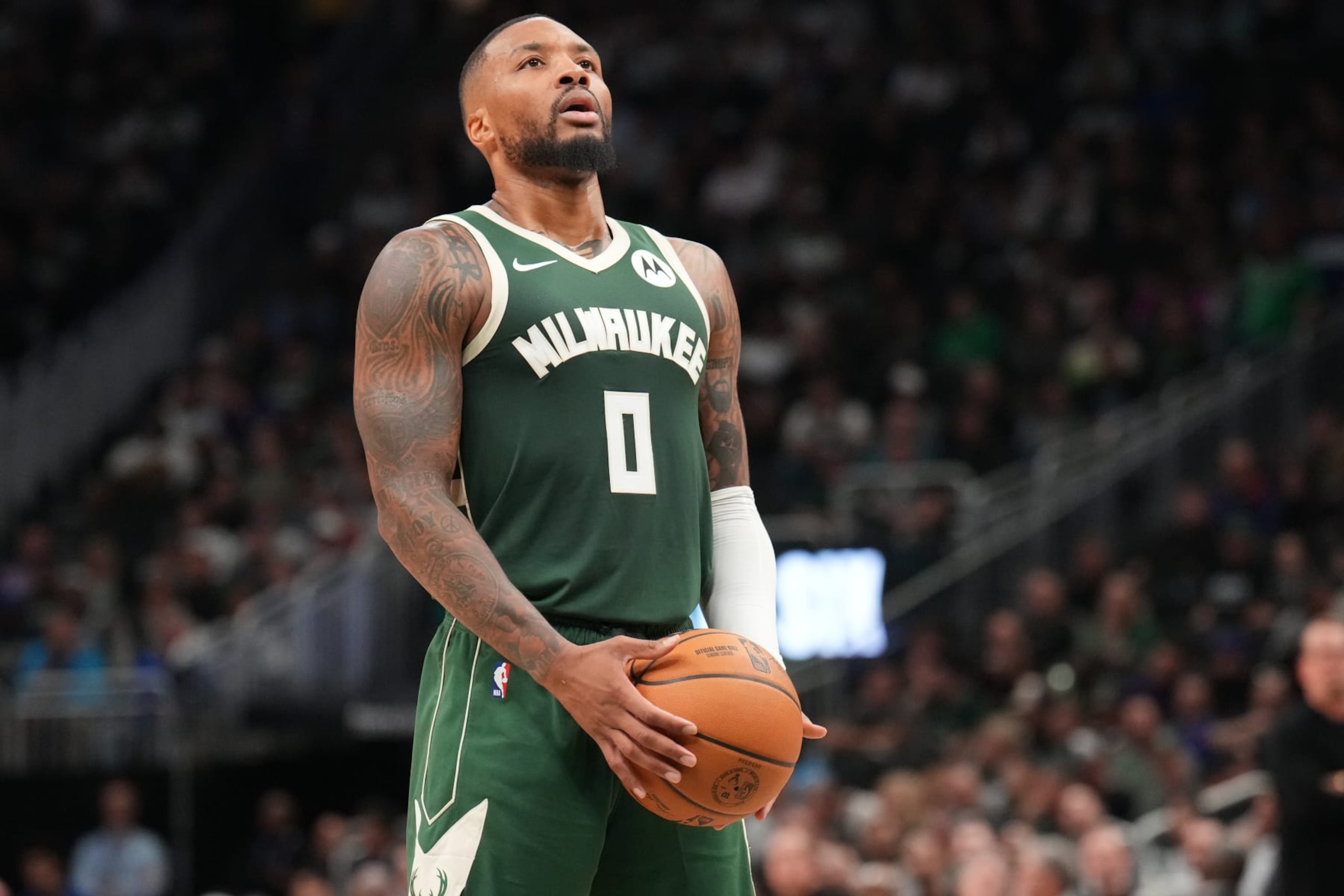
Plopping Damian Lillard alongside a top-10 player for the first time in his career, at the age of 33, could yank his scoring upside down a peg or four.
Counterpoint: It won't.
Follow-up counterpoint: Playing next to Giannis Antetokounmpo will inflate his scoring upside.
If the Milwaukee Bucks' first game of the season is at all telltale, Lillard needn't worry about volume in any form. The team will run things through him in crunch time, and question-mark depth will keep his minutes north of 35 per game.
Defenses, meanwhile, will be so irreparably torn on how to guard him and Giannis that Dame might just set a career high in open-ish threes, trips to the foul line and even points per game.
Considering Lillard is not just in Year 12 but working off a season in which he averaged a personal-best 32.2 points, that's saying something. Lots of things, actually.
None of which are good news for opposing defenses.
4. Jayson Tatum, Boston Celtics
7 of 10
Figuring out where to put Jayson Tatum demanded more brainpower than anybody else on this list.
On the one hand, he just averaged more than 30 points per game last year and still has one of the NBA's most complete scoring packages—an every-level armory featuring everything from ridiculously difficult off-the-bounce threes and mid-rangers to streaking dunks on the break and blow-bys in semi-transition to bullying drives from a standstill and ascendant contact-drawing.
On the other hand, the top of the Boston Celtics' roster is stacked. Despite already topping 30 points this season, it isn't immediately clear how much scoring volume Tatum will ferry with Jaylen Brown, Jrue Holiday and Kristaps Porziņģis by his side.
Opening night against the New York Knicks put some of the ambiguity to bed. Brown and Holiday won't combine for just 21 shots between them every game, but Tatum is no less critical to the Celtics' offensive operation.
They will entrust him to run crunch-time offense, and the rotation outside the starting five is shallow enough that he could end up logging 36-plus minutes per game.
3. Shai Gilgeous-Alexander, Oklahoma City Thunder
8 of 10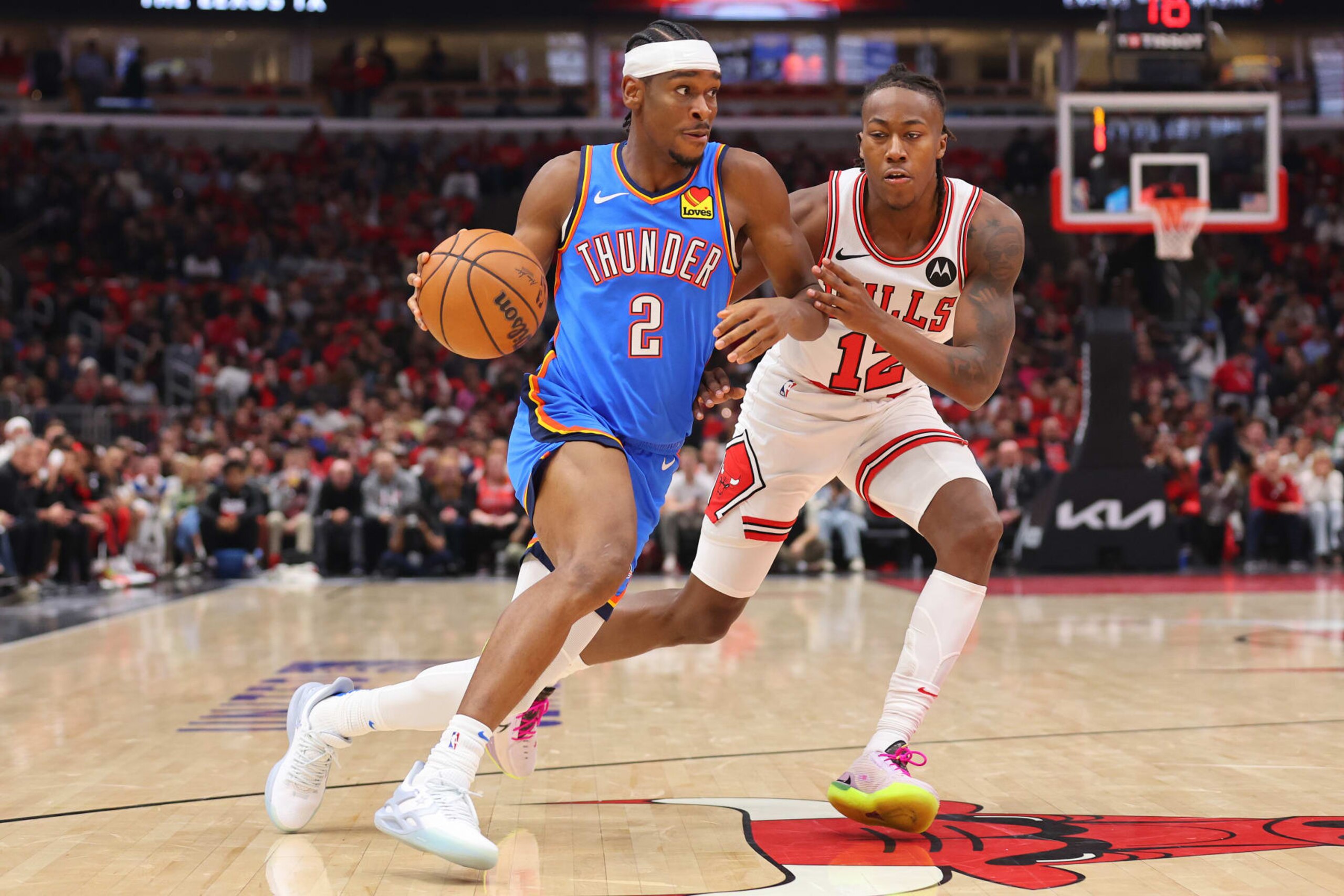
Only two constants are currently championed by the Oklahoma City Thunder: Self-discovery for the sake of the bigger picture through experimental lineups and empty-the-bench minutes distribution...and Shai Gilgeous-Alexander.
All right, fine. This overstates Oklahoma City's disinterest in the here and now. But not by much.
No other player assured of mega-ish minutes is also guaranteed on-ball or shot volume. Not Josh Giddey, not Jalen Williams, not Chet Holmgren. SGA stands alone, the primary engine and lone established superstar quickly and effectively steering an upstart core into vested relevance.
Last season's 31.4 points on 20-plus shots per game are probably a good proxy for what to expect now. But don't rule out a higher average and full-on scoring title.
This year's Thunder are better equipped to open the floor in the half-court—breathing room SGA, 25, will almost definitely parlay into more inside-the-arc razzle-dazzle and trips to the charity stripe. Bake in a potential uptick in three-point volume, and another 30-points-per-game campaign feels like a given.
2. Joel Embiid, Philadelphia 76ers
9 of 10
Joel Embiid remained atop the NBA's scoring pedestal last year by averaging 33.1 points per game. It was the second consecutive campaign in which he topped the 30-point mark and exited the season with the bucket-getting crown.
And that was with a (not-unhappy) James Harden by his side for 51 games.
Context has changed this year, but the essentiality of his volume remains intact. Instead of navigating Harden's foot issues, Embiid and the Philadelphia 76ers are traversing a trade demand, the looming threat of excused and unexcused absences and an inevitable breakup.
Forecasting a kaboom-season for Tyrese Maxey doesn't detract from Embiid's 30-points-per-game stock. Nor will the eventual Harden trade. The Sixers are unlikely to immediately acquire another star as part of any deal, and even if they do, the offense will still run through their seven-footer.
Macro uncertainty is all that keeps Embiid off the No. 1 spot. Does this season go off the rails because Harden isn't traded quickly enough? Or at all? Or because the return is rooted in draft picks and expiring contracts rather than impact talent? And, yeah, there's the whole "How available will Embiid be after back-to-back seasons playing 2,200-plus minutes?" thing, too.
Still, short of his popping off every screen and favoring avalanches of spot-up and unassisted jumpers over streaks to the basket and the free-throw parades that come with them, his path to 30 points per game is neither in jeopardy nor optional. It's required.
1. Luka Dončić, Dallas Mavericks
10 of 10
Luka Dončić cleared the 30-points-per-game threshold for the first time of his career last season en route to finishing second in the scoring-title race. Slotting him at No. 1 isn't necessarily a (loose) guarantee he grabs the bucket-getting crown this year. But it's not not that, either.
Spending a full season alongside Kyrie Irving changes...absolutely nothing. Dončić averaged around 30.6 points last season in the games he played with his new running mate.
The Dallas Mavericks aren't any less reliant on his supernova usage now. Their depth chart still wants for players other than their stars who can dependably dribble.
Between the 24-year-old's inside-the-arc deceleration; knack for putting defenders on his back and drawing fouls, both real and phantom; his touch on the move; and a potential upsurge in three-point attempts, it would be more surprising to see him average fewer than 30 points.
Unless otherwise noted, stats courtesy of NBA.com, Basketball Reference, Stathead or Cleaning the Glass and accurate entering games on Friday, Oct. 27. Salary information via Spotrac.
Dan Favale covers the NBA for Bleacher Report. Follow him on Twitter (@danfavale), and subscribe to the Hardwood Knocks podcast, co-hosted by Bleacher Report's Grant Hughes.




.jpg?w=2560 "Aikman Blasts Cowboys WR 🫣")
.jpg?w=2560 "Jonathan Taylor Landing Spots")