

2023 MLB Draft Picks: Live Team-by-Team Day 1 Grades and Analysis
Welcome to Bleacher Report's 2023 MLB draft tracker!
Once again, the draft is being held during the MLB All-Star festivities, with this year's event spanning three days and 20 rounds. On Sunday, the first 70 selections will be made over the first and second rounds, as well as the competitive balance and compensatory picks slotted in between.
The LSU tandem of outfielder Dylan Crews and right-hander Paul Skenes have been the most talked about prospects leading up to draft day, while they are closely followed by Florida outfielder Wyatt Langford and prep outfielders Max Clark and Walker Jenkins on most predraft rankings.
That said, the first round always brings at least a few surprises with teams looking to make the most of their bonus pools by saving money early and spending above-slot later on, so expect plenty of shuffling relative to expectations.
Keep it locked right here as Sunday's draft unfolds for scouting reports, grades and pick analysis for every Day 1 selection.
Note: My final Mock Draft that was published on Saturday morning can be found here.
Arizona Diamondbacks
1 of 30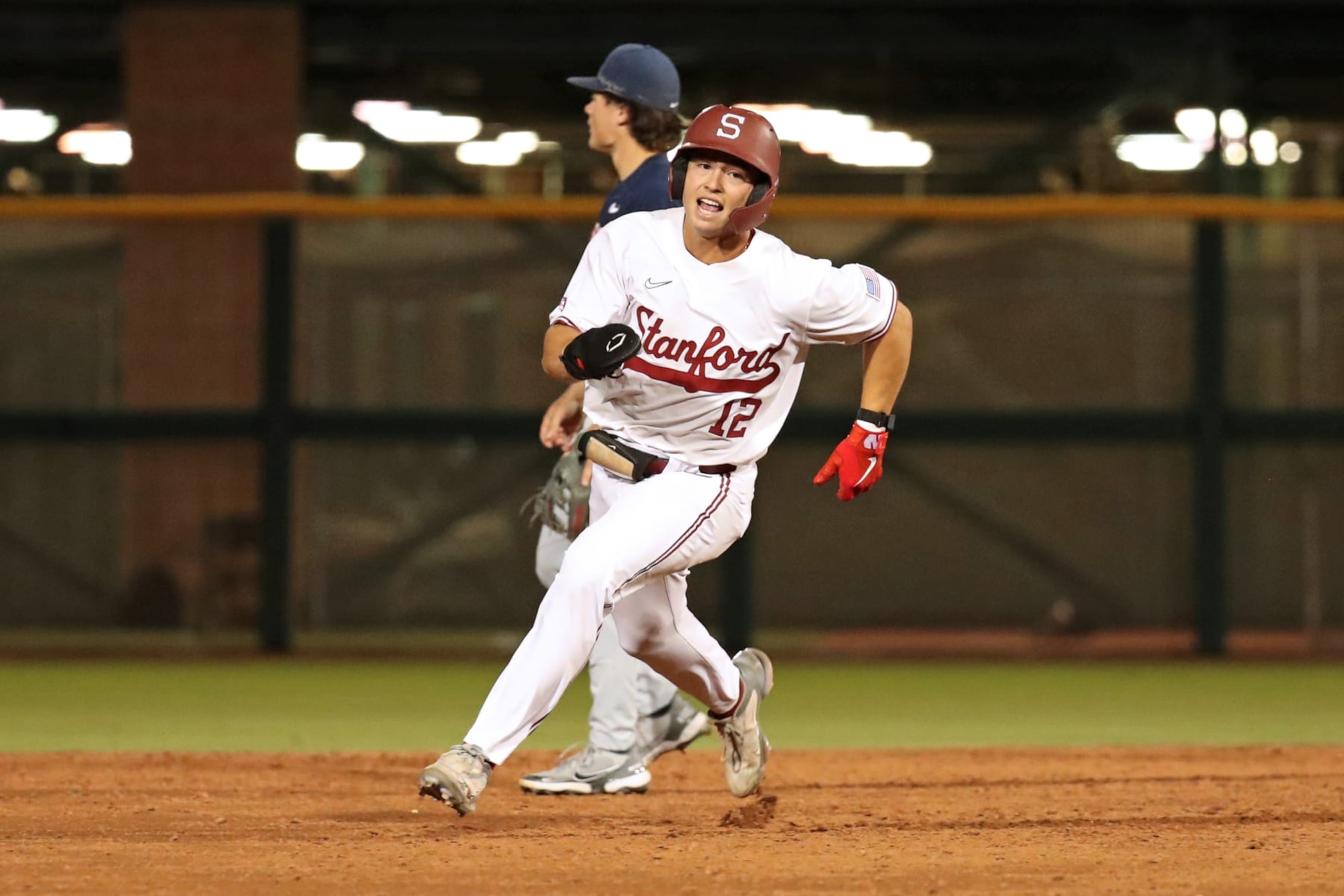
First Round (No. 12 Overall): Tommy Troy, SS, Stanford
Troy hit .394/.478/.699 with 17 doubles, 17 home runs and 17 steals this spring as the top draft prospect on a Stanford team that reached the College World Series. He doesn't have a carrying tool but is a solid player across the board with three productive college seasons and a terrific run in the Cape Cod League last summer on his resume. He has played second base, shortstop and third base in college, and second base appears to be his most likely long-term home. His bat-to-ball skills and polished approach should help him move quickly through the minors.
Grade: B
I'd slot Troy behind Jacob Gonzalez and Matt Shaw among this year's college shortstop class, but all three are pretty close in terms of present tools and future upside. The D-backs value versatility, so the fit here makes sense.
Second Round (No. 48 Overall): Gino Groover, 3B, NC State
Groover has a notoriously risky profile as a right-handed-hitting corner infielder with limited athleticism, but he posted some of the best contact rates in the nation this spring. With a strong 6'3", 212-pound frame he has good raw power, though he employed more of a hit-over-power approach during his time at NC State while hitting .332/.430/.546 with 13 home runs and 50 RBI in 57 games this spring. He played third base as a junior but is likely destined for first base in pro ball.
Grade: B-
Why not Jake Gelof? Groover is a solid hitter, but his upside is somewhat limited by his lack of power and bottom-of-the-scale defensive profile.
Balance Round B (No. 64 Overall): Caden Grice, LHP, Clemson
Grice was on the draft radar in 2020 as one of the better two-way prospects in the high school class, and he continued to contribute on both sides of the ball at Clemson. This spring, he went 8-1 with a 3.35 ERA, 1.12 WHIP and 101 strikeouts in 78 innings on the mound, and hit .307/.411/.618 with 18 home runs and 68 RBI as a first baseman. The 6'6", 250-pound left-hander has a classic 40-hit, 60-power profile offensively with a ton of swing-and-miss to his game, but his power is for real. He is still raw on the mound and could take a major step forward if he focuses on pitching
Grade: A
A two-way player and the D-backs immediately makes me think of Micah Owings. If you're not familiar, look him up. He was Ohtani before it was cool, and also not in the same stratosphere talent-wise. There are a lot of potential outcomes here, but he's a fun pick here to close out Day 1.
Atlanta Braves
2 of 30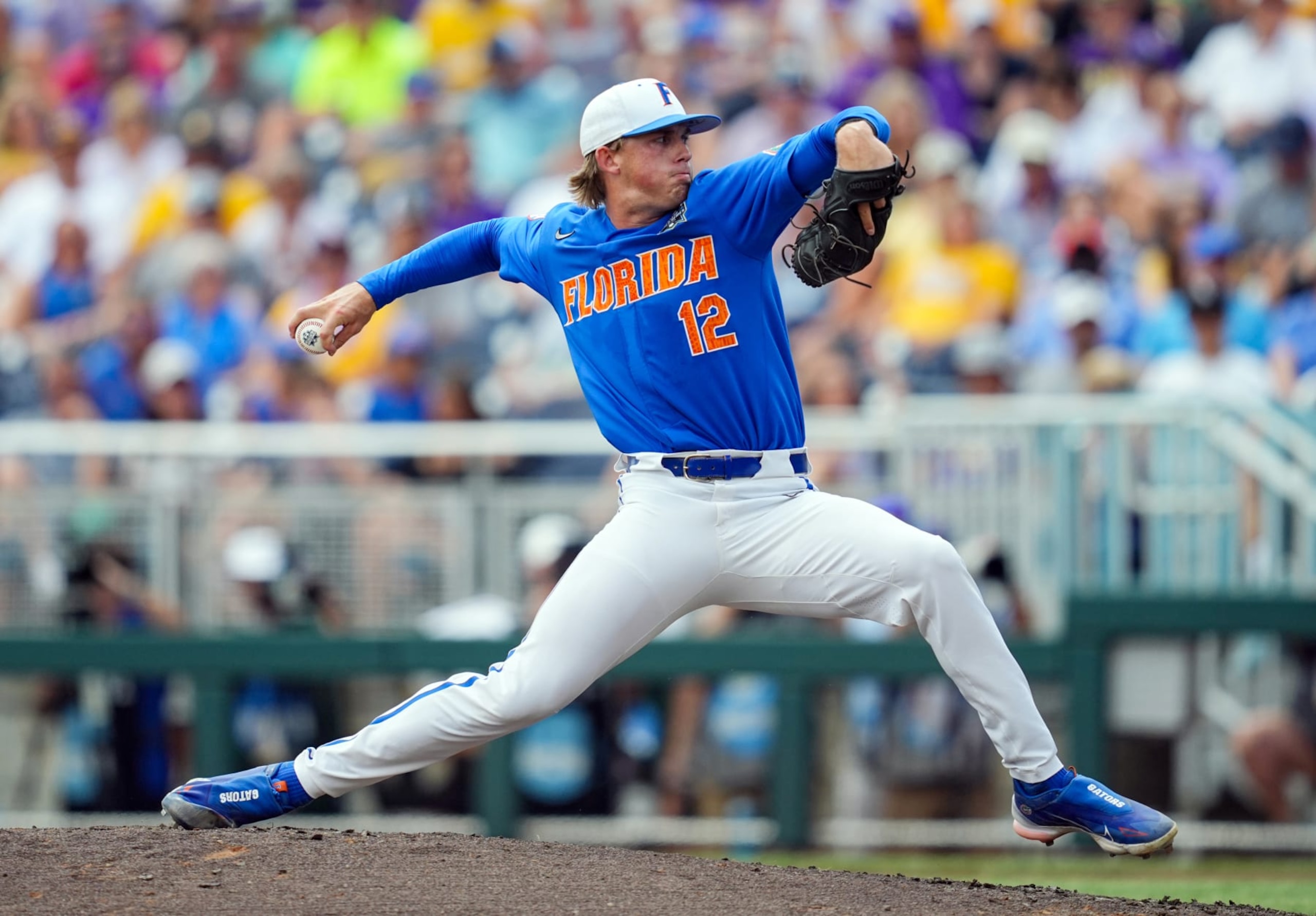
First Round (No. 24 Overall): Hurston Waldrep, RHP, Florida
Waldrep has the best pure stuff of any college pitcher in this draft class outside of Paul Skenes, with a fastball that sits in the upper 90s, a swing-and-miss split change and a hard-biting slider that also has the potential to be a putaway pitch. The 6'1", 210-pound right-hander finished 10-3 with a 4.16 ERA and 156 strikeouts in 101.2 innings as Florida's Saturday starter this spring, but he also walked 5.0 batters per nine innings. His spotty command and a delivery that features some effort could mean his future is in the bullpen. If a team wants to put him on the fast track, he could fit in a big league bullpen right now.
Grade: B-
The Braves farm system is sorely lacking in position-player talent, and Waldrep comes with a considerable amount of risk. They know how to develop arms, and he has huge stuff, but they could have added a new top hitter to their farm system with someone like Aidan Miller or Colin Houck from the high school ranks or Miami slugger Yohandy Morales.
Second Round (No. 59 Overall): Drue Hackenberg, RHP, Virginia Tech
At surface-level, Hackenberg didn't have the best season with a 5.80 ERA and 1.63 WHIP in 85.1 innings. However, he showed flashes of significant potential, including a 10-strikeout complete game against Florida State in April. The 6'2", 220-pound right-hander throws a ton of strikes, and he also missed plenty of bats with 99 strikeouts and a 10.4 K/9 punchout rate. The draft-eligible sophomore is the younger brother of NFL quarterback Christian Hackenberg and Chicago White Sox prospect Adam Hackenberg.
Grade: C
The Braves looked like the perfect landing spot for Kent State lefty Joe Whitman, perhaps even in the first round. Passing on him here feels like a mistake, though they clearly see something in Hackenberg's upside.
Compensation Round (No. 70 Overall): Cade Kuehler, RHP, Campbell
Campbell University has turned into a pitching hotbed of sorts in recent years, churning out first-round picks in 2019 (Seth Johnson) and 2022 (Tom Harrington), and Kuehler is the latest ace to come out of their pipeline. The 6'0", 215-pound right-hander went 8-1 with a 2.71 ERA, 1.10 WHIP and 91 strikeouts in 73 innings this spring, showcasing a mid-90s fastball that touches 98 mph and a plus slider as part of a four-pitch arsenal. His inconsistent command gives him some reliever risk, but his fastball-slider pairing could play up in shorter stints.
Grade: A
After grabbing three high school pitchers on Day 1 last year, the Braves went with three college arms this year. Developing pitching is what they do well, and they are playing to their strengths with this draft approach.
Baltimore Orioles
3 of 30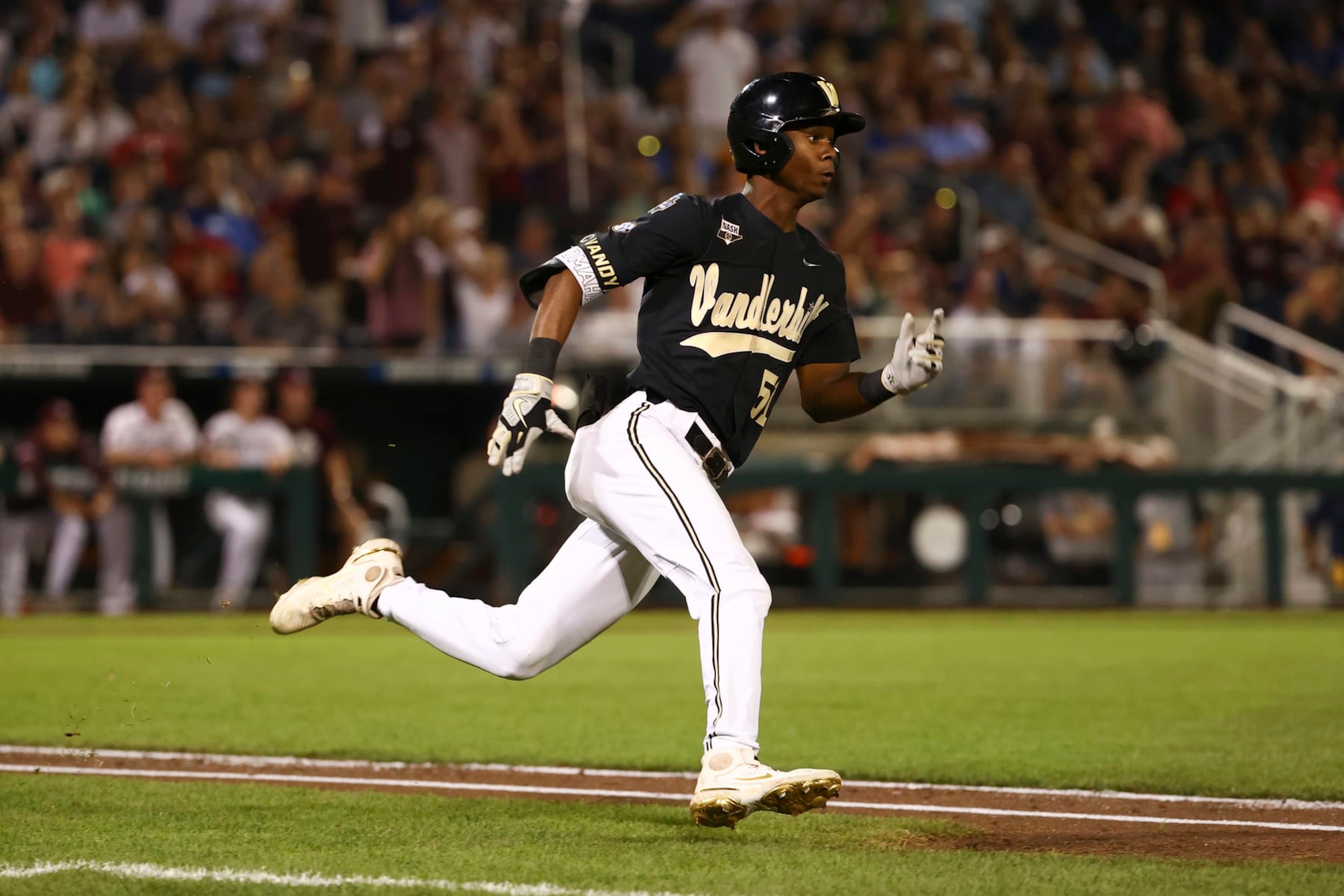
First Round (No. 17 Overall): Enrique Bradfield Jr., OF, Vanderbilt
The stolen base has returned in a big way this season and it could not have come at a better time for Bradfield. The Vanderbilt star is a true 80-grade burner, and he knows how to make the most of that speed, going 130-for-143 on stolen base attempts in his three years on campus. He doesn't try to do too much offensively with a line-drive approach, and he has shown good plate discipline with a .426 on-base percentage and 14.6 percent walk rate in his college career. He also profiles as a potential Gold Glove defender in center field and has drawn comparisons to Kenny Lofton.
Grade: A
Even if he never makes a ton of impact offensively, Bradfield is going to be a menace on the base paths and a standout defender in center field, giving him a ton of secondary value. The Orioles now have a contingency plan if Cedric Mullins doesn't sign long-term.
Second Round (No. 53 Overall): Mac Horvath, 3B/OF, North Carolina
Horvath has one of the best combinations of power and speed of any hitter in the 2023 draft class, but the hit tool questions that left him undrafted as a high school senior and a draft-eligible sophomore last year still remain. The 6'1", 195-pound slugger batted .305/.418/.711 with 21 doubles, 24 home runs, 66 RBI and 25 steals this spring, but he also struck out 61 times in 60 games while consistently struggling against elite velocity. He split his time between third base and right field defensively, and a corner outfield spot will be the best fit going forward.
Grade: B
Another spot where I question the fact that Jake Gelof was not the pick, but the Orioles have done a great job stocking up on college bats with secondary Day 1 picks and this is another solid addition to the system.
Balance Round B (No. 63 Overall): Jackson Baumeister, RHP, Florida State
Baumeister was a Top 100 player in the 2021 draft class before announcing on draft day that he would be honoring his commitment to Florida State. After pitching mainly out of the bullpen as a freshman, he threw the ball well as a starter in the Cape Cod League and moved into the starting rotation this spring. With a durable 6'4", 224-pound frame and a quality fastball, he has starter potential, but his command and secondary stuff need work. He tallied 95 strikeouts in 69 innings this spring while trimming his walk rate from 15.9 to 9.4 percent, and he has intriguing upside as a draft-eligible sophomore.
Grade: B-
Juaron Watts-Brown and Cade Kuehler both have a higher ceiling, and Joe Whitman is also surprisingly still available for some unexplained reason. That said, it's still nice to add a quality arm to the Day 1 haul.


Boston Red Sox
4 of 30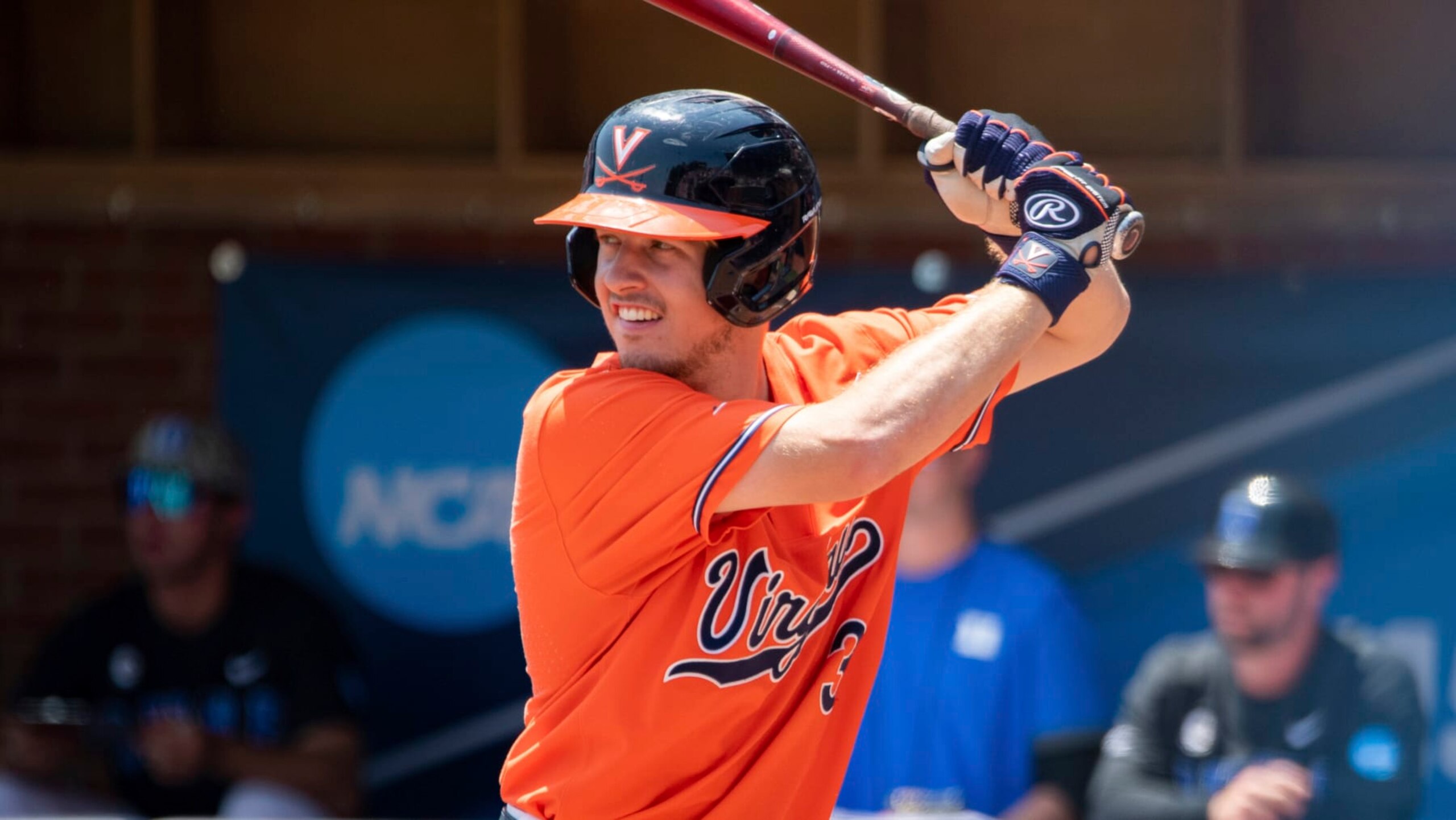
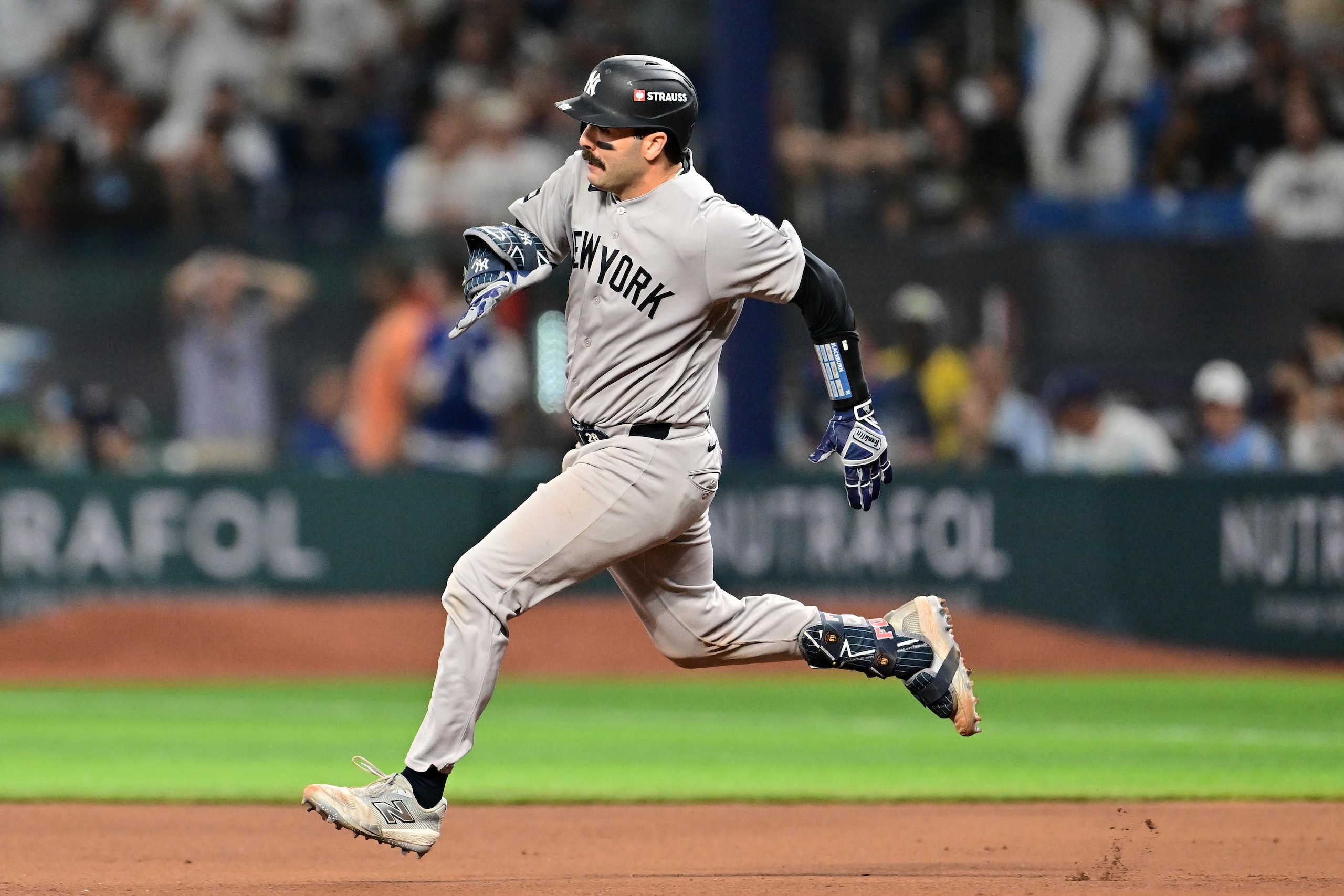
First Round (No. 14 Overall): Kyle Teel, C, Virginia
The 2023 ACC Player of the Year, Teel hit .407/.475/.655 with 25 doubles, 13 home runs and 69 RBI in 65 games this spring to cement his status as the top catcher in the 2023 class. A plus athlete who split his time between catching and the outfield as a freshman, he moves well behind the plate and has a strong throwing arm. He struggled a bit in the Cape Cod League and with Team USA last summer but erased any lingering concerns about his offensive upside with a stellar junior campaign at the plate.
Grade: A
Good chance the Red Sox didn't expect Teel to still be on the board here, as he was a candidate to go as high as No. 6 to Oakland. They need pitching badly, but if they didn't love Hurston Waldrep, there was not an arm worth taking here.
Second Round (No. 50 Overall): Nazzan Zanetello, SS, Christian Brothers College High School (MO)
A toolsy middle infielder with a projectable 6'2", 190-pound frame and some intriguing raw power, Zanetello could be one of the sleepers of the 2023 draft class. He hit .429 in the 18 World Cup qualifying tournament last fall, but he had an inconsistent spring facing lesser competition in high school, making him more of a long-term projection prospect than an elite prep performer. There is impact upside if everything clicks, but there is also a lot of boom-or-bust potential.
Grade: B
You didn't think the Red Sox were going to make it out of Day 1 without adding a high-ceiling, offensive-minded high school infielder did you? If you stockpile enough players with that profile, one of them is bound to hit. Joe Whitman would have been really nice here, though.
Chicago Cubs
5 of 30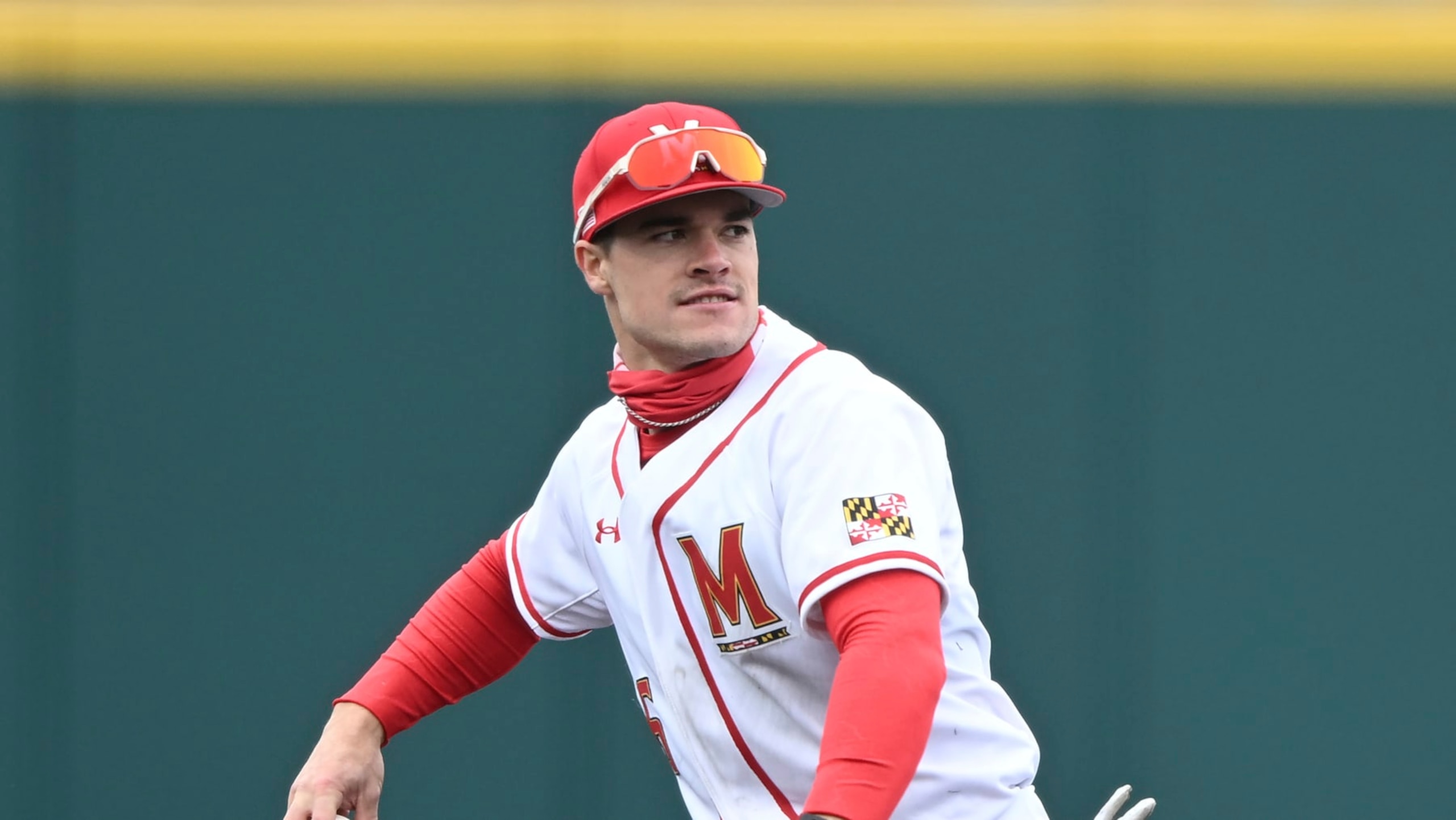
First Round (No. 13 Overall): Matt Shaw, SS, Maryland
The Big Ten Player of the Year, Shaw hit .341/.445/.697 with 20 doubles, 24 home runs, 69 RBI and 18 steals this spring while setting Maryland's career home run record with 53 long balls in three seasons. He played second base as a freshman before shifting to shortstop the last two seasons, but he will likely move back to the keystone in pro ball where he profiles as a top-tier offensive player. Facing elite competition in the Cape Cod League last summer, he batted .360/.432/.574 with 17 extra-base hits and 21 steals in 36 games to take home MVP honors.
Grade: A
The Cubs were linked to prep sluggers Aidan Miller and Arjun Nimmala in the weeks leading up to the draft, but this feels more like a Cubs first-round pick. They targeted Ian Happ and Nico Hoerner in the first round because they were polished college players who were a safe bet to contribute in the majors, and Shaw is that same kind of guy.
Compensation Round (No. 68 Overall): Jaxon Wiggins, RHP, Arkansas
Wiggins has always had tantalizing stuff dating back to his Oklahoma high school days, and he pitched for Team USA following his freshman season. The 6'6", 225-pound right-hander struggled to a 6.55 ERA in 66 innings as a sophomore, but still turned heads with 82 strikeouts while showcasing an upper 90s fastball, swing-and-miss slider and the makings of a quality changeup. His stock was trending up this fall before he underwent Tommy John surgery in January and missed his entire junior season.
Grade: C
The Cubs went boom-or-bust here when there were safer college arms still left on the board that would have been great value picks here. Time will tell if it was worth the gamble.
Chicago White Sox
6 of 30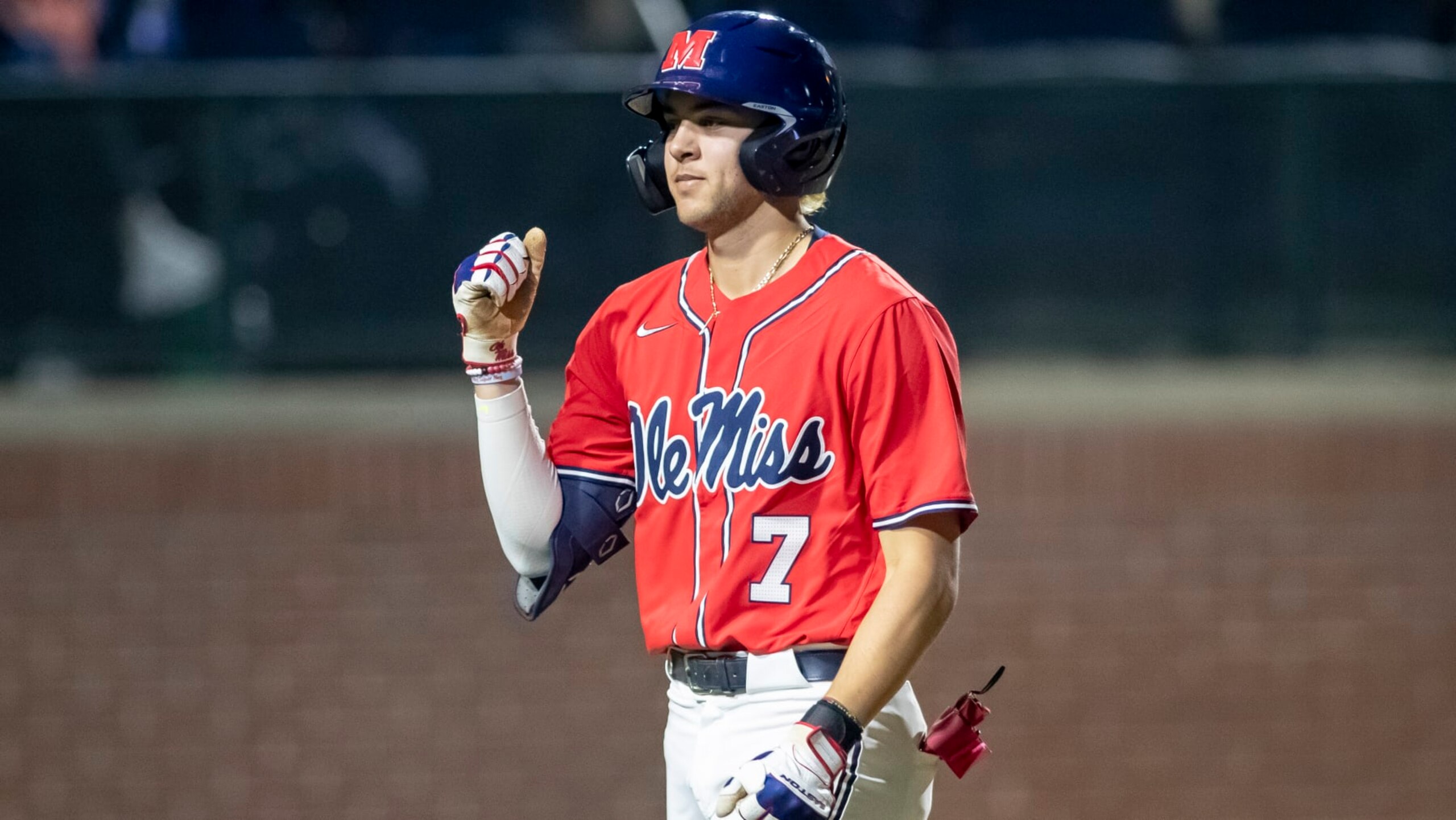
First Round (No. 15 Overall): Jacob Gonzalez, SS, Ole Miss
A three-year starter at Ole Miss and a staple on the Collegiate National Team the last two summers, Gonzalez has been on the 2023 draft radar for years. He won Freshman of the Year honors in 2021 when he hit .355/.443/.561 with 12 home runs, helped lead the Rebels to a College World Series title as a sophomore, and wrapped up his college career with a .319/.427/.561 line and 40 home runs in 186 games. His below-average speed raises questions about his ability to stick at shortstop, but he has been a reliable defender and his offensive game would work at third base if he does need to move.
Grade: A
Gonzalez has been a high-level performer since the moment he stepped foot on campus, and it's easy to envision him sharing the left side of the infield with Colson Montgomery for years to come. Some good college bats were going to slip in this class simply because of the depth of that demographic, and the White Sox got some excellent value here as a result.
Second Round (No. 51 Overall): Grant Taylor, RHP, LSU
Taylor struggled pitching primarily out of the LSU bullpen in 2022, but his stock started to climb in the Cape Cod League last summer when he logged a 2.14 ERA and a 30-to-2 strikeout-to-walk ratio in 21 innings. He might have pitched his way into the first round this spring, but his season was over before it started when he underwent Tommy John surgery in February. With a strong 6'3", 230-pound frame and the potential for three plus pitches, he could prove worth the wait. He is a sophomore, so he'll have some negotiation leverage.
Grade: A
The White Sox took Arkansas right-hander Peyton Pallette in the second round last year after he missed his junior year recovering from Tommy John surgery and he is off to a strong start now that he's healthy. Great move to take a similar chance on Taylor.
Cincinnati Reds
7 of 30
First Round (No. 7 Overall): Rhett Lowder, RHP, Wake Forest
Armed with a mid-90s fastball and one of the best changeups in college baseball, Lowder finished 15-0 with a 1.87 ERA, 0.95 WHIP and a 143-to-24 strikeout-to-walk ratio in 120.1 innings as the ace of the staff for Wake Forest this spring. He might be the safest pick in the entire 2023 draft class as a virtual lock to be a solid middle-of-the-rotation starter, and there is potential for more if he continues to develop his slider into a putaway pitch. His pitchability and plus command should make the 6'2", 200-pound right-hander one of the first players from the 2023 class to reach the majors.
Grade: A
Would the Reds consider running Lowder out for a few starts this season if they are still in the playoff race down the stretch? That's probably a stretch given the workload he already has on his arm this year, but he's that MLB-ready and could make a serious push for a rotation spot in 2024. Immediately addresses a glaring weakness.
Balance Round A (No. 38 Overall): Ty Floyd, RHP, LSU
No one did more to improve their stock at the College World Series than Floyd. The 6'2", 200-pound right-hander got the start in Game 1 of the finals against Florida and racked up a season-high 17 strikeouts across eight strong innings with no shortage of scouts on hand. He averaged 19 inches of induced vertical break with his upper-90s fastball this spring, and that pitch was his bread-and-butter throughout his collegiate career. His secondary stuff still needs refining, but that high-spin fastball can't be taught, and his clean mechanics and durable frame help his outlook as a future MLB starter.
Grade: A+
Floyd was getting some first-round buzz after his stellar postseason run, and he could easily wind up being a better pro than Lowder. In an extremely thin draft for pitching, the Reds snagged two of the best bets to set up shop in an MLB rotation for years.
Second Round (No. 43 Overall): Sammy Stafura, SS, Panas High School (NY)
Stafura has gotten bigger and stronger over the past year without sacrificing any of his quickness and athleticism, and that coupled with a stellar spring has made him one of the biggest risers among this year's high school class. The 6'0", 188-pound shortstop put up huge numbers this spring while playing his home games less than 40 miles north of Yankee Stadium, and while there are some questions about the level of competition he faced in a cold weather state, he has the raw tools to develop into an everyday shortstop with speed and power.
Grade: A
Casual fans might groan at the idea of adding another shortstop to a farm system loaded with middle-infield talent, but the MLB draft is all about stockpiling talent and maximizing value. This is unquestionably one of the better value picks of Day 1.
Cleveland Guardians
8 of 30First Round (No. 23 Overall): Ralphy Velazquez, C, Huntington Beach High School (CA)
Velazquez put together a terrific senior season while facing high-level competition and leading Huntington Beach High School to the National High School Invitational title. He has a strong 6'2", 235-pound frame and some of the best raw power in the 2023 class, giving him a middle-of-the-order profile at the next level. He will be given every opportunity to stick behind the plate where he possesses a strong arm and good receiving skills, but his offensive game will play fine if he ultimately has to shift to first base.
Grade: B+
The Guardians are great at finding value later in the draft on the pitching side of things, so I love them rolling the dice on the huge power potential that Velazquez possesses. Even if he doesn't stick behind the plate, the bat will play anywhere.
Second Round (No. 58 Overall): Alex Clemmey, LHP, Bishop Hendricken High School (RI)
With a projectable 6'6", 205-pound frame, a high-octane fastball that has been up to 99 mph and a hard-biting curveball, Clemmey has some of the best raw stuff in the 2023 class. However, there are serious questions about his ability to throw enough strikes to make the most of that power arsenal. He has inconsistent mechanics and a high-effort delivery, so even if he does dial in his command there is significant reliever risk in his long-term profile as well. He doesn't turn 18 years old until later this month, and the Vanderbilt commit might benefit as much as anyone from honoring his college commitment.
Grade: A+
This is the perfect landing spot for Clemmey. The Guardians have as good a chance as anyone of smoothing out his mechanics and maximizing his elite stuff.
Balance Round B (No. 62 Overall): Andrew Walters, RHP, Miami
Walters has been one of college baseball's best closers the past two seasons. The 6'4", 222-pound right-hander racked up 26 saves in 52 appearances with an eye-popping 134-to-13 strikeout-to-walk ratio in 77.1 innings out of the Miami bullpen during that span. He is essentially a one-pitch pitcher, but it's a good one as his fastball touches 99 mph and is extremely difficult to pick up a deceptive delivery. The development of his slider will determine his future role.
Grade: B-
It's a little bit of a reach, but who better than Cleveland to try to turn him into the next bullpen ace alongside Emmanuel Clase and James Karinchak? This should also save them some money to put toward an above-slot deal for Clemmey.
Colorado Rockies
9 of 30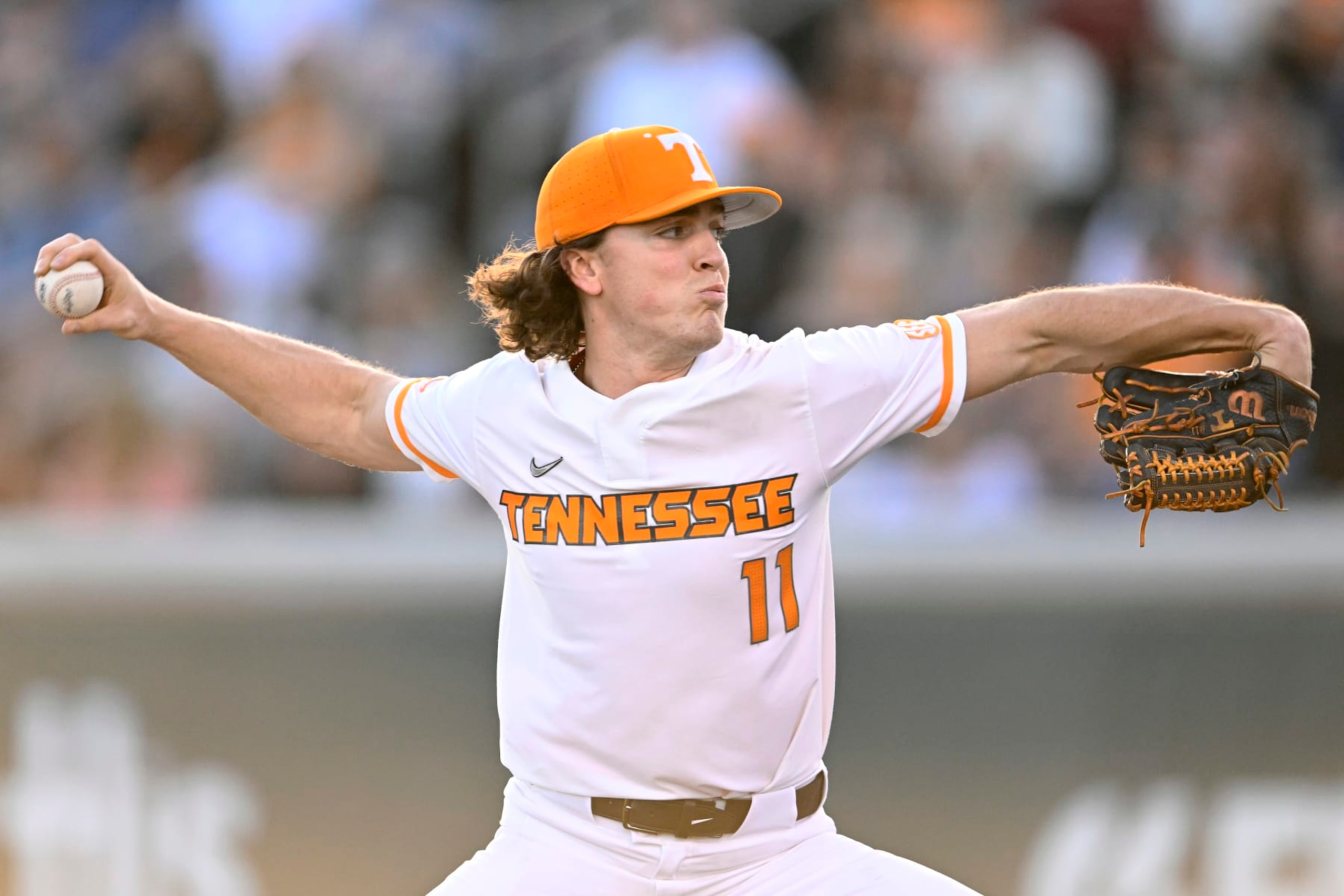
First Round (No. 9 Overall): Chase Dollander, RHP, Tennessee
Dollander was one of the leading candidates to go No. 1 overall heading into the 2023 season after he finished 10-0 with a 2.39 ERA and 108 strikeouts in 79 innings during his sophomore season. However, inconsistent command led to a significant step backward in his results this spring, and he finished with a 4.75 ERA while his walk rate climbed from 4.2 to 7.8 percent. While the results may have suffered, his stuff was still elite, with a lively upper 90s fastball, a hard-biting slider and a quality curveball and changeup pairing all from a strong 6'2", 200-pound frame. With a few minor tweaks, he could be the steal of this draft, though he is clearly a risk-reward gamble.
Grade: A+
I love it any time the Rockies take a pitcher in the first round. They are simply never going to be able to convince top-tier free-agent pitchers to come pitch at altitude, so if they want a quality rotation, they need to build it in-house. The upside here is worth the risk for the Rockies.
Second Round (No. 46 Overall): Sean Sullivan, LHP, Wake Forest
Sullivan doesn't light up radar guns, sitting in the low 90s with his fastball while pairing it with a decent changeup and a fringy curveball, but he uses his 6'4" frame to generate a deceptive, low arm slot that led to an eye-popping 111 strikeouts in 69.2 innings. There are questions whether his average stuff will play at the next level, and he missed some time down the stretch with triceps inflammation, but in a draft that is sorely lacking in left-handed pitching he was a standout this spring.
Grade: A
Yes, more pitching! Sullivan is a bit of a wild card given his average stuff, but it wasn't an accident he missed all those bats this spring.
Balance Round B (No. 65 Overall): Cole Carrigg, C, San Diego State
Carrigg is one of the most versatile players in this draft class. The 6'3", 200-pound Swiss Army knife saw time at catcher, second base, shortstop, third base and in the outfield during his college career, and his stock was trending up in a big way when he posted a .935 OPS during his sophomore year and then hit .329 with 15 steals in 41 games in the Cape Cod League. He was slowed by a shoulder injury and concussion this spring, but turned heads at the MLB Draft Combine with multiple 100 mph throws across the infield. The switch-hitter only needs to be an average offensive player to provide a ton of value.
Grade: A+
Love, love, love that he is listed as a catcher on his draft card. If he can find a way to stick behind the plate, even as part of a greater utility-player package, he will be one of the most valuable picks of the second round.
Detroit Tigers
10 of 30First Round (No. 3 Overall): Max Clark, OF, Franklin High School (IN)
A smooth left-handed swing and advanced plate discipline for a prep hitter make Clark one of the best pure hitters in the 2023 class, and while he has a hit-over-power offensive profile right now he also profiles for 20-25 home run power down the road. That said, his best present tool is his speed, which plays well on the bases and in the outfield where he is a lock to stay in center field. Throw in a strong arm that has been clocked at 97 mph on the mound and he is a legitimate five-tool talent with the upside to ultimately develop into a perennial All-Star.
Grade: B+
I think Clark may wind up being a better player than Wyatt Langford, but for a new-look Detroit front office drafting for the first time, the safer college player with the higher floor seemed like the better pick.
Balance Round A (No. 37 Overall): Kevin McGonigle, SS, Monsignor Bonner High School (PA)
McGonigle grew up just outside of Philadelphia and has some of the same offensive qualities as his idol Chase Utley. The 5'10", 187-pound infielder is one of the draft's best pure hitters, with a compact swing and an aggressive but disciplined approach at the plate. He has a contact-over-power approach and sprays the ball to all fields, but there is still 20-homer potential thanks to his quick hands and ability to consistently find the barrel. His range and arm are both average, so second base could be his future home.
Grade: A
The Tigers benefit from the prep shortstop slide and come away with one of the better high school hitters in the class. He doesn't offer the same sure-fire defensive profile as some of the other guys taken ahead of him, but this could be a major steal.
Second Round (No. 45 Overall): Max Anderson, 3B, Nebraska
Anderson led the Big Ten in hits (101), batting average (.401), slugging percentage (.770) and OPS (1.231) while adding 21 home runs and 70 RBI to give his draft stock a major boost, and he has an advanced approach at the plate with all-fields power. He played second base this spring and only committed two errors, but he lacks the quickness to play there at the next level and will likely end up at first base or in left field where his bat will need to carry his value.
Grade: B+
Similar to the McGonigle pick, the Tigers are taking a bat here and they'll figure out where he fits defensively when the time comes. Solid strategy for one of the worst offensive teams in baseball.
Houston Astros
11 of 30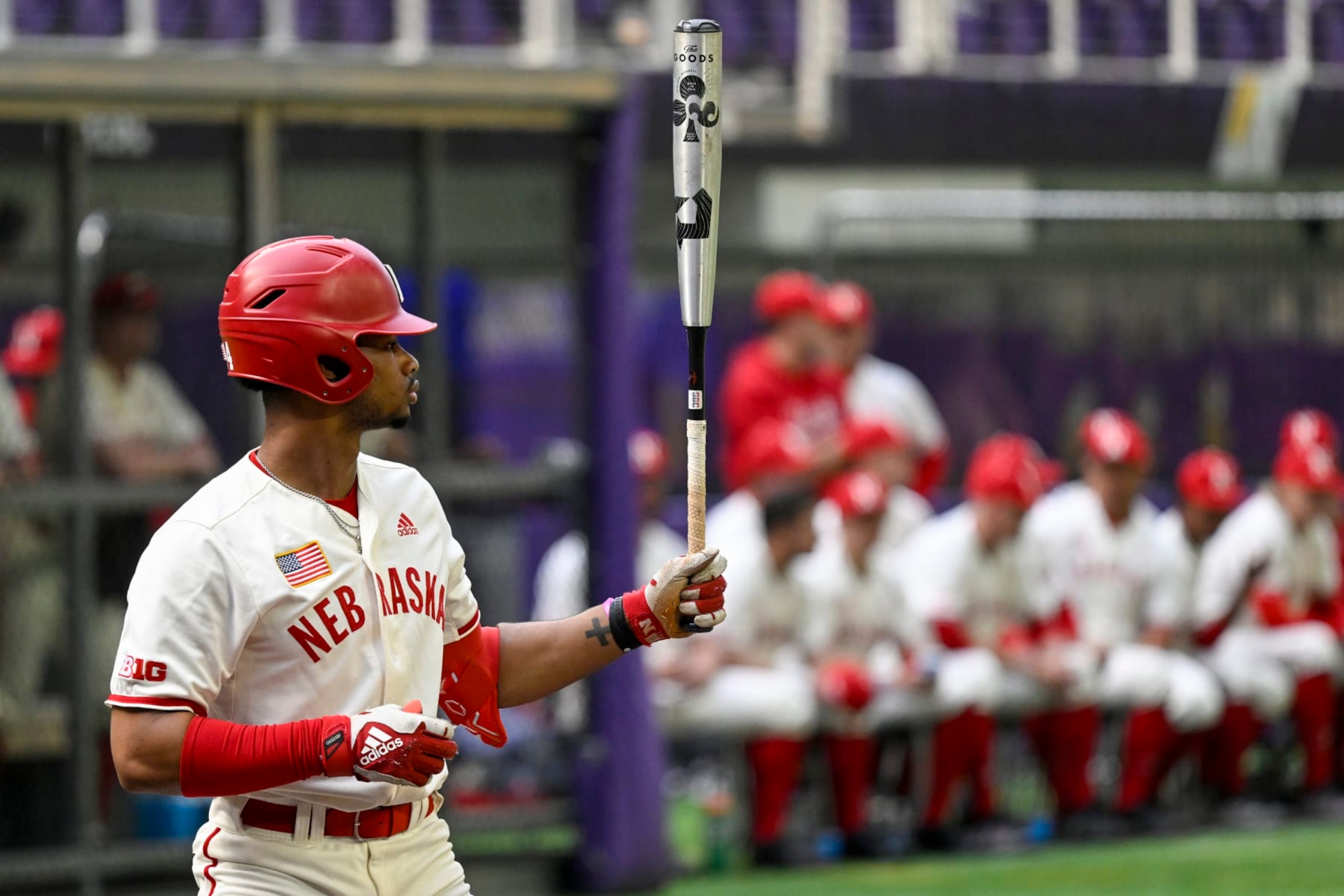
First Round (No. 28 Overall): Brice Matthews, SS, Nebraska
Matthews is one of the best all-around athletes in the 2023 draft class. After showing off exciting raw tools as a freshman and sophomore, he took a massive step forward this spring and sent his draft stock soaring. The Cornhuskers star hit .359/.481/.723 while raising his OPS by more than 350 points, and with 20 home runs and 20 steals he became the first 20/20 player in school history. A 21-error season raises questions about whether he can stick at shortstop, but center field could be a viable alternative given his speed and quick first step.
Grade: A
I would have disliked this pick for a lot of other teams, but the Astros have enough of a talent foundation in place to swing for the fences on a boom-or-bust prospect like Matthews. They also might be able to save some money against slot for their second pick.
Second Round (No. 61 Overall): Alonzo Tredwell, RHP, UCLA
Tredwell underwent Tommy John surgery during his junior year at California prep powerhouse Mater Dei High School and did not pitch his senior year. He resurfaced at UCLA last spring when he posted a 2.11 ERA with six saves and a 62-to-6 strikeout-to-walk ratio as the team's closer. The towering 6'8", 230-pound right-hander moved into the starting rotation this spring and continued to pound the strike zone, but a back injury limited him to 45.1 innings. The draft-eligible sophomore showed improved fastball velocity earlier this spring and could have more in the tank, but there are obvious injury concerns.
Grade: A
I like this pick a lot for an Astros organization that has often squeezed more than expected out of pitching prospects. Tredwell feels like a guy with another level to unlock.
Kansas City Royals
12 of 30First Round (No. 8 Overall): Blake Mitchell, C, Sinton High School (TX)
With a power-oriented left-handed swing and all-fields approach, Mitchell is one of the best prep bats in the 2023 class. Teams have a long-standing aversion to high school catchers due to their elevated bust rate, and there is some risk here in his power-over-contact approach, but he offers defensive value with a rocket throwing arm and quick catch-and-throw skills. The 6'1" right-hander also has a fastball that touches 97 mph and a pair of promising offspeed pitches, giving him legitimate pro potential on the mound if catching doesn't work out.
Grade: C
The high school catching demographic is always a high-risk, high-reward play, and for a Royals team that needs a lot to make the climb back to contention I'm not sure that risk makes sense. Why not go with Virginia catcher Kyle Teel instead?
Second Round (No. 44 Overall): Blake Wolters, RHP, Mahomet-Seymour High School (IL)
The Gatorade Player of the Year in Illinois this spring, Wolters set a record with a 97.7 mph fastball at the PBR Super 60 Showcase last summer and had his fastball clocked as high as 99 mph this spring while steadily climbing draft boards.The 6'4", 210-pound right-hander has leaned heavily on his high-octane fastball, with an inconsistent slider that flashes plus and a rarely used changeup, which makes him more of a developmental project than some of the other top prep arms. His upside is huge, though, and the athleticism that made him an all-area basketball player serves him well on the mound.
Grade: A
This would have been the perfect developmental pick to pair with a high-floor college hitter, but as it stands Wolters is still an excellent addition to an organization that is still searching for some foundational pieces in the rotation.
Balance Round B (No. 66 Overall): Carson Roccaforte, OF, Louisiana-Lafayette
Roccaforte hit .374/.435/.671 with 16 home runs, 68 RBI and 25 steals in 58 games during his sophomore season, but he struggled mightily in the Cape Cod League last summer with a .182 average and .475 OPS in 83 plate appearances. He didn't have the same leverage in his swing this spring and his power numbers dropped as a result, but he still hit .318/.426/.538 with 26 doubles, eight home runs and 22 steals. With 60-grade speed and a solid glove in the outfield, he has upside if he can get back to where he was as a sophomore.
Grade: B+
This pick was no doubt motivated in part to save some money to go toward an over-slot bonus for Wolters, but I like this upside play. His speed and defensive raise his floor, and a few small tweaks could make him an everyday player.
Los Angeles Angels
13 of 30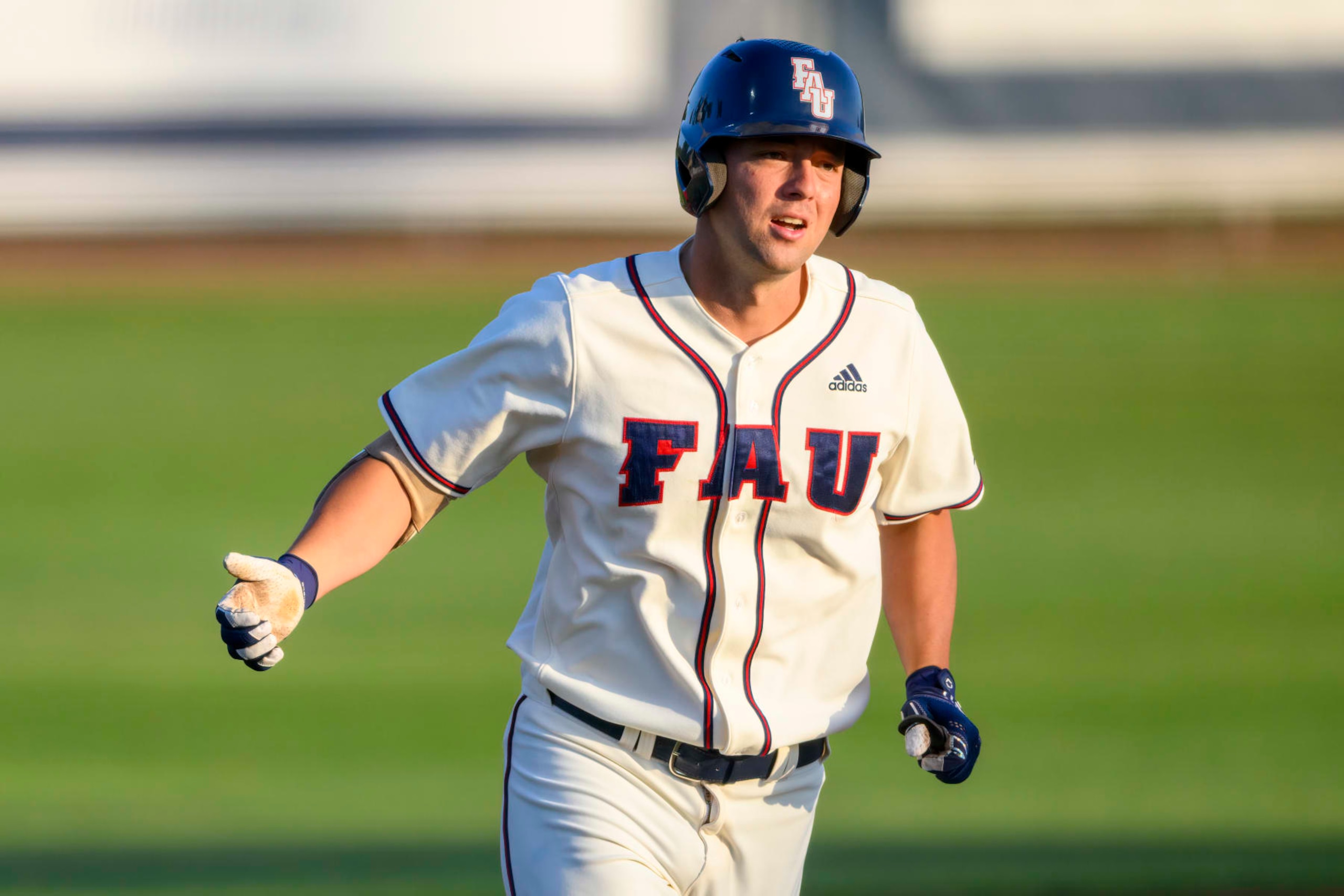
First Round (No. 11 Overall): Nolan Schanuel, 1B, Florida Atlantic
Schanuel was a man among boys this season playing in Conference USA. He hit .447/.615/.868 with 19 home runs, 64 RBI and 71 walks against just 14 strikeouts in 289 plate appearances. At 6'4", 220 pounds and with limited athleticism, he could wind up being a first base-only prospect, but he has seen some time in the outfield as well. His plate discipline and contact skills give him a slightly higher floor than most players with his profile, and even when he struggled to a .614 OPS in the Cape Cod League last summer, he still logged a strong 15.5 percent walk rate.
Grade: B-
This fits the Angels recent strategy of targeting MLB-ready talent that can move quickly through the minors. The grade would be higher with some proven production against high-level competition, and his early performance in rookie ball could be telling.
Los Angeles Dodgers
14 of 30Balance Round A (No. 36 Overall): Kendall George, OF, Atascocita High School (TX)
The fastest player in this year's high school class, George has drawn comparisons to Juan Pierre for his blazing speed, compact left-handed swing and strong bat-to-ball skills. He played center field for the U18 National Team that won the gold medal last summer, finishing second on a team loaded with draft prospects with a .364 average while swiping five bases. A lack of power and a bottom-of-the-scale arm are his biggest weaknesses, but he knows how to play to his strengths.
Grade: B+
Going with upside and tools over polish and floor makes sense for a Dodgers team without a first-round selection. George is essentially the high school version of Enrique Bradfield Jr. with a bit more upside offensively. Knowing the Dodgers, he'll be a Top 100 prospect by next summer.
Second Round (No. 60 Overall): Jake Gelof, 3B, Virginia
Gelof slugged 21 home runs and set a University of Virginia record with 81 RBI as a sophomore and then had an even better season this spring as he batted .321/.427/.710 with 23 doubles, 23 home runs and 90 RBI, becoming the school's all-time home run leader in the process. The 6'1", 195-pound third baseman rarely gets cheated at the plate, and he has some swing-and-miss to his game as a result, but he is a polished hitter with a good feel for the zone. His older brother, Zack, is a prospect in the Oakland Athletics system and ranks No. 88 on our Top 100 list.
Grade: A+
I don't know how they did it, but the Dodgers walked away with the biggest steal of Day 1 right here.
Miami Marlins
15 of 30First Round (No. 10 Overall): Noble Meyer, RHP, Jesuit High School (OR)
Meyer is the consensus top arm in an extremely thin high school pitching class. The 6'5", 185-pound right-hander is the prototypical projectable prep arm with plenty of room to add strength to his frame and the athleticism to repeat his mechanics which include a three-quarters arm slot that helps add some deception to his stuff. His arsenal includes a mid-90s fastball that has touched 98 mph and a high-spin slider that has the makings of an elite breaking pitch. Adding strength and developing his changeup as a reliable third pitch will be the focal point of his early development.
Grade: B+
The Marlins have enjoyed some great recent success developing pitchers, so this is a great landing spot for Meyer. There is a case to be made for Kyle Teel or Jacob Gonzalez given their need for bats, but Meyer could be the next in a run of impact homegrown arms.
Balance Round A (No. 35 Overall): Thomas White, LHP, Phillips Academy (MA)
With a projectable 6'5", 210-pound frame and power stuff, it's not hard to see why White is the top high school lefty in this class by a wide margin. He has been up to 97 mph with his fastball, backing it with a high-spin curveball he can regularly throw for strikes and the makings of a quality changeup. He has smooth, simple mechanics, though he can get out of sync at times which impacts his command. The pieces are there for him to be a frontline starter, but he will take some time to develop. The Vanderbilt commit could wind up being one of the tougher signs in the 2023 class.
Grade: A+
Assuming both sign, the Marlins ended up with the consensus top two high school pitchers in this draft class. Hard to argue with that at the top of your draft haul.
Second Round (No. 47 Overall): Kemp Alderman, OF, Ole Miss
Alderman was a key contributor during Ole Miss' run to a national championship in 2022, and he took another step forward offensively this year when he hit .376/.440/.709 with 19 home runs and 61 RBI in 54 games. The 6'3", 265-pound masher has made more consistent hard contact this spring, but there will always be a good amount of swing-and-miss to his game. He is a capable corner outfielder with the power to profile at first base as well, but he also saw some occasional time behind the plate and his upside would skyrocket if catching becomes a viable long-term option.
Grade: A
After leaning into what they do best by taking two high-ceiling high school arms, the Marlins close out Day 1 with one of the nation's more productive college bats. He was drafted as an outfielder, but I wonder if they'll give him a look as a catcher. Either way, he can hit.
Milwaukee Brewers
16 of 30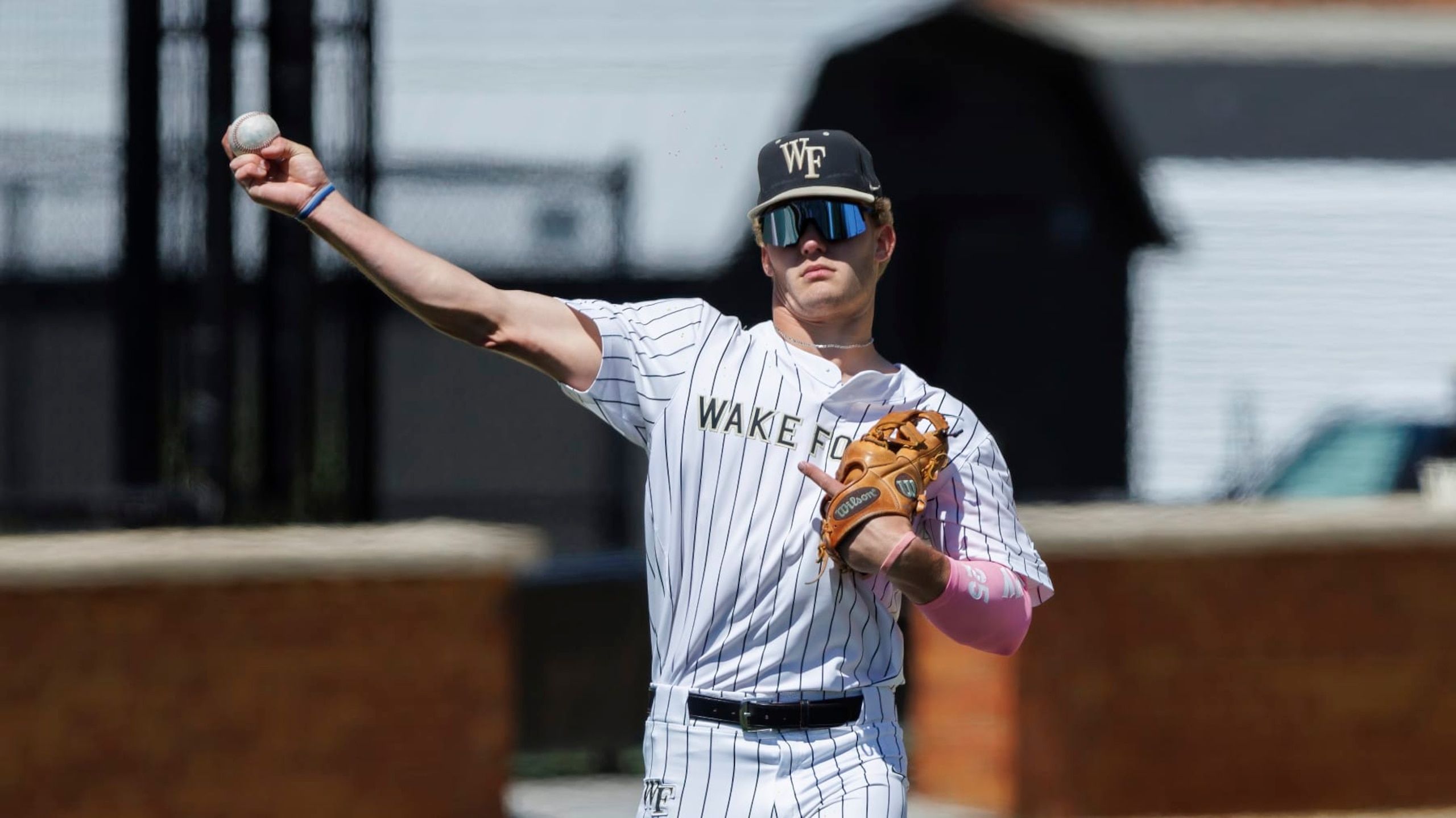
First Round (No. 18 Overall): Brock Wilken, 3B, Wake Forest
In 173 games over three years at Wake Forest—a little more than one full MLB season's worth of action—Wilken posted a 1.098 OPS with 71 home runs and 203 RBI while setting the ACC record for career home runs. The 6'4", 225-pound slugger batted .345/.506/.807 with 31 long balls this spring while also making significant strides with his walk rate (11.6 to 21.6 percent) and strikeout rate (24.2 to 18.1 percent) relative to last year. Despite his limited athleticism, he has a chance to stick at third base thanks to soft hands and a strong arm, though there is some first base-only risk here.
Grade: B
The Brewers have generally focused on up-the-middle players early in the draft, so this is a bit of a surprise. Hard to argue with Wilken's power potential, but TCU third baseman Brayden Taylor might be the better all-around prospect. Regardless, solid pick.
Balance Round A (No. 33 Overall): Josh Knoth, RHP, Patchogue-Medford High School (NY)
Knoth can spin the ball as well as anyone in the 2023 draft class. His power curveball and hard-biting slider can sometimes blur into one pitch, but he regularly registers spin rates north of 3,000 rpm and finding a bit more separation in the two offerings could give him a pair of lethal breaking pitches alongside a fastball that has ticked up to 98 mph this spring. An undersized frame and some effort in his delivery gives him some reliever risk, but the stuff is there for him to be an impact arm.
Grade: A
Don't let his spot on prospect ranking lists fool you, Knoth has one of the best arms among the prep pitchers with an extremely high floor as a two-pitch guy who could fit in a late-inning relief role. The Brewers know how to find the right role for a talented arm.
Second Round (No. 54 Overall): Mike Boeve, 3B, Nebraska-Omaha
Boeve hit .401/.512/.563 this spring while striking out just nine times in 211 plate appearances, tallying 15 doubles, four home runs and 32 RBI in 47 games. He hit .275 with a .403 on-base percentage in 127 plate appearances in the Cape Cod League last summer, which helps erase concerns about the level of competition he faced in the Summit League. With his strong 6'3", 200-pound frame, there is also reason to believe he may be able to hit for more power if he adds a bit more loft to his swing. He is average defensively at third base, with first base and left field the only alternatives.
Grade: B
There is a good chance the Brewers can get Boeve signed for below-slot, so this move might be a precursor to an above-slot grab on Day 2.
Minnesota Twins
17 of 30First Round (No. 5 Overall): Walker Jenkins, OF, South Brunswick High School (NC)
With a 6'3", 215-pound frame and a smooth left-handed swing, Jenkins looks the part of a prototypical power-hitting corner outfielder. A broken hamate kept him out of action last summer, but he played for Team USA as an underclassmen prior to his junior year and he has long been considered one of the top prep prospects of this draft cycle. With a 60-grade hit tool, he should have no problem consistently getting to his elite raw power, and he projects as a perennial 30-homer slugger who slots into the middle of an MLB lineup. He has lost a step as his frame has filled out, and right field will likely be his long-term home.
Grade: A
There were a lot of rumblings of the Twins passing on Jenkins to go with a college player. This draft had a clear top-tier of five players, and passing on any of them would have been a mistake. Good job not getting cute, Twins.
Balance Round A (No. 34 Overall): Charlee Soto, RHP, Reborn Christian Academy (FL)
Soto outgrew the shortstop position and moved to the mound during his high school career, so he is relatively new to pitching compared to some of the other top prep arms in the class. His 6'5", 210-pound frame offers significant projection, and he has eye-popping present stuff with a fastball that has bumped triple-digits, a hard slider and a splitter that serves as his changeup. There is effort in his delivery and he was inconsistent this spring, giving him some reliever risk, but his frame and power stuff offer enough upside to gamble on all the pieces falling into place. He does not turn 18 until Aug. 31.
Grade: A+
There is a very realistic scenario where Jenkins is the best hitter and Soto is the best pitcher from this year's high school class when all is said and done.
Second Round (No. 49 Overall): Luke Keaschall, 2B, Arizona State
Keaschall spent two productive seasons at the University of San Francisco before transferring to Arizona State for his draft year, sending his draft stock soaring with a newfound power stroke. After hitting just 12 home runs in 110 games during his first two college seasons, he batted .353/.443/.725 with 25 doubles, 18 home runs, 58 RBI and 18 steals in 55 games this spring. He still profiles as a contact-over-power guy at the next level, but driving the ball more consistently makes it easier to envision him as an offensive-minded second baseman.
Grade: A
After two swing-for-the-fences prep picks, the Twins close things out with a high-floor college hitter who spent all spring moving up draft boards. Even if the power surge proves unsustainable, he can still be a solid contributor in a utility role.
New York Mets
18 of 30Balance Round A (No. 32 Overall): Colin Houck, SS, Parkview High School (GA)
With a strong 6'2", 190-pound frame and a compact swing built for power, Houck boosted his stock with a strong showcase run last summer and then hit .487/.589/.981 this spring at George prep powerhouse Parkview High School. He moves well for a bigger shortstop and has a chance to stick there even as his frame fills out, though his power potential and strong arm also make him a clean fit at third base. Houck is also a 3-star quarterback recruit who threw for 2,189 yards and 24 touchdowns during his senior year.
Grade: A+
The Mets didn't have a first-round pick and they still added a top-15 talent in this draft class. They're going to need to get creative with the rest of their early picks to make the bonus money work, but they wouldn't have taken him if they didn't already have a number worked out.
Second Round (No. 56 Overall): Brandon Sproat, RHP, Florida
Sproat was a seventh-round pick out of high school and a third-round pick by the New York Mets last year, but he returned to the University of Florida and helped pitch the team to the College World Series. The 6'3", 215-pound right-hander went 8-3 with a 4.66 ERA and 134 strikeouts in 106.1 innings this spring while raising his strikeout rate from 21.5 to 28.8 percent. His command remains a work-in-progress, but with a fastball that touches triple-digits, a wipeout slider and a plus changeup, his pure stuff gives him huge upside if everything clicks.
Grade: A
Looking at the two players the Mets added on Day 1, you would never know they didn't have a first-round pick. This is also a bit of redemption for the Mets after they failed to sign him as a third-round selection last year. Clearly they like his potential.
New York Yankees
19 of 30First Round (No. 26 Overall): George Lombard Jr., SS, Gulliver Prep (FL)
Lombard started climbing draft boards last summer when he hit .365/.435/.554 over 29 games on the showcase circuit, and his rise continued as one of the top prep prospects in Florida this spring. With a 6'3", 190-pound frame he already has plus raw power with room to grow into more as he physically matures. That could eventually mean a move to third base, but for now he checks all the boxes to be a solid defender at shortstop. His father had a 16-year pro career and is currently the bench coach for the Detroit Tigers.
Grade: B+
What is the asking price for Colin Houck? The Yankees have been heavy on high school shortstops, and it looked like it could come down to Lombard Jr. and Sammy Stafura, but instead Houck was still on the board after being ranked ahead of that duo all spring. Still like this pick a lot, but Houck could have been a steal.
Oakland Athletics
20 of 30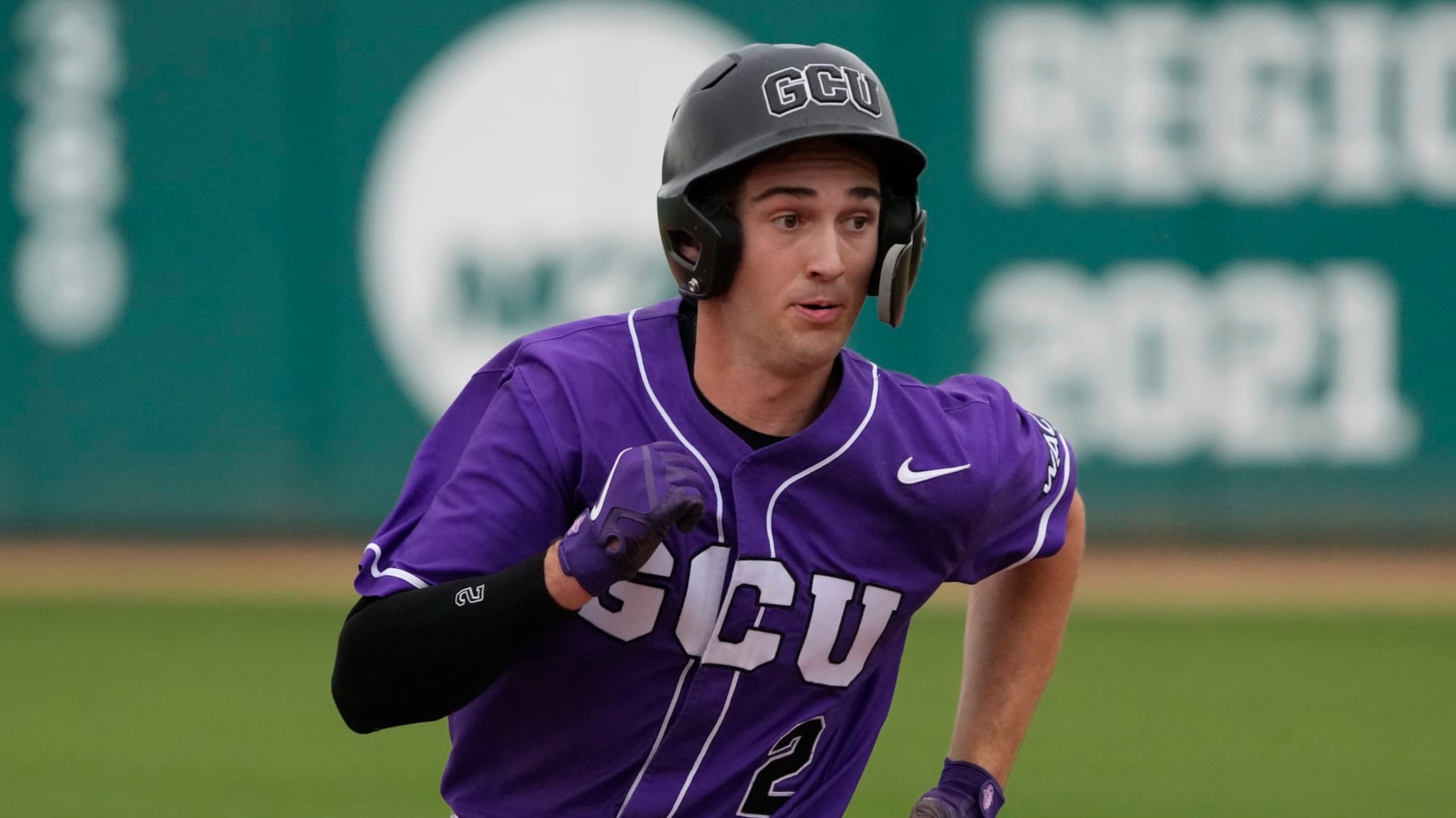
First Round (No. 6 Overall): Jacob Wilson, SS, Grand Canyon
Wilson struck out just 31 times in 697 plate appearances for a 4.4 percent strikeout rate in his three years at Grand Canyon, and he batted .412/.461/.635 while putting the ball in play 88 percent of the time this spring. The 6'3", 210-pound shortstop is the son of former All-Star Jack Wilson, and while he doesn't have the same elite defensive skills his dad did, he is a sure-handed shortstop who should be able to stay there at the next level. His hit tool is good enough to overlook a lack of power potential, and he stands out as one of the safest picks in this draft class.
Grade: A
A safe, high-floor position player who should move quickly through the minors is the perfect choice for an Athletics team that can't afford to whiff on an early pick. I wonder if they'll be able to save a little against slot here to land a high-ceiling prep guy with one of their other Day 1 picks.
Balance Round A (No. 39 Overall): Myles Naylor, 3B, St. Joan of Arc Catholic High School (Ontario)
Naylor is the younger brother of Cleveland Guardians teammates Josh and Bo Naylor, and he is Canada's top prospect in the 2023 draft class. He doesn't quite match Josh's raw power or Bo's pure hitting ability, but he has a well-rounded offensive game with present gap power, and after playing primarily shortstop in high school, he should be able to make a smooth transition to third base where his offensive upside and strong arm profile well.
Grade: B
This is a nice high-ceiling pick to pair with the high floor of Wilson, and it's tough to argue with the bloodlines. What are the chances he eventually finds his way to Cleveland?
Second Round (No. 41 Overall): Ryan Lasko, OF, Rutgers
Lasko posted a 1.075 OPS with 24 doubles and 16 home runs during his sophomore season at Rutgers in 2022, and he put up big numbers again this spring when he batted .330/.428/.582 with 11 home runs, 18 steals and more walks (37) than strikeouts (34). However, he hit just .239 with a .600 OPS and zero home runs in 131 plate appearances in the Cape Cod League last summer, raising questions about his ability to handle wood bats and elite competition. There may be offensive question marks, but he is one of the best defensive center fielders in the 2023 class, giving him a high ceiling as a fourth outfielder.
Grade: C
The defensive profile gives him a high floor, but the A's are a team that should be targeting high-ceiling talent.
Philadelphia Phillies
21 of 30First Round (No. 27 Overall): Aidan Miller, 3B, Mitchell High School (FL)
Miller has been a staple on the showcase circuit for years, and he led the U-18 Team USA squad with a .478 average last summer. The 6'2", 210-pound third baseman has 60-grade power and the pure hitting ability to fully tap into his over-the-fence pop, giving him as much offensive upside as any player in this year's high school class. He missed most of his senior season at Mitchell High School with a broken hamate, and he is already 19 years old with limited physical projection, but his bat is the real deal.
Grade: A+
This could end up being the best high school power hitter in this draft class outside of Walker Jenkins, and he might have been a top-10 guy without the injury this spring. Tremendous value. He could immediately push Justin Crawford for the title of top position-player prospect in the Philadelphia system.
Pittsburgh Pirates
22 of 30
First Round (No. 1 Overall): Paul Skenes, RHP, LSU
Skenes is the best collegiate pitching prospect since Stephen Strasburg was the No. 1 overall pick in the 2009 draft out of San Diego State. The 6'6", 235-pound right-hander was up to 102 mph with his fastball this spring and he carried that velocity deep into starts while backing his heater with a lethal 70-grade slider that routinely made hitters look foolish. He finished 12-2 with a 1.69 ERA, 0.75 WHIP and 209 strikeouts in 122.2 innings this spring, becoming the first college pitcher since Trevor Bauer in 2011 with 200 strikeouts in a season. He allowed just four earned runs with 42 strikeouts in 32.1 innings over his final four starts, and while his cringe-worthy pitch counts raised some eyebrows, it won't impact his draft stock.
Grade: A+
For all the hype surrounding Dylan Crews this spring and all the talk of a potential below-slot deal with Wyatt Langford, it ends up being Skenes. I think it's the right pick. If the Pirates want a bona fide ace, they're going to have to draft and develop one in-house, and he is a generational talent.
Second Round (No. 42 Overall): Mitch Jebb, SS, Michigan State
Jebb was one of the best hitters in the Cape Cod League last summer, hitting .356/.429/.490 with 13 extra-base hits and 26 steals in 38 games. The 6'1", 185-pound middle infielder has an advanced hit tool, though it comes out of an unorthodox stance and a line-drive approach, and he batted .337/.438/.495 with 23 extra-base hits this spring while showing some sneaky gap power that could eventually translate to double-digit home run power. He might ultimately profile best as an offensive-minded utility player with experience playing second base, shortstop and third base.
Grade: B-
Would have been nice to see someone like Sammy Stafura here. Jebb has a high floor and should be able to contribute soon, but his ceiling is somewhat limited.
Balance Round B (No. 67 Overall): Zander Mueth, RHP, Belleville East High School (IL)
With a 6'6", 205-pound frame and a deceptive low three-quarters arm slot, Mueth has drawn comparisons to Boston Red Sox right-hander Tanner Houck. His delivery gives him good run and sink on his fastball, and he backs it up with a sweeping slider and one of the better changeups from the high school ranks. He needs to find more consistency in his delivery, which can impact his command at times, but he has been viewed as one of the better prep arms in this draft since he was an underclassman.
Grade: A
The Jebb pick makes a lot more sense now. Mueth was one of the best prep arms still on the board, and the Pirates have had success in the Illinois high school ranks before with Quinn Priester. Great upside play.
San Diego Padres
23 of 30First Round (No. 25 Overall): Dillon Head, OF, Homewood-Flossmoor High School (IL)
Head uses an all-fields approach and a contact-oriented swing to make the most of his 80-grade speed and elite athleticism. He took a step forward offensively this spring, showing a more compact swing while driving the ball more consistently, and that has given him some late helium in the weeks leading up to the draft. The 6'0", 185-pound center fielder does have some pull-side power, though his offensive game deteriorates when he gets too pull-happy. If everything clicks, he could be a 15-homer, 30-steal offensive player and an everyday center fielder.
Grade: B+
The Padres love players with a full toolbox, and Head fits the mold. This helps ease the loss of James Wood and Robert Hassell III in last summer's Juan Soto blockbuster, and he immediately becomes the future center fielder in San Diego.
San Francisco Giants
24 of 30First Round (No. 16 Overall): Bryce Eldridge, 1B/RHP, Madison High School (VA)
Eldridge is the best two-way prospect in this year's draft with first-round upside on the mound thanks to a mid-90s fastball, terrific slider and smooth, repeatable mechanics from an athletic 6'7", 233-pound frame. However, he has even more upside in the batter's box thanks to his tremendous raw power and good overall feel for hitting, though there is some swing-and-miss to iron out. He profiles best at first base defensively, but he's athletic enough to perhaps get a shot in right field where his arm would be an obvious weapon.
Grade: A
Reggie Crawford in the first round last year and Eldridge at No. 16 overall this year. The Giants are trying to find their Shohei Ohtani! Whether he sticks as a two-way player or picks a lane, he is one of the most talented prospects in this class.
Second Round (No. 52 Overall): Walker Martin, SS, Eaton High School (CO)
Martin hit .638 and led the nation with 20 home runs for Eaton High School this spring, and after splitting his time between baseball and football in years past he has taken off since impressing against top-tier competition on the showcase circuit last summer. His 6'2", 188-pound frame offers significant physical projection, and he already has solid raw power with a clean left-handed swing and great bat-to-ball skills. He has the athleticism to play shortstop, but he will almost certainly outgrow the position with so much room to add muscle.
Grade: A+
Martin to the Giants with their second pick was one of the most frequent predraft rumors, so props to them for getting their guy. Many have viewed him as a potential first-round talent who will outplay his draft position.
Compensation Round (No. 69 Overall): Joe Whitman, LHP, Kent State
Whitman spent the first two seasons of his college career at Purdue where he allowed 11 hits and eight earned runs in 5.2 innings before transferring to Kent State and exploding onto the 2023 draft scene with a stellar junior year. The 6'5", 200-pound lefty cleaned up his mechanics and opened some eyes in summer ball last year before going 9-2 with a 2.56 ERA, 1.14 WHIP and 100 strikeouts in 81 innings this spring to stake claim to the title of top left-hander in the 2023 college class. He works in the mid-90s with his fastball and backs it with one of the best sliders in the draft class.
Grade: A+
Finally! Whitman got a ton of first-round buzz leading up to the draft as the best college left-hander in this class, and after taking a huge step forward this spring he looks like a safe bet to stick as a starter. One of the best value picks of the day.
Seattle Mariners
25 of 30First Round (No. 22 Overall): Colt Emerson, SS, Glenn High School (OH)
One of the younger players in this draft class, Emerson does not turn 18 years old until July 20. He was the starting third baseman on the U18 National Team last summer and hit .360/.515/.520 for a squad that won the gold medal. The 6'1", 195-pound infielder has one of the best hit tools among this year's high school class, with an all-fields approach and the potential to develop into at least a 20-homer threat at the next level. He was also an All-State wide receiver in football during his junior year and that athleticism translates to the baseball field.
Grade: A
There was a lot of talk of the Mariners taking a college player with the No. 22 pick and swinging for the fences with prep talent at No. 29 and No. 30 overall, but after an early run on college hitters they wisely turned their attention to the high school class. Nice move to replace some of the middle infield talent they parted with last summer.
Prospect Incentive Pick (No. 29 Overall): Jonny Farmelo, OF, Westfield High School (VA)
A line-drive hitter with plus speed, Farmelo is one of the best athletes in the 2023 class. He doesn't show a ton of present power, but he has the bat speed, swing path and strong 6'2", 205-pound frame to eventually develop into a solid power hitter. He played some shortstop in high school, but center field is his future home defensively, and his wheels serve him well in the outfield where he has great range and instincts. A strong commitment to the University of Virginia by the in-state product is expected to make him one of the tougher players to sign in this class.
Grade: A
One of the highest ceilings among the remaining high school bats is a great selection for the Mariners with their second pick. He could quickly join Harry Ford and Cole Young as top-tier bats in their system.
Balance Round A (No. 30 Overall): Tai Peete, SS, Trinity Christian School (GA)
Peete was one of the standouts at this year's MLB Draft Combine, showcasing elite bat speed and plus raw power from the left side of the plate. He has a pull-heavy approach and needs to prove he can consistently square up elite-level pitching, but the raw tools are tantalizing. The 6'2", 193-pound shortstop was also an intriguing pitching prospect with a mid-90s fastball and the makings of a terrific changeup, but he suffered an arm injury last summer and didn't pitch at all this spring. He is one of the more significant boom-or-bust prospects in the 2023 class.
Grade: B-
Not going with at least one pitcher or at least one college player is a bold approach to these three picks by the Mariners. Peete had late helium, but this still might be a bit of a reach given his wide range of potential outcomes.
Second Round (No. 57 Overall): Ben Williamson, 3B, William & Mary
Williamson took a massive step forward in his senior year at William & Mary, hitting .391/.513/.662 with 11 doubles, 12 home runs, 49 RBI and more walks (40) than strikeouts (22) while raising his OPS more than 300 points relative to his junior year. The 6'0", 180-pound infielder is also a strong defensive third baseman, and he stands out as one of the best seniors in this draft class. The 22-year-old should be able to jump over rookie ball.
Grade: C
The Mariners were almost certainly going to have to take a senior sign with this pick in order to make the bonus money work on their first three selections, and Williamson fits the bill.
St. Louis Cardinals
26 of 30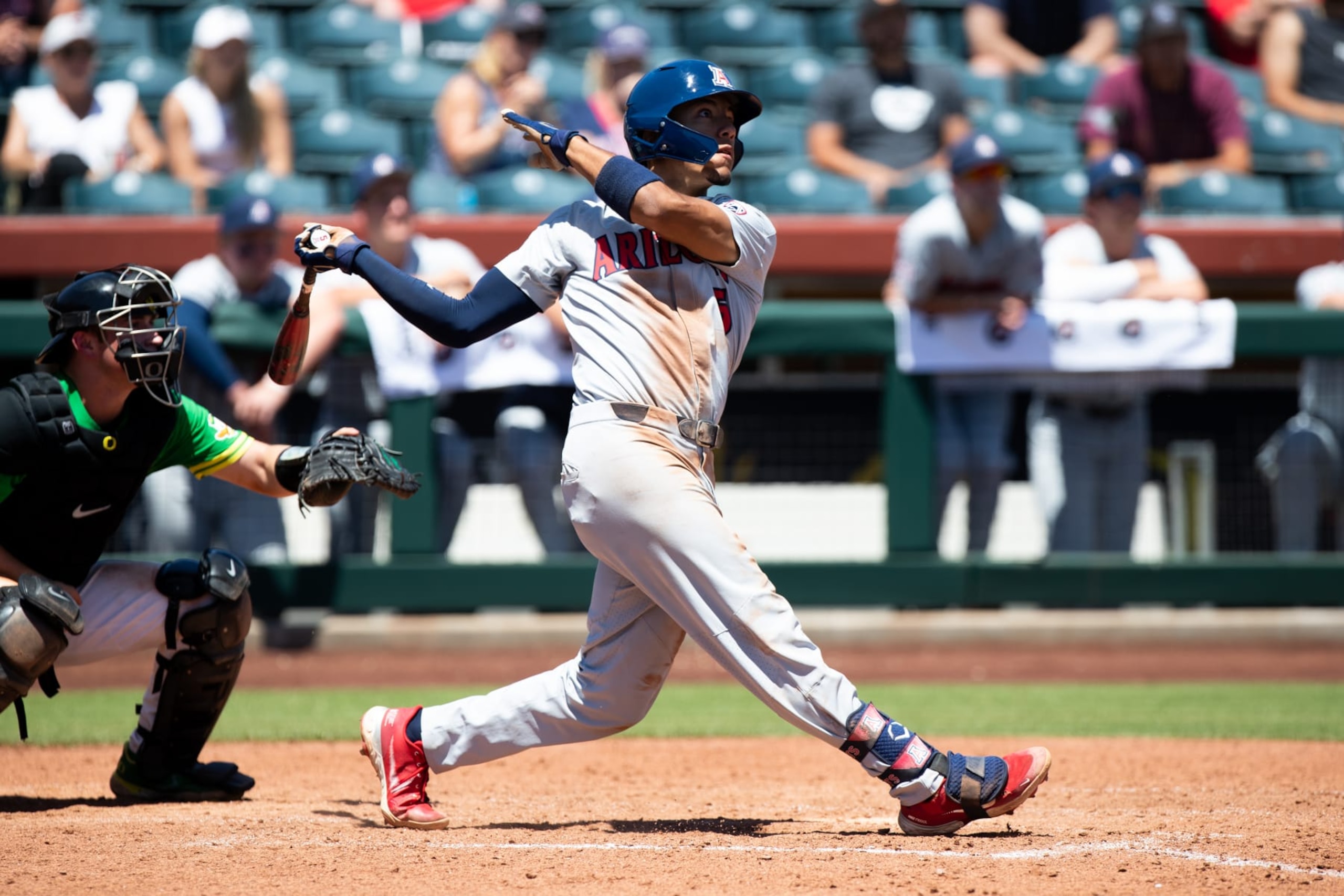
First Round (No. 21 Overall): Chase Davis, OF, Arizona
One of the top high school prospects from the 2020 draft to make it to campus, Davis played sparingly as a freshman while working to run his raw tools into on-field performance. He broke through as a sophomore, posting a .997 OPS with 18 home runs, and he took another major step forward this spring to emerge as one of the top college outfielders in the country. The 6'1", 216-pound junior hit .362/.489/.742 with 21 home runs and 74 RBI in 57 games while trimming his strikeout rate from 22.8 to 14.4 percent. He has played primarily left field at Arizona, but has the athleticism to get a look in center field and the strong arm to fit in right field.
Grade: B+
It's a bit surprising to see the Cardinals leave prep slugger Aidan Miller on the board, as he fits the type of player they have targeted with great success in recent years. That said, Davis was trending up all spring and this could be another steal for the Cardinals at the back of the first round.
Tampa Bay Rays
27 of 30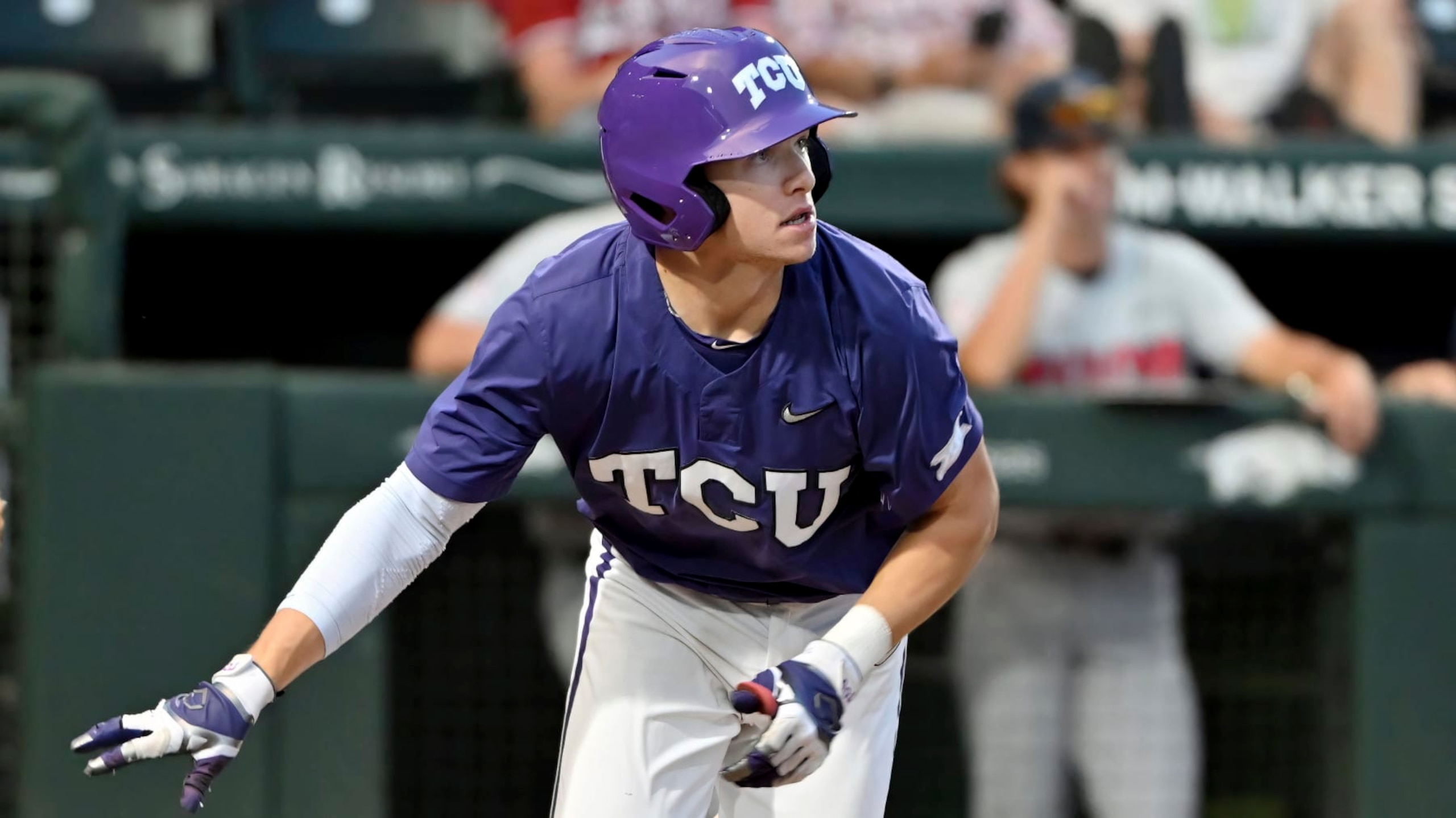
First Round (No. 19 Overall): Brayden Taylor, SS, TCU
One of college baseball's most productive hitters throughout his time on campus, Taylor hit .315/.442/.595 with more walks (158) than strikeouts (146) in three seasons at TCU. The 6'1", 180-pound infielder set the single-season TCU record with 23 home runs this spring while leading the Horned Frogs to the College World Series, and he finished strong with a .386 average over his final 14 games. His mix of power, on-base ability and overall polish should make him one of the first players from this class to reach the majors. Third base is probably his long-term home.
Grade: A+
Considering his name came up as a potential candidate to go as high as No. 6 overall, this is terrific value for the Rays. Now we wait and see who they target at No. 31 overall, because it wouldn't be a Rays draft without an outside-the-box move of some sort.
Balance Round A (No. 31 Overall): Adrian Santana, SS, Doral Academy (FL)
Santana is a standout athlete with top-of-the-scale speed and the quick-twitch athleticism to be a no-doubt shortstop at the next level. The question is how much of an impact he is going to make in the batter's box. His wiry 5'11", 155-pound frame does not offer a ton of present power potential, and while he did slug 11 home runs this spring, the switch-hitter is more of a line-drive hitter who could grow into some gap power at the next level. His value is in his sure-fire defensive profile, speed and the upside that his remaining physical projection presents offensively.
Grade: B
Santana was tied to the Rays throughout the spring, and they got their guy without having to pull the trigger in the first round. Will he hit enough to be an everyday guy?
Second Round (No. 55 Overall): Colton Ledbetter, OF, Mississippi State
After a terrific 2022 season at Samford University, Ledbetter transferred to Mississippi State and continued to rake against a higher level of competition this spring, hitting .320/.452/.574 with 12 doubles, 12 home runs, 52 RBI and 17 steals in 53 games. He has a simple, compact left-handed swing and an advanced approach at the plate, though he doesn't consistently elevate the ball to maximize his power. He has a chance to play center field at the next level, though an average arm will limit him to left field if he does need to move to a corner.
Grade: A
Ledbetter is a plug-and-play guy who should move swiftly through the minor league ranks, and a nice complement to the riskier selection of Santana with the previous pick. Nothing too wacky from the Rays this year, but there's still time on Day 2.
Texas Rangers
28 of 30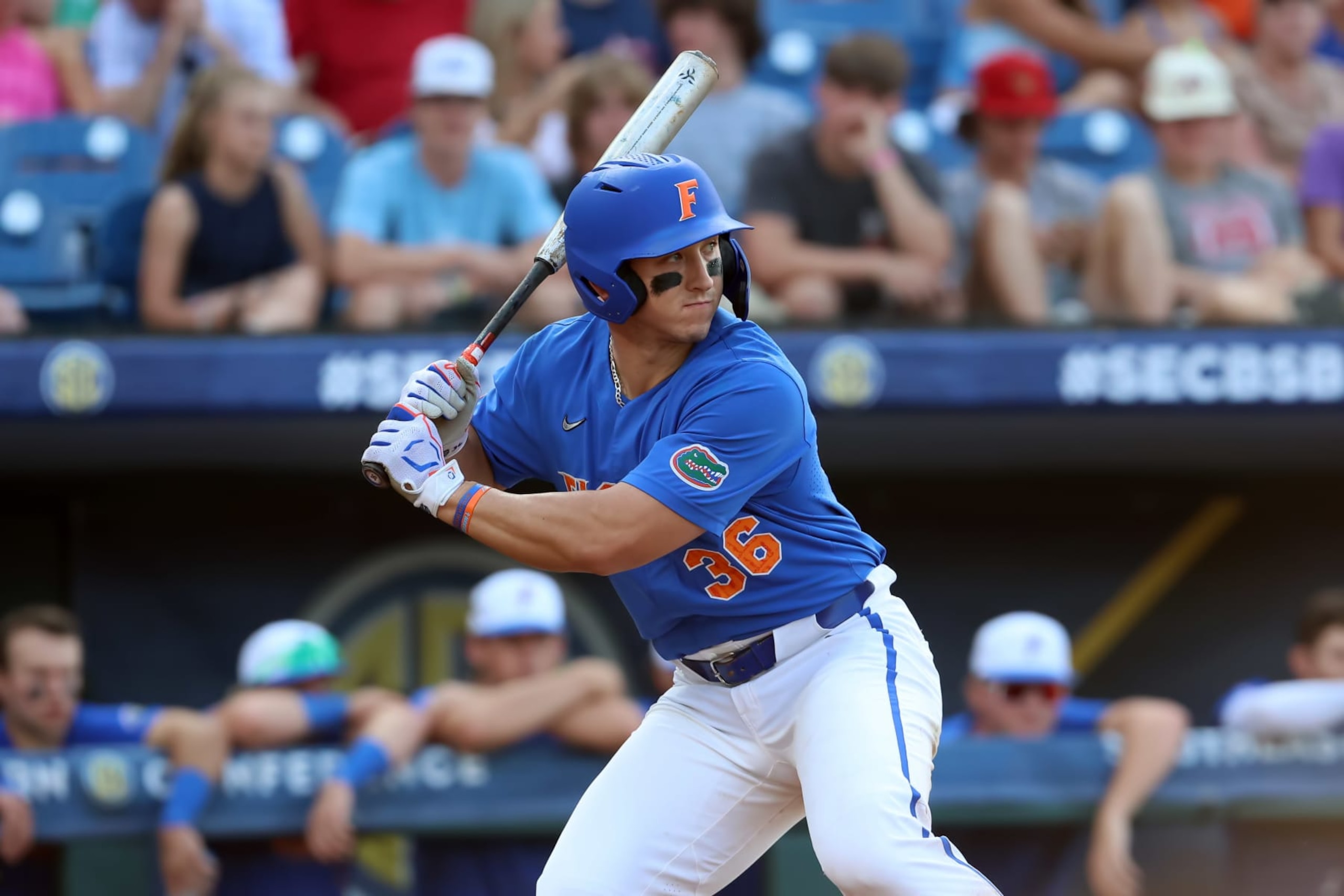
First Round (No. 4 Overall): Wyatt Langford, OF, Florida
Langford has come a long way since he tallied just four at-bats as a true freshman in 2021. The 6'1", 225-pound outfielder was one of the breakout stars of the 2022 collegiate season when he posted a 1.166 OPS with 26 home runs, and he solidified his standing as an elite offensive prospect this spring when he hit .373/.498/.784 with 28 doubles, 21 home runs and more walks (56) than strikeouts (44) in 64 games. He has the advanced approach, raw power and bat-to-ball skills to be a middle-of-the-order slugger and a .300 hitter at the next level, and while he has played left field at Florida, he is also athletic enough to get a look in center field as a pro.
Grade: A
The Rangers contention window has swung wide open this year, and landing the more MLB-ready Langford over Max Clark or Walker Jenkins should benefit their push for a title sooner rather than later.
Toronto Blue Jays
29 of 30First Round (No. 20 Overall): Arjun Nimmala, SS, Strawberry Crest High School (FL)
Nimmala has the loudest offensive tools among this year's deep high school shortstop class, though his aggressive approach and unrefined pitch selection lead to more strikeouts than usual for an elite-level prep prospect. He has the arm, range and quick-twitch athleticism to stick at shortstop, and he has drawn some comparisons to Alfonso Soriano for his offensive upside.
Grade: A
The Blue Jays ended up with their pick of a deep high school shortstop class, and they swung for the fences with the highest ceiling from that demographic. With Bo Bichette locked in at shortstop, they can give him time to build toward a legitimate superstar ceiling, though there is definitely some risk here.
Washington Nationals
30 of 30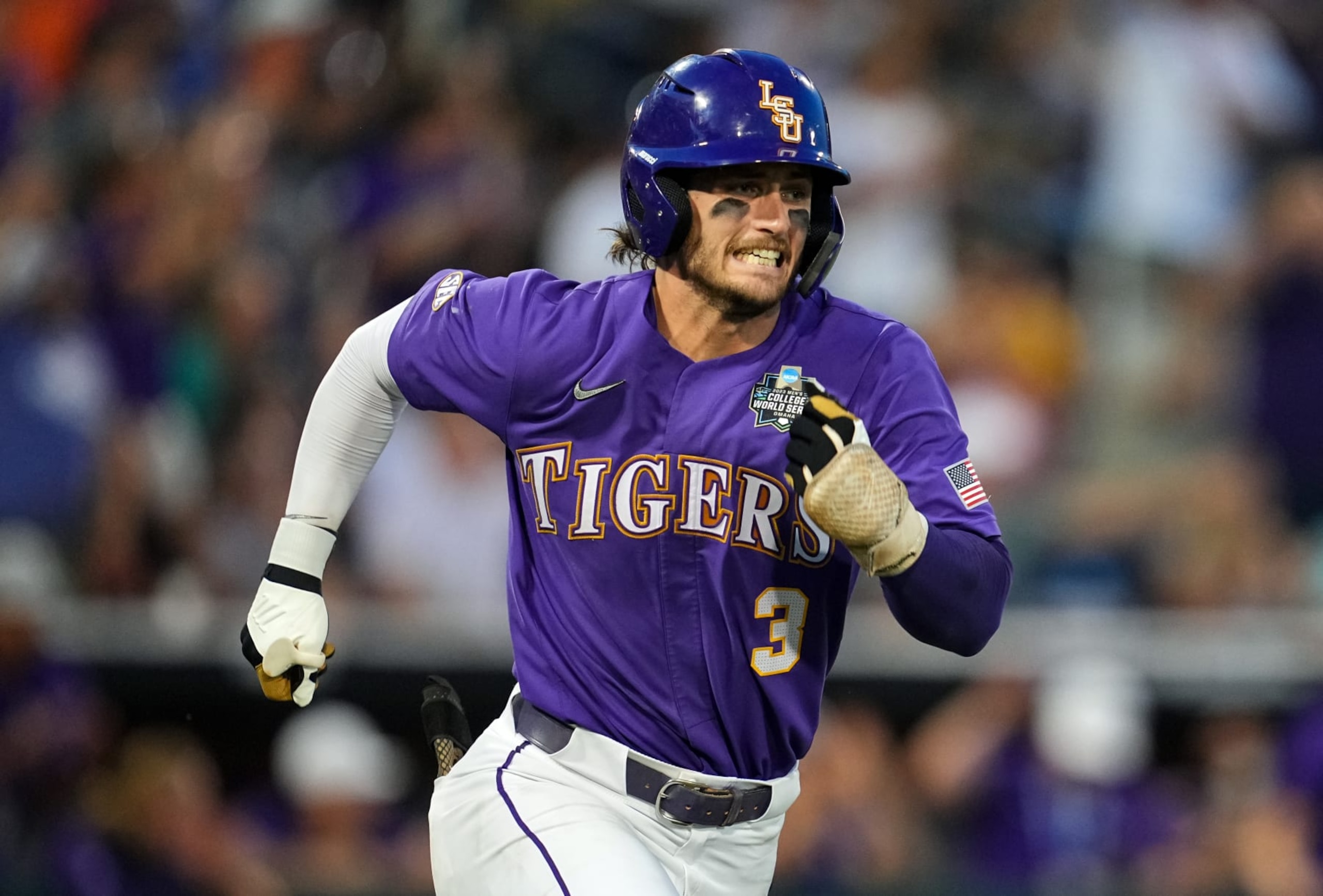
First Round (No. 2 Overall): Dylan Crews, OF, LSU
Crews was a candidate to go late in the first round of the 2020 draft before he withdrew his name from consideration to honor his commitment to LSU. That proved to be the right decision as he established himself as an elite prospect during his three years on campus, culminating with a brilliant junior campaign where he led the Tigers to a national title and took home 2023 Golden Spikes honors. With a 70-hit, 60-power offensive profile, he batted .426/.567/.713 with 18 home runs, 70 RBI and more walks (71) than strikeouts (46) this spring, and he also has the speed and athleticism to provide value on the bases and in the outfield where he should stick in center field.
Grade: A+
The talk in the days leading up to the draft was that the Nationals only had two players on their board—Skenes and Crews. They might have preferred that it be Skenes who was still on the board when they were on the clock, but it's tough to argue with landing a potential franchise center fielder.
Second Round (No. 40 Overall): Yohandy Morales, 3B, Miami
A strong commitment to Miami kept Morales from being selected in the abridged 2020 draft, and he has steadily improved during his three seasons in the middle of the Hurricanes lineup. The 6'4", 225-pound slugger posted a 1.061 OPS with 18 home runs as a sophomore before starring for Team USA last summer, and he improved on those numbers by batting .408/.475/.713 with 20 home runs and 70 RBI this spring. He has a bit more swing-and-miss than some of the other top college hitters in this class, but he fits the prototypical power-hitting third baseman mold.
Grade: A+
Great day to be a Nationals fan! Morales was getting some buzz as high as No. 15 to the Chicago White Sox, and no one expected him to still be on the board at the start of the second round.
.jpg?w=2560)
.jpg?w=2560 "Commanders May Change Logo 👀")

.jpg?w=2560 "Most Tradeable Players on Every Team")
.jpg?w=2560 "Seahawks Have No Plans to Move")