

Every year the NHL offseason is full of trades and free agent signings that bring hope, excitement and anticipation.
Sometimes those moves t work out and they can propel a team to a deep playoff run, or perhaps even a championship.
Sometimes they don't and teams are left trying to undo them and pick up the pieces.
But getting a mulligan on those mistakes is not always possible and team can be stuck with the mistake.
This article looks at those moves, as we go back to the summer of 2022 and look at one move from every NHL team that they would probably like to have a do-over on.
It can be a trade that did not work out, a contract that suddenly looks like an albatross, a move that was not made, or even a coaching or front office move.
Let's get into it.
Atlantic Division
1 of 4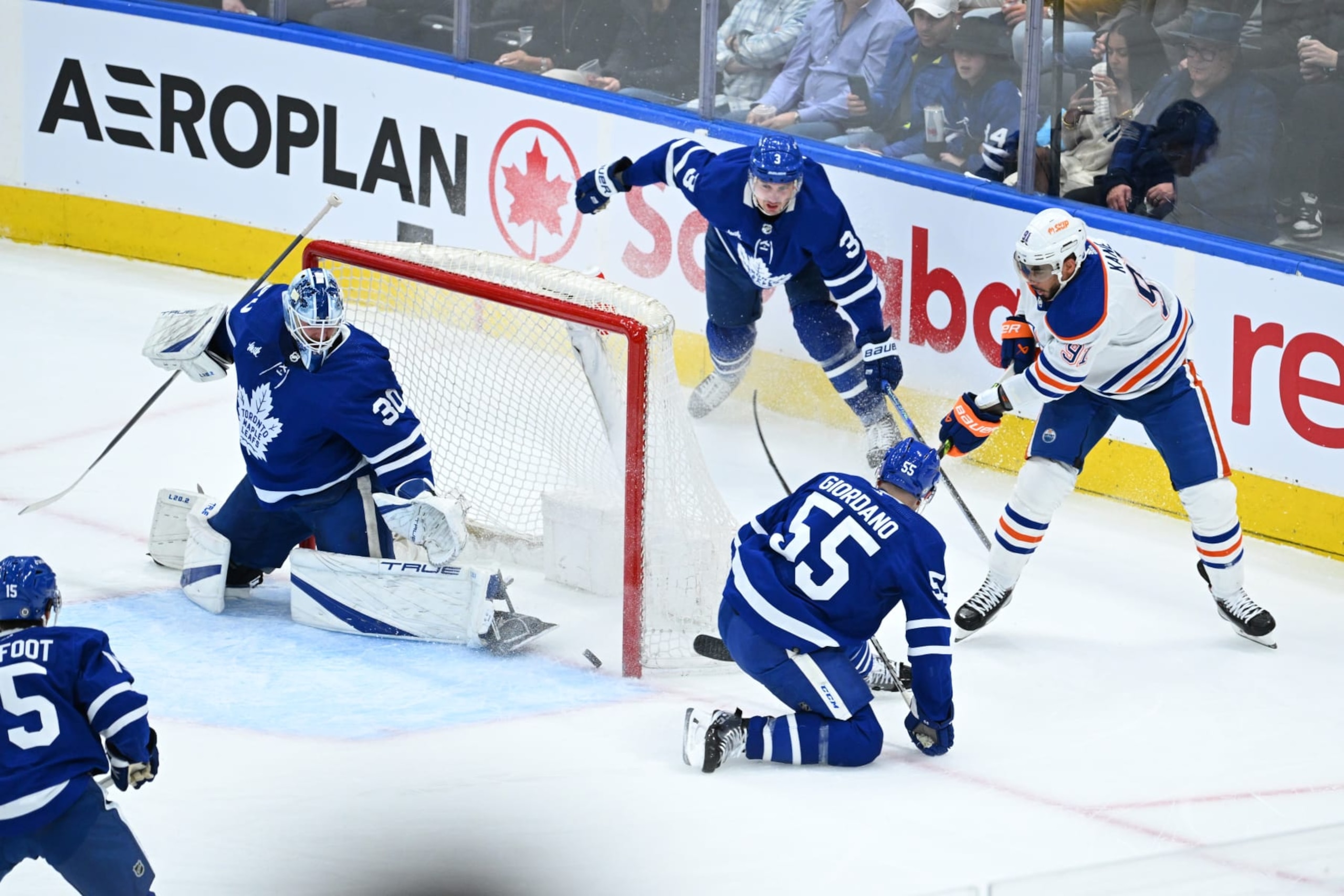
Boston Bruins
Firing Bruce Cassidy
This is definitely done with the benefit of 20/20 hindsight. It might even be a reach because the Bruins did go on to a 65-win season that set an NHL record under first-year coach Jim Montgomery. But then they lost in the First Round of the playoffs and blew a 3-1 series lead to a No. 8 seed, all while their former coach -- Bruce Cassidy -- has the Vegas Golden Knights in the Western Conference Finals.
The Bruins made a lot of strong moves this offseason to put together a great roster, but the playoffs results are what they are.
Buffalo Sabres
Not doing more for goaltending
The Sabres are rapidly building a potential powerhouse in the Eastern Conference and had one of the best offenses in the league this season. They also have the makings of a fierce defense with Rasmus Dahlin, Owen Power and Mattias Samuelsson. The one weakness was in goal where they simply did not get enough from Craig Anderson and Ukko-Pekka Luukkonen. There were a lot of goalies that changed teams this past offseason that could have helped, but the Sabres stuck with a duo that simply was not good enough. In a year where they missed the playoffs by a single point, it was costly.
Detroit Red Wings
Ben Chiarot signing
The Red Wings were one of the most active teams this past offseason, acquiring Ville Husso, David Perron, Dominik Kubalik, Andrew Copp and Olli Maatta among other veterans. Many of them produced solid results, but Ben Chiarot was one of the exceptions and it never seemed like a great move from the start. Chiarot was an anchor on every defense pairing -- his expected goals for this season was 45 percent, according to Natural Stat Trick -- he was a part of, including with reining Calder Trophy winner Moritz Seider. The Red Wings signed Chiarot to a four-year deal worth over $19 million and it is already looking like a poor use of salary-cap resources.
Florida Panthers
Signing Marc Staal
Given the way the Panthers season has turned out it is really difficult to find fault in much of what they have done. Even though things looked a little bleak at times in the first half, they are three wins away from the Stanley Cup Final and still boast one of the NHL's best offensive teams. They also did not have a terribly busy offseason in terms of adding players. The one move that they maybe could have done without was the signing of Marc Staal on defense, simply because he just does not seem to have much left in the tank and was one of the team's least effective defenseman during the regular season.
Montreal Canadiens
Drafting Juraj Slafkovsky No. 1 overall
When you have the No. 1 overall pick as part of a rebuild, you want to make sure you hit a home run. While the jury is still very much out on Slafkovsky, it never seemed like the best pick at the time. He was limited to just 39 games in the NHL as a rookie and he went through the expected growing pains. It will be fascinating to see how his career develops compared to forwards Logan Cooley and Shane Wright that went a couple of spots later. Wright entered the draft as the projected to pick, but slid all the way down to the No. 4 overall pick.
Ottawa Senators
The Cam Talbot trade
This might have been one of the worst moves of the offseason given the way everything went for both teams involved. The Senators traded goalie Filip Gustavsson to Minnesota for Cam Talbot in an effort to solidify their goaltending situation. Talbot did not come close to doing that and had one of his worst seasons as a starter, recording an awful .898 save percentage this season. Meanwhile, Gustavsson went to Minnesota, won the starting job from Marc-Andre Fleury and had one of the most productive seasons in the league among goalies. His.931 save percentage ranked second amongst NHL goalies this season as did his 2.10 goals against average. He looks like a long-term answer for the Wild while the Senators are still searching for theirs,
Tampa Bay Lightning
Erik Černák's contract extension
The Lightning has made a habit out of signing players they want to keep to long-term extensions a year before they have to. They hit a trio of players last offseason, re-signing Cernak, Anthony Cirelli and Mikhail Sergachev to matching eight-year deals.
Cirelli and Sergachev should be fine as they are key components of the Lightning's roster and still have big-time upside.
The Černák deal, though, was a little more eye-opening. He provides no major offense, and while he is a solid defensive presence he is not really an impactful player in any major role. He is a good player, but you do not need to sign a middle-pairing defenseman to a $5.2 million-a-year deal until 2031. There are better uses for that salary cap space.
Toronto Maple Leafs
The Matt Murray trade
Toronto completely overhauled its goalie situation this offseason by acquiring Ilya Samsonov and Matt Murray. It was a huge risk given how much both goalies had struggled over the previous two years and how important that position could be for Toronto's Stanley Cup chances.
While Samsonov ended up having a strong year, Murray struggled again with his play and injuries, and when he was healthy in the playoffs was demoted to being the team's third goalie option.
They did not give up much in the way of assets to get him, but they are on the hook for over $4 million against the cap again next season.
Metropolitan Division
2 of 4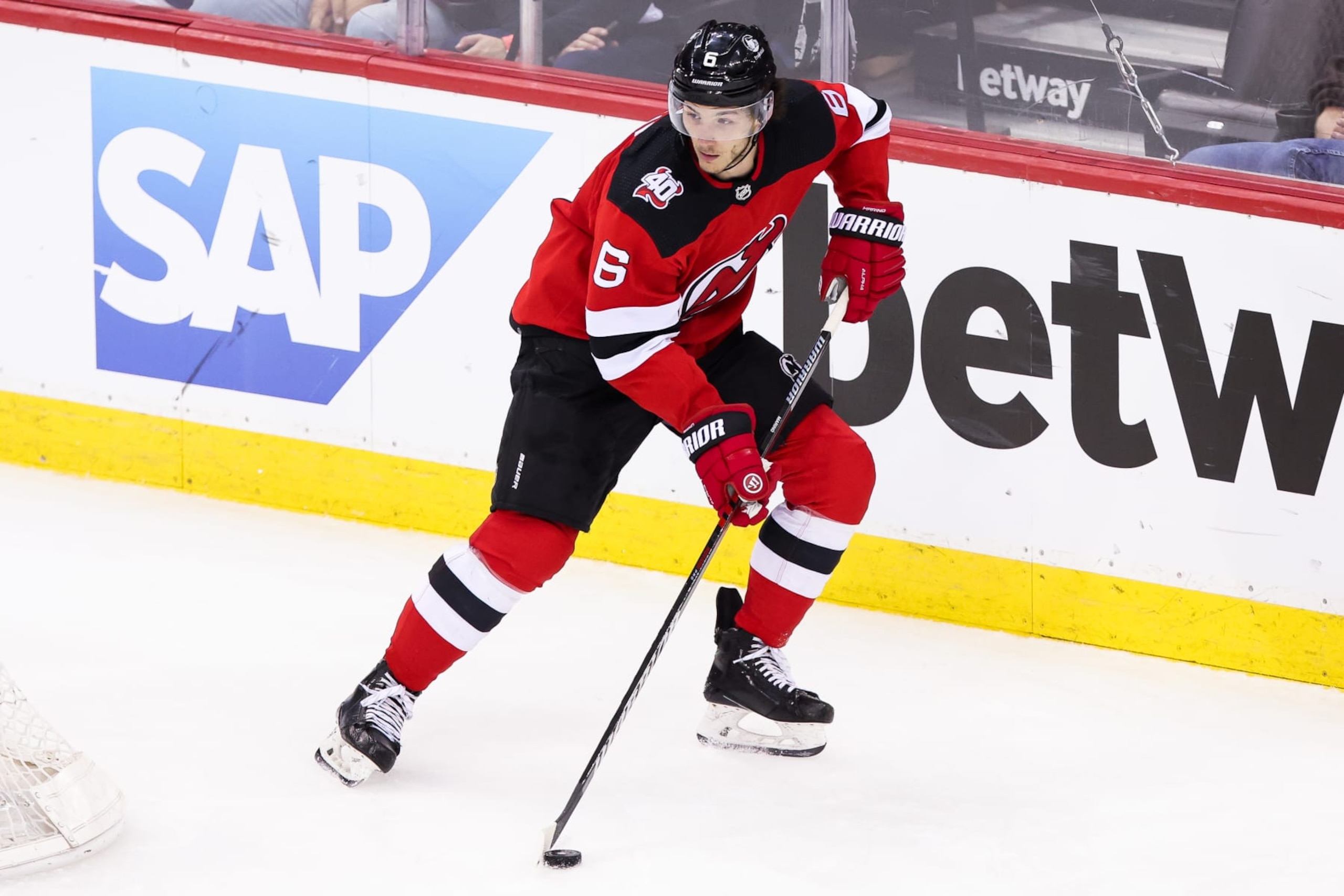
Carolina Hurricanes
Letting Nino Niederreiter go
This is largely hindsight, and it is not exactly hurting the Hurricanes as they play in the Eastern Conference Final, but they could have really used Niederreiter's two-way play and goal-scoring ability this season.
Letting him go didn't seem like a terrible idea at the time because they were able to acquire Max Pacioretty for nothing in a salary cap dump trade with the Vegas Golden Knights. But when the Hurricanes lost Pacioretty for almost the entire season, then watched Andrei Svechnikov and Teuvo Teravainen go down with injuries later in the year they could have certainly used Niederreiter back in their lineup. His reasonable $4 million salary-cap hit would have made those injuries easier to brunt.
Columbus Blue Jackets
Erik Gudbranson signing
The Blue Jackets made the most shocking move of the offseason when they landed Johnny Gaudreau in free agency. While he did not duplicate his numbers from the 2021-22 season, he was still very productive.
The costly offseason move was the four-year, $16 million deal for Gubranson.
Not only did it add a bad contract to the Blue Jackets' blue line, not to mention a defenseman that struggled in all aspects, but it also forced the team into a salary cap bind that forced them to trade Oliver Bjorkstrand to the Seattle Kraken for nothing but draft picks.
New Jersey Devils
Not doing more for goaltending
The Devils were one of the biggest surprises in the NHL this season as all of their young talent came together to form one of the most exciting teams in the league.
The big wild card was going to be whether or not the goaltending duo of Vitek Vanecek (acquired from Washington) and MacKenzie Blackwood would be good enough in goal. It seemed like an underwhelming situation at the start, and it ended up playing out that way in the playoffs.
Blackwood had a third-consecutive awful year with an .893 save percentage, while Vanecek ended up getting benched in the playoffs for Akira Schmid. A better investment in that position could have given them a much better chance against Carolina in the Second Round.
New York Islanders
Missing out on every big-time scorer that was available
The New York Islanders needed another impact player offensively. Everybody knew this. And they did nothing to address it during the offseason.
Johnny Gaudreau signing? Lost out. Alex DeBrincat or J.T. Miller trade? Did not get them. Any other free agent or trade that could have made a difference? Sat out on the sidelines.
To the surprise of no one, the offense remained an issue for the Islanders into the season when they finally completed a deal for Bo Horvat and signed him to a long-term contract extension. Is Horvat going to be a better player than some of the talent they missed out on during the offseason? For that price ($68 million over eight years deep into his 30s) he better be.
New York Rangers
The Vincent Trocheck signing
The Rangers wanted to upgrade their second-line center spot and waived goodbye to Andrew Copp and Ryan Strome in free agency.
They replaced him by signing Trocheck to a seven-year, $39 million contract in free agency.
Trocheck was mostly fine. But when you are signing a 29-year-old free agent to a seven-year deal, when you already have a salary-cap crunch to deal with, you probably want more than "mostly fine".
His regular-season performance was followed by a total flop in the playoffs with just a single goal in the Rangers' seven-game series loss to the Devils. Long-term contracts for non-stars in free agency tend to be a losing proposition for teams as they have a tendency to end in buyouts or trades within a couple of years. Trocheck might end up following that path.
Philadelphia Flyers
The Tony DeAngelo trade
Nothing about this move ever made sense. Just follow the sequence of events here.
Prior to the 2021-22 season, the Flyers traded multiple draft picks to the Arizona Coyotes to convince them to take on the remainder of Shayne Gostisbehere's contract because the Flyers didn't feel he was worth it.
A year later they traded more draft picks to the Hurricanes to acquire DeAngelo and sign him to a two-year contract worth $5 million per season.
That sequence cost them a total of five draft picks only to have them end up with an inferior player with a more expensive contract that goes further into the future. DeAngelo ended up being a healthy scratch toward the end of the season.
Had they simply kept Gostisbehere they would have held on to five draft picks, had an extra $5 million in salary cap space this offseason, and been able to trade Gostisbehere for an additional pick at this year's trade deadline (as Arizona did). It's just a comedy of errors here.
Pittsburgh Penguins
The John Marino trade
Ron Hextall made an extensive list of horrific moves during his time with the Penguins, but the John Marino trade might have been the costliest.
Not only because Marino went on to have an outstanding season for a division rival (New Jersey), but because the Penguins have almost nothing to show for it. They traded Marino in a salary-dumping move and acquired defenseman Ty Smith in a one-for-one deal. Smith played only nine forgettable games for the Penguins this season and is now a restricted free agent with an uncertain future in Pittsburgh.
Washington Capitals
The Connor Brown trade
There is a big element of bad luck and hindsight here, but the Capitals traded a second-round pick for Brown and received just four games and zero goals out of him. The bad luck here is that he tore his ACL and missed the season due to injury. But even if he had not been injured it was still a curious move for the Capitals. Brown has had some solid seasons throughout his career, scoring 20 goals twice in eight years, but he has never really been a consistent producer. The second-round pick was a steep price to pay even if he had stayed healthy and played the way he did a year ago. They could have used that pick elsewhere.
Central Division
3 of 4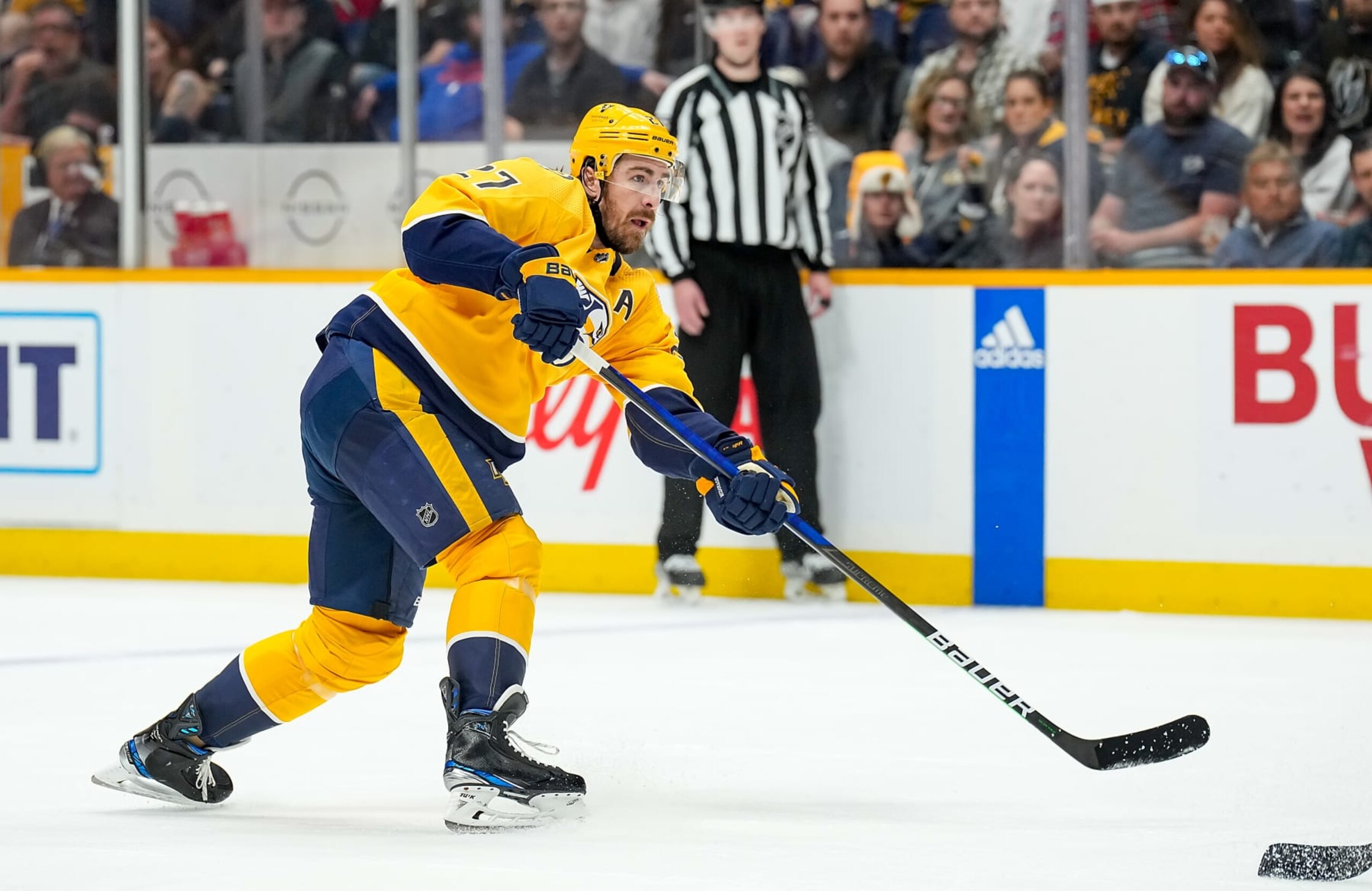
Arizona Coyotes
Adding Zack Kassian's contract
Adding Kassian's contract was part of a draft-day trade that saw the Coyotes add a couple of additional mid-round picks, so there was a method to the madness, but Kassian is still a player that brings little value to the Coyotes. He scored two goals with zero assists in 51 games and is still on their books for another year at $3.2 million.
Chicago Blackhawks
Losing Dylan Strome and Dominik Kubalik for nothing
The Blackhawks embarked on a full-scale tank effort this past offseason that saw them trade Alex DeBrincat and not offer qualifying offers to restricted free agents Dylan Strome and Dominik Kubalik. While the return for DeBrincat, a 40-goal scorer in the prime of his career, was underwhelming, they at least managed to get a top-10 pick in exchange for him. But losing Strome and Kubalik, two productive players that almost certainly had value given their free agent signings in Washington and Detroit respectively, really seemed like a missed opportunity. If they did not have any use for them as players on a rebuilding team, they should have had to be some kind of a trade market for their rights, even if it meant only a mid-or late-round pick in return.
Colorado Avalanche
Not doing more to get a second-line center
The Colorado Avalanche knew they were going to have a major hole to fill when Nazem Kadri left in free agency, and his absence left a glaring hole in the team's second-line center spot. They never adequately filled it and played a big role in the Avalanche not matching their success from a year ago. Instead of re-signing Josh Manson to an already stacked defense, that $4.6 million in salary-cap space probably could have gone to solidifying the forward depth.
Dallas Stars
Mason Marchment's contract
This is a bit of a reach because Marchment has not necessarily been bad, but you do have to ask if he is worth the four-year, $18 million contract he signed in free agency, complete with trade restrictions. Marchment only really had one strong year in the NHL prior to that contract, and it came in his age-26 season on the highest-scoring team (Florida) of the past 30 years. There was no guarantee he would ever duplicate those numbers. If he did, the contract would be fine. If he did not, it might become a problem. His numbers regressed across the board in his first full year in Dallas and while they were respectable, they weren't worth the value of the contract.
Minnesota Wild
The Kevin Fiala trade
The Wild had almost no choice here given how messed up their salary-cap situation is due to the Zach Parise and Ryan Suter buyouts, but it still has to hurt. Fiala was one of the Wild's top players during the 2021-22 season and went on to be the top scorer on a very good Los Angeles Kings team this season. The Wild did get a good prospect (Brock Faber) and a first-round pick in return, but they would have almost certainly rather had Fiala this season given how good they were and how much they needed his offense.
Nashville Predators
Taking on Ryan McDonagh's contract
The Predators' biggest problem in the past few years has simply been not knowing what sort of team they are or what path they should follow. Are they a contender? Should they rebuild? As long as goalie Juuse Saros stole games for them, they seemed to be under the belief they could still win. This explains why they traded for veteran defenseman Ryan McDonagh this past offseason. In terms of assets, they did not give up much (Philippe Myers and Grant Mismash), but the problem is the $6.75 million cap hit McDonagh carries for the next three full seasons into his late 30s. For a team that missed the playoffs and is probably going to keep sliding down the Western Conference, that is a poor use of cap space and a contract that might not be easy to move in the future.
St. Louis Blues
Sticking With Jordan Binnington
It has been a steady downward slide for Binnington since winning the Stanley Cup back in 2019, and the Blues' decision to stick with him as their starting goalie has been a problematic one. It was especially bad this past offseason when his contract forced them to trade the free agent rights to Ville Husso to the Detroit Red Wings. Husso was the Blues' best goalie during the 2021-22 season, and with him out of the picture, the Blues had nobody to push Binnington for playing time or serve as a safety net for when Binnington inevitably melted down. And he did frequently throughout the season.
Winnipeg Jets
Bringing back the same team
It really was not any individual move that the Jets should want a mulligan on. It is the lack of moves. The repeated lack of moves. Despite not consistently making the playoffs, and despite never really getting close to a championship, general manager Kevin Cheveldayoff is always reluctant to make any sort of a significant change to his roster. The idea that the same mediocre team and the same mediocre roster can suddenly start producing better results is just not realistic, and Jets fans keep paying the price.
Pacific Division
4 of 4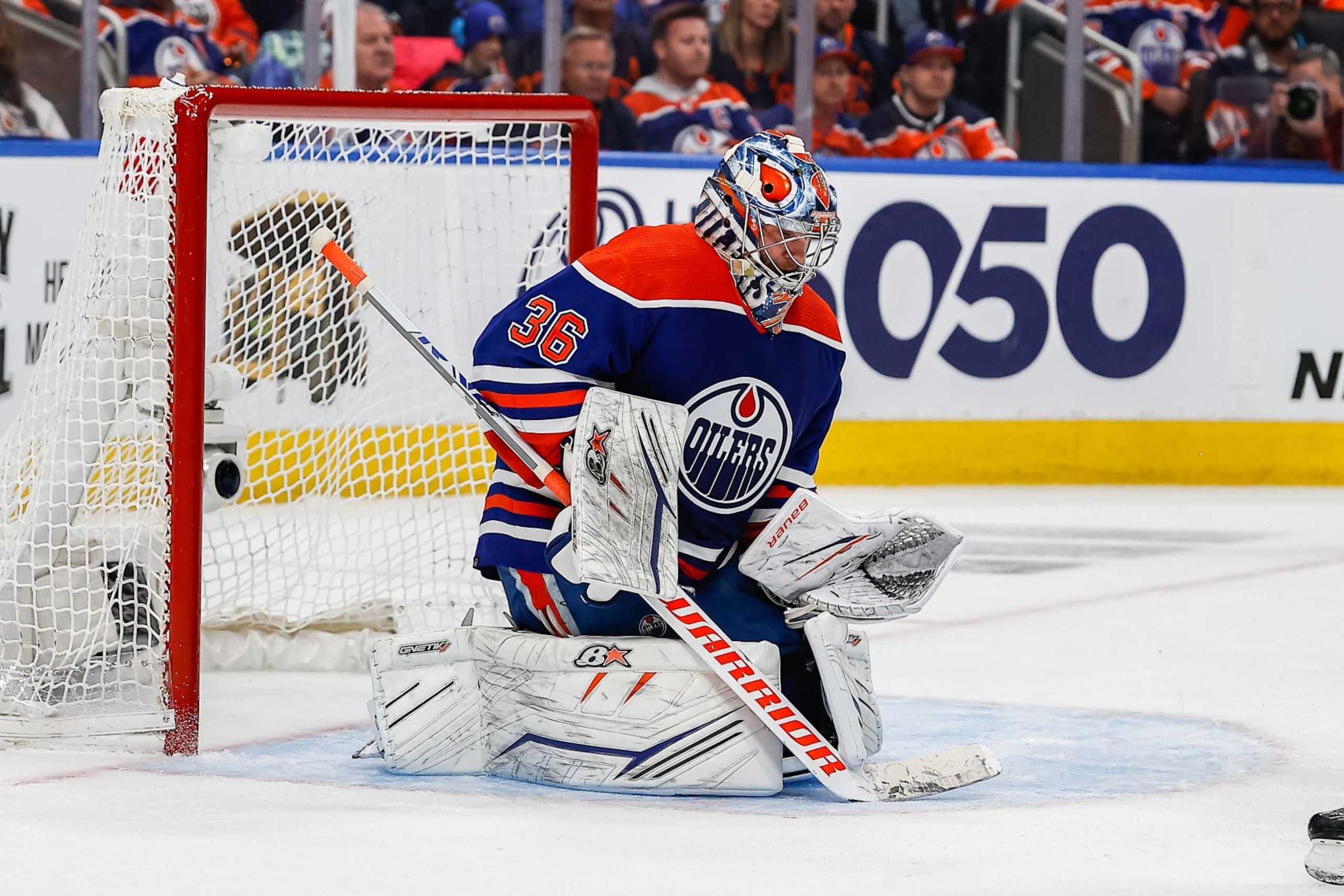
Anaheim Ducks
The John Klingberg signing
When Klingberg remained unsigned nearly a month into the free-agent signing period, the Ducks were able to get him on a one-year prove-it deal. Klingberg never seemed like a long-term answer and was almost certainly signed so he could be traded. That is exactly what happened when he he was sent to the Minnesota Wild at the trade deadline. The problem is that it never really worked out as planned for anybody. Klingberg didn't have a strong year and did nothing to boost his value for another free agency run, he brought next to nothing to the Ducks on the ice, and his trade value was so low that he only brought them a fourth-round pick and a couple of fringe NHLers in Andrej Sustr and Nikita Nesterenko.
Calgary Flames
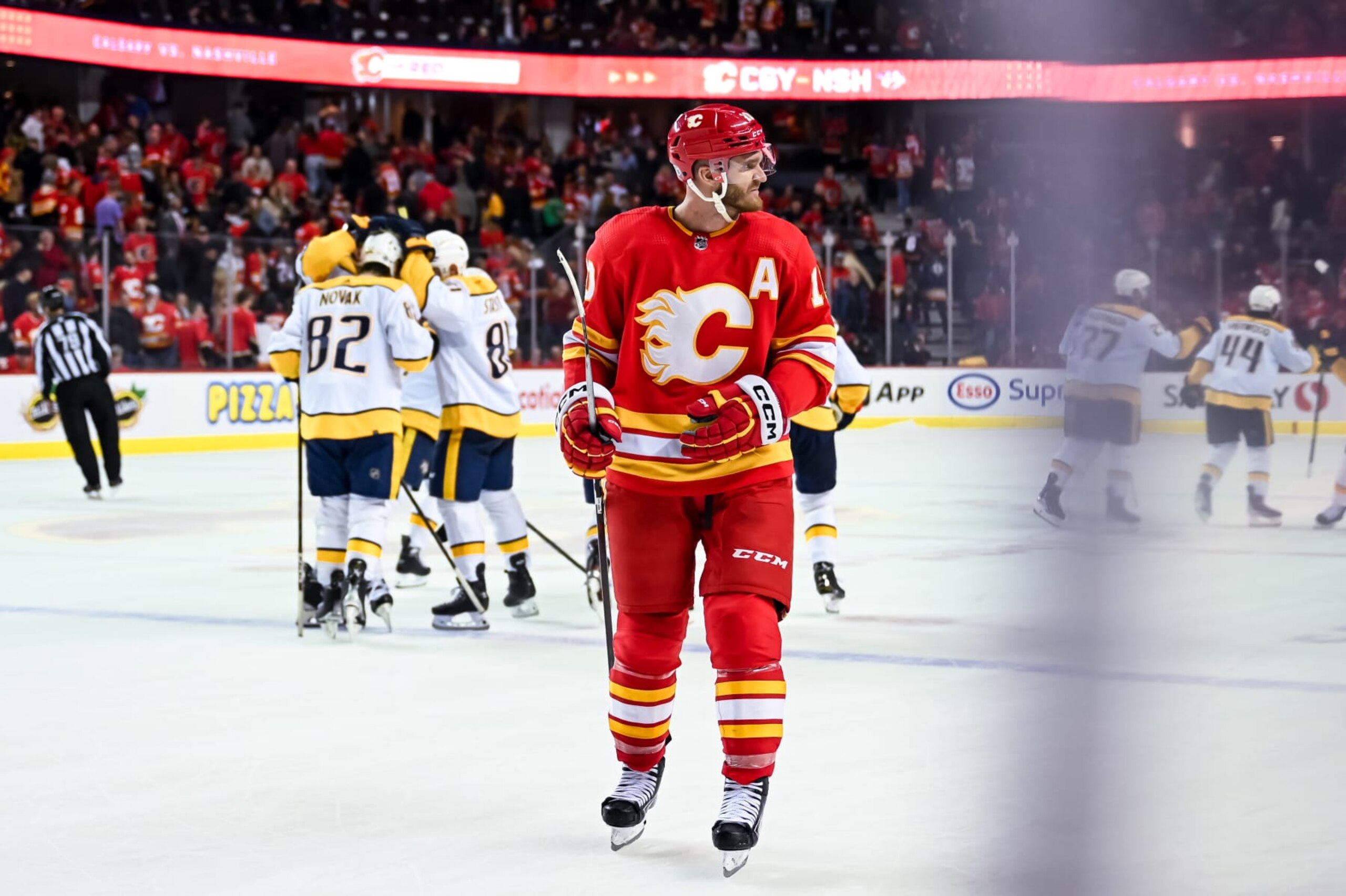
The Jonathan Huberdeau contract
The Flames' hands were tied with the Matthew Tkachuk situation as he seemed to have little interest in signing a long-term deal in Calgary. So they decided to strike while they could and sent him to Florida for the blockbuster return of Jonathan Huberdeau and MacKenzie Weegar.
On paper, it seemed like a pretty fair trade. But Huberdeau had one of the worst seasons of his career and took a massive step backward, while Tkachuk went on to be an MVP finalist for the Panthers. All of that is a problem for the Flames. It is even more problematic when you realize they signed Huberdeau to an eight-year, $84 million contract extension that has not even started yet. If Huberdeau does not bounce back that has the potential to be an all-time bad deal. He is the type of player who has to score to be valuable because he offers almost nothing on the defensive side of the puck.
Edmonton Oilers
The Jack Campbell signing
The Oilers just can not seem to get this right. Goaltending was a major question mark in recent years, and they tried to address it with a five-year, $25 million contract for Jack Campbell in free agency.
Campbell was a disaster in his first year with the Oilers, having one of the worst seasons in the league and losing his starting job to rookie Stuart Skinner. A 3.41 goals against average and a sub-par .888 save percentage just aren't going to cut it.
It was always a risky deal because Campbell had never really been a consistent starter, while another Stanley Cup contender -- Toronto -- had already concluded he was not good enough to win them a Stanley Cup.
Los Angeles Kings
Not upgrading goaltending
The Kings had everything going for them this season. Anze Kopitar is still a star. They had acquired some key veterans in recent years including Viktor Arvidsson, Phillip Danault and Kevin Fiala, and their defensive play had rapidly developed into some of the league's best.
But they had a major question mark in goal where the Jonathan Quick and Cal Petersen tandem had not really shown it was capable of playing at a Stanley Cup level.
Despite that, the Kings decided to roll with that duo and it became apparent very early in the season that they simply did not have it. The Kings ended up having to trade for Joonas Korpisalo and also rely on career minor league Pheonix Copley to be their goalie pair going into the playoffs.
San Jose Sharks
The Brent Burns trade
The Sharks really kicked their rebuild into overdrive over the past calendar year, and made one of their biggest moves in the offseason when they dumped Brent Burns' contract on the Carolina Hurricanes for a marginal return.
On one hand, it made some sense.
Burns had a tough year in 2021-22, his remaining contract is huge, and he is in his late 30s. You are not going to get many opportunities to get out from under that.
But Burns ended up having a sensational season in Carolina for the Hurricanes and not only scored 18 goals with 61 points, but he also played significantly better defensively.
Seattle Kraken
Signing Martin Jones
Goaltending was the big issue for the Seattle Kraken in year one, and their solution for fixing it this season was to sign Martin Jones to be Philipp Grubauer's backup. Jones had a save percentage of .900 or less in each of the previous four seasons, and still received a $2 million deal from the Kraken. He did not see any change in his numbers, and actually ended up posting the worst save percentage (.886) of his career despite playing behind a very good team.
Vancouver Canucks
The J.T. Miller contract extension
The Canucks are another team that can never figure out what they are. They perpetually operate under the delusion that they are a playoff team or contender when they are not even anything close to that. The J.T. Miller contract extension simply magnifies that delusion.
They probably could have traded him for quite a nice haul this offseason following his 99-point performance during the 2021-22 season. But instead of selling him at his highest possible value, they signed him to an insane seven-year, $56 million contract extension that begins next season.
It contains a no-movement clause and only adds to Vancouver's messy salary-cap situation.
Vegas Golden Knights
Dumping Evgenii Dadonov and Max Pacioretty
Vegas seemingly operates under the assumption that the salary cap does not apply to them, or that they can successfully find ways to navigate around it.
It produces a consistently good team with big-name stars, but also forces their hand into dumping other players that still might be useful.
Take this offseason, for example, when they traded Dadonov and Pacioretty, two very productive players, for nothing but Shea Weber's contract and future considerations. In other words, nothing but salary dumps.
On one hand, Vegas can not have too much regret given that Pacioretty missed almost the entire season due to injury. But if he doesn't get traded there is no guarantee that happens and he might still be a 30-goal scorer for them. Dadonov was also one of their best players late in the second half of the 2021-22 season and ultimately ended up in Dallas, where he could help prevent the Golden Knights from reaching the Stanley Cup Final.
.jpg?w=2560)


.jpg?w=2560 "Bears Edge Suspended for PED Violation")

.jpg?w=2560 "Buzz: Browns Shopping Jeudy")
.jpg?w=2560 "Jerry Defends Dak Heckler")
.jpg?w=2560 "Breaking News")
.jpg?w=2560 "Breaking News")