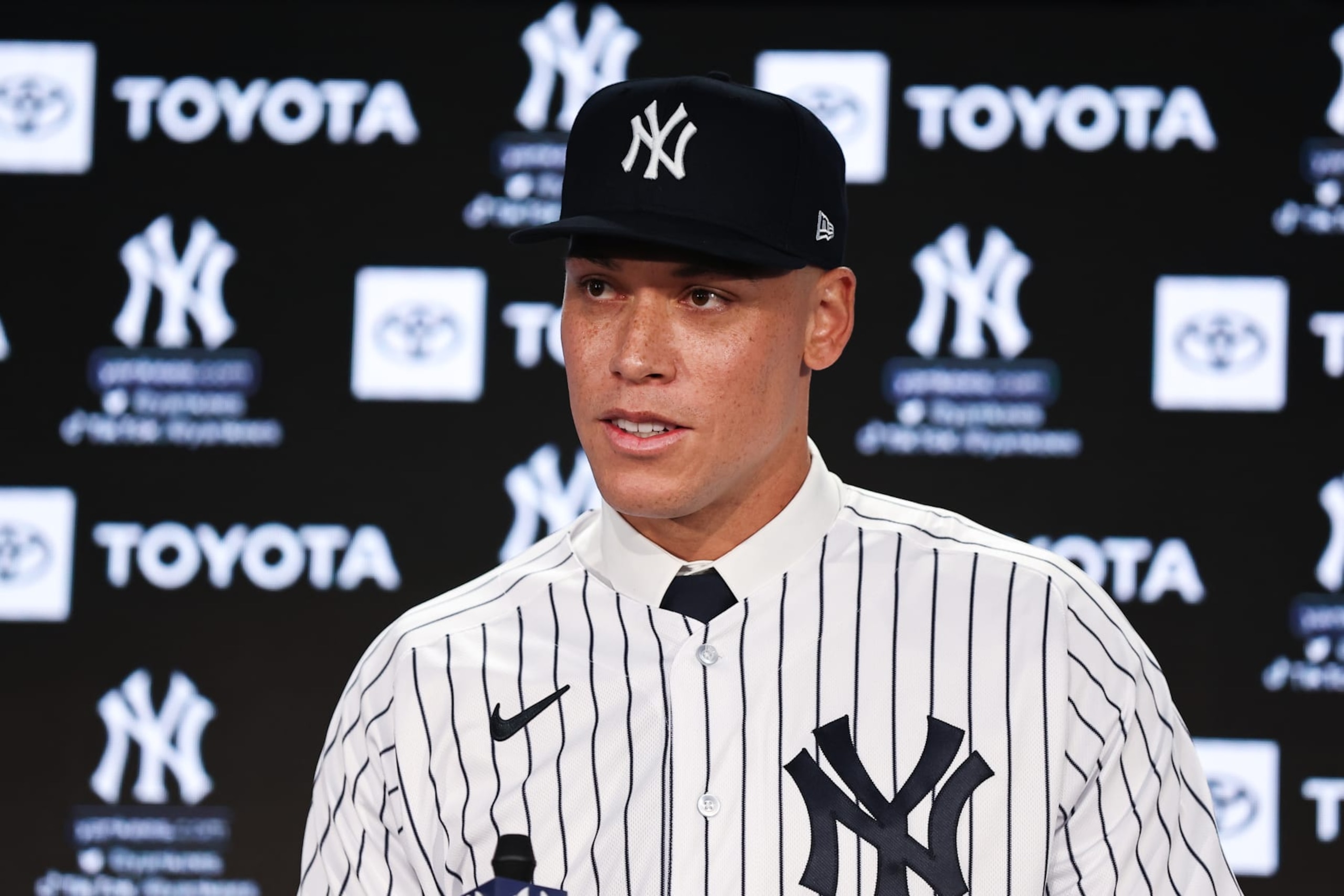


When Aaron Judge signed his massive $360 million contract this past December—and when Shohei Ohtani signs an even bigger one next winter—there was/will be arguments about whether the price was too high, too low or just right.
But to decide whether a player lives up to the cost of his contract, we need to first figure out how much a win (above replacement) actually costs these days.
A decade ago, the math conducted by FanGraphs' Matt Swartz suggested the cost of one win above replacement in free agency was just under $5 million.
TOP NEWS
Brewers Take 3-0 World Series Lead

Bold MLB Predictions For 2026-27 Offseason 🔮

Best Free-Agent Hitters 💥
But teams aren't exactly spending like they did a decade ago, are they?
Back in 2013, the average payroll was around $106 million per team.
Last year, it was $150.7 million.
Heck, five teams are spending at least $106 million just on pitching in 2023.
During the 2020-21 offseason, teams spent a grand total of $1.36 billion in free agency, per Spotrac. The average annual value of those contracts was $7.3 million.
Last offseason, that average was $12.7 million.
This offseason, we're at a staggering $15.7 million, though, that number figures to decrease as any remaining free agents who sign will surely do so for less than $15 million per year. But even if that average drops by $1.1 million, that'd still be a 100 percent increase from just two years ago.
Even the inflation rate on a dozen eggs at your local grocery store probably hasn't been that extreme.
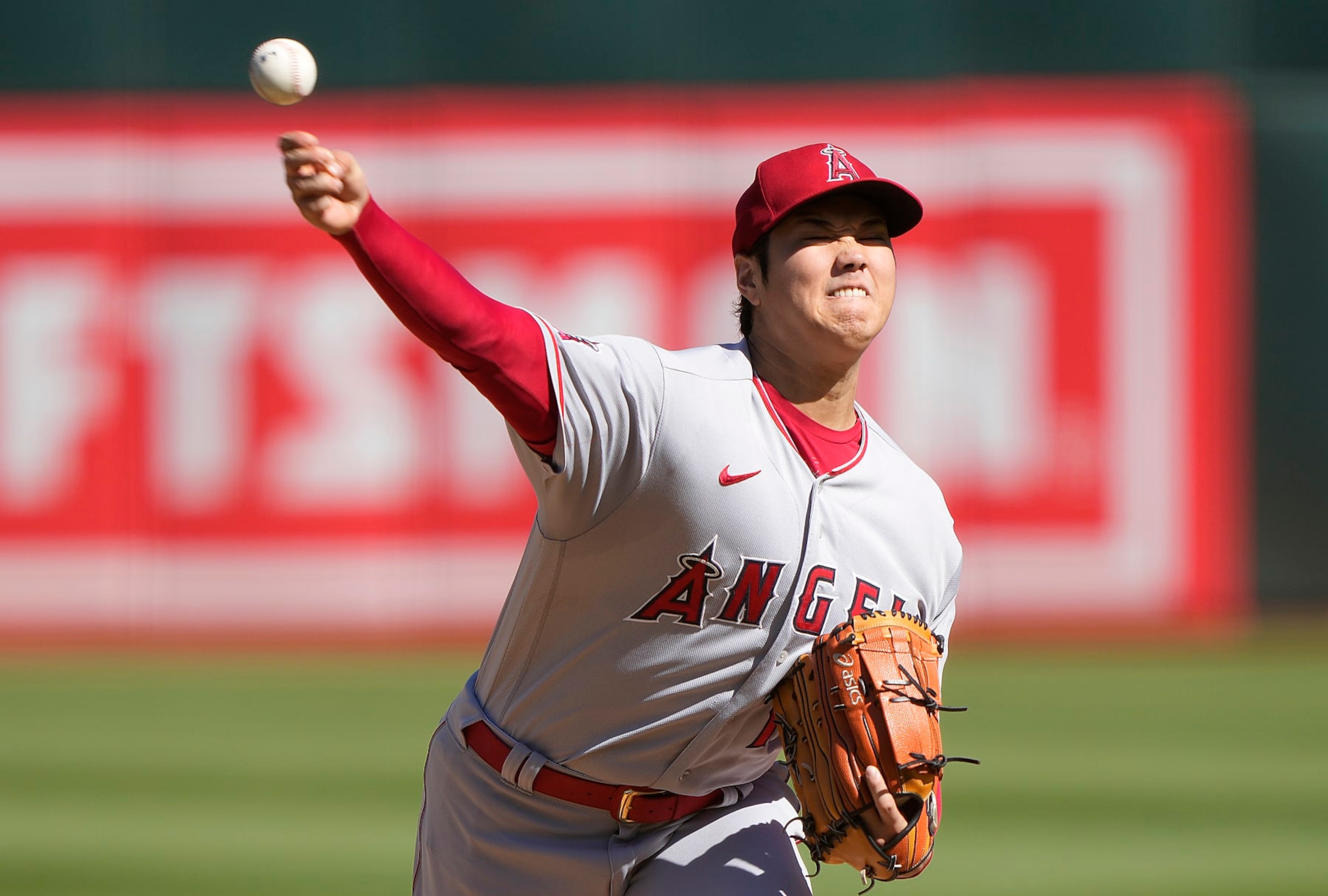
As MLB contracts continue to skyrocket, though, the number of wins available in any given season remains the same: 2,430.
Same goes for the FanGraphs sum of Wins Above Replacement, which has been 570.0 WAR for batters and 430.0 WAR for pitchers in every season except 2020 since MLB expanded to 30 teams before the 1998 campaign.
(Did you know Baseball Reference instead sums to 590 for hitters and 410 for pitchers? We'll be solely focused on FanGraphs WAR for the remainder of this article, but we might need a follow-up article someday on why the two sites differ on that fundamental baseline.)
At a macro, bird's-eye-view level, that combined total of 1,000 WAR in a season makes it quite easy to calculate the average $/WAR ratio.
In 2022, the total payroll of all 30 teams was $4.52 billion. Divide by 1,000, change that 'b' to an 'm' and you get $4.52 million per 1.0 WAR. And in 2021, total payroll was $3.95 billion, for a $/WAR ratio of $3.95 million.
Boom.
End of article, right?
Well, no.
We can't really use those numbers to determine whether a free agent lived up to his contract, because a substantial chunk of the 1,000 WAR comes from pre-arbitration players on league-minimum salaries or arbitration-eligible players who simply aren't making as much money as they would on the open market.
See: Julio Rodríguez producing 5.3 WAR on a $700,000 salary or Shane McClanahan getting paid $711,400 for 3.5 WAR. A pre-arbitration player putting up All-Star numbers is a budgetary cheat code.
So, to come up with a more legitimate number for the current cost of 1.0 WAR in free agency, we need to weed out all of the pre-arbitration and arbitration-eligible players from both payrolls and WAR from 2021 and 2022, which we did using Spotrac's "Veteran" designation.
Not all of Spotrac's "Veteran" players actually reached free agency. That designation also includes players who signed contracts that effectively bought them out of their arbitration years. For instance, 22-year-olds Michael Harris II and Rodríguez both qualify as veterans in 2023 after signing long-term deals in the middle of last season as rookies. But they deserve to be included in this mix moving forward, as they've already more or less agreed upon what they would be worth in free agency.
The veteran designation also appears to include players who settled on their salaries via arbitration as opposed to reaching an agreement without arbitration.
After all the weeding and calculating, what we found is that over the past two seasons, the single-season free-agency cost of one WAR among batters is $5.7 million, and the cost of one WAR among pitchers is $6.9 million.
It should come as no surprise that pitching is more expensive, since high-priced pitchers have been more likely to either underperform or miss most/all of a season with an injury.
There were 33 batter salaries of at least $23 million between 2021 and 2022, and even with Miguel Cabrera's brutal negative-0.6 WAR and negative-1.5 WAR campaigns in the mix, the average WAR for those 33 batters was 3.44. 17-of-33 produced a WAR north of 4.0.
Conversely, there were 24 instances of a pitcher making at least $23 million in one of the past two seasons, and their average WAR was just 2.09. No negative numbers in that bunch, but 11 of the 24 produced 0.8 WAR or less, including a pair of $35 million goose eggs from Stephen Strasburg. Only six of those 24 pitchers had a WAR north of 4.0.
But, great, what should we do with all those numbers?

Well, they tell you that, for example, Aaron Judge needs to produce 7.0 WAR in 2023 to be "worth" his $40 million salary, while fellow pricy Yankee Gerrit Cole has a break-even point of around 5.2 WAR on his $36 million salary.
(I put "worth" in quotations marks, because I can appreciate that a good chunk of what the Yankees are paying for with Judge—and what many teams are paying for with their high-priced stars—is marketing. If he produces 3.5 WAR but every game is a sellout and his jersey keeps flying off the racks in the team store, it's probably still a win for New York.)
Those numbers also tell you that Xander Bogaerts merely needs to produce 4.5 WAR per year to be worthy of his 11-year, $280 million contract in San Diego, and he has averaged 5.2 WAR over the course of the past four 162-game seasons.
And the beauty of those sorts of long-term, same-salary-every-season contracts we've seen handed out in recent years is that the cost of one WAR just keeps going up.
We gave you the combined average for 2021 and 2022, but the price for batters went from $4.90 million in 2021 to $6.68 million in 2022 (a 36 percent increase), while pitching had a less-drastic-but-still-substantial bump from $6.26 million to $7.55 million (a 21 percent increase).
The total salaries for veterans didn't go up by that much ($3.18 billion in 2021 to $3.37 billion in 2022), but non-veterans took home a bigger piece of the WAR pie in 2022 than they did in 2021. That WAR denominator will fluctuate from year to year, but as long as the veteran salaries numerator continues to climb, so, too, will the general trajectory of the $/WAR ratio.
By the time Judge reaches the end of his nine-year deal in 2031 and Bogaerts plays his final season in 2033, who knows? The going rate for one batting WAR might be $10 million, at which point they would only need to produce 4.0 WAR and 2.5 WAR, respectively, for the juice to still be worth the squeeze.
As things currently stand, however, $5.7 million for one batting WAR and $6.9 million for one pitching WAR are our baselines for determining return on investment among veterans in 2023.
Let's close with a fun little theoretical question: How much would it cost to outright buy a 100-win season via free agency?
Like, starting over from scratch, no farm system whatsoever, open up the checkbook and hope for the best?
Well, there are 2,430 wins available per season and 1,000 WAR. That equates to a theoretical 0.4115 WAR per win, or 41.15 WAR for 100 wins.
In reality, though, it's more like 0.5425 WAR per win for the top teams. The Astros, Braves, Dodgers, Mets and Yankees all ended 2022 in the 0.51-0.575 range. So, let's call it 54.25 instead of 41.15.
If we split the difference between the $5.7 million for one batting WAR and $6.9 million for one pitching WAR and call it $6.3 million, that amount multiplied by the 54.25 for WAR gets us $341.8 million—which isn't far off from what the Mets are spending this season.
Of course, that's assuming you actually get what you pay for and don't end up giving, say, Stephen Strasburg $35 million to make one appearance or Nick Castellanos $20 million for a negative-0.7 WAR campaign.
Long story short, this whole exercise has enhanced our appreciation for the Tampa Bay Rays making the postseason in eight of the past 15 seasons while never taking their payroll north of $100 million.
Kerry Miller covers Major League Baseball and men's college basketball for Bleacher Report. You can follow him on Twitter: @KerranceJames.
_0.jpg?w=2560 "MLB playoffs")


.jpg?w=2560 "Chiefs, Steelers Eye WR Trades")
.jpg?w=2560 "WWE Raw Live Grades 🔠")


.jpg?w=2560 "Cowboys Handle Eagles on MNF 🤠")
.jpg?w=2560 "🚨Jay-Z Headlining Super Bowl")