
MLB's Growing Problem With Offensive Agony
June is upon us, which means it's only a matter of time before the weather gets warm. Maybe then, the hits will come.
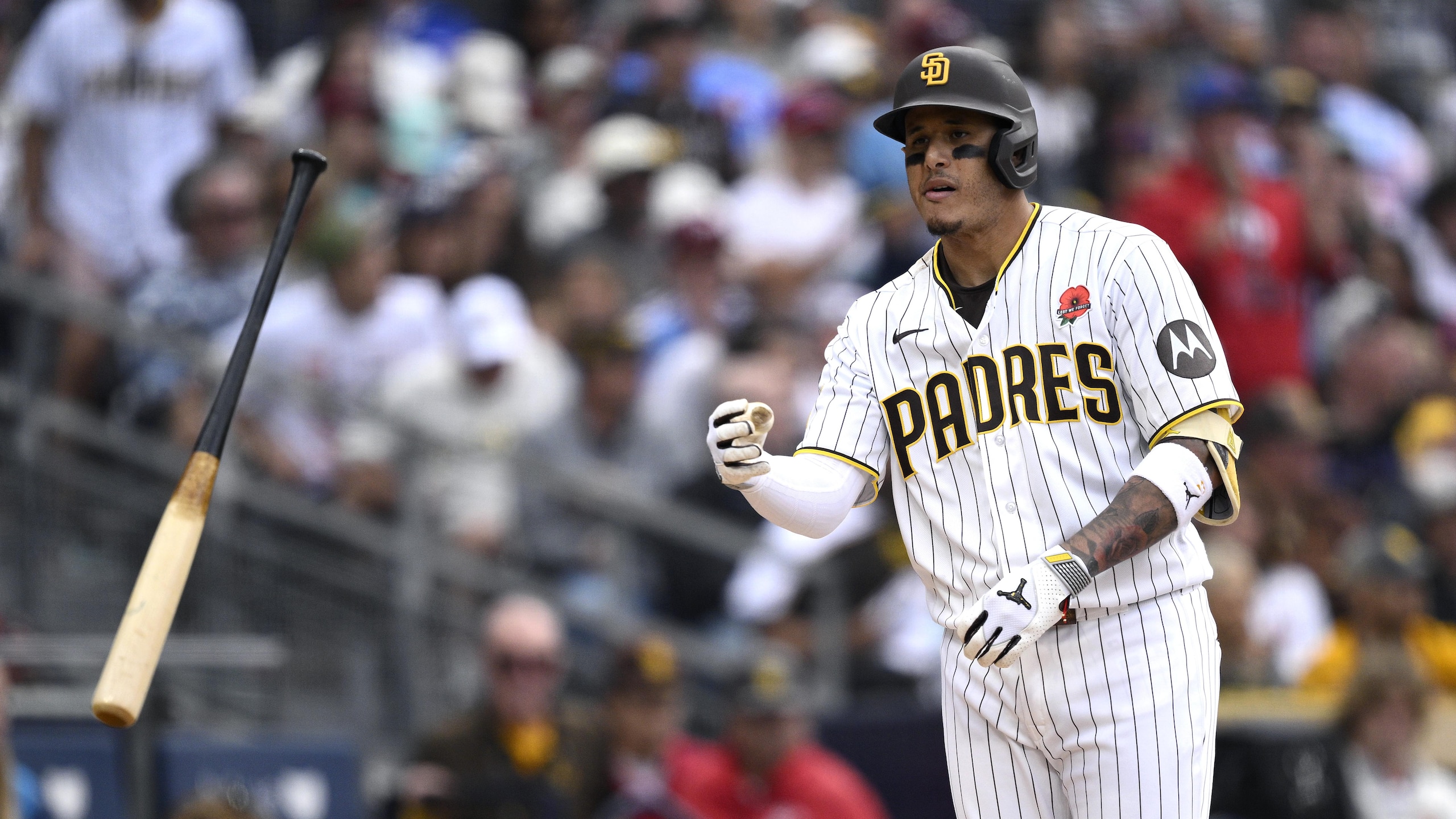
Because to this point in the 2026 MLB season, the consistency with which hits haven't come is staggering. The league has just a .240 batting average, the lowest since 1968. A dozen batting title qualifiers aren't even batting .200, and encased within are heavy hitters like Manny Machado, Corey Seager and Cal Raleigh.
There are, of course, reasons not to panic.
TOP NEWS
Brewers Beat Dodgers In Game 1

Ranking the Top 25 MLB Trade Chips For 2026-27 Offseason 🔢

2026 MLB Playoffs Winners and Losers ⚾
At 4.38 runs per game, scoring is consistent with 2024 and 2025. And apropos of the weather, pearl-clutching over the league's batting average does seem to be an annual rite of passage this early in any given season.
Even so, there is something about this time around that feels different.
We All Want to See Hits, Right?
The Point: Fewer hits make for a boring product.
You may have heard that Major League Baseball is on a popularity heater, which must mean the product is good.
And it is! Credit generational stars like Aaron Judge and Shohei Ohtani. Also, credit technological advances like the ABS. And definitely credit the gameplay equilibrium—more balls in play, more stolen bases, a faster pace, etc.—ushered in by the new rules in 2023.
Yet even if sports fans clearly like what they're seeing, it's not alarmism to see the league's low batting average as a threat. Fewer hits fundamentally means less action in the field, as well as less traffic on the basepaths.
Both things let air out of the drama balloon, and nobody wants that. It also changes the viewing dynamic, where the batter vs. pitcher matchup is less a competition and more a game of survival, akin to a rider vs. bull in a rodeo.
There Has to Be a Reason for This, Right?
The Point: Actually two, as both pitchers and defenders are better than ever.
At the turn of the century, the league's batting average hovered in the .270s and .260s. Once it began to dip into the .250s and beyond, at least there was a clear cause: strikeouts.
What's weird about right now is that strikeouts are trending down. Since peaking at 23.4 percent in 2020, the strikeout rate in MLB is now 22.1 percent in 2026.
Yet even if this implies that the literal act of hitting the baseball has gotten easier, that's at best a half-truth.
Have you seen the pitchers of today? They are eldritch gods sent forth from some kind of Lovecraftian pitching mound. More than a third of all fastballs are over 95 mph, yet pitchers increasingly don't even like throwing heat. Why do that when you have diabolical breaking balls and off-speed pitches, many of which were literally formed in labs?
Meanwhile, defenders are also having a moment. Errors are on their way to extinction. And whereas defensive efficiency—i.e., the rate at which batted balls are turned into outs—was at .687 back in 2000, now it's at .702 in 2026.
Dig deeper, and you see a hint of an outdated approach by batters. To simplify:
- The best way to beat nasty pitchers and slick defenders is to hit home runs
- Hitting home runs requires hitting fly balls
- Alas, MLB shifted toward less bouncy balls in 2021
- So, more fly balls are not translating into more home runs
- That results in more fly balls running afoul of better-than-ever outfield defenses
The problem for hitters is real. In 2026, they're setting a new high with a 38.9 percent rate of fly balls. Yet, whereas fly balls went for a .308 average in 2019, now they're going for a .250 average.
There Must Be a Solution for This, Right...Right???
The Point: If hitters don't adjust, the league might need to think up more new rules.
Whatever the solution is, it shouldn't involve shifting expectations back to where they used to be.
Short of turning nasty pitching into a felony and slick defense into a misdemeanor, those two genies are likely out of the bottle forever. As such, the days of .300 being a reasonable standard for batting success are likely over for good.
However, fans shouldn't have to shift expectations even further downward either. There may yet be hope, especially if one of two things happens.
One: Hitters Collectively Shift Focus Away from Home Runs
This wish is easy for fans to make, but hard for hitters to grant. For reasons referenced above, scoring runs by stringing baserunners together is harder than ever.
But then again, there are the Milwaukee Brewers and Tampa Bay Rays.
They're both among the top 10 in scoring, even though each is in the bottom three in home runs. They really are doing the classic get-'em-on, get-'em-over, get-'em-in thing. Both clubs also hit a ton of ground balls, and the Rays have even discovered a hack for which grounders work best.
Such things are hard sells for teams with hitters who can put the ball over the fence. Nonetheless, the compelling model at work in Milwaukee and Tampa Bay could at least appeal to other small- and mid-market clubs that can't necessarily afford to invest in power.
Two: MLB Comes to the Rescue with More Rule Changes
Remember when it was heresy to even suggest that MLB change anything?
Well, times have changed. Between the universal DH, the pitch clock, the bigger bases and the ABS, the game has changed dramatically just in the 2020s. And since the sport is better for it, "What's next?" is a fair question.
For the sake of rescuing batting average from the abyss, one possibility is moving the mound back farther than 60 feet, six inches from home plate.
Whether it's a good idea depends on who you ask, and an actual experiment in the Atlantic League was thorny, to say the least. But as a means of giving hitters more reaction time against increasingly speedy fastballs, the concept is sound.
Another possibility is shrinking the strike zone by literally shrinking home plate. This would make it harder for pitchers to throw all that nasty breaking stuff for strikes. If that resulted in an increase in fastballs, at least there would be hope that it would work as velocity exposure therapy for hitters.
Hoping for a magic bullet? Well, there isn't one. The league's low batting average is not the result of a switch someone flipped. It's the result of decades of shifting strategies and attitudes. No single thing is going to undo it all overnight.
But at the risk of annoying both sabermetricians and Ernest Hemingway scholars, batting average is a fine thing and worth fighting for. One just hopes the right people agree.
Stats courtesy of Baseball Reference, FanGraphs and Baseball Savant.

.jpg?w=2560)
.jpg?w=2560 "Cam Ward Says He's Not A Loser")
.jpg?w=2560 "Chargers Fall to 0-5 🤢")
.jpg?w=2560 "Viral Dan Campbell Presser 💙")