

Grading Andy Murray's 2016 Season and Looking Ahead to 2017
Nobody will ever question Andy Murray's resolve in becoming one of the four biggest superstars of his era. It's just that no matter what he achieves, there will always be comparisons to his more decorated rivals.
Roger Federer, Rafael Nadal and Novak Djokovic have set legendary standards that somehow penalize the perception of the Scot, but this is changing.
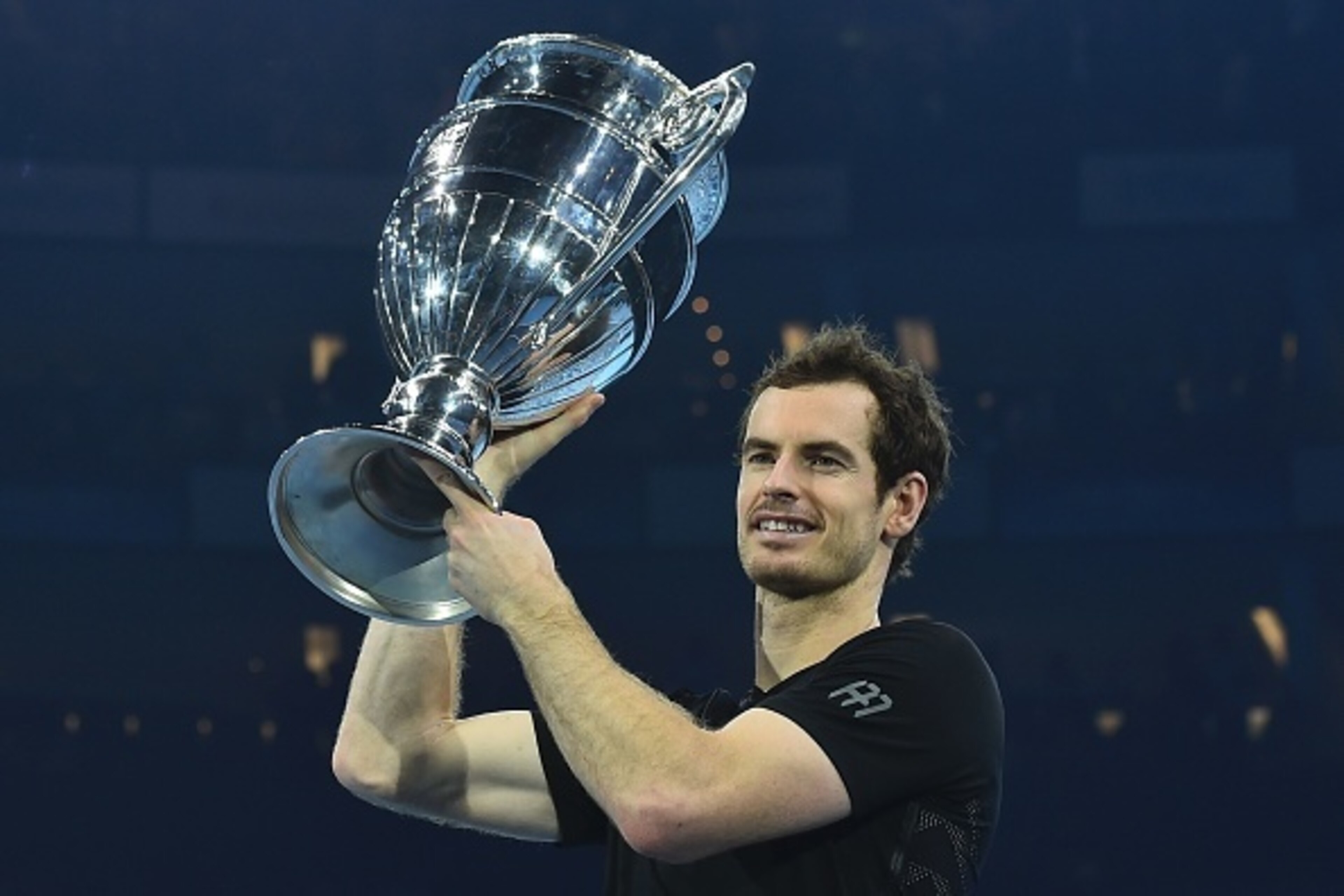
In 2016, Murray won his second Wimbledon title to end a three-year drought in major tournaments. He followed up with his second Olympic gold medal in singles, and he did the impossible by tracking down Djokovic's seemingly insurmountable rankings lead of over 8,000 points.
TOP NEWS
Nuggets enter 2nd apron because of rival's offer sheet
NBA Starting Lineup Rankings 📊
Grading AEW Redemption 🔠
Most importantly, Murray's recent run of success has redefined his career, bolstered his legacy and set him up for a furious finish to his peak years.
This is the fifth and final installment of our superstar report cards. Previously we graded Djokovic, Stan Wawrinka, Nadal and Federer.
Grade: A-
Well, here we go again. While Djokovic scored an "A" for the year on the strength of his two majors and nearly the entire year at No. 1, Murray is still kind of in his shadow with "only" the Wimbledon title and grabbing that No. 1 ranking the last two weeks of the season.
No respect for Murray?
Actually, his second-half performance was almost epic, with all nine of his titles spanning from the late clay-court season in Rome to the World Tour Finals in London.
Djokovic never won as many titles during this particular stretch of the season (the Serb's legendary 2015 season had him win seven titles from Rome to London; of course he gets the nod for winning the U.S. Open as part of his seven-title package.)

Murray's titles streak was only blemished by losing the Western & Southern Open final to Marin Cilic (partly due to fatigue from winning the gold medal) and a regrettable, if thrilling, five-set loss to Kei Nishikori in the quarterfinals of the U.S. Open.
Had Murray won the U.S. Open, his second half would have ranked as perhaps the best ever. Not even Federer's 2004-2007 stretch saw him win nine titles from late May to early November.
Again, the Swiss' years trump Murray's because he was winning multiple majors including early-season victories at the Australian Open, Dubai and U.S. Masters 1000 tournaments.
The point is that Murray was just short of a legendary season. Winning a second Wimbledon title and Olympic gold medal is awesome. Dominating the Asian tour, including two Masters 1000 victories at Shanghai and Paris, was peerless. But capping off the year by holding the No. 1 ranking for the first time in his career and then defeating Djokovic in the World Tour Finals, well, that's the stuff of legend.
History will show that he had to share 2016, however, with Djokovic dominating the first half and Murray unable to win one of the other three majors.

Outlook 2017
Murray's greatness cannot be minimized. The way he dismantled Milos Raonic for the Wimbledon title is proof enough that he can be a dominant player. It adds credibility to the notion that had he not competed against his Big Three rivals for his entire career, he might have been able to win eight or more majors, keeping company with the likes of his coach Ivan Lendl, Jimmy Connors and Andre Agassi.
Furthermore, Murray has been consistently great for a full decade, even navigating through a tough 2014 after the slow return and recovery from back surgery late in 2013.
He might also have put in a claim for being the most resilient player of all time. So many times he lost to his superstar rivals, but he kept training like a Spartan and creating his own path until finally the clouds parted.
We've recently discussed Murray's chances of remaining the No. 1 player and winning more grand slams in 2017. He has a better chance at holding on to the top spot in the first half of the season if he can pick up big titles like the Australian Open, Indian Wells, Miami, Monte or Madrid. Any of those titles would add to his points lead over Djokovic and cut into the Serb's defending points.
The hard part will be the bullseye Murray is wearing on his chest. Although the Scot has been through all kinds of big matches, this is not so much a case of pressure as the physical ceiling that he might have already touched.
Murray put in so much grinding energy to chase down No. 1, it would not be too surprising to see him running on empty by the time Europe's hellish red clay starts testing the tour's stamina. The mind is willing and the heart is unquestionable, but will his legs continue to run down every last shot, and will he have the energy and offense to keep beating younger, rising players?
It's like trying to fend off groups of pro wrestlers in a Battle Royal. At some point, the sheer weight of chest-bumping the entire ATP tour could push him over the edge of exhaustion. Federer hit his wall in 2010, Nadal in 2014 and Djokovic in 2016. Murray will be 30 years old in May.
Then again, Murray is a different kind of cat. He has relished going on streaks and taking on the challenges of his torrid pace.
At Doha, Murray defeated Jeremy Chardy for his 25th consecutive win, a career high. "I would like to try and keep the run going as long as possible…," he said, per ATP World Tour. "[I] just try and carry on from where I finished last year, which was playing some of the best tennis of my life."
Expect nothing less than more gritty play from Great Britain's legendary superstar. These days, Murray is the one sitting on the throne peering above his Big Three rivals. Don't expect him to give up his scepter. Win or lose, he's going to scrap for every ball until he can no longer shoulder his equipment.
.png?w=3840)

.jpg?w=3840 "AEW Redemption Was Stacked 🍿")