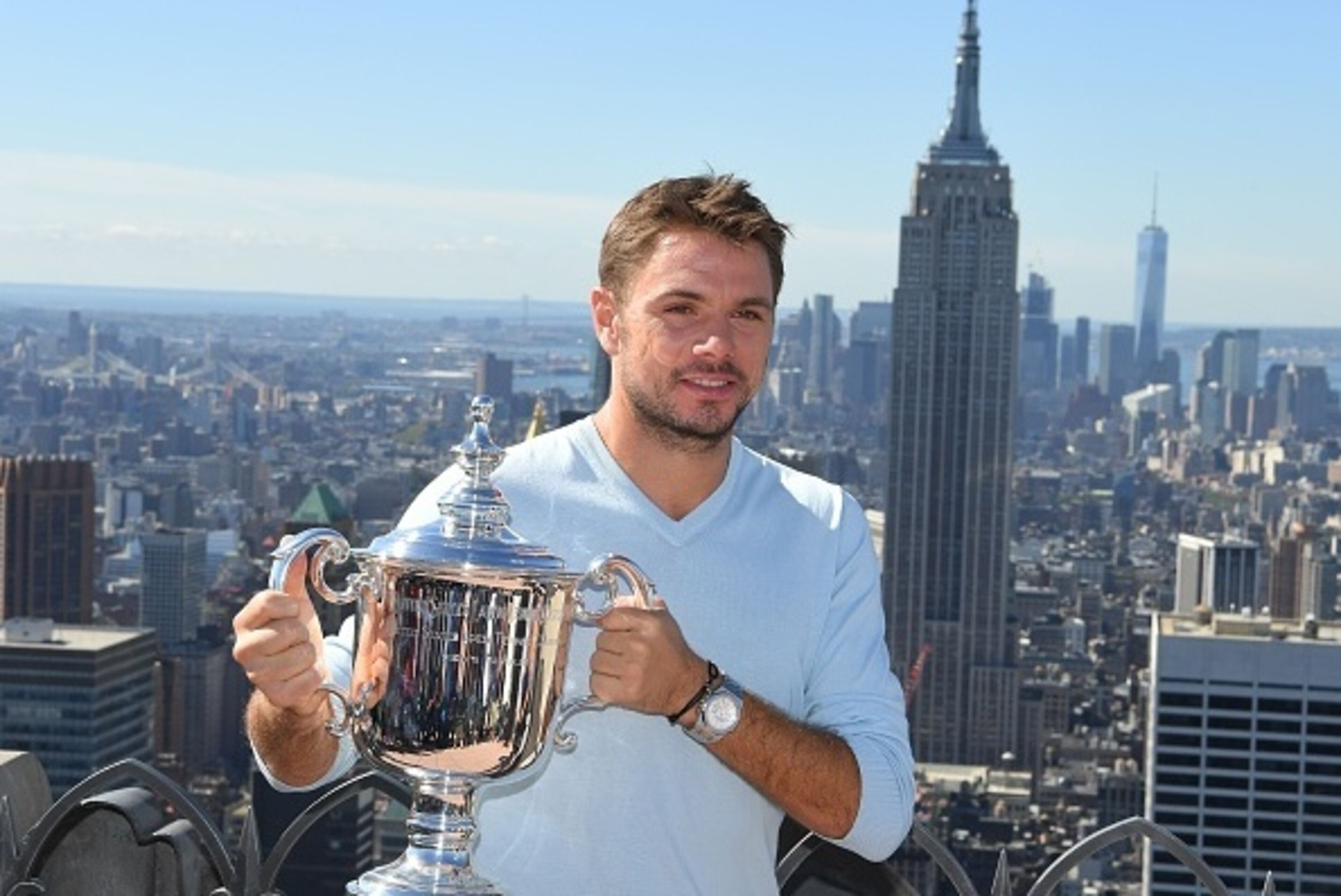
Grading Stan Wawrinka's 2016 Season and Looking Ahead to 2017
Stan Wawrinka is far from being a consistent superstar, but in 2016 he battered his way to the U.S. Open title while everyone else was talking about Novak Djokovic’s injuries and Andy Murray’s hot summer.
Tennis now has the Wawrinka trilogy; a curious run of three straight years in winning three different major championships.
The 31-year-old is a tennis outlier. He doesn’t fit into the "Golden Age" rivalries created by Roger Federer and Rafael Nadal, later joined by Novak Djokovic and Andy Murray. Even his career arc is mystifying. From 2006-12 he was the "second Swiss" and generally a player good enough to be ranked from world Nos. 10-20.
.png?w=3840 "Boston Celtics v Los Angeles Lakers")
.jpg?w=3840)
He used to get beat up in big matches when his head-to-head resume against his legendary contemporaries showed 4-8 vs.Murray, 1-13 vs. Federer, 0-12 vs. Nadal and 2-15 against Djokovic.
But three years have passed, and Wawrinka is the Swiss with three majors, while Federer has zero. Nadal and Murray have only one major title apiece during this period King Novak has largely dominated.
How do we classify Wawrinka’s body of work, especially with his latest triumph in New York? Does he have more superhero achievements for 2017?
Wawrinka is the third of our weekly offseason superstar features. The past two weeks we graded 2016 for Nadal and Federer.
Grade: A-
Any year that includes winning a major championship is worthy of at least an A-minus. Maybe Wawrinka needed a year to regroup from winning his career masterpiece—the 2015 French Open final over a streaking Djokovic.
Five months later, he gave a hint of just how difficult it is for him to stay at the top in an interview with Simon Briggs of the Daily Telegraph:
"The emotion in doing this is really up and down. Afterwards, you feel a little bit lonely, a bit of depression mentally. Because it’s so much stress and emotion, so many people around – and then it’s completely empty. That’s the beauty of tennis but also the challenge because it’s not always easy.
"
Maybe the tennis world had to forget about Wawrinka while he plodded along with solid but unspectacular results for most of 2016. Maybe he was suddenly paying the price for peaking late in his 29th year, while Nadal and Federer were breaking down.
Plenty of tennis observers ignored or wrote him off while he won lightweight titles in Chennai, Dubai and Geneva. After all, he had been fading in the majors. He was knocked out in the fourth round at Melbourne; he was drilled by Murray in the French Open semifinals after another lousy clay-court season (a combined 3-3 record at Monte Carlo, Madrid, Rome); and he was brushed aside in the second round at Wimbledon by comeback player Juan Martin del Potro.
But winning the U.S. Open pushed him right back to where he’s been the last three years—another major title and once again ranked world No. 4.
It’s like Wawrinka wanders off while everyone looks the other way, and he then reappears just in time for the big-money fight. He outslugged Del Potro, Kei Nishikori and Djokovic at Flushing Meadows.
We have to go back another generation for an apt comparison. Wawrinka is the aging version of Marat Safin, an underachieving and powerful star who destroyed Pete Sampras (2000 U.S. Open final) and knocked aside Federer (2005 Australian Open semifinal) when he put his talent together.
Even Wawrinka cannot quite explain how great successes juxtapose with streaky droughts of underwhelming results. He told Sky Sports News HQ that he could not be a No. 1 player like Murray or Djokovic: "I know I can beat every player, I need to do it more often in the year if I want to think about that, but so far I'm way off that."
It’s another cryptic remark. He recognizes he is one of history’s most talented ball-strikers when he’s on his game. But there’s also a sense of resignation in this self-appraisal.
It’s not that he lacks belief, but perhaps he fears the obsession for success would burn out his resolve to keep fighting when it matters most.
Outlook 2017
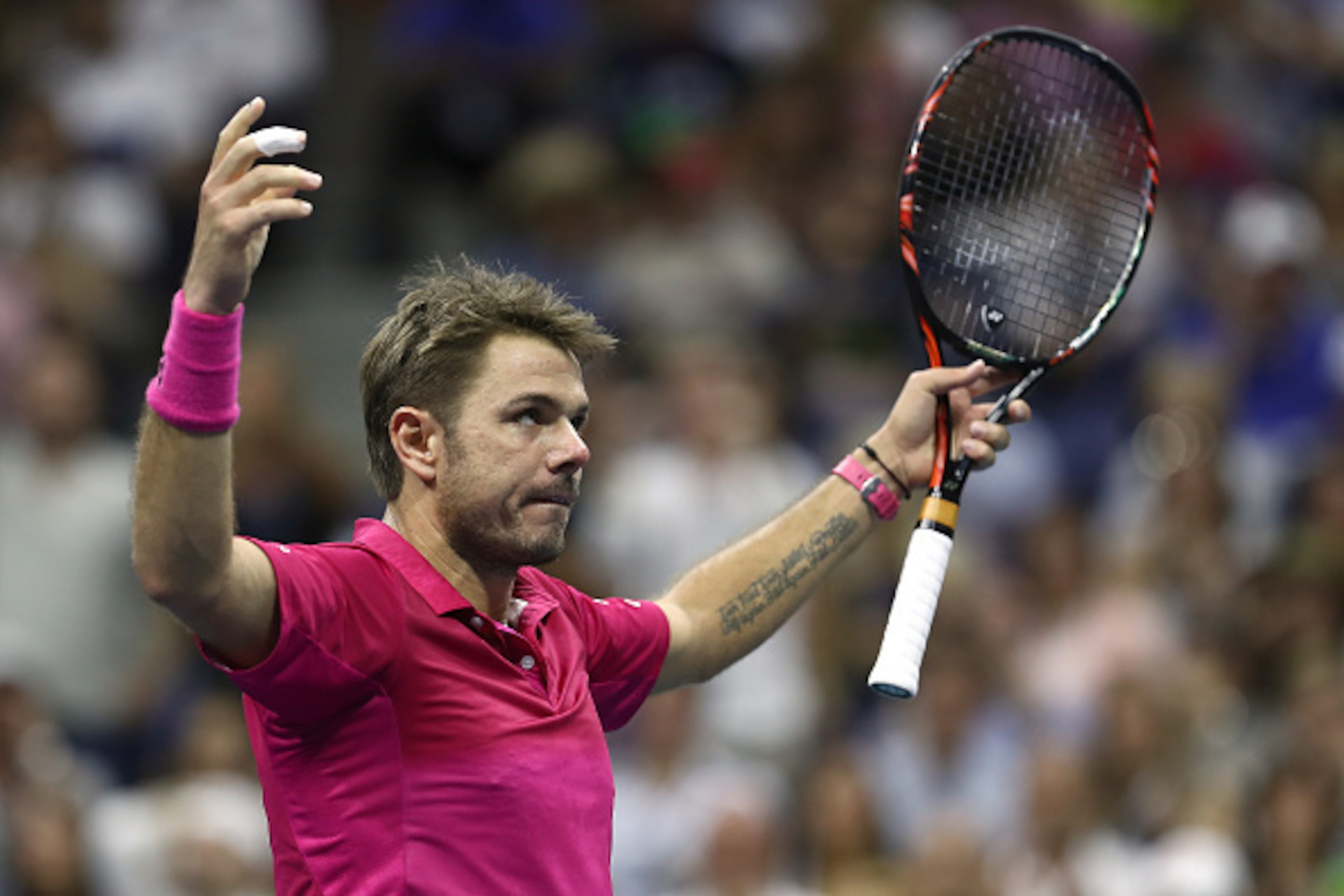
Wawrinka’s powerful groundstrokes have always been a fearsome weapon but only when he plays with bold control. Any more risk and he will hit himself off the court. Too conservative and he will get yanked around like a yo-yo against superior defenders and top stars.
Maybe Wawrinka is Thor—the god of thunder. Thor’s a superhero warrior who depends upon his hammer as the source to controlling his powerful strength. It’s that extra edge of composure and fortitude that has come since his partnership with coach Magnus Norman.
Norman, who was named the inaugural ATP Coach of the Year in November, was a blunt and confident competitor 16 years ago, before health problems caused him to unravel. He brought out the best in Swedish star Robin Soderling, and now he is Wawrinka’s hammer, instilling the kind of training and confidence that have made Stan the Man.
Safin? Thor? Whoever he emulates, Wawrinka is still not an easy player to define. In most ways, he’s an original copy, but for all his flaws he’s a big winner, and tennis history will reserve a significant spot for him in Newport, Rhode Island.
It’s a cautionary reminder that Wawrinka could still reach out for more big titles in 2017.
It’s also interesting that he and Murray each have three career majors, but the Swiss only needs one more (Wimbledon) to complete the career Grand Slam, while Murray still needs the Australian and French Opens. (So, it’s technically still possible for the Scot to complete the circuit by early June, but Wawrinka cannot do so until early July.)
Another oddity about Wawrinka’s chances to win big titles is his near-blank resume in Masters 1000 tournaments. There are nine chances per year to get one of these, but he only has the 2014 Monte Carlo Masters to his credit.
The weird thing is that Wawrinka has not really been that close with Masters 1000 tournaments. His streak of 11 straight wins in a tournament final (broken two months ago in St. Petersburg, Russia, by Alexander Zverev) only included that one chance in Monte Carlo.
Few people will list Wawrinka as a favorite to win another big title in 2017; they will talk about Djokovic and Murray most of all. They will turn more attention to Del Potro’s return to being a Grand Slam contender; they will write about Milos Raonic or Nishikori, who are a half-decade younger and poised to win big titles; or they will laud the talents of Zverev and Nick Kyrgios.
We might be generous enough to give Wawrinka about a 1-3 chance of collecting one major title in 2017, and that still feels like a stretch.
All of which probably sounds perfect to Wawrinka. If the 30s are the new 20s, then he has plenty of time to rack up more big titles. He’d like nothing more than for everyone to write him off once again while he shoulders up his rackets and brings his hammer to big matches.
.png?w=3840)