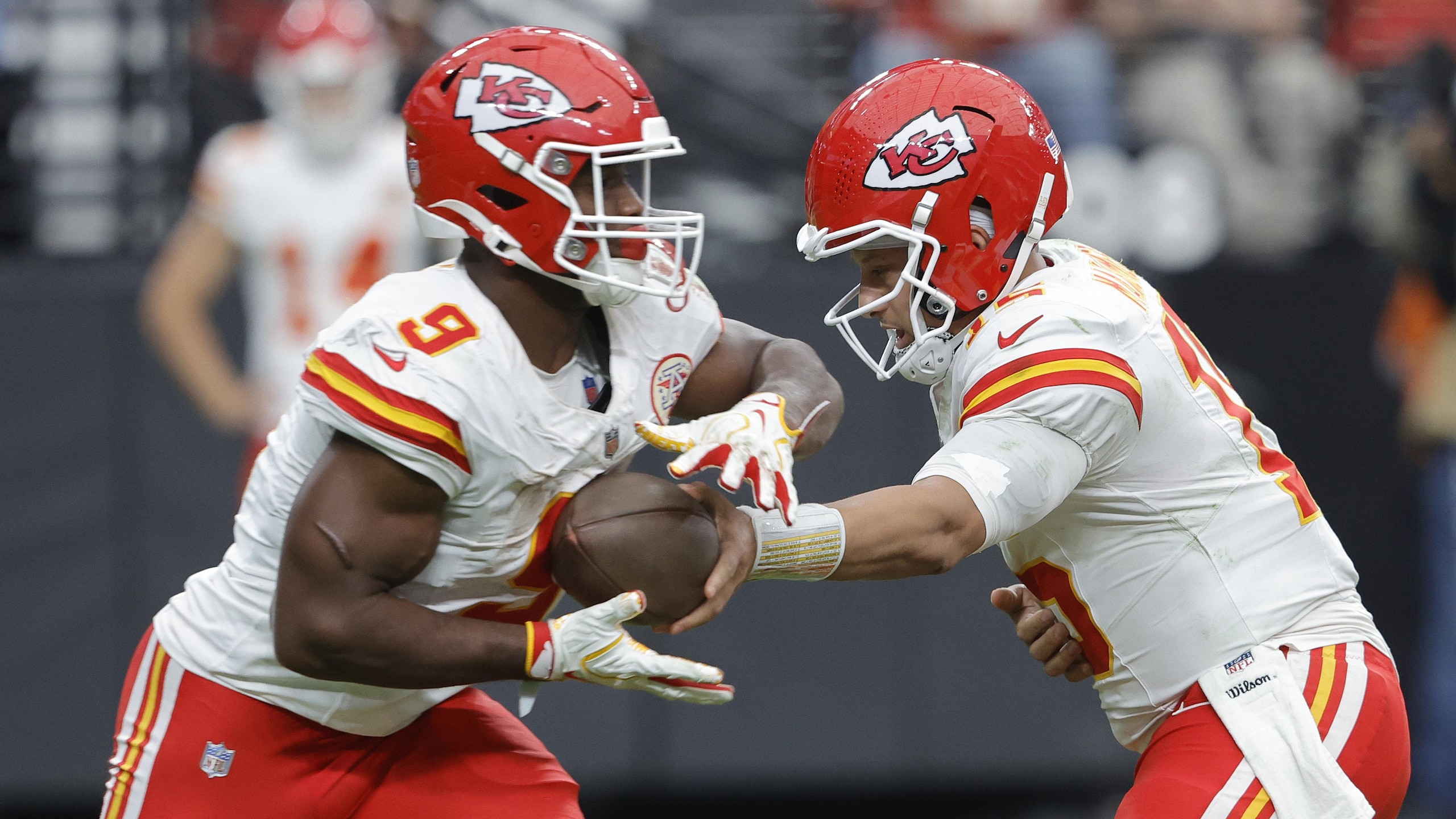
2011-12 San Jose Sharks: A Perspective-Providing Look at the Team's Cup Chances
The Sharks hold the distinction of being the NHL's only team to make the conference finals two years in a row.
Yet the Blackhawks, Flyers, Bruins and Canucks have all won more playoff games than the Sharks in that time.
This is not simply due to the fact that San Jose hasn't won the Cup. It's because they haven't come close. Add up the team's wins from the last two postseasons and you get 15, which is the same number of wins Vancouver had last postseason alone.
TOP NEWS
Mark Scheifele Landing Spots 📍

Trade Block Big Board for October

Every Team's Odds to Win the Cup 🏆
In other words, the Sharks could be twice as successful this postseason as they have been in either of the last two, and still fall short of winning the Stanley Cup.
This isn't to say that the Sharks are not a dominant team. It's also not to say they are all that far from being a Cup winner. They win the division year in and year out, and have proven to be in the upper quarter of the postseason crop for two straight years.
But while the Sharks have dealt with two talented, young, less-consistent teams (Colorado, Los Angeles) and one more talented, deeper, older, slower team (Detroit) twice, they've yet to beat a team that is truly the complete package.
Obviously, the Sharks intended to change that this offseason. But you can't simply beat a complete team; you must first become one. The 2010 Blackhawks and 2011 Canucks had great top sixes, scoring depth and goaltending. Just like the Sharks. They also had deep, puck-moving, elite blue lines, and physical, smart, exhausting bottom sixes. The Sharks did not.
So Doug WIlson went out and attempted to change this. He improved the blue-lines' explosiveness and depth by bringing in Brent Burns, Jim Vandermeer and Colin White. He improved the bottom six's tenacity by bringing experience to the third line (Michal Handzus) and energy to the fourth line (Brad Winchester, Andrew Murray).
In doing this, Wilson did not sacrifice the Sharks' top-six scoring prowess or their elite goaltending. Therefore, the Sharks finally are, on paper, the complete team that they have been trying to become for years.
The question is, how complete are they in reality?
Let's start with the captain. Joe Thornton is at the top of his game and playing even better than he did last season. While his second-half and postseason performance was all anyone could ask for, Joe has come out of the gate stronger this year in order to try to create a dominant yet desperate culture. While last year's second-half run was awesome to watch, the energy the team had to expend may have cost them in the postseason.
Thornton's style of play has been fully embraced by the entire Sharks' top six. Patrick Marleau and Ryane Clowe have turned up the heat defensively. Martin Havlat plays a Thornton-style offensive game, holding onto the puck and waiting for the passing lanes to open up. Logan Couture and Joe Pavelski are simply better than ever, scoring to make the Sharks forget Heatley while playing more consistently and better defensively.
The bottom six is looking better than almost anyone expected. After a slow start, Michal Handzus has been everything the Sharks wanted out of their new third-line center, playing excellent defensively, creating quality scoring chances for Jamie McGinn and Torrey Mitchell, and winning faceoffs.
Brad Winchester has been an absolute force on the Sharks' fourth line, wearing down the opposition with every shift and even scoring some goals. Andrew Murray and Andrew Desjardins bring an energy that comes primarily from their desire to hold onto their roster spot, something that Jamal Mayers and Scott Nichol did not have to do last year.
The blue line is also transformed. Brent Burns has been the targets of some heat so far this season for his risky play and low assist total. What people fail to realize is that the attention Burns draws in the offensive zone has allowed for his partner Marc-Edouard Vlasic to put up 13 points.
Burns' risky passes or jump-ups may lead to some odd-man rushes, but these are calculated risks as he knows that Vlasic is one of the league's best at defending breaks. The duo is +20 combined, and makes Dan Boyle and Douglas Murray, last year's top pairing by a mile, the second-best pairing on the team.
The goaltending is better than ever. While the Sharks as a team are down at number five on the playoff wins list since 2010, Antti Niemi has more playoff wins than any other goalie, or team for that matter. Niemi is one of the few NHL goalies who are markedly better in big moments, and he is probably the smallest question mark when it comes to the Sharks' Cup chances. Thomas Greiss and Antero Niittymaki make the goaltending situation that much deeper and more secure.
The Sharks lost eight out of 10 games in late December and early January last year. This left them in a position where an NHL-best second half was required to even make the playoffs. Currently, the team is reeling, as they have lost six of their last eight.
But before Sharks nation panics, people must remember that every point counts. That means that while these losses are hurting, the 27 points that San Jose racked up in their first 19 games count too.
The team addressed its holes this past offseason, while retaining its strengths. The team is struggling right now, but was the NHL's best team before that. And while last season's bounce-back required a draining 35-game push, the Sharks need nothing more than a return to their normal ways in order to get their built-to-win-in-the-playoffs roster, well, comfortably into the playoffs.
While it would be easy right now to say this is not the team the Sharks need to get over the hump, let's look at things in perspective.

.jpg?w=2560 "NFL investigating 2 referees for separate viral exchanges")
.jpg?w=2560 "OBJ Calls Out Giants After Release")



.jpg?w=2560 "Another Cryptic Tyreek Post 🤨")