
Alfonso Soriano: If No One Remembers, Does That Mean He Wasn't a National?
It has been three seasons since Alfonso Soriano roamed left field for the Washington Nationals. Well, roamed isn't the right word. Tripped is more like it.
His defense reminded me of that kid on every Little League team who was hidden in right field because he couldn't catch a cold. But he was poetry at the plate. He hit .277-46-95 with 41 steals. He told anyone who would listen that he didn't want to be traded at the July 31st trading deadline, that he wanted to play and stay in D.C.
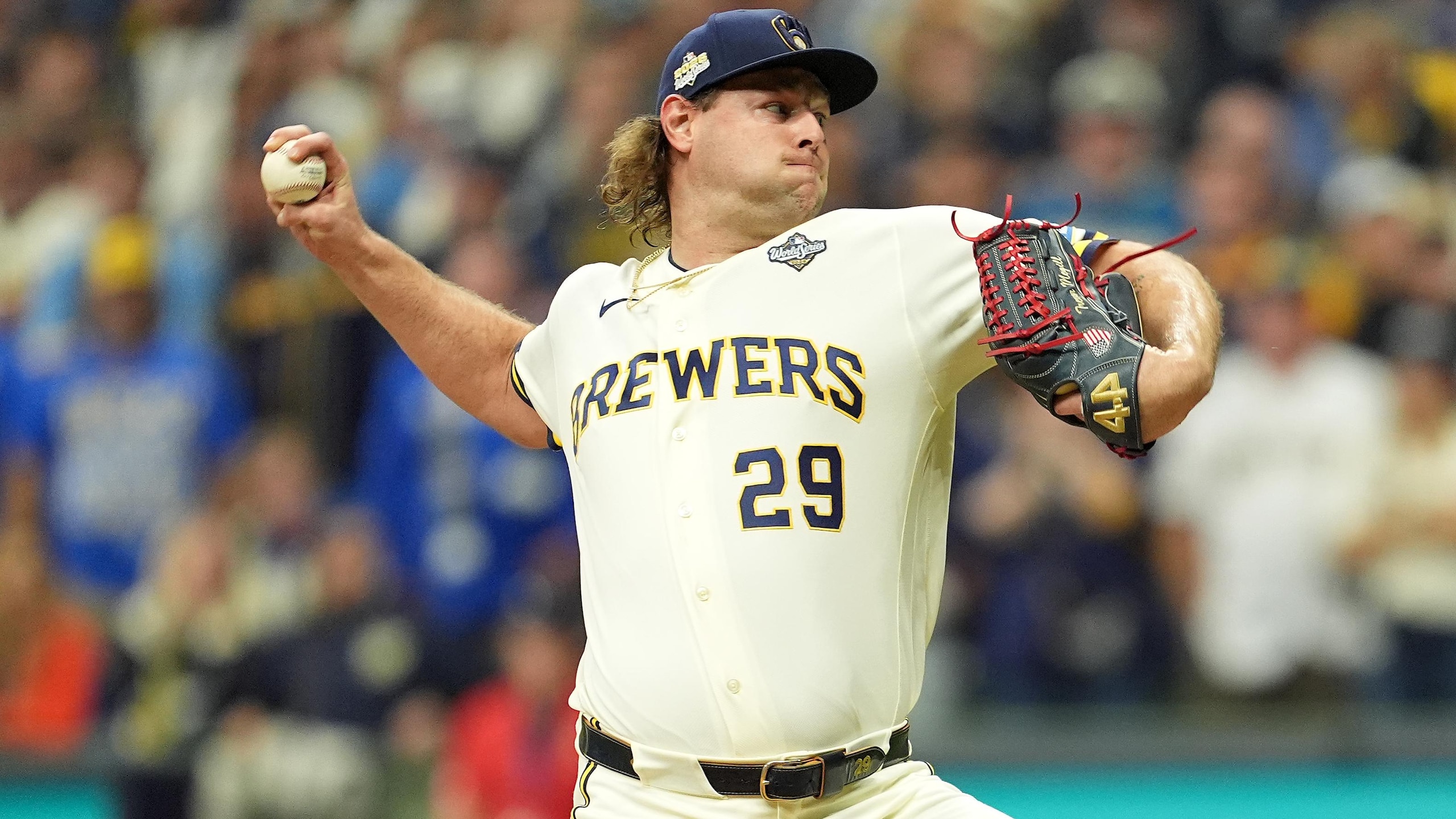
Yet before America could even sit down to eat their Thanksgiving turkey, he signed a $136 million dollar deal with the Chicago Cubs.

.png?w=2560)
So much for loyalty.
But will he be remembered for his one great year in Washington? In ten years, will anyone say, "Gee, I didn't know he played for the Nationals?"
The answer is no. And if history does repeat itself, I can prove it.
In the spring of 1976, Reggie Jackson was the premier power hitter in the American League. At 29, he had already hit 254 home runs with the Oakland Athletics, and was beginning to—from his perspective anyway—become too big and too famous and too important to continue playing on the wrong side of San Francisco Bay. He moaned and he grumbled and made it clear that he was going to punch his free-agent ticket after the season and find a place to play that was commensurate with his greatness.
Now ol' Charley Finley, owner of the Athletics, was as shrewd as he was volatile, and he wasn't about to lose his star player without receiving something in return, but neither was he going to trade him to New York so Jackson could get his wish to play under "the bright lights of Broadway."
So he traded him to Baltimore, strictly end-of-the-word as far as Jackson was concerned.
Just days before the season was to open, Finley traded Jackson, Bill VanBommell and Ken Holtzman to the Orioles for Paul Mitchell, Mike Torrez and Don Baylor. Talk about a blockbuster. As an Oriole fan (Yes! Hate me!), I was pumped.
Van Bommell for Mitchell and Torrez for Holtzman were a wash, but getting Jackson for Don Baylor was a steal. There was never a doubt in any of our minds that Jackson wouldn't sign a long-term deal with the Orioles. As far as we were concerned, Memorial Stadium was the nexus of the baseball universe; there was nowhere else to go.
Jackson lived up to his hype. Just like Soriano thirty years later, Jackson was without question the shining star of his team. He didn't hit three homers in a game, but I saw him hit two against the Angels. He was electricity on the field.
Though history has painted Jackson as a surly man, Reg-gie, Reg-gie was every bit a fan favorite in Baltimore as Soriano was in D.C. When Ryan Zimmerman hit that walk-off ninth inning home run on opening day, he was compared not to Soriano, but Reggie Jackson, who's late game heroics are remembered still today. Jackson was a far bigger star in '76 than Soriano is today.
And yet, few remember that Jackson was ever a Baltimore Oriole.
Reggie Jackson is remembered around the city of Baltimore as the player who used their town as a stepping-stone to the bright lights and big money of New York City. His five year, $3.5 million dollar deal rocked the baseball world then just as Soriano's eight year, $136 million dollar contract did in 2006. Boog Powell and Brooks Robinson weren't the players Jackson was, but they were loyal to the city of Baltimore, and remain heroes there today.
Jackson gave the city just one year.
And he's long forgotten.
Yes, Alfonso Soriano provided the city of Washington with some amazing moments during his time in D.C. I think it fair to say that he was a better player than anyone on the expansion Senators, and compares favorably to any hitter on the original Nats.
But he wasn't loyal.
He refused to play in the outfield right up until that second game of spring training. He said he wanted to stay in Washington, and pleaded with Jim Bowden not to trade him at the July 31st deadline. He gave every indication that if the Nationals showed some loyalty, he would too.
No, he wasn't talking about a "home town" discount—at least not a significant one—but it did seem that he would give the Nationals at least an opportunity to match other team's offers. As it turns out—according to Bowden anyway—Soriano's agent Diego Bentz never even returned his phone calls once the free agency feeding-frenzy began.
It's been thirty years since Jackson played with Baltimore. Fast forward thirty years from today, to a time when our spanking new ball park will have already begun to show its age. (How many name changes to you think the stadium will go through over that time...five...six?)
I seriously doubt that any of Soriano's history or histrionics will be remembered to any great extent. Frank Howard played in Washington for eight years and was one of the most beloved athletes ever to play in this city. He loved us as much as we loved him. Alfonso Soriano, like Jackson before him, used D.C. as a stepping stone to greater riches. Fans try to forget players like that.
Frank Howard was a rock. Soriano was a stepping-stone. Frank Howard is getting a statue in front of Nationals Park. Alfonso Soriano is getting a huge paycheck. That pretty much sums it up, don't you think?




.jpg?w=2560 "Raiders Could Start Mendoza")

.jpg?w=2560 "Rodgers Iced Out on Plane 💎")



.jpg?w=2560 "🚨 Week 8 AP Top 25 Poll")