Featured Video
El Clásico Combo XI 🤩

Man. United Fans Should Feel Lucky They Have the Greatest Manager in the World
Carlyluvsunited
Manchester United achieved a unique double last year, champions of England and champions of Europe, but no one seems to have celebrated it or even recognised the fact they did it.
Probably because we have had to put up with the precocious antics of Cristiano Ronaldo and listen to the idiot, Sepp Blatter, declare all players are becoming slaves—albeit on £100,000 per week.
Then we had Euro 2008 closely followed by the Beijing Olympics and voila, here we are, almost halfway through another season.

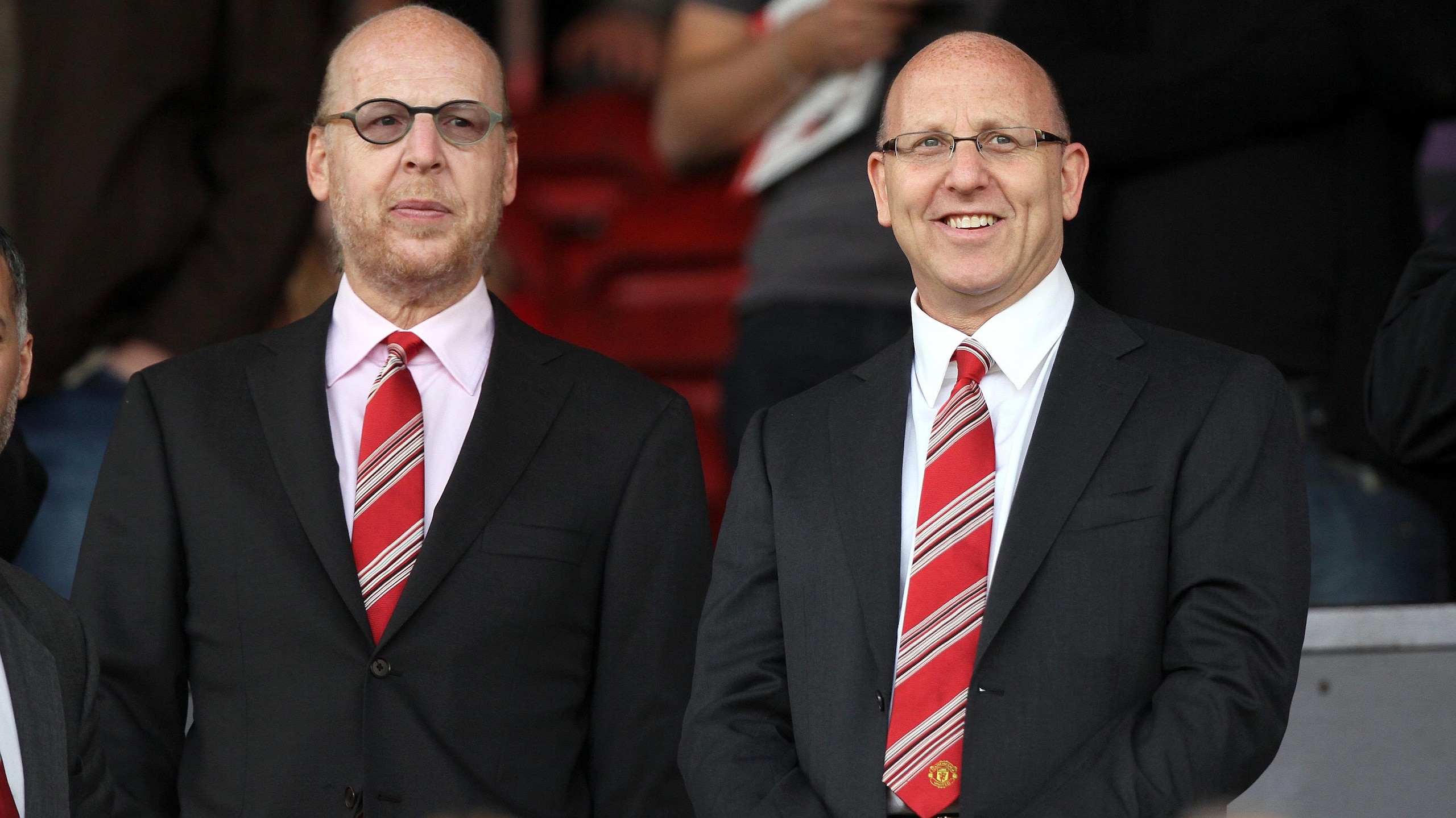
I hear a lot of people putting Sir Fergie down, pushing aside his records and all he has achieved with United. I think it's an English thing because they gave Fabio Capello 28 minutes into his first game with England before booing.
They love failure for some reason and it appears they even court it. They expect to fail, and when they do fail, they get bitter because they failed. In the same vein, they won't recognise anything Fergie does until he is long gone.
This is sad and a great shame.
The simple truth is, no matter who believes it, Sir Alex Chapman Ferguson CBE is the greatest football coach and manager to ever walk this planet. It's as simple as that and there is no argument possible to even contest it.
In statistical terms, Ferguson's career is, quite simply, incredible and would be so even if it were fiction. The end of last season brought him a 10th English league championship in 21 seasons as United's manager.
No other manager in English history even comes close: Bob Paisley won six with Liverpool, Matt Busby five with United and Herbert Chapman four with Arsenal and Huddersfield in the 1930s.
If we look outside of England, Rinus Michels won five league championships—four with Ajax and one with Barcelona—whilst Fabio Capello won four at AC Milan, two at Real Madrid and another at Roma—although another two at Juventus were taken away in the match-fixing scandal.
Only in Scotland is Ferguson's achievement matched: Jock Stein, his friend and mentor, led Celtic to 11 Scottish titles. All due respect to Scotland and their FA, but it's not quite as competitive up there so I personally think Fergie's achievements are a lot better.
In all, United have won 58 percent of the 1,210 league games played under Ferguson. That's 702 wins up to the end of May 2008. That surpasses even the record of Matt Busby, who won 50 percent of his 1,141 games in charge.
Alex Ferguson's teams have lost only 18 percent of their competitive games, compared with 26 percent under Matt Busby.
Since the inception of the Premier League, Ferguson's record has been even more remarkable. In the 16 years of the Premiership, United have totalled 155 more league points than Arsenal—their nearest challengers—221 more than Chelsea and 244 more than Liverpool.
That's nearly 10 points a season better than Arsenal on average, nearly 14 points better than Chelsea and more than 16 points better than Liverpool—astonishing margins.
In the process, United have also played consistently more attractive football, averaging 1.97 goals per game compared with 1.69 for Arsenal, 1.58 for Chelsea, and 1.6 for Liverpool.
They have also defended better, conceding 0.87 goals per game compared with 0.88, 0.98 and 0.98 respectively for their main rivals.
If all that were not enough, Ferguson has also brought a total of 20 major trophies to Manchester: two European Cups, one European Cup-Winners Cup, five FA Cups—a record for a manager—and two League Cups.
Against that, Michels has won a total of 14, Paisley 13, Capello 9, Busby 7, and Chapman 6.
But there's more because prior to joining United in 1986, Ferguson led Aberdeen to three league championships, four FA Cups, one League Cup and a European Cup-Winners Cup in Scotland. There's also the matter of two European Super Cups and an Intercontinental Cup—United became, so far, the only English winners of that trophy.
That's 32 major trophies for Alex Ferguson overall, ahead even of Jock Stein's total of 29 in Scotland and within a much tougher league in England.
Along the way, there have been three English League and FA Cup doubles, making Sir Alex the first to do it twice and then three times, and this was followed by one League and European Cup double.
Above all of that, in 1999 Ferguson led United to the league championship, FA Cup and European Cup treble, the single greatest achievement by any club in English football history and something unmatched in the Spanish, Italian, French, and German leagues—you could not make it up.
However much partisanship might colour our perceptions of the relative merits of the great managers, indisputably Ferguson stands pre-eminent in the history of English and European football, yet statistics do not give us the full substance of the man.
It is all too easy to forget that Ferguson took over something of an empty shell in 1986, a club living on fading memories of the Busby era, as much about tabloid notoriety as football achievement.
With a ferocity that many found difficult to live with, he removed the drinking culture that he found, got rid of some outstanding players who had lost their way, confined the media to the fringes of the club's business, and resurrected the club's youth development system.
He built a professional training and coaching system still unsurpassed in England, and he also demanded and achieved a unity of purpose and clarity of focus that turned talented players into winners.
Perhaps his greatest achievement has been that he has managed to blend the demands of a more tactical and defensive modern game with the attacking verve and individual swagger established by Busby as the United way of playing—a way that made a provincial club the best supported team in the world.
It was a challenge that defeated previous United managers, including even Busby in his late years, but Ferguson's teams have managed to provide plenty of scope for individual expression within the framework of team organization.
This has meant that players like Cantona, Giggs, Rooney, Ronaldo, Scholes, Sharpe, Yorke, Cole, Beckham, Anderson and many others have developed into artists who could stretch the imagination of those lucky enough to watch them whilst still playing winning football.
These skills have been paraded through four successful United teams built by Ferguson.
If the first was something of a transitional side in the 1990-92 seasons, then the other three—1993-94, 1999-2001 and 2006-08—have all been great ones.
The treble in 1999 must rank that side as the greatest of them all, indeed as the greatest in English club history, not only for the magnitude of the success but also for the flair and style with which it was done.
It exemplified what all Ferguson's teams are about—skill and flair embedded in a high level of organization and a ferocious team spirit. All this makes Fergie something more than a successful coach and places him in the ranks of those great managers who can ''build a club,'' men like Michels, Stein, Shankly, Clough, Nicholson, Wenger.
In this company, Busby stands supreme because we cannot begin to imagine what it took to turn a bankrupt, provincial club without a stadium into one renowned throughout the world and to change the idea of football in favour of youth and flair.
He managed to drag English football into Europe and also managed to resurrect the club after the Munich air crash by winning the European Cup a decade later. By contrast, Torino have never recovered fully after losing their great team in a 1949 air crash.
Alex Ferguson belongs alongside Matt Busby, adapting the Busby legacy to new realities and taking the club to new heights during his 22-year spell in charge.
It is only in his relations with the media that Fergie can be considered less than successful.
Some would suggest that he has had to deal with a more unscrupulous and contemptible press than any that Busby, Shankly or Stein faced, but it is also true that his constant conflicts with them have done neither himself nor his club any favours.
It has encouraged a sustained campaign against the club by the London media so that United's enormous contribution to the community and to Unicef, as well as other charities, gets a Chinese government-type media blackout.
It has also led to a media caricature of Fergie with little basis in reality but with a life of its own. The ranting bully who terrorizes his players does not square with their fierce loyalty to him or with their unshakable will to win games from seemingly hopeless positions.
Nor does it square with the esteem in which he is held throughout football, or with the appreciation by other managers for the support and generosity he accords them or, for that matter, with the help and friendship he has extended to individual journalists facing crises in their lives.
The wealth and fame he has achieved in football, and the political and business circles to which he has access as a result, have not altered his friendships—most of which go back to his youth—or his focus on family ties and his social values.
Perhaps that is a truer reflection of the nature of the beast than the media picture.
Maybe, just maybe, once he has retired and he no longer threatens them, they will finally give him the full credit we all know he deserves.



.jpg?w=2560 "Raiders Could Start Mendoza")
.jpg?w=2560 "Rodgers Iced Out on Plane 💎")

.jpg?w=2560 "🚨 Week 8 AP Top 25 Poll")

