

NBA Draft 2011: Enes Kanter and the 10 Biggest Risks
When I think of draft blunders, the 2003 NBA draft immediately comes to mind. The Detroit Pistons passed on Dwayne Wade, Chris Bosh and Carmelo Anthony and selected Darko Milicic.
There are plenty more, though.
Adam Morrison, selected third overall in the 2006 draft, was a basketball phenomenon coming out of Gonzaga. He's served four years in the NBA, finding limited playing time (if any) with the Charlotte Bobcats and Los Angeles Lakers.
Morrison has shot 37.3 percent while being a pro. Once drawing comparisons to Larry Bird, he is presently a free agent.
The Portland Trail Blazers selected Greg Oden instead of NBA star Kevin Durant. The 7-foot athlete from Ohio State has played a total of 82 games since drafted in 2007, starting just 60. He missed the entire 2007-08 season after having microfracture knee surgery and has had problems ever since.
Meanwhile, Durant has averaged almost 26 points per game in his career. He has led his Oklahoma City squad to two straight NBA playoff appearances.
I'm not saying there will be a reenactment of the Adam Morrison-over-Brandon Roy pick in 2011.
But there's always the possibility.
That's why these players have red warning labels on them coming into the 2011 NBA draft.
Donatas Motiejunas
1 of 11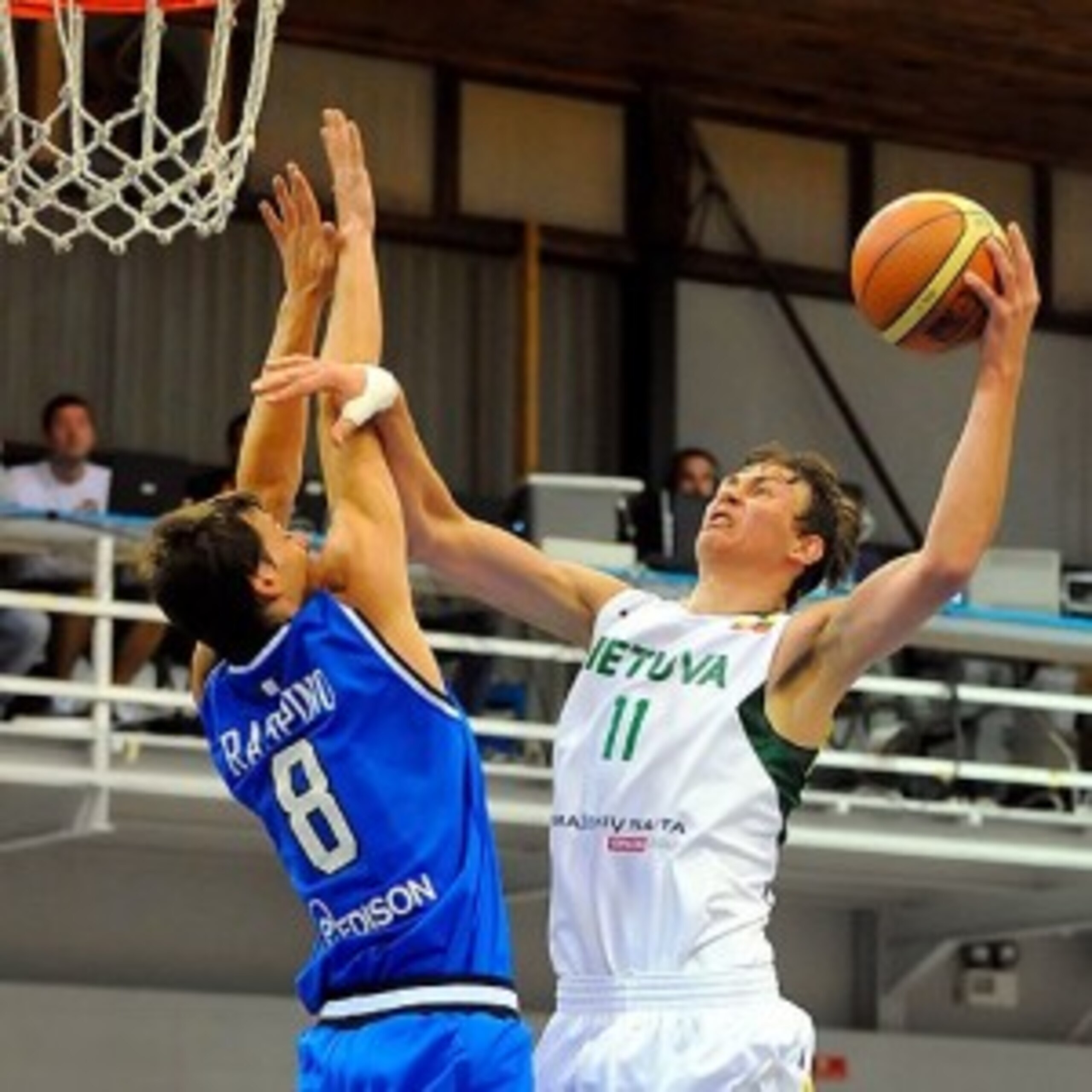
Donatas Motiejunas is a versatile big man who has plenty of potential due to his height and agility. His quickness allows him to run the floor and change directions, which is a rare asset for an athlete his size. The 7-footer has a nice shot with room to improve.
However, Motiejunas has known to come off a bit arrogant; he has shown signs of laziness during games and has lacked intensity. Even when he is clearly better than his opponent, the European athlete won't dominate like he is able to.
This immaturity won't fly in the NBA, and he'll need to grow out of it quickly if he doesn't want to find himself warming the bench.
Another concern is his strength — Motiejunas has a decent physique, but at 7'0 and just 225 pounds, he'll have a hard time contending with other NBA bigs. He will have to add upper-body weight to be a factor.
Davis Bertans
2 of 11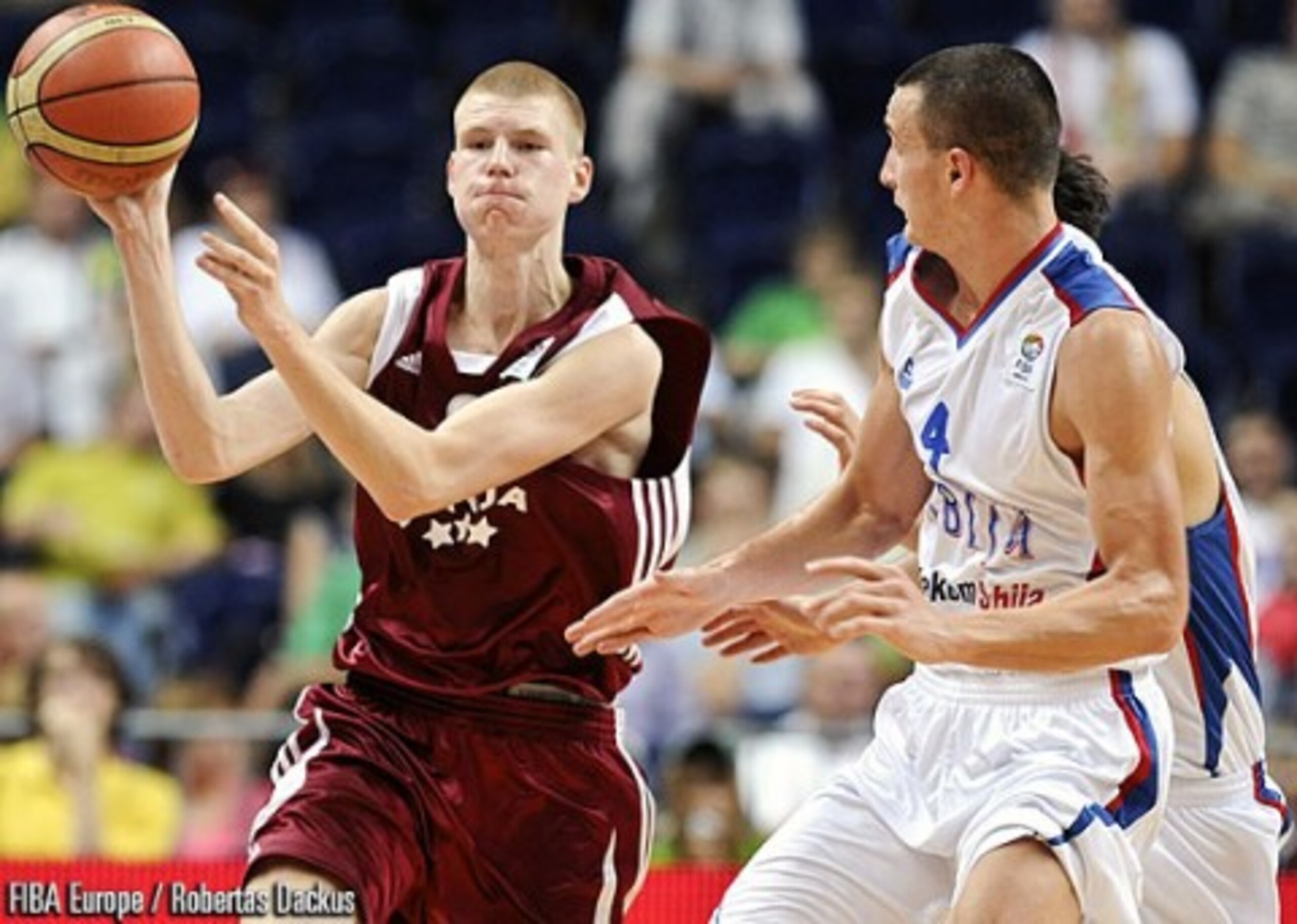
Nike International Director Rich Shoebrooks described Davis Bertans as the top shooter to play on the Hoop Summit International team since Dirk Nowitzki.
Bertans' quick release shooting mechanics are near perfect for the NBA. He is at his best when coming off screens and is forced to catch and shoot, which will make him a dangerous scorer. You'll never see Bertans taking a play off, which goes a long way as a pro athlete.
Even with his great shooting abilities and range, Bertans lacks athleticism. He doesn't have the speed to perform at the NBA level and does not spend a lot of time dribbling the ball.
He stands at 6'10, but only weighs 211 pounds — undersized for either forward position. Bertans hasn't ever been a threat underneath the basket and has relied on his mid-range shot, most likely dooming him to being a role player in the NBA.
Jan Vesely
3 of 11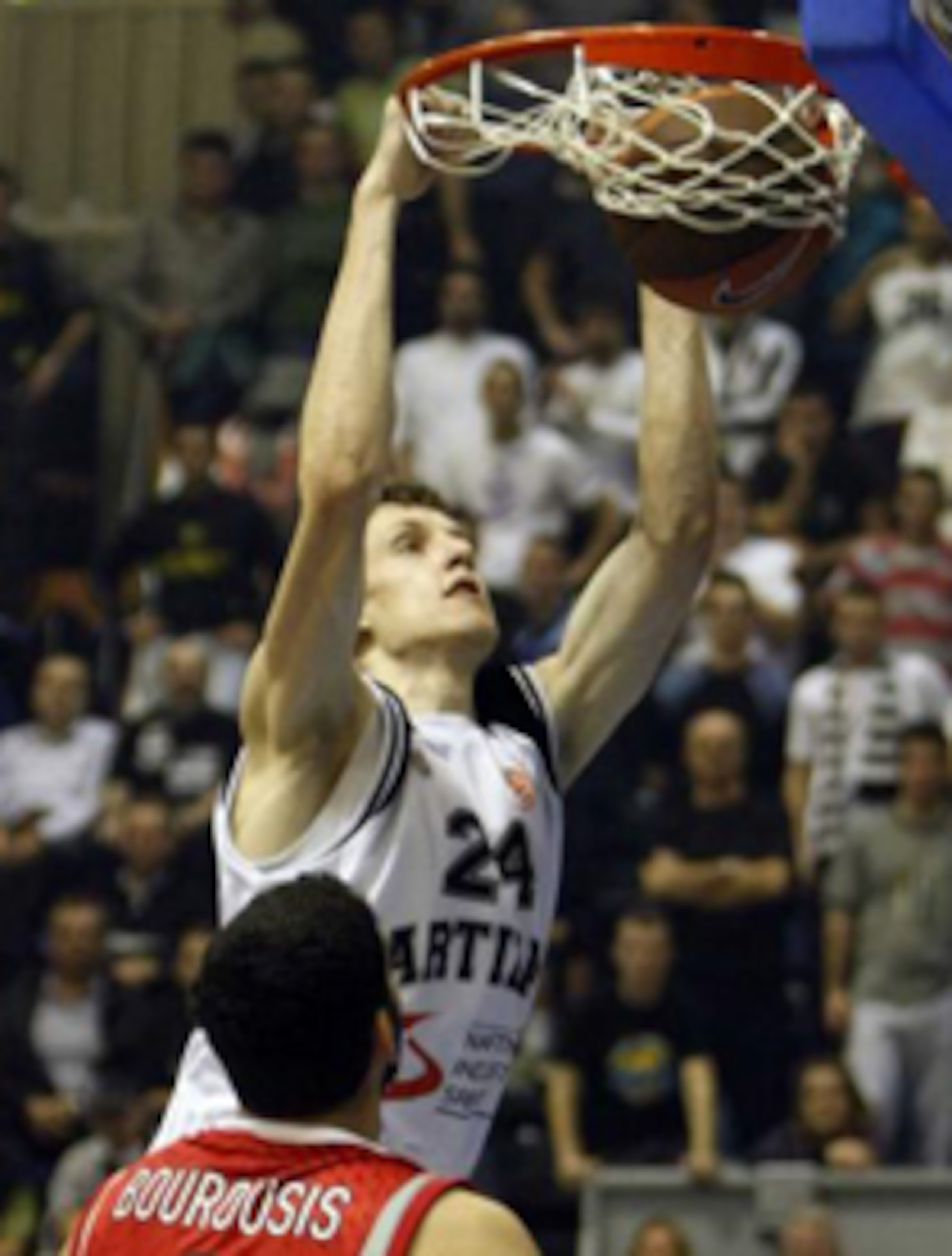
Jan Vesely is a 6'11 forward from Czech Republic. His combination of size and length gives him a great offensive game; at the small forward position, he has a tremendous size advantage and usually has no problems scoring inside. Vesely has continued to improve his game at every level, especially with the three-point jumper.
His explosiveness and quick feet helps him defensively, as he's able to guard multiple positions. Even with his lanky size, his footwork enables him to stick opponents well.
Vesely needs to continue to get better on offense. His one-on-one game is "iffy" at best and his numbers weren't great (10.1 points per game, 3.6 rebounds per game). Most of the points he scored were off dunks or put-backs. The Euro-athlete possesses strength, but his toughness is questionable.
These questions rise as whether he'll succeed in the NBA.


Bismack Biyombo
4 of 11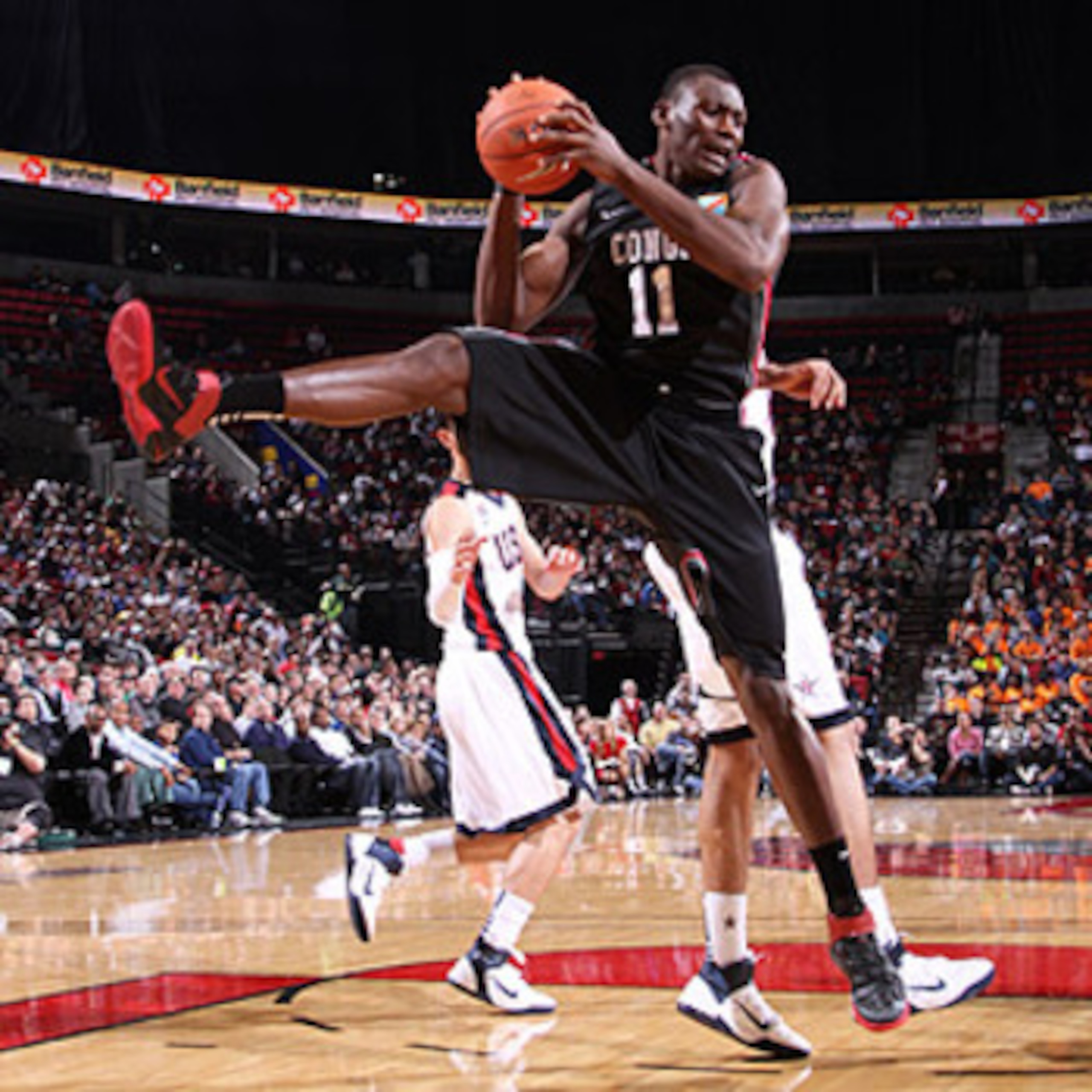
Bismack Biyombo's body is already NBA-ready — he stands at 6'9 and has a 7'7 wingspan. He can block shots at will and is a prophetic rebounder, especially offensive boards.
Biyombo recorded the first triple-double in the history of the Nike Hoops Summit. He finished with 12 points, 11 rebounds and 10 blocks in 28 minutes for the World Team.
Nevertheless, there are plenty of risks when it comes to Biyombo. No one knows his real age — there have been many occasions with foreign-born players (many from Africa) to doctor birth records.
He is extremely raw on offense and struggles with his post game; Biyombo averaged just 6.4 points in 14 games this past season. He's awkward underneath the rim and has a weird jump shot.
Although he has the potential to become a huge impact player, there is definitely a risk in taking him.
Kyrie Irving
5 of 11
Kyrie Irving is a can't-miss player and will most likely be the No. 1 overall pick in the NBA draft.
This is why he has a target on his back to become an immediate impact player and to live up to his high expectations.
Irving works the court with ease and makes difficult passes effortlessly, getting everyone involved (4.3 assists per game).
He also averaged just one giveaway per 11 minutes of playing time. Irving did an unbelievable job of putting a team full of veterans on his back while even-handedly making those around him better; Duke had a 10-1 record when Irving was in the lineup.
The freshman averaged 17.5 points per game during his eight-game regular season at Duke. He missed the next 26 games with a right toe injury before returning to score 53 points in just 72 minutes in the Blue Devils' three NCAA Men's Basketball Tournament matches.
But that's just the problem.
Durability is a real concern after he missed most of his only college season — was his turf-toe injury a fluke, or will it continue to be a problem?
Also, lack of experience at the college level poses a problem. The point guard position at the next level is extremely difficult to figure out and players need as much action coming in as they can.
The team that chooses Irving (Cavaliers?) will be rolling the dice.
Kemba Walker
6 of 11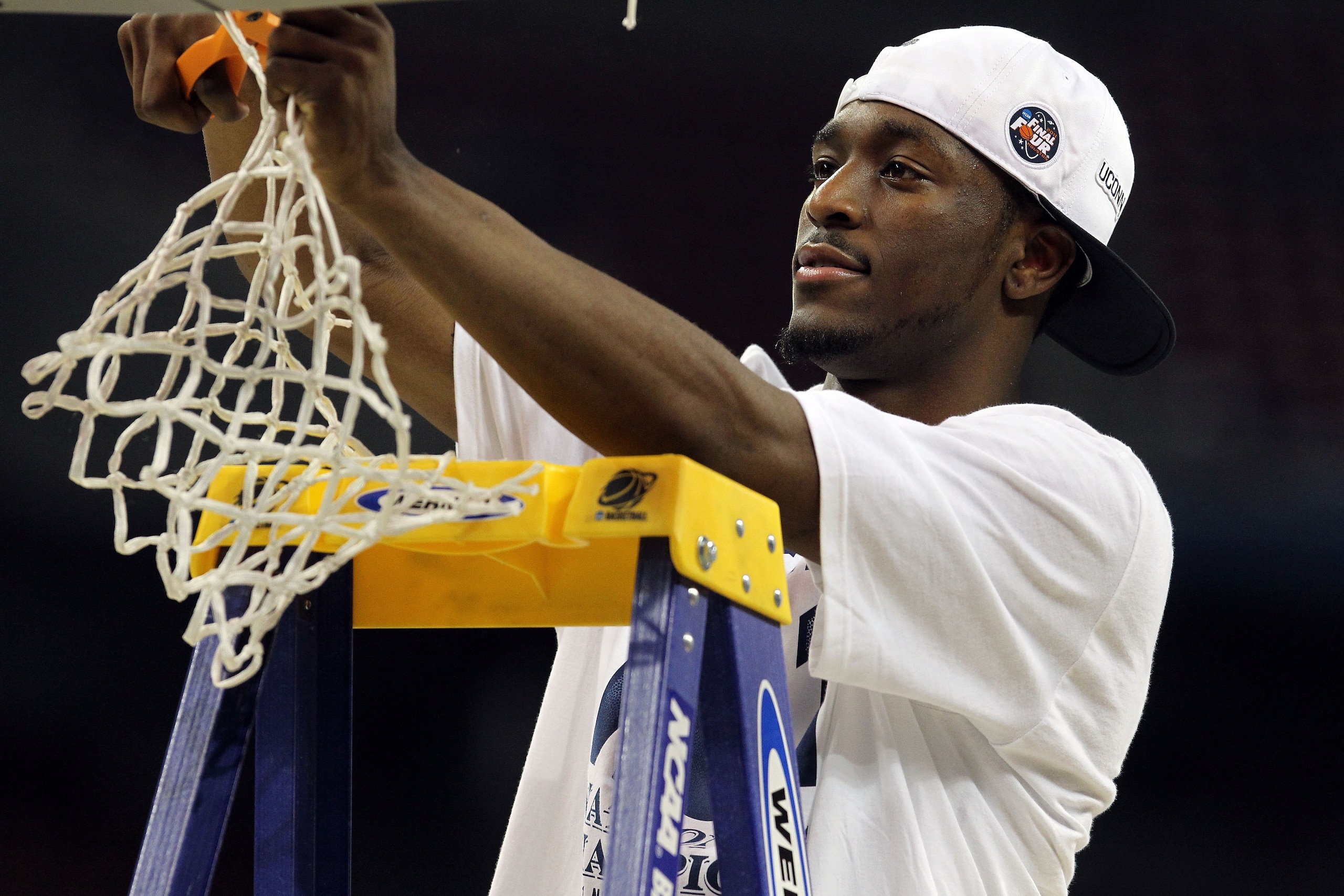
Kemba Walker plays with a special burst of speed that opponents fail to keep up with. He can score from anywhere on the court and is extremely difficult to be contained by one defender. The national champion is very creative with the ball and is able to complete plays through contact.
Despite his extraordinary scoring ability, he has no problems getting the ball to his teammates (4.5 assists per game), making open shots for others by taking on the double-team. His speed translates to the defensive side of the ball as well — Walker snatched the rock from opponents at an average of 1.9 steals a game.
However, defending NBA point guards will be a serious challenge.
Walker is substantially smaller than most at his position. Yes, he was measured at 6'1 with shoes on, but his reach was just 7'7.
He also has no regard for his body and his 184-pound frame takes way too many hits. Injuries have not been a problem, but if he does not control himself better on the court, endurance could be a future issue.
Every now and then, Walker plays out of control (2.3 turnovers per game). He can try to force things when there's nothing there. Fearlessness can be a great asset in the league as long as it doesn't become irresponsibility. His stroke needs work and his shot selection could improve.
Kemba Walker could be do or die.
Kenneth Faried
7 of 11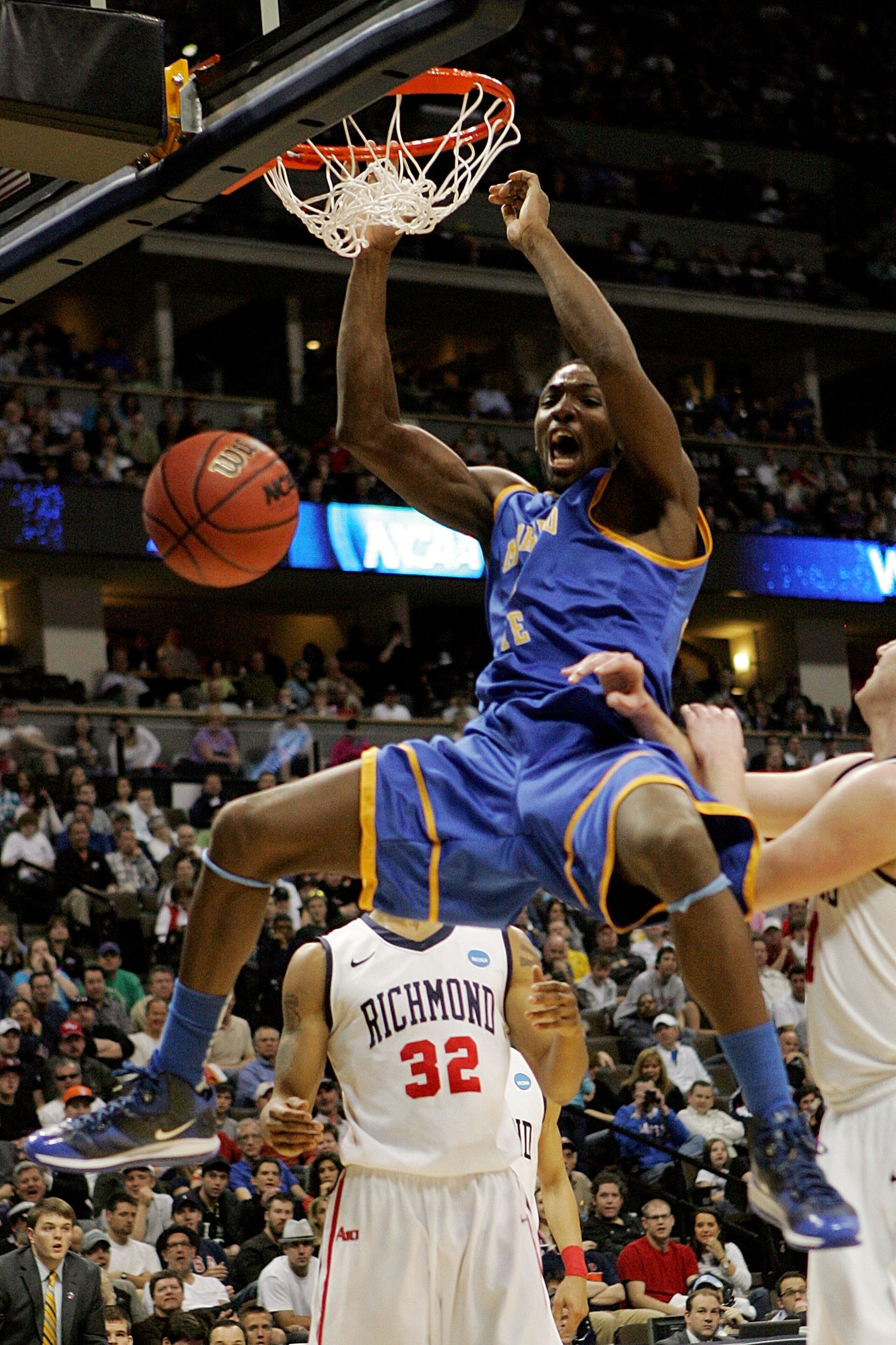
Kenneth Faried provides a huge spark on the court and can change momentum in the blink of an eye.
Drawing comparisons to Dennis Rodman, Faried was the best rebounder in the NCAA last season at 13.3 rebounds per game. He plays with high intensity and aggressiveness, sacrificing his body every time. He's also a well-timed shot blocker.
His long arms help his dominance on defense as he led the Ohio Valley Conference with 2.3 steals per game. Faried excels in the low post and looks most comfortable when battling with another opponent underneath the rim.
However, his lack of versatility on offense decreases his stock. His shot performance is subpar and most of his points came off of dunks.
Faried had no problems winning battles in the paint against lesser teams in the OVC — he is undersized both in height (6'8) and weight (225 pounds) to play the power forward position at the NBA level.
Offensively, Faried is extremely predictable. If he wants to find playing time in the NBA, he'll need to further develop his raw hook shot and then some.
Until then, he's doomed as a role player.
Jimmer Fredette
8 of 11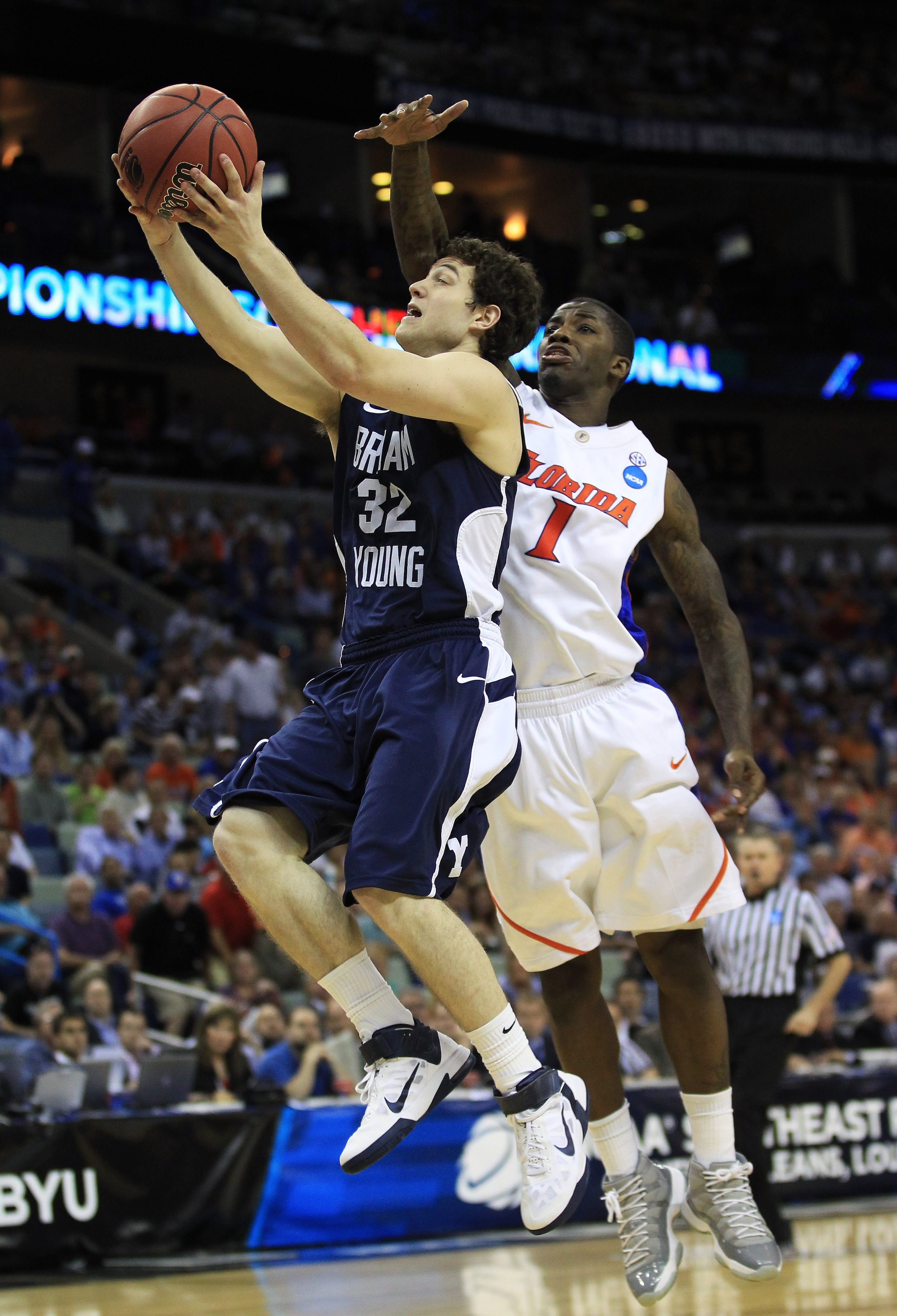
The National Player of the Year is on the move.
Jimmer Fredette, the NCAA's leading scorer in 2010-11 at 28.9 points per game, has been slowly but surely rising in mock drafts around the country.
Fredette is undoubtedly the best pure scorer coming into the draft, and is relentless when doing so; he averaged 3.3 shots made behind the arc (39.6 percent) and has ridiculous range.
He is confident in his shot and proves it by pulling up and shooting a quick jump shot in transition from anywhere on the court.
He has an uncanny ability of getting to the charity stripe and is deadly from the line (89.4 percent). He has a size advantage at the point guard position and his strength aids him when drawing contact.
Fredette's ball-handling skills are a valuable trait that will carry him in the NBA.
The nation's leading scorer has undeniable potential and plenty of reasons why he'll be great at the next level.
Which is why he's applicable for a bust.
Fredette is a mediocre defender and struggled against even the lesser teams in the Mountain West. He struggled to close out on shooters as his athleticism isn't up to NBA standards for the PG position.
His assist-to-turnover ratio was very poor (4.3 assists to 3.5 turnovers per game) and will need to drastically improve.
Jimmer Fredette has a Tim Tebow-like feel to this draft and will probably be selected halfway through the first round. And even that's a gamble.
Derrick Williams
9 of 11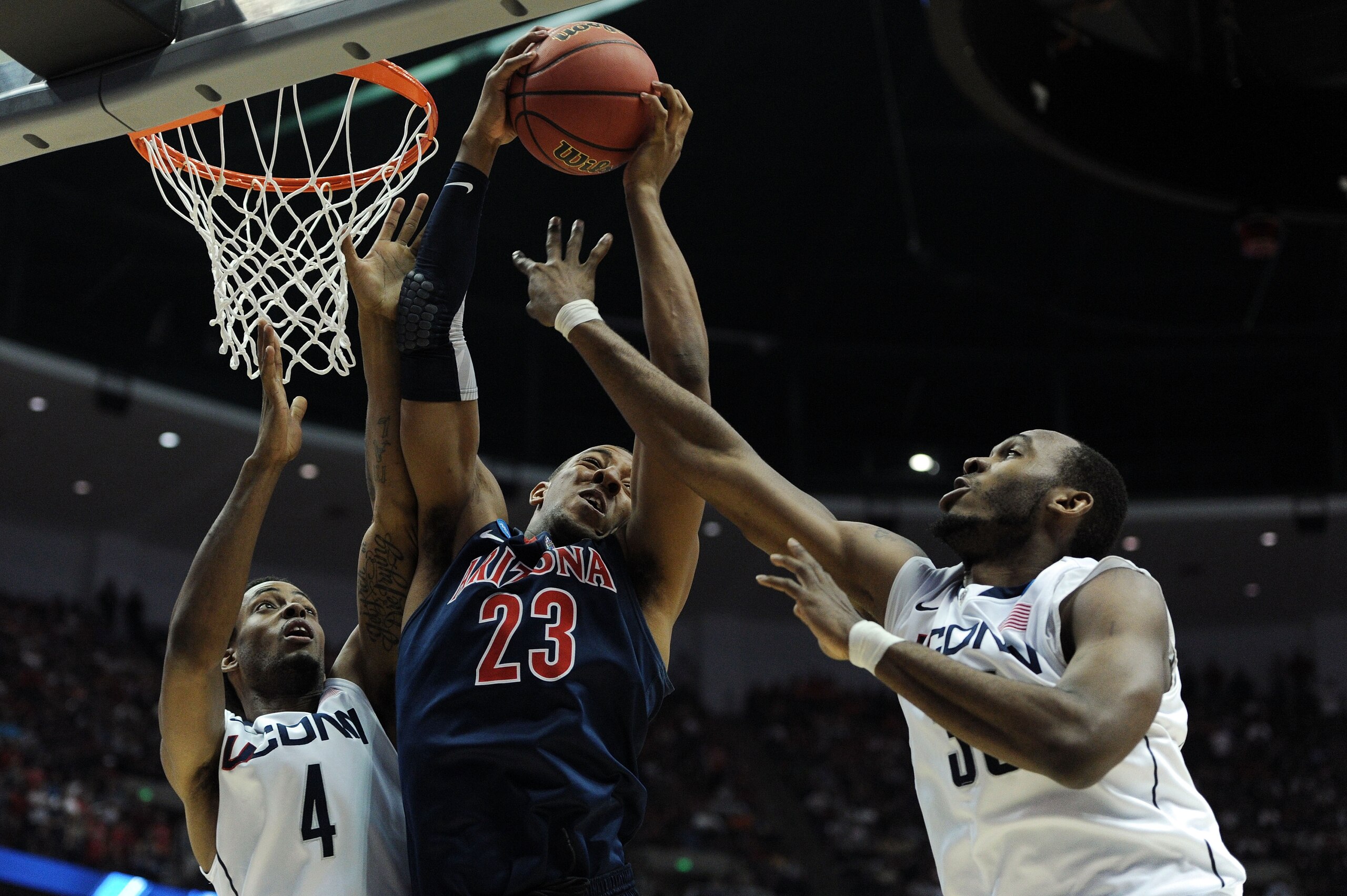
Derrick Williams was certainly the best player in the Pac-10 last season.
.
The 6'8", 240-pounder has the versatility to play either forward position but will have to rely mostly on his athleticism.
He's a decent rebounder but can score at will with his greatest strength at the mid-range shot. Williams is also very strong inside and has been known to orchestrate plenty of three-point plays.
Derrick Williams was an All-American his freshman and sophomore year at Arizona. He is an explosive athlete who flourishes around the basket.
He is effective using both hands and handles the ball well for the power forward position. He is strong around the perimeter and controls his opponents with authority.
Williams scored 19.5 points per game last season while grabbing 8.3 boards. He made almost 60 percent of his attempted shots and hit 56.8 percent of his three-pointers. The Wildcat also showed his greatness from the free-throw line, knocking down 75 percent.
There are some questions about which position he will defend effectively.
Williams believes he's more of a small forward rather than power, and its hard to see him guarding NBA SF's. His quickness is average as he had some problems defending others at his position in college.
He needs to improve on crashing the boards — averaged only 5.5 a game and frequently allowed second-chance opportunities to the opponent.
Williams collapses under the double-team and turns the ball over quite often. He also found himself in foul trouble, preventing him from seeing the court as much as he'd like.
Jonas Valanciunas
10 of 11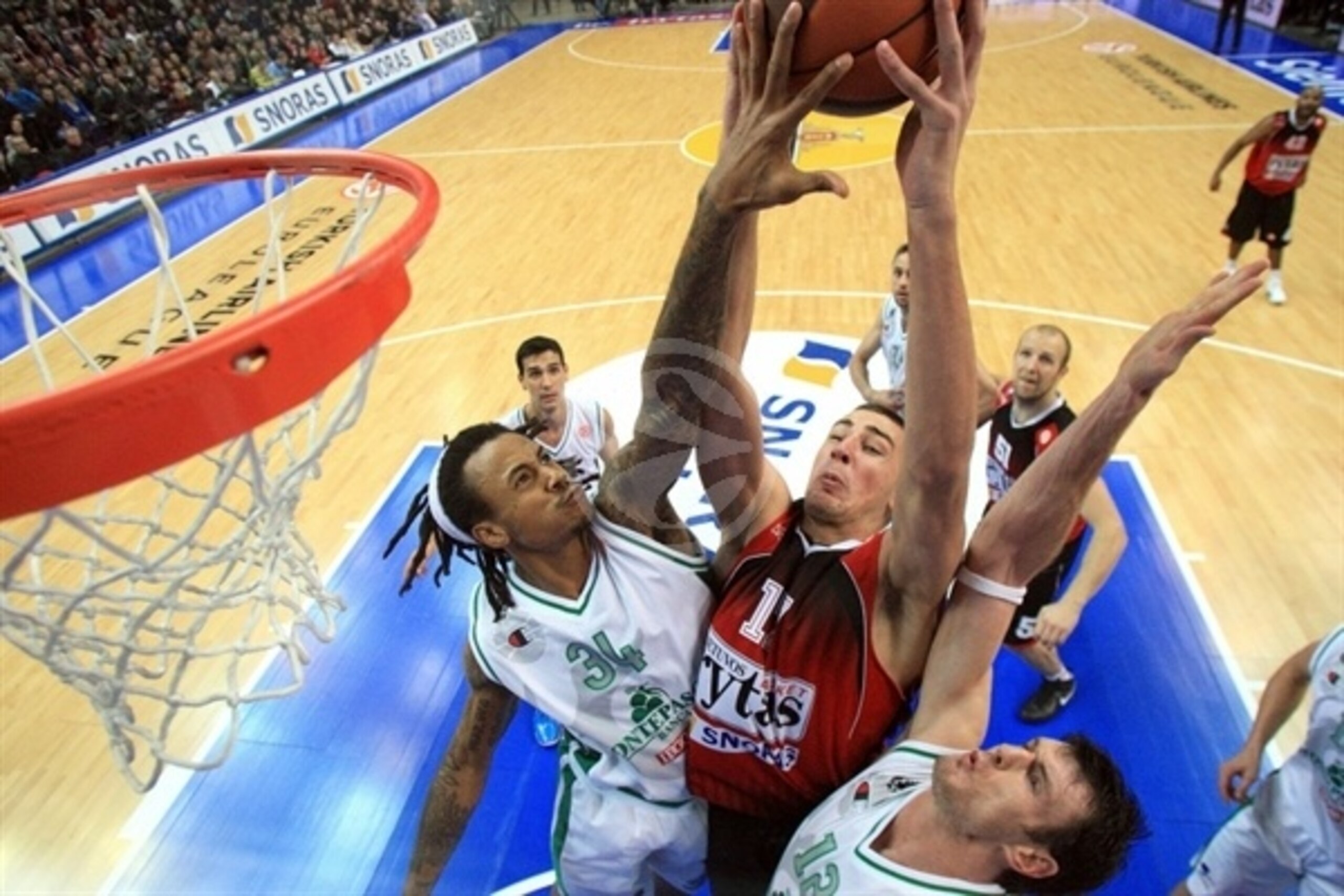
Jonas Valanciunas is 6'11 and 240 pounds.
And he just turned 19.
The Lithuanian has tremendous size; his long frame and huge wingspan helps him grab rebounds with ease. He has solid speed and quickness for a center of his size and utilizes these attributes to attack the glass on both sides of the ball.
Valanciunas is a great shot blocker and always competes with aggression on defense. His long arms make passes in the lane difficult. Although his best chances of making a shot are close to the basket, he possesses good shooting mechanics for a big man.
His talent is raw but his age proves he has a lot of time to develop his game and to work on his hook shot. The scary thing is he will continue to grow.
The thing with Valanciunas is he may be too raw. Its hard to tell if he'll fit in as an NBA player since he's so young. He has no ability to create his own offense just yet and relies on tip-ins and put-backs for scores. His perimeter game struggles and has not proven he can break a double-team.
Valanciunas plays hard but seems to get into foul trouble too easily. He obviously has talent but definitely needs to know the game better and continue to get a feel for the court.
He's currently signed with Lietuvos Rytas and the buyout contract is over $3 million, so he most likely won't see an NBA court in 2011-12.
Enes Kanter
11 of 11
Enes Kanter comes in with the biggest question mark of any other draftee.
And the highest intrigue.
Kanter stands at 6'11 and 260 pounds with excellent size, strength and polish. His soft hands, long arms and high skill level allow him to be a huge force in the paint; also a great rebounder. Kanter enjoys contact and will get to the free-throw line.
He has a high basketball IQ and a scorer's mentality. He owns a creative offensive game that's one-of-a-kind and he possesses perfect dexterity and body control for a big man.
Kanter has completely dominated his age group for awhile in European competitions and leagues. He also set the Hoops Summit record for points with 34 in just 23 minutes against the USA team in 2010.
According to ESPN.com, Enes Kanter was ruled permanently ineligible for receiving more than $33,000 in impermissible benefits while playing for the Turkish club team Fenerbahce two years ago. He missed his freshman season (his only season) with the Kentucky Wildcats.
One of the big concerns with Kanter is his physical health. He has had a history of knee problems and did not pass with a 100 percent at the NBA physicals.
His hype is overwhelming and he's projected to be a Top 5 pick, but knee injuries are nothing to mess around with if you're a big man like Kanter (see Greg Oden).
And that's why he's the No. 1 potential bust in the 2011 NBA draft.

.jpg?w=2560 "Grading WWE Raw 🔠")

.jpg?w=2560 "Viral Rams Coach Vid 🖕")
.jpg?w=2560 "Bijan's INSANE 1st Half 🤩")
.jpg?w=2560 "Injury-stricken Seahawks signing veteran RB")
.jpg?w=2560 "2 NFL Officials Suspended")
