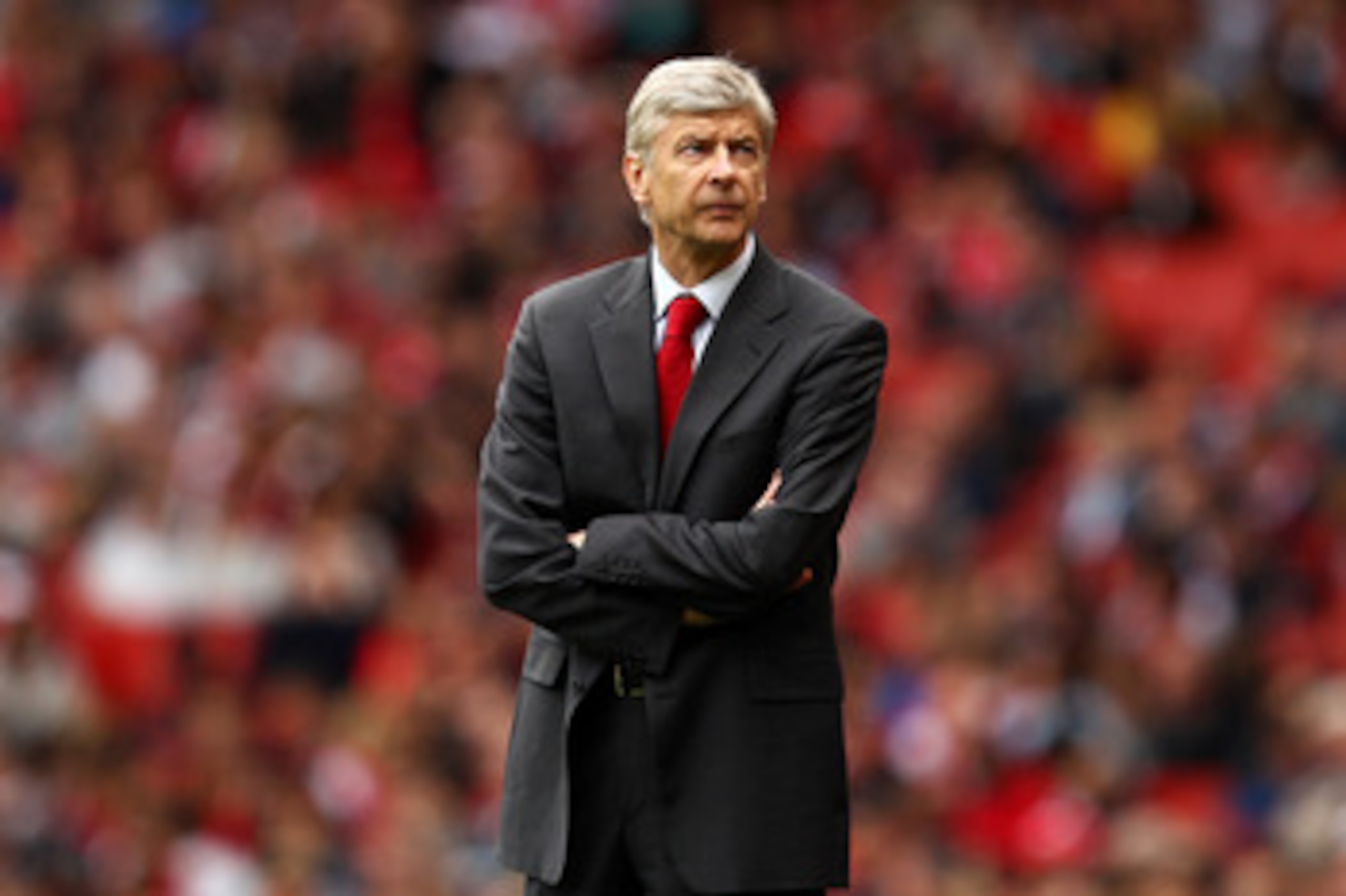

Arsenal: Five Reasons Arsene Wenger Should Change Formation
In 2009, Arsene Wenger began tinkering with new formations designed to get the most from his litany of attacking players. Eventually, what emerged was a hybrid formation, one supposedly flexible enough to do many things during a game.
Arsenal ostensibly begin in a 4-2-3-1 shape. The idea is that their versatile players and fluid style can morph this formation into whatever the team needs it to be. When the Gunners are on the attack, the system becomes a cavalier 4-3-3. When forced to defend, Arsenal can quickly adopt a more defensively sound 4-5-1 structure. That's the theory.
But just how well does this tactic work? During a season characterised by a catalogue of defensive weaknesses, Arsenal were also guilty of a failure to score enough goals when it mattered most.
It seems that neither facet of the Arsenal tactical scheme is efficient enough to end the quest for silverware. Maybe a change of plan is needed to ensure that the team is better equipped to sustain a title challenge? Here are five arguments in favour of tweaking Arsenal's current formation.
1. Over Reliance on Cesc Fabregas
1 of 5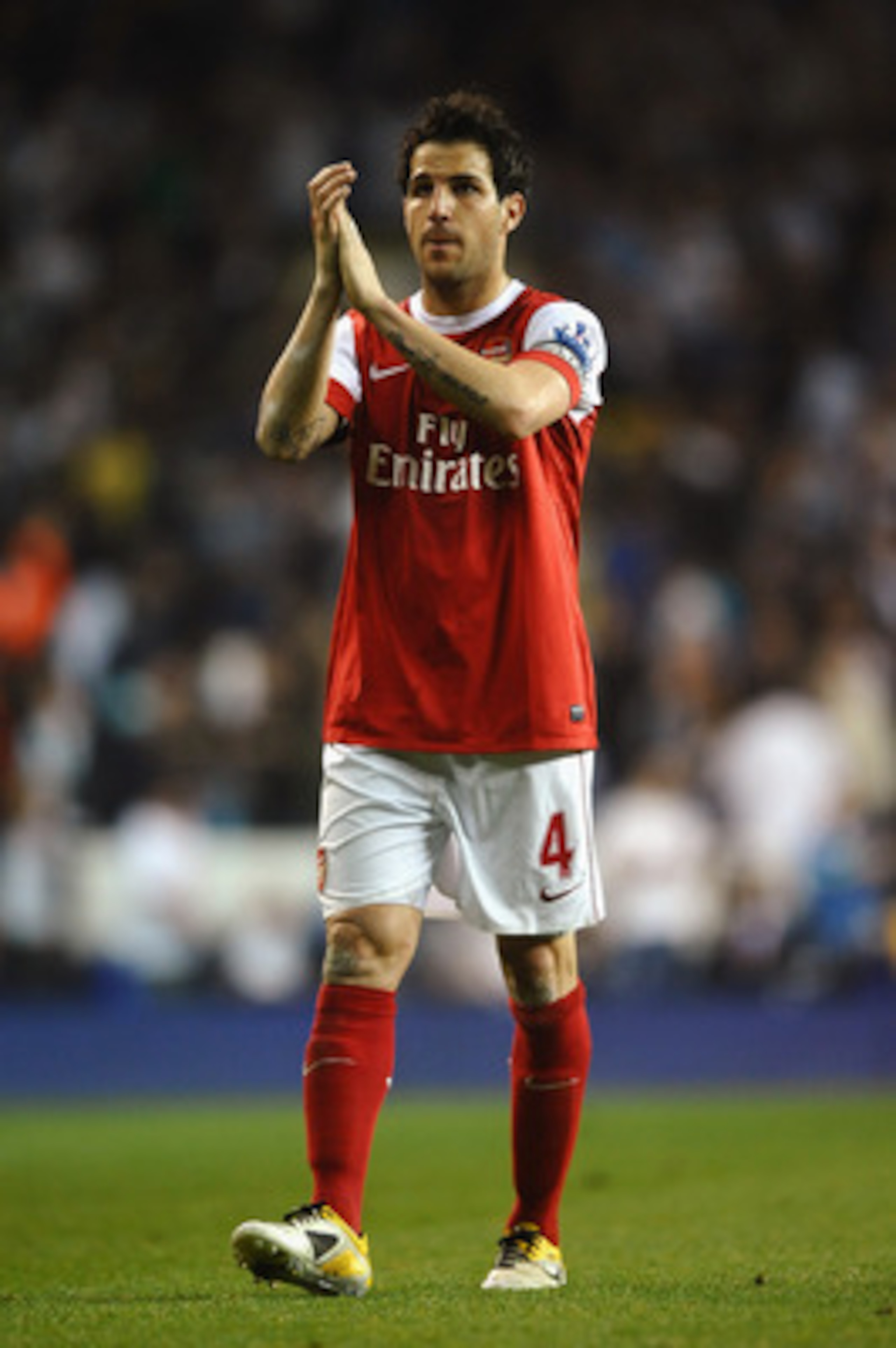
The existing Arsenal playing structure is designed to maximise the talents of Cesc Fabregas. Arsene Wenger's decision to build his team around his best player is certainly a reasonable one. Few players in the world offer the same level of vision and creativity as Arsenal's captain.
In the current formation, Fabregas is allowed to dedicate himself only to the areas of the pitch where he does the most damage. In and around the opposition box, he is the inventive hub of Arsenal's attacking play. When fit, Fabregas is a near certainty to either score himself or provide a one-on-one opportunity for a team mate every time he collects the ball in these areas.
The dilemma for Arsene Wenger is what to do when Fabregas doesn't play. His injuries have become more frequent during the last three seasons and it has become painfully clear that Arsenal do not possess another player capable of doing what Fabregas can.
The absence of Cesc Fabregas takes away the focus and purpose of Arsenal's formation. This renders the Gunners' attacking play impotent. The necessity of Fabregas and his specific role in the team also create problems for the rest of Arsenal's personnel.
2. Square Pegs in Round Holes
2 of 5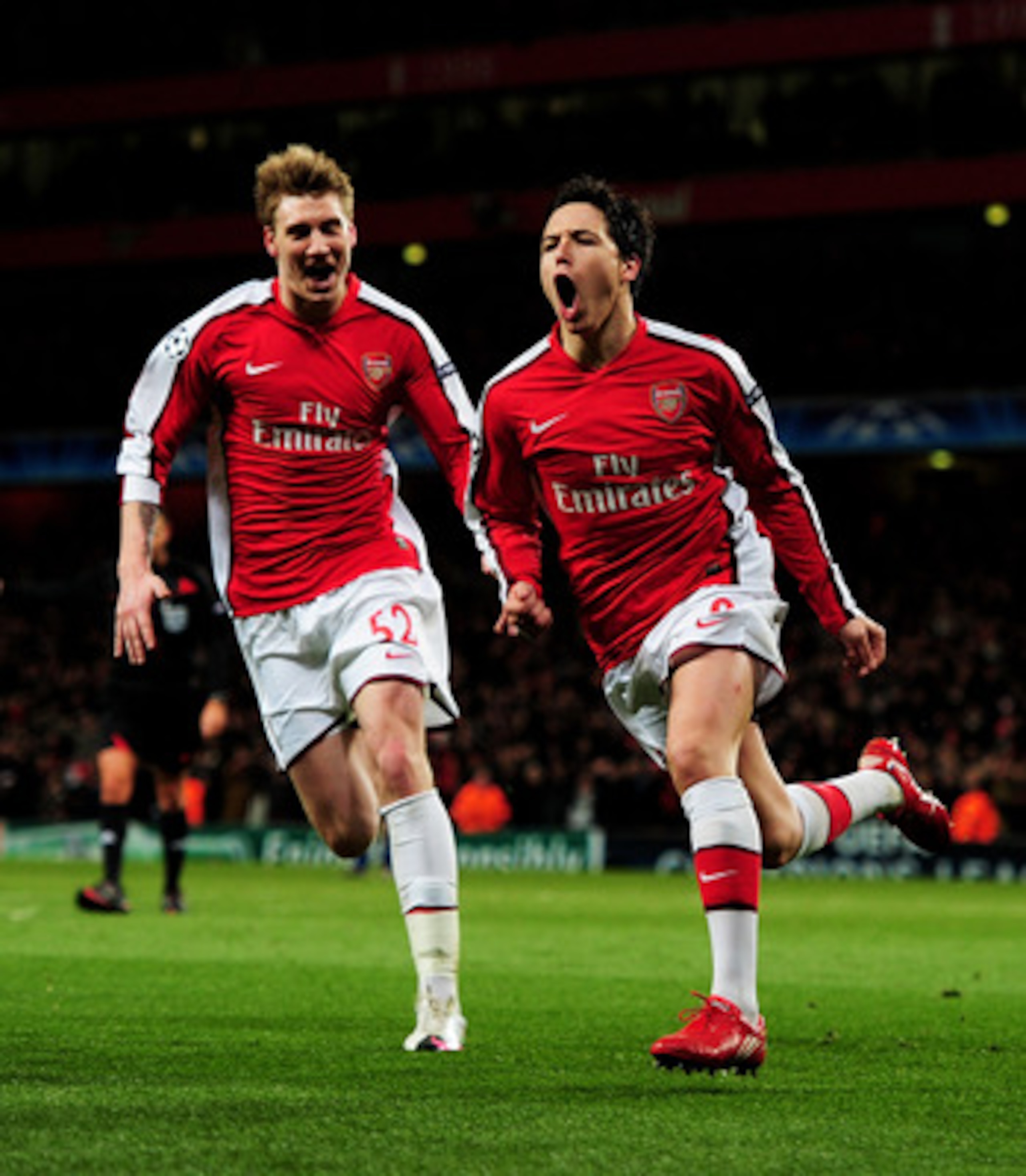
To accommodate Cesc Fabregas as the focal point of Arsenal's system, other players find themselves thrust into unfamiliar positions. Central midfielders and strikers are forced to operate on the wings. Attack-minded midfielders are asked to perform defensive roles.
Samir Nasri and Andrey Arshavin are two players better suited to a central position. Arshavin often appears lost on the left wing. Much of Arsenal's play can bypass the mercurial Russian. Nasri has found some success on the flanks. But like Arshavin, the diminutive Frenchman will roam into the middle to join up with the play.
Nickals Bendtner and Theo Walcott have been inconsistent as nominal wingers. Arsenal have never been able to capitalise on Bendtner's undoubted aerial prowess while the Big Dane has resided on the flanks. Walcott seems more concerned with perfecting a consistent delivery from out wide than with maximising his pace and eye for goal.
Wide positioning also makes it easier for these players to become frustrated and take themselves out of the game. They can simply remain static on the wing and bemoan their lack of touches as the reason for a poor performance.
The same problems exist in central midfield. Players more adept going forward are forced to adopt holding roles. Given the importance of a defensive presence in midfield to the current formation, Arsene Wenger has had to sacrifice the strengths of some of his players.
3. No True Defensive Midfielder
3 of 5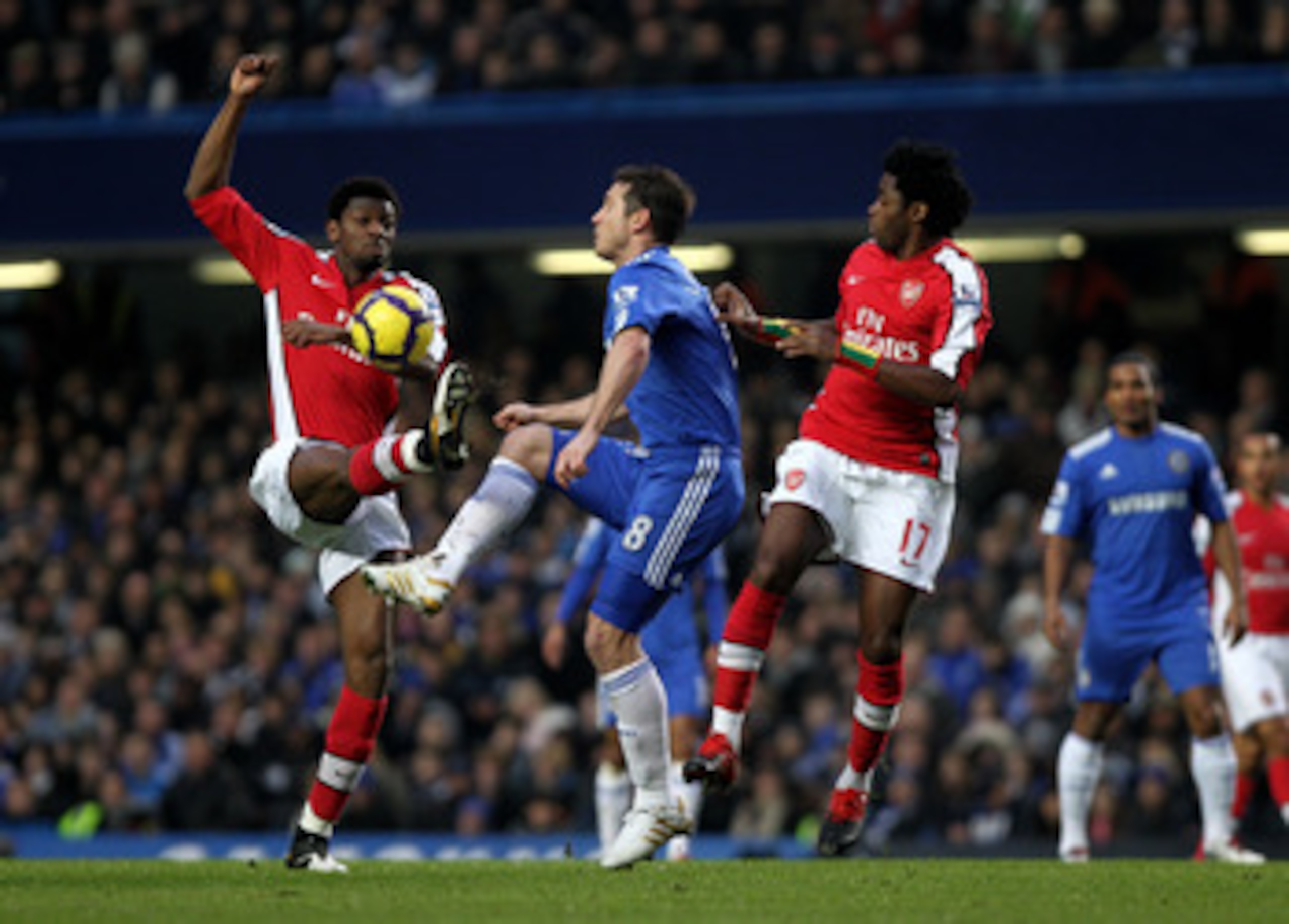
Arsene Wenger's 4-2-3-1 structure requires at least one holding player. With the wide berths occupied either by strikers who lack defensive inclinations or central midfielders who drift inwards, Arsenal are defensively vulnerable down the flanks. Without natural fits for the wings, the full backs are expected to provide width.
As the full backs are regularly upfield, the Gunners' system demands a defensive midfielder who will remain in front of the back four and drop in to cover where necessary. Arsenal have struggled to find a player who completely fits this mould.
Alex Song is perhaps the closest fit. Yet too often, Song's buccaneering instincts take over and he is caught out of position when the opposition breaks quickly. The Cameroon international can be reckless and clumsy when attempting to win the ball. This can lead to possession being conceded in very dangerous areas.
Arsene Wenger has attempted unsuccessfully to shape Abou Diaby into a defensive midfielder. Diaby has struggled with discipline issues and like Song, can't resist a foray forward. He lacks the urgency to track back and is not efficient enough distributing the ball once he wins possession.
Arsene Wenger likes to employ two midfield players charged with defensive duties. Although Jack Wilshere has made great strides this season, the young England starlet appears better suited to a role with more freedom. The same can be said of Aaron Ramsey, whose thoughtful passing and composed finishing are wasted in defensive areas.

.jpg?w=2560)

4. Take the Pressure off Robin Van Persie
4 of 5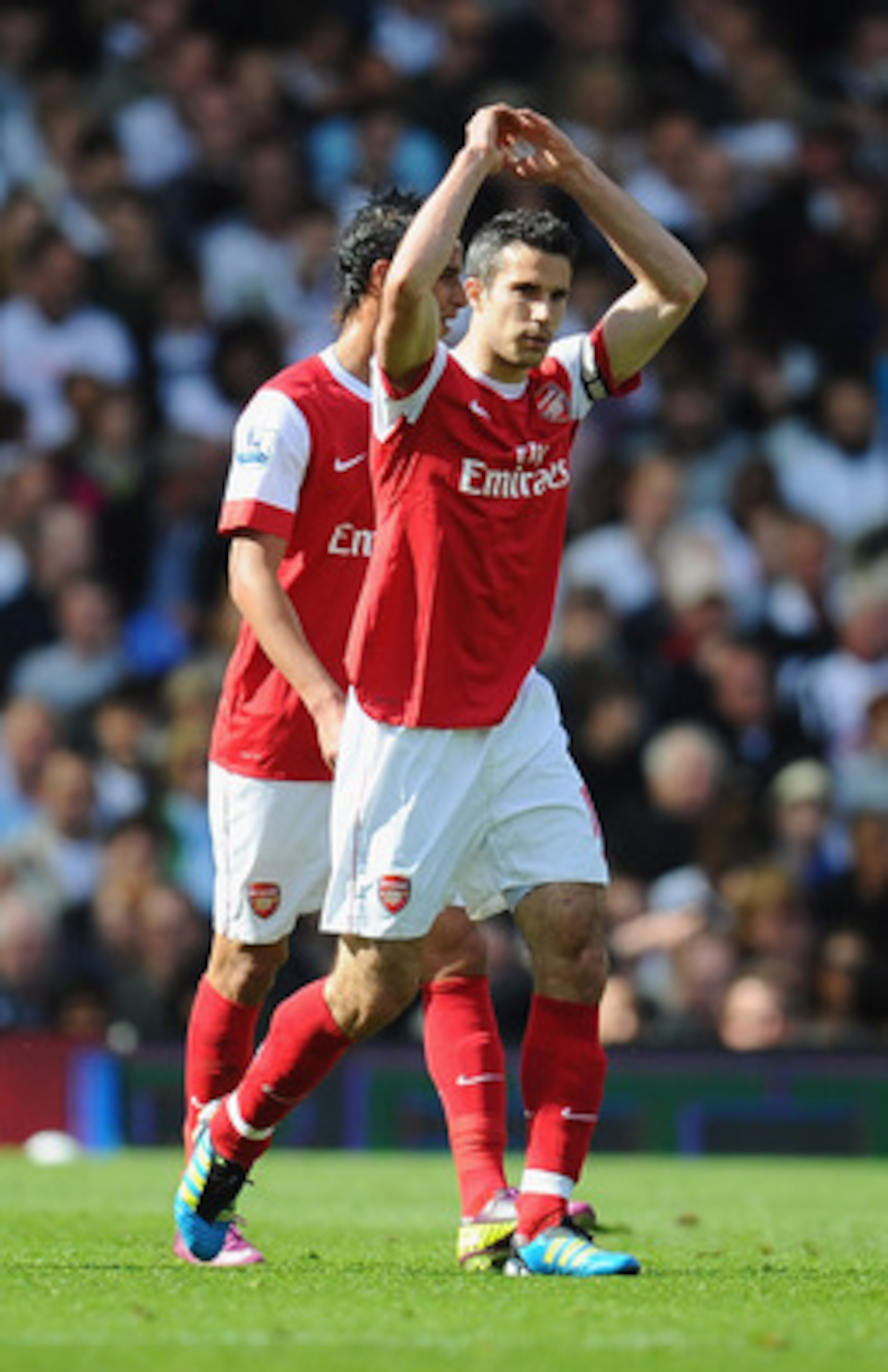
The desire to involve a multitude of attacking midfielders at the club has encouraged Arsene Wenger to rely on only one true striker. Robin Van Persie has often excelled in this role, finding the net 52 times in his past three injury-shortened seasons.
But the Dutchman has also occasionally struggled with this responsibility. Without a consistent goal output form the supporting cast, Van Persie has been forced to shoulder the scoring burden by himself. This was particularly evident during Arsenal's late-season collapse.
Arsenal's supporting front line is populated by players who want to do their work in the middle portions of the opposition area. Van Persie is therefore regularly the lone Gunners target in the box. It is a testament to the striker's skill and savvy that he still manages to remain one of the most lethal forwards in the game.
Switching to a system that makes room for two natural strikers would reduce the workload for Van Persie. This could prove vital in keeping the Holland international fresh for longer periods during the season. Adding another striker would also increase Arsenal's attacking options against defensive-minded opposition.
5. Move Theo Walcott into the Middle and Play Simple
5 of 5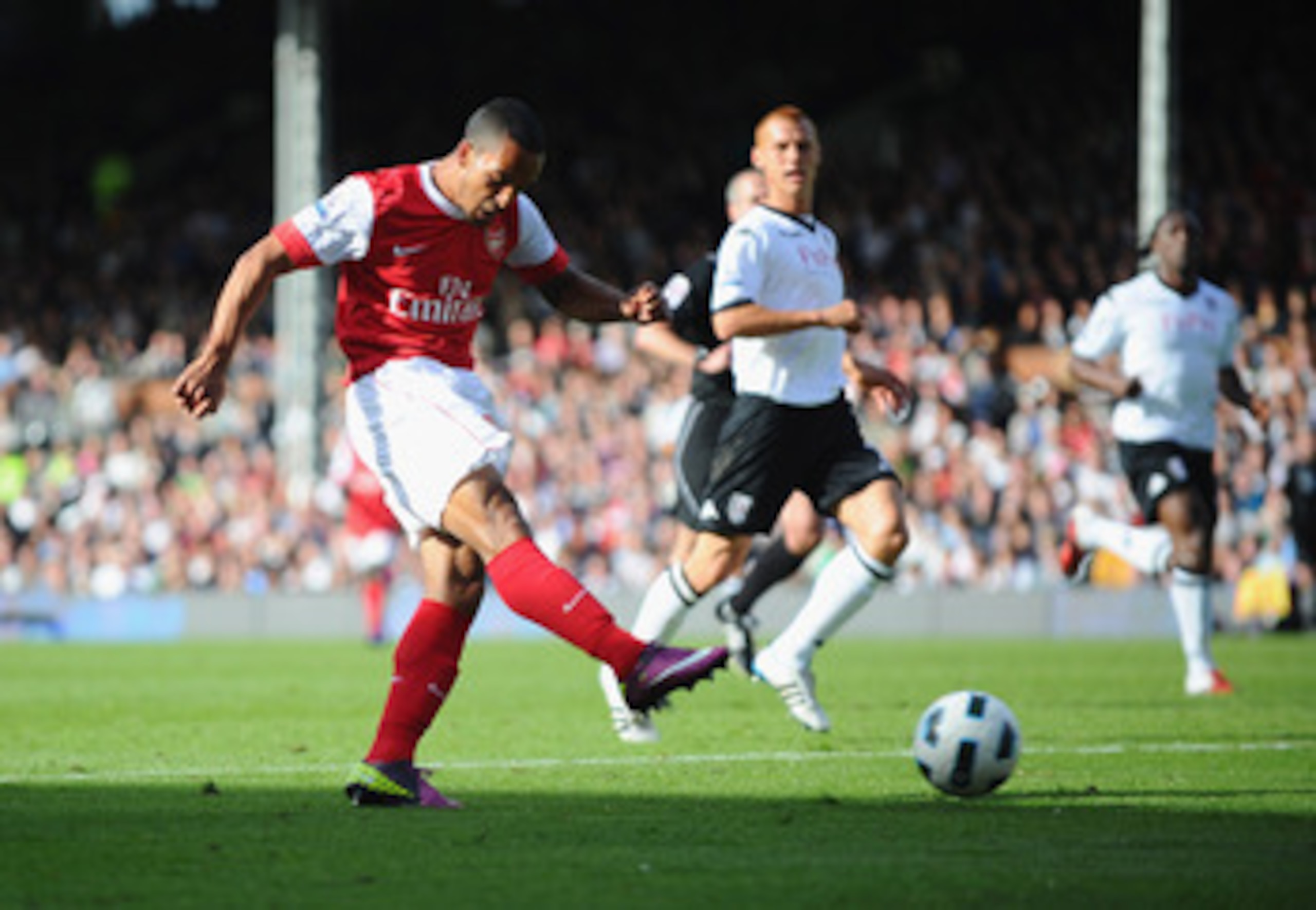
Theo Walcott surely must soon make the transition to central striker. His electrifying pace and competent finishing are traits that would allow him to flourish through the middle.
Letting Walcott operate centrally would give Arsene Wenger the option of shifting the focus of his team away from the intricate, one-touch passing moves to a more direct style based upon fast counter attacks.
Walcott often seems unable to adequately execute Arsenal's elaborate passing. The England forward is frequently isolated on the wing as the game bypasses him. The young speedster has also struggled to perfect the timing of his runs from wide areas. Attacking straight through the middle could simplify things and allow Walcott to finally realise his full potential.
Arsene Wenger could deploy Robin Van Persie just behind Theo Walcott and still retain the option of packing five into midfield when the occasion demands it. The threat of Walcott on the break would make it dangerous for teams to press high against Arsenal. Defenses would be forced to leave at least two back. This would also benefit Arsenal when defending corners, as there would fewer players proficient in the air to mark.
A change in formation could lead to a simpler, more efficient method of playing for Arsenal. A move to a speed-based style would provide a more suitable counter to the physical, defensive strategies utilised by many Premier League teams.
.jpg?w=2560 "Falcons Saints Football")
.jpg?w=2560 "Rams Eagles Football")
.jpg?w=2560 "Injury-stricken Seahawks signing veteran RB")


.jpg?w=2560 "2 NFL Officials Suspended")
