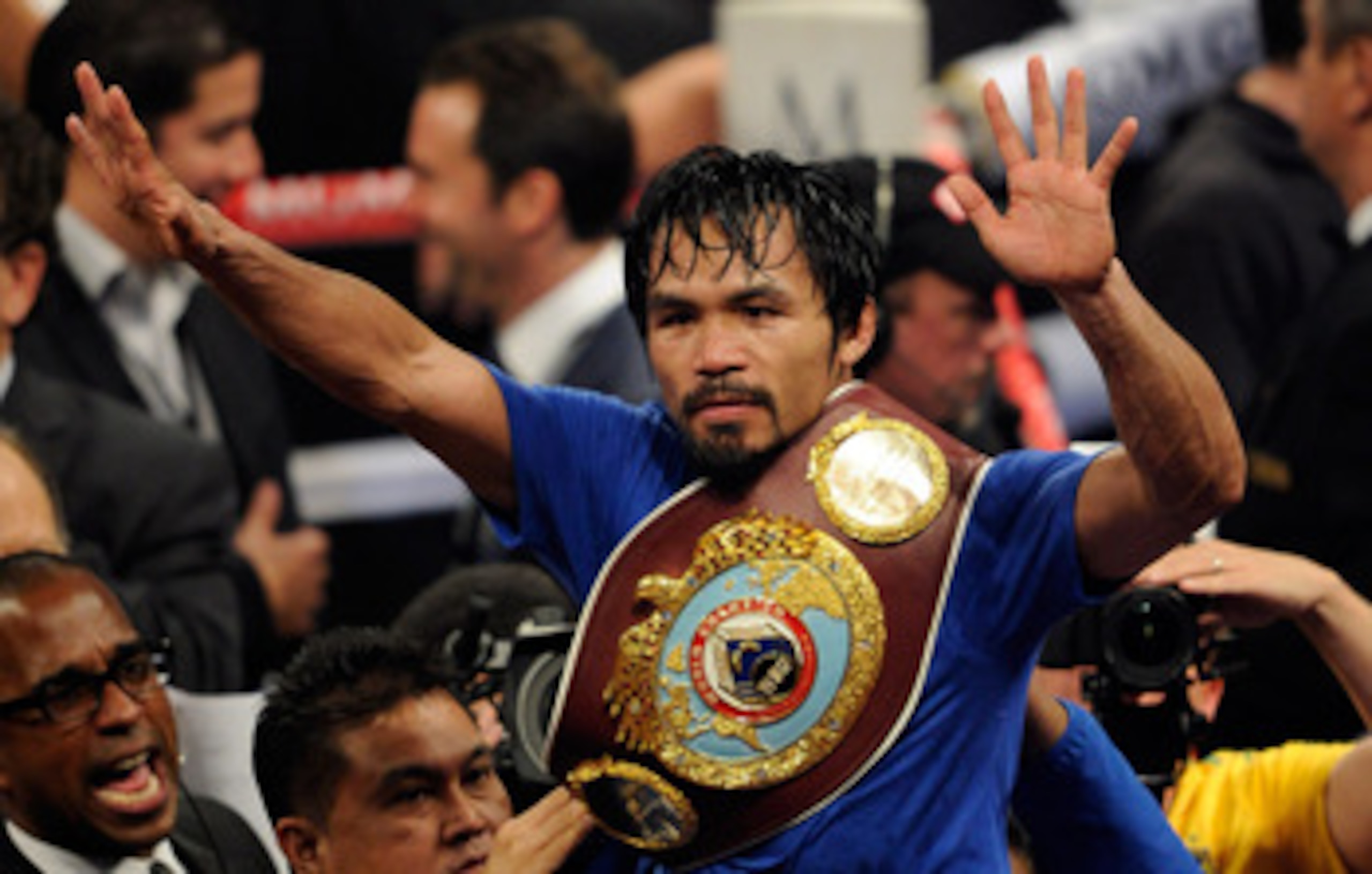

Manny Pacquiao and the Top 25 Non-Heavyweights of All Time
Heavyweight boxers usually earn bigger headlines and fatter purses than their smaller peers. But as Manny Pacquiao's ever-surging, worldwide popularity proves, a little guy who knows how to fight can capture the public's imagination, too.
As somebody who writes about boxing every week, I know personally that it's a lot easier to find readers interested in the 145 pound congressman from the Philippines than in any of the world's current heavyweights.
Sports like football and basketball have always favored the larger athlete, whereas the weight class sports like wrestling and boxing offer a more level playing field. Indeed, in a sport that demands equal parts brutality and grace, it is probably more common to see a lighter weight fighter who has adeptly mastered his craft.
In the sport's history, some of the greatest figures and most compelling match ups have been featured south of 200 pounds.
A note on the list: Researching all time, pound for pound lists is extremely fun. You spend hours on boxrec.com reviewing records, judges scores, total knockdowns; more time on YouTube taking notes on the available film.
But putting together the list itself is ultimately frustrating. There is the nagging fear that you might have entirely overlooked a deserving fighter lost somewhere in the annals of time. And there are the endless internal debates over relative positioning.
It is perhaps inevitable that some choices will seem almost arbitrary. Let the arguments begin.
Defining a Non-Heavyweight
1 of 29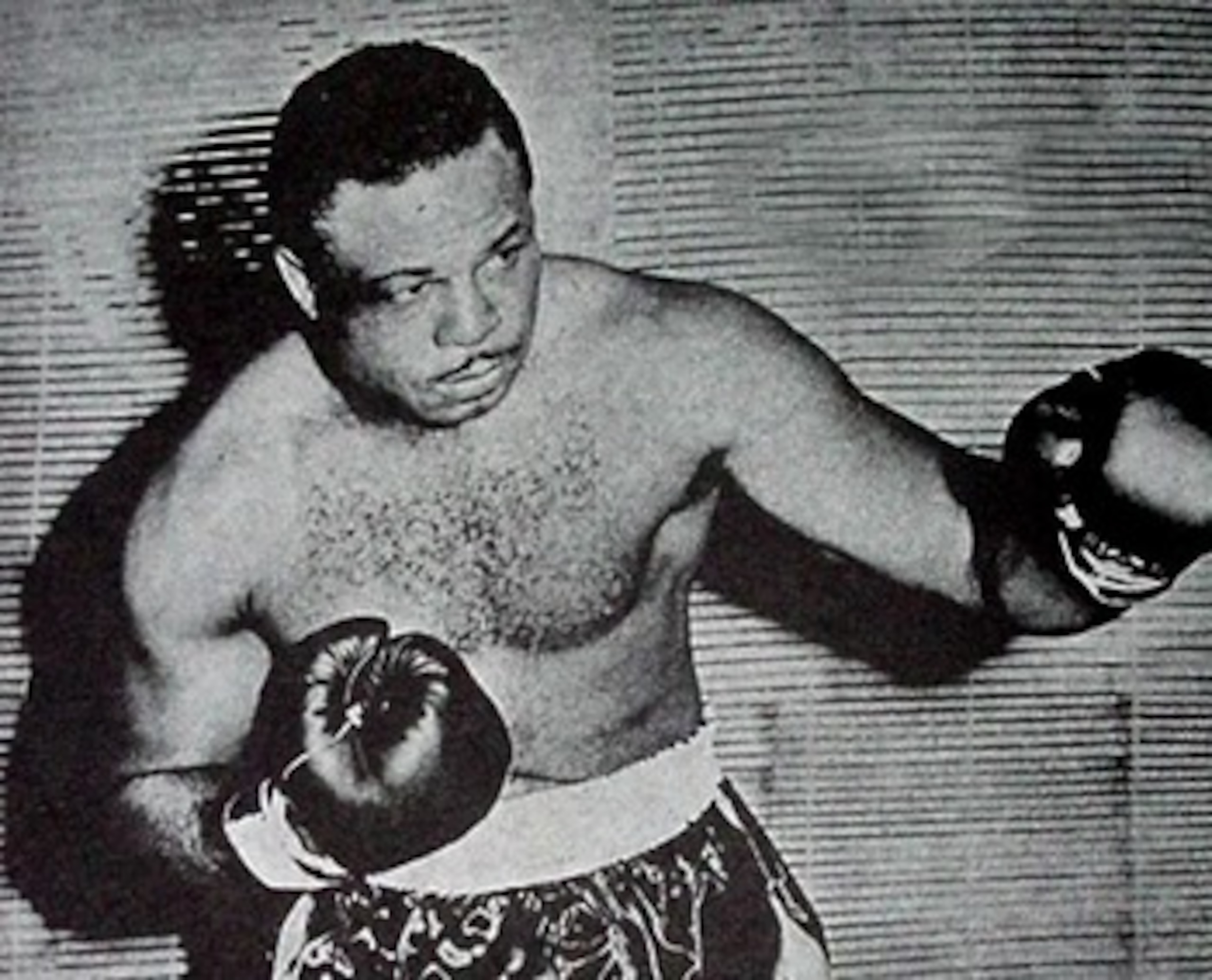
For the purposes of this list, I eliminated any fighter who either spent significant time campaigning at, and/ or made a big impact at, heavyweight.
Ezzard Charles was arguably the best light heavyweight champion of all time, but he was also a very successful heavyweight champ.
Pound for pound all-time greats Archie Moore and Bob Foster both dedicated significant time in their careers to challenging at heavyweight. Although neither man ultimately found the success he hoped for, both headlined major cards as heavyweights. Moore was actually forced to relinquish the light heavyweight crown because of the time he was devoting to the bigger division.
Sam Langford was a clear-cut all time, pound for pound great who fought as low as welterweight. But he is remembered (and listed on Boxrec.com) as a heavyweight. And he most often fought at around 185 pounds, a heavyweight number for the turn of the 20th Century.
Bob Fitzsimmons and Roy Jones Jr. were both middleweight champions who won heavyweight crowns. Mickey Walker and James Toney were both middle-sized fighters with so much talent that they were able to grow portly and still be competitive against most of the best heavyweights of their respective eras.
No Money! No Money! No Money! Where Is Floyd Mayweather Jr.?
2 of 29Floyd Mayweather Jr. was one of 10 boxers who I strongly considered for the top 25 but ultimately cut. As with any active boxer, trying to adequately slot him on a list like this is extremely difficult.
If Mayweather beats Victor Ortiz, which he should, and then finally signs with Manny and beats him (a much bigger "if"), then I would have him easily on this list. Depending upon how impressively he beat Pacman, I might end up placing him very high.
I even think that if Mayweather was a few years retired, with exactly the record he has now, and I had more time to consider him completely from a position of retrospection, then I might end up squeezing him in. If he even had a gutsy and compelling loss to Pacquiao, it might be enough to get him on.
But when I evaluate him right now, ultimately, I see a brilliant defensive boxer and extremely accurate counter puncher who has never shown the ability to aggressively fight, something even the best of the defensive fighters on this list demonstrated that they could do.
It's fair to point out that he has beaten everybody in front of him without needing to do that. It's also fair to point out that he has not always seemed to do everything he might to fight the toughest and most physical fighters available.
And to be fair a third time: By picking Ortiz, he's consciously chosen a bruiser for this go-round. All you diehard Floyd haters need to admit that. Floyd Mayweather Jr. knows the sport too well to not be aware of what it will ultimately take for him to earn the legacy he craves.
Honorable Mentions
3 of 29Along with Floyd Mayweather Jr., the following nine fighters merit a special note:
Pernell Whitaker was a defensive wizard. He drew with the then undefeated Julio Cesar Chavez in a bout that many boxing observers consider the worst decision of its era. Sports Illustrated featured Whitaker on their cover with the one word headline "Robbery." Also lost a hard luck decision to Oscar de la Hoya. Was not beat decisively until he faced the much younger and bigger Felix Trinidad at the end of his career.
Flash Elorde (pictured above) was the greatest ever Filipino fighter not named Pacquiao. He beat world featherweight champion Sandy Saddler in a non-title fight in 1956. He was ahead on points against Saddler in the rematch when he lost on a cut. Elorde was eventually a dominant jr. lightweight champion in the 1960's.
Abe Attell was a popular and extremely successful featherweight champion during the first decade of the 20th century. He was later tied to the Chicago Black Sox gambling scandal of 1919. He was portrayed by MIchael Mantell in the movie "Eight Men Out."
Known as "The Body Snatcher," Michael McCallum was an overpowering jr. middleweight champion in the 1980's. He also had a very good championship run at middleweight.
Carlos Zarate was an exciting and popular bantamweight champion out of Mexico. He is the only world champion to ever record two separate streaks of 20 or more consecutive knockouts.
.jpg?w=2560 "Texans Titans Football")
.jpg?w=2560 "Broncos Chargers Football")
Honorable Mentions Continued
4 of 29Fighting Harada (pictured) from Japan was an extremely popular fighter across the globe who won world titles at flyweight and bantamweight in the 1960's. He was the only man to ever beat Eder Jofre (twice). Wiflredo Gomez has said Harada was his hero when he was young.
"The Explosive Thin Man," Alexis Arguello won world titles at featherweight, super featherweight and lightweight in the 1970's. He had a classic two fight series with Aaron Pryor after moving up to jr. welterweight.
Carlos Ortiz from Puerto Rico was among the greatest lightweight champions ever. During the 1960's, he compiled a record of 61-7-1.
Nino Benvenuti won his first 55 professional fights before dropping a decision, and his jr. middleweight title, to Ki-Soo Kim in South Korea, in what Benvenuti regarded as a "hometown" decision. He went up to middleweight and was a successful champion there.
25: Duilio Loi
5 of 29Duilio Loi was an Italian boxer who held the European lightweight and then welterweight crown for years. He won two out of three fights with Carlos Ortiz, including beating him for the jr. welterweight world title in September of 1961.
Loi dropped the title to Eddie Perkins, then won it back and retired as undisputed champion. His professional record was 115-3-8.
24: Salvador Sanchez
6 of 29The Mexican phenom Salvador Sanchez is one of boxing's most tragic "what ifs?" When he died in a car crash at 23 years of age, he had a professional record of 44-1-1. He was the reigning featherweight champion of the world and he wore an overall look of invincibility.
After lifting the title from a game and veteran Danny Lopez as a 21-year-old, Sanchez proceeded to go on a dominant run. He beat the highly regarded Ruben Castillo by unanimous decision and put an exclamation point on it in the rematch by TKOing Castillo in 14. He beat the future world champion, Juan Laporte, and knocked out super bantamweight champion Wilfredo Gomez when he came up to challenge.
Sanchez died while in training for a rematch with Laporte, one everybody expected him to win. Potential super fights awaited with Alexis Arguello and Julio Cesar Chavez, among others.
The record Sanchez put together in his brief life was enough to rate him very high as an all-time pound for pound great. There are people who know a lot about boxing who insist that, had he not died so young, he might have gone on to be in the argument for greatest of all time.
23: Julio Cesar Chavez
7 of 29JC Superstar was possibly the most revered of all the great Mexican champions. He holds the record for the longest undefeated streak to start a career, and for several years, he was the sport's recognized pound-for-pound king.
Chavez was a world champion at super featherweight, lightweight and jr. welterweight. His career record was 107-6-2, with 89 knockouts. His chin, his relentless stalking attacks and his brutal body punching were all legendary.
At the height of his career, he battered Greg Haugen in Mexico City's Estadio Azteca in front of 132,274 paying customers, an all-time record.
22: Manny Pacquiao
8 of 29Manny Pacquiao started to fight professionally as a teenager at 106 pounds. His career is truly one of the sport's all time great transformation stories. Like all great champions, Pacman was born with certain physical gifts. But the heights Pacquiao has already climbed and might ultimately ascend to are a credit to Freddy Roach's skills as a trainer and Manny's own relentless will to succeed.
Under Roach's tutelage, Pacman has gone from an overwhelming but defensively negligent featheweight who was overly reliant on his big left hand to an explosive two-fisted fighter who changes levels and attacks from all angles nearly as well as anybody in the history of the sport.
Pacquiao lost at flyweight as a teenager and again at flyweight when challenging Gabriel Mora for the world championship. His only other loss was against Erik Morales at 130 pounds. He has beaten Morales twice since.
A convincing win against Juan Manuel Marquez, one of his greatest rivals, followed by a long awaited victory over Floyd Mayweather Jr. would catapult him higher up this list as he retires to follow his political career.
21: Bernard Hopkins
9 of 29Bernard Hopkins took up boxing after being sentenced to 20 years in prison as a 17 year-old. Paroled at 23, he begin his professional career. Never a highly touted or protected prospect, he dedicated himself to learning the craft of boxing and set new standards in year-round physical conditioning and attention to nutrition.
This is a professional boxer who has not allowed himself to drop below peak conditioning in over 30 years.
Hopkins fought his way to the middleweight championship of the world and became one of the division's all-time dominant champs, beating future hall-of-famers like James Toney, Oscar de la Hoya and Felix Trinidad.
His decades long commitment to physical conditioning has paid off by allowing him to achieve unprecedented excellence past age 40. At age 46, he recently beat Jean Pascal to become the oldest man to ever win a world title.
Since turning 40, Bernard Hopkin's record is 7-3-1 against the very best fighters his weight on the planet. Across the entire spectrum of professional sports, Hopkins' accomplishments as an over 40 athlete have only been approached by Nolan Ryan, Gordie Howe and Willie Shoemaker (I'm deliberately not including golfers in this discussion).
20: Eder Jofre
10 of 29Eder Jofre was a Brazilian boxer who won world titles at bantam and featherweight during the 1960's and 70's. He set what was then the record for an undefeated streak to start his career before dropping his 118 pound belt to Fighting Harada. He lost again to Harada in a rematch in Tokyo in 1966. These were the only two losses of his career.
After losing the second time to Harada, Jofre retired for three years. He returned in 1969, won 13 straight fights, and in May of 1973, he won the world featherweight championship from Jose Legra.
He retired as the champion in 1976. His professional record was 72-2-4 with 50 wins by way of knockout.
19: Wilfredo Gomez
11 of 29Early in his career, the Puerto Rican champion Wilfredo Gomez knocked out 32 straight opponents, a record for world champions. The knockout streak included winning the super bantamweight world title. Among his knockout victims during this stretch was the great Mexican bantamweight champion, Carlos Zarate.
After the death of Salvador Sanchez, Gomez went up to featherweight and took the title from Juan Laporte. He also went on to win the jr. lightweight title.
His overall professional record was 44-3-1.
18: Wilfred Benitez
12 of 29Wilfred Benitez turned pro at age 15, trained by his father. He was the prodigy son of a famous Puerto Rican boxing family. His older brothers Frankie and Gregory were contenders in the 1970's.He was a skilled defensive fighter with a vicious counter-punching attack.
On March 6, 1976, while still a 17-year-old high school senior, Benitez became the youngest man ever to win a world championship, beating Kid Pambele for the WBA jr. welterweight title. He moved up to welterweight and took the WBC belt from Carlos Palomino.
In one of the most anticipated match ups in the history of the welterweight division, Benitez was TKO'd by Sugar Ray Leonard in the 15th round after a competitive and physical fight that saw Benitez dropped briefly in the third and cut badly on a head butt. It is regarded as one of the most questionable stoppages of all time; despite being ruled unable to continue, Benitez was already in Leonard's corner congratulating him even as Leonard's corner swarmed the ring and lifted him onto their shoulders.
Benitez moved to jr. middleweight and won the title there. His defenses at 154 pounds included a unanimous decision over Roberto Duran. He dropped the belt to Thomas Hearns on a majority decision.
17: Stanley Ketchell
13 of 29A hard fighting and hard living boxer-brawler, Stanley Ketchell was one of boxing's first "characters" during the first decade of the 20th century. He had a professional record of 52-4-4-4, with 49 of his wins coming by way of knockout. In 1908, he easily dispatched Mike "Twin" Sullivan to receive general recognition as the world champion at middleweight, a title which did not officially exist yet.
Ketchell's bout with heavyweight champion Jack Johnson was legendary. Billed as a "David and Goliath" match up, Ketchell managed to floor the much larger Johnson before getting knocked out by a vicious uppercut.
In 1910, Ketchell was murdered by a hired hand on his ranch. He was only 24. The late Nate Fleisher of Ring Magazine rated Ketchell the best middle weight of all time.
16: Emile Griffith
14 of 29The first native of the U.S. Virgin Islands to win a world title, Emile Griffith was a dominant champion at both welter and middleweight.
Griffith won the welterweight title by knocking out Benny Paret in 1962. Paret won back the title on a very close split-decision.
Their third fight occurred on March 24, 1962. In round 12 of a brutal back and forth fight, Griffith had Paret knocked unconscious, but Paret remained propped up on his feet, supported by the ropes, and Griffith continued to batter him while waiting for the referee to intervene. Paret never regained consciousness and died in the hospital.
Griffith is reported to have taken Paret's death very hard. Most boxing experts say he was never the same fighter. In his last 80 fights, he recorded only 12 knockouts.
He remained good enough to move up to middleweight and beat Dick Tiger for the world title. He lost, regained and lost the title again during a legendary three fight series with Joey Giardello.
Griffith was another fighter who kept fighting way too long, and his record suffered for it. Of his 24 professional losses, 12 occured in his last 24 fights.
He was a successful trainer, handling the Wilfred Benitez and Juan LaPorte. He also coached the Danish Olympic team in 1980.
15: Aaron Pryor
15 of 29"The Hawk" Aaron Pryor was among the most dominant champions of the 1980's. He fought with a relentless, swarming style, changing levels and punching from angles as well as any fighter in history, looking at times like a reincarnation of Henry Armstrong.
After turning pro in 1976, Pryor unleashed destruction upon the jr. welterweight division, knocking out or bludgeoning into submission everyone placed in his path. He dispatched the legendary Colombian champion Antonio Cervantes in just four rounds.
In 1982, lightweight champion Alexis Arguello moved up to challenge Pryor. In a toe-to-toe war that was named "Fight of the Decade" by Ring Magazine, Pryor finished Arguello in 14. Pryor took the rematch in 10.
Pryor lost just one fight, late in his career and after he was already starting to have a problems with drugs. His professional record was 39-1 with 35 knockouts.
14: Thomas Hearns
16 of 29Thomas Hearns was one of the "fab four," along with Benitez, Sugar Ray Leonard and Roberto Duran, who battled in the welterweight and jr. middleweight division in the late 70's and early 80's. He had extremely imposing height and reach for a welterweight or jr. middleweight, and at times, could look nearly unbeatable.
Hearns won the welterweight title by knocking out the tough Pipino Cuevas in two rounds. His welterweight showdown with Sugar Ray Leonard was a highly anticipated match up. Hearns remarkably out-boxed Sugar Ray for 14 rounds before succumbing to a knockout in the final round.
After moving up to jr. middleweight, Hearns beat Benitez for the title by majority decision. He demolished Roberto Duran at 154 pounds in unprecedented fashion, battering the legendary Panamanian before stopping him in two.
At middleweight, Hearns was stopped by Marvin Hagler,in a three round shootout. It was an extremely action packed fight that many consider the most thrilling three rounds of the 1980's. Hearns won promotional belts at super middleweight, light heavyweight and cruiser.
13: Tiger Flowers
17 of 29"The Georgia Deacon" Tiger Flowers was a dominant middleweight during the 1920's. He beat Harry Greb by unanimous decision for the world middleweight title in 1926, in an era when it was often tough for a black fighter to get a fair decision, especially against a fighter as popular as Greb. Flowers bested Greb again in their rematch.
Flowers dropped the title to Mickey Walker in a very controversial decision. While waiting to schedule a rematch, Flowers died tragically from complications during eye surgery.
His career record was 136(56)-15-8-2.
12: Marvin Hagler
18 of 29Marvin Hagler was a number one contender for years before finally getting a shot at the world title and often had to travel to fight in other boxers' hometowns. It was another case of a fighter being too dangerous for his own good. The frustration Hagler endured during these years fueled his hunger and determination.
Hagler finally got a shot at the title against Vito Antuofermo in 1979. The fight went the distance, but almost nobody watching doubted that Hagler had won. Referee Mills Lane is reported to have told Hagler to make sure he was facing the camera "when I hold your hand up after the decision is read." But the bout was ruled a draw, one of the most controversial decisions in history.
Antuofermo dropped the title to Alan Minter, who gave Hagler his next shot at the title. This time, Hagler took no chances, TKOing Minter in three. It was the start of a dominant reign.
Highlights of Hagler's title run include a decision victory over the great Roberto Duran and a three-round shoot out KO of Thomas Hearns in a fight many regard as the most exciting they ever watched. Hagler also stopped John "The Beast" Mugabi in the 11th round of a brutal fight.
However, it was during the Mugabi fight that Hagler first showed some signs of slower reflexes. The prospect of beating the great champion lured Sugar Ray Leonard out of retirement, and the two legends met in 1987, with Leonard winning a hotly contested split decision.
Hagler is one of the few boxers ever to retire near the top of his game. After his loss to Leonard, he retired and never attempted to come back. Instead, he moved to Italy and has become an action-adventure star in Italian films.
11: Carlos Monzon
19 of 29Carlos Monzon held the middleweight title for seven years and defended it 14 times before retiring on top. He won the title by beating Nino Benvenuti, and in his first defense, became the first man to knockout Emile Griffith.
He later outpointed Griffith in a rematch. He lost only three fights, early in his career, and had 87 victories, with 59 coming by way of knockout. His most celebrated rivalry was with fellow South American Rodrigo Valdez, who he beat twice.
The native of Argentina was a mainstream superstar in South American during the 1970's, famous for beating up paparazi and, unfortunately, wives and girlfriends. In 1989, he was sentenced to 11 years in prison for murdering his live-in girlfriend, Alicia Muniz. He died in a car crash in 1995 while on a weekend furlough.
10: George Dixon
20 of 29George Dixon began fighting in 1886, and in 1890, became the first African-American to win a world title, becoming the bantamweight champ. He was also the featherweight champion throughout the 1890's, despite never weighing more than 118 pounds.
When trying to evaluate fighters from the era before film, one is entirely reliant on contemporary written accounts. In the case of Dixon, these accounts glow. The editor of The Police Gazette, Sam Austin called him "a fighter without a flaw." Nate Fleischer of Ring Magazine rated him the best bantamweight of all time.
Dixon's official record lists 158 fights, but for boxers of his era to make a living, especially smaller ones, it was necessary to travel and fight exhibitions constantly. His manager once estimated that Dixon had in fact fought over 800 times, with as many as 15 bouts in a week.
9: Harry Greb
21 of 29Although he was active in the 1920s, and was viewed even then as a legend, virtually no film remains of Harry Greb, giving him an almost mythic quality. In written accounts of Greb, he is described as a punishing and relentless puncher with tricky defensive skills; a distinctive tone of awe emerges in many accounts.
Records from that era can be spotty, but Greb is believed to have fought over 300 fights, against the very best in the world, regardless of weight. He was the only man to ever beat eventual heavyweight champion Gene Tunney, topping him at light heavyweight. Greb fought 37 times in 1917 alone.
Grebs was a very old and worn 33 when he dropped the middleweight title to Tiger Flowers in 1926. Flowers' brilliant defensive style was a perfect antidote for Grebs' swarming attack. Like Flowers, Grebs tragically died from complications related to a fairly routine surgery to repair his damaged nose.
8: Sandy Saddler
22 of 29Sandy Saddler was known as one of the roughest and hardest punching featherweights ever. In 2003, Ring Magazine named him the fifth best puncher of all time.
The Boston native turned professional in 1944 and fought over 40 times in his first three years. In 1948, he knocked out the great Willie Pep in four rounds to capture the featherweight championship of the world. He dropped the title to Pep in a rematch, then beat Pep twice more over the ensuing years. Their rivalry is considered one of the sport's greatest.
Saddler's career record was 144-16-2 with an amazing 103 knockouts.
7: Roberto Duran
23 of 29"El Manos de Piedro" (Hands of Stone) Roberto Duran is widely regarded as the most dominant lightweight champion of all time. He won the 135 pound crown from Ken Buchanan in 1972 and held it for most of the rest of the decade, before moving up to welterweight.
At welterweight, Duran captured the world title when he handed Sugar Ray Leonard the first loss of his professional career.
After losing the rematch to Leonard, Duran went up to jr. middleweight. He eventually beat Davey Moore for a belt at 154. He lost a 15 round decision to Marvin Hagler at middleweight, but eventually won a 160 pound world title there by beating Iran Barkley.
6: Joe Gans
24 of 29Gans is another legendary fighter from the early 20th century. Even in an era of extreme racism, Gans' greatness showed through, as he was raved about by contemporary fighters and writers.
Nate Fleicher rated him as the best lightweight of all time. Abe Attell agreed, maintaining that "in his prime, no fighter his weight could beat him."
The legendary Sam Langford, who beat him by decision in an exhibition bout, considered him the best pound-for-pound of all time. Bob Fitzsimmons called him the "cleverest fighter" he'd ever seen.
Boxrec.com, the best available source for these things, lists his professional record as 144-10-16. It is assumed that he fought many more times in unrecorded exhibitions, as was the custom of the era.
5: Benny Leonard
25 of 29Known as "The Ghetto Wizzard" due to his slick and scientific boxing style, Benny Leonard was born Benjamin Leiner, but changed his name when he began his professional career to prevent his parents from knowing that he was a fighter.
Leonard learned his trade in the school of hard knocks, often fighting weekly early in his career for very small money, absorbing a few losses along the way. However, by the time he had mastered his craft, he was viewed as a technical genius.
Leonard won the world lightweight title in 1917. He held it until 1924, at one point fighting to a draw with welterweight champion Ted Lewis. A self-described "mama's boy," Leonard retired as champion, at the height of his powers, on the request of his mother.
Leonard was known as a great conversationalist and went very much against the mold of a prizefighter.He was said to have enjoyed his first retirement. Unfortunately, he lost the majority of his fortune in the 1929 crash and was forced to make a comeback in the 1930's.
As a much more portly jr. middleweight, he won a series of comeback matches before being brutally TKO'd in six rounds by Jimmy McLarnin.
His professional record was 90-6-1.
4: Sugar Ray Leonard
26 of 29An Olympic Gold medalist in 1976, Sugar Ray Leonard was a media superstar during the last years in which boxing hung on as a popular, mainstream sport in the United States. He combined slick, gliding footwork with blazing speed and explosive power. He was a brilliant defensive fighter who could hurt his opponent with either hand.
Leonard beat three of the boxers who previously appeared on this list, Benitez, Hearns and Duran, at welterweight. His 15th round TKO of Benitez was among the most technically flawless bouts ever contested.
Against Hearns, he again won by 15th round stoppage, though this time he needed to do so to win. Trailing on the judges' cards, Leonard rallied for one of the most thrilling last round comebacks in the history of the sport.
In his first fight against Duran, Leonard made the mistake of standing toe-to-toe with "Hands of Stone" and lost a 15 round decision. In the rematch, he imposed his own style of fight and made Duran quit after the eighth round.
After nearly five years in retirement, Leonard returned in 1987 and shocked the world by taking the undisputed middleweight title from Marvin Hagler on a split decision. He later went on to win promotional titles at super middleweight and light heavyweight, making him the sport's first five division champion.
3: Willie Pep
27 of 29Willie Pep was perhaps the greatest defensive boxer of all time and is regarded by most boxing historians as the sport's all-time greatest featherweight.
Pep made his professional debut in 1940 and was extremely active from the start. By the time he beat Chalky Wright for the title in 1942, he already had over 40 professional fights. He continued to fight 15-20 times a year for much of his career.
Pep was in a plane crash on January 5, 1947. Although he continued to fight at an elite level and held world championships, most experts believe he was never entirely the same fighter afterwards.
Pep dropped the title to his great rival Sandy Saddler in 1948. He won it back in a rematch, but then dropped it to Saddler again.
His overall professional record was 229-11-1.
2: Henry Armstrong
28 of 29Known by the nicknames of "Hurricane" and "Homicide," Henry Armstrong was quite possibly the quickest and most explosive fighter to ever live. He attacked in a whirlwind manner, lowering levels and battering opponents with punishing shots from all angles.
Armstrong won the featherweight championship from Petey Sarron in 1937. He won the welterweight title from Barney Ross in May of 1938 and added the lightweight title by beating Lou Ambers in August of that year.
In this age of alphabet soup titles and half weight classes, consider this: For a period of time, Henry Armstrong was the only world champion from 126 to 147 pounds. It is an unprecedented record of dominance.
He fought middleweight champion Ceferino Garcia to a draw in 1940, a fight that most ringside observers believed he won. The victory would have made him a world champion in four divisions during an era when the sport only had eight.
Armstrong's professional record was 150-21-10, with 101 knockouts.
1: Sugar Ray Robinson
29 of 29Sugar Ray Robinson was the fighter who the term "pound for pound" was invented for. He was slick and smooth, explosive and quick. He could punch with both hands and excelled at avoiding being hit.
He turned professional in 1940, and by the time he finally got a shot at the welterweight crown in December of 1946, he was already regarded as an all-time great. He held the welterweight title until February of 1951, when he vacated the belt to challenge at middleweight.
The 1950's were probably the most competitive decade ever for the middleweight division, and Robinson, a natural 147 pounder in the second decade of his career, dominated. He was a five time middleweight champion during the decade.
Robinson fought well past his prime, and his record suffered for it. His career numbers were still amazing, 173-19-1 with 108 knockouts.
Beyond his impact in the ring, Robinson, along with heavyweight champ Joe Louis, was an important cultural icon with great appeal to fans of all races during World War Two and the post-war years when the civil right movement was emerging.

.jpg?w=2560 "Grading MHJ Trade 📝")