
Tampa Bay Buccaneers 2009 Draft: A Quick Look Back at the 2009 Draft Class
It's one of the greatest offseason spectacles in all of sports. It's evaluation, dissection and analysis. Speculation and hypothesis. Projection and prediction.
The NFL draft awakens NFL fans in the depths of the offseason. They exhume jerseys buried deep in spring closets and ignite dormant grills to celebrate and scrutinize what may or may not be the future of their beloved franchise: the incoming draft class.
While first-round picks get tossed under microscopes almost immediately, second- and third-rounders wade beneath clouds of limited expectations and hopes of over-achievement.
Meanwhile, those drafted in Rounds 4-7 enjoy little expectation (and smaller rookie salaries), largely free of scrutiny and destined for backup duties and specialty positions.
But unless an early pick becomes a complete bust or a late-rounder makes other teams regret not drafting him, very little is thought of a player's draft position once the lights of Radio City Music Hall dim and the season begins.
Given the results, everyone knows Ryan Leaf was selected No. 2 overall and Tom Brady waited until the sixth round to get off the board.
It's an inexact science, to say the least.
And the Buccaneers have had successes and failures.
Derrick Brooks, Ronde Barber and Warren Sapp are future Hall of Famers. Lee Roy Selmon and Steve Young (supplemental draft) are already there. Doug Williams may still have a shot.
Bo Jackson is arguably the greatest athlete of all time. Vinny Testaverde played for 20 years in the NFL for seven different teams. And don't forget the franchise's all-time leading rusher, James Wilder, along with Mike Alstott, Paul Gruber and John Lynch, all solid draft picks to say the least.
But Michael Clayton is unemployed. Reidel Anthony, Kenyatta Walker and Gaines Adams just never emerged. Broderick Thomas and Charles McCrae never really panned out either.
The draft is a wild animal, and few have mastered the art of taming it.
Here's a look back the the Buccaneers' 2009 draft to see how they did.
Round 7, Pick 233: Sammie Stroughter, WR, Oregon State
1 of 6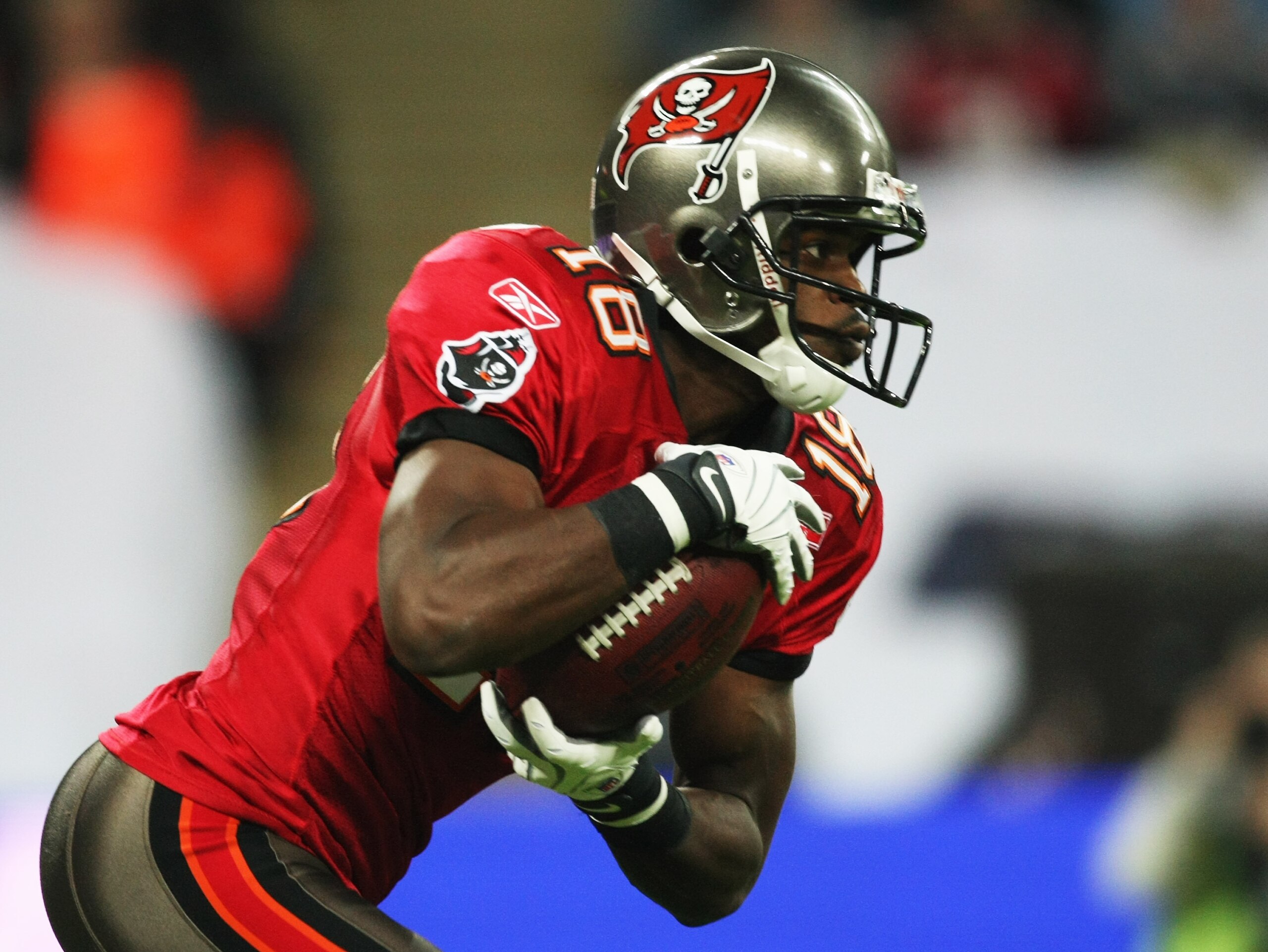
Sammie Stroughter wasn't drafted to be a No. 1 receiver. He wasn't the next Steve Smith. He wasn't a top option.
But he was a role player, and play a role he did his rookie year.
Stroughter hauled in 31 balls for 334 yards in 2009. His only touchdown came in the fourth quarter of the Buccaneers' first win of a dismal 3-13 season.
With under five minutes left against the Green Bay Packers in Week 9 and staring an embarrassing 0-8 in the face, Stroughter's seven-yard touchdown gave the Buccaneers a lead they would not relinquish.
He also added 11 kickoff returns for 324 yards with a 97-yard return for a touchdown to his resume and took 12 punts back for 119 yards.
While his 2010 season was less than spectacular (24 catches, 239 yards and no touchdowns) behind a near 1,000-yard receiver in Mike Williams, he has kept himself in the conversation for the slot receiver position moving into his third year.
As a seventh-rounder, that's value enough.
Round 7, Pick 217: E.J. Biggers, CB, Western Michigan
2 of 6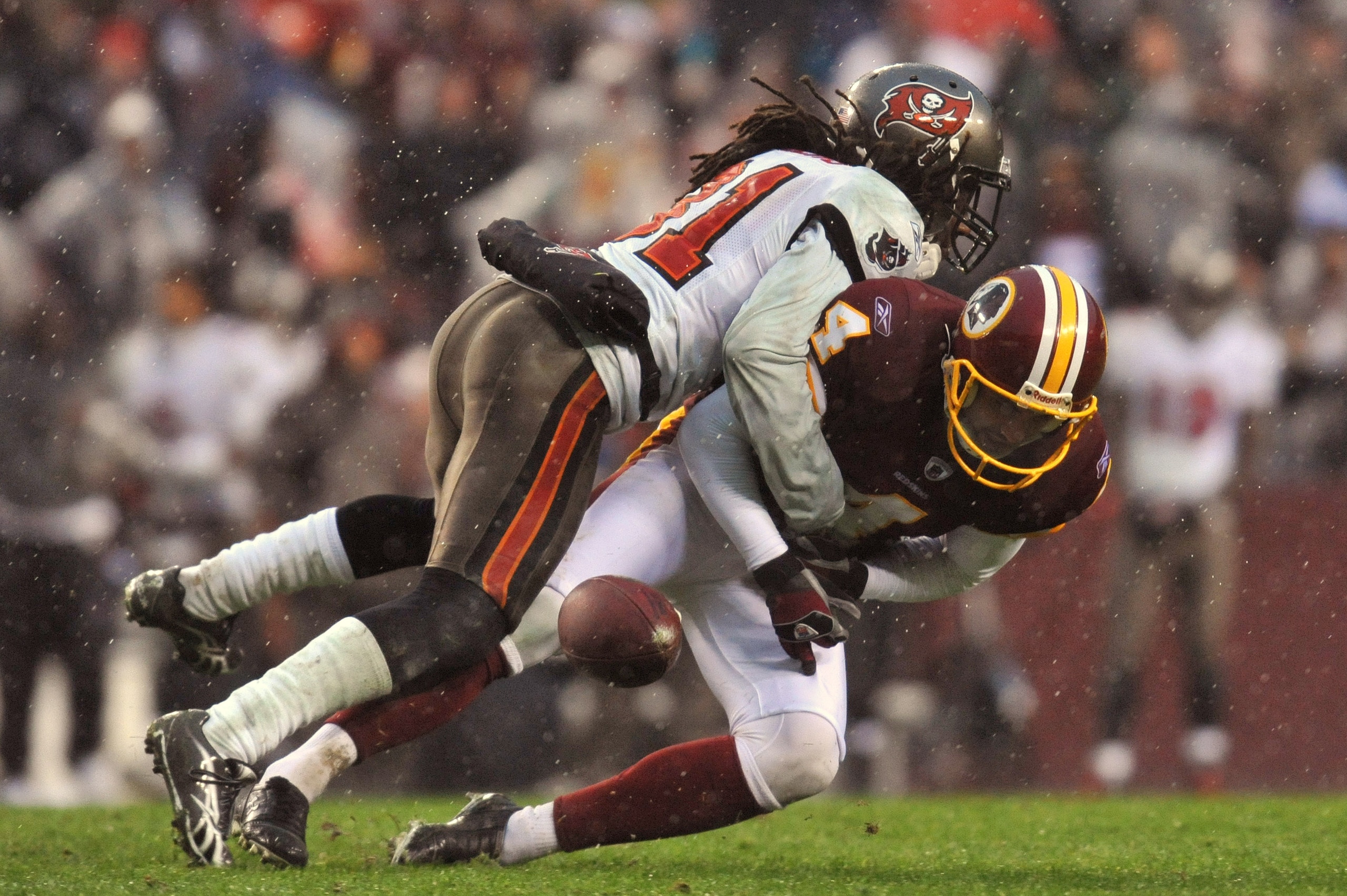
The verdict is still out on E.J. Biggers.
And with Aqib Talib's likely suspension for his alleged involvement in a Texas shooting this offseason, Biggers could get a shot to prove himself in 2011.
After spending his first season on injured reserve, Biggers impressed coaches in training camp before the 2010 season, in which he played in all 16 games, starting six.
He recorded 56 tackles, 11 pass defenses and tallied one interception.
Biggers will likely battle 2010 third-round selection Myron Lewis for starting duties in 2011, though he appears to be the early favorite to win the job should Talib be suspended.
He hasn't done much yet, but being in the mix to start opposite a future Hall of Famer in Ronde Barber in 2011 could speak volumes for the seventh-round pick.
Round 5, Pick 155: Xavier Fulton, OL, Illinois
3 of 6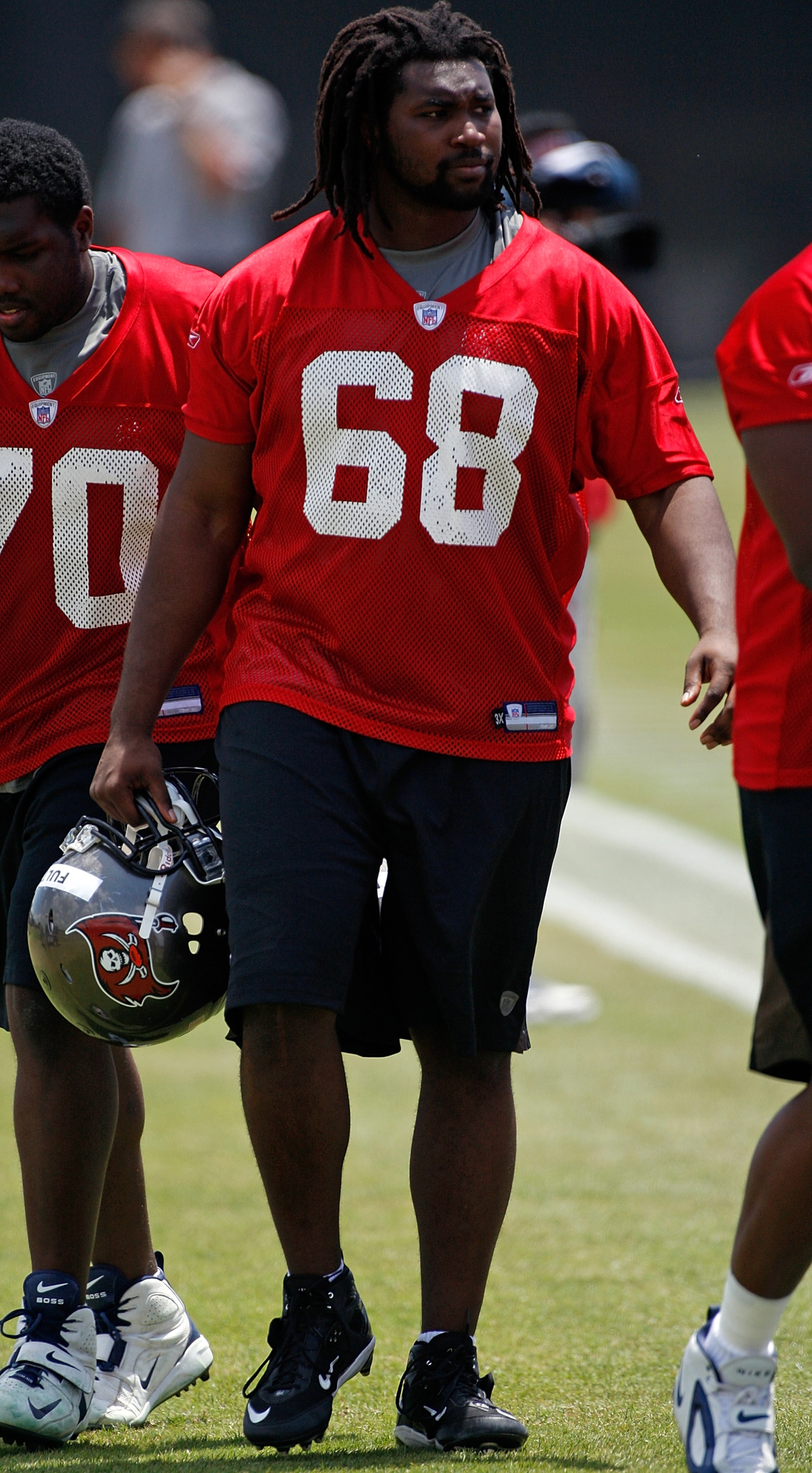
The Buccaneers had some relatively high hopes for Xavier Fulton as a fifth-rounder.
He played the majority of the preseason in 2009 before tearing his ACL in the final preseason game on Sept. 4, 2009.
One year later, to the day, he was cut.
With far more teams on his resume (Buccaneers, Indianapolis Colts, 49ers">San Francisco 49ers and Washington Redskins) than years of service (one—he spent 2009 on injured reserve), Fulton can officially be labeled a disappointment.
At least in Tampa Bay.
He could still have a future with the Redskins, though he doesn't appear to be in their immediate plans.
Hard to believe he signed a four-year endorsement deal with Nike after being drafted in the fifth round.

.jpg?w=2560 "Falcons Saints Football")
.jpg?w=2560 "Rams Eagles Football")
Round 4, Pick 117: Kyle Moore, DE, USC
4 of 6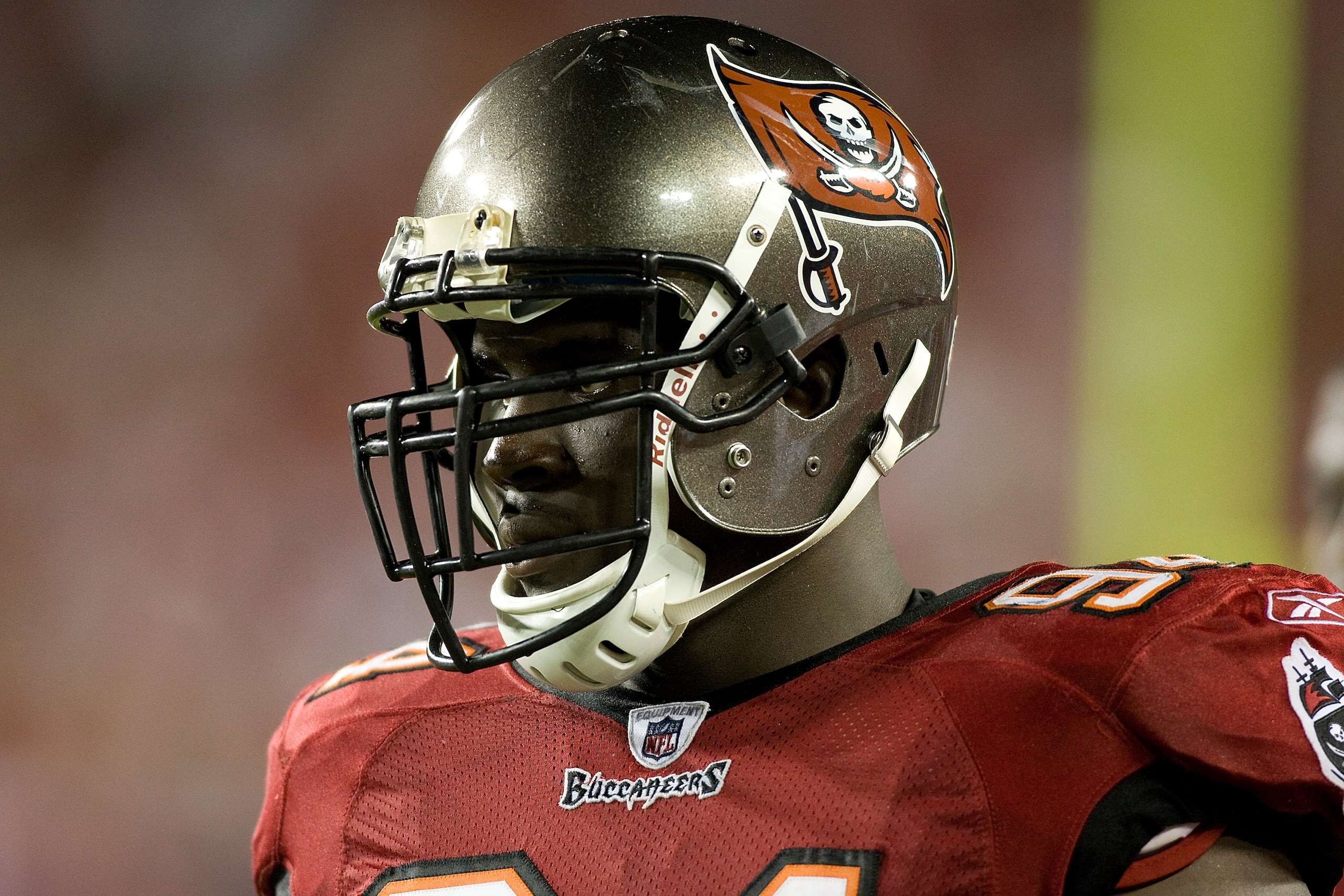
Kyle Moore went into training camp in 2010 with a smile on his face and a can-do attitude, ready for action.
But after a slow start, a shoulder injury put quite a damper on that.
A meniscus tear caused him to miss most of his rookie season, but he was underwhelming upon his return, recording just 11 tackles in eight games. In 2010, before being sent to injured reserve, he scored just 18 tackles in seven games.
He has yet to record an NFL sack.
And that's pretty much Moore's story. Hindered by injuries, this happy-go-lucky defensive end who was considered an underachiever in college with loads of potential just hasn't been able to get it going in the NFL.
With the Buccaneers drafting defensive ends with their first two picks in 2011 in Iowa's Adrian Clayborn and Clemson's Da'Quan Bowers, Moore likely has a lot of work to do if he wants to make the team in 2011.
Round 3, Pick 81: Roy Miller, DT, Texas
5 of 6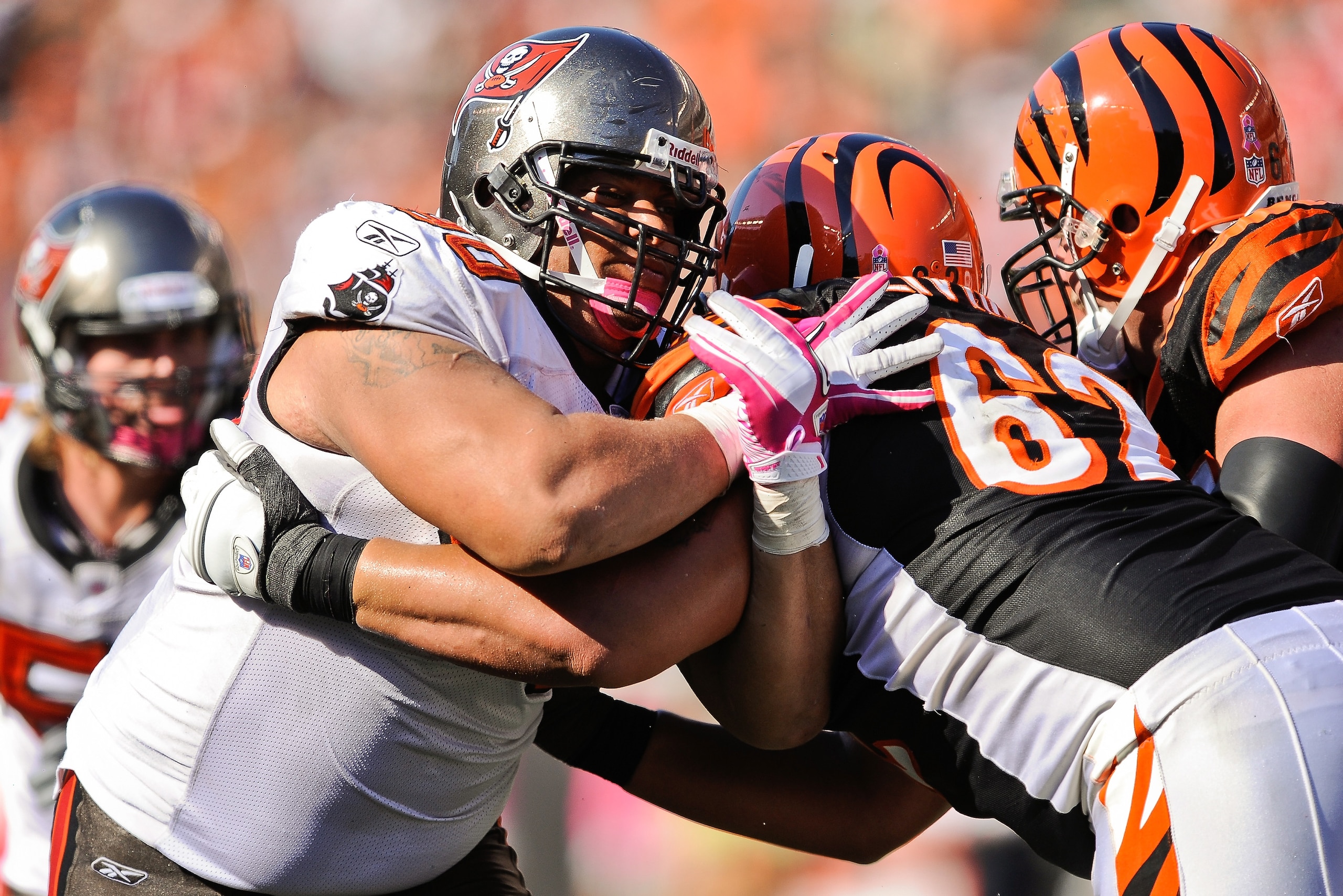
Perhaps nobody was more surprised when the Buccaneers used their first two draft picks in 2010 on defensive linemen than 2009 third-round pick Roy Miller.
After all, Miller was fresh off a rookie campaign that saw him tally 33 tackles with a pair of sacks from the back end of what was a defensive lineman merry-go-round.
With most of the incumbents either gone or bordering elderly, Miller surely had the inside track on a starting gig.
And if that's what he thought, he wasn't far off.
Gerald McCoy and Brian Price both joined the defensive line in 2010 (first and second round, respectively), and with Price was less than impressive in minimal playing time (just three tackles before being sent to injured reserve after five games with a pelvic injury) and McCoy proving to be a slow learner (28 tackles and three sacks in 13 games, all three sacks coming in Weeks 11 and 12), Miller still got his fair share of snaps.
With 46 tackles and just one sack in 2010, it wasn't quite a banner year for Miller.
However, much like his younger partisans, Price and McCoy, 2011 could be a catalyst for Miller's career.
The Buccaneers have put an emphasis on rushing the passer by drafting Adrian Clayborn and Da'Quan Bowers in 2011.
Nobody was afraid of the Buccaneer defensive ends in 2010.
Nobody.
If the defensive end position can prove to be a threat to reach the quarterback and assist with run defense in 2011, the defensive tackles will be the immediate beneficiaries.
Miller and the Buccaneers defensive line will be one of the more intriguing units in the NFL to watch in 2011.
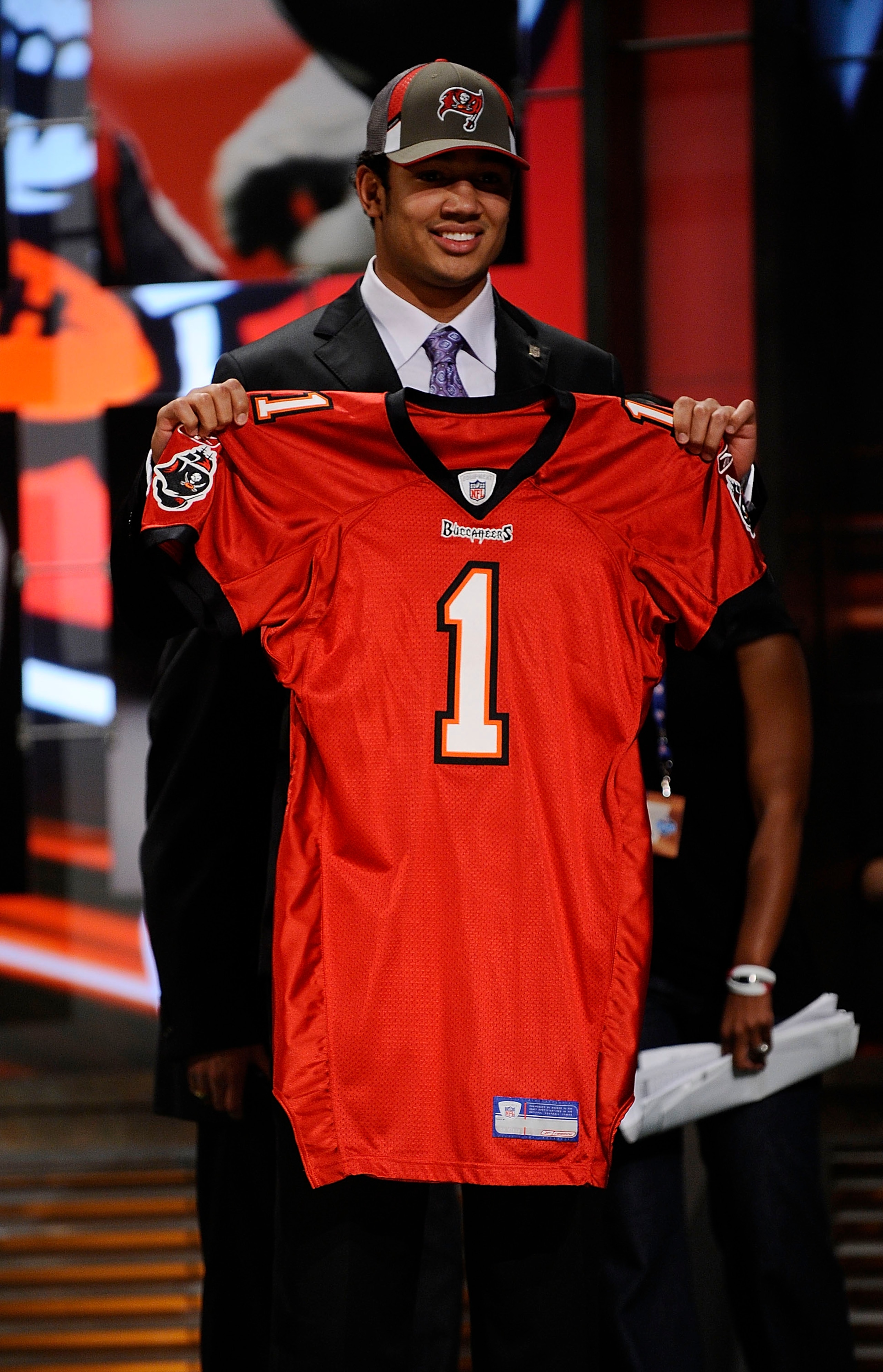
Round 1, Pick 17: Josh Freeman, QB, Kansas State
6 of 6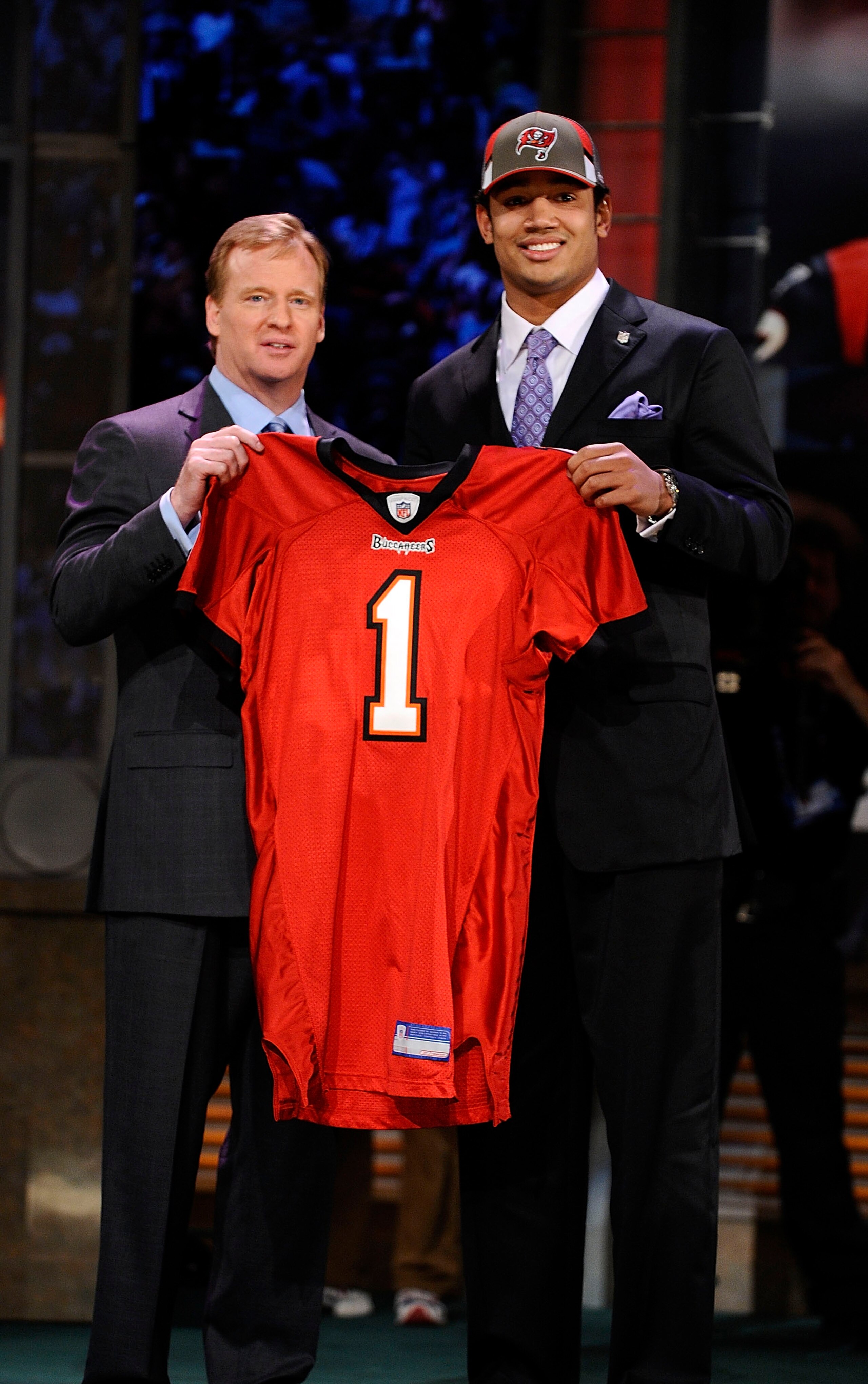
The pressure of being a first-round pick is undeniable. It's even more hefty when you're a quarterback—especially one a team traded up to draft.
The Buccaneers traded up two spots in the 2009 draft to No. 17 overall to snag Josh Freeman, and the initial plan was to have him sit his rookie season and learn.
But not being able to win games has a funny way of changing things.
Freeman was given the starting nod after the inconsistent quarterback play of Byron Leftwich and Josh Johnson led the Buccaneers to 0-7 start in 2009 heading into Week 9. Freeman's only previous action was in mop-up duty of a 35-7 loss to the New England Patriots in London, England in Week 7.
And though he only completed 14 of 31 passes and threw an interception against the Packers in his first NFL start, the fact that he kept pace with Aaron Rodgers throughout the game and outplayed him in the fourth quarter gave the Buccaneers a glimpse of what they had in the young Kansas State product.
Freeman tossed three touchdowns on the day, the first coming in the first quarter as an answer to Rodgers' 74-yard touchdown strike just under three minutes into the game.
But the fourth quarter was where Freeman truly thrived.
Just under three minutes into the fourth quarter, Rodgers ran for a touchdown to give the Packers a 28-17 lead, pushing the Buccaneers to the brink of 0-8.
But Freeman would have none of it.
A seven-yard touchdown to Kellen Winslow just over a minute after Rodgers' score and another seven-yard strike to Sammie Stroughter gave the Buccaneers the lead with just over four minutes left in the game. A two-point conversion made it 31-28.
Freeman got some help from his defense as well, as the Buccaneers intercepted Rodgers three times, the last of which was a Tanard Jackson pick taken back for a touchdown inside one minute to seal the 38-28 win, the first of the season for the Buccaneers and the first of Freeman's career.
After being hailed a comeback kid and anointed the quarterback of the future (society and the media have a habit of being a bit reactionary), Freeman came back down to earth in 2009.
The Buccaneers would go on to lose the next five games before winning two of their last three. Freeman finished the season with 18 interceptions, tied for fourth-worst in the league despite starting just nine games.
But just like the Buccaneers, Freeman made quite the turnaround in 2010.
Aside from improving his touchdown/interception ratio from 10-to-18 in 2009 (10 games) to 25-to-6 in 2010 (16 games), he came close to topping the NFL record for quarterback rating improvement.
Freeman improved his quarterback rating from 2009 by 36.1 points in 2010 with his 95.9 rating, sixth in the league behind familiar names like Tom Brady, Aaron Rodgers, Ben Roethlisberger, Philip Rivers and Michael Vick, topping the likes of Peyton Manning, Matt Ryan and Drew Brees in that category.
Brees set the season-over-season record when he was with the San Diego Chargers, making a 37.3-point improvement from 2003 to 2004. He’s the only quarterback to have a bigger QB rating turnaround than Freeman in NFL history.
Freeman was recently ranked 86th on the NFL Network's Top 100 players of 2011.
He still has to prove that he can provide the longevity demanded of a franchise quarterback—the value the Buccaneers were looking for at No. 17 overall, though he's certainly lived up to the early expectations.
And while 2010 may have been the catalyst launching him into that franchise role, 2011 will go a long way in molding his true legacy.
.jpg?w=2560 "Texans-Mixon Released Football")

.jpg?w=2560 "Grading WWE Raw 🔠")


.jpg?w=2560 "2 NFL Officials Suspended")
