
NBA Draft 2011: Jimmer Fredette and 5 NCAA Seniors Being Underrated
Due to the way the NBA draft is currently structured, NCAA seniors usually get lost in the shuffle when it comes to being selected. Teams seem to prefer players who come out of college early, usually because they have higher talent ceilings. But the extra experience gained in college, both on and off the court, is usually overlooked by talent evaluators.
Here is a list of the first NCAA senior drafted in each of the past five NBA drafts:
2010: Trevor Booker (Clemson) with the 23rd pick (Minnesota Timberwolves).
2009: Terrence Williams (Louisville) with the 11th pick (New Jersey Nets).
2008: Jason Thompson (Rider) with the 12th pick (Sacramento Kings).
2007: Acie Law (Texas A&M) with the 11th pick (Atlanta Hawks).
2006: Shelden Williams (Duke) with the fifth pick (Atlanta Hawks).
Aside from Thompson, who has enjoyed some success during his three years with the Kings, that list illustrates why NBA general managers are so hesitant to use a first-round pick on a college senior.
There are success stories out there, however. Players like Landry Fields, Darren Collison, Marcus Thornton, Carl Landry and Aaron Brooks have found moderate prosperity in the league after being drafted in the late-first or second round as college seniors.
Without further ado, here are five NCAA seniors who are being undervalued in this year's draft. All advanced statistics used in the slideshow are courtesy of Ken Pomeroy's college basketball website, kenpom.com.
Jimmer Fredette (BYU)
1 of 5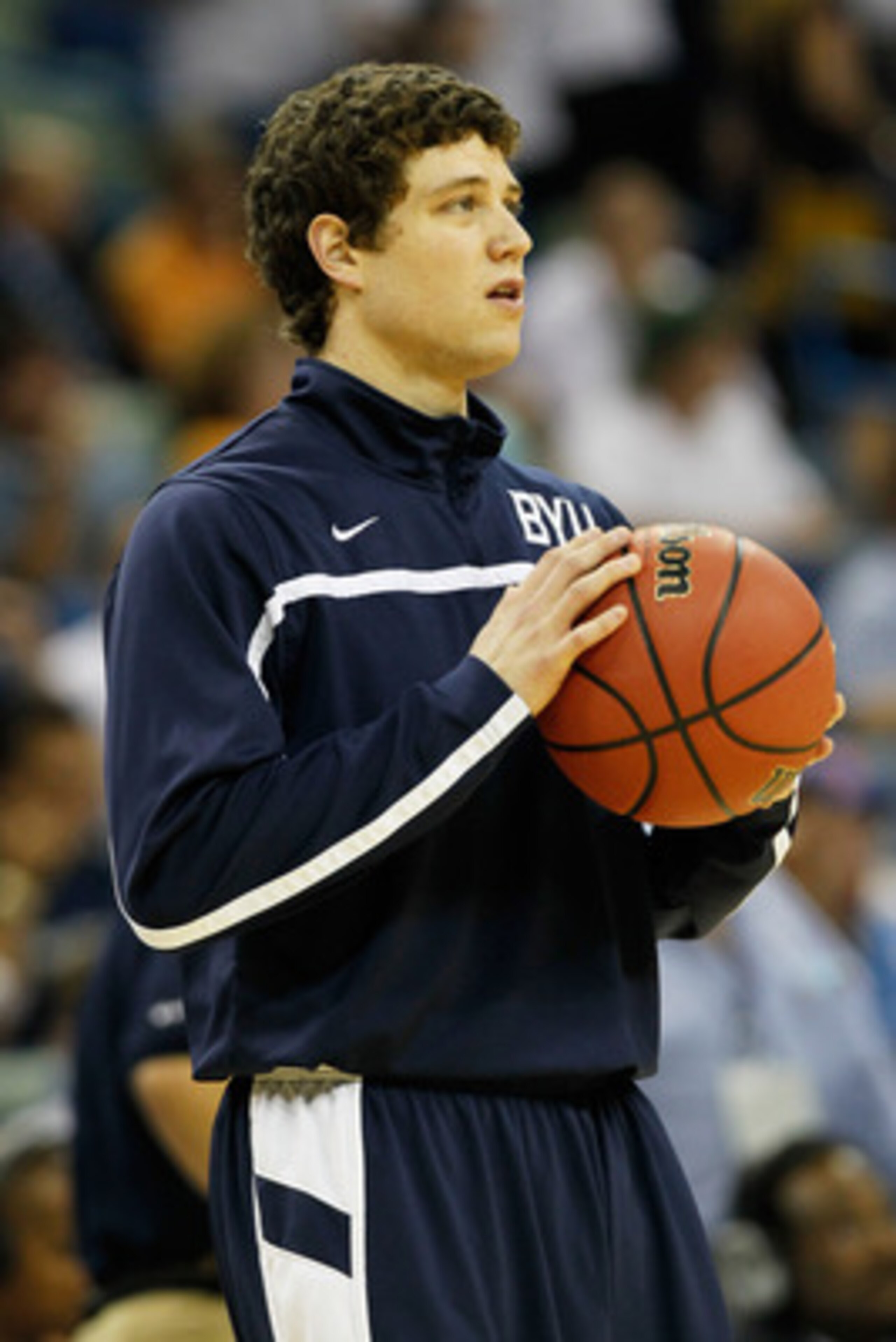
Although there are definitely some question marks surrounding Jimmer Fredette, most notably his defensive ability, rarely has such a hard-working, all-around good kid like Fredette gotten so much bad publicity leading up to the draft.
While leading to BYU to a 32-5 season, Fredette led the nation at 27.9 points per game while adding 4.3 assists, 3.5 rebounds and 1.5 steals per game as well. He took an astonishing 38 percent of the Cougars shots, but did so with terrific efficiency.
He shot 46 percent from the field, including 40 percent from beyond the arc and 90 percent from the free-throw line. By comparison, albeit against tougher defenses, the only players in the NBA to match those percentages were Steve Nash and Stephen Curry.
Fans will remember his poor shooting performance against Florida in the NCAA tournament, but don't be fooled by that bad day—Fredette is an elite shooter. His defense needs improvement and he is still working on the transition to point guard, but after being used in 36 percent of possessions last season, he is used to controlling the ball.
All accounts say he has a tremendous work ethic, which should lead to improved defense over time, and he already has the size to play the point in the NBA.
Fredette will not crash and burn in the NBA like analysts such as Colin Cowherd are predicting; he will have a successful NBA career.
JaJuan Johnson (Purdue)
2 of 5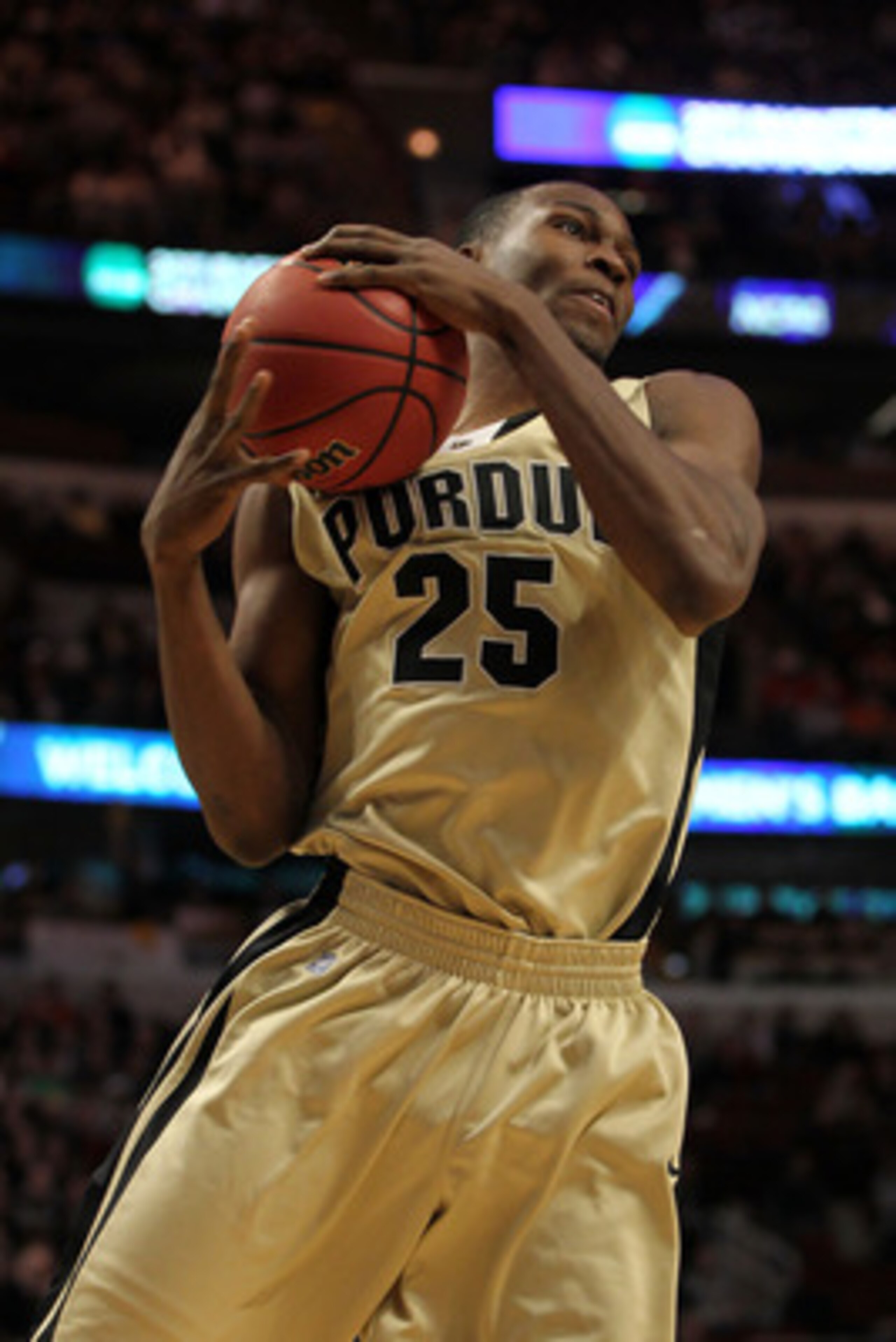
Following the loss of Robbie Hummel before the season started at Purdue, JaJuan Johnson stepped up and led the team to a 26-8 record. Johnson averaged 20.5 points and 8.6 rebounds on the season and excelled at the defensive end where he blocked 2.3 shots per game.
Johnson's biggest problem is that scouts don't know if he projects to a lean power forward or a tall small forward in the NBA. Despite his size, Johnson is strong with the ball, as he had the 27th-best turnover rate in college basketball last season even though he handled the ball on 27 percent of possessions.
He also uses his size very well on defense, averaging just 1.8 fouls per 40 minutes while still altering a bunch of shots.
He shot 52 percent from the field and 81 percent from the line in his senior season. He also attempted 51 threes, but converted a poor percentage and will likely be restricted to mid-range jumpers in the NBA. His offensive game needs work, especially his post moves, but the athleticism is there to become an impact player on both ends of the court as opposed to just the defensive end.
Jon Leuer (Wisconsin)
3 of 5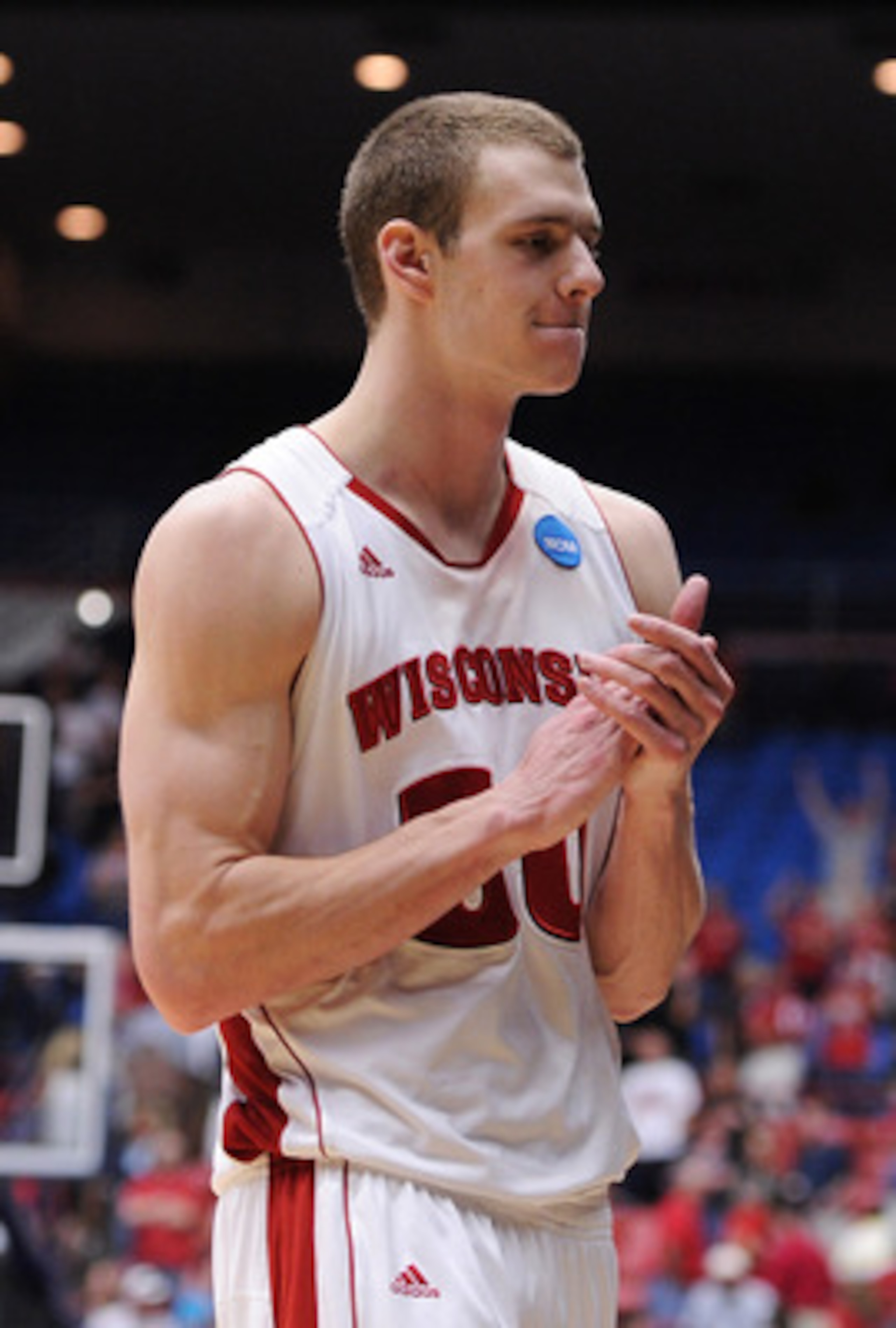
Overshadowed by Jordan Taylor at Wisconsin, Jon Leuer was consistently improving during his four years under Bo Ryan. In his senior year, Leuer averaged 18.3 points and 7.2 rebounds per game while shooting 47 percent from the field, 37 percent from three and 84 percent from the line.
Leuer fits in with the changing style of the NBA, which has seen more big men who can step outside the arc and knock down the three-point shot. He has a well-polished offensive game that projects well to the next level, including in the post.
The area where Leuer will need to improve is on the defense end. He will need to bulk up if he plans on seeing consistent minutes and not just become an offensive sub. It doesn't seem like positioning is the problem as he averaged only 1.6 fouls per game at Wisconsin, but rather he lacks the strength and athleticism needed to guard power forwards.
Overall, Leuer will likely be used in offensive situations during his first few years in the league while he works on his post defense, similar to a Ryan Anderson.

LaceDarius Dunn (Baylor)
4 of 5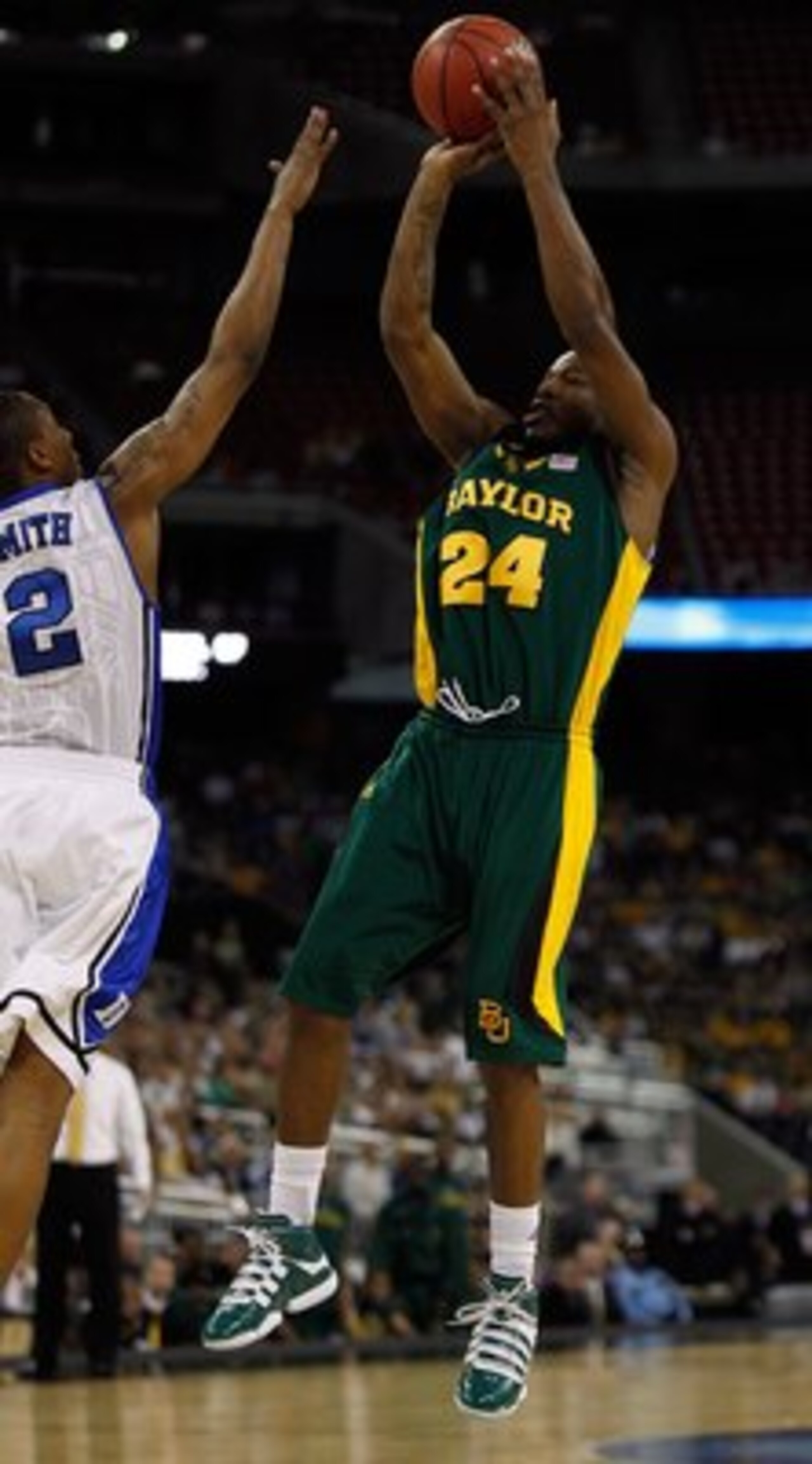
We now get into prospects that will be mid-to-late second-round picks if they are drafted, but may become undrafted free agents that latch on with teams during training camp.
LaceDarius Dunn was a very efficient scorer during his first three seasons at Baylor before becoming more of a volume scorer in his final season. In that final season, he averaged 19.5 points but needed 20.3 shots to do it. One of the main reasons for the problem was Baylor's helter-skelter style of play that led to many unnecessary shots by Dunn.
Too often it seems teams get caught up trying to find the “complete player” during the second round, when the fact of the matter is they aren't available. Teams should focus more on players like Dunn who are one-dimensional, but would provide an immediate offensive boost when brought into the game.
His defensive skills are limited to say the least, but when you acquire a player like Dunn, you should be focusing on playing him in high-leverage offensive situations only, so it shouldn't be a problem.
Ben Hansbrough (Notre Dame)
5 of 5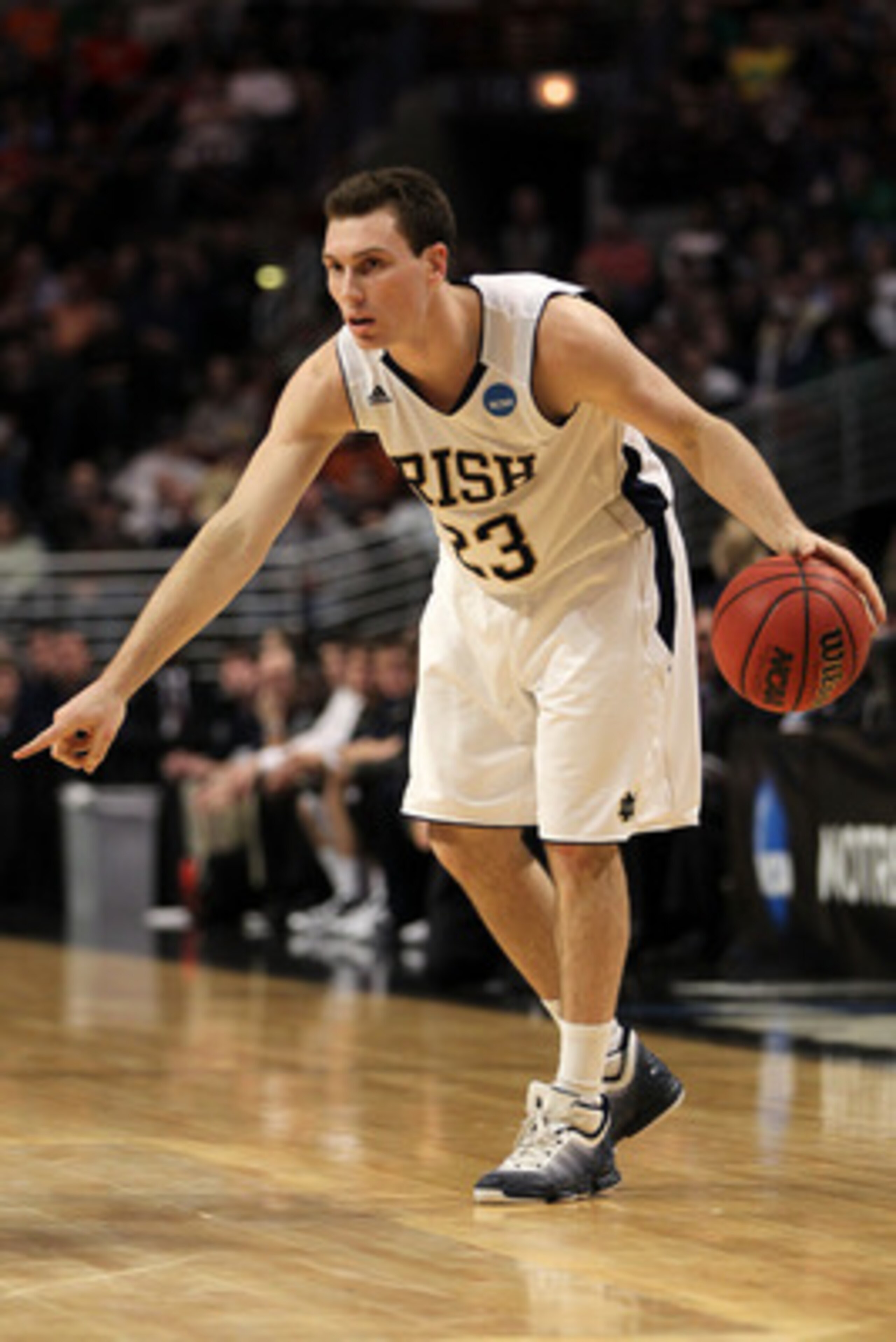
After spending two unproductive seasons with Mississippi State, Ben Hansbrough transferred to Notre Dame where he quickly became somebody other than “Tyler's brother.” He averaged 18.4 points, 4.3 assists, 3.9 rebounds and 1.2 steals in his senior season with the Irish. He ranked in the top 75 nationally in offensive rating and effective field-goal percentage.
Hansbrough developed into a well-rounded offensive threat during his senior campaign when he shot 48 percent from the field, including 44 percent from three and 82 percent from the line, all which represented career highs. He could definitely step in and make an offensive impact off the bench, especially since he doesn't make many mistakes.
His defense, like Dunn's, would need to be improved if he wanted to become a full-time player in the NBA. Hansbrough could benefit from playing on a team like the New York Knicks, where defense is more of an option than a requirement to get playing time.






.jpg?w=2560 "Latest Peyton-Colts Rumors")