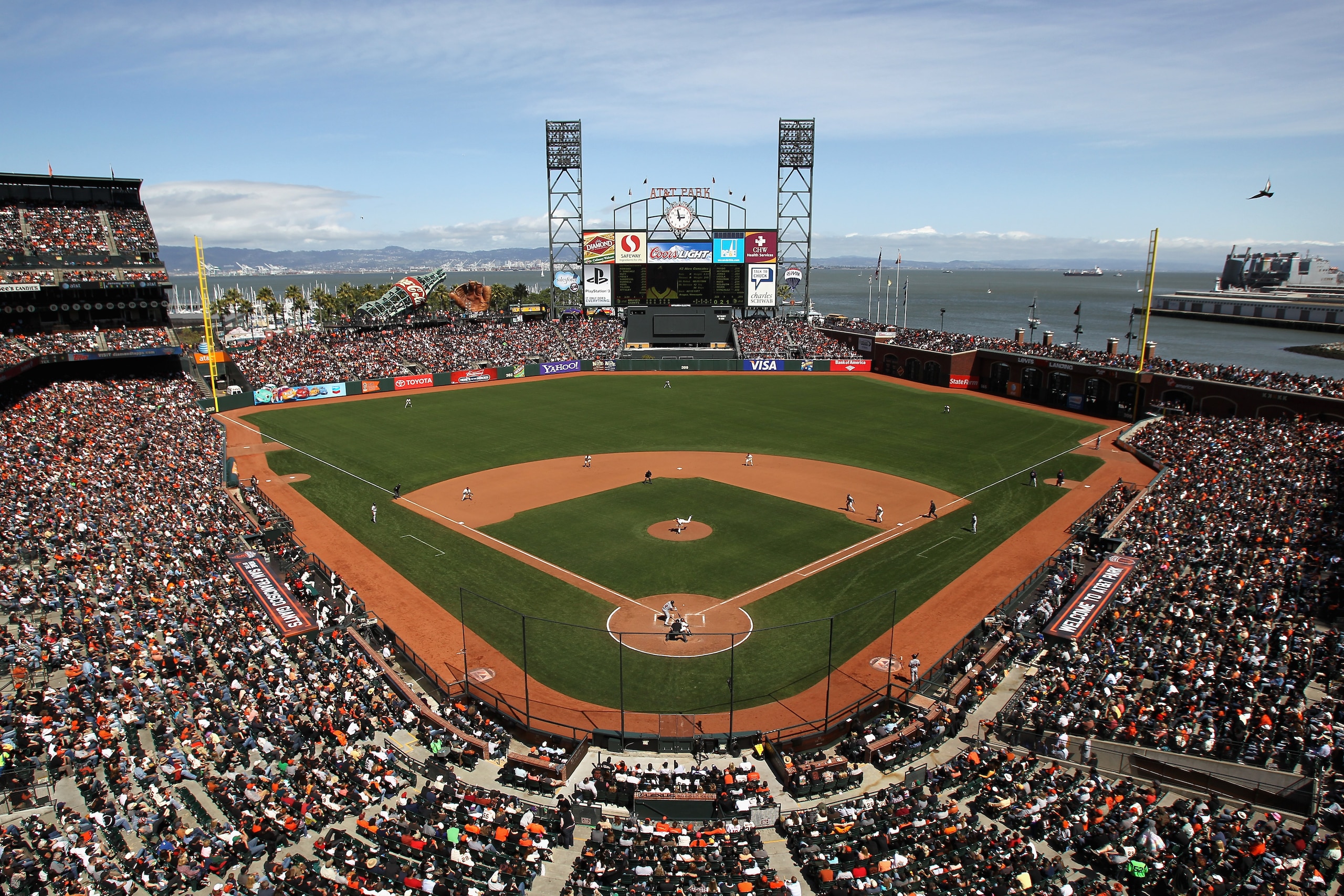

The Unofficial 2011 NorCal Pro Sports Franchise Relevance Index
Dallas is a football town. Yes, the Mavericks are reigning NBA champions. Yes, the Rangers are defending AL champions. But the Cowboys rule, even though they've not advanced beyond the NFC divisional playoff round since their last (1995) Super Bowl title season.
Denver bleeds orange and blue, even though the Broncos arguably are that market's weakest franchise, competitively speaking.
What about the Bay Area? Which pro sports team is most relevant? Least relevant?
Read along as we review my ranking, from least to most relevant, of the region's seven major-sport franchises (two MLB, two NFL, NBA, NHL and MLS).
My assessment takes into account:
-fan support
-likely reaction, from the region as a whole, if the team threatened to leave for another city
-intangibles (stadium/arena issues, ownership, media coverage, etc)
The Sacramento Kings are excluded because they play in a distinct media market. The San Francisco Dragons are excluded because...well, because most of you don't have any idea what, or who, they are.
Here are the seven, ranked from least to most relevant.
#7: San Jose Earthquakes
1 of 7
Soccer may be the world's most popular sport. In the Bay Area, it's the least relevant, hands (well, maybe feet) down.
First, there's the history—er, histories—of this vagabond franchise. It has had three distinct "lives."
From 1974 - 1988 they were the San Jose Earthquakes, except for 1984, when they were the Golden Bay Earthquakes (don't ask, maybe they got the name off a Red Lobster menu). And they played in two leagues: the North American Soccer League (NASL) through 1984, then the Western Soccer Alliance from 1985 to 1988. The league, and all its franchises including the Earthquakes, then folded.
The franchise reemerged in 1996 as the San Jose Clash, one of ten original Major League Soccer (MLS) franchises. Renamed the Earthquakes in 1997, the club played in San Jose through 2005 when its players and coaches became the Houston Dynamo.
San Jose was without pro soccer for two years (not that anyone noticed). For some ungodly reason the Earthquake franchise was reborn, yet again, in 2008. They'd have better been named the TrEarthquakes. Or Earthquakes III.
I am obliged to report that the club did win MLS titles in 2001 and 2003. The parades were held in a cul-de-sac (I'm kidding). In 2005, it was awarded something called the MLS Supporters' Shield (I am not kidding), for best regular season league record. Two things occur to me about this:
1. The MLS marketing director ought to have been fired for coming up with that award name
2. San Jose is good at producing teams that kick butt in the regular season, then flame out in the playoffs.
This team has had multiple identities, played in multiple leagues, and died twice before being reborn. Its history, told on film, would be a horror flick. This, without question, it is the least relevant pro sports franchise in the Bay Area.
#6: Oakland Raiders
2 of 7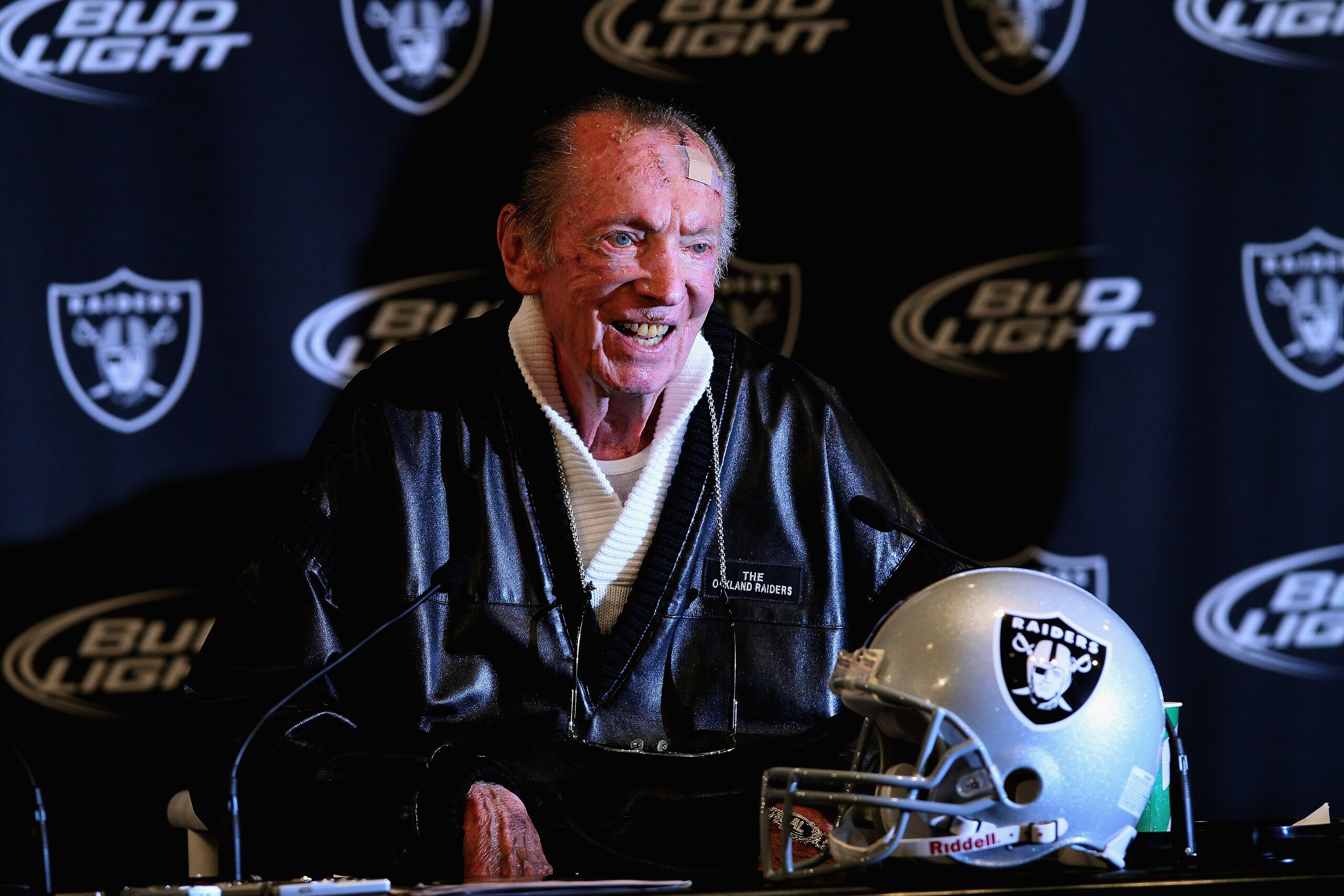
I'll probably never be invited to visit the Black Hole after this.
Everything about the Oakland Raiders—on-field successes and failures; relationships with the league, other clubs, the media, even the team's fans—emanates from the aura of managing partner Al Davis.
A headline above a story about Davis on the team's website begins, "The Man Behind the Shield." Maybe the MLS regular season award (see prior slide) is named for him.
Davis is the real-life version of J.R. Ewing (played by Larry Hagman) in the '80's TV serial drama, Dallas.
He squeezed other financial partners for a controlling interest in the team.
He sued the NFL over efforts to block his team's 1982 move to Los Angeles, sued the league again after returning to Oakland in 1995, then sued Oakland and others over alleged failures to fulfill guaranteed sell out crowds at the refurbished Oakland/Alameda Coliseum. (a remodel that made the facility utterly inhospitable for its co-tenant, the Oakland A's)
Davis hires and fires coaches with reckless abandon. He moves his team whenever it suits him (rumors are simmering that he may be considering another move South). He clings to the antiquated notion that the Raiders' considerable successes (Super Bowl wins in 1977, 1980 and 1983 and command of the AFC West for a long while) were yesterday, not years...and years...and years ago.
Pride and Poise? Hard to accept that one of the most penalized teams in the NFL year after year deserves "poise" as part of its mantra.
The Associated Press reported in November 2010 that 80 of the team's last 124 regular-season home games had been blacked out in the 16 seasons since the team returned in 1995 from Los Angeles. That, plus zero playoff berths since 2002, makes a strong case for extreme irrelevance.
#5: Oakland A's
3 of 7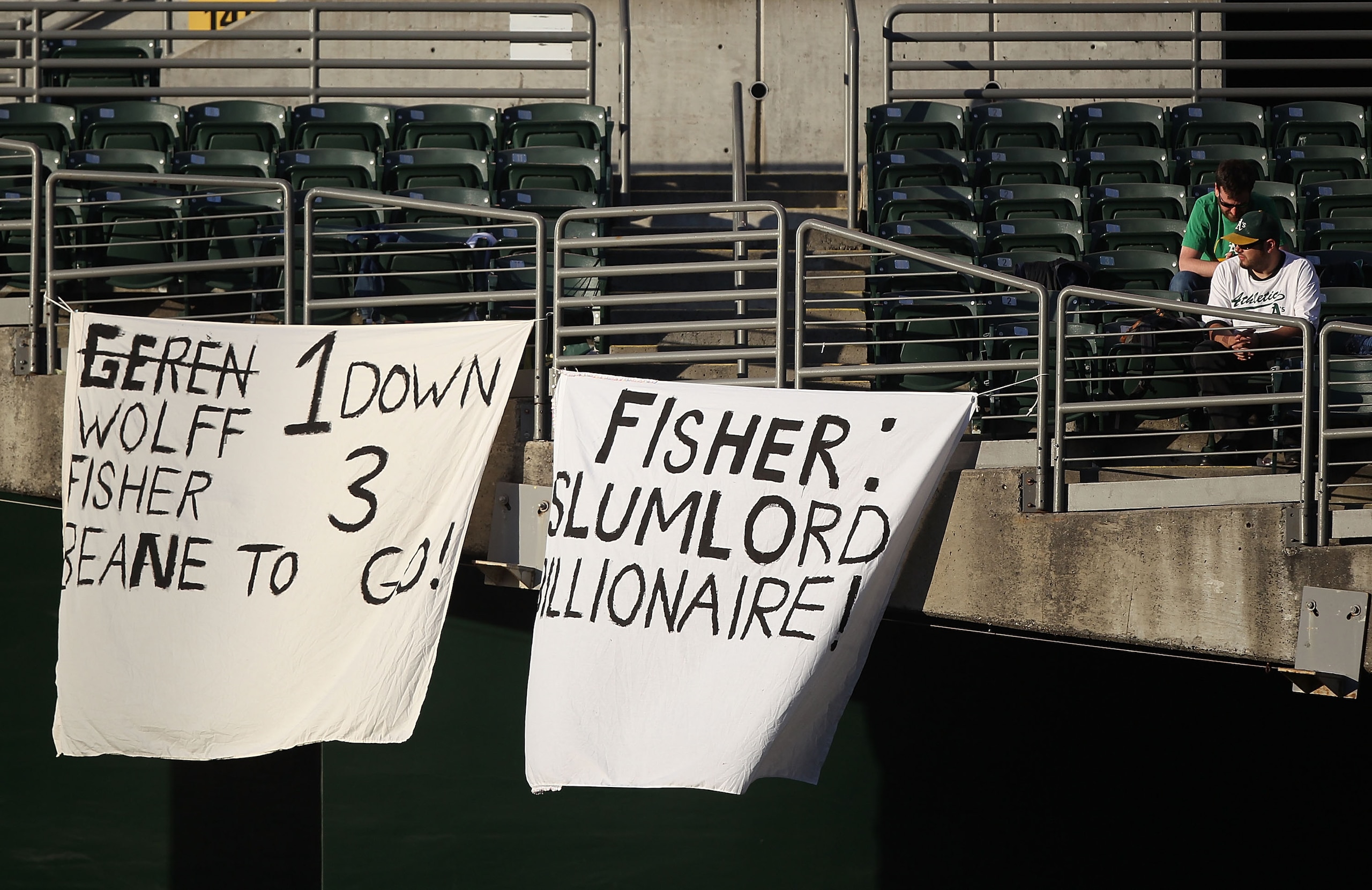
I hear it, faintly: He's a San Francisco guy, so he's dissing Oakland.
Not really. The A's are poster children for irrelevance.
First of all there's their stadium--a place that can't keep its own name straight. The Coliseum has, as San Francisco Chronicle columnist and East Bay maven Chip Johnson recently observed, had five name changes since 1999—two in the last six weeks. Yes, six weeks. The A's ought to discard their elephant mascot and adopt Waldo.
Network Associates Coliseum. Overstock.com Coliseum. O.co Coliseum. Whatever, as a fan-friendly venue for pro baseball, it's still awful.
There's also their media exposure—or lack of some. Comcast SportsNet's emerging dominance of regional coverage has vastly broadened the A's presence on television.
Radio, though, is a different matter. Like their stadium names, the A's radio home has shifted....shall we say, often? KFRC. KTRB. FM-95.7, where the call letters shift daily (or so it seems).
Finally, there's the matter of the eternal search for a new home, something more hospitable than the dreadful concrete bowl that resulted from the retrofit that accommodated the Raiders' return to Oakland from Los Angeles.
A's owner Lew Wolff seems to be following this playbook: First, steadily dilute the quality of your product. Then, whine about the difficulty of moving into your popular cross-bay rival's geographic territory. And then, send signals that you are open to moving to a new market, further depressing your dwindling fan base.
Lousy model for running a professional sports franchise. But a great example of how to render your team irrelevant.



#4: San Jose Sharks
4 of 7
Each of the remaining four franchises has measurably strong fan support and relatively stable (or recently upgraded) ownership.
Remember: this list is not based purely or even largely on competitive success. If it were, the Sharks likely would rank #1; they've been division champions for four straight years, a record unmatched by any other Bay Area franchise.
The San Jose Sharks rank fourth because they a) play the least-relevant sport, b) are much less-often the subject of chatter among casual sports fans, and c) history suggests their departure would spark some, but hardly a deafening, outcry.
Ask yourself: if a bar anywhere outside the South Bay has one TV, and the decision is between a Sharks playoff game and Giants game, which will be the popular choice?
The "outside San Jose" issue is, in fact, the prevailing issue here. The Sharks are well managed, competitive every year, and consistently sell out a lovely arena.
But unless you're a hardcore fan, how many of their players can you name without going online? Go ahead, try.
The Bay Area just isn't hardcore for hockey. Its first NHL franchise (the California Golden Seals) escaped in 1976 for Cleveland. There's some karma there, since that city was jilted by Art Modell when the Browns moved to Baltimore after the 1995 season. Win some, lose some.
When Cleveland lost the Browns, the outrage was so intense that the NFL awarded the city a new franchise three years later. Here, it took 15 years for the NHL (the Shamrocks, a nice little minor-league novelty, don't count) to return.
Sorry, hockey fans, but the Sharks' bandwagon—even when they advance as far as the conference finals—never swells as it does in markets like Philly or Boston or Detroit. Or, as it does when the Giants, Warriors or Niners make a playoff run.
The Sharks are a pretty big fish in a smaller South Bay pond.
#3: San Francisco 49ers
5 of 7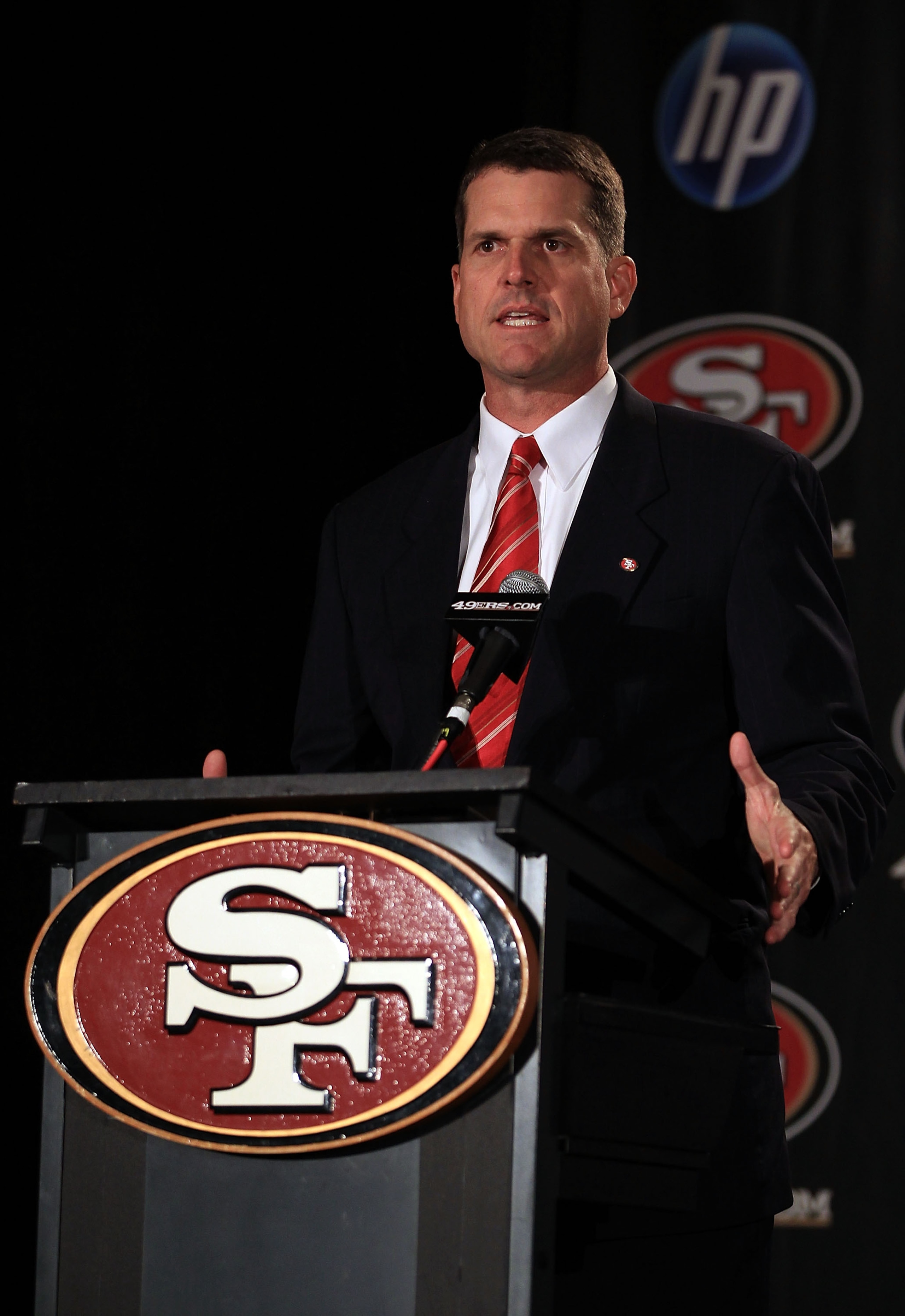
Again, team performance isn't a major criterion here.
Not that the San Francisco 49ers recent performance data is pleasant: No playoff appearances since 2002, a 46-82 record over the past eight seasons, and three coaches hired, then fired, over that span.
Off-field optics have at times been difficult, too.
In spite of all that, the 49ers rank ahead of the Earthquakes, A's and Sharks even though all three have out-performed them.
Partly, that's based on intangibles. Established in 1946, the 49ers were San Francisco's first major-sport franchise. The team is a de facto public asset; the region's affection for the team was established well before its remarkable run of competitive success began in the early 1980's.
You could argue that the Niners (five) and A's (four) have been the region's two most successful franchises, measured by world titles and playoff appearances. But ask yourself: which of the two would spark more public furor if it announced plans to leave the Bay Area?
The same "bandwagon" factor that kept the Sharks at #4 places the 49ers higher, at #3. The buzz around the Niners is intense, in and out of season. The hire of Jim Harbaugh garnered more broad-based noise than the Raiders' hiring of Hue Jackson. (plus, the sizzle factor surrounding Jackson's appointment had way more to do with Al Davis's rare public sighting than the new coach)
The fair question to ask is since both have been lousy since 2002, why should the Niners be ranked several spots ahead of the Raiders? In the end, the simple answer is this: the Raiders already fled the Bay once, and might do it again. The Niners may have determined that their best stadium option is Santa Clara, not San Francisco, but they haven't looked seriously at leaving the area entirely.
It is also fair to ask why are the Niners ranked behind the Golden State Warriors? Keep reading for details, but here's a hint: We Believe.
#2: Golden State Warriors
6 of 7
Just as Dallas is a football town, Oakland is a basketball town. And, all things considered, the Golden State Warriors are more relevant to the greater Bay Area than all its pro franchises but one.
Let's first address why I've ranked the Warriors ahead of the 49ers. No question, the Niners' five world titles and nearly two-decade run of dominance exceed anything the Warriors have accomplished on the court since the franchise's founding in Philadelphia, in 1946.
Again, wins and losses are only part of this story.
Think back to 2007, when Warriors eliminated Dallas in six gorgeously entertaining games. It was the first-ever opening round defeat of a top conference seed in NBA history. The W's didn't attract a bandwagon; it was a tidal wave. And it enveloped the entire region, all the way through and past the second-round five-game series loss to Utah.
There are only two comparable achievements by local sports teams that (I believe) match or exceed it for pure excitement: the Niner's first serendipitous march to the '82 Super Bowl, and the Giants' 2010 World Series run.
That factor helped separate the Warriors from the 49ers here: a first-round playoff victory brought as much unbridled joy and amazement—albeit without a parade—as marches down Market St. by the 49ers in 1982 and the Giants last November.
It's also material that the Warriors are the Bay Area's lone pro basketball franchise. As loud as the outcry would be if the Niners threatened to leave the area, the noise would be as loud if the Warriors headed elsewhere. I don't think you can say that about any other local franchise—except the Giants.
Remarkable fan support—top ten in NBA attendance in 2010-11 and consistently at or near capacity—for a consistently bad team simply defies logic and helps demonstrate relevance. The Niners have the luster of five Super Bowl triumphs and fewer seats to fill (eight games, 69,000 per) than the Warriors (41 games, 20,000 per) each season.
Lastly, I considered the sustained buzz surrounding the Warrior's 2010 ownership change and recent addition of Jerry West as a front-office consultant. Both rivaled (and at times, exceeded) the sustained buzz surrounding Jim Harbaugh's hiring by San Francisco.
#1: San Francisco Giants
7 of 7
You might think it odd that an image of Candlestick accompanies this ranking of the San Francisco Giants as the Bay Area's most relevant sports franchise.
Actually, the (insert favorite adjective here: windswept; frigid; worst-ever) yard is the perfect symbol for the team's legacy in the Bay Area--sort of like the Phoenix (Greek symbol of revival), only uglier.
The Giants place at the head of the local pro sports table has been both difficult and hard-earned. Since moving to San Francisco from New York in 1958, the club has endured:
-Candlestick Park, the team's home for 40 years, and all its legendary inadequacies
-The arrival in 1968 of the Oakland A's, turning one of the largest single-team markets in baseball into its smallest two-team market
-Two serious, near-miss relocations of the franchise, first to Toronto in 1976, then to Tampa in 1992. Both times, local saviors stepped in at the 11th hour when agreements with other cities were virtually sealed
-Several failed ballot measures seeking public support for a new stadium
-The 1989 Loma Prieta earthquake, disrupting the first World Series in San Francisco in 27 years and dooming any chance at the time of passing a ballot measure authorizing public funds for a new stadium
-A huge gambit by owners that successfully financed the team's new ballpark privately, but saddled them with years of debt ordinarily covered by a city, county or special stadium assessment
The Giants have overcome all that plus the Bonds steroid spectacle and other issues too numerous to include here.
Challenges were not limited to awarding generous—perhaps outrageous—free agent contracts that today inhibit flexibility in dealing for help. Its farm system was also neglected during the Bonds Era, a situation that is clearly being addressed.
In 2011, no local franchise matches the Giants fan support (31 straight sell-outs with Minnesota visiting this week); facilities (a stadium regarded as the best in baseball); stable management (an investor group headed by managing partner William Newkom); and exposure from local, regional and national media as the reigning World Series champions.
A's fans: you should gloat, rigorously, in this weekend's sweep of the world champs. But, daily ups and downs aside, the San Francisco Giants are more relevant than any of their Bay Area cousins.

.jpg?w=2560 "Grading WWE Raw 🔠")


.jpg?w=2560 "Viral Rams Coach Vid 🖕")

.jpg?w=2560 "Injury-stricken Seahawks signing veteran RB")
