2011 NBA Draft Lottery: Jazz Win No. 3 Pick, 8 Reasons to Draft Brandon Knight
With the order of the top 14 draft picks in the 2011 NBA Draft said and done, the Utah Jazz were awarded the No. 3 selection in this year's draft.
Since the sudden resignation of head coach Jerry Sloan and the departure of point guard Deron Williams shortly after, the Utah Jazz are a team in need of stability.
The Jazz would go on to win just eight of their last 24 games, finishing the season 39-43.
During the losing run to finish the season, the Jazz showed evident weakness at the point-guard position.
Of the 24 games without Williams, the Jazz would get just one double-digit assist game from Devin Harris, who was acquired in the deal that sent Williams to the New Jersey Nets.
Arguably the second-best prospect at the point guard position in this year's 2011 NBA draft class, Brandon Knight might just be the selection that can help provide the stability needed on both ends of the floor.
Here are the eight reasons why the Utah Jazz make the best decision by taking Brandon Knight with the No. 3 pick in the draft.
8. A Scoring Threat
1 of 8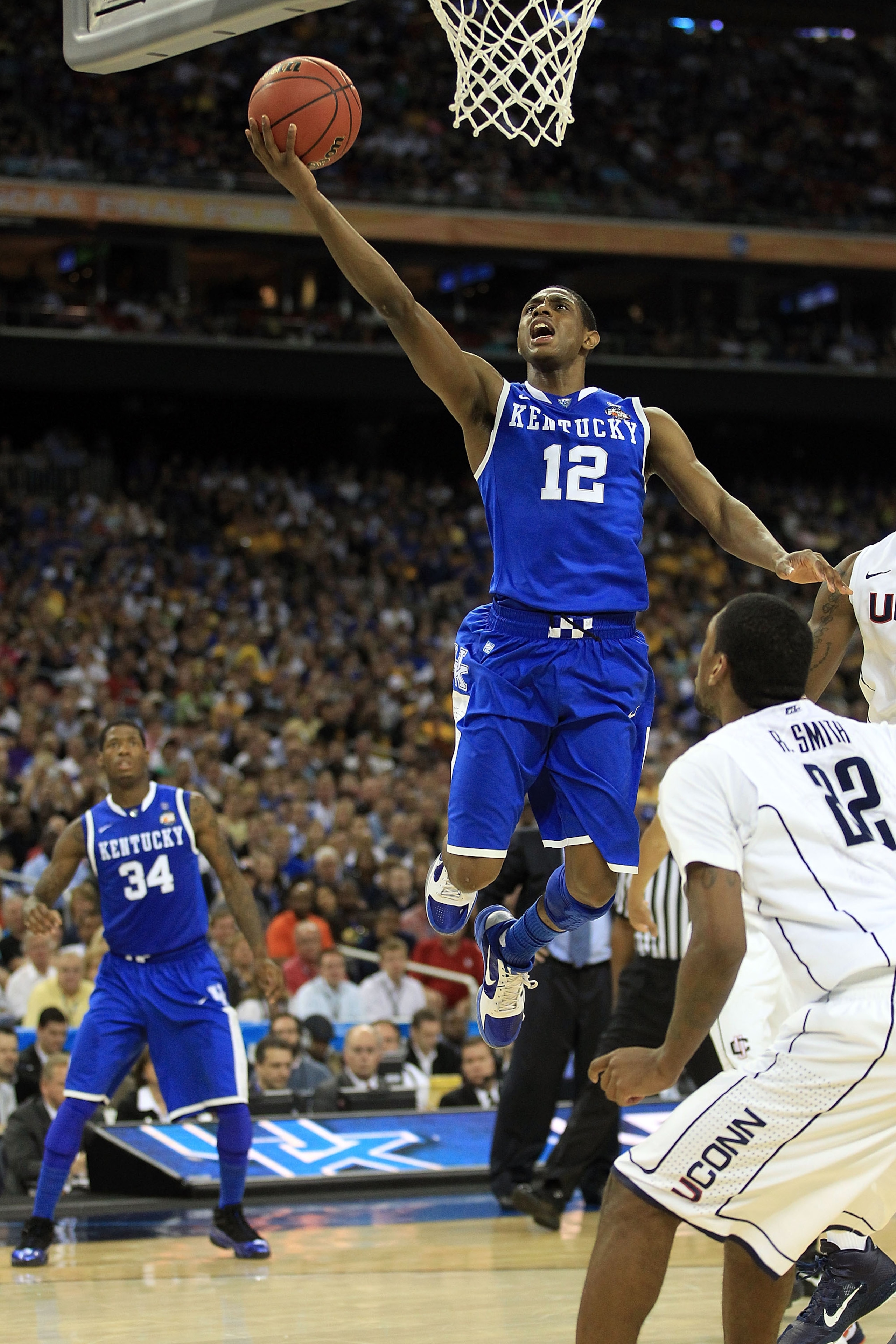
In just one year under head coach John Calipari, former Kentucky Wildcat Brandon Knight proved he is as good a scorer as any point guard in the 2011 NBA draft.
Playing for Kentucky, Knight proved he is not afraid to take shots, while also proving he is as quick a player as any entering the draft. Knight averaged 17.3 points per game, shooting 42 percent from the field in the process.
Trading Deron Williams to the New Jersey Nets, it has seemed the Jazz have lost a step offensively, as Williams was the primary scoring threat for the team.
Knight can make immediate impact in the scoring department with his ability to drive the lane consistently and use his explosive first step to his advantage.
In his last four games with the Wildcats, Knight averaged 19.5 points per game, including a 30-point performance against a physical West Virginia team.
7. A Facilitator
2 of 8
When it comes to getting other players involved, Knight is point guard who knows a thing or two about it.
Despite averaging just 4.4 assists a game, Knight was made the main scoring threat for the Wildcats and was given a role where he had to create his own shot.
Knight was able to find lanes against some of the more physical defenses in college basketball and find his shooters on the perimeter.
6. The Devin Harris Factor
3 of 8
After playing point guard for the Utah Jazz in the team's final 17 games of the season, former New Jersey Nets point guard Devin Harris seems to still be finding his place on the team.
Harris has looked sluggish in his showing with the Jazz at the end of last year, averaging 15.8 points on 41 percent shooting and just 5.4 assists per game in the 17 games.
Deron Williams posted 21.3 points on 45 percent shooting while racking up 9.7 dimes a contest.
The Jazz need stability at the point-guard position, and the young, top prospect talent Brandon Knight might just be the answer.


5. Tough in Transition
4 of 8
If there's the slightest opportunity to run the ball, Brandon Knight is up and running.
Knight has arguably one of the more impressive scoring arsenals of any point guard, or player for that matter, in this year's draft class.
His quickness and ability to get hands in passing lanes makes Knight as dangerous a player as any in the transition game.
Knight also has the athletic build and explosiveness to finish at the rim, which makes him that much more of a force on the break.
4. A Tough Defender
5 of 8
Aside from the plethora of offensive talent that Brandon Knight possesses, Knight is also capable of playing lockdown defense on the perimeter.
An average NBA point-guard height at 6'3" with long arms, Knight has the ability to play tough perimeter defense and limit passing lanes to opposing teams.
Knight is also one of the better point guards at rebounding the basketball. Last season he would average four rebounds a contest with the Wildcats.
His size and athleticism are hard to come by at the point-guard position.
3. The John Calipari Factor
6 of 8
Talk about a coach who breeds top-notch NBA point guards.
Under the teachings of Kentucky head coach John Calipari, Brandon Knight was given the opportunity to mature as a point guard better than most in his class.
Calipari has coached point guards like Derrick Rose, Tyreke Evans, John Wall and now Brandon Knight. All four were freshman one-and-done players who would leave after one year under Calipari's wing.
Rose, Evans, and Wall have all had their shares of success at the next level. Rose is in the Eastern Conference Finals and was awarded MVP at just 22-years of age this season. Evans was a Rookie of the Year, and John Wall was in the running for the award this season.
If there's something Calipari knows how to do, it's prepare his point guards to have immediate impact at the next level despite being younger prospects.
2. Young and Ready to Go
7 of 8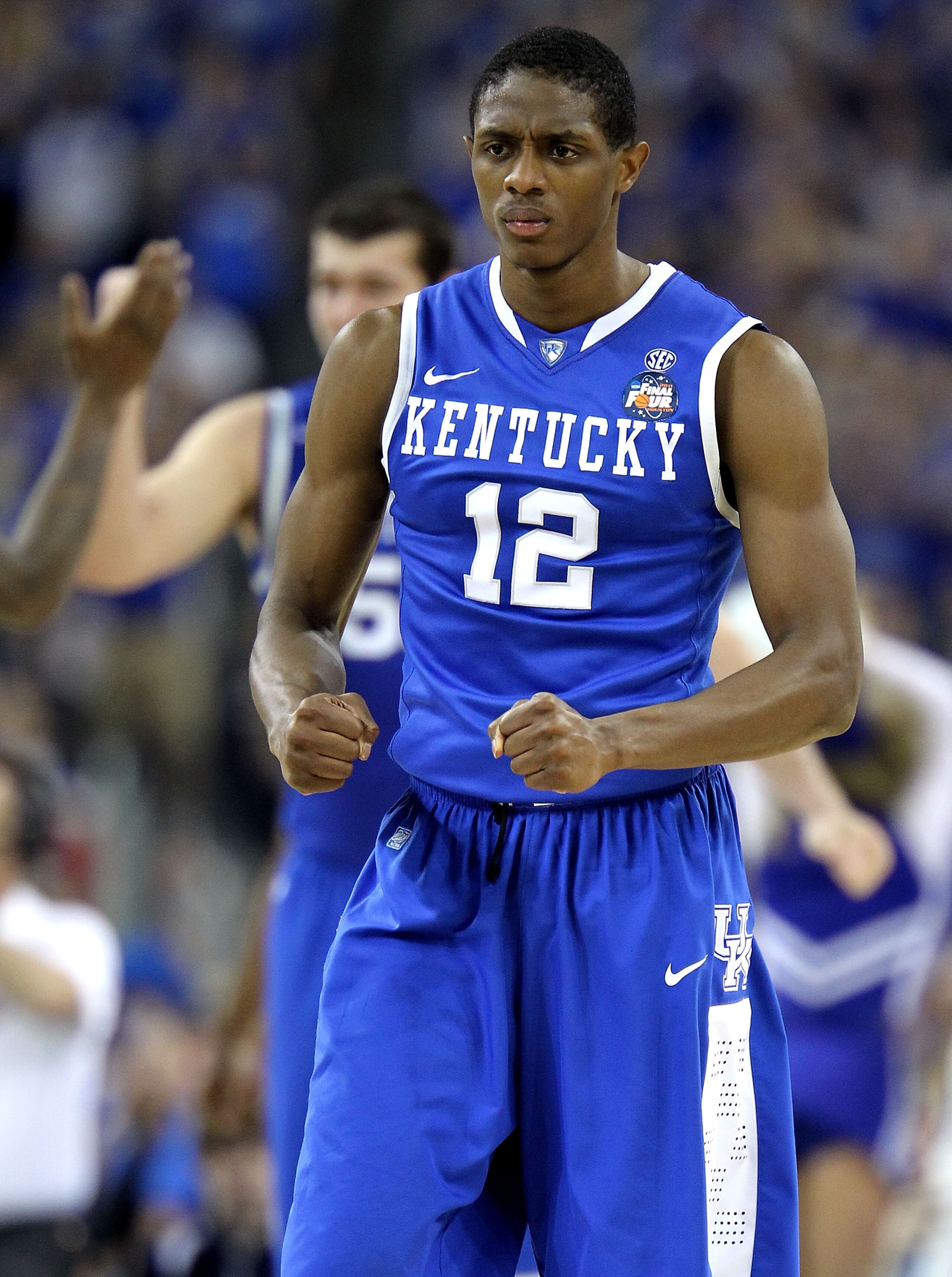
In what some basketball fans might find as a disadvantage, Knight is one of the younger talents entering the 2011 NBA draft.
At 18 years of age, Knight has plenty of years to develop at the next level. What makes this selection all the more intriguing is that not only is Knight young, but he is also as experienced a player as any in the field.
Knight logged 35.9 minutes per game in his one year with the Kentucky Wildcats, proving his extensive experience as a freshman.
The cool, calm and collective manner in which Knight ran the Wildcats team as a freshman is a skill that can't be taught, as the Jazz should highly consider taking the young talent.
1. A Winner at the PG Position
8 of 8
In his one year with the Kentucky Wildcats, Brandon Knight seems to have a good feel for how to win basketball games.
Knight was able to help his Wildcats win 10 consecutive games to finish the season, before finally falling to the eventual national champion UConn Huskies in the 2011 Final Four.
The Wildcats would finish the year 29-9 while also managing to win an SEC championship. Knight would score 17 points, grab eight rebounds, and dish out five dimes in the loss to UConn.
.jpg?w=2560)



.jpg?w=2560 "Latest Peyton-Colts Rumors")