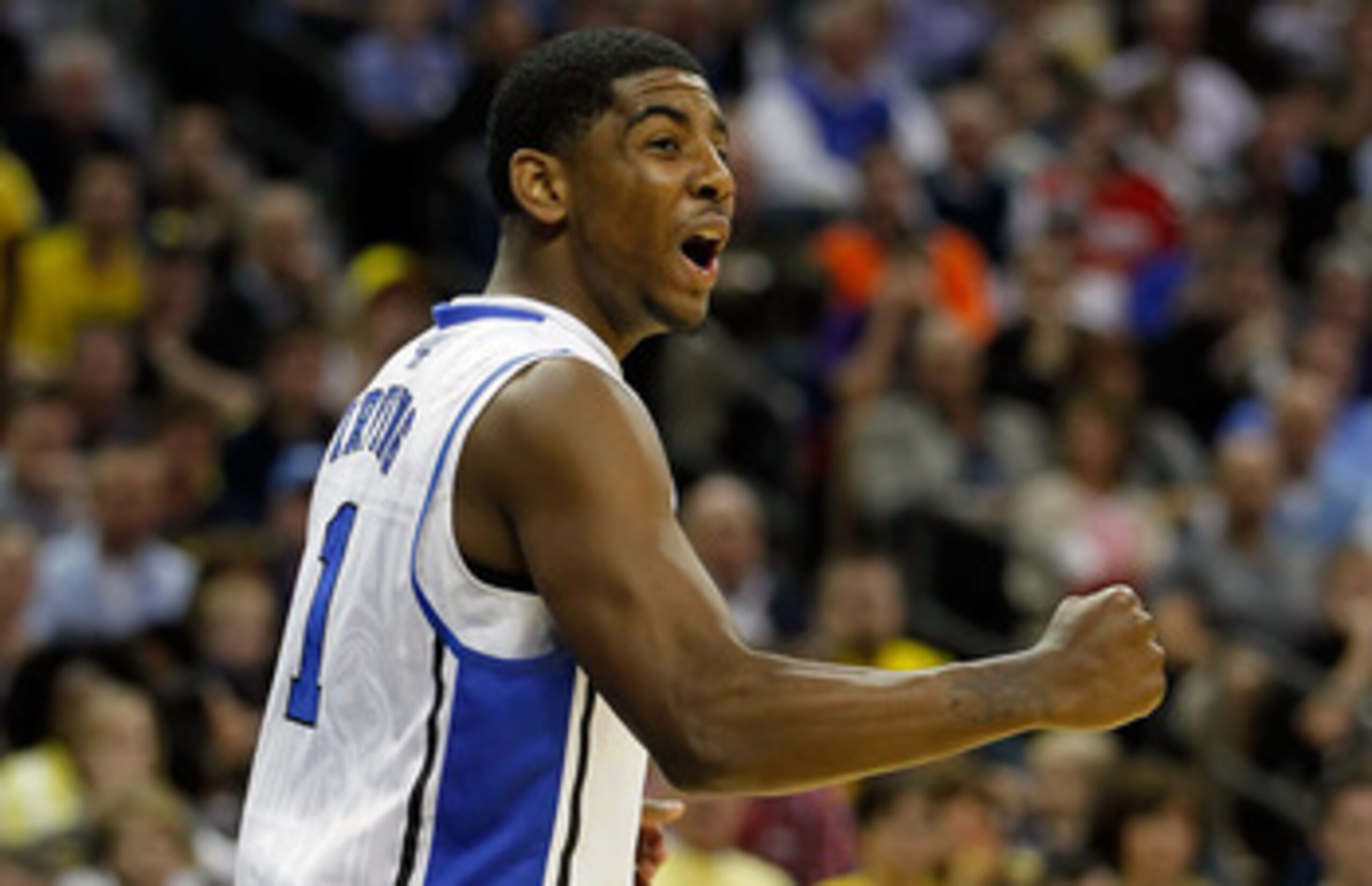

2011 NBA Mock Draft: Could Kyrie Irving Be Selected Outside of Top Two Picks?
Point guard Kyrie Irving is widely regarded as the likely No. 1 overall pick in the 2011 NBA Draft on June 23rd, 2011.
Irving's abbreviated college career lasted only 11 games, yet his impact on every Duke game was immense, whether in uniform or street clothes.
When on the court, Irving was defending national champion Duke's best player, and clearly showed one-and-done potential. When he burst onto the scene in November for the Blue Devils, most thought that he'd be heading to the NBA before he finished unpacking in his dorm room in Durham.
Well, in spite of an injury that cost Irving three months, the experts were right. Even with the lack of experience and exposure, Irving was consistently projected as the draft's top pick.
After Duke's disappointing run in the NCAA Tournament along with Derrick Williams' brilliance and the rise of Enes Kanter, a cloud of doubt has been cast over the supposed pecking order at the draft's beginning.
Is Kyrie Irving a lock to go in the first two picks? Find out in my latest mock draft edition.
30. Charles Jenkins, Hofstra
1 of 30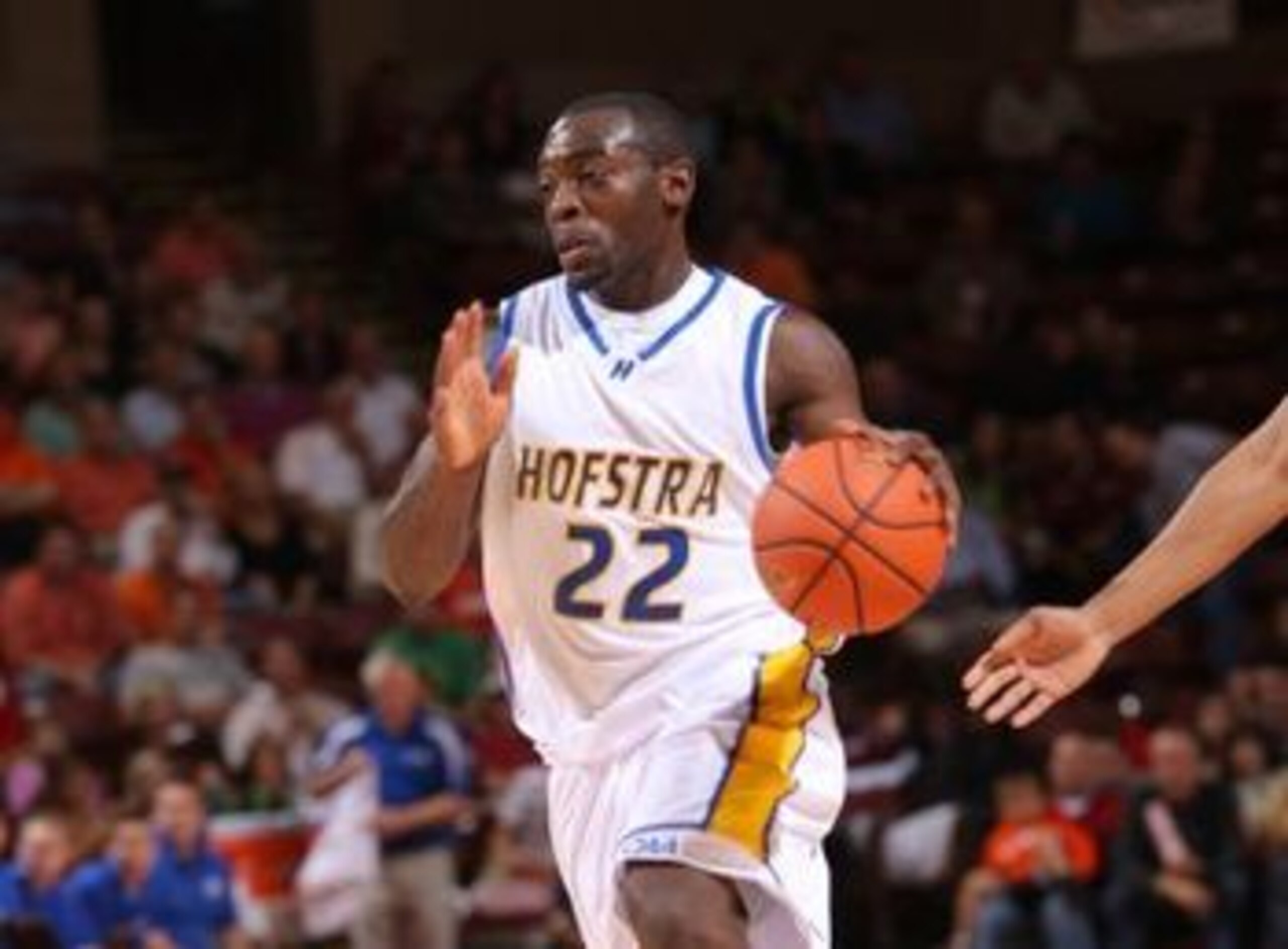
Charles Jenkins, the 6'3", 220-pound Hofstra senior, is a newcomer to most first-round boards. He is one of college basketball's premier scorers, averaging 22.3 points per game. His 51-42-82 trio of percentages make him a pillar of efficiency and illustrate his shooting expertise.
He does more than shoot though.
Jenkins balances his scoring with great penetration ability. He is strong to finish at the basket and great at the free-throw line.
With strong performances at pre-draft workouts, Jenkins could move from the margin of the second round squarely into the first-round spotlight.
NBA Comparison: Ben Gordon
29. JaJuan Johnson, Purdue
2 of 30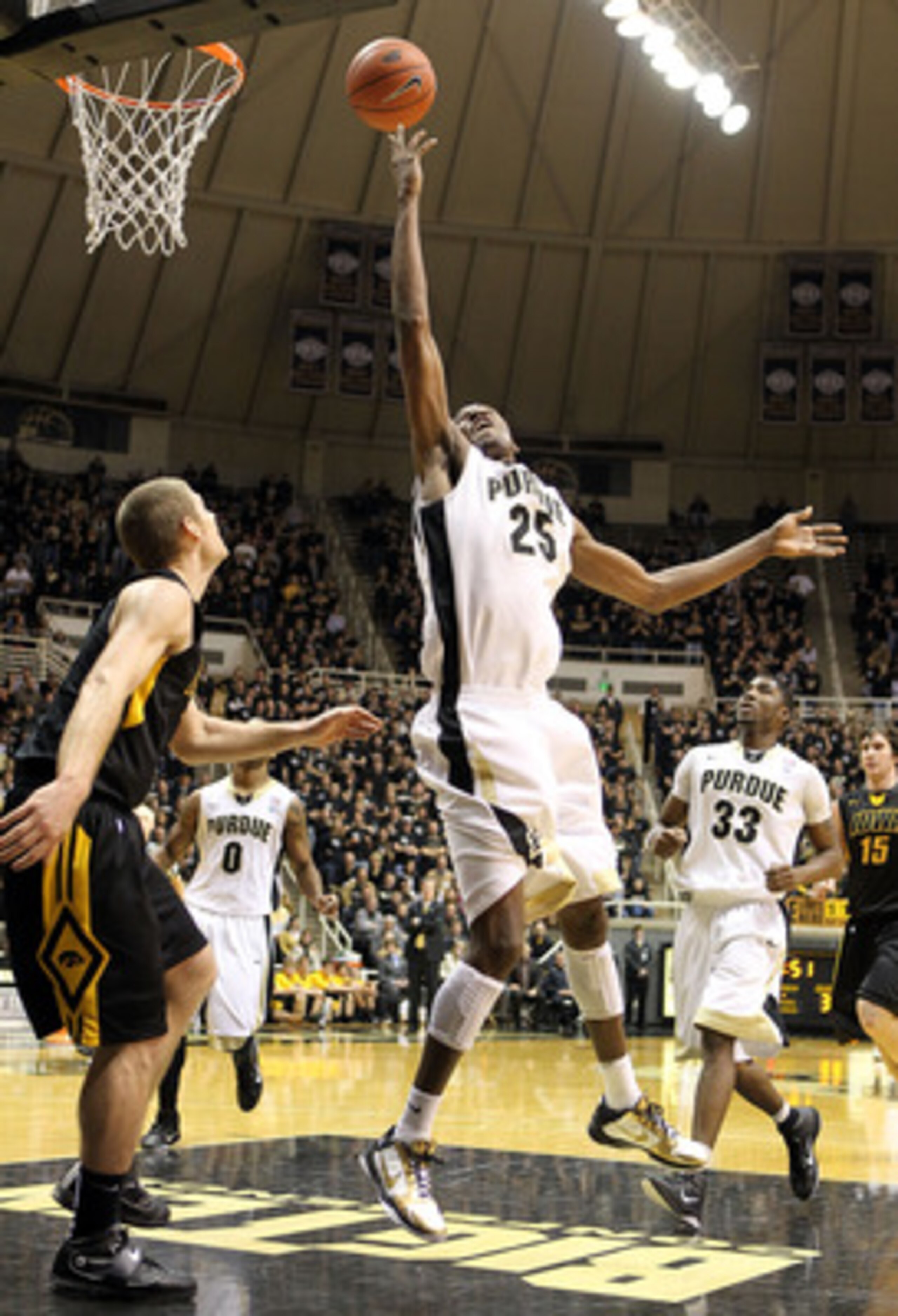
Purdue senior JaJuan Johnson is the virtual opposite of many in this draft class; he's the matured player who probably stayed in college longer than was necessary for NBA Draft success.
Johnson, at 6'10" and 221 pounds, excelled in his final season, notching 20.5 points, 8.6 rebounds and 2.3 blocks per game.
He is still raw and has a developing body, but he projects nicely and could rise up draft boards with strong workouts leading up to the day.
NBA Comparison: (Less physical and skilled) Amar'e Stoudemire
28. Josh Selby, Kansas
3 of 30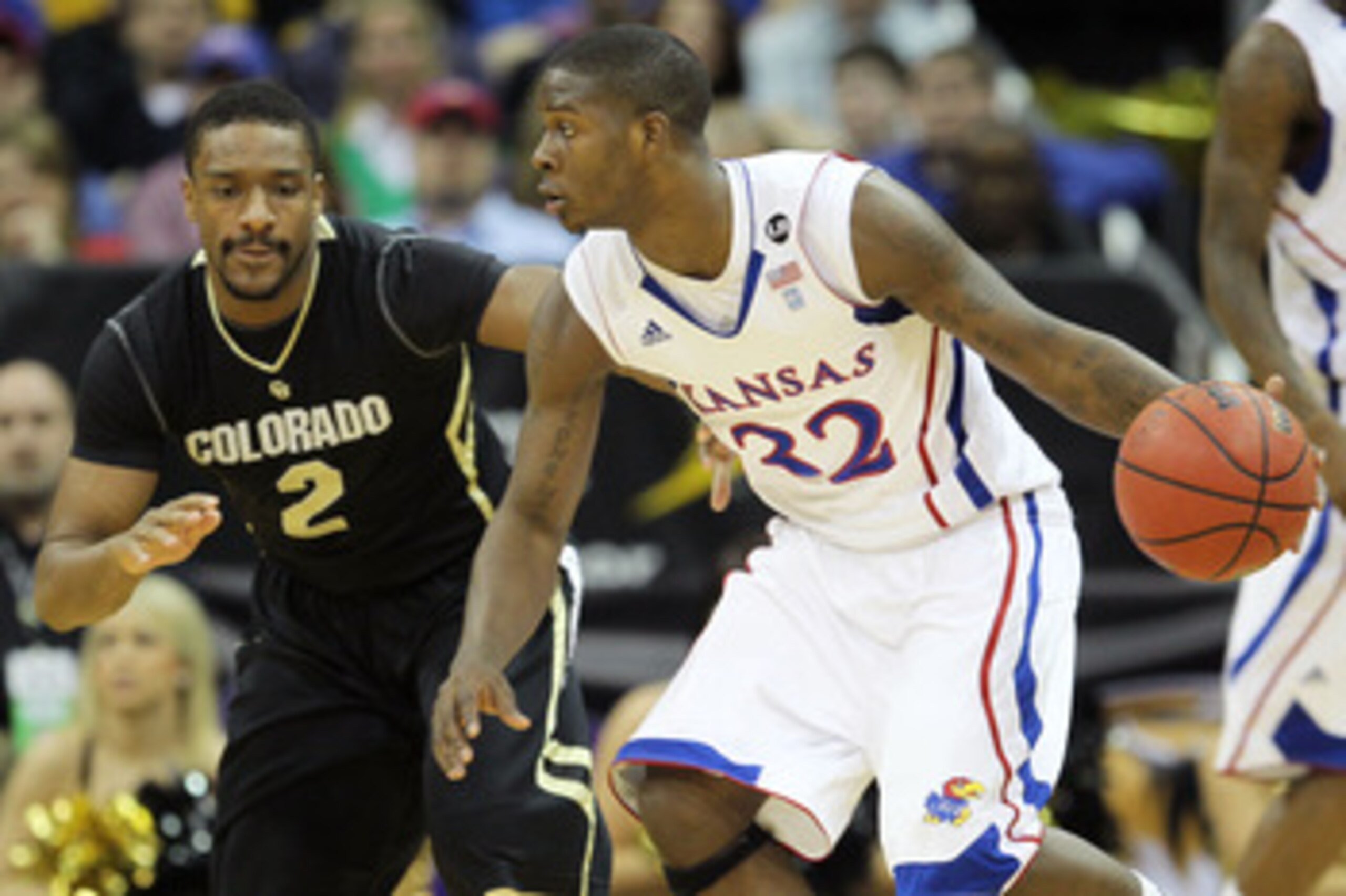
The Jayhawks freshman was a top-three recruit in the class of 2010, but we never really saw what he can do. We heard that he is really good, but we didn't get to see that play out.
Josh Selby is essentially Kyrie Irving without having proven himself.
Experts project the 6'2" guard as a first-round pick, even though they think he should go back to Kansas for another year or two. There's no question Selby's aggressive style and NBA body belong in the league, but when?
This pick represents Selby's median. A team could surprise by taking a risk on him as high as the 25th pick, or he could fall out of the first round.
NBA Comparison: Jrue Holiday

27. Nolan Smith, Duke
4 of 30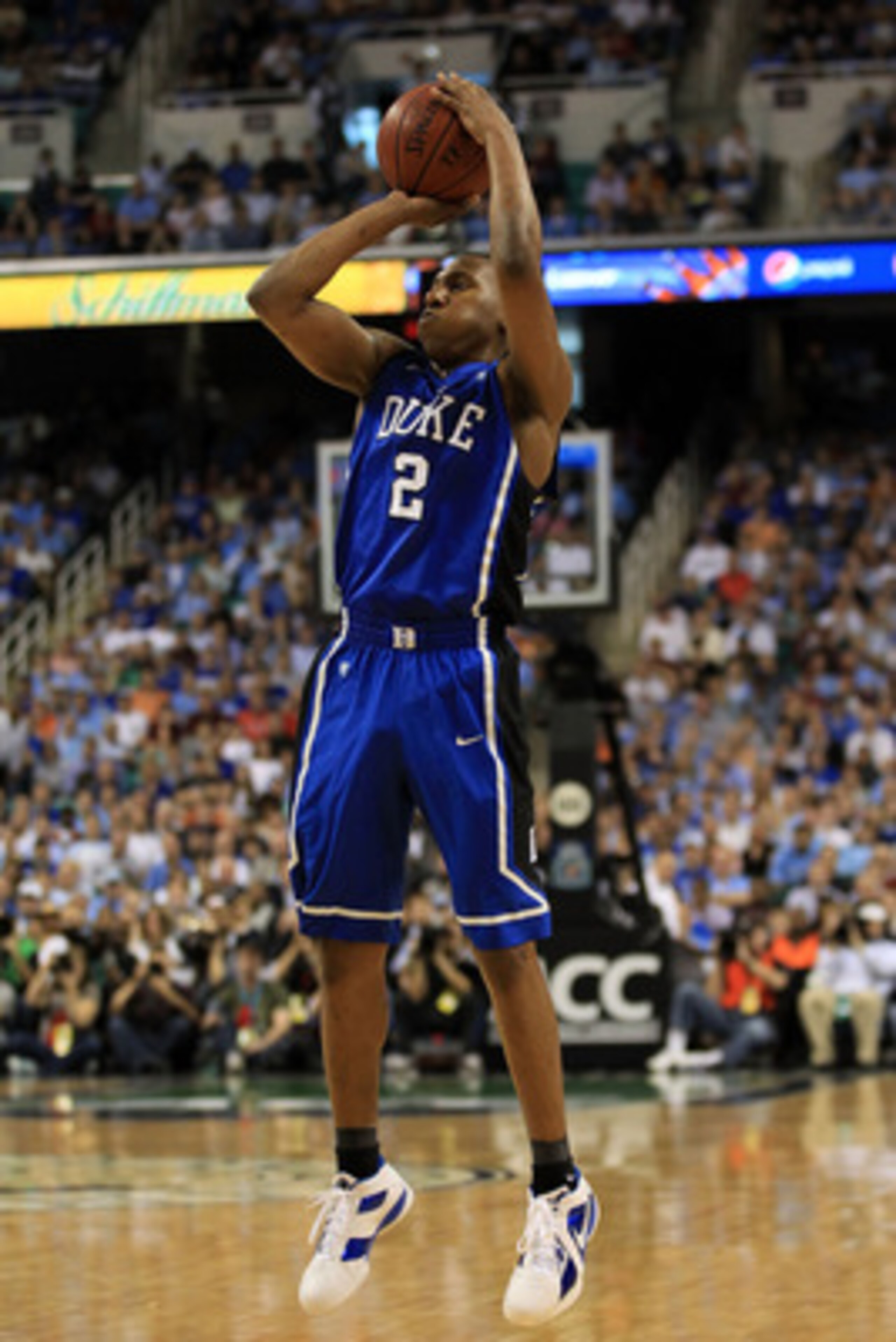
Nolan Smith is not an exciting prospect.
He's not the flavor of the month.
He doesn't possess explosive athleticism.
He's a known commodity, and his skills are known to their fullest extent.
Though not limitless, his abilities are stable and adequate. He may have hurt his draft stock by staying in school for another year after winning the title at Duke, but that doesn't mean he regressed.
Smith must improve the consistency of his jump shot because he won't be able to attack the rim as easily in the NBA. He is a capable shooter, but can really enhance his value by turning into a knockdown set spot-up gunner.
Smith's versatility at either guard spot and excellent on-ball defense make him rare among NBA rookies and will afford him increased opportunities to get minutes.
His personal and professional maturity might be more attractive than his actual game, but that is good enough to get him into the first round.
NBA Comparison: (A more polished) Tony Allen
26. Trey Thompkins, Georgia
5 of 30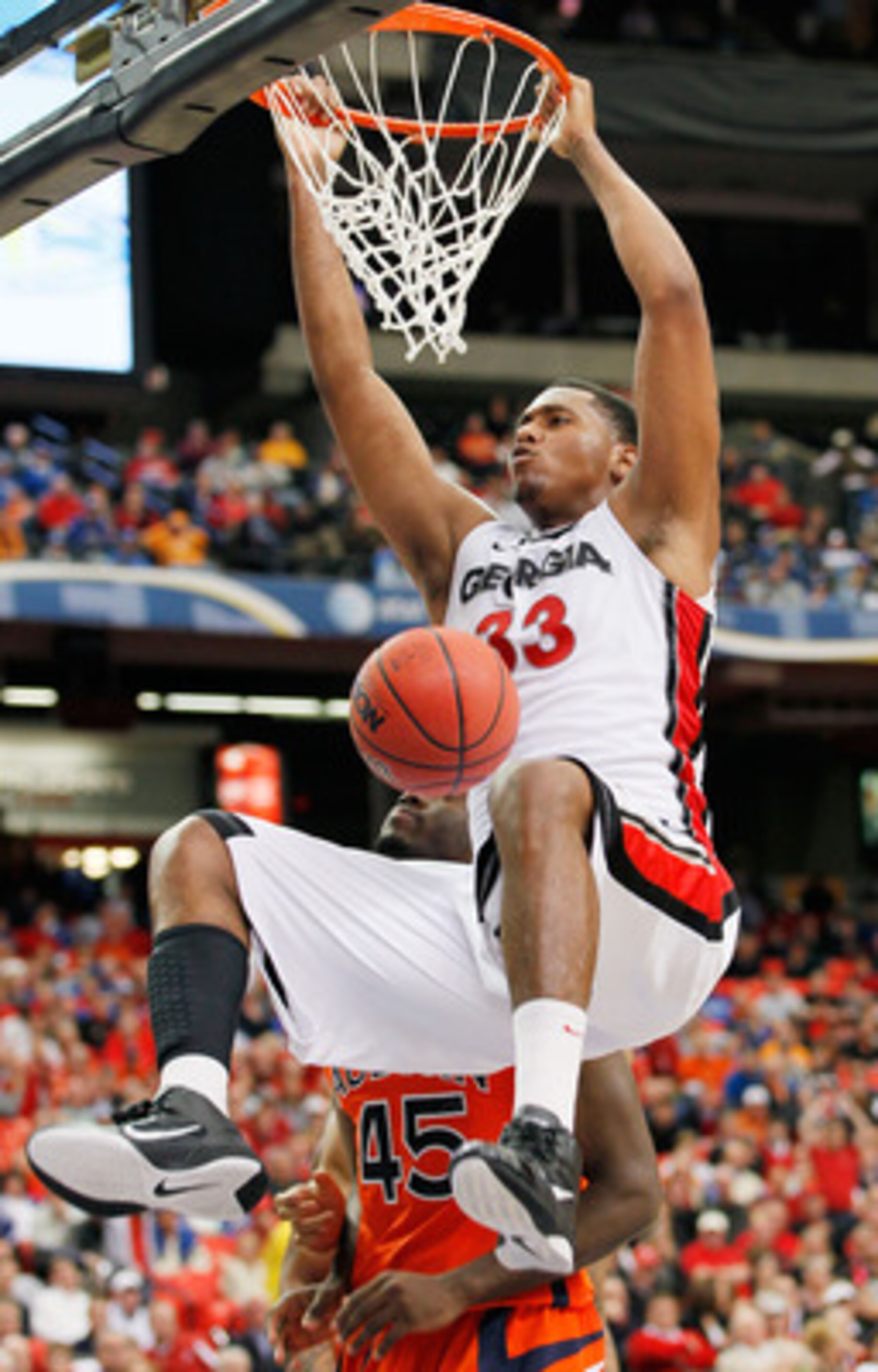
The draft stock of the 6'10" senior from Georgia is stable, if not rising. Trey Thompkins is an experienced and polished big man who has developed an effective inside-outside attack.
Even though his strength is playing in the post, he possesses NBA range that will challenge defenders. His skills are on par with those about 10-15 picks above him, but his draft stock is hampered by an injury that suppressed stats in 2010-2011. Under different circumstances, Thompkins could be talked about as a lottery pick right now.
A dearth of big men is continual in the NBA, so Thompkins could go higher based on need and scarcity.
NBA Comparison: Jeff Green
25. Tyler Honeycutt, UCLA
6 of 30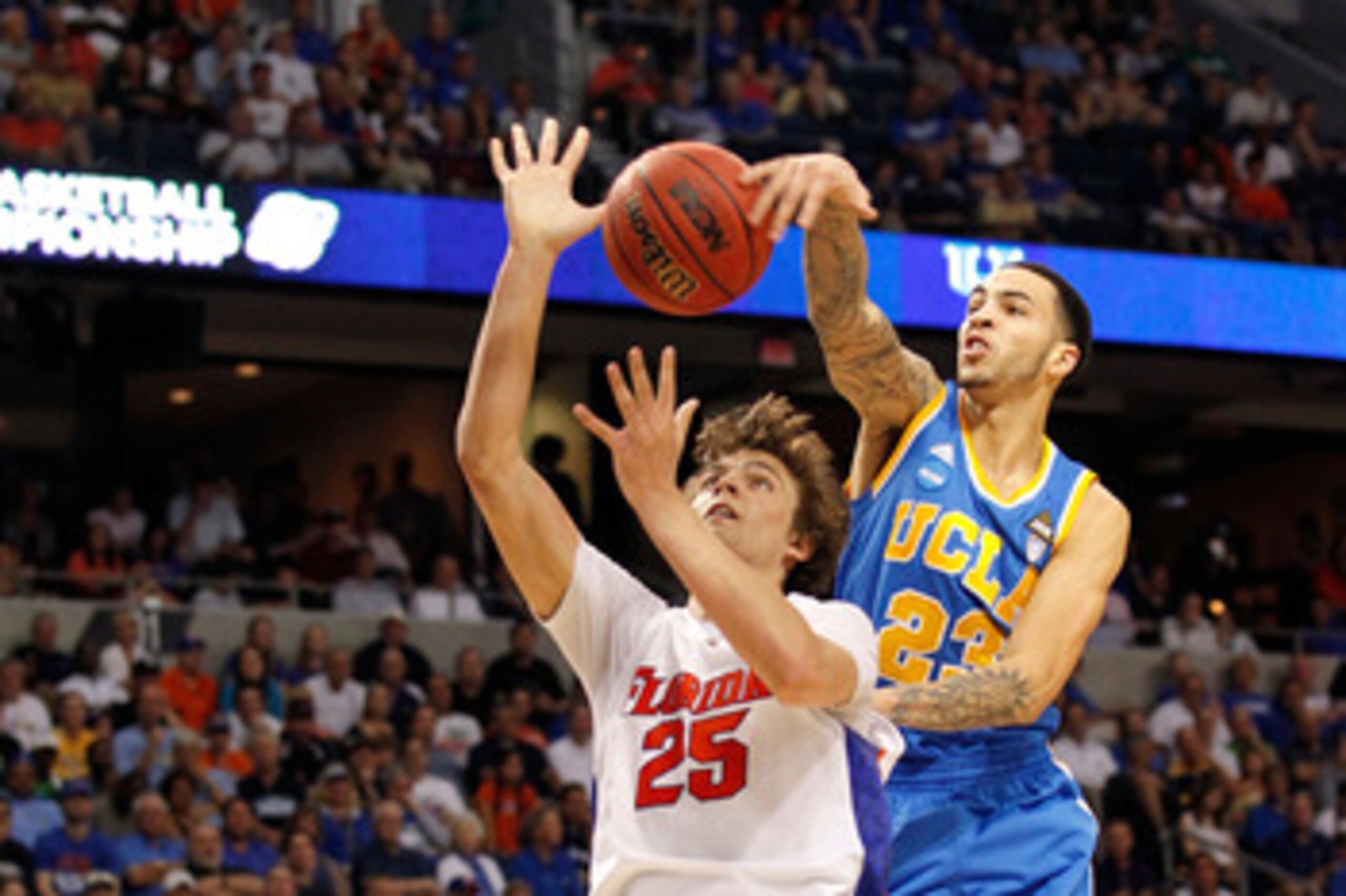
Tyler Honeycutt, the UCLA sophomore, is being held out of the lottery by one thing: his broken jumper.
The biggest knock on the exceptional athlete is his shooting and raw scoring ability, the demonstration of which was just showing itself during his second year in Westwood.
Scouts are concerned Honeycutt is kissing away the opportunity to stay at UCLA another year to improve his offensive game and jump-shooting.
It becomes a lot harder to improve at shooting while transitioning from the college game to the NBA game.
Honeycutt and Chris Singleton are similar in that they both have defensive-minded, athletic styles of play. They both have good basketball smarts and can block shots from the perimeter, but they both struggle shooting the ball from the outside.
Honeycutt will go around this point because of his incredible awareness and cerebral game. Once his skills catch up, he should be a nice NBA player.
NBA Comparison: Shawn Marion
24. Chris Singleton, Florida State
7 of 30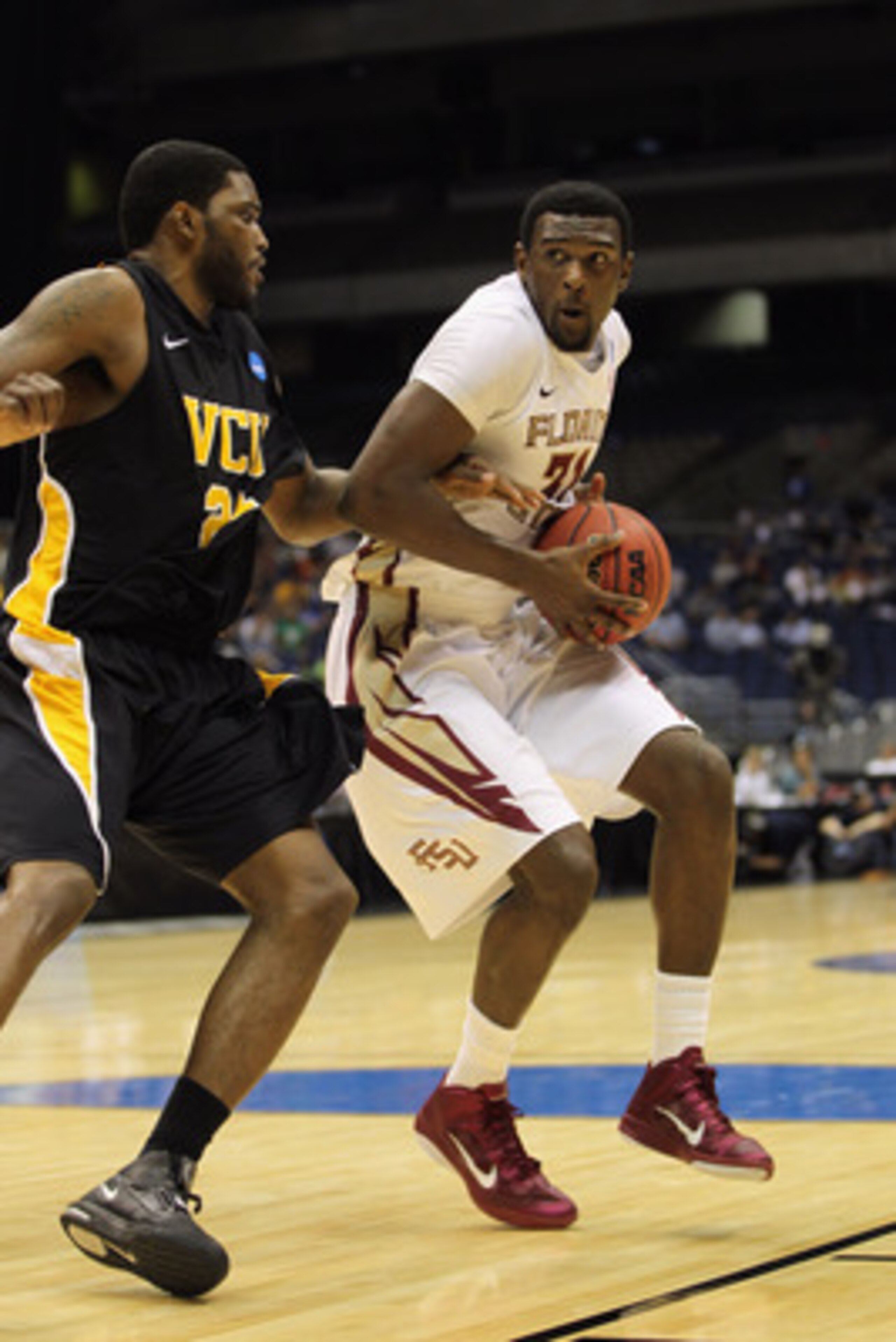
The biggest concern for Singleton is the broken foot he suffered late in the season.
He played his Seminoles into the Sweet 16, but there is doubt he is fully recovered from it—or ever will be.
The 6'9" small forward's defining assets are great athleticism and lock-down defense. His 3.5 combined blocks and steals also show his high level of defensive effort and versatility.
Singleton's offense needs work (he's never shot better than 43 percent in a season), but he can contribute immediately to a team defensively while his offense catches up.
NBA Comparison: Josh Smith
23. Lucas Nogueira, Brazil
8 of 30Due to his dominance of Spain's third division and the U18 FIBA World Championships, the 6'11", 218-pound Brazilian is shooting up mock drafts.
The 18-year-old possesses great athleticism and shot-blocking ability down low, not to mention complementing those with lots of energy.
Nogueira just needs to add weight to his frame to become valued contributor. He'll get pushed around at just 218 pounds, but if he bulks up, he will make it very hard for players to score on his team.
NBA Comparison: (A thinner) Anderson Varejao or Hasheem Thabeet
22. Nikola Mirotic, Serbia
9 of 30Everything you want from a big man comes easily to the 6'10" Serbian Nikola Mirotic, yet he plays the game like someone who is several inches shorter than he is.
The NBA especially loves his jump shot (all the way past the three-point line), his IQ (great awareness and instincts) and his size (6'10" on the perimeter).
The 20-year-old makes up for a relative lack of athleticism with a unique combo of size and guard skills.
He'll need to put on roughly 20 pounds, but upon doing so, he will be an imposing player on the wing that can do it all.
NBA Comparison: Hedo Turkoglu
21. Klay Thompson, Washington State
10 of 30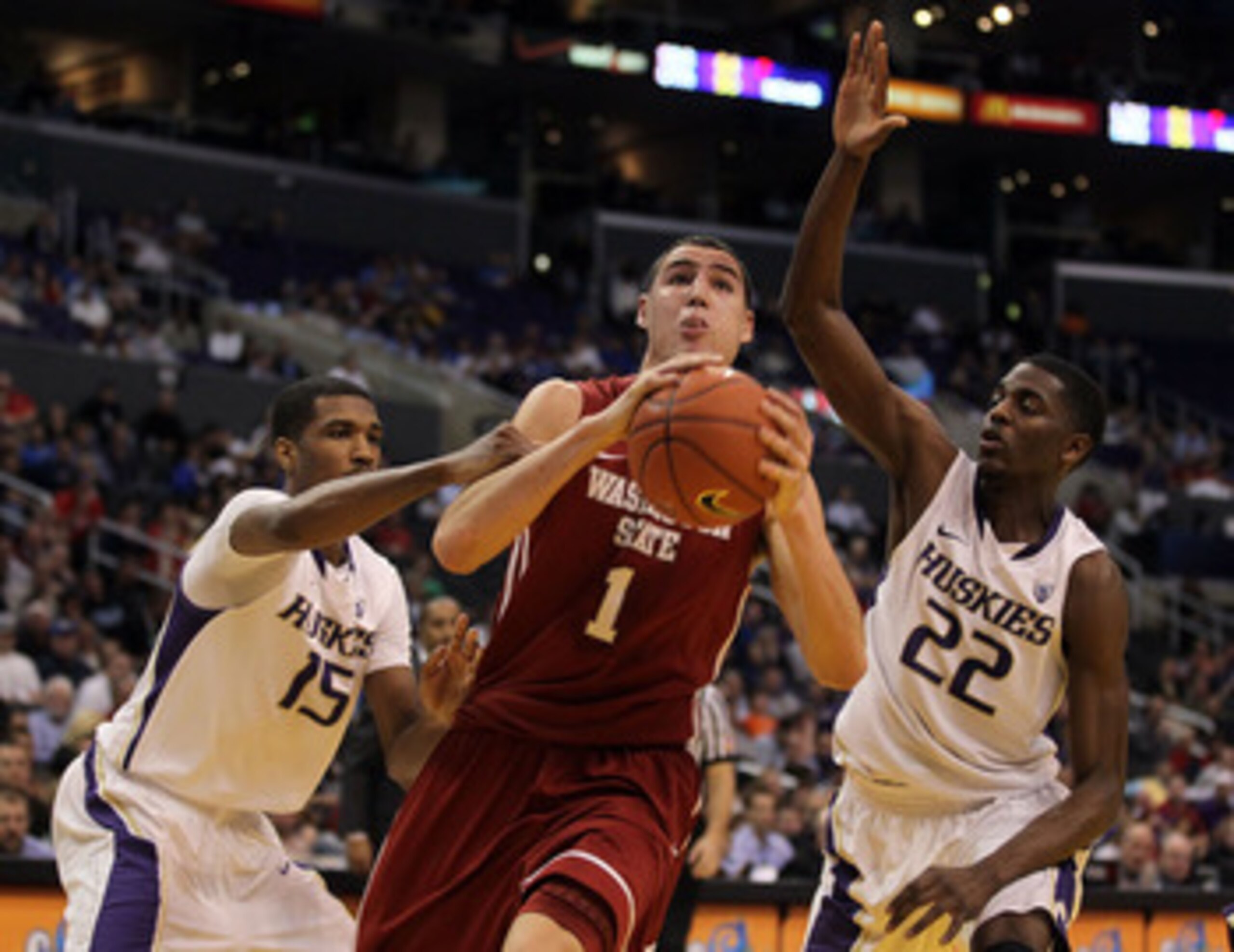
Klay Thompson was a late addition to the list of early entries, but he adds depth and offensive skill to the first round of the draft.
He is steadily rising up draft boards as scouts reassess the class with his name in the group. Thompson is considered one of the best shooters in the college game, which at 6'6" is a great advantage heading into the NBA. It will be important for him to get his shot off quickly, as bigger and longer players stretch to alter it.
The junior is the antithesis of his hyper-athletic, but raw colleagues. He will earn his draft position with highly-developed skills and smarts.
His dad is former No. 1 overall pick Mychal Thompson, so the son most certainly knows his way around the basketball court.
NBA Comparison: Mike Dunleavy or Richard Jefferson
20. Jimmer Fredette, BYU
11 of 30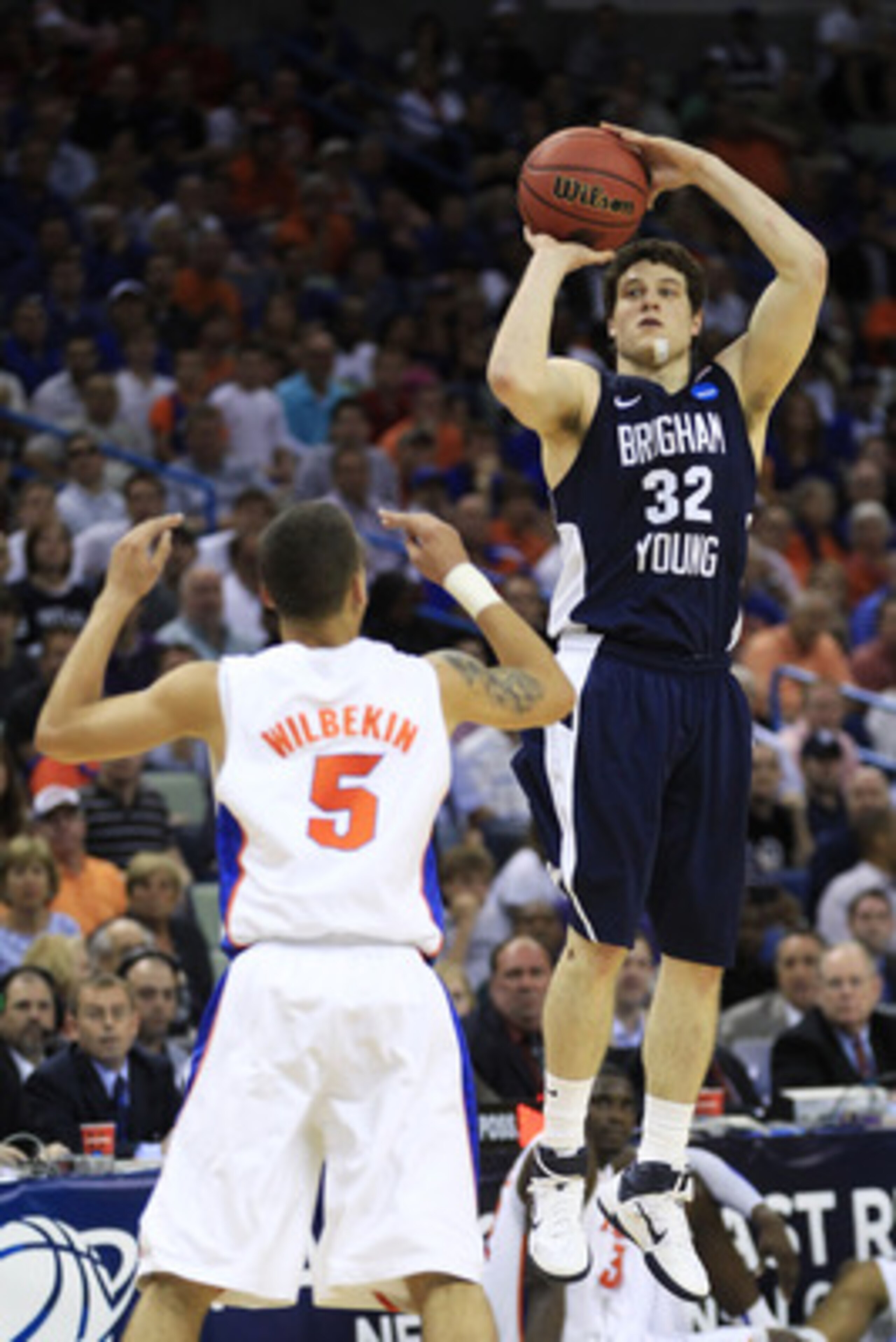
Jimmer Fredette's strengths and weaknesses are well-documented, but nobody really knows where he'll go. Some think he's a mid-lottery pick, while others think he'll be outside the lottery or top 20 altogether.
Fredette isn't an outstanding athlete, but I was wowed by plays he made several times over the course of the year, and not just for deep shots; he frequently broke down more athletic defenders with a quick first step and deathly crossover to finish over bigger players at the rim.
To call Jimmer's athleticism a weakness probably means you haven't watched him play at all.
There's no mistaking that his game isn't dependent on athleticism though, and every team needs a great shooter. He doesn't have to do much else or be explosive. He just has to have that one bankable skill.
Jimmer showed that he has that and more on the college level. What will happen to him on the pro level?
NBA Comparison: Gary Neal or Kevin Martin
19. Markieff Morris, Kansas
12 of 30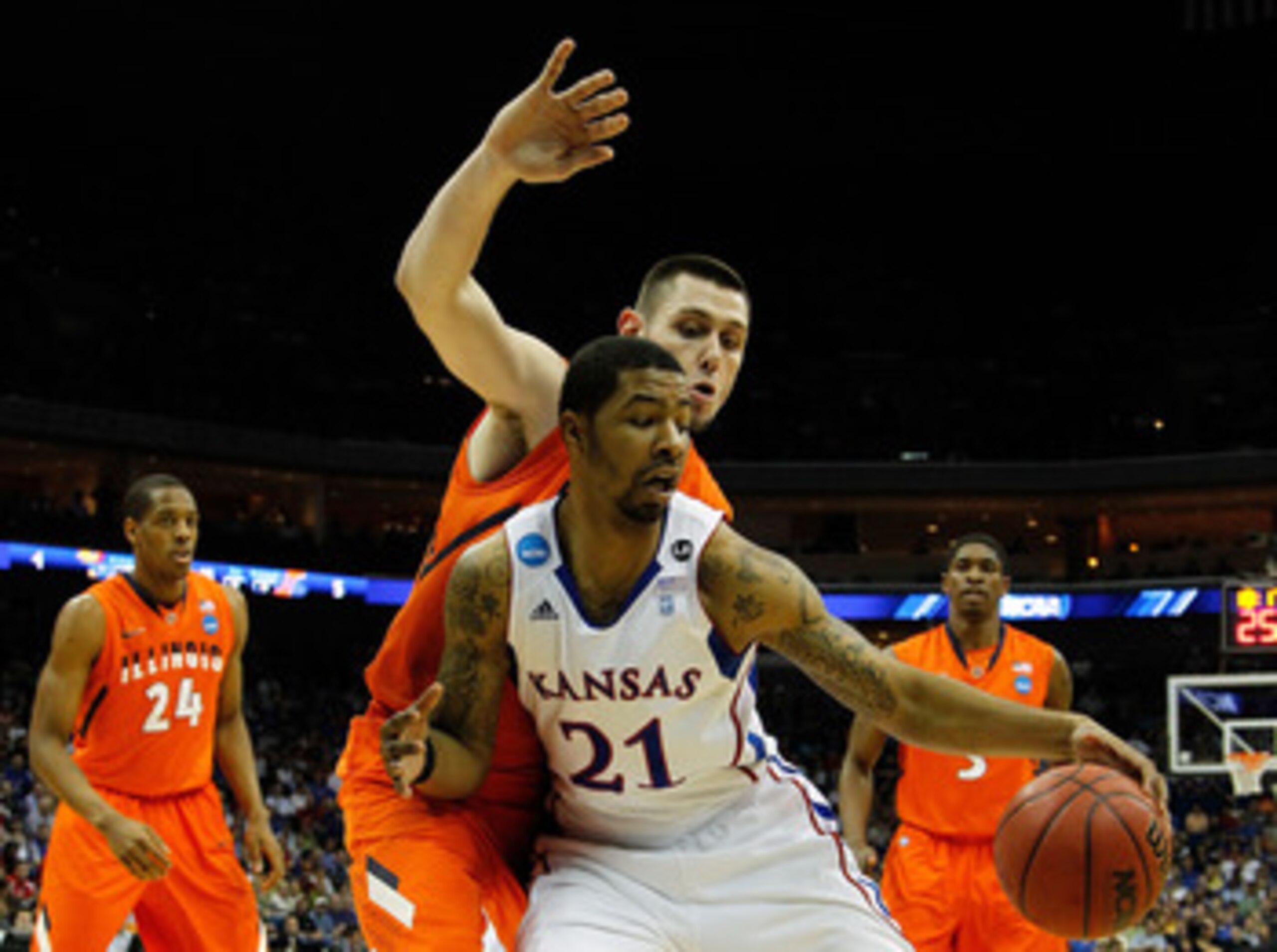
At 6'10" and 245 pounds, Markieff Morris is bigger than his twin brother, but behind him developmentally as a player.
He is raw offensively and plays more like an interior big man than his brother does, though he is just as athletic and explosive. His offensive game is coming along, so NBA teams have hope that he'll be as good as his brother someday.
Markieff has Tyrus Thomas-type potential and could emerge as a solid pro if his offense matches his defensive ability.
NBA Comparison: Tyrus Thomas
18. Jordan Hamilton, Texas
13 of 30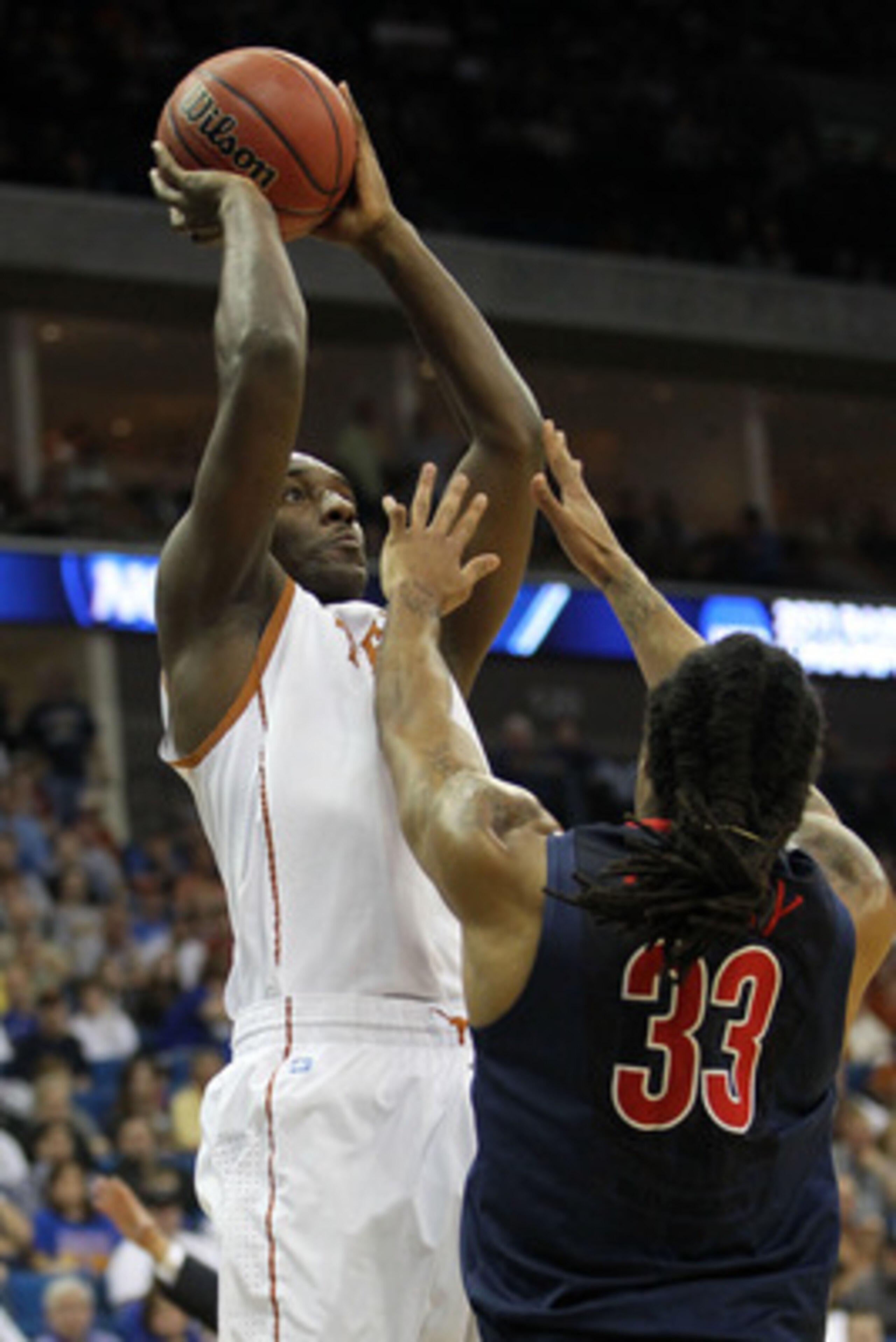
Jordan Hamilton is only a sophomore, but unlike many underclassmen, doesn't need any more time in college to prep for the jump.
His improvement over two years at Texas was excellent. As he transitioned into a primary scoring role, Hamilton ably doubled his scoring and rebounding output without sacrificing efficiency.
He showed that he can shoot the three (38 percent), use his size to grind out dirty plays and handle the ball.
Because his weaknesses are few, he'll be able to spend most of his time accentuating his strengths, which could result in instant results.
NBA Comparison: Jason Richardson (with better ball-handling)
17. Tobias Harris, Tennessee
14 of 30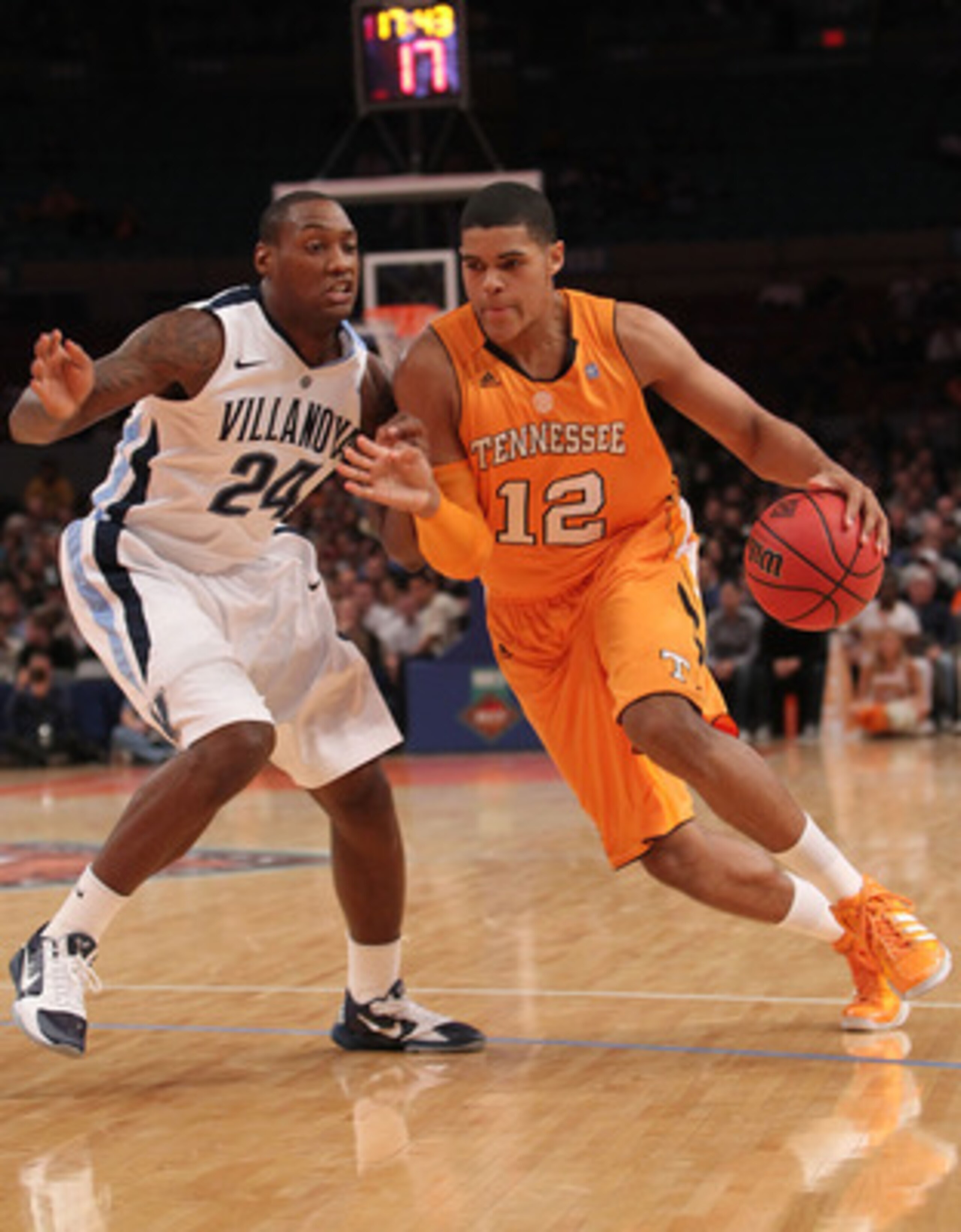
Tobias Harris surprised many by coming out this year, but the 18-year-old has the intelligence to survive the NBA even as his skills are still forming.
If he doesn't return to Tennessee, an NBA team in the high teens will receive an unselfish forward who can play in multiple spots. He can shoot, though not well from the three, and handles the ball admirably for someone who is 6'8".
Harris seems to be a power forward in a small forward's body, which is the knock on him. He's not big enough to play power forward, but not athletic enough to play outside.
Are his skills and smarts good enough to cover the size and athletic holes he has?
NBA Comparison: Luol Deng
16. Reggie Jackson, Boston College
15 of 30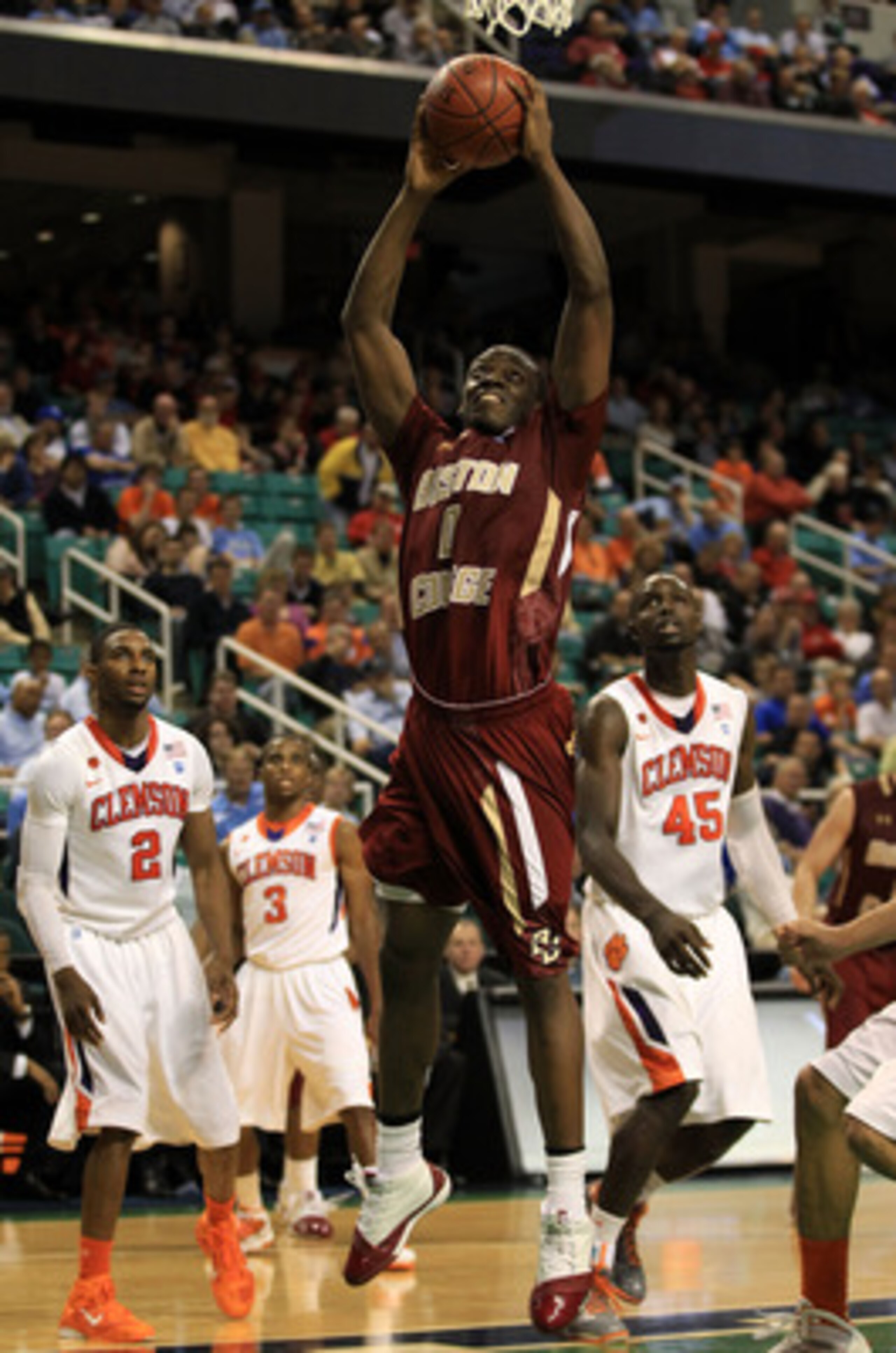
The freakish athletic exploits of the 6'4" junior point guard have won me over.
I talk about Reggie Jackson's improving draft status every time I do a mock. I love his game and am curious how he'll be seen in the draft.
He does a lot of things well, such as see the court, rebound and catch-and-shoot, but there are concerns about his strength and his basketball intelligence.
The latter could be a real hangup for someone who's projecting as a point guard; teams can't waste high picks on point guards who can't make the decisions necessary to run the team.
Don't get me wrong, the fact that he's reached this high in the draft is a major win for him and a testament to his ability.
The sky is his limit athletically, but he needs to improve on some of the finer points of the game and learn discipline with shot selection before he truly makes the jump.
NBA Comparison: Russell Westbrook
15. Kenneth Faried, Morehead State
16 of 30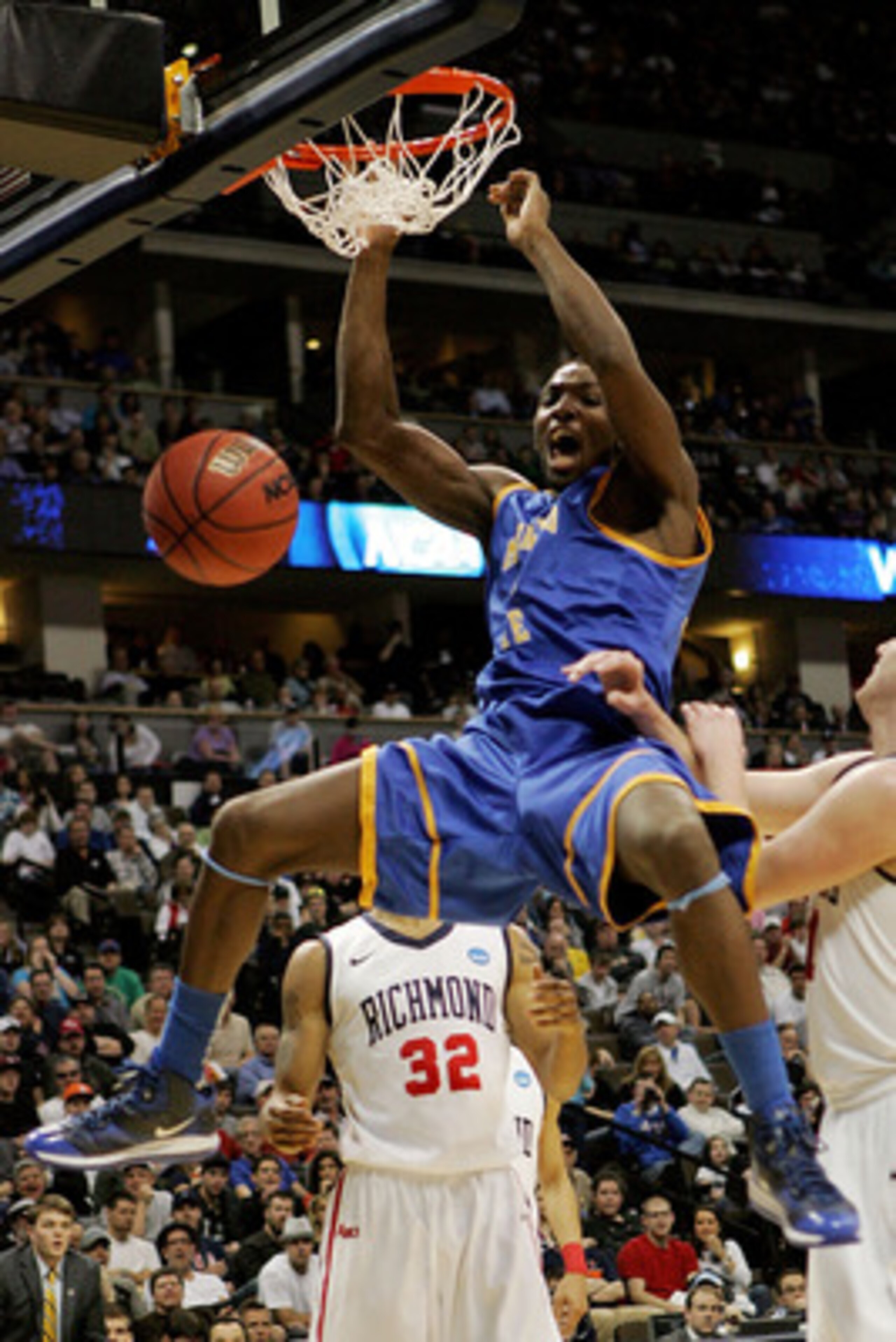
I'll say it again: NBA teams can never accumulate too much talented size.
I don't care that Kenneth Faried played four years at Morehead State against Little Bo Peep and her sheep or that he's undersized to play in the post at 6'8".
The guy's motor and heart are unmatched, and his athleticism is certainly NBA-quality.
How many high-energy power forwards in the NBA can completely take over a game on the boards? You can count them on one hand, and Faried is that type of player, though his offensive game is not fully furnished.
NBA Comparison: Kris Humphries
14. Marcus Morris, Kansas
17 of 30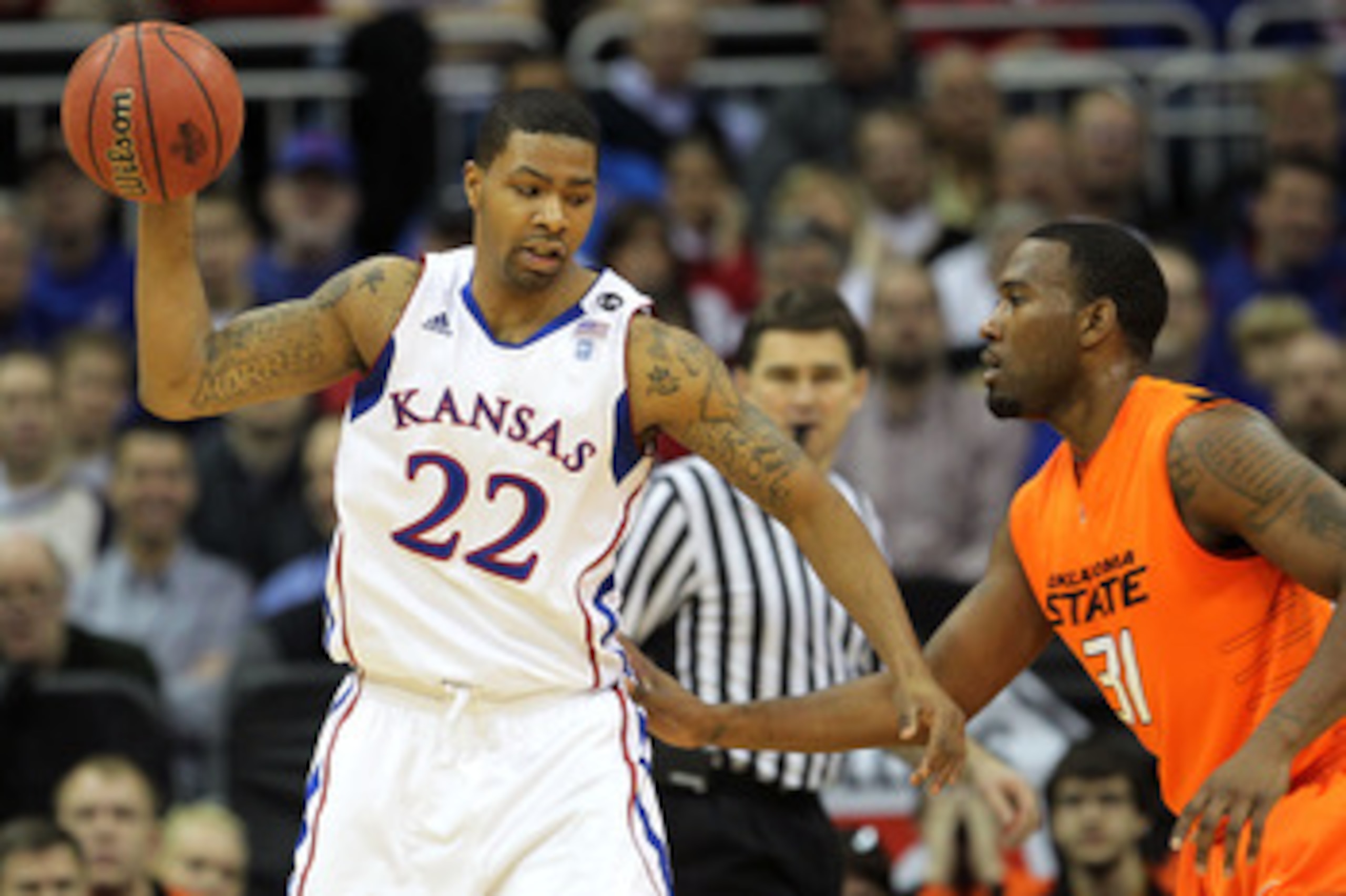
The smaller and more skilled Morris brother, Marcus finds himself a few spots higher than Markieff because of his versatility and scoring.
Marcus plays more as a guard and is comfortable on the perimeter, which affords him frequent size advantages at 6'9" and 235 pounds.
Though he spends more time outside, he's still a strong rebounder who puts in a lot of effort to make plays.
His lack of explosive athleticism is masked by his ability to shoot the ball as well as he puts it on the floor to attack.
Marcus' improvement has been steady through his time at Kansas, and there's no reason to think it won't continue when he dons the NBA logo.
NBA Comparison: Danny Granger
13. Kawhi Leonard, San Diego State
18 of 30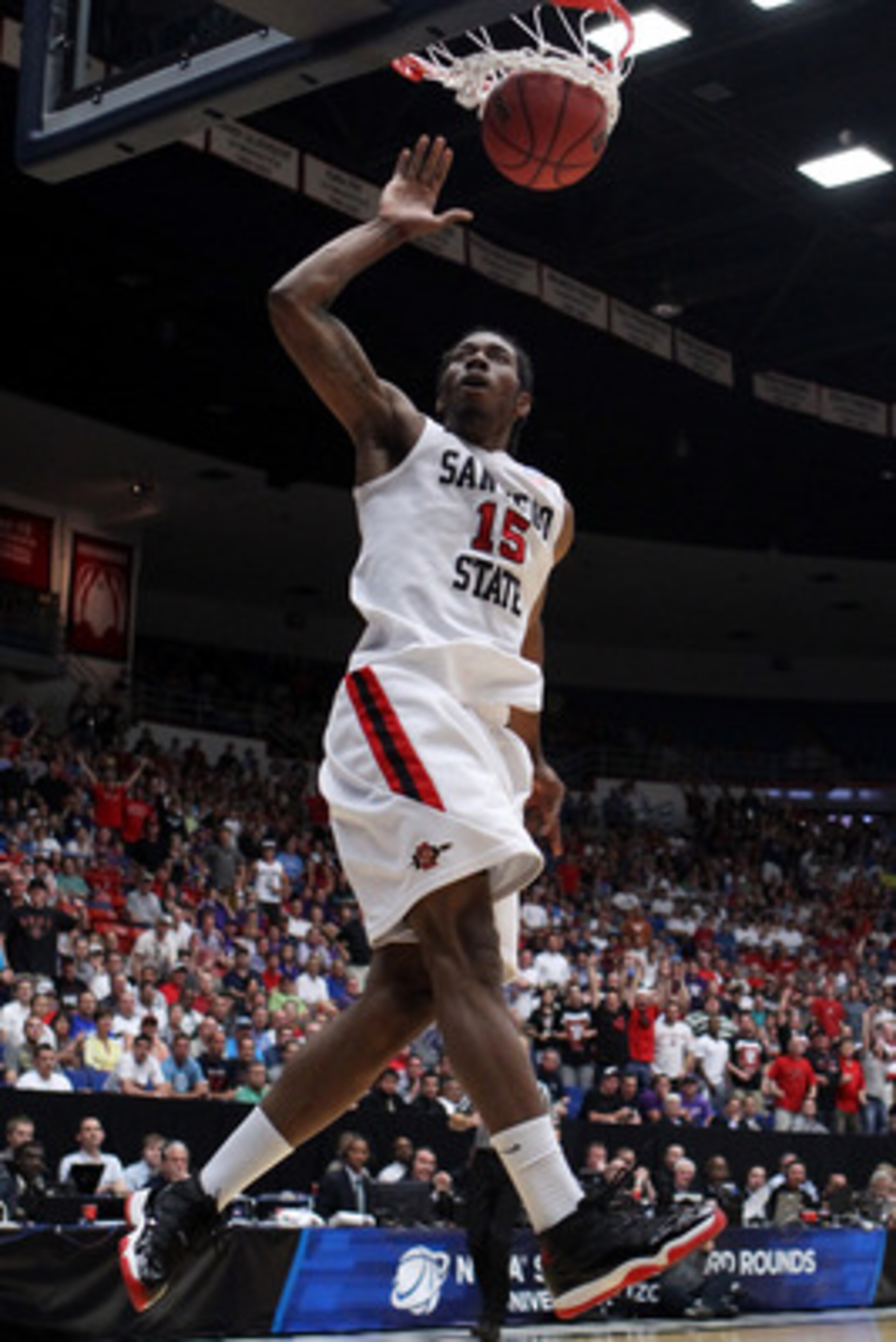
If you're a lottery team looking for a safe prospect to develop slowly, don't pick Kawhi Leonard.
I say this because the 6'7" sophomore small forward from San Diego State was not a great scorer in the Mountain West Conference and never shot the ball well in spite of ridiculous athleticism and great length.
But he plays hard and isn't afraid to get physical with his 225-pound frame, which will serve him well in the draft and in his career.
Leonard will need to develop an outside shot because he's about to lose his ability to blow past, jump over and out-muscle other players.
NBA Comparison: Wilson Chandler
12. Terrence Jones, Kentucky
19 of 30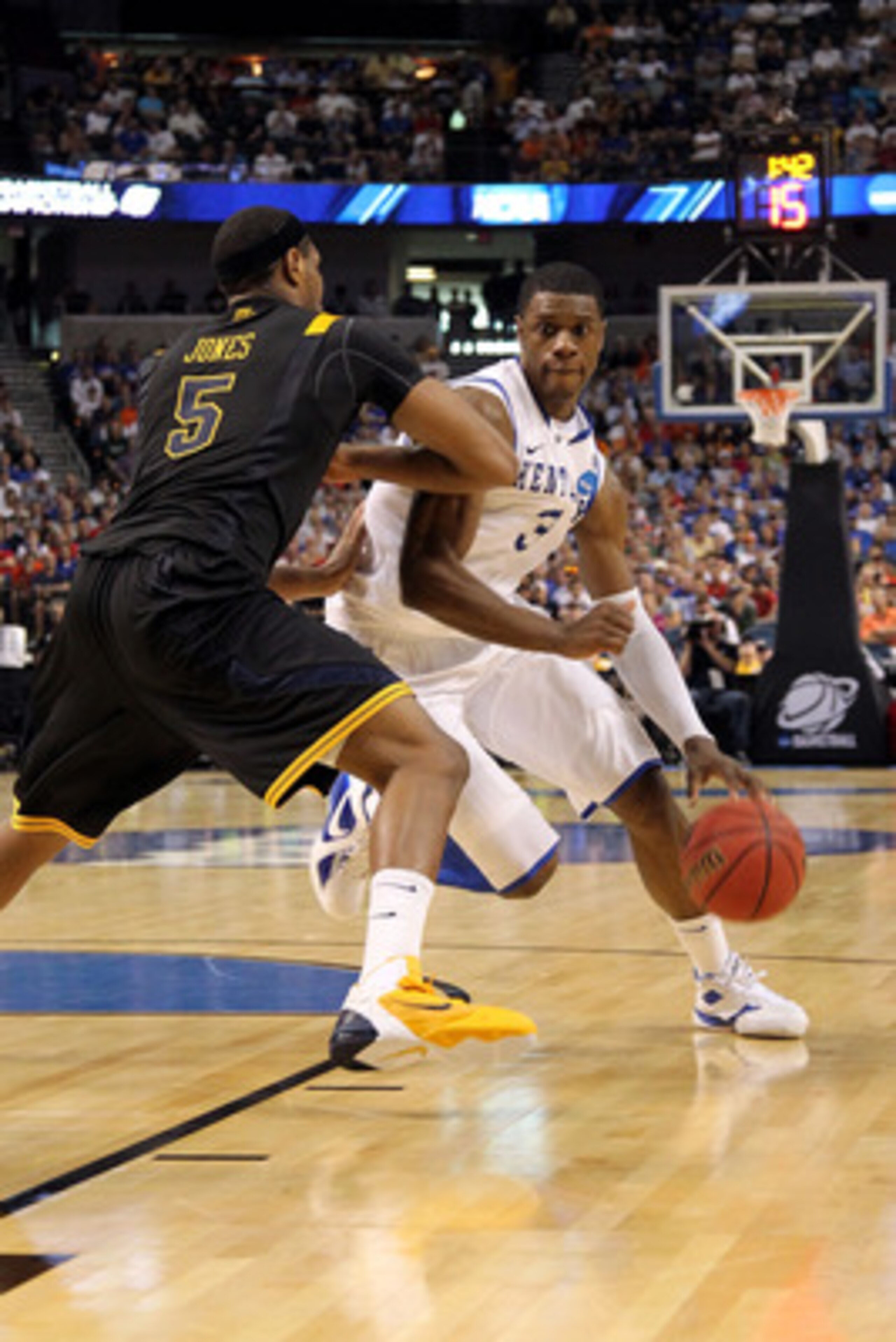
There is no doubt Terrence Jones belongs in this year's crop of one-and-done freshmen. His positional versatility and do-it-all offensive skills make him a talent NBA teams won't easily pass up.
Some will pass though because of questions about Jones' maturity. He seemed to give up or shrink when he struggled around midseason. The telling factor is not that he struggled (everyone does at certain times), but that he didn't respond by adjusting or persevering.
This is a personal quality that players at this level and draft position must possess. Many of these guys have succeeded at every juncture of their basketball careers, but are about to experience challenges, if only for the first time.
Jones has experienced that and will be a better player by learning from it. He needs to become more consistent with his effort to maximize his immense skill set.
He's got so much talent that no amount immaturity will keep him out of the lottery, though he is sliding a bit because of the increased exposure to recent draft entrants.
NBA Comparison: (Left-handed) Paul Pierce
11. Alec Burks, Colorado
20 of 30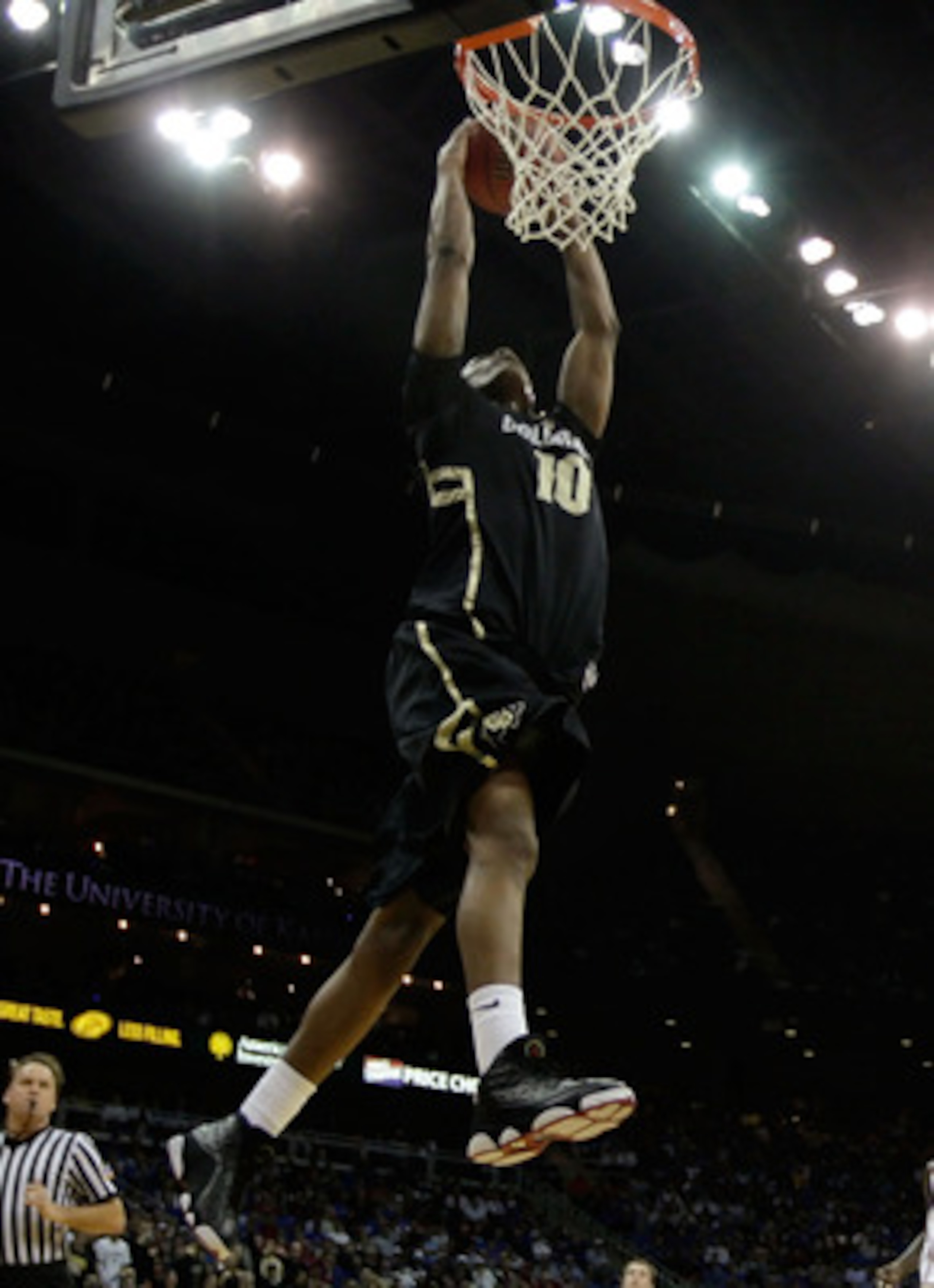
Colorado's Alec Burks entered the draft fray late, but the athleticism he has will put him around the top 10 immediately.
He is considered by many to be the best athlete in the draft, which masks some legitimate concerns.
He's too thin at 195 pounds and has limited range on his three-pointer. Also, he doesn't play offense very well without the ball, which makes him easy to guard.
In spite of these things, Burks is coveted for his athleticism, length and scoring knack. He scores in many ways, but loves to slash into the lane and finish explosively.
There's debate as to whether his game translates to the pro level, but it should remain intact in some form, based on his athleticism and natural scoring tendencies.
NBA Comparison: Jamal Crawford
10. Tristan Thompson, Texas
21 of 30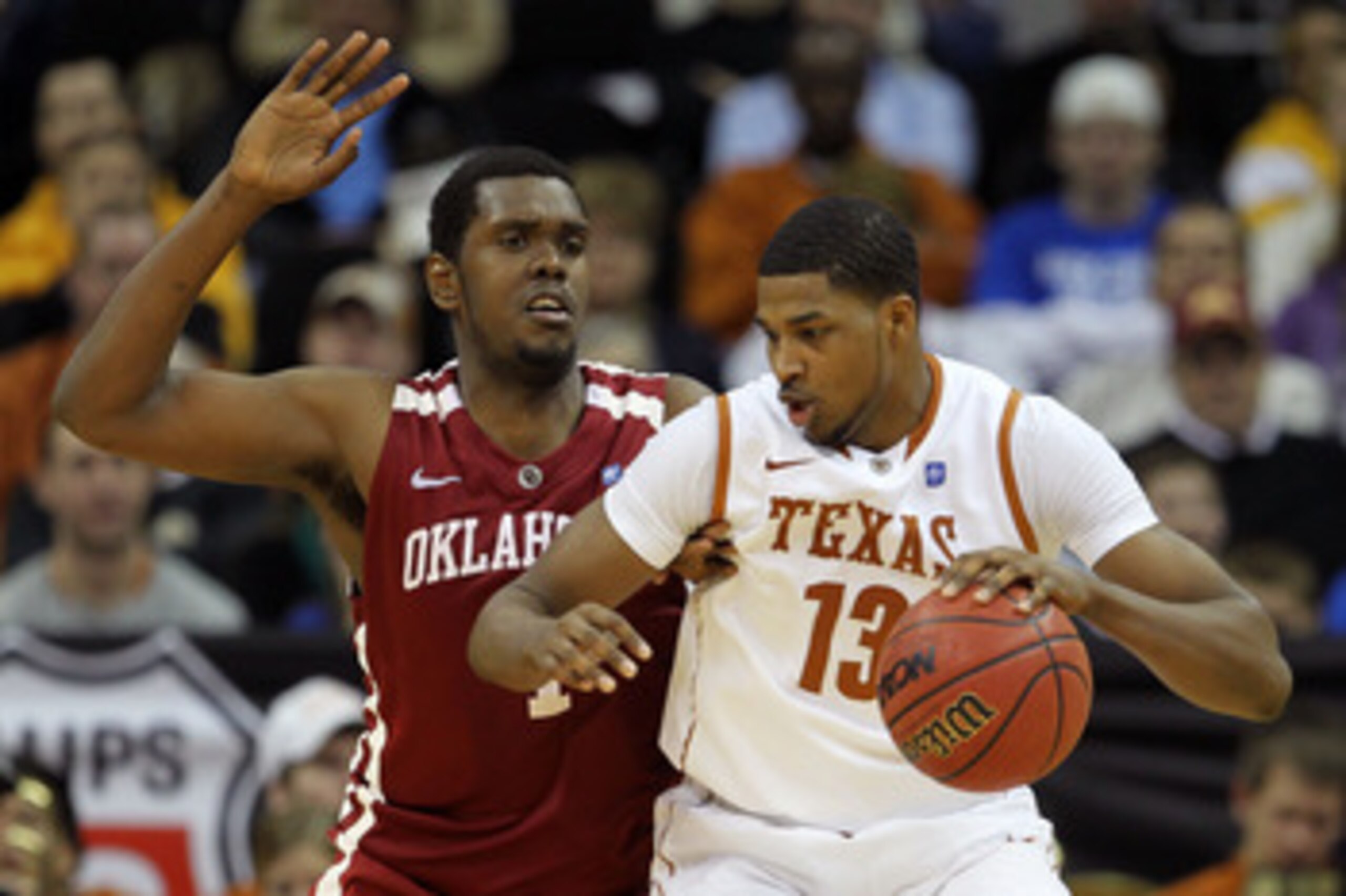
Tristan Thompson is a prospect who is as can't-miss as any freshman in this draft.
Scouts love the 6'8" Thompson for his relentlessness on the offensive glass and elsewhere, plus his 7'2" wingspan.
That kind of length allows him to change shots taken by bigger players and to get his own shots off.
He can hang with bigger guards and centers alike because of his unique mix of ball-handling, athleticism, rebounding and shot-blocking.
A breakout March showed that the freshman possesses the maturity to continue the improvement he made in his year at Texas, which is a quality NBA general managers need to see from a young player whose talent demands a lottery pick.
NBA Comparison: Elton Brand
9. Bismack Biyombo, Spain
22 of 30The 18-year-old Bismack Biyombo's meteoric rise to the top 10 of this draft says two things:
One, that this draft isn't that great.
Two, that again, quality players with size are at a premium.
The fact that a team will spend a top-10 pick on a teenager who they might have never seen in person until recently speaks to that fact.
The 6'9", 243-pound forward is known for being raw and green, while possessing elite rebounding and shot-blocking, plus a ridiculous 7'7" wingspan.
NBA Comparison: (A young) Ben Wallace with Tayshaun Prince's length
8. Donatas Motiejunas, Lithuania
23 of 30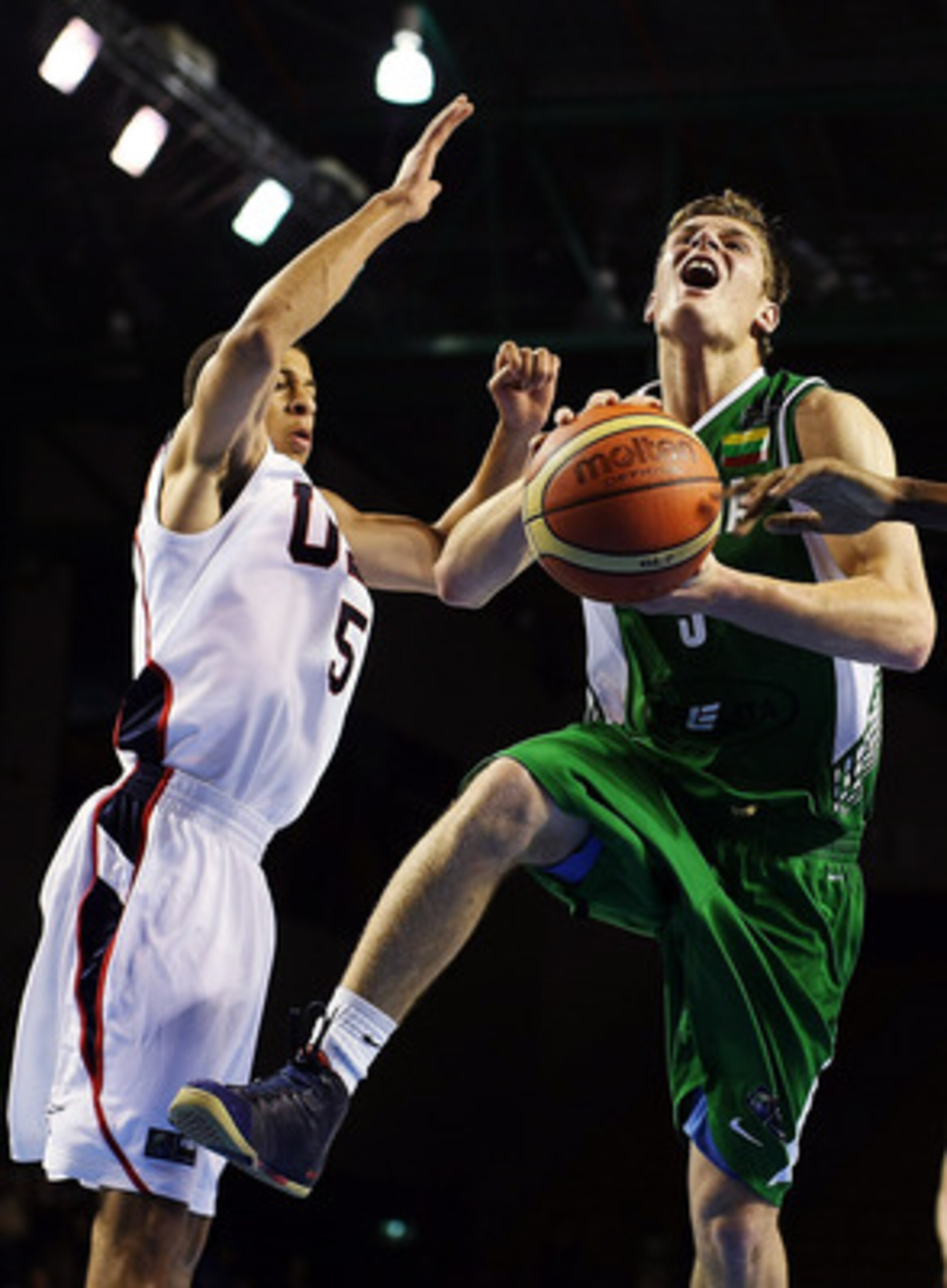
The 7'0", 220-pounder might be one of the best-scouted international players in the draft, so teams know what he can do.
Aside from the fact that his 220 pounds aren't close to adequate for the rugged NBA front court, Motiejunas has few weaknesses.
Word is that he doesn't play enough to have great experience with his team in Italy, and his jump shot is inconsistent. These are trivial in comparison to the potential strengths he has.
Nothing sticks out as superior to anything else in his game. He runs the floor, has insane court vision, scores aggressively, is smart and shoots from mid-range.
He has the look of a dependable front-court scorer who isn't the primary option, but can carry the team for a quarter or two per game.
NBA Comparison: (Taller, thinner and less physical) Zach Randolph
7. Jonas Valanciunas, Lithuania
24 of 30Note: My apologies for sandwiching two confusing European names together. I hope you can remember/differentiate between them come draft time.
Jonas Valanciunas is another highly-skilled European forward. He is the top international player on many draft boards, though I think that he'll go behind Jan Vesely and Enes Kanter.
Valanciunas breaks the mold of the lanky international forward with his toughness and experience. He's only 18, but he's played with tenacity for Lietuvos Rytas in the Lithuanian league.
At 6'10" and 230 pounds, Valanciunas boasts a polished inside game, which is where he spends most of his time. He has a soft touch offensively and rebounds/blocks well when defending.
He needs to improve his perimeter game with the mid-range jumper, but there's no doubt he'll develop that with time. What he has now is enough to warrant a top five-to-eight pick.
NBA Comparison: Joakim Noah (with more offensive polish)
6. Brandon Knight, Kentucky
25 of 30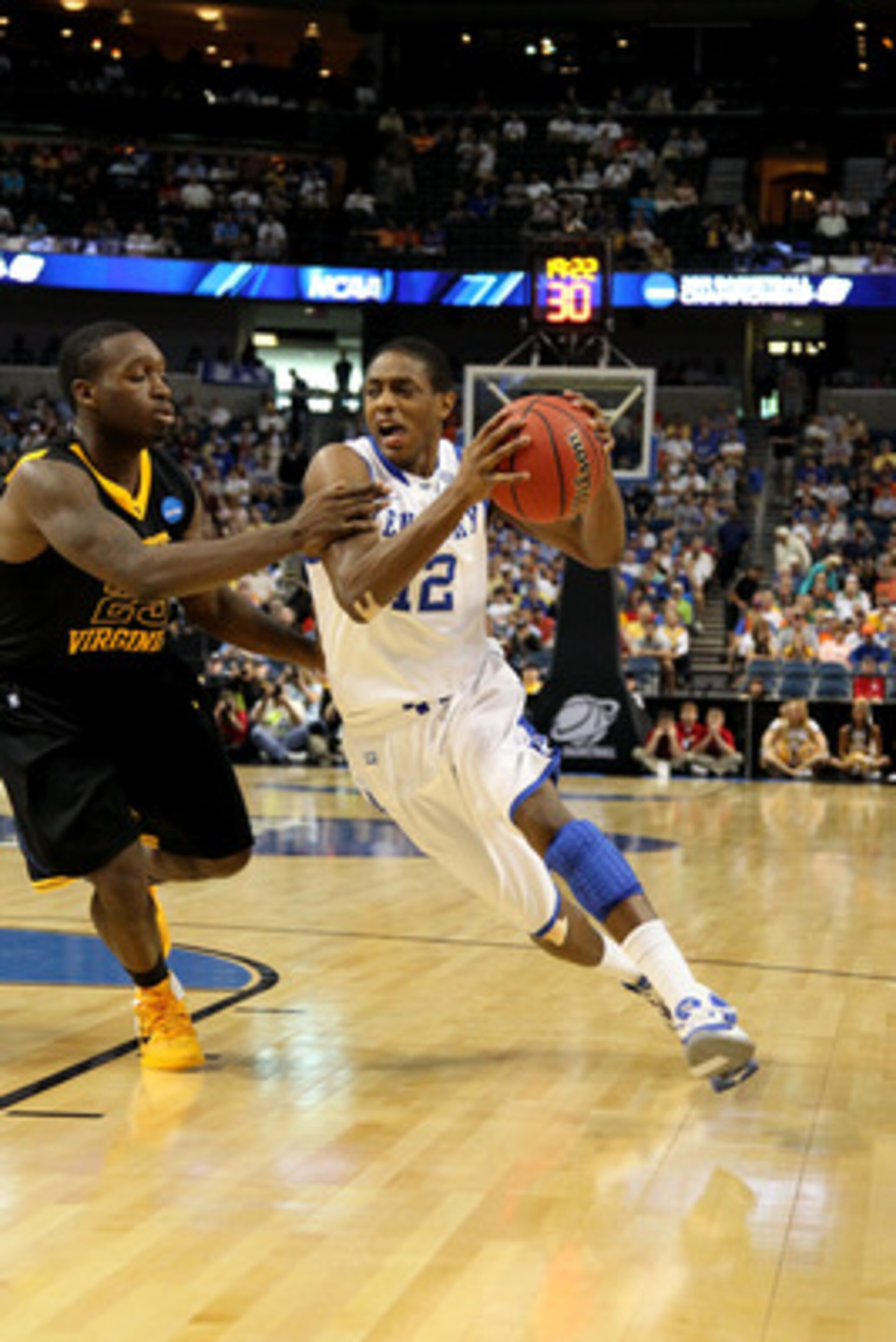
The 6'3" Brandon Knight struggled early in his freshman year before emerging late in the season. Most of his struggles are attributable to the fact that John Calipari had him out of position at the point.
In reality, Knight is better characterized as a combo guard. He has the intelligence and handling to play the point, but he's a volume shooter and big athlete who can make his mark in the paint.
He's a good rebounder, so you don't want to send him back on defense if he could be playing his high-effort game on the offensive glass.
He does need to finish forming his game and shore up the inconsistency with his outside shooting, but the leadership and athletic potential Knight showed in leading Kentucky to a surprise Final Four berth are a pleasant occurrence to unsuspecting general managers.
Never a cancer or chemistry problem by any means, Knight visibly matured right before our eyes on college basketball's biggest stage, when it matters most.
NBA Comparison: Tyreke Evans
5. Jan Vesely, Czech Republic
26 of 30At 6'11" and 240 pounds, Jan Vesely has ridiculous size for a small forward.
He has incredible range and athleticism for a 6'11" player; an ideal combination of size, skill and toughness.
If you combined the desired skills of each spot on the NBA floor, you'd probably end up with something close to Vesely.
His best strengths are his jumping ability, which comes out in his ferocious dunks, and his relentless motor. He plays hard all the time and isn't afraid to play physical, as many Europeans are.
NBA scouts are convinced of his maturity, which is why he's projected in the top five. He shocked many general managers when he skipped last year's draft, as he was considered ready for the NBA.
This time around, no one is shocked to see him in the top five.
NBA Comparison: Blake Griffin (with a great perimeter game, but minus the power game)
4. Kemba Walker, Connecticut
27 of 30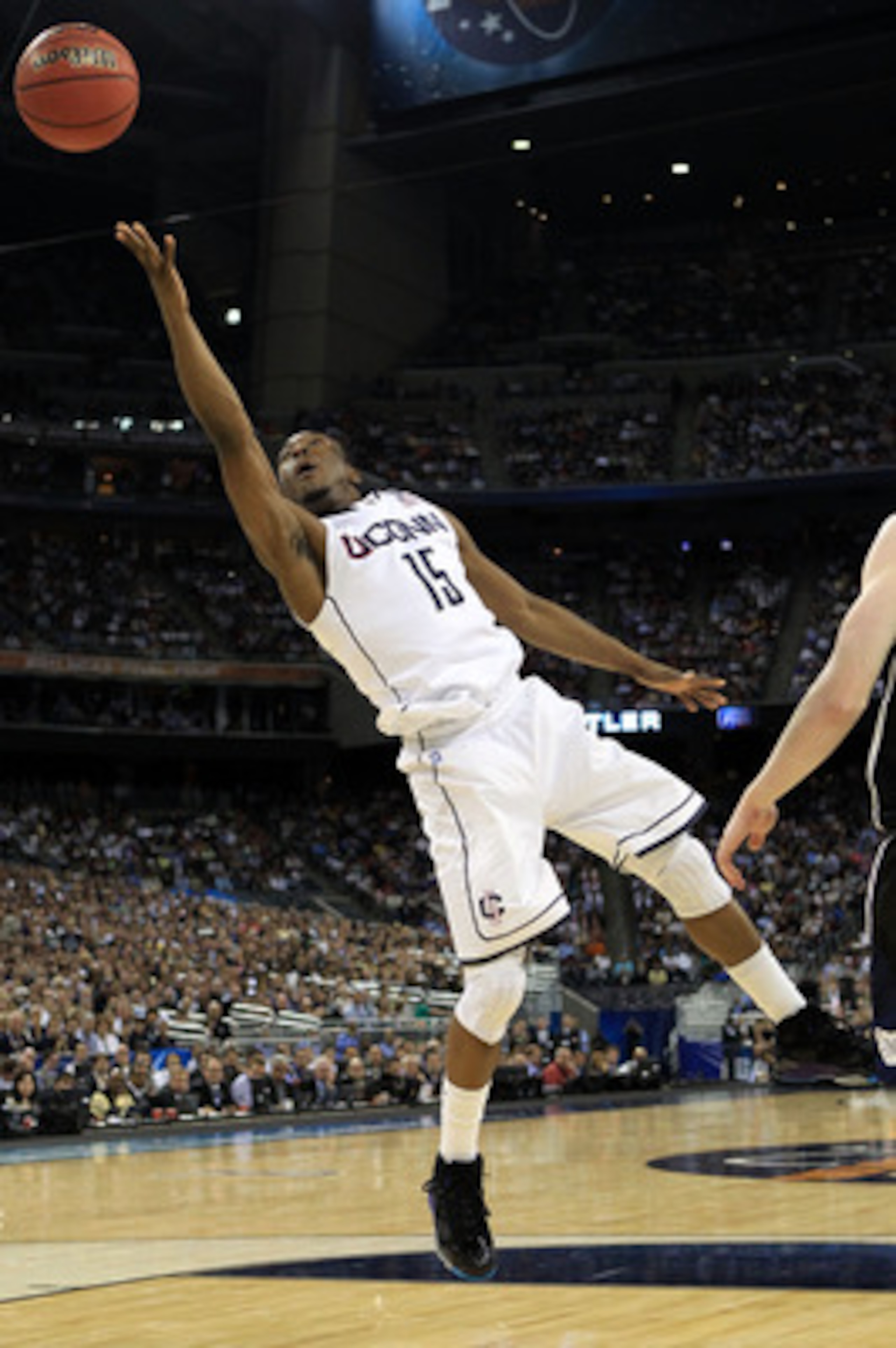
I've already said what I want to say about National Champion point guard Kemba Walker, so I'll just pipe it in:
""You've seen the Most Outstanding Player of the NCAA tournament play by now. You know about the incredible quickness and creativity around the basket. You know about the long-range shooting. You know how Walker put a very young team on his back and showed them how to compete and get better in-season.
"What you couldn't know before the Big East and NCAA tournaments is that Kemba Walker was a competitor and a winner.
"The 6'1" junior and his Huskies made history by winning five games in five days from the nine-seed to win the Big East, then turned around and won six more to claim an improbable National Championship. Without Walker, they don't get out of the play-in round of the Big East.
"Originally projected near the bottom of the lottery, Walker has shot up because of the maturity he displayed in the NCAAs. You know what you're getting with him, but that doesn't mean he's not worth the pick here at No. 6."
"
NBA Comparison: (Smaller, better-passing) Monta Ellis
3. Enes Kanter, Kentucky/Turkey
28 of 30The 6'10" Enes Kanter hasn't played competitively in more than a year due to an improper benefits suspension at Kentucky.
It doesn't matter for this extremely polished center, who is slotted third overall despite the fact that no scouts have seen him play lately.
The only criticism of Kanter is his lack of athleticism. Otherwise, he's got the post game of a five-year veteran All-Star at a tender 18 years of age.
He handles and passes very well for a big man and can shockingly hit his jumper all the way out to the three-point line.
He will make his living in the paint though, where he uses a physical body to his advantage and finishes creatively.
There is concern over his ability to transition from Europe to the NBA without a college buffer, but he's expected to make the jump smoothly because of his experience and maturity from playing pro overseas.
NBA Comparison: Al Jefferson (with more range)
2. Kyrie Irving, Duke
29 of 30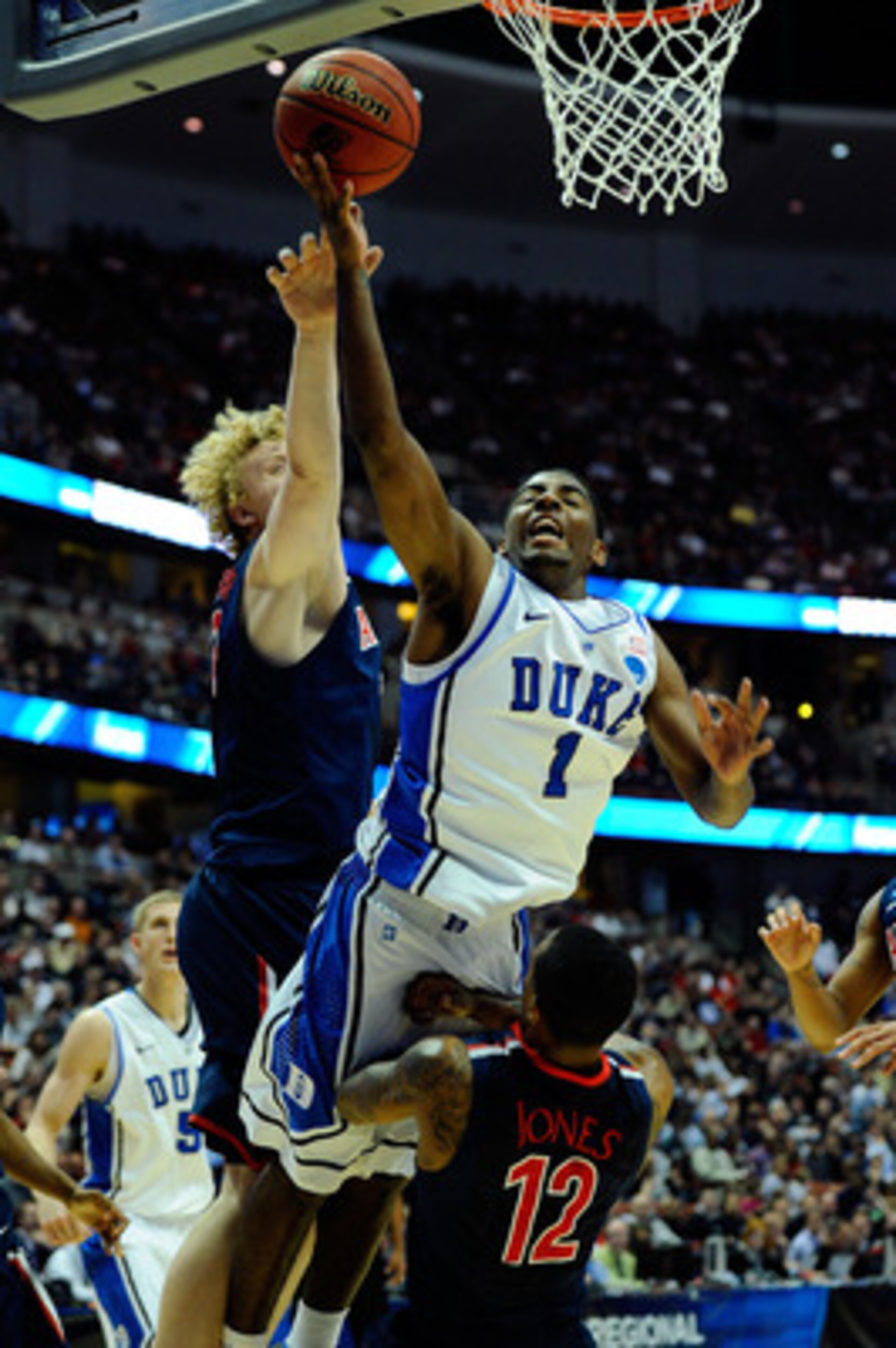
Kyrie Irving's short 11-game college career is about the only weakness he has and will be enough to keep him from the No. 1 pick.
Because of this, teams are uncertain what exactly he will be. Is he primed to be the next Derrick Rose or just Aaron Brooks?
He certainly has the talent of Rose, though not the same class of athlete, and intelligence to develop as quickly.
Irving is a true point guard who has a good feel for the scoring/passing balance and excels at moving past his defender into the lane. From there, he deftly keeps his shooters and bigs in sight while maintaining a great handle on the ball. He can kick out, dump down or pull up for the short jumper.
Nobody really knows Irving's ceiling, but we do know that his floor is second overall.
NBA Comparison: Rajon Rondo (with a better jumper)
1. Derrick Williams, Arizona
30 of 30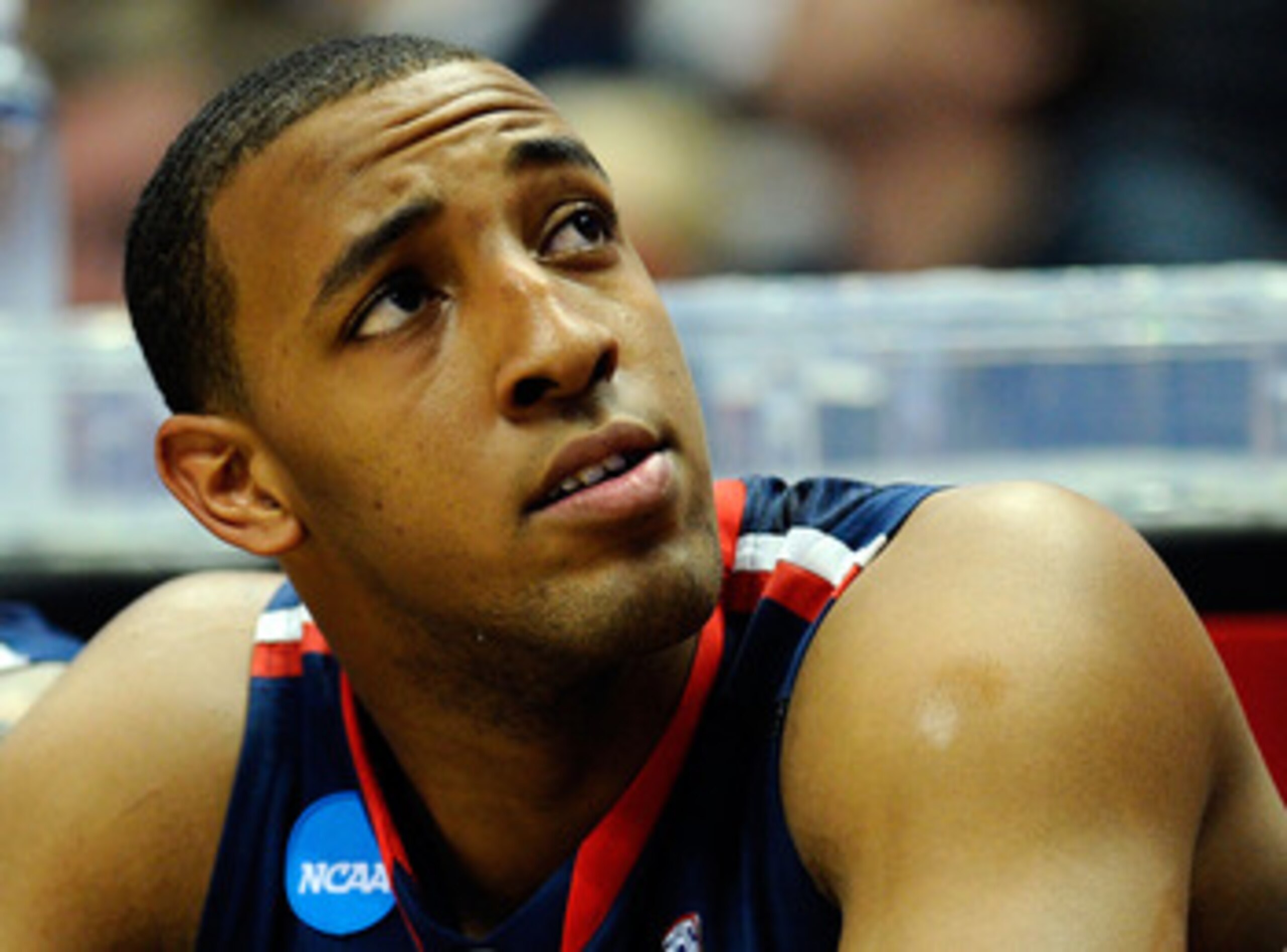
You saw him play.
So, is there anything you can find to criticize in Derrick Williams' game?
The only gripe that can be made about the Arizona sophomore is that he's undersized to play the NBA four. That's OK because he could make a fantastic small forward with elite athleticism, intelligence, power, outside shooting and active defense.
Williams has the physical/mental makeup and maturity to play in the NBA right away. He won't be a No. 1 scorer on either team he gets selected by, the Cavs or Timberwolves, so he could immediately contribute offensively while defenses pay attention to primary scorers.
Defensively, he can play a position above or below his natural one, which will allow him to stay on the court longer and improve through game experience.
His career trajectory is almost vertical right now and there's likely more to come from a player with Williams' work ethic.
Look for him to make an All-Star team within four years.
NBA Comparison: Rudy Gay (with a better three-pointer)



.jpg?w=2560 "Chiefs, Steelers Eye WR Trades")



.jpg?w=2560 "Latest Peyton-Colts Rumors")