
UFC 129 Fight Card: Ryan Jensen Says 'Never Give Up and Keep on Trucking'
 After nearly two decades in the sport, Ryan Jensen feels that he is still improving as a mixed martial artist and is, starting this Saturday at UFC 129, ready to further establish himself in the UFC’s middleweight division.
A professional mixed martial artist since 1997, Jensen racked up a near-perfect record of 11 wins with only one loss before first making it to the UFC in August 2007.
Unfortunately for the Omaha, Neb., native, Jensen failed to win in two UFC appearances against Thales Leites and Demian Maia and was subsequently released from the promotion.
TOP NEWS
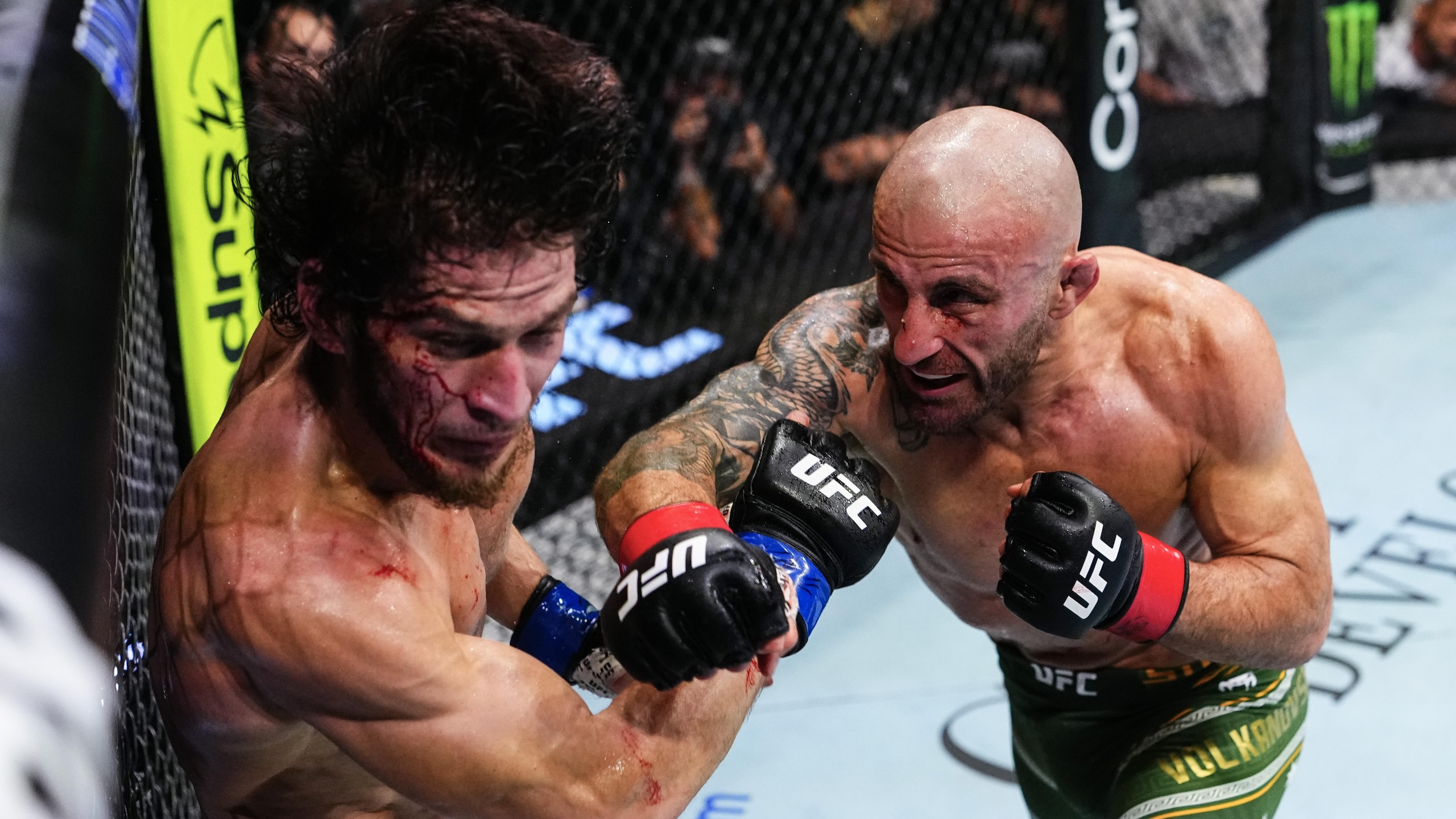
Volkanovski Retains UFC Title
🚨 UFC 336 Fights Announced
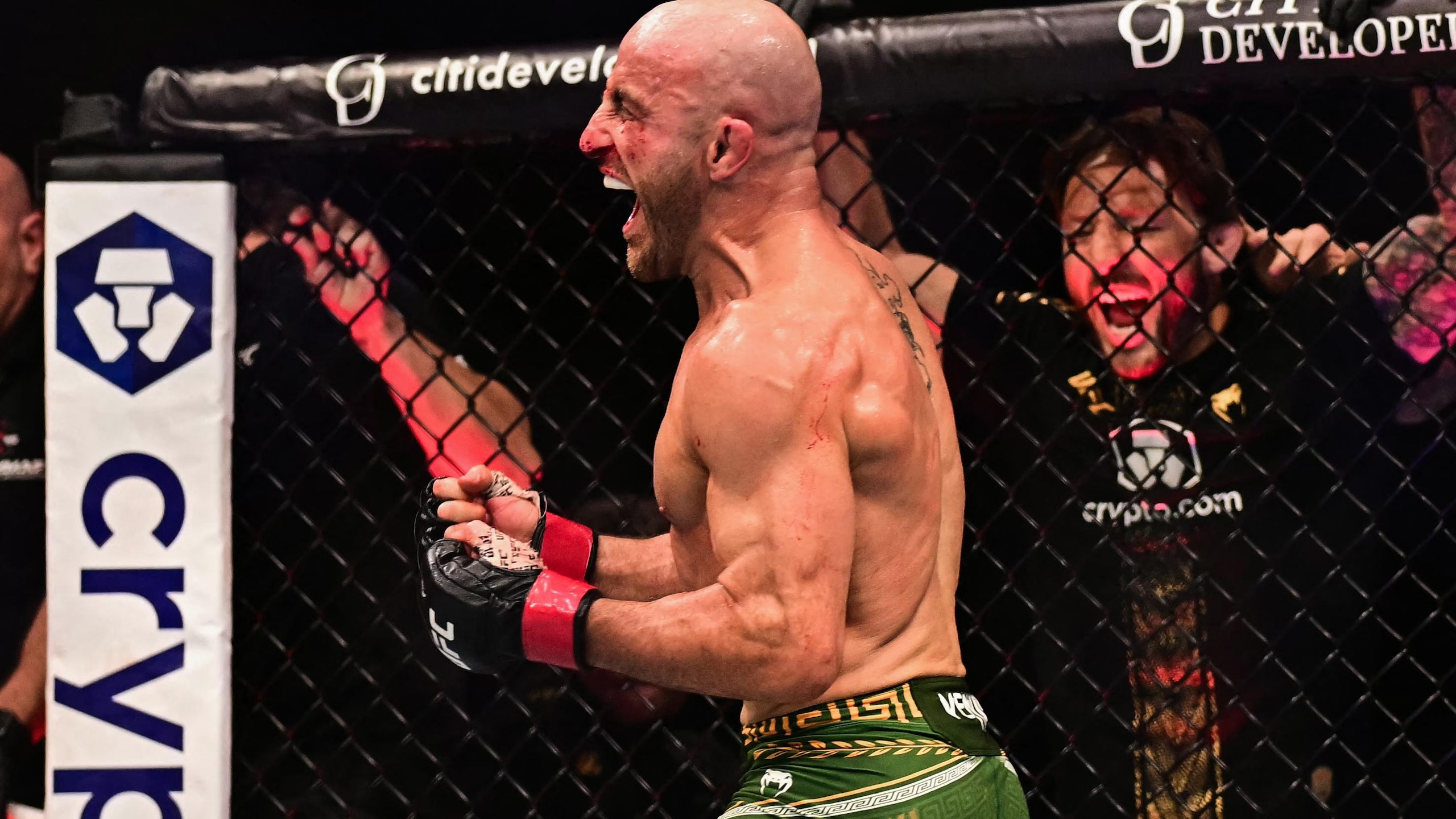
Volkanovski breaks record after title win at UFC 333
After picking up a pair of victories in three outings outside of the UFC, Jensen was brought back to the Octagon in September 2008.
Since returning to the UFC, Jensen has picked up stoppage victories over Steve Steinbeiss and Jesse Forbes, while falling short against Wilson Gouveia, Mark Munoz and, most recently, Court McGee at UFC 121 in late 2010.
Currently, Jensen is slated to take on, before an audience of 55,000 spectators, Jason MacDonald this Saturday night at UFC 129 in Toronto.
I recently had the opportunity to speak with Ryan Jensen about, among other topics, his early days in the sport, his upcoming bout against MacDonald, and training in Albuquerque, N.M., with Greg Jackson and John Winkeljohn.
What inspired you to get involved with the sport to begin with?
I got started when I was pretty young. I’m 33 now, but I started doing martial arts when I was a little bit younger and then I stumbled onto a gym in Omaha, Neb., and, sure enough, Steve Jennum was one of the instructors there—he won UFC 3. I was just a 15-year-old kid that stumbled onto a local gym and I’ve been, kind of, hooked ever since.
You passionate about the sport right away?
Yeah, definitely. Back then—it was in ’92—so we were one of the only schools that had a Tae Kwon Do guy, we had a guy that did wrestling in Iowa, and then we had some guys that did some other stuff and we, kind of, mixed it all together.
We were doing the early MMA stuff. Then I started training with some of the guys that were training with Jeremy Horn, because he lived in Omaha before he moved to Davenport.
Then I followed those guys out to Davenport to train with the Miletich guys. I’ve been hooked from a very young age.
Did you think, in the beginning, that you would be able to make a career out of your passion?
You know what? No, not at the beginning. I think I had one or two fights and then took a five-year hiatus and went back to college.
There wasn’t any money in it. It was cool, but you couldn’t pay the bills, so I went back to school to get my degree and all of a sudden, I was back at it. I kept training, but I just didn’t compete. I started competing again and I liked it.
Where did you go to school?
In the Nebraska area; the University of Lincoln, the University of Omaha, I went to Bellevue University to get my Bachelor’s in business administration, so I bounced in and out, you know what I mean? I was working, fighting, and going to school.
During that five-year hiatus, were you looking for an opportunity to jump back in to the sport or were you reluctant to get back into competing?
I was always training and I had a lot of friends who were fighting, but at the time, there really wasn’t a future in it, you know what I mean?
I saw Steve fight in the early UFCs and then it got bought out by Zuffa, and I wasn’t at that level; I was still on a lower-level fighting for chump-change.
Are you happy that you took a break from competition?
I probably would’ve had 10 or 15 more fights and been more experienced, but it was good. At the time, I don’t think I was passionate about it.
I loved training, but after that second or third fight, I really started to dig it. I started to travel and train with great teams and great guys. Now I’m down at Jackson’s.
Did you ever think—back in 1992—that this sport would be as big as it is now?
No, I didn’t. You’ve got to attribute that do Dana and the Fertittas for bringing us mainstream. ‘The Ultimate Fighter’ show really helped to make our sport popular.
Without the UFC, I don’t think MMA would be where it’s at today—for sure. I’m about to fight in-front of 60,000 people—I didn’t think that was going to happen.
How did you feel when you learned that you would be fighting back in 2007?
It was great. I actually just got hooked up with Matt Lindland and Team Quest. I think in my first or second camp with Lindland, he made a phone call and got me into the UFC and it was great; I was pumped.
I think I was, like, 10 and one, or 11 and one or something like that—I had a decent record—and I had just fought a couple UFC-vets and I thought it was that time. I didn’t have to go to ‘The Ultimate Fighter’ and go into the house—which was cool.
Looking back, though, those guys gained a lot of popularity from doing that; that’s a very good way to get into the UFC and have a name for yourself.
Do you feel that you were prepared for that level of competition at the time?
Yeah. I fought a bunch of other UFC vets. I think, for me, I’m more of an “MMA mutt”, so to speak; I started doing mixed martial arts, I didn’t start with being a really dominant wrestler or being really dominant in Jiu-Jitsu or a really dominant kick-boxer.
I think that some guys that come from being dominant in one discipline—they have an advantage—but I’ve been doing MMA since I started.
It just is what it is; I think I see things better than a lot of guys. Nowadays—like the last three, four years—everybody’s cross-training; everybody is good at everything now.
The game is evolving as we speak and the next Georges St-Pierre that comes out ... Like Jon Jones; he’s only been fighting for three years and he’s a beast, you know? This next generation coming up, man, is going to be impressive.
How exciting is that for you?
Oh, I think it’s great, because I’m a fan of this sport, too, you know? To see the evolution and see what these new athletes are going to come out and do—it gives me a job for a very long time, you know what I mean?
How much better do you feel you are now than when you came to the UFC in 2007?
Oh, I’m a lot better. I was up at Team Quest for three years and now I’ve been down at Jackson’s for the last two-or-so years and I feel like I’m getting better with each fight. You learn every time you get in the Octagon; whether it’s game-planning or strategy or what you need to work on.
If you weren’t improving, would you retire?
If I wasn’t improving, would I retire? Yeah, definitely. I think there gets to be a time when you put your body through it enough and it’s time to let the other guys come in and do it. When is the time? Who knows? I’m going to keep going until I break down.
How are you feeling going into your bout with Jason?
I feel great. I’ve been out there at Jackson’s for the last six weeks. Me and Greg and Coach Winkeljohn have come up with a great game-plan and we’re going to implement that game-plan and I’m ready to fight. Let’s get after it, man; training is over and I’m ready to fight.
How did you come into contact with Greg?
I fought Joey Villasenor at Strikeforce in 2007 or 2008 and after that fight, I just felt that he beat me pretty good and gave me my first and only KO—I think. I ran into Greg at a UFC and I asked him if I could come down. I packed my bags and I went down there for a month training-camp without knowing anyone.
The only one that I knew was Joey—just because we’ve fought each other—I didn’t really know anybody else. It was a little bit intimidating, but those guys are just like family; Joey took my underneath is wing and Brian Stann—and some of the other guys—it was just a good fit for me. The rest is history.
How much of an impact would you say that camp has had on you?
Oh, it’s the best MMA camp in the world, so every day is a hard day. Even the faces that you don’t know—some of the amateur and the pro fighters that you haven’t heard of—man, they’re tough as hell.
Every day we’re in there grinding and getting it done. To be with guys that are on that level and be able to train and compete with these guys—getting into a fight is no big deal, you know?
What do you think makes it such a great place to train?
It all comes down to teammates; if you’ve got a group of 10, 15, 20 guys that are doing the same thing—trying to push each other hard every day, trying to learn and evolve and with good dudes—it makes for a great environment.
Jackson has 40 or 50 fighters that are out there all the time. The next is the coaches; Greg and “Wink”. “Wink” is the humblest, toughest dude—mentally, conditioning-wise—and Greg’s mind is totally different than any coach that I’ve been around in my 18, 19 years of training.
It’s Greg and “Wink”, you know? They make it—with all of the great teammates.
Is there anywhere else in the world that you would rather train?
[Laughs] No. I’m pretty content with where I am now. When I’ve got a big fight coming up, I enjoy coming out here to train in the altitude and pushing the pace.
For me, because I run my own gym back home—I’ve got 20 or 30 guys back home, plus doing all the business side of everything; everyone is vying for my time.
But when I come out to Albuquerque, it’s just like I’m a fighter again; just one of the guys. Back home, I take on more of a leader-role, you know? It’s good for me—mentally—to come out here and escape.
How much of an impact has Greg had on you as a coach?
Tons, man. I try to instil the values that they instil in me while I’m here. Winkeljohn works so hard; he holds pads for 10 dudes a day, you know? Plus, he’s working a full-time job. I try to take that work-ethic and bring it back to Omaha.
Greg is doing the same thing; he does privates on top of privates, training guys during the day, and then doing more privates at night, plus running a gym and traveling for his fighters. Just the work-ethic and being a good person and working hard—that’s what I take away from Jackson’s, you know?
What problems does Jason pose to you?
I don’t know about “problems;” he’s a solid ground-guy, but I’ve fought a lot of ground-guys. He’s got a lot of tendencies that we’ve scouted out and we’ve came up with game-plans for that. He’s a worker and he’s kind of like me; he’s been around the game for a long time, you know?
He has a lot of years and a lot of experience under him. He works hard and I think he’s going to try to shoot in and take me down—like he does for everybody.
Do you think Jason has anything you haven’t seen before?
No. I don’t think most people have anything that I haven’t seen before. I train with some of the best guys in the world at Jackson’s. Training out at Team Quest and with Miletich back in the day—I’ve trained with the best guys in the world for a decade, you know what I mean? I’m not really worried about anything.
Do you have a prediction for how this one is going to end?
Everybody says, “I’m going to knock him out,” or “Hey, I’m going to submit him,” you know? In MMA anything can happen. I’m just going to go in there and fight hard; whatever happens happens, you know what I mean? My job is to train hard and that’s it.
What are you expecting out of the fans?
[Laughs] Boos. I think the Canadian fans are great and they’re really passionate about the sport, but he’s the hometown guy and I understand that. I’m guessing they’re going to boo me—maybe they will and maybe they won’t.
Regardless, it’s 60,000 people booing, screaming, yelling—whatever—you know what I mean? That’s going to be intense and I’m excited.
Do you think it will be overwhelming at all?
No. We do a lot of visualization and going through the fight in my head before—I’ve already been through it a thousand times in my head, with the crowd booing me and stuff.
I’m not worried about it. I want to go out there and put on a good fight for them. If they like it, then they like it and if they don’t then they don’t; I’ve got a job to do.
Assuming you win, where do you see yourself in the UFC’s middleweight division?
It’s not really my call—at all; that’s up to Dana and those guys. I think I’ve shown those guys that I’ll fight anybody anywhere at any time—I don’t think I’ve ever turned down a fight—so whatever they want me to do, I’m going to do it.
What do you think you can accomplish in this sport?
I want to be the best. That’s what the guys out here are doing. I want to fight for that title. I’ve put a lot of time and a lot of hard-work into this; I want to go out of this sport with a good legacy and show people that hard-work and consistency pays off—never give up and keep on trucking.
Have you thought about how much longer you might like to compete?
Like I said, just as long as my body keeps up. In this sport anything can happen. My buddy Jake Ellenberger is stepping in for Brian Foster—who had a brain hemorrhage. I’m hoping that he’s not out for good, but anything can happen; you can blow your knee out or this and that, you know? Like I said, I’m going to keep going ‘til I can’t go anymore.
Have you thought about what you might like to do when you’re done fighting?
I run Premier Combat Center in Omaha and we’ve got about 200, 220-or-so clients in there and the gym just keeps on growing.
I’ll keep on training guys, running my gym back home, traveling to fights, and doing the same stuff that I’ve been doing for the last 15 years.
Is there anything that you’d like to say to your fans while you have this opportunity?
It’s going to be a good fight. I’m going to go out there and push the pace and you’re going to see fireworks. Most of my fights are exciting, because I like to go for that finish. It will be one that the fans are going to enjoy.
Do you guarantee that?
[Laughs] I don’t know about guarantee. I hope.


.jpg?w=2560 "Malik Beasley Negotiating Plea Deal (AP)")
.jpg?w=2560 "Aikman Blasts Cowboys WR 🫣")

.jpg?w=2560 "Jonathan Taylor Landing Spots")