
NBA Mock Draft 2011: How Sweet 16 and Elite 8 Rounds Have Changed Draft Fortunes
Well folks, the Final Four have been named, and we are sure to see some excellent future NBA stars in the coming week.
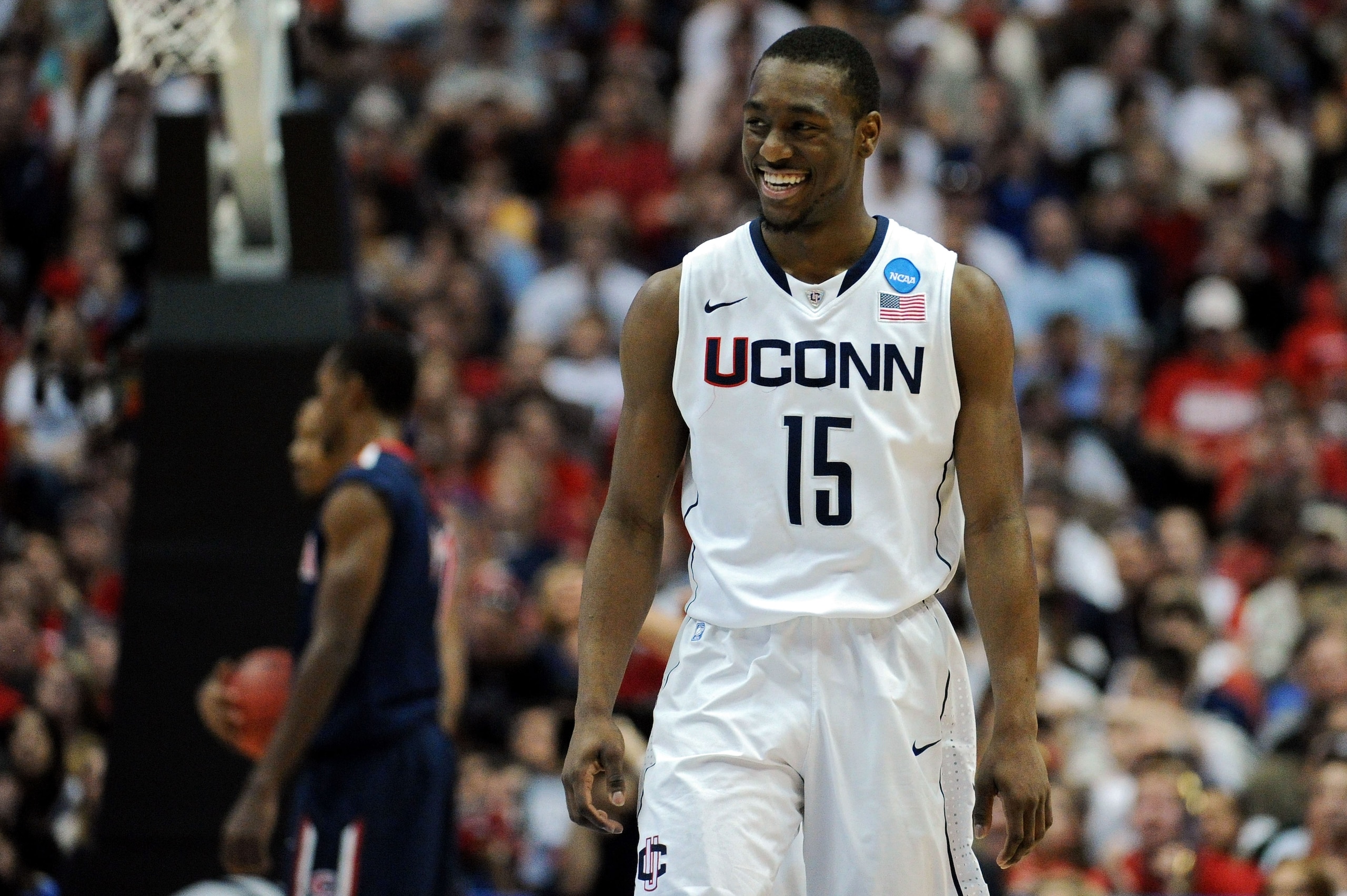
Silencing critics who labeled him as too small, Connecticut guard Kemba Walker has led his Huskies on an amazing run in the tournament, coming from behind in both the Sweet 16 and Elite Eight to have a shot at the National Championship.
With his performance in those two rounds, Walker's draft fortunes have certainly changed. He has gone from being a late first-round/early second-round pick to a sure-fire lottery pick. The same can be said for many other players in college basketball, though not necessarily ones who starred in the tournament.
That being said, here is a mock draft, picks 1-30, with players whose stock may have risen or fallen based on the occurrences in the Sweet 16 and Elite Eight.
Picks 1-3
1 of 10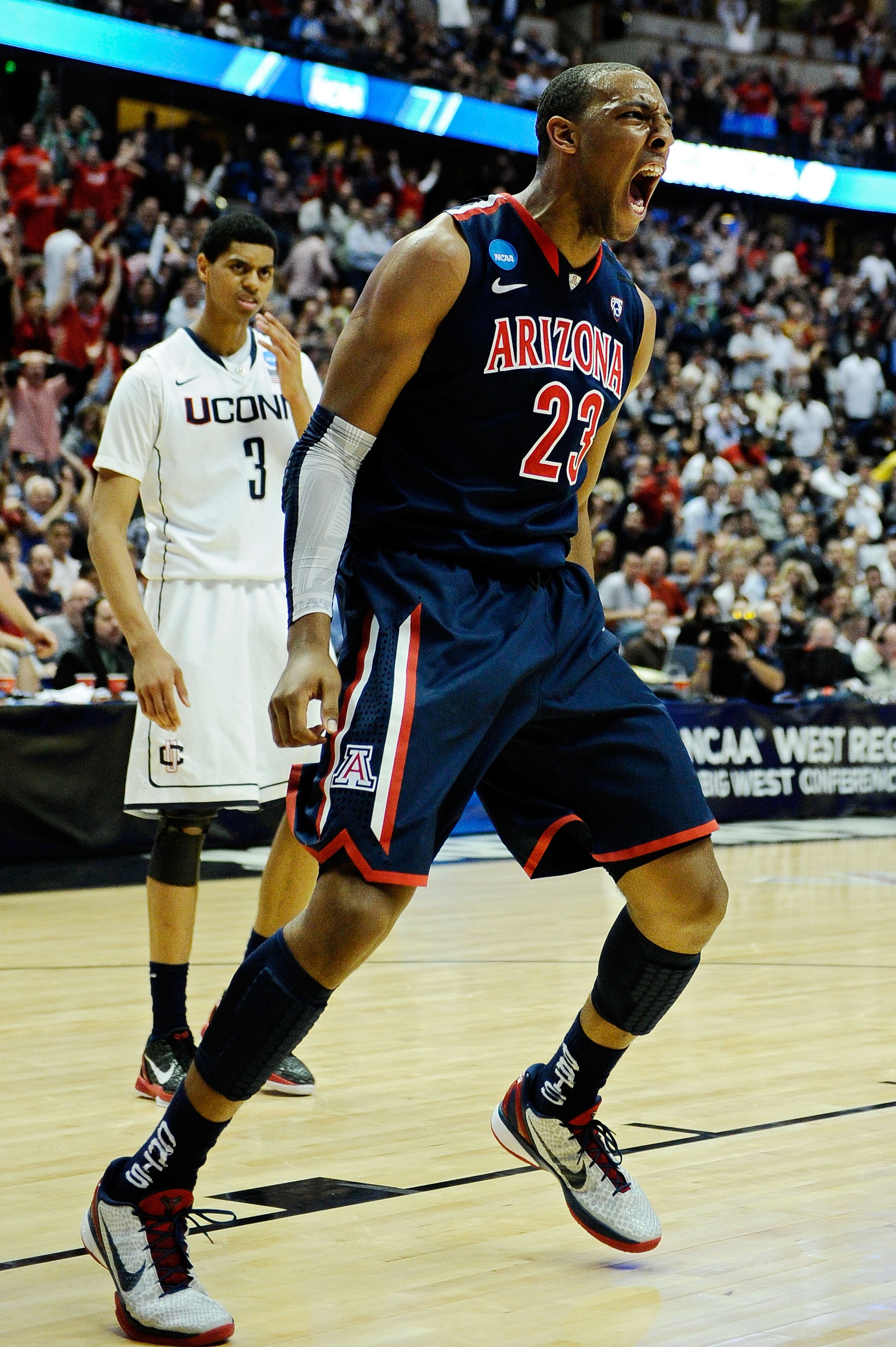
1. Kemba Walker, G, UConn. Simply put, he's been a rock star since tournament season began.
From the Big East Tournament up until now, he has shown he can be a leader on the floor, as well as put the team on his back and take that one final shot. After averaging 28 points a game over the Sweet 16 and Elite Eight, during which he led his team to victory against tough teams in San Diego State and Arizona, it would be unfair not to make him the first overall pick.
2. Derrick Williams (pictured), F, Arizona. After establishing himself as a dominant big man in a system that for generations has favored guards, Williams upped his draft stock in the Sweet 16.
He scored 32 points and grabbed 13 rebounds as his Wildcats eliminated the defending champion Duke Blue Devils. His team may have lost to Connecticut in the next round, but Williams still proved he can play well against top teams, and that Arizona's success wasn't just a fluke.
3. Nolan Smith, G, Duke. In the Sweet 16, Smith was essentially a non-factor. He went 3-of-14 from the field and only finished with eight points.
Still, there is no denying this young man knows how to be a leader and run an offense. He kept taking good shots in the hopes of giving his team momentum, despite defenders being all over him. His coach has done nothing but sing his praises for four years, and his team-first personality will only help him in the future.
Picks 4-6
2 of 10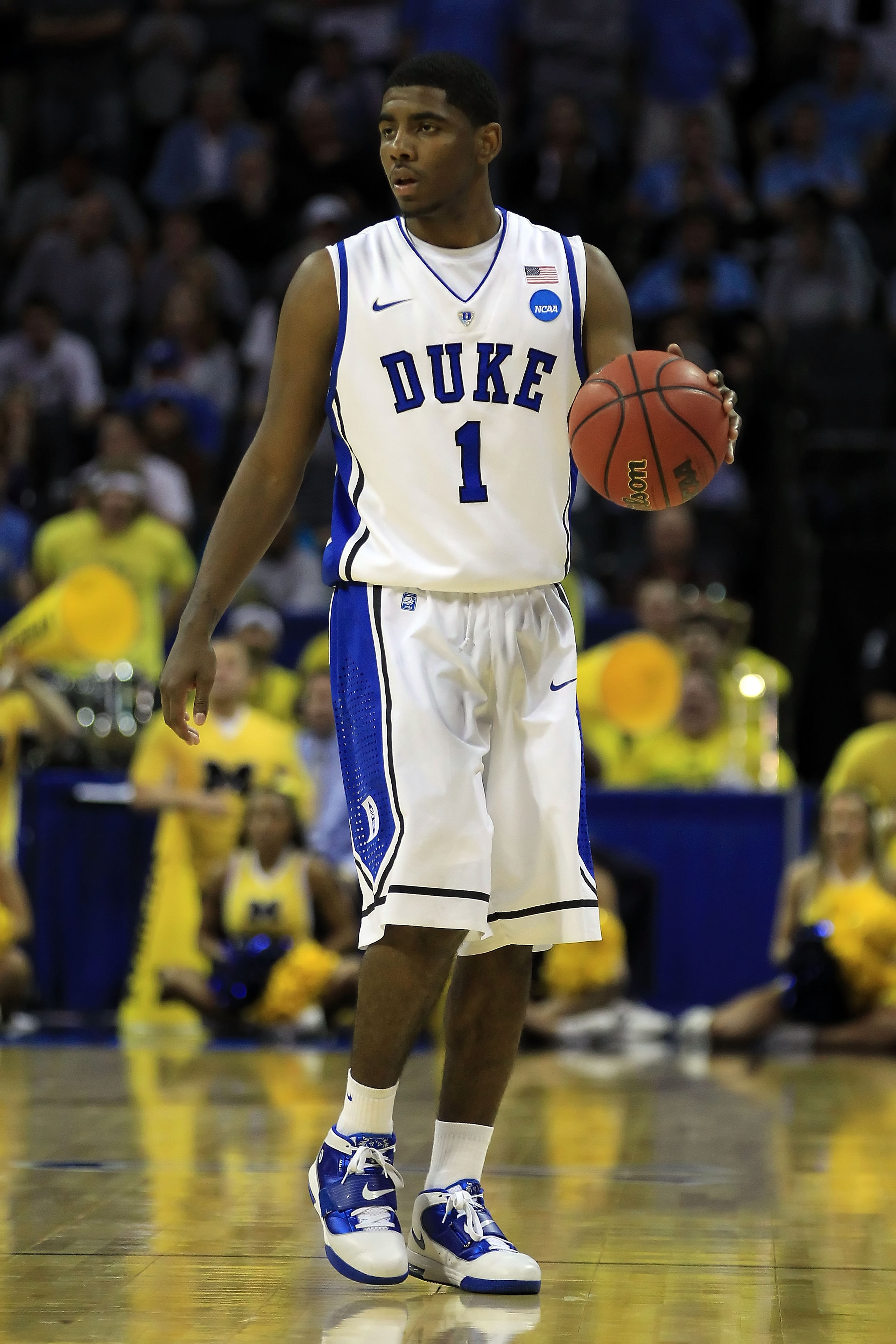
4. Marcus Morris, F, Kansas. This half of the legendary Morris twins had an overall good season and a decent tournament.
He didn't have a great game in the Sweet 16 against Richmond with only 13 points and seven rebounds, but he showed tremendous heart and determination in the Jayhawks' Elite Eight loss to Virginia Commonwealth. In that game, he scored 20 points and pulled down 16 rebounds, as he constantly put his body on the line no matter what the risk just to keep his team in the game.
That is the kind of attitude coaches dream of and will only help him as he makes the transition to the professional level.
5. Jimmer Fredette, G, BYU. Before the tournament began, I was convinced this young gentleman would never be more than a shooter off the bench in the NBA.
After watching him in the tournament, I have changed my tune.
Fredette averaged 32.6 points and six assists per game in the Big Dance, putting most concerns about his passing game to rest. On top of that, he exhibited great toughness in BYU's Sweet 16 loss to Florida, as he scored 32 points (including some extremely deep three-pointers) and kept his team in the game (with one bad leg!).
It's only natural his draft stock will now rise.
6. Kyrie Irving, G, Duke. He's still a freshman and might not even enter the draft, but chances are he'll be taken right about here if he declares.
Irving missed most of the season with a toe injury, but returned at the start of the tournament and made the most of it. When his teammate Nolan Smith went cold in the game against Arizona, Irving put the team on his back and finished with 28 points on 9-of-15 shooting, including 8-of-9 from the charity stripe.
His team may have lost, but this exhibits the skills of a true point guard who when called upon, will penetrate defenses on drives to the basket and get knocked around if it means a shot at winning.
Picks 7-9
3 of 10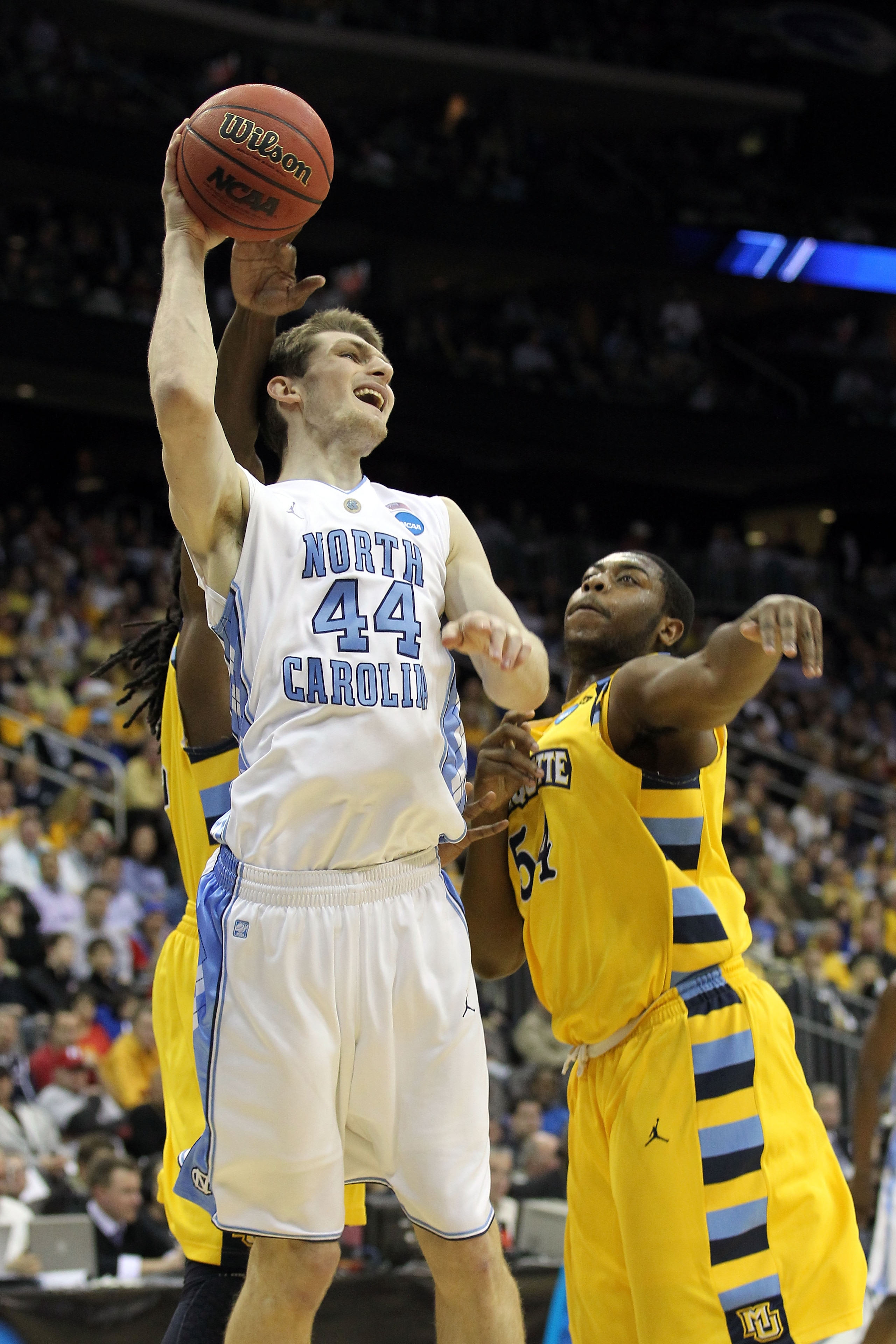
7. Keith Benson, F/C, Oakland. There is no other way to say this.
Keith Benson has the talents of an All-Star NBA center.
His team may have been eliminated in the second round, but the lack of presence of other top big men in the Sweet 16 and Elite Eight may have upped his draft stock. Benson averaged 17.9 points and 10.1 rebounds per game as a senior, as well as nearly four blocks, and NBA scouts would be foolish to overlook him merely because he didn't play for an elite school.
Benson and his teammates gave the Longhorns a game the entire time, so that should count for something.
8. Tyler Zeller (pictured), F/C, North Carolina. A seven-footer who weighs a lanky but tough 250 pounds, Zeller is a big man who could be worth a gamble at this stage in the draft.
In the Sweet 16, he scored 27 points and grabbed 12 boards against a tough Marquette squad, and in the Elite Eight, he scored 21 and rebounded nine in a loss to the pesky Kentucky Wildcats. Combine that performance with the fact that he has probably the best hands out of all the big men available, and Zeller is a surefire lock to be a dangerous presence in the middle for any NBA team.
Think Kevin Love, but not as athletic.
9. Jacob Pullen, G, Kansas State. Some may consider Pullen too much of a risk at the ninth overall pick, but his performance against Wisconsin in the third round of the tournament cemented his status as a top guard.
He scored 38 points against a tough Wisconsin defense and kept his team close to victory until the very end, taking the Kyrie Irving approach to do anything he could to keep his team in the game.
The only other guards that have done that in the later rounds thus far were named Kyrie and Kemba, and we already know where they might end up.

Picks 10-12
4 of 10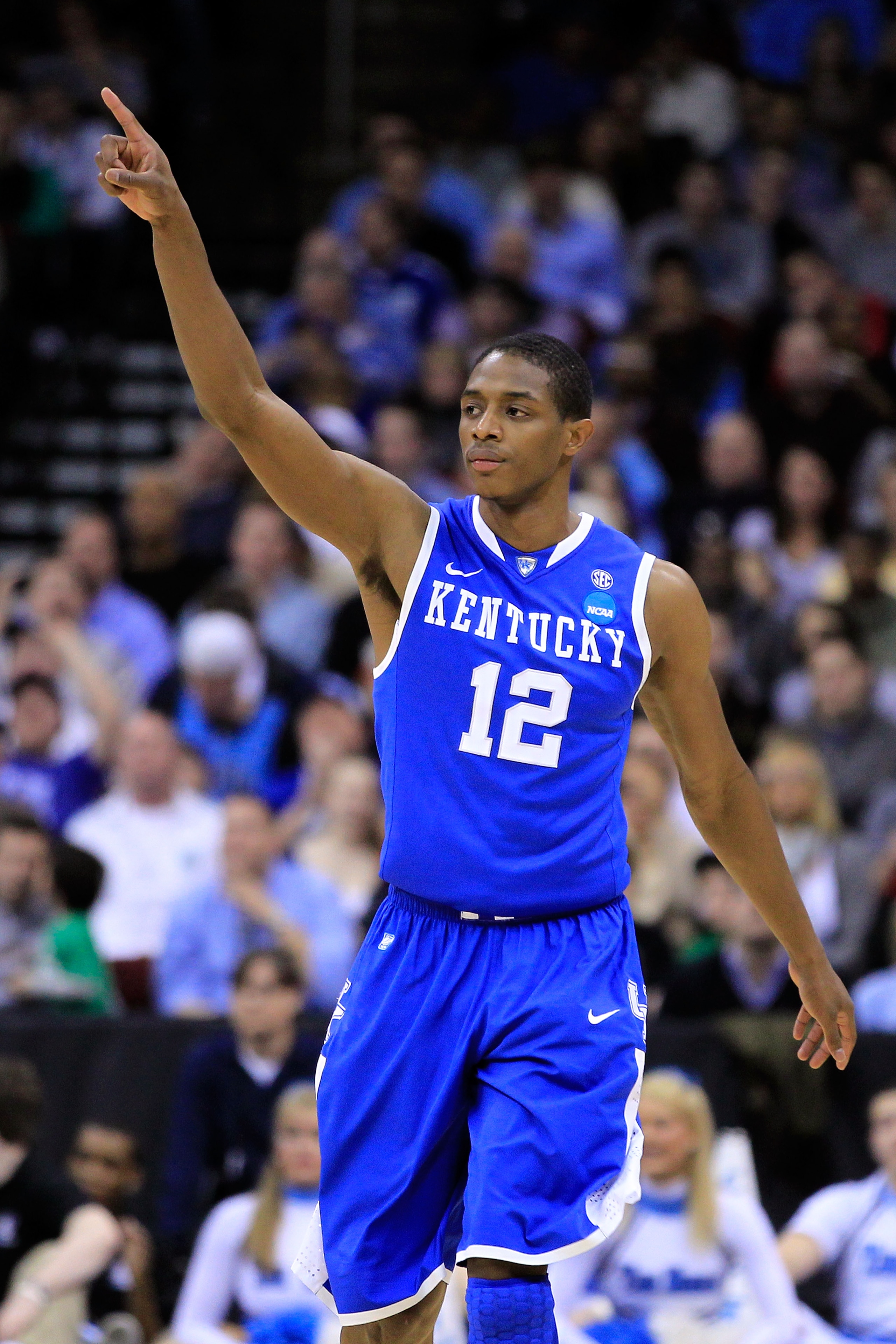
10. Brandon Knight, G, Kentucky. Knight is only a freshman, but has led Kentucky to the Final Four when many thought they wouldn't even contend after losing John Wall and DeMarcus Cousins to the NBA.
Instead, Knight has picked up where Wall left off and has given the Wildcats a shot at the title by defeating top-ranked Ohio State in the Sweet 16 and No. 2 North Carolina in the Elite Eight, scoring 22 points in the latter game. He only scored nine against the Buckeyes, but his willingness to take that last difficult shot in the final seconds proved his willingness to be a leader and always do what is best for his team, thus upping his fortunes in the draft.
11. Kawhi Leonard, F, San Diego State. This sophomore truly stepped up his game this season, as the Aztecs fought their way to the Mountain West Conference Finals and pulled off a stunning upset against BYU. Yet after losing to Connecticut in the Sweet 16, and with SDSU about to lose three starters, Leonard would be wise to enter the NBA Draft with many talented big men expected to be available.
He is only 6'7", but he averaged 15.5 points and 10.6 rebounds a game, including 12 and nine in the battle against Connecticut. Factoring that in, his athleticism will look very attractive to NBA scouts.
12. Khris Middleton, F, Texas A&M. At the start of the tournament, many pegged Middleton as a potential top lottery pick.
After he was shut down by a tough Florida State defense in the second round, his stock fell.
Still, I'm convinced that if he enters the draft, he'll be around the middle of the first round. He averaged 14.4 points and just more than five rebounds a game, and with patience, he could turn into a potential Tyreke Evans-type player. The Sweet 16 and Elite Eight were full of this type of player though, so Middleton had better act fast.
Picks 13-15
5 of 10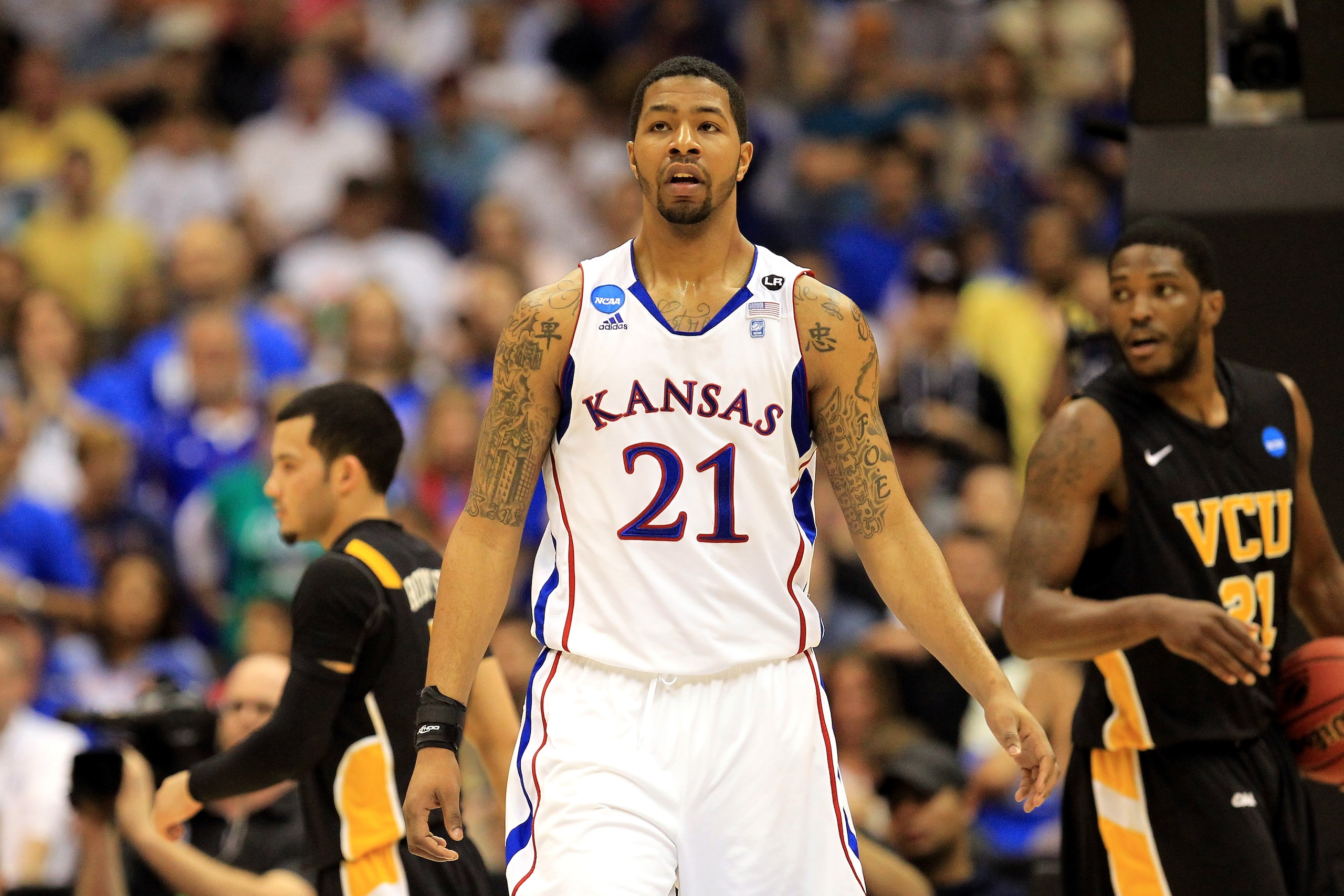
13. Markieff Morris (pictured), F/C, Kansas. Unlike his twin brother Marcus, Markieff Morris is more defensive-minded.
He averaged 13.6 points and just under eight rebounds a game, yet underachieved in the Sweet 16 and Elite Eight. He only averaged nine points and nine rebounds over those two games, but much can be attributed to getting into foul trouble early.
The fact is that Morris is still a top big man and despite a poor showing in the latter stages of Kansas' tournament run, should still be considered a prize among big men in the first round.
14. Chris Singleton, F, Florida State. At the start of the tournament, Singleton hadn't played in a month due to a broken foot and was still recovering.
Still, he chose to play.
He wasn't really a factor until the Seminoles' Sweet 16 loss to Virginia Commonwealth (he scored 16 points and had nine rebounds), but Singleton still showed his value as a leader both on and off the court in playing through the pain. He is only a junior, but it would be beneficial for him to declare for the draft now and serve as a bench player for a season while his stock is still high, rather than come back to FSU as a starter and risk further injury.
15. Kenneth Faried, F/C, Morehead State. Taking one look at Faried's 6'8", 225-pound frame, you would never guess he was the leading rebounder in the nation.
As a senior, he averaged 17.3 points and 14.5 rebounds per game. Faried scored 12 and grabbed 17 rebounds as he and his team upset Louisville in the first round of the tournament. They may have lost their next game, but no other big man in the tournament has put up those types of numbers from the Sweet 16 and beyond.
That being said, Faried could be a hot commodity in the mid-first round.
Picks 16-18
6 of 10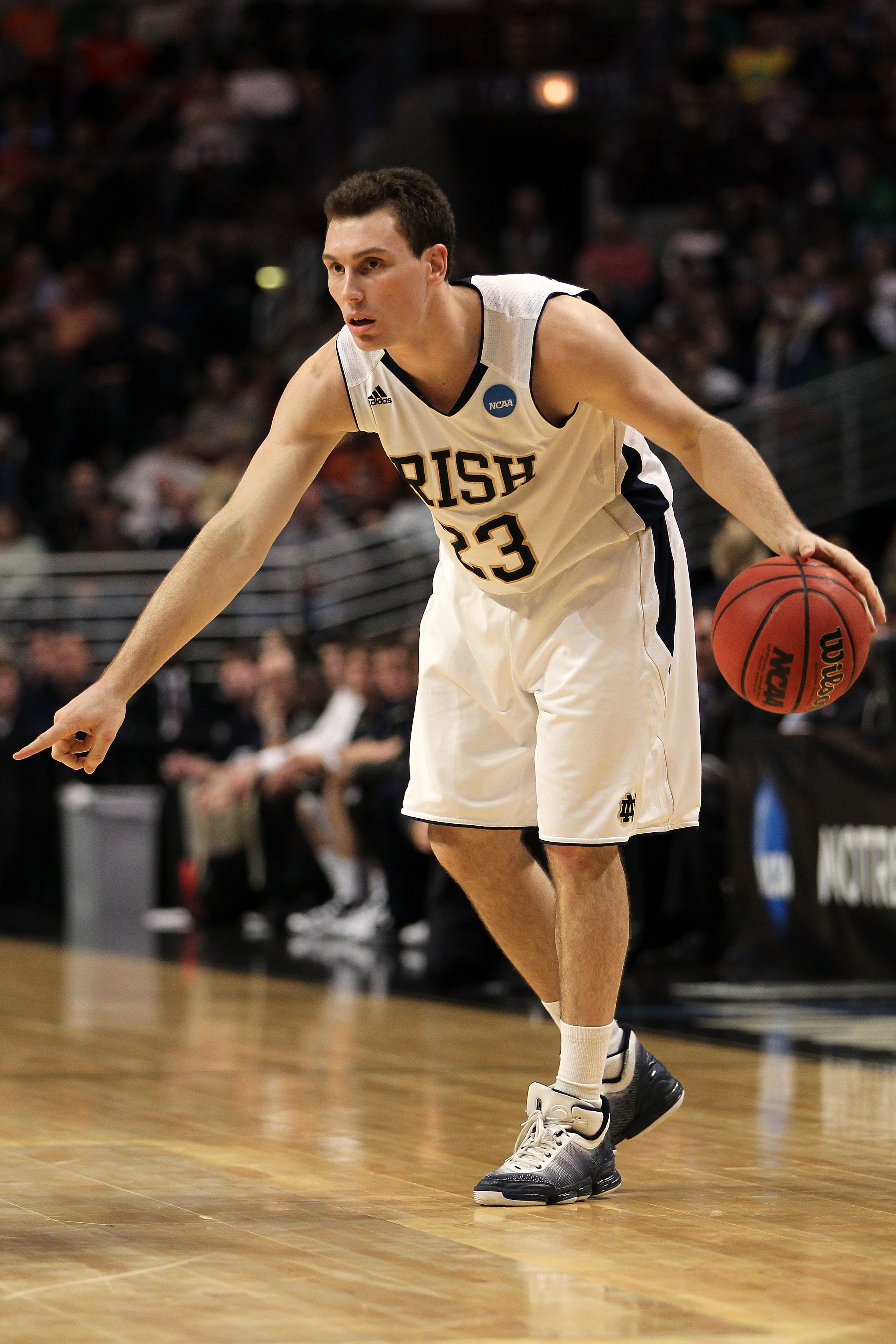
16. Chandler Parsons, F, Florida. One thing I and many others have noticed about Parsons is that he's built like a power forward/center at 6'10" and a skinny 218 pounds, but he plays like a guard.
One could think of him as a more versatile Dirk Nowitzki. He can drive to the basket and draw fouls, as well as rebound, but he also has a good three-point shot and is an excellent passer. He scored 16 points and pulled down nine rebounds in the Gators' battle against BYU, but also had seven assists.
This versatility is hard to find, so look for his performance in that game to help his draft resume.
17. Ben Hansbrough, G, Notre Dame. At the start of the tournament, many thought Hansbrough was a top point guard who could run an offense with a deadly long-range shot.
After the Fighting Irish lost to Florida State in the third round, his weaknesses were exposed.
Hansbrough had 18 points, but was 5-of-13 from the field and 4-of-10 from three-point range. With the load of talented guards that starred in the Sweet 16 and Elite Eight, Hansbrough's excessive reliance on his outside shot drops his draft stock from mid to late first-rounder.
18. William Buford, G, Ohio State. Buford reminds me a lot of former Stanford guard and current New York Knicks rookie Landry Fields.
He is decent on offense, but isn't afraid to crash the boards every now and again. The junior is great when it comes to driving to the basket and drawing the foul, but his 2-of-16 shooting in the Sweet 16 against Kentucky separated him from the other elite guards in that round and the next.
If he declares for the draft right now, his name might get lost behind those chosen ahead of him.
Picks 19-21
7 of 10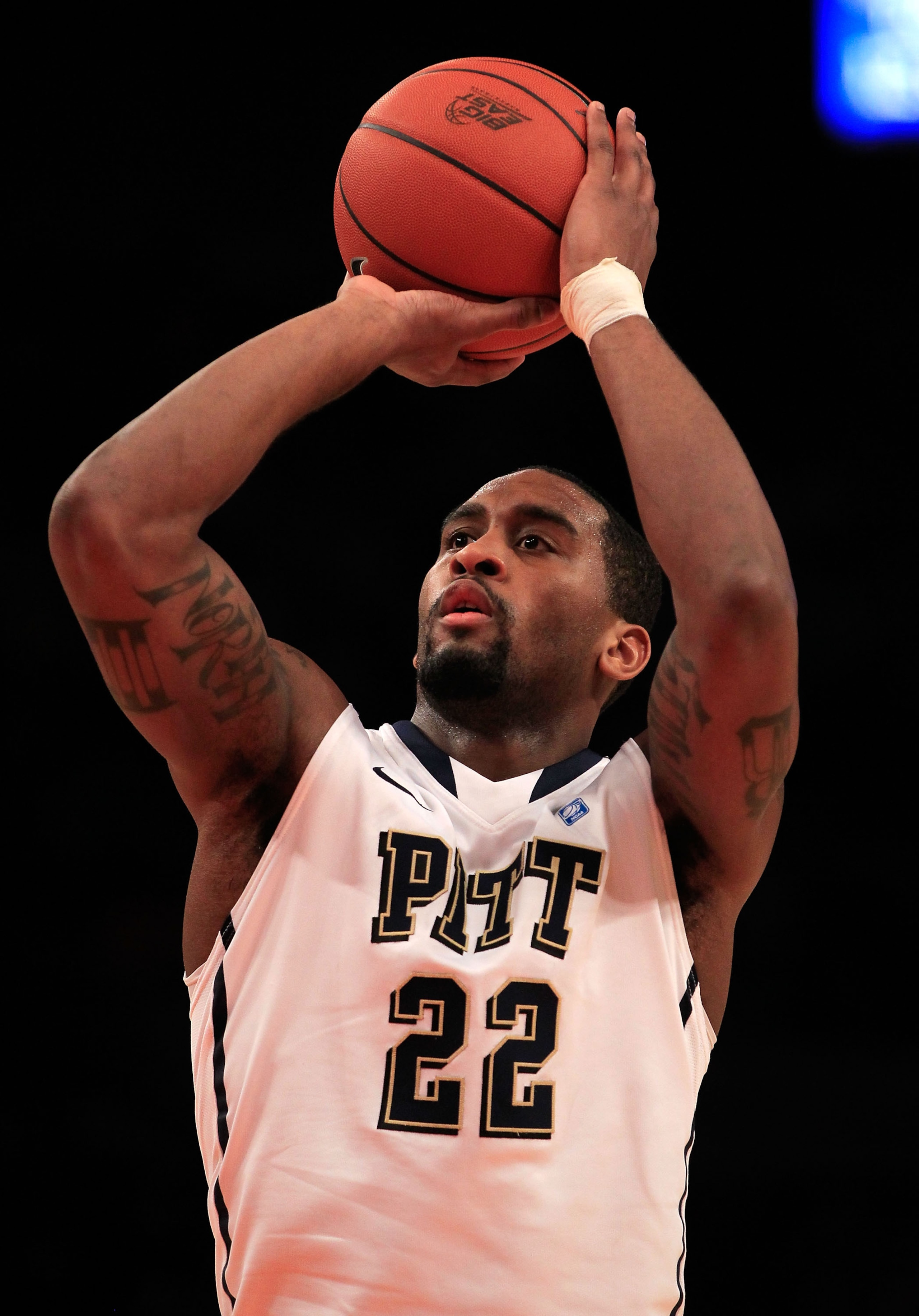
19. Brad Wanamaker (pictured), G, Pittsburgh. Compared to the other guards in the tournament, Wanamaker is somewhat unconventional.
He won't shoot the opposition lights out or make a bunch of pretty passes, but what he will do is play some of the best defense one will ever see. Don't let his 6'4", 218-pound frame fool you; Wanamaker is easily going to be the best athlete available in the NBA Draft.
He isn't as electrifying as Kemba Walker or Nolan Smith, but his athleticism and leadership will be attractive to any NBA scout.
20. Chris Wright, G, Georgetown. Many pegged the Hoyas as a team that could potentially make a run at the Final Four. Then the team's star guard,Wright, broke his hand and missed three games. He came back for the first NCAA tournament game against Virginia Commonwealth, but was highly ineffective (3-of-13 from the field) as Georgetown was blown out, 74-56.
Still, Wright proved to be a valuable leader in his four years with the Hoyas, and that will still make him a first-round pick, despite the better performances of his fellow point guards in the Sweet 16, Elite Eight, etc.
21. Perry Jones, F/C, Baylor. The 6'11", 235-pound freshman was considered a potential lottery pick throughout the season, then he was declared ineligible for accepting improper benefits.
With his future in question, Jones should take the 13.9 points and 7.2 rebounds he averaged per game this year and enter the draft.
Many more big men of equal or greater talent competed in the tournament, and if Jones wants a shot at the NBA, he needs to declare for the draft to show he isn't afraid of competing with that type of player on the professional level.
Picks 22-24
8 of 10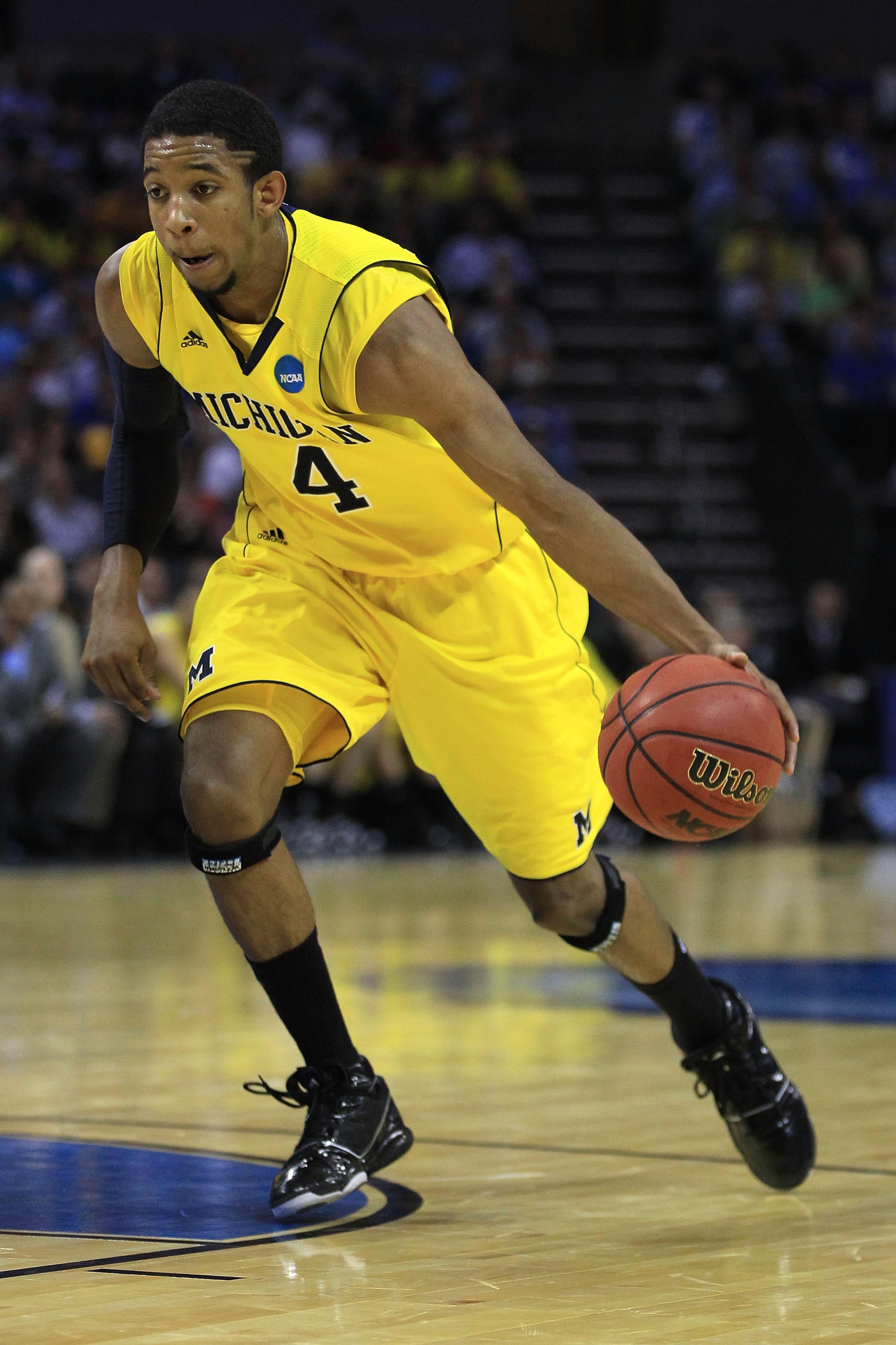
22. Scoop Jardine, G, Syracuse. Despite being upset by Marquette in the third round, Scoop Jardine established himself as an elite point guard both in the tournament and during the regular season.
He only scored a total of 15 points in the tournament, but also had 15 assists. Thus, while he may not have the shooting touch of the point guards we saw in the Sweet 16 and Elite Eight, Jardine still proved he can be a team player. His lack of offense hurts his overall draft fortunes, but he can still be effective as his ball-sharing abilities are hard to find.
23. Alex Tyus, F, Florida. Tyus is not the type of forward who will typically go out and get a double-double night after night.
Yet, in the Sweet 16 and Elite Eight, he was an absolute monster on the offensive and defensive ends. Over those two rounds, he averaged 16.5 points and 13.5 rebounds a game, including scoring 19 and rebounding 17 against a dangerous BYU squad.
In an instant, the senior from St. Louis went from being a mid-late second round pick/undrafted to being a late first-round pick. My only regret is we won't get to see him go up against the Morris twins in the Final Four.
24. Darius Morris, G, Michigan. Morris is only a sophomore, but his competitiveness against Duke in the third round was indicative of how dangerous a point guard he can be.
He had 16 points and six assists in that game, close to his season average of 15 and 5.9, and was a force on driving to the basket and drawing fouls. Morris' game reminded me a lot of Kemba Walker's, but his lack of an effective three-point shot and lanky 6'4", 190-pound frame, as well as his age, bring a lot of question marks to the draft table.
Picks 25-27
9 of 10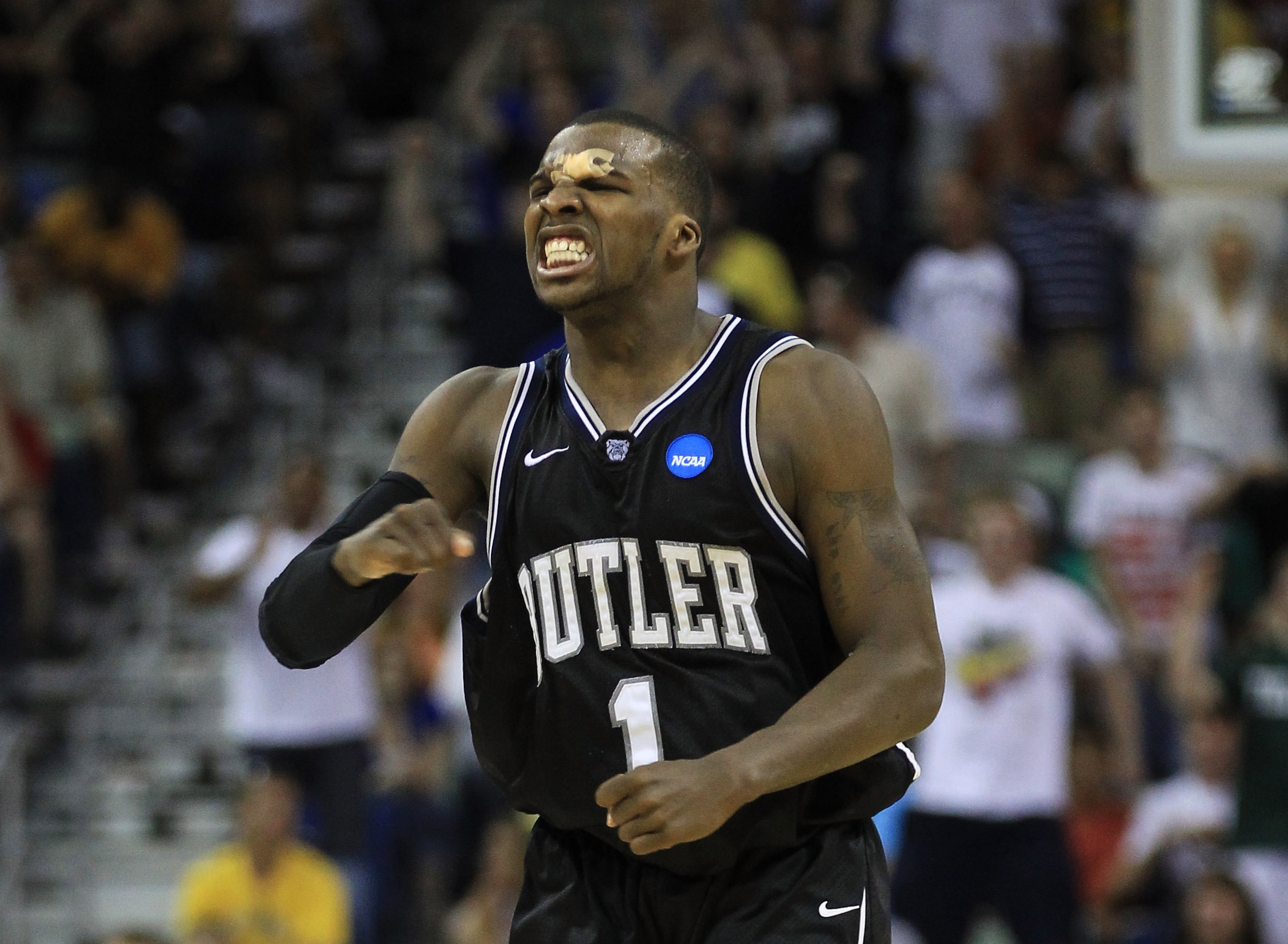
25. Shelvin Mack (pictured), G, Butler. If not Kemba Walker, the tournament MVP deserves to go to Mack.
He has averaged 21.2 points per game, including a 30-point effort in Butler's third round game against No. 1 Pittsburgh. Butler made seven 3-pointers in that game and another four in the Bulldogs' Elite Eight match against Florida, as the team made its second consecutive Final Four. Mack has proven over the past few games that he has what it takes to compete with the top guards and defenses in the later rounds of the tournament, and although he is mostly just a shooter, any team would be blessed to have him.
26. Josh Harrellson, C, Kentucky. John Calipari's 6'10", 275-pound big man only averaged about seven points and nine rebounds a game as a senior, but his performance in the Sweet 16 and Elite Eight made him someone worth watching when draft time rolls around.
He averaged 14.5 points and nine rebounds over those two games, as Kentucky shot and rebounded their way to their first Final Four since 1998. Harrellson is a lot like Tyler Zeller in that he rarely turns the ball over, but his questionable offense (despite strong showings in the Sweet 16 and Elite Eight) makes him a late-round pick.
Still, scouts should give him a second look.
27. Matt Howard, F, Butler. Even though is teammate Shelvin Mack has been the spark plug for Butler this tournament, Howard is the true leader of the Butler Bulldogs.
The senior was the hero of the Sweet 16 game against Wisconsin, scoring 20 points and pulling down 12 rebounds. He was 9-of-10 from the free-throw line that game, proving he is not afraid to take a few lumps under the basket.
On numbers alone, Howard is an average college player. Yet, with his performance over the past few rounds of the tournament, it will be difficult to overlook him when it's time to draft in June.
Picks 28-30
10 of 10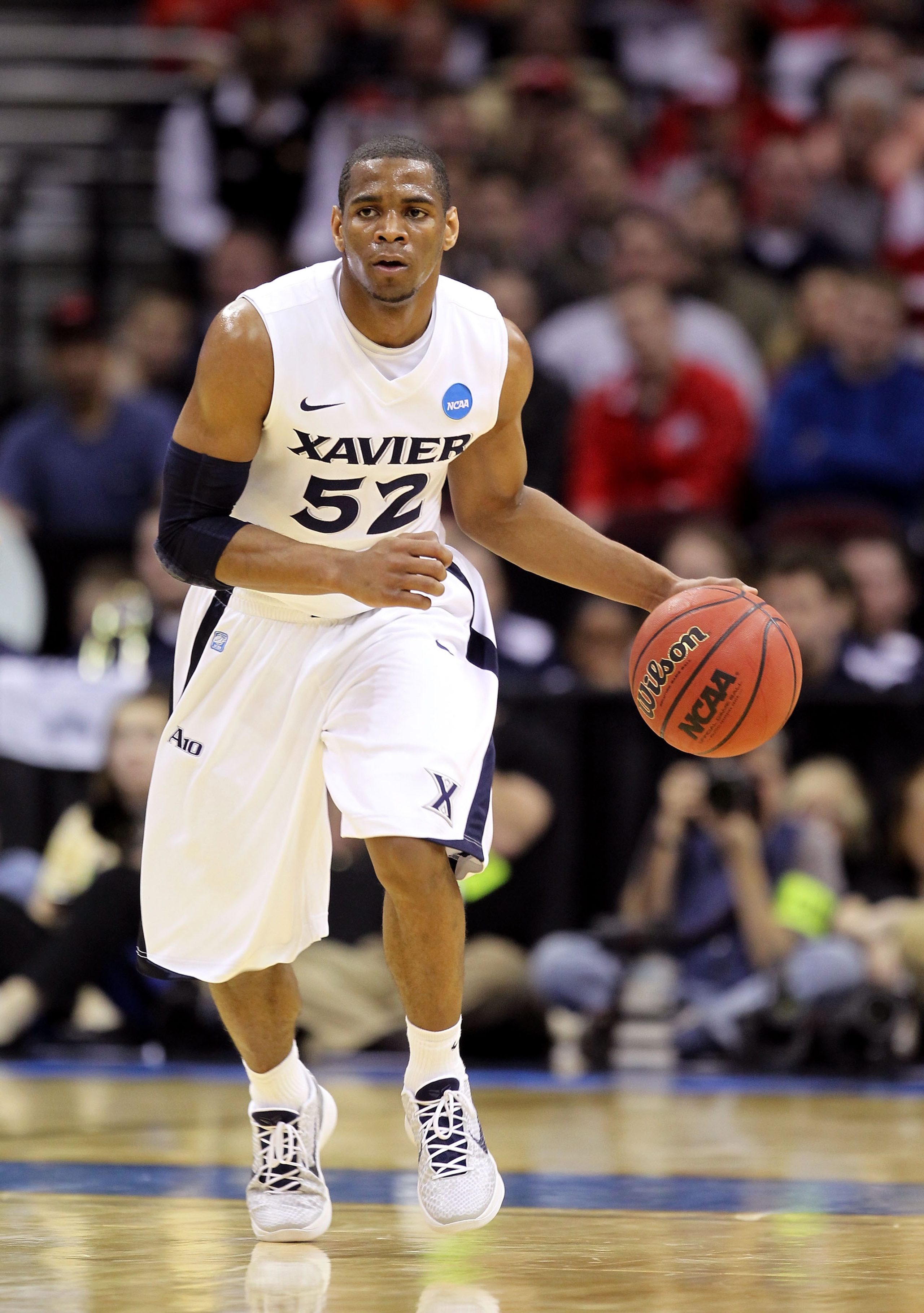
28. Isaiah Thomas, G, Washington. Despite being a diminutive 5'9" and 185 pounds, Thomas was an intriguing player to watch in the tournament.
He only averaged a modest 15.5 points over the Huskies' two games in the Big Dance, but also had 15 total assists. On top of that, he drives to the basket well and has a decent three-point shot.
He is only a junior, but could still be a good option for teams late in the first round. In terms of skill, think Kemba Walker, but more of a passer.
29. Gary McGhee, C, Pittsburgh. At 6'11" and 250 pounds, one would think Gary McGhee is a top big man.
In reality, he is quite the opposite as he only averaged seven points and just under eight rebounds a game.
McGhee had his big rebounding games, but not consistently. Given how the rest of the centers and big men have performed in the later rounds of the tournament, McGhee is now a late first-round pick for a team needing a shot blocker to come off the bench.
30. Tu Holloway, G, Xavier. This junior reminds me a lot of Chris Paul, but minus the powerful athleticism.
Holloway averaged close to 20 points, five rebounds and five assists a game this season, and was a great leader for the Musketeers on the hardwood. His team was eliminated by Marquette in the second round, so he didn't get much of a chance to showcase his talents, but believe me when I say that Holloway is an excellent athlete.
The only question mark is his skinny 6'0", 185-pound frame, which could be banged up easily when going against top NBA defenders. Still, with proper conditioning, Holloway would be great to have on any team.


.jpg?w=2560 "Chiefs, Steelers Eye WR Trades")