
NBA: Why the Threat of Contracting Teams Holds No Weight
 There are a few thoughts that scare me...
The biggest one is probably losing my wallet. I absolutely fear the thought... Having to call the credit card companies, get a new driver's license, reacquire important identification cards. Ugh.
And bedbugs? Fuhgeddaboudit. Getting those little suckers can be a traumatizing experience. Worse yet, it might cost you $1,200-$1,500 to get rid of them.
Merely visiting anywhere within the borough of the Bronx terrifies me, too. No offense, but I detest the elevated subway platforms.
TOP NEWS
J-Dub, Wallace May Miss Entire Season
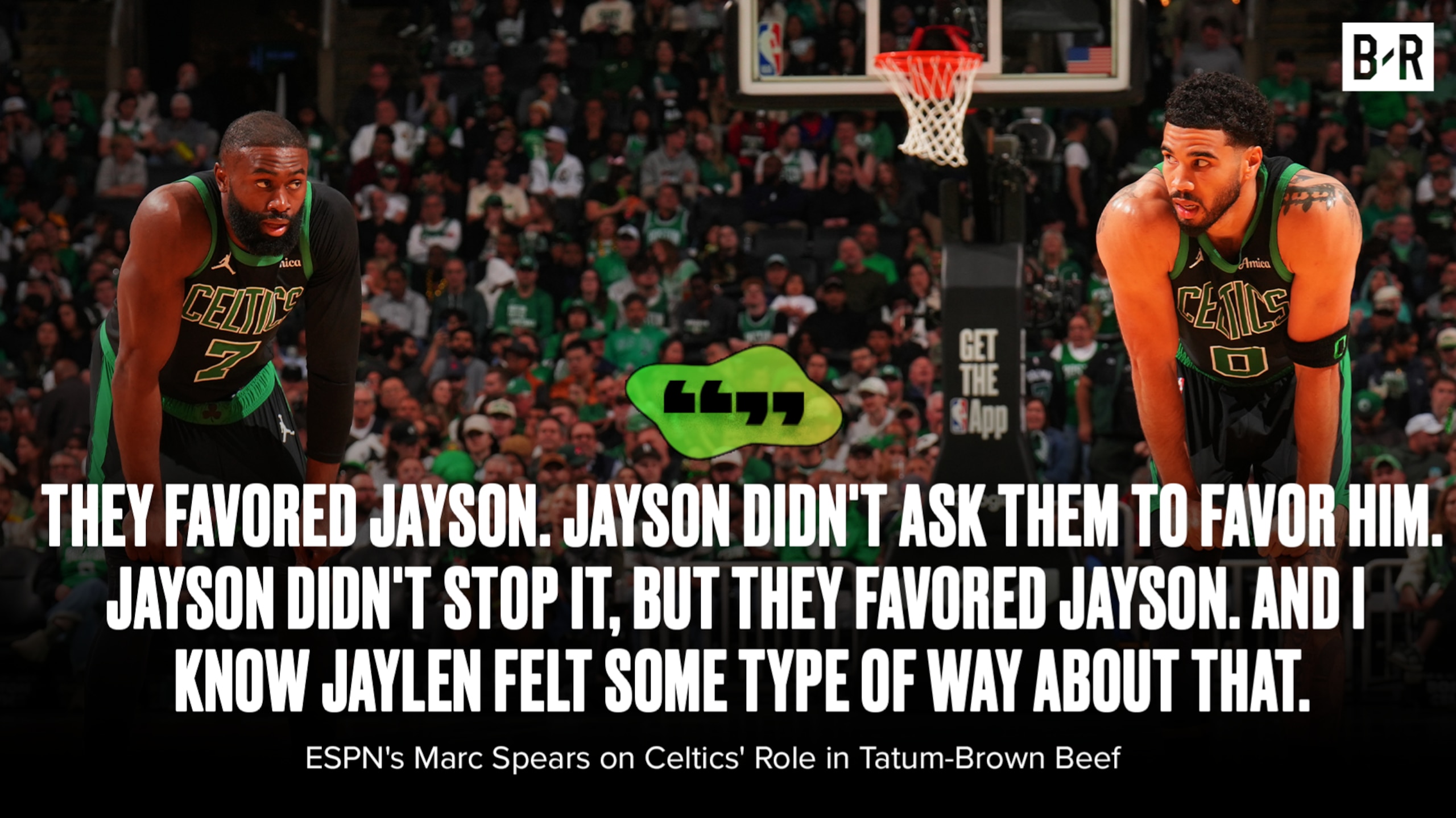
Celtics at Fault for JT-JB Beef? 🤔
Melo's Quote on Confidence 😎
I am also terrified of Isiah Thomas...and Lady Gaga.
But my fear of all of those pale in comparison to my biggest fear:
Losing the 2011-2012 NBA Season.
I fear losing it because LeBron promised to win seven championships and I want the opportunity to laugh at him any time he falls on his face attempting to do so. I fear losing it because Kobe actually has a chance to do just that, but not much time.
I also fear losing it because I would love to see Jason Kidd and Dirk Nowitzki win a ring for the Mavericks, and next season would probably be their last chance.
But enough about my fears. Let's talk about something that DOES NOT scare me.
David Stern's threat to contract teams.
By now, fans know the crux of the arguments being advanced by the NBA and its players' union. The league is claiming astronomical losses over the course of the past few years as a result of what it now sees as a "broken system."
Meanwhile, the union can't understand how a system that was fine in the not-so-distant past can now be deemed broken when most objective measures of league success suggest that the league and its owners are rolling in dough.
Privately, the union isn't willing to cave. Not yet and not while it believes that it can decertify and take a substantial amount of leverage away from the owners.
Billy Hunter, the executive director of the players union is also paying very close attention to what's going on with the NFL and its labor negotiations.
And right now, to him, it looks like the threat of decertifying has spooked the owners into regressing on some of their demands.
Meanwhile, David Stern knows that he can't stop the union from decertifying. So in an attempt to one-up the union and make them sweat a little, he and Adam Silver came up with this brilliant idea of threatening to contract teams if players weren't willing to give back some money.
On its face, the threat makes sense. The argument says that the league is losing in excess of $400M per year because player salaries are too high.
In fact, the average salary of the top ten highest paid players in the league for this season is about $19M. That's a lot.
So, if the union is going to threaten to play their trump card and decertify their union, the owners have to create some sort of leverage, right? They need their own trump card. And it looks like they've found one.
The players union can throw its weight around so long as New Orleans (for example) has an NBA franchise. What the players union has no control over, however, is whether that franchise will actually exist. David Stern realized this and has played his trump card.
He threatened contraction.
The only problem is that a threat only creates leverage when the receiving party actually believes that you'll make good.
And trust me, the union doesn't fully accept that the league's losses are as dramatic as its questionable accounting methods assert; and the union certainly doesn't believe that David Stern would resort to watching the league contract teams.
Say what you want about David Stern, but since succeeding Larry O'Brien as commissioner of the NBA in 1984, the league has thrived.
His legacy is filled with nothing but success, and with him, the NBA has done more winning than Charlie Sheen. Here's proof:
- As late as 1986, CBS was airing some NBA Playoff games on tape delay. In 2011, The NBA All-Star Game was televised in over 90 countries, and available on the Internet in many others.
- When David Stern began his stint as commissioner in 1984, the league had 23 teams. Since then, the league has introduced seven new franchises: Charlotte Hornets (1988), Miami Heat (1988), Minnesota Timberwolves (1989), Orlando Magic (1989), Toronto Raptors (1995), Vancouver Grizzlies (1995), and Charlotte Bobcats (2004).
- In 1992, FIBA allowed professional players to play in the Olympics, paving the way for NBA stars to take their talents to nations which otherwise would never have exposure to the game's top talents. Since then, NBA players have become global icons.
- Since tipping off its inaugural season in 1996, the WNBA is still afloat. And yes, that is an accomplishment.
- In 2005, the NBA launched its global outreach program, "NBA Cares," in an attempt to spread good will and a positive reputation for the league.
- In 2007, the NBA began "Europe Live," which features NBA teams playing exhibition games during their preseason against top European teams.
- BRI has increased in 25 of the 27 years since David Stern became the lead man for the NBA. (BRI stands for "Basketball Related Income" and is a term for the sum of all receipts for television, ticket, and merchandise revenue).
- NBA expansion into China, thus far, has been a resounding success.
- On March 4, 2011, The New Jersey Nets and Toronto Raptors played the first NBA regular season game outside of the United States in front of a sold-out O2 Arena in London.
All this to say: David Stern is a man about progress. His vision has been to expand the footprint of the National Basketball Association, both home and abroad, and his entire tenure is a testament to that vision.
Just about all of the decisions he's made have been with an eye toward attracting positive press to the league and expanding into new territories.
And there is the key phrase.
New territories.
So, if teams are in markets that can't support them, those teams are probably more likely to relocate than to cease operations.
St. Louis and Kansas City are new markets with potential. Seattle is a great NBA city and should have a team. And Vancouver apparently misses hosting the Grizzlies.
One might think it weird for a city that previously lost a team to gain a new one… But recall Minneapolis (Lakers, T-Wolves), New Orleans (Jazz, Hornets), and most recently, Charlotte (Hornets, Bobcats).
In some ways, it's crazy to think that the league and the union can't come to an agreement in order to avoid a work stoppage.
But It's probably crazier to believe that a man with 25 years of precedent suggesting an intention to expand the league and its footprint would allow regression.
So believe the threats of contraction all you want. I won't. Neither will those who know a thing or two about David Stern.
.jpg?w=2560 "Chiefs, Steelers Eye WR Trades")

.jpg?w=2560 "WWE Raw Live Grades 🔠")
.jpg?w=2560 "Multiple NFL Trades Predicted")


