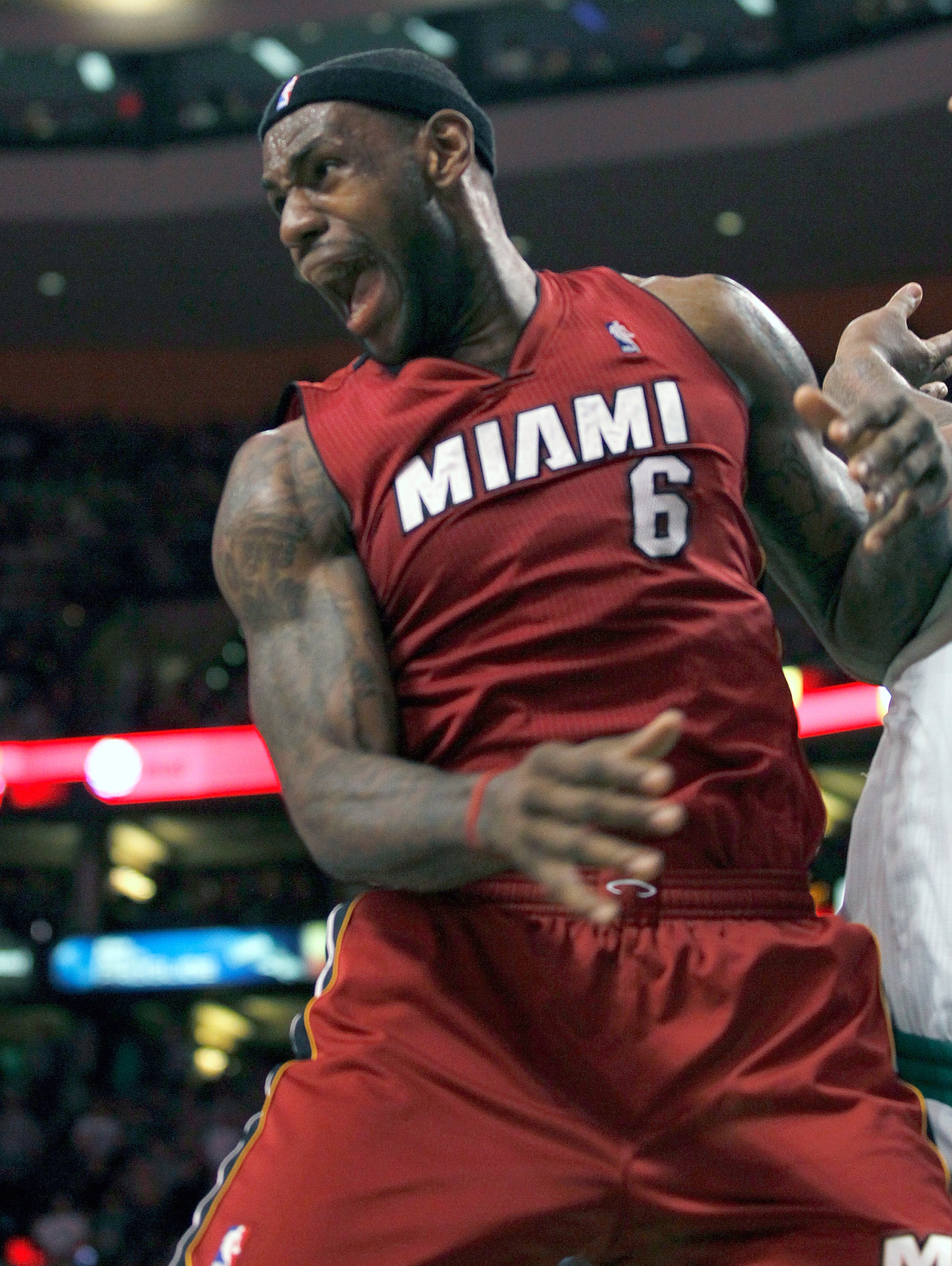

Miami Heat vs. Boston Celtics: Breaking Down the Player Matchups Post-Perkins
The Miami Heat and Boston Celtics have met three times this season and in each instance Miami's trio of superstars walked off the court in the defeat.
Oct. 26: Boston 88 vs. Miami 80
Nov. 11: Boston 112 at Miami 107
Feb. 13: Boston 85 vs. Miami 82
But both teams have made some big moves since the last time they faced off. The NBA trading deadline is over and players who have been bought out of their contracts have already signed on with new teams.
So how do the Heat and Celtics match up now with just one game (April 10th) left between them? Here's a player-by-player breakdown of each matchup and who has the advantage.
PG: Rajon Rondo vs. Mike Bibby
1 of 15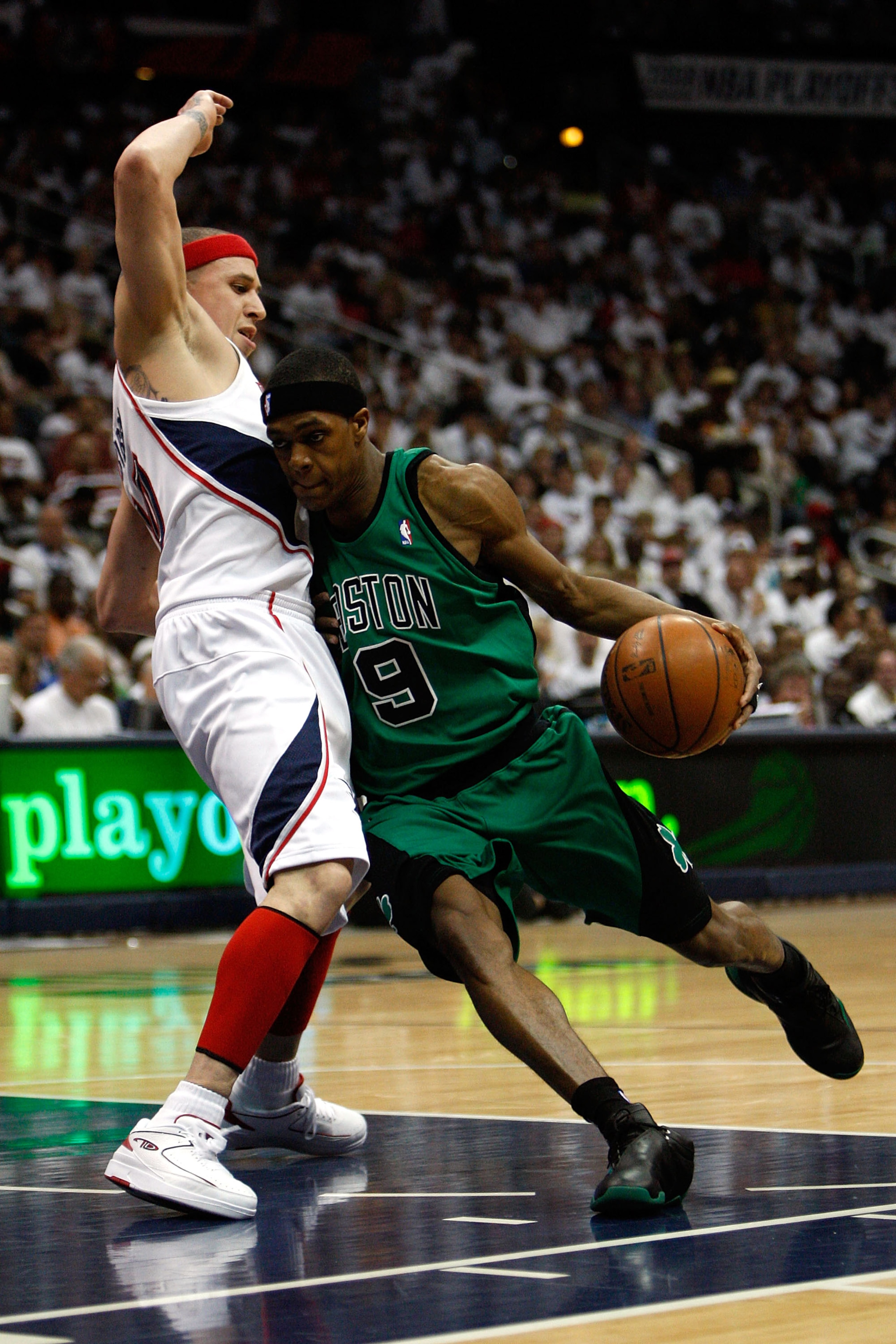
It doesn't really matter whether Bibby ends up starting for the Heat or if he comes off the bench for Mario Chalmers. Rondo will embarrass either one.
The fifth-year pro has evolved into one of the best point guards in the NBA. Rondo, 25, is an exceptional athlete with elite court vision and terrific instincts. He's not much of a jump shooter, but there's hardly anybody better at getting at the point. Rondo is also an excellent defender and is regularly among the league leaders in steals.
Bibby has experience on his side and is a smart player with the ability to hit shots from anywhere on the court. But he's never been much of a defender, and at 32 years old he stands zero chance of staying in front of Rondo.
Bibby hasn't faced Rondo this season (due to injuries to Rondo), yet Boston won both games anyway. The Heat signed Bibby last week to give them a legitimate ballhandler, but he can't help them slow down Rondo.
Rondo: 37.9 mpg, 10.9 ppg, 4.4 rpg, 12.2 apg, 2.4 spg, 50.6 field-goal percentage, 32.3 three-point percentage
Bibby: 29.2 mpg, 8.9 ppg, 2.5 rpg, 3.6 apg, 0.7 spg, 42.6 field-goal percentage, 42.7 three-point percentage
EDGE: Rondo
SG: Ray Allen vs. Dwyane Wade
2 of 15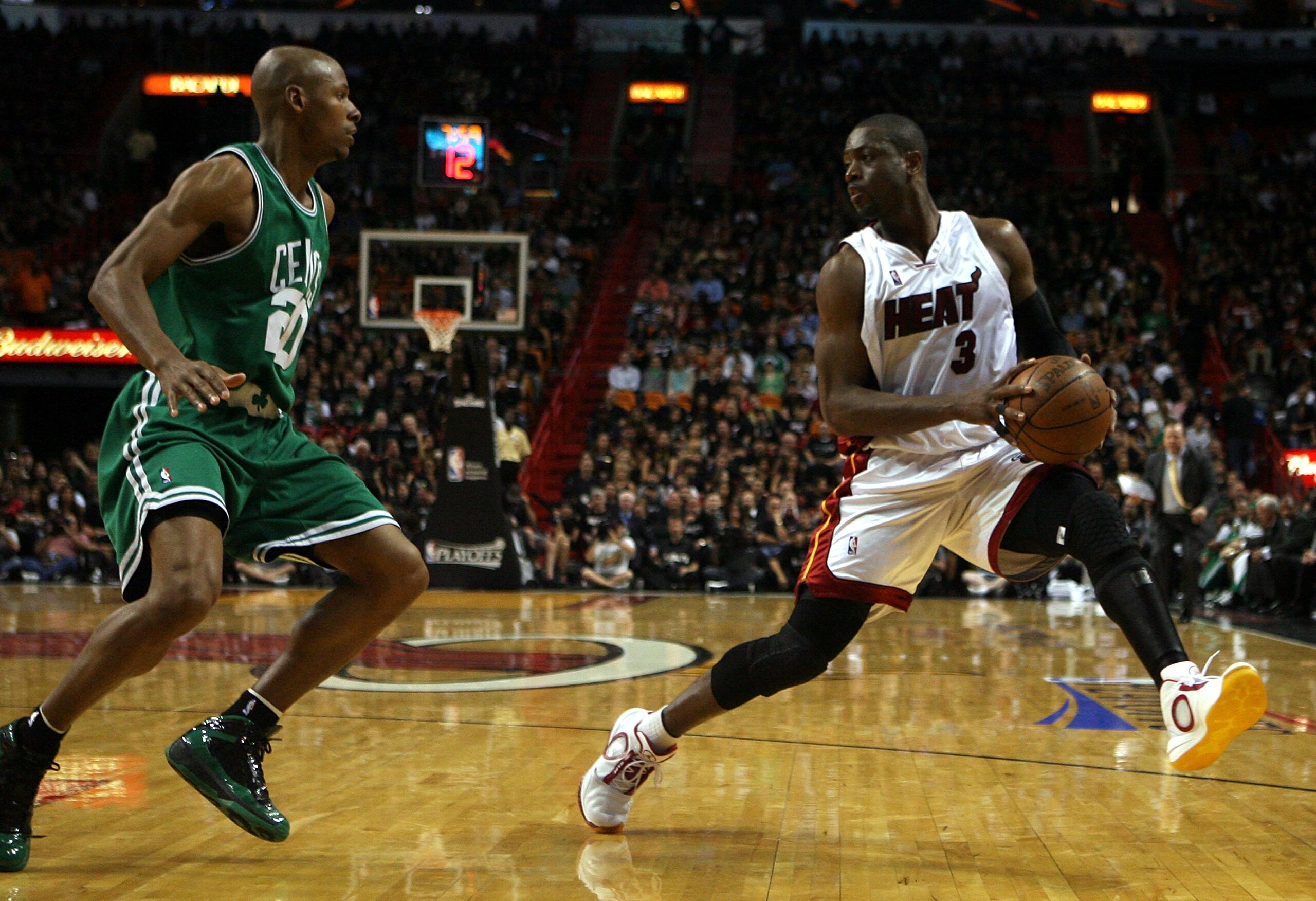
If Allen and Wade could combine their talents to make a single player, the ensuing freak of nature would be the best basketball player the world has ever seen. But even individually these two shooting guards are pretty good.
Allen, 35, is probably the best shooter in the history of the NBA and is lethal from the corner. Even after 14 NBA seasons, his motor never seems to stop and he's smart enough to create separation between him and his defender. He's a good ballhandler and a decent, but undersized, defender, but he's primarily a catch-and-shoot player at this point.
Wade, 29, is about as complete of an offensive player as you could ask for. The one weakness in his game, outside shooting, just happens to be Allen's greatest strength. But Wade's gotten by just fine without a three-point stroke, using his combination of strength and athleticism to get to the basket at will. He's also a phenomenal defender and a tireless competitor, which should make it difficult for Allen to get his shots.
Allen: 36.2 mpg, 17.6 ppg, 3.5 rpg, 2.8 apg, 0.95 spg, 50.5 field-goal percentage, 46.5 three-point percentage
Wade: 37.1 mpg, 25.5 ppg, 6.8 rpg, 4.3 apg, 1.41 spg, 50.0 field-goal percentage, 31.2 three-point percentage
EDGE: Wade
SF: Paul Pierce vs. LeBron James
3 of 15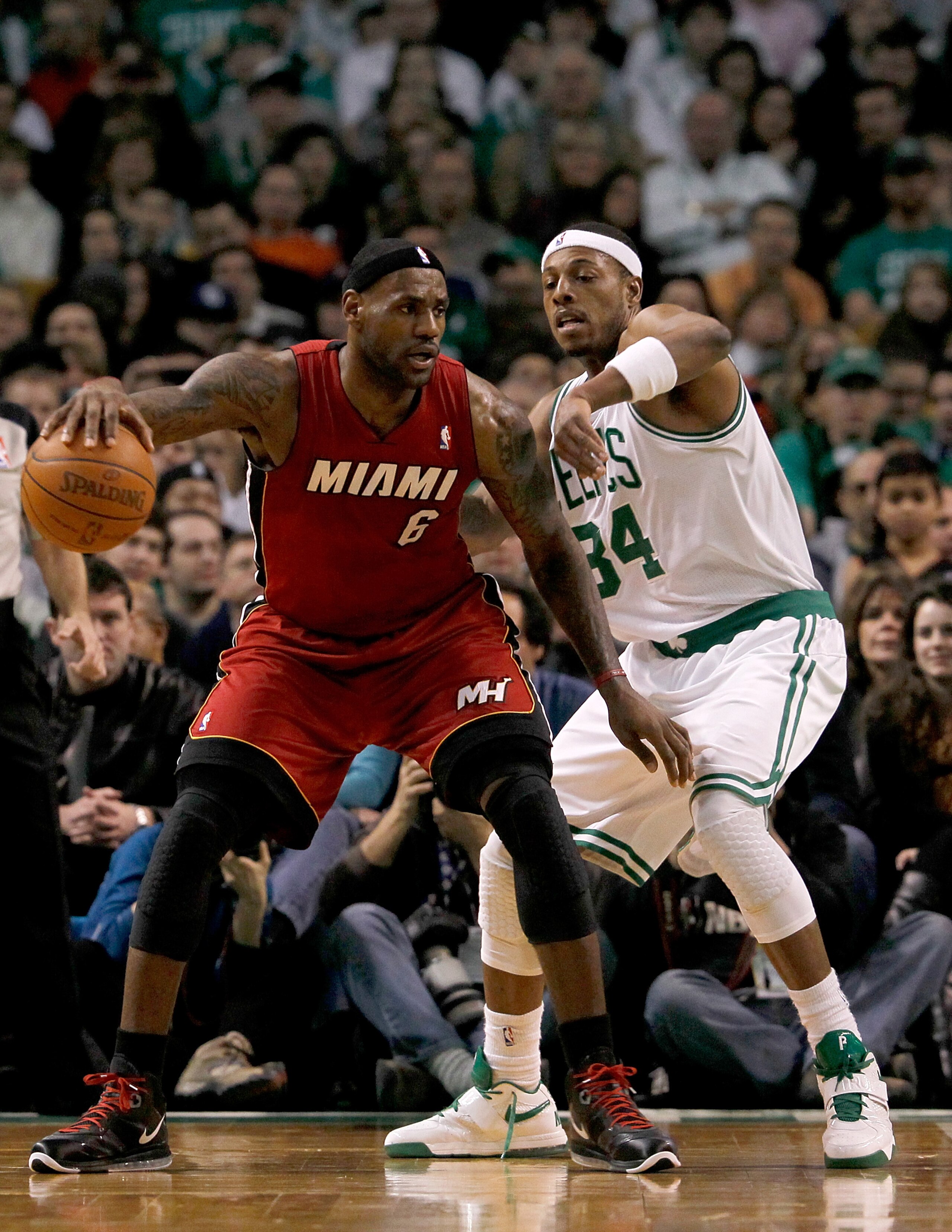
There's great, and then there's transcendent. Even though both of these players will end up in the Hall of Fame, LeBron James is simply on another level.
The two-time defending MVP is one of the best athletes to ever step onto the basketball court. He's faster and stronger than anyone at his position, and he's more than serviceable at three other positions. James, 26, might be the best passer in the league and he's obviously a terrific defender as well. His mid-range game could be better, but until someone figures out how to stop a human freight train, the lack of a consistent jump shot shouldn't really matter.
Pierce, 33, doesn't have the athleticism anymore to blow by defenders. But the 12-year pro has picked up a few other offensive tricks and is today one of the most complete scorers in the league. Pierce uses an incredible arsenal of body fakes to get his shot and is one of the best three-point shooters in the NBA. He's a capable ballhandler and a strong defender when he wants to be, but he's at his best with the ball in his hands and the game on the line.
Pierce: 34.9 mpg, 19.1 ppg, 5.2 rpg, 3.2 apg, 1.05 spg, 50.1 field-goal percentage, 38.0 three-point percentage
James: 38.3 mpg, 26.3 ppg, 7.5 rpg, 7.1 apg, 1.52 spg, 49.2 field-goal percentage, 33.5 three-point percentage
EDGE: James

PF: Kevin Garnett vs. Chris Bosh
4 of 15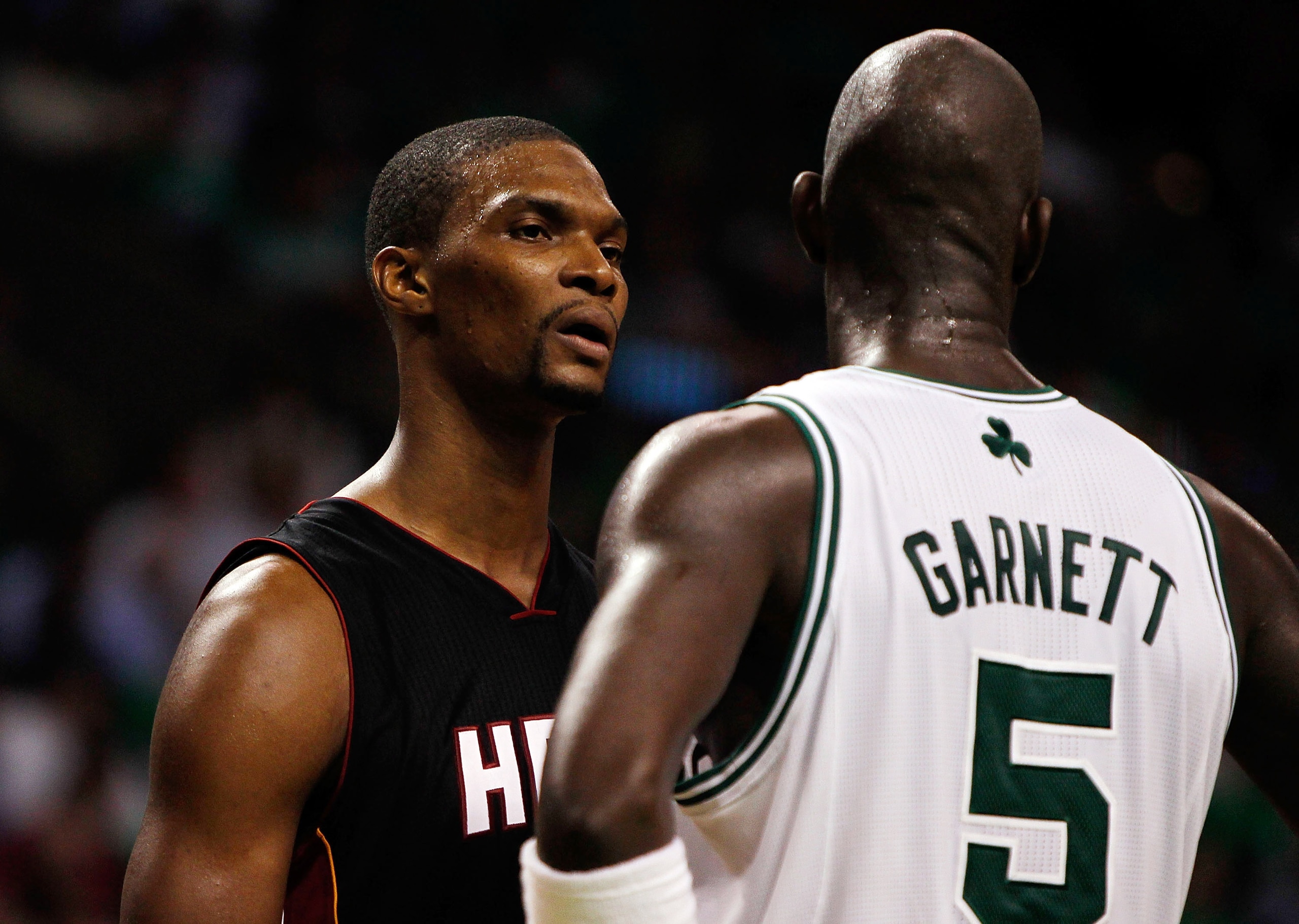
Garnett, 34, is best known as a defensive player and his skills there are not to be overlooked. He's got great court presence and elite shot-blocking ability. But Garnett is dangerous on the offensive side of the ball as well, with a polished mid-range game and above-average passing instincts. He's still good enough to beat his man one-on-one, but the 6'11" Garnett does most of his damage stretching the defense and hitting open shots.
Bosh, 26, is the best scoring big man in the NBA not named Dirk Nowitzki or Amar'e Stoudemire. He can beat you in the post, he can beat you between the lines and he can beat you deep. His length makes him a strong rebounder, but curiously enough he isn't a particularly strong defender.
Bosh is the better player, but unfortunately he's the type of player that needs to have the ball in his hands to really be able to contribute. There are only so many shots to go around with Wade and James on the same, so the advantage here has to go to Garnett, who could take zero shots and still help his team win.
Garnett: 31.7 mpg, 15.2 ppg, 9.3 rpg, 2.5 apg, 1.49 spg, 52.7 field-goal percentage, 0.0 three-point percentage
Bosh: 36.1 mpg, 18.2 ppg, 8.2 rpg, 1.8 apg, 0.86 spg, 48.5 field-goal percentage, 27.3 three-point percentage
EDGE: Garnett
C: Shaquille O'Neal vs. Zydrunas Ilgauskas
5 of 15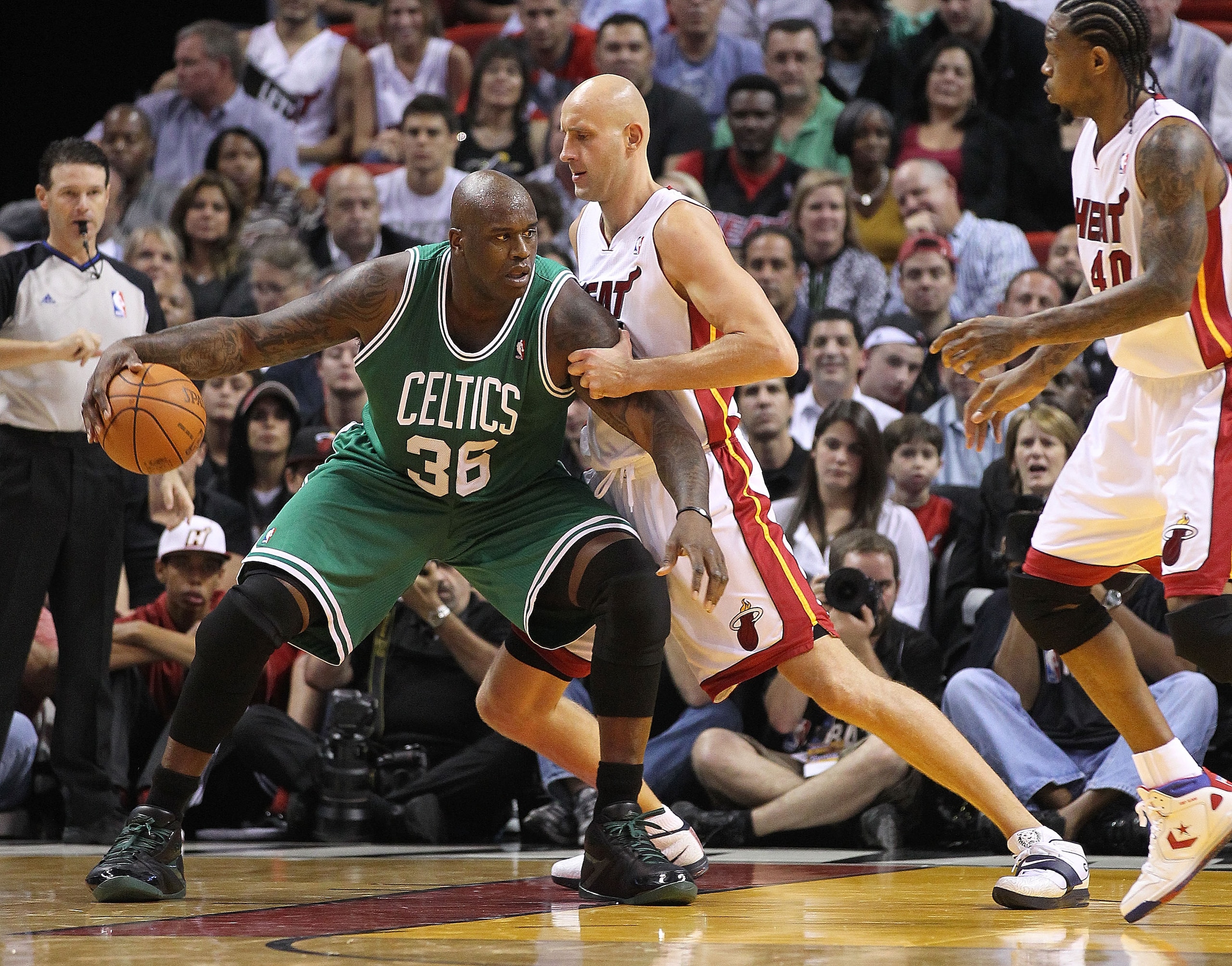
The two former teammates in Cleveland are now doing their dirty work in new uniforms, albeit in limited minutes.
Ilgauskas, 35, has made a living with a sweet shooting stroke and range out to almost the three-point line. He's not quick enough to create his own shot, or to even run up and down the court, but if left open he's more than capable of knocking down the jump shot. He's not a great defender, but at 7'3" he takes up enough space to challenge shots anyway.
O'Neal, 38, is the oldest player in the NBA with the expected lack of quickness and lateral movement. But Shaq's game has never relied on his ability to outrun his opponent. There's still only a handful of guys who can muscle up to him in the post, and none of them play for the Heat. His defense is lackluster at times and he won't win any agility or conditioning drills, but Shaq is still good enough to put up a double-double on any given night.
O'Neal: 20.7 mpg, 9.3 ppg, 4.9 rpg, 1.17 bpg, 66.2 field-goal percentage
Ilgauskas: 16.8 mpg, 5.2 ppg, 4.4 rpg, 0.95 bpg, 51.5 field-goal percentage.
EDGE: O'Neal
Energy Guard: Delonte West vs. Mike Miller
6 of 15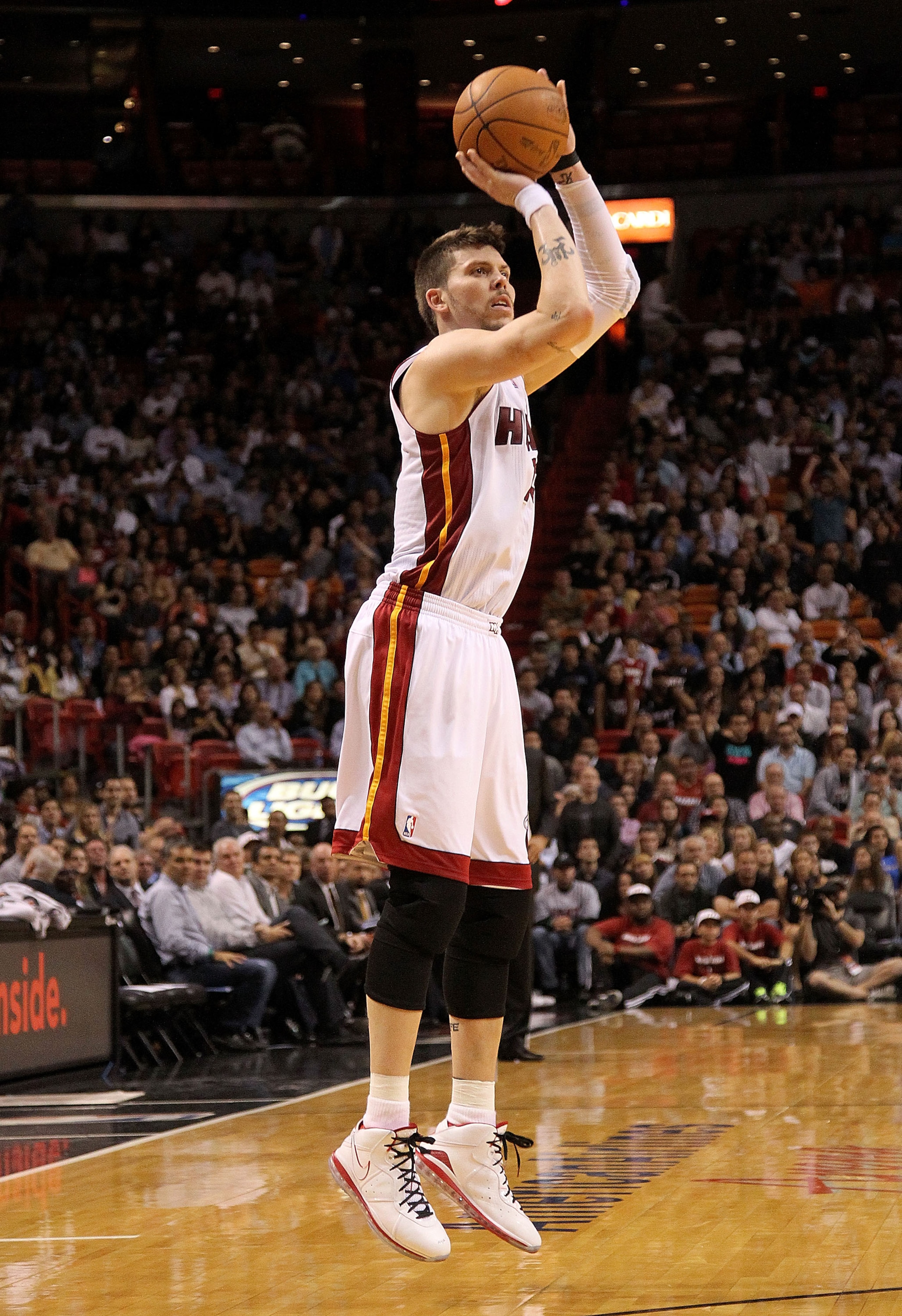
Neither Miller nor West have had quite the seasons they expected because of injuries, but both should be healthy come playoff time and are key bench players for their respective teams.
Miller, 31, took a discount to join the Heat in the offseason to be their sixth man and three-point specialist. Shooting is certainly something Miller can do very well, but he's a pretty decent ballhandler too, with the ability to play at the point if needed. He's not much of a defender or a distributor, but then again he's never been asked to be.
West, 27, is on his second stint with the Celtics, and he was brought back to bring some energy off the bench. He's capable of doing just that, with a solid skill set that lets him do a lot of different things on the basketball court. He's a good shooter, a good defender, a good ballhandler and a good distributor. But there's not a single thing that he does exceptionally well so his main value to Boston is to give the starters a breather.
West: 17.9 mpg, 6.6 ppg, 1.9 rpg, 2.3 apg, 0.88 spg, 44.7 field-goal percentage, 33.3 three-point percentage
Miller: 20.3 mpg, 6.3 ppg, 5.0 rpg, 1.1 apg, 0.36 spg, 42.6 field-goal percentage, 41.9 three-point percentage
EDGE: Miller
Swingman: Jeff Green vs. James Jones
7 of 15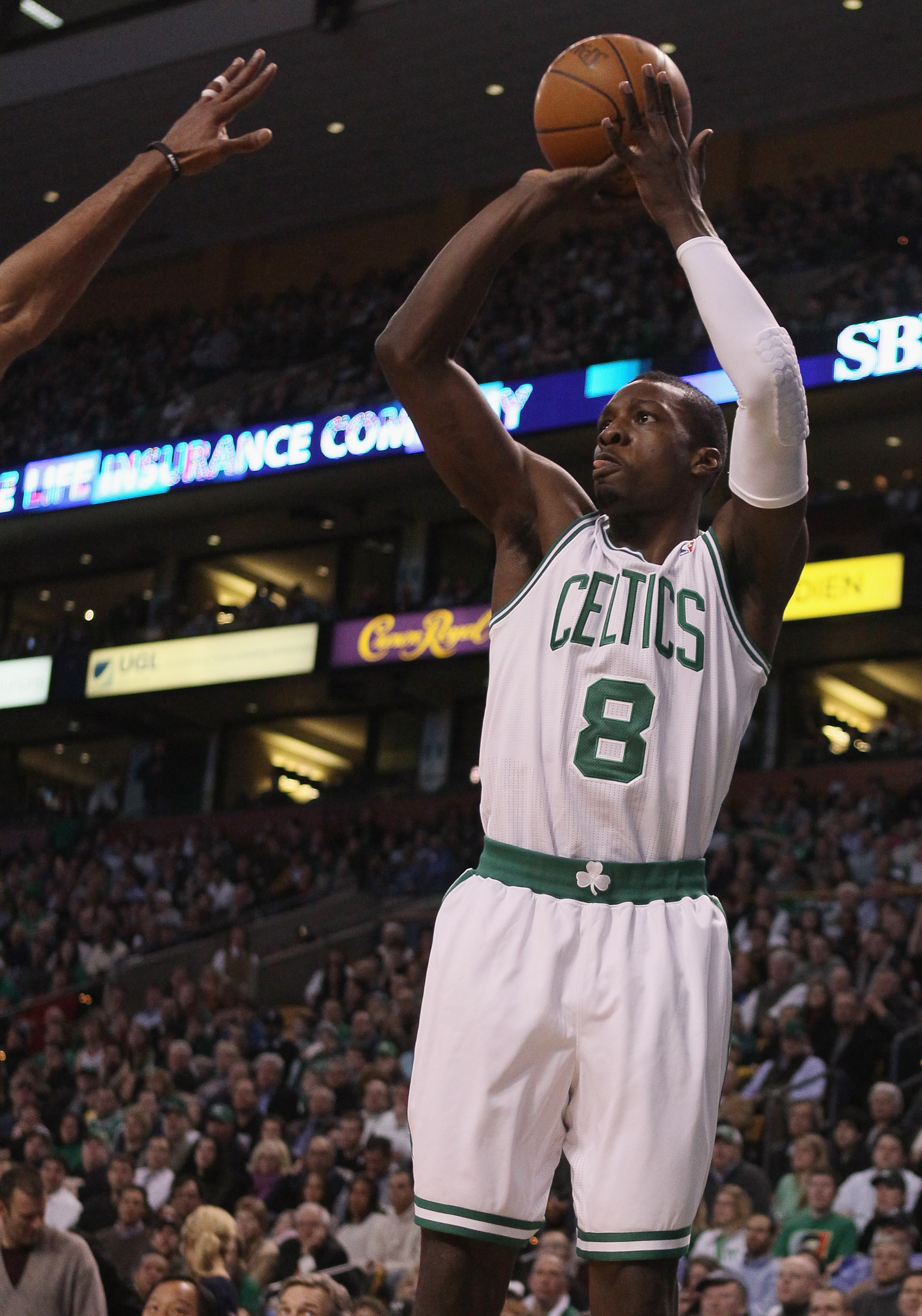
Green, 24, is a jack-of-all-trades. His size (6'9") lets him play power forward where he can use his speed to blow by defenders. His athleticism lets him play small forward where he can shoot over opponents. He's even a strong enough shooter to get some minutes at shooting guard. Green's also a good enough defender that he will get a chance to defend LeBron when Pierce needs a breather. His game doesn't really have any weaknesses and he's only getting better.
Jones, 30, is a big-time shooter who spends most of his minutes hovering around the arc. He doesn't do much else of value on the court, but his speed and length allows him to stay with most forwards.
Jones is exclusively a role player, while Green is basically a starter coming off the bench. The Heat don't have an answer for him, unless they want to play LeBron 48 minutes a game (which they might).
Green: 35.8 mpg, 14.8 ppg, 5.3 rpg, 1.7 apg, 0.8 spg, 44.1 field-goal percentage, 29.9 three-point percentage
Jones: 19.3 mpg, 6.0 ppg, 2.0 rpg, 0.5 apg, 0.4 spg, 41.0 field-goal percentage, 41.0 three-point percentage
EDGE: Green
Energy Forward: Glen Davis vs. Juwan Howard
8 of 15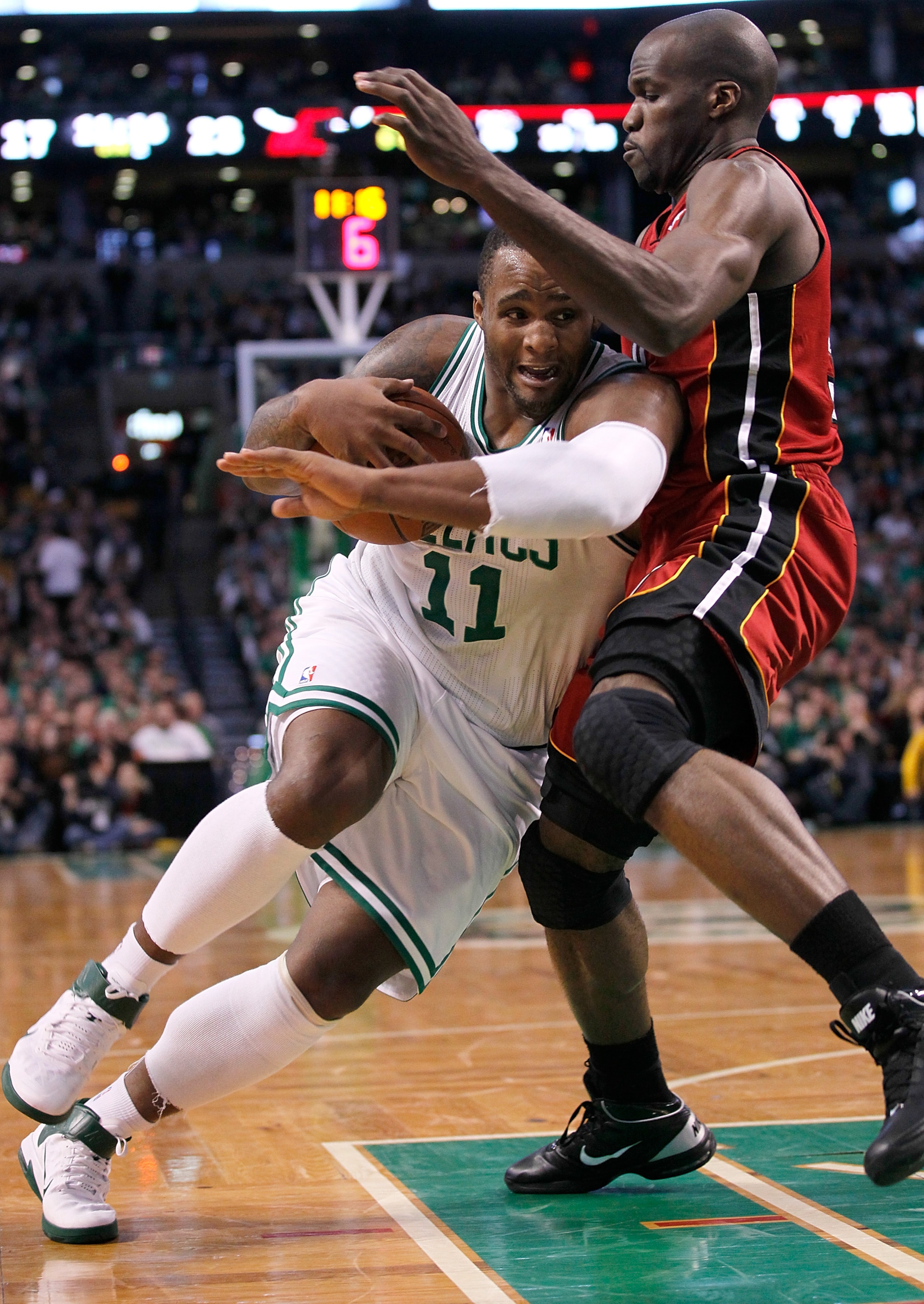
It's always fun watching a veteran go against a young player that is a mirror image of what he used to be. It's even more fun for the young player, because the veteran simply can't defend him anymore.
Howard, 38, was once a member of Michigan's Fab Five and one of the best all-around scorers in the NBA in the late 1990s. He's lost a step or 10 and his offensive game today relies on overpowering defenders with his back to the basket. Howard's just a decent rebounder and defender without much else to contribute except his 6'9" frame.
Davis, 25, was a leading candidate for NBA Sixth Man of the Year before suffering a knee injury last week. But odds are he's more worried about adding a different trophy to his mantelpiece. Davis has been the first forward off the bench for the Celtics all season, and for good reason. He consistently knocks down jump shots and has an impressive arsenal of post moves. He's surprisingly agile for a man of his size and that helps make him a good defender who is among the league leaders in charges taken. Davis has next to no vertical, so he's a poor rebounder for his size, but there isn't anybody in the NBA at the forward spot who can actually push him around.
Davis: 29.4 mpg, 11.6 ppg, 5.3 rpg, 1.2 apg, 0.97 spg, 44.8 field-goal percentage
Howard: 10.5 mpg, 2.1 ppg, 2.2 rpg, 0.4 apg, 0.21 spg, 40.0 field-goal percentage
EDGE: Davis
Back-Up Big: Nenad Krstic vs. Joel Anthony
9 of 15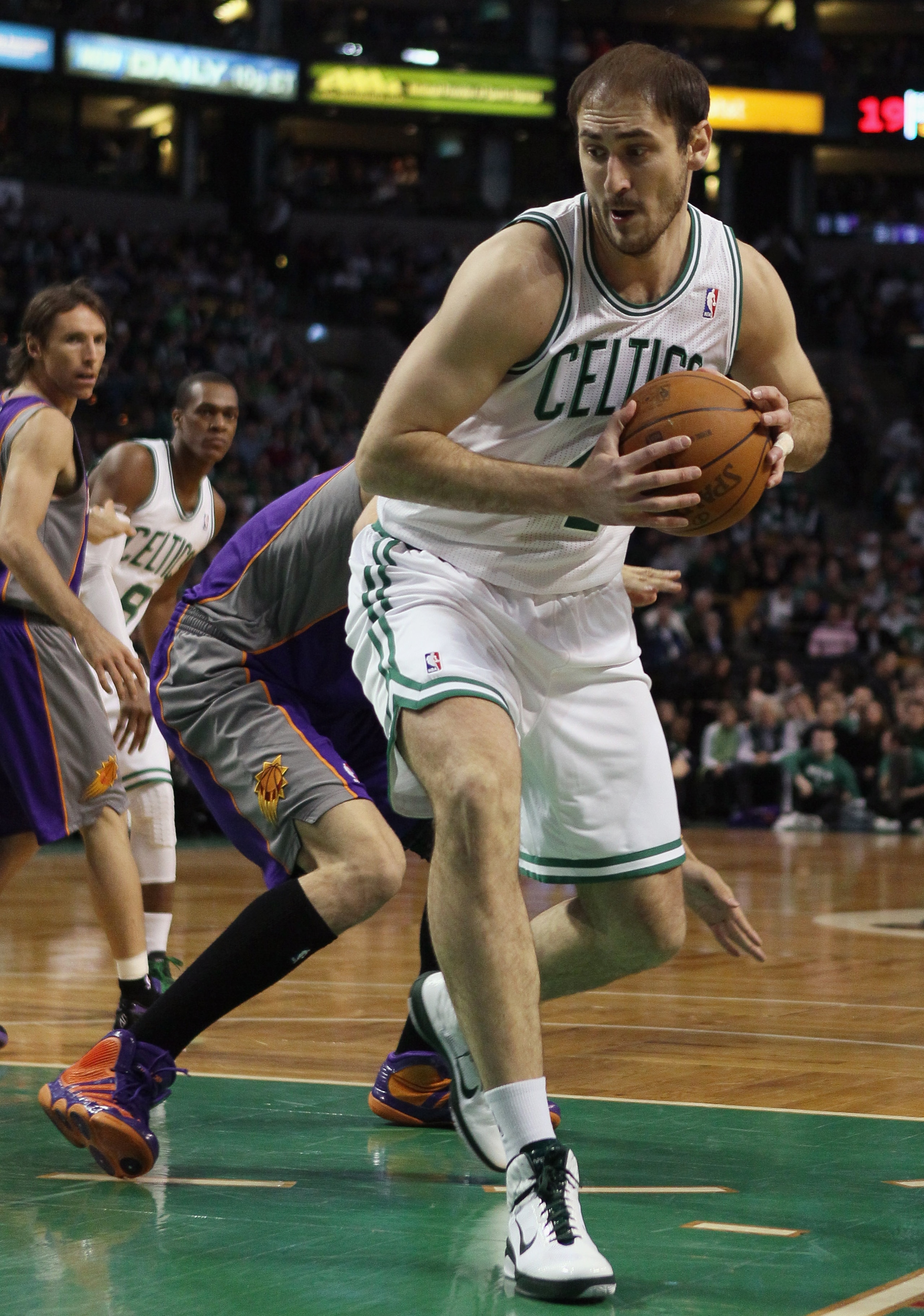
There's raw offensively, there's anemic offensively and then there's Joel Anthony offensively. The 28-year-old center for the Heat might as well be trying to score on a 20-foot hoop. His one redeeming quality is that he's a good enough shot blocker that he's generally considered a stable defensive player.
Krstic, 27, however is quite gifted offensively, with a gentle touch around the basket and a feel for the ball. He can hit some short jump shots, but he's at his best backing down his defender in the post. Unlike Anthony, Krstic is not a particularly strong defender and can get intimidated by more aggressive players.
These two big men are polar opposites of each other, but Krstic at least belongs in the NBA. Anthony is only making an NBA salary because the Heat were so desperate for size.
Krstic: 21.9 mpg, 7.9 ppg, 4.5 rpg, 0.4 bpg, 49.7 field-goal percentage
Anthony: 20.1 mpg, 1.9 ppg, 3.5 rpg, 1.39 bpg, 51.5 field-goal percentage
EDGE: Krstic
Back-Up Point: Carlos Arroyo vs. Mario Chalmers
10 of 15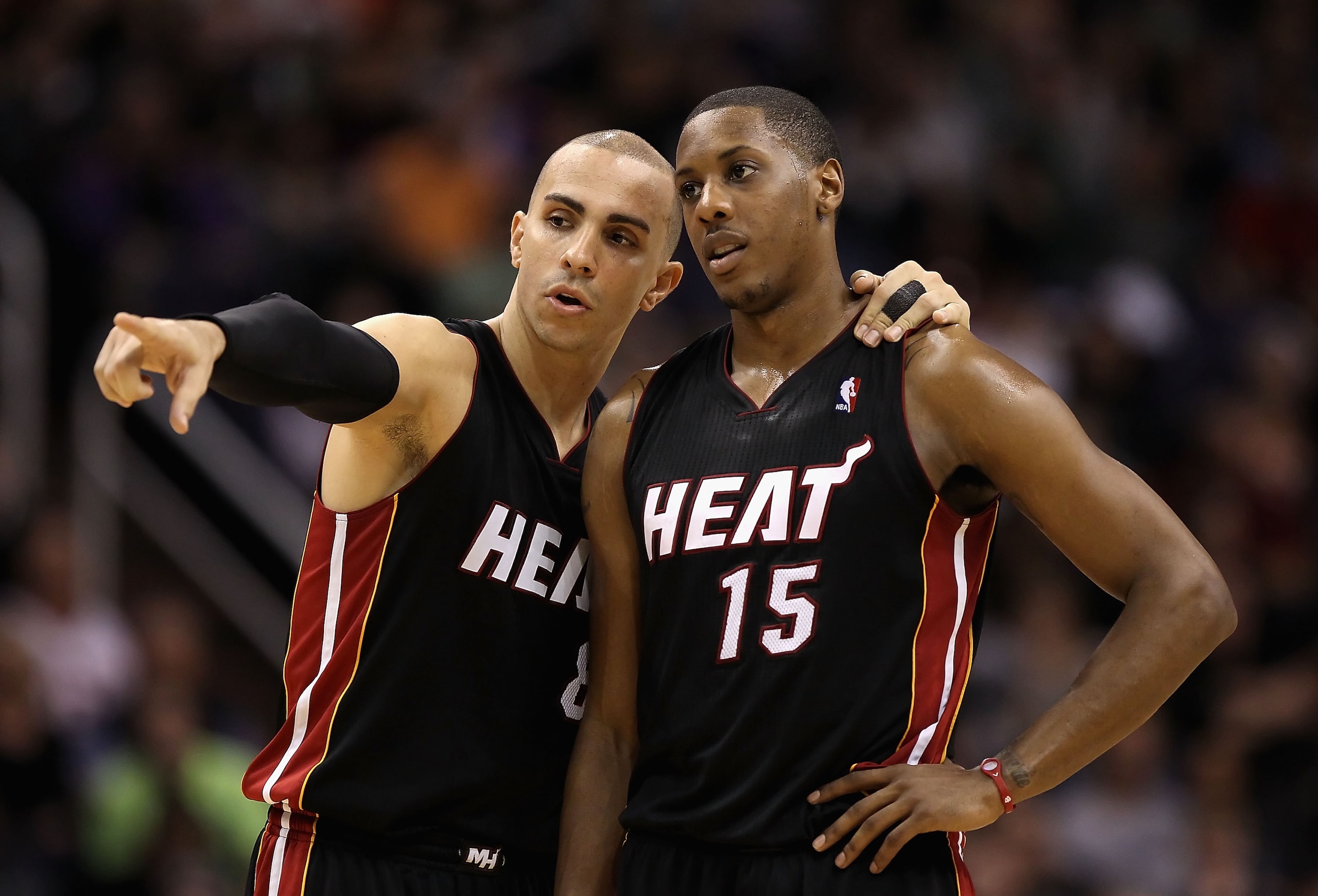
One team's trash is another team's treasure. The Heat parted ways with Arroyo (who started 42 games for the Heat) to make room for Bibby and the Celtics, desperate to add depth at point guard, wasted no time in signing him.
Arroyo, 31, has bounced around the league for a few years and spent all of 2009 out of the NBA. But when he has gotten playing time he's been reasonably productive. He's a good ballhandler with a strong mid-range game. He's not known as much of a defender or an outside shooter, but he's having a career year from beyond the arc and is steady enough to handle point duties for the second unit.
Chalmers, 24, is in a unique position playing point guard for a team that doesn't run its offense through the point guard (and for good reason). He's a streaky shooter and a decent passer, but is otherwise still raw. But what Chalmers lacks in playmaking ability, he makes up for on the defensive end. There's a reason the Heat held on to him when they retooled their team.
Arroyo: 20.3 mpg, 5.6 ppg, 1.7 rpg, 2.0 apg, 0.3 spg, 45.8 field-goal percentage, 43.8 three-point percentage
Chalmers: 22.6 mpg, 6.7 ppg, 2.2 rpg, 2.3 apg, 1.09 spg, 40.4 field-goal percentage, 35.7 three-point percentage
EDGE: Chalmers
Injury Comeback: Jermaine O'Neal vs. Udonis Haslem
11 of 15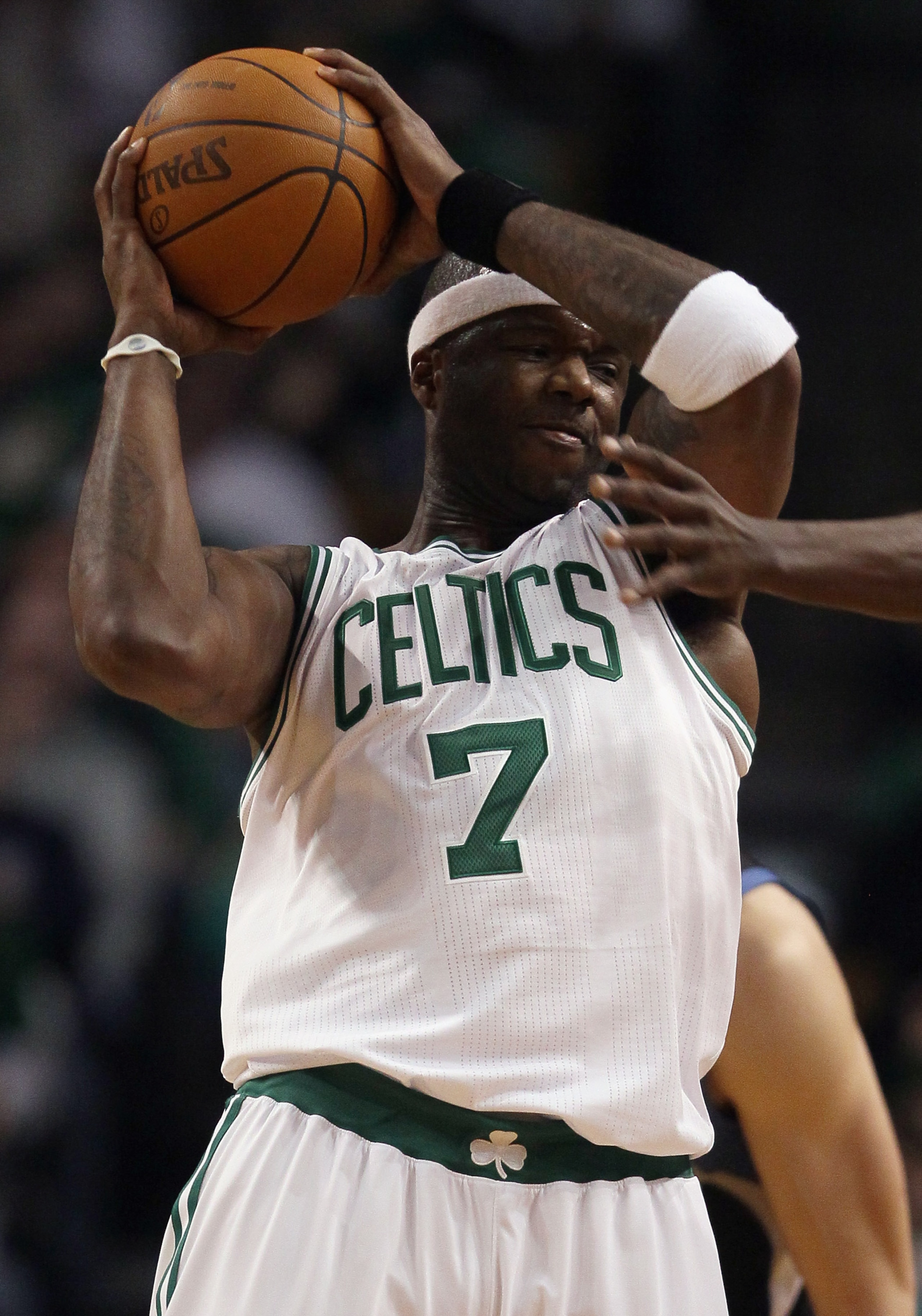
O'Neal was supposed to be a big part of the Celtics rotation as a scoring big man who could also rebound and defend. Ditto for Haslem. But injuries have kept both players on the bench for the majority of the season and there's no telling whether either will be able to contribute any significant minutes the rest of the way.
O'Neal, 32, was an unbelievable player not too long ago. He could beat his man off the dribble, back him down in the post, or just simply shoot over him. For nearly a decade he was one of the league's best shot blockers and an explosive scorer. But that explosiveness is gone now and O'Neal's offensive game has regressed to a crappy jump shot with little, if any, hustle.
Haslem, 30, has worked hard to develop into a serviceable NBA player and was a big part of Miami's championship run in 2006. He's a very strong rebounder and a smart defender. His offensive game is limited, but he tends to position himself in the right place and gets a lot of his points close to the basket. He has considerably less mileage on his legs than O'Neal, who was drafted right out of high school in 1996.
O'Neal: 18.1 mpg, 5.5 ppg, 3.8 rpg, 1.24 bpg, 44.7 field-goal percentage, 17 games played (5 starts)
Haslem: 26.5 mpg, 8.0 ppg, 8.2 rpg, 0.23 bpg, 51.2 field-goal percentage, 13 games played (0 starts)
EDGE: Haslem
Back-Up Big 2: Troy Murphy vs. Erick Dampier
12 of 15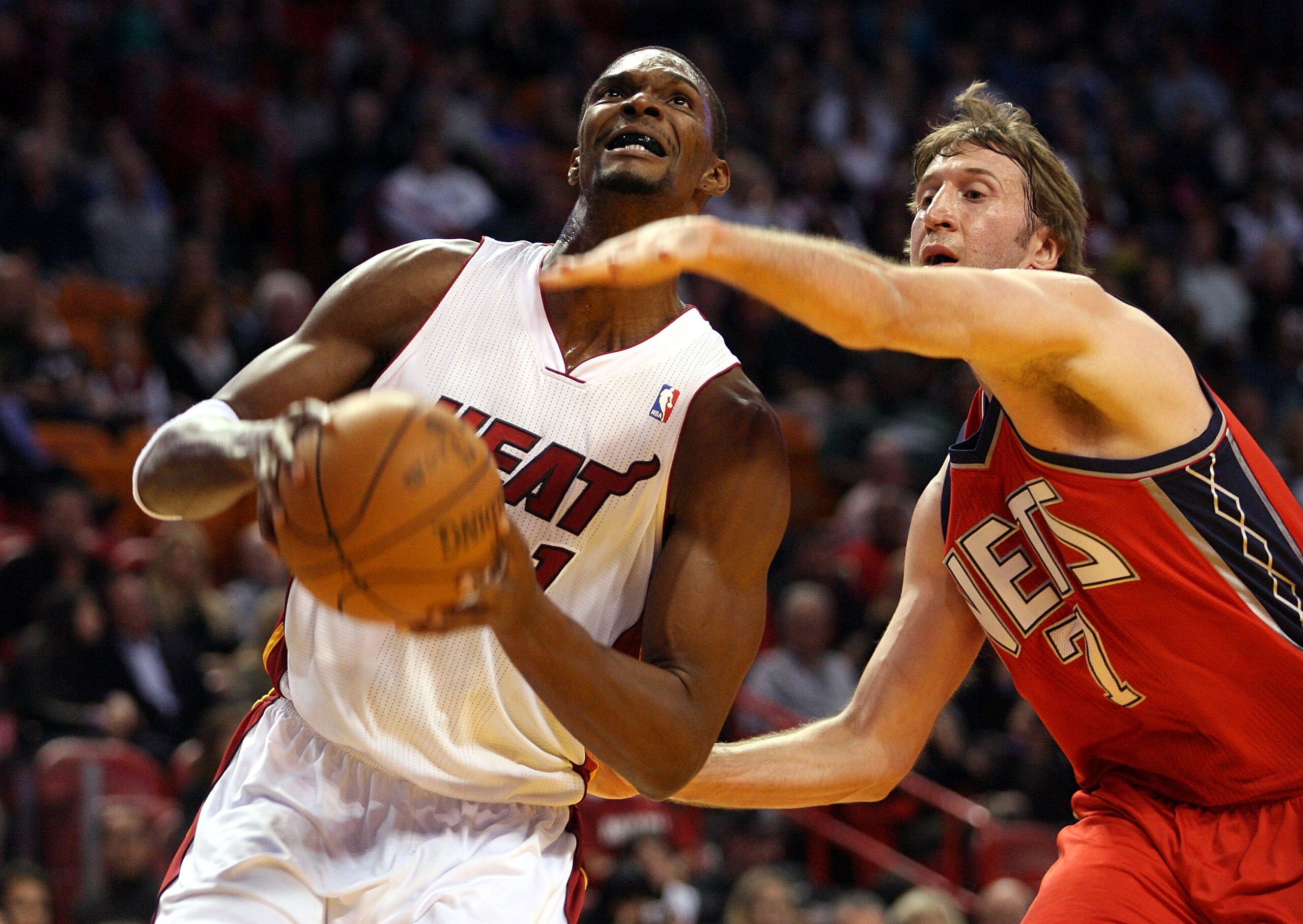
It's a small wonder why the Heat signed two good defensive centers who are useless offensively, while the Celtics acquired two good offensive centers who are forgettable defensively. But maybe that's why I don't run an NBA team.
Murphy, 30, is an outstanding rebounder who is a lights-out shooter from beyond the arc (career 39.0 percent) and isn't afraid to put the ball on the floor. He's not really strong enough to do much in the post, but he's definitely capable of stretching the offense. Murphy leaves quite a bit to be desired on the defensive end (as evidenced by his futile attempt at stopping Bosh above).
Dampier, 35, joined the Heat after many years, just falling short of an NBA championship with the Dallas Mavericks. He's spent most of his career starting and has earned a reputation as a strong defender and rebounder. He was among the league leaders in blocked shots several times in his career, but has never really contributed much on offense. After 14 seasons that's not likely to change any time soon, so he's a part-time player at best.
Murphy: 15.7 mpg, 3.3 ppg, 4.0 rpg, 0.1 bpg, 31.3 field-goal percentage, 15.4 three-point percentage
Dampier: 15.8 mpg, 2.5 ppg, 3.1 rpg, 0.9 bpg, 61.4 field-goal percentage
EDGE: Murphy
The Shooter: Von Wafer vs. Eddie House
13 of 15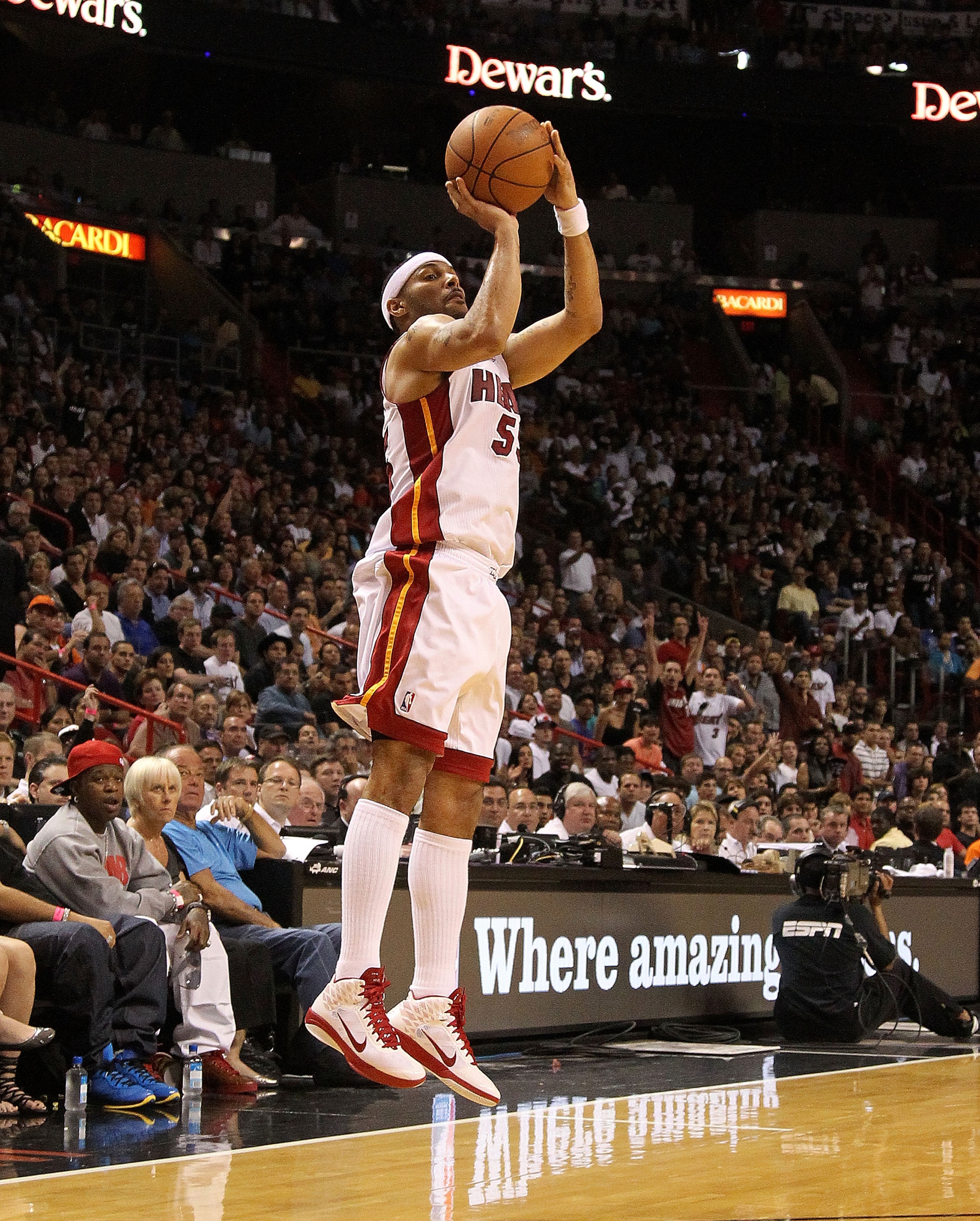
The Celtics have two former Miami players on their roster (three if you want to count Shaq), but all the Heat have from the Boston side is the sharpshooter known as Eddie House.
House, 32, was an integral part of Boston's 2008 championship season and he was brought in to Miami to fulfill the same role. The veteran is an excellent three-point shooter and can put up points in a hurry. But he struggles to create his own shot and can't dribble to his left, making him a pretty one-dimensional player. House also isn't athletic enough to be much of a defender and, though he's 6'1", is out of position at point guard.
Wafer, 25, has finally found his way back into the NBA after being let go by the Houston Rockets in 2008. He's not quite as good of a shooter as House, but he does have range and will knock down the three if left open. He's also quick enough to get to the basket and has shown good energy coming off the bench. The jury's still out on whether he can play defense, but he'll still get some minutes as the only real backup for Ray Allen.
Wafer: 8.8 mpg, 2.9 ppg, 0.5 apg, 0.3 spg, 42.4 field-goal percentage, 27.3 three-point percentage
House: 18.0 mpg, 6.6 ppg, 1.1 apg, 0.54 spg, 41.3 field-goal percentage, 38.8 three-point percentage
EDGE: House
The Darkhorse: Sasha Pavlovic vs. Jamaal Magloire
14 of 15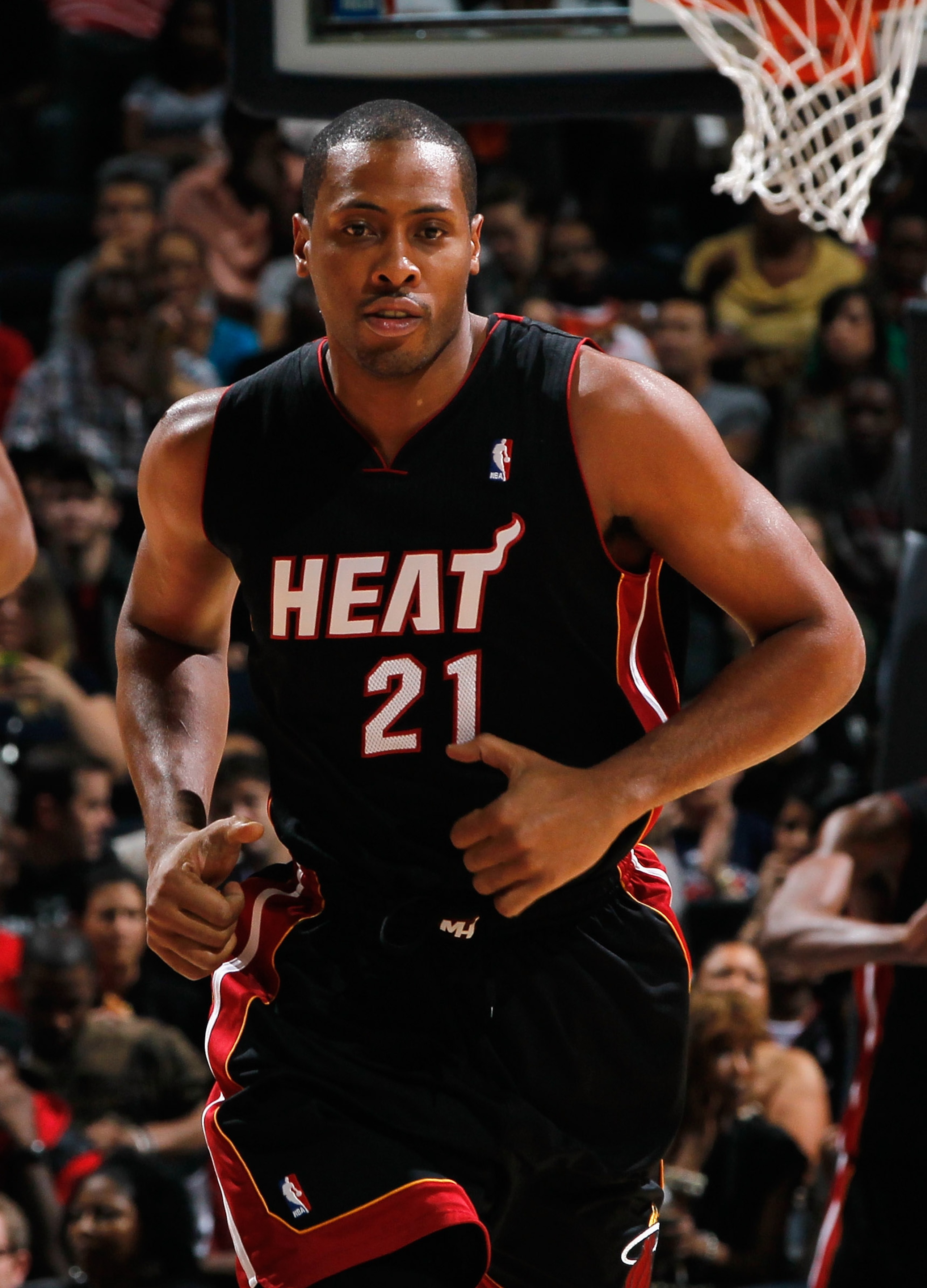
OK, not really. Neither of these players should see the court in the playoffs unless there's a major injury or some freak genetic mutation. But as far as the end of the bench goes, you could do worse.
Pavlovic, 27, has carved out something of a career as a strong outside shooter. He disappeared this season in 14 games between the New Orleans Hornets and the Dallas Mavericks, though he's always been a good defender. The rest of his offensive game, however, is limited. Still, the Celtics needed more bodies at the three and Pavlovic could get a chance to defend his former teammate in Cleveland, LeBron.
Magloire, 32, was washed up five seasons ago yet somehow has managed to hang on to a roster spot with the Heat since 2008. He's a big player and, unlike some of the centers ahead of him on the depth chart, he can actually score once in a while. But he's a liability on defense probably couldn't even keep up with Shaq running down the floor.
Pavlovic: 15.2 mpg, 3.2 ppg, 37.0 field-goal percentage, 33.3 three-point percentage
Magloire: 6.0 mpg, 1.1 ppg, 33.3 field-goal percentage
EDGE: Pavlovic
The Rookie: Avery Bradley vs. Dexter Pittman
15 of 15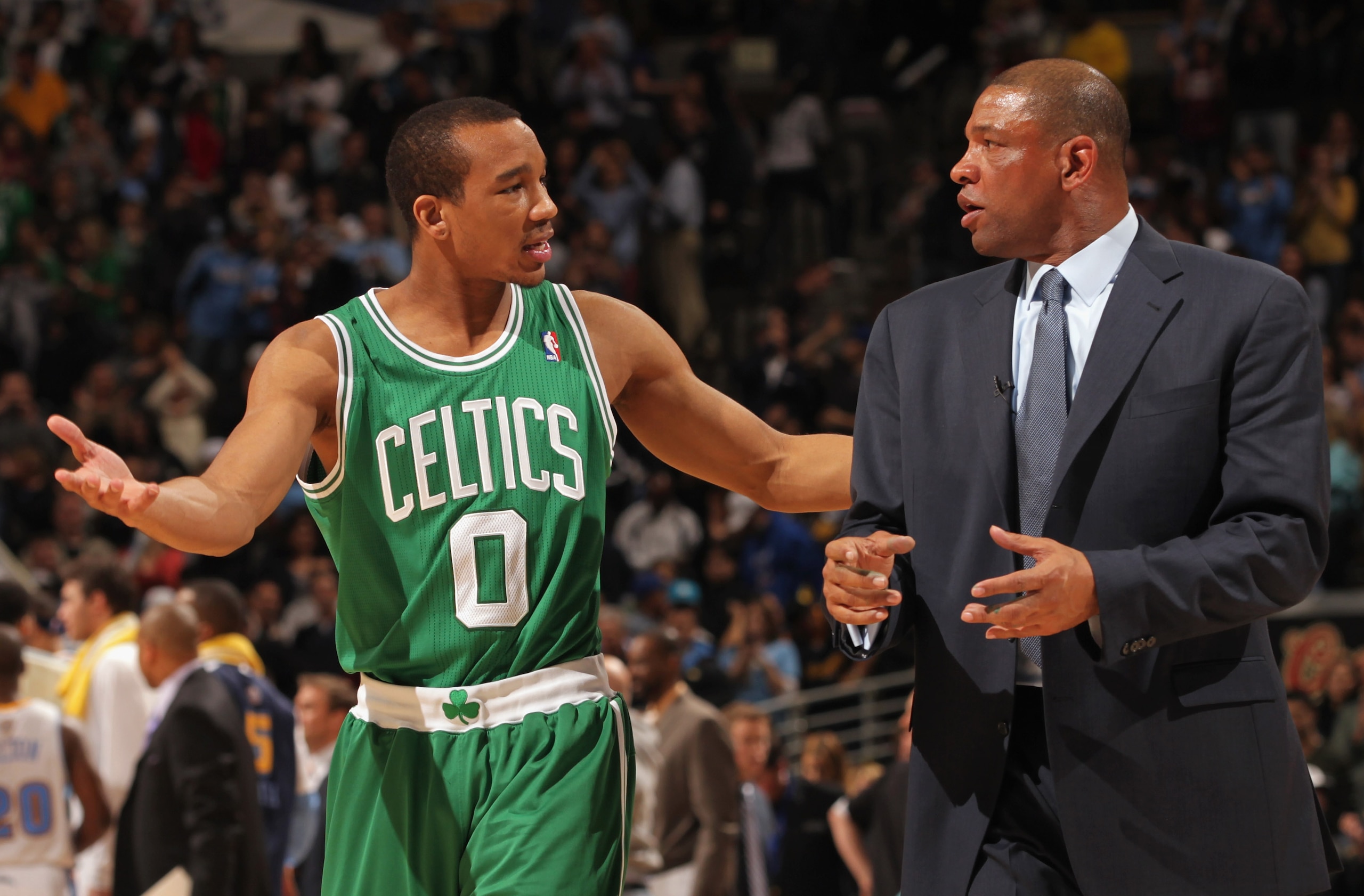
It's a rite of passage in the NBA for rookies to sit on the bench and watch as the veterans do all the work and claim all the glory. This role is even more pronounced on championship-caliber teams with a pronounced pecking order. But none of this means that rookies can't make an impact.
Pittman, 23, has yet to make his professional debut after undergoing surgery to repair his injured knee. But even without the injury, it's unlikely the big man out of Texas would have seen much action. He's a decent post player but is still very raw on both ends of the court. The main reason that he was even drafted (34th overall) is because he's pushing 300 pounds and has the potential to be a dominant force in the middle. But he's still several years away from being the player.
Bradley, 20, is similarly raw offensively, but he's already one of the best defensive guards in the NBA and is only going to get better. He might be the only player on the Celtics roster who could give Wade some trouble, and he was drafted specifically as a replacement for defensive specialist Tony Allen. Bradley needs to really improve his ballhandling and shooting if he's ever going to be an NBA point guard, but his defense alone will keep him in the league for a while. He has a decent shot of seeing some minutes in the playoffs when Boston needs a stop.
Bradley: 4.5 mpg, 1.3 ppg, 0.3 spg, 28.9 field-goal percentage (22 games played)
Pittman: (0 games played)
EDGE: Bradley
.jpg?w=2560 "Chiefs, Steelers Eye WR Trades")





.jpg?w=2560 "Raiders Sticking with Cousins")