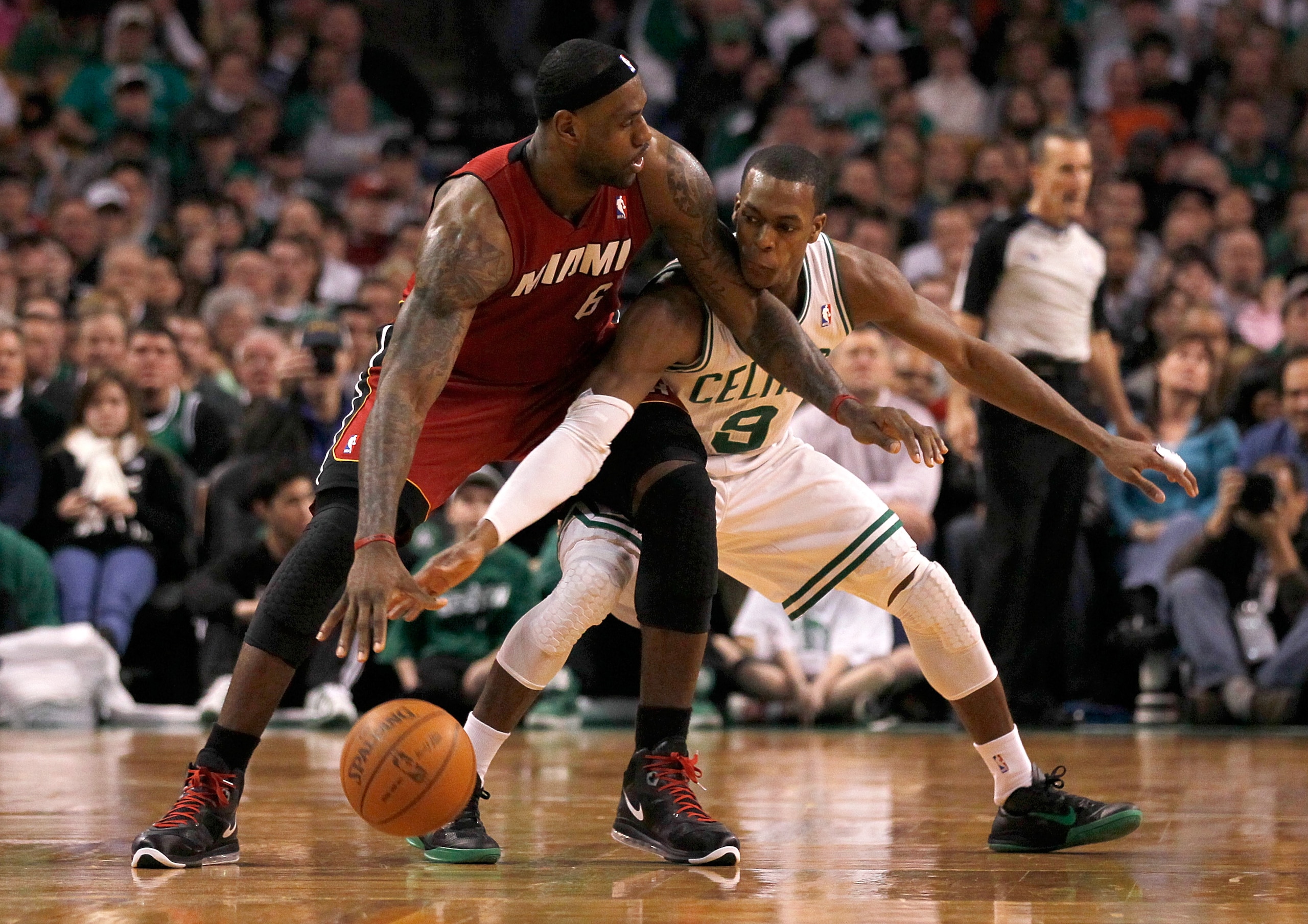

How To Determine The 2010 NBA MVP: An Analysis Of The Past 10 Winners
Around this time of the NBA season one begins to hear rumbles of favorites for the various regular season awards.
Blake Griffin for rookie of the year.
Most improved player: Love, Westbrook, Aldrige, Beasley
The most discussed award, for good reason, is the Maurice Podoloff Trophy which is awarded to the leagues Most Valuable Player. The most coveted individual award in the league has gone to many Hall of Famers since it's inception after the 1955-56 season including; Kareem Abdul-Jabbar a record six times, and Michael Jordan and Bill Russell tied with 5 apiece.
But what is it that seals the deal for these talented award recipients?
Is it overall team success? Individual importance to your team? Points per game average? Triple double count? Number of posterizing throw-downs?
Of course a number of factors must be weighed to accurately determine the NBA's true "most valuable player" but there is no simple formula to plug all the numbers into. The winner is determined by a panel of sportswriters and broadcasters who each bring their own individual opinion, and vote, to the table.
We will explore the NBA MVPs over the past ten years weighing their performances against each other. Then, using this analysis, we will attempt to determine this seasons most likely winner if the voting were to happen today.
2000-01 Allen Iverson, Philadelphia 76ers
1 of 11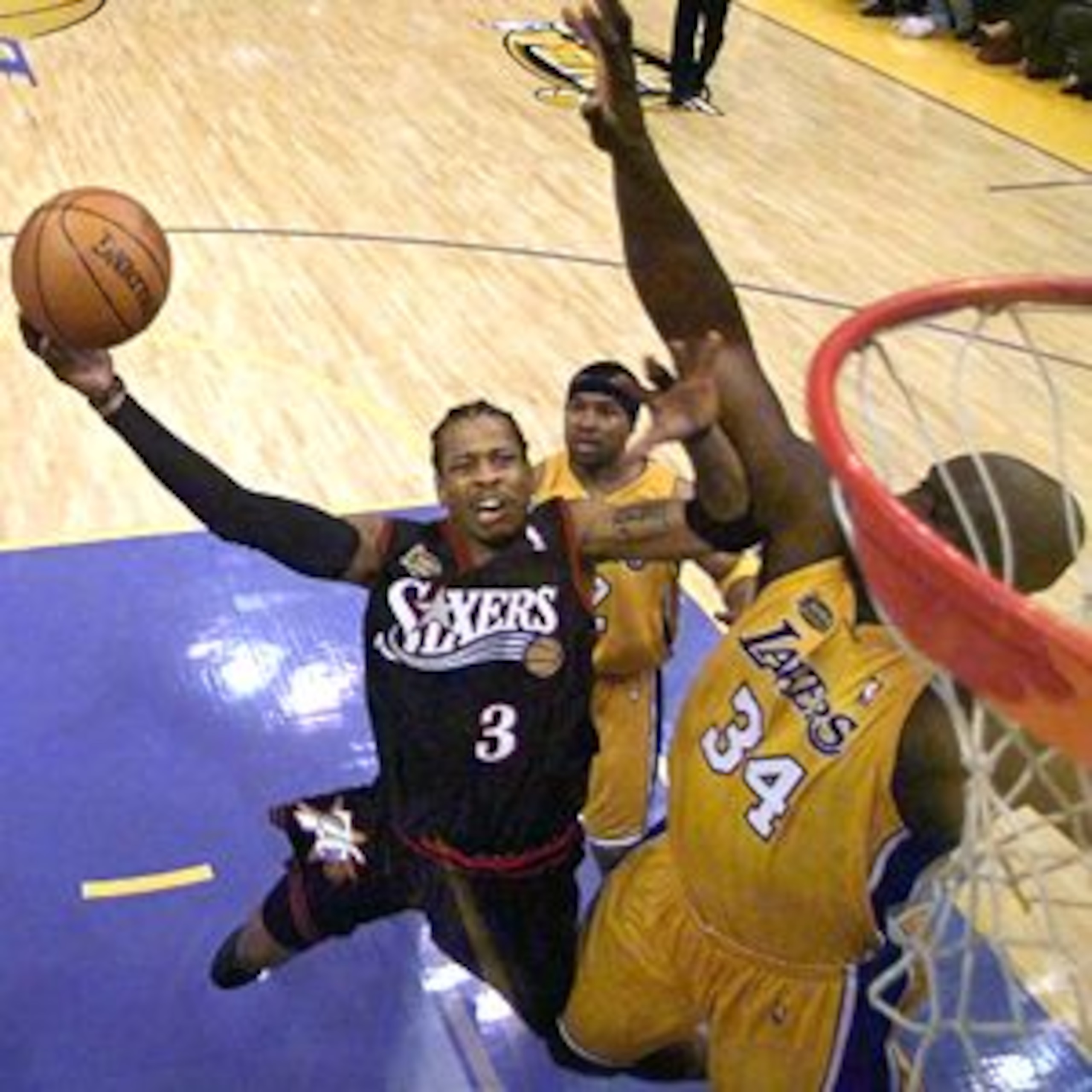
"The Answer" was awarded his only MVP at the start of the new millennium. He was also honored with All Star MVP award the same season. He won the scoring title, steals title and 1st team All NBA honors at the guard spot. Allen's team, the 76ers also finished the season with the best record in the Eastern Conference, earning the #1 seed in the playoffs.
Let's look at the statistical breakdown:
Points Per Game: 31.1 (1st in NBA)
Assists Per Game: 4.6 (37th in NBA)
Rebounds Per Game: 3.9 (>100th in NBA)
Steals Per Game: 2.5 (1st in NBA)
Blocks Per Game: 0.3 (>100th in NBA)
Team Record: 56-26 (.683) 1st in Eastern Conference, 2nd in NBA.
It was arguably Iverson's best season, and ended with a 4-1 series defeat at the hands of a young Kobe, Shaq and the Lakers in the NBA Finals.
Note for future reference that Iverson was first in the NBA in scoring and steals, and achieved the playoff #1 seed. Leading certain statistical categories across the league can often play a role in the MVP selection process.
2001-02 Tim Duncan, San Antonio Spurs
2 of 11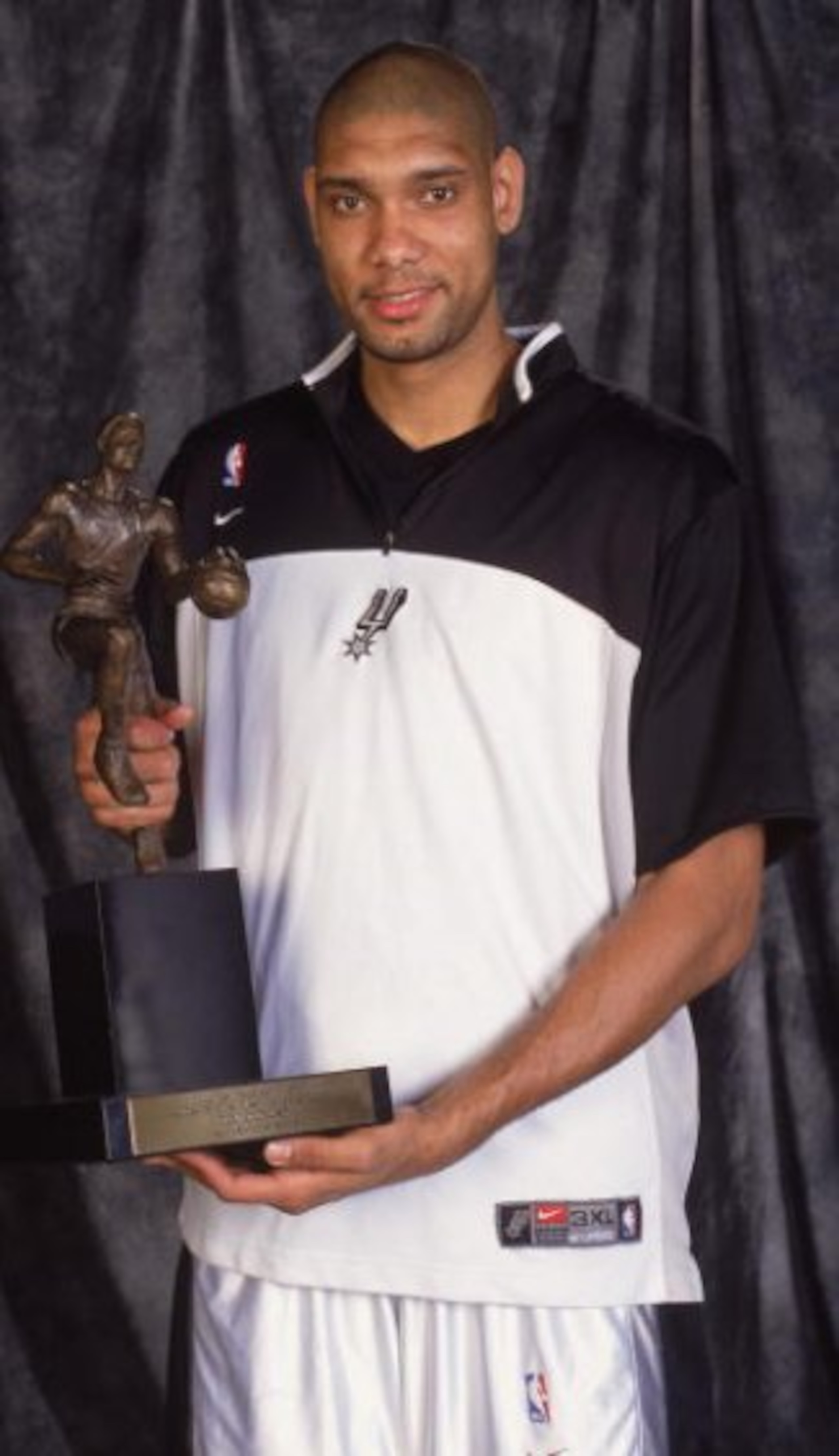
Duncan was named to his fifth straight All NBA team in his first MVP campaign, but the Finals ended with the Lakers sporting a third straight NBA title. Duncan led the Spurs to the second best record in the West that season behind those eventual champions, and really turned the corner into becoming one of the all time best forwards in the history of the game proving both consistency and leadership.
The stats read:
PPG: 25.5 (5th in NBA)
APG: 3.7 (58th in NBA)
RPG: 12.7 (7th in NBA)
SPG: 0.7 (>100th in NBA)
BPG: 2.5 (4th in NBA)
Team Record: 58-24 (.707) 2nd in Western Conference, 2nd in NBA.
Note that Duncan did not lead the NBA in a single of the five top categories, but did place in the top 10 in three of them. This shows that the voters rewarded the "Big Fundamental" for having such versatility in his game on both ends of the court.
2002-03 Tim Duncan, San Antonio Spurs
3 of 11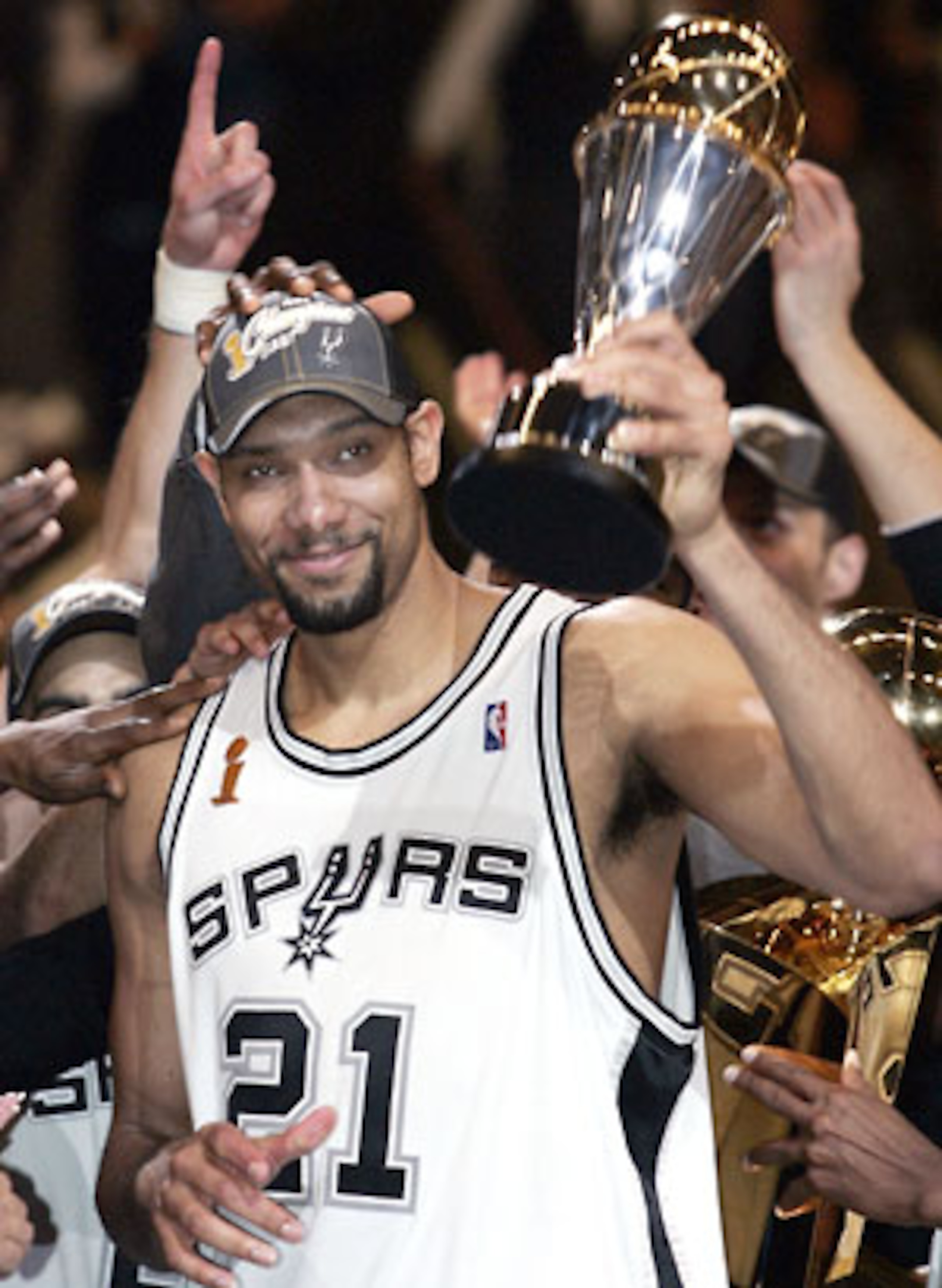
The second of Tim's back-to-back MVP honors came in in 02-03 when he led the San Antonio Spurs to a victory in the NBA Finals over the Nets. With numbers reminiscent of the previous season, Duncan had officially arrived after this season.
PPG: 23.3 (7th in NBA)
APG: 3.9 (50th in NBA)
RPG: 12.9 (3rd in NBA)
SPG: 0.7 (>100th in NBA)
BPG: 2.9 (3rd in NBA)
Team Record: 60-22 (.732) 1st in Western conference, 1st in NBA.
Once again, Duncan placed in the top 10 in three different statistical categories, but this time he led his team to the best record in the entire league while doing so. Basically, since they gave it to him the first time they had to give it to his this time.


2003-04 Kevin Garnett, Minnesota Timberwolves
4 of 11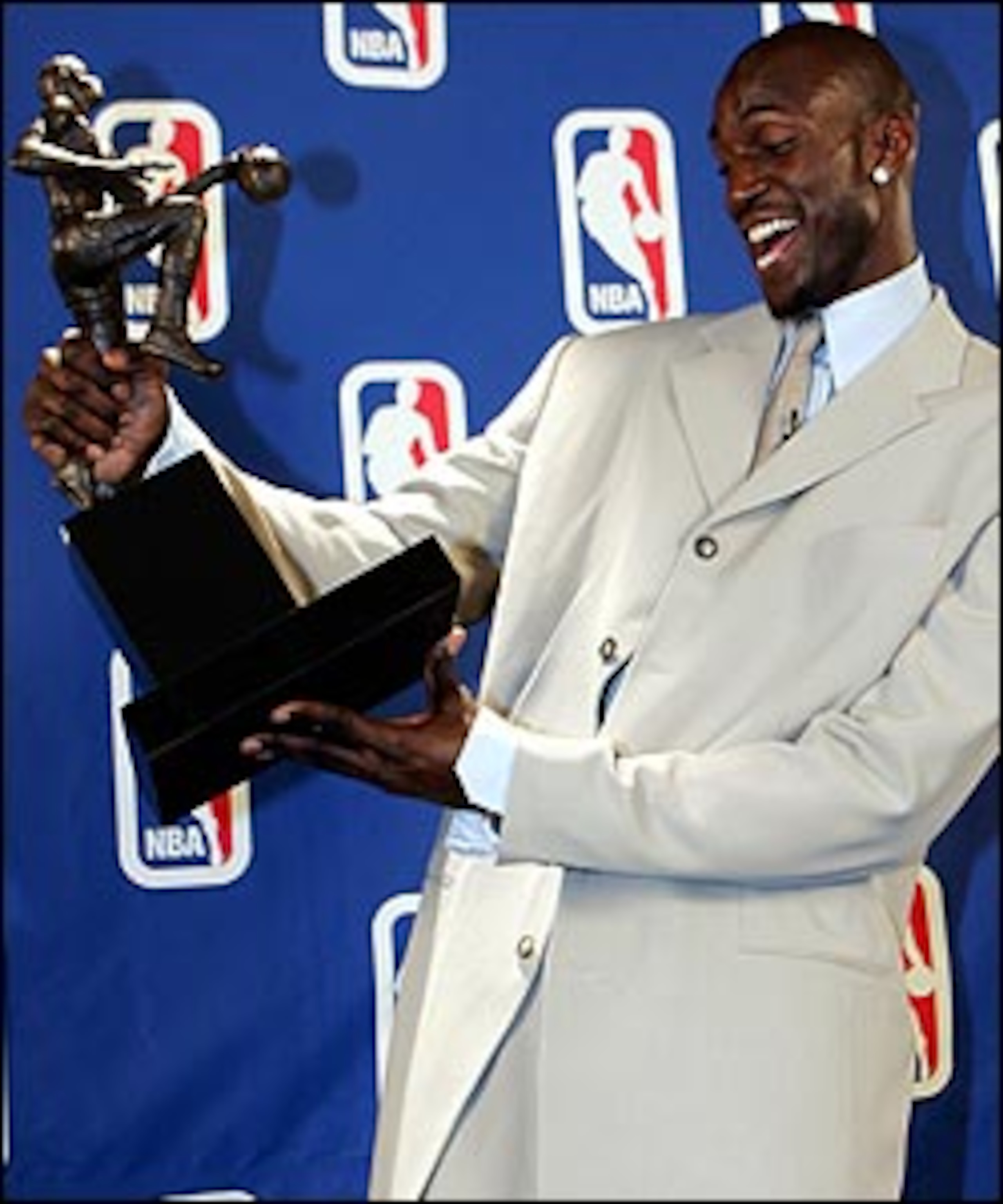
The #1 seed Timberwolves and MVP Kevin Garnett were ousted in the Western Conference Finals by the #2 seed LA Lakers, but not before Kevin put together one of his best seasons as a professional. Earning first team honors along with the rebounding title, Garnett began to consistently show the unmatched intensity that remains in his game to this day.
PPG: 24.2 (3rd in NBA)
APG: 5.0 (30th in NBA)
RPG: 13.9 (1st in NBA)
SPG: 1.5 (24th in NBA)
BPG: 2.2 (10th in NBA)
Team Record: 58-24 (.707) 1st in Western Conference, 2nd in NBA.
Garnett finished in the top 30 in all five major categories, including a top 10 in three of them. His versatility led him to the rare 20-5-5 level (PPG/APG/RPG) that many of the NBA's best are never able to achieve.
2004-05 Steve Nash, Phoenix Suns
5 of 11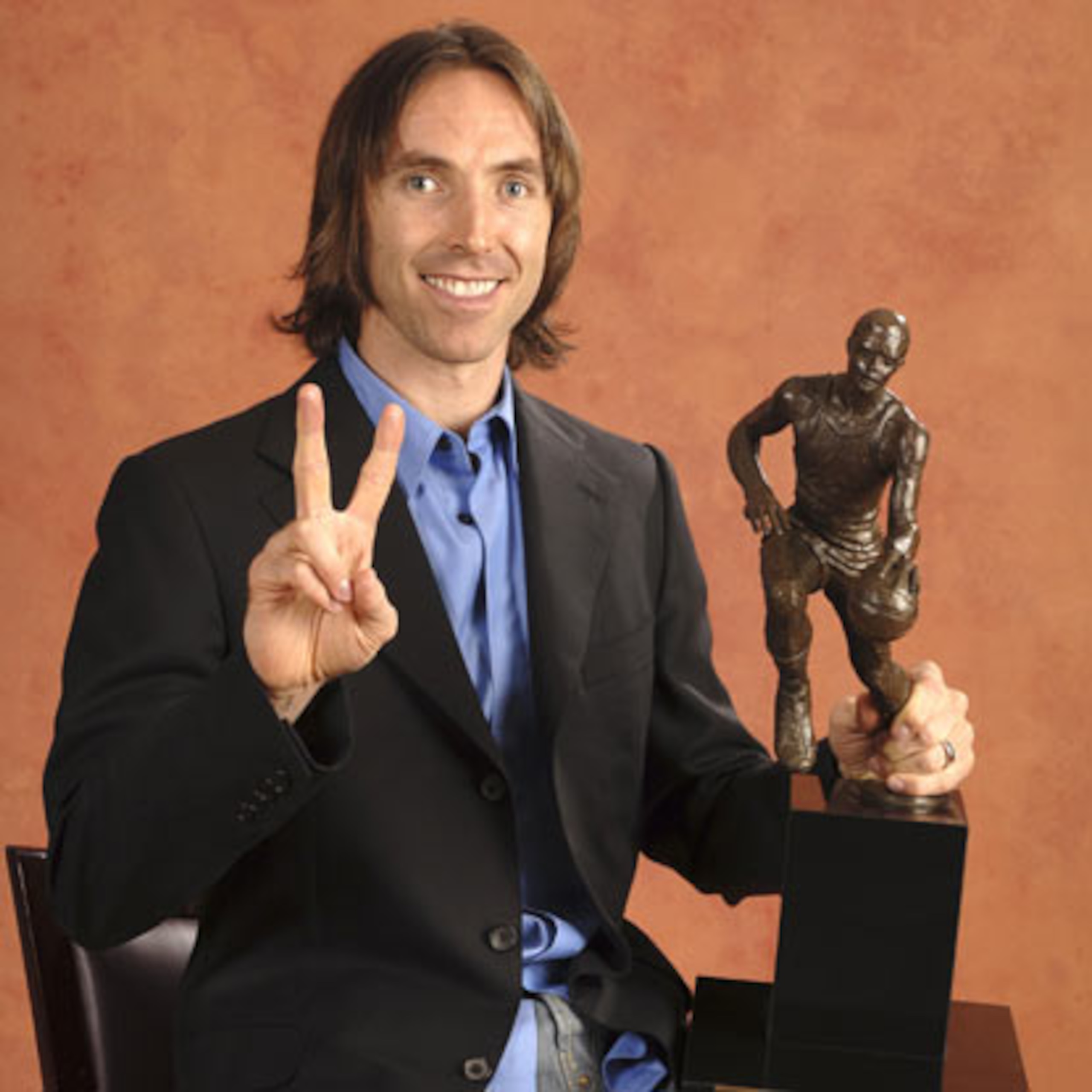
Becoming just the second foreign born player in history to receive the award, Canadian point guard Steve Nash was honored for his efforts in the 04-05 season. Nash was only the third PG to be awarded, and just the second white man after the legendary Larry Bird. He won the assists title and led the Suns to the best record in the NBA.
PPG: 15.5 (71st in NBA)
APG: 11.5 (1st in NBA)
RPG: 3.3 (>100th in NBA)
SPG: 1.0 (97th in NBA)
BPG: 0.1 (>100th in NBA)
Bonus Stats: 3PT Percentage: 43.1%, FT Percentage: 88.1%
Team Record: 62-20 (.756) 1st in Western Conference, 1st in NBA.
Although 1st in assists, Nash's statistical output in the four other categories was significantly lower than what we have seen from the other recipients. However, his consistency from behind the arc and the foul stripe was one of the biggest reasons for the Suns league best record. This season clearly shows the voters rewarding team achievement and the players involvement in that success over the individual numbers.
2005-06 Steve Nash, Phoenix Suns
6 of 11
The second back-to-back winner of the decade, Nash again led the league in assists in the 05-06 season. Once again his team leading ability was, in large part, the deciding factor in his selection. He also led the league in Free Throw shooting, and was named to the All-NBA First Team for the second straight season as well.
PPG: 18.9 (32nd in NBA)
APG: 10.5 (1st in NBA)
RPG: 4.2 (>100th in NBA)
SPG: 0.8 (>100th in NBA)
BPG: 0.1 (>100th in NBA)
Team Record: 54-28 (.659) 3rd in Western Conference, 4th in NBA.
Your guess is as good as mine on this one. Although Nash did improve his scoring from his previous MVP campaign, his assist numbers dropped, as did his teams performance. Ranking outside the top 100 in three of the five categories in question it is somewhat surprising that he was, in fact, awarded the trophy for a second straight season.
2006-07 Dirk Nowitzki, Dallas Mavericks
7 of 11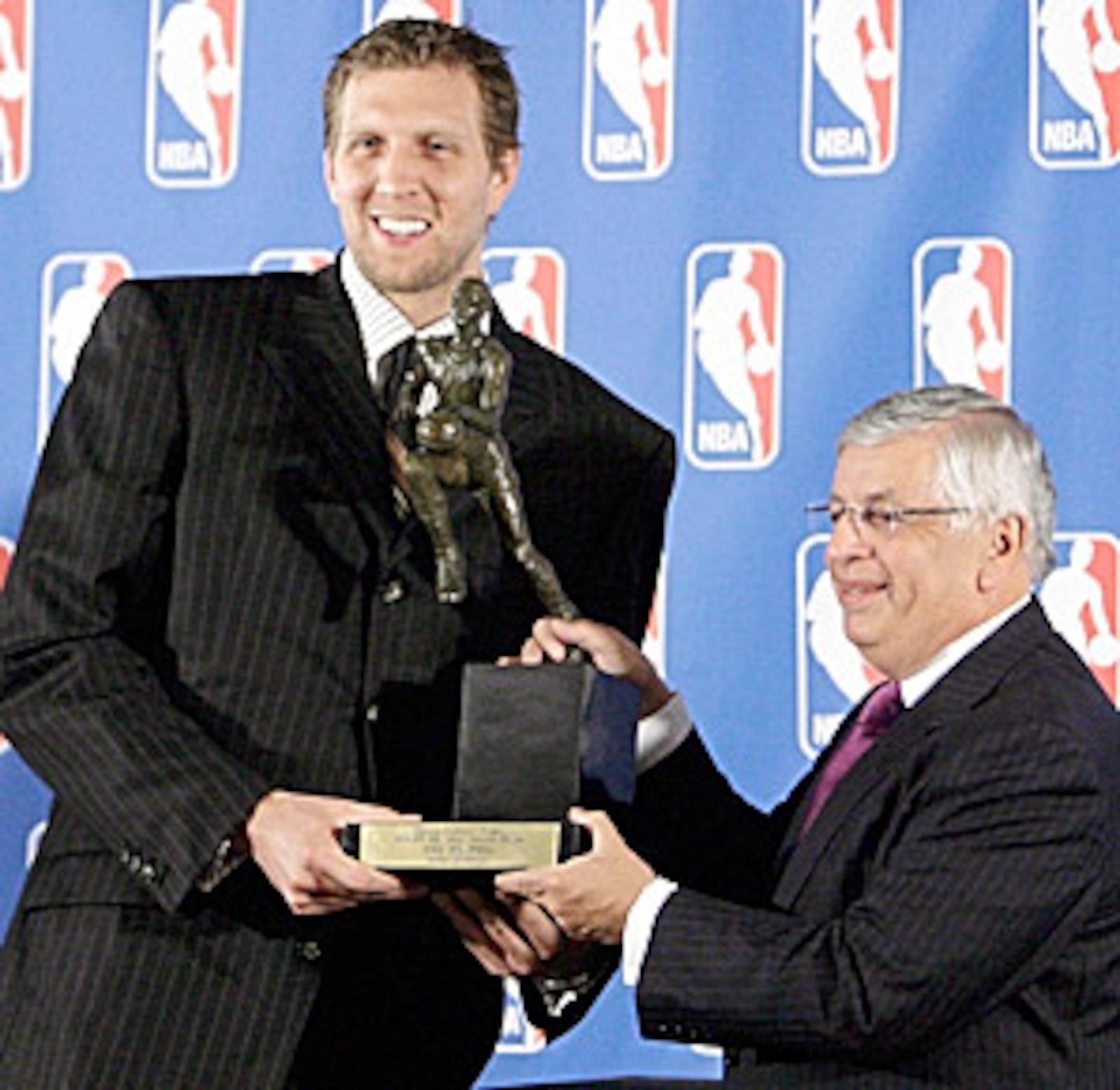
The first European born player to ever be awarded MVP was Dirk Nowitzki in 2006-07. The lanky German's tear drop jumper seemed to find its way through the hoop from everywhere this season as the Mavericks ran away with the Western Conference regular season title. Dirk was also honored as a first team All-NBA selection.
PPG: 24.6 (13th in NBA)
APG: 3.4 (75th in NBA)
RPG: 8.9 (22nd in NBA)
SPG: 3.4 (71st in NBA)
BPG: 0.8 (52nd in NBA)
Team Record: 67-15 (.817) 1st in Western Conference, 1st in NBA.
While Dirk's numbers and rankings don't stand out from the pack as previous recipients have, this year was clearly a case of naming the best player on the best team. The Mavericks came just five games shy of the Chicago Bulls all time wins record, and it was all the effect of Nowitzki's consistent excellence. This, along with Nash's first award, prove that the voters most definitely take team record into account, potentially above all other factors.
2007-08 Kobe Bryant, Los Angeles Lakers
8 of 11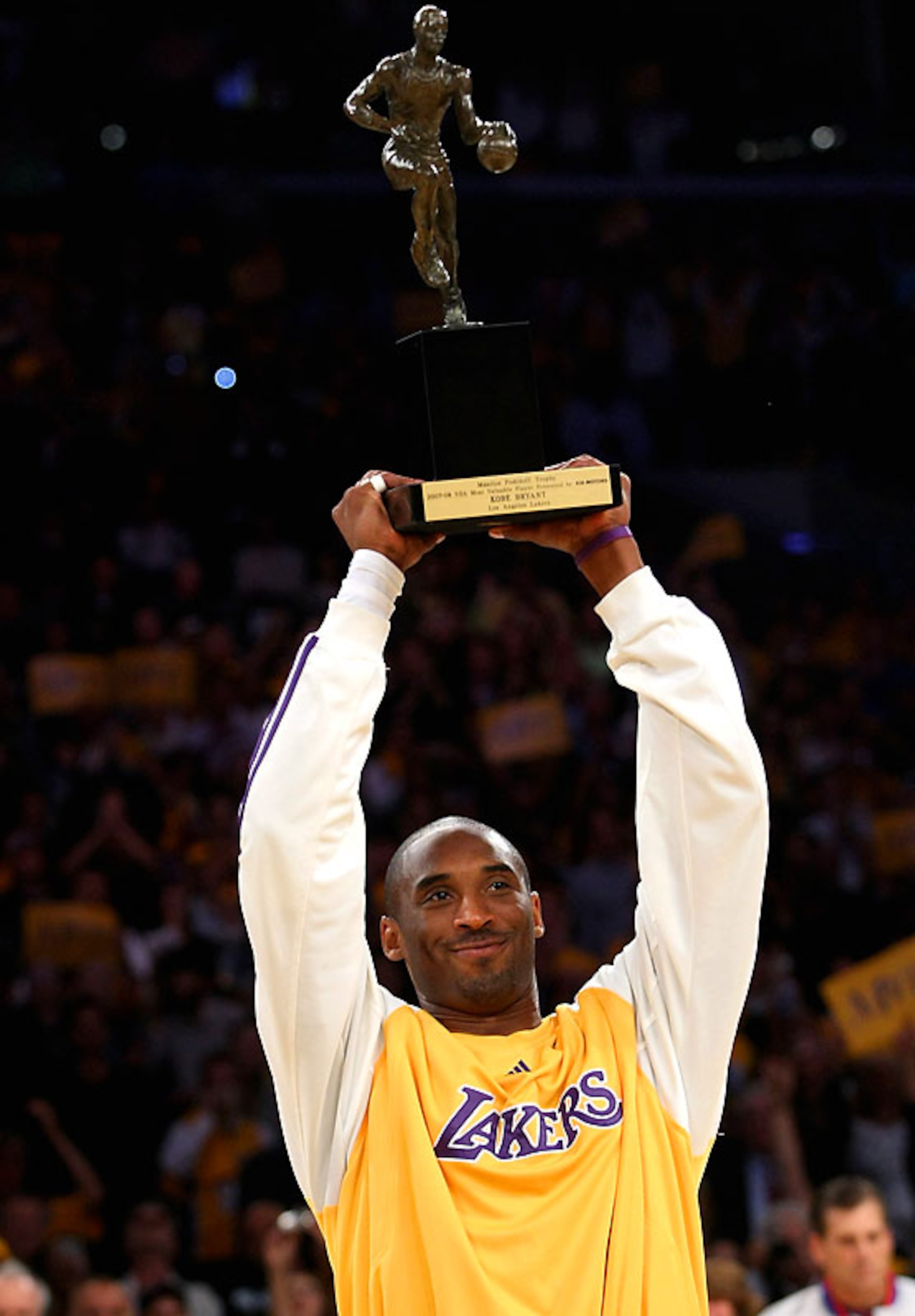
The season that saw Kobe finally win his first league MVP trophy also saw his Lakers lose in the NBA Finals to the newly formed big three of the Boston Celtics. It was hard to believe that up until this point Bryant had yet to win an MVP trophy after the extended success his team had seen since his arrival, and it was widely agreed upon that he deserved the award after coming in 2nd in scoring while leading the West's best team.
PPG: 28.3 (2nd in NBA)
APG: 5.4 (19th in NBA)
RPG: 6.3 (43rd in NBA)
SPG: 1.8 (9th in NBA)
BPG: 0.5 (73rd in NBA)
Team Record: 57-25 (.695) 1st in Western Conference, 3rd in NBA.
Kobe was, again, the best player on the West's best team. Sensing a trend there? Notice our 2nd 20-5-5 performance on the list as well. His scoring numbers and overall versatility in all five categories give little reason to argue his first MVP selection.
2008-09 Lebron James, Cleveland Cavaliers
9 of 11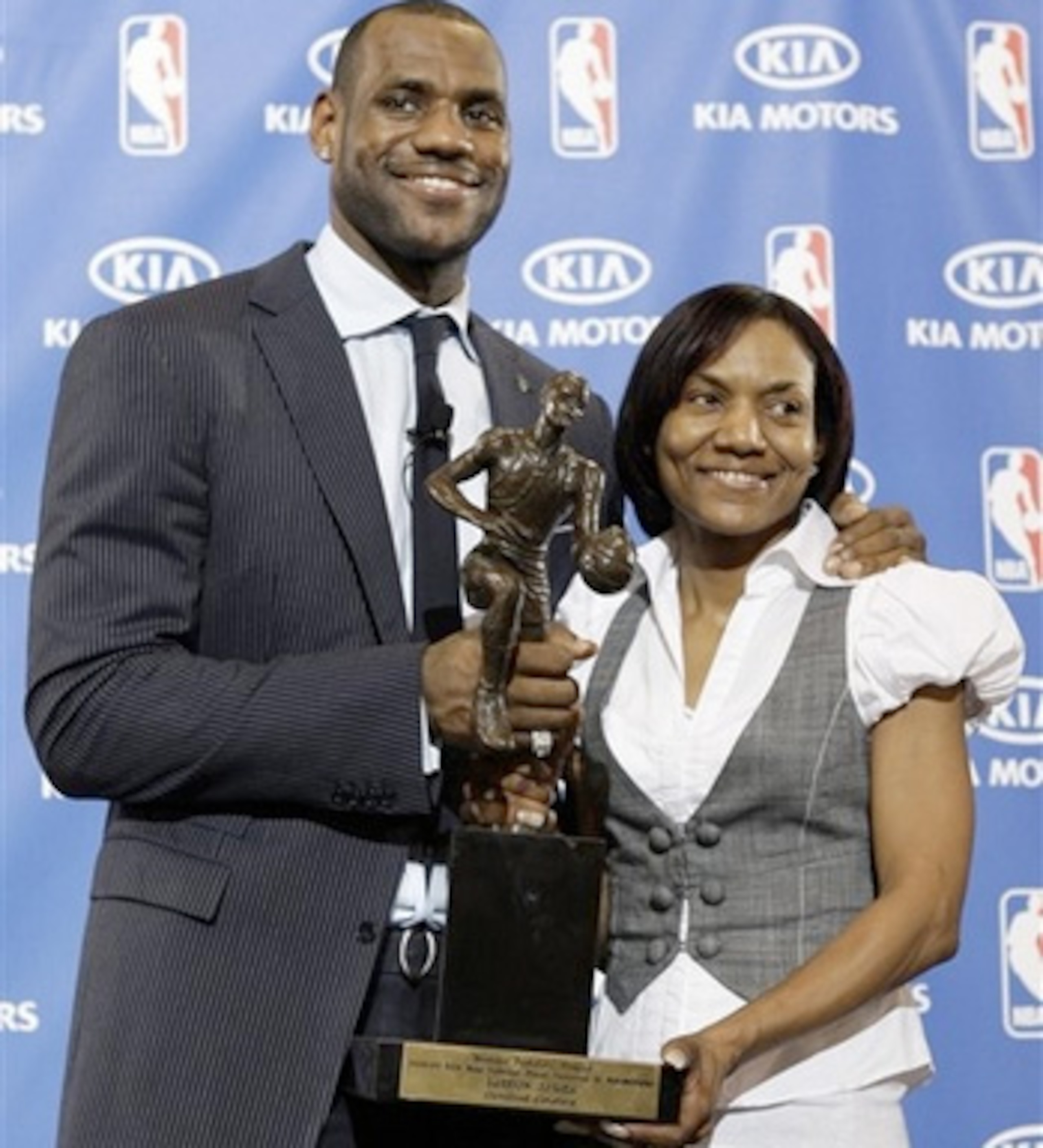
The reign of King James began in 2008 when he won the MVP trophy and led the Cavs to the Eastern Conference Finals. James emerged as an unbelievably skilled player who could lead his team with some video game style highlights along the way.
PPG: 28.4 (2nd in NBA)
APG: 7.2 (9th in NBA)
RPG: 7.6 (27th in NBA)
SPG: 1.7 (8th in NBA)
BPG: 1.2 (23rd in NBA)
Team Record: 66-16 (.805) 1st in Eastern Conference, 1st in NBA.
Not only did Lebron finish in the top 10 in three categories and top 30 in all five, he also put up an unheard of 28-7-7 season, and led the leagues overall best team. Any questions? Didn't think so.
2009-10 Lebron James, Cleveland Cavaliers
10 of 11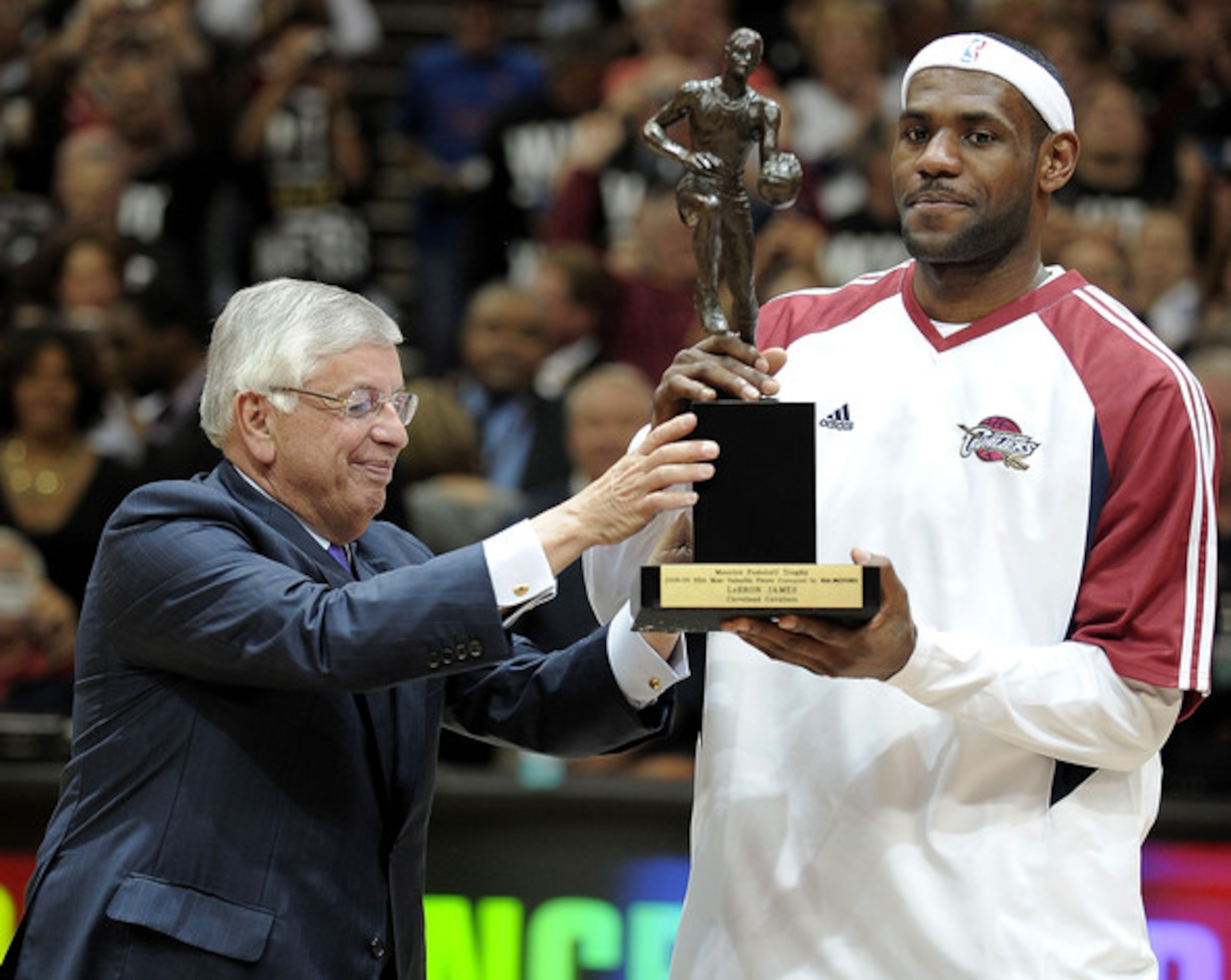
Proving once again that they were not shy about giving the trophy out to the same player in back-to-back seasons, the voters presented Lebron James with his second MVP award. After an unbelievable 2008 season, Lebron couldn't possibly keep up the pace, could he? In fact, he could. James increased both his scoring and assists per game ratings while leading the Cavs to another league leading win-loss record.
PPG: 29.7 (2nd in NBA)
APG: 8.6 (6th in NBA)
RPG: 7.3 (33rd in NBA)
SPG: 1.6 (9th in NBA)
BPG: 1.0 (33rd in NBA)
Team Record: 61-21 (.744) 1st in Eastern Conference. 1st in NBA.
Once again, Lebron dominated in all five major categories, and James' Cavs looked even more dominant throughout the season. Many, however, questioned his motivation as the Cavs were knocked out of the playoffs again without reaching the finals amidst rumors that he would be vacating his native Ohio for greener pastures at season's end. This rumor, of course, became fact when James signed with the Miami Heat in the offseason.
2010-11 Who Will It Be?
11 of 11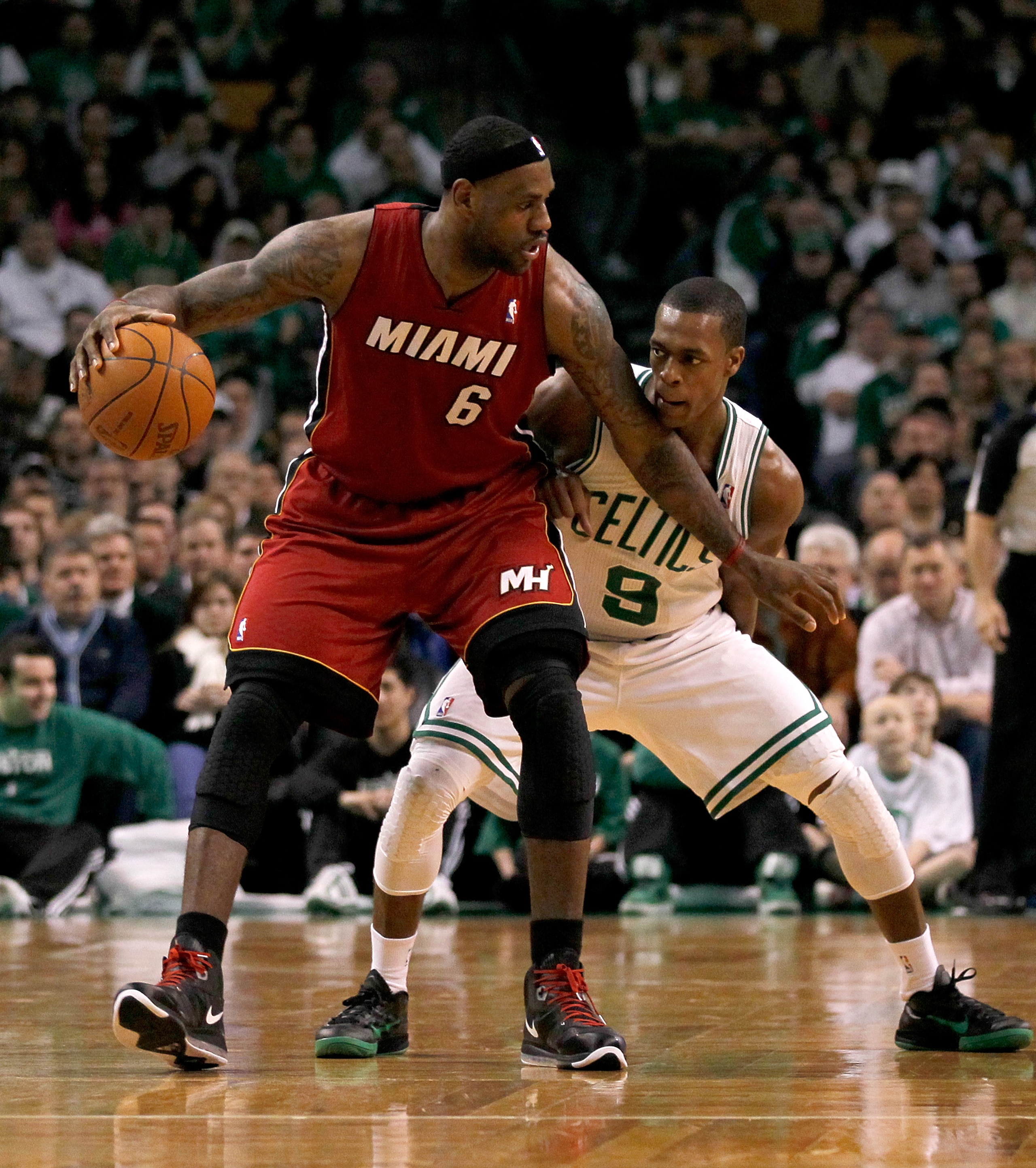
So what can be deciphered from this collection of data? Well, a few things:
1.) Team success is vitally important to the destination of the award. If you don't finish in the top half of your division you can effectively kiss it goodbye.
2.) If you finish in the top 10 in three of the five stats discussed then you have a pretty good shot.
3.) Besides Steve Nash PGs rarely win the award.
4.) The team with the league's MVP rarely wins the NBA Championship.
Let's take a look at some of this years early favorites, and where they stand at this time in the statistical categories:
Lebron James, Miami Heat (2nd in Eastern Conference):
PPG: 26.1 (3rd)
APG: 7.3 (13th)
RPG: 7.3 (28th)
SPG: 1.6 (14th)
BPG: 0.6 (64th)
Derrick Rose, Chicago Bulls (3rd in Eastern Conference):
PPG: 24.7 (8th)
APG: 8.1 (10th)
RPG: 4.4 (88th)
SPG: 1.0 (53rd)
BPG: 0.7 (53rd)
Kevin Durant, Oklahoma City Thunder (4th in Western Conference)
PPG: 29.1 (1st)
APG: 2.8 (61st)
RPG: 7.0 (32nd)
SPG: 1.1 (51st)
BPG: 1.0 (30th)
Amare Stoudemire, New York Knicks (6th in Eastern Conference)
PPG: 26.2 (2nd)
APG: 2.7 (56th)
RPG: 8.6 (16th)
SPG: 1.0 (56th)
BPG: 2.2 (4th)
Rajon Rondo, Boston Celtics (1st in Eastern Conference)
PPG: 11.0 (97th)
APG: 12.3 (1st)
RPG: 4.4 (98th)
SPG: 2.4 (2nd)
BPG: 0.2 (>100th)
Dwight Howard, Orlando Magic (4th in Eastern Conference)
PPG: 22.6 (12th)
APG: 1.8 (>100th)
RPG: 13.9 (2nd)
SPG: 1.2 (33rd)
BPG: 2.1 (5th)
Each one of these six can make a valid argument based on the facts presented and the various voting criteria over the past decade.
Lebron for the 27-7-7.
Amare, Rondo, and Dwight all in the top 5 in 2 different categories,
ahhh but Dwight also has the top 12.. so does that make him the favorite?
Wait no, his team is in 4th so that puts him at a disadvantage.
In that case Rajon is averaging a double-double on the #1 team in the East and ranked #1 and #2 in a couple of stats.
So he must win it.
RIGHT???
But, Durant is poised to be the scoring champ, and has a young team in contention.
Derrick Rose has the Bulls respectable with almost nothing else around him, and is in the top 10 in two stats.
The San Antonio Spurs are 6 games ahead of anybody in the whole league. Will it be Manu's year?
I didn't even mention a couple of guys named Dwyane and Kobe.
Confused yet? Me too. Plenty has yet to play out this season, and it will be very interesting to see which of the many characteristics will prove most "valuable" to this years voters. Two things for sure, they really can't go wrong with any of the candidates, and it should be a fun run to the playoffs.
Who are we kidding? Lebron will probably just win again anyways.


.jpg?w=2560 "Injury-stricken Seahawks signing veteran RB")

.jpg?w=2560 "Viral Rams Coach Vid 🖕")
.jpg?w=2560 "2 NFL Officials Suspended")

.jpg?w=2560 "Mahomes' Wife Trolls Kubiak 💀")