
Derrick Rose, Derron Williams and the Other Elite Point Guards: A Defensive Look
"De-fense! De-fense!"
It's what the fans chant when they're trying to motivate their teams.
You don't hear chants for "A-ssist!" A-ssist!" do you?
Defense is such a critical part of the game of basketball. It's not baskets that key turnarounds, it's stops. Sure you need to sink the bucket to finish it, but you need the start to start it.
Right now we are in the "Golden Age of Point Guards." There are five elite point guards who are driving high-end cars right now, and there's been a lot of writing from a lot of writers on which are the best. Most of those articles have relied mostly, if not exclusively, on offensive criteria.
Certainly all of that matters, but so does defense.
This article will examine the five young elite point guards—Chris Paul, Rajon Rondo, Derrick Rose, Russell Westbrook and Deron Williams—almost exclusively on defense according to several different measures.
I won't attempt to answer the question of who is the best point guard, not even defensively. These should not be viewed as a ranking so much as a comparison.
I will look at it from different angles, and hopefully add constructively to the conversation regarding who is the best point guard.
The Basics
1 of 9
According to the basic, everyday stats, Paul has the best overall numbers, and is tied for the lead in rebounds, while Rose shares the rebound-lead and leads in blocks.
Overall though, these conventional numbers tell us very little about how they play defense.
A player is going to be on the court for somewhere around 80 plays in a given game, and at most this tells us what happens defensively on about three of them. Block and steals are clearly defensive plays, but rebounds, while a defensive stat, isn't telling us what kind of defense was played.
To determine the best defensive player, we're going to need to see more than just these numbers.
I'll be going through different approaches through each slide, but keep in mind, none of these are intended to stand alone.
| Player | Defensive Rebounds | Blocks | Steals | Total |
| Paul | 3.7 | 0.1 | 2.7 | 6.5 |
| Rondo | 3.1 | 0.2 | 2.4 | 5.7 |
| Westbrook | 3.5 | 0.3 | 1.9 | 5.7 |
| Rose | 3.7 | 0.7 | 1.2 | 5.6 |
| Williams | 3.1 | 0.2 | 1.2 | 4.5 |
Defensive Rating
2 of 9
Defensive Rating (DRtg) is a measure of how many points the other team scores while the player is on the court. The NBA average is 105. As with all defensive measures, it has its strengths and it has its weaknesses.
It's strength is it gives an indication of how the player does in their team defense. However, because it is mostly a measure of team defense, the other players on the team can have a tremendous impact on a player's DRtg.
A player can play their position perfectly, yet still have another player score on a teammate who is playing poorly defensively, and it will count against both players.
It also needs to be mentioned that not too much emphasis should be placed on the difference between a player's DRtg and his team's defensive rating. Normally, a player who starts will be contending against tougher competition, and playing against the starters from the other team.
Many times, you'll see a player with a higher DRtg than his backup. It may or may not mean he's worse defensively. It could just be a measure of the competition too.
Essentially, what this tells us is how well the player does in his team. A low defensive rating usually means a good defensive team, but that player is a part of that defensive team. They have to execute the game plan.
It's no different than an offensive system. Players are in a system, but they still have to execute in it. A two-point-swing, particularly on a good defensive team, is not indicative of much, but three or more could be meaningful.
What's worth noticing in this are Paul's minus-three and Williams plus-three. Paul has the lowest rating on his team among the starters; Williams is second-worst. Frankly, I'm a bit surprised at that because Williams has a reputation as a good defensive player. Right now we'll just take note of that and consider later, as we look at more numbers, whether he's at fault, or his teammates.
| Player | DRtg | Team Rating | Difference |
| Paul | 99 | 102 | minus-3 |
| Rondo | 100 | 100 | 0 |
| Rose | 102 | 100 | plus-2 |
| Westbrook | 108 | 108 | 0 |
| Williams | 111 | 108 | plus-3 |
Opponent Player Efficiency Rating
3 of 9
82 Games has a stat that gets updated about once a week or so called "Opponent PER." This measures the player efficiency rating of the player's counterpart in games played. This gives a snapshot of how well a player's opponent played, and gives us a clue as to what kind of defense a player played, but it still has weaknesses.
Primarily, there are two. First, I'm not sure how much assists is actually a measure of defense. A guard dribbles into his opponent, gets stopped, and passes out to someone who stops-and-pops. Is that a measure of bad defense? It might be, but it might not be. Whose job is it to defend the shot at that point?
All stats bellow are based on a per 48 minute production by the player's opponents.
| Player | Points | Rebounds | Assists | PER |
| Rose | 18.0 | 5.0 | 8.6 | 14.1 |
| Rondo | 19.3 | 3.3 | 8.1 | 14.3 |
| Williams | 19.6 | 4.4 | 5.7 | 14.5 |
| Paul | 17.8 | 4.6 | 9.0 | 17.8 |
| Westbrook | 21.1 | 6.5 | 9.7 | 18.9 |



Opponent Points Per Game
4 of 9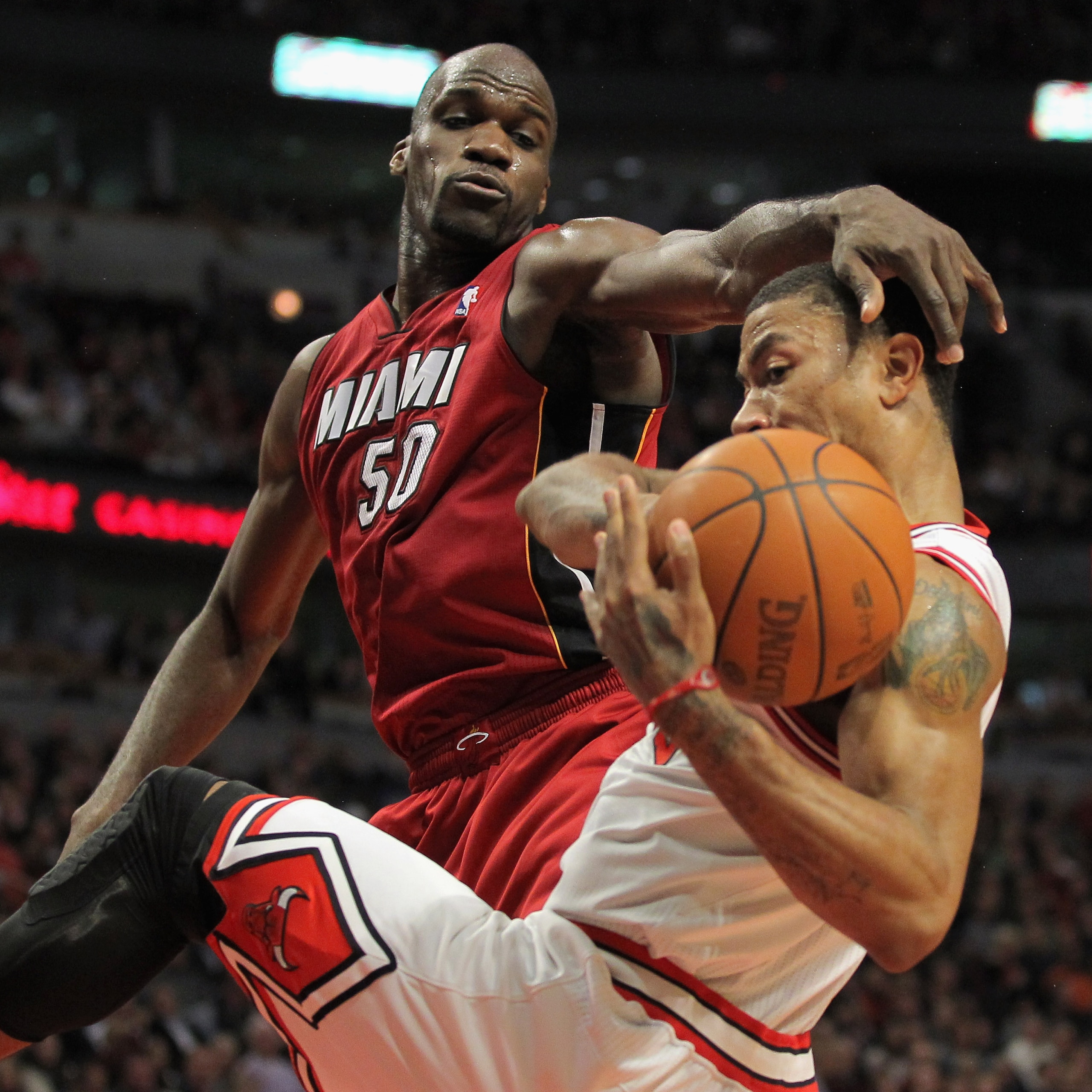
The good folks at mysynergy have an excellent, if not amazing little stat. It's called points per play. What they have done, is through quite a bit of work, gone through every play of every game and done things like define what type of offense was run, and who was guarding who when things happened.
In effect, they have produced what is in my opinion the smartest measure of defense there is.
It's the other side of things like points per game. It's a direct and specific measurement of how many points are scored on a player. Then they break down into points per play.
I've converted that into points per 36 minutes for an easier comparison. Reduced minutes give a player an advantage, so I wanted to even it out.
The results are, overall, pretty interesting. It seems that for all five of them, they are solid defensive players.
I didn't expect Rose to come out on top though.
Yet, he leads pretty much across the board. He gives up the fewest points per play, the fewest points per 36 minutes, as well as the lowest field goal percentage and lowest three-point field goal percentage.
| Player | Games | Plays | Plays/Game | Points per Play | Points/36 Minutes | FG% | 3 Pt FG% |
| Rose | 40 | 477 | 11.9 | 0.74 | 7.5 | 37.4 | 28.7 |
| Paul | 43 | 427 | 9.9 | 0.87 | 8.8 | 41.4 | 32.8 |
| Rondo | 30 | 366 | 12.2 | 0.83 | 9.7 | 41.2 | 40.3 |
| Williams | 42 | 506 | 12.0 | 0.80 | 10.2 | 41.1 | 37.4 |
| Westbrook | 42 | 484 | 11.5 | 0.85 | 10.6 | 42.7. | 31.4 |
Isolation Defense
5 of 9
Per 36 minutes, Rondo gives up the fewest points on isolation plays, but that's in part because the opponents don't like running it on him.
It is interesting that Rose is the most targeted in isolation, but apparently by far the most effective against it. I do wonder why Rose is targeted so often and Rondo so seldom.
Both defenses are the same; designed by the same coach. It could be that the scouting report on Rose hasn't been updated yet. Rose was weaker against man-to-man defense last year. Defenses could be attacking a perceived weakness, not realizing it's now a strength.
| Player | Number | Plays/Game | Points/Play | Points/36 Minutes | FG% | 3FG% |
| Rondo | 42 | 1.4 | 0.79 | 1.1 | 35.5 | 33.0 |
| Rose | 84 | 2.1 | 0.61 | 1.2 | 31.9 | 9.1 |
| Williams | 70 | 1.7 | 0.79 | 1.3 | 34.1 | 16.7 |
| Paul | 72 | 1.7 | 0.82 | 1.4 | 42.6 | 50.0 |
| Westbrook | 70 | 1.7 | 0.89 | 1.5 | 41.1 | 33.3 |
Pick and Roll Ball-Handler
6 of 9
Paul and Rose are again at the top. Paul is the best in terms of per 36 minutes, but again, it's largely in part because there are fewer plays run at him. Rose is the best in terms of points per play and in field goal percentage.
Intriguing here is that Rondo surrenders a very high 42.9 percent from the three, only slightly higher than the 43.7 overall.
| Player | Plays | Plays/Game | Points/Play | Points/36 | FG% | 3PFG% |
| Paul | 144 | 3.3 | 0.84 | 2.9 | 46.9 | 31.6 |
| Williams | 207 | 4.9 | 0.86 | 4.0 | 44.4 | 23.8 |
| Rose | 226 | 5.7 | 0.78 | 4.2 | 41.0 | 30.4 |
| Rondo | 189 | 6.3 | 0.79 | 4.8 | 43.7 | 42.9 |
| Westbrook | 224 | 5.3 | 0.90 | 4.8 | 45.5 | 15.8 |
Spot-Up
7 of 9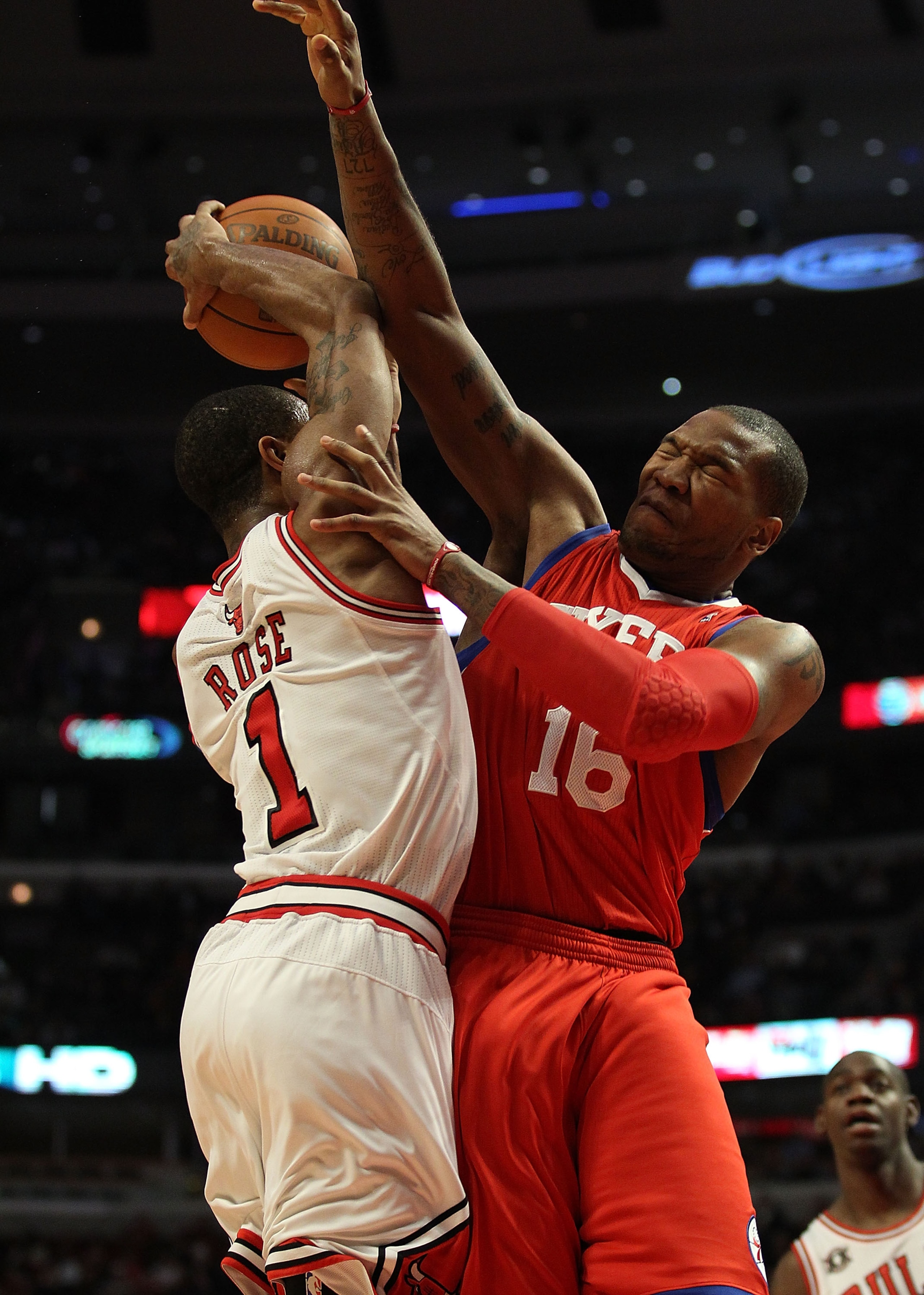
Once again, Rose is giving up the fewest points per play from the person he guards.
He's a very good defender against the spot-up jumper for two reasons. First, even though he's only 6'3", he has a 6'8" wingspan. Adding that to a 40-inch vertical gives you a very tough defender to shoot over. This might be why this time he's the rarest player the play is run against.
Also worth noting is a very high three-point percentage surrendered by Williams.
| Player | Plays | Plays/Game | Points/Play | Points/36 | FG% | 3Pt% |
| Rose | 87 | 2.2 | 0.86 | 1.8 | 33.3 | 31.5 |
| Rondo | 76 | 2.5 | 0.89 | 2.2 | 38.8 | 35.0 |
| Westbrook | 101 | 2.4 | 1.02 | 2.4 | 41.1 | 38.0 |
| Paul | 131 | 3.0 | 0.87 | 2.7 | 35.0 | 29.3 |
| Williams | 146 | 3.5 | 1.1 | 3.7 | 43.0 | 45.7 |
Some Other Interesting Tidbits
8 of 9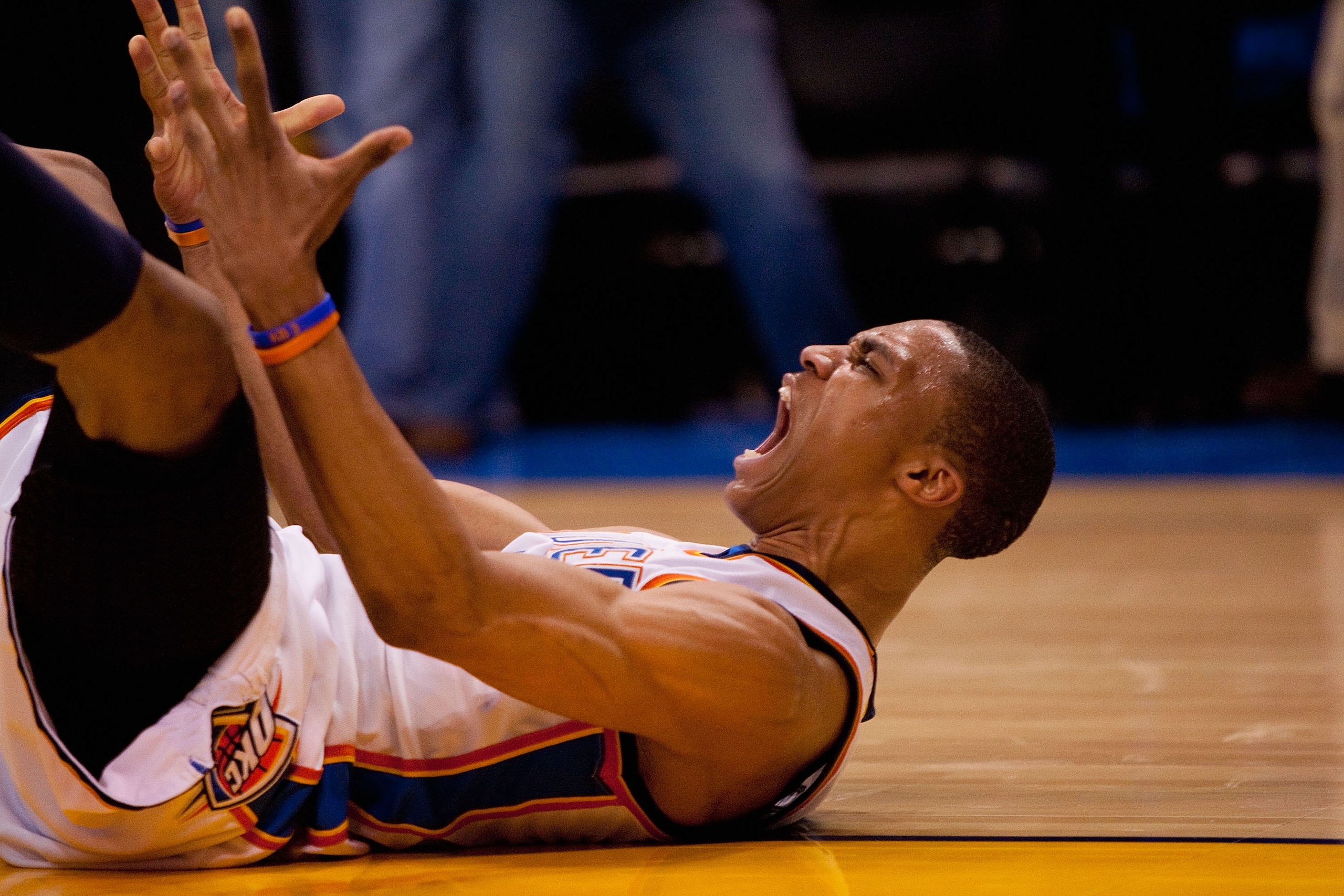
Here I just wanted to put in a number of miscellaneous other gems.
PPG/Drtg Ratio
Remember I alluded to this in the Defensive Rating slide? This is a ratio of how many points the player gives up per 100 possessions compared to the team defensive rating in general.
It's not a measure of how many points the person is responsible for, but it's more of a relative success rate. For example, the chances of the Bulls opponents scoring by going at D-Rose directly are about 75 percent of what they would be if they attacked anyone else.
In other words, all five players have a positive defensive effect on their teams, but Rose is the most effective. Rondo has a more positive impact than Williams, and nearly as much as Paul. This gives us a better indication of how much impact the players are having on the team being a good defensive team.
Turnover Percentage
This is a measure of the percentage of the time the opponents turn the ball over. Steals are one way of doing this, and Paul and Rondo are the leaders in that, but it's not the only way of turning the ball over.
Drawing an offensive foul, forcing a travel, double-dribble, a step out of bounds by a pressing defense, or a bad pass out of bounds are other ways a ball can be turned over as a result of good defensive play. Rondo and Paul still lead, but Rose and Williams are much closer than merely steals would indicate.
| Player | PPG/Drtg Ratio | Turnover % | % Shooting Foul | And 1 | %Score |
| Rose | 0.75 | 12.8 | 3.8 | 14 | 35.2 |
| Paul | 0.88 | 14.8 | 4.7 | 7 | 38.4 |
| Rondo | 0.83 | 16.4 | 5.5 | 2 | 38.5 |
| Williams | 0.89 | 12.8 | 6.9 | 10 | 39.3 |
| Westbrook | 0.92 | 9.9 | 7.4 | 6 | 43.2 |
Shooting Foul Percentage
Sometimes this is good and sometimes it's bad. Rose fouls the least often, Westbrook the most often.
It seems similar to what happens on the other end of the court, where Rose makes less contact and gets fouled the least often, while Westbrook fouls the most often.
And 1
When a player fouls a player going to the basket, how often does the player make the shot? Part of a "good foul" is making the player earn his points from the stripe, not getting a bonus point from the stripes.
It's clear that Rondo is much better at this than Rose.
Percent Score
This is a measure of how often the opponent scores while the player is guarding him. Rose is the lowest here, and Westbrook is the highest.
I doubt it's a coincidence that the players are ordered the same if you look at frequency of foul rate with the frequency of scoring rate.
In other words, if you foul someone and send them to the charity stripe, they are more likely to score. Sort of a no-duh there, huh?
Conclusion
9 of 9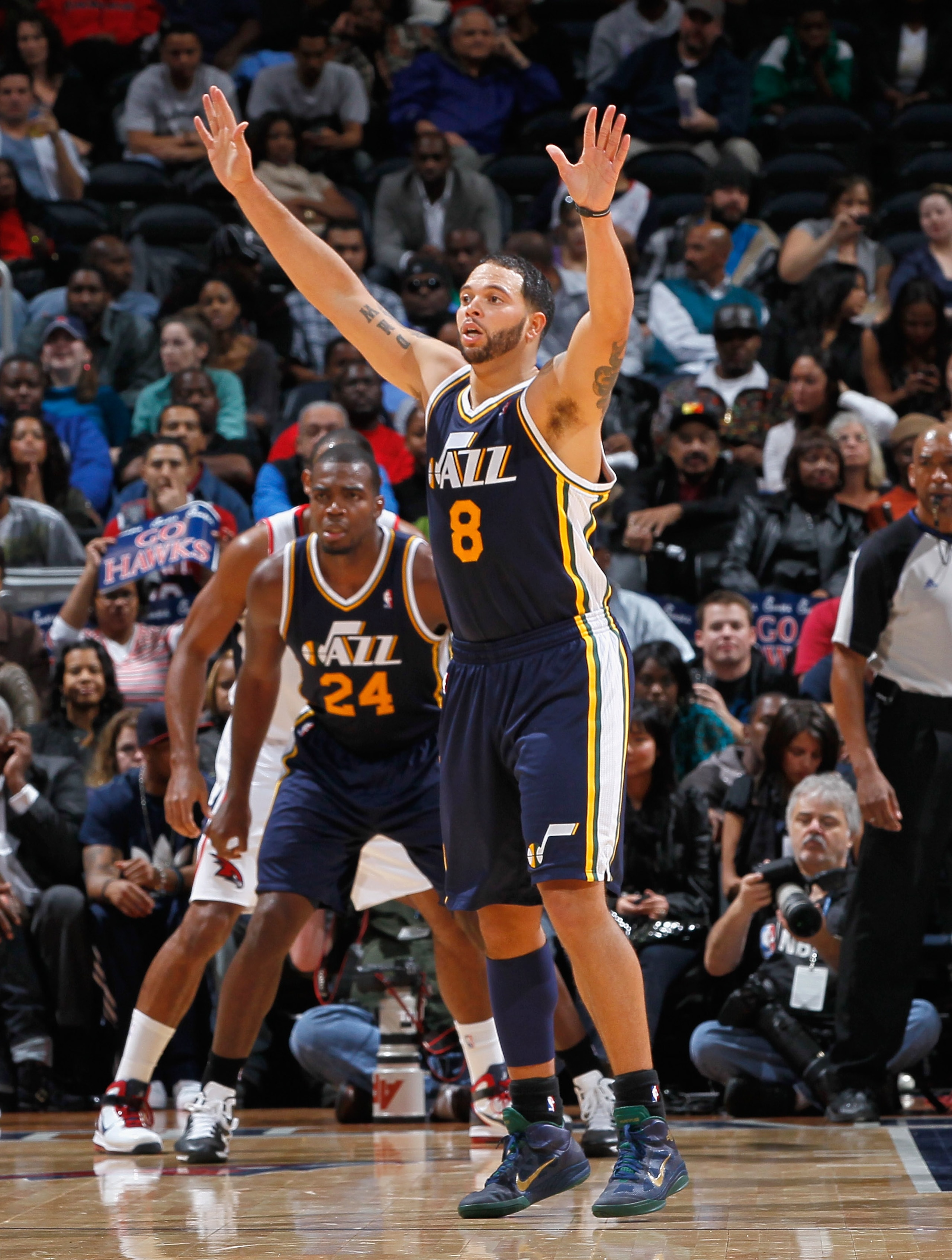
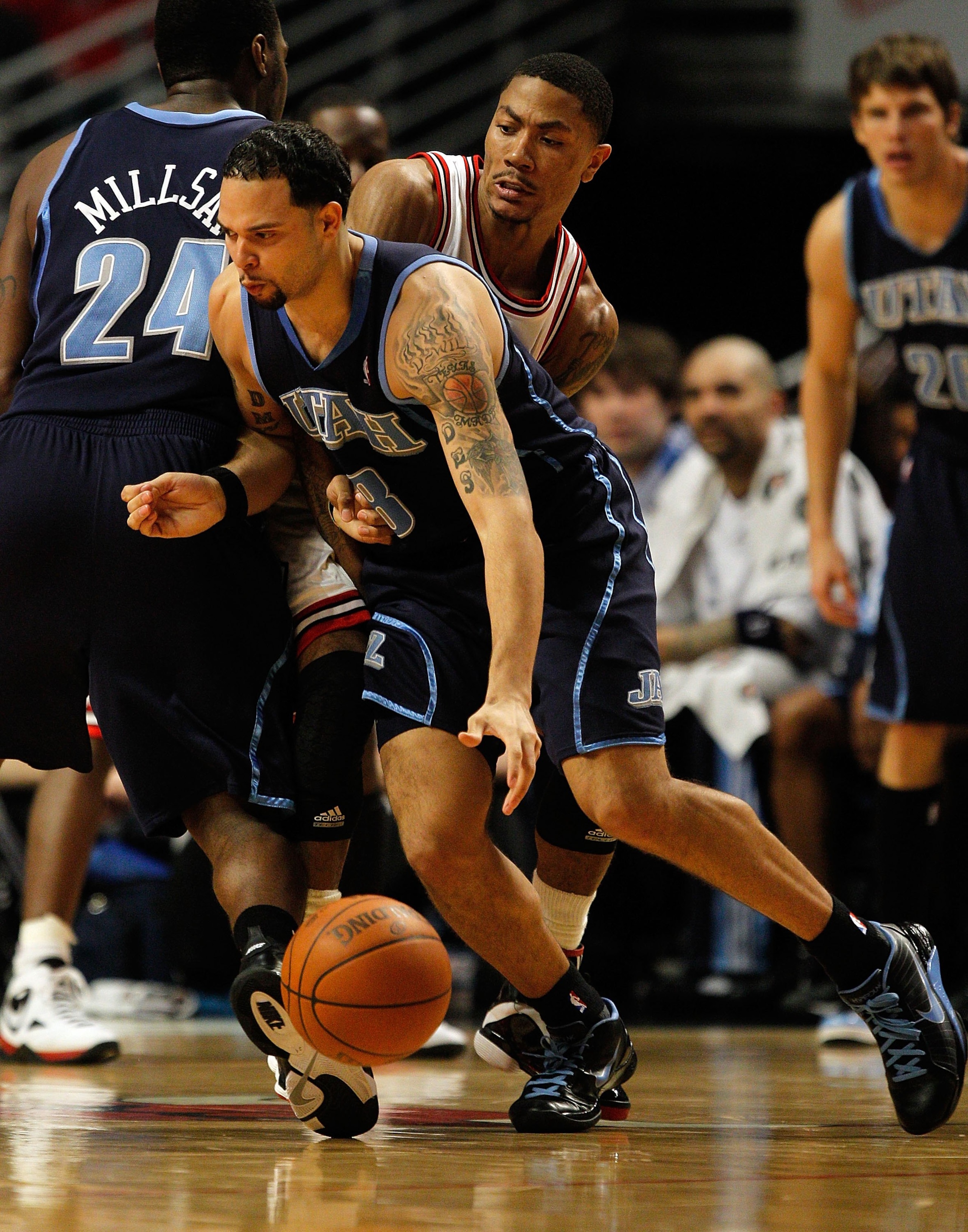
I promised I wasn't going to rank them and I'm not. The only reason that Williams picture is above is he was the only one whose picture hadn't been put up yet.
I think that there are some pretty intriguing things to discuss though. I feel it's safe to say this: They are all excellent defenders. None of them are "Steve Nash," who excel on only one end of the court.
So that's what I'm hoping happens next.
What do you think? Who is the best defender of the bunch? Did your mind change about anything? I'm interested in what you're interested in.
I'd like to do more of these types of studies, but I need feedback.
So please, leave a comment with anything you think is helpful.
_0.png?w=2560 "Unranked Teams Cause Chaos in Rankings 📊")
.png?w=2560 "Week 8 Winners & Losers 📊")


.jpg?w=2560 "Jonathan Taylor Landing Spots 📍")