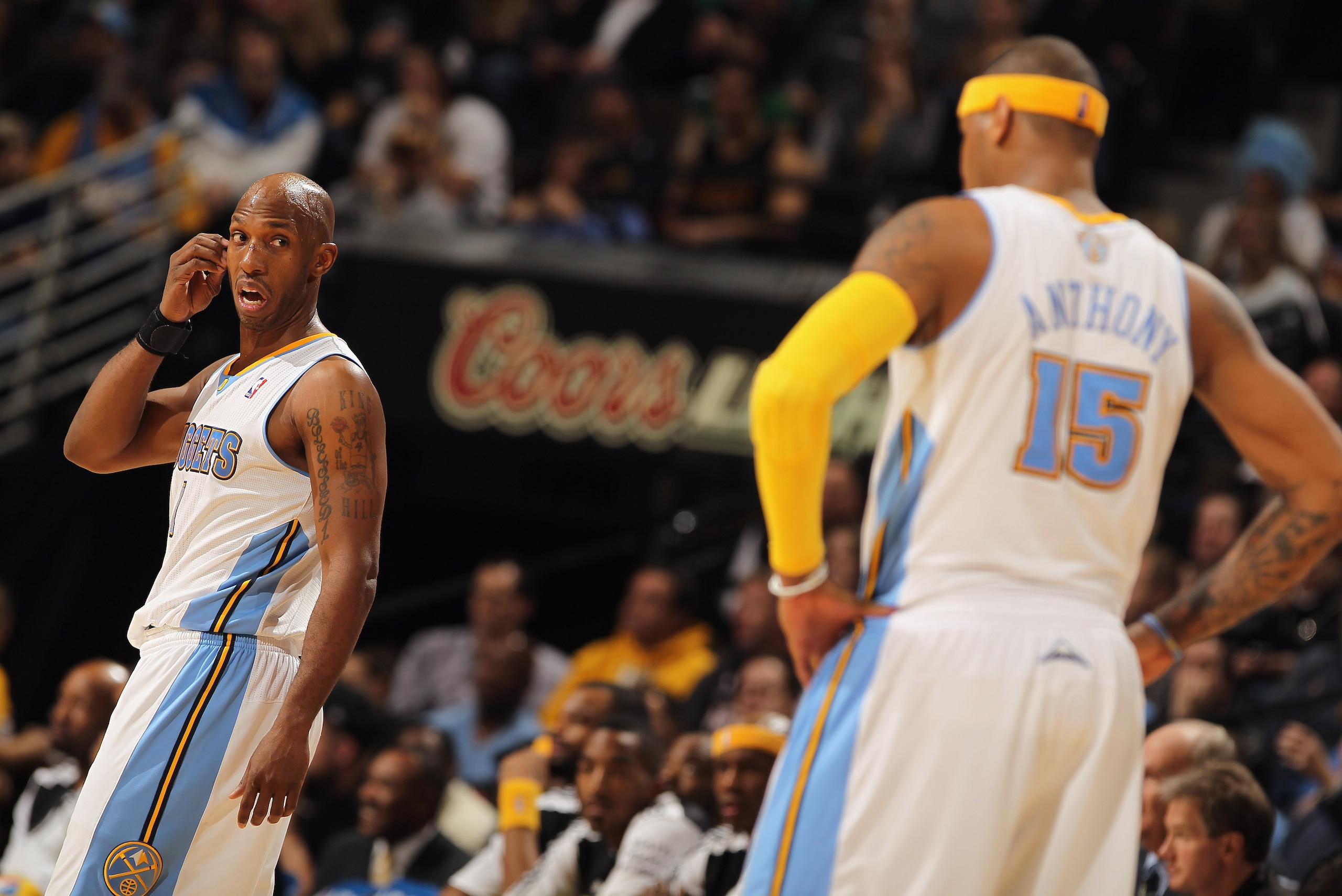

Carmelo Anthony Trade Rumors: How Deal Ranks with Most Important NBA Trades
In case you have been living under a rock for the past month, let me fill you in on the proposed mega-deal for Denver Nuggets star forward Carmelo Anthony.
With three teams and 15 players involved, the New Jersey Nets trade for Anthony would become the biggest trade of all-time in terms of players involved and would change the landscape of the NBA.
The trade involves Denver receiving Derrick Favors, Devin Harris, Anthony Morrow, Quinton Ross, Ben Uzoh and Stephen Graham, along with two first-round picks.
New Jersey would end up getting Anthony Chauncey Billups, Rip Hamilton and potentially Al Harrington.
Finally, Detriot would get Johan Petro, Troy Murphy and a draft pick.
I'm tired of asking the question of whether or not it will happen, the question I want to ask now is where would it rank, if it were to happen, with some of the blockbuster trades of the past.
Here, I have compiled a list, including the proposed Anthony deal inserted in the spot it would rank if it were to go through.
In terms of the rankings, I have considered the number of players involved, the number of championships effected, and the importance of the players involved.
Note: I refuse to include the LeBron James and Chris Bosh "trades" here, they were trades in name only. It was more like in the MLB when a team loses a good player to free agency and gets that team's draft pick in return.
15. Allen Iverson to the Denver Nuggets
1 of 15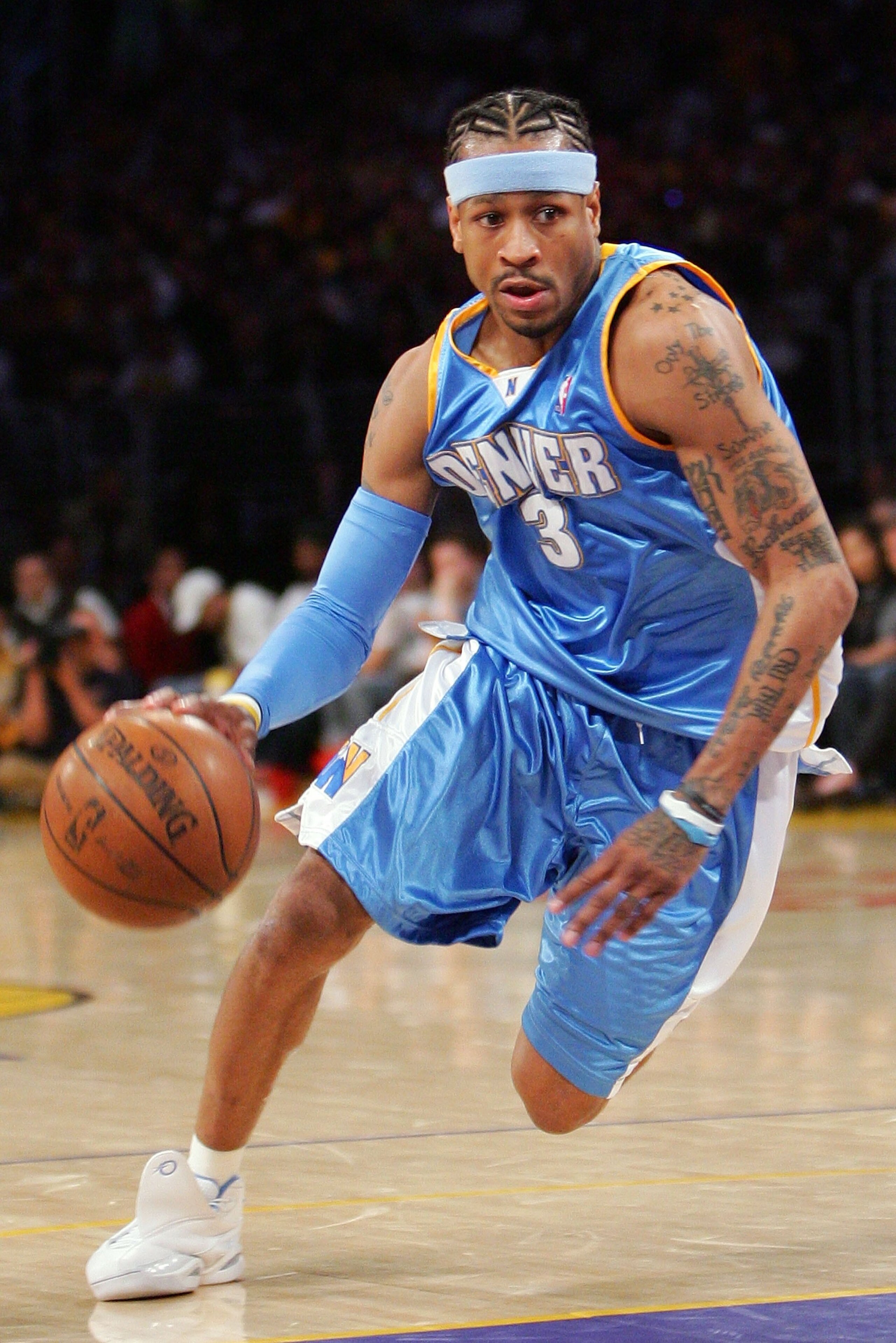
Ever since 2003, the Allen Iverson had been rubbing various people in the Philadelphia 76ers staff the wrong way, and it all came to a head in 2006.
In December of 2006, Iverson reportedly demanded a trade and then missed a practice prior to a matchup with the Washington Wizards, so he was told he would not be playing in that game or any more until they traded him.
A week later, he was traded to the Denver Nuggets with Ivan McFarlin in exchange for Andre Miller, Joe Smith and two 2007 first-round picks.
In the previous season for the 76ers, Iverson had averaged 33 points and 7.4 per game and averaged 31 points up until being traded in the 2006 season.
It led to no direct championship swings, but it did move one of the most prolific players of the era in the middle of a season, something that is as rare as LeBron James being accountable for something he says.
14. Rasheed Wallace Goes to Detroit
2 of 15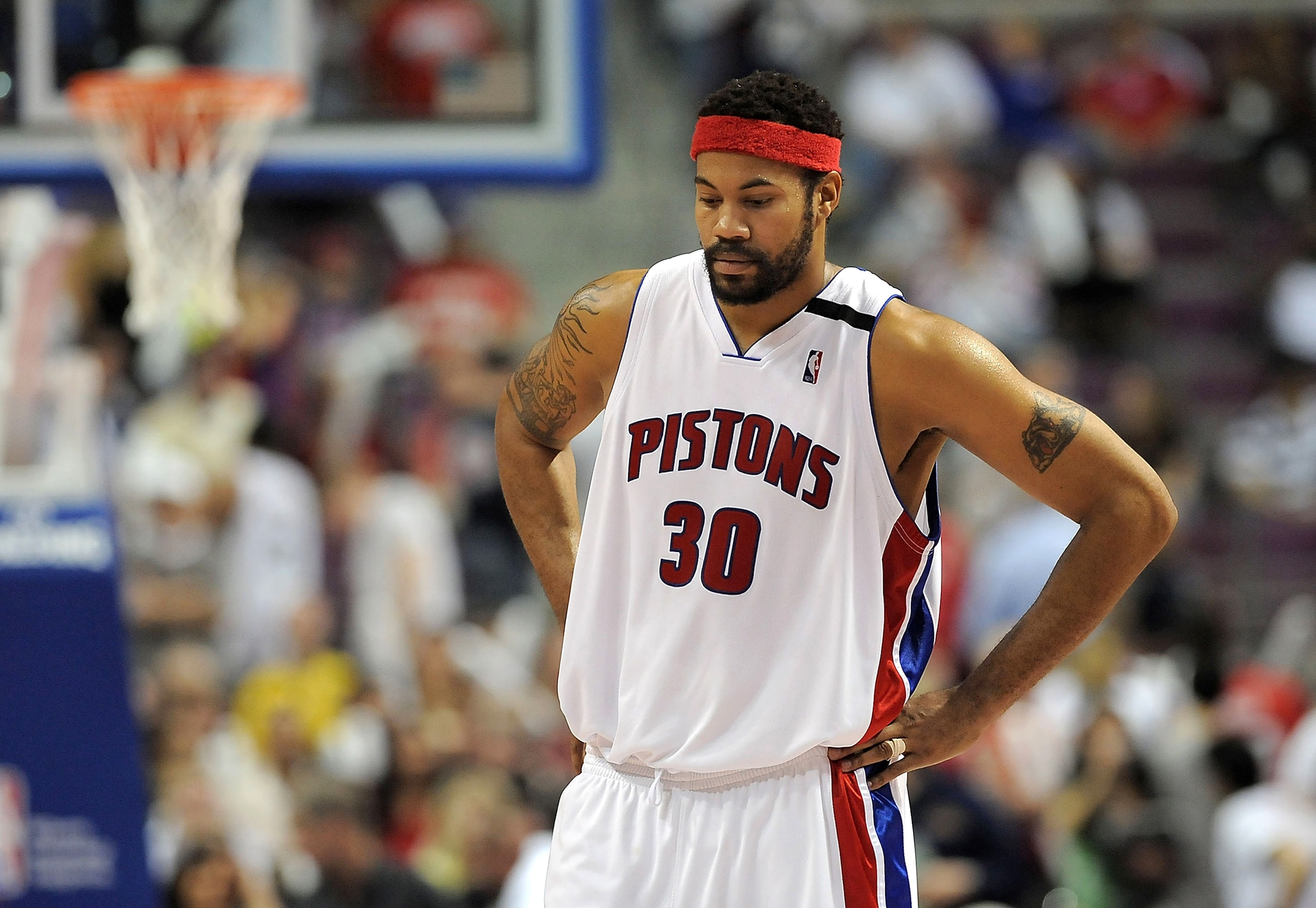
After playing one game with the Atlanta Hawks in 2004, after being traded from the Portland Trail Blazers, Detroit made a move for the troubled big man.
The Pistons gave up Bob Sura, Zeljko Rebraca and a first-round pick in the 2004 draft to Atlanta and Lindsey Hunter, Chucky Atkins and a 2004 first-round pick (Tony Allen) to Boston.
That trade, made at the trade deadline of the 2004 season put the Pistons over the top and allowed them to win the championship that season over the Los Angeles Lakers.
Detroit picked up the exact player they needed, a guy who was tough as nails at the time and was tired of playing on good teams who failed to win a ring.
He was driven at the time, and that allowed them to overcome the Lakers in the championship.
13. Carmelo Anthony Trade
3 of 15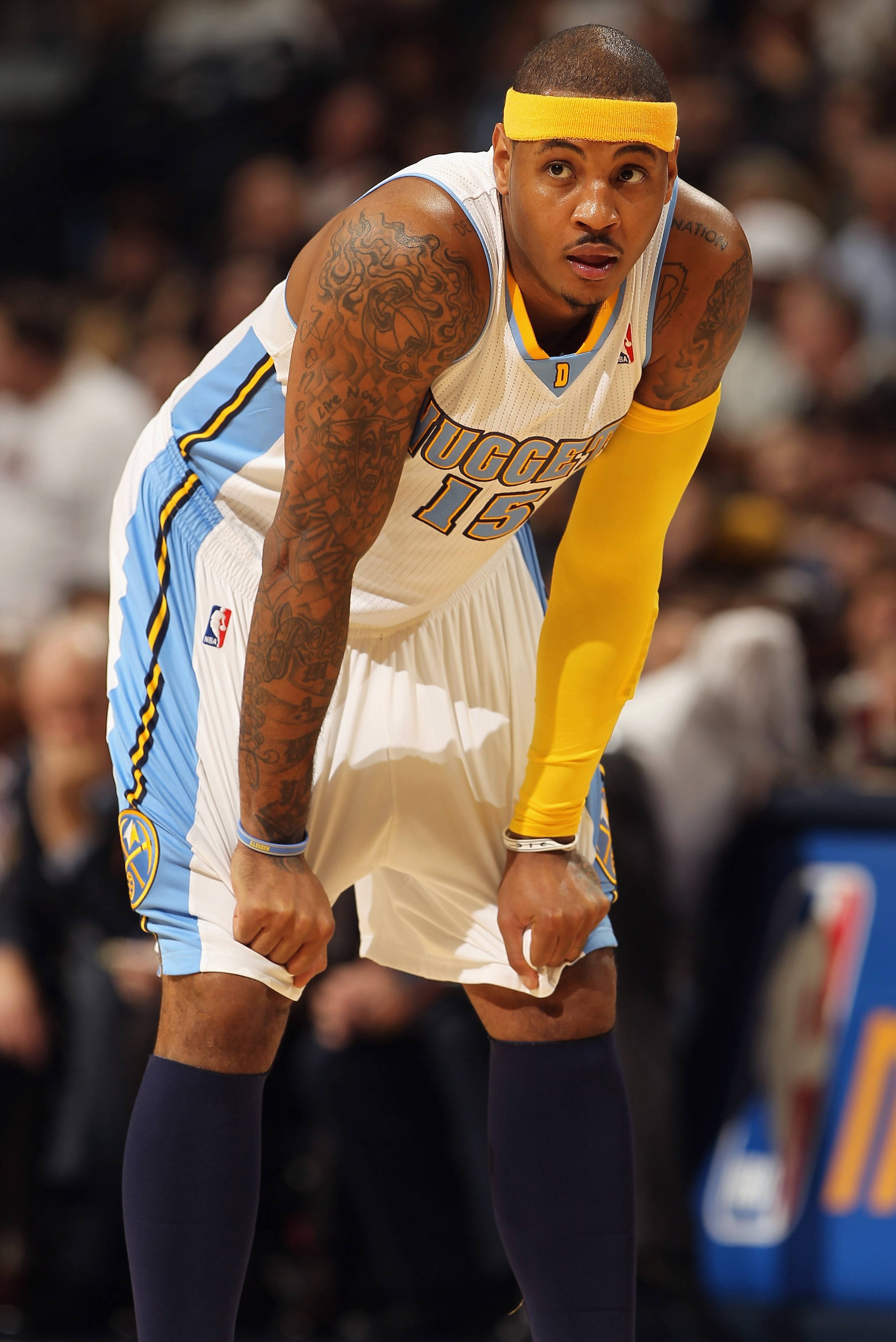
The Carmelo Anthony trade would include the most players of any trade in the history of the NBA, so right there it is a historic trade.
Then, it would send two draft picks to the Nuggets, and depending on who those turn out to be, it could make the trade even bigger.
Denver will also get a handful of rising stars and free up salary space for the coming seasons.
This trade could make New Jersey a title contender within the next few years and even allow them to win one or two, depending on how they build around Anthony.
Then, it could also spell great things for the Nuggets, as they could end up with some great players through the draft along with Derrick Favors and Devin Harris.
It is impossible to properly place it right now compared to how we placed all of the other trades using hindsight, but this is where it fits as of right now.



12. Kevin Garnett/Ray Allen to the Boston Celtics
4 of 15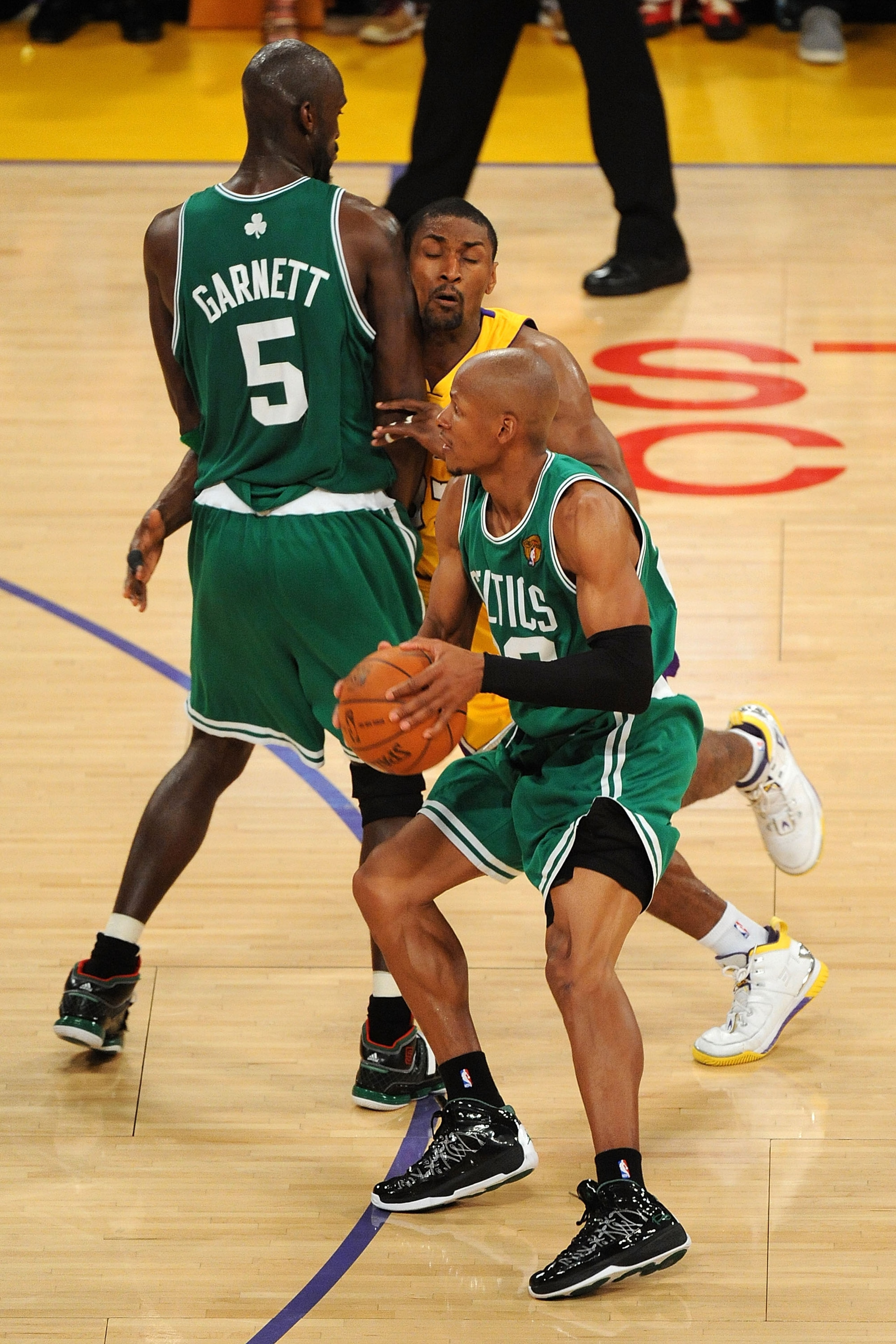
These may have been two separate trades, but they happened in such rapid succession that it seemed like they happened together.
In a span of two days, the Celtics traded Delonte West, Wally Szczerbiak and Jeff Green for Ray Allen and Glen Davis and then traded Ryan Gomes, Gerald Green, Al Jefferson, Theo Ratliff, Sebastian Telfair, two first-round draft picks and cash for Kevin Garnett.
This trade did something the NBA sorely needed; it made the Celtics relevant again, something that had not happened since 1994.
As a direct result of this trade, the Boston Celtics went from a 24-win lottery team to a 66-win champion.
11. Pau Gasol to the Los Angeles Lakers
5 of 15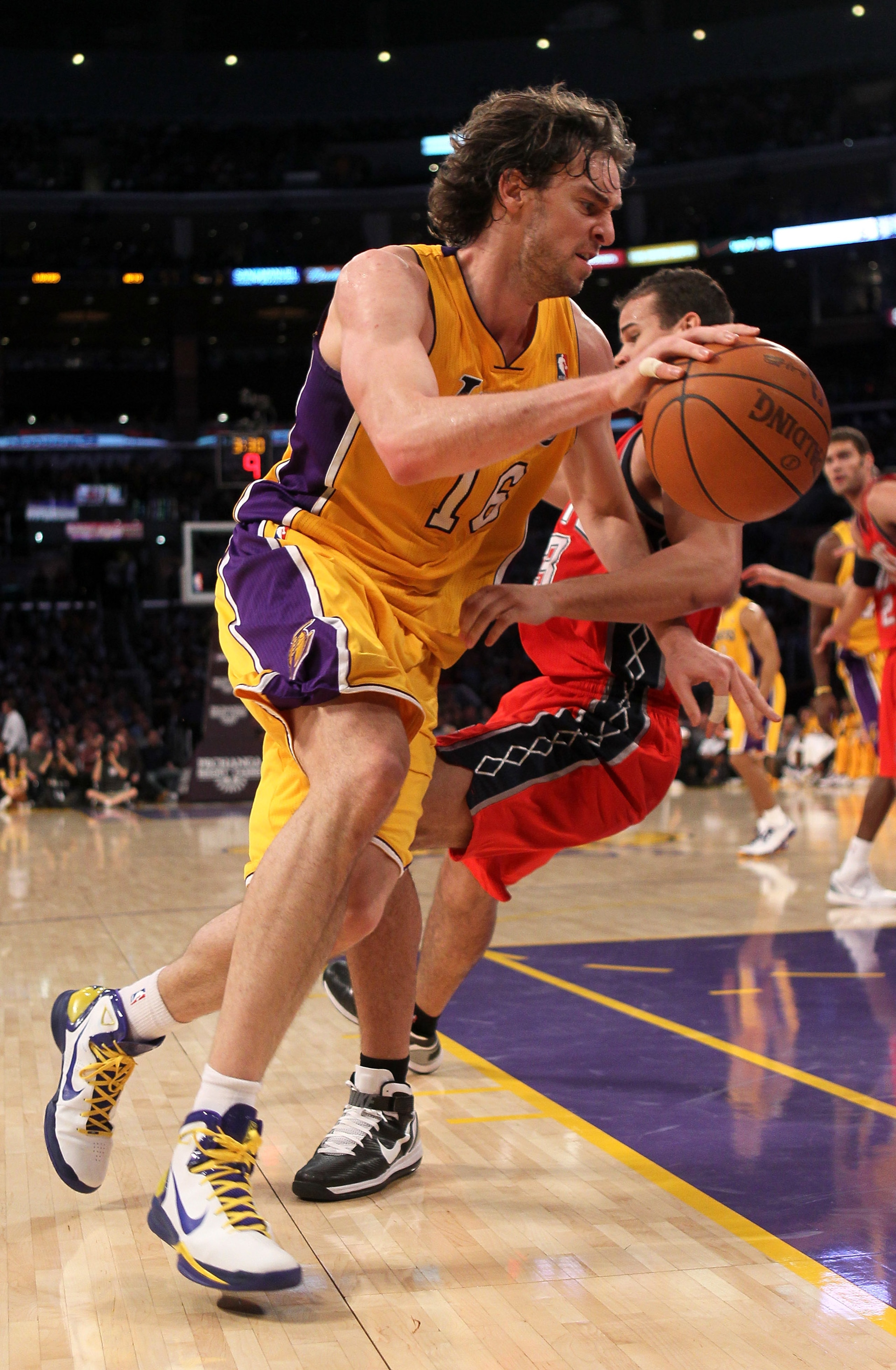
It seemed like a steal at the time for Los Angeles; now, it looks like an absolute robbery.
Memphis sent Gasol to LA with their second pick in the 2010 draft for Kwame Brown, Javaris Crittenton, Aaron McKie, Marc Gasol and the Lakers 2008 and 2010 first-round picks.
Los Angeles has gone on to win two titles with Gasol as their second option to Kobe Bryant and are looking for as many more as they can get.
Memphis, on the other hand, only has Marc Gasol and Grevis Vasquez (the 2010 pick) to show for that trade.
10. Shaq to the Heat
6 of 15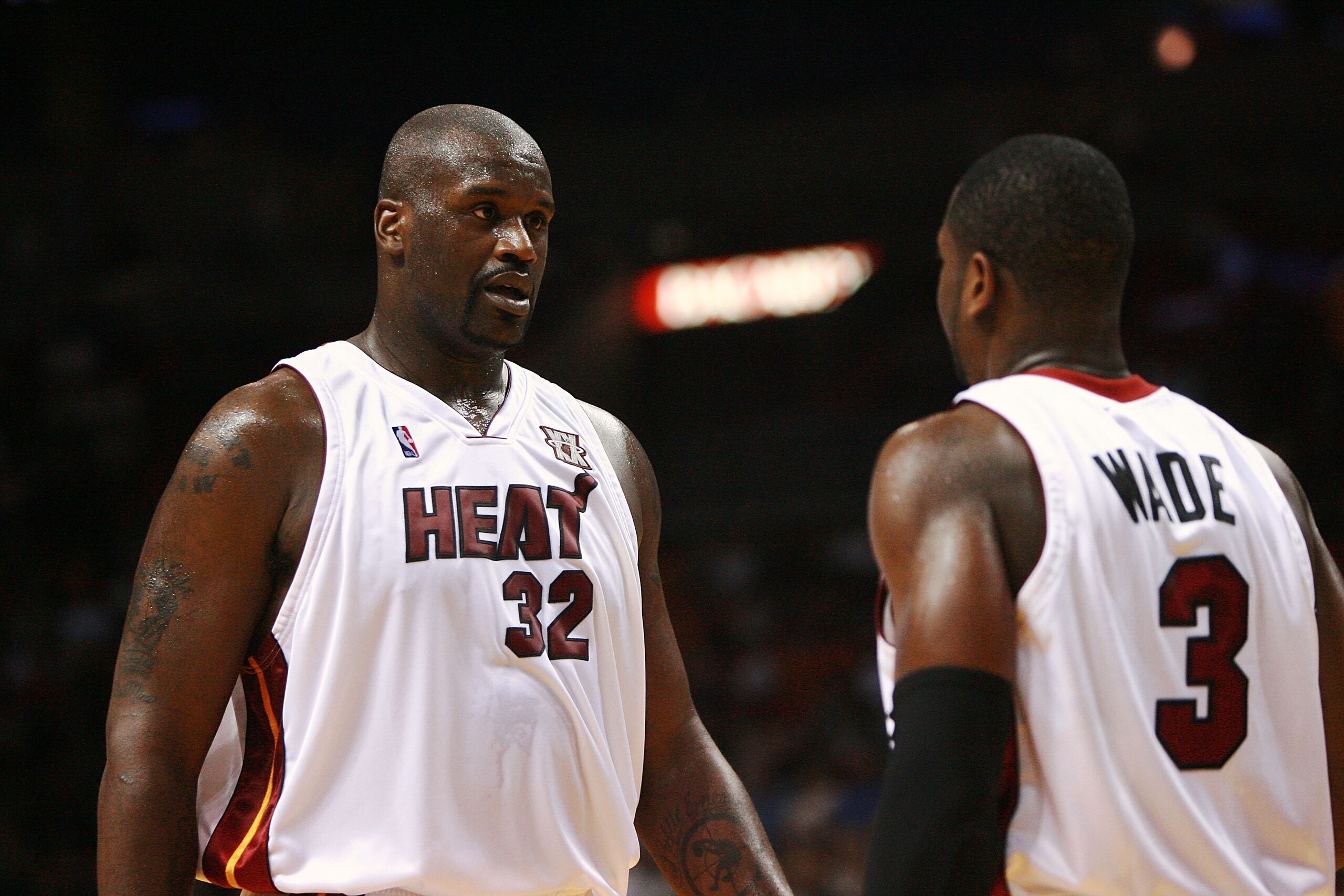
At the end of the 2003-2004 season, one thing seemed certain in Los Angeles. Either Shaq had to go or Kobe had to go.
The Lakers ended up opting to keep the younger Kobe Bryant and shipped The Big Diesel to Miami to play with Dwyane Wade in exchange for Caron Butler, Lamar Odom, Brian Grant and a first-round draft pick which ended up becoming Jordan Farmar.
The Heat got Shaq who ended up helping Miami to a title in 2006, and the Lakers got to keep Kobe Bryant who, along with Odom and Farmar, both of whom were on the team in the past two years, took the Lakers to two more titles in 2009 and 2010.
I'd say both teams are quite happy with their ends of the trade.
9. Moses Malone to the Philadelphia 76ers
7 of 15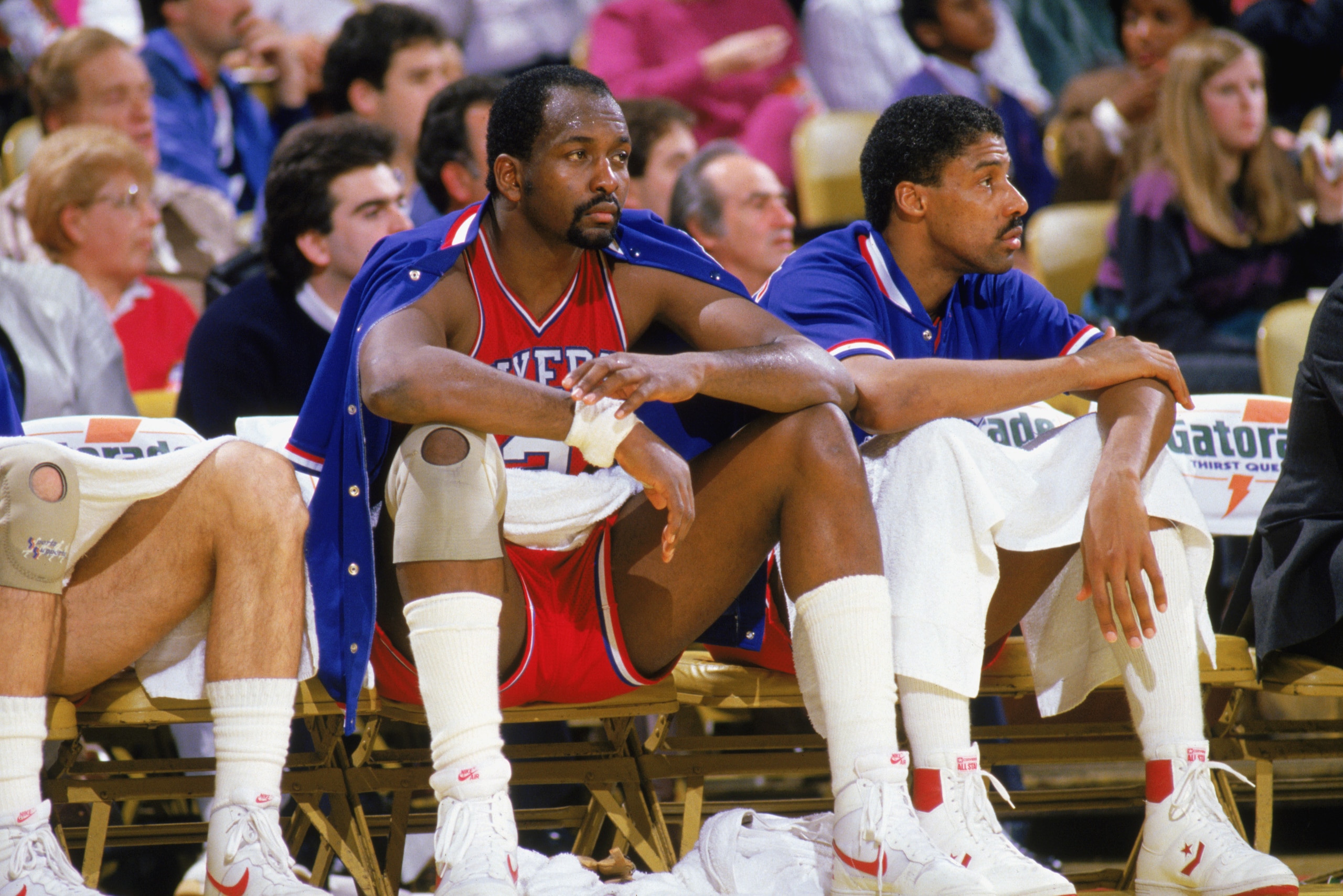
Moses Malone was coming off an MVP season in 1982, but the Houston Rockets were trying to become a younger team.
After matching the offer the 76ers gave to Malone, a restricted free agent at the time, Houston traded him to Philadelphia for Caldwell Jones and their 1983 first-round draft pick.
The pick Houston received went on to become Rodney McCray, who would end up being traded for Otis Thorpe, who would eventually end up turning into Clyde Drexler via trade.
Malone would go on to win another MVP Award in 1983, and the 76ers would win the NBA Championship that season as a direct result of acquiring Malone.
So, the Moses Malone trade directly effected the outcome of the 1983 championship and indirectly effected the outcome of the 1995 championship.
8. Wilt Chamberlain to the Philadelphia 76ers
8 of 15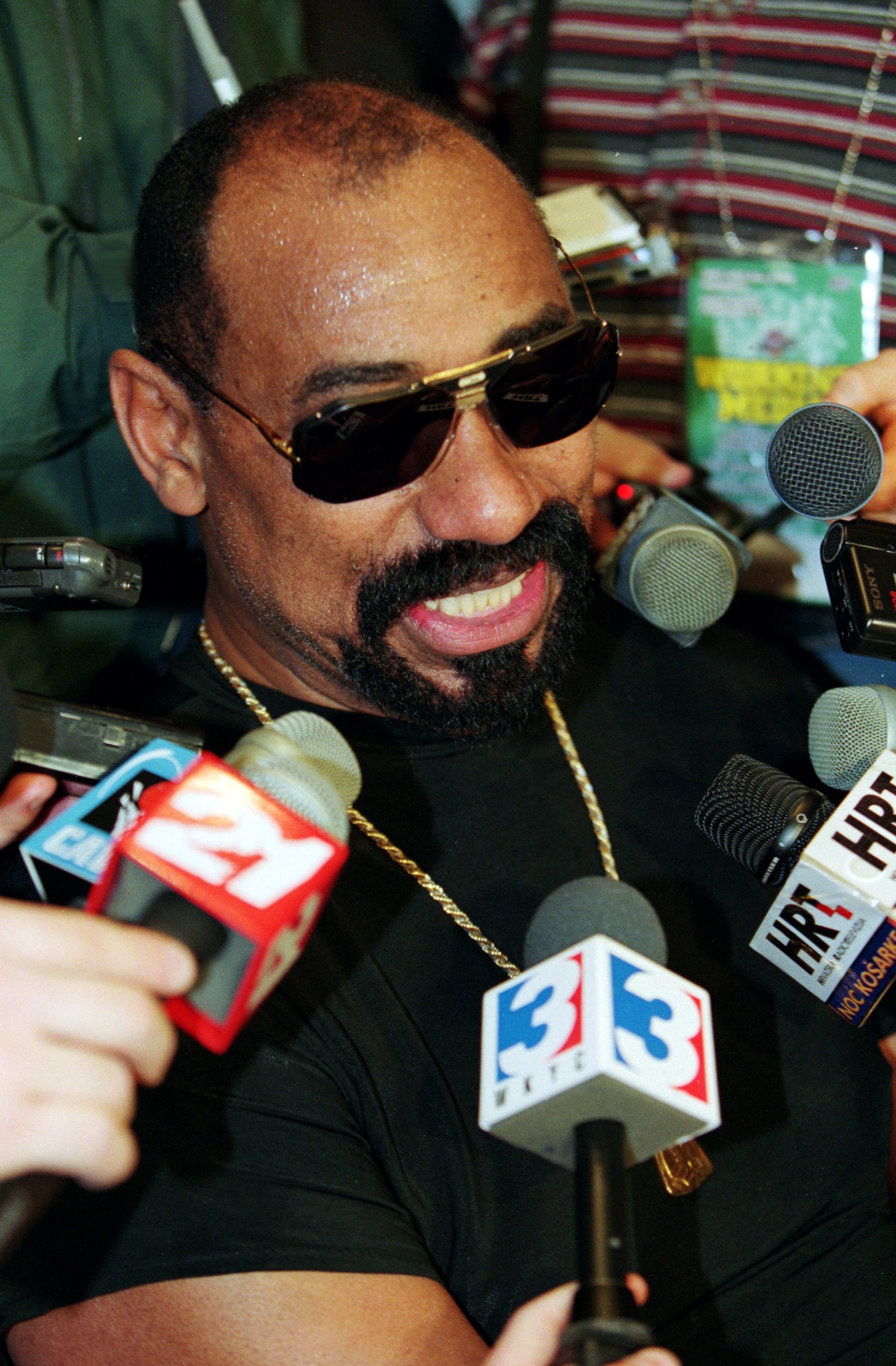
In the 1964-65 season, the San Francisco Warriors decided to trade away Wilt Chamberlain after a terrible start and the financial troubles that ensued.
In exchange for Chamberlain, San Francisco ended up getting Paul Neumann, Connie Dierking, Lee Shaffer, along with $150,000.
These three guys would go on to be remembered as "those guys that got traded for Chamberlain" and made no real impact for the Warriors.
Wilt, however, with the help of Hal Greer and Billy Cunningham beat the Warriors for the NBA Championship in 1967 (Neumann was the third leading scorer for the Warriors that year, but that was his last year in the league).
This is, however, only the second biggest trade involving Wilt Chamberlain.
7. Robert Parish and Kevin McHale to the Boston Celtics
9 of 15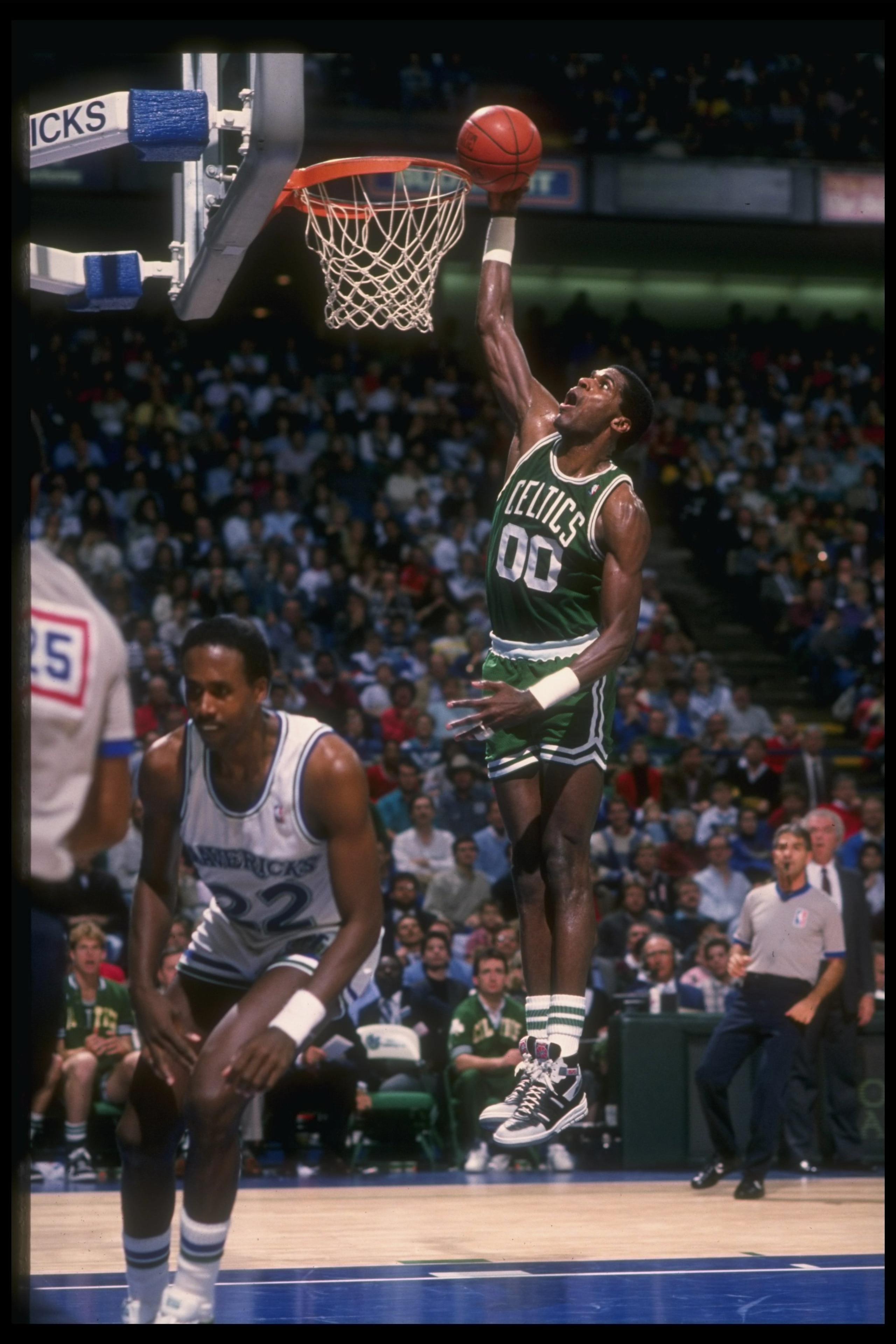
After Larry Bird's first season for the Boston Celtics in 1979-80, the Celtics had gone 61-21, and yet, Red Auerbach was still looking to make some trades.
As a result of a compensation trade with the Detroit Pistons for signing M.L. Carr in 1979, the Celtics had the No. 1 pick in the draft, along with the No. 13 pick.
Auerbach then went on to send those picks along to Golden State for the third pick in the draft and Robert Parish, an established big man.
With that third pick in the draft, the Celtics would go on to draft Kevin McHale.
So, with one fell swoop, the Celtics traded for what would be two of its three best players over the next decade. Those players would help them win three championships in a span of six years in the 1980s.
6. Scottie Pippen to the Chicago Bulls
10 of 15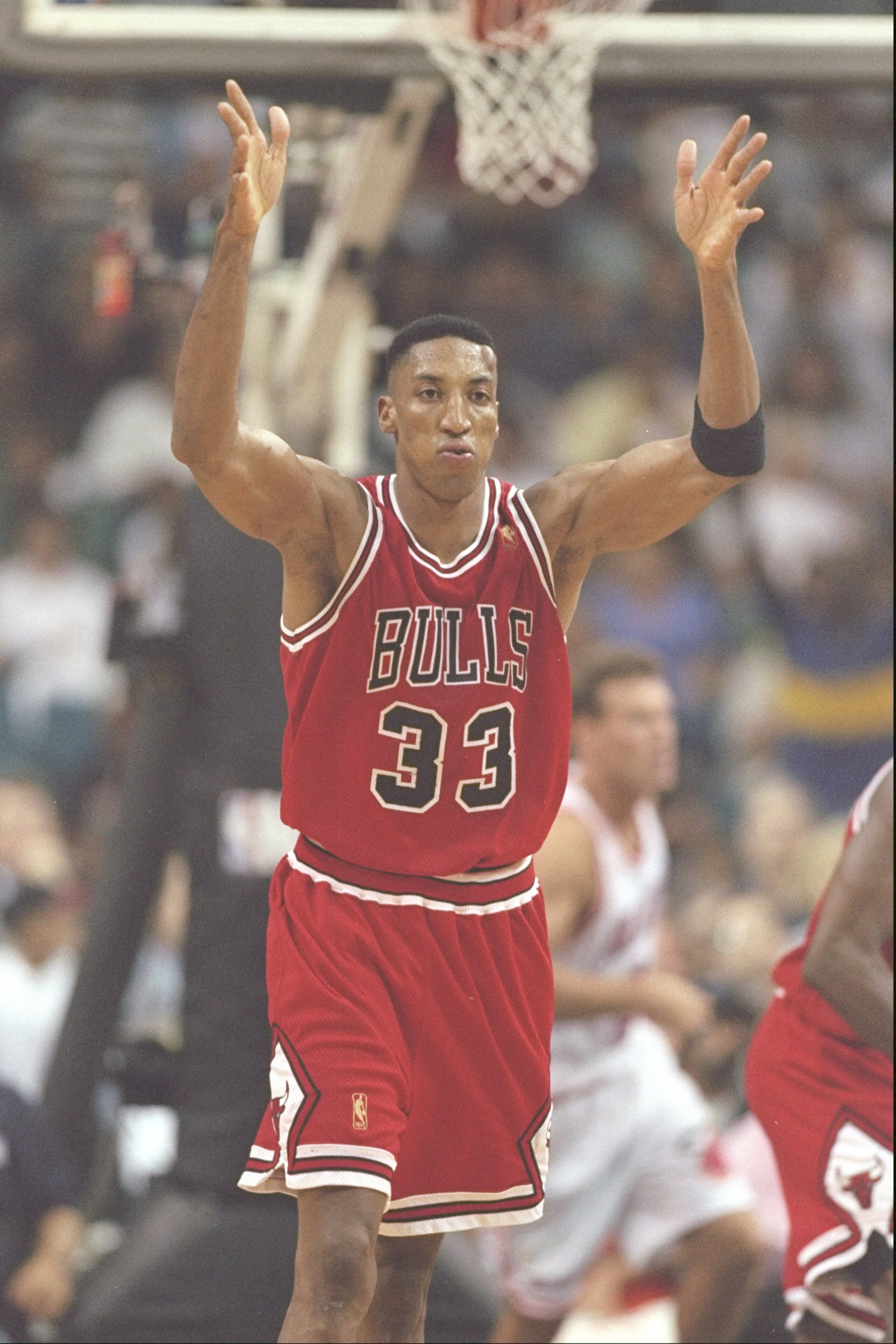
This is the simplest trade on the list, but it had a huge impact.
In the 1987 NBA Draft, the Chicago Bulls picked Haitian seven-footer with the eighth pick and traded him straight up for No. 5 pick Scottie Pippen.
Pretty simple when you look at it, but it ended up giving Michael Jordan the second banana he always needed.
Scottie Pippen ended up going on to help the Chicago Bulls win six championships in the 1990s and become known as one of the greatest dynasties of all-time.
5. Kareem Abdul-Jabar to the Los Angeles Lakers
11 of 15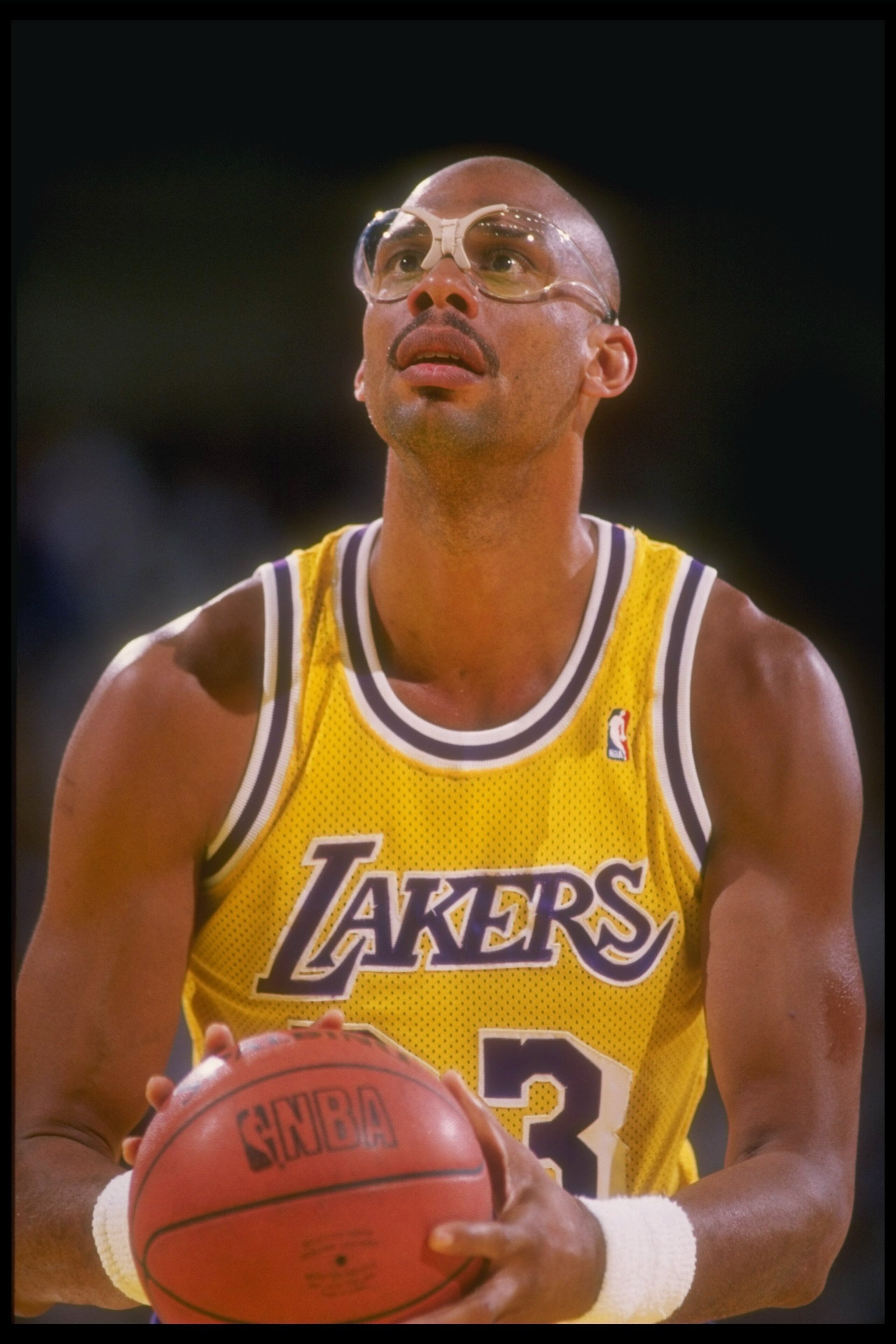
Kareem Abdul-Jabar became the second big man in seven years to be traded to the Los Angeles Lakers.
After Wilt Chamberlain "retired" in 1973, the Lakers were in need of another big man and sent Elmore Smith, Brian Winters and rookies Dave Meyers and Junior Bridgeman to the Milwaukee Bucks in 1975.
All of the players the Bucks got had the potential to be good players, although none of them ever blossomed into anything exceptional and had two all-star appearances between them.
The only thing the Lakers ended up getting was a guy that would go on to help them to five championships in the 1980s and become the NBA's all-time leading scorer.
4. Wilt Chamberlain to the Los Angeles Lakers
12 of 15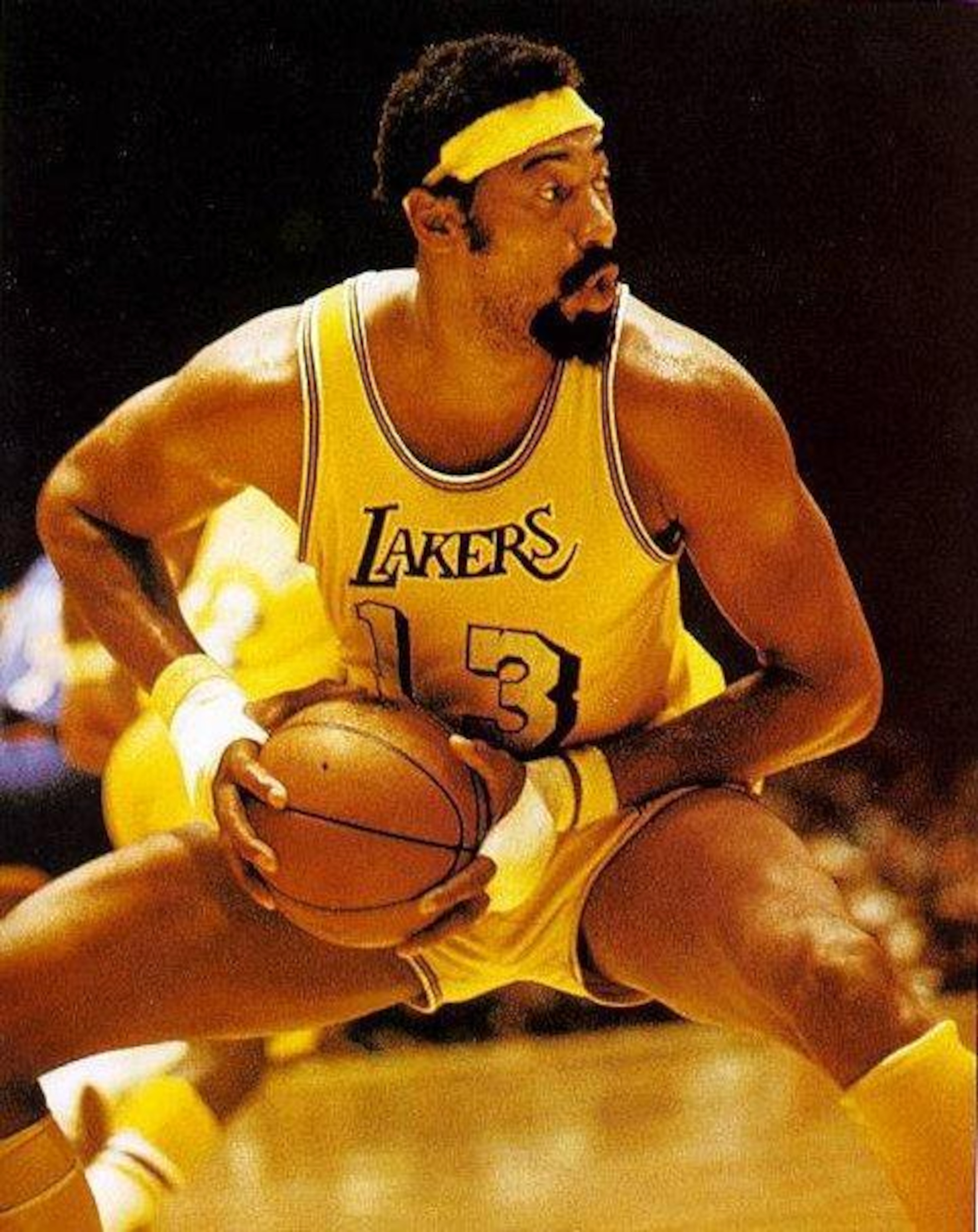
In the 1968 version of "let's trade Chamberlain for pennies on the dollars," the Lakers gave up Darrall Imhoff, Archie Clark and Jerry Chambers to get Wilt to come to LA.
In defense of the 76ers, Imhoff was an all-star in the 1966-67 season, and Clark was an all-star in the 1967-68 season.
With Chamberlain, the Lakers ended up losing in the 1969 finals to the Boston Celtics and the 1970 finals to the Knicks in Game 7, which would become the famous Willis Reed game.
They would finally win a title with Chamberlain in 1972 when they got their revenge on the New York Knicks.
This would go on to become one of the most famous trades of all time and be known as the one that sent the league's most recognizable player to one of the biggest markets in the country.
3. The Lakers Get a Magic Draft Pick
13 of 15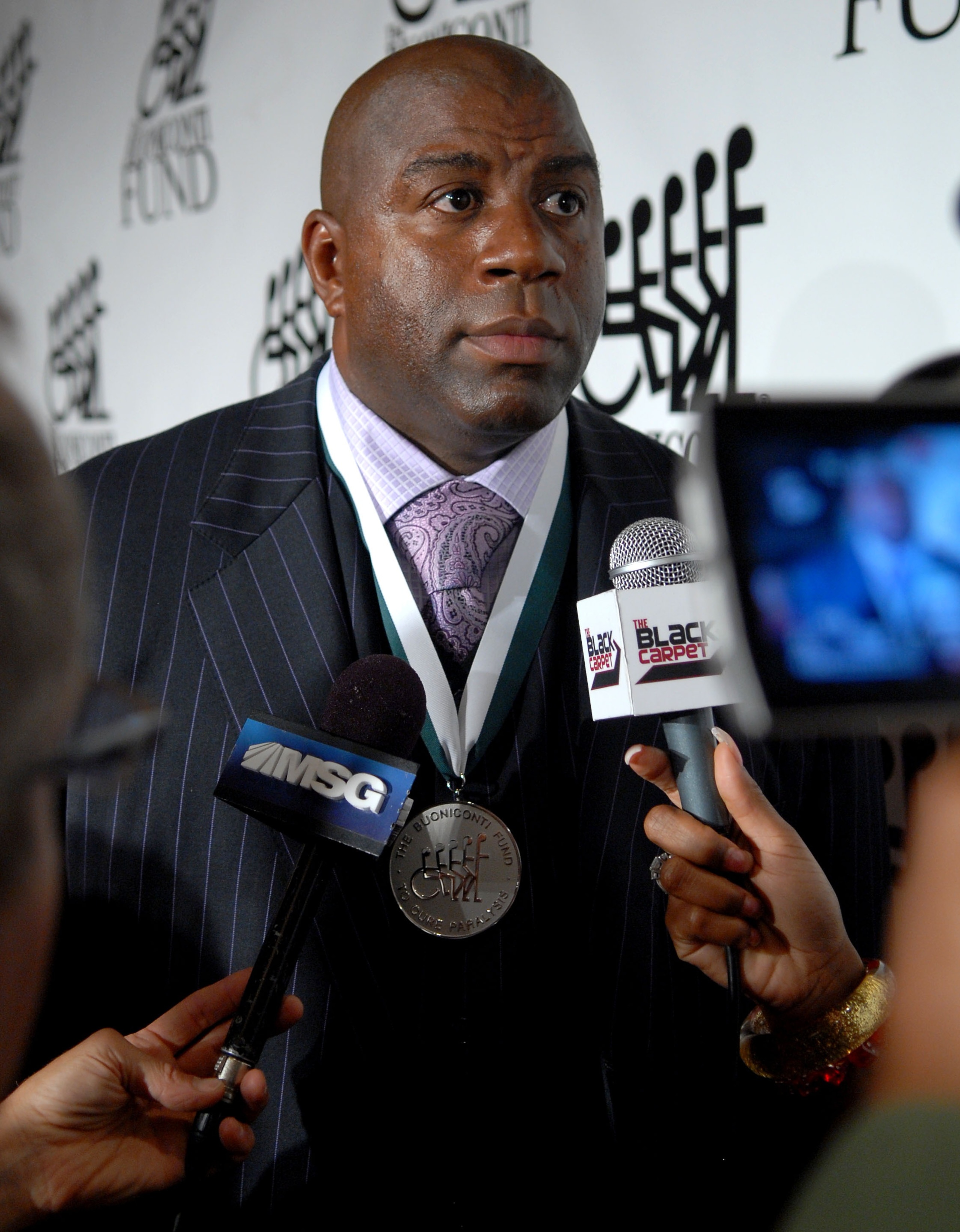
To say owners were a bit loose with their draft picks in the earlier days of the NBA would be a bit of an understatement. And, if you were a smart NBA owner at the time, you could rack up some important picks for your team.
Well, back in 1976, the New Orleans Jazz signed Gail Goodrich, and the Lakers were due compensation as per league rules at the time.
In exchange, the Lakers got New Orleans' first-round picks in 1978 and '79.
With that pick in 1979, which just so happened to be a No. 1 pick, it just so happened to turn into Magic Johnson.
I'd say it wouldn't be too much of a stretch to say the Lakers were pretty happy with losing Gail Goodrich in 1976.
Magic went on to win three MVP Awards and lead the Lakers to five titles over the next decade.
2. Kobe Bryant Comes to LA
14 of 15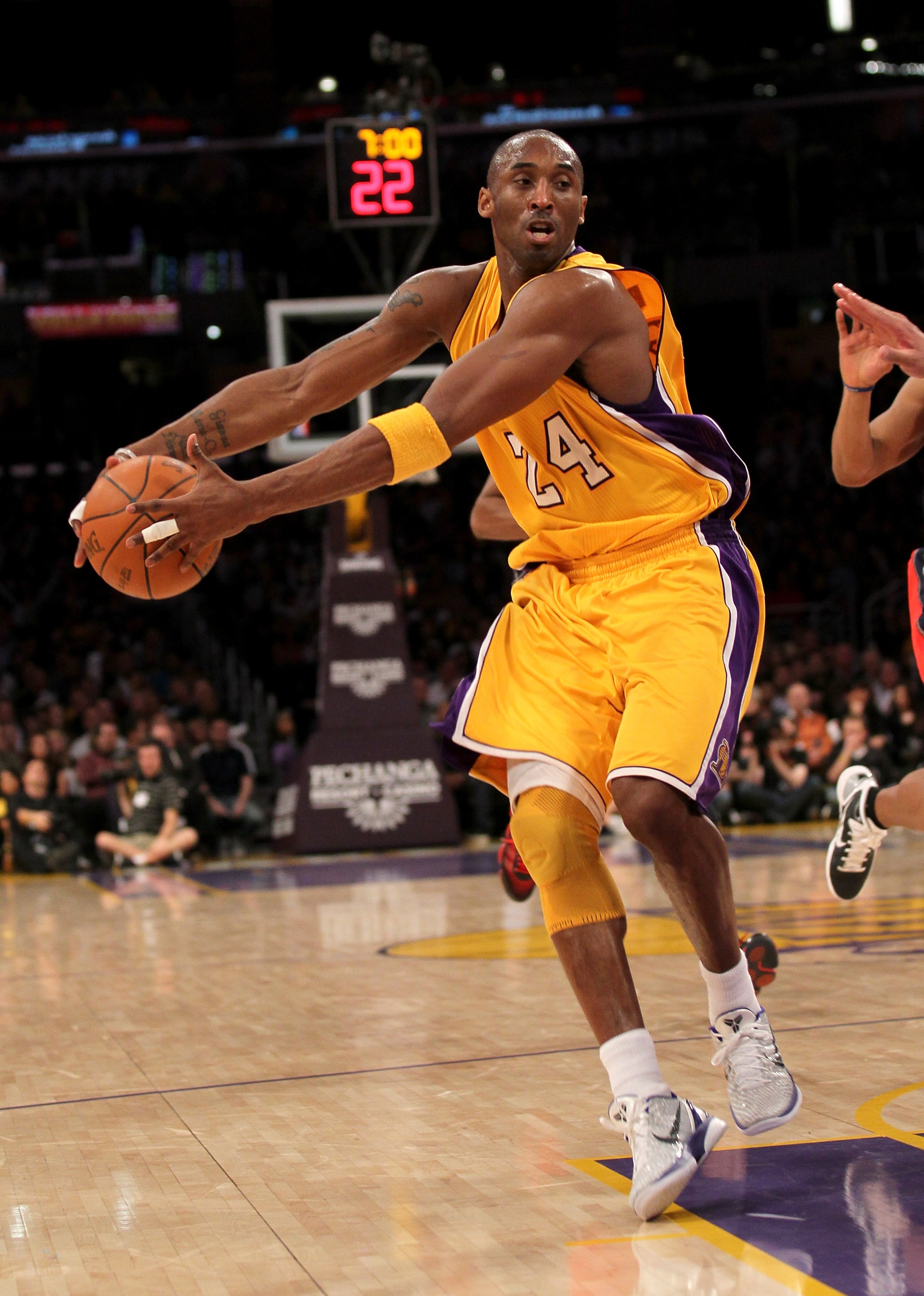
In a draft-day trade back in 1996, the Charlotte Hornets traded their 13th pick, Kobe Bryant, for the Lakers starting center, Vlade Divac.
It has been called a short-sighted trade, but really, the Hornets had agreed to trade that pick the day before the draft, and therefore the pick already belonged to Los Angeles, albeit unofficially.
Kobe went on to help the Lakers to five titles in the next 14 seasons, and in exchange, the Hornets at least got a decent starting center.
Was it a lopsided trade? Absolutely. Can you blame the Hornets for doing it though? Probably not.
1. Boston Celtics Trade for Bill Russell
15 of 15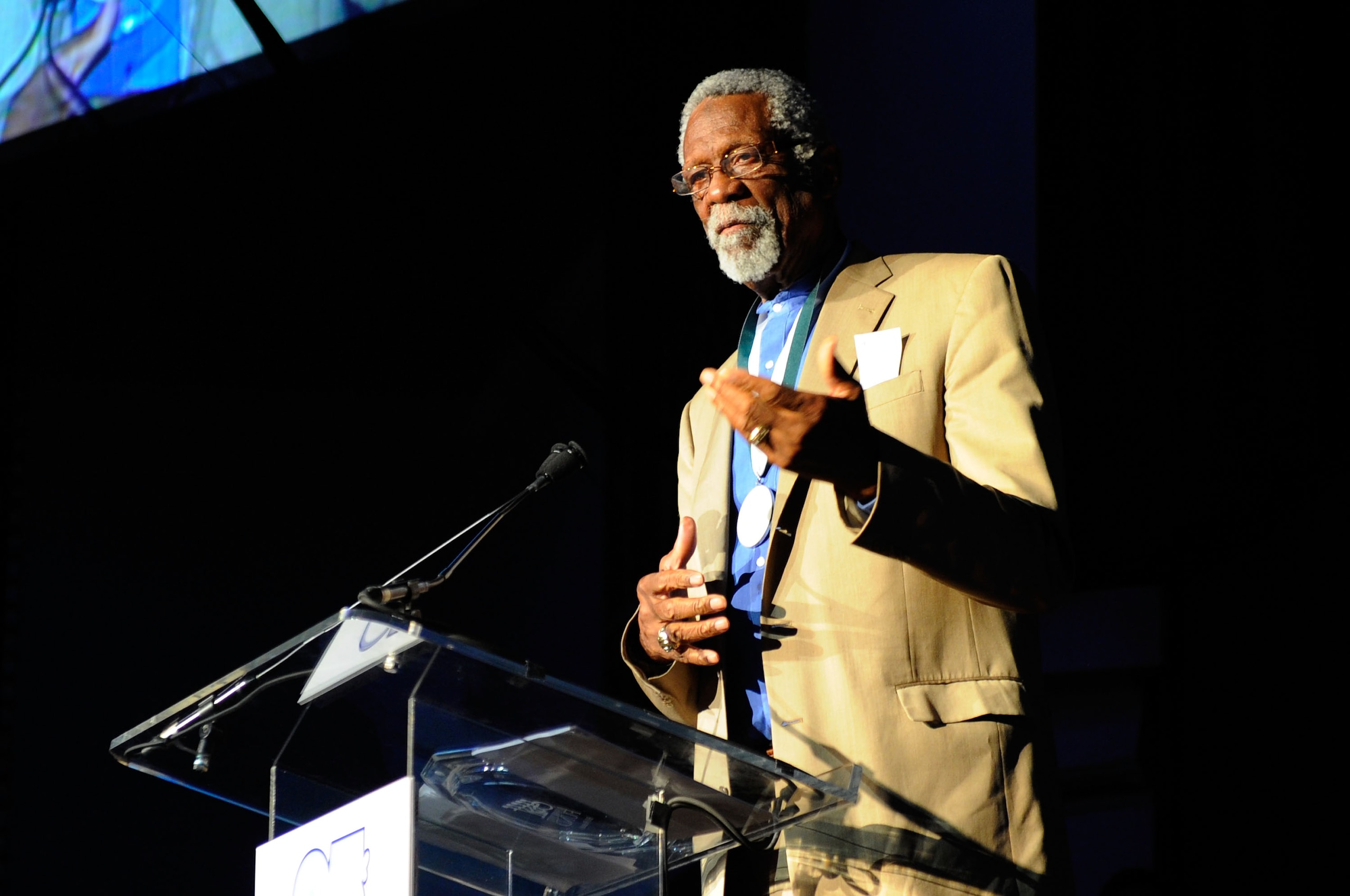
In the 1956 NBA Draft, the St. Louis Hawks wanted to draft Bill Russell, the talented center out of the University of San Francisco, but they didn't want to give him a signing bonus of $25,000.
So, Red Auerbach, being the nice man he is ended up trading six-time all-star Ed Macauley and Cliff Hagan for the rebounding machine Bill Russell.
Russell went on to be the centerpiece of 11 championship teams for the Celtics, including two as a player-coach in 1968 and 1969.
Russell was the man that stymied Wilt Chamberlain when the Celtics played the Warriors, 76ers or Lakers and was the man that became the original face of the Boston Celtics.
The most interesting facet of this trade is to think of what would have been if the Hawks were willing to pay Russell's signing bonus.
Would St. Louis go on to win as many titles as those Celtics? Would they win a few? Would Russell's legacy be anywhere near what it is now? Would there still be a basketball in St. Louis?
The possibilities are endless.
_0.png?w=2560 "Unranked Teams Cause Chaos in Rankings 📊")
.png?w=2560 "Week 8 Winners & Losers 📊")
.jpg?w=2560 "Jonathan Taylor Landing Spots 📍")



