
2011 MLB First-Year Player Draft: Every Team's Ideal First-Round Target
The Major League Baseball Draft is almost upon us.
Well...not really, but it's inching its way closer, and with the possibility of no football off-season to look forward to, it looks like the MLB draft and signing deadline could be the talk of the summer season.
So, there's no time like the present to take a look at each team's needs, although that doesn't often play too big a role in the selection process come draft day.
Take as an example the Baltimore Orioles' draft thought process in 2008. Their first-round selection of cornerstone catcher Matt Wieters was praised as the turning point in the team's new direction, yet they spent a relatively high pick in the same draft on another talented catcher, Caleb Joseph.
Wha?
Clearly, need isn't the best barometer for selecting players in the big-league draft.
Better yet, let's try to match the teams with some players who make the most sense for them based on drafting patterns over the past 5-10 years, as well as a slight nod towards need, because, let's face it...eventually the Padres are going to have to draft a catcher pretty early on.
So let's get to it and examine each team's ideal draft target for the first-round, based on where they're selecting.
Arizona Diamondbacks
1 of 30
Picks in the first round: two (third and seventh overall)
Thanks to a unforeseen injury to 2010 first-round pick Barrett Loux, the D-Backs now have two of the first seven picks in the 2011 draft, and with one of the deepest draft crops to choose from, it's possible that they could improve their farm system more than any other organization, with just their first two picks alone.
At No. 3,Arizona will get to choose from a pool that includes Gerrit Cole (maybe), Sonny Gray, Matt Barnes, Matt Purke, Jackie Bradley Jr., Archie Bradley, Bubba Starling and George Springer.
With the seventh pick, they could still get one of those guys, but also toss in the names Daniel Norris, Henry Owens, Francisco Lindor, and Dylan Bundy.
The D-Backs got burned with a college pitcher last year but have had tremendous success with their most recent college picks, so my guess is they'll dip back into that well for a front-of-the-rotation starter.
Having to face Tim Lincecum multiple times each season, the D-Backs certainly know the impact that a small-framed fire-baller can have, so I think they'll go after Sonny Gray from Vanderbilt.
Gray was Baseball America's summer player of the year, after establishing himself as the ace of the USA collegiate team. He dominated in every game he appeared, and he's continued to do so for the Commodores in 2011.
The diminutive (6-0, 185 pounds) Gray throws in the mid-90s and features one of the draft's best sliders. His changeup is pretty good, too. And he is one of the best at making adjustments on the mound. His own coaches refer to him as an on-the-mound pitching coach.
It's pretty hard to imagine Gray slipping past the seventh pick, and he could easily go as high as No. 3.
With their other pick (seventh overall), it will most likely depend on who is still available. Their second pick isn't protected, so they couldn't get compensation for it in 2012 if they fail to sign whoever they pick, so they'll probably go safe, and take another college player.
If South Carolina's Jackie Bradley Jr. is still on the board, he would be a great pick.
Bradley is the best defensive outfielder in all of college baseball, and is one of the draft's most exciting players. He has above-average tools at the plate and has the chance for slightly above-average power.
He was the hero of the Gamecocks' run to the College World Series title last year and was named MVP for his efforts. Finally 100 percent healthy, he should be a NCAA First-Team star this year.
Atlanta Braves
2 of 30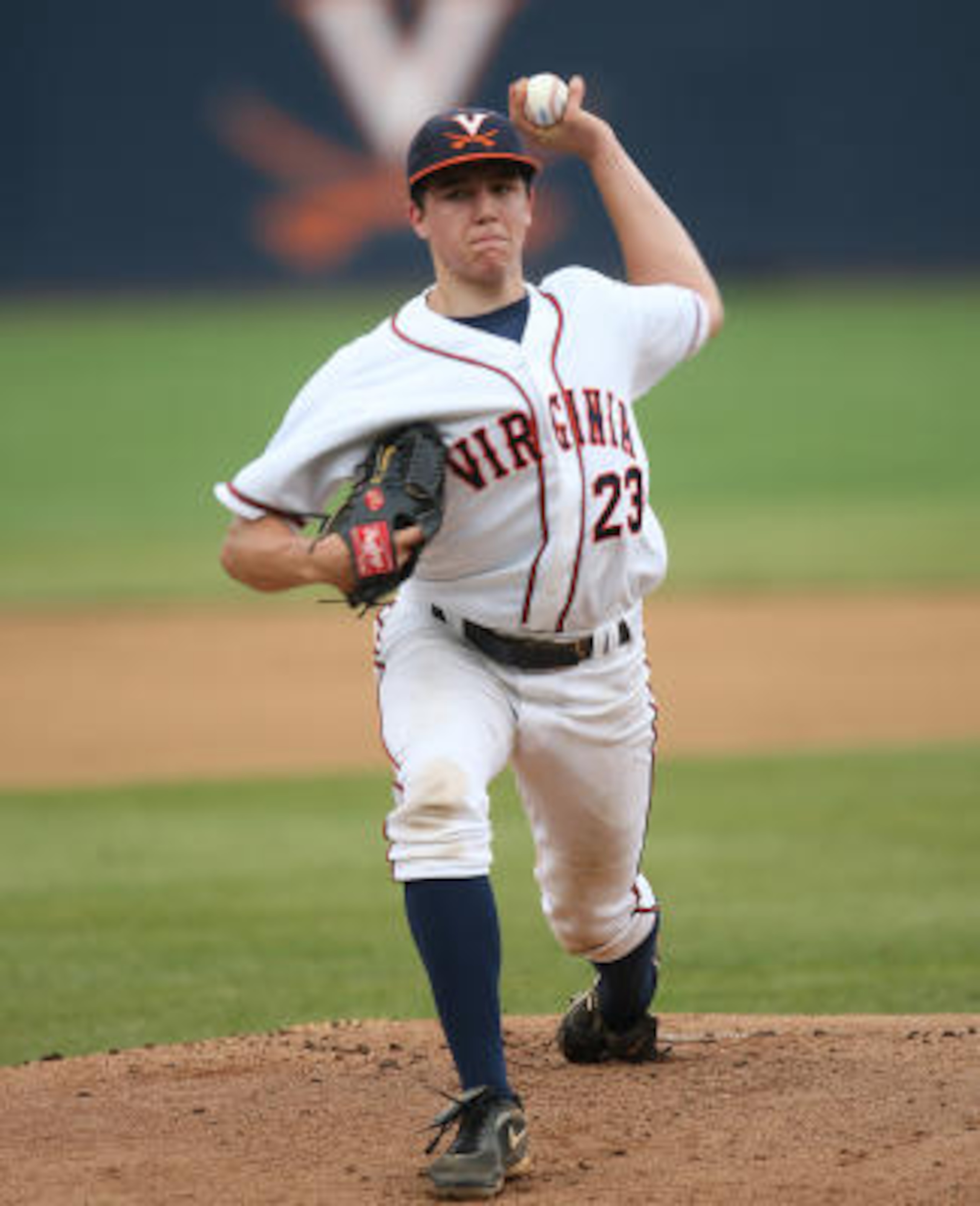
Picks in the first-round: one (28th overall)
Atlanta has had great success with their most recent draft picks. 2007 brought them Jason Heyward AND Freddie Freeman. In 2008, they picked up their closer of the future, Craig Kimbrel.
A year later, they scooped up their likely fifth starter heading into 2011, Mike Minor. And last year, despite not having a first-round selection, they still got one of the highest upside high-schoolers in Matt Lipka.
The Braves have drafted as good as anyone over the past few years and have made a mark taking players who were seen as divisive. Case in point: Heyward.
Heyward didn't get a really good chance to show what kind of player he was as a senior in high school. He had such a great eye at the plate that he took more walks than he had hits.
As a result, teams thought he was too patient, not aggressive enough and overly passive.
The Braves, however, saw a player with big-league plate discipline as a high-schooler. The rest is history.
Virginia left-hander Danny Hultzen isn't that debatable, but has a story similar to Mike Minor, in that both were pitchers who were deemed too risky for a first-round pick due to their slightly below-average velocity.
The Braves hit such a home run with Minor, who needed less than a year's worth of seasoning in the minors, that it wouldn't be a surprise to see them dip in that same well, and select Hultzen.
The first thing you notice about him is how comfortable he looks on the mound. But once you get past that, it's not like there's nothing to like.
He's a finesse lefty, who throws in the upper 80s to low 90s. He's one of the more polished pitchers in the 2011 draft, despite having only two years of experience under his belt.
Granted, they've been really good years. As a freshman, Hultzen was named the ACC Freshman of the Year, the first time a Cavalier had ever been bestowed with the honor. He led the conference in ERA (2.17), and finished third in strikeouts (107) and wins (9).
For an encore, Hultzen was named conference player of the year for 2010, after pacing the circuit with an 11-1 record, a 2.78 ERA and 123 strikeouts (with only 24 walks) in 106.2 innings.
Hultzen does a good job keeping hitters off-balance with his excellent curveball, which has very deceptive motion. He also mixes in a changeup and occasional splitter.
Aside from possibly Taylor Jungmann, there has been no hotter pitcher than Hultzen so far in 2011. In four starts, he has posted a 4-0 record, a 0.66 ERA and an astounding 50-to-4 strikeout-to-walk ratio. He's allowed only 13 hits in 27.1 innings and only two earned runs.
Even more impressive, Hultzen is one of the Cavaliers' best hitters. He's second on the team with a .372 average and 16 RBI. We all know that the Braves like pitchers who can hit, so Hultzen sounds like a perfect fit.
The only problem with the Braves being high on Hultzen is that with the season he's putting together, he's unlikely to slip to the Braves at pick No. 28.
Baltimore Orioles
3 of 30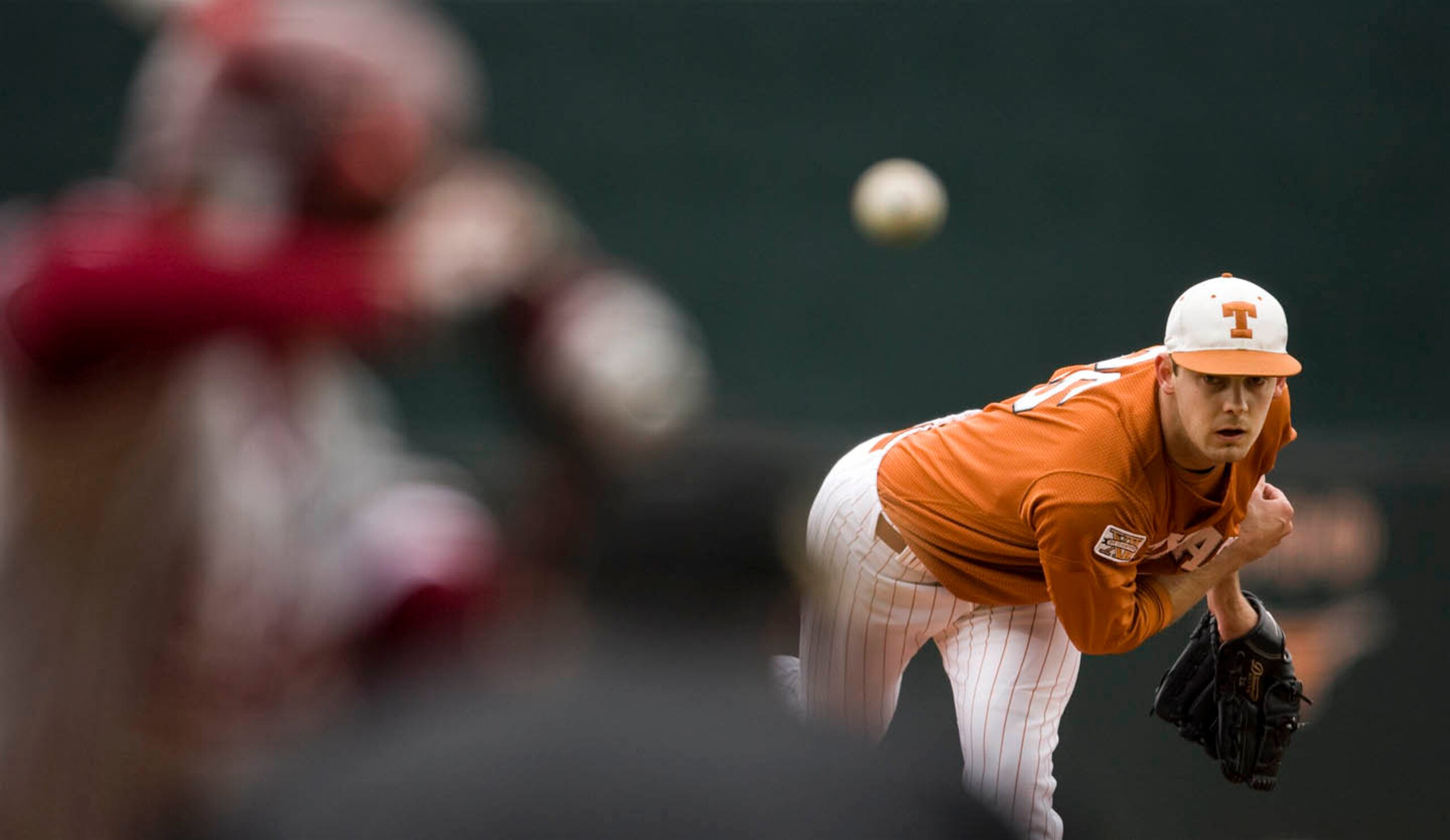
Picks in the first-round: one (fourth overall)
The Orioles are in dire need of an influx of talent into their system. They added Manny Machado last year, but they've graduated so much talent to the big-leagues over the past three years that it's going to take more than one five-tool shortstop to fix their issues.
With the fourth overall pick, the Orioles can go two different routes. They need pitching desperately. Their top pitching prospect is Zach Britton, and he's a stone's throw away from graduating to the big leagues.
After him, you're looking at 2010 third-round pick Dan Klein, who was just converted to a reliever for the 2011 season.
On offense, the outlook is even bleaker. Aside from Machado, their best overall position prospect is outfielder Xavier Avery, a career .269 hitter with tons of unrefined speed and no power. They desperately need help in the hitting department.
In the end, though, I think the O's will stick to their mantra of "build the arms, buy the bats" and go with a pitcher.
They could have their pick of Sonny Gray, Matt Barnes and Matt Purke, but in the end, I think they'll find it hard to turn their backs on the kind of season that Texas right-hander Taylor Jungmann is putting together.
Jungmann has been untouchable so far for the Longhorns. He started the season with back-to-back complete games and missed a third by one out.
In his most recent start, he pitched eight shutout innings, lowering his ERA to 0.78, and allowed only three hits. He's now 4-0 on the season and has allowed only 18 hits in 34.2 innings. He has 31 strikeouts and only three walks, and batters are hitting .151 against him.
He's also a six-foot-six, 220 pound flamethrower, getting his fastball up into the mid 90s, and complementing it with two potential above-average pitches, a slider and a changeup.
Jungmann has some mechanical flaws in his delivery that would take some time to fine-tune, so he wouldn't move as quickly as Brian Matusz did, but he would be a excellent addition to one of baseball's best young homegrown rotations.


Boston Red Sox
4 of 30
Picks in the first-round: two (19th and 26th overall)
Few teams have drafted as well as the Red Sox the past few years, and there's only one reason behind their success: their willingness to spend whatever it takes to get the players they draft to sign.
That belief has worked quite well for them, especially in 2010. The Sox selected and signed Anthony Ranaudo, Garin Cecchini, Sean Coyle and Brandon Workman, each of whom was considered a tough sign.
So it's only right to assume that the Sox would be back to their sneaky ways in 2011, right? Each of the players they took last year had one thing in common, they were all supremely talented, and could have been first-round picks had word not gotten out about their draft demands. A guy who fits that profile for 2011 would be Jack Armstrong Jr. from Vanderbilt.
In case the name didn't give it away for you, Armstrong is the son of former All-Star Jack Armstrong Sr., who was also a big, hard-throwing right-hander. "Junior" is built slightly bigger than his dad (6-7, 225 pounds) and throws slightly harder (upper 90s).
Armstrong pitched sparingly his freshman season due to Vandy's deep pitching staff, but got to play a major role in the Commodores' successful 2010 campaign. He posted a 7-4 record and a 4.71 ERA in 16 starts, surprisingly striking out only 50 batters in 78.1 innings.
And therein lies the warning sign with Armstrong. He throws in the mid to high 90s, has a potential above-average curveball and is an incredible athlete.
But somehow, he hasn't been able to find a way to harness his ability and turn himself into what he should be: a strikeout machine. He also has subpar control and his delivery gets way out of whack at times.
The fact that Armstrong hasn't even pitched this season for the Commodores should also be of concern. A back injury has limited him to little work and has left many wondering what kind of impact his absence will have on Vandy once they get into the meat of their schedule.
It's also put into doubt the potential first-round status of Armstrong. If he comes back healthy and shows better control, leading to more strikeouts, he could jump high enough on team's boards that he could be out of Boston's reach at pick 19, and maybe a stretch at 26.
For their second pick, the Sox might go the same route and take a look at USC right-hander Austin Wood. Wood has played for three different schools in three seasons and been drafted twice, most recently by the Rays last year.
Now he's the ace of the Trojans. He hasn't looked as good as most had hoped in 20.1 unimpressive innings. He hasn't shown the same dominating look that made him one of the top prospects in the Cape Cod League last year. He has already issued ten walks and has an ERA over 5.00.
What he does offer, however, is more impressive that what he's done so far. He's a fire-baller, who looked like a potential top-ten pick on the Cape.
He was also a dominating reliever for St. Petersburg CC in 2010, causing the Rays to pounce on him in the fourth round. He turned down Tampa's over-slot offer to return to USC to try to improve his draft stock even further.
He'll likely be looking for a multi-million dollar bonus, which puts him right in line with the Red Sox profile.
Chicago Cubs
5 of 30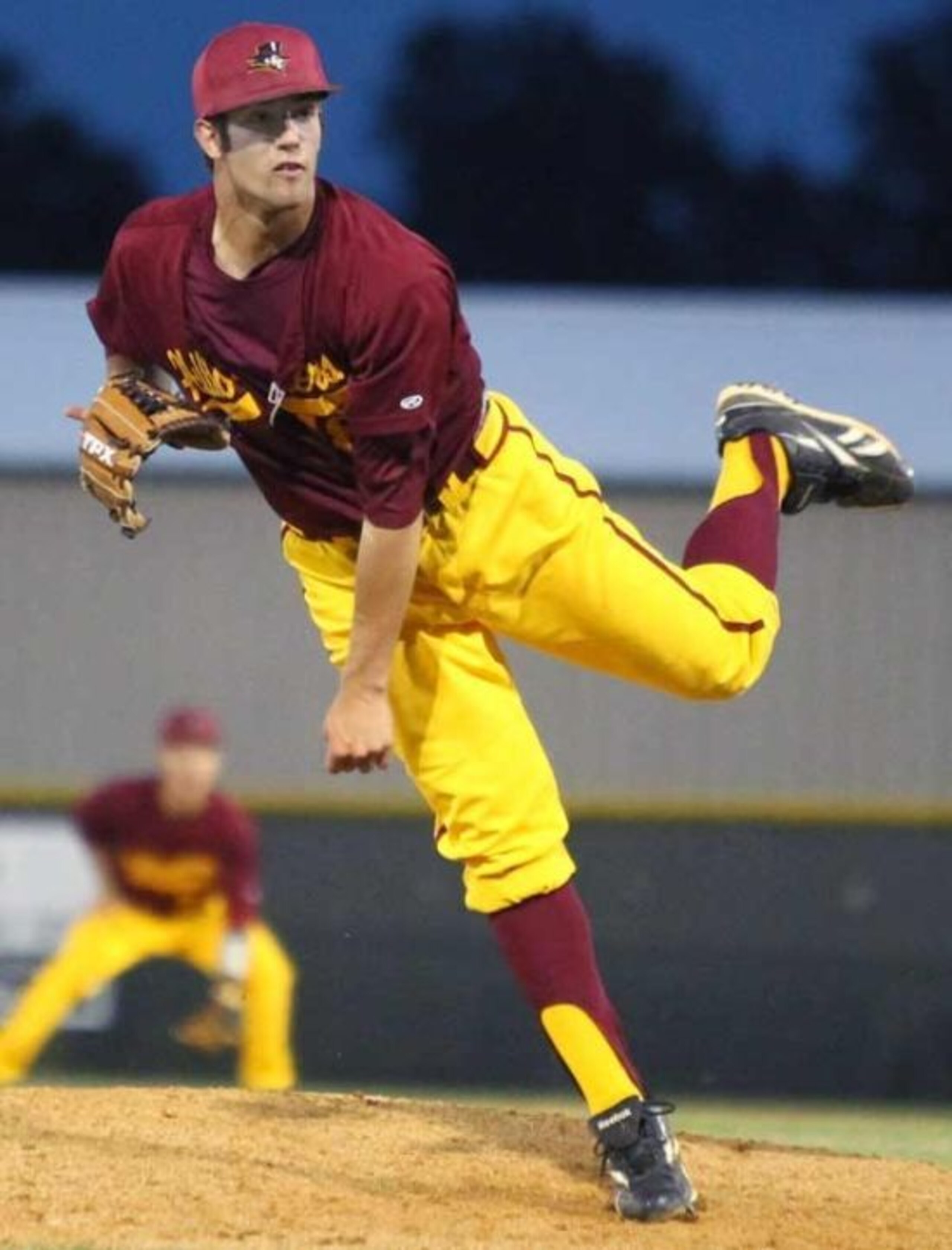
Picks in first round: one (eighth overall)
The Cubs have drafted pretty well in the past few seasons, and those drafts have helped produce some key contributors to their current squad, including Andrew Cashner, Darwin Barney and Tyler Colvin, as well as future cornerstones like Brett Jackson and Trey McNutt.
They are in good position to add another elite-caliber player with the eighth overall pick in this year's draft, and while most of the top-top talents will be gone, they're still going to net a pretty good player.
While this year's crop is very college-heavy, that's not to say that there aren't some very impressive prep talents. One of them, and maybe the best, is Tennessee's Daniel Norris.
Norris is the top high-school lefty, and he has faced little real competition during his time pitching in a pretty weak baseball state. In showcases and during trials with Team USA, however, he has sparkled against the top competition in the country.
Norris throws in the mid-90s and has one of the best curveballs of any high-school pitcher. His changeup isn't far behind, giving him three potential above-average pitches.
Norris still has a little bit of projection left and could add one more tick or two to his velocity, making him an even more attractive first-round candidate.
Norris is also an accomplished hitter who projects as a third- or fourth-round pick.
Since tabbing Josh Vitters with their first pick in 2007, the Cubs have gone pretty college-heavy with their first pick, so selecting Norris would be quite a gamble, but possibly a very worthwhile risk.
Chicago White Sox
6 of 30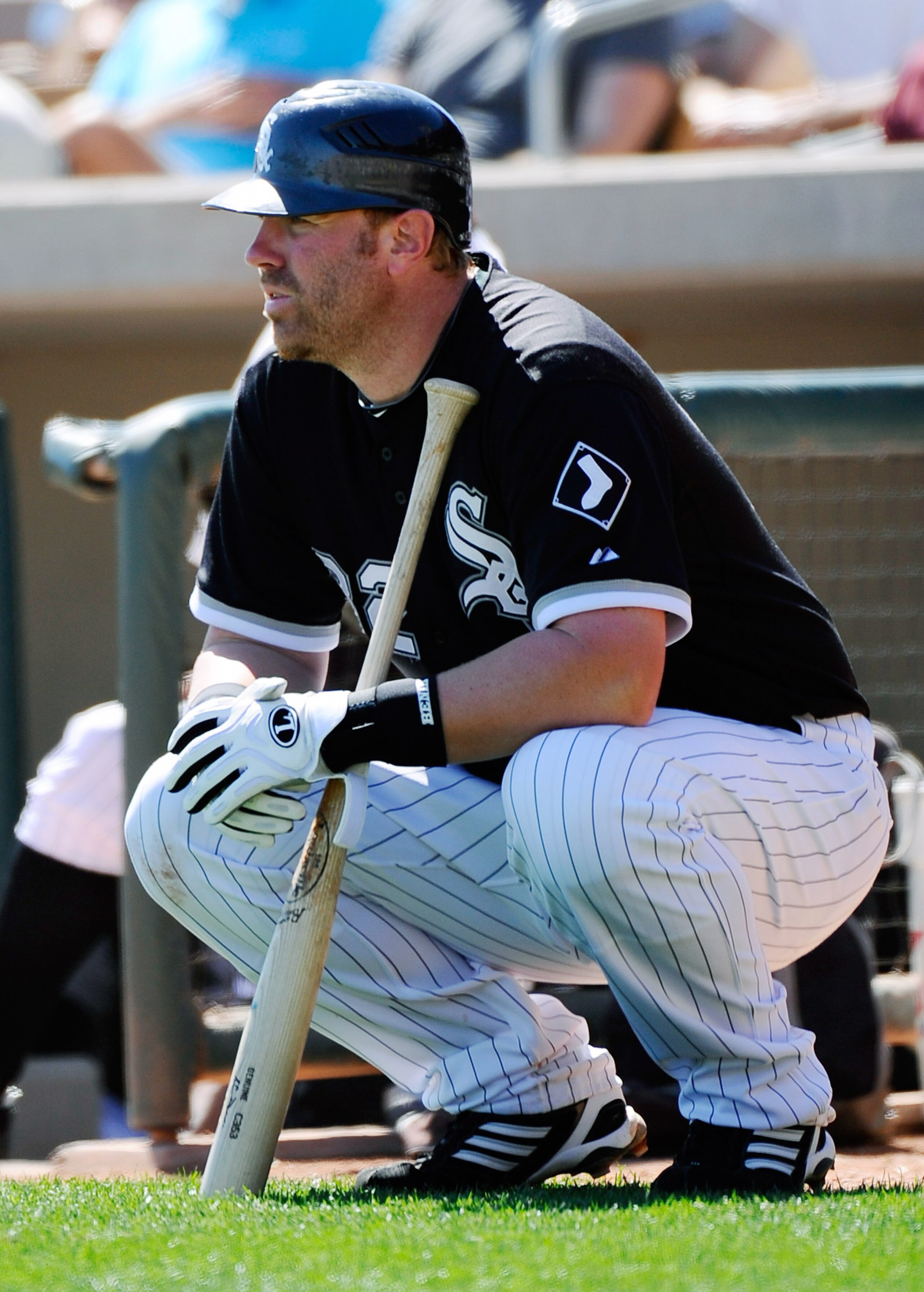
First-round pick forfeited to Washington for Adam Dunn
Cincinnati Reds
7 of 30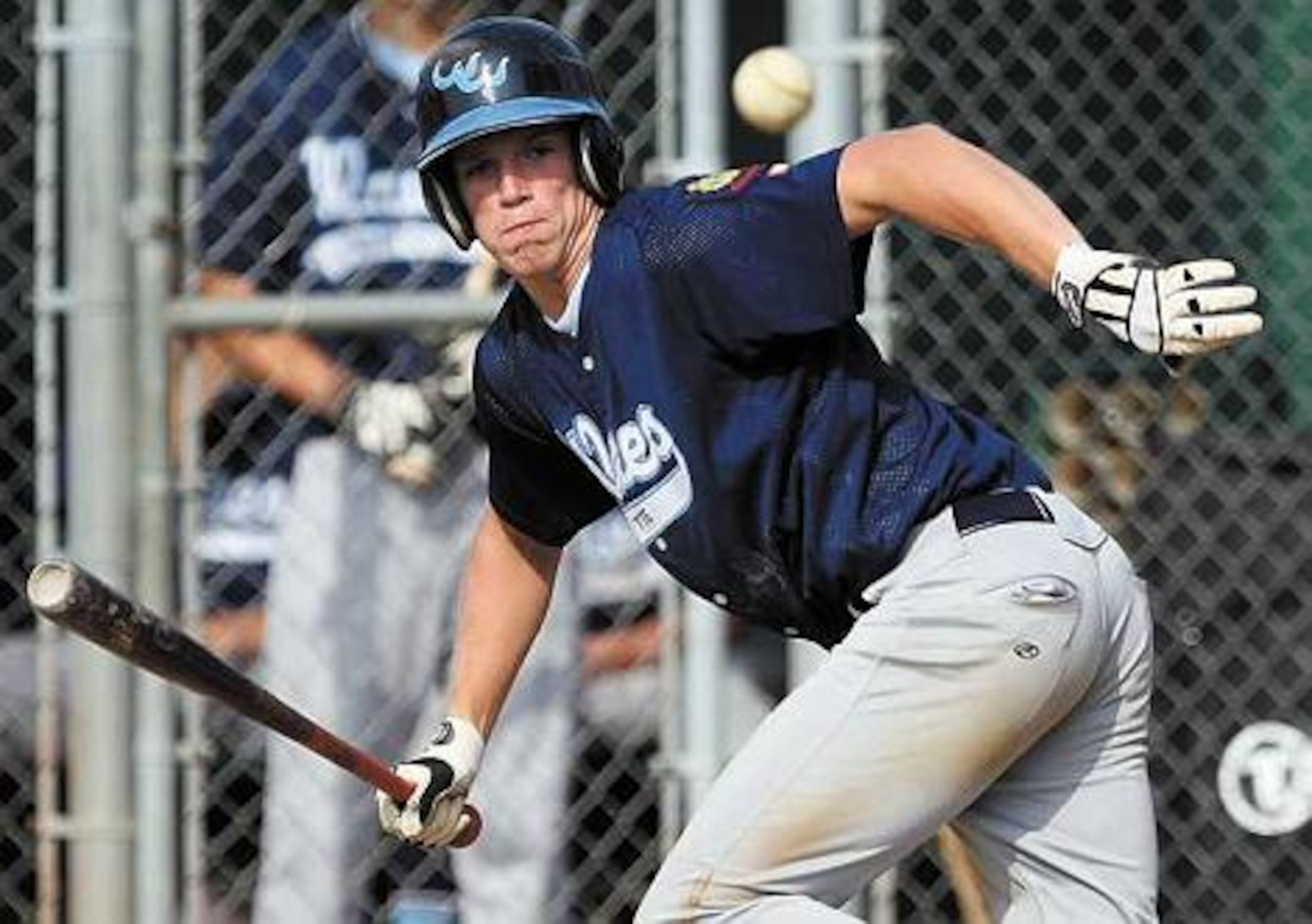
Picks in first round: one (27th overall)
The Reds are another team that has drafted incredibly well over the past few years. Last year alone the big-league, division-winning club was aided by farm-grown Joey Votto (who went on to win the N.L. MVP), 2009 first-round pick Mike Leake and 2005 first-rounder Jay Bruce. They also got minor contributions from Homer Bailey, Travis Wood and Drew Stubbs.
This year, picking late in the first round for the first time in quite some time, the Reds are going to have a wealth of options at their disposal. This 2011 class is as a deep as any, and is capable of producing potential everyday, All-Star caliber players as late as the 27th pick, where they will be selecting.
Baseball America just did a cover story on an under-the-radar player, Charlie Tilson, a potential five-tool outfielder from Illinois, and the moral of the story is that while Tilson garnered tons of attention from scouts at the recent Super 60 showcase, a showcase of the best high-school talent in the Midwest, he's more of a national talent than most realize.
I would have to agree, and I see the speedy center fielder as a first-round talent based on his body of work in high school, as well as the projection in him.
Tilson's greatest tool is his above-average speed. He could be one of the fastest runners in the draft, not just the high-school crop. He has at least 40-50 steal talent, and like another pick on this list (Shawon Dunston Jr.) is excellent at using his speed to turn singles into doubles and doubles into triples.
His bat is solid but not spectacular. Not yet anyways. He has incredibly quick wrists and shows a lightning-quick aggressive swing that one day could produce above-average power.
He flashed what he may one day be capable of at the 2010 Area Code Games, where Tilson was the only player to hit a homer.
For now, he's more of a slap-hitter with the "get on base" mentality, which works great, because Tilson is a terror once he's on base.
In the field, Tilson benefits from his speed. It allows him to get to balls most center fielders can't, and allows him to hide the fact that his arm strength isn't that amazing. Still, Tilson looks like a long-term center fielder.
There's a ton of projection in Tilson, and any team willing to take a chance on that could be very handsomely rewarded down the road.
The Reds had success with a guy very similar to Tilson, Jay Bruce, and while Bruce hasn't exploded into the superstar they and Baseball America predicted, he has had a very solid start to his big-league career.
Cleveland Indians
8 of 30
Picks in first round: one (eighth overall)
This will mark the second year in a row that the Indians have picked inside the top ten. Last year they were able to snag the top college pitcher with the fifth overall pick, and that one already looks like a steal with lefty Drew Pomeranz likely starting in High-A ball, with a chance for a quick promotion to Double-A.
This year the Indians are picking three spots later, at No. 8, and just like 2010, they are pretty much assured that at least one of the deep crop of college pitchers will be available. And while Cleveland could use some more high-upside, high-risk guys, they're hurting for big-league ready talent, so they might go the college route again.
If they choose to do so, a great option, assuming he's still on the board, would be UConn's Matt Barnes. Barnes is a big, hard-throwing right-hander who is much better than his college statistics.
Often compared to a young John Smoltz, Barnes throws in the mid-90s, touching 97 and 98 mph. He features three other pitches that all have slightly above-average potential, a changeup, curveball and slider.
Barnes was the darling of the Team USA trials in North Carolina this past summer, throwing bullets and making likely first-rounders Anthony Rendon and Jackie Bradley Jr. look foolish.
This season, he's been a little erratic. He traded good and bad starts before looking downright nasty this past weekend.
Against a middling San Diego squad, he went the distance, pitching a complete-game shutout, allowing only three batters to reach base, one via a walk, and two on singles. He wasn't a strikeout machine (only two), but he showed good poise, and proved he could pitch well without striking out every batter.
For the season, Barnes is 2-2, with a 1.53 ERA and 28 strikeouts in 29.1 innings. Batters are hitting .150 against him. His walk number (eight) isn't too bad, but he's also hit four batsmen.
Luckily for him, and the rest of the Huskies, the weather is starting to heat up and that's when the team really turned it on last year.
At his best, Barnes is a potential top-of-the-rotation starter, with four potential above-average pitches.
That definitely sounds like something the cellar-dwelling Indians should be interested in.
Colorado Rockies
9 of 30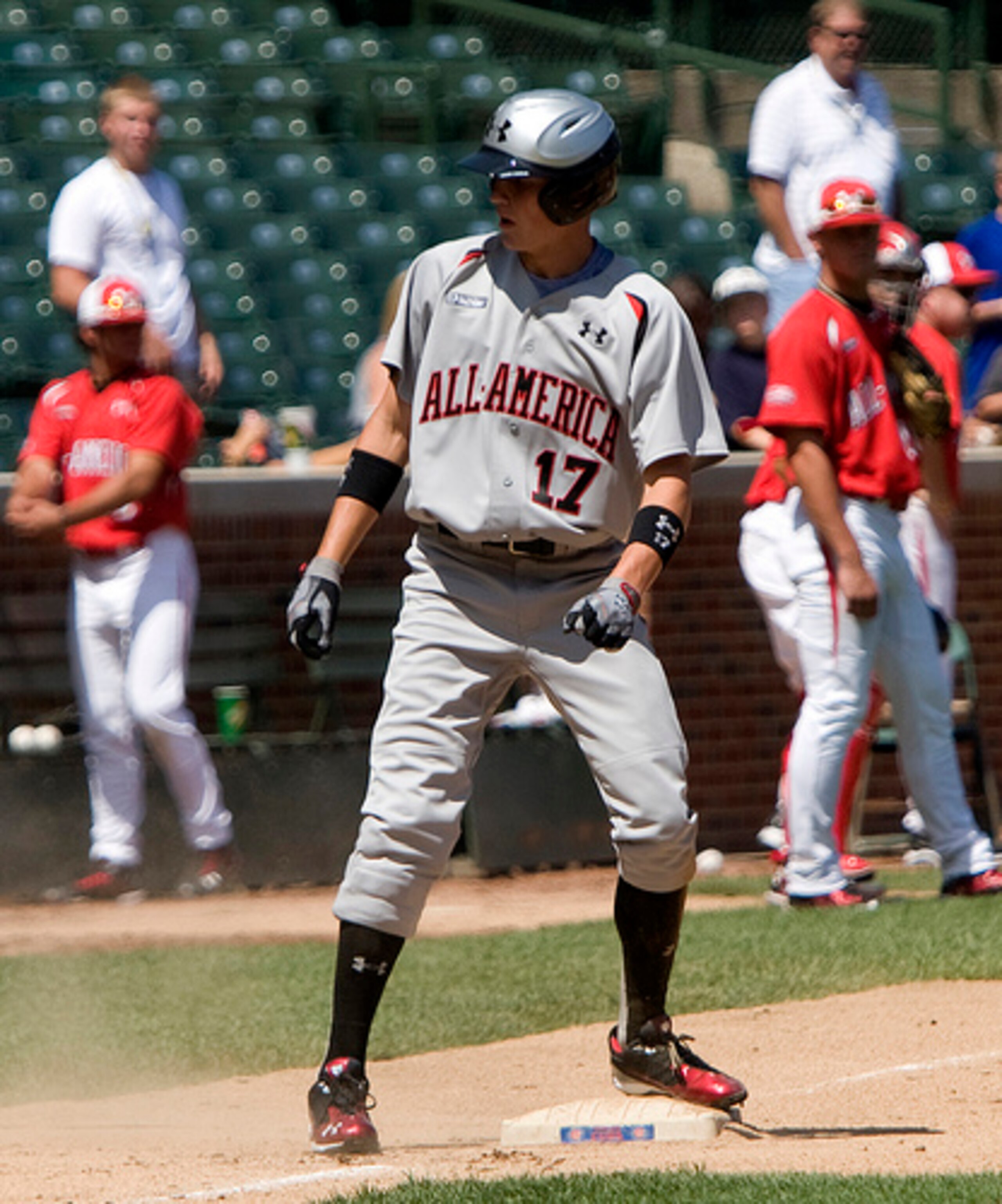
Picks in the first round: one (20th overall)
The Rockies have stocked up on an assortment of players in the past few drafts, including collegians and high-schoolers, position players and pitchers, lefties and righties.
Their drafting has followed no real pattern, so despite the fact that they used their top pick in 2010 on an outfielder (Kyle Parker), I think they would be wise to dip into the high-school crop of outfielders, a pool that is overflowing with talent this year.
At pick 20, they could easily scoop up a player of Brandon Nimmo's caliber. While Nimmo is a talented prospect, there's still a ton of projection on him because he hails from Wyoming, a state that doesn't have high-school baseball due to the terrible spring weather and the lack of funding.
Instead, Nimmo has had to resort to playing with traveling teams and stocking up on showcase experiences.
As his performance at the Under Armour All-American Game at Wrigley Field last year showed, he's already very talented. Nimmo earned MVP honors and finished with two hits, including a triple, two runs and two RBI.
The scouting report on Nimmo doesn't look that impressive (good bat, good runner, chance for above-average power, solid defense), but he's such a hard-worker, and he's very advanced for playing far fewer games than any other high-schooler.
The Rockies have proven pretty adept at developing toolsy players such as Nimmo into productive big-leaguers. See Dexter Fowler and Troy Tulowitzki.
Detroit Tigers
10 of 30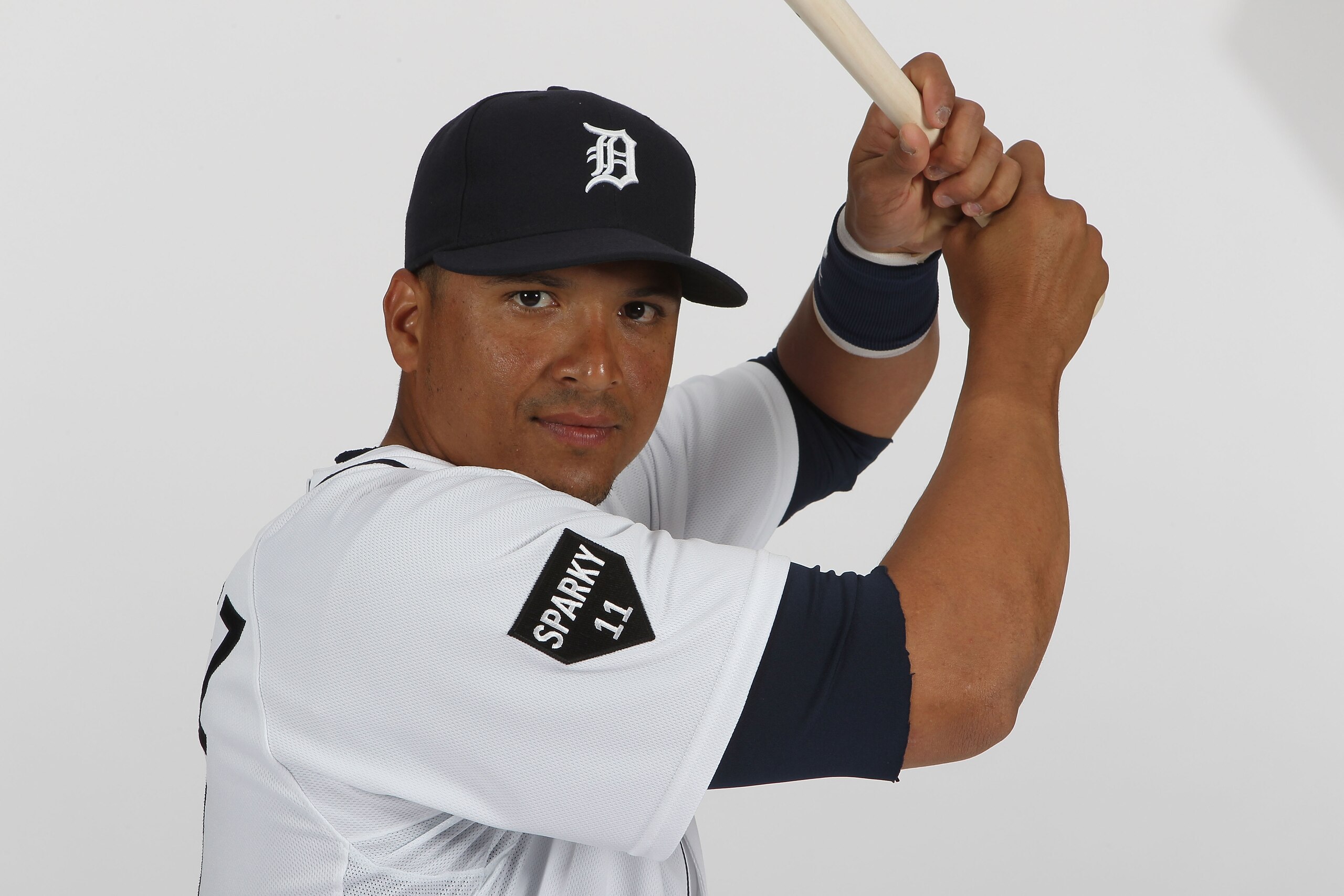
First-round pick forfeited to Boston for Victor Martinez
Florida Marlins
11 of 30
Picks in the first round: one (14th overall)
Few teams are as unmoving in the way they select first-rounders as the Marlins. In fact, you'd have to go back to 2004 to find the last collegiate player selected by the Marlins with their first pick (Taylor Tankersley).
That means that for the past six years, Florida has elected to go the college route, and for the most part, each of those picks has turned out pretty good.
So, obviously I won't rock the boat and suggest they go off the deep end and pick another collegiate player. With the 14th pick, the Marlins are in prime position to snatch up a talented high-school pitcher, of which there will be many forced out of the top 10 picks by the ridiculous wealth of college pitching this year.
The 14th pick will probably be a perfect place for them to get another projectable, lanky high-schooler, in the form of Edison High School's Henry Owens.
Owens has been in the spotlight for a while now, thanks to sharing an infield with fellow potential first-round talent Christian Lopes. Since he enrolled at Edison, Owens has grown several inches, all the way to his current height of 6-foot-6.
He's also added a few ticks to his fastball, which now sits in the low 90s but has mid-to-high 90s potential as he packs onto his 190-pound frame.
The lefty Owens features a curveball that has above-average potential and also throws an average changeup. His control is much better than that of fellow high-schooler Daniel Norris, but his inability to match Norris in mph will cause him to slip, possibly out of the top 15.
Whichever team scoops him up will be getting a very-high ceiling talent who has gotten Randy Johnson comps.
Houston Astros
12 of 30
Picks in the first round: one (11th overall)
The Astros, in addition to having one of the least talented big-league rosters, also have one of the least impressive farm systems in all of baseball.
Only the additions of 2010 picks Delino DeShields Jr., and Mike Foltynewicz can save them from the cellar in the N.L. Central prospect rankings, a spot that now belongs to the talent-starved Brewers.
Picking in the 11th spot this year should give them a good opportunity to pick up another skilled player to help rebuild a system that once upon a time spat out Craig Biggio and Roy Oswalt. They'd be hard-pressed to find a player as all-around talented as three-sport star Bubba Starling.
Starling starred for Gardner-Edgerton's football, baseball and basketball squads, leading the b-ball team to the state finals, and earning a scholarship to play QB at Nebraska on the gridiron. And the baseball diamond might just lead him to his greatest path.
Starling is the epitome of the term "five-tool." In fact, if you take into account his pitching acumen, and his ability to fire mid 90s fastballs, you could label Starling as a "six-tool" talent.
The first thing you notice about Starling is his blazing speed. He might be the fastest of any player in this draft.
But that's not all. His bat oozes with power, power that also might rival any high-schooler available in June. He's also a sensational outfielder with a rocket arm. He could handle center field right away, and could be a legitimate 30 HR-30 SB threat if he develops correctly.
The Astros are in dire need of offensive play-makers, and Starling would be just the thing to help cure this ailing system. It might take a huge bonus, but if he pans out, they'll be thanking the heavens they took a gamble on him.
Kansas City Royals
13 of 30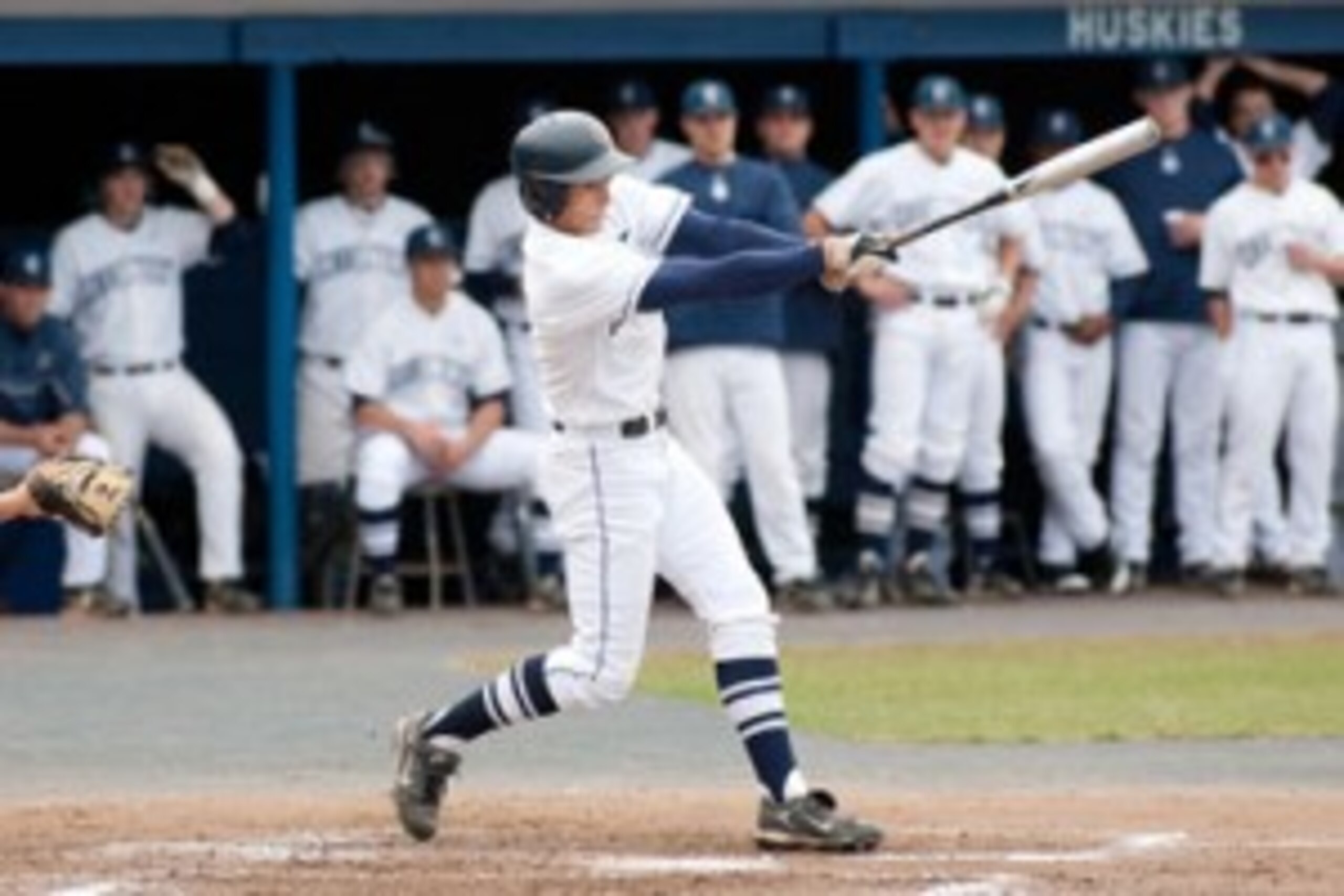
Picks in the first round: one (fifth overall)
The Royals could throw their pick into the sea and still have the best farm system in the minors for the next few seasons.
Still, the prospect of adding more elite level talent to one of the most loaded systems in baseball history is one of the draft's most intriguing storylines. At pick No. 5, the Royals are likely to get an All-Star caliber player, but might miss out of some of most elite talent the draft has to offer.
Still, if they could get a player like UConn's George Springer, I think they would be more than pleased. Centerfield is one of K.C's few weaknesses in their farm system.
They shored it up a little with the Zack Greinke trade, which brought them Lorenzo Cain, but they still lack an All-Star caliber, everyday player at the position.
Springer would give them that instantly. One of college baseball's lone 30-30 talents, Springer is a beast. He has amazing raw power, which could translate to 25-35 homers at the big-league level, and has enough speed to steal at least 25-30 bases each year. Last year for the Huskies, he hit 18 homers and stole 33 bases.
And while Springer hasn't looked his best so far in 2011 (.261, two homers, three steals) he has still been a tremendous run producer (team-leading 17 RBI), and the tools are still there for him to develop into the most exciting player to come out of this draft.
Los Angeles Angels
14 of 30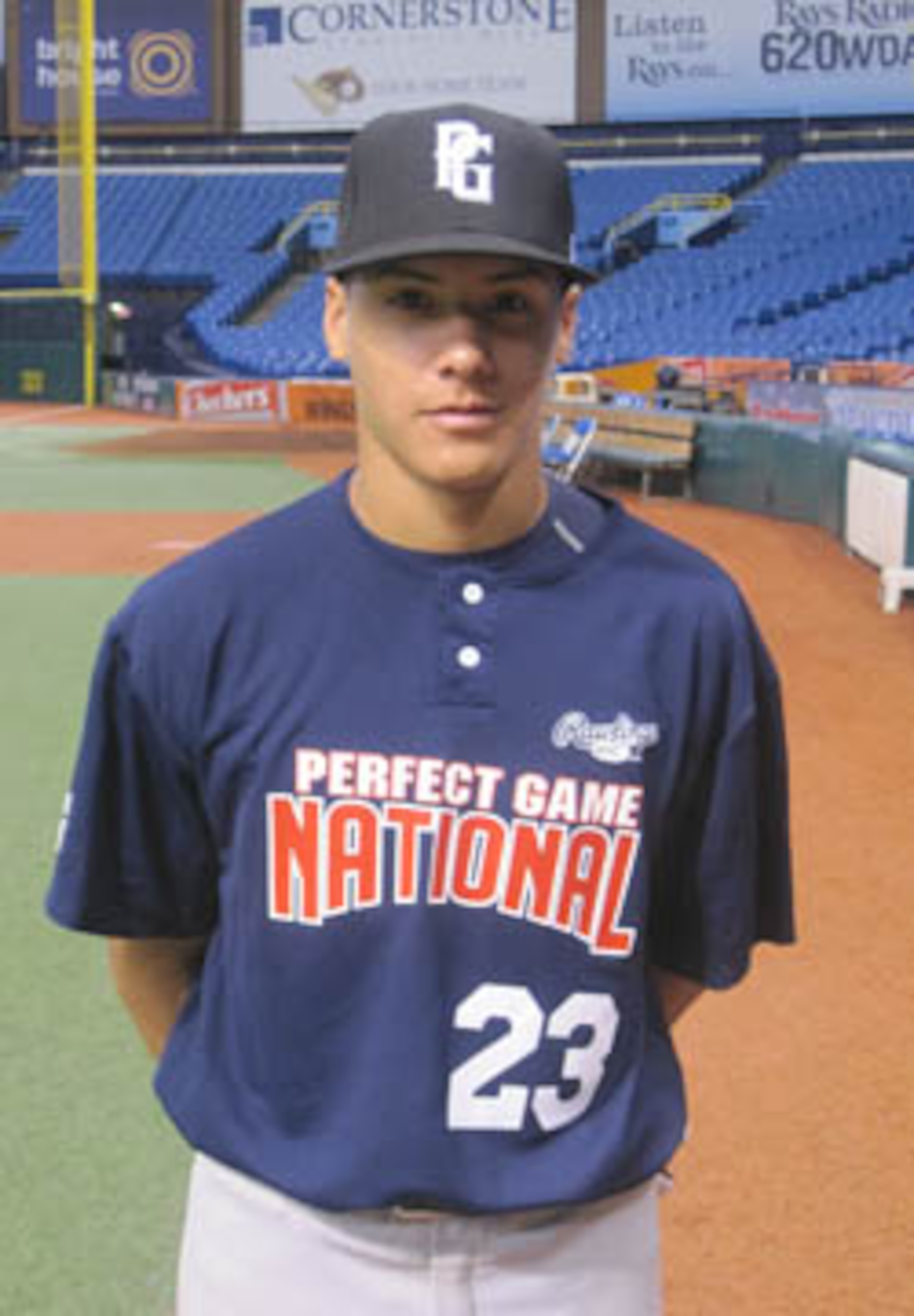
Picks in the first round: one (17th overall)
The Angels get tons of well-deserved kudos for going out on a limb for all-everything Mike Trout back in 2009, but they've also done an incredible job drafting both pre- and post-Trout.
In 2008, they signed Tyler Chatwood, who is now the team's top pitching prospect, and last year they got one of the draft's highest upside players in Kaleb Cowart.
This year, the pressure will be back on to find the next Mike Trout in a very deep pool of talented players. They could go several directions with their middle-of-the-round pick, but I think they'll go back to the position player pool and Javier Baez from Jacksonville, Fla.
Often overshadowed by fellow Floridian Francisco Lindor, Baez might have the slightly better offensive profile. Not as fast or as sound in the field, Baez can really hit the ball hard.
He has the chance for above-average power, and he should be a pretty good hitter for average too. His bat speed is very good.
In the field, he could play shortstop, but might outgrow the position and have to move to a corner. He's got decent speed as well.
Baez has also seen some time at catcher, and having a player capable of playing a little bit of everything would come in handy for a team that has dealt with as many devastating injuries as the Angels have.
Baez could be the solution to the failed Brandon Wood experiment.
Los Angeles Dodgers
15 of 30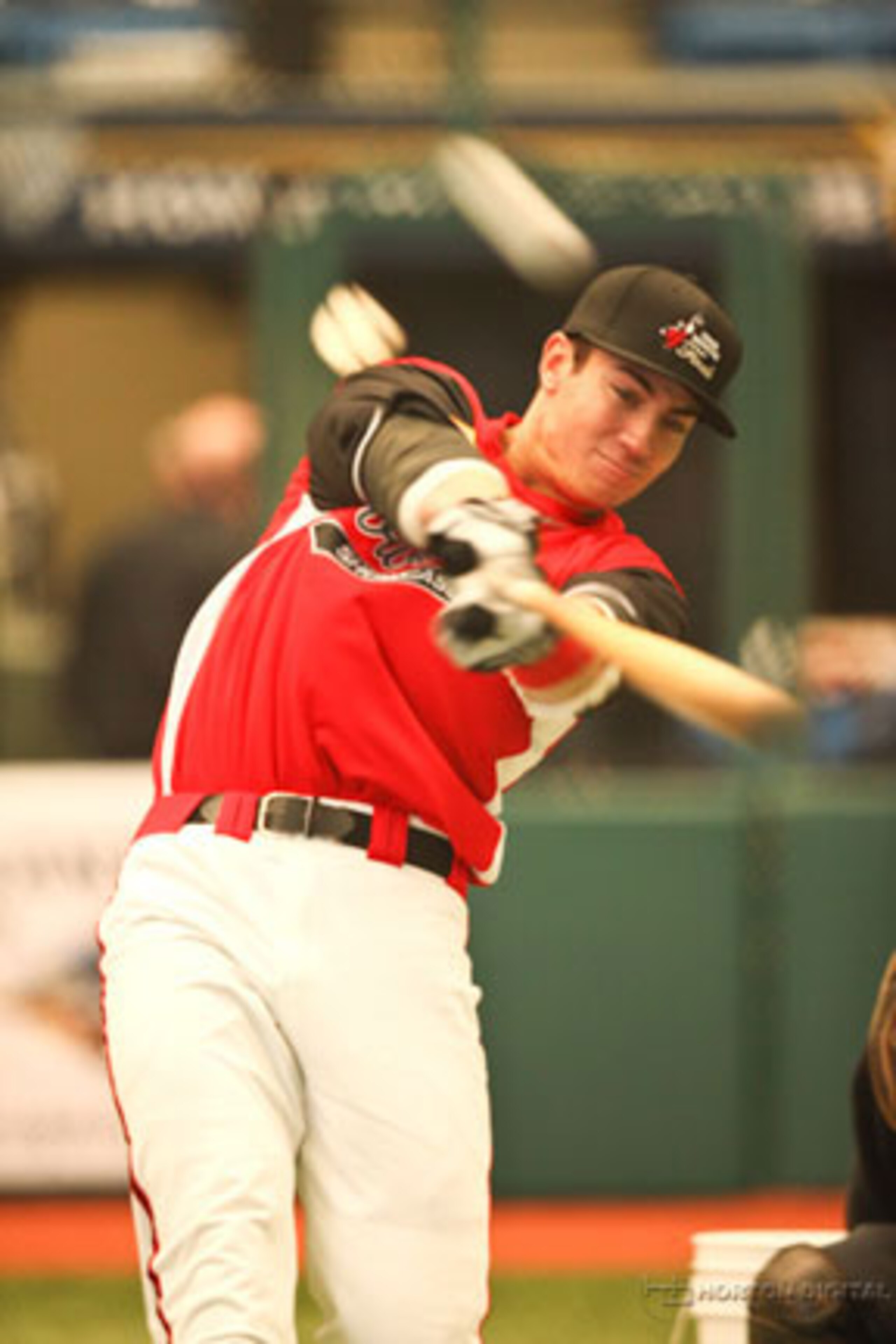
Picks in the first round: one (16th overall)
Hopefully, the Dodgers financial situation will be in better shape heading into the 2011 draft than it was a year ago, when the team shocked everyone by actually agreeing to a deal with first-rounder Zach Lee, who many viewed as a scapegoat pick to secure another compensation pick for 2011.
The Dodgers hold the 16th overall pick in the draft, and could go many ways. The way they should go is in the direction of the clutch-hitting, state-championship-winning Nicky Delmonico, from Tennessee.
Delmonico's older brother is the top-ranked catcher in the Dodgers' system, but he isn't the long-term solution behind the plate for L.A. They need a franchise cornerstone catcher who can hit.
Delmonico can be that guy. His bat is one of the more polished available in the high-school class and he has a chance to hit for a good average and solid power. He could be a .300, 20 HR guy in the majors.
He's athletic enough to play just about any position, but he offers plenty of intrigue behind the plate, and since it seems to be the family trade, it only makes sense for the Dodgers to be the team to bring him into the fold.
Delmonico will likely command a high bonus, somewhere just short of the Nick Castellanos $3.45 million range, but if the Dodgers show the same guts they did in 2010, they could pick up one of the most talented players on draft day.
Milwaukee Brewers
16 of 30
Picks in the first round: two (12th and 15th overall)
No teams needs extra first-round picks like the Brewers, who depleted their already thin farm system by trading away several top prospects for Zack Greinke.
And that was after they failed to come to terms with 2010 first-round pick Dylan Covey, who discovered during a late physical that he had diabetes and spurned the Brewers' offer in order to learn how to live with the disease at home in San Diego.
Luckily the Brewers' picks are so close together, and so early that they should get some quality players.
Since pitching is really a weakness for them now, it only makes sense to replenish some of the talent they lost to Kansas City. Picking up two more Dylans/Dillons would do just that.
First, we have Dillon Howard, a hard-throwing right-hander from Arkansas. Howard throws in the mid-to-high 90s and was Baseball America's fourth-ranked high-school prospect heading into the 2011 draft season.
He's been scouted as high as 98 mph, and his slider is arguably the best of any prep pitcher in this class. His changeup has above-average potential as well.
Howard has good command of all of his pitches, and unlike most others, has no injury history to be concerned with. His delivery is easy and his mechanics appear to be pretty sound. Howard has front-of-the-rotation stuff if he can bring along his changeup.
The other Dylan in question is Dylan Bundy, from Owasso High School in Oklahoma. This Dylan ranked fifth on BA's preseason high school rankings.
Dylan's brother Robert was a ninth-round pick of the Orioles back in 2008, and while Robert was a potential first-round pick heading into his junior season, Dylan looks like he's going to remain one until draft day comes.
Like his brother, Dylan is a horse, throwing in the low-to-mid 90s with great movement on all of his pitches. His curveball and changeup are both potential above-average pitches and he spots both well.
He's going to be true inning-eater as a professional assuming he can stay healthy, something his brother has had a difficult time doing.
Picking up two of the draft's top high school pitchers would be a great deal for the Brewers.
Minnesota Twins
17 of 30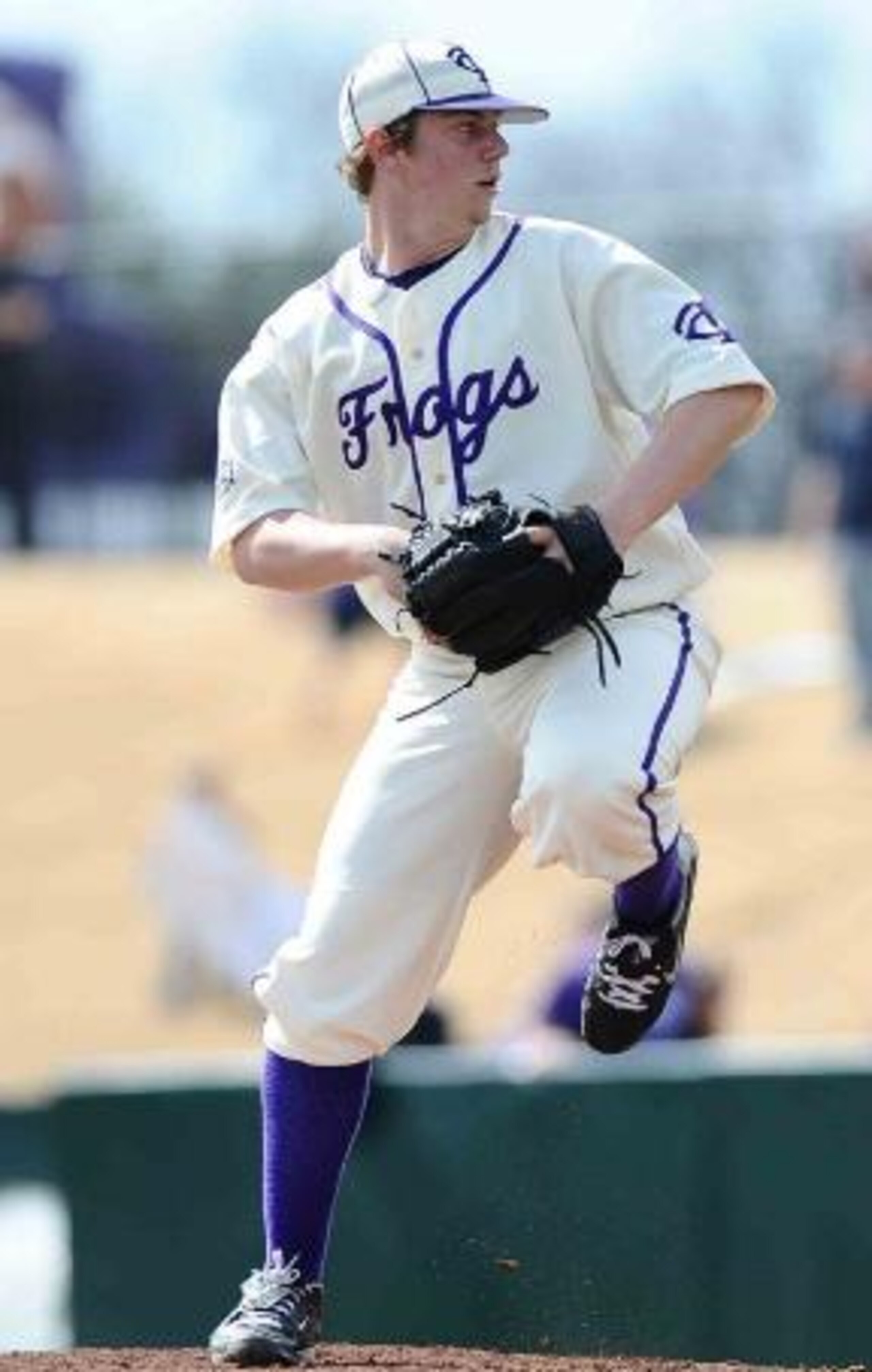
Picks in the first round: one (30th overall)
Minnesota has found some steals over the past few years in the draft and have made a mark taking chances on college players who have really great careers, but have doubts due to their stuff (for pitchers) and high-schoolers who are huge high-risk, high reward types (position players).
Two players who exemplify this are Kyle Gibson, who fell on draft day due to injury concerns, and Ben Revere, who almost dropped out of the first round because of his size and lack of projection, but offers as much ability to hit for average as any player in the minors.
Both players have turned out quite well for Minnesota, as Gibson is on his way to establishing himself as a member of the Twins 2011 rotation, and Revere found himself making his big-league debut last September.
Once again, in 2011, the Twins are picking late, and will have to get creative in order to find the next impact player. My bet is that they go with a safe college arm with little projection, a la their 2010 pick, Alex Wimmers. A guy who fits that bill is TCU right-hander Kyle Winkler.
Winkler is the lesser-heralded starter in TCU's rotation that includes potential top-five pick Matt Purke, but if you check out the stats, Winkler has been every bit as good as Purke, and even better this year.
In four starts, covering 28.1 innings, Winkler has yet to allow a run and has struck out 26 batters and walked only two, fitting the Twins bill as a control-oriented pitcher.
But Winkler isn't just a control pitcher. Despite his diminutive stature (5-11 and 205 pounds), he actually throws a little bit harder than both Gibson and Wimmers, and complements his fastball with a solid slider and an improving changeup that has real nice potential.
Winkler has the command to make it as a starter, especially in the Minnesota system, which favors strike-throwing over velocity, and could make for a nice mid-rotation starter. If he can't develop his secondary offerings, he could make a great reliever.
Winkler has thrived (and hidden) in Purke's shadow, but with the lefty on the sideline for most of the first month of the season, the righty has really shined and shown Purke might not be the only Horned Frog worthy of a first-round pick.
New York Mets
18 of 30
Picks in the first round: one (13th overall)
It looks like the Jose Reyes era may finally be sputtering to an end in New York.
The Mets may be hard-pressed to find an adequate replacement for Reyes short-term, but the 2011 draft holds a great wealth of talented shortstop prospects.
Edison High School's Christian Lopes is arguably the best of them all, and if he's still available when the Mets pick at No. 13, he should be high on their list.
Lopes is also the most well-rounded prep shortstop in this year's class. He has at least average tools all across the board, but it's his bat that sets him apart. He has arguably the most polished bat in the entire high school class.
He has great bat speed and is a spray hitter, not in the traditional sense that he'll be mostly a singles guy, but rather that he can spray the ball hard all over the field. Lopes is a guy who should rack up doubles like Craig Biggio. He also has the potential for slightly above-average power.
In the field, Lopes has really stepped up his game. Once upon a time, it looked like he was well on his way to third base, where the Mets will inevitably have to shift uber-prospect Wilmer Flores.
Over the past year and a half, though, he's put in a ton of work, smoothing out his movements and improving his footwork to the point he now looks like he can stay at short long-term. He already has the cannon arm for the position.
Several scouts have compared him favorably to 2010 first-round pick Christian Colon, though at least a few feel that Lopes has the potential to be slightly better.
Everyone who has seen Lopes play comes away convinced this is one serious, professional dude. He has a very serious attitude once he steps onto the field and doesn't seem to be fazed by all the recognition and attention, which should only increase this season, as he'll receive just about as much spotlight as any other high-school prospect.
Sounds like good preparation for the Big Apple to me.
New York Yankees
19 of 30
First-round pick forfeited to Tampa Bay for Rafael Soriano
Oakland Athletics
20 of 30
Picks in the first round: one (18th overall)
The A's have placed quite a premium on selecting great hitters in the past few drafts, picking up players like Grant Green, Jemile Weeks and last year's selection, Michael Choice.
In that same vein, they should strongly consider another "junior," this one from the very talented bloodlines of Dante Bichette.
You might think Dante Bichette Jr. sounds a wee bit too arrogant when he openly discusses how he's pretty sure he could hit .700 against opposing high-school pitchers.
But as soon as you take into account how much work he puts in (up to five or six hours a day in the cages) and how good he is now (.597 with nine homers and 37 RBI in 102 plate appearances in 2010), it's clear that Bichette Jr. is going to be a first-day pick.
The son of former All-Star Dante Bichette, and one-time star of the Little League World Series, Bichette Jr. has grown up to be quite a power hitter in his own right.
He is easily one of the best prospects in the draft when it comes to raw power. The kid hits moonshots and is the hands-down favorite in any home-run derbies he participates in.
But in addition to his ridiculous power, he's also a very good hitter. He is incredibly patient for a high schooler, and shows a great eye, a very smooth swing, and an impressive hitting ability.
Bichette is committed to the University of Georgia, but I would have to say that there's probably a 10 percent chance of him actually setting foot on campus, now with the cash that will be floated in front of him and his proud papa.
Bichette could bring some much-needed muscle to a farm system in dire need of it.
Philadelphia Phillies
21 of 30
First-round pick forfeited to Texas for Cliff Lee
Pittsburgh Pirates
22 of 30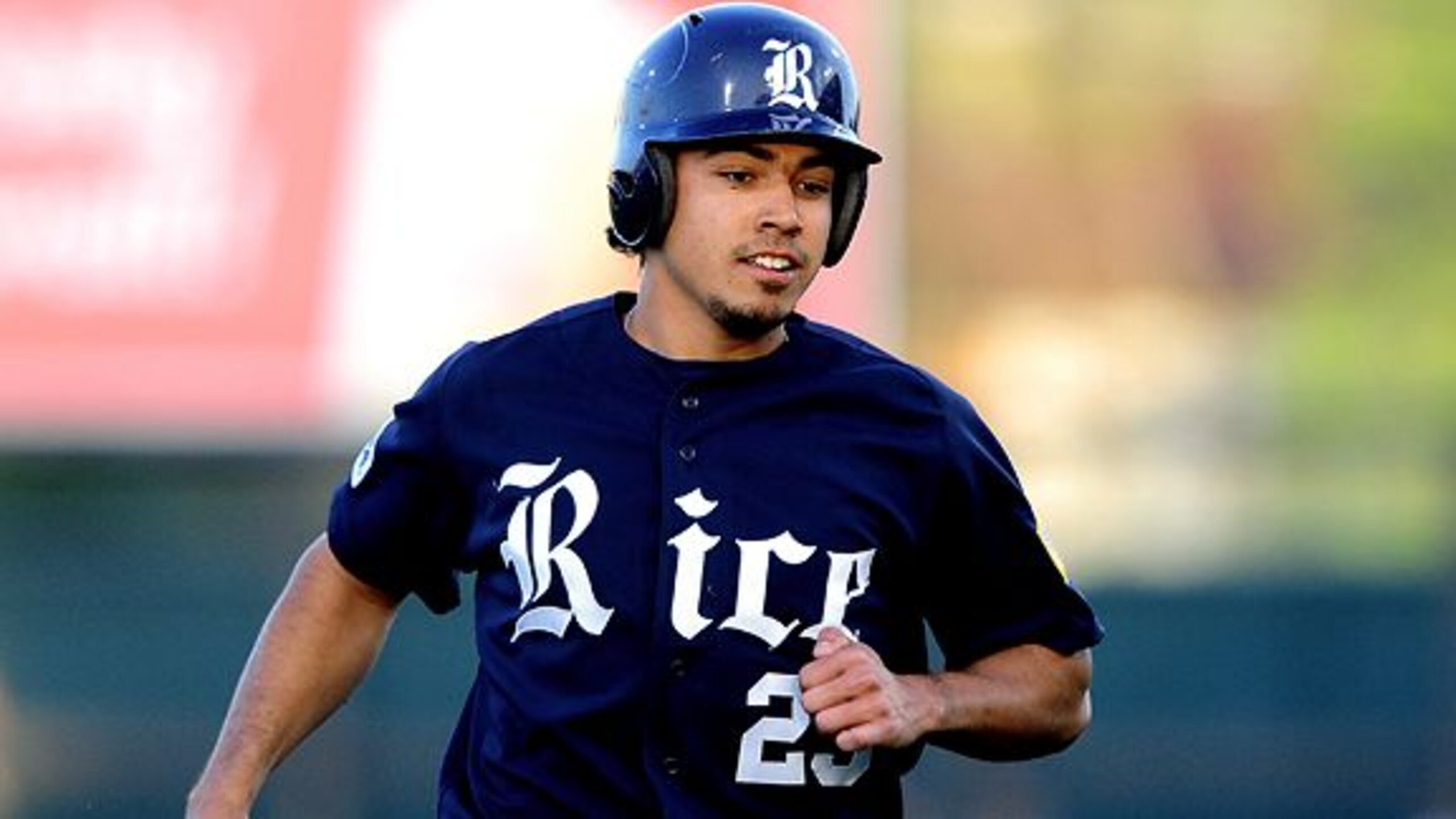
Picks in the first round: one (first overall)
The Pirates watched as the Nationals took two potential All-Stars with the first pick in back-to-back drafts with Stephen Strasburg and Bryce Harper. Now it's their turn.
The Pirates got the player they wanted most in last year's draft, top pitcher Jameson Taillon, who they favored (by a good margin) over the top overall pick, Harper.
With the first pick in 2011, the Pirates are poised to pick up another All-Star caliber player in Rice's Anthony Rendon.
There is simply no reason that the Pirates should overlook Rendon. He's a defensive whiz at third base, playing Gold Glove caliber defense on a nightly basis.
His bat is as good as any in the draft, and he has serious power. His plate discipline is also the best of the 2011 draft class. He's already polished enough to jump straight to Double-A.
The one question mark about Rendon, and I have a feeling only a few teams are legitimately worried about it, is his health. He's undergone ankle surgeries in consecutive summers, and while the injuries haven't forced him to miss any time for the Owls, he's missed most of each of the past two summers, meaning little Team USA performances, and no Cape Cod ball.
Still, the Pirates, who have only one pick of the first 60, desperately need an elite player, which means Rendon will be their guy.
St. Louis Cardinals
23 of 30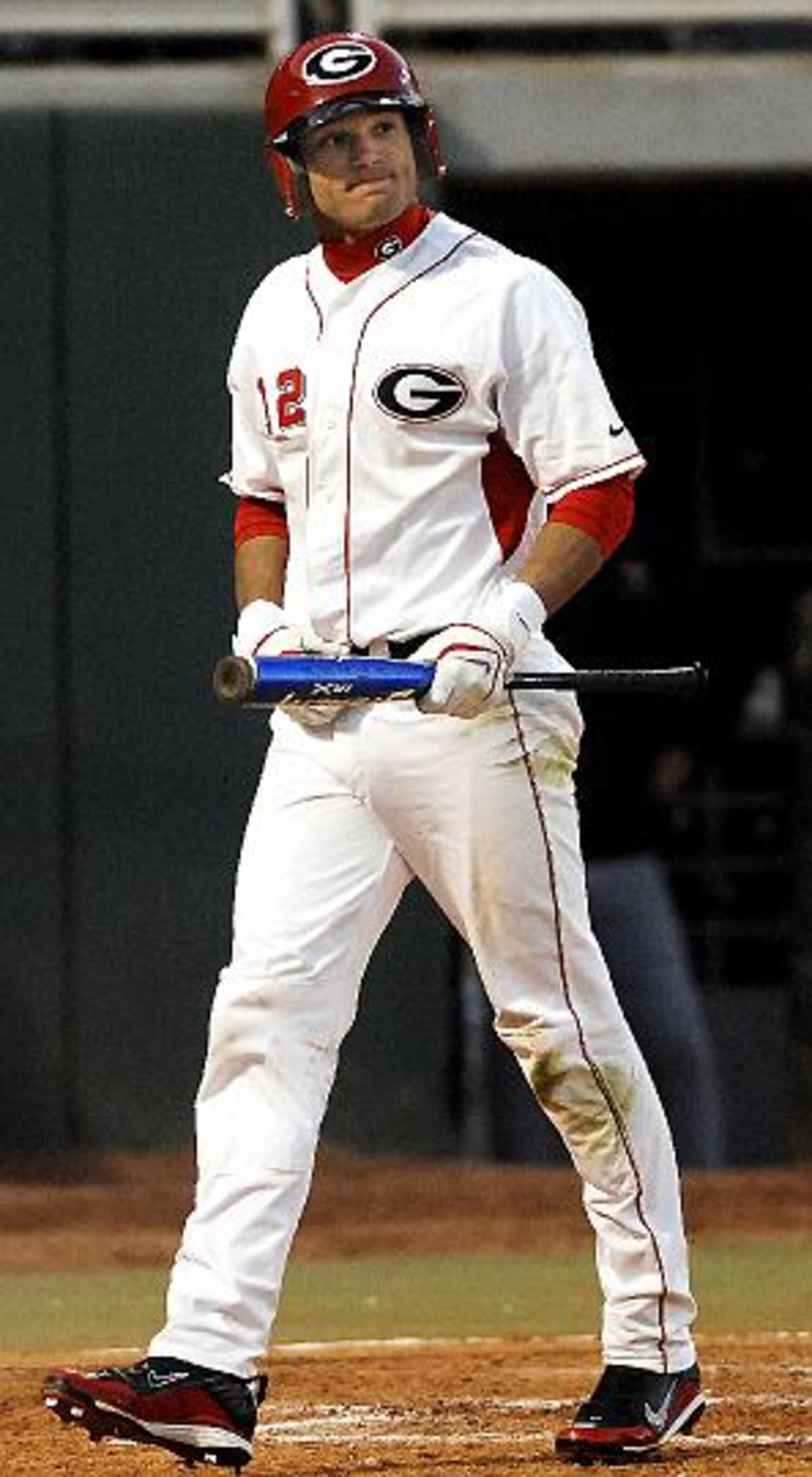
Picks in the first round: one (22nd overall)
The Cardinals have made drafting great athletes a priority over the past few seasons, and selecting Georgia outfielder Zach Cone would continue that trend. However, picking him over potentially higher-ceiling, higher-risk players would give them a more projectable, polished bat, which Cone is proving himself to be.
Zach Cone excelled all season long in 2010, despite playing for one of the worst teams in the SEC, the Georgia Bulldogs. But he didn't just excel at the plate, where he hit .363 with 10 homers and 53 RBI.
He showed great instincts on the basepaths, swiping 13 bases without getting caught. And in the field, he was top-notch, racking up a conference-best seven outfield assists.
All of these traits helped Cone boost his draft stock and should put him in contention for a run at the first round if he can bounce back from his rough start (.278, 0 HR, 6 RBI, 3-to-13 BB-to-K) to the 2011 season.
Cone's best tool is his power, most of which is generated from his tremendously powerful legs, which help him turn potential fly-outs into home runs.
His power at the plate is arguably the best in the college crop of 2011. His legs, and the speed they generate, also aid him in the outfield, where he profiles as a great defensive corner-outfielder.
Like many 2011 first-round talents, Cone isn't new to this whole draft process. He was a third-round pick out of high school (Angels), so you know teams won't be sleeping on him this time around.
San Diego Padres
24 of 30
Picks in the first round: two (10th and 25th overall)
With two of the first 25 picks in the 2011 draft, the Padres could add a good amount of talent to their farm system, which garnered a lot of support from the off-season trade of Adrian Gonzalez, adding Casey Kelly, Anthony Rizzo and Reymond Fuentes to the organization.
By adding Archie Bradley, arguably the top high-school pitcher, and the top guy, according to Baseball America, they would fill the void left by Karsten Whitson, the team's 2010 first-rounder who went unsigned.
Bradley has the size (6'4", 225 pounds), the athleticism (top 2011 football recruit), and the stuff (mid-90s fastball) to compete, and has his entire senior season to clear up a few of his question marks, such as developing a few impressive secondary pitches, and most importantly, deciding on which sport holds the key to his future.
Not only is he the top high-school pitcher heading into the 2011 draft, he's also a top-flight football recruit with a scholarship offer to Oklahoma, which he accepted in early August. He is expected to compete for the backup spot to starter Landry Jones, who will return to lead a serious championship contender in 2011.
But on the diamond, Bradley is a backup to no one. This past season saw him strike out an eye-popping 155 batters in 73 innings while posting a 1.31 ERA, reaching 97 mph on radar guns on several occasions.
The 10th pick for the Padres represents their compensation pick, and my guess is that in true Padre fashion, they'll take a talented high-school arm and then compensate him well enough to drop the idea of football.
With the 25th pick, the team should go in the opposite direction and grab Bradley a battery-mate. The Padres have passed up on some premium talent over the past few years in the draft, and with no real help on its way in the form of an elite, above-average, or even slightly above-average catching prospect, it's time to take action in 2011.
Blake Swihart is arguably the most complete overall backstop, in what could be one of the most impressive group of catchers in at least a decade.
Behind the plate he looks very athletic. He posts good pop times and has a heck of an arm. And while he's looking lean and mean, he should pack on some more pounds to enable him to catch on a regular basis. He has great footwork, honed during his time as an infielder.
Of all the top catching prospects available in 2011, Swihart is probably the safest bet to remain behind the plate. That is, of course, if his bat doesn't out-pace his defensive development, a la Wil Myers.
At the plate, Swihart is a switch-hitter with a very quick bat. During all of the summer showcases, he consistently made contact against even the best pitchers.
He has a little more power from the right side, but shows great bat speed from both. Swihart is also a pretty good runner, excellent if you account for the fact that he's a catcher.
He still needs plenty of seasoning, especially behind the plate, where he needs to shorten his pop times and hone his receiving technique.
He also has a commitment to Texas in his back pocket, so he'll probably command some serious coin, but if the Padres can get him pretty late in the first round, they'll definitely have a shot at inking him to a fairly friendly deal.
San Francisco Giants
25 of 30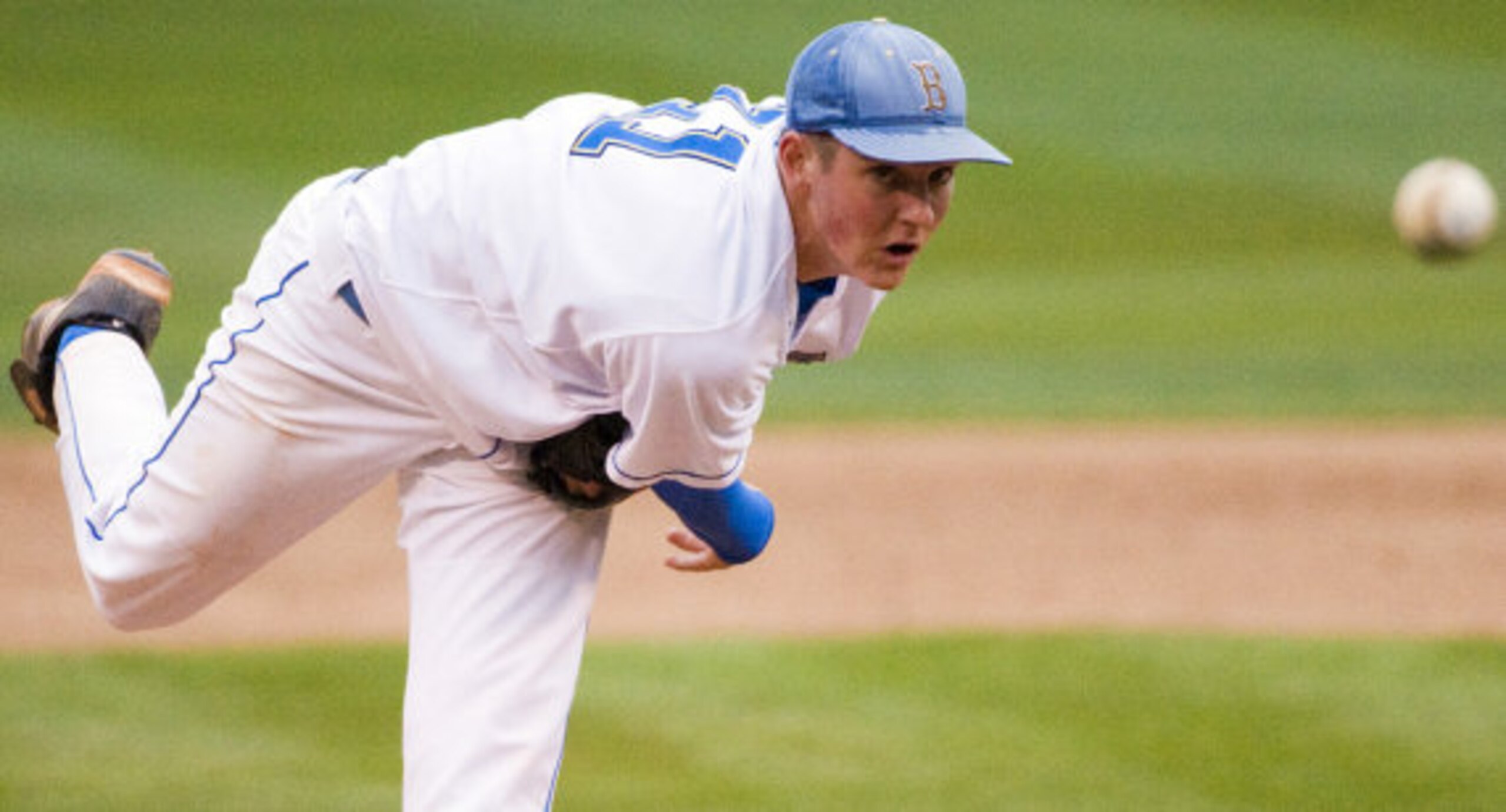
Picks in the first round: one (29th overall)
Gerrit Cole certainly got all the attention last season, but it's quite possible that he wasn't even the best pitcher on his own team.
That's right, diminutive Trevor Bauer, all 6'1" and 175 pounds of him, led the Bruins in most statistical categories.
He was 21-6 as a starter at UCLA through 2010 and has posted a career 3.00 ERA. He also has a very impressive, very Tim Lincecum-like 257 strikeouts in only 236 career innings. Last season, he led the nation with 165 punchouts.
Very Lincecum-like, indeed.
It's fitting too, since Bauer admires the diminutive Lincecum, also a record-setter from the Pac-10. Like the long-haired San Francisco Giant, Bauer throws in the mid-to-high 90s, sometimes touching 97 mph.
How fitting, then, would it be for the team who took a great big risk on Lincecum, to take the pitcher who could very well be the next "Freak," which is exactly the name that Bauer's UCLA teammates have taken to calling him.
Bauer also has a plus secondary pitch, a great curveball that helped him rack up a school-record number of strikeouts.
Unlike Lincecum, however, Bauer is a true student of the game, a real scientist when it comes to pitching.
He's devoted serious time and effort to honing his delivery, utilizing off-the-wall methods and training exercises to aid his development and strengthen his muscles.
Bauer is the only Bruin who abstains from the weight room during the season.
Whichever team gets Bauer, assuming it isn't the Giants, will most likely be one that feels bad they slept on Lincecum.
For the Giants, it could be like having Christmas twice in one year and a definite steal with the 29th overall pick.
Seattle Mariners
26 of 30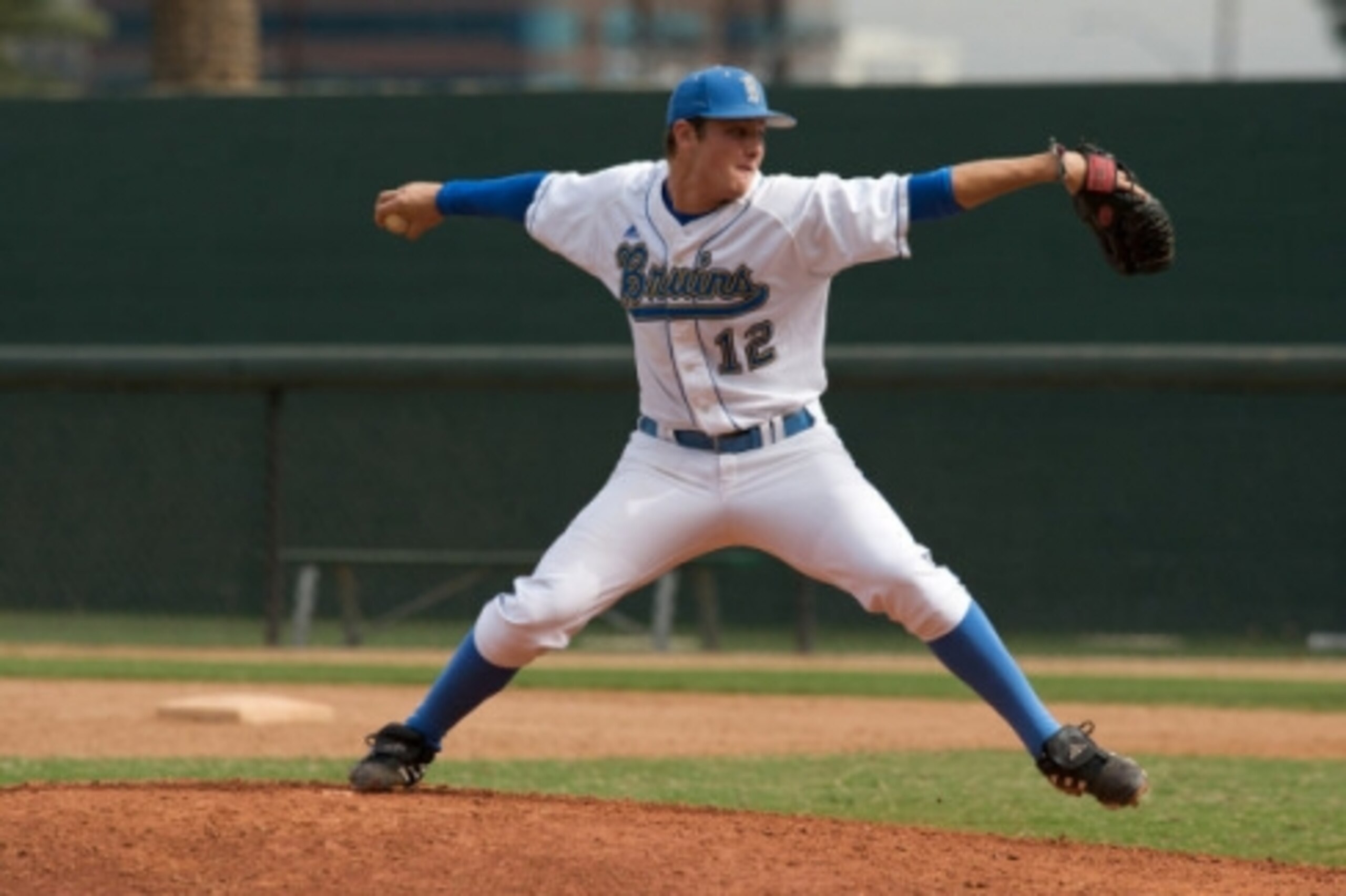
Picks in the first round: one (second overall)
In the very same manner that the Pirates and Orioles had the enviable position of snatching up the two other elite players that the Nationals didn't choose in last year's draft, the Mariners are champing at the bit for their draft slot.
Assuming the Pirates fall out of love with Anthony Rendon, the Mariners would be more than happy to snatch up a franchise cornerstone at No. 2. And if Pittsburgh doesn't go all wacko on us, and picks Rendon, that leaves the M's free to scoop up UCLA fire-baller Gerrit Cole.
Cole is arguably the hardest thrower in the 2011 draft, regardless of class, and while velocity doesn't always make the best criteria for selecting a pitcher, with Cole it certainly doesn't hurt that he can fire 98-99 mph bullets. He's even touched 100 on occasion.
He has two solid secondary pitches, a slider which is probably the best in the college crop; and a changeup, which he rarely has to throw because the other two pitches are so dominating.
Cole has been excellent so far this season for the Bruins, and is as good a big-game pitcher as there is in college, aside from maybe Taylor Jungmann from Texas.
The Mariners minor league pitching depth is weak, and with top arm Michael Pineda graduating to the Majors sometime in 2011, they're going to need someone to replace him.
Cole is just the beast to do it.
Tampa Bay Rays
27 of 30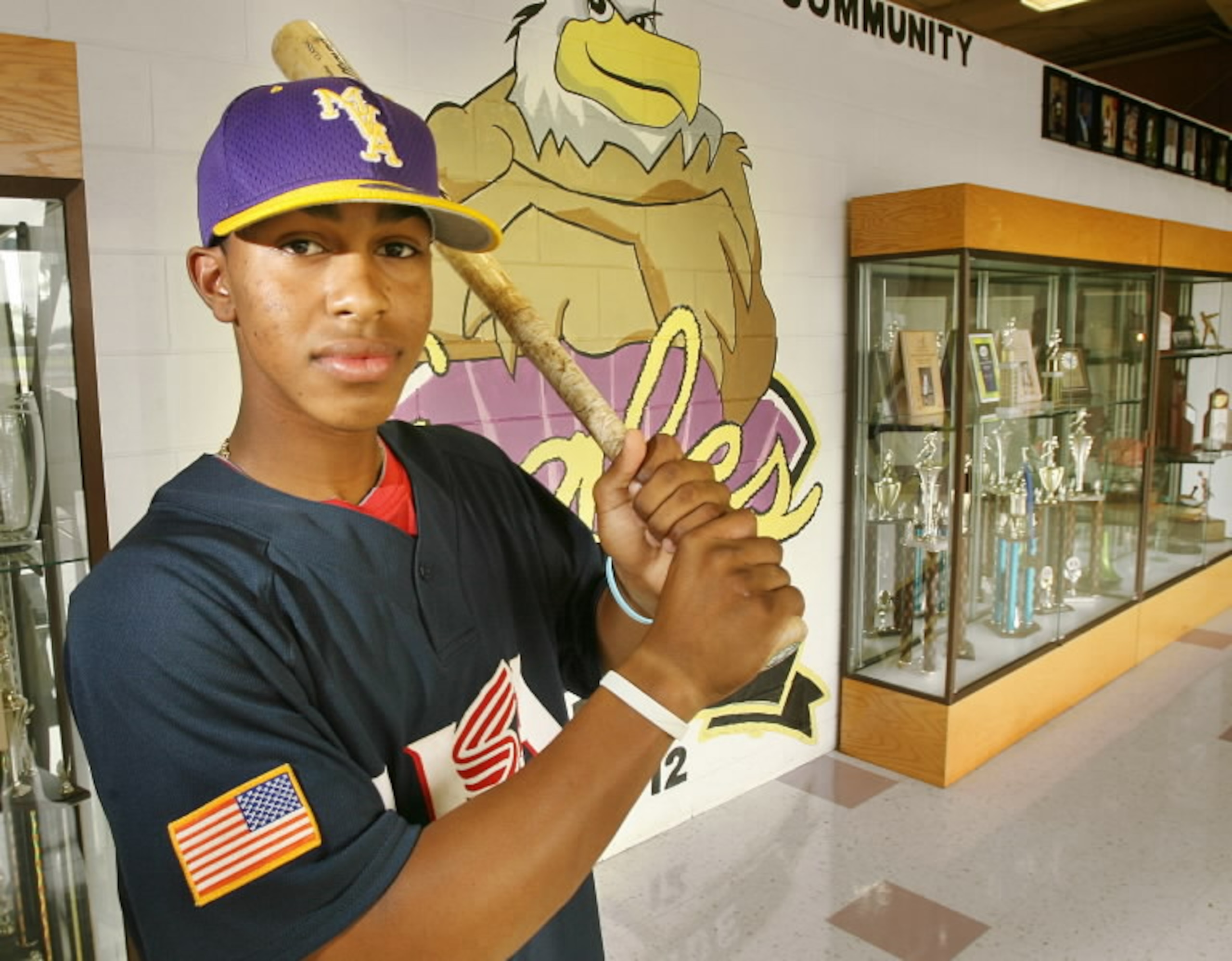
Picks in the first round: three (24th, 31st and 32nd overall)
Tampa Bay has a ridiculous 12 picks in the first two rounds of the 2011 MLB Draft. That's a record.
They also have three picks from 24-32, meaning they stand to pick up more talent than just about any team in recent draft memory. They also stand to shell out more money than most teams would in an entire draft, all in two rounds.
That means they're going to have to draft very wisely, and very selectively. For a team searching for long-term answers at shortstop, Francisco Lindor is an excellent choice with their first pick.
The first thing that most people notice about Lindor is how easy he makes it look to play shortstop, the most difficult position on the field.
He's one of the more polished defenders from the high school crop, is excellent at throwing on the run and often shows some serious flair.
That, right there, would be enough to get Lindor a look in the early rounds. But on top of his stellar defensive play, he's also a switch-hitter who offers some serious power.
He already offers some pretty good juice already. Lindor, all 5'11" and 170 pounds of him, won the Home Run Contest at the Aflac All-American game in 2010.
The majority of his power is generated from his right-side.
On the basepaths, Lindor is more than adequate. He isn't a burner, but if developed properly, he could be a 15-20 steal guy as a pro.
Lindor is an FSU commit, so he should command a pretty hefty bonus to sway him away from becoming the next great Seminole infielder.
The Rays will pony up for the Florida native, and add him to an impressive shortstop stock that includes former No. 1 overall pick (and semi-bust) Tim Beckham and the recently acquired Hak-Ju Lee.
Baseball America's fifth-ranked high-school pitcher, Jose Fernandez, would also be a fantastic addition to an already stocked Tampa Bay pitching system.
Some view Fernandez, a former pitcher for the Cuban National Youth Team, as the top overall prep pitcher, thanks to his mid-90s heat, topping out at 97 mph.
Overall, Fernandez is one of the best high-school arms, with arguably the best velocity. He complements his powerful heater with a very impressive curveball that looks unhittable at times. The pitch is definitely a potential above-average pitch as Fernandez progresses.
He also throws a changeup, but like his curveball, it too needs tons of refinement. Simply put, Fernandez is more of a thrower and less of a pitcher. All three of his pitches lack the command and control he's going to need to survive as a pro.
Aside from his stuff, Fernandez is very reminiscent of Matt Hobgood and Jesse Biddle, in that he has a pro-looking body with very little physical development left.
His fastball is about as fast as it's going to get, so all he needs to do now is work on sharpening his command and developing his secondary pitches.
If he can do that, he could be the steal of this draft. Getting a Cuban defector before he reaches his prime or even his essential stages of development is almost unheard of, and if any team could turn Fernandez into an All-Star, it would be Tampa, who can easily afford to spend one of their 12 picks in the first two rounds on him.
And last but not least is Shawon Dunston Jr.
Speed, speed, speed.
And a little bit more speed. That's what Dunston Jr. has built his game around.
And if that wasn't enough, which it is for most teams, he complements his speed with a good head on his shoulders. You can get a good taste of his baseball IQ by listening to him talk about forgoing homers for in-the-gap shots that he can turn into doubles and triples with his legs.
That's the kind of player that appeals to most teams, but especially a team like Tampa Bay, who values tools and high-risk, high-reward players more than any other franchise. They've made some of those types of players cornerstones of their franchise (B.J. Upton, Carl Crawford, Rocco Baldelli, etc.).
Growing up inside a clubhouse certainly helped Dunston develop into the stellar prospect that he is today. He repeatedly thanks his dad and credits him for most of his success, and he's pretty lucky to have such a great teacher.
Playing mostly as a center fielder, Dunston shows great speed in the field, not just on the basepaths. He is aggressive getting to the ball, and shows great footwork.
On the basepaths is where he'll make his mark, though. He's a legitimate 50-60 steal guy as a pro, maybe even more.
At the plate, he isn't as advanced. Right now he's definitely a slap hitter. He's got some power tucked away in his tiny 6'2", 162-pound frame, but it's going to take some more work in the weight room to bring it out of hibernation.
As he continues to build strength, he could develop into a legitimate five-tool talent.
And even if he doesn't, he'll always have that speed.
Texas Rangers
28 of 30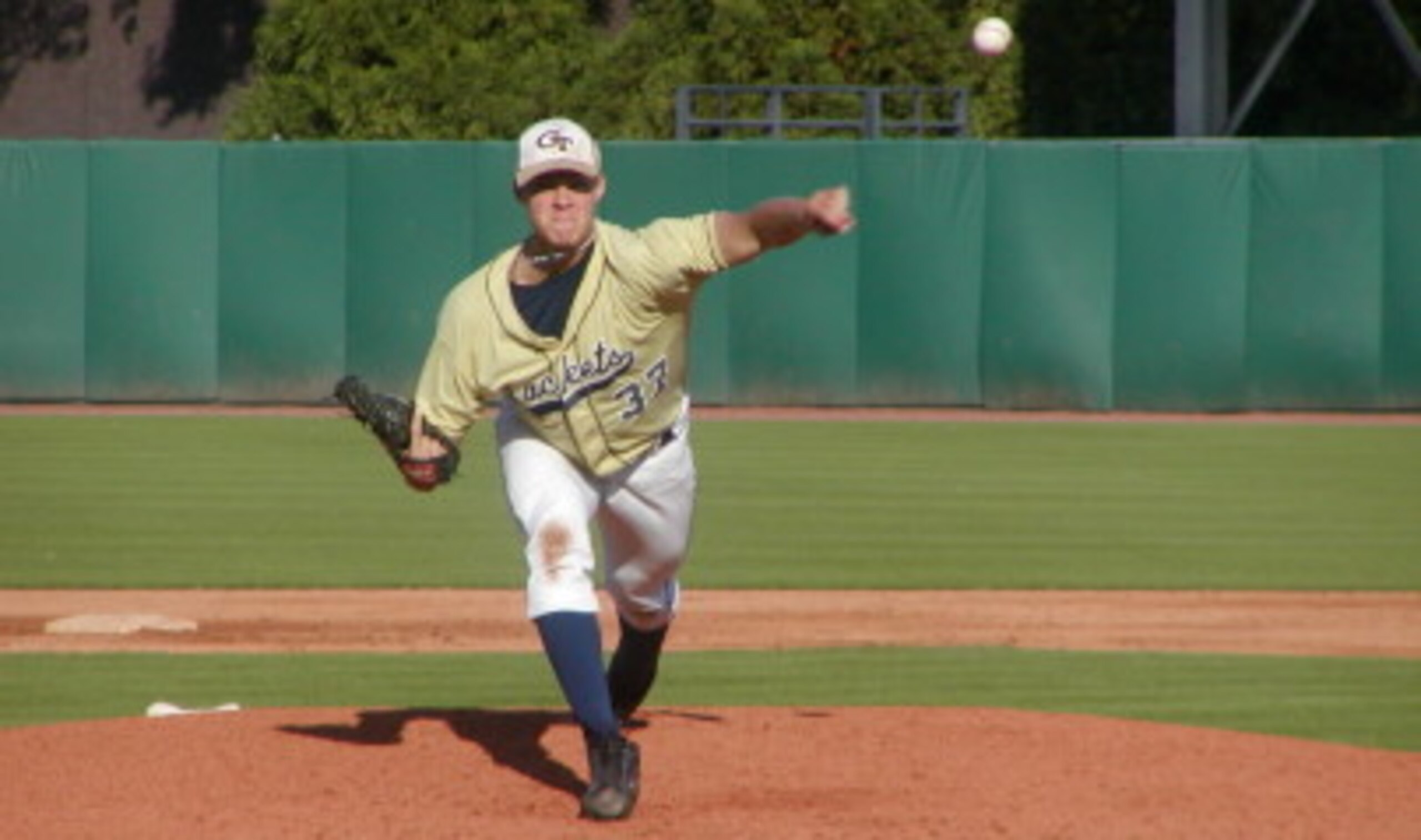
Picks in the first round: one (33rd overall)
Along with Anthony Ranuado, Georgia Tech's Jed Bradley was one of the biggest stars of the 2010 Cape Cod League season.
He made the Cape All-Star team, and was ranked as the circuit's fourth-best prospect by ESPN.com's Keith Law. And it was Bradley, not Ranuado, that led the league with 44 strikeouts.
Bradley, at 6'4", is a lanky left-hander, who is widely regarded as a hard worker with a very high ceiling. He has excellent control, an impressive repertoire and adds a pretty good pick-off move to boot.
His fastball (89-92) doesn't blow batters away, but he features a pretty good slider that projects as an above-average pitch as a pro and a fringe above-average changeup.
His control over the pitches in his repertoire makes some draw comparisons to another talented college lefty, Jeremy Sowers. Sowers was a control fiend in college, and while he panned as a professional, Bradley shouldn't be treated like the former.
His college stats, especially last season, don't do justice to how talented Bradley is. He went 9-5 with a 4.83 ERA. He was, however, 6-2 in a very deep, talented ACC, and he was good enough to be named to the All-ACC second-team.
Heading into the 2011 season, he was named Second Team All-American by Baseball America, and the 12th best college player by CollegeBaseballDaily.com.
As Tech's ace this season, he should get every opportunity to improve his stock, and could catapult himself into first-round consideration, especially if he keeps pitching like he has during the first month of Tech's season. Through four games, he's 2-0 with a 1.85 ERA and 38 strikeouts in 24.1 innings.
The Rangers are fiends for pitching, and while they have some decent talent in the Majors, and even more high-risk, high-ceiling talent in the minors, they have few safe arms in the system like Bradley.
Selecting him would fill a hole in their system as well as give them another talented arm.
Toronto Blue Jays
29 of 30
Picks in the first round: one (21st overall)
Not to be confused with Baltimore's Josh Bell, nor the several other athletes (numbering in the 20s) sharing the same name, Texas high-schooler Josh Bell is one of the 2011 draft's fastest movers, as in moving up draft boards.
The 6'3", 205 pound, outfielder is arguably a five-tool talent, and is a switch-hitter with the chance for above-average power.
He has a short, powerful swing and combines it with excellent bat speed to crush pitches in the zone to all parts of the field.
In the field, he offers slightly above-average defensive ability. He has a cannon for an arm, but lacks the range to stick at centerfield as a pro, his position so far in high school.
As he packs on the pounds to gain more power at the plate, that will limit him to one of the corners, where his rocket arm will play quite nicely.
On the basepaths, he's not a base-clogger, but as he continues to fill out, he should be sapped of that slightly above-average tool.
Bell would be a great project for a team like Toronto, who has shown an affinity for high-risk, toolsy outfielders with very high ceilings.
With Vernon Wells departing, the Jays are now in a new era, and Bell could become a part of that.
Washington Nationals
30 of 30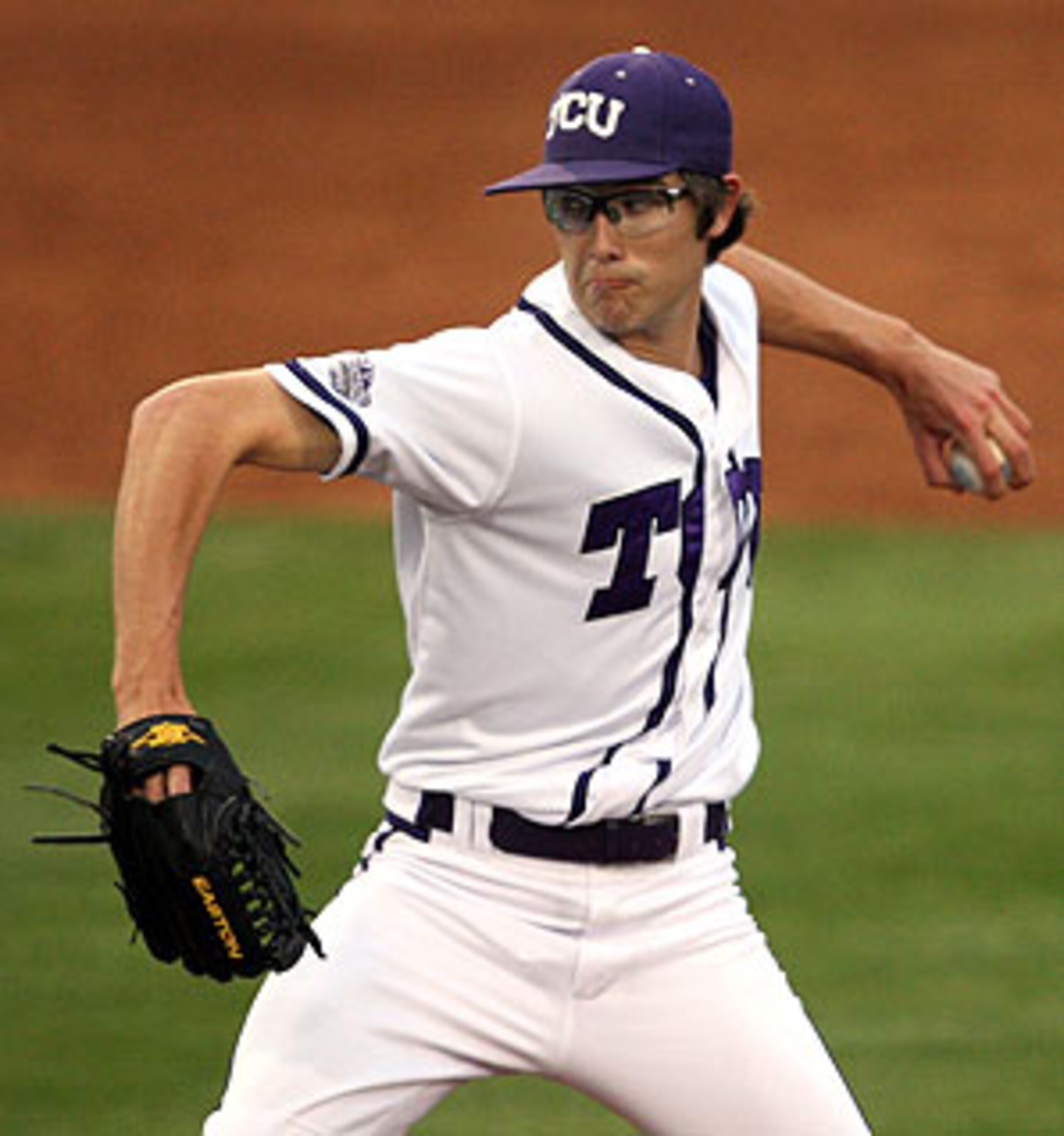
Picks in first round: two (sixth and 23rd overall)
A year after snatching up one of the best hitting prospects in draft history, and two years after scooping him the best pitcher in draft history, the Nats are once again primed for a great run, with two of the draft's first 23 picks.
At pick six, they will have numerous options available. One of the group that includes Matt Barnes, Sonny Gray, Matt Purke, Jackie Bradley Jr., Bubba Starling and George Springer will most likely be available.
Since this may be the final year of getting to spend as much money as teams want to on draft picks, they'll definitely consider the talent, and not the price-tags that accompany each potential pick.
If the Nats are smart, they'd be wise to pick up Matt Purke, from TCU. Selecting him would give the team two of the best lefties to come out of the draft in the past five years, and teaming him with Strasburg would be almost unfair to the rest of the N.L. East.
Purke has eased his way back into the rotation this year for the Horned Frogs after missing some time with a blister on his throwing hand.
He looked fantastic in his first two outings of the year, but stumbled a bit in his most recent start on Saturday, giving up three hits and four runs (one earned) in 3.2 innings.
He suffered the first loss of his college career (18-1) to a team (Houston Baptist) that entered the game with a 0-14 record. While it's most likely just an early-season hiccup for Purke, it's still disappointing to see him saddled with his first collegiate "L."
Questions about Purke's health and his lanky frame, which many believe could lead to an injury down the road, might cause him to slip out of the top-five, but letting him get out of the top-ten would be a crime.
With the 23rd pick, the Nationals should be looking for the best available player. They have some good pitching depth in the minors with Sammy Solis, A.J. Cole and Robbie Ray, so it might be wise to try to pounce on a hitter.
A guy who could still be available in the late first-round, but who has a top-of-the-first-round bat is UF's Preston Tucker.
The lightly-recruited and undrafted out of high-school first-baseman has been a beast so far this year for the nation's No. 1 team, hitting .394 with four homers and 17 RBI in 16 games. He's been the impact bat in a loaded lineup and has played flawless defensively.
While he'll never be a Gold Glover at first, Tucker is serviceable enough there to warrant a first-round pick, especially given his pure hitting ability.
He has the potential to be a .300 hitter who hits 20-25 homers, with a good amount of walks. He could be a great long-term solution at first-base for the Nats.
It's hard to believe nobody was on Tucker coming out of high school. I mean NOBODY. No pro teams, no scouts, not even any colleges. Which is hard to believe considering he won his county's triple crown and established himself as the area's best player since Wade Boggs.
Tucker twice made trips to FSU for tryouts, but was told by the coaches that they didn't think he had enough talent, so they sent him packing. Boy, isn't he making everyone look stupid. As a standout at UF, Tucker is poised to get the ultimate revenge, in the form of a first-round bonus.
At Florida, Tucker has developed into a patient, powerful hitter. He has above-average power, as evidenced by his three-homer, 11-RBI game as a freshman against UCF, in which he bashed two grand slams. He had a standout freshman campaign, highlighted by 15 homers, 85 RBI and a .364 average.
And he's also as patient as they come. He struck out only 22 times his first year at UF.
Fielding is really the only drawback on Tucker. Once a catcher, he now shares first-base duties for the Gators, and his skills around the bag are less than impressive.
But with that bat, and those eyes, he won't make it past the first round.
The Nats are currently in the market for a hitting-first first baseman now that Adam Dunn is playing in the Windy City. They've got Adam LaRoche holding down the fort, and Chris Marrero in the pipeline, but neither has the ceiling that Tucker has.


.jpg?w=2560 "Chiefs, Steelers Eye WR Trades")



.jpg?w=2560 "Latest Peyton-Colts Rumors")