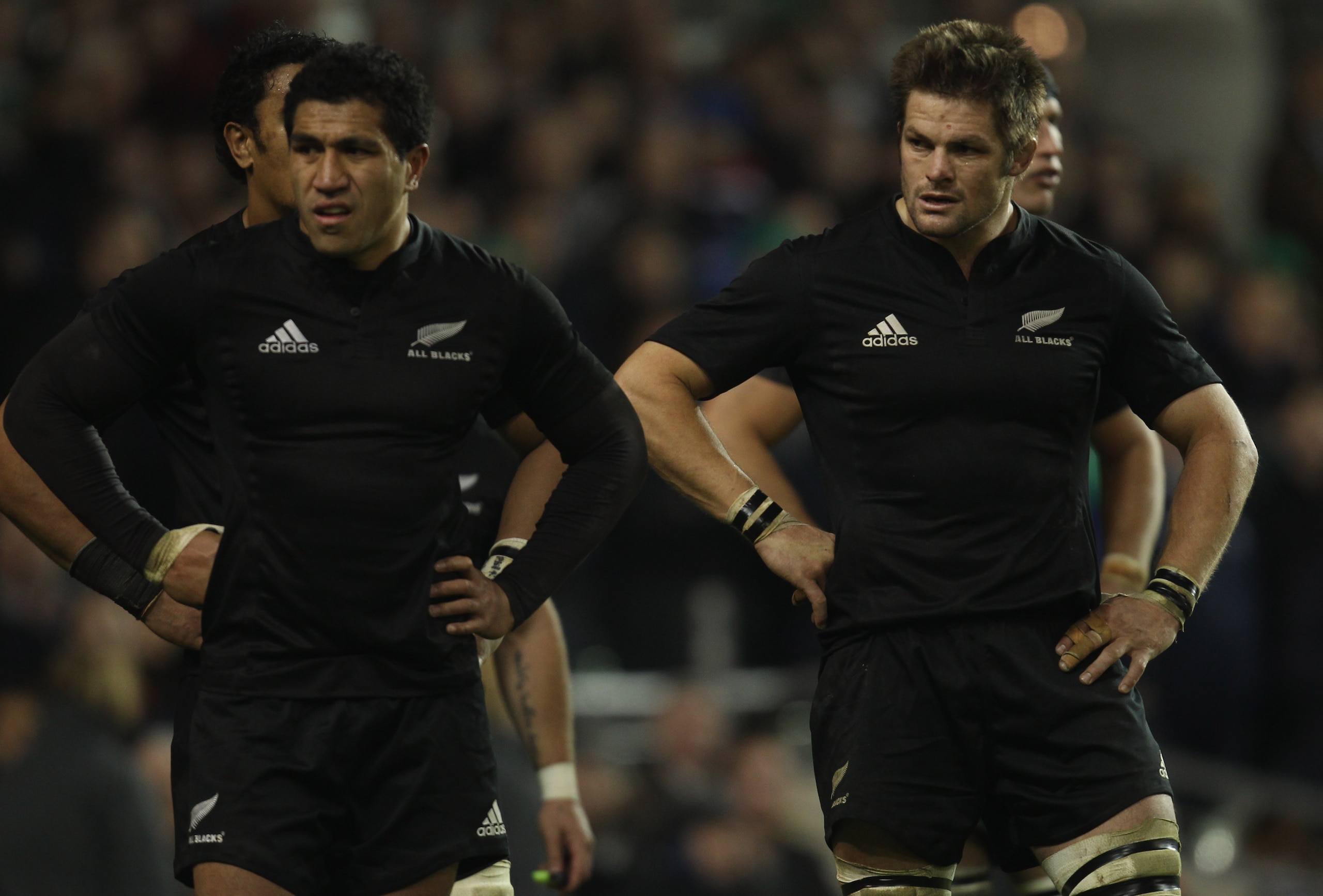

Opinion: 2010 Rugby World XV
With the close of the 2010 rugby season, I now look back at the year and choose the 15 men who I feel were best in their position each for the year.
There are many players who make valid cases for being in this team, but at the end of the day I can only choose 15 players and I'm sure others who read this article will come up with a very different 15 to the one I come up with.
One of the most important things to do before I name the team is outline the criteria I used when picking my team.
Firstly, the team is based purely on 2010 form. How the players have played in the past has no bearing on selections whatsoever.
Secondly, the players are judged mainly on how they performed at the highest level, that being test match level. While the Super 14 and Heineken Cup are both top class competitions, test rugby is another step up and the players who are able to still look good at this level are the ones we know are truly good.
Combinations of players plays no part on selections at all. The players are picked purely on how well they played their own position and how well they would play with the other players means nothing as this is just a paper team.
I know now that many will disagree with my team, but I think that the best teams often are made up of the best players and it can only be expected that these teams will have a dominance over the Best XV of the year.
So without further ado, I present to you who I view as being the best team one could field from the 2010 season.
15. Mils Muliaina
1 of 16
Mils Muliaina claims the fullback jersey in this team after what was arguably his best year of rugby in what has been a prolific career.
Coming off an injury through almost the whole Super 14, many questioned whether Muliaina was ready to re-enter rugby at such an early stage and at such a high level against Ireland in the first test of the year. But Muliaina silenced the critics by showing the same attacking flare that he'd shown earlier on in his career, while still being the safest man in the world under the high ball.
The way he played against the Springboks in the first two tests of the Tri-Nations was testament to just how good he is. His counter-attacking abilities were fully exposed and was a large reason for the All Blacks dominance in 2010, while putting the Springboks under immense pressure as their kicking tactic gave Muliaina more and more opportunities to unleash from the back.
His closest competition comes in Australia's Kurtley Beale. Beale was a player who came on leaps and bounds in 2010, showing everyone just how fast he is to go with the skill we always knew he had. However he was unable to match Muliaina for consistency and will have to settle for No. 2 for now.
14. Cory Jane
2 of 16
Cory Jane finally got his opportunity to be the No.1 winger in New Zealand this year and he sure made the most of it.
He was dangerous with ball in hand, often displaying what has become his signature move in his fend, showing off his strength as well as his speed and flair.
But Jane is much more than this, he is the complete rugby player. With his first choice position being fullback, he has a good kicking catching game, while always taking the right decisions.
This has led to a high level of consistency from Jane that no other wing has displayed this year. Others have blown hot and cold, but none have matched Jane's ability to create something from nothing, his combination of speed, strength and power, along with his ability to perform consistently.
He was at his best against Australia as the open game style suited the way he plays the game, but was still very effective on on the counter attack against the Springboks while always seeming to be able to find the line against the Northern Hemisphere sides. Consequently he tallied four tries while being able to create many other chances for his team mates.
13. Conrad Smith
3 of 16
Quite possibly the best back in the world this year, Conrad Smith was at another level. After suffering from various hamstring injuries in previous years, 2010 was Smith's chance to put all that behind him and finally showed the world just how good he is.
On attack he was capable of breaking the line and put his wingers in outside him better than any other centre in the world. It was on defence though, that he shone, rarely missing a tackle and reading the oppositions attack to perfection.
Not only did he rarely have a bad game, but he rarely didn't have a good game. He was simply outstanding and a large key to the All Blacks success this year.
Jacque Fourie and Adam Ashley-Cooper both make valid cases for being included, while Brian O'Driscoll was good in patches too, but none displayed the same intelligence and consistency that was shown by Smith, which is why he claims the No. 13 jersey.


.jpg?w=2560 "Cardinals Giants Football")
12. Ma'a Nonu
4 of 16
Ma'a Nonu becomes the fourth All Black to be included in the 2010 World XV. Nonu was simply devastating with ball in hand. His ability to crash the ball up and break tackles gave the All Blacks tremendous go forward, while he also seemed to crop up in places over the park to score tries when it mattered.
He was key in creating space for those outside him, with the way he was able to draw multiple defenders. His support play is excellent also, always backing up the man with the ball after having thrown a pass.
Defensively Nonu improved out of sight this year and is the main reason he has been included in this team. While his attacking abilities are second to none, and have been for years, his tendency to rush up on defence has often seen him rated lower than he possibly could have been had he played with more intelligence.
This year he was able to fix this flaw and along with Conrad Smith, formed what came to be a brick wall in the All Black midfield. In fact, his only real slip up was the final Bledisloe Cup test of the year, where he went back to old habits and let Quade Cooper and Adam Ashley-Cooper through for easy tries.
Nevertheless this shouldn't detract from just how good he was this year. At any rate, his place in this team is largely uncontested. Sonny Bill Williams was hyped up but other than one good performance against Scotland, proved rather anonymous at the top level, while a possible candidate in Jean De Villiers was shunted out to the wing for much of the international season.
11. Drew Mitchell
5 of 16
Drew Mitchell was on top try scoring form in 2010, touching down nine times in tests, while also leading the Super 14 in tries along with Joe Rokocoko.
He was dangerous with ball in hand and benefited from the Australians determination to copy the All Blacks blue print of running everything, as it allowed him to have more chances and was able to get into the game more.
Inconsistency was something that was a flaw in his game this year, but in the most part he was good. And besides, almost every other wing in the world went through bad patches too. Joe Rokocoko came back into form never looked like threatening in the same way the Mitchell did, while Hosea Gear got limited opportunities at the top level.
Chris Ashton is another player who has impressed, especially against the southern hemisphere teams in their end of year tours. He too, has suffered from not having enough of a chance at the top level but will surely stamp his authority on the rugby world in years to come.
Tommy Bowe was dangerous, as was Australian youngster James O'Connor, but the jersey goes to Drew Mitchell, the leading test try scorer for 2010.
10. Daniel Carter
6 of 16
After an unusually below average Super 14, Daniel Carter was able to find his form at the right time of the year and became once against the best Flyhalf in the world.
The thing that separates Carter from others is his all round game. He remains the best running Flyhalf in the world, being able to always make the right decision of whether to go himself or spin it wide. His distribution was excellent and was shown in the way the All Blacks backline operated this year. To go with this, his kicking game has been excellent too, breaking the world record for most points scored in test rugby which was previously held by Jonny Wilkinson.
An ankle injury saw that Carter had to take a break towards the end of the Tri-Nations and despite a passable comeback for the Grand Slam tour, it was clear that it was still troubling him.
At any rate, there were no real challengers for Carter's place in this team as inconsistency crept into the game of all others when playing at the highest level. Morne Steyn was fantastic throughout the Super 14, but faulted in the Tri-Nations and struggled to perform against a top All Black team. Quade Cooper was dangerous with ball in hand but was awful on defence and still needs to develop a kicking game. Jonny Wilkinson looked good when he played, but struggled with injuries while Stephen Jones suffers from being unable to guide his team to victory.
Dan Carter was able to consistently perform at a high level during 2010 and was the main playmaker in the most dominant team of the year, which can't be said about any of the other names on the list. This makes him the natural choice for the No. 10 jersey.
9. Will Genia
7 of 16
After bursting onto the scene at the end of 2009, Will Genia was able to carry his form through to 2010 playing some scintillating rugby at times.
His running abilities are the best in the world from close in, able to create gaps in seemingly solid, well organised defences. His kicking also was improved from last year, being able to land the ball in space from the base of the scrum and ruck consistently.
He led the Reds through most of the Super 14 after captain Nathan Sharpe was injured, showing great maturity for a player so young, and was a large reason for the Reds success this year.
His pass could still do with some work, but on the whole his impact on every game he played in was immense and displayed the X-Factor on many an occasion.
The one player who really challenged Genia for this position was Fourie Du Preez. It was hard to know what to do with Du Preez given that he had such a good Super 14 and was one of the main reason's the Bulls won the championship, but didn't play any rugby after that. Maybe the best way to think of it is as if Du Preez is a 1a to Genia who earns the title of No.1 halfback in the world for 2010.
8. Kieran Read
8 of 16
After years of being one of the up and coming players of New Zealand rugby, 2010 saw Kieran Read finally burst onto the world stage and become on of the most dominant players on the planet.
He is a skillful player who runs like a back and is able to catch and pass just as good as many midfielders. He was always a threat close to the line, scoring 6 tries for the All Blacks this year.
To go with this, Read does the hard work that is expected of a No. 8. His efforts on defence shouldn't be underestimated and his lineout ability adds to the All Blacks options in that department.
France's Imanol Harinordoquy was of a good standard too which was shown with his nomination for IRB Player of the Year, but his impact simply wasn't as big as Read's. Pierre Spies had a horror year after being so dominant throughout 2009, while Jamie Heaslip suffers from receiving a red card and five match suspension against the All Blacks in June.
7. Richie McCaw
9 of 16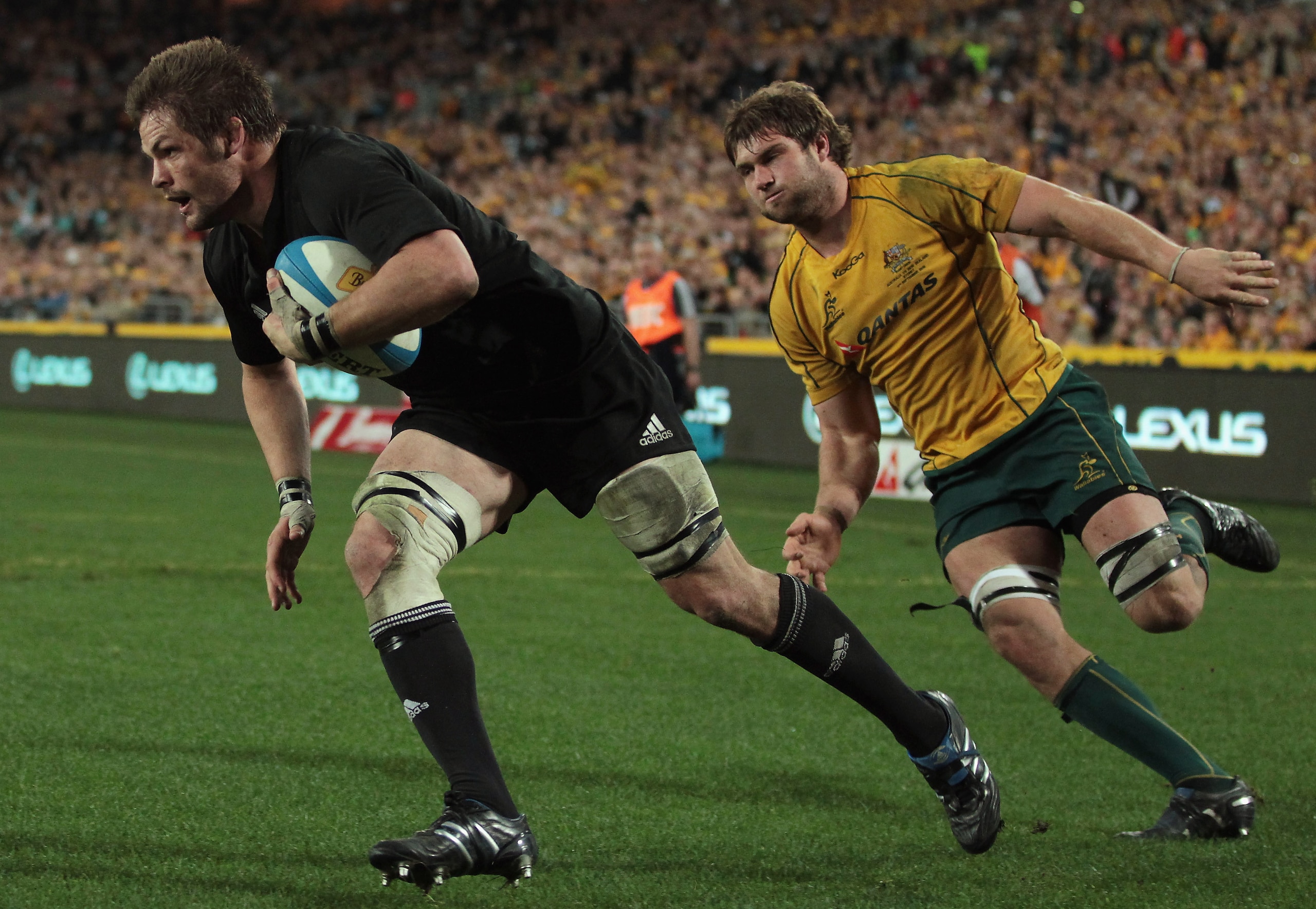
Richie McCaw was simply amazing this year. He led from the front and was the most crucial part of the All Black team that dominated world rugby in 2010.
The thing with McCaw is that every game he plays is a good game and that is rare, almost unheard of in sports. His abilities at the breakdown are second to none and defensively he was able to pull off some try saving tackles. To go with this, he has added another dimension to his game by becoming a prominent ball runner.
His best performance in 2010 came in the third Bledisloe Cup test, where he almost single-handedly kept the All Blacks in the game for much of the first half, allowing them to build for a tremendous comeback which saw them steal the game in the final minutes.
Many people will say that Australian youngster, David Pocock, deserves this spot. Sure he was good. Very good in fact. But he just didn't have as large of an impact as what McCaw did. Pocock does what a traditional openside flanker does very well, he makes tackles and turns ball over. But he lacks the all round game that McCaw has and the leadership that McCaw displays. For now at least.
6. Jerome Kaino
10 of 16
Much like Ma'a Nonu, the thing that has often held Jerome Kaino back from being rated as world class is his consistency. 2010 saw Kaino finally deliver week in, week out what we know he is capable of.
On defence he was brutal and was the driving force behind the All Blacks ability to gain dominance up front, often creating the momentum that allowed the All Blacks to push their opposition off the ball with his hard hits that drove the opposition backwards.
His best two performances of the season came later on in the year. The first being when he was introduced midway through the game against the Wallabies in Sydney. A tired looking All Black team that was being held together by Richie McCaw was struggling and required someone to bring something new to the table. Jerome Kaino did just this, bringing the physicality that the All Blacks had lacked and was able to swing the game for a famous win.
Second came the last All Black test of the year, where he was the key player in a win 37-25 win over a spirited Welsh team. It was in this game that he put in what was probably the 'hit of the season', capping off what was a simply devastating season by one of rugby's true hard men.
5. Nathan Sharpe
11 of 16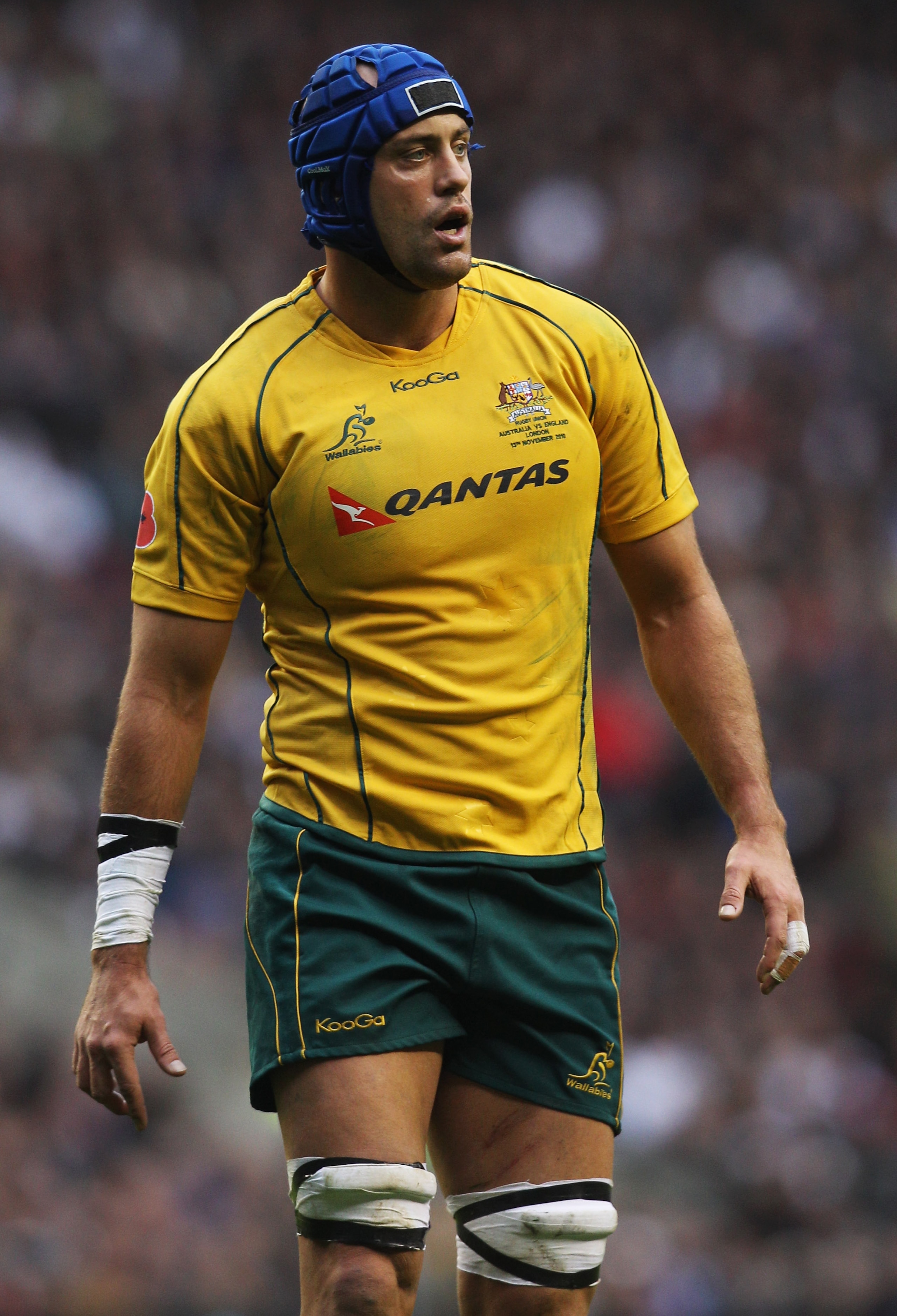
One of world rugby's most experienced campaigners, Nathan Sharpe had another good season in 2010. His form from season to season has been inconsistent in past years, but the Australians would have been pleased he brought his A-Game to the table for the 2010 test season after being side lined for much of the Super 14 with injury.
The thing that impressed me so much about Sharpe was his work rate around the park. While he was good in the lineouts, he did a lot of hard work that can often be overlooked in favour of skilful ball runners. But a good lock should be in the thick of things, cleaning out and making tackles as well as taking lineouts, just as Sharpe was able to do throughout 2010.
4. Brad Thorn
12 of 16
You really can't go past Brad Thorn when it comes to choosing someone who is just going to get the job done.
He is a true hard man of the game, a real old-fashioned player who's game predominantly revolves around trying to move things, whether this be in rucks or in tackles. Very few players are as consistent as Big Bad Brad, who seems to make his presence felt in every game he plays in and was a large reason for the All Blacks dominance up front this year. His lineout skills have improved and looked much more confident jumping for the All Blacks this year, after being part of a struggling lineout in previous years.
The main other lock to impress was Andries Bekker. He was exceptionally good during the Super 14 and had he been given more of an opportunity for the Springboks, he would have likely had this spot.
Bakkies Botha continued to be the enforcer that we know he can be but was suffered from a few suspensions for reckless dirty play, while the great Victor Matfield had a quiet year, being rather anonymous during the Tri-Nations.
3. Owen Franks
13 of 16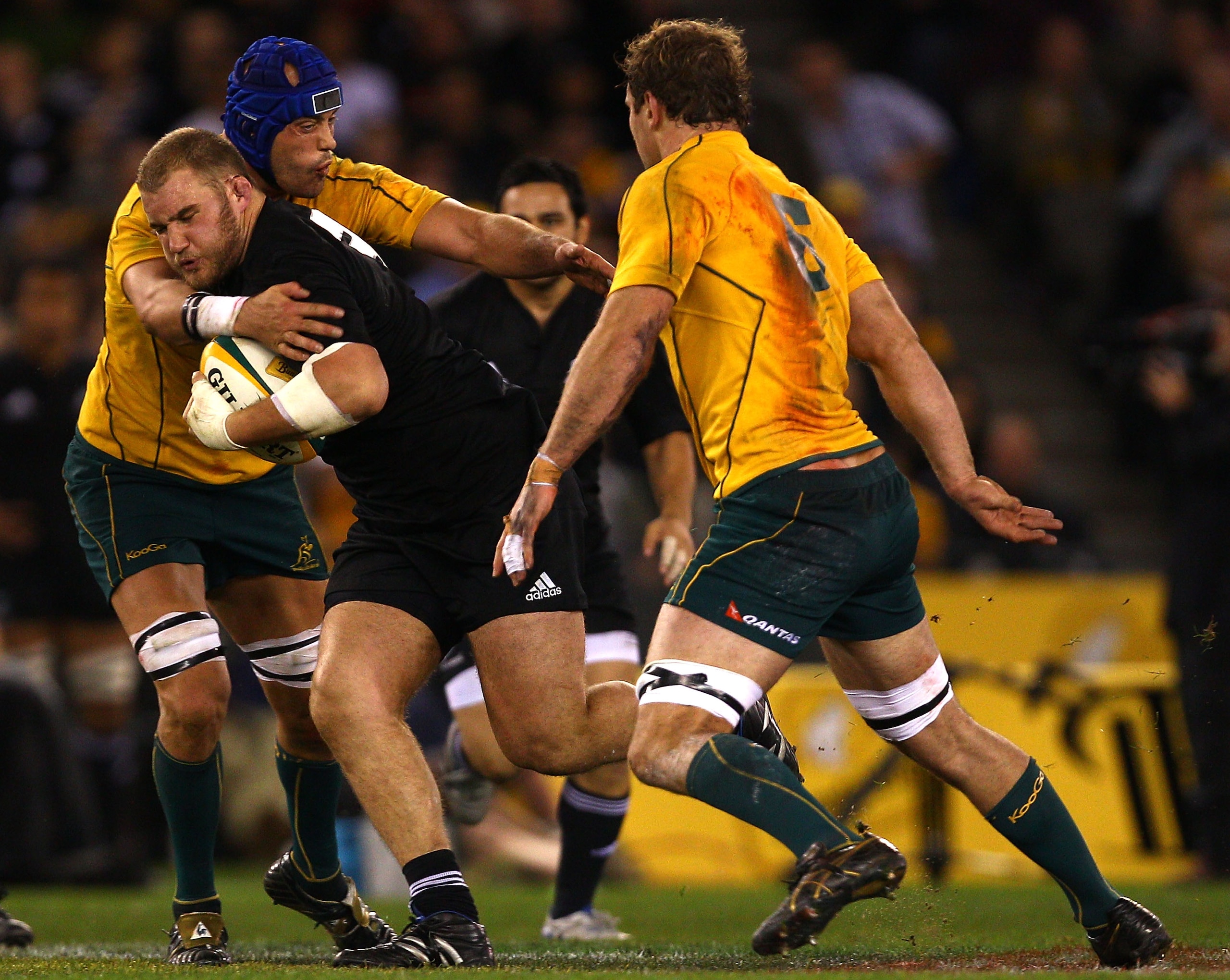
One of the big improvers of 2010, Owen Franks claims the No. 3 jersey after stamping his authority on the rugby world with a season to remember.
It is his high work rate that sets him apart from the others. He plays like a loose forward, making tackle after tackle and getting very involved in the game. His best attribute is his physicality, constantly driving his opponents backwards and into the ground on defence, while always running hard when given the ball.
His scrummaging is good too, getting the better of most scrums, particularly against Scotland where he forced his opponent to change sides. Only against England did he struggle, but that is something for him to work on. As a young player, he will only improve and his inclusion in this team will be the first of many achievements in what promises to be a good career.
2. Keven Mealamu
14 of 16
With an injury to Andrew Hore, Keven Mealamu was given his opportunity to prove to the All Black selectors that he was indeed the best hooker in New Zealand. Not only did he prove this however, he went on to outplay every other hooker he came up against this year and was the natural choice for the best hooker of 2010.
He continues to be dangerous from around the base of the ruck with the pick and go, while also cropping up all over the place and getting involved in every game. His lineout throwing was much better this year and was a major component in the much improved All Black lineout, which even got the better of South Africa in the first Tri-Nations test.
It seemed there were few other hookers to challenge Mealamu. John Smit was far below his best and was the Springbok hooker almost by default, had Bismarck Du Plessis been fit he surely would feature here. Saia Faingaa was prominent for Australia, as was Stephen Moore, but neither really took the bull by the horns and claimed the starting position. England hookers Dylan Hartley and Steve Thompson are both good players who had their moments. But none match Mealamu, who claims the hooker spot in the 2010 World XV.
1. Andrew Sheridan
15 of 16
A player who I have never really rated despite all the hype. It was hard to ignore Sheridan's dominance in the scrum this year however. He was able to get the better of the All Black scrum, which was something team's struggled to do all year. His form in Australia during the June tests was of a very high standard and was the driving force in the England scrum destroying the Australian scrum.
Sheridan sees off challenges from the two Australian props, Benn Robinson and Ben Alexander who both suffered from getting destroyed in the scrum too many times despite their high work rate around the field. Tony Woodcock's name has to be thrown into the conversation but he is still stands off too much for me, often waiting at first receiver rather than hitting the ruck. His form was good, but I don't think he was quite up to the same standard as the other All Blacks to make a World XV, so the spot goes to Sheridan.
Conclusion
16 of 16So there it is. My 2010 World XV.
On reflection, it possibly seems a little too New Zealand based, but the fact that the All Blacks were so dominant throughout the year backs this up. It's no coincidence that the best team of the year features a large number of players in the World XV.
But now the focus turns to 2011 and we must ask ourselves, how many of these players will be on this list this time next year?
2010 World XV:
15. Mils Muliaina
14. Cory Jane
13. Conrad Smith
12. Ma'a Nonu
11. Drew Mitchell
10. Daniel Carter
9. Will Genia
8. Kieran Read
7. Richie McCaw
6. Jerome Kaino
5. Nathan Sharpe
4. Brad Thorn
3. Owen Franks
2. Keven Mealamu
1. Andrew Sheridan
.jpg?w=2560 "Tyreek Deal May Come Soon")

.jpg?w=2560 "Ward Nearly Walks Out of Presser ▶️")
