
The Top MLB Prospect Position Changes to Keep an Eye on in 2011
Position changes in Major League Baseball aren't usually a big deal, but in certain instances, they can make or break a player's career.
Take two examples.
One: Skip Schumaker of the St. Louis Cardinals.
Schumaker was just one of many Cardinals outfielders who didn't have any room to grow at the big league level because the big league club was committed to veteran players. So, both sides agreed to let Schumaker try his glove at second base. After some initial struggles, Schumaker has developed into a solid defensive second baseman, who despite his ugly splits against left-handers, gets the opportunity to play everyday.
Two: Billy Rowell of the Baltimore Orioles.
Rowell was a first-round pick by Baltimore back in 2006. The O's passed on several productive big league players due to a strong belief in Rowell's bat. Five years later, they're still waiting on that bat, but even more, they're at a loss for what to do with him defensively. Rowell racked up the errors by the truckload at third base, so the team tried to move him to the outfield, believing that he would have less pressure to perform defensively and therefore be better at the plate. Instead, Rowell made an astounding number of errors in the outfield, and the O's shuffled him back to third base.
In an effort to get them to the big leagues faster, or to keep them extra-healthy, teams are starting to force position changes on minor league prospects, and the class of 2011 is no different.
Here are the top players who are looking at immediate position changes, and how it affects their status as prospects.
Wil Myers, Kansas City Royals (Catcher to Outfield)
1 of 9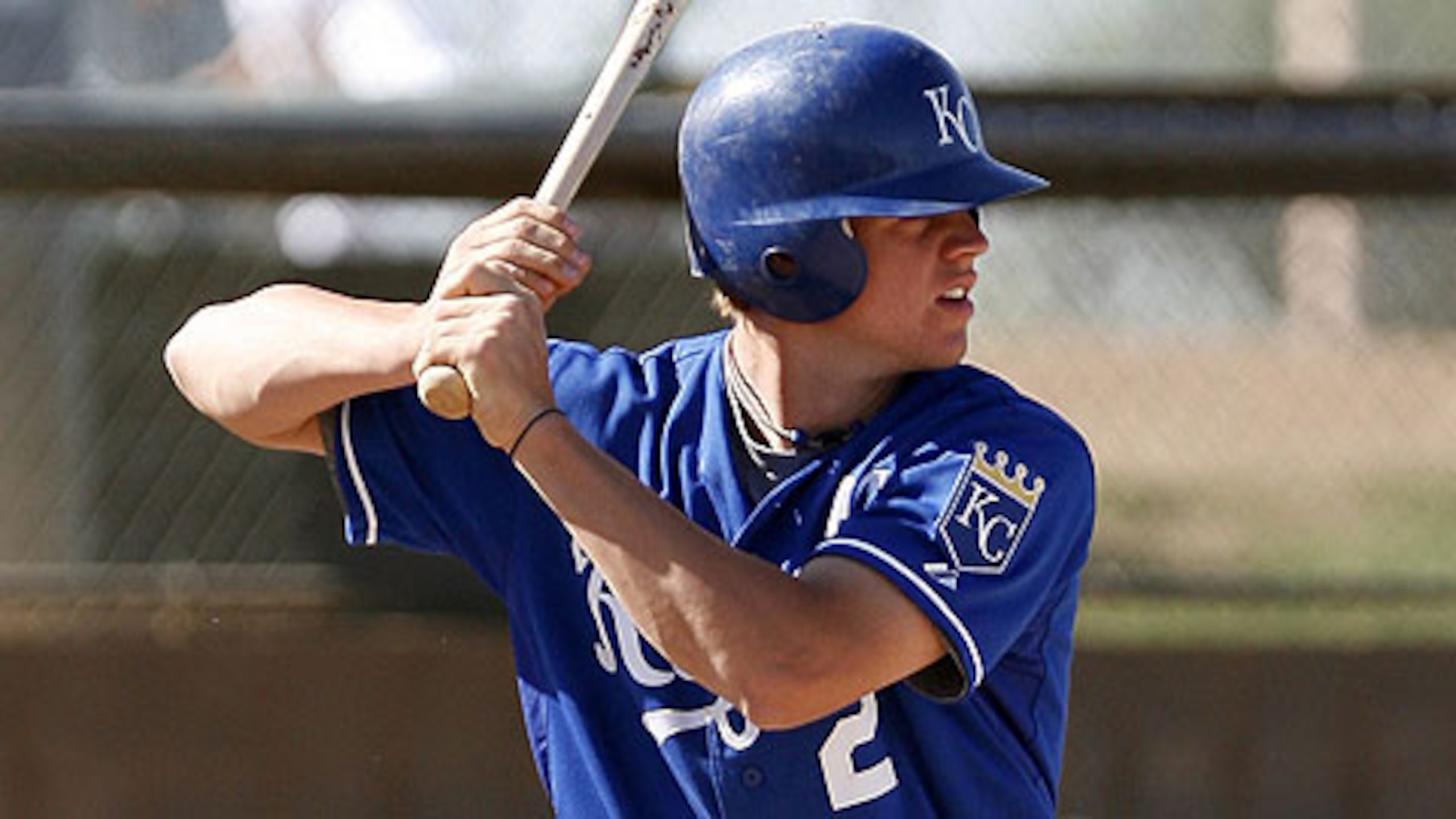
Myers was already one of the top prospects in baseball before the Royals moved him to the outfield—a move the team believes will accelerate his move to the big leagues, possibly as early as 2012.
Behind the plate, Myers was at least two, maybe even three years away from the big leagues. While he had some promise as a catcher, he was light-years away from the progress he had made with his bat.
As a 19-year-old, Myers reached High-A ball and blistered the pitchers of the league to a .346 average. Even more impressive, his plate discipline improved as he rose from Low-A. For the season, Myers hit .315 with 37 doubles, 14 home runs, 83 RBI and 85 walks, compared to 94 strikeouts.
By moving him to the outfield, the Royals think they have assured Myers arriving in the Majors around the same time as their talented crop of pitching prospects, such as Mike Montgomery, John Lamb, Aaron Crow and Danny Duffy. And he'll be getting there on the heels of sluggers Eric Hosmer and Mike Moustakas.
Even though Myers has yet to play an inning in the outfield, it's already a decision that is being greeted with great applause.
Daniel Klein, Baltimore Orioles (Starter to Reliever)
2 of 9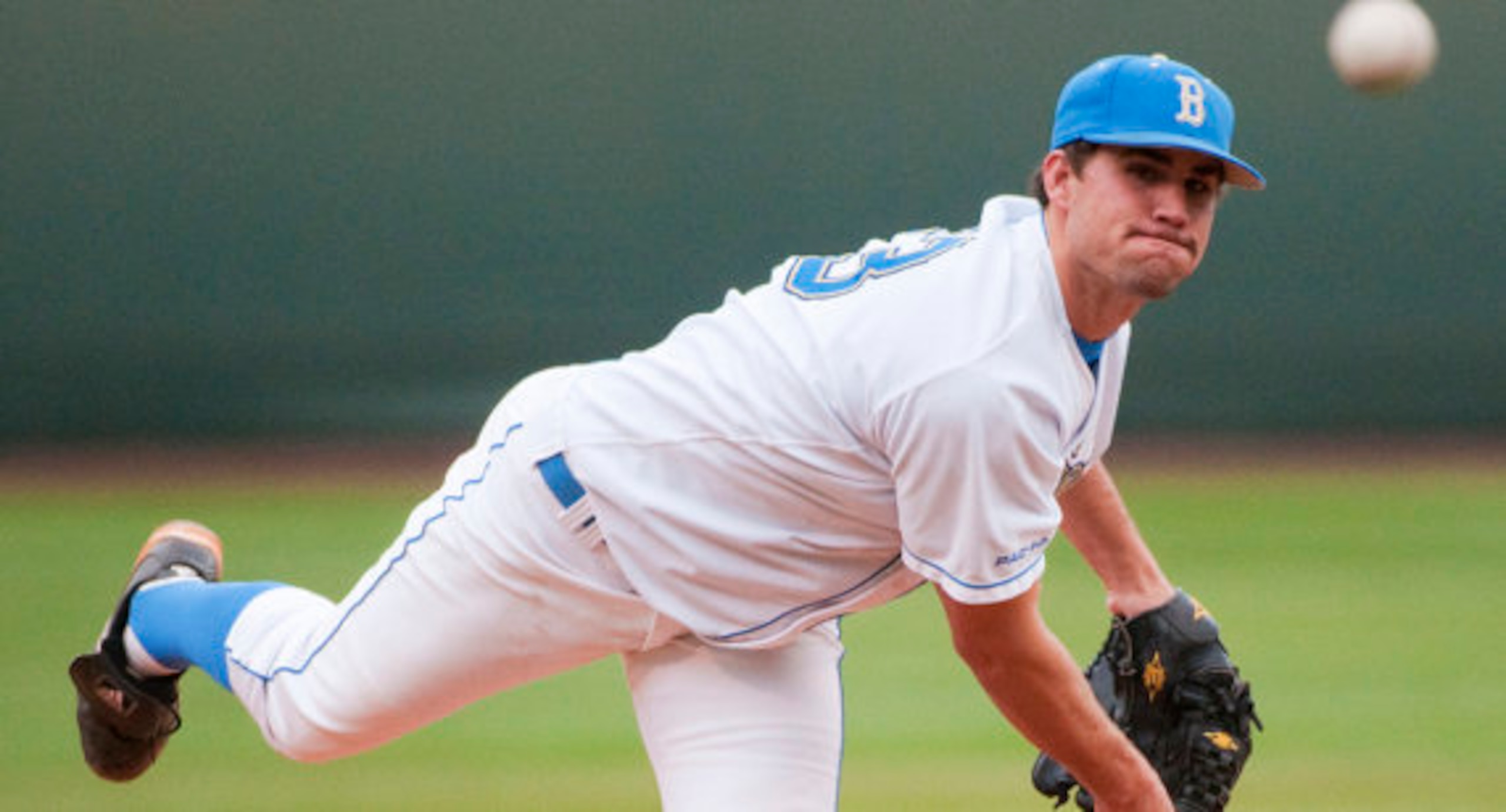
Let's be clear about one thing—Klein hasn't been a starter in three years.
After suffering an injury that forced him to miss the entire 2009 season, Klein returned to UCLA as a reliever and quickly became a shutdown closer for the 2010 squad. He finished the season with 10 saves, a 2.03 ERA and a 48-to-8 strikeout-to-walk ratio in 44.1 innings. The Bruins originally intended to keep Klein there to keep his innings down, but he performed so well that he became an integral part of their run to the College World Series.
After the season ended, the talk was that Klein would eventually be returned to a starting role as a professional, where he could better utilize his four pitch repertoire. Each pitch (fastball, changeup, slider, curveball) grades out as at least average.
That was the belief when the O's selected him in the third-round last June, and that belief held true until today, when the O's announced they were going to keep Klein in the bullpen, at least for this season. In an interview over the phone, Klein stated that he thinks the move is only temporary and is a precautionary measure due to his shoulder surgery back in 2009.
However, if he performs as well out of the pen as an Orioles as he did at UCLA, the team might make the same decision that his coaches in college did.
Leave him there.
Tanner Scheppers, Texas Rangers (Reliever to Starter)
3 of 9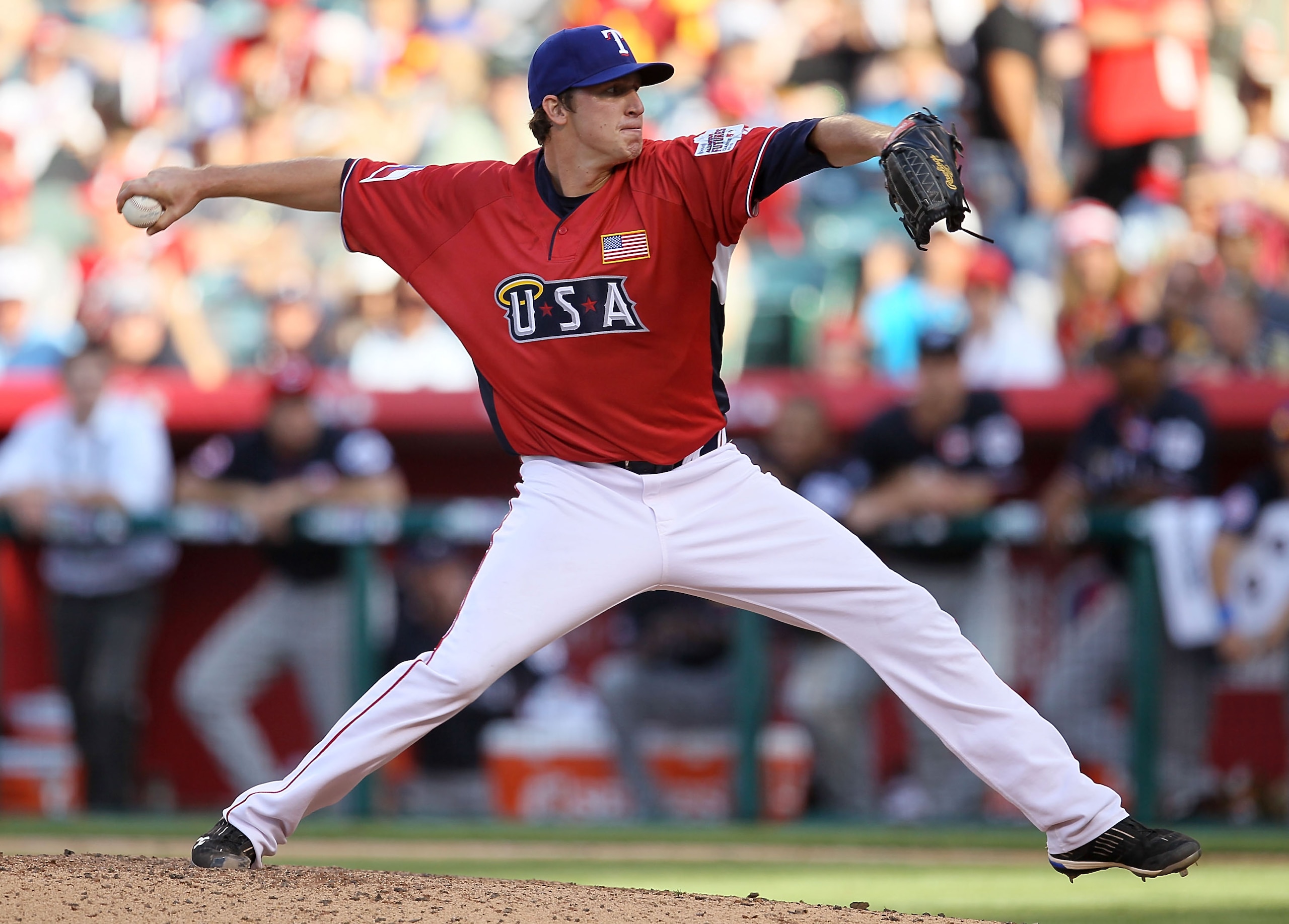
Scheppers made the transition from college starter to pro reliever in 2010 in order to keep him fresh and to ease him into pro ball.
Scheppers made the decision look like a wise one when he breezed through Double-A, striking out 19 batters in a mere 11 innings. In six games, he didn't walk a single batter and surrendered only three hits.
The Rangers then promoted Scheppers to Triple-A, where he pitched, to mixed reviews, out of the bullpen, then the rotation, then back out of the bullpen. As a starter, Scheppers was beaten up. Perhaps it was a result of learning to pitch out of the bullpen, or maybe he was just fatigued, but either way, he was hit hard and wasn't much better when he finally returned to the bullpen.
Many felt that the Rangers would stick with the Neftali Feliz plan and just leave Scheppers where he was the most effective, as a reliever.
As the 2011 season begins, however, Scheppers appears to be destined for the rotation, this time at the Rangers new Triple-A affiliate in Round Rock.
Without question, Scheppers' arm is legit. He can touch triple digits out of the pen and should be able to maintain 96-99 mph as a starter. The real question is whether or not his arm will be able to hold up to the increased work load.


Jonathan Singleton, Philadelphia Phillies (First Base to Outfield)
4 of 9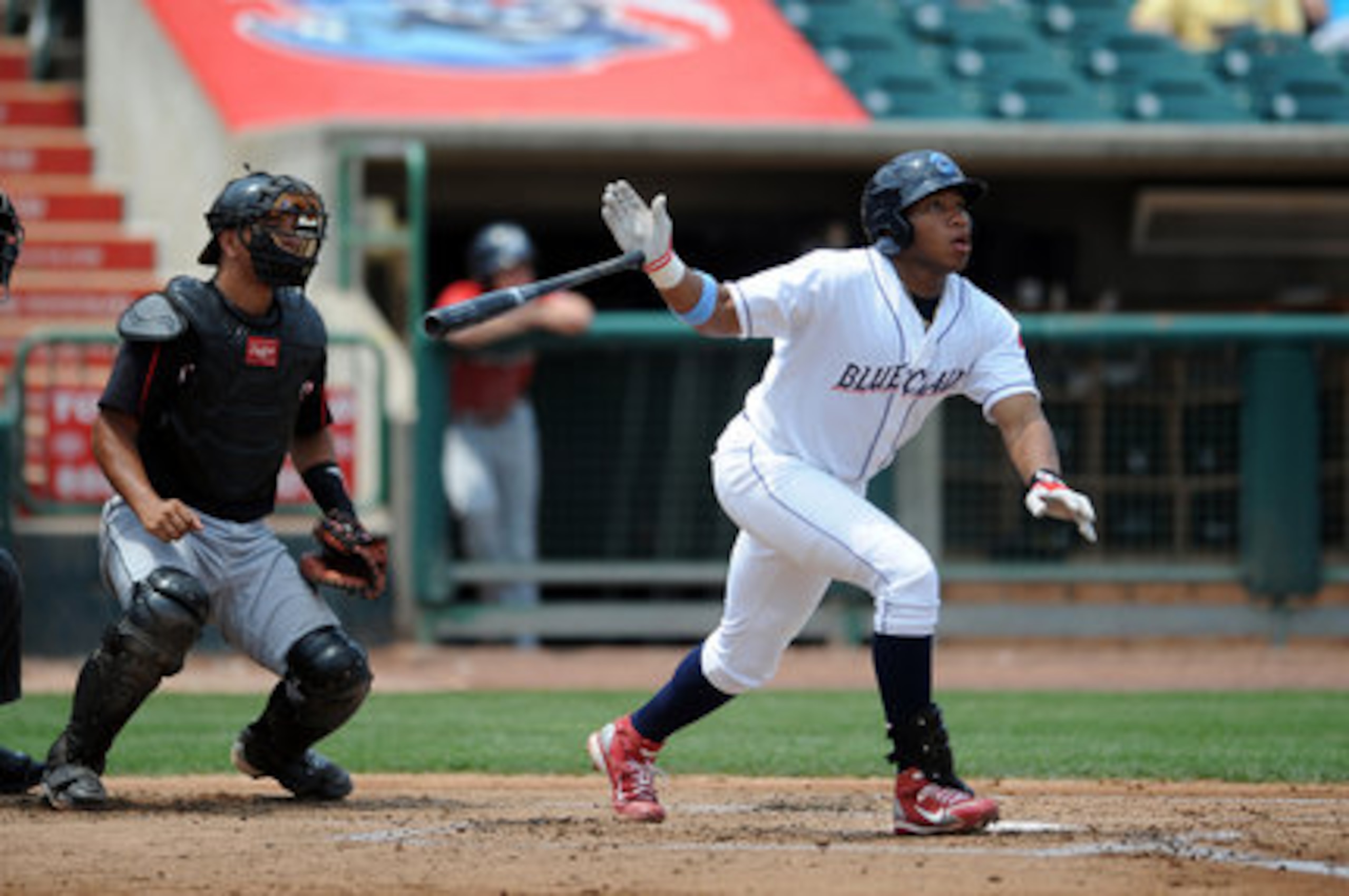
Singleton, the Phillies top prospect according to numerous publications, played the entire first two seasons of his pro career at first base, where he grew into an excellent defender.
So, of course, it only made perfect sense when the Phillies decided to move him to the outfield for the entire 2011 season. Luckily, the Phillies can afford to pursue such a course because they have a slimmed down, more athletic (than he used to be) Ryan Howard, who isn't budging off of first base for anyone.
So, now Singleton begins a career in the outfield, where if he continues to hit like he did during the first half of 2010, he could take off like Domonic Brown.
He has great hitting ability for both average and power and has amazing plate discipline, easily the best in Philly's system. And anyone who's anyone knows that Singleton is more than athletic enough to handle the transition to the outfield.
Like Myers, Singleton hasn't played at his new position yet, but also like him, the reviews figure to be all thumbs up.
The Class of 2010 High School Shortstops
5 of 9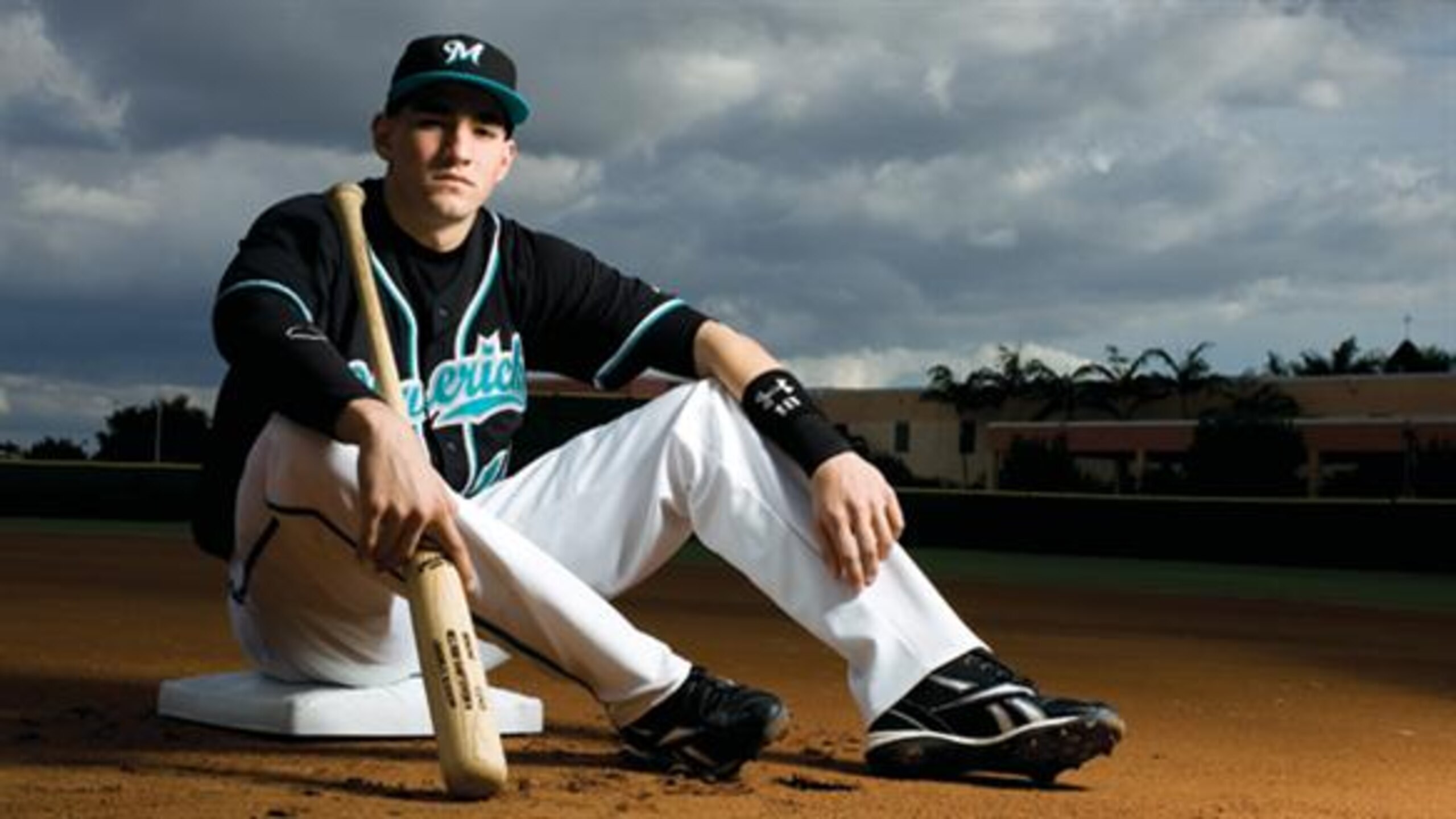
Most high schoolers who get drafted as shortstops find it difficult to remain at the position long term, and as a result, most teams are trying to find new positions for them as quickly as they can, so as to not slow down their progress once they sign.
There was a good handful of guys who fell under that category who were drafted in 2010, including supplemental first-rounder Nick Castellanos (Tigers), fourth-rounder Garin Cecchini (Red Sox) and fifth-rounder Connor Narron (Orioles).
Each player played shortstop extensively in high school but will transition to third base for the 2011 season, and it is at that position that their long-term value lies.
Luckily, each is more than athletic enough to handle the switch, and all three have advanced bats that should enable them to move quickly.
Christian Yelich, Florida Marlins (First Base to Outfield)
6 of 9
Along with Castellanos, Yelich was considered the most polished hitter in the 2010 high school class, and after witnessing him play incredibly well in Low-A ball at the end of last season, Yelich is officially on the fast track.
And, if dealing with the rigors of learning the pro game at a neck-breaking pace isn't enough, Yelich now has to add a position change to his plate. After playing only first base in high school, Yelich is transitioning to the outfield, where the Marlins believe he has enough speed and athleticism to play center. He'll likely begin the year as a Low-A Greensboro starting center fielder.
His long-term future, however, looks to be in one of the corner spots. He's already a pretty big guy (6-foot-4, 190 lbs) and he'll continue to grow as he progresses through the minors, adding more strength and power to his game, forcing him out of center.
Jean Segura, Los Angeles Angels (Second Base to Shortstop)
7 of 9
Segura has gone from no-name international sign to one of the Angels top prospects and easily the second-most exciting player in the organization (right behind Mike Trout).
As a 20-year-old in the Midwest League, Segura hit .313 with 24 doubles, 12 triples, 10 homers and 79 RBI. He also swiped 50 bases and posted a solid walk-to-strikeout ratio (45-to-72).
Segura played each of his 125 games at second base last season, and while MWL managers rated him as the best defensive second baseman, according to a poll conducted by Baseball America, he too is on the move to the most demanding position on the diamond, shortstop.
It's an interesting move when you consider that Segura made only 13 errors at second in 2010, posting a .979 fielding percentage, but the Angels feel like he'll get more of a challenge at the position, and he's definitely more than athletic enough to handle the switch.
However, the Angels are very open to Segura returning to second base, assuming the transition to short doesn't work out.
Delino DeShields, Jr., Houston Astros (Outfield to Second Base)
8 of 9
Moving DeShields from the outfield to second base kind of seems like a no-brainer.
The same position change worked pretty well for his father, who enjoyed a 13-year career with the Expos, Dodgers, Cardinals, Orioles and Cubs. "Senior" stole 463 bases in his career.
"Junior" is arguably a better prospect than his father ever could have hoped to be. While he has the same blistering speed, he has a much more polished bat that should allow him to develop into a top-of-the-order bat for years to come.
Most of all, DeShields Jr. is an exceptional athlete, who can certainly handle the transition from the outfield to second base. He has solid footwork and moving him to second will negate his below-average arm.
DeShields' most demanding move will likely involve growth in the maturity department. He was arrested in mid-January for DUI and under-age drinking.
Mycal Jones, Atlanta Braves (Shortstop to Second Base/Outfield)
9 of 9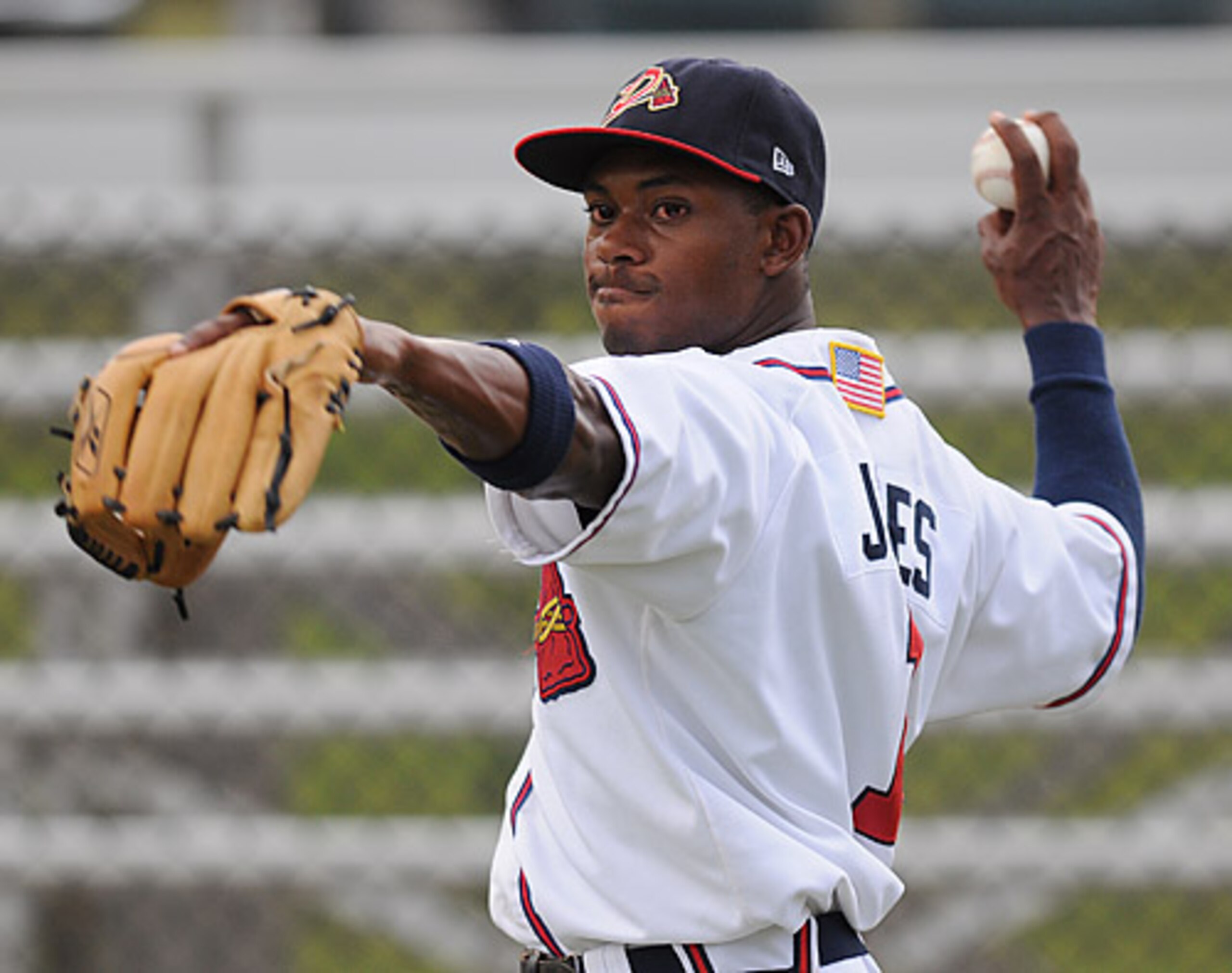
For at least a season, Jones was the top shortstop in the Braves organization.
Since he was drafted in 2009, however, the Braves have added multiple shortstops via the draft (Matt Lipka and Andrelton Simmons), the international market (Edward Salcedo) and the trade market (Tyler Pastornicky). Once the number one guy on the depth-chart, Jones has slid all the way to number five.
Sounds like a great time for a position change, eh? The Braves are looking at moving Jones to second base, where he looked very comfortable during instructional league last year. He'll start the 2011 season as the opening day 2B at Double-A Mississippi.
Jones is up with the big league club for spring training this year and has also seen some time in the outfield. He's an incredible athlete, so I'm sure he can handle whatever the Braves throw at him, and playing multiple positions will only increase his value to the organization.

.jpg?w=2560 "Chiefs, Steelers Eye WR Trades")