Running With The Bulls: Seven Factors For Miami Heat To Win 72 Games
Experts weigh in on Heat challenging for wins record: South Florida Sun-Sentinel Staff writer Ira Winderman asked a panel of four NBA experts to compare the 1995-96 Chicago Bulls, who set an NBA record with a 72-10 regular-season record, and the 2010-11 Miami Heat, who some think can challenge that mark. Winderman asked Sam Smith of Bulls.com, Steve Smith of NBATV, Alvin Gentry of the Phoenix Suns, and Jack Ramsay of ESPN to compare the two teams in seven categories—Leading Man, Running Mate, Power Keys, Contributing Wings, Primary Big Men, Supporting Cast, and Head Coach. Lets compare the experts' opinions from Winderman's article to what Wins Produced had to say.
Wins Produced was developed by Prof. David Berri from the Wages of Wins Journal. It calculates a player's individual contributions to their team's wins based on box score statistics. Wins Produced per 48 Minutes (WP48) measures those contributions on a per-minute basis. An average player produces 0.100 wins per 48 minutes. Win Score is a simpler calculation that can be used to estimate wins produced and WP48. For more information on Wins Produced and Win Score, see the links listed below.
Simple Models of Player Performance
Wins Produced vs. Win Score
What Wins Produced Says and What It Does Not Say
Introducing PAWSmin — and a Defense of Box Score Statistics
1. Leading Man: Michael Jordan VS. LeBron James
1 of 8
The first comparison was Michael Jordan for the 1996 Bulls vs. LeBron James for the 2011 Heat. The panel unanimously gave the nod to Michael Jordan. Here's what Wins Produced has to say:
PLAYER (SEASON): WP48, WINS PRODUCED
Michael Jordan (1995-96):0.386 WP48, 24.9 Wins Produced
LeBron James (2010-11): 0.452 WP48, 27.9 Wins Produced
Michael Jordan's numbers were taken from HERE. The forecast for LeBron James' numbers was taken from HERE and was calculated using his minutes played from 2010.
Wins Produced says that LeBron's expected performance for the 2011 Heat should get the nod over Jordan's performance for the 1996 Bulls.
While I understand that most reporters and analysts consider Michael Jordan to be the best player in NBA history, I didn't understand the panel's reasons for picking a 32-year-old Jordan over a 25-year-old LeBron. If the comparison was between a 25-year-old Jordan and 25-year-old LeBron, then it wouldn't be close. Jordan produced an estimated 34.1 wins with a 0.502 WP48 when he was 25. Here are some of the panel's justifications for choosing Jordan at age 32 over LeBron at age 25:
Sam Smith: LeBron demonstrated by his choice that he's not a leading man. Michael is a leading man, a guy who is going to carry a team.
This is more of the same garbage that haters have been throwing around all summer—"an alpha dog/male would never choose to join forces with another alpha dog/male." That argument is garbage for many reasons but lets start with the fact that human beings aren't animals (despite repeated attempts to describe black people that way), and lets end with Doc Rivers' de-bunking the myth that legends from the 80's and 90's wouldn't have done the same thing as LeBron.
Steve Smith: "Michael was just at a different place at that time. He was older, more experienced, more primed to win a championship."
How was Jordan "more primed to win a championship" at 32 years old than LeBron at age 25? Jordan had already won three titles!
Lets say I concede that Jordan entered the '96 season with a larger chip on his shoulder than usual because the '95 season ended with a loss to the Orlando Magic in the Eastern Conference semifinals, he blamed himself for the loss because he was rusty from taking two years off to play baseball and he vowed to redeem himself and take revenge on the entire league.
Doesn't LeBron have a larger chip on his shoulder after being ridiculed and hated on all summer by everyone from fans to Hall of Famers and getting beatdown in the playoffs for a second straight season despite having the best record in the league? And that doesn't even take into consideration that he hasn't won a title and is starving for one—it's the primary reason he signed with the Heat! Watch him at media day and tell me he doesn't seem "primed to win a championship."
Jack Ramsay: "Michael. He's the better all-around player."
Because I've lived through this era of Jordan-worship, I was predisposed to believe Ramsay's point until I saw that LeBron was the more productive player. The figure below compares Jordan's statistics from 1996 to LeBron's from 2010.
| Statistics | 1996 Jordan | 2010 LeBron |
| Points Per Shot | 1.05 | 1.09 |
| Adjusted Shooting Percentage | 52.4% | 54.5% |
| Free Throw Percentage | 83.4% | 76.7% |
| Shot Attempts | 28.8 | 24.7 |
| Free Throw Attempts | 10.2 | 12.6 |
| Points Scored | 38.7 | 36.6 |
| Rebounds | 8.4 | 9.0 |
| Steals | 2.8 | 2.0 |
| Turnovers | 3.1 | 4.2 |
| Net Possessions | 8.1 | 6.8 |
| Blocked Shots | 0.6 | 1.2 |
| Assists | 5.5 | 10.6 |
| Personal Fouls | 3.1 | 2.0 |
Wow...it's pretty close. The King is a more efficient shooter, but His Airness was a better volume scorer. LeBron is a better rebounder, but '96 Jordan was better at acquiring and protecting possessions for his team. Finally, LeBron is better at shot-blocking, passing, and avoiding fouls than Jordan was on that record-setting Bulls team. So Dr. Jack was wrong—at 32 years old, Jordan was not a better all-around player than a 25-year-old LeBron.
What Wins Produced Says: 2011 LeBron is a better leading man than '96 Jordan.
2. Running Mate: Scottie Pippen VS. Dwyane Wade
2 of 8
The second comparison was '96 Scottie Pippen vs. 2011 Dwyane Wade. The panel was split 2-2. Here's what Wins Produced has to say:
PLAYER (SEASON): WP48, WINS PRODUCED
Scottie Pippen (1995-96): 0.269 WP48, 15.8 Wins Produced
Dwyane Wade (2010-11): 0.248 WP48, 14.4 Wins Produced
Scottie Pippen's numbers were taken from The Wages of Wins. The forecast for Dwyane Wade's numbers was taken from HERE and was calculated using his minutes played from 2010.
Wins Produced agrees that it's a close contest between Pippen and Wade, but Scottie was more productive in '96 than Wade is projected to be in 2011. Wade's projection is based on research of player performance declining with age from Stumbling on Wins but it is a projection, which means it's not a guarantee. Personally, I believe that Wade's performance will be closer to his 2009 levels since Pat Riley believes he might be in the same condition he was in after the 2008 Olympics when he produced 21.0 wins with 0.331 WP48 (see the Wages of Wins Journal). Winderman also reported that Heat coach Erik Spoelstra said Wade may be in his best shape ever.
What Wins Produced Says: '96 Pippen was a better running mate than Wade will be in 2011.
3. Power Keys: Dennis Rodman VS. Chris Bosh
3 of 8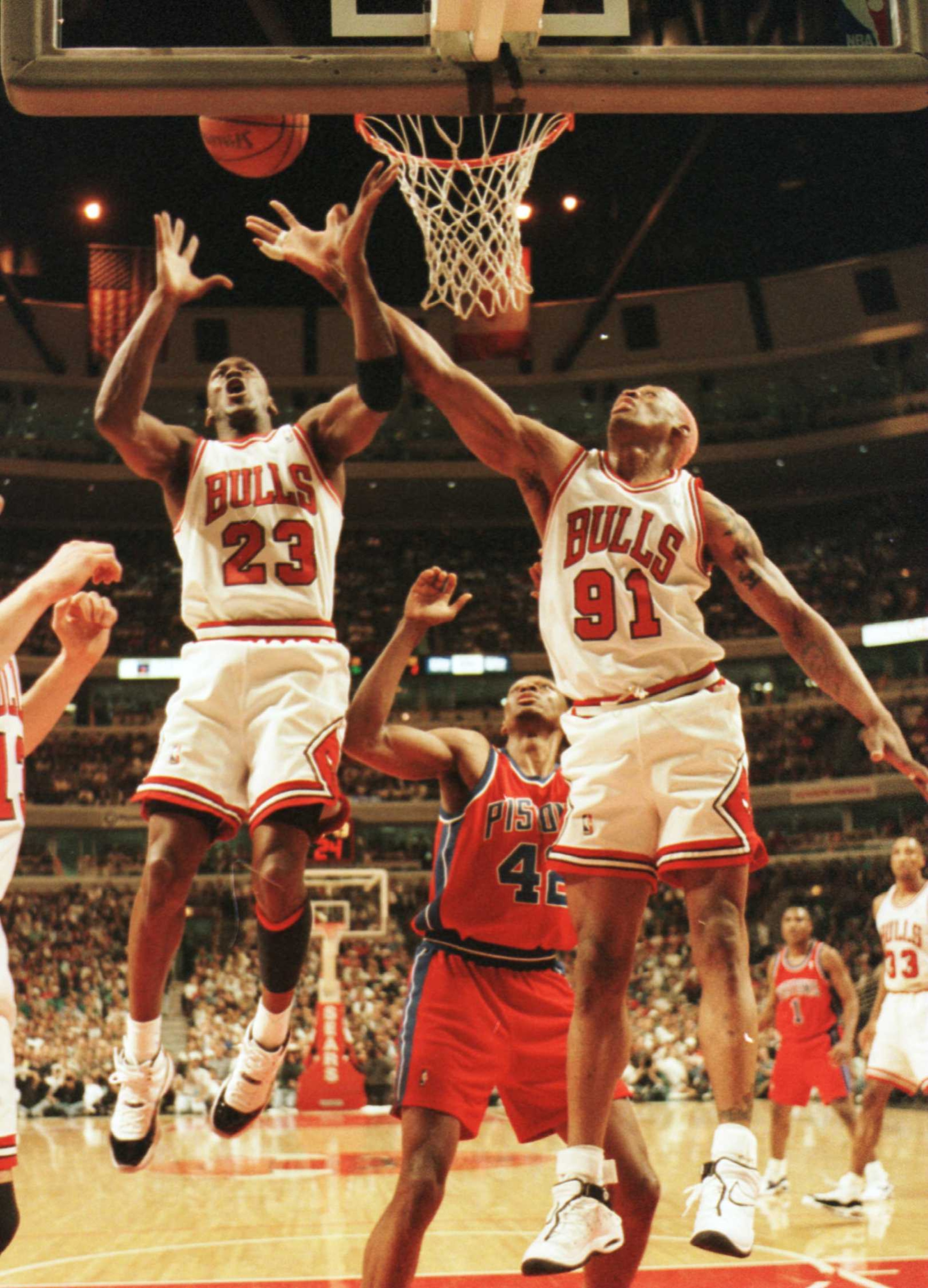
The third comparison was of each team's power forwards. The panel chose the '96 Bulls power forwards (Dennis Rodman and Toni Kukoc) 3-1 over the Heat power forwards (Chris Bosh and Udonis Haslem). Here's what Wins Produced has to say:
PLAYER (SEASON): WP48, WINS PRODUCED
Dennis Rodman (1995-96): 0.415 WP48, 18.1 Wins Produced
Toni Kukoc (1995-96): 0.193 WP48, 8.5 Wins Produced
Chris Bosh (2010-11): 0.232 WP48, 12.2 Wins Produced
Udonis Haslem (2009-10): 0.160 WP48, 7.3 Wins Produced
Rodman and Kukoc's numbers were taken from The Wages of Wins. The forecast for Chris Bosh's numbers was taken from HERE and was calculated using his minutes played from 2010. Haslem's numbers were taken from the Wins Produced Viewer.
The '96 Bulls had the better power forwards. In 4,191 minutes, Rodman and Kukoc combined to produce 26.6 wins with 0.305 WP48 while Bosh and Haslem only combined to produce 19.5 wins in 4,703 minutes with 0.199 WP48. The only member of the panel to pick the Heat power forwards was Ramsay. Here's his explanation:
Jack Ramsay: "I think Bosh is the better all-around of that group. Rodman, of course, was a great defender and rebounder. I like Bosh very much. He's a very skilled player."
The last time Ramsay said someone was a better all-around player he was wrong. Lets see if he's more accurate this time.
| Statistics | 1996 Rodman | 2010 Bosh |
| Points Per Shot | 0.96 | 1.05 |
| Adjusted Shooting Percentage | 47.9% | 52.4% |
| Free Throw Percentage | 52.8% | 79.7% |
| Shot Attempts | 7.1 | 21.9 |
| Free Throw Attempts | 2.5 | 11.2 |
| Points Scored | 8.1 | 31.9 |
| Rebounds | 21.9 | 14.4 |
| Steals | 0.9 | 0.8 |
| Turnovers | 3.2 | 3.2 |
| Net Possessions | 19.6 | 12.0 |
| Blocked Shots | 0.6 | 1.3 |
| Assists | 3.7 | 3.2 |
| Personal Fouls | 4.6 | 3.2 |
Looks like Ramsay was right on this one. Bosh is indeed the better all-around player, surpassing Rodman in nine statistical categories. He's better at shooting efficiency and volume, getting to the foul line, blocking shots, and staying out of foul trouble. However, Rodman was so much better acquiring possession of the ball that he was much more productive than Bosh overall.
What Wins Produced Says: Rodman and Kukoc were better power forwards for the '96 Bulls than Bosh and Haslem will be for the Heat in 2011.
4. Contributing Wings: Ron Harper & Steve Kerr VS. Mike Miller & Mario Chalmers
4 of 8
The fourth comparison was between the top two perimeter players for each team—Ron Harper and Steve Kerr for the '96 Bulls vs. Mike Miller and Mario Chalmers for the 2011 Heat. The panel unanimously chose Harper and Kerr over Miller and Chalmers. Here's what Wins Produced has to say:
PLAYER (SEASON): WP48, WINS PRODUCED
Ron Harper (1995-96): 0.143 WP48, 5.6 Wins Produced
Steve Kerr (1995-96): 0.129 WP48, 5.2 Wins Produced
Mike Miller (2009-10): 0.230 WP48, 8.7 Wins Produced
Mario Chalmers (2009-10): 0.035 WP48, 1.3 Wins Produced
Harper and Kerr's numbers were taken from The Wages of Wins. Miller and Chalmers' numbers were taken from the Wins Produced Viewer.
This one is close. In 3,805 minutes, Harper and Kerr combined to produce 10.8 wins with 0.136 WP48. In 3,612 minutes, Miller and Chalmers combined to produce 10.0 wins with 0.133 WP48. The Harper/Kerr combo for the '96 Bulls was more productive by a very slim margin. The panel did give the Miller/Chalmers combo some credit but the key comment comes from Ramsay:
Jack Ramsay: "None of those other guys can shoot like Kerr. Miller, I think, is a little better than average all-around. Chalmers has yet to be defined."
Ramsay is right on two fronts - Miller is the best all-around player of the four and Chalmers has yet to be defined. In his rookie season, Chalmers was much more productive with 0.099 WP48 and 5.4 wins produced. If Chalmers and Coach Spoelstra can figure out a way for him to return to that level of productivity, then the Heat would have the advantage over the Harper/Kerr combo. Until that happens, the '96 Bulls get the nod.
What Wins Produced Says: Harper and Kerr were better contributing wings for the '96 Bulls than Miller and Chalmers are expected to be for the 2011 Heat.
5. Primary Big Men: Luc Longley VS. Joel Anthony
5 of 8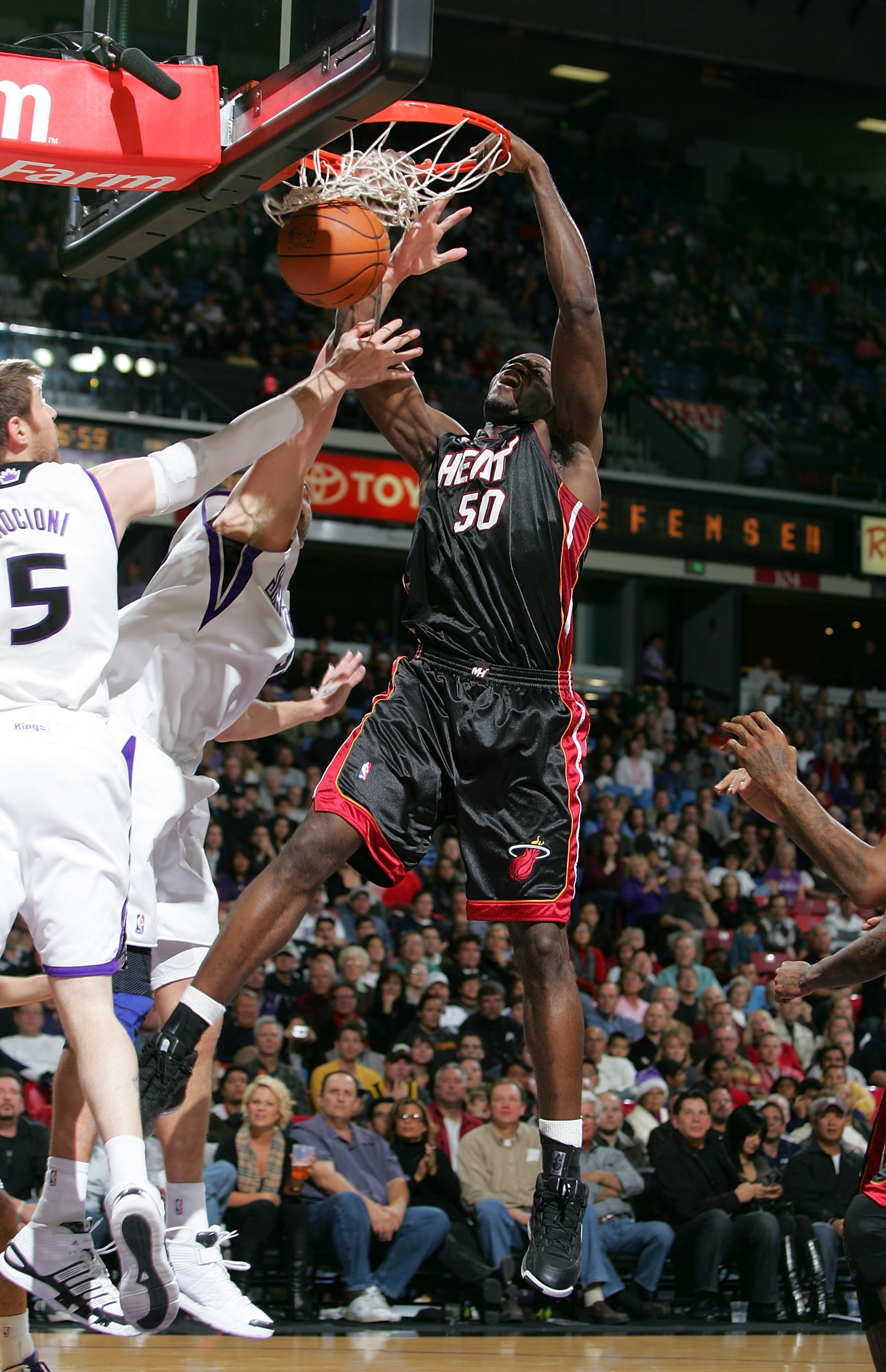
The fifth comparison was between the big men for each team—Luc Longley and Bill Wennington for the '96 Bulls vs. Joel Anthony and Zydrunas Ilgauskas for the 2011 Heat. The panel was split on this one 1-1-2 (two panelists thought they were even). Here's what Wins Produced has to say:
PLAYER (SEASON): WP48, WINS PRODUCED
Luc Longley (1995-96): -0.016 WP48, -0.5 Wins Produced
Bill Wennington (1995-96): -0.078 WP48, -1.7 Wins Produced
Joel Anthony (2009-10): -0.017 WP48, -0.5 Wins Produced
Zydrunas Ilgauskas (2009-10): -0.040 WP48, -1.1 Wins Produced
Longley and Wennington's numbers were taken from The Wages of Wins. Anthony and Ilgauskas' numbers were taken from the Wins Produced Viewer.
In a race to the bottom, the Anthony/Ilgauskas combo should be expected to have less of a negative impact than the Longley/Wennington combo had on the '96 Bulls. Many pundits have cited the mediocre centers on the Heat roster as the roadblock that will prevent them from winning 70-plus games and the NBA title, but the Bulls were able to do it with even less productive players in the middle. Here's what the authors of The Wages of Wins had to say about the '96 Bulls on pages 151-152:
""The best team in NBA history did not have a center whose wins production exceeded zero...the productivity we observe from Chicago's centers leads us to conclude that the best team in the history of the NBA had little in the middle. In essence, the best team was a doughnut.""
Yes, the Heat should expect nothing in the middle from Anthony or Ilgauskas but they can play Bosh at center and Haslem at power forward, so the lack of a dominant big man is not a reason to diminish their chances of winning more than 72 games. Another interesting point is that the '96 Bulls had five centers on the roster (the other three were John Salley, Jack Haley, and James Edwards) and the Heat also went into training camp with five big men on the roster (the other three are Jamaal Magloire, Juwan Howard, and Dexter Pittman). Maybe Jerry Krause and Pat Riley knew they had deficiencies in the middle and tried to compensate for it with quantity instead of quality.
What Wins Produced Says: Anthony and Ilgauskas should be better big men for the 2011 Heat than Longley and Wennington were for the '96 Bulls.
6. Supporting Cast: 1996 Bulls Bench VS. 2011 Heat Bench
6 of 8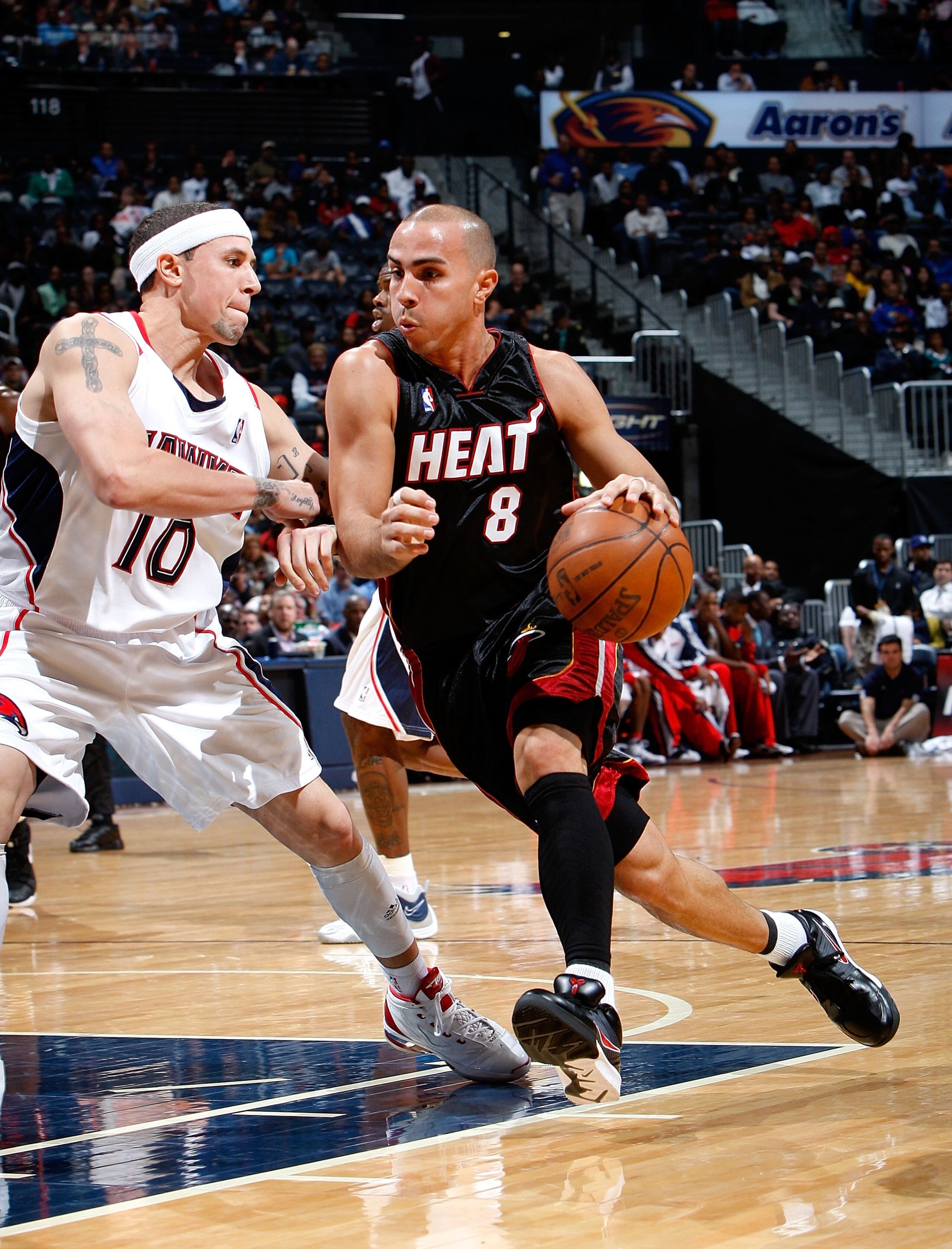
The sixth comparison was between the supporting casts for each team—Jud Buechler, Randy Brown, Dickey Simpkins, James Edwards, and Jason Caffey for the '96 Bulls vs. Eddie House, Juwan Howard, Jamaal Magloire, and Carlos Arroyo for the 2011 Heat. The panel voted 3-1 for the Heat. Here's what Wins Produced has to say:
PLAYER (SEASON): WP48, WINS PRODUCED
Jud Buechler (1995-96): 0.143 WP48, 2.2 Wins Produced
Randy Brown (1995-96): 0.010 WP48, 0.1 Wins Produced
Dickey Simpkins (1995-96): 0.007 WP48, 0.1 Wins Produced
James Edwards (1995-96): -0.393 WP48, -2.2 Wins Produced
Jason Caffey (1995-96): -0.136 WP48, -1.5 Wins Produced
Eddie House (2009-10): -0.009 WP48, -0.2 Wins Produced
Juwan Howard (2009-10): -0.002 WP48, -0.1 Wins Produced
Jamaal Magloire (2009-10): 0.068 WP48, 0.5 Wins Produced
Carlos Arroyo (2009-10): 0.095 WP48, 3.1 Wins Produced
Numbers for the '96 Bulls were taken from The Wages of Wins. Numbers for Heat players were taken from the Wins Produced Viewer.
Jud Buechler is the most productive player in that list but the '96 Bulls also had the two worst players—James Edwards and Jason Caffey. Since the Heat supporting cast played more minutes last season for various teams, they were able to produce more wins so WP48 is a better tool for comparison. The average WP48 for the '96 Bulls supporting cast is -0.021. The average WP48 for the Heat players was 0.033 last season.
What Wins Produced Says: 2011 Heat supporting cast should be better than the supporting cast for the '96 Bulls.
7. Head Coach: Phil Jackson VS. Erik Spoelstra
7 of 8
The final comparison was between the head coaches—Phil Jackson for the '96 Bulls vs. Erik Spoelstra for the 2011 Heat. The panel unanimously voted for Jackson.
In Stumbling on Wins (the sequel to The Wages of Wins), theauthors report that players "tend to get better when they come to Phil Jackson," (based on the results from a 2009 study of 62 NBA coaches from 1978 to 2008) and Prof. Berri told Toronto Star columnist Dave Feschuk that "players don't get worse after they leave Jackson."
The study suggested that Jackson is worth an additional 17 wins in his first year with a team—more than any other coach. Spoelstra was not included in the study since he didn't become a head coach until the 2008-09 season. Despite a 28-win improvement when he took over the team, and a four-win improvement in 2009-10, 11 of the 20 players coached by Spoelstra had a higher Win Score when they played for other coaches.
What Wins Produced Says: Jackson was likely a better head coach in '96 than Spoelstra will be in 2011
Summary: 72 Wins For The Heat Could Come Down To Erik Spoelstra & Chris Bosh
8 of 8
After seven comparisons, here's the rundown:
Leading Man - 2011 Heat
Running Mate - '96 Bulls
Power Keys - '96 Bulls
Contributing Wings - '96 Bulls
Primary Big Men - 2011 Heat
Supporting Cast - 2011 Heat
Head Coach - '96 Bulls
The '96 Bulls were better than the Heat in four of the seven categories, but if Wade doesn't decline as Berri projected and Chalmers can produce like he did during his rookie season, then the Heat would surpass the '96 Bulls in every category except Power Keys and Coaching.
Do the Heat need to match the '96 Bulls in all seven categories to win more than 72 games in 2011? I don't know. A Wages of Wins Journalist, Arturo Galletti, only projected the Heat to win 68 games in his last revision. Only time will tell if the Heat need better coaching from Spoelstra or more productivity from Bosh and Haslem to get an extra five wins and break the '96 Bulls' 72-win record.



.jpg?w=2560 "Vikings HC Talks Kyler Injury")