

NBA Roundtable Discussion: How Do You Rank the Best Players in the Game?
Two weeks ago, a Bleacher Report writer named Joseph Edmondson came to me with a pretty huge idea he wanted to tackle: How do B/R writers evaluate players in the NBA?
After a few e-mails, Joseph went on his way and recruited six B/R writers to discuss the task at hand: himself, myself, Karl, Harrison Moore, Steven Resnick, and Elliott Battle.
Joseph came up with a wide range of questions about player rankings—everything from what stats we consider most to rank players, how important championships and popularity are for rankings, and whether a great player on a bad team deserves to be punished.
Naturally, we didn't agree on everything. Some of us think Rajon Rondo currently qualifies as a Top 10 NBA player. Some of us definitely, definitely don't (where's that jump shot?).
So, sit back, relax, and enjoy our NBA writers roundtable about how to best evaluate NBA talent, both past and present.
Who Were the Top 10 Players from Last Season?
1 of 28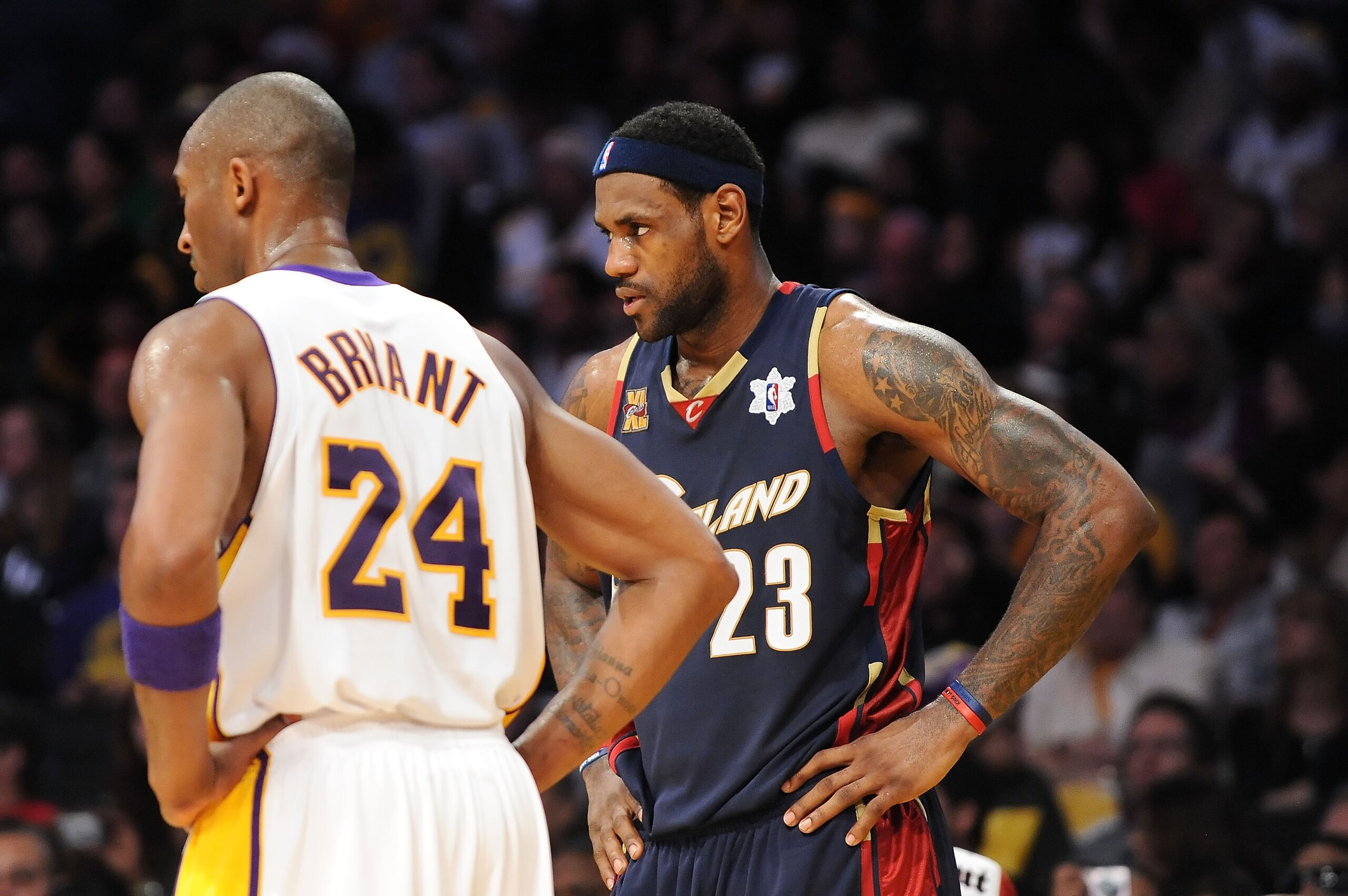
Bryan Toporek: Going with my gut here…
1. LeBron James
2. Kobe Bryant
3. Dwyane Wade
4. Kevin Durant
5. Chris Paul
6. Dwight Howard
7. Deron Williams
8. Carmelo Anthony
9. Dirk Nowitzki
10. Pau Gasol
Harrison Moore:
1. Kobe Bryant
2. LeBron James
3. Dwyane Wade
4. Dwight Howard
5. Chris Paul (when healthy)
6. Kevin Durant
7. Pau Gasol
8. Dirk Nowitzki
9. Deron Williams
10. Tie: Rajon Rondo/Tim Duncan
Joseph Edmondson:
1. Kobe Bryant
2. Dwight Howard
3. LeBron James
4. Dwyane Wade
5. Pau Gasol
6. Rajon Rondo
7. Tim Duncan
8. Steve Nash
9. Amar'e Stoudemire
10. Kevin Garnett
Steven Resnick: They’re not in any specific order but here they are:
1. Dwyane Wade
2. Lebron James
3. Kobe Bryant
4. Chris Paul
5. Deron Williams
6. Dwight Howard
7. Tim Duncan
8. Kevin Durant
9. Gerald Wallace
10. Joe Johnson
Elliott Battle:
1. Kobe Bryant
2. Dwyane Wade
3. LeBron James
4. Dwight Howard
5. Kevin Durant
6. Chris Paul
7. Deron Williams
8. Dirk Nowitzki
9. Pau Gasol
10. Carmelo Anthony
Top 10 Players in NBA Last Season? (Cont.)
2 of 28
Karl:
1. Kobe Bryant
You can’t deny his success these last few seasons. However, I think it needs to be said, he wasn’t that great this past postseason, except against the Suns (and who doesn’t look good against the Suns?). In the other series, he wasn’t so much hitting game winners as he was forcing up misses and being bailed out by his teammates. His finals MVP was one of the strangest in history, since he was sub-par in at least four of the seven games. I consider Gasol to be almost his co-pilot in the Lakers’ success. So while I cannot help but acknowledge that this is Kobe’s time, he’s on top of the world, I don’t see him as a basketball god. Furthermore, it is flat out incorrect, as far as I’m concerned, to see him as the greatest player since Jordan—that honor goes to Tim Duncan, but that’s a whole other argument.
1a. LeBron James
OK, Kobe is No. 1, but LeBron is a better player. The argument that Kobe is better used to be that Kobe is a better on-ball defender, a better scorer, and is more clutch, while LeBron has the edge in floor game (assists, rebounds). I don’t think it holds water anymore that Kobe is a better on-ball defender, and that argument will be even less tenable in the seasons to come. As for scoring, my impression is the same as everyone else's: ball in hand, Kobe is a surer thing than LeBron. But the simple fact is, over the last couple of seasons, LeBron has scored more than Kobe, AND he has scored more efficiently. Last shot scenario, you want Kobe, blah, blah, blah, but send LeBron’s 6’8”, muscular, fast body flying up and down an NBA court for 40 minutes, and he’s going to score 30, and he’s going to do it with fewer shots than Kobe on average needs to score 30. So the argument that Kobe is better offensively just doesn’t hold. Obviously, LeBron is a better passer and rebounder. As far as clutch performances go, there are numbers that show that in situations when a game has fewer than five minutes to go and no team has more than a five-point lead, LeBron’s production greatly exceeds not only Kobe’s but everyone else in the league and just about anyone in history, for that matter. So if Kobe is #1, LeBron is 1a.
3. Dwight Howard
A force in some ways, incredibly inept in others, but it’s hard for me to believe that a Dwight Howard team would fail to be relevant come the postseason.
4. Dwyane Wade
He’d be ahead of Howard, except that his teams have been so mediocre the last couple of years, and he has a propensity for injury.
5. Pau Gasol
One test of your basketball IQ, as far as I’m concerned, is that you don’t underrate Gasol.
6. Rajon Rondo
The Celtics won it all two years ago and came a quarter short of doing it again this past season, and their driving engine has been not any of “The Big Three” but Rondo. Whatever you think of his jump shot, you can’t deny what they guy has accomplished. That one game against Cleveland in the playoffs in which he got like, what, 19 rebounds? Come on—it would be a mistake to underrate this guy.
7. Chris Paul
In my view, Paul is the best prototypical point guard in NBA history (Magic, the best ever, was anything but prototypical). I literally cannot see anything to improve on as far as his game goes. BUT, the guy has a history of injury, and a couple of seasons ago, George Karl laid down the blueprint for beating a Chris Paul team—knock Paul to the floor repeatedly, with everything you have. I have a bad feeling that that blueprint is going to be followed by every intelligent NBA coach, and that it’ll end up diminishing Paul’s career and playing days, unless some team can figure out a way to protect him.
8. Deron Williams
Great player. Theoretically, he’s a notch below Paul in skill level, but sturdier. He’s really not, though—he has just as much a history of injury.
I know, that’s three point guards in a row that I’ve listed. This is what people mean when they say it’s a point guard league. The center position has become the weakest in the game (after being the strongest for the first three or four decades of the NBA). The Lakers certainly prove that you don’t have to be a point guard driven team to win it all, but Rondo, Paul, Williams, and even Nash, Kidd, Parker, and Billups, have to be reckoned with in considering the NBA’s best.
9. Kevin Durant
I’m not ready to crown this guy yet, though I admit if I were basing these ratings strictly on the 2009-10 season, I’d have had to put Durant higher. I don’t see him as ever being the all-around player LeBron is, and I think it needs to be said that he was not good against the Lakers in the playoffs. Still, Durant’s learning curve from his rookie season to this past season has been ridiculous. If it were to continue like that, he’d end up as the greatest ever, but I suspect that the ceiling may be closer than people think.
10. Dirk Nowitzki
Say what you want about his rebounding and defense, you’ve got to find a way to explain why Dallas is perennially among the NBA elite with Dirk as THE guy. He’s not what he was a few years ago, but he’s still the greatest shooting 7-footer ever.
Honorable mention: Tim Duncan and Steve Nash: a couple of years ago, they’d have been in the top-10 (Duncan in the top-three), and this past season, they both still performed at a very high level, but it’s hard not to expect diminishing returns with each new season.
No apologies: Carmelo is not in my top-10, and he doesn’t belong there. He’s more of a specialist (a one-on-one scorer), as far as I’m concerned. And as much as he scores, he is not a league leader in scoring efficiency.
Do You Rely on Stats, Championships, Or Popularity For Your Rankings?
3 of 28
Bryan Toporek: Definitely a combination of all three. I'd say I rely on stats the heaviest, then championships, and factor in popularity at the end. But a guy needs to hit in all three categories to become one of the greatest.
Someone like Tracy McGrady can't go down as one of the NBA greats, despite some mercurial single-season averages, because of his playoff failures. Likewise, a guy like Robert Horry, great NBA champion that he is, shouldn't be mentioned alongside guys like Kobe or Magic Johnson. Kobe and Magic led their team to the successes they achieved; Horry fit in as a role-player on a number of championship squads.
Harrison Moore: More often than not rating players comes down to common sense and basic basketball IQ. Neither stats nor championships paint a holistic picture on their own.
The classic example of why championships are not always indicative of a player’s worth is that Robert Horry has seven rings while Michael Jordan has six.
On the other hand, could Elgin Baylor, who made numerous Finals appearances but finished with no championships, be considered better than Kobe Bryant, whose career stats are lower across most of the board but boasts five NBA titles? Not really.
If I had to weigh the balance of importance of championships and stats with a percentage, I’d probably say stats are 60 percent of the equation while titles occupy about 40 percent.
Of course, when a player boasts both a greater number of championships and superior stats over his competition then there is no argument, said player wins hands down.
This is why Magic Johnson is, obviously and undeniably, the greatest point guard of all time.
Joseph Edmondson: With my latest evaluation, I rely on all three. I take statistical analysis, playoff performance, and awards, including those based on popularity, into consideration.



Stats, Championships, or Popularity? (Cont.)
4 of 28
Karl: Certainly, I look at all the available stats, and I do my own number crunching to get to the meaning of them. There’s a common perception out there that “stats lie.” Stats do not lie—your favorite players scores 30 points, but needs 35 shots to do it. You want to ignore all those missed shots; you only care about those highlight reel dunks and fade-aways. I’m sorry—the numbers tell the truth, and when you look to understand why your team ended up losing by a few points in the last minute, one place to look is at the missed shots of your favorite player. There are players who were always given a pass by their fans—Iverson, T-Mac—but there’s a reason why these guys always came up short in the playoffs. The eye (and memory) lies; the numbers tell the truth.
I am much more lukewarm on championships than most at B/R. Championships are won by teams. I get really tired of what I consider to be the vast oversimplification that argues: “all that matters are the rings.” However, while I consider Karl Malone to have been a greater player than, let’s say, Kevin McHale (who was very good, and who after all played the same position as Malone and who won several championships with the Celtics in the 80s), I’m willing to grant that Tim Duncan’s championships give him the edge over Malone in all-time ranking. That is, all other things being relatively equal, I might look at championships. I also believe that great players raise their games in the postseason, and perhaps even more in championship series, so lately I have developed a statistical formula that incorporates these factors when rating players.
Popularity to me means NOTHING. The majority is often wrong in just about everything, as far as I’m concerned, and you cannot turn me off more quickly than to say, “everyone agrees with me and not you.” People form attachments or antipathies to players for reasons that have nothing to do with basketball performance. Many people are just incapable of critical thought. I know I sound like an elitist—I am, and I don’t apologize for it.
Steven Resnick: I’d like to say I rely on stats; championships only help if you are comparing similar players who have similar talents on their teams, and popularity doesn’t hold any value to me in my opinion.
Elliott Battle: I rely primarily upon stats and championships. Popularity has no bearing.
Should Talent Evaluation Be Purely Objective?
5 of 28
Bryan Toporek: If you're talking about evaluation on just an NBA level, I can't think of a reason it shouldn't be objective, off the top of my head. Here's one intangible, if we're talking about talent evaluation on all levels: Some players' skills fit better in certain leagues. The hand check rule of the NBA favors guards more than ever; likewise, most college teams aren't running a pick-and-roll offense or a pick-and-roll defense half as well as an NBA team could run in their sleep.
When people say, "Eh, John Wall wasn't that good in college, he's not gonna be anything in Washington," it's like…do you understand there's different styles of play between college and the pros? That has to factor in.
Harrison Moore: Yes, without question.
I’ve heard claims that Shaq made Kobe, claims that Tim Duncan made Tony Parker and that Steve Nash made Amar’e Stoudemire, and I don’t buy into any of the above.
It’s obvious that great teammates bring out the best among those around them, but ultimately a player’s talent is a player’s talent.
It’s one thing when you’re a role player of solid talent, but you clearly benefit from the attention that your teammates draw away from i.e. Trevor Ariza, but if you’re one of the best the NBA has to offer then you’re one of the best the NBA has to offer.
Joseph Edmondson: Depending on the "formula" a person uses to rank players, some already take intangibles into consideration. To me, a great indication of intangibles is the +/- stat because it shows the immediate impact a player has on the game. Even defensive specialists who may not rack up steals, blocks, charges, or defensive boards, can still show up because of that stat alone.
Talent Evaluation Purely Objective? (Cont.)
6 of 28
Karl: I tend to be on the objective side. There are intangibles, but these get way overrated, in my opinion. When Kevin Garnett came to the Celtics for the 2007-8 season, he didn’t just bring his excellent man-to-man defensive skills; he changed the culture of the Celtics, got everybody talking and communicating more on defense, and made sure that the whole team completed their defensive rotations, jumped out on pick-and-rolls, chased out on three-point shooters, and took away driving lanes. In other words, he didn’t just play solid individual defense; he made sure that everyone played strong team defense. Certainly, that kind of leadership is an “intangible”—yet it does show up in Garnett’s “Win Shares” (a numerically precise figure), which since 2008 have been higher than would be expected from his statistical production. If the intangibles are really making a difference, they’ll show up as increased wins for the team and increased win shares for the player; if not, they’re a chimera.
Steven Resnick: It shouldn’t be purely objective intangibles that take a player from being good to great.
Elliott Battle: Intangibles must be considered, simply because basically the entire defensive end is intangible.
Offensively, intangibles also must be taken into consideration. Some players are responsible for more assists or turnovers than show up on the score sheet. If a player attacks the rim and throws a bad pass that a teammate can barely get their fingers on and it goes out of bounds, they aren’t credited with the turnover they created. The same goes with “Hockey Assists." Dwight Howard and Kobe Bryant are both guys who don’t have very many assists, but make a lot of plays, for example.
Does a Player's Team Influence His Abilities Or Vice Versa?
7 of 28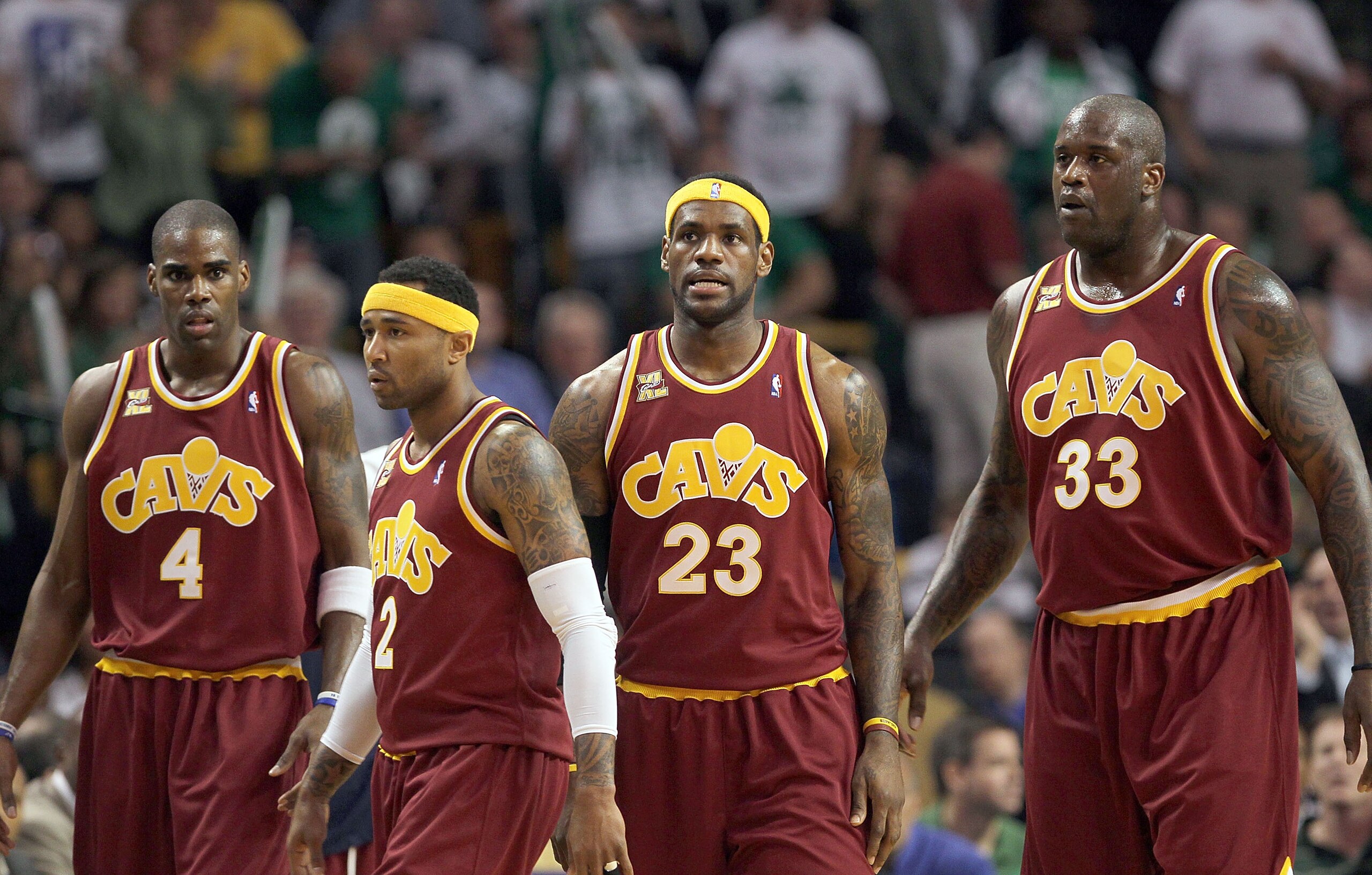
Bryan Toporek: I'd say a player has more of an influence on the team's ability than the other way around. Take LeBron James, for instance. No one's accusing LeBron of being surrounded with a bevy of All-Stars these past seven years, right? But yet, the Cavs won 66 and 61 games these past two seasons, respectively, largely because of LBJ's ability to dominate on a nightly basis.
Will LeBron probably average a few more assists this season now that he's dishing to D-Wade and Chris Bosh instead of a 38-year-old Shaq and Mo Williams? Yeah, chances are. But it's not like his teammates in Cleveland prevented him from a 30-7-8 season and back-to-back MVP awards this past year. So, if a player's truly talented, his talents should shine through, no matter what team or situation he finds himself on (then again, there are absolutely circumstances where a team will stifle a player's development…see Randolph, Anthony and Nelson, Don, Golden State Warriors).
Harrison Moore: A player’s team should only have an effect on the player’s success, not his talent.
But I’ll say that a great team affects the success of a great player more than the other way around. I keep referring to Kobe Bryant so let’s use him again. Is 2008-10 Kobe really that much better than 2005-07 Kobe? No. If anything, I think he’s worse now.
While I think 08-‘10 Kobe’s approach to the game is better, as he’s proven to be more trusting of his teammates and more team-oriented overall, he clearly isn’t on the same level athletically or in sheer durability, and God knows his shot selection hasn’t gotten any better.
So why has ’08-’10 Kobe claimed three conference titles and two straight Finals MVP awards while 05-07 Kobe’s most successful season was a first round series in which he came a single game short of advancing? The team.
Luke Walton was the third-best player in a Laker uniform from ’05-’07. Now he’s probably about 9th best.
The development of 2005 draft pick Andrew Bynum and the arrival of Pau Gasol alone would have been enough for Kobe to win championships with.
When you consider that the solid young talent the Lakers were able to trade or draft for in the last few years in Ariza, Shannon Brown, and Jordan Farmar there’s no doubt that the Lakers’ recent success is a result of the team they put around Bryant, not any adjustments that Bryant made to his own game.
When it comes to success, no player is able to earn it on their own. In the last two years we saw LeBron James take a mediocre supporting cast to consecutive 60 win seasons and the best overall record in the NBA – but when James’ Cavaliers ran into an actual team, you know one that’s not totally dependent on the output of a single guy, they hit a dead end.
The importance of putting a great roster around a great player can’t be emphasized enough.
Joseph Edmondson: I think it can go both ways. Some players will benefit from playing in certain systems with good players, while others can change teams for the better.
I think Chris Paul is a very special player because he not only makes his team better, but he also thrives when all of the defensive energy is clearly focused on him.
Player's Team Influence His Abilities or Vice Versa? (Cont.)
8 of 28
Karl: They’re interrelated. The whole concept of win-shares, which I swear by, is that a good player on a bad team will have a very high percentage of his team’s statistical production, say 25 percent. So if the team wins 40 games, he’ll have 10 win-shares.
If he is traded to a much better team, he will scale back what he does, and his percentage of team production will go down, but his win-shares theoretically will remain roughly the same—let’s say he is on a 60-win team but (in the interest of giving his now excellent teammates more to do) he scales back his production to 16.7 percent. The result is the same 10 win-shares.
However, it is obvious to anyone who plays basketball that there are team situations which prevent a player from flourishing. Suppose he’s on a bad team and should be taking the most shots on that team, but not only are his teammates less effective scorers, they’re unconscionable gunners, and so he doesn’t get as many shots as he ought to, given that he’s the best player on the team.
The team will lose more than it ought to, the player’s percentage of team production will be lower than it ought to be, and his win shares will be fewer than they ought to be. Until he gets traded, his numbers aren’t going to reflect what he could be as a player. Conversely, a player might flourish only with certain excellent teammates. I will be looking closely to see if Amar’e Stoudemire scores as efficiently with the Knicks (and he has been one of the NBA’s most efficient scorers for years) now that he won’t have Nash passing to him.
Steven Resnick: I would say it’s the team on the court that shows off the players ability. I think the perfect example of that is with Kobe Bryant when he didn’t have Shaq anymore and before the addition of Gasol.
His numbers if you look at them are great, but his teams didn’t do very well in the playoffs. So, teammates definitely help great players to make them even more of a value.
Elliott Battle: It depends upon the team’s gameplan. In a case like the 09-10 Miami Heat, Toronto Raptors, Orlando Magic, New Orleans Hornets, or the Cleveland Cavaliers, their entire gameplan is predicated upon ONE player exploiting a mismatch.
In cases like that, stats will inevitably be inflated. There are other cases where an offense consists of multiple guys rotating in that role, shifting between isolations. OKC, LAL, and BOS have been known to run this, and the Heat may run it next year quite a bit. All and all, teammates should only have any bearing in situations where there is no clear-cut No. 2 option.
Some teams are made by players, while others are creations of the offense. Amar’e is an example of a player created by the offense, being set-up by Steve Nash. Without a guy to run the pick-and-roll, his ranking will likely fall this year.
Is It More Important to Log Production or to Take Note of Deficiencies?
9 of 28
Bryan Toporek: I'd say it's more important to log production, unless you're working at the IMG Academy with David Thorpe. Sure, you're praying that Josh Smith stops chucking up so many 3-pointers some day, but really, shouldn't you be more concerned that he emerged as a legitimate triple-double threat on a nightly basis this past season?
Harrison Moore: I don’t see any reason you can’t do both.
Steve Nash, winner of the 2005 and 2006 MVP awards, has never been criticized for his production on offense. His shot selection is excellent, he’s the best open floor general the game has seen since Magic Johnson and he has as sweet a shot as the game has seen since the retirement of Larry Bird.
However, everyone from ESPN analyst Skip Bayless to myself has criticized Steve Nash’s ability and output when the other team has the ball. At the time the knocks on Nash’s defense were fair criticisms and again, no one dared to make the mistake of criticizing Nash’s offense.
Three years ago the knock on LeBron James was that he couldn’t shoot – and he couldn’t. I don’t think any NBA coach is foolhardy enough to test James’ range now.
I think the best analytical approach to a player’s game is to focus on both a player’s strengths and their faults equally. Simply focusing on one or the other does the player and one’s readers an injustice.
Joseph Edmondson: Well, many people won't give Steve Nash any top-billing because of his defensive deficiencies. While the Suns would benefit if Nash worked a little harder on defense, I think if his offensive game suffered, they be in far worse shape.
When I ran numbers using missed field goals, turnovers, and personal fouls, the results were not much different than they were without them.
Log Production Or Deficiencies? (Cont.)
10 of 28
Karl: I prefer to log production. In my formula for OSP (overall statistical production) I don’t deduct for missed shots and turnovers per se. Instead, I determine an “allowable” number of missed shots and turnovers based on league averages, and if a player is better than league averages, he actually gets credited points in my system, rather than having a deduction. However, a player who misses or turns it over more often than the league average will indeed get deductions from his OSP.
Steven Resnick: Deficiencies are important for a player to know like if a player is not as strong defensively they need to recognize that and do a better job in the following season.
Elliott Battle: Production is key to analyzing what a player does, not necessarily what he CAN do. Some guys 3pt % are low because they have so little need to shoot them, as they can get to the rim with ease. Some guys 3-point percentages are high not because they are better shooters, but because the offense is designed to get them more open looks than other players (IE Mike Miller, Kyle Korver, Ray Allen, etc.), but must be taken in the context of his deficiencies. Only when players are in similar roles (IE Pau Gasol and KG) can stats be the end-all-be-all difference-maker. Pure ppg numbers are only valid in cases where there’s a void of 5-10+ ppg. Otherwise, FG and 3-point percentage matters more.
When Stats Are Comparable, Who Do You Give the Edge To?
11 of 28
Bryan Toporek: Gotta give it to the guy who's been putting up those kinds of stats either: a) more consistently; or b) for a longer period of time.
Harrison Moore: Easy. The guy with the most rings.
If both players are equal in championships then the statistics must prevail.
Karl: See my response to the next question.
Steven Resnick: When stats are comparable it truly depends on the intangibles the player brings to the court.
Joseph Edmondson: When you're dealing with advanced statistical analysis, which is far beyond the box scores, the results are rarely so close that a clear order can't be achieved. Of course one extra rebound in an entire season doesn't make a player better, but rarely do I see ties. If there were one, I'd go with team success.
How Would You Rate Box Score Categories in Terms of Importance?
12 of 28
Bryan Toporek: Not to cop out here, but I truly think these categories differ in importance depending on what position and type of game a player actually plays.
Take Dwight Howard, for instance. For Howard, I'm guessing we'd largely agree that points, rebounds, and blocks are his three most important categories, in some order. But obviously, the same isn't going to be true for a guy like Chris Paul, who you're focusing on assists and turnovers instead of rebounds and blocks.
In terms of fantasy basketball, however…blocks all the way. In the past two years in my fantasy b-ball league, whoever drafts Dwight Howard has gone on to win the championship. I'm drafting him first overall this year if I get the chance. I'm only half-kidding.
Joseph Edmondson: During my last ranking, I didn't assign values to any of the categories, but I have in the past. I think points and assists are the only two categories that ALWAYS result in something positive for the team.
With steals, rebounds, and blocks, you don't know if something good came out of it or not. You can get a defensive rebound, have the ball taken away, and the other team scores AND gets another possession out of it.
A steal can lead to an attempted assist with a missed field-goal attempt behind it. And, unless we're talking about LeBron's infamous blocks-from-behind, blocks can send balls anywhere.
Which Categories Matter Most? (Cont.)
13 of 28
Karl: I don’t get into the business of assigning relative weights to assists, rebounds, points, etc. I want to see that a player is active, that he’s a playmaker, as they say, so the basis of my formula for OSP (overall statistical production) is simply “plays made” whether we’re talking about a rebound, a steal, a field goal. There are “big field goals,” “big rebounds,” etc., and others that come relatively easily. On average, though, I’d say one positive play is as good as another.
Steven Resnick: I’d rank them this way points, assists, rebounds, steals, blocks, personal fouls, and then turnovers.
Elliott Battle: The categories depend upon position.
For backcourt:
Points, assists, turnovers, steals, rebounds, personal fouls, blocks.
For frontcourt:
Points, rebounds, blocks, turnovers, personal fouls, assists, steals.
The nature of each stat is also key. Blocks and steals must be taken in context of team defense. If the reason a stat is high is because there is either a good team scheme (IE Spurs, Cavs, Celtics) then they mean less. If it comes out of need (IE the defense can’t stop anybody, so the star gambles anyway) then it can be higher in importance.
If a Player on a Bad Team Accumulates Great Stats, Do You Punish Him?
14 of 28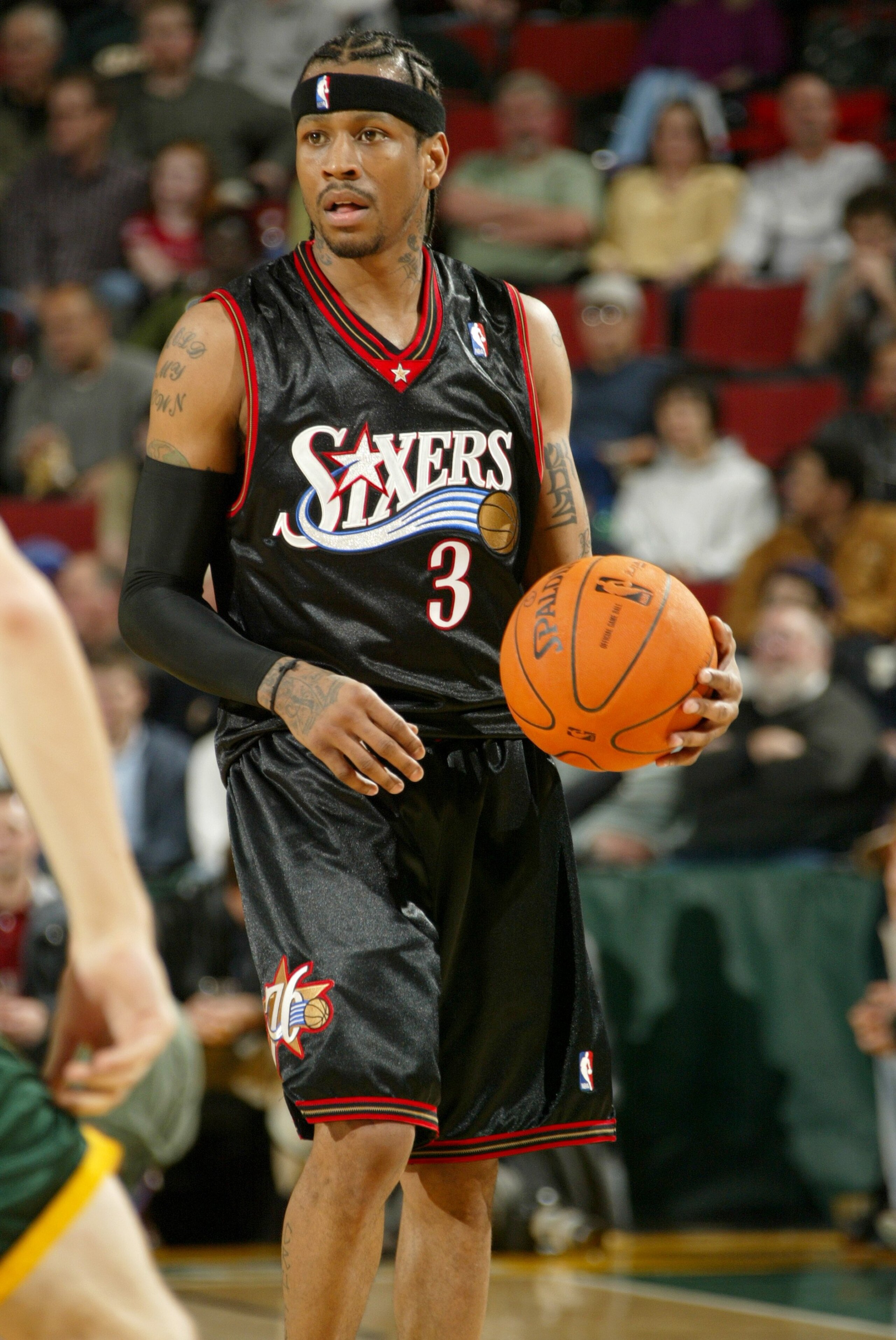
Bryan Toporek: To a certain extent, absolutely. Not to pick on Tracy McGrady, but doesn't it say something that he's never won a playoff series in his 10-plus year career; then, two years ago, after he gets hurt, the Rockets win a series and take the Lakers to seven games in the Western Conference semifinals?
Now, on the other hand, a guy like Danny Granger of the Pacers is obviously a talented basketball player. Because the Pacers had absolutely zero other scoring options last season,Granger had to shoulder an uncomfortable amount of the offensive load.
Sure, he's averaged near 25 ppg the past two seasons…but wouldn't you prefer a guy like Brandon Roy, who's scored a little less but plays on a perennial 50-win team?
Harrison Moore: A player should only be expected to take a team as far as the roster allows. For example when Allen Iverson was the Sixers’ alpha dog and they were getting bounced from the first round of the playoffs practically every year from 2002 on up no one blamed him.
The best player Iverson ever played with in Philadelphia was an aging, somewhat injury-plagued Chris Webber. Aside from that he had to make do with Samuel Dalembert, one of the most offensively deficient big men to ever make an NBA start, a host of rookies and a new head coach every other week.
The fact that Iverson’s Sixers were routinely bounced out of the playoffs by the then-heavyweight, defensively-oriented Pistons made his lack of success even more understandable. Iverson was playing with rookies, scrubs and hurt All-Stars while trying to beat a team that prevented the 2004 Lakers, who boasted Bryant, Shaq, Gary Payton and Karl Malone, from winning the championship.
Good analysts know that you can only go as far as the talent around you permits. LeBron James is the only recent exception.
Punish Great Players On Bad Teams? (Cont.)
15 of 28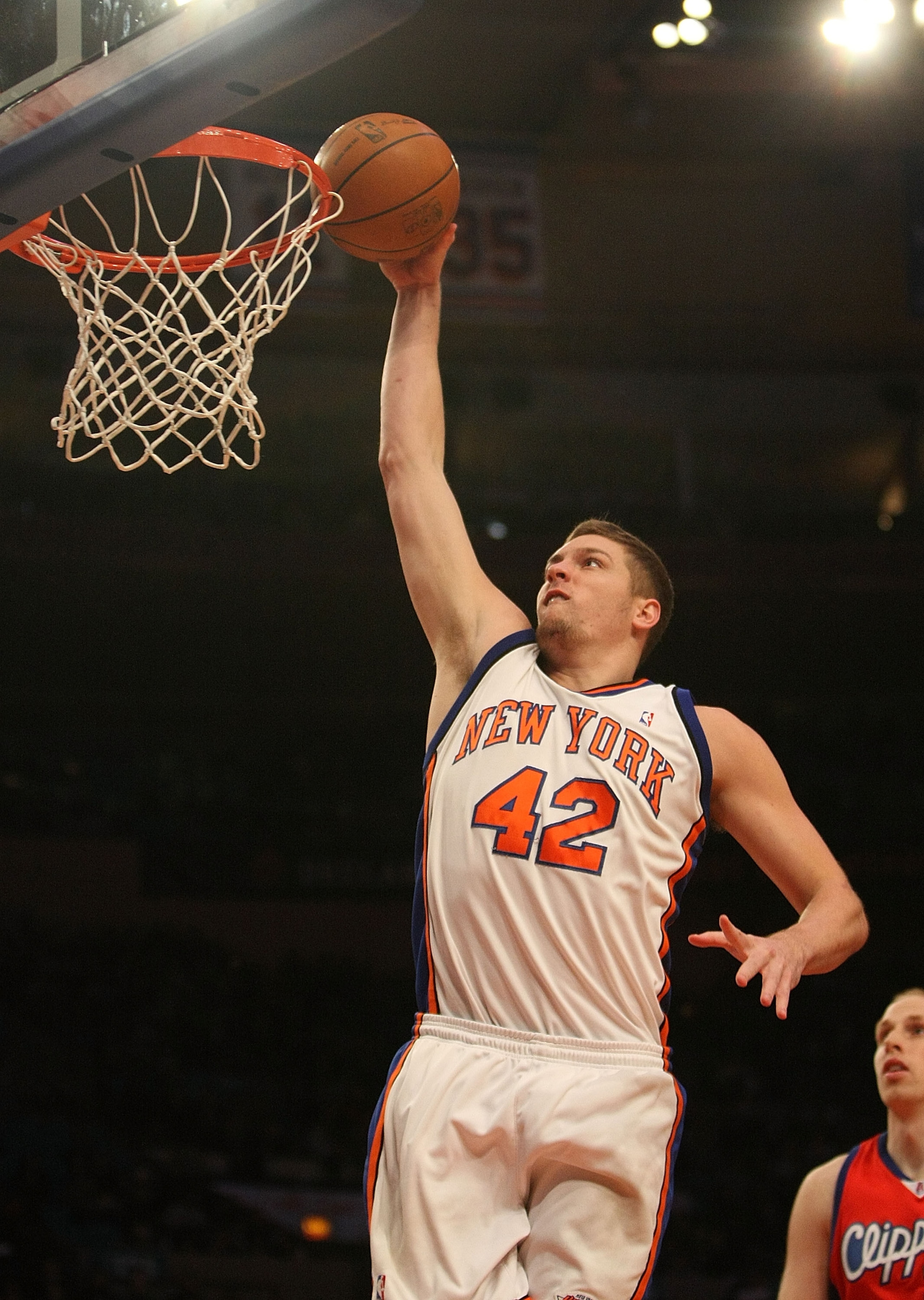
Joseph Edmondson: Well, if you rank David Lee highly, as I have done in the past, it's problematic because the perception is that the Knicks suck so their best player must suck as well. Garbage games, right?
I think there's something to be said about team success, but there's also something to be said about which conference a player is in, his division, his non-division conference record and so on.
Karl: It’s got to be factored. David Lee was in the top five in the NBA in OSP (overall statistical production) last season (by my formula) but the Knicks were terrible. I have to believe that on a better team, Lee’s numbers would be more modest. At the same time, a player like Lamar Odom would undoubtedly have more impressive numbers on a bad team. Win-Shares is an attempt to factor these considerations into a player’s overall rating.
Steven Resnick: I think it depends on the situation the players are in. Should Elton Brand be punished for putting up great stats because Donald Sterling the Los Angeles Clippers refused to spend money to improve the team?
Elliott Battle: Wins are of concern only in situations where a player’s efficiency is concerned. If a player racks up 30 ppg, but that’s because their team is so bad that they are forcing the issue, then that needs to be considered.
All and all, the wins are a tiebreaker when close, especially in the playoffs. Regular season wins are not always indicative of team strength, but sometimes player strength.
For example, the Cavs winning 66 and 61 games in their offense was indicative of the fact that approximately 5-10 teams could slow him down while the rest couldn’t. In a spread the wealth-type offense, the Cavs would have been a 40 or 50 win team. In the playoffs, most teams are talented enough to slow guys down, so wins and losses matter more.
Do You Rank a Player for Career Accomplishments Or His Current Play?
16 of 28
Bryan Toporek: It's situational, in my opinion. You obviously can't judge Shaquille O'Neal's impact on the NBA based on his current level of play. You've gotta examine the full scope of Shaq's NBA career to appreciate just how dominant the Big Aristotle could be in his heyday. Same with older guys like Allen Iverson, Tracy McGrady, and Vince Carter…
At the same time, if a guy stayed consistently strong throughout his mid-30s, I'd say that's what elevates them to the next level. The fact that Ray Allen's still making it rain at 35 speaks largely to why he'll be remembered as one of the game's greatest shooters, at least from the past few decades.
Harrison Moore: The very best example of this question is the unending debate of whose better between Kobe Bryant and LeBron James.
On one hand, even the most rigid Kobe Bryant supporters wouldn’t take Kobe at 32 (in just over a week) over LeBron James at 25 if given the chance. LeBron is clearly more equipped to carry a team and brings an overall production value that Kobe would have had a hard time competing with even in his prime.
On the other hand, Kobe is a five-time NBA Champion and LeBron’s deepest postseason run saw him swept out of the 2007 NBA Finals. That fact has to be taken into account as well.
Ultimately when the gap in career accomplishments is as wide as a five to zero championship margin, the titles have to win out. Almost anyone can see that LeBron is just starting to peak while Kobe’s days as an elite player are numbered.
Though it would be very reasonable to claim that LeBron is a better player today, comparing players’ legacies is much fairer to both and offers a holistic view. In this example Kobe’s career accomplishments outweigh the fact that LeBron is probably the better of the two heading into the 2011 season.
My verdict: career accomplishments are more important.
Current Play Or Career Accomplishments?
17 of 28
Joseph Edmondson: The only time I worry about career accomplishments is when a player only has two or three years in the league. Rookies really worry me because you don't know if they'll be consistently good or if that year was a fluke. Regardless, if a rookie or sophomore outperforms other players, he deserves the credit.
Career accomplishments are for legacies, not seasons.
Karl: It simply depends on what you want to look at in a given moment. If I’m an NBA GM, I wouldn’t just look at the most recent season of a player—I’d factor in age, and what the player has done at least over the last few years. Obviously, in all-time rankings, you look at career stats, and for single season awards (MVP) you look at current play.
Steven Resnick: I think that it’s a little bit of both but most if you’re ranking the top 10 currently then you look at what they’ve done recently and then compare it to the rest of their careers.
Elliott Battle: Career accomplishments are most valid when looking at guys whose workloads are so different that stats are not reliable. The context of each year is also key. For example, during the ’08 playoffs, Kobe was forced to play with a different big (Pau Gasol) than he was used to (Andrew Bynum), or how in 2007, the Celtics, a normal contender, were out of the playoffs because of an injury to Paul Pierce, which made the Cavs road to the Finals easier.
The same of anyone who faced the Cs in 2009 when looking a how deep of a run was made. Career accomplishments are vital, but do not make up for poorer play.
If You Use Stats to Evaluate Players, Which Ones Do You Use?
18 of 28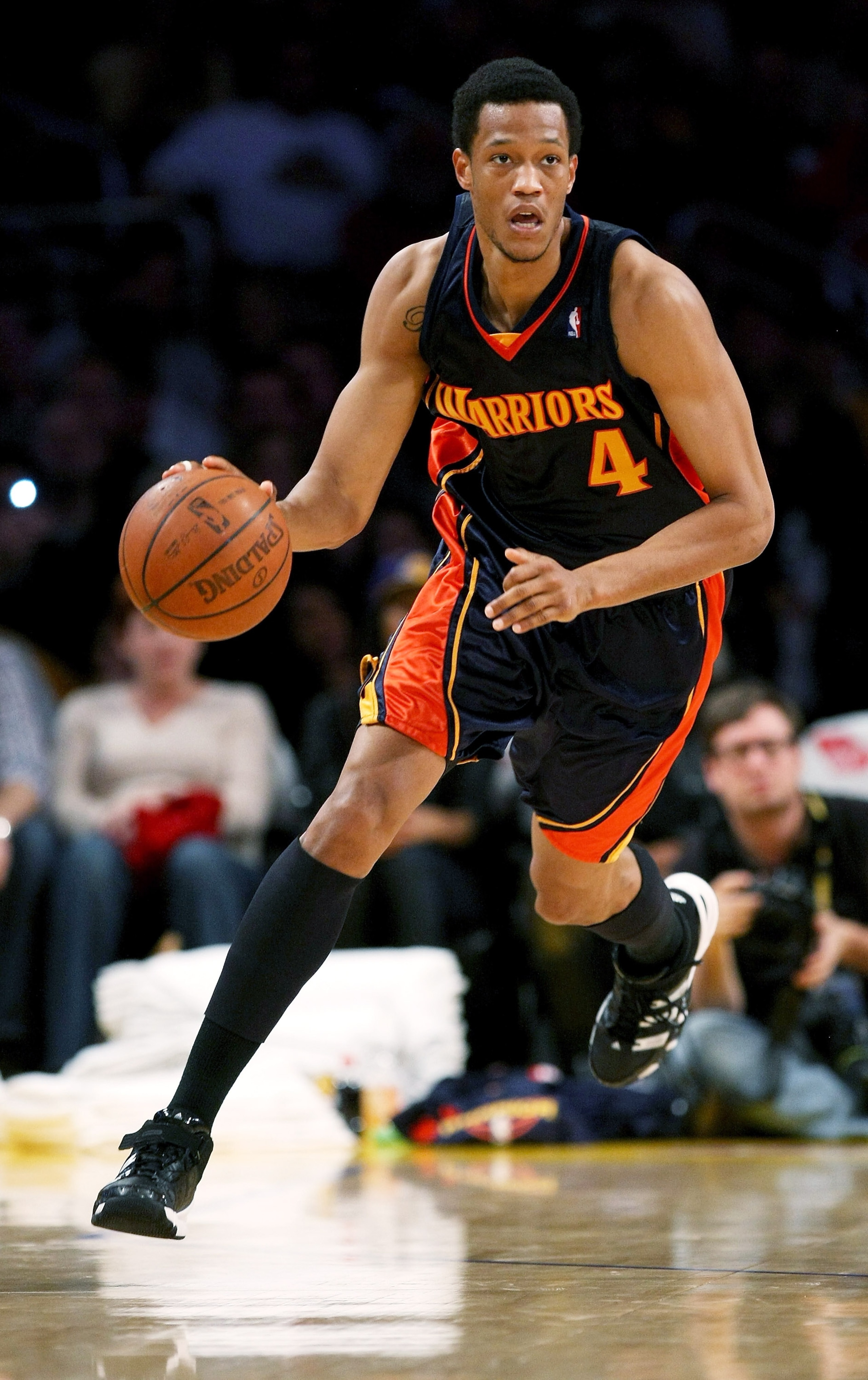
Bryan Toporek: I'll definitely look at per game averages most of all, but I absolutely factor in those other three (career stats, season totals, and stats per minute, in that order) when judging a player.
IMO, what's most statistically important about a player is the day-to-day, in-game impact that he has on his team. Sure, it's fun to imagine what kind of ridiculous stats Anthony Randolph could put up per 36 minutes, but until he's getting onto the court for 36 minutes a night, it's all just speculation.
Per game averages are cold, hard data. Season totals also have to play somewhat of a factor—you won't find many people who believe Chris Paul had a better season than Deron Williams last year, despite the two putting up relatively similar stats, because Williams played 30 more games than Paul.
Harrison Moore: I think per game averages are the best statistic for evaluating a player’s current worth as career stats don’t necessarily paint an accurate picture of what a player can contribute today.
Case in point: do you expect Shaq to drop 24 points per game on 58 percent shooting in Boston?
Joseph Edmondson: I use season totals, game averages, and minute averages in my evaluations.
Which Stats Do You Use? (Cont.)
19 of 28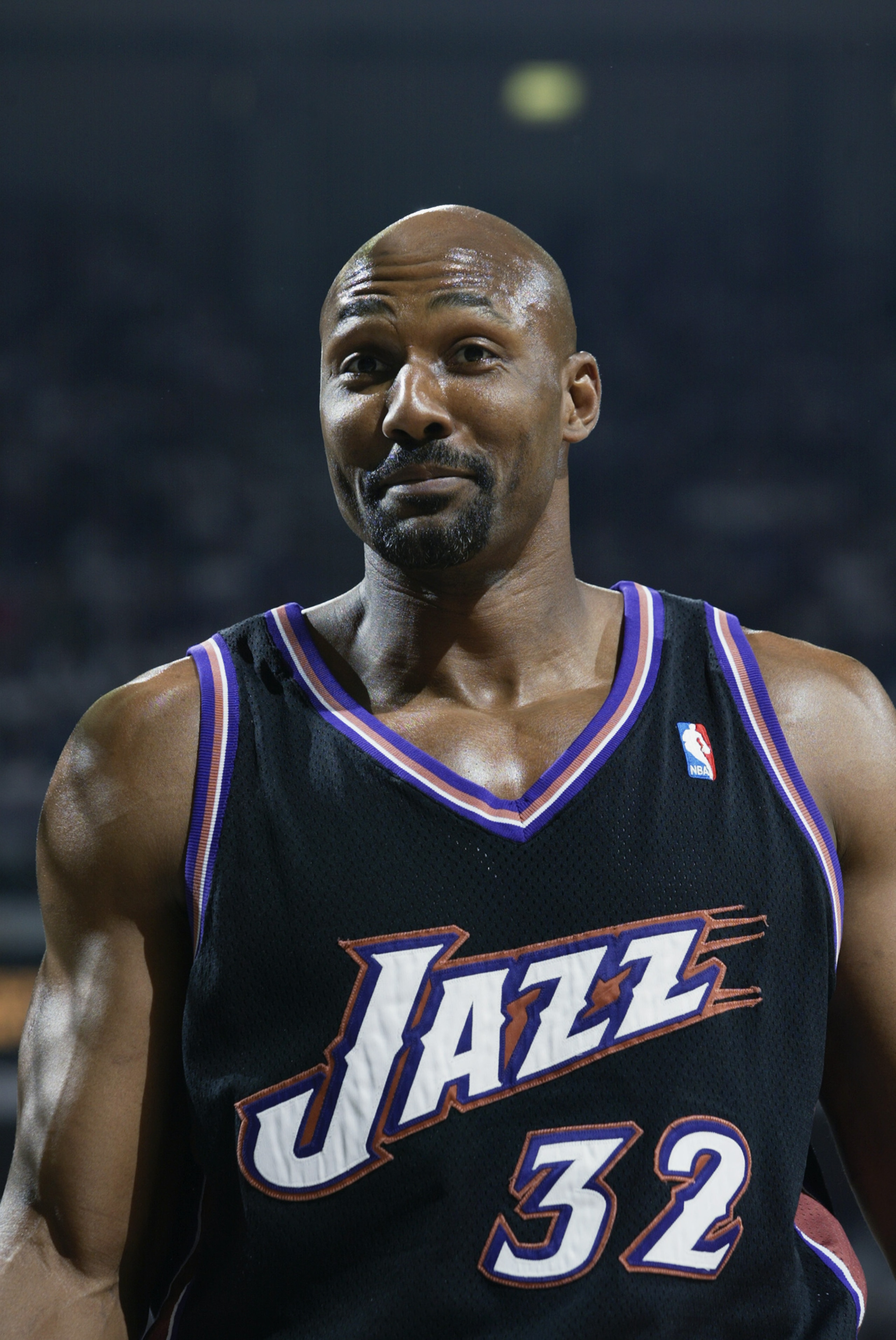
Karl: Well, I look at all of it, but I will say this. I don’t agree with Hollinger’s per minute ratings, and I don’t think we should overuse per game stats either. Part of a player’s worth is his durability.
Chris Paul and Dwyane Wade are great players, as skilled in their positions as any, but their track record so far is that they get injured a lot. This is part of who they are as players, and should be considered when rating them against players like Karl Malone, who regularly played 80 to 82 games every season.
Steven Resnick: I think per minute stats don’t mean that much to me; what's important is what they actually did in a game. Career stats play a role in determining a players worth as well as the per game averages and season totals.
If a player has a big year it helps to know what they did previously what their career numbers are and whether the season was a fluke or not.
Elliott Battle: Per minute numbers are not reliable, as players who log huge minutes will face different circumstance. Fatigue, rhythm, coaching adjustments…these affect 30 and 40 mpg guys moreso than 20-25 mpg guys. Increased playing time has diminishing returns for some players (IE shotblockers get fewer BP48 as players begin to know when they are coming) and increasing dividends for others (IE offensive players dissecting a defense when they attack it more) I prefer to use current stats to reflect players of similar roles, but use semi-recent stats to reflect players in changing roles.
For example, comparing LeBron to Kobe in current stats is not fair because the workload is not the same. Were Kobe in LeBron’s situation he had in Cleveland, his stats might well look more like the 05-06 or 06-07 numbers. While his age might prevent numbers THAT high, a composite of both is more fitting for comparison.
Should Injuries or Games Missed Be Factored In?
20 of 28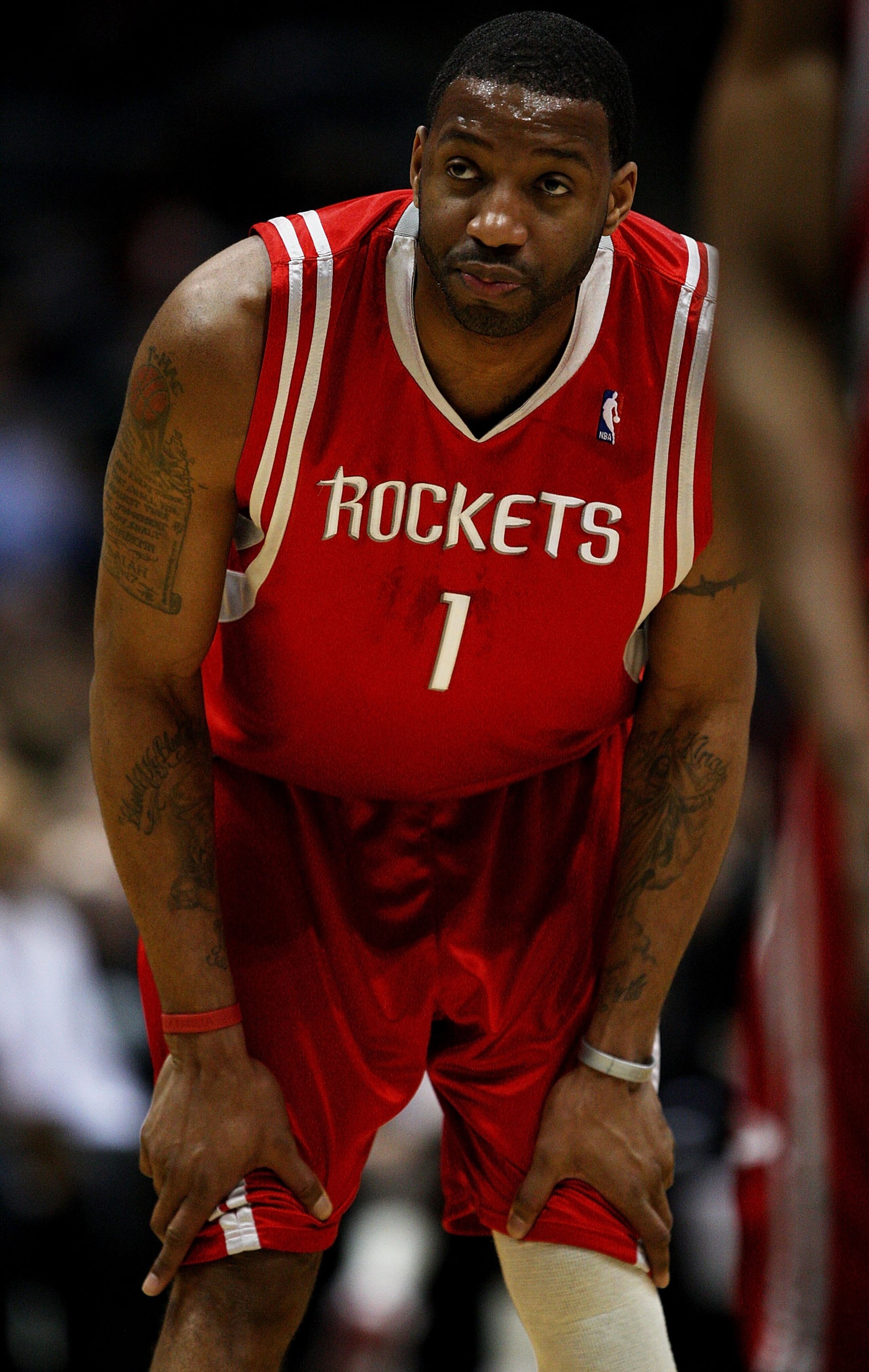
Bryan Toporek: Definitely. Again, fair or not, CP3 missed 35 games last year, and thus, shouldn't be compared directly to a guy like Williams, who started 76 games last year.
Who's to say that Williams didn't suffer through a non-disclosed injury for a month that limited his impact? And isn't Kobe's performance last season that much more impressive, given that he played with a fracture in his finger and toughed it through to still finish third in MVP voting?
Harrison Moore: Absolutely. While injuries often come down to fortune (or lack thereof) a great player on the bench is no better than a bench warmer.
Let’s use Tracy McGrady this time.
The biggest knock on McGrady since he became a Houston Rocket in 2004 was that he couldn’t stay on the court. No one thinks that the Rockets would have been a dynasty, but had McGrady been able to stay healthy and the Rockets had gotten a higher seed they likely wouldn’t have been the first round fodder that they’ve been for the last six years.
As great as McGrady was in those years, injuries prevented him from making the transformation from superstar to legend.
Karl: See my answer to the previous question.
Steven Resnick: Yes, injuries and games missed should be factored. If a player puts up huge numbers and misses 17 games while another player misses one game and has slightly lower numbers, the slightly lower numbers would get the nod in my opinion because they were doing it night in and night out.
Elliott Battle: Injuries should be factored in if they afflict a player in a way that either causes them to miss 30+ games (Chris Paul and Greg Oden for example) or if they affect a major area of play (IE Kobe’s busted shooting hand, or LeBron’s elbow in the playoffs screwing with their FG percentage). In a case like that, numbers from prior years should have more weight.
Joseph Edmondson: Absolutely, without a doubt. While someone may be more talented than someone else, if they miss dozens of games, they were not as good that season as they could have been.
This is the exact reason Chris Paul is not one of the top 10 players on my list. I'm ready to concede that he's the best point guard in the league, but that doesn't say much if you're only playing for half of the season.
I think age should also be considered; how do you compare to your peers? Before you think that gives an unfair advantage to older players, think again, older players who log enough minutes to start in the NBA are able to do so because they're intelligent and use those minutes wisely. Of the five age groups I used in my analysis, the 31-37-year-olds had the highest average production per quarter.
Injuries Factored In? (Cont.)
21 of 28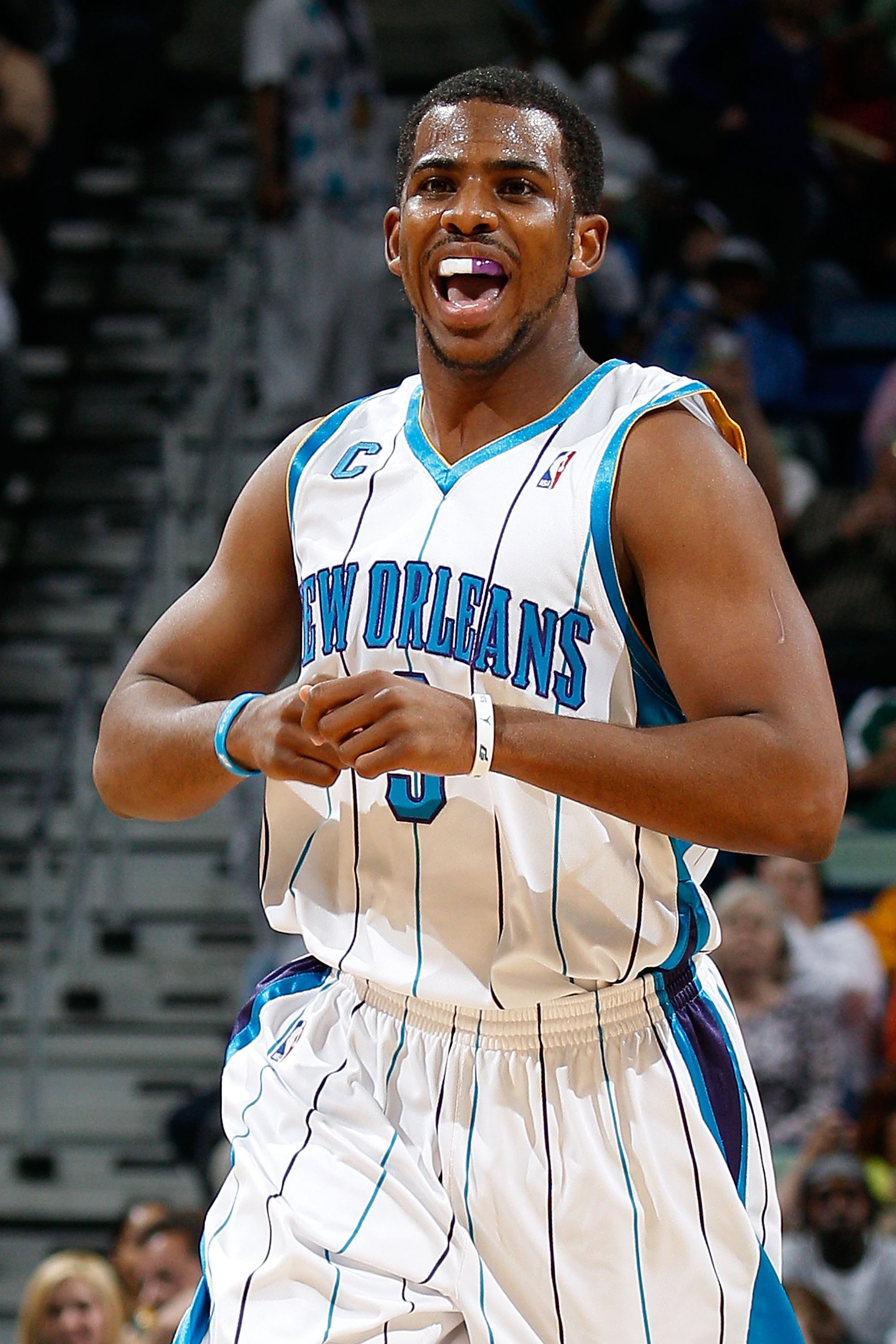
Joseph Edmondson: Absolutely, without a doubt. While someone may be more talented than someone else, if they miss dozens of games, they were not as good that season as they could have been.
This is the exact reason Chris Paul is not one of the top 10 players on my list. I'm ready to concede that he's the best point guard in the league, but that doesn't say much if you're only playing for half of the season.
I think age should also be considered; how do you compare to your peers? Before you think that gives an unfair advantage to older players, think again, older players who log enough minutes to start in the NBA are able to do so because they're intelligent and use those minutes wisely. Of the five age groups I used in my analysis, the 31-37-year-olds had the highest average production per quarter.
Karl: See my answer to the previous question.
Steven Resnick: Yes, injuries and games missed should be factored. If a player puts up huge numbers and misses 17 games while another player misses one game and has slightly lower numbers, the slightly lower numbers would get the nod in my opinion because they were doing it night in and night out.
Elliott Battle: Injuries should be factored in if they afflict a player in a way that either causes them to miss 30+ games (Chris Paul and Greg Oden for example) or if they affect a major area of play (IE Kobe’s busted shooting hand, or LeBron’s elbow in the playoffs screwing with their FG percentage). In a case like that, numbers from prior years should have more weight.
Is It Fair to Compare Players of Different Sizes, Positions, Etc.?
22 of 28
Bryan Toporek: There's a reason the saying "apples and oranges" exists. Is there a conclusive, undeniable way to compare a PG like Chris Paul and a center like Dwight Howard and say, "Player A is a better basketball player than Player B?" I haven't seen it yet.
That said…clearly, I gave a top-10 list above. So, there's obviously some way to compare players, despite positional/size/system differences. And I call that "the trusty eye test."
Harrison Moore: Absolutely not.
The comparison between Kobe Bryant and LeBron James works even though both players are different sizes, different positions and have played in different systems they are both heavy scorers and the differences between the shooting guard and small forward position aren’t really that wide, particularly nowadays.
Both Bryant and James have led their respective teams in scoring and assists per game throughout the majority of their career and their overall responsibilities are similar enough for the comparison to be valid.
Obviously you could never compare Tim Duncan to Carmelo Anthony or Kevin Garnett to Joe Johnson.
When comparing players one critical thing to keep in mind is that no two coaches or systems are exactly alike, but if the positions and responsibilities are similar enough then comparisons are valid.
Last example: though Magic Johnson was a point guard and Larry Bird was a small forward both players were responsible for involving their teammates on offense while scoring in bunches themselves (Larry more so than Magic).
Joseph Edmondson: I think it's fair. The best players will be the best players regardless of their size. Iverson was small, and some say overrated, but who could stop him? Then there's big guys who can't score on anything but dunks, yet they'll stop everyone who comes into their territory. I think it balances itself out in the end.
One advantage to using advanced statistics is that it adjusts results based on team systems. Anything based on the same amount of possessions, rather than minutes, can be evened out.
Fair To Compare Different Positions To Each Other? (Cont.)
23 of 28
Karl: As far as different teams, systems, positions, it all needs to be at least considered. Win-Shares does a lot to even this out. There are teams with high production systems (Phoenix and Denver) that win at a somewhat modest rate. Win-Shares will even out the players’ rankings, lowering them to the level of players in deliberate, highly controlled, low-production systems (San Antonio) whose teams win by suppressing the production of their opponents, rather than amping up their own production.
I do not give a fig for arguments about player’s size. Fans of Iverson always used to talk about how small he is. That’s his problem, as far as I’m concerned. If I’m his coach, I’m going to play him if he produces, and sit him if he doesn’t.
I’m not going to play him over someone who produces more but is taller, and say, “well, for his height, Iverson is better, even though he produces less.” Conversely, LeBron-haters always want to discredit him by saying his accomplishments come from his freakish size, speed, and strength. Well, his size, speed, and strength are part of who he is as a player. Does he get results? Then don’t talk to me about “it’s only because of his physical attributes.”
Steven Resnick: It’s not really fair. You can’t really compare LeBron James to a Earl Boykins.
Elliott Battle: If numbers exist of a player in a similar situation (IE Kobe in ‘05-07 is valid compared to LeBron now) then a definite yes is needed. In situations where they are radically different on both ends, certain amount of reason must be used. Size differences are only a big deal when greater than 30-40 lbs. or 3-4 in. or if the position is more than two off. Carmelo and LeBron are guys who are technically 3s, but who have run offense like point-forwards or even 4s at times. The basic roles/positions to compare are:
Pure PG (IE playmaking PGs, Chris Paul, Deron Williams, Rose, Rondo)
Scoring PG (IE Russell Westbrook, Jameer Nelson, Tyreke Evans, Brandon Jennings, score a lot, but miss plays at times)
Wing (IE LeBron, Kobe, Wade, Carmelo, Durant)
Shooter (Mike Miller, Kyle Korver, Ray Allen)
Frontcourt (IE primarily post-up, but can have jumpers Gasol, Bosh, Yao Ming, Amar’e, Tim Duncan)
Stretch Froncourt (IE PFs and Cs who play outside, like Rasheed Wallace, Mehmet Okur and Dirk Nowitzki)
Pure Center (Bynum, Howard, Bogut, Oden)
If a player is in the same role, then stats in key categories have far more weight than cross-positional.
What Is the Most Useless Ranking You Can Think Of?
24 of 28
Bryan Toporek: I'm struggling to think of a ranking more useless than stats/minute. Sure, it's fun to look at, in theory—again, hypothesizing what Anthony Randolph can do when Don Nelson isn't choke holding him to the end of the bench leads to a great bar conversation—but it doesn't accurately measure a player's worth.
A guy could put up phenomenal stats in 15-20 minute bursts every game, but when he's playing 36 minutes, maybe he starts thinking that it's his cue to jack up a few extra bad shots every game. Maybe, in the case of Amir Johnson, his per-36 minute rankings are solid, but he fouls so damn much, he can't ever stay on the floor for 36 minutes.
Until a guy can actually average 36 minutes a game, there's no point in projecting his per-36 minute totals. After all, one he's averaging 36 minutes/game…just look at his per game stats. That actually measures a player's impact, legitimately.
Harrison Moore: These new fancy measurements like “player efficiency”. They essentially combine every positive (points, rebounds, assists) stat and subtract things like field-goal attempts and turnovers to create one massive number.
Those stats are creative and all, but basketball isn’t played through a geometric formula.
They don’t take into account things like raw talent and effort—and let’s face facts, 12 years from now when Kobe, LeBron and Dwyane Wade are all gone no one’s going to use player efficiency as leverage in debating who was the greatest of the three.
Most Useless Ranking? (Cont.)
25 of 28
Karl: Believe it or not, it’s probably field goal percentage. You tell me a player only shoots .445? I need to know how many three’s he takes and at what percent, and how much he gets to the line and converts his free throws. “True Shooting Percentage” (which really ought to be named “scoring percentage”) is a much more reliable stat. The formula is (Pts/2)/((FTA*.44)+FGA). Check a player’s “TSP” and that’ll tell you how efficient he is as a scorer.
Steven Resnick: Most useless ranking that I can think of are per 36 minute stats. They’re fun too look at, but they really have no bearing on what the player actually did.
Elliott Battle: Can’t really say.
Joseph Edmondson: Jersey sales.
Which Do You Prefer? Solid Season Averages or a Few Spectacular Games?
26 of 28
Bryan Toporek: Definitely solid averages during an entire season. Case in point, Brandon Jennings. You'd think he was the NBA's newest darling last November after blowing up for that 55-point game. By the end of the season, he was the third best point guard in his rookie class.
Sure, Jennings proved that he's a hugely talented player with that 55-point explosion. And no one's expecting him to throw up 50-plus points every game. But the Rookie of the Year voting showed…the voters preferred Stephen Curry, who continued to progress and raise his averages every month, over Jennings, who slumped after his 55-point game.
Harrison Moore: Consistency is everything.
Last season Andre Miller broke out with a 52-point explosion. The highest total Kobe reached last year was 44. Would you take Andre Miller over Kobe?
Isolated games are to season stats what season stats are to career stats.
Magic Johnson’s career high in assists is 13.1. He accomplished that in 1984 and never reached 13 or higher again. John Stockton totaled 13 assists per game or higher 5 times in his career, even reaching 14.5 in 1990.
Yet, Magic Johnson boasts a higher career assist average and is known as the best point guard and passer of all time.
It’s amazing when a player breaks out for a streak, but consistency for an elongated period of time is far more impressive than a single outburst, regardless of how impressive that outburst may be.
Joseph Edmondson: It's interesting because I was looking at Kobe's best games this past season. I took box score data and made offensive, defensive, and negative categories, added them up and got a total for his production.
Then, I used his +/- as an indication of intangible things the box score won't tell me. When it was all tallied up (production plus +/-), I found that, of his top-ten regular season games, only three were against playoff teams (two which lost in the first round).
But the reality is, Kobe has great games against any team on any given night compared to an average NBA player. You really never know when it's going to show up, but sometimes Kobe outdoes himself and those games are special, regardless of the opponent. On the other hand, sometimes, guys just have good days. Over an 82-game season, the cream does rise to the top.
Consistency or Infrequent Explosions? (Cont.)
27 of 28
Karl: Definitely solid seasons. I don’t care about Kobe’s 81-point game: he’s been more relevant, obviously, in the last couple of years, in which he has rarely scored even 40. I also don’t put so much stock in his six or whatever game-winners this past season—Kobe did not have a good shooting season. His offensive efficiency was barely above league average. There’s a reason why he was in so many situations in which the Lakers needed him to hit a game-winner, and he had something to do with it.
Hell, Goran Dragic scored what, 24 points in a quarter this past post-season? Does that make him an NBA all-star? It gets my attention, but until I know he can produce over a season, I’m not going to proclaim Dragic as the new wunderkind.
Steven Resnick: Consistency is more important than several spectacular games throughout the season.
Elliott Battle: It depends upon two things:
1) How spectacular?
2) Against who?
If a guy lights up the Knicks for 55, it’s semi-impressive. When you drop 60+, then the opponent does not matter. If it’s an elite defense, then 40+ is impressive (Assuming your FG percentage is decent in that game)
The biggest way that a big performance helps is that it can show the pinnacle of your abilities. Some players who are asked to do less do not have good averages because of it. One of Kobe’s tiebreakers over LeBron was that he dropped 81 on the Raptors. LeBron’s never come close.
Solid numbers are good, but cannot be Jekyll and Hyde. I’ll take a guy who averages 20 and gives that 20 points 9/10 over a guy alternating between 10 and 30. But if I have a guy who can drop 70 or 80…I’ll let the averages dip a little bit. Consistency is key in the mid-tier levels…say…No. 5 and below. Above five, it’s that big-game ability…their maximum, especially against elite competition, that can be a huge tiebreaker.
Thoughts?
28 of 28
Agree or disagree with any of our six writers?
That's why we've got comments section, folks.
Thanks for reading, and we hope you enjoyed our take on player rankings in the NBA.
.jpg?w=2560 "OBJ Calls Out Giants After Release")



.jpg?w=2560 "Saquon Out for Game")