
Why Are Elite Receivers Being Shut Out In The Playoffs?
Many believed that had Plaxico Burress not shot himself at a club in late November, the Giants would have been shoo-ins to make the Super Bowl, and favorites to hoist the Lombardi for the second straight year.
That may be so, but the reality is that despite the boom of passing yardage, so-called No. 1 receivers are unable to take over playoff games as they had the previous 16 weeks.
This trend started to become apparent in January of 2008. Randy Moss and Tom Brady spent the 2007 regular season shattering records enroot to being the most prolific single-season tandem the league has ever seen. Naturally, all eyes were on those two as the 16-0 Patriots attempted to solidify their legacy as the greatest team of all time.
TOP NEWS

New NFL Power Rankings 📊
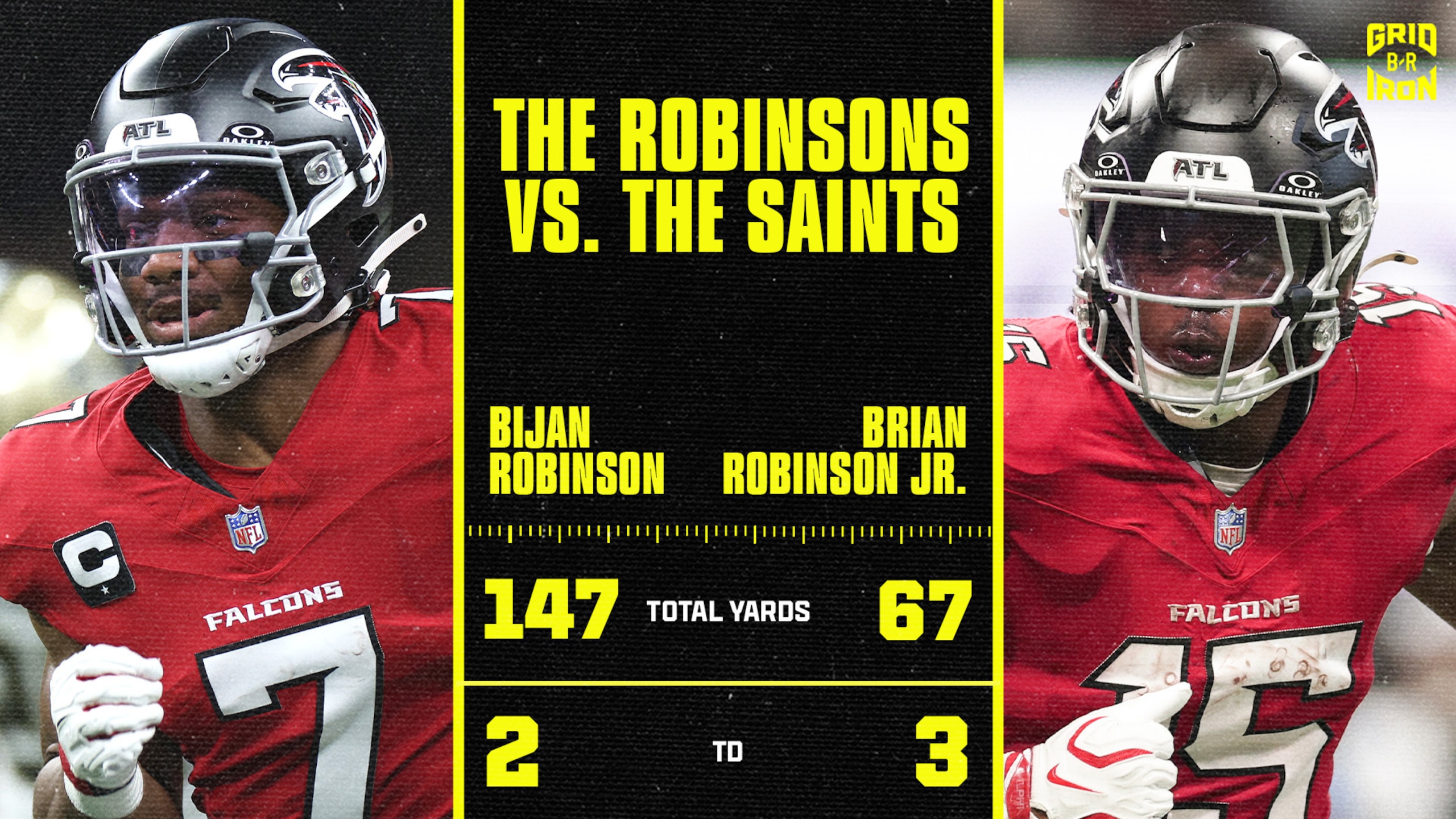
The Robinsons POUND the Rock 🪨
Takeaways from Falcons' dominant MNF win
But a weird thing happened when the calendar flipped to January. The over the shoulder bombs we had been so accustomed to seeing on a weekly basis were non-existent. Instead, Tom Brady methodically carved the Jaguars for 262 yards and three touchdowns, only missing on two of his 28 attempts.
Very rarely did Brady uncork the ball down the field. And Moss’s numbers paid the price; he only caught one ball for 14 yards.
With the Super Bowl on the line against the Chargers, Brady threw three interceptions. The weather conditions weren’t ideal, but the Chargers managed to neutralize Randy Moss as the Jaguars did, and held the passing game in check for the most part. It wasn’t enough to carry them to victory, but it proved the mortality of a supposedly unstoppable passing tandem.
Moss was able to catch a touchdown in the Super Bowl, but the Giants pass rush was relentless and did not allow Brady to even think about throwing it down the field. He finished with five catches for 62 yards.
As evidenced in the past two post-seasons, Moss’s performance was not a fluke but the beginning of a development.
In fact, the real fluke may be Larry Fitzgerald during the Cardinals’ magic carpet ride. Despite being the clear go-to-guy in an offense that lives and dies with the pass, Fitzgerald still managed to compile one of the great post-seasons a receivers has ever laid claim to.
Given the production elite receivers have had in the playoffs the last three years, Fitzgerald’s performance is even more remarkable. Former Cardinals offensive coordinator Todd Haley deserves credit as well. Opposing teams knew the passing game revolved around Fitzgerald, and he was still occasionally isolated with a lesser cornerback.
Before the 2010 playoffs kicked off Peter King wrote a column for Sports Illustrated projecting great performances from freshly anointed No. 1 receivers.
Mentioned in the article were Miles Austin, DeSean Jackson, Sidney Rice, Robert Meachem, and Vincent Jackson. Of that group, only one receiver finished in the top five for cumulative receiving yards in the post-season. Only one other “elite receiver” finished in the top 10, and that was Reggie Wayne.
This is not meant to discredit King but rather emphasize the defense's focus on not being beat by the offense's best player coupled with the growing need for playoff teams to have reliable secondary options. The Colts made it to the Super Bowl because of Pierre Garcon and Austin Collie’s ability to play like veterans in situations they have never come close to experiencing.
So why are No. 1 receivers nowhere to be found in the playoffs? One would say that weather conditions would play a role, but that was not the case this year. Only three playoff games were played outdoors this post-season, two of which in San Diego and Miami.
Another popular explanation is that defense’s clamp down in the playoffs. This would also be false; only one defense finished the post-season without allowing 30 or more in a game: the Baltimore Ravens.
The reality is that there is no true reason, but rather a combination of them. Teams may be hesitant to throw the ball around the field with their season on the line. With that being the case, they neutralize their own downfield threats.
The Patriots aren’t going to run Randy Moss on quick slants and curls every down even if they want to have a conservative game plan. The game plan will be designed for him to run by cornerbacks as he usually does and draw the safety. Brady may be inclined to throw him a jump ball between two defenders in a game against the Bills, but not with everything at stake. So instead of a huge play, he settles for his underneath options.
After a long season big plays make all the difference. They force other teams to press on both sides of the ball and can either electrify the crowd or take them out of it. In the playoffs, the top priority is to prevent that from happening. And how do you take away the big play? Make their playmaker a non-factor.
The NFL is always evolving. This trend is emerging more quietly than others, but it’s time for teams to adapt. A flashy number one receiver can get a team to the sweepstakes, but it won’t take them to where they want to go. For that, they have to have reliable targets all around the field.
Look at the Saints receiving corps. Do they have a bona-fide No. 1 receiver? No, but they have the one thing that every single team covets the most: the Lombardi.

.jpg?w=2560 "Rams Eagles Football")
.jpg?w=2560 "Grading WWE Raw 🔠")


.jpg?w=2560 "Injury-stricken Seahawks signing veteran RB")
