

The 2022 NBA free-agent landscape is looking a little sparse.
Only six teams are capable of clearing cap space that will allow them to spend more than the mid-level exception, and there's a dearth of high-end free agents available on the market.
Don't think for a second that'll stop teams from finding ways to overpay.
Special circumstances surrounding a handful of big-name free agents could result in prices climbing beyond the realm of reasonable. It happens every summer, and this one will be no different.
As always, a public service announcement: These players should get as much cash as they can. Viewing things any other way would mean taking the side of billionaire owners with generational wealth over players whose prime earning years expire in their mid-30s. So if we're criticizing anyone, it's the teams writing the checks—not the players collecting them.
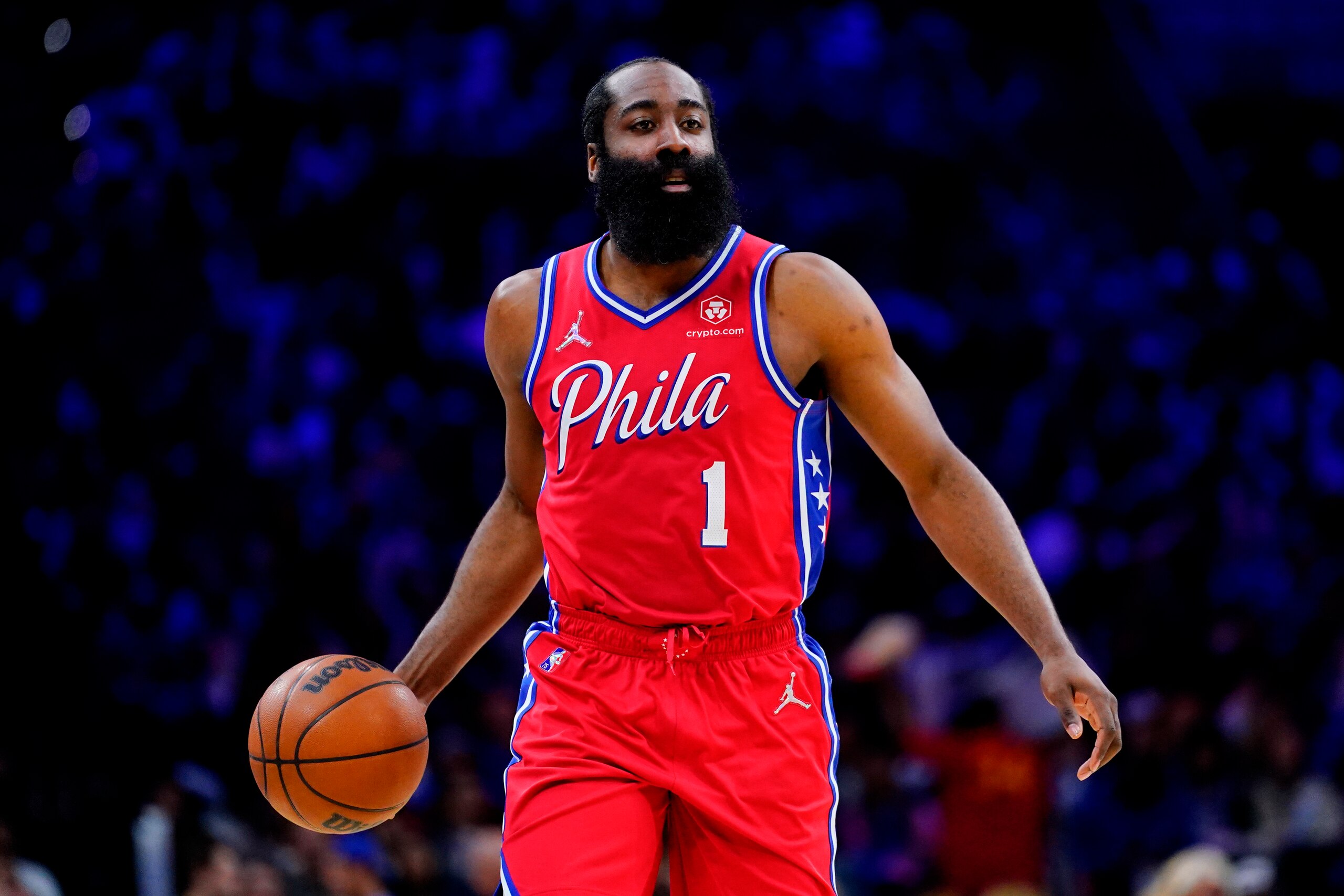
James Harden, Player Option
1 of 5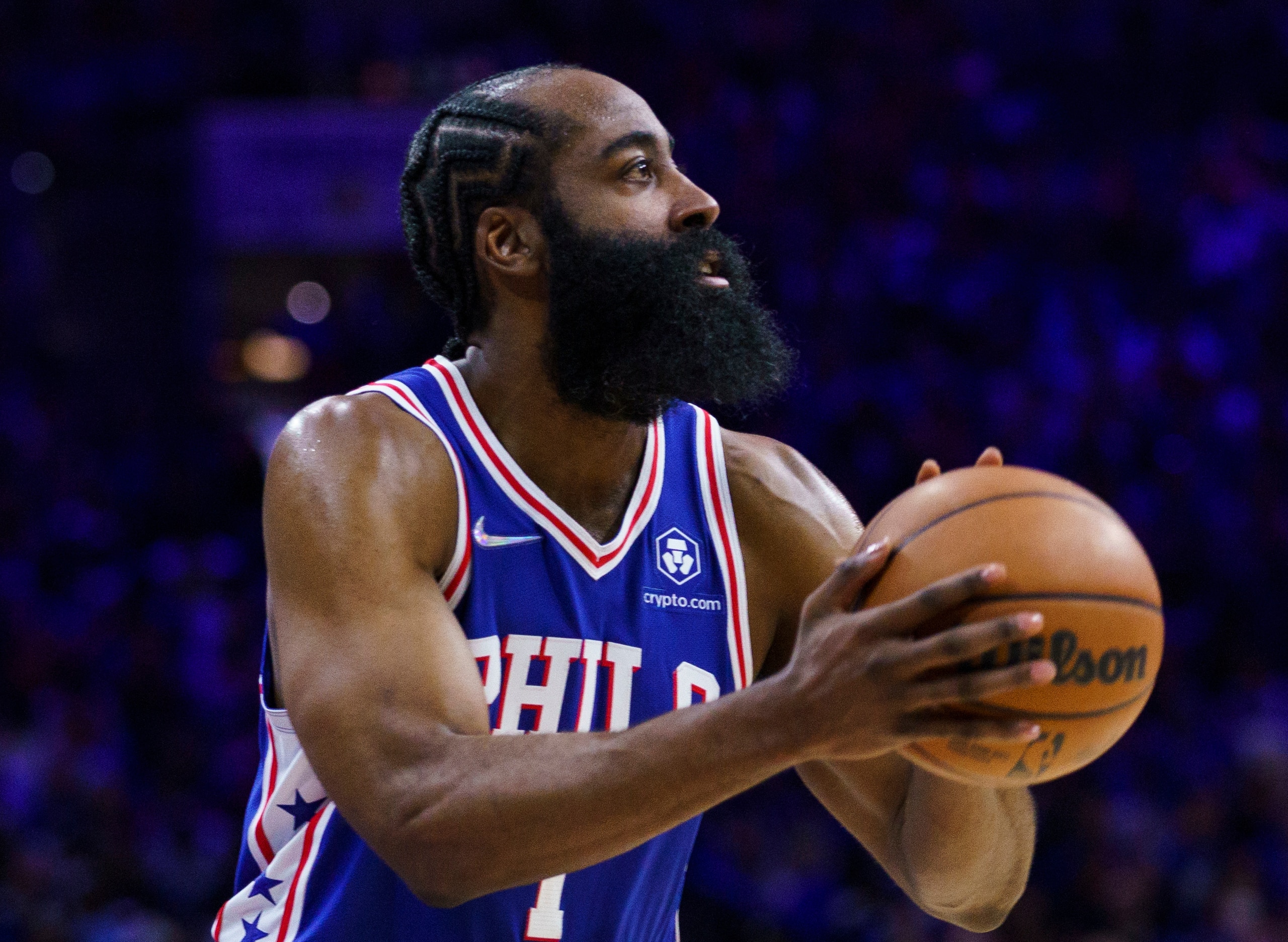
James Harden's downward career trend line is what it is, and nothing in his profile suggests a reversal is in the cards.
Last year saw Harden take a lower share of his shots inside three feet than ever before, and he finished less efficiently at that range than he had in any season since his first with the Oklahoma City Thunder way back in 2009-10.
The truth is you don't even need the numbers to know Harden's waning athleticism has completely defanged his game. Anyone who watched him struggle to consistently get into the lane in the 2022 playoffs (before ultimately giving up on the endeavor entirely) knows what's happening. And let's not even talk about the defense.
Zooming out, Harden has essentially quit on three straight teams, the last two of which he wanted to play for. His well-documented history of extracurriculars and devolving conditioning suggests that even if he re-engages with the Philadelphia 76ers mentally, the physical component may not be there.
The notion of paying Harden $270 million on a five-year extension is terrifying, and an opt-in with a four-year, $223 million extension has only slightly less disaster potential. But what are the pot-committed Sixers to do?
Is it possible their best-case scenario is hoping Harden picks up his $47.4 million player option for 2022-23 and treating it like a prove-it year? That brings the risk of losing him for nothing in 2023 into the mix—a scenario it's hard to imagine the team embracing after giving up so much to get him.
Unless the 76ers can convince Harden to opt out and sign a three-year deal worth something in the neighborhood of $90 million (with partial guarantees or incentives on the final year), they're almost assured of overpaying for the version of Harden they're going to get. And frankly, even that hypothetical contract might not return fair value.
Daryl Morey got his man, and now he's stuck with him—and the bill.
Deandre Ayton, Restricted
2 of 5
It's never great for a player's earning potential when he gets yanked from an elimination game after 17 minutes—particularly when said player's team said "thanks, but no thanks" to a preseason extension.
Such is life for Deandre Ayton, who enters restricted free agency with the theoretical option to get a five-year, $177 million rookie-scale extension from the Phoenix Suns. Practically speaking, he's got no chance.
He's still going to be overpaid.
How? Well, Ayton should have at least three suitors—the Indiana Pacers, Detroit Pistons and San Antonio Spurs—with the ability to sign him to an offer sheet worth up to $131.1 million over four years. The Orlando Magic have the cap space as well, but they inked center Wendell Carter Jr. to a much more manageable four-year, $50 million extension back in October.
Seat's taken, basically.
The Suns' match rights may discourage big offers that would tie up other teams' space, but it still feels like they'll have to come close to what other clubs can offer to appease Ayton—particularly after failing to meet his demands prior to the season. Phoenix would be taking a real risk by lowballing him.
The notion of the 2018 top overall pick accepting a qualifying offer ($16.4 million in this case) to enter unrestricted free agency in 2023 is almost too ridiculous to consider. Almost. Twice denied what he views as an appropriate extension in this hypothetical, and still stewing over his Game 7 removal, Ayton could make a pretty credible threat to take the QO.
Ayton is young (23), has proved in the past he can make a difference on the biggest playoff stage and could easily improve on his 2021-22 averages of 17.2 points and 10.2 rebounds. But he's not a superstar center worthy of the max (whether we're talking four or five years). The only 5s currently in that group are Nikola Jokic, Joel Embiid, Karl-Anthony Towns, Bam Adebayo and Rudy Gobert. No one in that quintet is the fourth-best player on his team like Ayton.
The Suns could look into a sign-and-trade if the risk of losing Ayton for nothing next year starts to seem real. But the likelier course involves paying him upward of $30 million per season on a multiyear deal, which is simply out of step with his production.
Kyrie Irving, Player Option
3 of 5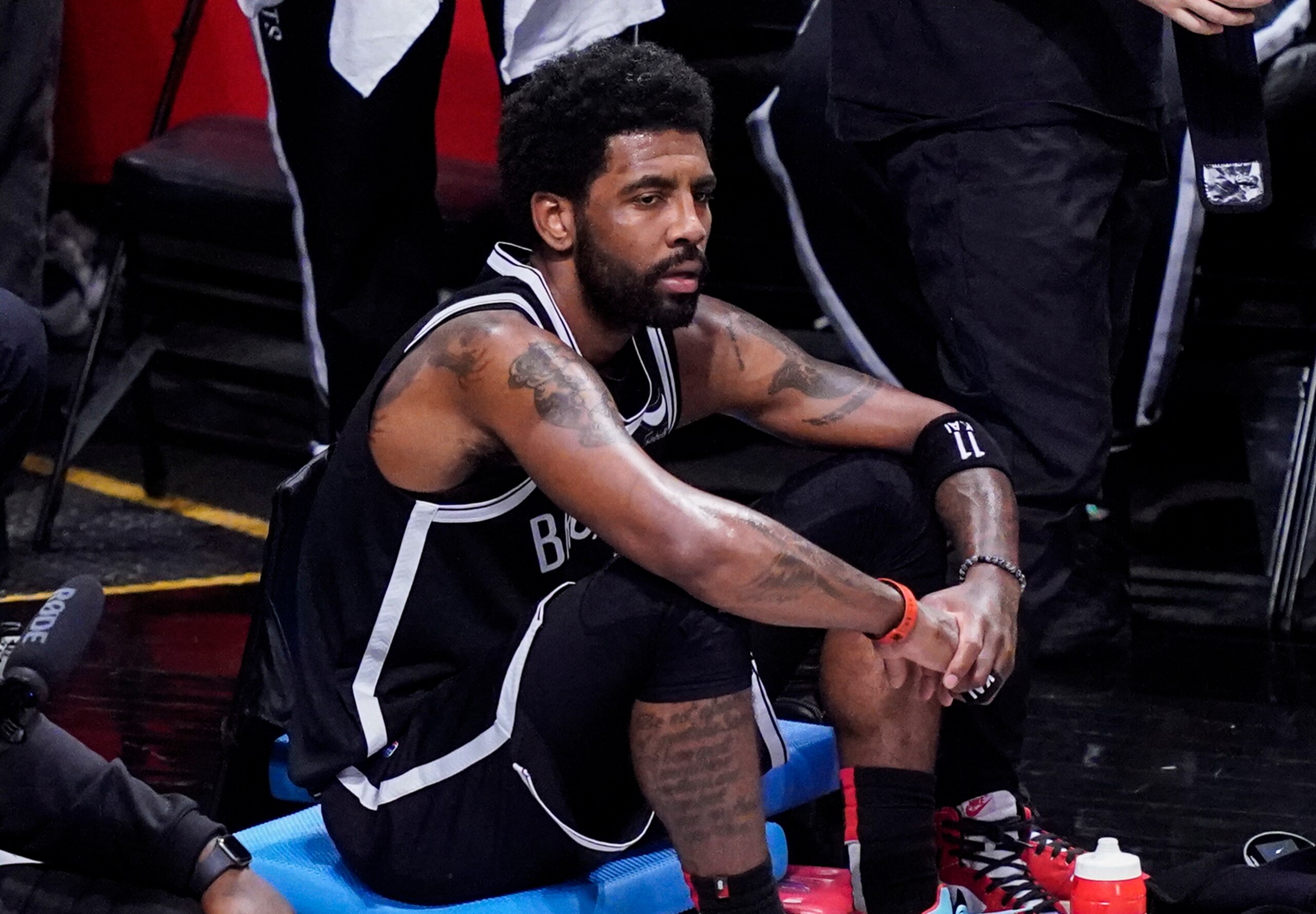
Even if Kyrie Irving simply opts in for $36.5 million in 2022-23, you could make the argument that the Brooklyn Nets won't get enough bang for their buck. That's because history indicates Brooklyn will be paying full freight for a fraction of a season.
Irving's games played totals over the last three years: 29, 54, 20.
If it's not injury or "personal reasons" or refusal to get vaccinated that prevents Irving from playing next year, you've got to assume he'll find some other reason to be less available than Nets GM Sean Marks would prefer.
Of course, if Irving misses half the year and plays brilliantly during a deep 2023 playoff run, we'll gladly recant all this. The Nets are a title-or-bust operation, and what they get from Irving in May and June matters far more than his production from October to April.
Remember, though, we're still talking about the unlikely scenario of an opt-in without some kind of long-term commitment. Realistically, Irving will sign a deal that secures him more money over multiple years. Perhaps he won't get the full five years and $250 million he's eligible to sign for by opting out, but Irving is still a supremely talented player that the capped-out, tax-hit Nets cannot replace.
He has massive leverage—more than enough to secure at least a four-year deal at the max.
Irving (30) is two years younger than Harden and isn't showing nearly the same signs of decline. That makes it less likely Brooklyn will be committing major resources to a player who can't produce like a star.
The Nets should still be very uncomfortable. They're stuck here, and while there are worse fates than having to max out a player as talented as Irving, they'll be devoting hundreds of millions of dollars to someone whose skill is matched only by his unreliability.



Bradley Beal, Player Option
4 of 5
For the better part of the last year, all signs have pointed to Bradley Beal signing a five-year extension with the Washington Wizards worth $248 million. That's "transcendent player" money, and four winning records during Beal's 10 seasons with the franchise suggest that's not a label he's earned.
In fairness, Beal led the league in scoring two years ago and hasn't had a knockout supporting cast at any point in his career. But we're talking about a quarter of a billion dollars for a soon-to-be 29-year-old with a ton of mileage. For the Wizards to make that kind of commitment, there shouldn't be any question that Beal is an apex-level superstar and will continue to be one for several more years.
In the wake of Beal's non-All-Star 2021-22 season, during which he played just 40 games and averaged 23.2 points per contest, the Wizards should have a ton of questions.
Washington could soon create a best-case scenario in which Beal signs the richest contract in NBA history...and then goes on to be the best player on a 45-win team that loses in the first round to an East powerhouse.
Today's version of Beal, worn down by averaging the third-most minutes per game in the league since 2016-17, profiles more as a quality second or third option on a big-time winner. And yet it feels like a lock that he'll get the max. Maybe the Wizards can convince him to sign for fewer than five years, but that won't remove the "overpay" tag—not by a long shot.
If it's not clear now that the Wizards should have traded Beal before reaching this point, just wait until the middle of the 2022-23 season when they're a midpack team without flexibility or future prospects—one staring down another half-decade of mediocrity.
Anfernee Simons, Restricted
5 of 5
Never trust anything that happens down the stretch of a tanking team's season.
When Anfernee Simons took over as a full-time starter on Jan. 3, the Portland Trail Blazers had already lost Damian Lillard for the year and were sitting at 14-22, 12th in the West, and fading. From that point forward, the tank was on.
To Simons' credit, he seized his opportunity and averaged 23.4. points and 5.8 assists with a sweet 45.6/42.3/88.6 shooting split over the final three months of the season. The 22-year-old looked very much like a cornerstone, and top executive Joe Cronin cited the need to create a runway for Simons when explaining his cost-cutting moves at the trade deadline.
None of this is to say Simons is unworthy of a long-term commitment in restricted free agency. But the Blazers have tipped their hand and seem primed to spend on Simons as if he compiled his numbers in games that actually mattered. The team's record with him as a starter was 12-16, and Portland was a minus-55 in the 956 minutes Simons played from Jan. 3 on.
There's a chance Simons' production will translate, just as the odds are good he'll keep improving. The real problem for the Blazers is about roster construction and allocation of resources. If they pay Simons $20-25 million per season on a four-year deal, which may be what it takes to beat the market, they'll be locking themselves into another long stretch in which their two best players are small guards who play suspect defense.
That's exactly the bind they got themselves out of by trading CJ McCollum. So if the plan is to improve the roster's chances of a deep playoff run and thereby appease Lillard, how does running it back with a guard tandem eerily similar to the one that couldn't get over the hump make sense?
If the Blazers intend for Simons to be the bridge to a post-Lillard era, the calculus changes. But nothing suggests Lillard is going anywhere, and there's even a good shot he'll get a two-year, $107 million extension that will lock him in until 2027.
Of all the players we've covered, Simons has the most untapped potential and will cost the least. Portland can't just let him leave for nothing. But for this particular Blazers team, the price of keeping him is going to be dangerously high.
Stats courtesy of NBA.com, Basketball Reference and Cleaning the Glass. Accurate through 2021-22 season. Salary info via Spotrac.
_0.png?w=2560 "Unranked Teams Cause Chaos in Rankings 📊")
.png?w=2560 "Week 8 Winners & Losers 📊")
.jpg?w=2560 "Jonathan Taylor Landing Spots 📍")



