

B/R Exclusive: Israel Adesanya on UFC 271, a Whittaker Washout and African MMA
Israel Adesanya is willing to play "he said, she said" in the fight-week run-up to his blockbuster main events. It's no different on the eve of Saturday's UFC 271, at which he'll try for his fourth straight defense of his UFC middleweight title. This time, it's a rematch with Robert Whittaker, who, despite losing to Adesanya by second-round knockout in 2019, is widely viewed as Adesanya's last best challenger at 185 pounds.
But with Adesanya, there's more to the chatter than embarrassing training stories, random performance-enhancing drug accusations and the rest of the usual fare. In fact, there's always more to it when it comes to Adesanya.
TOP NEWS
UFC 333 Prize Money 💰
Volkanovski breaks record after title win at UFC 333
Fights to Make After UFC 333 ➡️
Conversations with the champ tend to cover a wide waterfront, and it was no different when I recently spoke to him in an exclusive interview. We covered his fight with Whittaker and some of their recent back-and-forth, as well as his thoughts on his own game and the state of the wider fight game today.
Bleacher Report: A lot of observers liked Whittaker's last performance against Kelvin Gastelum, but you said some people have low standards when it comes to fighting. What, to you, was unimpressive about his performance, or where does the commentary get it wrong?
Israel Adesanya: It's not that I'm not impressed; I'm just saying it's not as impressive as people are making it out to be. With the way people are harping on about it, I guess I expected something better. I guess maybe I've just got high standards for fighting.
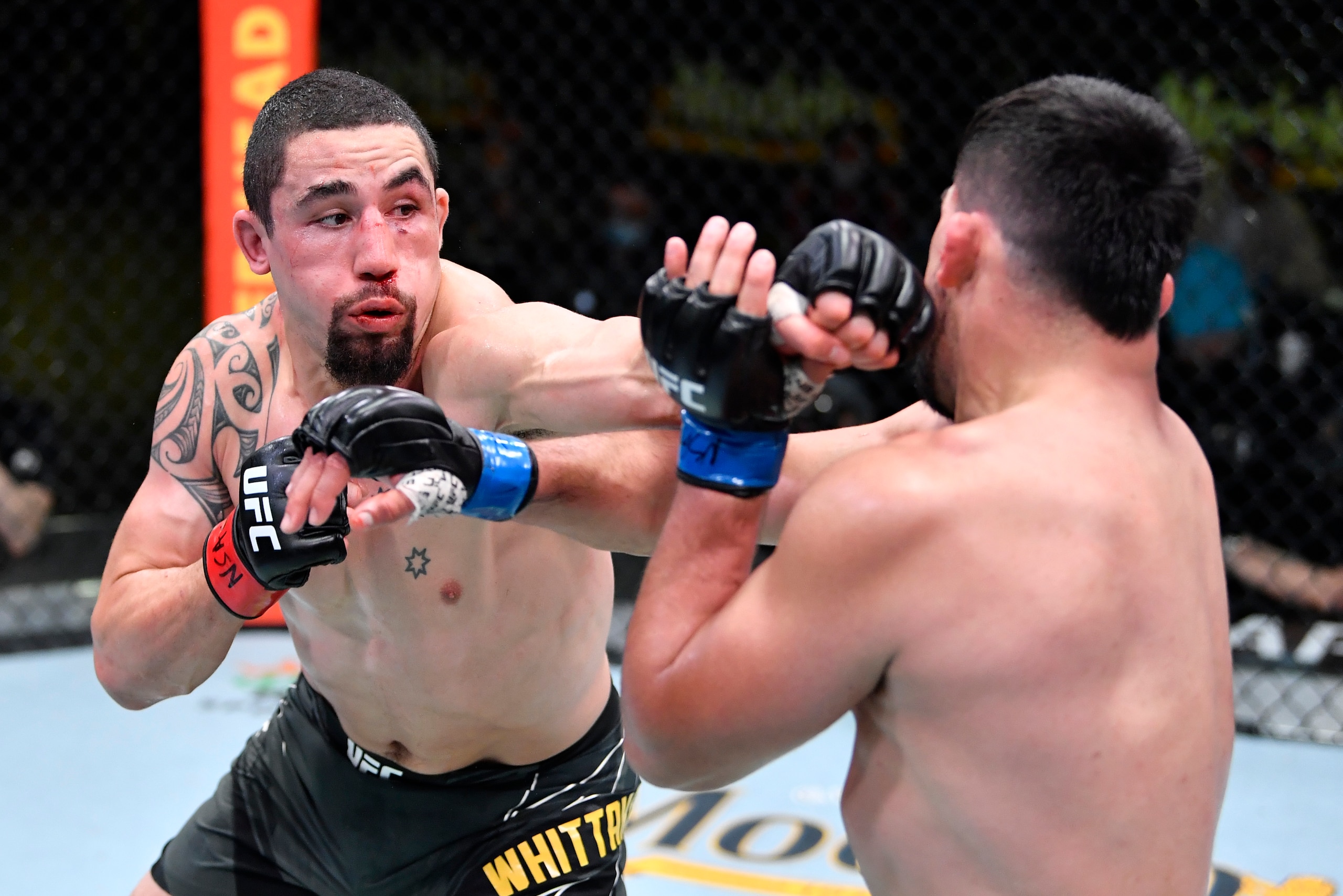
B/R: You've indicated Whittaker is not actually as good of a guy as he's made out to be. Whittaker responded by saying he thought you were "confused." Give me the scoop; what made you describe Whittaker that way?
Adesanya: I didn't say I didn't think he was a good guy. He's a guy. You guys are getting your wires crossed and not listening to what I said. There are no good guys here and no bad guys. Just people. People are capable of great good and great evil. I didn't say he wasn't a good guy. I said he's just a guy. I'm not confused. But if he wants to say I'm confused, that's great. But you have to listen before you speak.
B/R: Your coach said he'd prefer a five-round "whitewash" against Whittaker; i.e., you winning all five rounds, as opposed to a stoppage like last time. Are you thinking that too?
Adesanya: It's one of the options. There are different ways to win, and one of them is a washout.
It would be like I did it at the finale of The Ultimate Fighter 27 in 2018 against Brad Tavares. [Editor's note: he won the fight 50-45, 50-45, 49-46, meaning one judge gave Tavares one round.]
That was my first main event in the UFC, and I won from beginning to end. It's a pretty dominant way to win, maybe more dominant than a knockout. So something like that would be nice.
B/R: Analysts are always quick to point out your feinting, which is a deceptive movement or a feigned strike attempt designed to entice or confuse an opponent. Why is feinting such a big part of your game, and why is it so effective?
Adesanya: Feinting is as useful a tool as a jab. It's just a part of fighting. But it's something fighters at the highest levels aren't doing very often, and I find that appalling. But at my gym, City Kickboxing, we've changed the game when it comes to that.
There are many reasons to feint guys. You keep them guessing and occupy their brains while you work out what you're trying to do during the action. I'd say I'm one of the best in the world at it.
I think Whittaker tried to nullify that in the last fight, but I don't think it's gonna work this time because I'm a lot more patient and can do my feints and my looks, including some that no one's ever seen, and I'm going to implement them in this fight.
B/R: You like to train at various gyms in addition to City Kickboxing. What's one thing you've picked up from another coach outside your home gym?
Adesanya: One of the guys I train with is Dave Wood. He's a breath coach. Breathing is life, but a lot of people aren't really aware, and they breathe wrong, to be honest.
Working with him, he kind of opened my eyes. It's almost like taking a red pill when it comes to breathing. So I understand how to use my breath to my advantage rather than have it hinder.
B/R: In your light heavyweight bout with Jan Blachowicz, he had you on the ground for significant stretches. But against Marvin Vettori you stopped 10 takedown attempts and were able to get to your feet more quickly. Was that just a function of Blachowicz being larger, or was that something you worked on for Vettori?

Adesanya: I've always had strong takedown defense. Jan was just a light heavyweight. He was a much bigger guy. He also took advantage of certain key moments where I was overeager, and he got the takedowns off of those.
Like at one point when I hurt him, I rushed in and was overeager to finish him. People may not have realized he was hurt, but he was. He made a really calculated chess move with the takedown, and it succeeded. Well done to him.
B/R: With you, Kamaru Usman and Francis Ngannou all owning UFC titles, this is a renaissance for African MMA and African-born fighters. How do you assess the state of African MMA and what does it mean to you to represent your birth nation of Nigeria on the world stage?
Adesanya: That's something I hold near and dear to myself, representing my nation and inspiring a whole generation of fighters. There always seems to be a nation cultivating its martial arts scene. For example, you have lots of fighters from Russia surging and doing well as a nation. But Africa is a continent, and you have a lot of people learning [MMA].
Give it five or six years and watch. Once people really get a grasp on it, then everyone is going to see. Because it's going to be over for everyone else.
This exchange was edited for length and clarity.
.jpg?w=2560 "Mahomes Told Teammate to Leave Meeting")
.jpg?w=2560 "🚨 Week 8 AP Top 25 Poll")

.jpg?w=2560 "Baker Gets Glove From Rays 🧤")
.jpg?w=2560 "Steelers Roll Saints in Paris")
.jpg?w=2560 "5 Teams Eyeing Jonathan Taylor")

.jpg?w=2560 "NFL investigating Eagles")
.jpg?w=2560 "Updates from EVERY Game")