
Mikaela Shiffrin's Olympic Struggles Can Show Us All How to Learn from Failure
It was a moment so shocking it rendered the commentators speechless and left her competitors open-mouthed at the foot of the mountain in Yanqing, China. Mikaela Shiffrin, the most winning slalom skier in the world, skidded off course around the fourth gate in her first run of the Olympic slalom event Tuesday night, then missed the fifth gate and skied out.
An eerie sense of deja vu set in. On Sunday, 11 seconds into her first run of the giant slalom event, Shiffrin fell onto her left hip and skied out. In an interview with NBC after that run, Shiffrin called it a "disappointment" and said "I won't ever get over this."
.jpg?w=2560 "Chiefs Giants Football")

.jpg?w=2560 "Steelers Buccaneers Football")
How could this happen twice, we in the audience thought as we cycled through a full range of emotions. Surprise, heartbreak, sympathy, perhaps even a flash of anger at how unfair it seemed, concern that the weight of our own expectations for Shiffrin had crushed her. How do we get over this?
After her second Olympic start went the same way as the first, Shiffrin sat curled in a ball in the snow, clearly devastated, on the side of the course for 25 minutes. The camera, seemingly uncertain what to do with a sedentary Shiffrin, zoomed in and out on her, never quite focusing.
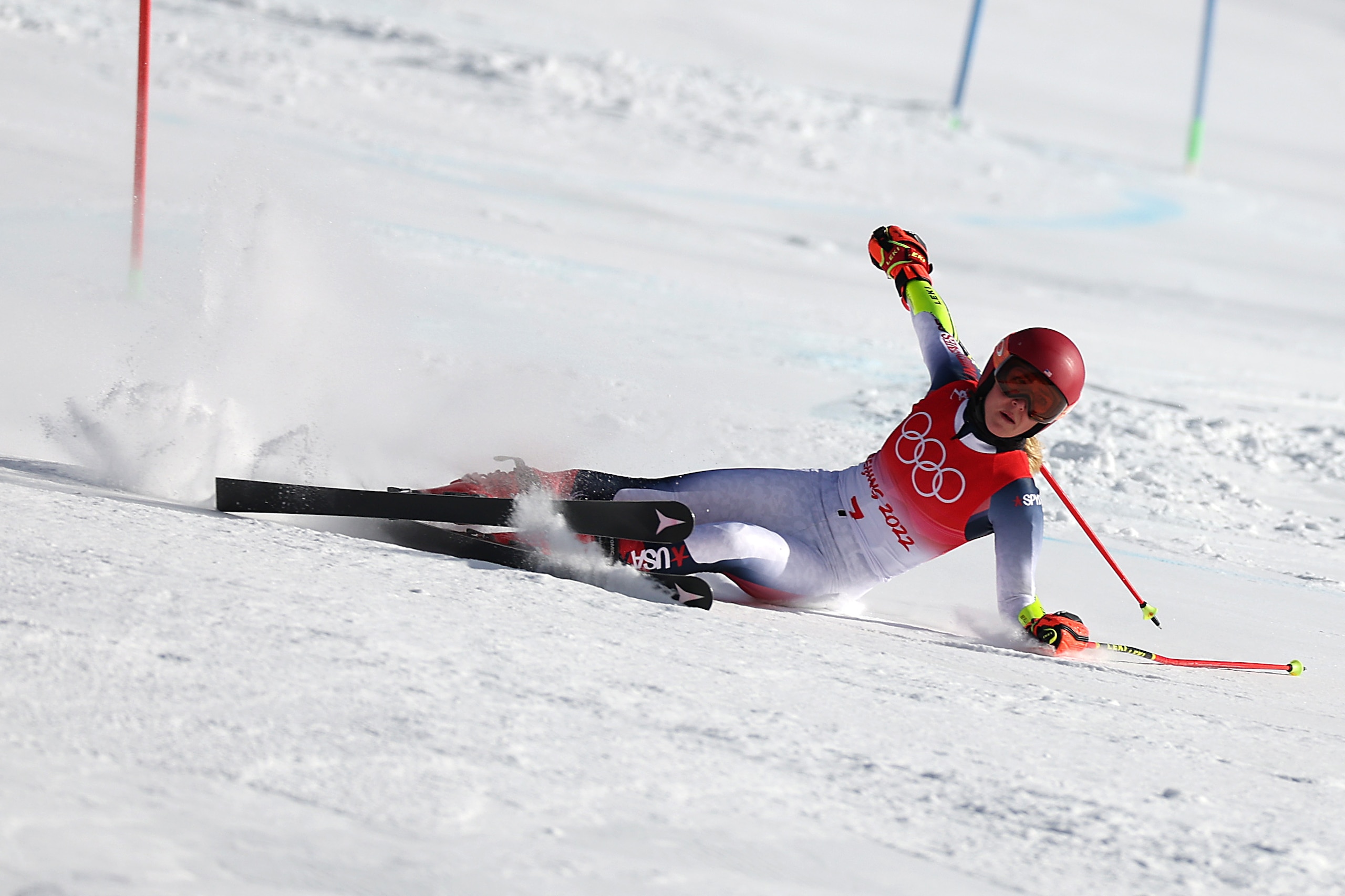
Her competition kept going, flying by in a blur as she remained motionless. It was an unprecedented moment both for us as viewers and the commentators, who kept repeating the words "shocking" and "shocker" but had little else to contribute with their primary storyline of the evening gone in five seconds.
As spectators, we, too, feel unfocused. Where do we look now? Do we zone in on Shiffrin's next three planned starts, in the super-G on Friday and the downhill and the combined—events where her reputation may carry less weight than it did in her specialties, and try to block out what we have seen in the slalom and giant slalom? Is that what we hope Shiffrin herself does?
Or do we take this vulnerable Shiffrin in and contemplate what it means that we watched an athlete reveal, as it happens, the shock of failure? Can we accept that we simply do not know what will come next, and can we stop guessing?
Skiers "DNF" all the time. But not Shiffrin. She had not DNF'd a giant slalom race in four years and 30 starts. She had a similar record in the slalom going back to 2018, although in what now seems a grim foreshadowing of her Olympic performance, she straddled a gate in a World Cup race in January and skied out.
"Pretty much everything makes me second-guess like the last 15 years, everything I thought I knew about my own skiing and slalom and racing mentality," Shiffrin told NBC once she left the side of the course. Her entire career, she said, was now under review in her brain because of one slip.
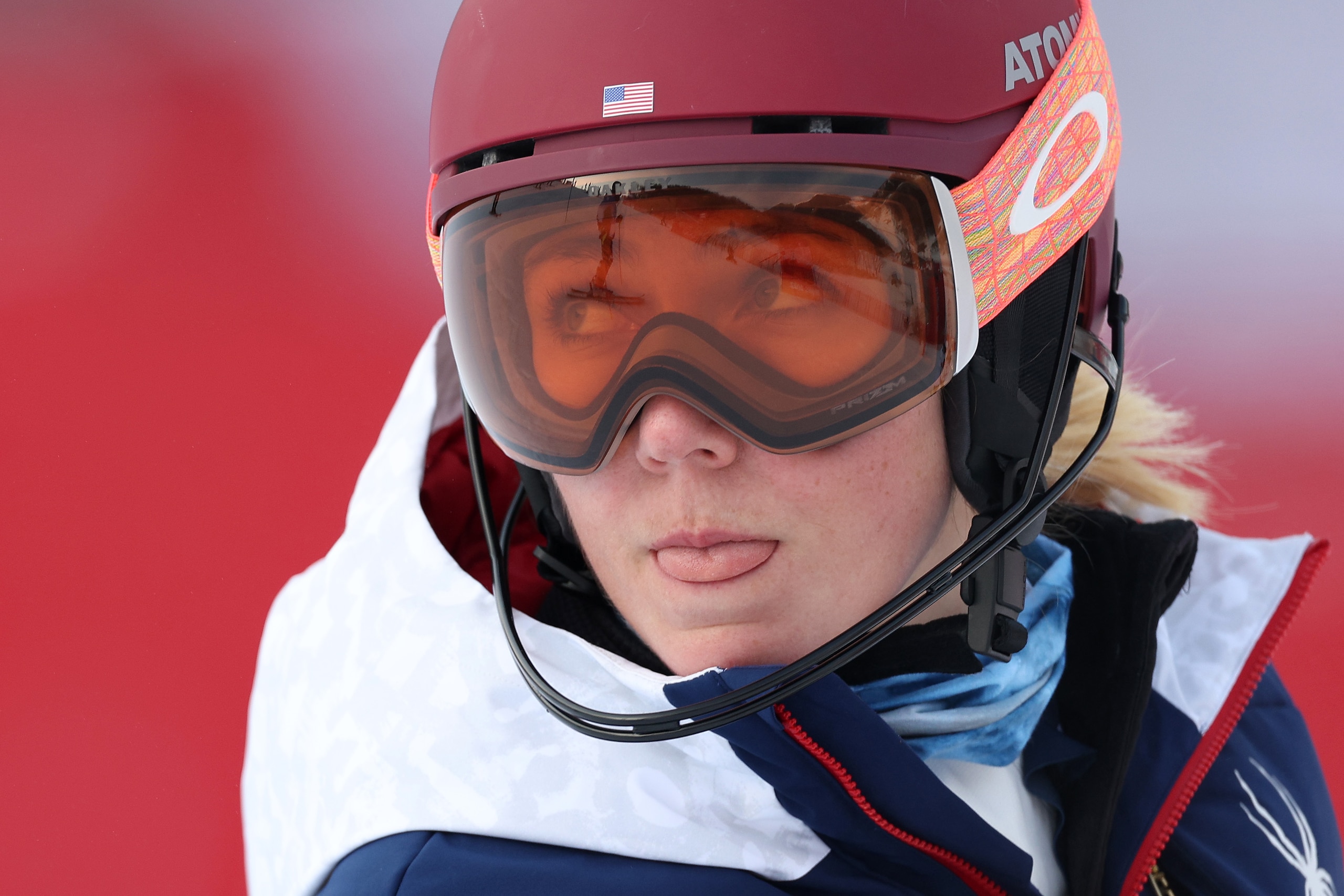
Failing is a big buzzword these days. Schools talk about being safe spaces for kids to fail before they enter the real world. Best-selling books tout the value of failure to make you appreciate success. But what we saw in Shiffrin Tuesday night was an acknowledgment that failure, in the moment, really hurts. We watched her, sitting in the snow, begin to piece together what this failure—at a level where she rarely failed—meant for her.
Athletes have been speaking up more frequently, sometimes amid a moment of crisis, about how mental health affects their physical game.
Last summer, we saw Simone Biles abruptly stop competing in the middle of the women's gymnastics team final. Shortly thereafter, she revealed she was suffering from the "twisties," gymnastics' version of the yips. Her body knew the moves she needed to perform, but her mind was blocking them.
Biles tweeted a message of support to Shiffrin yesterday.
And we watched Naomi Osaka refuse a press conference, then withdraw from the French Open after being fined $15,000 for doing so. Osaka had previously cited a need to protect her mental health by avoiding the press, saying that the questions reporters asked sometimes instilled doubts.
Michael Phelps spoke openly about how his suicidal ideations following the 2012 Olympics motivated him to seek treatment. His teammate Allison Schmitt also opened up about her depression.
And we heard Chloe Kim, another returning Olympic gold medalist in these Winter Games, speak about how her success and the spotlight it threw on her life became overwhelming. Anxiety nearly led her to quit snowboarding altogether after her 2018 win in Pyeongchang, she said, and it was only taking a break from the sport and attending college for her to come to terms with seeking mental health treatment.
Shiffrin has acknowledged that grief has complicated her relationship with skiing. She said before the Olympics that her father's death in 2020, in conjunction with a back injury and the global coronavirus pandemic, led her to stop skiing altogether for 300 days.

"I just want to go to bed and not really care," she told Greg Bishop of Sports Illustrated about her mentality toward the sport that made her a star on the slopes and off. But she returned that fall, focusing on the technical events, and this season resumed competition in all five disciplines.
She had a fierce but seemingly friendly rivalry with Slovakian skier Petra Vlhova in the lead-up to the Olympics, one that seemed to reinvigorate her. Vlhova was the eventual gold-medal winner in the slalom Tuesday.
Now Shiffrin has a new challenge to overcome. She said she would never get over the disappointment. But she also told reporters in an unusually candid 20-minute session after the slalom event, through tears, that she "would really like to call" her late dad, who "would probably tell me to get over it."
For some watching Shiffrin, that approach would not be motivating. But others might find inspiration in it. And that is the benefit, for all of us, of seeing athletes acknowledge that sports go far beyond the body and that when a mental game is off, there are many ways to cope—whether that is therapy, or not doing press conferences, or putting your head down and working through it.

We are observing as Shiffrin finds her way in real time. It is as remarkable as the world's top skier DNF'ing two races in a row at the Olympics is shocking.
We are so used to seeing the Olympics as binary: Either you win, or you lose. It has been our narrative of sports for so long. But we have seen, in Tokyo and now in Beijing, a shift in how we view struggling athletes. No one's struggle is the same, and the way Shiffrin copes with disappointment will not be how Biles did or Osaka or Phelps. But all of these athletes have helped expand our understanding of sports, of winning and losing, of success and failure.
Just after Shiffrin's aborted slalom run, while she sat motionless in the snow, a Visa ad featuring the skier and other Olympians ran on NBC. "Finding new finish lines," the tagline read. It seemed a bit cruel in the moment for the skier who had been unable to find any finish lines thus far. But whether she finds one at the Alpine Ski Center in Yanqing or not, she may have helped someone else see that failure is not a finish line.
.jpg?w=2560 "Titans Colts Football")
.jpg?w=2560 "AP Poll Top Five Week 9")


.jpg?w=2560 "NFL investigating Eagles")
.jpg?w=2560 "Steelers Roll Saints in Paris")
