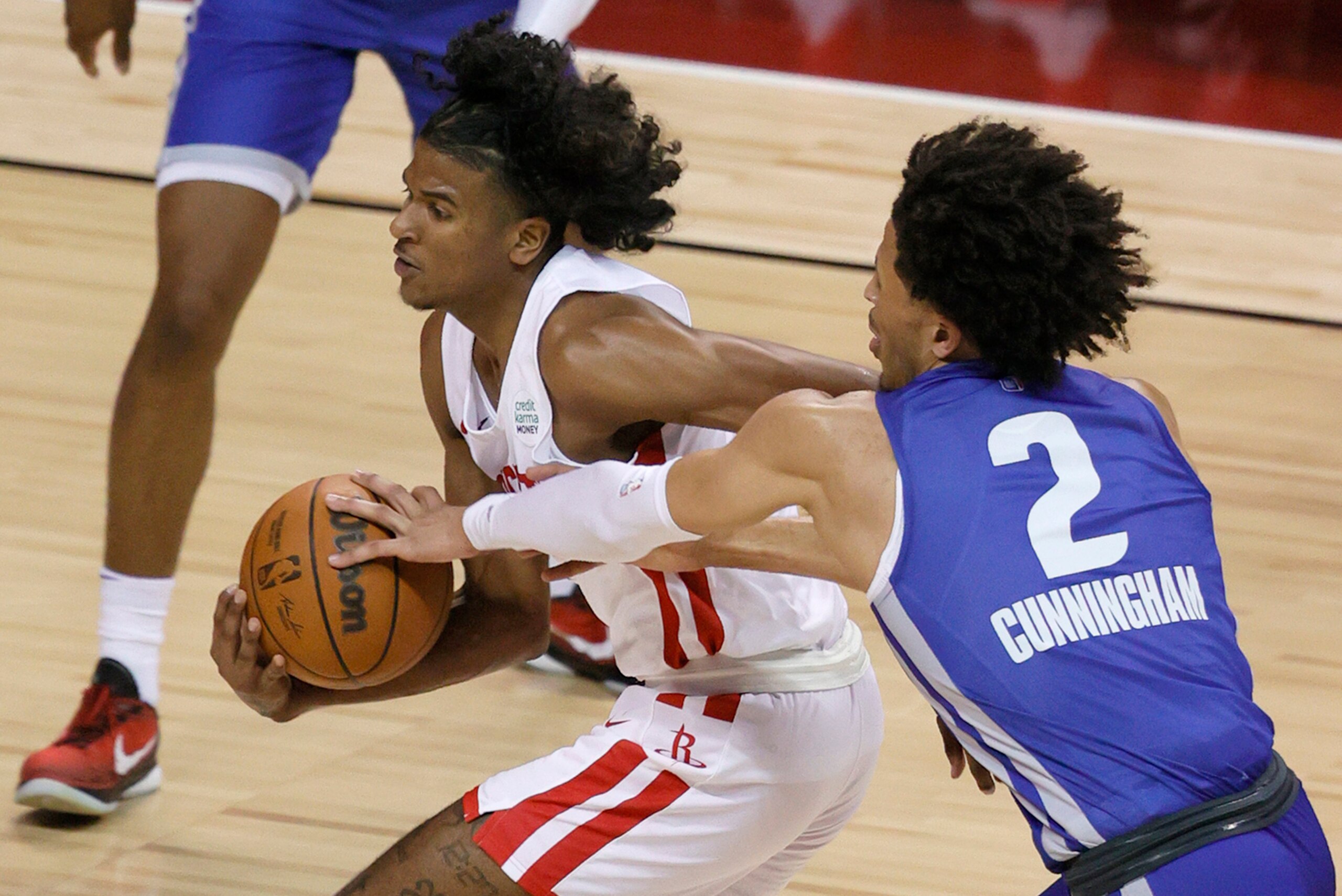


There is only one thing for us to do now that the 2021 NBA Las Vegas Summer League is three or four games old for each team: Check in with every top-10 draft pick.
Nearly all of them have seen extensive court time so far. Josh Giddey, the sixth overall selection, is the lone exception, and even he saw the floor for a few minutes before suffering a left ankle sprain. Maybe I still have pandemic brain, but it feels like roughly forever since every top-10 draft prospect saw run in Sin City. Hence the impulse for a progress report.
Do not take these report cards as referendums beyond recall. They are merely thoughts and feels and questions based off first impressions. They are meant to change. They are also meant to take the newness of everyone into account.
Profound summer-league conclusions are for romantics or controversy artists. This aims to hover somewhere in the middle, indulging the anything's possible-ness incumbent of exhibition outings and de-emphasizing the box score without pretending that every rookie is actually perfect and on the super-duper-mega-star track.
10. Ziaire Williams, Memphis Grizzlies
1 of 10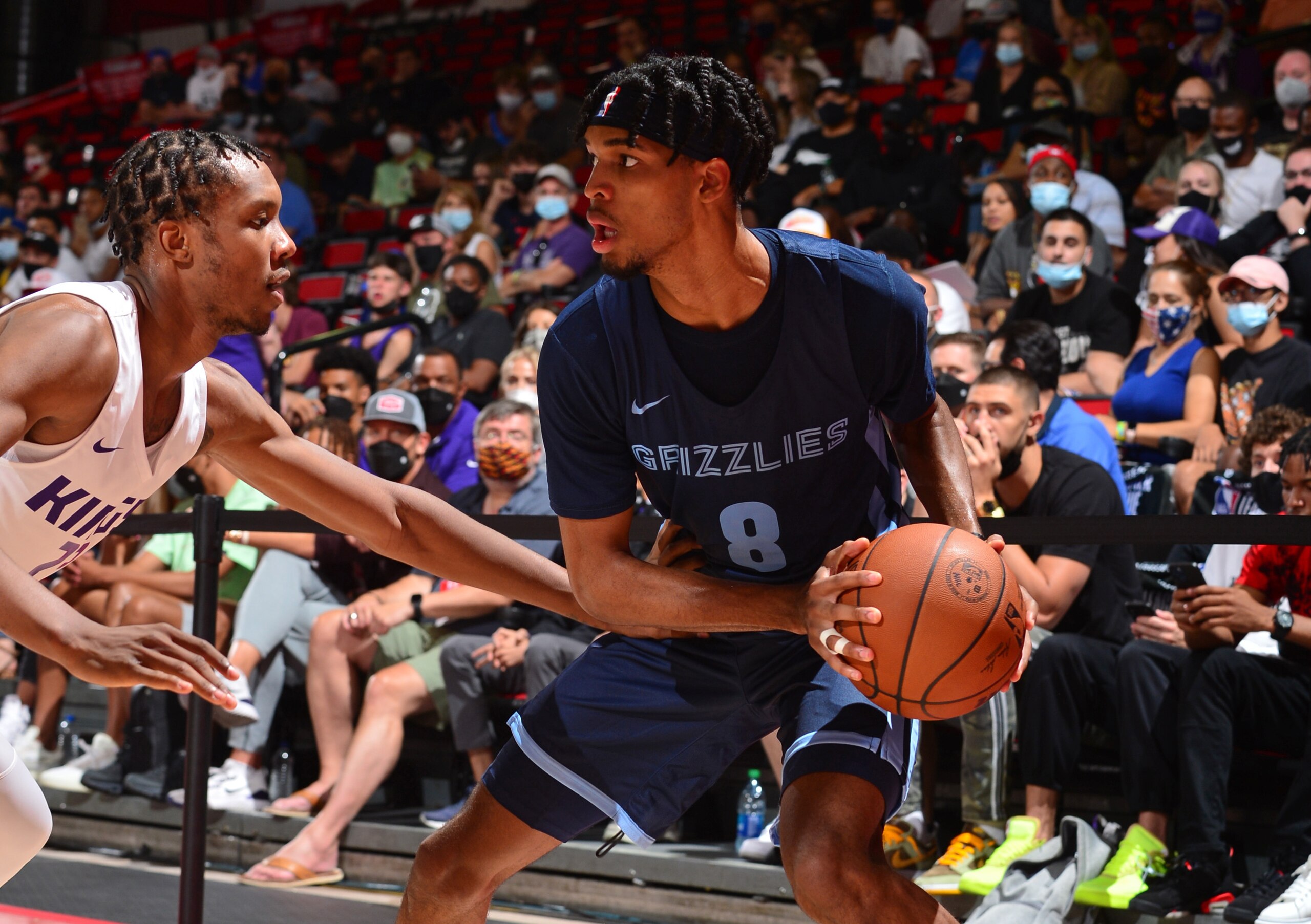
Pleasant Surprise: Game-readiness
Maybe this shouldn't even count. The idea that Ziaire Williams needs extensive time to marinate was predicated on taking his performance with Stanford at face value.
Shooting 36.0 percent on two-point jumpers and 29.1 percent from deep, per Hoop-Math, still doesn't look good. Ditto for his averaging more turnovers than the assists. But college basketball, like the rest of our world, unfolded amid a global pandemic. And Williams played in California, a state that had some of the most rigid restrictions in place. Couldn't his struggles just be a symptom of relative limitation?
If how Williams has played so far hints at what to come, they absolutely will be.
Though his most recent outing against the Sacramento Kings saw him miss all six of his three-pointers, his offensive feels has flirted with divinity. He has looked at home working off the baseline, dribbled into some jumpers, taken drives all the way to the rim, got off catch-and-fire treys and even uncorked an impossible-to-guard step-back.
Biggest Question: What will his role be in Memphis next season?
Trading Jonas Valanciunas, taking on the salaries of Steven Adams and Eric Bledsoe and doing absolutely nothing during free agency suggests the Memphis Grizzlies are all-in on the big picture and the developmental window it creates.
Then again, they've obliterated expectations in each of the past two seasons, so who knows.
Regardless of their immediate direction, their angle with Williams is fuzzy. He should be able to give them minutes across the 3 and 4, but they're hardly barren at those spots. The Grizzlies have to this point treated Jaren Jackson Jr. like a power forward, which is also where Xavier Tillman logged a chunk of his minutes last season. The wing rotation, meanwhile, includes a steady mix of Kyle Anderson, Dillon Brooks and Desmond Bane, the latter of whom has demanded a more prominent role with his play in Vegas.
So, like, where does Williams fall amid this hodgepodge? It gets a little easier hashing out a spot in the rotation if Jackson mans the middle more often, but even then, do the Grizzlies have the stomach to withstand Williams' learning curve? Figuring out how to incorporate a bunch of playable talent into the rotation is a great problem to have, but it's a problem all the same—and one made more complicated by Williams' summer-league contributions.
Overall Grade: B+
9. Davion Mitchell, Sacramento Kings
2 of 10
Pleasant Surprise: Off-the-dribble three
Davion Mitchell drew comps to Patrick Beverley coming out of Baylor. They were not unwarranted. He profiled as a similar player in the NBA: someone under 6'3" who could defend much larger and would, in the absence of top-shelf playmaking, make his dent off the ball.
Beverley no longer feels like the most apt comparison Mitchell. He is already more of a floor general than Beverley and, in Vegas, has revealed a serviceable off-the-bounce jumper.
Each of his four made threes in Friday's win over the Grizzlies went unassisted. They're not all straightaway looks he moseys into, either. He has torched defenses all week with glimpses into his step-back J.
Biggest Question: Will the Kings play a three point guard lineup?
Oh, how times have changed in such a short amount of time. The Kings turned themselves into a Twitter punchline by drafting the 6'2" Mitchell when they already had De'Aaron Fox, Tyrese Haliburton and Buddy Hield. Flipping Delon Wright for Tristan Thompson didn't initially shift anything.
Now, here I am, wondering whether Mitchell is showing enough in Vegas to mandate he play beside both Fox and Haliburton. The answer, in my book, should be yes.
Mitchell has been that convincing. His on-ball defense isn't exhaustive; it's murderous. He doesn't end possessions; he erases people from the planet. Combined with his mix of set and off-the-dribble shooting, he should mesh with both Fox and Haliburton. That 1-2-3 combo will want for size, but I seriously, totally don't give a damn. Haliburton is 6'7" and Mitchell is muuuuuuch better suited to defending wings than Hield.
Make it happen, Sacramento.
Grade: A
8. Franz Wagner, Orlando Magic
3 of 10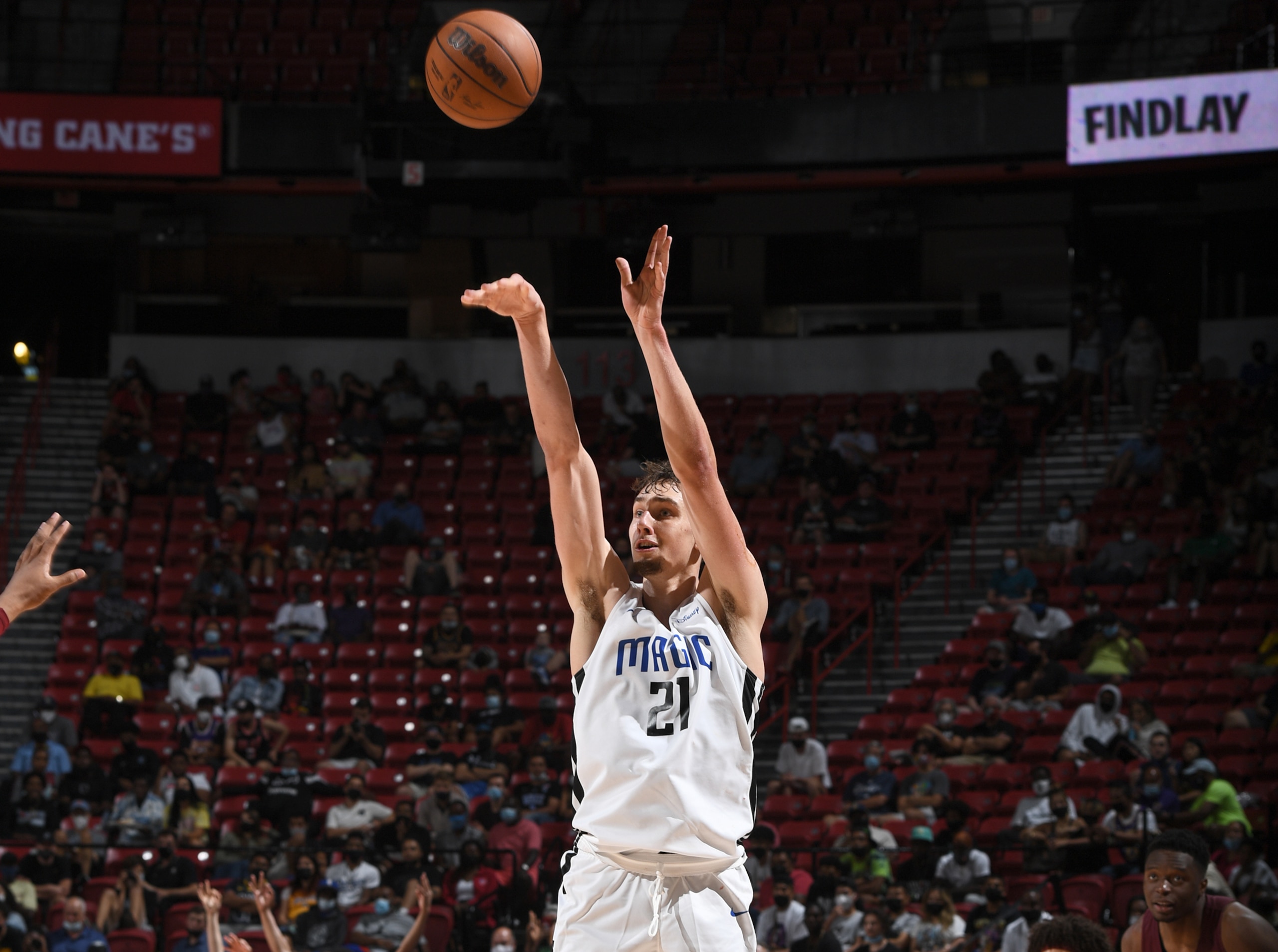
Pleasant Surprise: Decision-making in space
Franz Wagner isn't putting together a summer league to remember—not for the right reasons, anyway. But his performance isn't without its silver linings.
Touted as more of a three-and-D prospect coming out of Michigan, he has unveiled layers to his offensive game. And that's huge, because his three-ball isn't currently falling.
Depending too much on his right hand will get Wagner in trouble at the next level. The Orlando Magic don't have enough bankable floor spacing for him to work solely outside of traffic. But he has demonstrated more wiggle on the ball when afforded breathing room.
Most recently, during Thursday's shellacking against the Boston Celtics, he shot-faked into an explosive baseline drive and froze the defense with twitchy shoulders and head pumps off the bounce. Both plays saw him use his strong hand while going right. But reliance isn't necessarily presage to predictability. He has some variance in his bag.
Biggest Question: Will the three-ball start to fall?
Through three games, Wagner has attempted 12 threes. He's made one of them.
That's miles from ideal, particularly when he's not subsisting on self-engineered, contested triples. He is missing wide-open threebies, with the same long, low release that contributed to his pre-draft red flags.
Optimists can and should point out that Wagner isn't grossly whiffing on these looks. Most of his misfires are on line and hitting the front of the rim. His clip on wide-open threes should climb in time—though this is certainly a situation in which he may need to quicken his motion and/or change his point of release if he's going to hit his absolute peak.
Overall Grade: C-



7. Jonathan Kuminga, Golden State Warriors
4 of 10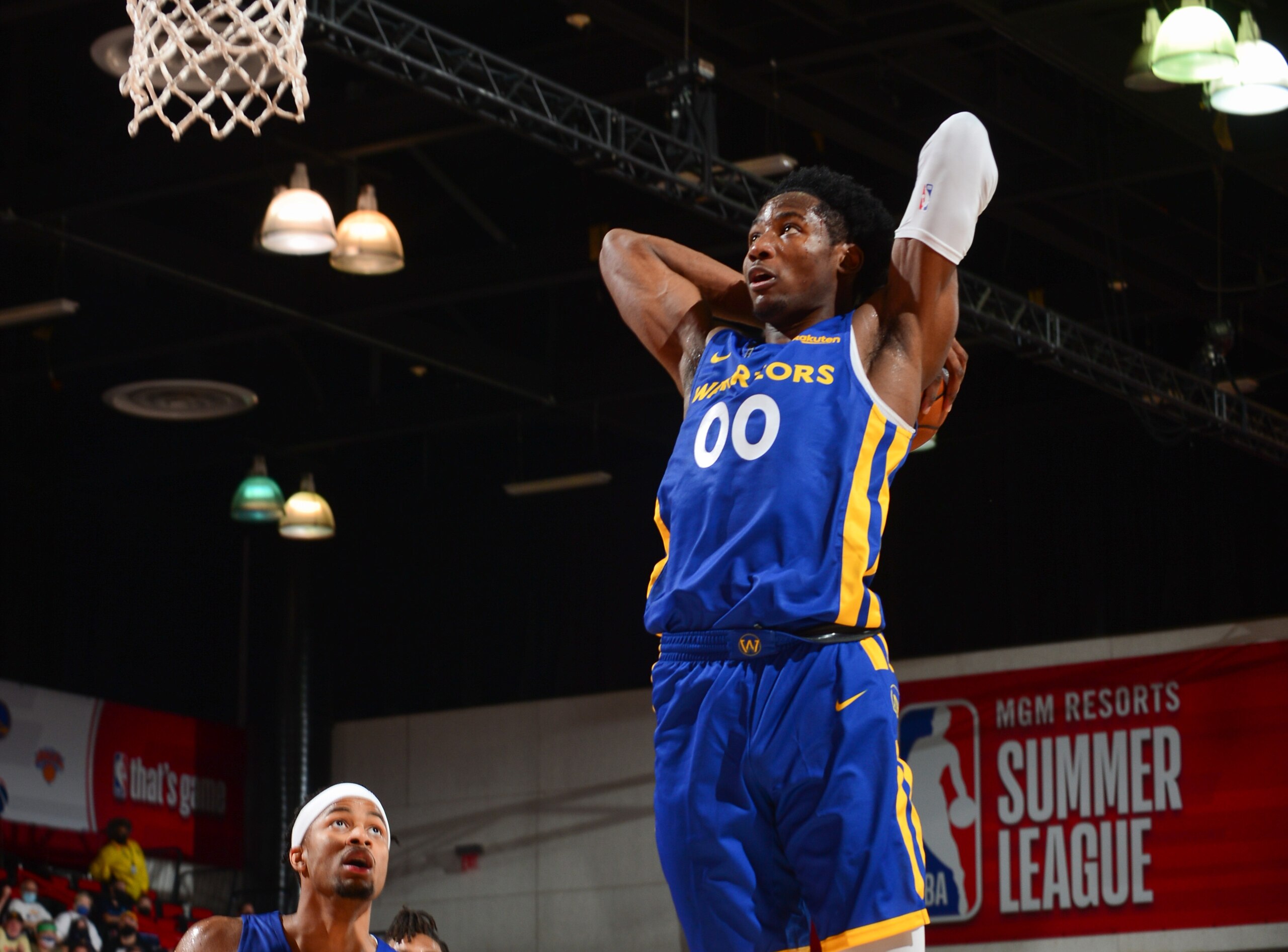
Pleasant Surprise: Holy finishing
Aspects of Jonathan Kuminga's game—most notably his shooting—remain a project. His finishing, on the other hand, looks game-ready.
Kuminga has spent his time in Las Vegas converting baskets while going through and around brick walls. He should be a devastating rim-runner if the Golden State Warriors have enough shooters on the floor and is reading defenses at a higher level than advertised. The frequency with which he's putting the ball on the deck and changing the angle of attempts at the basket and around bodies is prophetic.
Biggest Question: How much will the Warriors lean on him?
This is not the most surgical question, but it bears asking all the same. The Warriors are the rare team trying to incorporate three lottery picks from the past two drafts while reopening their title-contention window.
Having Stephen Curry, Draymond Green and, eventually, Klay Thompson should limit their reliance on the kiddies for playmaking and scoring. (Moses Moody, drafted at No. 14, might actually be the most immediately important youngster.) But development takes reps, and only so much can be done by shuttling players to and from Santa Cruz.
Golden State's roster isn't set up to tether its two primary rookies to the G-League. Its depth chart goes maybe four or five bodies deep, at full strength, of proven players who can log heavy minutes and make a high impact.
Whether that means Kuminga will be treated as a key rotation player or brought along more slowly is a matter of course. The Warriors are, for now, trying to juggle two separate windows, and it isn't yet clear how committed they are to intertwining the two.
Overall Grade: B+
6. Josh Giddey, Oklahoma City Thunder
5 of 10
Pleasant Surprise: He scored within the first 15 seconds of his summer-league career
This is cheating. But it comes from a good place.
Josh Giddey logged just over five minutes before suffering a left ankle sprain that has sidelined him ever since. On his first possession of the game, though, he scooted around a ball screen, scampered down the lane and finished a two-handed slam. That's not exactly the first impression you'd expect from someone billed as extremely pass-first coming out of Australia.
Biggest Question: Can he be a consistent scoring threat?
Summer league projected as the perfect environment for Giddey, a setting in which he'd be gifted full control over the offense and ample opportunity to address concerns that he's too passive of a scorer.
Welp.
Assuming his left ankle sprain isn't serious and his absence is more precautionary, the 18-year-old should get plenty of chances to steward the Oklahoma City Thunder. That's the benefit of playing on a team not, let's say, actively chasing wins.
At the same time, summer-league settings are unique. Giddey would've been The Guy. At worst, he'd have been Theo Maledon's Sidekick. His reps will be somewhat curtailed by the former and Shai Gilgeous-Alexander in the regular season. (But not Kemba Walker!)
Anyway...Will Giddey consistently look for his own shot out of the pick-and-roll? Does he have an off-the-dribble three we don't know about? Will defenses respect his range and scoring enough to do more than play all the way back on him? We're no closer to knowing the answers.
Put another way: Injuries suck.
Overall Grade: Incomplete
5. Jalen Suggs, Orlando Magic
6 of 10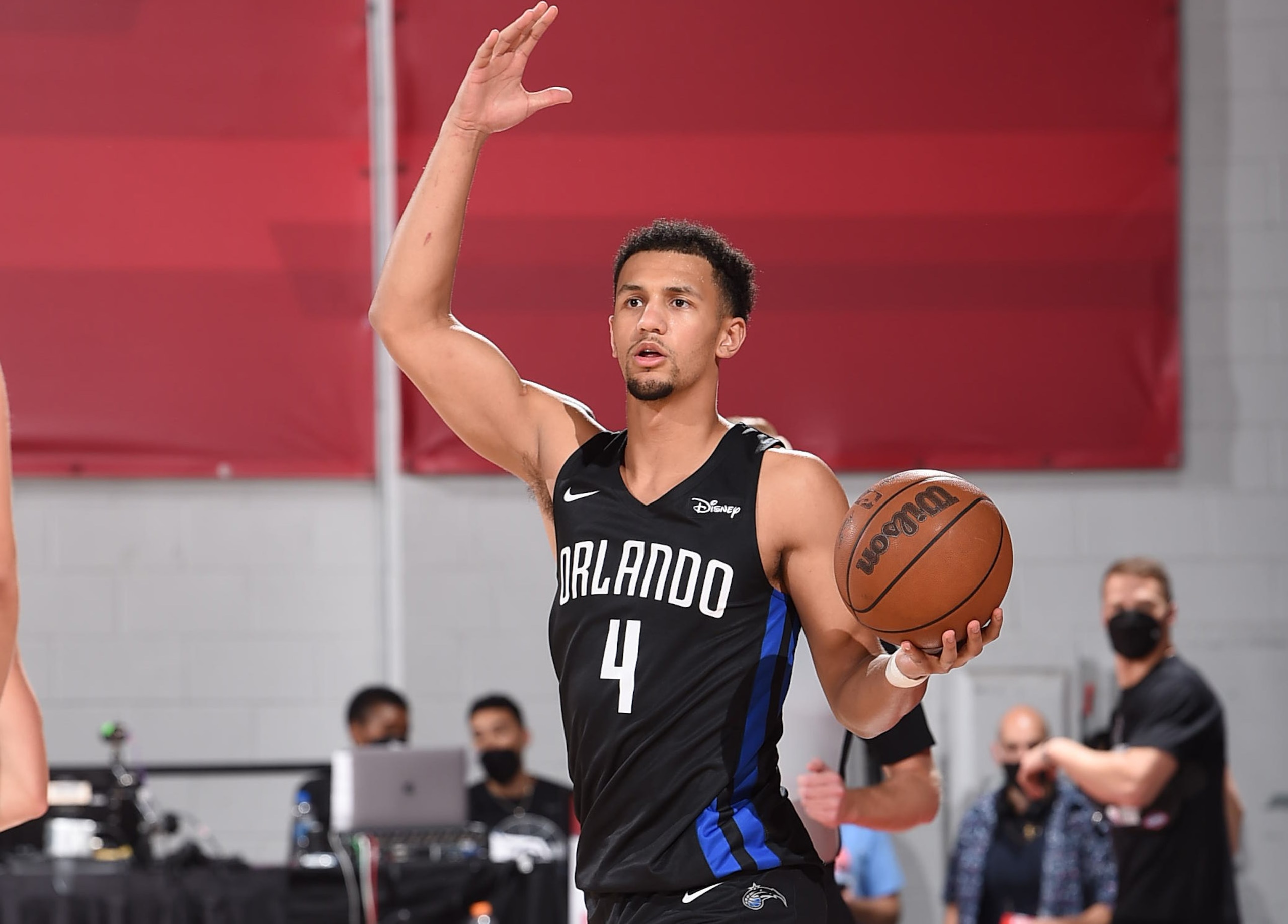
Pleasant Surprise: Offensive balance
Jalen Suggs always figured to contend with Jalen Green for "Best Scorer of This Draft Class" honors. (Related: Cam Thomas will want a word if he gets regular-season minutes.) But that competition can imply one-track usage. And Suggs is not just a scorer.
The methods by which gets buckets vary. He compiled a highlight reel's worth of made from-scratch jumpers during his summer-league debut. Then, in his second outing, he showcased a capacity to play off others, relocating around the arc and barrelling through cracks and chasms in the defense away from the ball.
That second game, a loss to the Cleveland Cavaliers, also saw Suggs cake in more table-setting. He sprayed kick-outs and even hinted at a little misdirection in the form of a no-look pass the led to an easy two under the basket.
Ample opportunity is Suggs' rite of arrival. The Magic don't have any other pure bucket-getters on the roster. They need him to be high volume. But the role that should await him is not merely a byproduct of circumstance. It's one for which he looks (mostly) ready.
Biggest Question: How will he handle physical defenses?
Suggs never profiled as someone who would enter the league and get to the line in droves. Even by that standard, he seemed to fade for possessions at a time when facing defenses that move him around.
Cleveland had success forcing the ball out of his hands, and Suggs' drives were too compromised on the occasions he did try to blaze through contact. Life won't change much for him during the regular season. The Magic don't have many other shot-creators to spell him, and with limited spacing around him, his is an approach that, right now, looks like it'll stall out well before the rim.
Overall Grade: B+
4. Scottie Barnes, Toronto Raptors
7 of 10
Pleasant Surprise: Fluency Off the Bounce
Pay no mind to Scottie Barnes' shooting splits. Evaluating new kids on the block has to go beyond raw returns. For those in primary roles, quality efficiency should be viewed as a pleasant surprise, not the immediate standard.
That Barnes can work off the dribble so seamlessly is more telltale than his percentages from the floor. He doesn't just need unoccupied spaces to navigate. He has gone right at guys, created separation with his shoulder, hit shots going away from the basket, flashed a neat-o push shot and even given us a looksy at change-of-direction handles.
Everyone, everywhere, should still be thinking about the turnaround jumper he buried over Jonathan Kuminga after faking left. If he ever melds this all-encompassing attack mode with more consistent shot-making—he looks like he'll convert standalone threes in time—the Toronto Raptors should have another cornerstone on their ends.
Biggest Question: Do his minutes need to be monitored next season?
Barnes has shown signs of fatigue at various points in summer league—stretches in which he doesn't account for defenders catching up to him from behind, settles for shots that'll make Raptors head coach Nick Nurse's eyes pop out of their socket and racks up misses that aren't even close.
He has labored through moments of disengagement, too. After leaving the Raptors' Thursday night game against the Houston Rockets for a beat, he looked out of sorts and not particularly aggressive and didn't get his first made field goal until the fourth quarter.
Conditioning is a gradual process, if that's even his issue. But given some of his summer-league lows, Toronto may need to monitor his minutes like a hawk as it brings him along and expects him to remain hyper-active on defense.
Overall Grade: B
3. Evan Mobley, Cleveland Cavaliers
8 of 10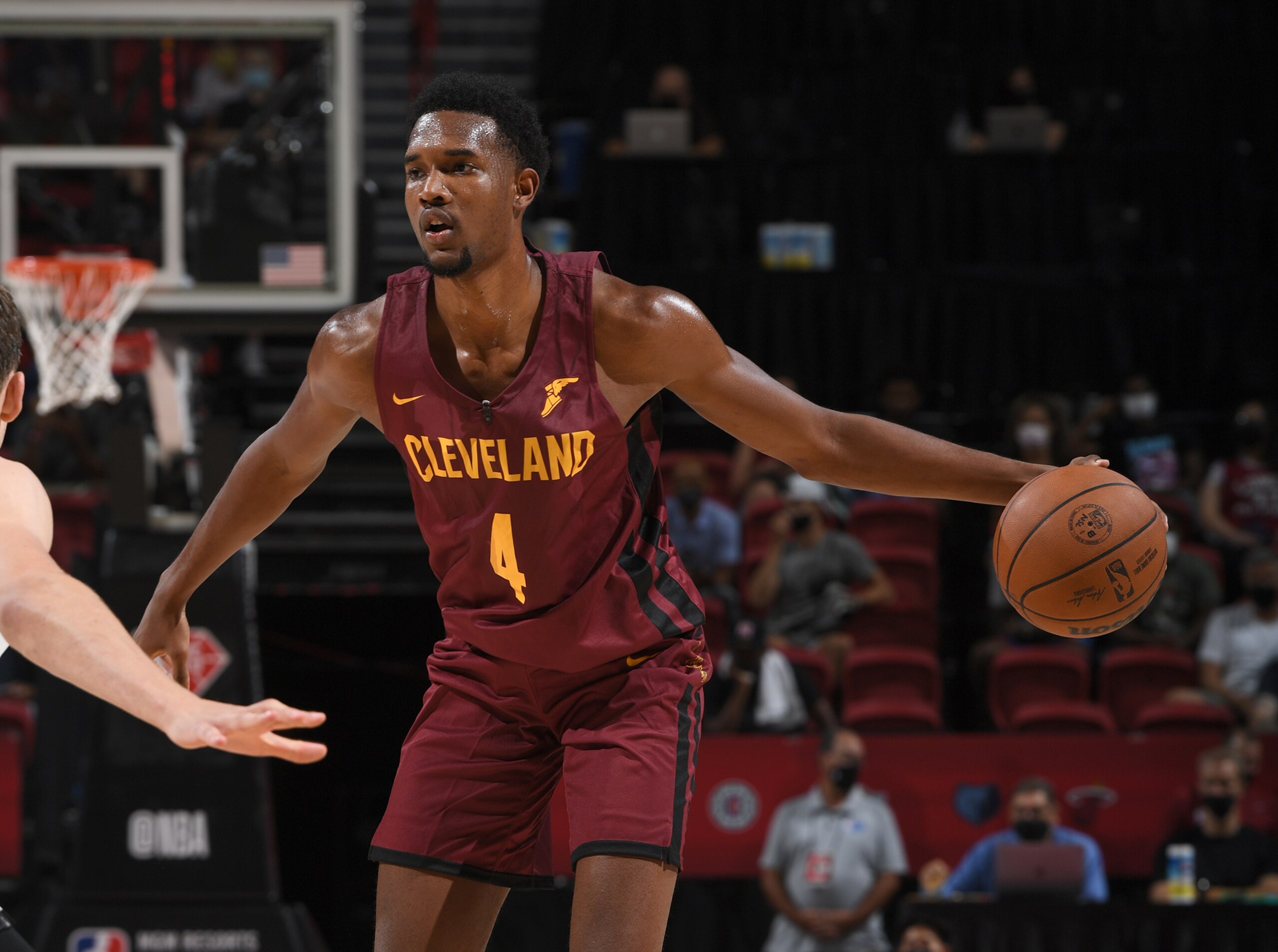
Pleasant Surprise: Playmaking
Four summer-league games are not enough to declare Evan Mobley the next Point Big Man. With that in mind: Don't rule it out.
Mobley's feel for setting up teammates defies his size. The Cleveland Cavaliers have him spearheading fast breaks and initiating the half-court offense from above the break. He's responded by flinging an array of swanky and witty dimes.
Standstill tosses, pitches on the move, leading teammates open, slick bounce passes, pick-and-roll orchestration—he does it all. His comfort launching jumpers off the dribble only strengthens his facilitation. Defenses cannot plan around a seven-footer with the handle, vision and face-up scoring chops of a wing.
Biggest Question: How will his offense look next to Jarrett Allen?
Joining the actual Cavaliers will invariably help Mobley. Nobody can hope for a 20-year-old big to come in and steer the offense. His role will be streamlined beside Darius Garland and Ricky Rubio, allowing him to focus more on finishing rather than creation and, thus, dabble in the best of both worlds to start his career.
Still, while Mobley is willing to sling threes and can fire over the top of defenders off the bounce, his floor game doesn't unfold with the speed of a guard. Not yet. Maybe not ever. His jump shots are not exactly givens right now, either.
He is still best suited at the 5, which is perfectly fine. But he will have to soak up reps at the 4 after Cleveland signed Jarrett Allen to a five-year, $100 million deal. Neither Mobley's offensive utility nor defensive mobility will be as stark of a mismatch in dual-big lineups. This doesn't mean the frontcourt partnership is doomed. But it does mean the extent to which he can coexist beside Allen will dictate how the Cavs proceed in the years to come.
Overall Grade: A-
2. Jalen Green, Houston Rockets
9 of 10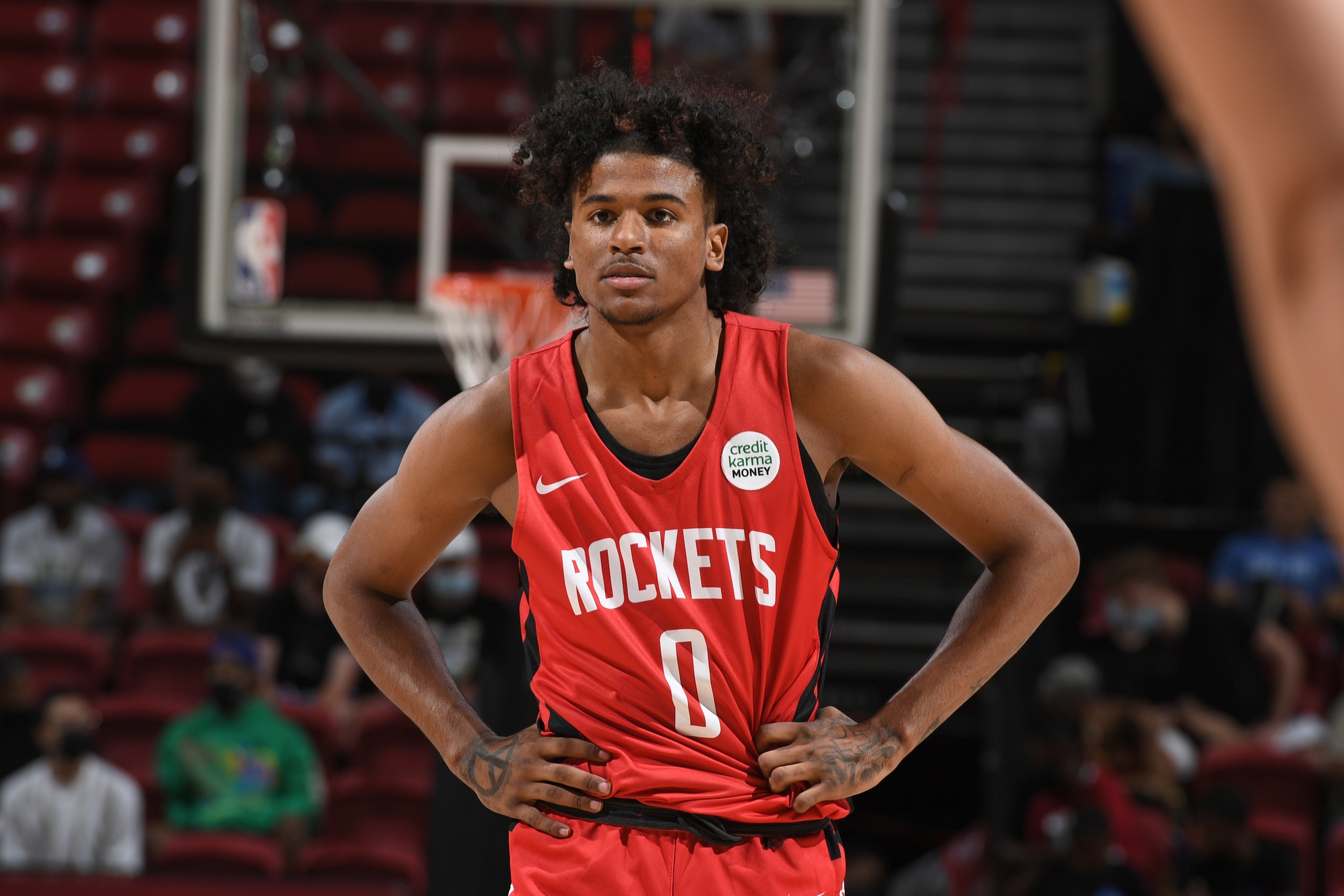
Pleasant Surprise: Efficiency
A right hamstring flare-up has limited Jalen Green to roughly 2.5 appearances, but that's all he needed to leave his mark.
His shooting splits suggest a role without frills. He's slashing 51.4/52.6(!)/92.9 for crying out loud. But his offense is coming within superstar context: tough jumpers, brain-bending sidestep threes, physical finishes, the whole nine.
Calling him a human bucket undersells his body of work. His scoring was known. This marriage of volume and efficiency, on this stage, having faced off against Cade Cunningham, is nothing short of revelatory.
Biggest Question: Will his offense IMMEDIATELY translate?
Using Green's detonations against him feels lame. Full stop. It's also a fair question
Summer league is almost supposed to be Green's playground after spending last year with the G-League Ignite. Once more, with feeling, the efficiency he sustained amid his mode of operation is bonkers. But his shot selection lends itself to streakiness. Tracking the ebbs and flows of his rookie-year performance will be an interesting exercise.
Count me among those who believe he'll be mostly OK. He may not shoot infinity percent on off-the-dribble threes, but he did a rock-solid job toggling between focal-point usage and complementary finishing. He can space the floor around other ball-handlers and will hotfoot his way down the lane after giving up the ball.
Playing beside other snazzy shot creators on the Houston Rockets—Eric Gordon, Kevin Porter Jr., John Wall, Josh Christopher—should enable him to balance out his scoring.
Overall Grade: A
1. Cade Cunningham, Detroit Pistons
10 of 10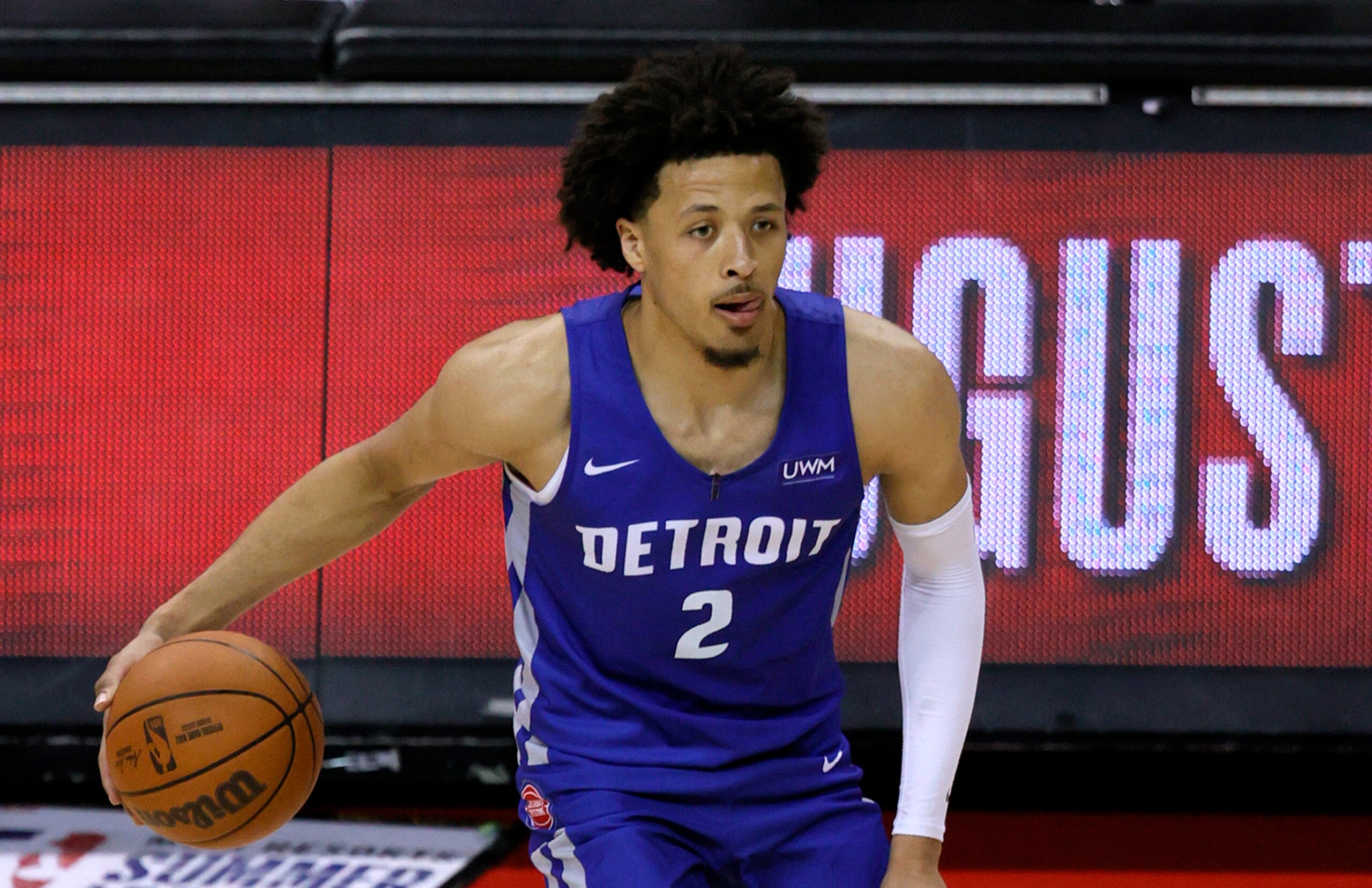
Pleasant Surprise: Off-ball feel
Plenty of people wondered how Cade Cunningham would work within an offense that also featured Killian Hayes. (Aside: If you're a masochist, go ahead and check out Killian Hayes Twitter takes.) That concern, while fair, no longer seems like a real issue.
Stepping into catch-and-shoot jumpers seemed reflexive for Cunningham and doesn't appear content to stand stationary when dotting the corners. The Detroit Pistons should try to get him moving off the ball even more, if only for duck-ins, but the dynamic between he and Hayes—and, for that matter, any other ball-handler—will be just fine.
Bonus point: His off-ball effectiveness on defense is similarly tantalizing. He already has a good feel for party crashing passing lanes without losing sight of everything else that happens around him.
Biggest Question: Will turnovers be a yearlong issue?
Cunningham's size, handle, patience and overall vision should allow him to throw whatever pass he wants. His line of sight cannot be obscured by trees, and he's capable of hitting all sorts of angles.
Right now, though, he's too often leaving his feet. That, in turn, has seemed to muck up his timing. Growing pains are part of being a rookie, but this is something to watch if, as expected, he assumes control of Detroit's offense from Day 1.
Overall Grade: A-
Unless otherwise noted, stats courtesy of NBA.com, Basketball Reference, Stathead or Cleaning the Glass. Salary information via Basketball Insiders and Spotrac.
Dan Favale covers the NBA for Bleacher Report. Follow him on Twitter (@danfavale), and listen to his Hardwood Knocks podcast, co-hosted by NBA Math's Adam Fromal.

.jpg?w=2560 "Raiders Could Start Mendoza")

.jpg?w=2560 "Rodgers Iced Out on Plane 💎")
.jpg?w=2560 "Packers Safety Slams Refs 🤬")
.jpg?w=2560 "🚨 Week 8 AP Top 25 Poll")