

Every NBA free agent comes with risk.
Even with the most seemingly ideal signings, the ones who come with long track records of success, teams never really know how the fit will work on the floor until after the ink is dry on a new contract. Considering the size of the investment necessary to secure the biggest names, teams conduct their most costly experiments without any assurance of a good result.
Early extensions picked this year's free-agent shelves pretty clean, and the lack of teams with major spending power (only the New York Knicks, San Antonio Spurs and Oklahoma City Thunder are assured of max room) limits the potential for financial irresponsibility and desperate plunges.
Limits—not eliminates.
A handful of players are in line for significant paydays, but not all of them will produce at levels commensurate with their checks. For these prospective high earners in free agency, the downside risk is especially real.
John Collins, Atlanta Hawks, Restricted
1 of 5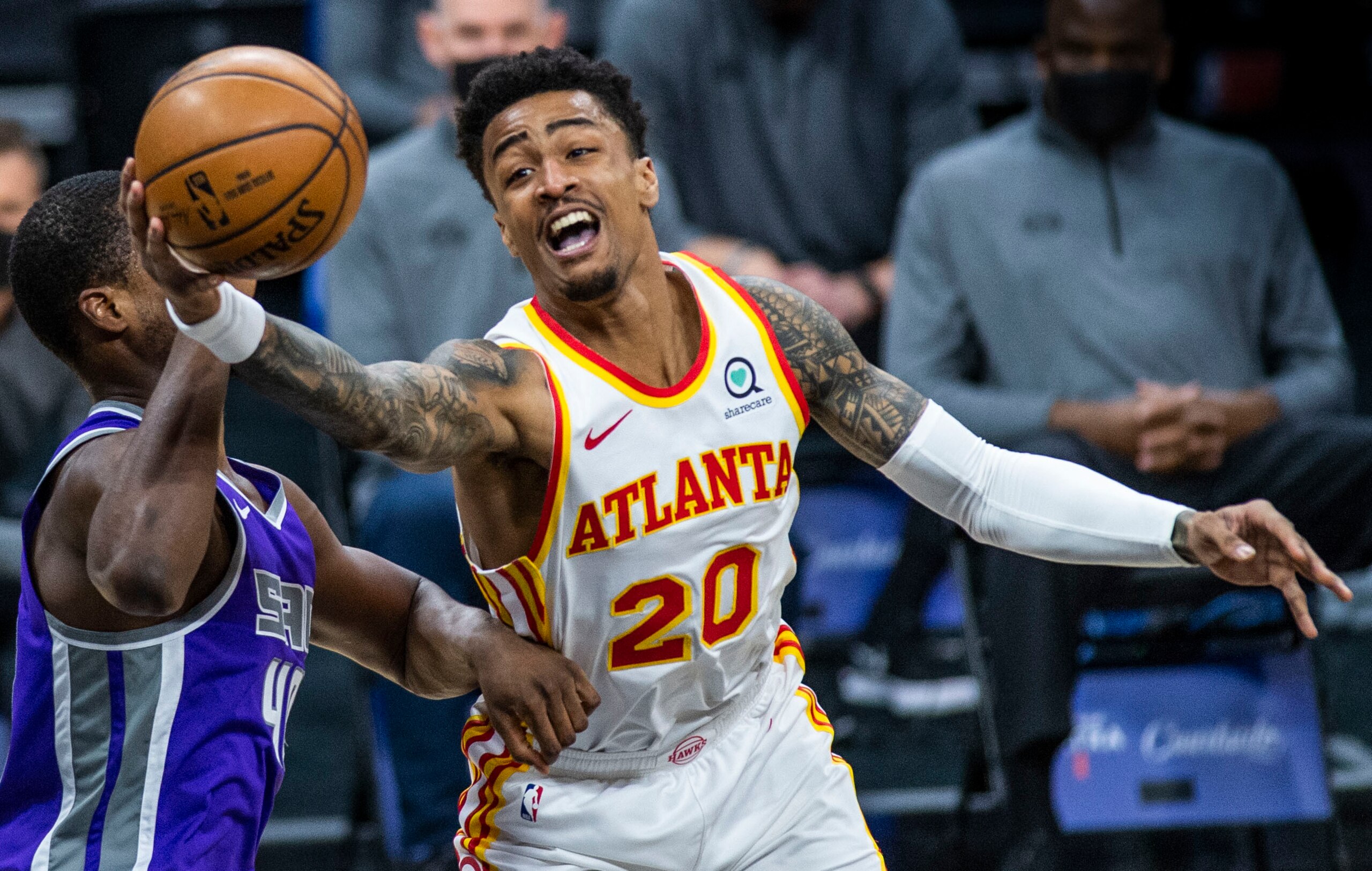
A 23-year-old forward with career per-36-minute averages of 20.8 points and 10.7 rebounds (plus a 37.4 percent hit rate from deep) is worth plenty. But John Collins, owner of those tantalizing figures, could be in line for the max.
That feels like a little too much.
Any team considering an investment of that magnitude will have to bank on Collins improving in several key areas—ones that matter more to winning games but don't jump off the page quite like his points and rebounds.
Collins is essentially positionless on defense, and not in the good way. He's not a game-changing deterrent as a drop-coverage center, and he's not mobile enough to switch reliably or shut down the glorified wings who often man the 4 spot these days. Helping in the lane isn't his strong suit, and though he's improved on his attentiveness, space-outs and ill-timed head turns continue to gift opponents easy scoring chances.
Even Collins' obvious offensive talent comes with a caveat: He remains a mostly dependent scorer. For his career, 73.4 percent of his two-point buckets have come via assists. A whopping 98.5 percent of his treys have been set up by a teammate.
Collins turned down a $90 million extension before the season and has expressed the belief he's worth max money. The team that agrees will be taking a big risk.
DeMar DeRozan, San Antonio Spurs, Unrestricted
2 of 5
The temptation to pay DeMar DeRozan at roughly the same scale as his last deal (five years and $139 million) is understandable.
The 31-year-old is a total pro who produces with extreme reliability. He'll get you 20 points every night at efficiency rates well above the league average for his position, work his way to the foul line and make teammates better with a passing eye that has kept his assist rate in the top 5 percent among wings every year since 2015-16.
With no signs of decline in his game and a level of craft that portends several more seasons of effective play, DeRozan seems like one of the safest bets in free agency. You know what you're getting.
The risk factor is buried in a career of troubling on-off data.
That stuff is noisy and can be wildly misleading in small samples. But when a player's team performs substantially worse with him on the floor in 11 of his 12 professional seasons—spread across two organizations and dozens of different teammates—I mean...you can't just pretend it's meaningless.
DeRozan's impact has been especially negative on defense. The 2020-21 San Antonio Spurs give up an astounding 12.3 extra points per 100 possessions with DeRozan on the floor. That squares with his high frequency of "non-compete" plays on D. He struggles to navigate screens, shows little fight underneath and has rarely been active enough to post above-average block or steal rates.
The point of playing basketball games is to win them. DeRozan, for all his individual skill and production, has not been historically helpful in that effort.
Shrink his role and turn him into a second-unit floor-raiser who dominates backups and faces less taxing defensive demands? Now we're talking. But DeRozan has been a starter for a decade and a highly paid one for the last five years. Teams that view him in those terms going forward do so at their own peril.
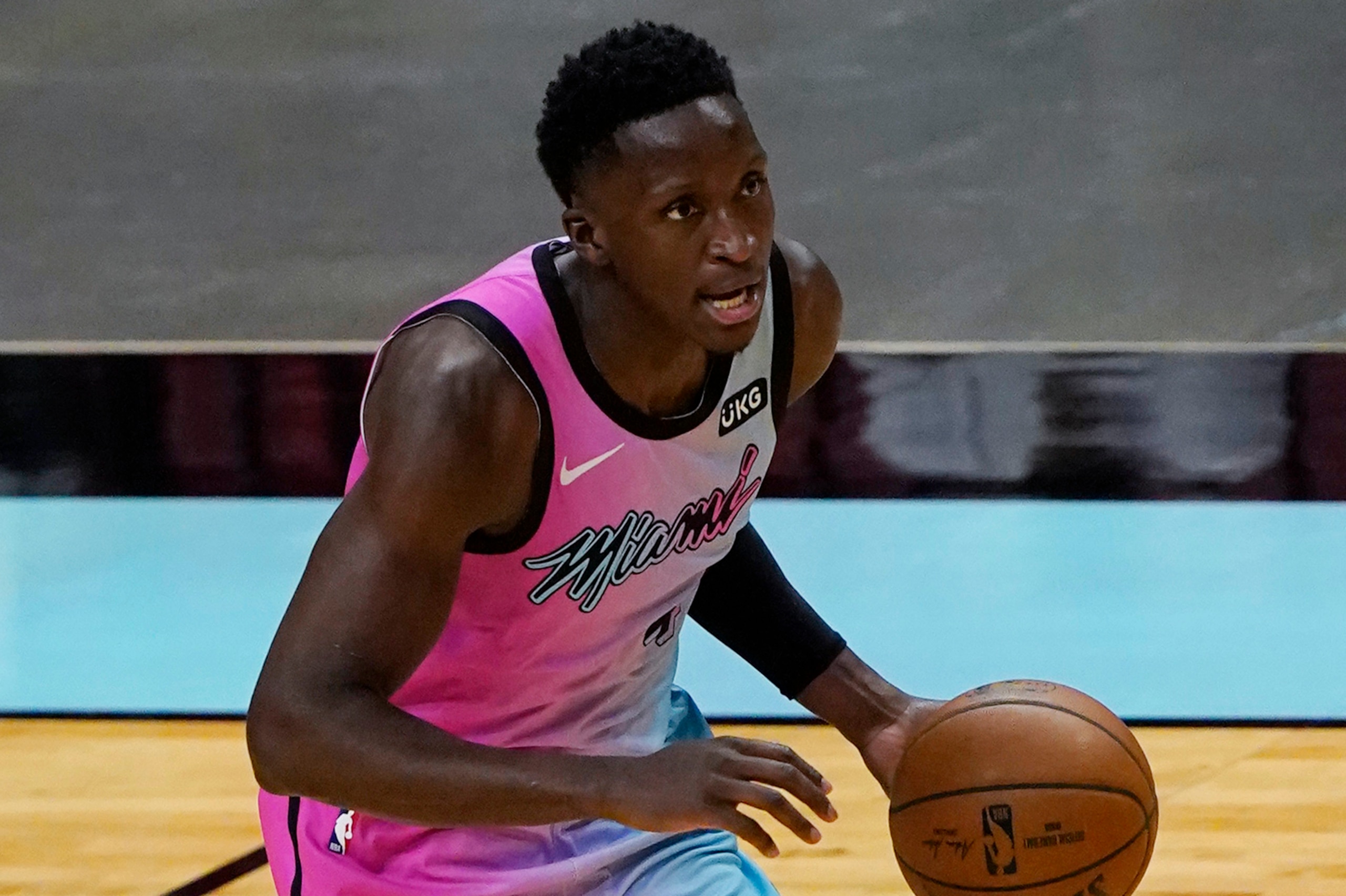
Victor Oladipo, Miami Heat, Unrestricted
3 of 5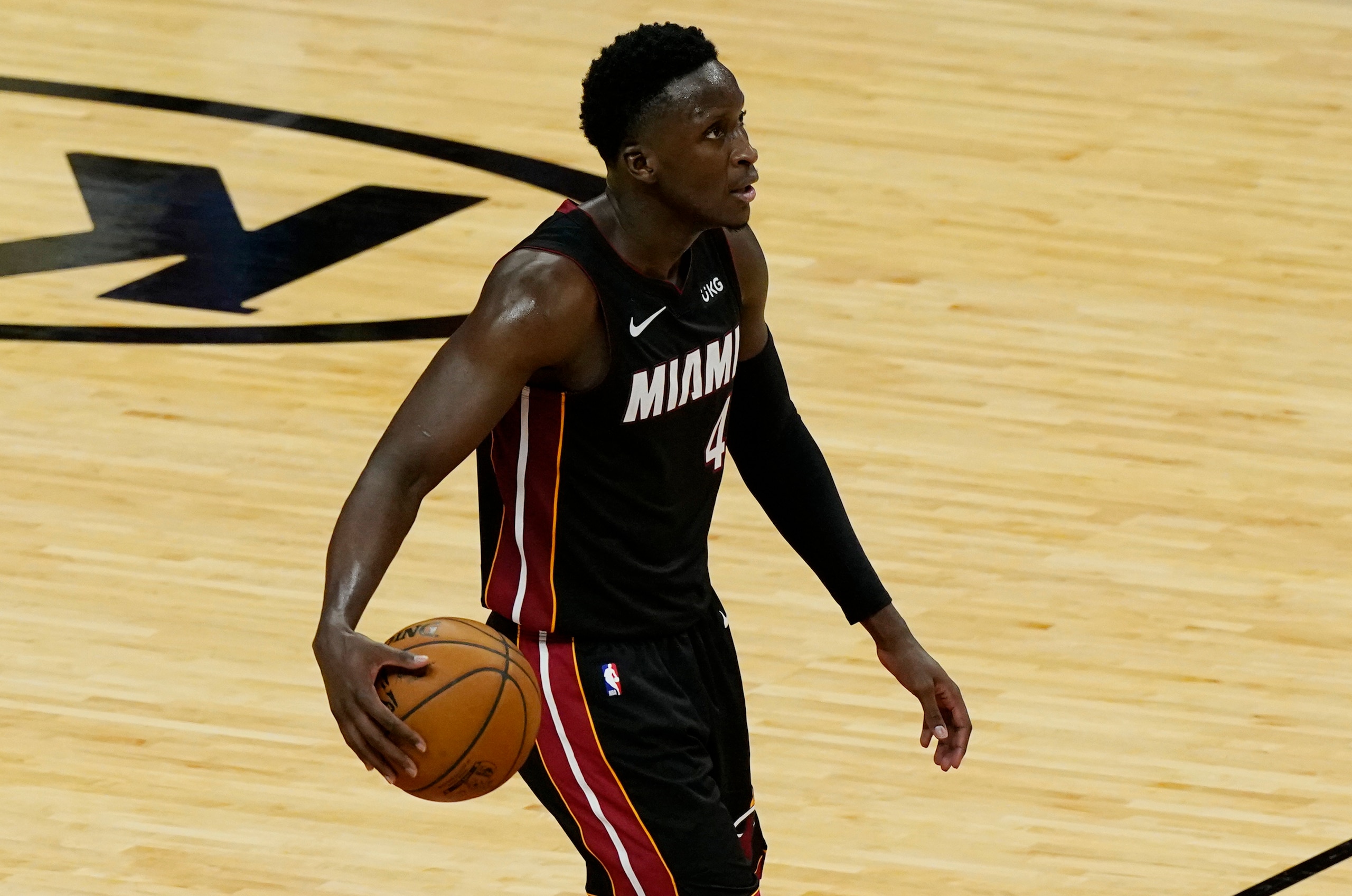
It's been a long time since Victor Oladipo was a member of the All-NBA third team. That was way back in 2017-18, when Oladipo was also an All-Defense first-teamer, an All-Star and a two-way star who couldn't be contained on downhill drives and wrought havoc in the passing lanes on D.
He deserved every one of those awards.
Oladipo ruptured his quad in January 2019, fundamentally altering his career. In one sense, the farther that injury recedes into the rear-view, the better. In another, the longer Oladipo goes without rediscovering the form he showed prior to going down, the harder it gets to imagine he ever will.
The Miami Heat, who seem like the best bet to re-sign him, have a history of getting players into peak condition. Remember, part of Oladipo's breakout 2017-18 was attributable to the combo guard getting into "I'm about to be in a Marvel movie" shape. If there's a scenario in which Oladipo is himself again, it will most likely involve the Heat, pre-dawn sprints in sand and something like 4 percent body fat.
Even if Oladipo gets his body right, he'll have to prove he can also rediscover the scoring touch that has escaped him. He's been below average in points per shot attempt at his position every year since 2017-18.
Oladipo hasn't played like a consistent quality starter since his injury. But he still has that one stellar season on his resume and no small amount of name recognition. If declining a two-year, $45.2 million extension from the Houston Rockets had more to do with his confidence in beating that number than a desire to get out of a rebuilding situation, teams courting him had better come ready with non-guarantees and tons of performance incentives.
Paying today's version of Oladipo at rates that reflect what he did four years ago is a dangerous play.
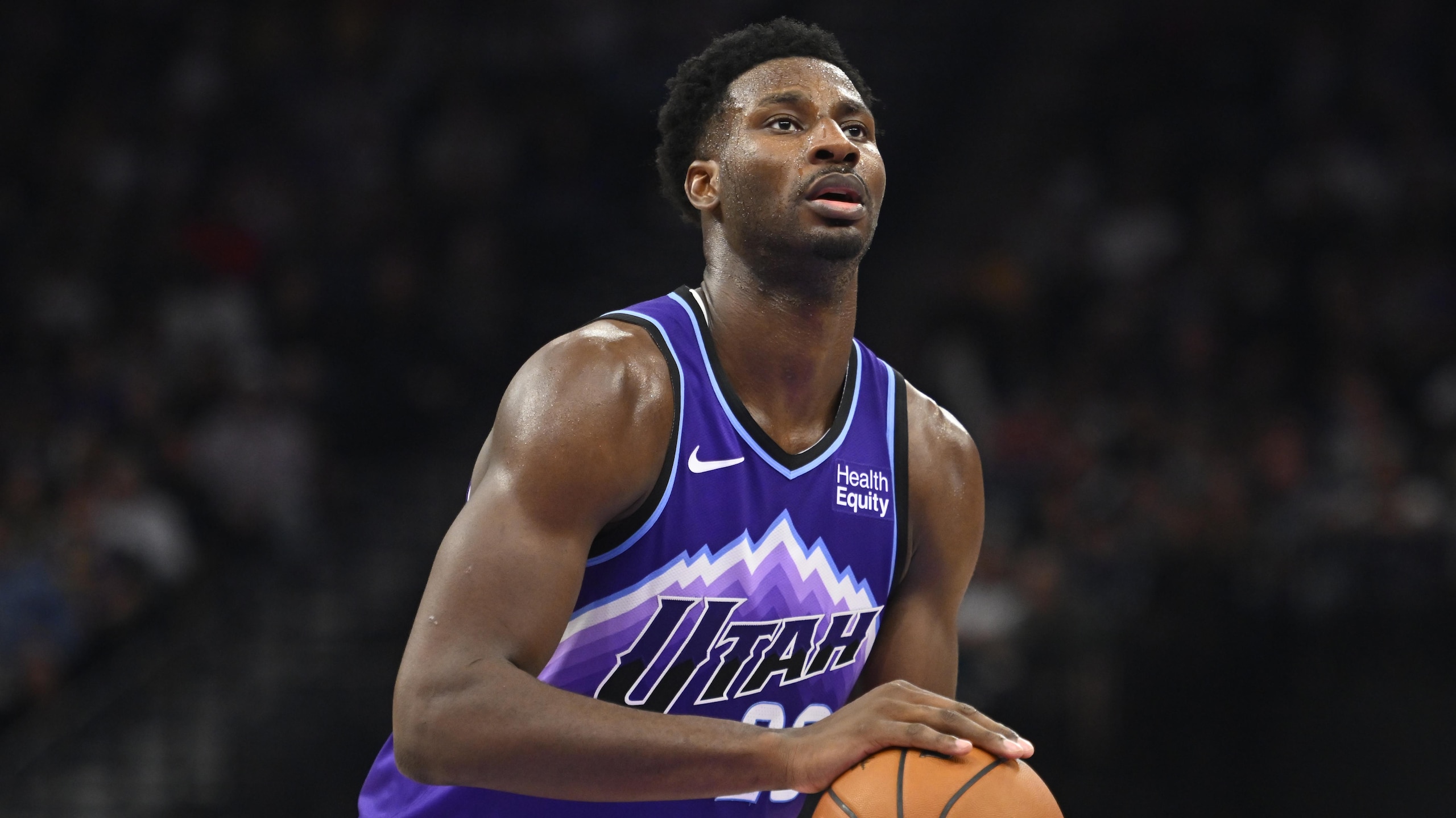
Chris Paul, Phoenix Suns, Player Option
4 of 5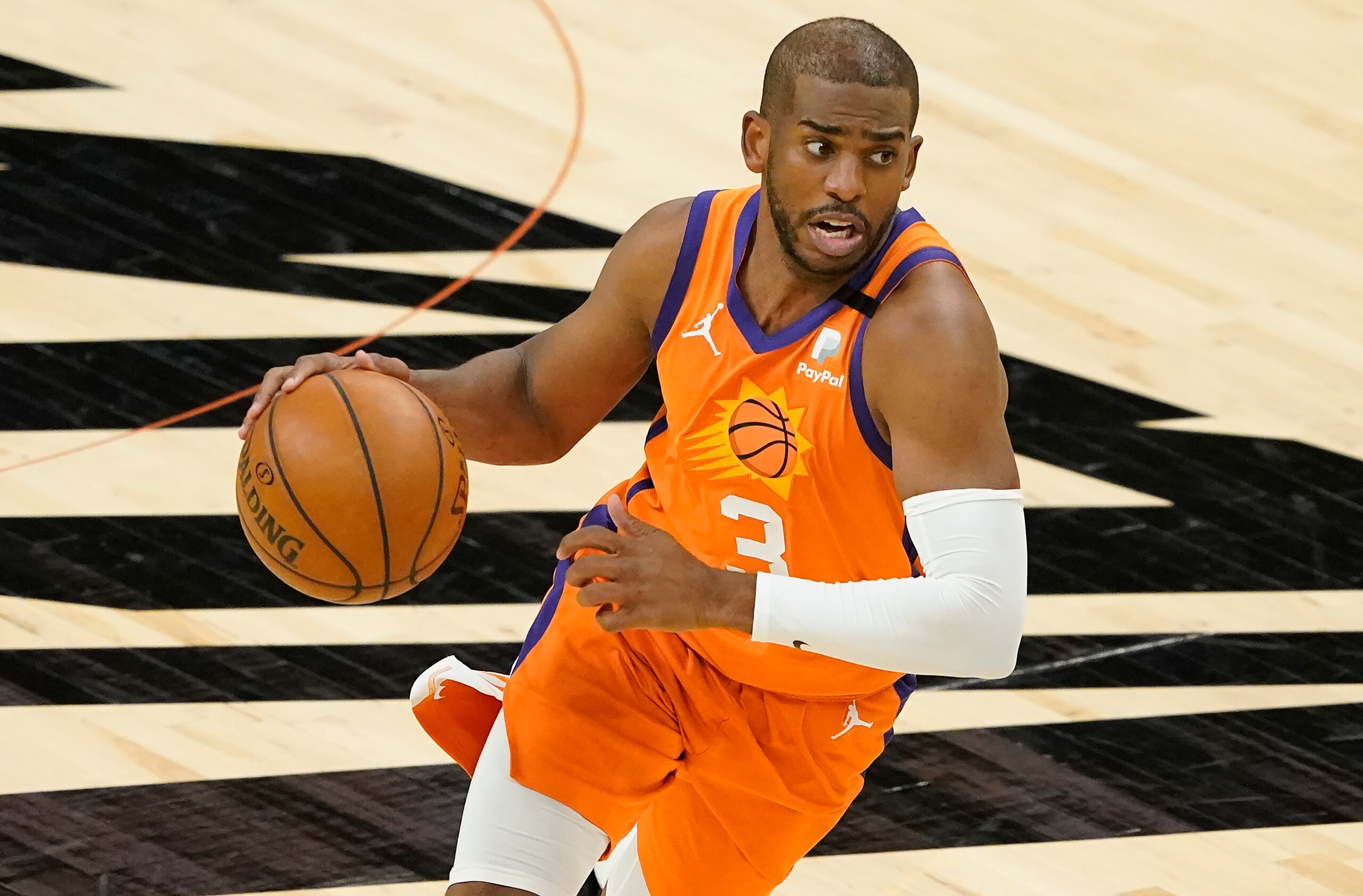
Chris Paul has been so good this season, is so clearly due the lion's share of credit for transforming the Phoenix Suns into a legitimate contender, that he'll be justified in opting out of the $44.2 million he's owed for 2021-22. The Suns, given what their fringe MVP candidate has provided them, will also be justified in paying through the nose on a multiyear deal to make sure he stays.
They'll have competition.
According to The Athletic's John Hollinger, the Knicks could slide a three-year, $124 million deal across the table to Paul in free agency. The Mavs could muster $110 million over three years.
The risk here is strictly age-related. Paul is already in rare air. In this, his age-35 season, he's averaging 16.3 points and 8.9 assists. Three other players his age have ever put up 16 and eight in a season.
None of them duplicated that production at age 36.
Considering all the intangibles Paul brings, he could suffer modest declines and still be a hugely helpful player. But from a pure probability perspective, we're long past the point at which paying major money to a player Paul's age can be called an objectively smart decision. It's a bad bet.
Maybe the calculus changes for the Suns, specifically. If CP3 signs an enormous deal to stay, leads them to a championship in the first year of it and then succumbs to the ravages of time, it will have been worth it. Of course, if Paul pilots Phoenix to a ring this season, it might be even harder for the franchise to justify letting him leave.
Paul has already aged better than almost anyone in league history. He can't keep defying norms forever. Teams need to keep that in mind when deciding what he's worth.
Dennis Schroder, Los Angeles Lakers, Unrestricted
5 of 5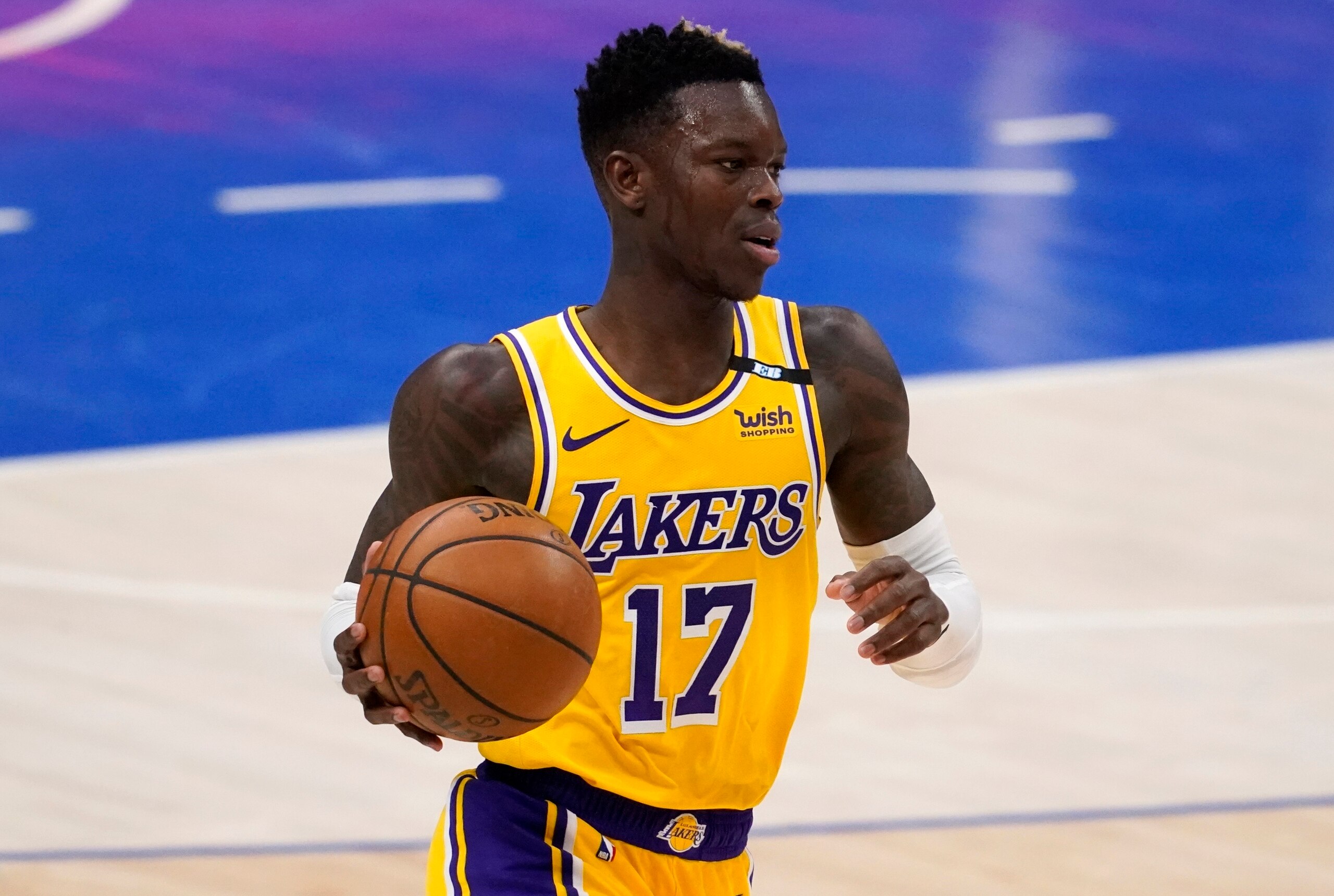
Dennis Schroder's bust-out 2019-20 was fueled largely by a level of three-point accuracy he'd never managed before. With his long-distance hit rate falling back into the range of his uninspiring career figure of 33.7 percent, Schroder is again below the league average in scoring efficiency for his position—right where he's been for the vast majority of his eight NBA seasons.
That's not the kind of player you'd expect to turn down a four-year contract worth $84 million, but that's what happened when the Los Angeles Lakers extended the offer earlier this year.
Schroder and his reps know the Lakers are stuck, though. Los Angeles is in what John Hollinger terms the "Bird rights trap," a situation where a team can exceed the salary cap to retain a key player it lacks the space to replace on the open market.
Pay him what he wants or lose him without recourse, basically.
For that reason, the Lakers can better justify overpaying Schroder than another team. Plus, the money math changes when keeping a championship roster together.
No other organization should feel comfortable paying Schroder more than the $16 million per year he's making this season. His production is that of a low-end starter or a luxury backup, and that pay rate is just about right. It'd be a mistake for a suitor to try to match Schroder's high salary expectations or view the Lakers' possible willingness to overpay as an accurate reflection of value.
Stats courtesy of NBA.com, Basketball Reference and Cleaning the Glass. Accurate through Thursday, May 6. Salary info via Basketball Insiders.