

Michael Jordan 'The Last Dance' Top Moments and Reaction from Episodes 5 and 6
The first three-peat, becoming a global icon and winning a gold medal.
Those are just some of the storylines explored in episodes five and six of ESPN's The Last Dance documentary chronicling Michael Jordan and the Chicago Bulls. While the first two episodes served largely as introductions and backdrop and the next two delved into backstories involving Dennis Rodman and Phil Jackson, Sunday's focused almost exclusively on Jordan.
Here is a look at some of the most memorable moments.
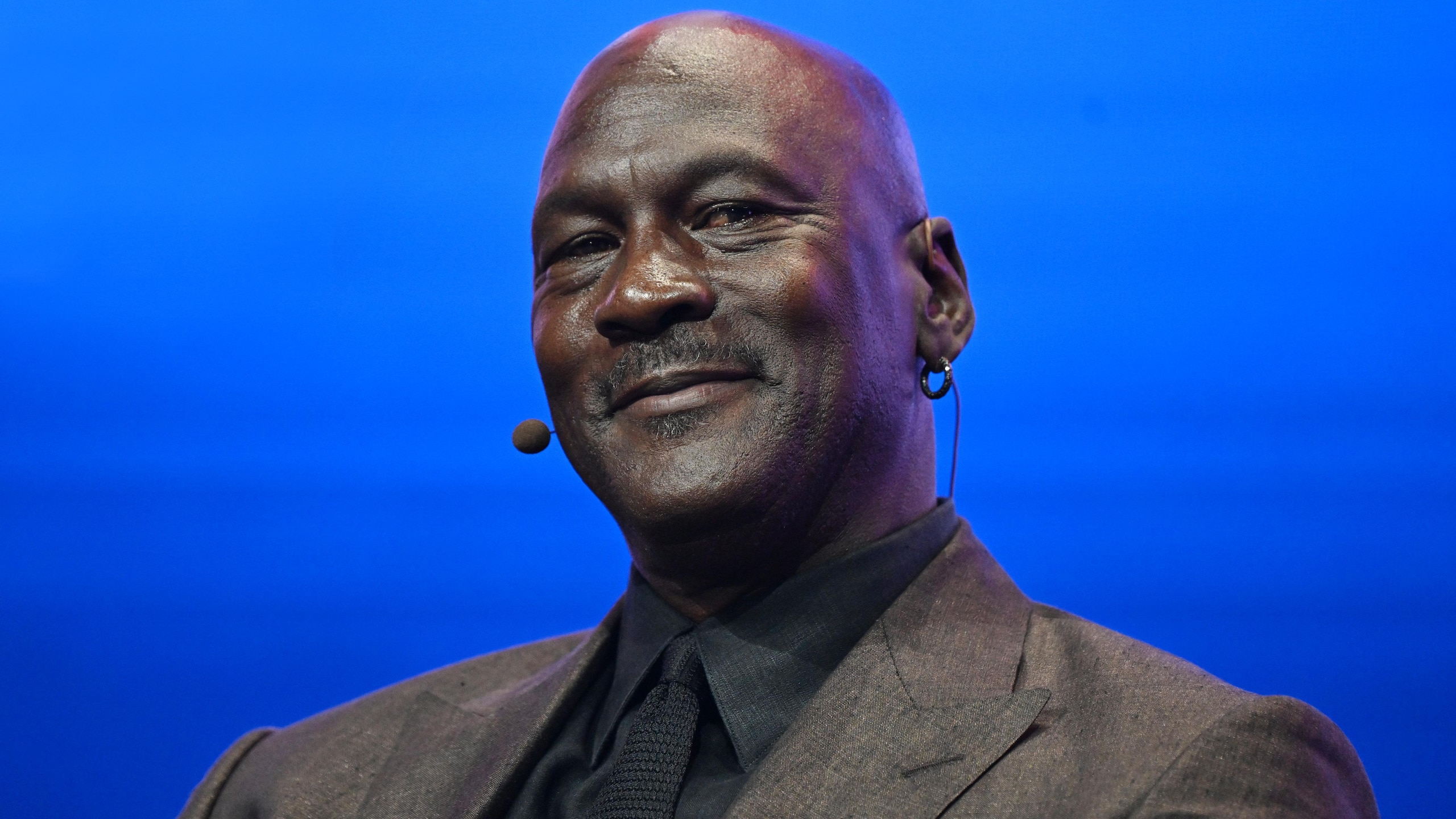

The Kobe Connection
Sunday's episodes started with the message "In Loving Memory to Kobe Bryant" and jumped right into a behind-the-scenes look at the 1998 All-Star Game.
Bryant was the youngest All-Star in league history at the time at 19 years old, but Jordan led the Eastern Conference to a victory as the MVP. Bryant opened up about the chance to go one-on-one with Jordan and how much it meant to him in an interview that Richard Deitsch of The Athletic reported happened one week before the Los Angeles Lakers legend died in a helicopter crash on Jan. 26.
"If you ever need anything, give me a call," he said. "He's like my big brother. I truly hate having discussions about who would win one-on-one … What you get from me is from him. I don't get five championships without him because he guided me."
Jordan brought the relationship full circle when he called Bryant his "little brother" during an emotional speech at Kobe's memorial ceremony in Staples Center. "When Kobe Bryant died, a piece of me died," Jordan said.
The Dream Team's Alpha
The Dream Team at the 1992 Olympics in Barcelona was arguably the greatest sports team ever assembled. Every single player was an eventual Hall of Famer except Christian Laettner, but it was clear who was taking the last shot if the game was on the line.
Sunday's documentary focused on three things with the Dream Team: the rumors Jordan said Isiah Thomas couldn't be on the team, the famous scrimmage between MJ's team and Magic Johnson's team and Jordan and Pippen going against Toni Kukoc on the Croatian team.
"You want to attribute it to me, go ahead and be my guest," Jordan said of Thomas not being on the team. "But it wasn't me."
The episode made it clear Johnson, Larry Bird and Pippen also had a problem with Thomas, who was interviewed for The Last Dance and said, "I met the criteria to be selected, but I wasn't."
As for the scrimmage, Magic and Charles Barkley led their team to a significant lead out of the gates against Jordan's side before they started talking trash. That was a mistake, as Air Jordan went into takeover mode and cemented his status as the best player in the world on a team filled with all-timers.
Kukoc was the best player on the Croatian team, and the doc explored the backdrop in which Bulls general manager Jerry Krause was negotiating with him even though Pippen wanted a new contract. Kukoc was interviewed and said he had no idea about the tension or what was coming, but Jordan told the United States' locker room to leave the opponent's leader to him and Pippen.
"He may not even think about coming to the NBA after playing against us," Pippen said after holding Kukoc to four points. "We were going to do everything we could to make Jerry look bad."
Jordan was impressed, though, when Kukoc showed his toughness by coming back and playing much better in the gold-medal game.
It's Gotta Be The Shoes
Not even Michael Jordan is going to become a billionaire by playing basketball alone.
Sunday's episodes explored Jordan's path to becoming a worldwide icon through branding deals and commercials. While the iconic Air Jordan logo that came from his partnership with Nike is his most well-known endorsement, he made deals with Gatorade, Wheaties, Hanes, McDonald's, Coca-Cola and much more.
The final result is a net worth of $2.1 billion even nearly 20 years after he retired from the NBA for the last time, per Forbes.
While Jordan originally wanted to sign with Adidas, agent David Falk explained in The Last Dance he wanted his client to sign with Nike because it was the upstart company. Falk convinced Jordan's mother to talk the star into visiting Nike's campus, and the result was the most famous shoe partnership basketball has ever seen.
Interviews with Nas and Justin Timberlake delved into how important having Air Jordan shoes are for the culture even today, and Jordan himself recognized the symbolism when he wore a pair of original Air Jordans in his final game at Madison Square Garden in the 1997-98 campaign.
"By halftime, my feet are bleeding, but I'm having a good game and don't want to take them off," he said. "When I took my shoes off, my sock was soaked in blood."
It wasn't just the shoes, as Jordan became a worldwide icon, especially after the 1992 Olympics with the famous "Be Like Mike" Gatorade commercial, the McDonald's commercial of him playing Horse with Larry Bird and much more.
He truly was a one-man brand.
Clyde Never Had a Chance
Facing Jordan in the 1992 NBA Finals as his primary individual matchup seems terrifying enough.
Portland Trail Blazers guard Clyde Drexler had to do it against a Jordan who was feeling slighted—and not even because his opponent famously passed on selecting him with the No. 2 pick in the 1984 NBA draft. Rather, Jordan was not a fan of people comparing the two guards.
"Clyde was a threat," Jordan said in the documentary. "I'm not saying he wasn't a threat. But me being compared to him, I took offense to that. … Based on the way I was playing at that time, it wasn't even close. So I attacked him every night."
Magic provided further insight into No. 23's mindset, revealing Jordan said, "You know what's going to happen tomorrow, I'm going to give it to this dude," while playing cards the night before the Finals with the Lakers great.
The rest was history as Michael averaged 35.8 points, 6.5 assists, 4.8 rebounds and 1.7 steals per game in the series and busted out his famous shrug move when he drilled six three-pointers in Game 1 alone.
MJ Didn't Always Win
Jordan may be the star of The Last Dance, but a security guard from the United Center stole the show for a minute.
The behind-the-scenes footage showed Jordan losing a game of quarters to a security guard, who broke out MJ's famous shrug move when talking trash to the GOAT. It was a moment of levity and surely a story the security guard loved retelling.
The Jordan Rules
While Jordan was the face of basketball, a fan favorite across the world and a marketing icon, Sam Smith's book, The Jordan Rules, broke down the tension he faced with teammates at times.
From punching Will Perdue during practice to riding those teammates incredibly hard to promising he would eventually get Krause fired, the book pulled back the curtain on some of the Jordan mythology.
In recent interviews for the documentary, Jordan said he believed Horace Grant was the one telling the press what was happening in the locker room. Grant was adamant it wasn't him, saying his close relationship with Smith turned him into a "scapegoat."
There was no agreed-upon conclusion, but B.J. Armstrong explained there was no way it was just Grant who talked to Smith.
"Republicans Buy Sneakers Too"
Sunday's broadcast wasn't just a lovefest for Jordan, as it explored his infamous quote: "Republicans buy sneakers too," said when he decided against campaigning for Democratic nominee Harvey Gantt in the 1990 United States Senate election in North Carolina against Republican incumbent Jesse Helms.
"I never thought of myself as an activist," Jordan said. "I thought of myself as a basketball player … Was that selfish? Probably. But that was my energy."
Jordan explained he said it in jest, but President Barack Obama was interviewed for the documentary and expressed some disappointment in the comment and His Airness' refusal to campaign against Helms, even though he understood the Bulls leader was still building his image as a basketball player at that time.
The New Bad Boys and Atlantic City
Much of Jordan's early career was about overcoming the Bad Boy Detroit Pistons and their brand of physical basketball.
The New York Knicks were the new physical challenge in 1993 as the Bulls were going for a three-peat. With Patrick Ewing, Charles Oakley and John Starks leading the way and head coach Pat Riley urging them to be physical with Jordan, the Knicks jumped out to a 2-0 lead.
"They were trying to be the next Chicago Bulls, as we were to the Detroit Pistons," Scottie Pippen said.
That's when Jordan's visit to Atlantic City for a gambling trip on the eve of Game 2 became a massive media story, to the point he refused to engage with the press. It led to plenty of criticism and a disgusted Jordan, but he used it as motivation.
"I think he was disgusted by what happened, and Michael had to respond," head coach Phil Jackson said. "And respond he did."
All Chicago did was win four straight after that and say goodbye to the Knicks.
Three-Time Champ
It may have seemed like a Bulls championship was an inevitable conclusion after they dispatched the Knicks, but 1992-93 league MVP Charles Barkley and the Phoenix Suns were standing in the way in the NBA Finals.
Jordan explained in the documentary that he was driven by Krause's love of Dan Majerle as an excellent defender—whether real or an invented slight—and he seized the opportunity to torch his counterpart.
Phoenix didn't back down, though, winning Game 3 on the road after falling behind 2-0 and winning Game 5 on the road while facing elimination.
In perhaps the biggest surprise, it wasn't Jordan who hit the biggest shot of the series but John Paxson. Paxson drilled what proved to be the winning three-pointer in Game 6, helping His Airness clinch a third of what would become six championships.

.jpg?w=2560 "AD Trolls Bears WR on IG 😂")
.jpg?w=2560 "Viral Dan Campbell Presser 💙")
.jpg?w=2560 "Buzz: MHJ Hired Agents for Trade")
.jpg?w=2560 "Report: Steelers WR to Miss 'Weeks'")
.jpg?w=2560 "Cam Ward Says He's Not A Loser")


.jpg?w=2560 "Chargers Fall to 0-5 🤢")