

Ranking MLB's 25 Best Shortstops Since 2000
In recent weeks, we have been taking a look back at the best and brightest Major League Baseball had to offer over the past 20 years.
We've already run down our top 25 starting pitchers, top 25 first basemen, top 25 second basemen and top 25 third basemen since 2000.
Now it's time for the shortstops.
A player's peak performance, his full statistical body of work since 2000 and his postseason production were all factored when determining the final rankings.
While no single stat was the end-all, be-all, OPS+ and WAR/500 are two important ones to know.
OPS+ is simply a hitter's on-base percentage plus slugging percentage, adjusted to take into account the ballparks in which he is hitting. An OPS+ of 100 is league-average, while each number above 100 represents one percentage point better than the league average.
WAR/500 is a stat of my own creation. It's a hitter's WAR total divided by his total plate appearances and then multiplied by 500, thus giving us his WAR per 500 plate appearances. The idea is to make it easier to contextualize WAR totals across different sample sizes.
Let's kick things off with some honorable mentions.
Honorable Mentions
1 of 26
These players received serious consideration for the final list but came up short:
- Rich Aurilia
- Erick Aybar
- Orlando Cabrera
- Starlin Castro
- Stephen Drew
- David Eckstein
- Yunel Escobar
- Didi Gregorius
- Jed Lowrie
- Alexei Ramirez
- Marco Scutaro
- Juan Uribe
- Jose Valentin
- Omar Vizquel
- Jack Wilson
25. Jhonny Peralta
2 of 26
Stats: 7,319 PA, .267/.329/.423 (102 OPS+), 202 HR, 873 RBI, 30.4 WAR
Postseason: 229 PA, .256/.307/.441, 8 HR, 26 RBI
WAR/500: 2.08
Jhonny Peralta had the dubious honor of replacing defensive whiz Omar Vizquel as the Cleveland Indians shortstop during the 2005 season.
A polar opposite player, Peralta used his bat to drive his value, hitting .292/.366/.520 with 35 doubles and 24 home runs in his first full season in the majors.
He eclipsed 20 home runs five different times in his 15-year career, earning three All-Star selections.
His best all-around season came in 2014, his first year with the St. Louis Cardinals, when he posted a 117 OPS+ with 38 doubles, 21 home runs and 75 RBI while tallying 15 DRS at shortstop to finish 14th in NL MVP voting.
24. Asdrubal Cabrera
3 of 26
Stats: 6,836 PA, .268/.331/.425 (106 OPS+), 180 HR, 796 RBI, 29.0 WAR
Postseason: 108 PA, .214/.240/.296, 2 HR, 13 RBI, WS winner
WAR/500: 2.12
Asdrubal Cabrera took over for a struggling Josh Barfield as the Cleveland Indians' starting second baseman during the 2007 season, hitting .283/.354/.421 with 14 extra-base hits in 186 plate appearances for a 96-win team that reached the American League Championship Series.
He slid over to shortstop in 2010—Jhonny Peralta moved to third base before being traded to the Detroit Tigers—and he made back-to-back AL All-Star teams in 2011 and 2012.
He also took home Silver Slugger honors in 2011, when he hit .273/.332/.460 (121 OPS+) with 32 doubles, 25 home runs, 92 RBI and 17 steals in a 4.7 WAR season.
The 34-year-old is still going strong, earning a one-year, $2.5 million contract from the Washington Nationals during the offseason after he joined the eventual World Series champions last August and hit .323/.404/.565 (143 OPS+) with 10 doubles and six home runs in 38 games.

.jpg?w=2560)
23. Jean Segura
4 of 26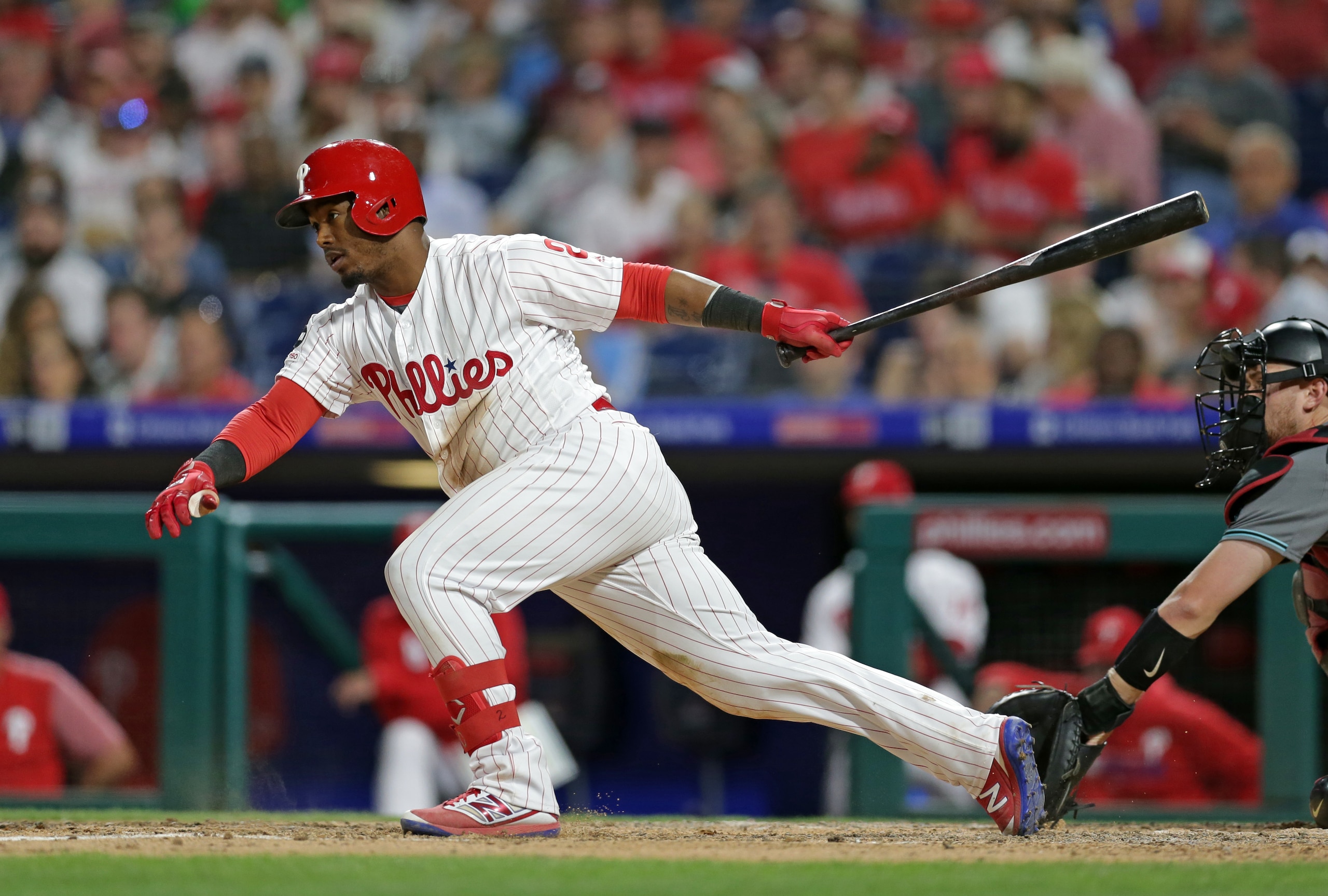
Stats: 4,440 PA, .286/.326/.406 (97 OPS+), 76 HR, 376 RBI, 20.4 WAR
Postseason: N/A
WAR/500: 2.30
Jean Segura has been traded four times in his eight-year career, starting with the blockbuster deal that sent Zack Greinke from the Milwaukee Brewers to the Los Angeles Angels at the 2012 trade deadline.
His power and speed have made him one of the more productive players at the shortstop position throughout his career, earning him a pair of All-Star nods.
In his first full season in the majors in 2013, he hit .294/.329/.423 (105 OPS+) with 20 doubles, 10 triples, 12 home runs and 44 steals en route to 4.1 WAR.
The best season of his career thus far came in 2016 with the Arizona Diamondbacks, when he led the NL in hits (203) while tallying 41 doubles, 20 home runs and 33 steals with a .319/.368/.499 line. His 6.4 WAR that season was second in the NL, and that offseason he was flipped to the Seattle Mariners in the deal that brought Ketel Marte to Arizona.
22. Marcus Semien
5 of 26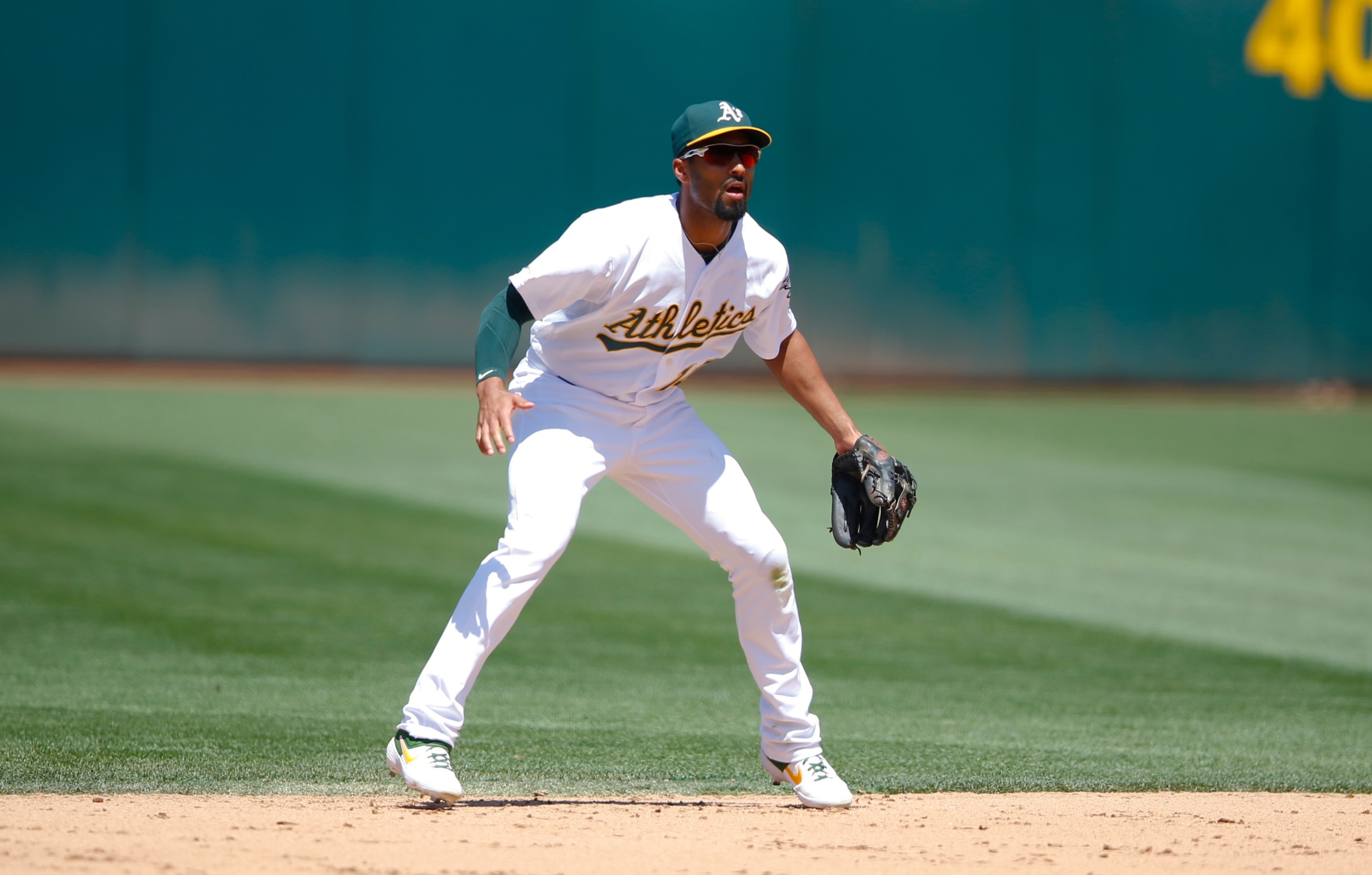
Stats: 3,384 PA, .256/.323/.429 (106 OPS+), 108 HR, 357 RBI, 21.8 WAR
Postseason: 9 PA, .250/.333/.250, 0 HR, 0 RBI
WAR/500: 3.22
Marcus Semien was one of the breakout stars of 2019, hitting .285/.369/.522 (138 OPS+) with 43 doubles, 33 home runs, 92 RBI and 123 runs scored in an 8.9 WAR season to finish third in AL MVP voting.
While that stands as the obvious peak of his career to date, he's been a solid shortstop since joining the Oakland Athletics in the six-player trade that sent Jeff Samardzija to the Chicago White Sox prior to the 2015 season.
All told, the 29-year-old has been worth 20.5 WAR in his five seasons in Oakland, which trails only Francisco Lindor (27.6), Andrelton Simmons (24.9) and Carlos Correa (24.5) among shortstop during that span.
He's also developed into an excellent defender, tallying 26 DRS over the past two seasons.
A free agent after the 2020 campaign, he's headed for a lucrative payday.
21. Elvis Andrus
6 of 26
Stats: 6,968 PA, .275/.331/.373 (87 OPS+), 73 HR, 629 RBI, 30.9 WAR
Postseason: 191 PA, .266/.316/.318, 1 HR, 7 RBI
WAR/500: 2.22
A young Elvis Andrus was one of the prospect centerpieces of the epic blockbuster deal that sent Mark Teixeira to the Atlanta Braves, and he has spent the past 11 seasons as a staple at the shortstop position for the Texas Rangers.
Speed has always been his biggest asset offensively, with five 30-steals seasons and 302 career steals to his credit, and he has one of the better contact rates in baseball with a combined walk and strikeout rate of 20.9 percent.
He's also been a steady defender up the middle with 9 DRS in 13,897.2 innings at shortstop.
The two-time All-Star and 2009 AL Rookie of the Year runner-up has never been a star, but he's locked down one of the most important positions on the field for more than a decade.
20. J.J. Hardy
7 of 26
Stats: 6,309 PA, .256/.305/.408 (90 OPS+), 188 HR, 688 RBI, 28.1 WAR
Postseason: 86 PA, .225/.279/.325, 1 HR, 7 RBI
WAR/500: 2.23
J.J. Hardy was a well-rounded shortstop who could hit for power and has provided Gold Glove-caliber defense throughout his 13-year career.
He had five seasons with at least 20 home runs, including a 30-homer season for the Baltimore Orioles in 2011, and he had an excellent all-around offensive campaign in 2008, when he hit .283/.343/.478 (115 OPS+) with 31 doubles, 24 home runs and 74 RBI for a career-high 4.8 WAR.
He was traded from the Brewers to the Twins in the deal that sent Carlos Gomez to Milwaukee, and after one season in Minnesota, he was traded again to the Baltimore Orioles.
There he would spend the final seven seasons of his career, winning three straight Gold Glove Awards from 2012 to 2014. It's telling that the O's slid a young Manny Machado off his natural position of shortstop and over to the hot corner in deference to Hardy.
19. Brandon Crawford
8 of 26
Stats: 4,718 PA, .249/.316/.389 (94 OPS+), 98 HR, 536 RBI, 24.0 WAR
Postseason: 145 PA, .236/.313/.323, 1 HR, 17 RBI, Two-time WS winner
WAR/500: 2.54
Brandon Crawford was an elite defender who had an offensive peak that briefly made him one of baseball's elite shortstops.
From 2014 through 2016, he hit .260/.329/.427 (108 OPS+) while averaging 14 home runs and 79 RBI. A career-high 21 home runs and 84 RBI in 2015 earned him Silver Slugger honors.
That above-average production and his tremendous glovework was worth 14.6 WAR during that three-year stretch, which was tops among all shortstops.
Aside from that brief peak of offensive relevance, he has largely been a glove-first player, piling up 78 DRS while winning three Gold Glove Awards.
He's been at least a 2.0 WAR player seven different times, with a pair of 5.0-plus WAR seasons at his peak.
18. Javier Baez
9 of 26
Stats: 2,473 PA, .270/.310/.484 (106 OPS+), 110 HR, 354 RBI, 16.8 WAR
Postseason: 120 PA, .228/.258/.404, 5 HR, 14 RBI, WS winner
WAR/500: 3.40
It took some time for the free-swinging Javier Baez to find his footing at the MLB level.
He struck out nearly 30 percent of the time while posting a 90 OPS+ during his first four seasons in the majors before things finally clicked, and he emerged as a legitimate MVP candidate in 2018.
That season, he led the NL in RBI (111) while hitting .290/.326/.554 (129 OPS+) with 40 doubles and 34 home runs in a 5.8 WAR season.
He failed to match that offensive production last year with a 113 OPS+ and 29 home runs but proved to be more valuable (6.0 WAR) thanks to a staggering 26 DRS at shortstop.
Few players in recent memory have had more dynamic raw tools.
17. Corey Seager
10 of 26
Stats: 2,069 PA, .294/.362/.491 (126 OPS+), 73 HR, 266 RBI, 15.7 WAR
Postseason: 131 PA, .203/.275/.331, 3 HR, 10 RBI
WAR/500: 3.79
The Los Angeles Dodgers promoted top prospect Corey Seager on Sept. 3, 2015, and he was thrust into the heat of a pennant race.
The then-21-year-old responded by hitting .337/.425/.561 (174 OPS+) with 13 extra-base hits in 113 plate appearances, effectively stealing the starting shortstop job from an aging Jimmy Rollins in the process.
That was followed by a brilliant rookie season in which he hit .308/.365/.512 (134 OPS+) with 40 doubles, 26 home runs, 72 RBI and 105 runs scored to win National League Rookie of the Year unanimously and finish third in NL MVP voting.
It was more of the same the following year, but Tommy John surgery limited him to 26 games in 2018, and he was shelved with a hamstring injury last season.
16. Trevor Story
11 of 26
Stats: 2,282 PA, .276/.341/.537 (113 OPS+), 123 HR, 347 RBI, 18.6 WAR
Postseason: 22 PA, .318/.318/.545, 1 HR, 1 RBI
WAR/500: 4.08
With Jose Reyes serving a suspension, Trevor Story broke camp with the starting shortstop job in 2016 and took the baseball world by storm with seven home runs in his first six MLB games.
A torn ligament in his thumb ended his season at the beginning of August, but he still finished fourth in NL Rookie of the Year voting, posting a 122 OPS+ with 27 home runs and 72 RBI in 97 games.
He hit just .239 and led the NL in strikeouts (191) the following year before emerging as one of baseball's best all-around players the last two seasons.
- 2018: 127 OPS+, 37 HR, 108 RBI, 27 SB, 5.6 WAR, 1 DRS
- 2019: 118 OPS+, 35 HR, 85 RBI, 23 SB, 6.1 WAR, 14 DRS
With 123 home runs and 40 DRS in his four MLB seasons, he brings a combination of power and defense rarely seen at the shortstop position.
15. Carlos Correa
12 of 26
Stats: 2,362 PA, .277/.356/.489 (129 OPS+), 102 HR, 372 RBI, 24.5 WAR
Postseason: 211 PA, .247/.308/.474, 11 HR, 33 RBI, One-time WS winner
WAR/500: 5.19
The Houston Astros' decision to select Carlos Correa with the No. 1 overall pick in the 2012 draft surprised more than a few people. Most viewed prep outfielder Byron Buxton as the top all-around talent, but lofty bonus demands were a sticking point.
With the money they saved by selecting Correa instead, the Astros were able to scoop up Lance McCullers Jr. at No. 41 overall with an above-slot bonus.
Eight years later, Correa (24.5 WAR) has had a far better career than Buxton (9.8 WAR).
Despite playing just 99 games as a rookie in 2015, Correa took home AL Rookie of the Year honors, edging out Francisco Lindor by posting a 135 OPS+ with 22 home runs and 68 RBI.
He's had a tough time staying healthy in the years since, topping 110 games just once in the past four seasons, but he's been a dynamic player when healthy and a standout performer in the postseason.
14. Edgar Renteria
13 of 26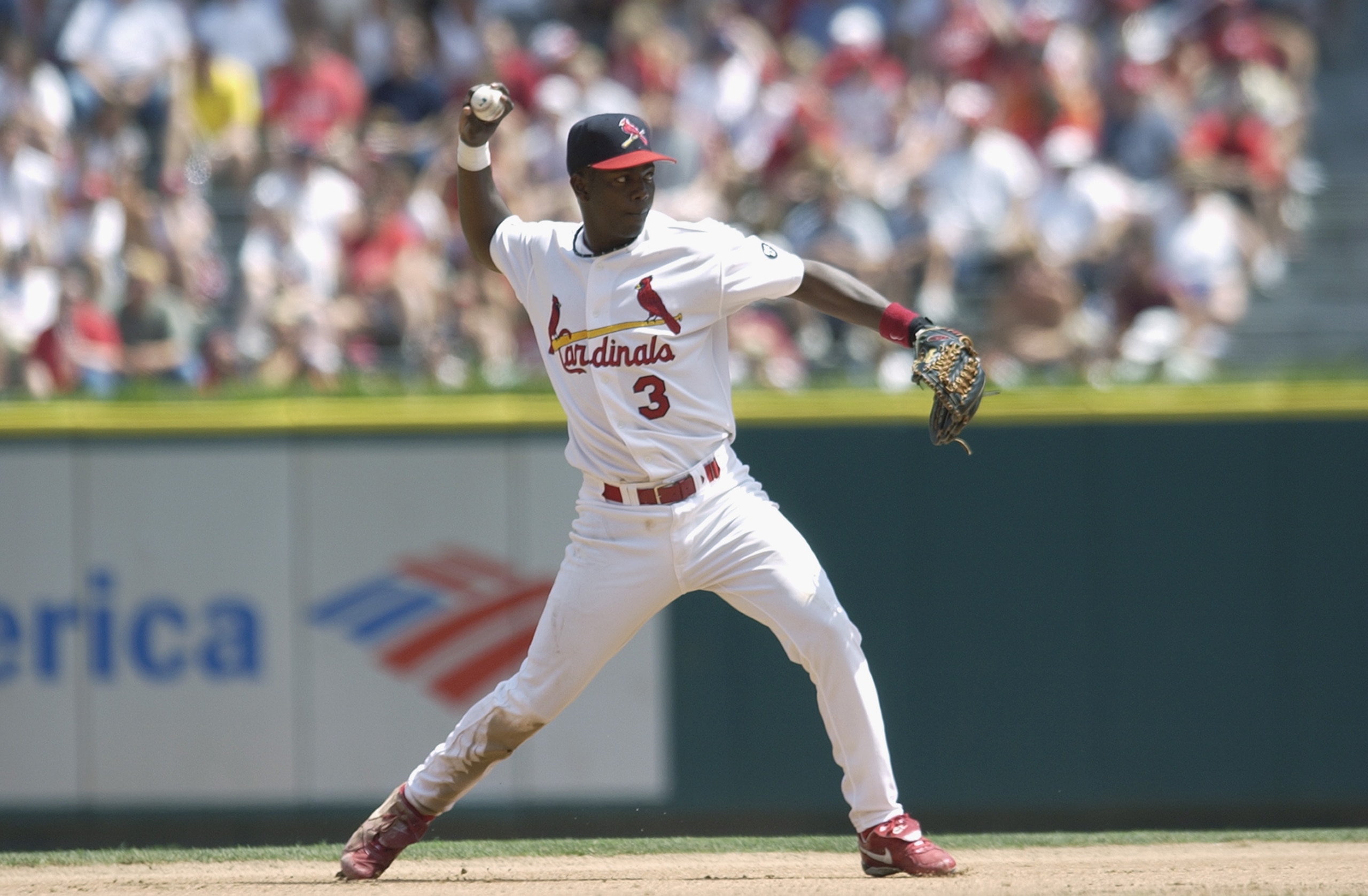
Stats: 6,671 PA, .286/.344/.409 (96 OPS+), 117 HR, 746 RBI, 26.3 WAR
Postseason: 203 PA, .256/.325/.358, 3 HR, 19 RBI, WS winner
WAR/500: 1.97
Edgar Renteria broke into the majors at the age of 19 with the Florida Marlins, won a World Series title the following year and then made his first All-Star team in 1998.
So while he was still just 23 years old when the 2000 campaign rolled around, he had already experienced a lot at the big league level.
From 2002 through 2007, he was one of the best offensive shortstops in baseball, hitting .303/.361/.434 (107 OPS+) while averaging 38 doubles, 11 home runs, 75 RBI, 91 runs scored and 18 steals.
Three of those six seasons were spent hitting alongside the high-powered trio of Albert Pujols, Scott Rolen and Jim Edmonds in the St. Louis Cardinals lineup, followed by a one-year stint with the Boston Red Sox and two campaigns with the Atlanta Braves.
While his production diminished later in his career, he did win World Series MVP honors for the San Francisco Giants in 2010 when he went 7-for-17 with two home runs in the Fall Classic.
Peak performance pushes him higher up the list than his WAR/500 might otherwise suggest.
13. Carlos Guillen
14 of 26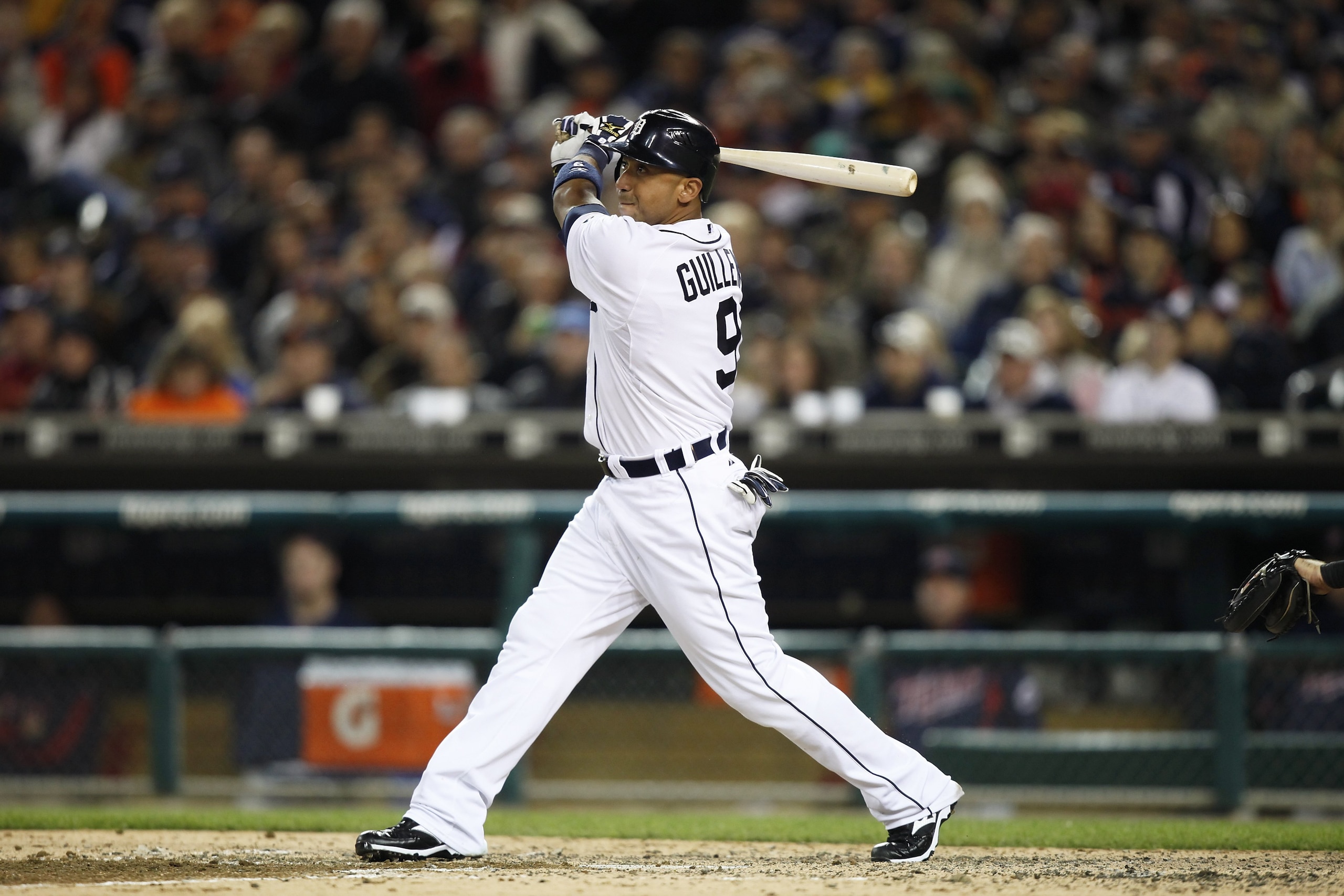
Stats: 5,214 PA, .285/.355/.444 (111 OPS+), 123 HR, 652 RBI, 27.4 WAR
Postseason: 69 PA, .344/.420/.557, 2 HR, 7 RBI
WAR/500: 2.63
Lofty expectations were heaped on Carlos Guillen before he ever made his MLB debut after the Seattle Mariners acquired him from the Houston Astros in the blockbuster deal that sent Randy Johnson out of town.
After posting a 93 OPS+ and 9.1 WAR in parts of six forgettable seasons with the Mariners, he was traded to the Detroit Tigers, and his career took off.
In his first season in Detroit, he hit .318/.379/.542 (143 OPS+) with 37 doubles, 10 triples, 20 home runs, 97 RBI and 97 runs scored to earn his first All-Star selection.
He went on to hit .308/.377/.493 (128 OPS+) while racking up 18.4 WAR and three All-Star nods in his first five seasons with the Tigers.
The double-play combination of Guillen and Placido Polanco might be one of the most underrated in MLB history.
12. Xander Bogaerts
15 of 26
Stats: 3,930 PA, .288/.350/.451 (112 OPS+), 107 HR, 503 RBI, 21.5 WAR
Postseason: 130 PA, .219/.300/.333, 2 HR, 10 RBI, Two-time WS winner
WAR/500: 2.74
Xander Bogaerts made his MLB debut before his 21st birthday and played his way into the starting third-base job down the stretch over a struggling Will Middlebrooks for a Boston Red Sox team that won a World Series title.
After going through some growing pains in his first full season, he hit .320/.355/.421 (107 OPS+) to win a Silver Slugger in 2015 despite hitting just seven home runs.
His power showed up the following campaign when he posted a 111 OPS+ with 21 home runs and 89 RBI to repeat as Silver Slugger winner. But he was still growing into his offensive game entering the 2019 season, when everything clicked, and he emerged as an MVP candidate.
Bogaerts hit .309/.384/.555 (140 OPS+) with 52 doubles, 33 home runs and 117 RBI en route to a career-high 5.9 WAR to finish fifth in AL MVP voting.
Despite his below-average glove (-58 career DRS), the 27-year-old is one of the game's elite shortstops.
11. Rafael Furcal
16 of 26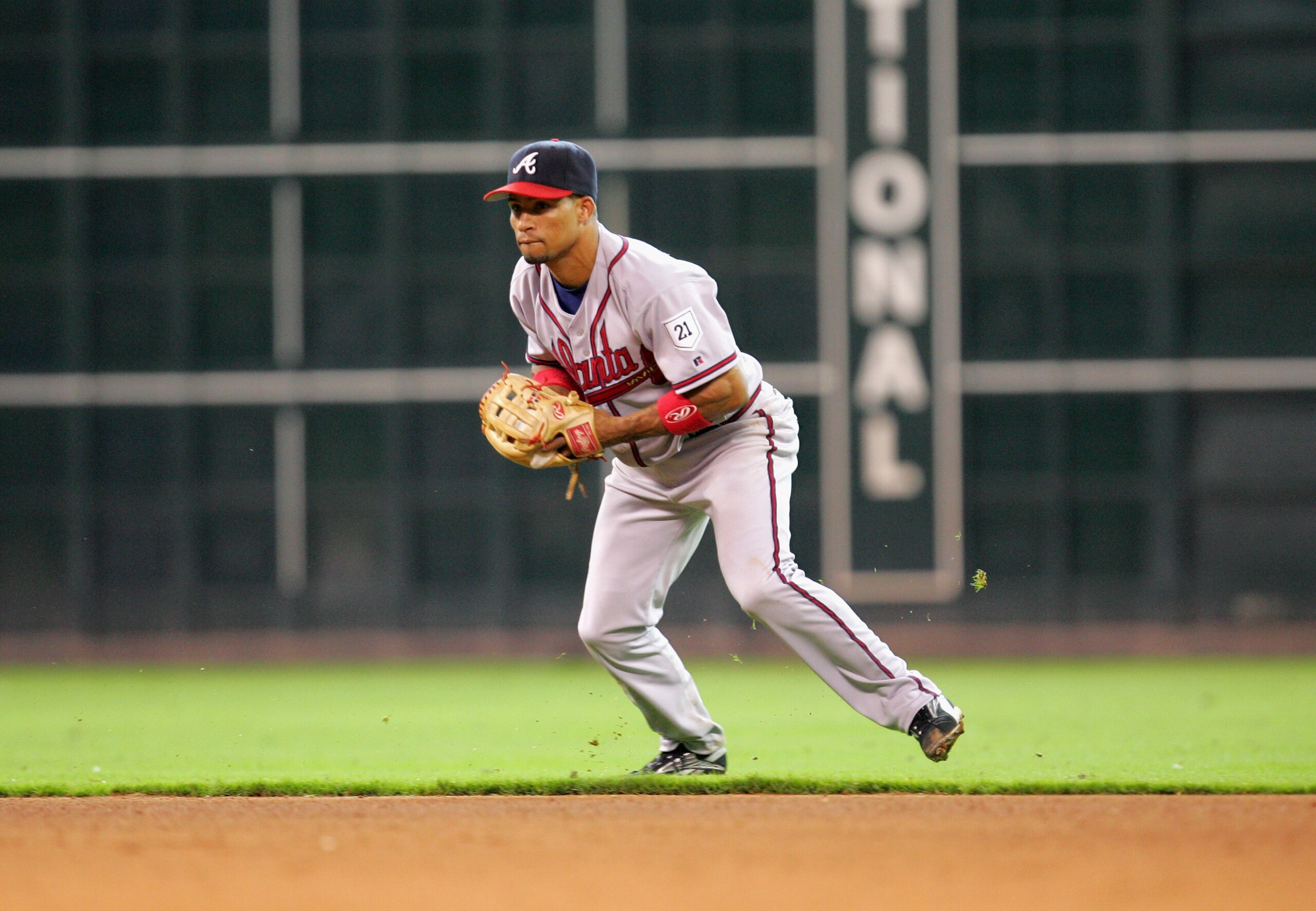
Stats: 7,237 PA, .281/.346/.402 (96 OPS+), 113 HR, 587 RBI, 39.5 WAR
Postseason: 285 PA, .227/.306/.336, 4 HR, 16 RBI, WS winner
WAR/500: 2.73
A speedy table-setter with a rocket arm, Rafael Furcal replaced veteran Walt Weiss as the Braves' starting shortstop in 2000 and won NL Rookie of the Year with a .295 average, 40 steals and 87 runs scored in a 4.0 WAR season.
While he was never a star, he was a consistent threat for a high batting average, 30-plus steals and stellar defense throughout his time with the Braves and Dodgers.
During a contract year in 2005, he hit .284/.348/.429 (102 OPS+) with 31 doubles, 11 triples, 12 home runs and 46 steals, which, along with an eye-popping 24 DRS, was good for a career-high 6.5 WAR.
That earned him a three-year, $39 million deal from the Dodgers.
After battling injuries throughout his early 30s, he resurfaced with the St. Louis Cardinals. He won a World Series ring as a midseason pickup in 2011 and made his third and final All-Star appearance in 2012.
10. Nomar Garciaparra
17 of 26
Stats: 4,042 PA, .308/.359/.497 (118 OPS+), 133 HR, 596 RBI, 44.3 WAR
Postseason: 71 PA, .277/.338/.338, 0 HR, 4 RBI
WAR/500: 5.48
Nomar Garciaparra was on his way to a Hall of Fame career when injuries knocked him off that path.
However, for three seasons during the 2000s, he was one of the game's elite players and an absolute force in the Red Sox lineup.
- 2000: 156 OPS+, .372/.434/.599, 51 2B, 21 HR, 96 RBI, 7.4 WAR
- 2002: 127 OPS+, .310/.352/.528, 56 2B, 24 HR, 120 RBI, 6.8 WAR
- 2003: 121 OPS+, .301/.345/.524, 37 2B, 28 HR, 105 RBI, 6.1 WAR
He was traded to the Chicago Cubs during a 2004 season in which he played just 81 games, and he was limited to just 62 contests the following campaign.
He spent the final four seasons of his career with the Dodgers and Oakland Athletics, averaging just 91 games per year, though he did return to the All-Star Game for the sixth and final time as a first baseman in 2006, when he hit .303/.367/.505 (120 OPS+) with 20 home runs and 93 RBI.
Those three stellar seasons and a late-career renaissance in Los Angeles are enough to solidify his place in this conversation.
9. Michael Young
18 of 26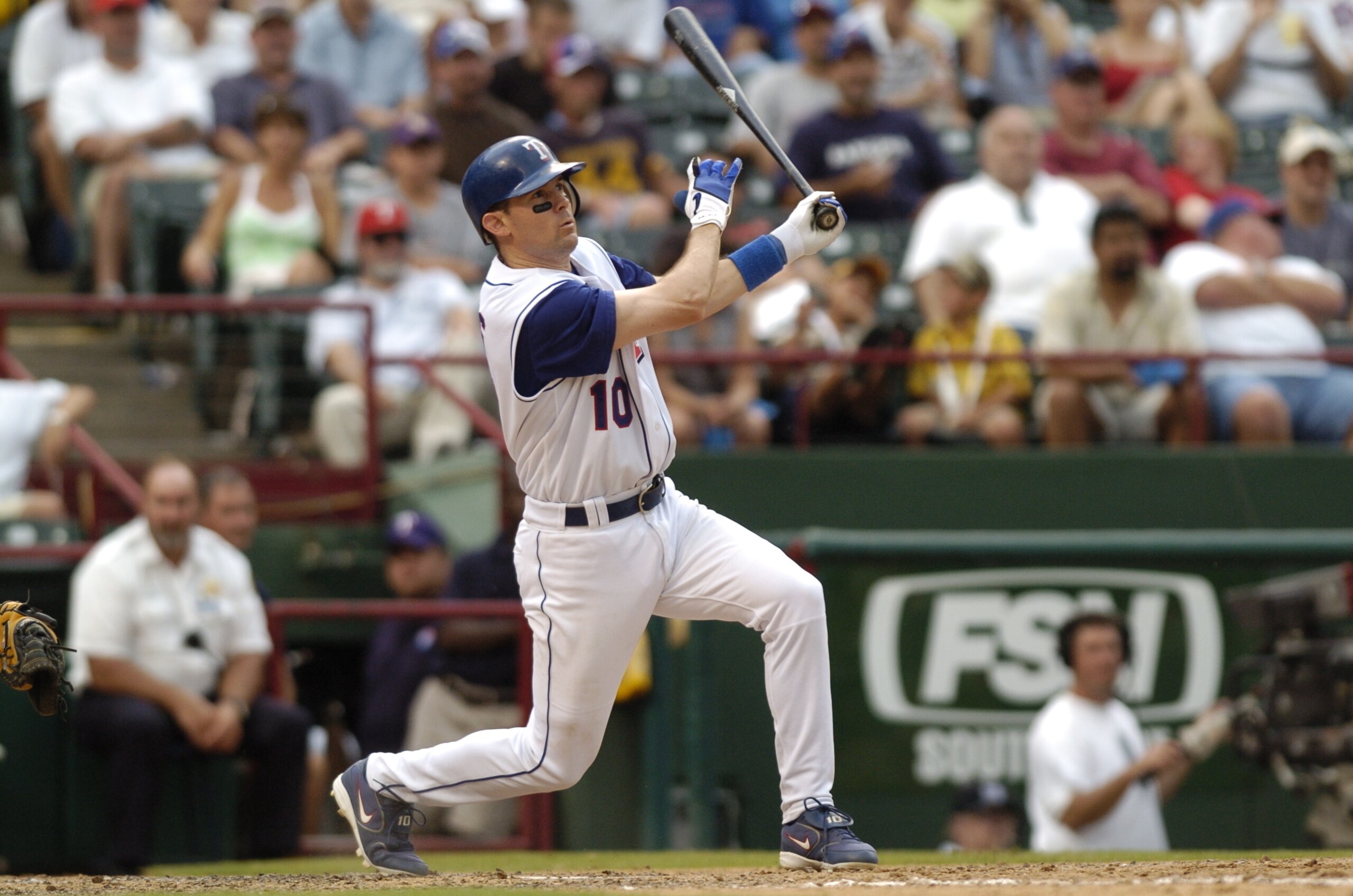
Stats: 8,612 PA, .300/.346/.441 (104 OPS+), 185 HR, 1,030 RBI, 24.7 WAR
Postseason: 157 PA, .238/.261/.364, 3 HR, 19 RBI
WAR/500: 1.43
The Toronto Blue Jays' decision to trade a young infield prospect named Michael Young to the Texas Rangers for veteran starter Esteban Loaiza at the 2000 trade deadline stands as one of the worst moves in franchise history.
Young ended up spending 13 seasons with the Rangers, moving around as needed to mold to the rest of the roster. During his time in MLB, he played at shortstop (793 games), third base (465 games), second base (448), designated hitter (167) and first base (111).
He hit .300 for his career and eclipsed that mark seven different times, including a .331 average in 2005 that won him the AL batting title. He also had at least 200 hits six times, leading the league in 2005 (221) and 2011 (213).
All told, he was a seven-time All-Star, and he retired as the Rangers franchise leader in hits (2,230), runs scored (1,085), total bases (3,286), doubles (415), triples (55) and games played (1,823).
8. Jose Reyes
19 of 26
Stats: 8,240 PA, .283/.334/.427 (103 OPS+), 145 HR, 719 RBI, 37.2 WAR
Postseason: 51 PA, .229/.275/.354, 1 HR, 5 RBI
WAR/500: 2.26
A top prospect who teased his potential in abbreviated stints with the big league roster in 2003 and 2004, Jose Reyes was finally handed the everyday shortstop job in 2005.
The then-22-year-old led the NL in steals (60) and MLB in triples (17) that year, showcasing legitimate game-changing speed atop the lineup.
The following year, he hit .300/.354/.487 (115 OPS+) while leading MLB in steals (64) and triples (17), and he followed that up by swiping a career-high 78 bases the following year.
All told, he hit .282/.334/.433 (104 OPS+) with 408 steals and 113 triples in 1,365 games with the New York Mets. He departed in free agency ahead of his age-29 season, having won the NL batting title (.337) in 2011.
After racking up 28 WAR during his first stint with the Mets, he was worth just 9.3 WAR over the final seven years of his career, which eventually came full circle and ended in Flushing.
At his peak, he's the closest thing the game has seen to Rickey Henderson in the last 20 years.
7. Francisco Lindor
20 of 26
Stats: 3,244 PA, .288/.347/.493 (119 OPS+), 130 HR, 384 RBI, 27.6 WAR
Postseason: 96 PA, .276/.337/.483, 5 HR, 12 RBI
WAR/500: 4.25
It's almost hard to believe that Francisco Lindor has only been in the big leagues for five seasons.
A glove-first prospect during his time in the Cleveland Indians farm system, he made an immediate impact on both sides of the ball as a rookie, hitting .313/.353/.482 (121 OPS+) with 38 extra-base hits in 99 games in 2015 to finish runner-up to Carlos Correa in AL Rookie of the Year voting.
Since his rookie season, his total of 27.6 WAR trails only Mike Trout (45.1), Mookie Betts (39.5), Nolan Arenado (31.4), Paul Goldschmidt (28.3) and Jose Altuve (28.0) among all position players.
His rare combination of power (130 HR), speed (93 SB) and defense (44 DRS) has made him the consensus top shortstop in baseball at a time when the position is loaded with impact talent.
So while the sample size is small compared to some others on this list, he's earned his place among the position's elite.
6. Hanley Ramirez
21 of 26
Stats: 7,127 PA, .289/.360/.486 (124 OPS+), 271 HR, 917 RBI, 37.9 WAR
Postseason: 80 PA, .380/.450/.577, 1 HR, 14 RBI
WAR/500: 2.66
For those who remember Hanley Ramirez best as a relatively one-dimensional slugger splitting his time between first base and designated hitter for the Boston Red Sox, he was something else entirely in his prime.
Shipped from Boston to the Marlins in the blockbuster deal that sent Josh Beckett and Mike Lowell the other way, Ramirez won NL Rookie of the Year in 2006 when he hit .292/.353/.480 with 46 doubles, 11 triples, 17 home runs, 119 runs scored and 51 steals.
During his first five seasons with the Marlins, he hit .313/.385/.521 (136 OPS+) and averaged 40 doubles, 25 home runs and 39 steals.
He had a 30-30 season with 33 home runs and 35 steals in 2008, and he won the NL batting title in 2009, when he hit .342/.410/.543 (148 OPS+) with 42 doubles, 24 home runs, 106 RBI, 101 runs scored and 27 steals to finish second in NL MVP voting.
As his frame filled out, he moved into a more of a run-production role, especially during his time with the Dodgers, but early in his career, he was an electric power/speed threat.
5. Andrelton Simmons
22 of 26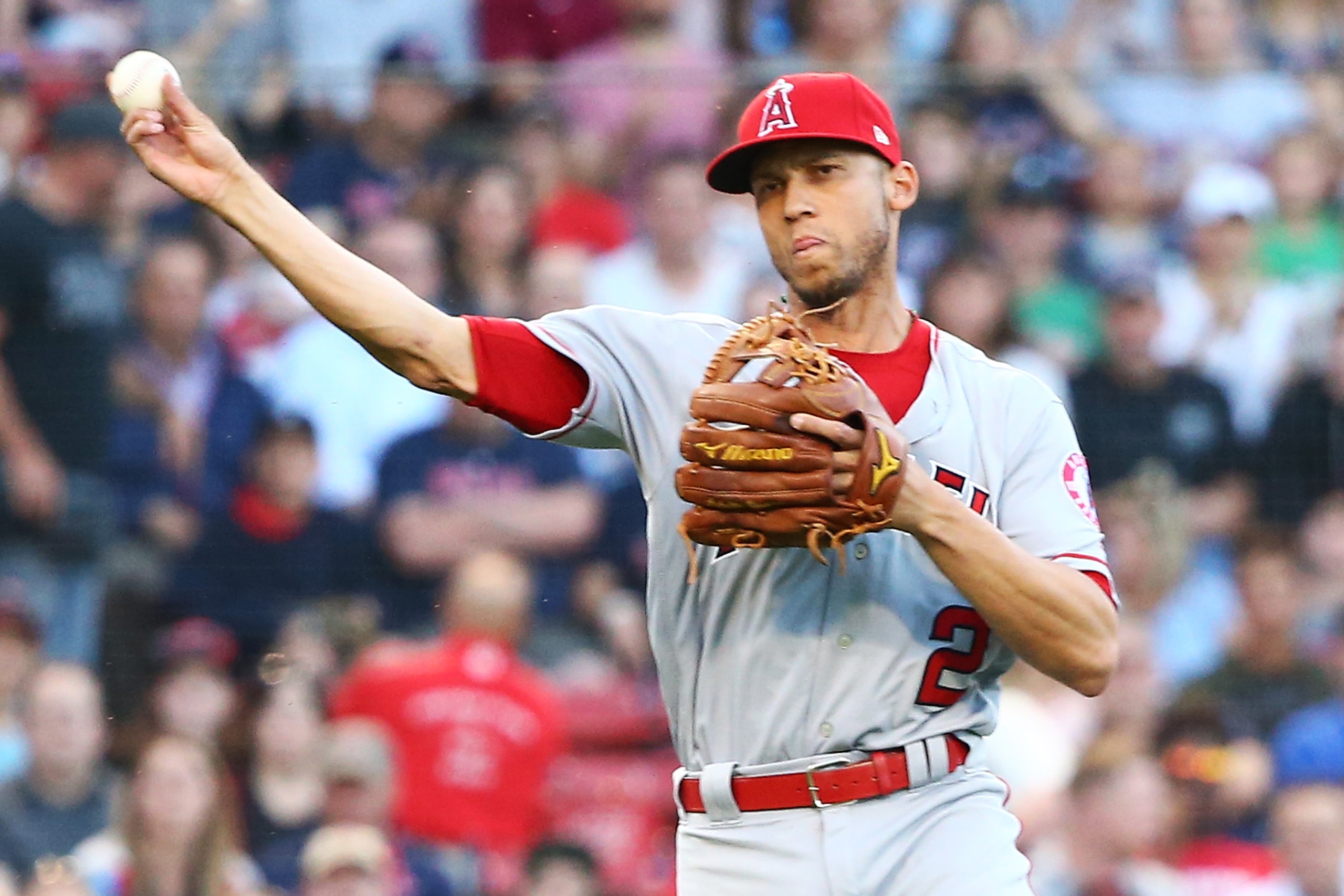
Stats: 4,153 PA, .268/.316/.380 (91 OPS+), 67 HR, 396 RBI, 36.3 WAR
Postseason: 19 PA, .250/.333/.313, 0 HR, 2 RBI
WAR/500: 4.37
Andrelton Simmons has a strong case to be called the best defensive player of the last 20 years.
Since the inception of defensive runs saved (DRS) as a statistic at FanGraphs during the 2003 season, his 193 DRS trail only Adrian Beltre's (202 DRS) among all players.
The next-closest shortstops are Adam Everett (119) and Jack Wilson (116).
The four-time Gold Glove winner has never been an elite offensive threat, but he's no slouch with the bat either, thanks in large part to his elite contact skills.
With only 257 walks, 370 strikeouts and 22 hit-by-pitches over 4,153 career plate appearances, he has put the ball in play in roughly 84.4 percent of his trips to the plate over the last eight years.
How valuable have his contributions been to the Angels?
He ranked among the 10-most valuable AL position players in both 2017 (7.8 WAR, second) and 2018 (6.3 WAR, eighth).
4. Jimmy Rollins
23 of 26
Stats: 10,240 PA, .264/.324/.418 (95 OPS+), 231 HR, 936 RBI, 47.6 WAR
Postseason: 215 PA, .246/.308/.364, 3 HR, 15 RBI, WS winner
WAR/500: 2.32
The double-play tandem of Chase Utley and Jimmy Rollins shone for the Philadelphia Phillies throughout the 2000s and into the 2010s.
In 15 seasons with the Phillies, Rollins hit .267/.327/.424 (97 OPS+), but those numbers don't tell the full story of the impact he had at his peak.
During the five-year stretch from 2004 through 2008, his 25.7 WAR led all shortstops and tied for 10th among all position players.
He won NL MVP in 2007, when he hit .296/.344/.531 (119 OPS+) with 38 doubles, 20 triples, 30 home runs and 41 steals. That's one of just four 20-20-20-20 seasons in MLB history.
With Rollins at shortstop, the Phillies reached the playoffs five years in a row from 2007 to 2011, capturing a World Series title in 2008.
On top of his extra-base power and speed, he was also a four-time Gold Glove winner and a three-time All-Star.
3. Miguel Tejada
24 of 26
Stats: 8,020 PA, .292/.340/.463 (112 OPS+), 273 HR, 1,163 RBI, 43.9 WAR
Postseason: 91 PA, .212/.242/.329, 1 HR, 8 RBI
WAR/500: 2.74
While Miguel Tejada was already in his third season as the Oakland Athletics' starting shortstop, 2000 was a breakout year.
He hit .275/.349/.479 (111 OPS+) with 32 doubles, 30 home runs and 115 RBI that season to finish 16th in AL MVP voting, kicking off an impressive run as one of the game's most productive offensive players.
From 2000 through 2006, he hit .297/.351/.498 (121 OPS+) while averaging 37 doubles, 29 home runs and 116 RBI, piling up 36.6 WAR along the way.
He won AL MVP in 2002, when he hit .308/.354/.508 (128 OPS+) with 34 home runs and 131 RBI for a 103-win Athletics team, and two years later he posted a career-high 7.4 WAR in his first season with the Baltimore Orioles while leading MLB with 150 RBI.
A six-time All-Star and two-time Silver Slugger winner, Tejada helped usher in the new era of offensive-minded shortstops.
2. Troy Tulowitzki
25 of 26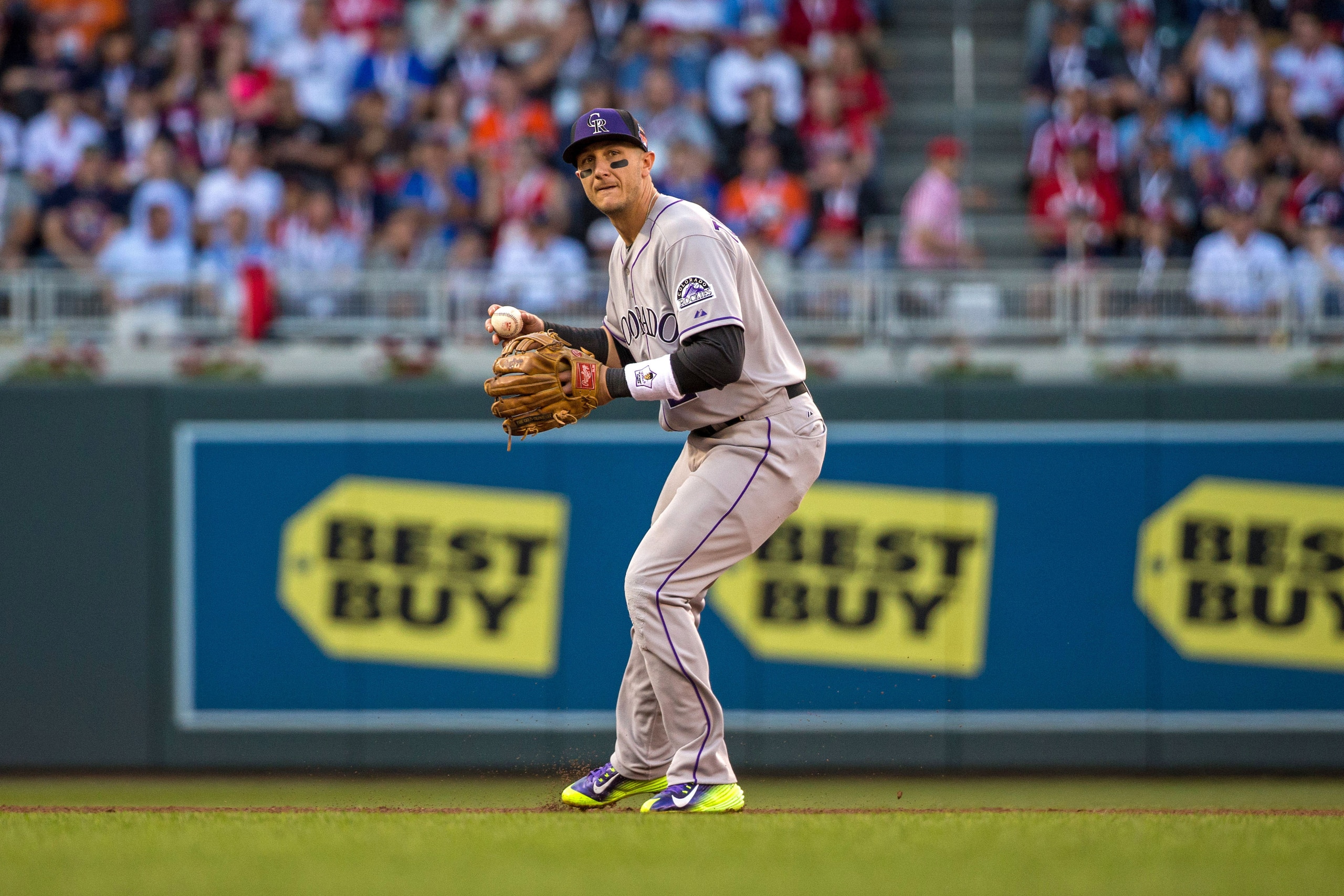
Stats: 5,415 PA, .290/.361/.495 (118 OPS+), 225 HR, 780 RBI, 44.5 WAR
Postseason: 146 PA, .213/.260/.368, 4 HR, 22 RBI
WAR/500: 4.11
The No. 7 pick in the 2005 draft, Troy Tulowitzki took over as the Colorado Rockies' starting shortstop two year later.
He hit .291/.359/.479 (109 OPS+) with 33 doubles, 24 home runs and 99 RBI in a 6.8 WAR season to finish second in NL Rookie of the Year voting, and he helped the Rockies to the first and only World Series appearance in franchise history.
After playing just 101 games the following year, he rattled off an incredible three-year stretch in which he recorded at least 6.0 WAR each season while hitting .304/.376/.554 (133 OPS+) and averaging 30 home runs and 97 RBI.
Unfortunately, the injury bug took hold after that and never let go.
From his age-27 season in 2012 through 2017, he averaged just 98 games per year. He remained productive when healthy, logging a 118 OPS+ and 17.9 WAR during that span, but he couldn't be counted on to play a full season.
His career ended unceremoniously during a five-game stint with the New York Yankees in 2019.
1. Derek Jeter
26 of 26
Stats: 9,716 PA, .307/.374/.432 (113 OPS+), 197 HR, 970 RBI, 47.9 WAR
Postseason: 529 PA, .301/.366/.467, 16 HR, 49 RBI, Two-time WS winner
WAR/500: 2.47
Even with the first four full seasons of his career occurring in the 1990s, Derek Jeter is still an easy choice for the No. 1 spot.
During the 2000s, he hit .317/.387/.456 (121 OPS+) while averaging 194 hits, 32 doubles, 16 home runs, 73 RBI, 109 runs scored and 4.4 WAR.
He made 12 of his 14 All-Star appearance from 2000 on and won two of his five World Series titles during the 2000s.
Even in his age-38 season in 2012, Jeter was going strong, leading MLB in hits (216) while posting a .316/.362/.429 line with 32 doubles and 15 home runs to win a Silver Slugger and finish seventh in AL MVP voting.
Throw in his staggering body of work in the postseason, which includes 2000 World Series MVP, and he's the obvious pick for the top spot.
All stats courtesy of Baseball Reference and FanGraphs unless otherwise noted.

.jpg?w=2560 "🚨 Texans Trade for MHJ")
.jpg?w=2560 "Grading Marvin Harrison Jr. Trade 📝")

.jpg?w=2560 "Mendoza Makes NFL Debut 🤩")
.jpg?w=2560 "49ers' Greenlaw Ejected After Headbutt")