
Passan Says MLB Players Know Fans Want Salary Cap and Proposal is 'Actively Worse for Them'

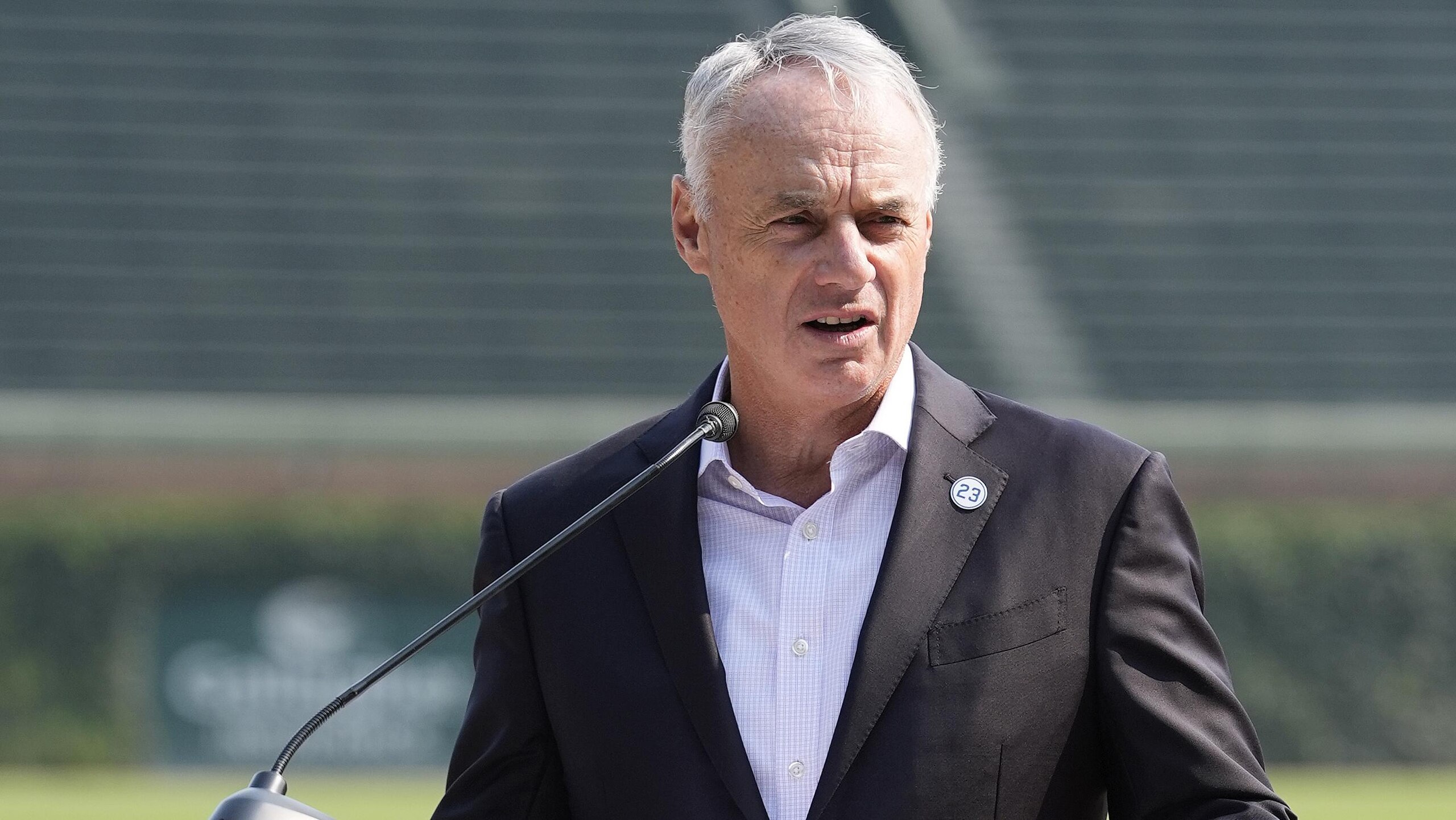
Despite some initial intrigue from some members of the MLB Players Association about the owners' proposal of a salary floor, the union remains steadfast in its desire to avoid any sort of cap system amid ongoing labor talks between the two sides.
Per ESPN's Jeff Passan, even though players were "initially intrigued" by the salary floor idea, they have become less enamored the more they learned about it and believe the system proposed by the league is "actively worse for them and that addressing competitive balance does not necessitate a salary cap."
In the first official proposal for a new collective bargaining agreement made on May 28, the league put forth a cap system that would start at $245.3 million in 2027 and included a floor of $171.2 million.
TOP NEWS

A Possible Trade Made by Every Team This Offseason ⚾
Yankees Keeping Aaron Boone
Most Lopsided Trades 🥴
The floor of $171.2 million is more than the 2026 payrolls for 14 teams, while seven teams this season are over the $245.3 million cap.
Theoretically, this would make it so all 30 teams would be spending a combined minimum of $5.136 billion under the cap-floor system. The 30 clubs are spending a total of $5.59 billion on player salaries in 2026.
If all 30 teams spent closer to the midpoint of the floor and cap in 2027, total player salaries would end up around $6.25 billion.
Passan did note specifics of the MLB proposal are hard to parse out because exact details of it have not been made public.
The union quickly dismissed the proposal, though, with MLBPA interim executive director Bruce Meyer telling Eric Fisher of Front Office Sports that the deal would reduce the players' share of league revenues and effectively eliminate guaranteed contracts.
"Player share [of industry revenue], under their proposal, would go down," Meyer said. "Your contracts are never really guaranteed. ... I thought they would try harder to make it look good, and they didn't even do that. They've effectively managed to cobble together the worst system for players in any of the major sports, and it's not even close."
In a non-scientific survey of more than 14,000 fans conducted by The Athletic prior to the start of this season, 68 percent of respondents voted in favor of a cap-floor system.
There is evidence from other sports to support the MLBPA's stance that a cap-floor system doesn't improve competitive balance.
For instance, the NBA has a salary floor system that requires teams to spend at least 90 percent of the total cap. Teams got around that by handing short-term, inflated contracts to free agents.
Even without a cap system in place, there have been MLB teams that had to spend money to avoid breaking the rules.
In the winter of 2024, the Athletics had to get their payroll up to $105 million before the start of the 2025 season to avoid a grievance from the MLBPA over a violation of revenue sharing rules.
The A's responded by giving $67 million to Luis Severino in free agency, as well as extending Lawrence Butler and Brent Rooker for a combined $125.5 million.
Despite those financial investments, the A's finished 76-86 last season and are under .500 through 66 games so far in 2026 (31-35).
Going back to 2021, a span of five full seasons, 22 of the 30 MLB teams have made the postseason at least once. Fourteen teams advanced to the league championship series, with eight having played in the World Series.
The Los Angeles Dodgers (2024, 2025) and Houston Astros (2021, 2022) are the only clubs that have made multiple World Series appearances since 2021.
MLB's current collective bargaining agreement runs through Dec. 1. If there is no agreement for a new one in place by that deadline, it will lead to the first work stoppage in four years since lockout that lasted 99 days before an agreement was made on March 10, 2022.


.jpg?w=2560 "🚨 Davante Out 6-10 Weeks")

.jpg?w=2560 "Tank Dell Playing Sunday 💯")