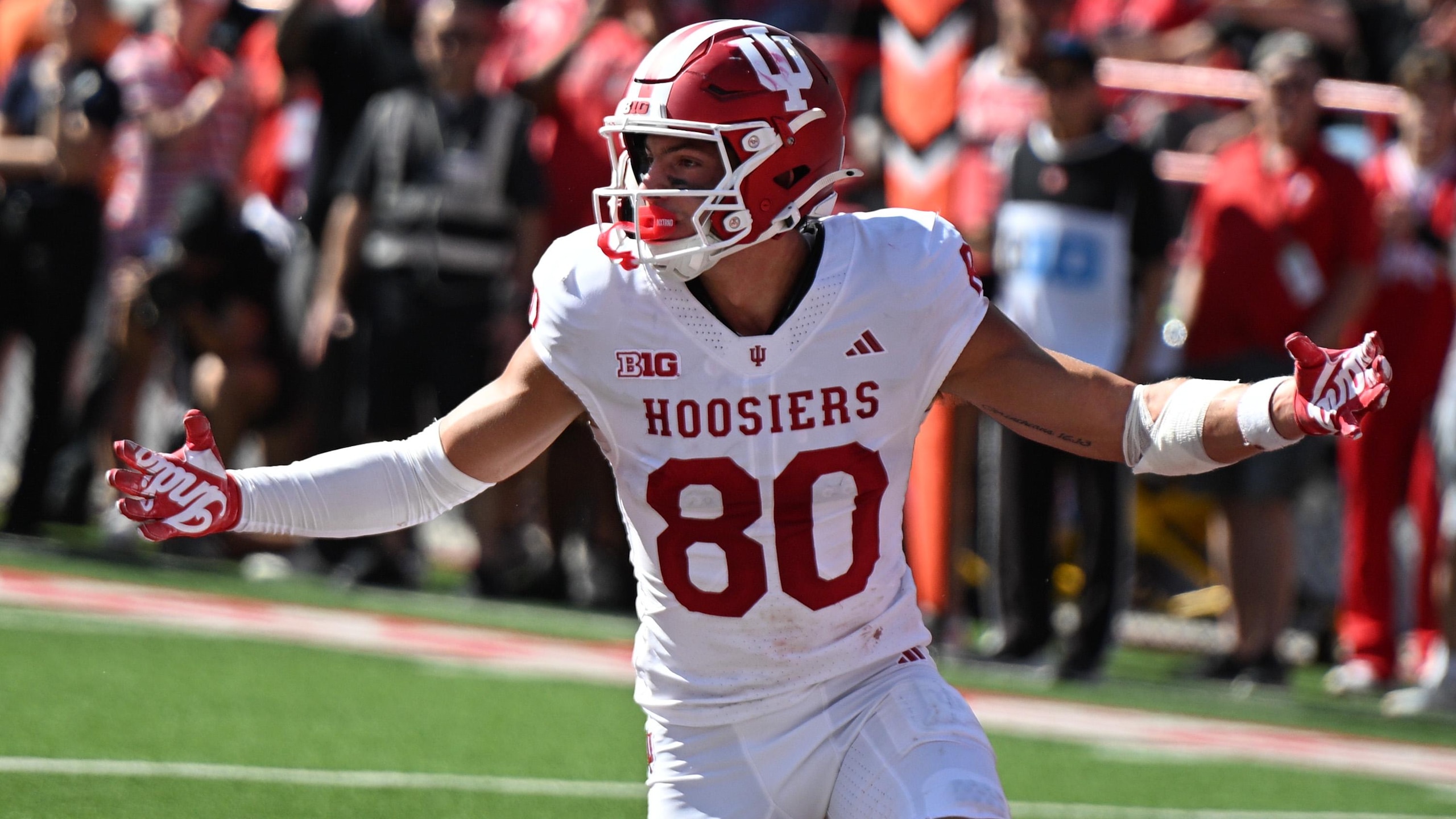
.jpg?w=2560 "Rams Seahawks Football")


With NFL training camps officially underway, teams are largely focused on the players they currently have within the building.
A few free-agent and trade options are still out there, of course. However, the coming weeks will be about paring rosters down to 53 players while identifying where the strengths and weaknesses reside.
Every roster, no matter how good or bad it may look on paper entering camp, has strengths and weaknesses. Some simply tend to stand out more than others.
Here, we'll examine the biggest pros and cons of each team's roster and what they might mean for the 2026 NFL season.
Arizona Cardinals
1 of 32.jpg?w=2560 "Cardinals Bengals Football")
Biggest Strength: Receiving Corps
New Arizona Cardinals head coach Mike LaFleur will have a chance to field one of the league's most dangerous passing attacks in 2026—if he can uncover an above-average starting quarterback.
On paper, Arizona's receiving corps is one of the NFL's best. Led by All-Pro tight end Trey McBride, the Cardinals' collection of pass-catchers also includes former top-five pick Marvin Harrison Jr., budding star Michael Wilson, and free-agent addition Kendrick Bourne.
Factor in rookie running back Jeremiyah Love, who caught 55 passes over the last two seasons, and it's hard not to be impressed by this overall group.
Biggest Weakness: Quarterback
Unfortunately, there's no guarantee that LaFleur will have an above-average signal-caller this season. Jacoby Brissett is back after a decidedly solid 2025 campaign—he posted a 94.1 QB rating but went just 1-11 as the starter—and the Cardinals added Gardner Minshew II and rookie third-round pick Carson Beck.
Arizona would probably feel better about its quarterback situation had Brissett not skipped the voluntary portion of the offseason while angling for a new contract. As it stands, quarterback remains the biggest question mark on this roster.
Atlanta Falcons
2 of 32.jpg?w=2560 "Falcons Football")
Biggest Strength: Running Back
If the Atlanta Falcons' offense doesn't lead with its rushing attack in 2026, it'll be a fairly significant surprise.
Atlanta's backfield is headlined by do-it-all superstar Bijan Robinson. The 2023 first-round pick has seen steadily increasing production in the NFL and was a first-team All-Pro and the league's scrimmage-yards leader in 2025.
Behind Robinson, the Falcons have Brian Robinson Jr., a former full-time NFL starter who should provide tremendous value as a change of pace or spot-starter.
Biggest Weakness: Quarterback
The Falcons are also likely to lead with their ground game because of major questions at quarterback. Kirk Cousins departed in the offseason, and 2024 first-round pick Michael Penix Jr. is recovering from a torn ACL.
And, aside from a few flashes, Penix largely underwhelmed before the injury in 2025.
Atlanta added former Miami Dolphins starter Tua Tagovailoa to compete with Penix this offseason. Whether Tagovailoa can ever replicate the Pro Bowl form he had in 2023 remains to be seen, as does his fit in Kevin Stefanski's offense.
Baltimore Ravens
3 of 32.jpg?w=2560 "Ravens Steelers Football")
Biggest Strength: Quarterback
The Baltimore Ravens will have a new identity following the departure of head coach John Harbaugh. However, they're still going to go as far as Lamar Jackson can take them in 2026.
Fortunately, Jackson has shown that he can make Baltimore a top-tier contender when he's at his best.
Jackson was limited by hamstring and back issues in 2025, but he's a two-time MVP who probably should have won a third MVP in 2024. Josh Allen walked away with the award that season, but Jackson's numbers were better, almost across the board, than they were during his 2023 MVP campaign.
Biggest Weakness: Interior Offensive Line
The Ravens lost a cornerstone player when center Tyler Linderbaum bolted for the Las Vegas Raiders in free agency. With center Ethan Pocic, free-agent John Simpson, and rookie first-round pick Olaivavega Ioane now in the fold, Baltimore may have all-new starters along its offensive interior.
While the potential for reliable line play is there—especially if Ioane plays up to his draft status immediately—the unit is a massive question mark heading into the preseason.
.jpg?w=2560 "Bills Rams Football")
.jpg?w=2560 "Seahawks Broncos Football")
Buffalo Bills
4 of 32.jpg?w=2560 "Bills Jaguars Football")
Biggest Strength: Quarterback
As is the case for the Ravens and Lamar Jackson, the Buffalo Bills will go as quarterback Josh Allen goes in 2026.
Allen was the NFL MVP just two seasons ago, and while he wasn't quite as efficient in 2025, he still helped lead Buffalo to a 12-5 record despite a questionable receiving corps.
With an ability to devastate opposing defenses and take over games with his combination of arm talent and scrambling ability, he remains one of the league's most dynamic dual-threat quarterbacks.
Biggest Weakness: Run Defense
While the Bills have some talented pieces in their front seven, including defensive tackle Ed Oliver and linebacker Terrel Bernard, the group's inability to stop the run has been a massive defensive liability.
Buffalo ranked 28th in rushing yards allowed and 30th in yards per carry allowed last season.
The Bills did little to address the issue in the offseason before using fourth- and fifth-round picks on linebacker Kaleb Elarms-Orr and defensive lineman Zane Durant, respectively. Longtime starting linebacker Matt Milano remains unsigned.
Carolina Panthers
5 of 32.jpg?w=2560 "Seahawks Panthers Football")
Biggest Strength: Cornerback
The Carolina Panthers have one of the league's top young cornerbacks in Jaycee Horn, who has made the Pro Bowl in each of the past two seasons. Horn is currently recovering from a foot laceration, but he's set to lead a very promising cornerback group in 2026.
Fellow starter Mike Jackson hasn't been as consistent as Horn, but he was very dependable in 2025, allowing an opposing passer rating of just 75.0 in coverage. Chau Smith-Wade is a solid starter in the slot, and while the Panthers don't have much proven depth behind their top trio, the group should be a defensive strength this season.
Biggest Weakness: Pass-Catching Depth
The Panthers are still waiting for quarterback Bryce Young to solidify himself as a franchise quarterback. For that to happen, they're going to need more out of their receiving corps.
2025 first-round pick Tetairoa McMillan, the reigning Offensive Rookie of the Year, is a strong top option. After him, however, Carolina doesn't have many dependable targets. Jalen Coker ranked second among receivers with just 394 receiving yards last season, while Tommy Tremble led Panthers tight ends with just 249 yards.
Carolina did sign John Metchie III and select Chris Brazzell II in the third round, but the receiving corps carries a lot of questions outside of McMillan.
Chicago Bears
6 of 32.jpg?w=2560 "APTOPIX Bears 49ers Football")
Biggest Strength: Offensive Weapons
While quarterback Caleb Williams has already graduated to face-of-the-franchise status, he still has room to grow. Fortunately, he'll get to operate with one of the NFL's most complete skill groups in 2026.
Chicago traded away wide receiver D.J. Moore, but the team still boasts an incredible collection of playmakers.
The receiving corps is headlined by wideouts Luther Burden III, Rome Odunze, and free-agent addition Kalif Raymond, along with tight ends Colston Loveland and Cole Kmet. The Bears' backfield, led by D'Andre Swift, Kyle Monangai, and Roschon Johnson, is deep and talented.
Biggest Weakness: Edge-Rusher
The Bears have a proven ability to battle back late in games—they had seven fourth-quarter comebacks, including the postseason—but they've had to play catch-up because of a lackluster defense.
An underwhelming pass rush was the team's biggest issue in 2025, and the Bears have done little to address it. Montez Sweat recorded 10 of the team's 35 sacks last season, and defensive tackle Gervon Dexter Sr. was the only other player to top five sacks.
While Chicago did add interior defensive linemen Neville Gallimore and Kentavius Street this offseason, it added nothing to its edge rotation.
Cincinnati Bengals
7 of 32.jpg?w=2560 "Browns Bengals Football")
Biggest Strength: Quarterback
It's becoming impossible to mention Joe Burrow without thinking of his lengthy injury history. However, it's hard to deny the Cincinnati Bengals aren't a dramatically better team when the quarterback is healthy and on the field.
Last season, Cincinnati went 5-3 with Burrow as the starter and 1-8 without him. In the three seasons in which he has been healthy, the Bengals have recorded three winning records and made two appearances in the AFC title game. In the three seasons in which he's missed significant time, the team has gone 19-30.
Cincinnati has a very capable backup in Joe Flacco, but the Bengals will go as Burrow goes in 2026.
Biggest Weakness: Edge-Rusher
The Bengals have some promising young players on the edge, including 2025 first-round pick Shemar Stewart and rookie second-rounder Cashius Howell. After losing Trey Hendrickson and Joseph Ossai in free agency, however, their edge rotation is an unknown.
Myles Murphy led the Bengals with just 5.5 sacks last season, while Hendrickson and Ossai were the only other edge-rushers with more than 2.0 sacks on the season. The Bengals did add Boye Mafe in free agency, though he's coming off a middling two-sack campaign.
The good news is that, after trading for defensive tackle Dexter Lawrence, the Bengals should have the ability to generate a strong interior pass rush.
Cleveland Browns
8 of 32.jpg?w=2560 "Browns Patriots Football")
Biggest Strength: Defensive Line
The Cleveland Browns had one of the league's most formidable defensive fronts before they traded Myles Garrett to the Los Angeles Rams. Obviously, the unit took a significant hit when Garrett departed, but it should still be the headliner of an above-average Browns defense.
Cleveland got two-time Pro Bowler Jared Verse back in the Garrett deal, and it still has the bulk of last year's rotation—including Mason Graham, Alex Wright, Isaiah McGuire, and Maliek Collins—though Collins is opening camp on the PUP list.
The Browns' defensive line won't wreak as much havoc as it did with Garrett leading the charge, but it'll still be a unit that opposing teams will have to game plan for.
Biggest Weakness: Quarterback
This offseason, the Browns are organizing yet another quarterback competition, this one between second-year quarterback Shedeur Sanders and 2022 trade bust Deshaun Watson.
Sanders flashed some promise as a rookie but struggled with decision-making and turnovers. Watson hasn't really shown any upside since arriving in Cleveland and is likely a one-year bridge, at best, at this point.
The Browns should expect to try winning despite their quarterback play this season and not because of it.
Dallas Cowboys
9 of 32.jpg?w=2560 "Cowboys Pickens Football")
Biggest Strength: Receiving Corps
The Dallas Cowboys have an above-average quarterback in Dak Prescott, but they can field an elite passing attack this season because of their receiving corps.
George Pickens led the team with 1,429 receiving yards last season, while CeeDee Lamb also topped the 1,000-yard mark despite missing three games with an ankle injury. Ryan Flournoy (475 yards) and KaVontae Turpin (396 yards) proved to be strong complementary options, while Jake Ferguson (600 yards) remains one of the NFL's more underrated receiving tight ends.
Biggest Weakness: Cornerback
As good as the Cowboys were at passing the ball in 2025, they were equally bad at stopping opposing passers. The Dallas defense ranked dead-last in both passing yards allowed and net yards per pass attempt allowed. While the defense may be a bit better overall this season, the cornerback room might not.
DaRon Bland has been a difference-maker when healthy, but he battled foot injuries last season that eventually led to surgery. Free-agent addition Cobie Durant was a solid starter with the Los Angeles Rams, but the depth behind him and Bland is questionable. Shavon Revel Jr. allowed an opposing passer rating of 126.1 last season, while rookie fourth-rounder Devin Moore is unproven.
The caveat here is that rookie safety Caleb Downs has the tools and traits to be an instant star, and he could bolster the cornerback group as a full-time nickel back.
Denver Broncos
10 of 32.jpg?w=2560 "Packers Broncos Football")
Biggest Strength: Offensive Line
Last season, the Denver Broncos regularly won on the strength of their pass rush, which recorded a league-high 68 sacks.
However, John Franklin-Myers (7.5 sacks) departed in free agency, while Jonathon Cooper (8 sacks) is dealing with a pending legal matter that could lead to league discipline, per Broncos Wire.
While Denver's pass rush could take a step back in 2026, its offensive line should remain a powerhouse. First-team All-Pros Garett Bolles and Quinn Meinerz anchor an offensive line that was ranked first overall by Pro Football Focus last season and retained all five starters.
With their offensive line intact, the Broncos should have little trouble opening holes in the ground game and protecting quarterback Bo Nix this season.
Biggest Weakness: Inside Linebacker Depth
The Broncos' roster doesn't have any truly glaring holes, which is why Denver was the top AFC squad in Bleacher Report's latest power rankings. It could, however, use some additional depth at inside linebacker.
Justin Strnad, who received a three-year extension this offseason, is a solid starter but will also turn 30 next month. Alex Singleton is serviceable but is too often a liability in coverage (122.9 opposing passer rating last season). The depth behind those two, headlined by Jordan Turner, Karene Reid, and rookie seventh-round pick Red Murdock, is suspect.
Detroit Lions
11 of 32.jpg?w=2560 "Lions Bears Football")
Biggest Strength: Receiving Corps
New Detroit Lions offensive coordinator Drew Petzing couldn't be walking into a much more favorable situation.
The Lions' receiving corps is both talented and deep. The group is headlined by Amon-Ra St. Brown, Jameson Williams, Sam LaPorta, and Isaac TeSlaa, and Detroit added talented backups in Greg Dortch, Cedrick Wilson Jr., and Tyler Conklin this offseason.
When factoring in Jahmyr Gibbs, one of the top receiving backs in the NFL, the Lions have an aerial attack capable of matching any in the league.
Biggest Weakness: Secondary
The Lions may need to rack up the points in 2026 because their injury-impacted secondary looms as a liability. Safeties Brian Branch and Kerby Joseph are a terrific tandem when healthy, but neither is.
Branch is coming off a torn Achilles and isn't expected to return before December, while Joseph has a knee issue and an unclear timeline.
"I mean, honestly, we probably won't know until we get into the thick of training camp," head coach Dan Campbell said of Joseph's recovery, per ProFootballTalk's Michael David Smith.
Cornerback D.J. Reed missed much of last season with a hamstring injury, and the rest of Detroit's cornerback room—now headlined by Rock Ya-Sin and Roger McCreary—is iffy after the release of Terrion Arnold, who became a free agent amid a court case, per ESPN.
Green Bay Packers
12 of 32.jpg?w=2560 "Packers Cowboys Football")
Biggest Strength: Offensive Backfield
The Green Bay Packers lacked a legitimate go-to target in the passing game last season, with no one player reaching 750 receiving yards. However, they managed to field a functional offense (15th in yards) thanks to the terrific duo of quarterback Jordan Love and running back Josh Jacobs.
Love is one of the NFL's ascending stars. A mobile, accurate passer with a career QB rating of 96.8, he's delivered three playoff berths in his three seasons as a starter. Jacobs, meanwhile, is a high-volume back and a capable dual-threat who has delivered 2,882 scrimmage yards and 30 touchdowns in two seasons with Green Bay.
Biggest Weakness: Pass Rush
It may seem strange to consider the pass rush a weakness of a team that employs Micah Parsons. However, Parsons is recovering from a torn ACL and isn't expected to return until late in the season.
"The goal has always been playoffs, and I think we're all on the same page," Parsons said, per Mike Spofford of the team's official website.
Parsons recorded 12.5 of Green Bay's 36 sacks last season, and Rashan Gary was the only other Packers defender to top four sacks—and he was traded to Dallas this offseason. Green Bay did add Javon Hargrave to the defensive line, but as long as Parsons is inactive, the pass rush will loom as a liability.
Houston Texans
13 of 32.jpg?w=2560 "49ers Texans Football")
Biggest Strength: Pass Rush
The Houston Texans have been a playoff threat in each of the past three seasons, thanks to a terrific defense and a dangerous pass rush. Led by Will Anderson Jr. and Danielle Hunter, Houston's defense is particularly dangerous on the edge.
Hunter and Anderson combined for 27 of Houston's 47 sacks last season.
While Houston's interior pass rush isn't as prolific as its edge duo, the Texans bolstered the group by signing Logan Hall and using a second-round pick on Ohio State's Kayden McDonald.
Biggest Weakness: Offensive Line
While Houston's defensive front has a chance to be elite this season, its offensive line remains a work-in-progress. The Texans have spent the last couple of offseasons shuffling the line, and they're eyeing another new lineup in 2026.
Last year's unit only allowed 31 sacks, but it also paved the way for a rushing attack ranked 29th in yards per carry. Pro Football Focus ranked Houston's offensive line 27th overall for the season.
Houston added Evan Brown, Braden Smith, Wyatt Teller, and rookie first-round pick Keylan Rutledge to the group in the offseason, but the O-line remains Houston's biggest question mark.
Indianapolis Colts
14 of 32.jpg?w=2560 "Colts Chargers Football")
Biggest Strength: Offensive Backfield
The caveat here is that quarterback Daniel Jones is recovering from a torn Achilles and may not be at 100 percent to start the season. When healthy, though, he and running back Jonathan Taylor gave the Indianapolis Colts an elite backfield last season.
Taylor has long been a high-volume playmaker and finished last season with 1,963 scrimmage yards and 20 combined touchdowns. Jones was a dangerous dual-threat who recorded five rushing touchdowns to go with 19 passing touchdowns and a 100.2 QB rating through 13 starts.
Jones will obviously have to be healthy to replicate his 2025 success, but if he is, Indianapolis' offense core will be set.
Biggest Weakness: Edge Depth
The Colts may have found their quarterback of the future in Jones. Finding opposing quarterbacks could be an issue for Indy's defense in 2026, however.
Laiatu Latu is an ascending talent who logged 8.5 sacks last season, but he was the only Colts defender who recorded more than four quarterback takedowns. While the Colts added Arden Key in free agency, they also lost Kwity Paye—and each recorded four sacks in 2025.
With an underwhelming edge rotation, the Colts frequently sent extra defenders in 2025, finishing with the league's ninth-highest blitz rate (26.6 percent). The group is not any better than it was a year ago.
Jacksonville Jaguars
15 of 32.jpg?w=2560 "Colts Jaguars Football")
Biggest Strength: Edge-Rusher
The Jacksonville Jaguars have boasted one of the league's better edge-rushing tandems over the past few years, and they should do so again in 2026.
Josh Hines-Allen has tallied 61 sacks in his seven pro seasons, and he's averaged just over 11 sacks per season over the last three years. 2022 first overall pick Travon Walker had an underwhelming rookie campaign and was limited by a knee injury last season. However, he recorded double-digit sacks in both 2023 and 2024.
Biggest Weakness: Running Back
The Jaguars lost standout running back Travis Etienne Jr. in free agency, and they've spent the offseason hyping their ability to replace him with 2025 fourth-rounder Bhayshul Tuten.
"OK now, Tuten, you got it. You understand it more. Now just go be you, like go do what got you here," head coach Liam Coen said on The Schrager Hour podcast (h/t John Shipley of SI.com) "Go be special, that's who you are. And we're definitely expecting Tuten to have a big year for us."
The issue is that Tuten logged just 93 touches last season and remains largely unproven. The depth behind him, headlined by Chris Rodriguez Jr., LeQuint Allen Jr., and Ameer Abdullah, leaves plenty to be desired, too.
Kansas City Chiefs
16 of 32.jpg?w=2560 "Texans Chiefs Football")
Biggest Strength: Quarterback
This one's fairly obvious. Patrick Mahomes is already a Hall of Fame quarterback, and he gives the Kansas City Chiefs a chance to steal any game when he's healthy. While he is recovering from a torn ACL, it appears more likely than not that he'll be on the field in Week 1.
Mahomes was medically cleared for the start of Chiefs training camp.
"I feel stronger than I've ever felt, as far as strength and lifting [weights]," Mahomes said, per ESPN's Nate Taylor. "I feel amazing."
While Kansas City fell out of contention even before Mahomes was injured last season, his rapid recovery is the single biggest reason why the Chiefs may bounce back in 2026.
Biggest Weakness: Offensive Tackle
Naturally, the Chiefs will want to keep Mahomes healthy in 2026, and that could be a challenge because of their tackle options.
Left tackle and 2025 first-round pick Josh Simmons was limited to eight games as a rookie by an absence for personal reasons and a season-ending wrist fracture. He was ranked just 58th overall among tackles by Pro Football Focus for the season, while projected starting right tackle Jaylon Moore was ranked 56th overall by PFF.
Moore missed time late in the season with a lingering knee issue.
Las Vegas Raiders
17 of 32.jpg?w=2560 "Top 5 Tight Ends Football")
Biggest Strength: Tight End
Whenever the Raiders decide to hand the offensive reins to rookie first overall pick Fernando Mendoza, the Indiana product will benefit from having one of the NFL's top tight end groups.
Brock Bowers is arguably the NFL's top receiving tight end when fully healthy, and the two-time Pro Bowler is backed up by 2023 second-round pick Michael Mayer. Ian Thomas, who started 64 games for the Panthers, is a spectacular TE3.
Biggest Weakness: Cornerback
There's a chance that the Raiders' cornerback group ends up being better than it looks on paper. Former Packers first-round pick Eric Stokes has been inconsistent but has flashed some promise. Rookies Treydan Stukes and Jermod McCoy have potential, as well, though McCoy is recovering from a significant knee injury.
However, the cornerback room remains an unknown. Stokes hasn't been consistent, and while Taron Johnson has been dependable in the past, there's a reason why the Bills were willing to part with him this offseason—he allowed an opposing passer rating of 94.7 in coverage last season.
Second-year corner Darien Porter rounds out a group that lacks experience and proven production overall.
Los Angeles Chargers
18 of 32.jpg?w=2560 "Chargers Cowboys Football")
Biggest Strength: Quarterback
A case can certainly be made for the Los Angeles Chargers' tackle tandem of Joe Alt and Rashawn Slater. However, injuries limited Alt and Slater to six combined games last season, and the Chargers still made the playoffs with the league's 12th-ranked offense.
That's a testament to quarterback Justin Herbert, who has consistently been one of the league's most dependable signal-callers—even if he has yet to break into the ranks of the elite.
Despite facing multiple injuries along the offensive line and at running back—plus his own hand fracture—Herbert went 11-5 with 498 rushing yards, 3,727 passing yards, and a 94.1 QB rating. In other words, he fully proved that he can carry Los Angeles when he has to.
Biggest Weakness: Guard
The interior offensive line was a mess last season, which, along with the tackle injuries, contributed to a 30th-place ranking among offensive lines from Pro Football Focus.
Ideally, Alt and Slater will both be and stay at 100 percent this season. While the Chargers also added a solid starting center in Tyler Biadasz this offseason, they still face some questions at guard.
The Chargers brought in Cole Strange, who ranked just 58th overall among guards last season, per PFF, before using a second-round pick on Florida's Jake Slaughter. L.A.'s level of guard play probably can't get much worse than it was last season, but the position remains an unknown.
Los Angeles Rams
19 of 32.jpg?w=2560 "Rams Seahawks Football")
Biggest Strength: Quarterback
The Los Angeles Rams have a lot of team strengths, especially after adding Myles Garrett, Trent McDuffie, and Jaylen Watson to their defense. However, they're widely considered Super Bowl favorites because they have reigning league MVP Matthew Stafford at quarterback.
Yes, the presence of players like Puka Nacua, Davante Adams, Kyren Williams, and Colby Parkinson helps make Stafford's job easier. Sure, Los Angeles could probably notch a win or three with Stetson Bennett or Ty Simpson spot-starting at quarterback.
However, Stafford is at the top of his game, and there might not be a signal-caller a team could want more than him in a high-pressure postseason situation in 2026.
Biggest Weakness: Offensive Tackle Depth
The Rams don't have a truly glaring weakness on their roster, though they could want for a little more depth at tackle.
Alaric Jackson and Warren McClendon Jr. are dependable starters, but Jackson is dealing with an off-field legal issue from June that could still lead to league discipline, per ESPN.
Protecting Stafford will be critical this season, and the depth behind Jackson and McClendon—primarily a soon-to-be 36-year-old David Quessenberry and rookie third-round pick Keagen Trost—leaves something to be desired.
Miami Dolphins
20 of 32.jpg?w=2560 "Buccaneers Dolphins Football")
Biggest Strength: Running Back
The Miami Dolphins essentially tore their roster down to the studs this offseason, which is a big reason why they ranked dead-last in Bleacher Report's pre-camp power rankings.
Running back De'Von Achane is the one true standout Miami decided to keep. The 2025 Pro Bowler rushed for 1,350 yards and tallied 1,838 scrimmage yards this past season. While incoming quarterback Malik Willis has some intriguing potential, Achane should be the face of the Dolphins' offense in 2026.
Biggest Weakness: Receiving Corps
Unfortunately for Willis, the Dolphins are opening camp with arguably the worst receiving corps in the league.
Miami parted with both Tyreek Hill and Jaylen Waddle early in the offseason, and it hasn't put a ton of resources into replacing them. Rookie third-round picks Chris Bell and Caleb Douglas headline a receiving corps that also features the likes of Tutu Atwell, Jalen Tolbert, Malik Washington, and Terrace Marshall Jr.
Washington is the only one of the veteran receivers who topped 300 yards in 2025, and he finished with 317. Add in the fact that the Dolphins don't have a proven receiving tight end, and Miami's receiving corps feels like an overall liability.
Minnesota Vikings
21 of 32.jpg?w=2560 "Vikings Giants Football")
Biggest Strength: Receiving Corps
In training camp, free-agent addition Kyler Murray and 2024 first-round pick J.J. McCarthy will vie for the starting quarterback job. Whoever wins it will be working with one of the best receiving corps in the NFL.
Justin Jefferson is regularly ranked among the best wideouts in the league, and No. 2 receiver Jordan Addison has really started to come into his own. T.J. Hockenson remains a reliable target as well, and Minnesota added Jauan Jennings to the group this offseason.
31-year-old running back Aaron Jones may be on the decline. However, he remains a strong outlet out of the backfield who has caught 79 passes in 29 games with Minnesota.
Biggest Weakness: Defensive Line
The Vikings had to make some financial concessions this offseason and opted to part with defensive tackles Jonathan Allen and Javon Hargrave before trading edge-rusher Jonathan Greenard.
Minnesota still has a solid edge duo in Andrew Van Ginkel and Dallas Turner, but its interior defensive line is an unknown. Rookies Caleb Banks and Domonique Orange are unproven, and Banks has missed most of the offseason while recovering from a foot fracture.
New England Patriots
22 of 32.jpg?w=2560 "Super Bowl Football")
Biggest Strength: Quarterback
New England Patriots quarterback Drake Maye showed promise as a rookie in 2024, finishing the season as a Pro Bowl alternate. He fully arrived in 2025, leading New England to Super Bowl LX while finishing as an MVP finalist behind Matthew Stafford.
Maye is a legitimate difference-maker in the mold of Josh Allen or Lamar Jackson. His combination of arm talent, scrambling ability, and improvisational skills allowed New England to have a dynamic offense last season despite having questionable line depth and a limited amount of reliable receiving targets.
With A.J. Brown, Alijah Vera-Tucker, and Caleb Lomu now in the fold, Maye could be in line for yet another impressive jump.
Biggest Weakness: Pass Rush
The Patriots also boasted a defense that ranked fourth in points allowed last season. However, getting after opposing quarterbacks was a problem. The Patriots recorded just 34 sacks as a team, and Harold Landry and K'Lavon Chaisson were the only defenders to record more than five sacks on the year.
Chaisson departed in free agency. While New England did add Dre'Mont Jones and rookie second-round pick Gabe Jacas, its pass rush remains a potential liability.
New Orleans Saints
23 of 32.jpg?w=2560 "Saints Panthers Football")
Biggest Strength: Receiving Corps
The New Orleans Saints should expect a second-year jump from quarterback Tyler Shough. The Louisville product showed a ton of potential down the stretch last season, and he'll have a strong supporting cast this year.
No. 1 wideout Chris Olave was mostly healthy last season and finished with more than 1,100 receiving yards. To complement him, New Orleans used the eighth overall pick on Arizona State wideout Jordyn Tyson. Devaughn Vele, Ja'Lynn Polk, and rookie fourth-rounder Bryce Lance round out a promising group.
At tight end, the Saints have Juwan Johnson, who logged 889 receiving yards last season, with Noah Fant and rookie third-rounder Oscar Delp behind him. They now have two capable receiving backs in Travis Etienne Jr. and Alvin Kamara.
Biggest Weakness: Cornerback
The Saints defense ranked a solid 11th in net yards per passing attempt allowed last season, but it also lost starter Alontae Taylor in free agency. Kool-Aid McKinstry, Quincy Riley, Isaac Yiadom, and Jonas Sanker all allowed an opposing passer rating of 96.0 or higher in coverage in 2025.
New Orleans' cornerback depth is questionable, too. Rookies Lorenzo Styles and T.J. Hall were both Day 3 selections, and free-agent addition Martin Emerson Jr. missed all of 2025 with a torn Achilles.
New York Giants
24 of 32.jpg?w=2560 "Giants Football")
Biggest Strength: Pass Rush
The New York Giants won't be a fun obstacle for opposing quarterbacks this offseason. They already had three talented edge-rushers in Brian Burns, Abdul Carter, and Kayvon Thibodeaux, and they added Ohio State's Arvell Reese to the group in April.
While the Giants plan to use Reese as an off-ball linebacker as a rookie, he will add a new dynamic to the pass rush.
"Obviously, the versatility he has from what you saw on the college field," general manager Joe Schoen told SiriusXM Radio (h/t Jake Boico of Giants Wire). "Being able to play some edge, being able to rush, blitz, and some of the cover stuff."
Expect to see new defensive coordinator Dennard Wilson lead with his pass rush this season.
Biggest Weakness: Defensive Tackle
While Dennard should benefit from having a terrific pass-rushing rotation, his group may struggle to control the line of scrimmage. New York's defensive tackle rotation took a massive hit when Schoen traded Dexter Lawrence to the Bengals, and it took another big one when Roy Robertson-Harris suffered a torn ACL during OTAs.
New York has added the likes of Shelby Harris, D.J. Reader, and Leki Fotu, but the interior of its defensive front figures to be a 2026 liability.
New York Jets
25 of 32.jpg?w=2560 "Jets Hall Football")
Biggest Strength: Offensive Weapons
The New York Jets probably won't find their quarterback of the future until the 2027 draft—in which they already own three first-round draft picks. However, New York's next signal-caller will benefit from a terrific collection of skill players.
Garrett Wilson is a strong No. 1 wide receiver, and the Jets have promising depth behind him in Adonai Mitchell, Tim Patrick, and rookie first-round pick Omar Cooper Jr. At tight end, the offense boasts 2025 second-round pick Mason Taylor and rookie first-round pick Kenyon Sadiq.
Running back Breece Hall is an established star, and Braelon Allen has flashed as a change of pace.
Biggest Weakness: Quarterback
Unfortunately, quarterback is a big question mark heading into 2026. The Jets traded for an established starter in Geno Smith, but he's coming off a disastrous season that involved 55 sacks and a league-high 17 interceptions.
Behind Smith, the Jets have Bailey Zappe, Brady Cook, and rookie fourth-round pick Cade Klubnik. It is not a group that should inspire confidence in Jets fans.
Philadelphia Eagles
26 of 32.jpg?w=2560 "Eagles Buccaneers Football")
Biggest Strength: Offensive Line
The Philadelphia Eagles don't carry many question marks heading into the preseason. There certainly isn't much uncertainty about their starting offensive line—though some early offseason retirement talk involving Lane Johnson and Landon Dickerson probably made the Eagles a little nervous.
Johnson is a future Hall of Famer and a Pro Bowl right tackle when fully healthy. He and Jordan Mailata form what might be the league's top tackle tandem. Between them, Dickerson, Cam Jurgens, and Tyler Steen are all quality starters. Philly has some solid depth pieces, too, in Fred Johnson and rookie third-rounder Markel Bell.
Biggest Weakness: Safety
If there's an area of concern on Philly's depth chart, it's probably at safety. Former starter Reed Blankenship departed in free agency, while 2025 second-round pick Andrew Mukuba is working his way back from a fractured ankle and Fibula.
According to Reuben Frank of NBC Sports Philadelphia, the Eagles are planning on moving Cooper DeJean from nickel to safety in base packages while working in Marcus Epps at safety in subpackages. That could create potential issues when DeJean rotates back to nickel.
Epps has starting experience, but his performance last season (118.7 opposing passer rating) left plenty to be desired. The depth behind him and Mukuba—headlined by converted corner Michael Carter II and rookie seventh-rounder Cole Wisniewski—is questionable.
Pittsburgh Steelers
27 of 32.jpg?w=2560 "Steelers Bears Football")
Biggest Strength: Pass Rush
T.J. Watt had an uncharacteristically modest season in 2025, finishing with just five sacks. However, the Pittsburgh Steelers pass rush overall remained quite potent, finishing with 48 sacks as a unit.
Led by Watt, Alex Highsmith, and Nick Herbig, Pittsburgh's edge-rotation is one of the deeper units in the league. The Steelers also regularly get interior pressure from defensive linemen like Keeanu Benton and the always dependable Cameron Heyward.
Biggest Weakness: Safety
Pittsburgh's defense should be solid up front. On paper, Jalen Ramsey, Joey Porter Jr., and free-agent addition Jamel Dean should comprise a very formidable cornerback group. However, the Steelers could be vulnerable on the back end.
Safety was a problem area for the Steelers in 2025. They traded Minkah Fitzpatrick for Ramsey in the offseason, and they lost DeShon Elliott for most of the season to an MCL sprain and a hamstring injury.
Elliott's health is one potential issue on the back end, but the Steelers may have an even bigger issue at deep safety. Free-agent addition Jaquan Brisker was a liability for the Bears last season, allowing an opposing passer rating of 127.6 in coverage. The depth behind Elliott and Brisker is headlined by Darnell Savage, who bounced between three teams last season, and rookie seventh-round pick Robert Spears-Jennings.
San Francisco 49ers
28 of 32.jpg?w=2560 "49ers Seahawks Football")
Biggest Strength: Quarterback
Injuries were a significant issue for the San Francisco 49ers last season, but San Francisco was able to navigate one ailment because of its depth at quarterback.
When starter Brock Purdy missed eight games with a lingering toe injury, backup Mac Jones stepped in and went 5-3 with a 97.4 quarterback rating. While the offense wasn't quite as efficient with Jones behind center as it was with Purdy, the former Patriots first-round pick showed that he can deliver winning football if San Francisco needs him to.
Purdy, meanwhile, is a Pro Bowl-caliber quarterback when healthy. He's gone 30-15 as a regular-season starter with a 104.0 career quarterback rating and has notched a 5-3 record in the postseason.
Biggest Weakness: Pass Rush Depth
Injuries hit the 49ers' defense particularly hard last season, and their pass rush never really recovered. Nick Bosa and rookie first-round pick Mykel Williams both suffered torn ACLs, and San Francisco's defense finished with a paltry 20 sacks.
Two years ago, Bosa was healthy for most of the season, and San Francisco still only recorded 36 sacks.
While Williams was placed on the PUP list to open camp, Bosa avoided it, which is a positive sign. Even if Bosa is near 100 percent to open the season, though, San Francisco's pass-rushing options behind him are limited. Eight of last year's sacks were recorded by Bryce Huff, who has retired, and Clelin Ferrell, who recently signed with Miami.
Seattle Seahawks
29 of 32.jpg?w=2560 "Super Bowl Football")
Biggest Strength: Defensive Line
The Seattle Seahawks had one of the NFL's most complete rosters in 2025, which sparked their run to a blowout victory in Super Bowl LX. However, it was their ferocious defensive front that dominated the championship game and paved the way for the league's top-ranked scoring defense.
The Seahawks were regularly able to pressure opposing quarterbacks despite blitzing just 19.3 percent of the time, the seventh-lowest rate in the NFL.
Seattle's defensive line will enter 2026 largely unchanged. While edge-defender Boye Mafe was replaced by Dante Fowler Jr., key standouts Leonard Williams, Byron Murphy II, Jarran Reed, and DeMarcus Lawrence are all back for another run.
Biggest Weakness: Wide Receiver Depth
With Kenneth Walker III gone and Zach Charbonnet recovering from a torn ACL, Seattle does have some uncertainty at running back. However, rookie first-round pick Jadarian Price should at least keep the ground game functional.
If there's a concerning spot to be found on the Seahawks' roster, it's probably on the receiver depth chart. Jaxon Smith-Njigba has emerged as one of the game's top pass-catchers, but the options behind him are limited.
Cooper Kupp ranked second on the team with 519 receiving yards last season, and no other Seahawks wideout reached 200 yards. Midseason trade addition Rashid Shaheed may have a bigger offensive role this year, and depth may really only become an issue if Smith-Njigba misses time, but it's an area Seattle could afford to address before Week 1.
Tampa Bay Buccaneers
30 of 32.jpg?w=2560 "Buccaneers Dolphins Football")
Biggest Strength: Defensive Line
The Tampa Bay Buccaneers weren't exactly known for their defense in 2025, finishing the year ranked 20th in points allowed. However, their defensive line is shaping up to be a massive strength in 2026.
The unit is still headlined by defensive tackle Vita Vea, and Calijah Kancey will be back after missing most of 2025 with a torn Pectoral. The Bucs also added A'Shawn Robinson and Rakeem Nuñez-Roches to the unit this offseason.
Tampa's rebuilt defensive-line rotation should be a problem for opposing ball-carriers while regularly clearing space for new edge-rushers Al-Quadin Muhammad and Rueben Bain Jr.
Biggest Weakness: Cornerback
To be fair, cornerbacks Jacob Parrish and Benjamin Morrison both showed a lot of promise as rookies last season. However, Tampa still ranked 26th in net yards per pass attempt allowed, and the offseason departure of Jamel Deal leaves questions about the Bucs' cornerback group.
Tennessee Titans
31 of 32.jpg?w=2560 "Titans Rookies Football")
Biggest Strength: Wide Receiver
We're projecting a bit here because we don't know exactly how the Tennessee Titans' receiving corps will perform in 2026. It was one of the league's most underwhelming units a year ago, but Tennessee added two notable players in Wan'Dale Robinson and rookie fourth overall pick Carnell Tate.
Tate and Robinson should significantly boost a group that also has Calvin Ridley and saw promise from rookies Chimere Dike and Elic Ayomanor last season. If second-year quarterback Cam Ward has another up-and-down campaign in 2026, he won't be able to use a lackluster receiving corps as an excuse.
Biggest Weakness: Offensive Line
If Ward doesn't improve this season, he might be able to blame the offensive line. Tennessee's blocking unit was one of the NFL's least-reliable in 2025, and Ward was sacked a league-high 55 times (tied with Geno Smith).
An improved receiver group should help Ward get the ball out more quickly. However, Tennessee may not have done enough to improve its O-line. The Titans' "big" additions along the line were Austin Schlottmann, Cordell Volson, and rookie fifth-rounder Fernando Carmona.
Washington Commanders
32 of 32.jpg?w=2560 "Commanders Vikings Football")
Biggest Strength: Quarterback
The caveat here is that the Washington Commanders need Jayden Daniels to bounce back from last year's injury-plagued campaign—and stay healthy while doing it.
When healthy, Daniels has looked and played like one of the future faces of the NFL. As a rookie in 2024, the LSU product posted a 100.1 QB rating, rushed for 891 yards, led Washington to the NFC title game, and was named Offensive Rookie of the Year for his efforts.
As long as Daniels can stay on the field and show the same level of play that he did in 2024, the Commanders should be in the thick of the NFC East race.
Biggest Weakness: Receiver Depth
Given the importance of getting Daniels back to 2024 form, the Commanders' lack of reliable receiver depth looms as a glaring liability. Terry McLaurin is a solid No. 1 option, but the Commanders lack other proven options.
McLaurin was limited to 10 games by a lingering quad injury last season, and no player reached 750 receiving yards on the season.
Washington desperately needs new additions like tight end Chigoziem Okonkwo and rookie third-round receiver Antonio Williams to help fill the void. Otherwise, the Commanders will be scouting the market for pass-catchers during roster cuts.
*Advanced statistics from Pro Football Reference unless otherwise noted.
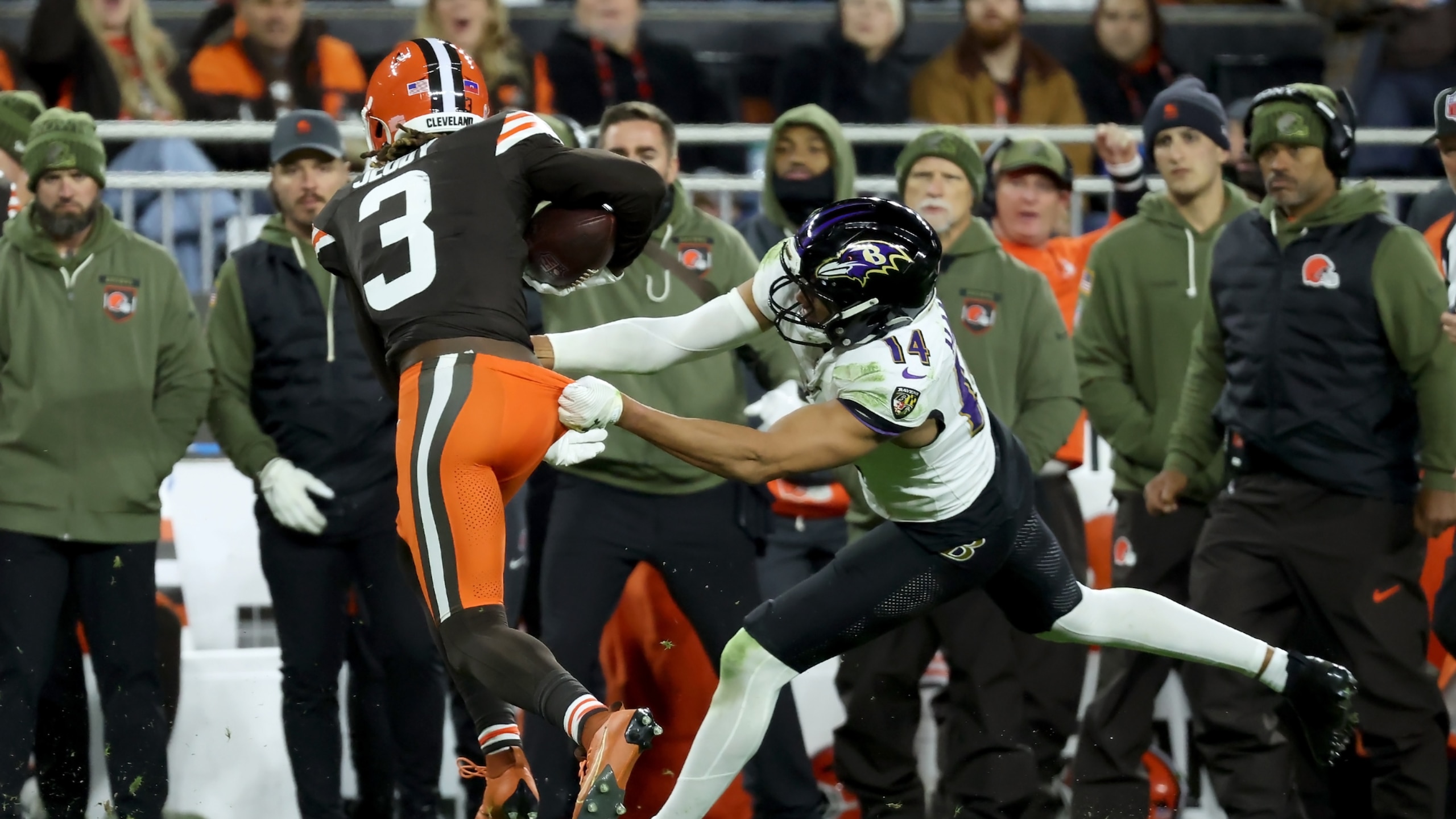
.jpg?w=2560 "Raiders Saints Football")
.jpg?w=2560 "AEW WrestleDream Live Grades 🔠")