B/R Football Ranks: Mikel Arteta's 5 Steps to Fixing Arsenal
It's been just over two weeks since Arsenal appointed Mikel Arteta as head coach—a decision that led to bullish extremes of opinion one way or the other.
Some immediately crowned him the next Pep Guardiola. Arteta learned in the shadow of one of football's great managers and is now ready to step forward in his own light.
Others questioned how a man with zero experience as a No. 1 could be appointed to such a position at such a high-profile club. One English newspaper called it "a huge mistake," and another said it was "a supreme gamble."

To hold either position strongly was folly. Unless you were privy to the interview process, you'd struggle to stitch together an informed opinion on Arteta the No. 1.
Inferring based on involvement in Guardiola's reign at Manchester City gets you only so far; writing him off completely based on a lack of experience dismisses examples like Guardiola himself, whose only managerial stint prior to taking the Barcelona job was with Barca's B side in the fourth tier of Spanish football.
Judgement of Arteta should come based on his work as head coach, and although we're not long into that journey—three games, to be precise—there are already clear signs of what he is attempting to enact at the Emirates Stadium.
You can't expect to see the full picture during that time span, but we have seen hints as to what he's thinking. He's made a quick start on the steps required to fix Arsenal and launch them back up the Premier League table.
Here, we'll lay out those five steps, checking in on the progress he's made so far for each one along the way.
1. Coherent On-the-Ball Strategy
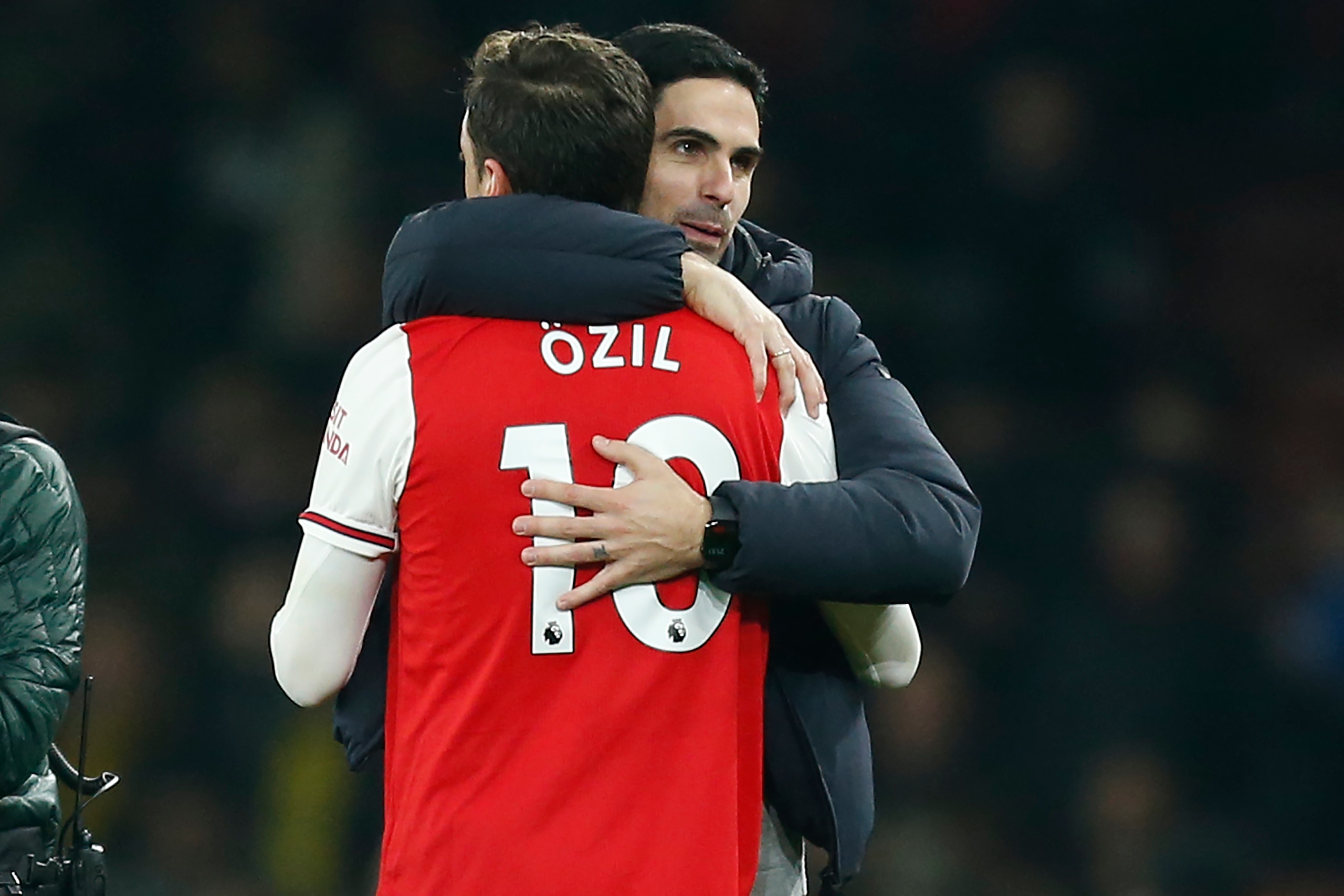
Arsenal have played a 4-2-3-1 formation in all three of Arteta's games. The personnel has been tweaked game to game, but the shape has remained throughout.
That may not sound like it's worth lauding, but it's the sort of consistency Arsenal have lacked for the last 18 months, as Unai Emery constantly fiddled with and tweaked his formation—and not even on a game-by-game basis, more like a half-by-half basis or even every 30 minutes.
Being tactically reactive and willing to change is good. However, Emery took it to such an extreme that it's no wonder the players often looked unsure as to what to do, where they were playing and which positions they should be taking up. If they won a game, it was largely because they had more individual quality than the opposition, and that can trump all.
Arteta is the complete opposite; so far, every player's role has been clearly defined and coached to a degree on the training pitch.
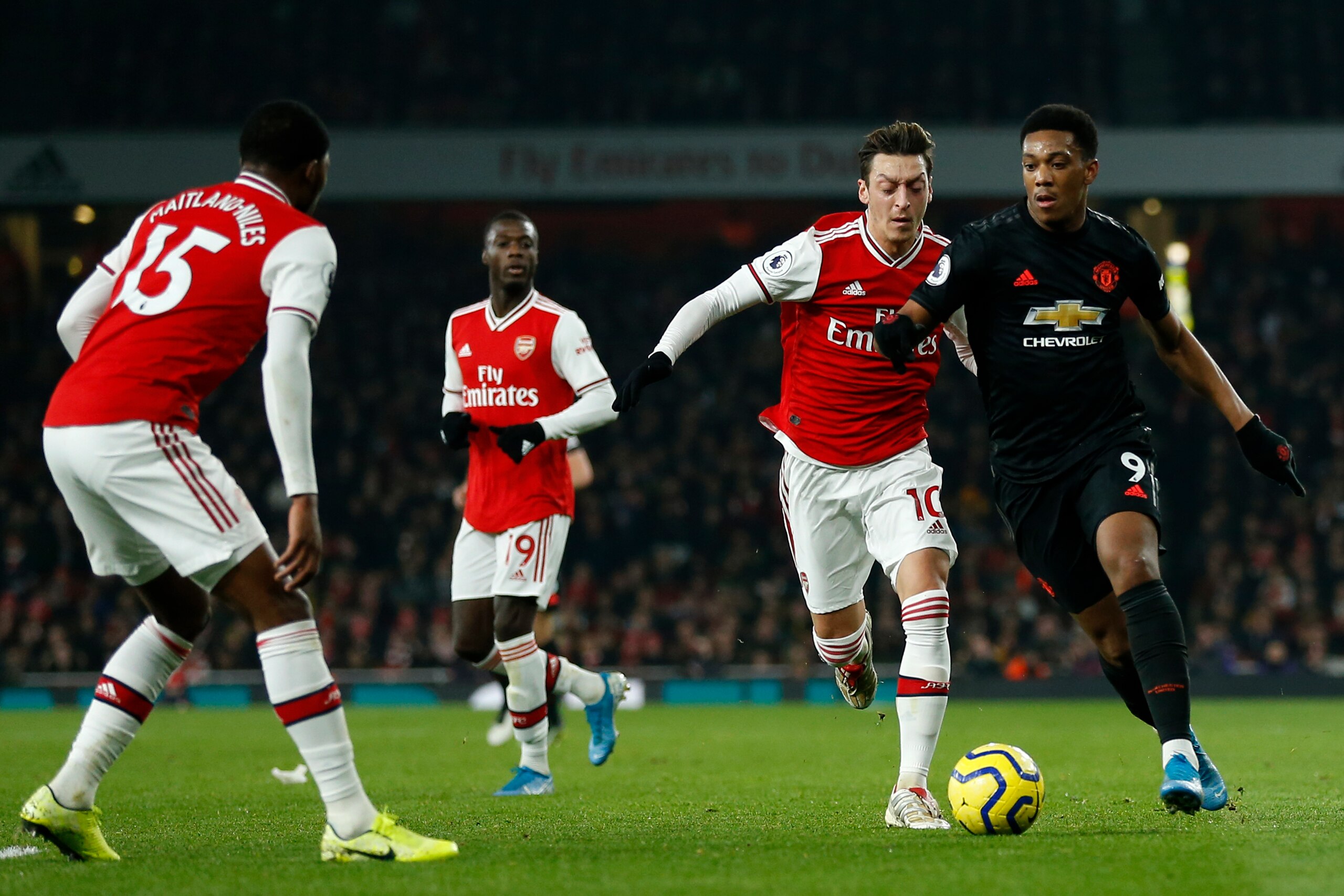
The Spaniard has drawn from Guardiola's style to a point: We're seeing one full-back (Sead Kolasinac or Bukayo Saka) run the flank and stay wide while the other tucks into midfield to balance the formation (Ainsley Maitland-Niles).
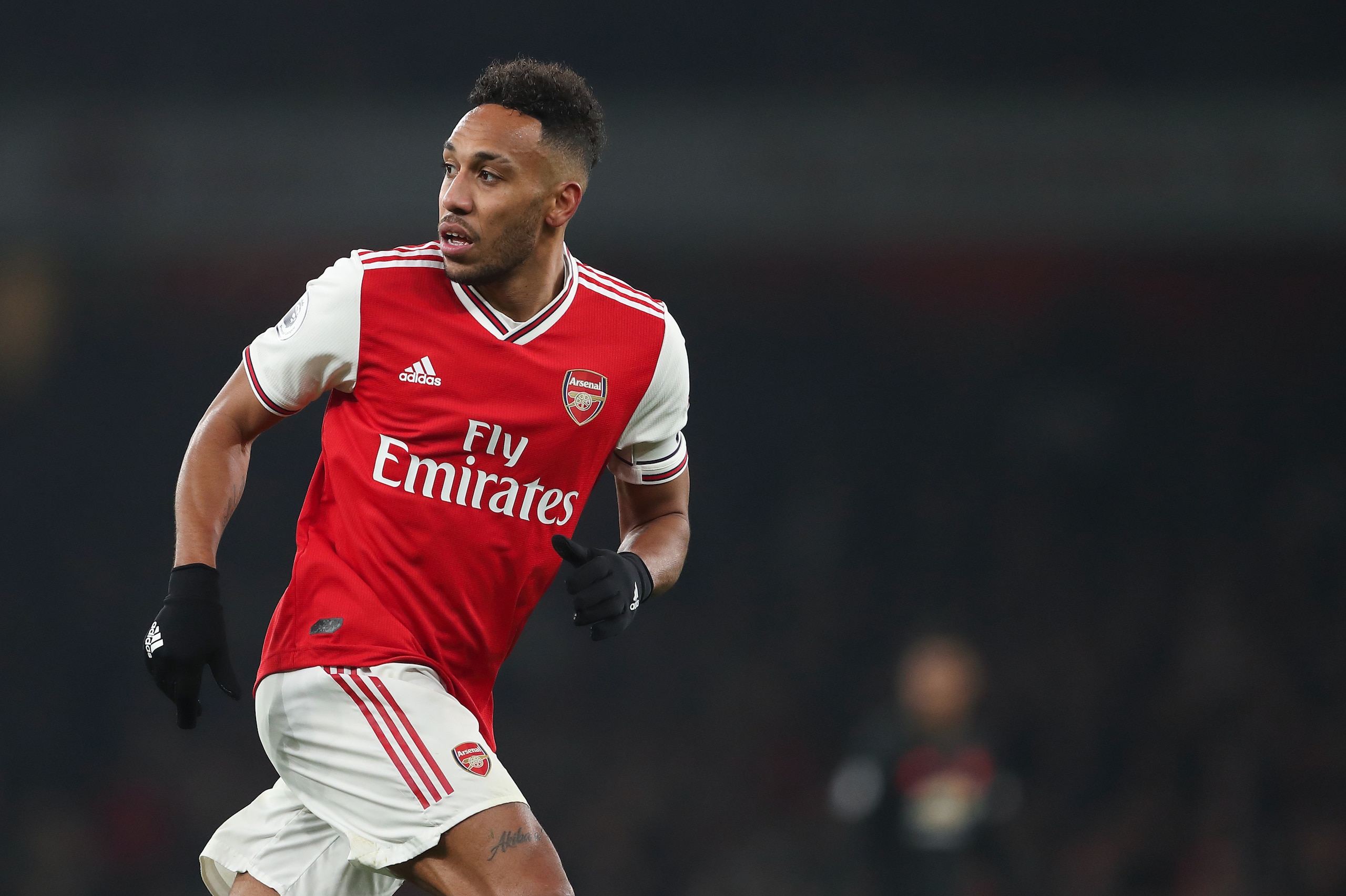
With the left-back operating high up, Pierre-Emerick Aubameyang plays a nominal left-wing role but ducks inside frequently, driving into the box or in the centre. On the other side, the right-winger starts wide but cuts in to create balance.
Just as important to this is the use of a central midfielder operating in the left-half space (the vertical channel between the flank and the centre of the pitch), and Mesut Ozil operating in the right half-space. In conjunction with Maitland-Niles and Lucas Torreira, they give Arsenal presence in the centre and play an important role off the ball.
If Arteta is successful, Arsenal won't always operate in this fashion; he'll have to switch things up at times, just as Guardiola does (for example, he recently moved to a back three to better support Gabriel Jesus and Joao Cancelo).
But he's working off an established blueprint he can communicate clearly to his players—something you may argue hasn't happened at the Emirates in years.
2. Coherent Off-the-Ball Strategy
The last days of Emery's reign at Arsenal lacked in many ways, but the most alarming part was how vulnerable and error-prone the team were at the back.
Some of this was put down to personnel: Hector Bellerin was not long back from long-term injury, David Luiz's defending has long been questionable, Kolasinac doesn't call it his strength either and Sokratis Papastathopoulos' level dropped in tune with his colleagues.
But it was clear the major issue was how incredibly easy it was to play through Arsenal; their midfield, in transition, was non-existent.
Too often you'd see Granit Xhaka and/or Matteo Guendouzi struggling (or just jogging) back as opponents counter-attacked at speed. They had no positional nous to disrupt it, no recovery speed to catch up and no strategy further up to prevent these situations from even happening.
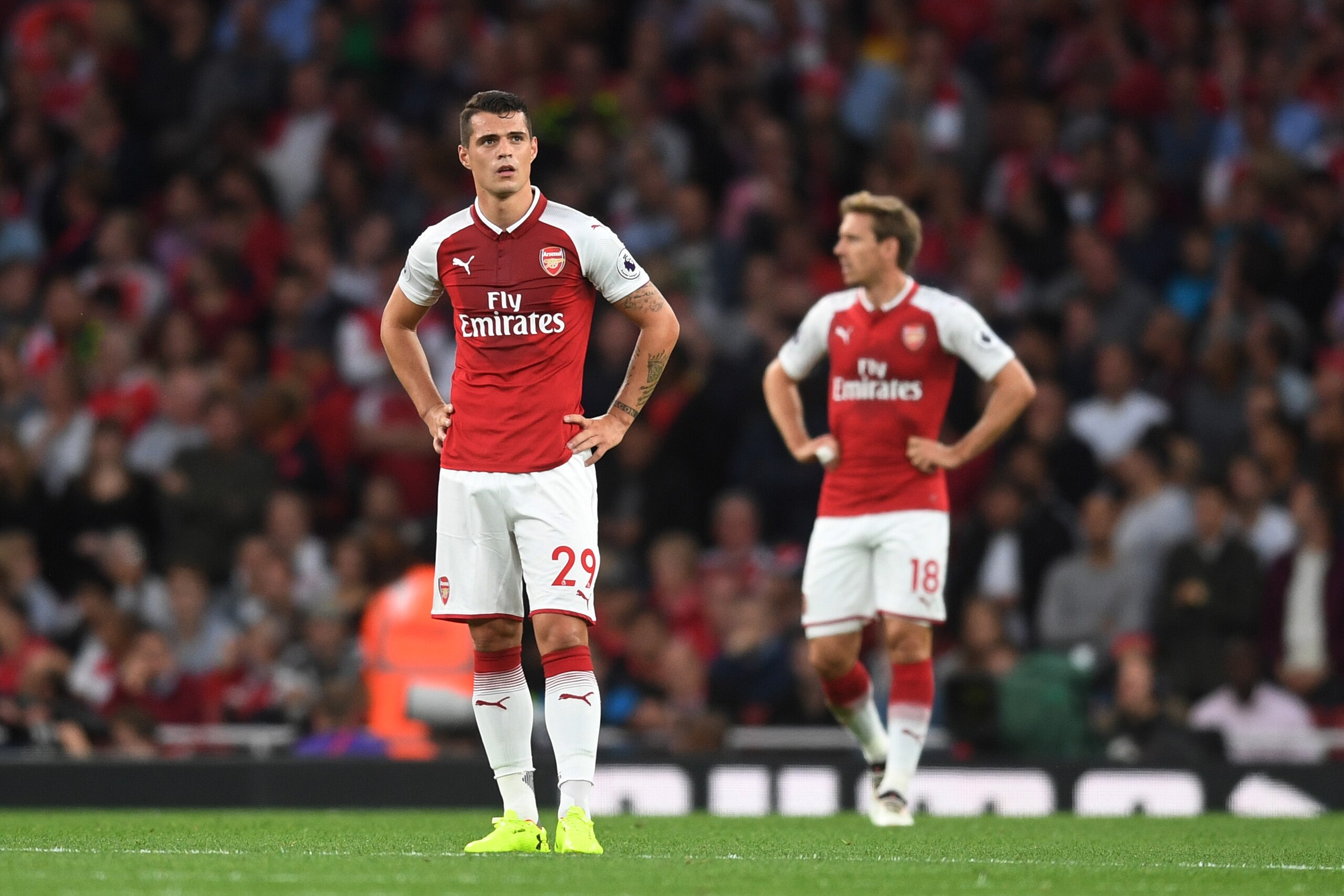
That's one of the first things Arteta has changed.
Arsenal's off-the-ball structure is much better now; the forward, midfield and defensive lines are much closer together, moving in coordination, reducing space between the lines for opponents to use and squeezing upward to press.
They're also suddenly so much more cynical in their fouling high up; they're replicating Guardiola's teams in that sense to prevent counters by chopping people down before they can hurt them.
Nothing illustrates that better than the sight of Ozil pressing and harrying, but the spike in duel numbers in Arteta's first three games compared to Freddie Ljungberg and Emery's last three tells a story—212 compared to 164 and 191, respectively, per Wyscout.com).
3. Steadily Integrate Gabriel Martinelli

We've seen 16 different players take to the pitch through Arteta's first three games; that figure includes seven attackers, and two more—Emile Smith Rowe and Tyreece John-Jules—have been featured on the bench.
Between them, they offer a plethora of options, styles and fits. From Ozil's languid grace to Reiss Nelson's more instinctive, direct way, Arteta can game-plan according to the opponent.
And yet, even with those options cycled through, we haven't yet seen the youngster who probably profiles the best under Arteta: Gabriel Martinelli. Injury has put him on the back foot in the race to impress early for the new boss, but that shouldn't concern him.
For an 18-year-old who has just moved continents, he's been remarkably good. Three goals and two assists in 351 UEFA Europa League minutes shows how productive he's been when given the chance. He's made a splash in the league, too, netting against West Ham United and teasing in the cross for Alexandre Lacazette that earned Arsenal a point against Southampton.
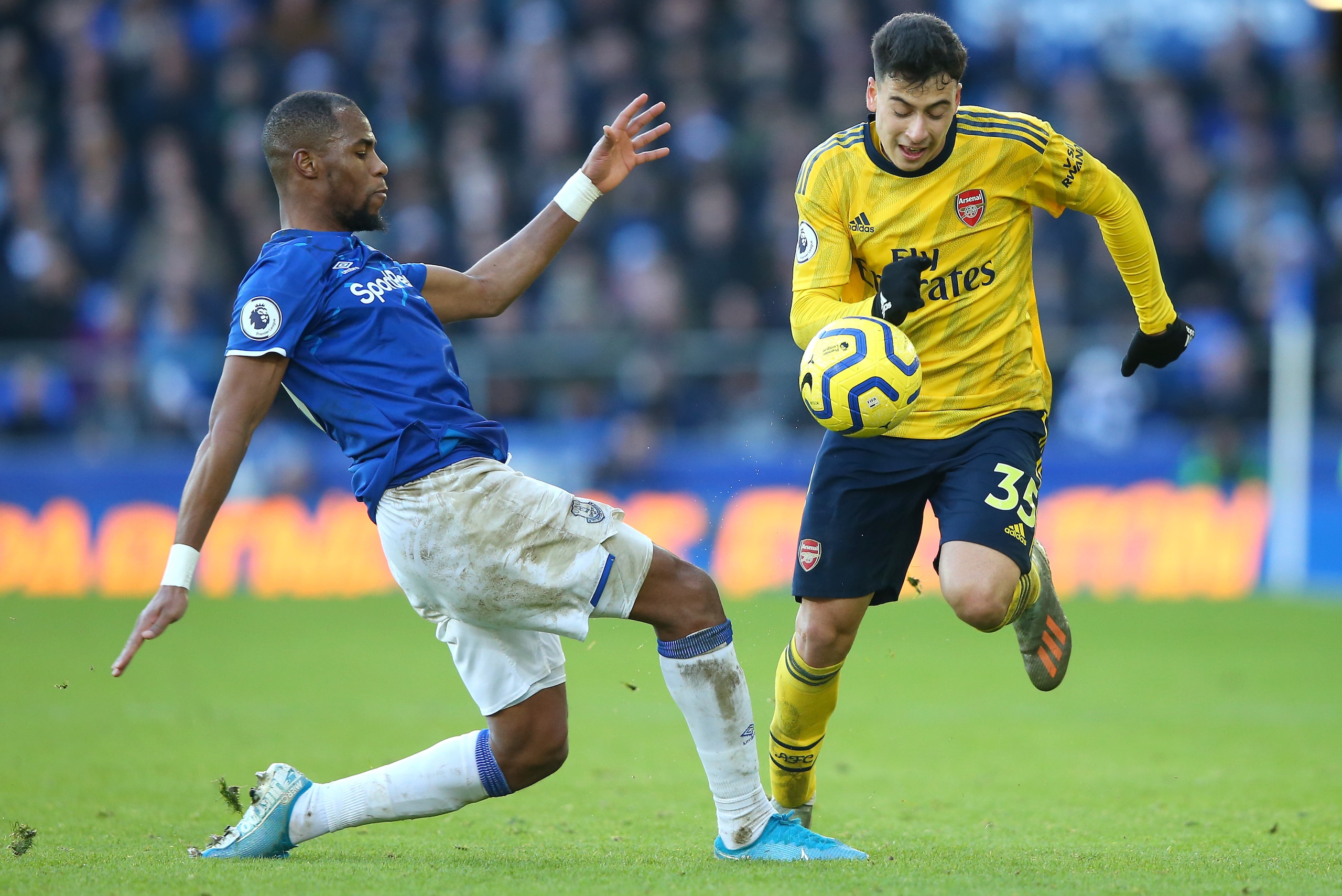
He's a player who always seems to create, score or cause trouble for defences. When he's on the pitch, no matter where he's playing, he's the epicentre of the attack. And he looks set to be a key piece in Arsenal's puzzle moving forward.
Arteta doesn't have to move mountains to incorporate him immediately, but over the course of 2020, he must settle on what role Martinelli will play for him. And therein lies the difficulty. In order to do so, the Spaniard will have to make a difficult decision regarding one of his four major attackers: Ozil, Aubameyang, Lacazette and Nicolas Pepe. You can't play all five, so one has to make way.
How that shakes out is anyone's guess, though early evidence suggests Lacazette may end up the odd one out—he's slowing play down too much, and his fitness levels, which have always been a question mark, may not suit the intensity of Arteta's game plan in the long term.
It's one to watch for the year.
4. Buy a Centre-Back

On the B/R Football Ranks podcast, Dean Jones confirmed Arsenal are in the market for a new centre-back. Dayot Upamecano is the name at the top of the shortlist, though the likelihood of coaxing him away from RB Leipzig in the middle of a potentially sensational campaign for them is slim.
But at least the intentions are right: Arsenal know one of their greatest needs is a central defender and Upamecano—a player who has dramatically improved this term under Julian Nagelsmann's tutelage—is a fair target.
Arsenal fans were heartened by the showing Luiz produced in the 2-0 win over Manchester United. It was a commanding, dominant performance that belied his usual, more vulnerable image. Some were quick to point out in turn that he often does this for a new manager...before reverting to the norm.
It's realistic to presume Sokratis re-finds his 2018-19 levels, but not that 32-year-old Luiz suddenly becomes a reliable defender. With Calum Chambers out for the season with a ruptured ACL and Rob Holding only just returning from the same injury, a clear need has become a pressing one—particularly if the lack of faith in Shkodran Mustafi persists.
Arteta, technical director Edu and head of football Raul Sanllehi must get their heads together and solve a problem position.
5. Buy a Defensive Midfielder

While some will suggest centre-back is Arsenal's biggest need in the transfer window, others could argue it's actually defensive midfielder.
Xhaka's early performances under Arteta have been promising, and the way Lucas Torreira is being used right now offers hope, but a reliable, holding presence in the centre is something the Gunners have lacked for a long time—Gilberto Silva was the last great one, Alex Song the last genuinely good one.
As Arsenal look at ways to gain on their rivals, they'll compare their own central midfield stock to the likes of Liverpool's, Manchester City's and even Leicester City's. And they can't claim to have a player like Fabinho, Fernandinho, Rodri or Wilfred Ndidi.
So they'll need to find their own. He needs to be a Fernandinho-esque blend of tactical nous, aggression, athleticism and prowess in possession. It's not easy to find, and it's not as simple as seeking out players who rack up tackles with ease.
Again, Arteta, Edu and Sanllehi will need to team up here, with the manager likely heavily involved in choosing the mould of player picked up.
Download the B/R Football Ranks podcast. New episodes every Wednesday.
All statistics via WhoScored.com unless noted otherwise.
.jpg?w=2560 "Seahawks Cardinals Football")
.jpg?w=2560 "49ers LB Suspended for Headbutt")
.jpg?w=2560 "AD Trolls Bears WR on IG 😂")
.jpg?w=2560 "Report: Steelers WR to Miss 'Weeks'")