A tidal wave of cash hit the NBA during the first day of free agency, with about $3 billion in new money washing over players within hours. The tide receded a week later, and we've finally had enough time to take a breath and consider an important question.
Who spent most wisely?
From a team perspective, we'll praise the contracts that figure to yield the most value in several categories.
It's a lot harder to get a premium return from massive contracts, so we're only going to single out one max deal and one near-max pact as our best signings in those sections. Where agreements were shorter or included fewer dollars, we'll highlight a handful.
There'll be some personal preference here—I'm sure I like Maxi Kleber more than you do—but the general idea is to determine which clubs got the most for their money.
And, again, we're talking about a lot of money.
The Biggest Big One: Kawhi Leonard, Los Angeles Clippers
1 of 5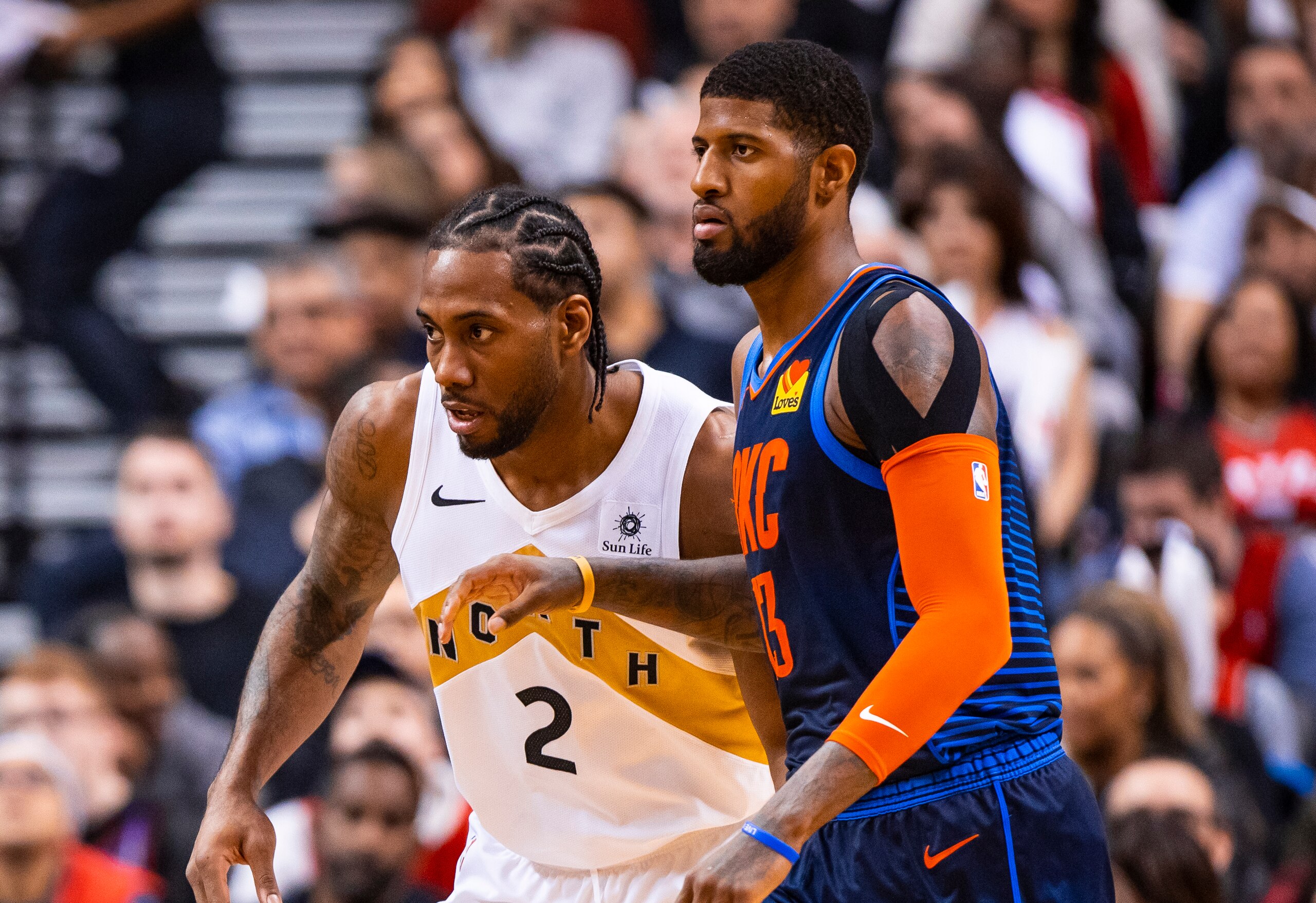
During the first week of free agency, nine players signed new deals worth at least $140 million, and D'Angelo Russell technically got the max in his four-year, $117 million sign-and-trade with the Golden State Warriors.
Among those high-dollar deals, Kawhi Leonard's was easily the most impactful.
Though his load-managed 2018-19 season suggests the new contract isn't without health risks, the four-year, $141 million bargain struck between Leonard and the Los Angeles Clippers feels like the safest one among many max-level agreements. The injury questions are larger and more immediate for Kevin Durant, Kristaps Porzingis and Klay Thompson. Kyrie Irving comes with locker room leadership issues, Jimmy Butler and Kemba Walker are already near the end of their primes and both Khris Middleton and Tobias Harris got overpaid.
Leonard is different.
He might be the best player in the league, just proved his worth with a title run* and brought Paul George along with him. The Clips surrendered the largest draft haul in league history to bring George aboard at Leonard's urging, but he doesn't end up with L.A. unless this small forward does. In that sense, signing Kawhi was like signing two superstars.
No deal brought more short- and long-term value to a team than Leonard's.
*Leonard's one-year championship surge and immediate exit has to be called the "Chip and Dip" from now on.
Near Max: Al Horford, Philadelphia 76ers
2 of 5
Al Horford didn't get his full max, but four years and $109 million (with $97 million guaranteed) is a hefty sum for a 33-year-old big man.
Good thing he's worth it.
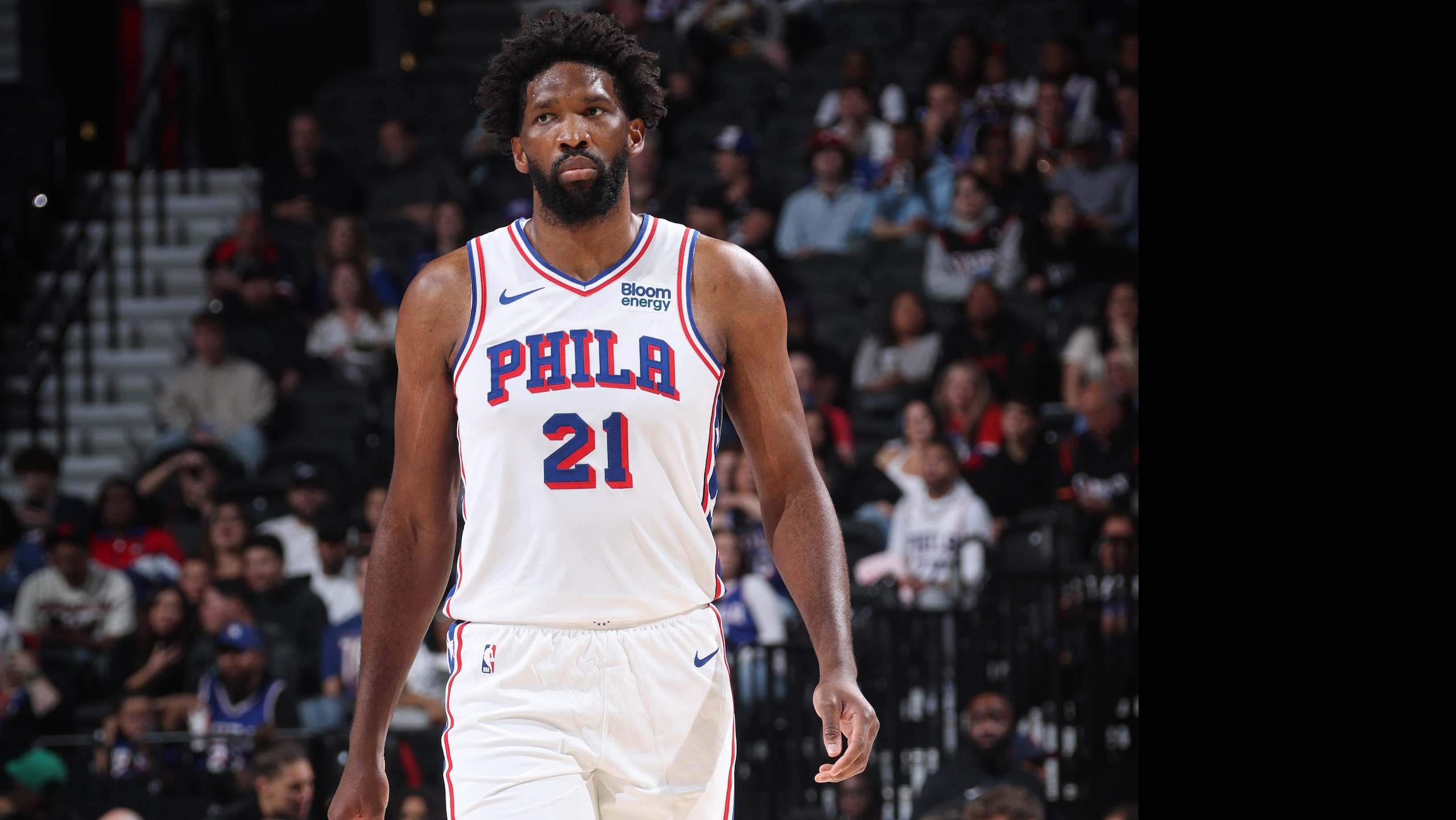
The Philadelphia 76ers had several reasons to like Horford. He's a no-nonsense professional who contributes across the five traditional box-score categories and is generally regarded as even more valuable than his stats. Alongside Joel Embiid, he'll form the nastiest interior tandem in the NBA.
Not to be forgotten, Embiid will no longer have to face Horford in the playoffs. Taking the guy who defended him better than anyone else off the board is valuable on its own.
As part of a new supersized starting five that also includes Josh Richardson, Ben Simmons, Tobias Harris and Embiid, Horford figures to propel the Sixers to the top defensive rating in the league. Opponents may need to give up on the concept of offensive rebounds, as well; nobody is going to be able to compete on the glass against a Philadelphia first unit this hulking.
There's a good chance Horford's deal becomes a burden in its final year or two, and it's also true the big man doesn't fill the shot-creation void that formed with Jimmy Butler's departure. But the Sixers added a fearsome and versatile defender who'll also keep the ball moving and the court spaced on offense. Philly now profiles as a more serious title threat than it's been since it began trusting the process.
All that for less than a guaranteed $25 million per season? That's a steal.
Sneaky Value: Maxi Kleber, Dallas Mavericks
3 of 5
It's understandable if you're not familiar with Maxi Kleber, the Dallas Mavericks' 27-year-old big man who re-signed with the team for four years and $35 million (team option on the fourth year). In fact, that contract might seem a little rich for a bench player who only averaged 21.2 minutes per game during his second NBA season last year.
Don't let the limited playing time fool you. Kleber can play.
The only other guy to average at least 1.8 blocks and 1.5 made threes per 36 minutes on 35 percent shooting or better last year was Brook Lopez. Maybe Kleber lacks the ultra-deep range of the Milwaukee Bucks' human catapult, but he's four years younger, substantially more athletic and, since we're focused on value added, cheaper.
Critically, Kleber moves his feet well for a 6'11" center. Unlike Lopez, who's limited almost exclusively to drop coverage in the pick-and-roll, Kleber can switch and survive. In that sense, it's not even fair to consider him something like Lopez Lite because he's got skills the Buck doesn't.
As a piece of Dallas' five-out offense alongside fellow rangy sniper Kristaps Porzingis, Kleber figures to make a major impact in his third season.
Honorable Mentions
Jeremy Lamb, Indiana Pacers
The Orlando Magic didn't have a way to replace Terrence Ross, which is partly why they forked over a four-year contract worth between $50 and $54 million, depending on incentives. That's not necessarily a bad deal, but it looks comparatively poor when set against Lamb's agreement with the Pacers for three years and $31.5 million.
Lamb is a year younger than Ross and owns a marginally higher career true shooting percentage, due largely to his superior ability to get to the foul line. Even in light of Orlando's lack of flexibility, it's hard to justify Ross making more money on a longer deal.
Ed Davis, Utah Jazz
Davis, who agreed to a two-year, $10 million deal, will provide elite rebounding and interior play in short bursts. He's not Derrick Favors, but that's also part of the appeal. Now, Utah won't be tempted to utilize two-big lineups nearly as often, which should help its problematic offense get unstuck in games that matter.
He was the only player to shoot at least 60 percent from the field and post a total rebound percentage above 25 last season.
The Minimum: Wesley Matthews, Milwaukee Bucks
4 of 5
Losing Malcolm Brogdon hurt, and it's doubly worrisome that the Bucks' decision to let him go seemed almost entirely financially motivated. Avoiding a hefty tax bill is fine under normal circumstances. But when your championship window is open and you've got an MVP hitting free agency in two years, pinching pennies is, at best, a major risk.
Fortunately, the Bucks reeled in Wesley Matthews for the minimum.
A career 38.2 percent shooter from deep on consistently high volume, Matthews, like Brogdon, can also hold his own defensively against bigger wings and all but the bulkiest forwards. Though past his prime at age 32 and not as efficient as Brogdon (who is, though?), Matthews' long-range shot is quicker and more versatile. Whereas Brogdon was strictly a catch-and-fire option from three, Matthews has always been more willing to shoot off the dribble.
The Bucks won't want to live with Matthews creating his own looks, but it never hurts to have another player who can generate a decent attempt when the offense breaks down.
Brogdon is absolutely the better player, but Matthews might be 80 percent as valuable as the Bucks' departed combo guard. Forget 80, though. Matthews will make 8 percent of Brogdon's salary in 2019-20.
Honorable Mentions
Willie Cauley-Stein, Golden State Warriors
Cauley-Stein will make slightly above the minimum, but this deal is close enough to count for this category.
Though maddeningly inconsistent and a suspect rim defender during his tenure with the Sacramento Kings, Cauley-Stein is still worth much more than he's getting from Golden State. The sixth pick in the 2015 draft heads into his age-26 season after averaging 11.9 points, 8.4 rebounds and 2.4 assists. Swift in the open floor and a highly effective roll man, he had 182 dunks last season. All 2018-19 Warriors centers combined for just 168.
This is a perfect change-of-scenery rebirth opportunity.
Austin Rivers, Houston Rockets
Combo guards who hit threes and defend both backcourt positions well enough to see critical playoff minutes shouldn't come this cheap.
Trade Chips: Wayne Ellington and Reggie Bullock, New York Knicks
5 of 5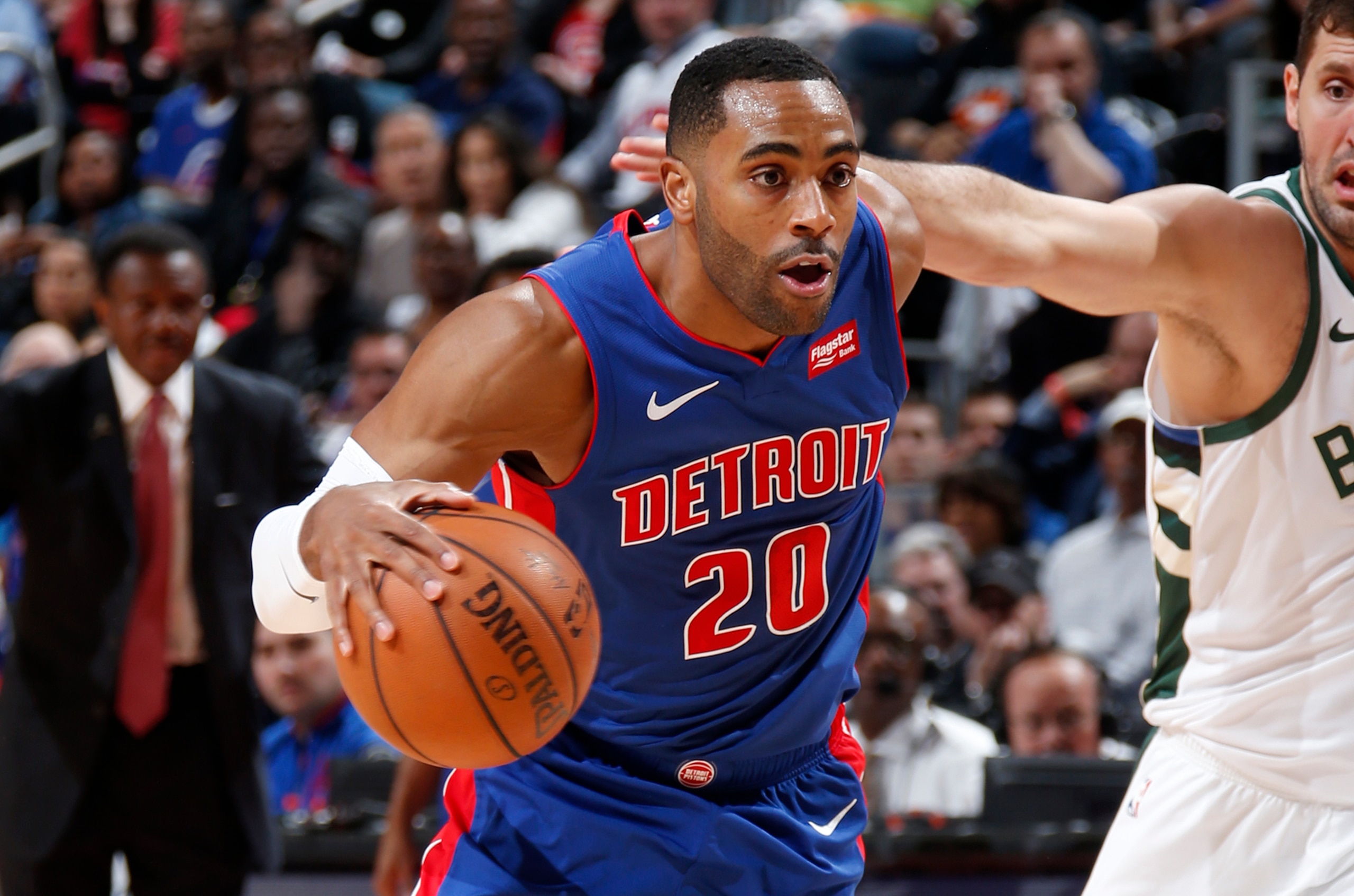
Editor's Note: Per ESPN's Adrian Wojnarowski and Marc Spears, the Knicks are making a late play for Marcus Morris, who had originally agreed to a two-year, $20 million deal with the San Antonio Spurs. As a result, Reggie Bullock is no longer expected to sign the two-year, $21 million contract he originally agreed to with New York. The two sides are now "reworking the terms down to a lower financial commitment," league sorces tell ESPN.
OK, so the New York Knicks' offseason was an abject disappointment. There's no getting past that. But can't it also be true that they made the best of a bad situation?
New York didn't go beyond three years on any of its new signings, and most of them were for one guaranteed season with either a team option or a nonguarantee in 2020-21. Those, then, are effectively expiring deals for 2019-20. Interested teams with holes to fill should come calling around the deadline, and the Knicks will be in position to extract more draft assets via trade.
Of particular interest to every contender: Wayne Ellington and Reggie Bullock, a pair of knockdown marksmen set to collect very reasonable salaries of $7.8 and $10.2 million in 2019-20, respectively. The analysis is the same for each of them, so we'll handle them together.
Both have team options for 2020-21. Neither offers much on defense, but how often do we get midway through the season and note "Contender X is just one shooter away from pushing itself over the top"?
It happens every year.
Both could be stretch-run rentals at positions of need, and acquiring teams would still have the option of parting ways in the summer of 2020 if things don't work out. Bullock is a career 39.2 percent three-point shooter, and Ellington isn't far behind at 37.9 percent.
A market will exist for these two, and the Knicks will control it.
Honorable Mention
D'Angelo Russell, Golden State Warriors
Russell, a pick-and-roll maestro, isn't a great fit in a motion-heavy offense that prizes off-ball action and quick decisions. If his mid-range shooting regresses, his efficiency spike will evaporate because he's a poor finisher at the rim who doesn't draw fouls.
He was also a dubious All-Star last season, added to the roster as an injury replacement.
But here's what matters: Other teams were interested in Russell, presumably at a rate near his max, which makes him an asset. Cap constraints meant the Warriors had absolutely no way to acquire a high-dollar player like him in the next several seasons, so they cast aside all the fit issues, ignored the incidental costs (trading two firsts and Andre Iguodala) and grabbed him in the sign-and-trade that sent Kevin Durant to the Brooklyn Nets.
Shortly after the deal was agreed upon, Marc Stein of the New York Times opined the Warriors intended to trade Russell. That's the smart and obvious move.
At first blush, everyone was confused by the Warriors adding a max-salaried guard to the best backcourt in the league (when healthy). But with the dust settling, it's clear Golden State extracted as much value as it possibly could from Durant's exit. It'll be fascinating to see what the Warriors get in return when they inevitably move on from Russell.
Stats courtesy of Basketball Reference and NBA.com unless otherwise indicated. Salary information courtesy of Basketball Insiders.
.jpg?w=2560 "Every Team's Biggest Surprise So Far 😲")
.jpg?w=2560 "Aiyuk Slammed by Ex-Teammates 😬")
.jpg?w=2560 "Harbaugh Not in Hot Seat")